
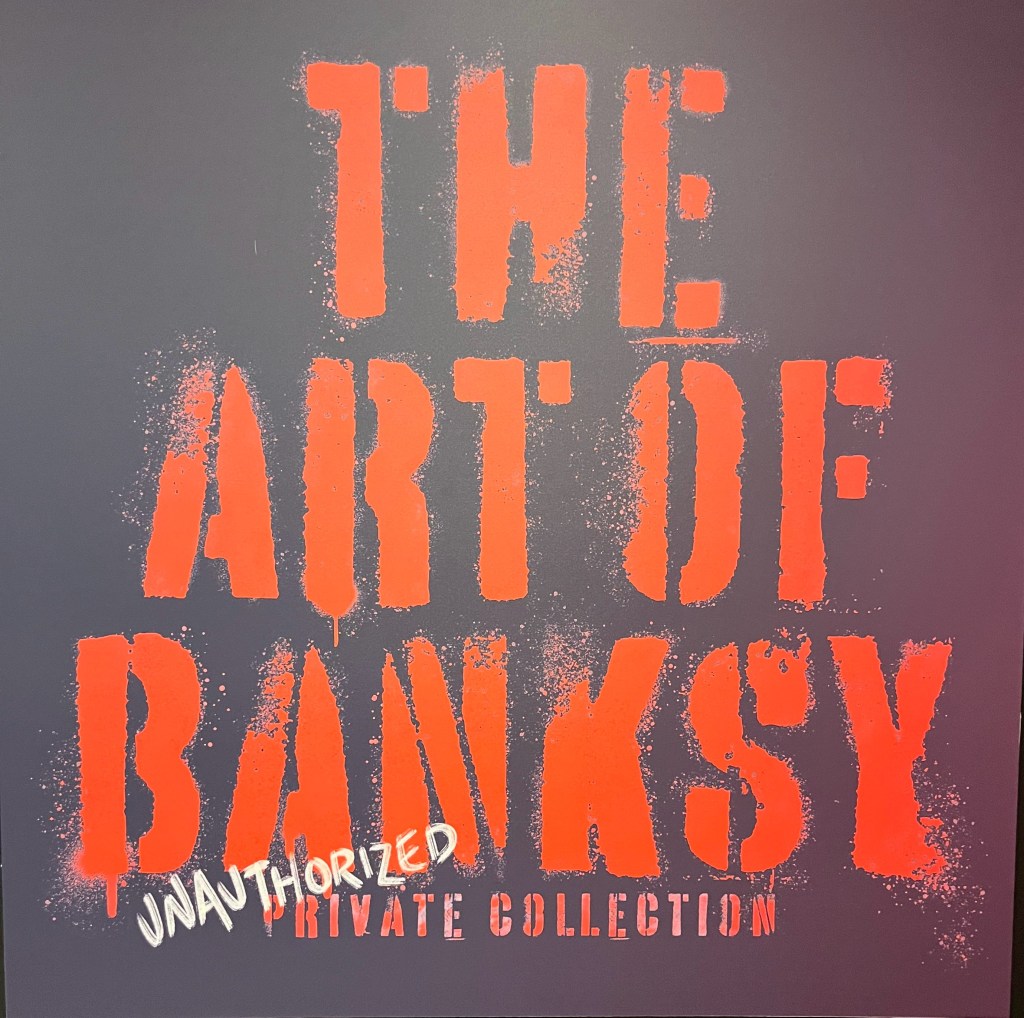
A pop-up exhibit on Regent Street in London. It is neither authorized, curated nor endorsed by the artist.

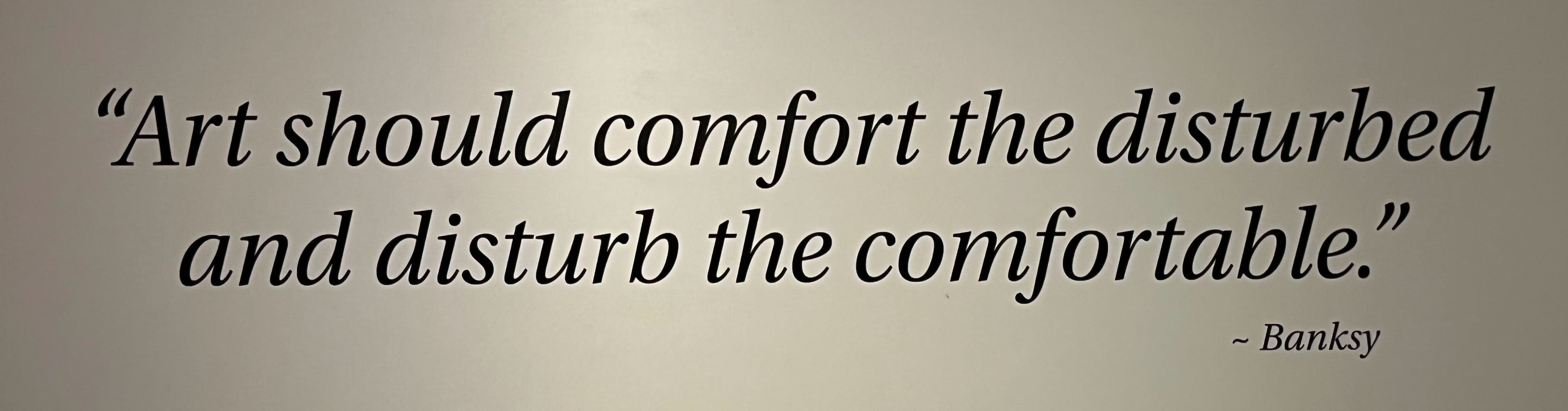
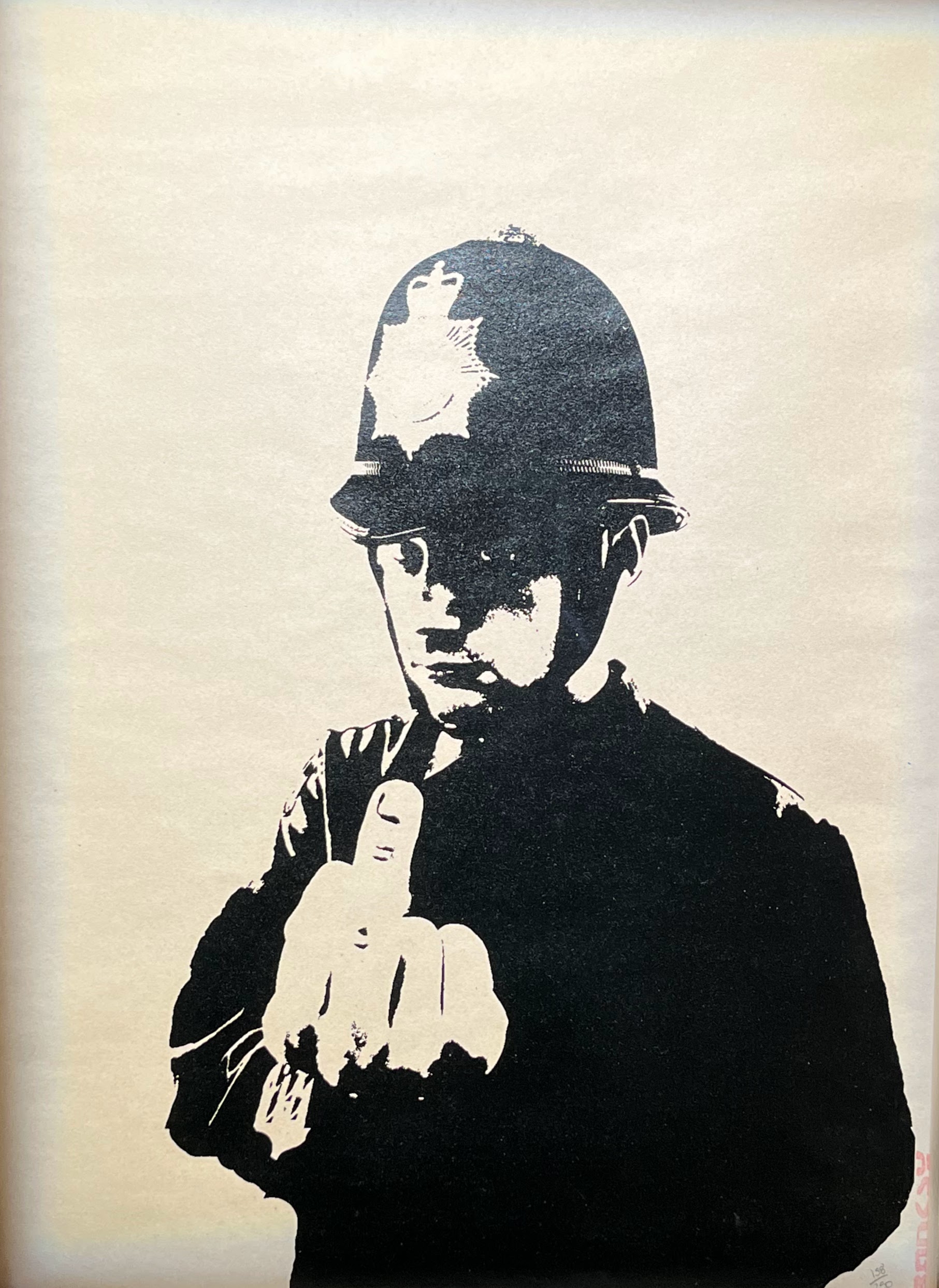

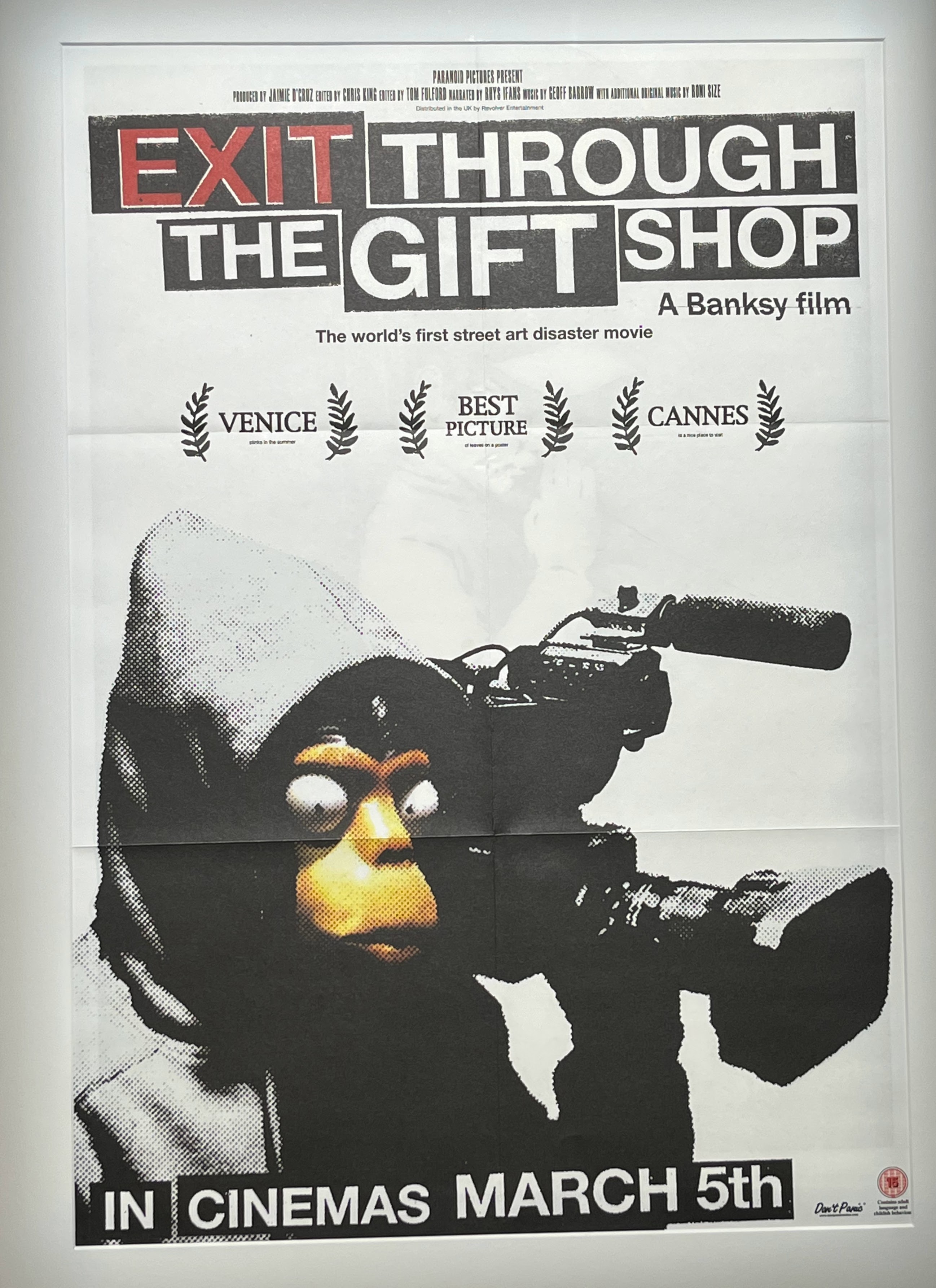



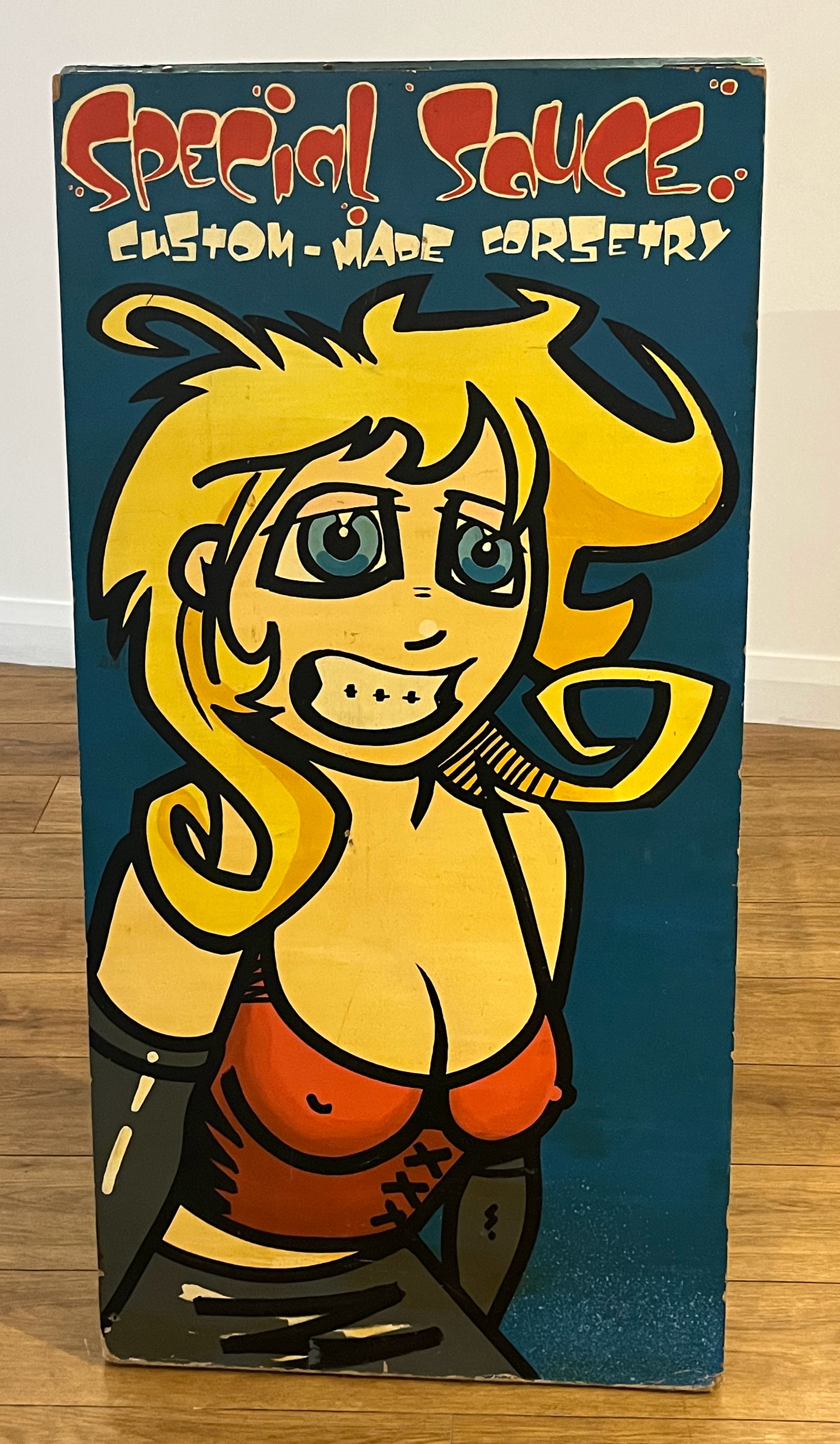

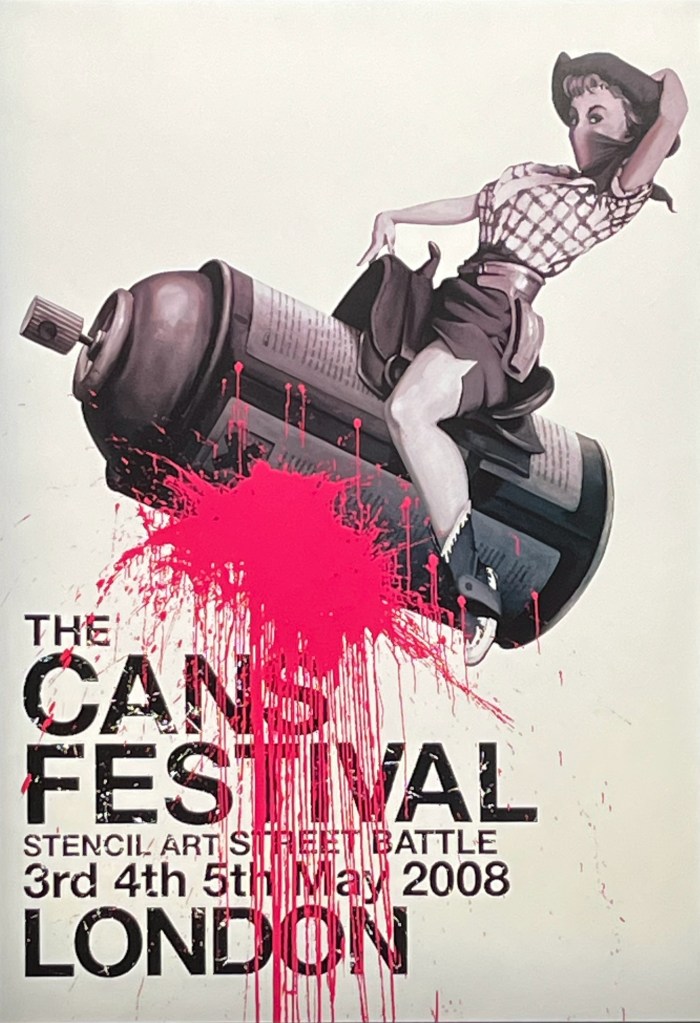
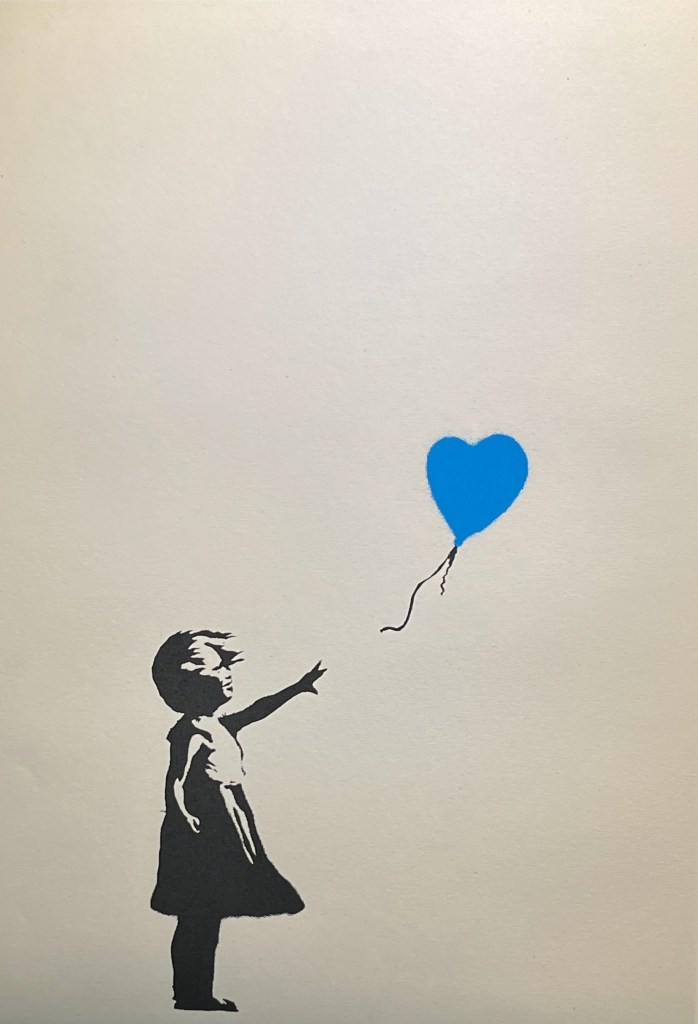


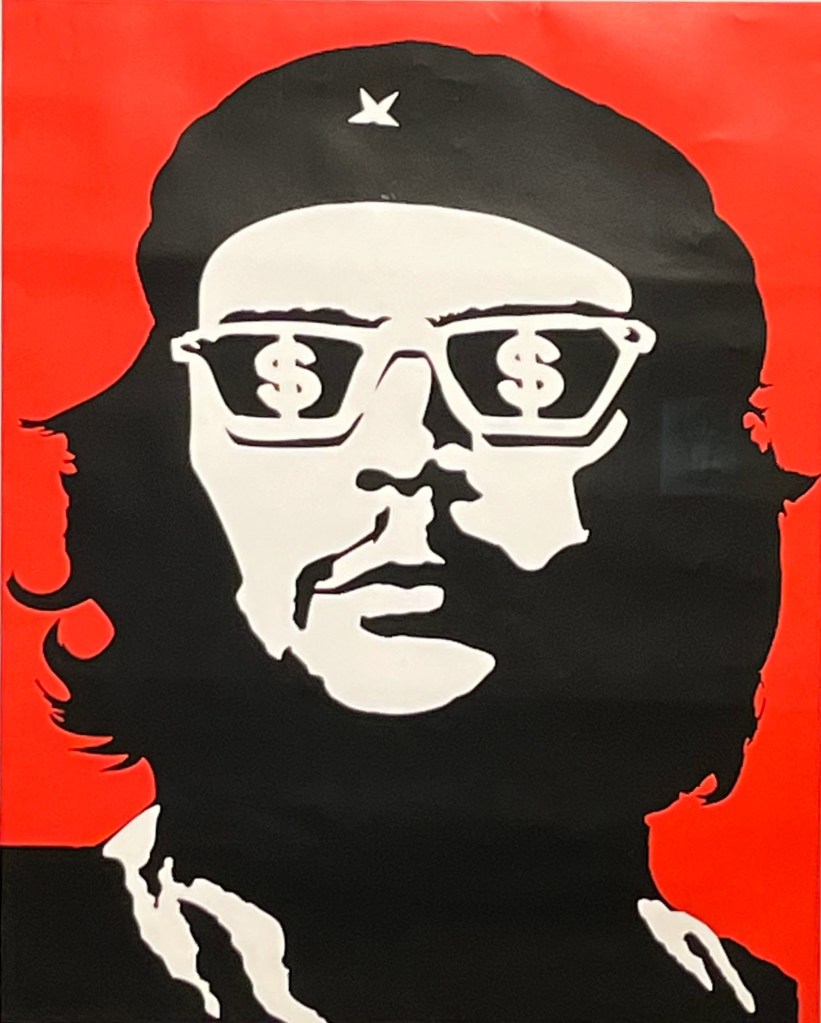
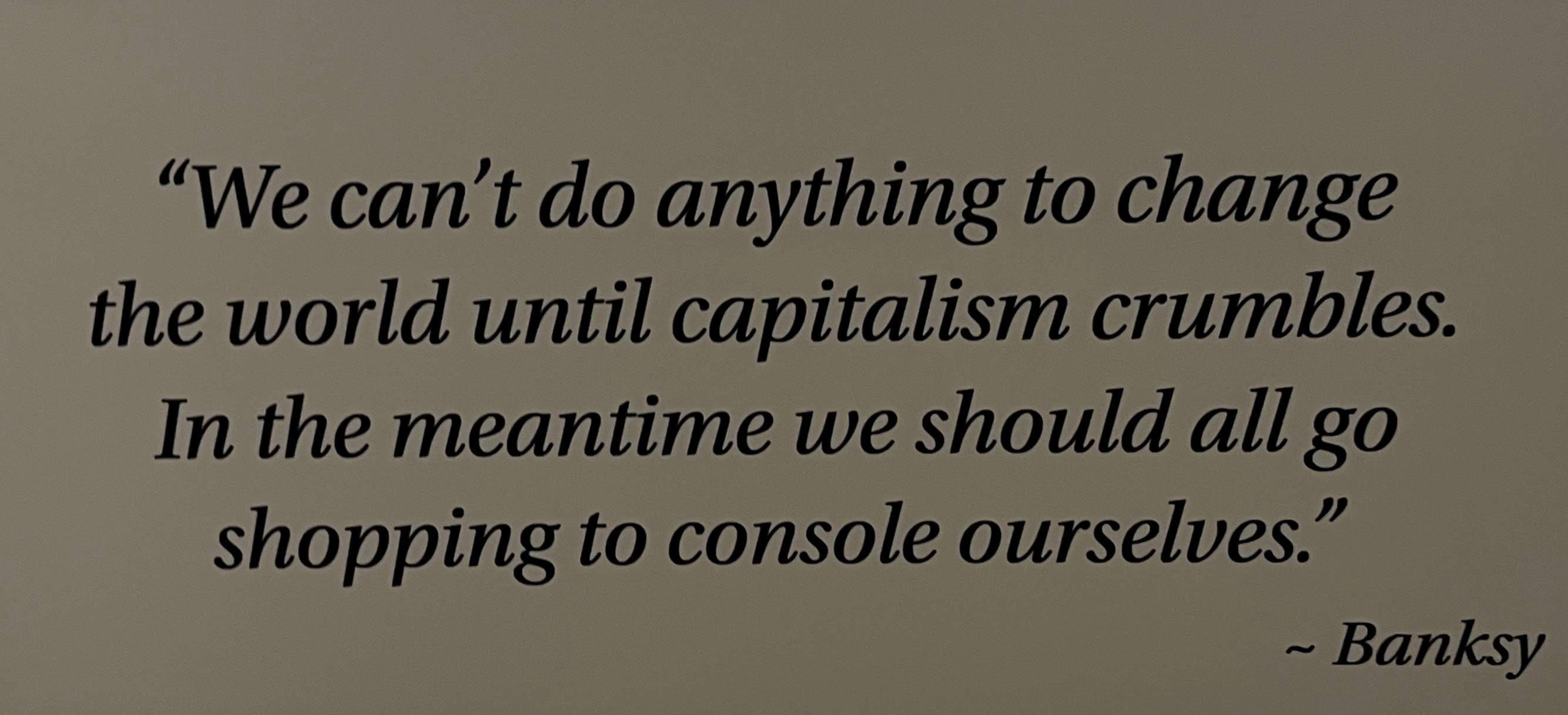


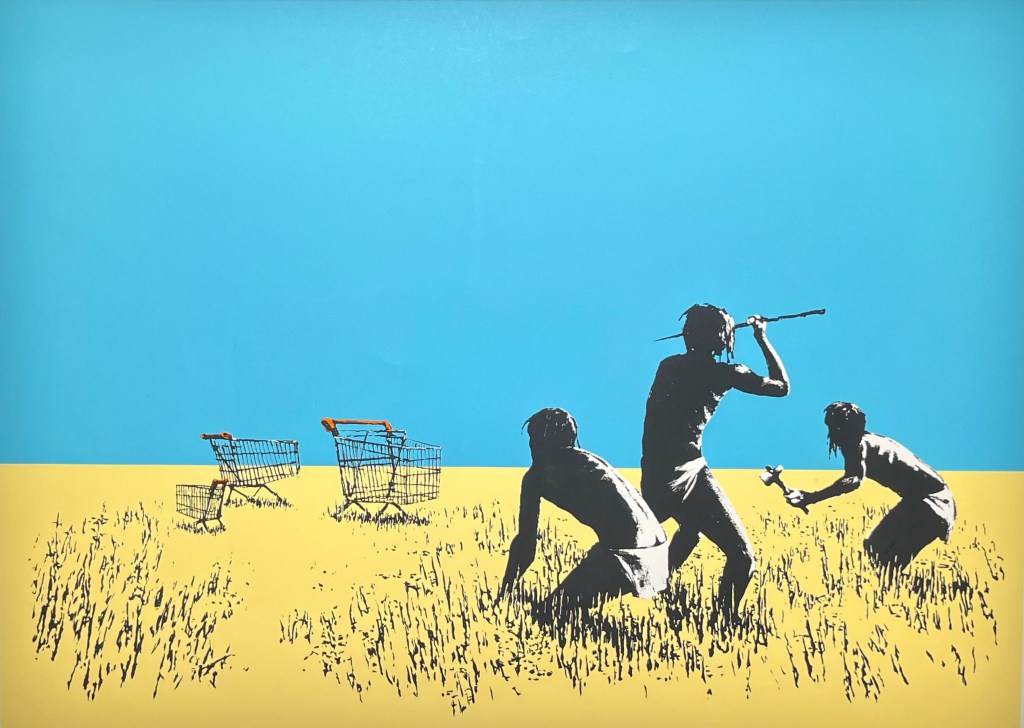
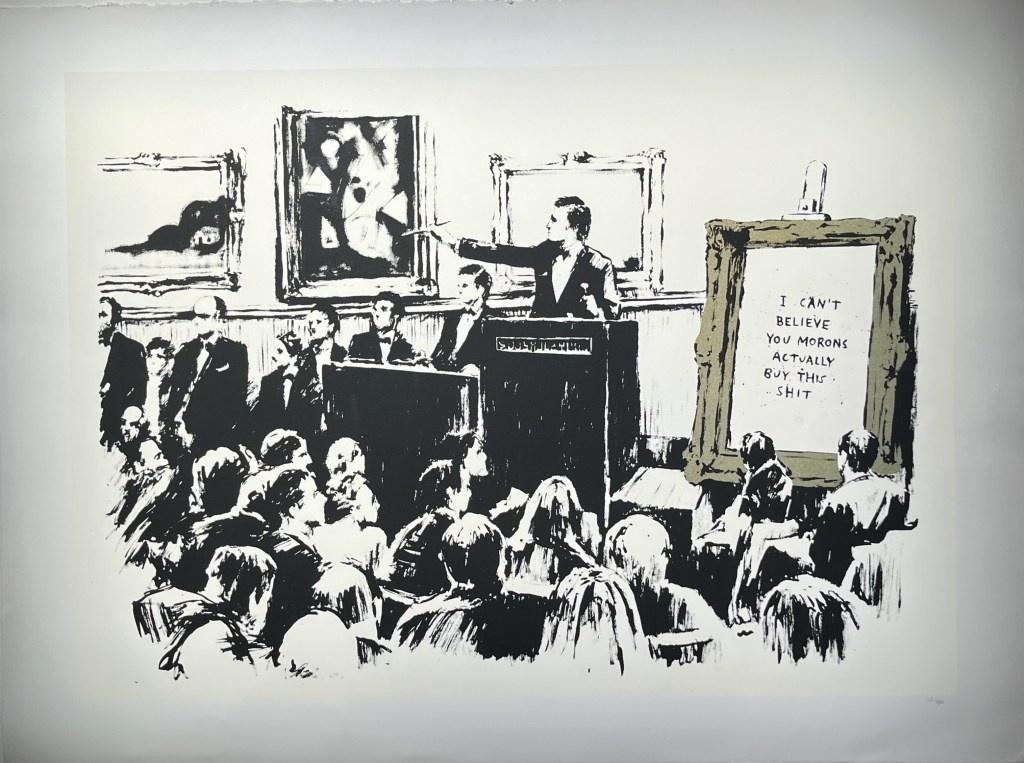
A pop-up exhibit on Regent Street in London. It is neither authorized, curated nor endorsed by the artist.
The Spaceman was a major league baseball pitcher. He was what baseball folks like to call ‘a flake.’ He was also a really good pitcher. Lee won 94 games over 10: seasons with the Boston Red Sox between 1969 and 1978. In one of those years, 1973, he was an all star. He pitched another four seasons with the Montreal Expos and ended his career with a 119-92 won-loss record and a very respectable 3.62 earned run average.

You might think the ‘Spaceman’ moniker was a result of his eccentric behavior both on and aff the field, but it was in fact much more literal. Lee was fascinated by space and was an avid follower of the Apollo missions. A teammate, John Kennedy, offered up the nickname on a day when Lee was having locker room discussions with reporters about a moon landing.
Lee was not your typical gung-ho ‘one for all, all for one’ sort of athlete. He was more of a baseball activist. As a Red Sox, he and a few teammates, including Ferguson Jenkins and Rick Wise were known as the “Buffalo heads.” What seemed to unite them was their disregard of team rules and distaste for manager Don Zimmer, the puffy-faced veteran who Lee once referred to as “designated gerbil.” When one of them was traded Lee “left a burning candle on Zimmer’s desk after Willoughby was traded and refused to show up for the 1978 team photo (he had to be inserted later). When Bernie Carbo was dealt to Cleveland, Lee ‘wept for 20 minutes, ripped his telephone from the wall at home and vowed he would never play for Boston again.’ When he returned the next day and was given a $533 fine, Lee asked for the team to make it $1,500 so he could have a few more days off.” (Michael Clair, mlb.com, Dec. 27, 2022)
A similar incident while with the Montreal Expos ended his tenure there and his major league career. Joel Yanofsky, writing for the Montreal Gazette (March 5, 2005) recalls Lee’s last day as an Expo: “Early in the 1982 season, manager Jim Fanning released one of the most underrated and exciting players on the team, second baseman Rodney Scott. This, in turn, caused left-handed pitcher Bill Lee to storm out of the clubhouse in protest, drowning his anger at an east-end tavern. This was quintessential Lee — loyal teammate and quixotic rebel. The next day he was booted off the Expos and blackballed from the game.”
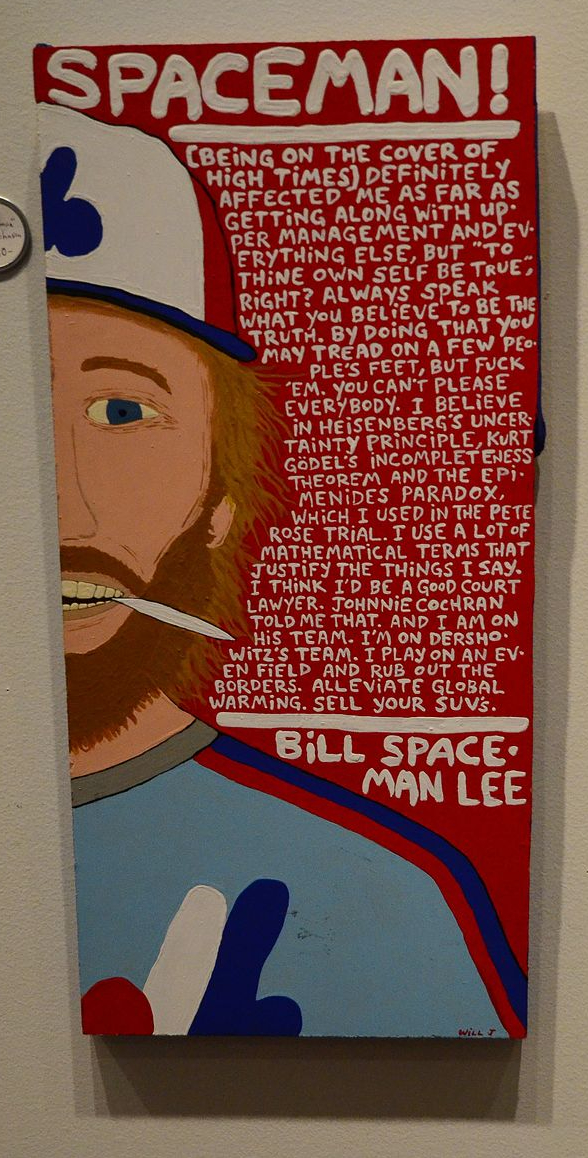
While Lee spent a good deal of his post-MLB career with charity events, speaking engagements and promotional baseball events, he also ventured into politics. In 1988 he ran for President under the satirical Rhinoceros Party banner. His campaign slogan was “No Guns, No Butter” because both kill you. Unsurprisingly, he failed to get on the ballot in any state. But that didn’t stop him from telling the Ottawa Citizen (Nov. 7, 2000) that if he had won “we wouldn’t be in Iraq. We wouldn’t be in Afghanistan. We’d have universal Medicare. There would be no border between the U.S.and Canada. We could walk freely back and forth.”
So it may then surprise you to hear him endorsing George W. Bush in that same interview. Here’s why: “The way things are now, people want to party and George W. is the kind of guy you can party with. Back in 1973, we rolled a couple of doobies (marijuana cigarettes) and smoked them together. And I can tell you he definitely inhaled.”
He was at it again in 2016 when he threw his hat in the ring for the governorship of Vermont. This time he ran on the Liberty Union Party line, the socialist party that Bernie Sanders had been a part of. The Rutland Herald (Oct. 15, 2016) observed: “Spaceman is unpolished. His positions are unconventional, often rooted in his counterculture beliefs. He is an eloquent and humorous storyteller, but he is goofy as a politician. There is little about him that is political. He wears his uniqueness and eccentricity as badges of honor. “
Writing in Time Magazine (May 15, 2016), Sean Gregory commented “Here’s a gubernatorial platform for you: legalized pot, universal health care, seizure of federal highways, and steroid cheats in the Hall of Fame.” He got 2.78% of the vote.
Asked what, if elected, he would do on his first day as governor, he said: “I would meet with Justin Trudeau and work on the fact that if Trump gets elected, we have a covenant in our charter that says we’re allowed out of the United States.” (Vice, June 8, 2016 )
Lee also co-authored four books. They were not all critically acclaimed. In his review of Have Glove Will Travel; Adventures of a Baseball Vagabond, Joe O’Connor of the National Post in Toronto (April 23, 2005) remarked: “(Lee) writes like a teenager anxious to impress the cool kids with anecdotes that begin and end with him. And this me-me-me approach takes away from what is, in parts, truly engaging material.”
But above all else, Spaceman was a pitcher, and even into his seventies, he’s not up for letting that go. Here are just a few bits of Lee’s post-MLB ball playing resume:
— 1984. Living in Moncton, New Brunswick, he pitched and played first base for the Moncton Mets.
— 1992. He pitched for the Vermont Grey Sox, a team of former major leaguers that traveled the northeast playing minor league and collegiate teams. His teammates included his old Buffalo Heads colleague Ferguson Jenkins.
— 2007. Lee joins other former major leaguers on Oil Can Boyd’s Traveling All-Stars.
— 2008. He pitches for the Alaska Goldpanners in the annual Midnight Sun game played during the summer solstice.
— 2010. At age 63, Lee pitches 5-⅓ innings for the independent Can-Am League Brockton Rox. By picking up the win, he becomes the oldest pitcher to win a professional baseball game.

— 2012. Lee breaks his own record when, at age 65, he throws 94 pitches for the San Rafael Pacifics for a complete game victory over the Maui Na Kia Ikaika. He allows four runs on nine hits in a 9-4 victory.
Just last year the Washington Times (March 31, 2022) reported on a “video of Lee, now 75 years old, emerging from the crowd at a Savannah Bananas game, walking onto the field with a beer in hand and recording a strikeout.”
But last year age started to shows signs of catching up with the Spaceman. “Lee, 75, pledges to continue to pitch 40 years and counting since his last MLB game in 1982. That might have been in doubt after a medical emergency Friday night when he collapsed while warming up in the bullpen before entering a Savannah Bananas exhibition game — a scary incident captured on national television (ESPN2) and reported in stories across the internet as a near-death experience.” (Savannah Morning News, Aug. 24, 2022)
More recently ESPN reported on Aug. 31, “Lee collapsed on field during pregame ceremonies of a triple A game between the Worcester Red Sox and the Norfolk Tides. The triple A Red Sox doctors recommmended Lee be taken to UMassMedical Memorial Center for evaluation. It said later he is in stable condition after having what it called ‘a brief health scare.’ Lee, 76, had been scheduled to throw out the ceremonial first pitch and sign autographs at the game.”

Throughout his entire career, Lee never shied away from a microphone or an interviewer. Aside from his pitching, what he is best known for is some colorful quotes. Here’s a few examples.
On mandatory drug testing “”I’ve tried just about all of them, but I wouldn’t want to make it mandatory.” (Out of Left Field, Peter Drier and Robert Ellis, 2017)
Following his collapse in Savannah, “I always thought I’d die on the field, but not in the (obscenity deleted) bullpen.”(Boston Globe, Sept. 20, 2022)
“Well, I cut my own firewood. I turn my potato patch over with a shovel. I don’t use gasoline. I don’t use fossil fuel. I gather all my own kindling. I recycle all my own paper. I recycle everything. I eat within fifteen miles of my house. I think those are conservative things that Republicans don’t do. “ (Vice, June 8, 2016)
“A few million years from now the sun will burn out and lose its gravitational pull. The Earth will be turned into a giant snowball and be hurled through space. When that happens it won’t matter if I get this guy out.” (The Province Vancouver, Sept. 1, 2009)
-0-
Whatever Happened To?
Washington is a city full of museums. Most visitors head first to the large Smithsonian Museums in and around the mall. But the city also has many smaller, unique and interesting museums. One of those is the Chinese-American Museum. It is on 16th Street NW, not far from Dupont Circle.
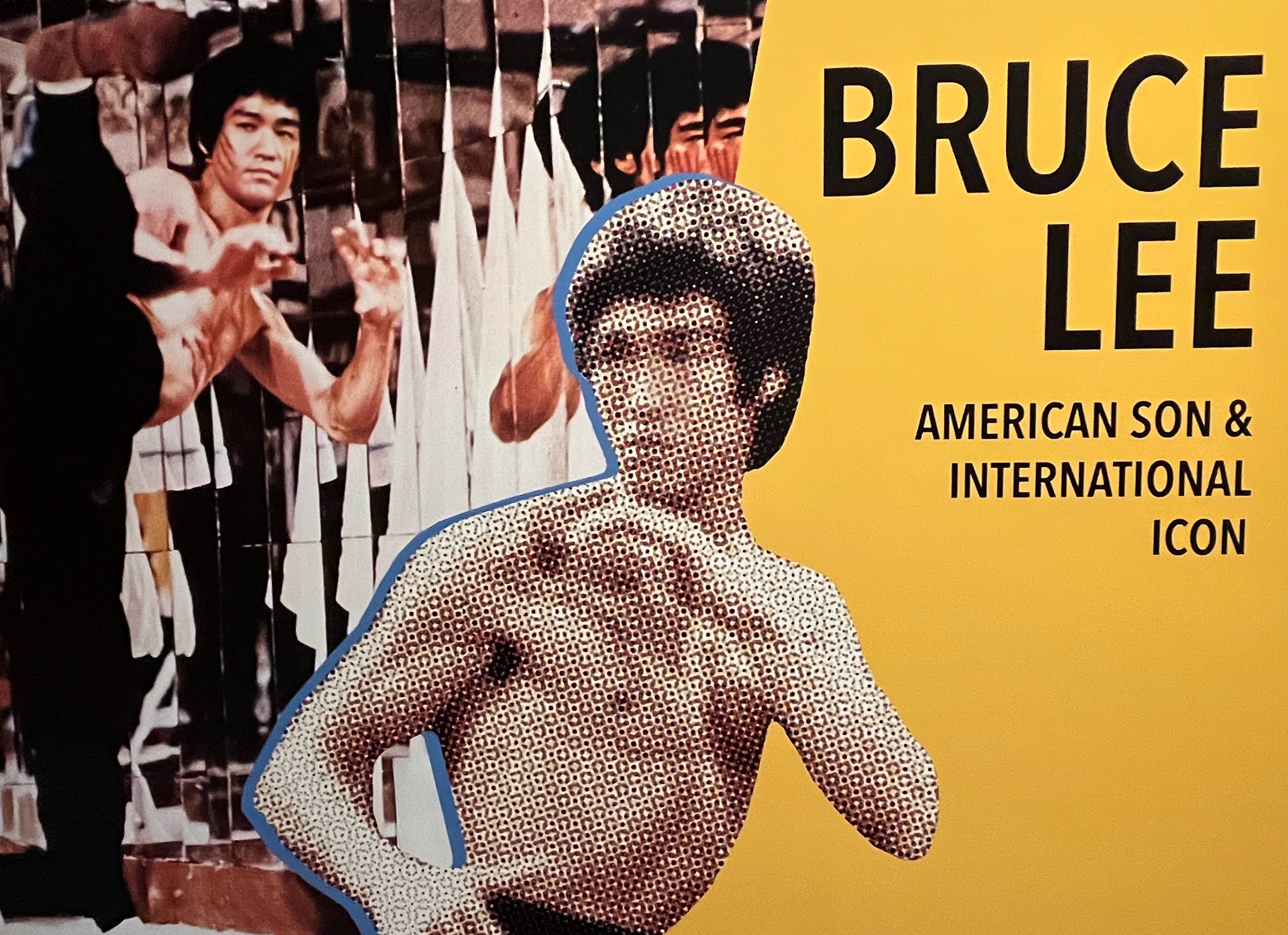
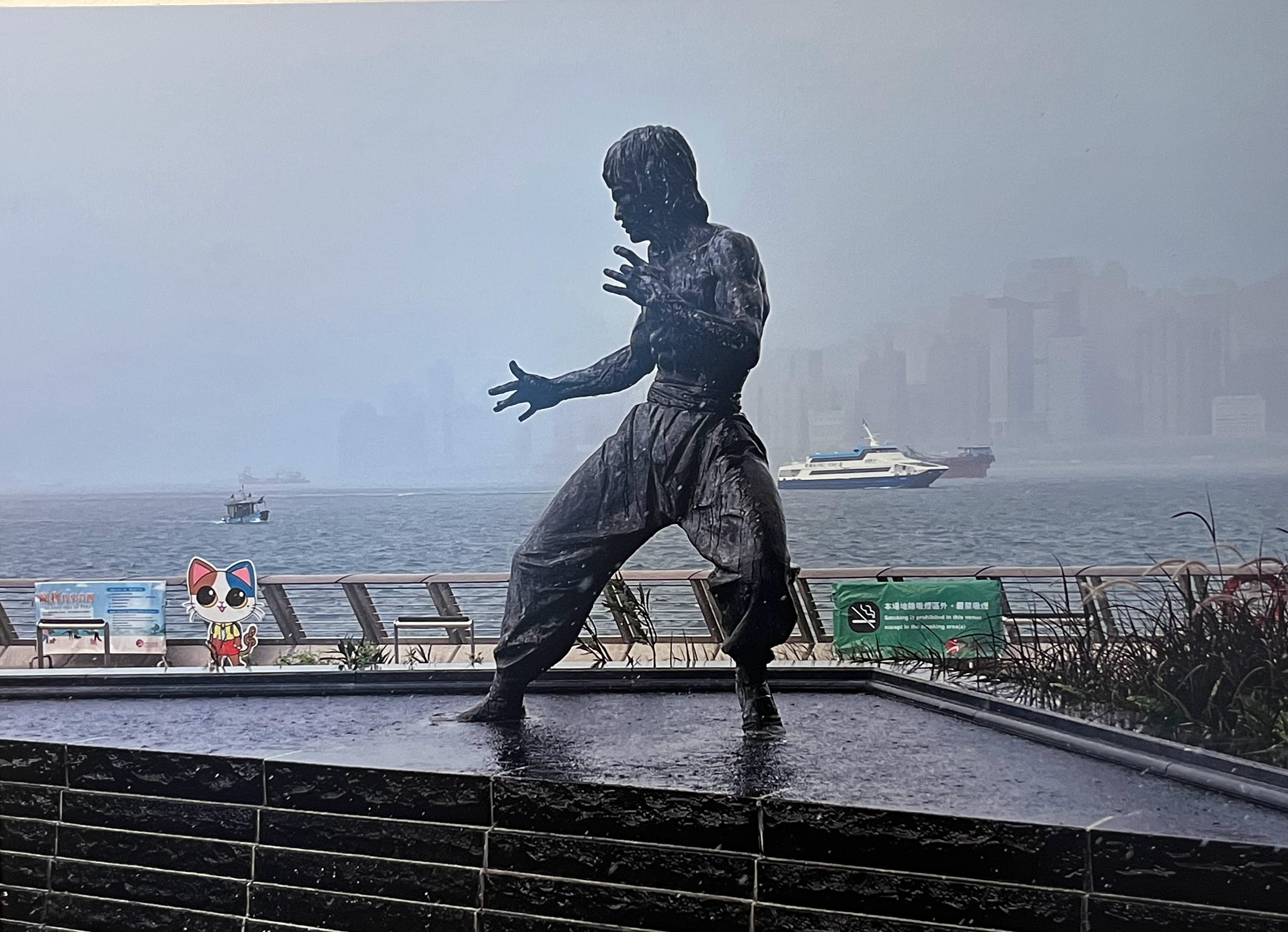
This lightly attended, free museum is only five years old. Development began in 2018. It was closed for awhile during the pandemic then reopened in the fall of 2021. There were three special exhibits when I attended this past summer, one dedicated to the photography of Corky Lee, one on Chinese fashion and a third about Bruce Lee.

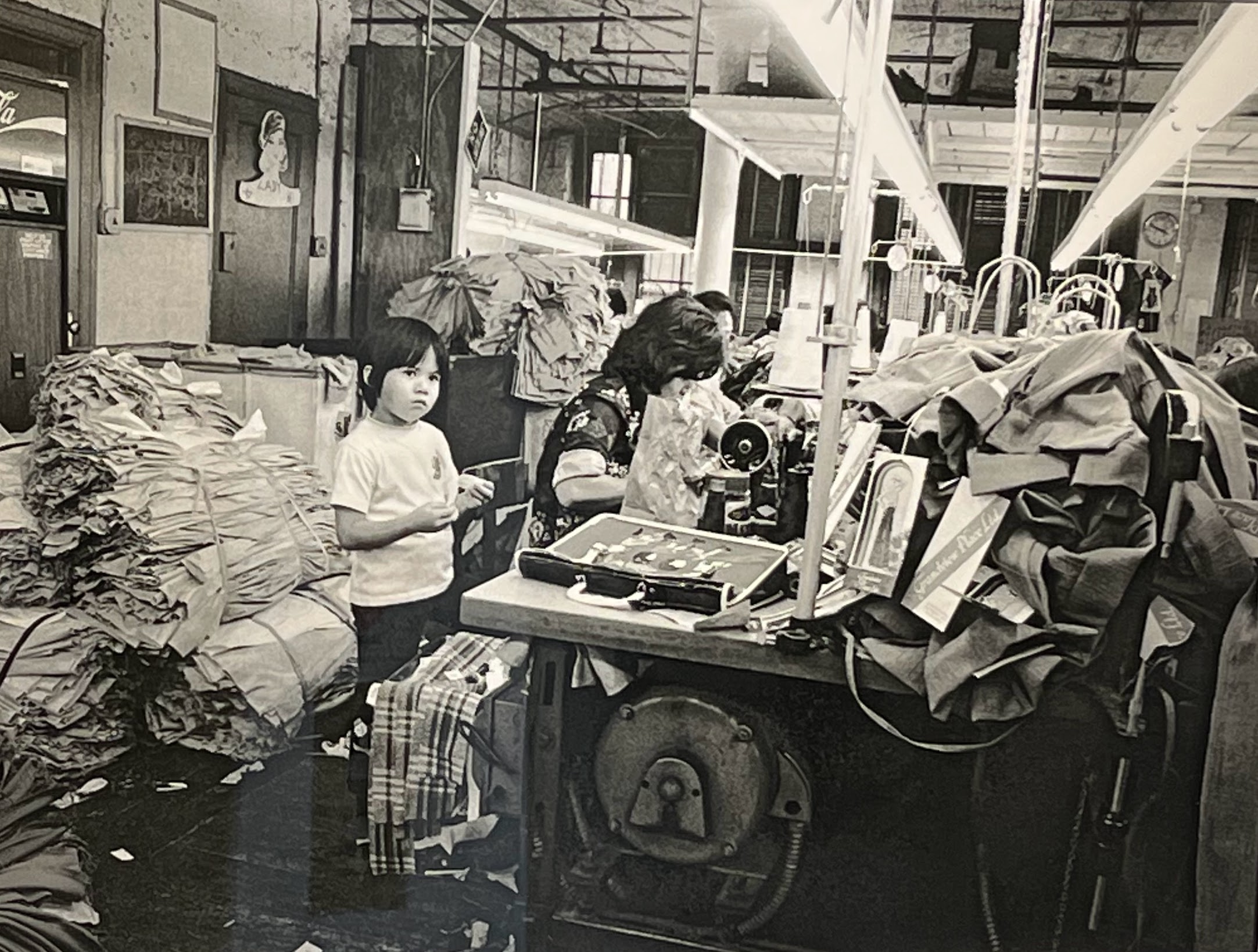
Corky Lee was a journalist and photographer who passed away in 2021. His images document the Asian American experience in the U.S. as well as some landmark historical events significant to Chinese-Americans. He was also an activist, using his camera to support and advocate for his community. Here are a couple examples of his work.


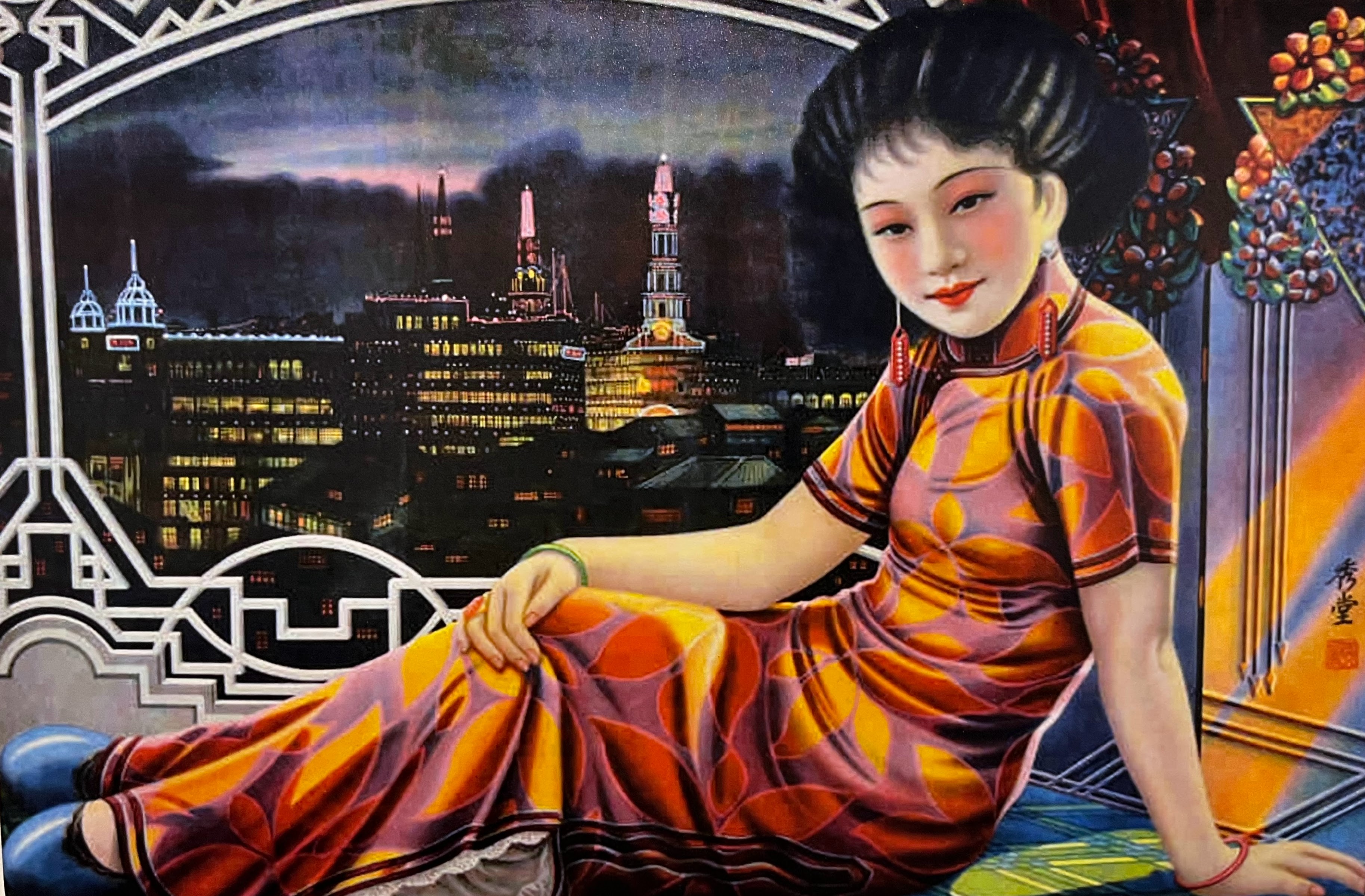
Qipao is a style of dress for Chinese women. It represents the modern woman and has been associated with women’s quest for equality and independence. It first became fashionable in Shanghai in the 1930’s and 1940’s.




Laurence Tureaud was born in Chicago in 1952. He was the youngest boy in a family of 12 children. As he grew up his imposing physique and stern facial expression made him a perfect fit for his first couple of jobs, club bouncer and personal bodyguard. You may know of Laurence Threaud as Mr. T.
In 1982, Mr. T had a life changing event. Sylvestor Stallone cast him as Clubber Lang in the movie Rocky 3. Clubber Lang was the tough who was the next opponent of scrappy underdog Rocky Balboa. That was followed by a TV gig as a member of the A Team, a popular series that lasted for four seasons, from 1983 to 1987.
By then Mr. T was so popular he had his own cereal:
In 1986, Mr. T joined the WWE predecessor World Wrestling Federation as a professional wrestler. At one time, he was the tag team partner of Hulk Hogan. Just a different type of acting role, one might say.
Mr. T was famous for his hairstyle, a Mohawk like cut that was inspired by the Mandinka warriors of West Africa. He was famous for the long and loud gold jewelry that he used to adorn himself with. And he was famous for the expression “I pity the fool,” originally uttered by Clubber Lang in Rocky 3, trash talk aimed at Rocky Balboa.
Let’s start with the gold. In a 2016 interview with USA Today reporter Charlotte Wilder, he said the gold “is symbolic of my African heritage. When my ancestors were brought from Africa, they were shackled by their neck, their wrists, and their ankles by steel chains. And they were sold on the slave block for chump change. So I turned the steel chains to gold to symbolize that I’m still a slave, only my price tag is higher.”

And the gold disappeared after he volunteered in New Orleans in 2005 in the wake of Hurricane Katrina: “…as a Christian, I felt it would be a sin against God to wear my gold when the people lost everything. I remember the bodies floating in the water, and I felt it would be disrespectful and insensitive to people who died, so I said I’d never wear my gold again. Only gold I have is the gold in my heart.”
Mr. T experienced another life changing event in 1995 when he was diagnosed with T-cell lymphoma. He would undergo several rounds of chemotherapy but would eventually have a full recovery. Looking back on that experience, he later told People Magazine (March 2017) he relied on his faith in God.
“I had to practice what I preached. I try to use my experience and the fact that I grew up in the ghetto — I tell people you don’t have to rob or steal to get out of the ghetto. I was diagnosed with cancer — I tell people you don’t have to commit suicide. We’ve got good medicine now. I want people to draw strength from me.”
Following his diagnosis, Mr. T scaled back his acting career. He has continued to do some product promotion campaigns and has had a few TV appearances. In 2006 he starred in a reality show named “I Pity the Fool.” Dave Mason of Scripps-Howard News Service (Oct. 12, 2006) describes the show:
“For his new reality show, Mr. T motivates people to work together. For example, he went to a dance school where an overwhelmed teacher wasn’t doing the best job for the kids. Mr. T said he encouraged the parents to help the teacher, and as an exercise in cooperation, he had the teacher, parents and students do a car wash together.
“‘Mr. T stands for Mr. Tough when it comes to the bad guys,” Mr. T said, his voice still rhythmic. “But Mr. T stands for Mr. Tender when it comes to women and children.” Mr. T, who regularly visits a Los Angeles homeless shelter, shows both his tender and tough sides for I Pity The Fool. The reality show, in which Mr. T goes around the country to motivate youths and adults to do better together, premiered on TV Land.”
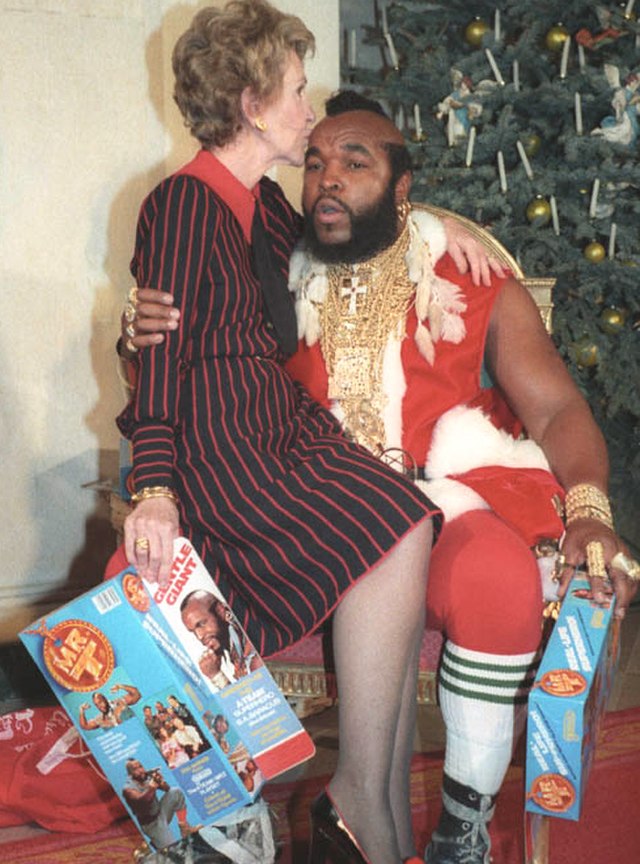
Mr. T has stepped back from the public eye, but he is hardly a recluse. He does motivational speaking, some product sponsorship stuff and some charity events, especially if they involve children.
In 2017 he appeared on the TV show ‘Strictly Come Dancing, Dancing with the Stars.” He and his partner, an Australian ballerina, did not win. More importantly, he donated his earnings to two children’s hospitals.
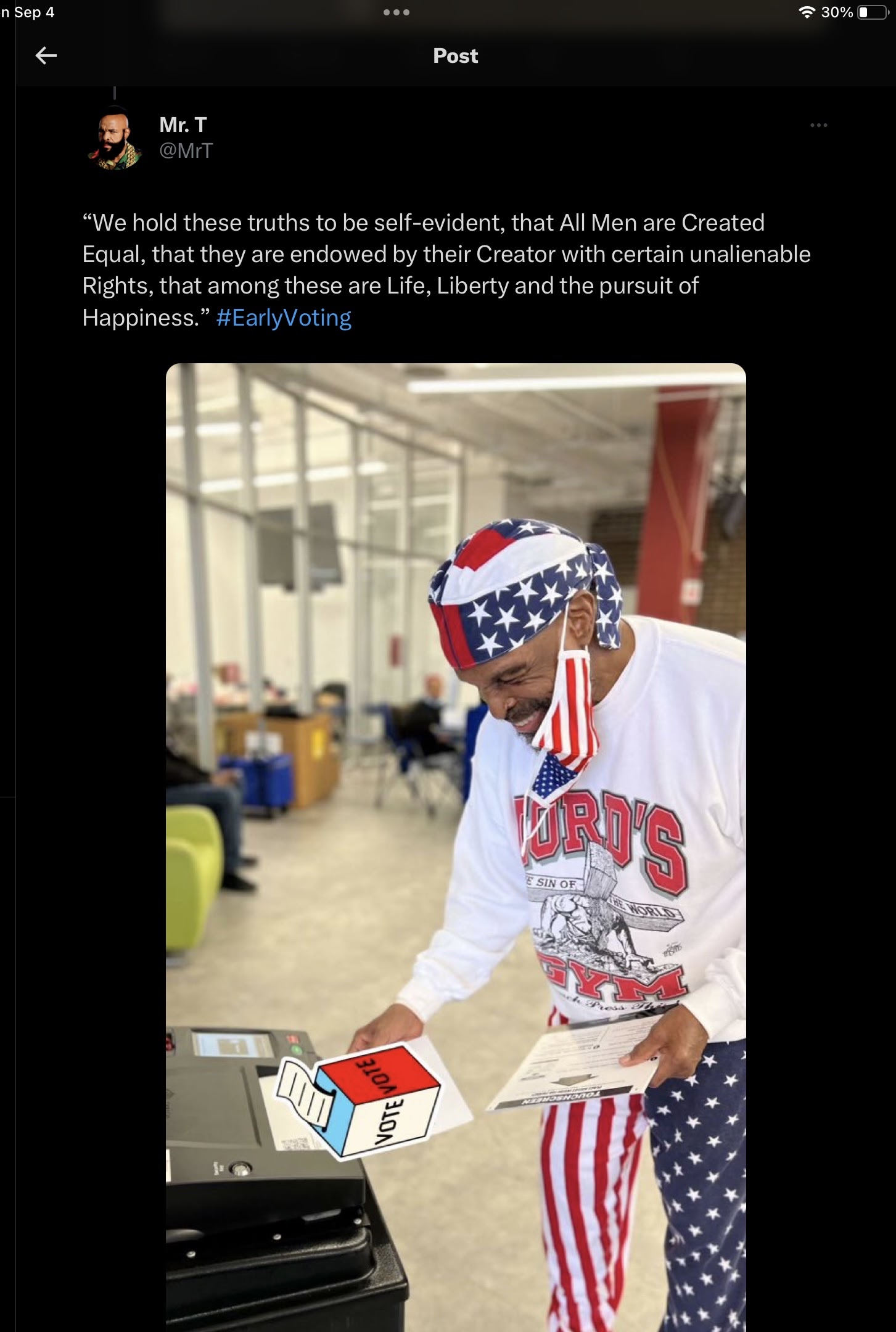
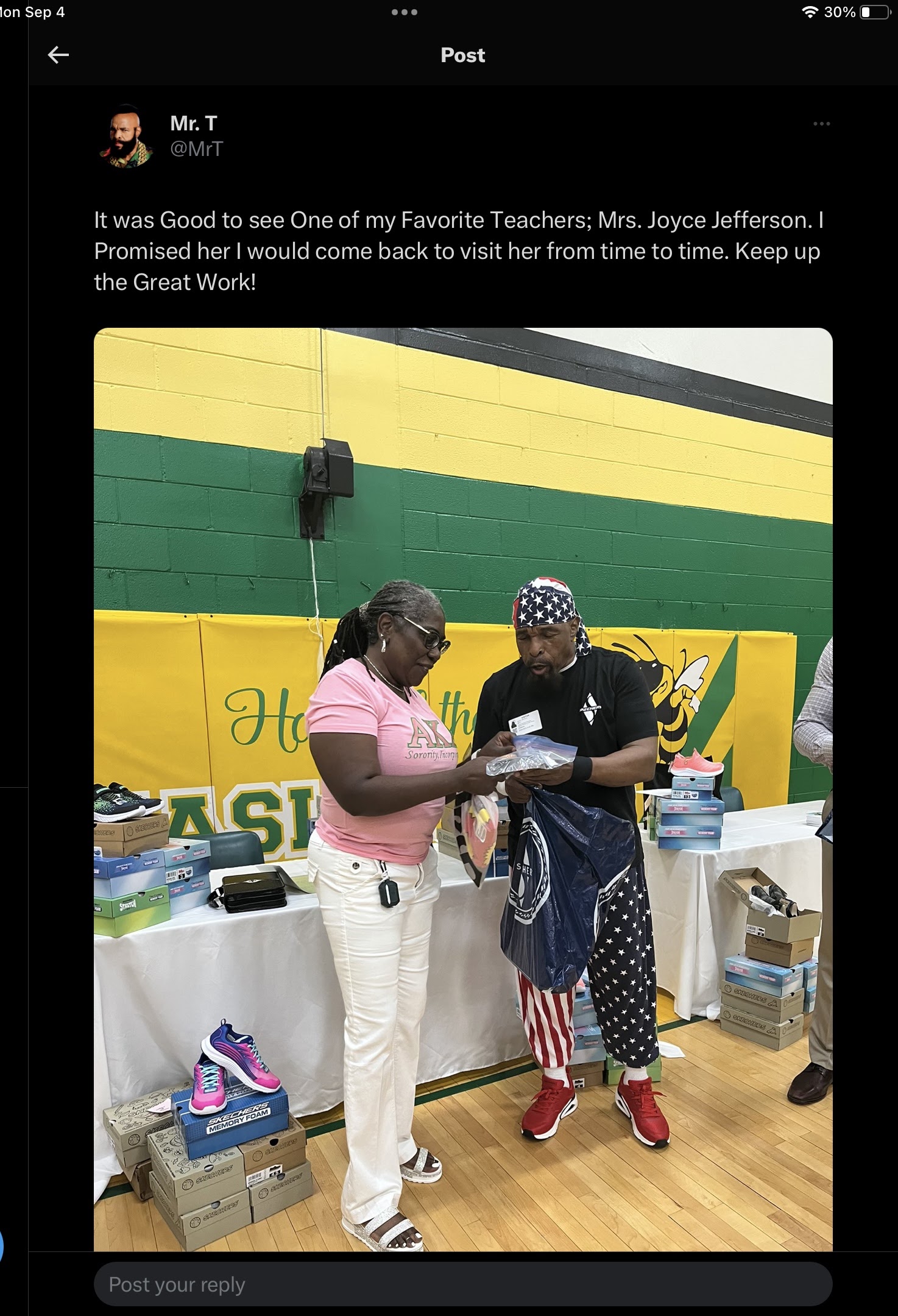
Mr. T, now 71, remains a deeply religious man. He has a home in the city of his birth as well as one in Albuquerque. You can catch up with him on the site formerly known as Twitter. Many of his tweets are biblical quotes. But you can also catch a glimpse of what he’s up to.
Here’s Mr. T voting.
Here he’s respecting his teachers.
And saluting vets on Memorial Day

And here he is back in the neighborhood of his birth getting ready to hand out shoes to children.

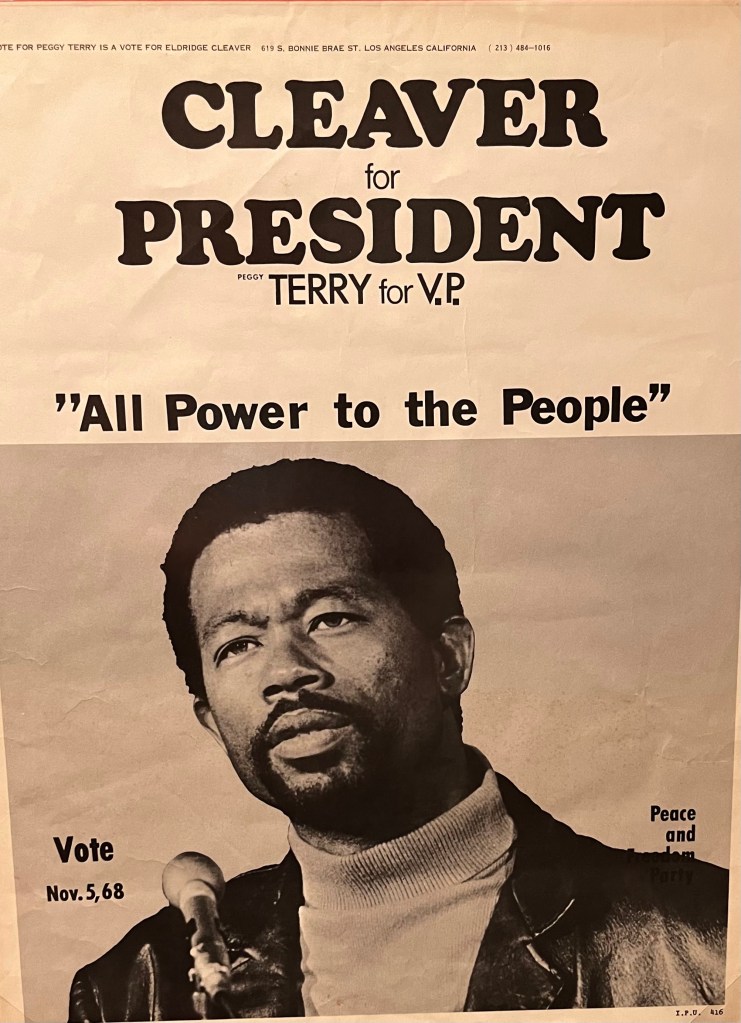
In 1968, Eldridge Cleaver, Minister of Information and head of the international section of the Black Panthers, ran for president on the ticket of the Peace and Freedom Party. In 1986, the same Eldridge Cleaver ran in the Republican primary for a U.S. Senate seat. (He lost both times.) What happened in the intervening 18 years that turned a radical revolutionary into a GOP aspirant?
Cleaver has a decades long rap sheet. Between the ages of 18 and 23, he was convicted of a felony drug charge, rape and assault with attempt to murder. He did time in Soledad, Folsom and San Quentin. While in prison he wrote a series of essays for Ramparts magazine which later were published as a book Soul on Ice (1968). The book contains this shocking quote:
”I became a rapist. To refine my technique and modus operandi, I started out by practicing on black girls in the ghetto — in the black ghetto where dark and vicious deeds appear not as aberrations or deviations from the norm, but as part of the sufficiency of the Evil of the day — and when I considered myself smooth enough, I crossed the tracks and sought out white prey. I did this consciously, deliberately, willfully, methodically — though looking back I see that I was in a frantic, wild and completely abandoned frame of mind.
”Rape was an insurrectionary act. It delighted me that I was defying and trampling upon the white man’s law, upon his system of values, and that I was defiling his women — and this point, I believe, was the most satisfying to me because I was very resentful over the historical fact of how the white man has used the black woman. I felt I was getting revenge.”
Also in 1968, an event occurred that changed Eldridge’s life. Two days after the assassination of Martin Luther King, Eldridge led a group of Panthers on an armed ambush of some Oakland police. Two cops were injured and a 17-year-old Panther, Bobby Hutton, was killed. Eldridge jumped bail.
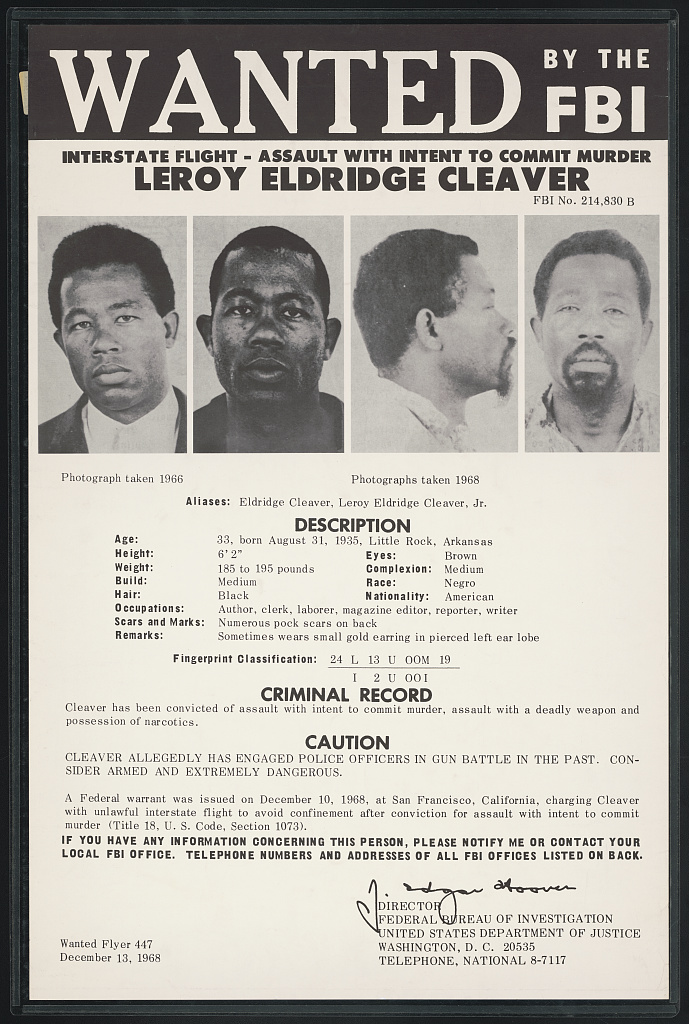
Kathleen Cleaver, Eldridge’s wife for 20 years, told the story in an article published in the Los Angeles Times (Dec. 1, 1975).
“On Nov. 27 (1968), the date scheduled for his surrender to prison authorities, Eldridge Cleaver was watching the proceedings on television in Montreal. Many people were glad that he had been able to escape the clutches of the law enforcement paraphernalia of the state, and considered his action a wise choice. Fully convinced that the revolutionary societies outside the United States would aid the burgeoning revolutionary movement inside America, Eldridge Cleaver left Montreal on an odyssey that took him to Cuba, Algeria, North Korea, China, Vietnam, the Soviet Union, and the People’s Republic of China. By 1972. his flagging belief in the substance of international proletarian solidarity was shattered by the visit of Richard M. Nixon to China, considered the beacon light of revolutionary struggle in the world. To see Richard Nixon and everything he represented being welcomed by Chairman Mao to the People’s Republic of China signaled the death knell of a certain period of international relations in which Eldridge’s political ideology had been formed and nourished.
“Eldridge Cleaver chose to seek political asylum in France, as an individual, since it was a country traditionally receptive to political refugees from all over the world, and its extradition laws would protect him from being returned to the United States. While living anonymously in France, Eldridge was treated to the spectacle of the Watergate expose, the resignation of President Nixon and the arrest of his attorney general, John N. Mitchell, under whom the destruction of the Black Panther Party had been engineered…
“Recognizing that a fundamental transition is in progress within the American government apparatus, Eldridge Cleaver decided that his own exile could be terminated and that he could safely return home to stand trial.”
Here’s what happened after he came home.
Cleaver became an evangelist.
“This Cleaver is giving himself a year starting last June 1 to get onto the road the Eldridge Cleaver Crusades an enterprise he says has been blessed by Billy Graham and to start a contracted book on his spiritual metamorphosis. ‘I talked with Billy Graham and found him warm, friendly, encouraging,’ says Cleaver ‘We prayed together, embraced each other. He gave me advice on how to start the crusade.’ Cleaver has spoken at 30 colleges and 20 church rallies since returning from seven years as a refugee… (Modesto Bee, July 23, 1977)
Cleaver became a fashion designer.
“The tiny men’s boutique, only a few blocks from Beverly Hills on trendy LaCienega Boulevard, is adorned by a simple sign: ‘Eldridge Cleaver Unlimited.’ The name itself suggests this is no ordinary tiny men’s boutique. This one is operated by a Black Panther Party cofounder turned born again Christian turned haberdasher.
“Nor is the merchandise ‘ordinary,’ even in the context of west side Los Angeles where fashion, to be fashion at all, must be at least a trifle outrageous. This shop, quietly opened three months ago by one of the country’s best known ex-revolutionaries, sells only one product, a special type of pants designed by Cleaver himself while living in exile in Paris during the early 1970s.
“THE PANTS, put discreetly, feature a front pouch. It is a style that was much in vogue during the late 15th Century, the conspicuous anterior adornment then known as a ‘codpiece.’
“Cleaver admits he has never actually seen one of his creations being worn by a man on the street, but he is convinced that day will come. ‘Right now, I think they mostly wear them to the discos,’ he added.”(Chicago Tribune, Oct 3, 1978)
Cleaver became a Mormon.
“Former Black Panther leader Eldridge Cleaver is exploring the possibility of becoming a Mormon. church officials say. They said yesterday that Cleaver has received lessons in the Mormon religion from missionaries in Menlo Park and has talked privately with Elder Paul Dunn, a member of the church’s leadership body the Quorum of the Seventy. Dunn said he had met with Cleaver to discuss church teachings and membership.” (UPI, Jan. 23, 1981)
Cleaver became a Moonie.
“Mr. Cleaver appeared here Tuesday in the University of Maryland’s Student Union to extol the virtues of America, democracy and the Unification Church.
“’The Rev. Moon is certainly one of the most important spiritual leaders of our era,’ Mr. Cleaver said. ‘His church is doing good works in many nations. His teachings have influenced my own theological studies.’ So begins a two-month nationwide tour of about 60 college campuses, sponsored by the Collegiate Association for the Research of Principles, run by the Unification Church.” (Baltimore Evening Sun, Sept. 30, 1982)
Cleaver became a patriot.
“Eldridge Cleaver is standing stiffly behind a lectern at Boston College, proud to share the stage with an American flag and glad to be able to urge 150 students to dust off their national identity and get a firm grip on patriotism. He is proclaiming America to be the last, best hope against communist domination of the planet. He is cheerleading for private ownership, arguing that racial barriers in America have been largely overcome, demanding a strong national defense and consigning Karl Marx to roughly the same political dustbin he once assigned J. Edgar Hoover.” (Boston Globe, Nov. 25, 1982)
Cleaver became a conservative.
“The scene was too bizarre to believe. Standing shoulder-to-shoulder on the speaker’s platform at a press briefing by the Populist Conservative Tax Coalition yesterday were these three well-known men: Richard Viguerie. publisher of the Conservative Digest; Paul Weyrich. chairman of the conservative based Coalitions for America; and Eldridge Cleaver late of extreme left-wing radicalism, admitted rapist, veteran of shootouts with the police, jailbird, revolutionary and one-time resident of such politically far away places as Cuba and North Korea.
“It was like Dorothy and the Wicked Witch of the West holding a joint social.” (Miami News, Aug. 21, 1984)
And, ultimately, he added to that rap sheet.
“Oakland police Lt Larry Newman said Cleaver and his companion 40-year-old Lothario Lotho of Berkeley were arrested when police found several pieces of rock cocaine in Cleaver’s gold 1986 Hyundai Excel. Officer Michael Cefalu stopped the car just after 6 pm at 59th and Racine streets after Cleaver began driving on the wrong side of the street. (AP, Oct. 5, 1987)
Cleaver was next in the news when he held a yard sale, including some of his furniture, to raise money for his legal fees.
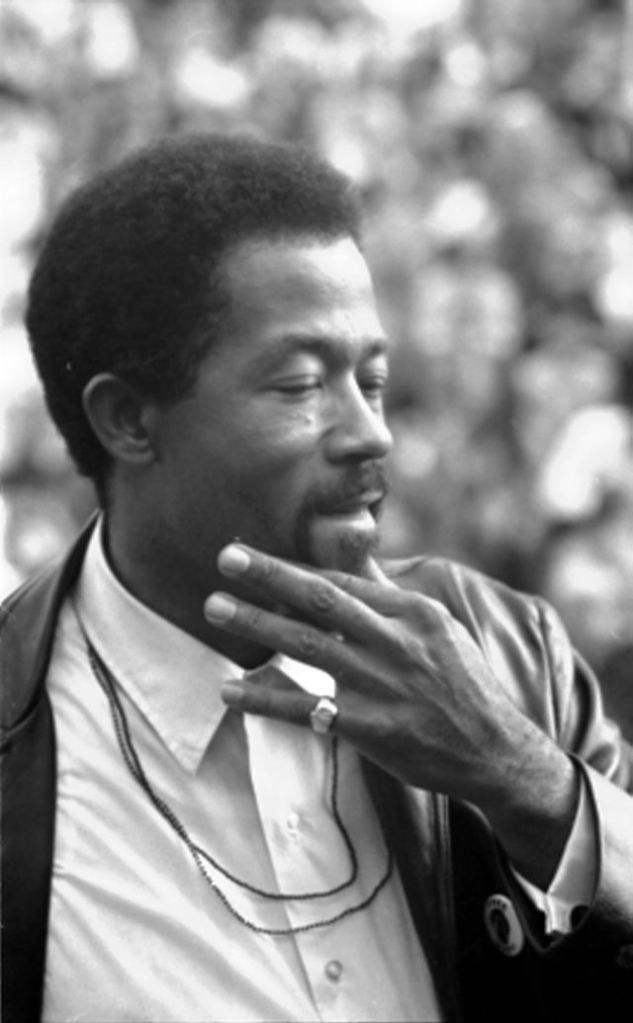
Cleaver died in 1998 at age 62, a victim of prostate cancer. The New York Times obit (May 2, 1998) recalled this vision of Cleaver: “In the black leather coat and beret the Panthers wore as a uniform, Mr. Cleaver was a tall, bearded figure who mesmerized his radical audiences with his fierce energy, intellect and often bitter humor.”
Before doing the research for this blog post, I didn’t know much about the criminality, nor the craziness that followed his return from exile. It’s pretty amazing that this guy actually spent so much time out of jail.
What I remembered is this Cleaver quote from the 60’s that has stayed with me ever since: “You’re either part of the problem or part of the solution.”
-0-
Whatever Happened To?

During his acting career that dates back to the 1960’s, Gerard Depardieu has portrayed Cyrano de Bergerac, Danton, Honore de Balzac, Stalin, Rodin and Columbus. But the movie I remember him best for is a 1990 English-language comedy Green Card in which he tries to marry co-star Andie MacDowell to keep from getting deported from the U.S. Big and with a big nose, Depardieu’s character is imposing, assertive, a little funny, a little crude and yet somehow charming. It is how I pictured Depardieu off-screen. Well, I was mostly right but you have to get rid of the charming bit. Ick might be more appropriate.
Depardieu has made more than 250 movies. He’s still at it though it’s hard to remember the last film he was in that mattered. He’s been named best actor at Cannes. He has won a couple Cesar Awards, a Golden Globe and been nominated for the Academy Award for Best Actor.
But then there’s this: “… the circus of his private life veered from drunk driving offences to no-shows at high-profile film premieres, controversial friendships, and one particularly notorious episode missing the bottle he was trying to urinate in on a plane.” (Gerard Depardieu: France’s Global Star Who Fell From Grace.)
The peeing in a bottle incident occurred on a CityJet flight to Dublin. Flight attendants wouldn’t let him get up to go to the bathroom so he grabbed an empty water bottle instead. Some accounts say he peed in the bottle then spilled some on the floor. Others suggested a complete misfire.
He has made any number of head-scratching, life-changing decisions about his nationality, his religion and where to live. The Guardian reported: “Depardieu has renewed his assault on everything from common decency to the country of his birth. In 2012, following a vocal spat with the French government (at one point he described France as a ‘filthy mess’) over a proposed higher tax rate, he moved to Belgium. In 2013, he was granted Russian citizenship, and declared kinship with Vladimir Putin, writing, ‘We could have both become hoodlums. I think he immediately liked my hooligan side.’”

That didn’t go over well in the Ukraine, nor did his comments supporting Putin’s takeover of Crimea. Dasha Gluschenko, spokeswoman for Ukrainian ministry of Culture told ABC News: “Yes, he is a threat to national security due to his imprudent comments on Ukraine’s integrity and close relations with Kremlin and with the Russian president, in particular.” He was blacklisted in the Ukraine, his movies barred from TV and theaters.
But…but…but. Then he wrote an Instagram post criticizing the Russian invasion of the Ukraine and got this response: “State Duma Representative Sultan Khamzaev has threatened to confiscate the actor’s properties in Saransk and Grozny and give them to orphans.” (Gerard Depardieu Bids Adieu.)
And the erratic behavior just keeps coming:
– In 1967, Depardieu converted to Islam. That lasted two years. According to a story in the Moscow Times, he has also converted to Buddhism and Hinduism. Then in 2020 he “continued his religious journey” by converting to Orthodox Christianity.
– In a 2017 interview with a reporter from the Daily Beast, Depardieu descended into conspiracy theory mode. “Depardieu was musing on whether the AIDS epidemic of the 1980s might have been the result of U.S. government research into biological weaponry, involving monkeys.”
– In 2018, Newsweek reported a sighting of Depardieu in North Korea during which he announced that he planned to move to Turkey. He is quoted as saying “I will visit Turkey in October and talk to Erdogan.”
– Just last year, the Turkish newspaper Daily Sabah identified Depardieu’s next move: “Globally famous former French actor Gerard Depardieu, who became a Russian citizen in 2013, announced his wish to spend more time in Istanbul and Dubai rather than his country. From now on, Depardieu will be staying on a fishing boat converted into a yacht.”

All that is quirky and eccentric and unpredictable. But there’s worse. In 2018, Depardieu was accused of twice raping actress Charlotte Arnoud, the daughter of one of his supposed friends. Five years later, that case is still winding its way through the French legal system.
Then in April of this year, the Guardian published this report. (Gerard Depardieu: 13 women accuse actor of sexually inappropriate behaviour in new report.)
“A new investigation has alleged multiple incidents of sexually inappropriate behaviour by the actor Gérard Depardieu. French investigative website Mediapart published on Wednesday the results of a months-long examination of Depardieu’s on-set actions over an almost-20 year period, ending last year.
“The report, which features testimony from 13 women, alleges multiple incidences of obscene comments, groping and inappropriate acts by Depardieu on high-profile TV and film sets, including Netflix series Marseille, period biopic Dumas and the comedy Big House.
“The actor’s alleged behaviour appears to have largely involved the unwanted touching and groping of young female actors, makeup artists and set technicians, as well as obscene comments and ‘persistent groaning noises’.”
Ugh! That’s more than just a little crude.
-0-
Whatever Happened To?

Music in the 60’s was pretty segregated. Motown was black. The British Invasion was white. Soul, blues, R+B? Black. AOR, psychedelic, progressive? White. But then there was Sly. Sly was for everybody.
Sly was Sly Stone, née Sylvester Stewart, the driving force behind Sly and the Family Stone. The ‘Family’ part of the name was represented by his brother Freddie who played guitar and his sister Rose on keyboards. Sly and the Family Stone was black and white, male and female. They seemed the living embodiment of songs like “Everyday People” and “Stand.” Chicago Tribune music critic Greg Kot (April 27, 2008) summed it up like this: “For a decade, this multiracial co-ed septet from northern California broke down barriers of how a band should look and sound.”
How broad was their appeal? Consider that in August of 1969, Sly and the Family Stone, produced what is widely considered one of the finest performances at Woodstock despite taking the stage at 4 a.m. That was two months after they were equally enthusiastically embraced at the Harlem Cultural Festival. Documentaries from both of those festivals capture their performances.

Sly also challenged the prevailing norm of how black performers appeared on stage. Most of the Motown groups wore suits. Some singers like Sam Cooke and Otis Redding wore stylish leisure wear. Not Sly. He’d come out in fringe, floppy hats, shiny leather pants, bangles and sparkles.
I was fortunate enough to see Sly and the Family Stone . They came to play at my college gym In 1969. Memorial Gym at Kent State wasn’t like one of those gyms where the Big Ten teams play basketball. We sat on wooden bleachers. The 7,000 ‘seat’ gym was packed. And it was hot. It was a 10 p.m. show but long past that time we were waiting….and waiting. But then Sly showed up! All that other stuff was long forgotten and no one would sit down again for the rest of the night.
Late arrivals at concerts were normal for Sly. Even worse, he sometimes didn’t show. In 1970, 26 of his 80 scheduled concerts were canceled (per Wikipedia). And that’s to say nothing of the shows starting two or three hours late, or when he walked off the stage early.
Many of the great rock bands of the era suffered from the unholy trinity of drugs, toxic band relationships and financial mismanagement. Sly hit all three. While the band remained active into the 80’s, shuffling through 18 members, by 1984, Sly and the Family Stone were no more. That same year he reportedly made the dubious decision to sell his music publishing rights. The buyer was Michael Jackson.
A story last year in the Houston Press by Bob Rugguero summed it up this way. “Maybe things started to get out of hand when the cocaine magically appeared on every possible spare bathroom countertop and mirror. Or when the huge amounts of cash arrived in suitcases. Or when the heavy dudes with gangster vibes and big fists started hanging around. Or the guns. Lots of guns. Or that old standby, Inter-Band Power Struggles for Creative Input.”
The web site Rock and Roll Globe tells this story
“Sly’s nose found its way to cocaine in 1969 and he was thus enraptured with (or ensnared by) the devil’s dandruff. It could be apocryphal but there’s the story about Sly, so desperate to find a crack pipe while at his label’s office he locked himself in the rest room and tried to unscrew some of the plumbing to fashion a pipe.”
Following the disintegration of the band, Stone generally kept out of the public view. In 1993 he showed up for the band’s induction ceremony at the Rock and Roll Hall of Fame. In 2006 he made a brief appearance at the Grammy Awards, sporting a crazy blond Mohawk, and performing with the original band members.
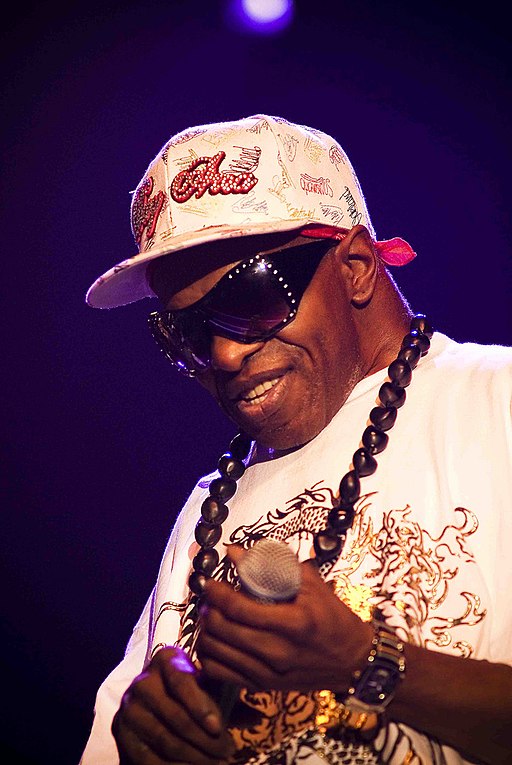
Geoff Boucher of the Los Angeles Times caught up with Stone in 2008:
“Sly Stone, the Howard Hughes of the Woodstock scene, rolled up on a hulking three-wheel custom chopper painted the color of lemons.”
Boucher described him as “sipping a double margarita and smiling that familiar toothy grin, although the 1960s towering afro is long gone along with his funky saunter. His posture and movement show the damage of the years when he was living especially hard. Stone’s chin never leaves his collarbone when he talks and there’s a tremor and hitch to his collarbones…’I’m like this because I fell off a cliff,’ he said, referring to a spill he said he took ‘walking in my yard’ in Beverly Hills.”
Perhaps Sly bottomed out in 2011 when the New York Post found him on an LA street:
“Just four years ago, he resided in a Napa Valley house so large it could only be described as a ‘compound,’ with a vineyard out back and multiple cars in the driveway.
“But those days are gone.
“Today, Sly Stone — one of the greatest figures in soul-music history — is homeless, his fortune stolen by a lethal combination of excess, substance abuse and financial mismanagement. He lays his head inside a white camper van ironically stamped with the words ‘Pleasure Way’ on the side. The van is parked on a residential street in Crenshaw, the rough Los Angeles neighborhood where ‘Boyz n the Hood’ was set. A retired couple makes sure he eats once a day, and Stone showers at their house. The couple’s son serves as his assistant and driver.”
In 2015, a Los Angeles jury awarded Stone $5 million for a decade worth of royalties that he claimed had been stolen from him by his former manager Gerald Goldstein and entertainment lawyer Glenn Stone. Goldstein appealed and a judge overruled the jury decision, saying Stone knowingly signed over the rights to his music.
In March of this year, Sly Stone celebrated his 80th birthday. Against all odds, you’d have to say. A biography, Thank You (Falettinme Be Mice Elf Agin), written by Ben Greenman, is scheduled to be published in October. Maybe we haven’t heard the last from Sly after all. There’s not much in Sly’s resume in the last 40 years or so worth celebrating. But we can always remember this…
-0-
Whatever Happened To?
To make a long story short, ‘Nails’ went off the rails.

Nails is the baseball player Lenny Dykstra. Dykstra was the center fielder and leadoff hitter for the 1986 World Series champion New York Mets. He played six seasons with the Mets, after which he was traded to the Philadelphia Phillies where he put in another seven seasons. Three times he was an all-star. Fans of both teams saw him as an embodiment of the fighting spirit of the team. With his cheek packed with tobacco he was gritty, aggressive and reckless, characteristics that did not serve him quite so well off the field.
At first things seemed to be going pretty well after he retired.. Ben McGrath wrote a story in the New Yorker in 2008 with the headline “Nails Never Fails: Baseball’s most improbable post-career success story.” Sitting down to lunch with Dykstra, McGrath wrote: “Improbably, he has since become a successful day trader, and he let me know that he owns both a Maybach (“the best car”) and a Gulfstream (“the best jet”). The occasion for our lunch, however, was a new venture: Dykstra is launching a magazine, intended specifically for pro athletes, called The Players Club. An unfortunate number of his former teammates have ended up broke, or divorced, or worse.” All of which would soon apply to Dykstra.
In June of 2011, a Philadelphia Daily News reporter Paul Hagan caught up with Dykstra in Lynchburg, Va., where he had come to watch his son play minor league ball. His piece, headlined “The Strife of Lenny,” told a very different story:
“Lenny Dykstra could have been anywhere on this hot Sunday afternoon.
“Well, that’s not exactly true. His passport had been taken away. He needed a judge’s permission to leave Southern California and travel to City Stadium. His driver’s license had been revoked, too, so he had to take a $60 cab ride to Roanoke to catch his flight home.
“The high-profile Chapter 7 bankruptcy that he calls a ‘death sentence.’ The smutty allegations that he groped a teenaged girl, demanded regular oral sex from his housekeeper, bounced a $1,000 check to an escort service. The divorce. The arrests that would put him in jail and drag him down, ruin his reputation and cost him everything but his desperate determination to fight to the bitter end.”
Dykstra had since been identified as a steroid user. In the coming years he would be charged with grand theft auto, bankruptcy fraud, identity theft, indecent exposure and possession of cocaine. He was sentenced to 6-½ years in prison for his fraudulent bankruptcy filing.
Prison did not rehabilitate. In 2018, Philadelphia Inquirer columnist MIke Sielski wrote a story “Dykstra shows true face again and it’s not pretty.” Sielski described this incident: “Early Wednesday morning, he was arrested in Linden, N.J., for allegedly making terroristic threats to an Uber driver and for possessing illegal drugs, among them ecstasy, cocaine, and marijuana. The driver reportedly told police that Dykstra threatened to kill him with a gun, though police found no gun at the scene, and in an interview with the New York Daily News, Dykstra suggested that he himself was the true victim: ‘The guy went nuclear on me.’”
Sielski recalled some incidents from Dykstra’s playing days. “He could have killed himself and (teammate) Darren Daulton in 1991 when, while drunk, he sent his red Mercedes careening off a Radnor Township road, crashing into a tree. Yes, he could wink-wink away those ‘special vitamins’ that revitalized his career. Yes, he could lose a small fortune in one night playing baccarat in Atlantic City, then try to throttle some poor bystander who dared to wonder aloud how and why someone would be so self-destructive.”

In 2017 he published an autobiography: “Nails: A Memoir of Life on the Edge.” Richard Sandomier of the New York Times offered this review: “Lenny Dykstra emerges as a figure of enormous braggadocio who moves swiftly from roguish to Trumpian. He can hardly stop admiring his hitting skills, his houses, his private jets, his magazine for wealthy athletes and his epiphany that steroids would help save his craving to make millions of dollars after the Mets traded him to the Philadelphia Phillies.”
Bleacher Report slotted in Dykstra as #9 on its list of The 25 Biggest Sleazeballs in MLB History.Why only #9. Well consider that the list includes such legendary sleazeballs as Ty Cobb, Pete Rose, Charles Comiskey and Kennesaw Mountain Landis.
And Dykstra’s legal woes are not quite behind him. In March of this year mylanews.com reported that “jThe U.S. Attorney’s Office has filed a notice of lien seeking more than $150,000 in restitution the office says former MLB baseball player Lenny Dykstra owes in restitution as part of his 2012 sentencing in a bankruptcy fraud case.”
You can catch up with Lenny Dykstra and get a first hand look at the vitriol he continues to spew on Twitter. I checked out his account and found this piece of nonsense.

-0-
Whatever Happened To?


In 1968 I was 18. There wasn’t a woman on the planet I was more enamored with than Grace Slick. She was, at the time, lead singer of my favorite band, Jefferson Airplane. One year before they had released their Surrealistic Pillow album, which included the songs “Somebody to Love” and “White Rabbit.” One year later they would make a 6 a.m. appearance at Woodstock, playing a set that was delayed from 9 p.m. the night before.
It was the era of sex, drugs and rock and roll. Slick was the cover girl. Most important, in 1968, was the rock and roll. Most remember Slick for her soaring vocals on White Rabbit, a song she claims to have written on LSD. It is a song that never seems to get old, not just to music fans, but to DJ’s, TV and film producers, marketers and innumerable female lead singers in cover bands. I also think of her hauntingly beautiful voice on the song “Today” at the Monterey Pop Festival in 1967. There is a YouTube clip of that performance below. There is an even better one in the 1968 Monterrey Pop documentary (available on Max and Hulu).
Then there’s the drugs. LIkely they included LSD, quaaludes and marijuana, and most damagingly alcohol. Jefferson Airplane was not going to be one of those bands that would stay together for decades and Slick was a big part of the reason why, not so much because she supposedly had affairs with three different band members, but rather because of her alcoholism.
The guitarists Jorma Kaukonen and Jack Cassidy had a side project going which would become the band Hot Tuna. It started at times when Jeffereson Airplanke was inactive, once because Slick had throat surgery and another time when she was seriously injured in a car accident in 1971 while drag racing with Kaukonen. Hot Tuna went their separate ways in 1972 and in 1974, Jefferson Airplane was reconstituted as Jefferson Starship.
The end came on a tour of Germany in 1978. The oft-told story about that tour is that on the first night Slick was too inebriated to get on stage and the performance was canceled. She did get on stage two nights later and many wished she hadn’t. Her erratic behavior included taunting the German audience about losing World War II. I’ve read that she was fired by band member Paul Kantner, or that she was asked by Kantner to resign and did. Whatever, that was the end and Jefferson Starship continued the tour without her.
A story in Louder Sound describes another episode that same year:
“By early 1978, Grace Slick was no fun to be around. Appearing at a club version of The Gong Show in San Francisco, she’d abused the contestants, fought with her fellow judges, and was eventually dragged offstage after breaking some microphones. The audience, who’d also been baited by the Jefferson Starship singer, jeered as she was hauled into the wings. Later the same day, she was stopped by the California Highway Patrol and charged with drunk driving. She abused the arresting officers and spent the night locked up.”
Years later in a 2012 interview with Vanity Fair, a by now sober Slick described what she was like when she drank: ”I turn into a real, huge asshole. I’m having a great time being an asshole and everybody else is going, ‘Oh Jesus,’ and the cops are going, ‘Take her to jail.’”
Slick did briefly come back to a reconstituted version of the band which was now called Starship. They had a hit single “We Built This City” a song which Slick dismissively calls an “awful” song by a “sell-out” band.
In 1988 she put an end to her musical career. During an interview on VH1 she reasoned: “All rock-and-rollers over the age of 50 look stupid and should retire.” She is not going to be one of those 60’s, 70’s or 80’s rock stars who is out on the road playing decades old songs for the umpteenth time because they’re broke. “Well, if you’ve squandered your money and you have to play, be my guest. I haven’t, so I don’t,” she said.
Despite her erratic behavior in other ways, Slick, the daughter of an investment banker, not only didn’t squander her money, she also never lost control of her songs. As you can imagine, the royalties from “White Rabbit” alone are a gift that keeps on giving.
During her musical career she has been credited with a number of firsts. There is a claim that she was the first person to say “motherfucker” on TV while performing on the Dick Cavett Show in 1969. She also is said to be the first high profile rock and roller to admit to going to AA.
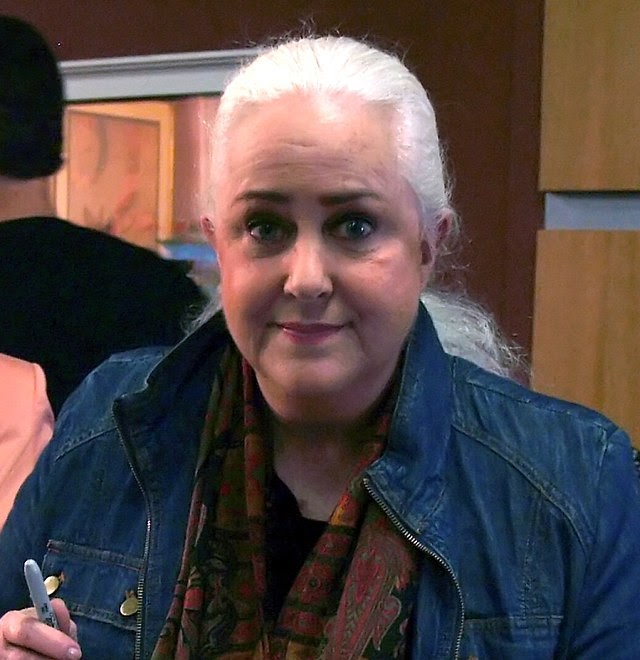
Her music career behind her, Slick has become a pretty accomplished artist. Some of her work has sold and she has had gallery shows, some of which she has attended. Her portraits of fellow Jefferson Airplaners, Kaukonen and Cassidy, grace the cover of the “Best of Hot Tuna” album. Her artwork includes some Alice in Wonderland sort of stuff and some portraits of musicians including Jerry Garcia, Stevie Ray Vaughan and Janice Joplin. You can see her work (and buy some) at http://www.graceslick.com.
She has not lost her social consciousness. A vegan, she is a member of PETA (People for the Ethical Treatment of Animals). She donated some of the royalties from “White Rabbit” to PETA’s campaign against Procter & Gamble’s use of rabbits and other animals in product testing.
She licensed the song “Nothing’s Gonna Stop Us Now” by Starship to Chick-fil-A for a TV commercial. She then donated those royalties to Lambda Legal, a civil rights organization focusing on queer people and individuals living with AIDS/HIV. Chick-fil-A is known for having an owner who actively donates to organizations that oppose same sex marriage.
Whatever happened to Grace Slick? She survived all the sex, drugs and rock and roll. She is alive and relatively well despite some health problems. She is sober, still opinionated and still creative. And she is now 83.
-0-
Whatever Happened To?
(All images are public domain and were downloaded from Wikimedia Commons)
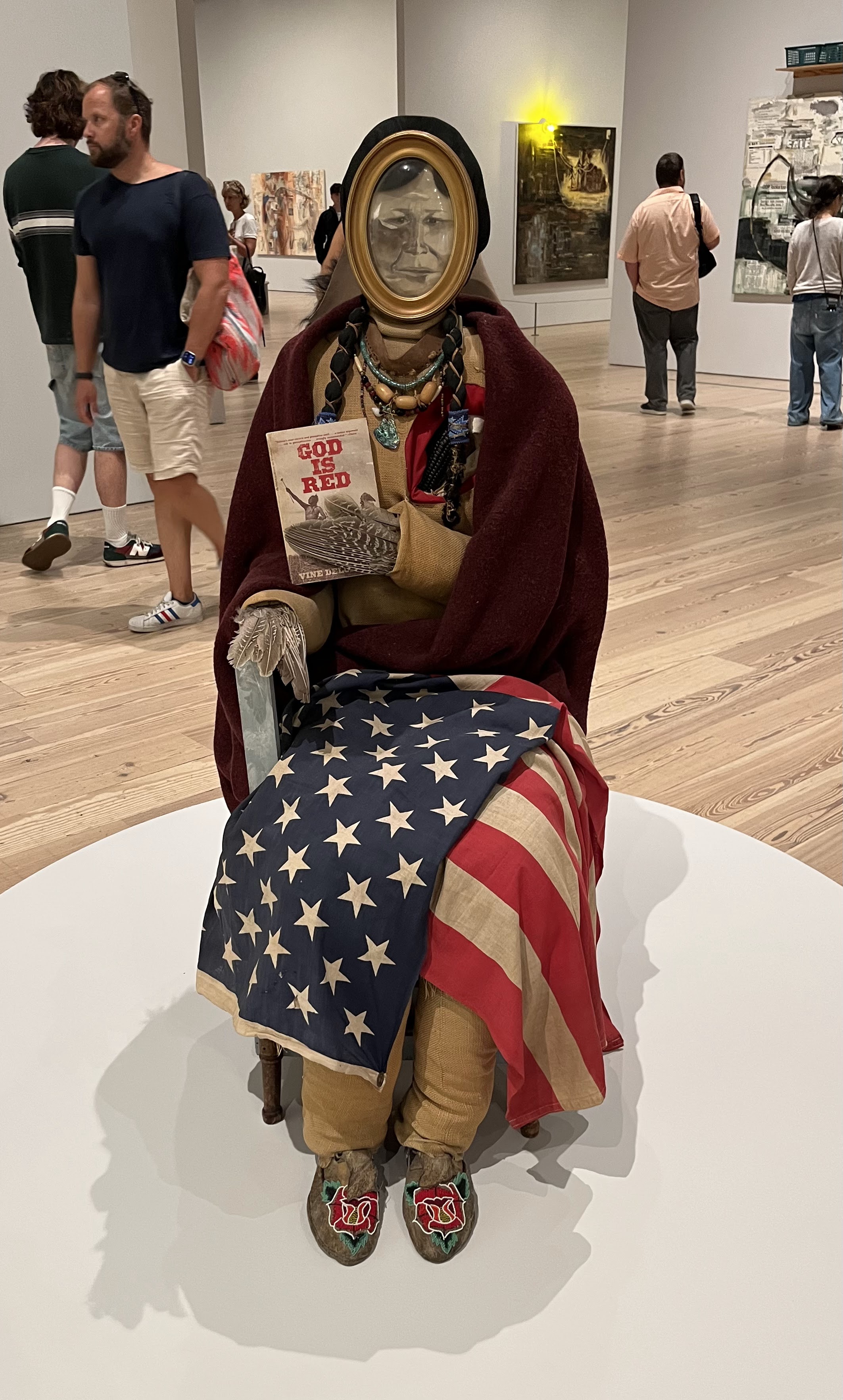
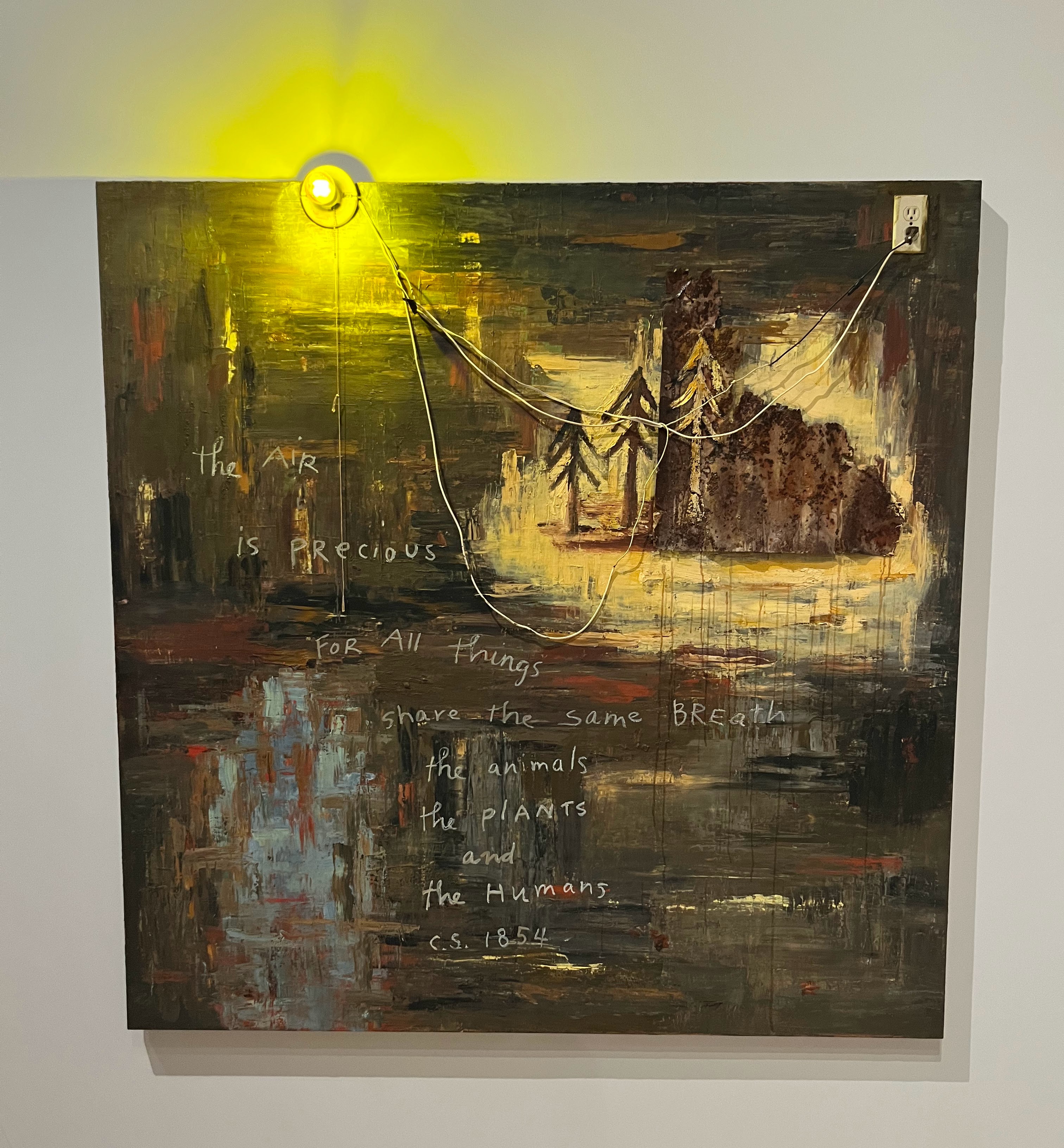
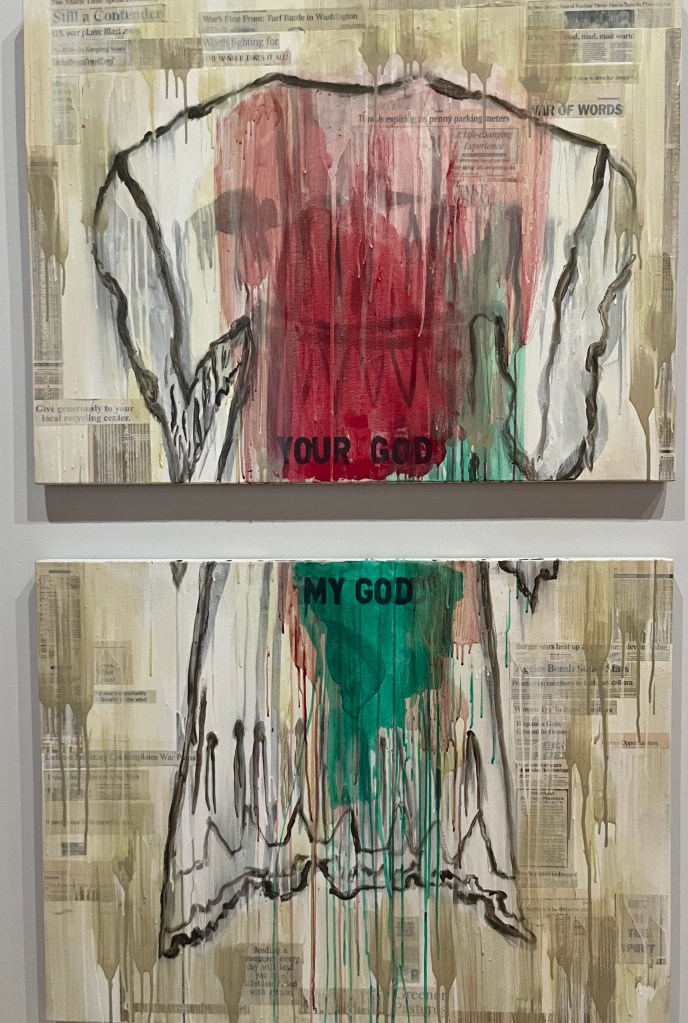
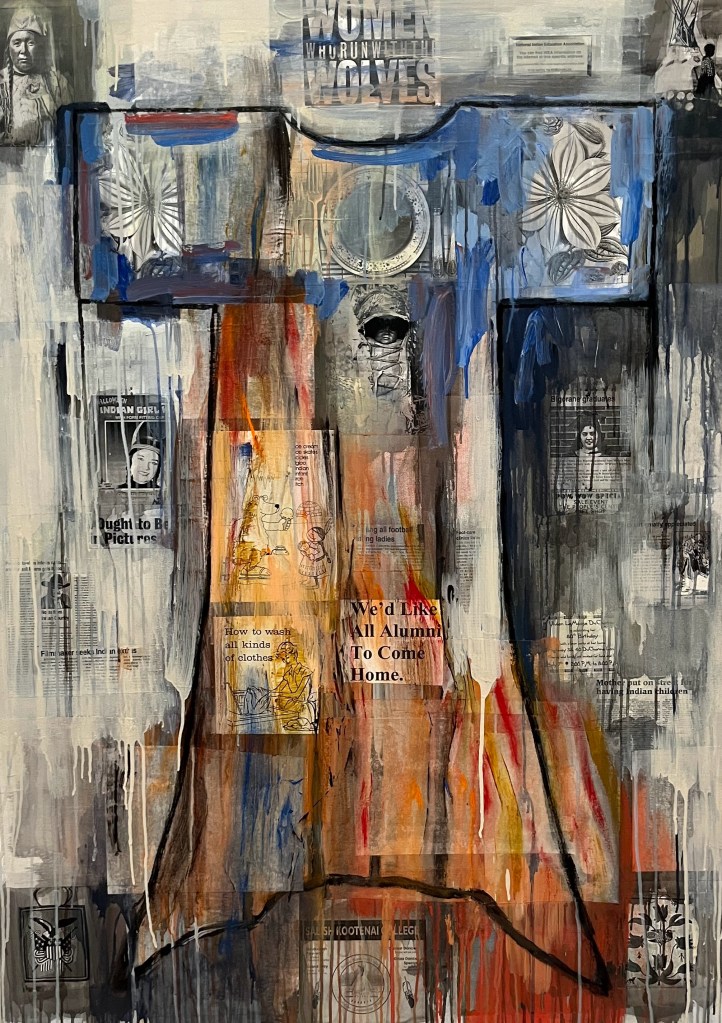
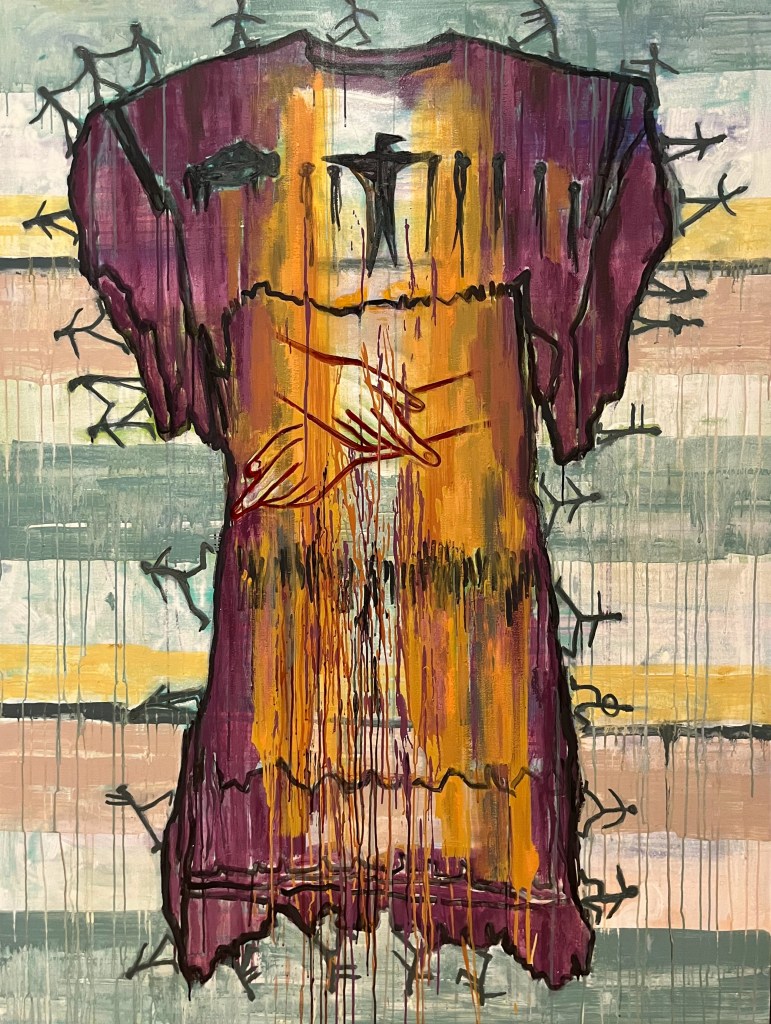
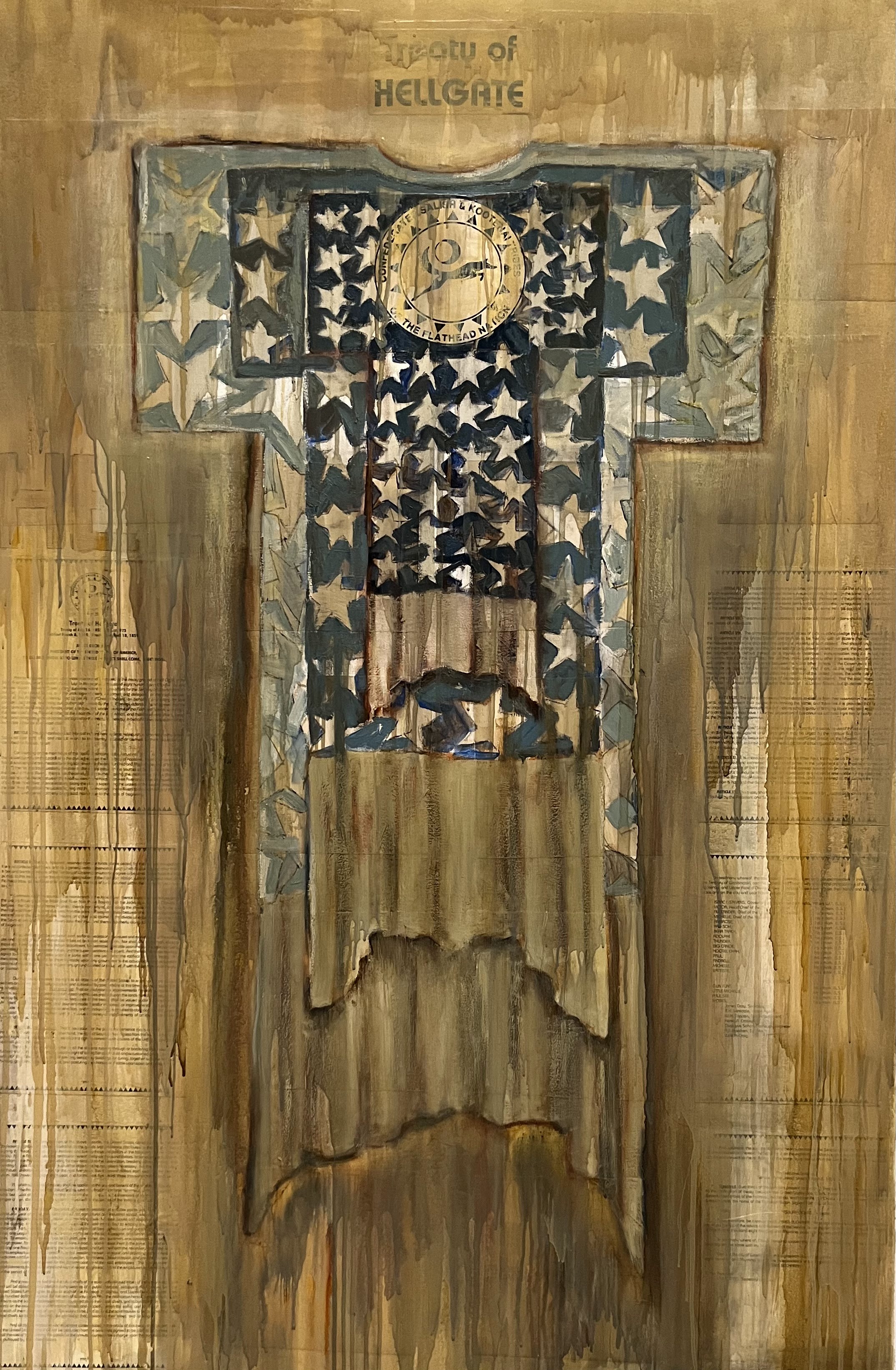
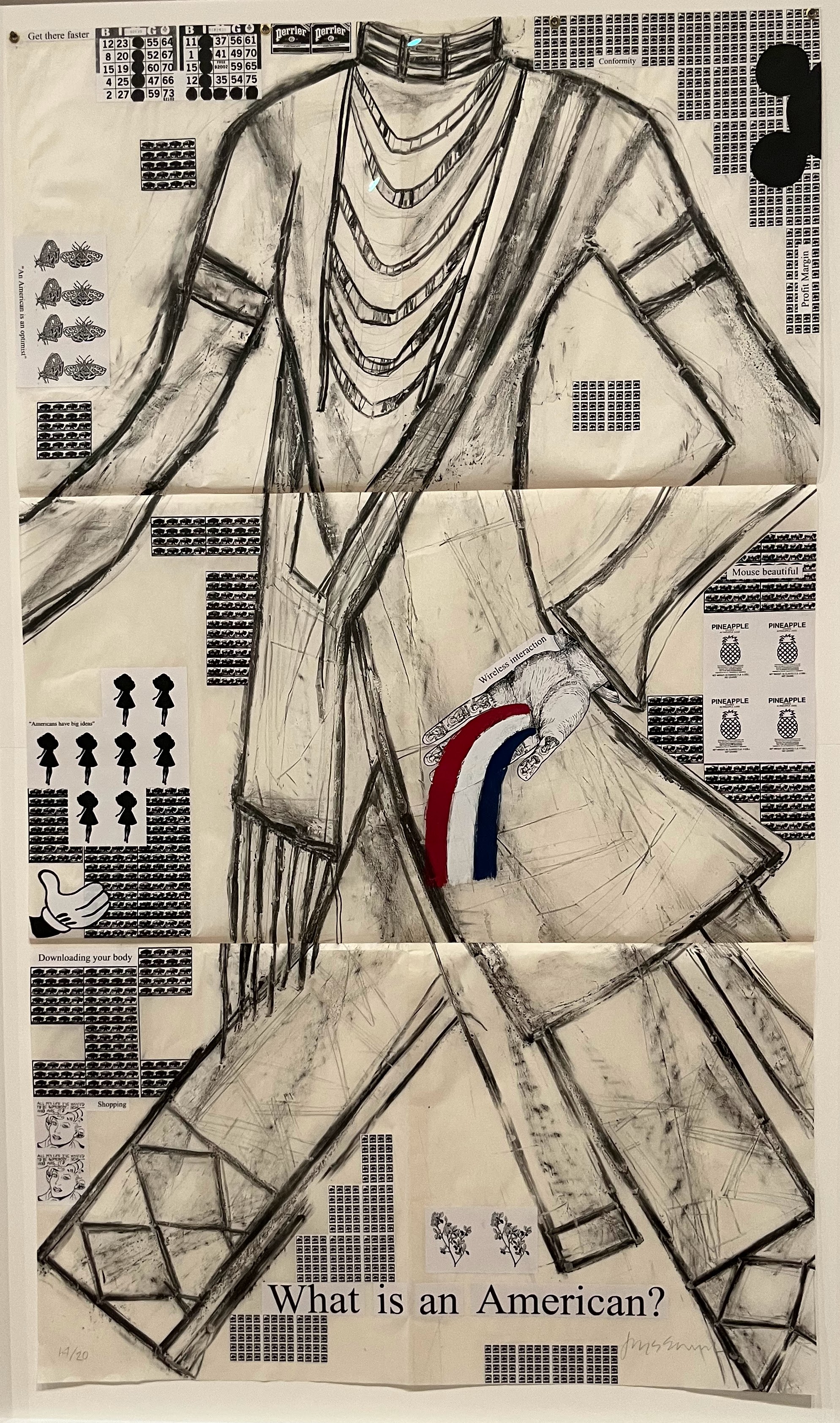
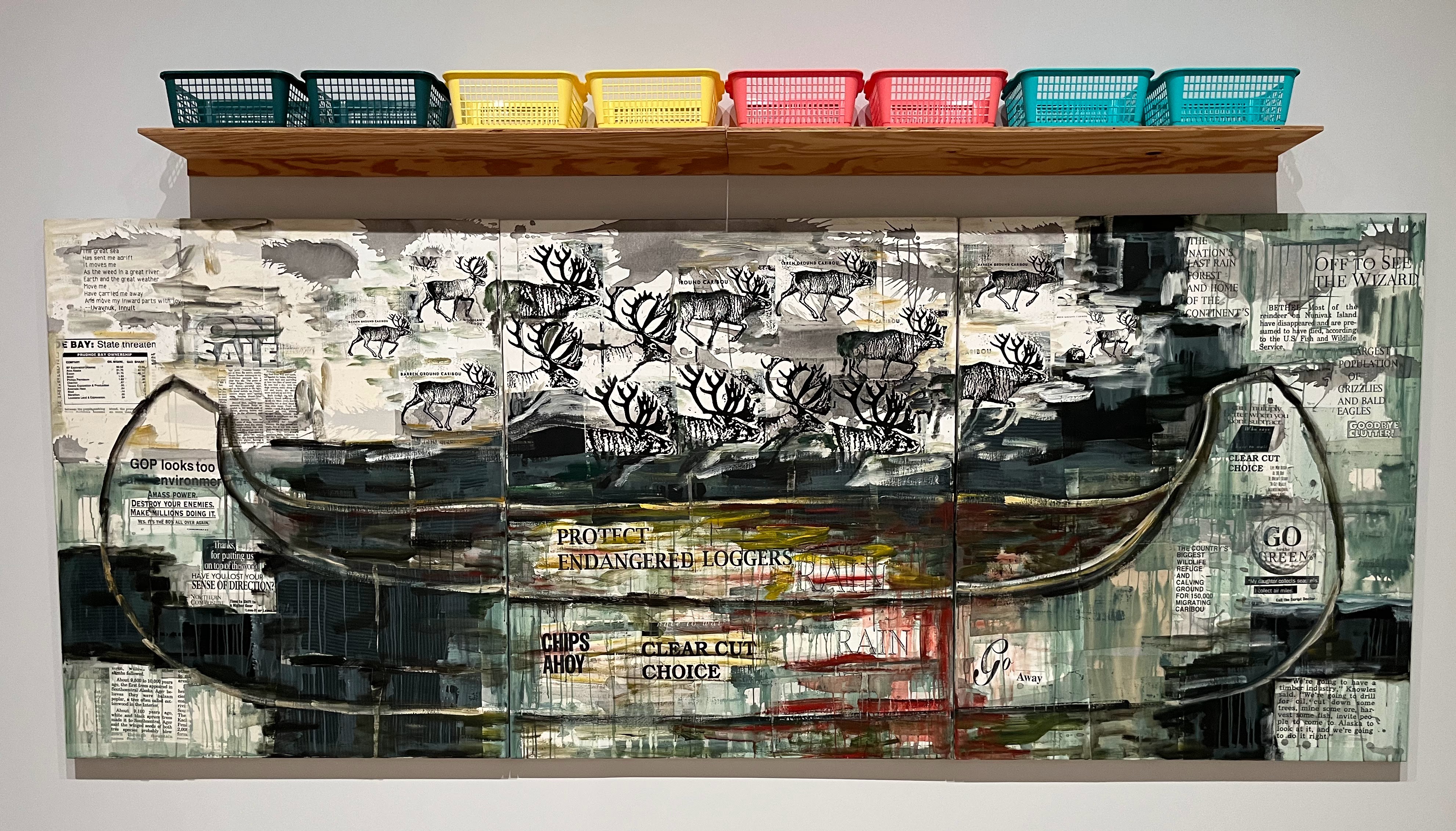
Juane Quick-to-See Smith is a member of of the Confederated Salish and Kootenai Tribes. A resident of New Mexico, she was born on a reservation in Montana. In addition to being an artist, she is a political activist, curator and educator. Her art reflects her focus on environmental issues and Native American history and identity.






 off the leash