Brenda Lynn Robinson was born in 1940 in Columbus, Ohio, the daughter of two artist parents. She would later adopt the name Aminah after it was given to her by an Egyptian cleric while she was traveling in Africa. Robinson’s art tells her story — what’s important to her — her family, her home, her experiences. The works on display in this exhibit are on loan from the Columbus Museum of Art where she bequeathed her art when she died in 2015.
Family
DadMom
My Parents, Study One
Christmas Day in Poindexter Village, the public housing project in Columbus where she grew up.
Self Portraits
Sydney, Aminah’s son
Travels
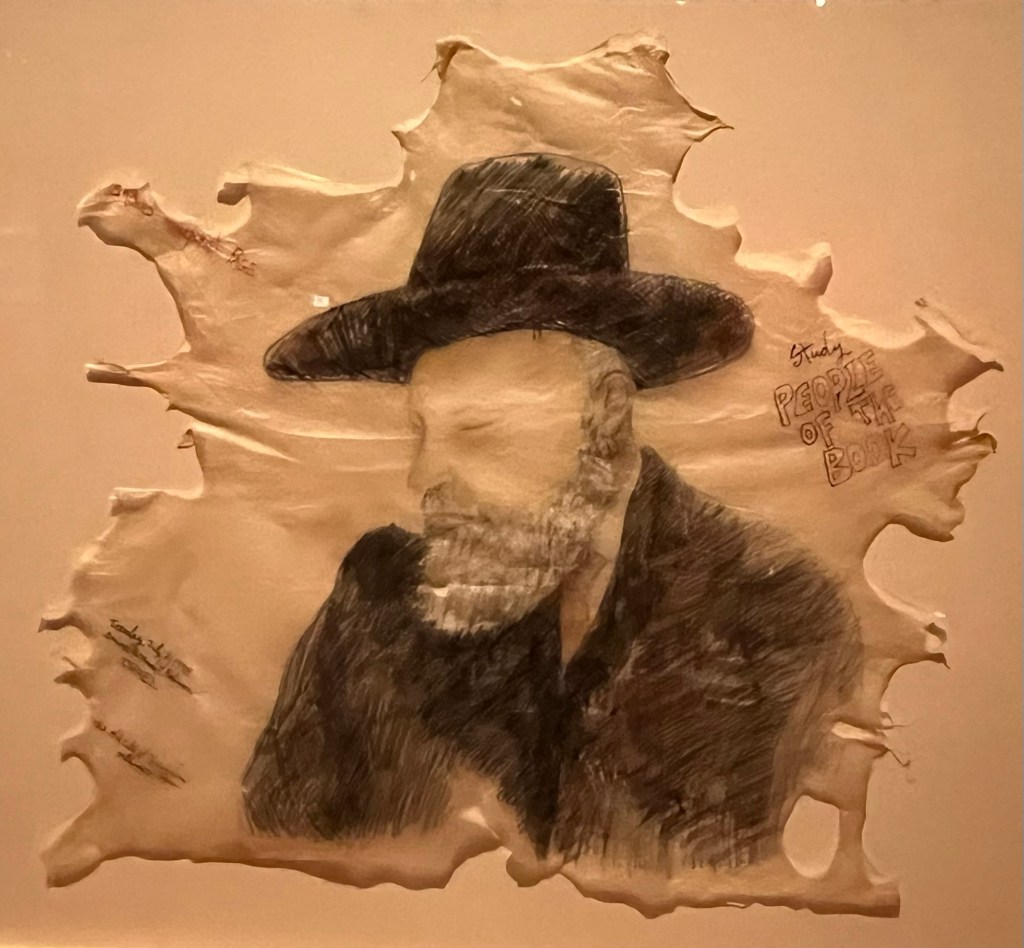
Streets of Dakar, SenegalVendor at Damascus GateOrthodox Jew, The Old City of Jerusalem/Sacred PagesReturning from Israel to Columbus, Ohio/Sacred Pages.Umbrella ManTo Be a Drum, illustration for book of the same name.
French-born Philippe Petit was the perpetrator of what’s been called the artistic crime of the century.
“It was a hot summer morning in Lower Manhattan when the artist tiptoed across a ¾-inch cable hung 1,368 feet above the ground, crossing the 130 feet separating the two skyscrapers not once, but multiple times. It was August 7, 1974, and New Yorkers held their breath, watching in awe as Petit walked back and forth between the (World Trade Center) towers, performing knee bends and other stunts. The whole affair lasted an unforgettable 45 minutes.” (Daniel Jonas Roche, The Architect’s Newspaper, Aug. 5, 2024)
Fifty years later, Aug. 7, 2024, Petit is at it again, this time at New York’s Cathedral Church of St. John the Divine where he has been artist-in-residence for decades.
“With the majestic Gothic cathedral suffused in golden light, the man about to walk the taut cable rigged across the cavernous nave draped a glittering cloak over his white jacket and knee-length breeches, transforming into both master sorcerer and jester. He promenaded across the wire, now balancing without his pole, now lying down as if on a hammock and pretending to strum along with Sting, who sang his ballad ‘Fields of Gold’ from the stage: ‘You’ll remember me when the west wind moves’ and ‘forget the sun in his jealous sky.’ Perfect lines for his aerialist friend above, the legendary Philippe Petit, who is most at home in the upper regions.” (Wendy Blake, West Side Rag, Aug. 11, 2024)
Artistic, yes, but still a crime. And Petit was arrested after his World Trade Center performance. That wasn’t a first for him. There was a high-wire walk at the Notre Dame Cathedral in Paris in 1971 and another at the Sydney Harbor Bridge in Australia in 1973. “The police try to get me off, but they cannot. When I finish, I go to jail. I go to court. I pay a fine and usually I am freed. And I am on the front page of newspapers all over the world.” (Lisa lervolino, The Daily Item, Port Chester, N.Y., Aug. 5 1983)
The World Trade Center walk resulted in more than just front-page headlines. “The phone rang with one offer after another. There was a multimillion-dollar film deal from MGM. There was a book proposal: How To Walk The Wire in Your Back Yard in Five Days. There were beer endorsements; wine commercials; Burger King offered him $100,000 to dress up as a Whopper and wire across 8th Avenue to open a new franchise. Someone even wanted him to make a record, based on what he had said to the press after his arrest: ‘When I see two oranges, I juggle; when I see two towers, I walk.’ He turned them all down. ‘I could have become a millionaire within days. A stupid book would have been made, a stupid film, stupid T-shirts, stupid little dolls climbing on the tower like King Kong would have been made. I didn’t say no in principle, I said no because I looked at the people and heard their words and everything was wrong. There was a different language, it was a different point of view. It was not me. And I cannot be not me.’” (London Observer, Jan. 13, 2003)
There would be books. Six of them, in fact, most notably 1985’s “On the High Wire.” He is currently working on an autobiography. A documentary about the World Trade Center walk called “Man on Wire” won the audience award at Sundance for best documentary in 2008. It is available on a number of streaming services including Amazon, Apple and YouTube.
In 2015 there was a fictional movie “The Walk” directed by Forrest Gump director Robert Zemekis. That’s available on the same streaming outlets. https://youtu.be/GR1EmTKAWIw?si=9bhbfelJlgjXWLa2
Petit never stopped thinking of himself as a street performer. When his feet are at ground level, that may involve juggling.
“Despite publicists, organized appearances and the paperwork and bureaucracy that accompany them, Petit is still doing his own thing on his own terms. In New York City, where he is an artist-in-residence at the Cathedral Church of St. John the Divine, you might find him juggling on the street. He rarely announces his appearances, just draws a chalk circle on the ground, declares it his stage, and starts performing.” (Katya Cengel, Louisville Journal, Oct. 1, 2010)
He has never stopped walking on wire. He has done several shows at St. John the Divine. Shortly after his World Trade Center escapade, he did a five-week run with the Big Apple Circus in Lincoln Center. In 1983, he strung a wire from the top of the Center for the Arts building at SUNY Purchase. Here’s an account of a more recent performance in Washington, D.C.:
“It’s no small feat keeping hundreds of elementary school students still and silent for nearly ten minutes. “That’s what high-wire artist Philippe Petit accomplished on Friday morning, as he crossed the National Building Museum’s Great Hall, more than 50 feet above students’ heads. “Petit crossed a wire strung across the museum’s cavernous Great Hall several times, as students below sat craning their necks in awe. Philippe also performed at a $300-a-plate fundraiser for the museum on Thursday evening. The performance for schools was free.” (Jacob Fenston, dcist.com, March 24, 2023)
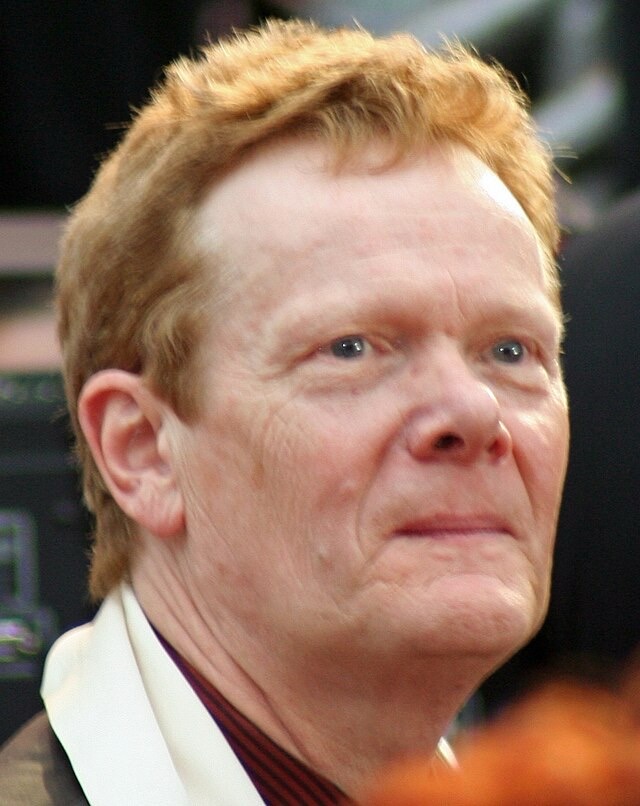
Petit moved to New York shortly after his famous walk. He lives in a small town upstate near Woodstock. He built a barn there using only tools from the 18th century. A reporter from the Observer interviewed him in 2003 and had this observation: “he is somehow not what I had expected of the world’s most famous wire-walker. A broad, weatherbeaten man in a corduroy cap, he wears a washed-out cotton jacket and suede clogs. He has thick, stubby, calloused fingers worn at the ends like well-used wooden spoons… His English is quick and confident but, even after 28 years in America, still heavily accented and sometimes odd.” When Katya Cengel of the Louisville Journal met him she offered this description (Oct. 1 2010):
(Chrisa Hickey 2009)
“Petit is dressed in ordinary black pants, brown walking shoes and a black, long-sleeve T-shirt. He may have risen to great heights as a high-wire artist, but in person he is surprisingly small in stature and rather unassuming. He is 61 years old now and a little round in the belly and with a deep furrow between his eyes.”
The author Collum McCann met up with Petit earlier this year for a story he wrote for Esquire (Aug. 11, 2025): “Nowadays he spends most of his time in Upstate New York, and the rest of it in his gloriously idiosyncratic head. “‘I’m working on a dovetail joint,’ Petit told me, referring to a piece he has been toiling on in his carpentry shop. ‘I’m following the plan of a master craftsman. It’s for a drawer I’m making to go with my worktable in my barn.’”
At age 76, is he ready to retire? Here’s what he told McCann:
“I don’t have a philosophy of time. I just forget about time. It disappears from me. I don’t have any notions of age either. Ageing doesn’t exist for me. I’m just busy doing my thing. I am physically active and strong and supple. I ride my unicycle. I do my juggling. I practise on the high wire. I have my own programme of jogging and weightlifting. Two to three hours a day. One day, of course, my body may refuse to do all of these things, but for now I just don’t even acknowledge the passing of time.”
-0-
(Newspaper articles cited above without links were accessed on newspapers.com.)
In the 50’s, there was Elvis. In the 60’s came the Beatles. Somewhere in between came the teen idols — Bobby Rydell, Paul Anna, Frankie Avalon among them. Some were talented. Some mostly looked good. Fabian Forte, who performed just using his first name, probably fit the latter category.
Fabian was recruited by a talent manager when he was only 14. One of the stories told about his early experience suggests he was going to need some help. “‘The first voice teacher I took the boy to worked with him a month and threw up his hands in disgust,’ recalled Bob Marcucci, the man who was to make a fortune as mentor-manager of Fabian and Frankie Avalon.” (Ande Beck, New York Times, Oct. 2, 1977).
Fabian would later make the following admission. “Questioned in ’60s Congressional hearings about payola in broadcasting, Fabian explained at the time that his records were substantially doctored, electronically, in order to improve his voice.” (Liz Nichols, Edmonton Journal, Nov. 5, 1998)
Nonetheless, by the time he was 18, he had produced ten Top-10 songs. “Hold That Tiger” won a gold record and the album “The Fabulous Fabian” produced more than a million dollars in sales. Then he up and quit. He would later explain “I had no major desire to get into the music industry. I was never really infatuated with it: too many people telling me what to do, what to wear, how to comb my hair.” (Liz Nichols, Edmonton Journal, Nov. 5, 1998)
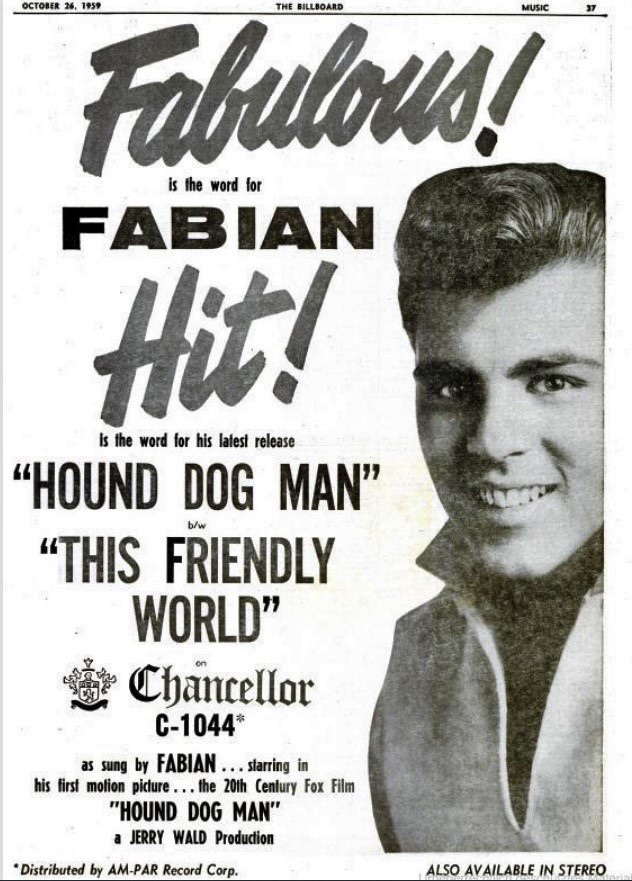
He then embarked on an acting career. “His first film, 1959’s Hound Dog Man, found him playing opposite Dodie Stevens, a 13-year-old who briefly found fame with a song called Pink Shoelaces. Later, he would turn up in a series of beach party films with fellow singers-turned-actors Frankie Avalon and Annette Funicello, finally breaking character in 1963 in a TV series episode in which he played a vicious killer.” (Lynn Van Matre, Chicago Tribune Aug. 13, 1983)
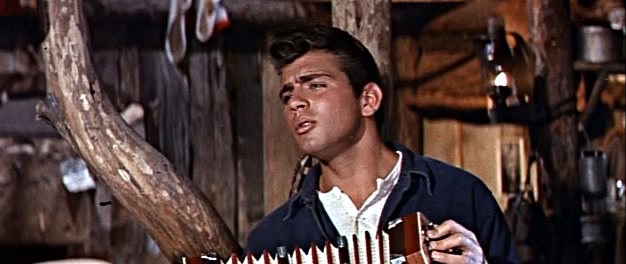
Fabian in ‘North to Alaska’
He would later play Pretty Boy Floyd in a movie called “Bullet for Pretty Boy.”
Fort Worth Star-Telegram reviewer John Dycus offered this summation (July 16, 1970): “Floyd is portrayed by Fabian Forte, a teen singing idol in the relatively tame rock and roll era, who’s not so unbearable as unfeasible.”
Whatever Happened to Fabian? In her 1983 Chicago Tribune story, Van Matre, summed it up like this: “Fabian Forte, better known simply as Fabian (‘Fabe’ to his friends), has, among other things and in no particular order, been written off as just another no talent pretty boy; grown up; ‘come close to going off the deep end’; studied film at UCLA; been written off as an adult entertainer; married; had two children; divorced; made 30 films; gone the rock revival route; married again; put together his own show; sold real estate; posed for a Cosmo seminude centrefold; grown up some more; and been written off once more.”
Here are some of the details.
“Today, the superstardom, the hysterics of massed admirers are gone, and so, it might appear, is the modesty, since Fabe is about to be seen buck naked as the centerfold in a saucy publication specializing in male nudes. However, appearances are to a degree deceiving. Fabe still has enough of his reserve to be wondering whether or not he did the right thing when he shed his dignity for the camera.” (Bryan-College Station Eagle, Dec. 2, 1973)
The next year, he told Dan Lewis of Pop Scene Service (May 11, 1974) he was quitting his acting career and going back to singing. “I did nine pictures. But I was frustrated my acting career was going nowhere.” He would go on to appear in some 30 films.
UPI had this dispatch on March 8, 1976: “Fabian, the slick-haired rock singer of the early 1960s, was fined $200 and placed on three year’s probation last week, in connection with charges he beat his wife and mother-in-law. The 32-year-old singer, whose full name is Fabian Forte, was arrested Oct. 6 at the Toluca lake home of his estranged wife, Katie. She accused him of beating her and roughing up her mother, Moreau Reagan, 69.” Sounds like he got off pretty easy. Katie, with whom he had two children, was his first of three wives. Married in 1966, they divorced in 1979.
Fabian also tried his hand at race car driving, with apparently mixed results. According to the AP (Sept. 15, 1978) “Singer Fabian Forte suffered head injuries at a stock car race track while practicing for a New York charity auto race. Forte, 35, was not seriously hurt and said in an interview that he suffered cuts on the temple and left elbow that were stitched by doctors. The former teen idol said he was rounding a curve at the Willow Springs Raceway on the Mojave Desert at Rosamond Wednesday when his Toyota hatchback slipped three times and flipped end over end twice.”
That accident would eventually lead to a couple lawsuits. The Daily Breeze, Torrance, Calif., (April 1, 1982) had that story. “Forte, whose hits included ‘Hound Dog Man,’ is seeking at least $750,000 in damages from Toyota Motor Sales, U.S.A., based in Torrance, and race car driver Bill Simpson.
“The lawsuit stems from an accident which occurred on Sept. 13, 1978, during a practice session at Willow Springs Raceway near Rosamond in Kern County. Forte blames Simpson, his instructor, for the wreck and Simpson, who has filed suit against the singer, blames Forte.
“Forte alleges that Simpson, acting as an employee of the car company, caused his injuries by failing to take safety precautions or to tell him how fast to go around curves.
“Simpson tells another story. He said Forte caused the wreck by going between 90 and 115 mph despite repeated warnings to slow down.”
(I could find no information as to how this was resolved.)
Fabian had also filed a suit against the makers of the film “The Idolmaker,” charging defamation of character. “Fabian Forte, one of the top teen heartthrobs of the early 1960s, has filed a $64 million lawsuit contending there’s a slanderous representation of him in the film ‘The Idolmaker.’ The film, based on the experiences of Forte’s former personal manager, Bob Marcucci, is about a brash promoter who molds two young men into national stars. Forte, charging defamation of character and invasion of privacy, contends one of the two men is a representation of himself. The lawsuit names Marcucci, who served as a consultant on the film, as a defendant along with United Artists and its parent company, TransAmerica, producers Gene Kirkwood and Howard Koch Jr. and screenplay ‘author Edward DiLorenzo. (Daily Advance, Lynchburg Va., July 28, 1981). The suit was settled out of court resulting in public apologies made to Fabian. He also received Marcucci’s minority share of ownership in the film.
It appears that paying bills is not one of Fabian’s fortes. AP had this story about a lawsuit with a contractor who worked on his house (Nov. 24, 2000).
“For the second time in two months, Fabian Forte, a singing sensation in the 1950s and 1960s, has been sued by someone accusing the singer of not paying his bills. But this time, Forte and his beauty queen wife, Andrea Patrick Forte, are fighting back.
“A lawsuit filed Wednesday on behalf of Andrea Forte against Roy D DeWitt Jr. of Connellsville says the walls of the couple’s $355,000 home in Dunbar Township, about 35 miles southeast of Pittsburgh, are crooked and repairs will cost $50,000.
“The suit was filed the day after DeWitt sued the Fortes saying he had not been paid for finishing the home.”
Andrea is Fabian’s third wife. They married in 1998. And there seems to be some question as to whether they paid those bills.
“A Fayette County resort has dropped its lawsuit against singer Fabian Forte and his wife that claimed they failed to pay more than $4,000 owed for liquor consumed at their 1998 wedding. Forte, 57, and his wife, Andrea Patrick Forte, 39, of Dunbar, said they have been notified that Nemacolin Woodlands Resort and Spa will not pursue the lawsuit it filed against them last fall in Fayette County Common Pleas Court. Nemacolin Woodlands had charged that the Fortes owed $4,663 in unpaid bills plus interest from their wedding reception there.
“In December, Fabian Forte, who gained fame as a teen heartthrob during the 1950s and ’60s, and his wife moved to Dunbar, where Andrea Forte, a former Miss Pennsylvania and Miss West Virginia, grew up. (Cindi Lash, Pittsburgh Post Gazette, April 17, 2001)
Through the years Fabian has kept his career going by playing mostly nostalgia shows. During the 2010’s he toured with a group dubbed the Golden Boys, which also included Bobby Rydell and Frankie Avalon. He also put together a show called “The Original Stars of American Bandstand” that included The Chiffons, Bobby Vee, Brian Hyland and Chris Montez.
The Golden Boys at Mystic Lakes Casino
There is a Fabian web site. But when I clicked on the “on tour” page, it hadn’t been updated since 2008.
Looking back, Fabian had this to say about his teen idol days:
“‘They laughed at us.
“‘They wouldn’t take us seriously as artists,’ Forte told The Times in 1985, talking about music critics in the 1950’s and early ‘60s. But, he added, ‘Don’t get me wrong. It wasn’t all bad. For a teenage boy, you can imagine what it was like having all those girls drooling over you. That was heaven.’” (Newark Star-Ledger, June 22, 2025)
-0-
(Newspaper and wire service stories cited above were accessed on newspapers.com.)
In 1988, Michael David Edwards, a plasterer from Cheltonham, went to Calgary to compete in the Winter Olympics. When he came home, he was Eddie the Eagle. And not because he was carrying a suitcase full of medals. In fact, he finished dead last in the two sky jumping events he competed in.In the men’s Normal Hill, Edwards scored 69.2 points from two jumps of 55m. The second-last finisher, Bernat Sola-Pujol of Spain, scored 140.4 points from 71m and 68.5m jumps, respectively (Olympics.com).
Eddie was the first Englishman to compete in Olympic ski jumping. He held the British ski jumping record until 2001. With his coke-bottle lens glasses, his underbite and his big smile, he came home a hero. He was the lovable loser, much like the Jamaican bobsled team that competed in the same Olympics, far more memorable than most of the gold medal winners.
The aftermath: “Johnny Carson invited him to sit on the couch. He had his picture taken with showgirls. He marketed his own line of T- shirts. He made appearances to open malls, ski shops, amusement rides and parking garages, jumping off scaffolding and out of airplanes, landing on a nest egg that, by his account, was cushioned to the sum of $750,000 before it cracked. He has also launched himself from a man-made ramp in the financial canyons of New York City, raced monster trucks, parachuted onto a golf course to greet Arnold Palmer and even recorded a song about himself in Finland that reached No. 2 on the charts.” (Jere Longman, New York Times, Feb 8, 1996)
He told Martin Kelner of the Guardian (Feb, 26, 2013) about another benefit of his new-found fame: “’I was getting all this attention from all these women. I used to go off and do things in nightclubs, present things,’ explained Eddie. ‘Obviously these women are throwing themselves at you but it was only because you were popular and it was great fun. Sometimes I took advantage but most of the time I didn’t.’ A passport, then, to fame, fortune and the finest bedrooms in the west of England.”
(Photo by Orville Barlow)
But not everyone was enamored with the way the Eagle soared in Calgary. Dave Anderson on the New York Times News Service (Jan. 31, 1992) wrote: “But for all the fun, Eddie the Eagle didn’t deserve to take part. He sneaked in through a back door that was ajar. Now the British Olympic Association has slammed that door, tightening its qualifying standards.
“As it should. His wings clipped, Eddie the Eagle has been grounded. He’s not on the British team that will be marching at Saturday’s opening ceremony for the XVI Winter Olympics at Albertville in the French Alps. If it’s British stuffiness that grounded him, it’s also Olympic common sense. Protect competitors from themselves.
“Especially a ski jumper, a Winter bird of prey high above hard-packed snow. To the British Olympic Association, Eddie the Eagle was an endangered species. And the species was himself.”
Eddie had some personal setbacks as well. In 1989, he fractured his skull and broke two ribs after a bad landing in Innsbruck, Austria. “By 1992 things had taken a sour turn, as Edwards entered involuntary bankruptcy, unable to pay a tax bill due to his trust fund being managed poorly; Edwards would subsequently settle out of court against his trustees and get some of his money back.” (Steven Pye, Guardian Sport Network, Feb 4, 2014)
In 2009 he told James Daley of Ski Magazine “I’ve changed a lot since Calgary, and I’m surprised when people recognize me on the street. I had surgery on my jaw and eyes. I had a whale of a time being a celebrity, but now it’s calmed down and I can lead a normal life. I own a plastering business and do speeches as Eddie the Eagle almost every week. It’s actually a nice dual personality.”
Five years later (Jan. 18, 2014), Ken Belson of the New York Times described Eddie’s life 25 years after his Olympic jumps. “Edwards appears to have changed little in the quarter-century since Calgary. He has less hair and no longer wears thick glasses after Lasik surgery. He keeps trim by training for reality shows and working as a plasterer as his father and grandfather did. He is fixing a two-century-old home that he bought.
“While his fame pays his way to places as far as Australia, Edwards remains a creature of the Cotswolds, where he lives with his wife, Samantha, two young daughters and two Shetland ponies. His modest two-story home is filled with all the signs of a busy family with children.”
Edie returns to Calgary 2017
“Eddie met his wife Samantha Morton while working as a part-time radio presenter.
“They married in Las Vegas in 2003 and had two daughters together, Otillie and Honey May.
“However, in 2014 Sam dropped a bombshell when he returned home from a TV interview in Germany, saying she wanted to leave him.” (Danny Collins and Caroline Peacock, The Sun, Jan. 22, 2024)
Eddie has continued to show up just about anywhere. A year ago he was in Warwick doing a Q&A session at a retirement village. Last December he was booked to hobnob with guests at the French ski resort Les Gets. In March, he was the guest star on an Ambassador Cruise Line trip to Norway. In April he made an appearance at the town hall in Silsden in conversation with a BBC radio presenter.
Graham Chadwick of the Daily Mail managed to catch Eddie at his home in Woodchester, Gloucestershire, earlier this month (Nov. 5, 2025).
“The Eagle is treading carefully around his nest, sidestepping a small hole in the floor in front of his staircase before navigating the sheer chaos of a room that is meant to become his kitchen one day.
“‘I’ve lived here three years,’ the Eagle says. ‘I’ve made a room upstairs habitable and sleep there. I’ll do the rest when I have time in the next few years — I’m sure it’ll be nice when I’m finished.’
“‘When I first moved in here in 2015, after I was divorced from my wife, I slept in the shed for about a year,’ the Eagle says.
“‘Yes, in the shed. I had bought this house to do up while my wife and I were still together and I took the roof off it, but then we split and I left the family home to come here. With no roof, I stayed in the shed that year.
“‘I’ve barely had a night off in 18 months,’ he says. ‘That’s why I haven’t done the house — make hay while the sun shines. When the time comes that people don’t care I will go back to the day job.’”
Steven Pye of the Guardian (Feb. 4, 2014) summed up Eddie’s legacy like this: “For some, he was a hero who sacrificed a lot to live the dream: an athlete who competed with a smile on his face, and deservedly reaped the rewards of his unexpected fame while he could. For others, Edwards was a laughing stock who belittled both the sport of ski jumping and the 1988 Winter Olympics, and represented everything that was bad in a nation that seemed to adore sporting losers.”
The Kreeger Museum is truly a hidden gem. It is located in the western part of Washington in the primarily residential Foxhall neighborhood. It is far from downtown and the big Smithsonian museums. It has a parking lot for about 15 cars, after which you have to drive around looking for a residential street to park on.
The museum is housed in what had been the home of David and Carmen Kreeger. David Kreeger was the son of Russian immigrant parents, a graduate of Rutgers. He made his money as chairman of GEICO. And a lot of that money went into amassing an incredible collection of mostly modern art. Among his other involvements in the arts in Washington, he was chairman of the Corcoran Gallery of Art and president of the National Symphony Orchestra. He founded the Washington Opera and sat on the board of the National Gallery of Art.
He and Carmen amassed a collection of modern art, heavy on impressionists and cubists. The collection includes a number of Picasso’s and Monet’s as well as works by Van Gogh, Miro, Degas, Cezanne and Chagall. Being in a private collection most of us have not seen these works. There are also a few ancient pieces and a lovely sculpture garden.
When I walked into the Kreeger I couldn’t believe what I found.
The Picasso’s
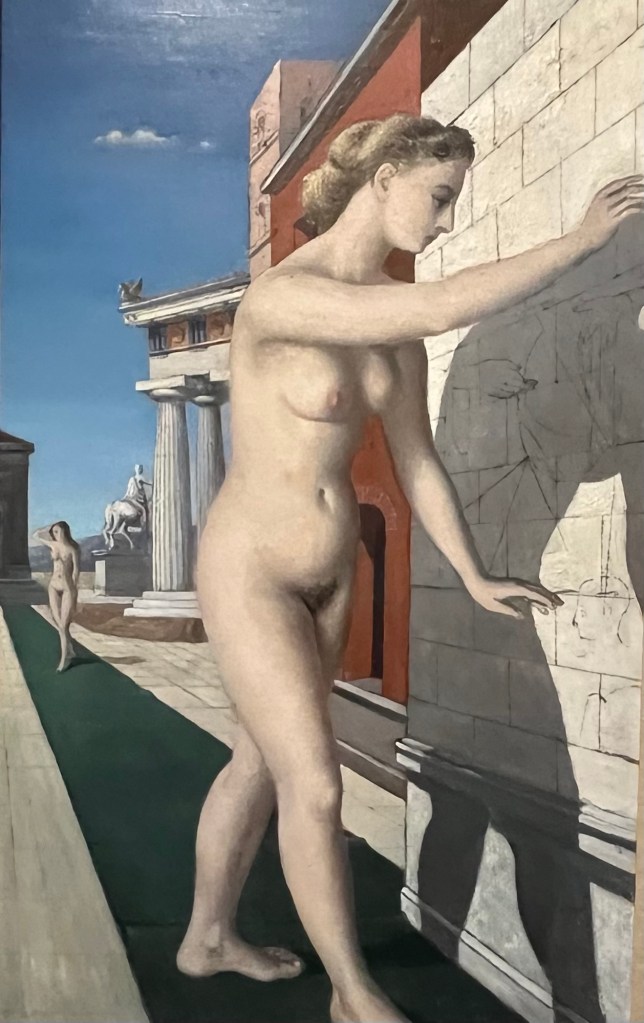
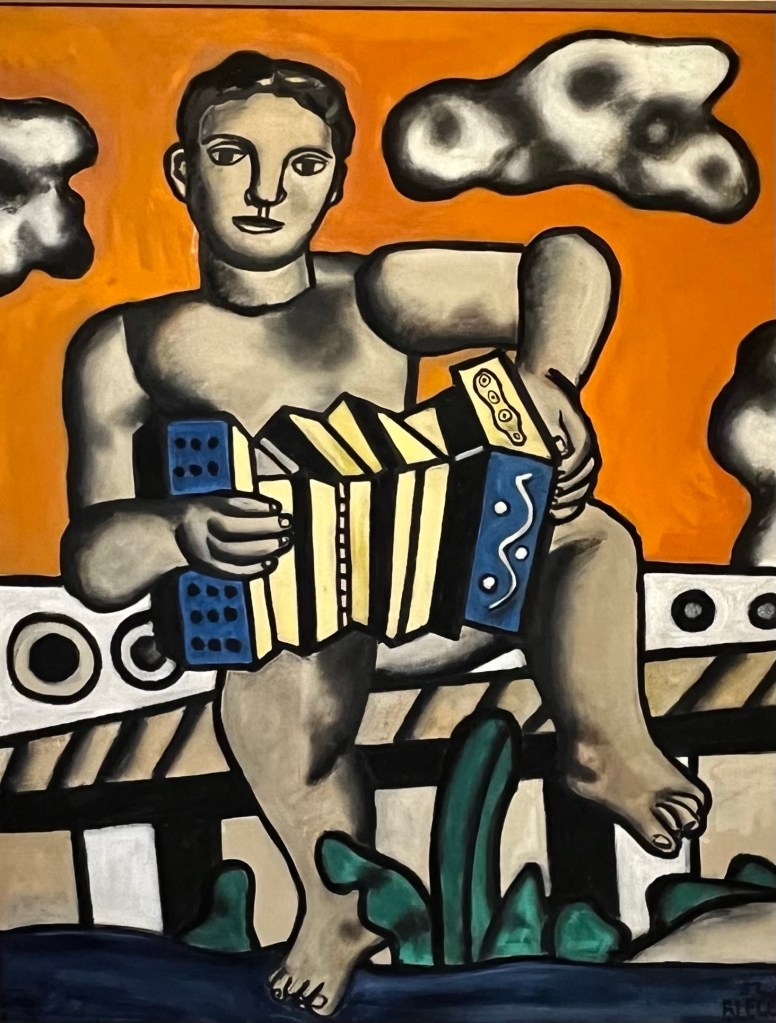
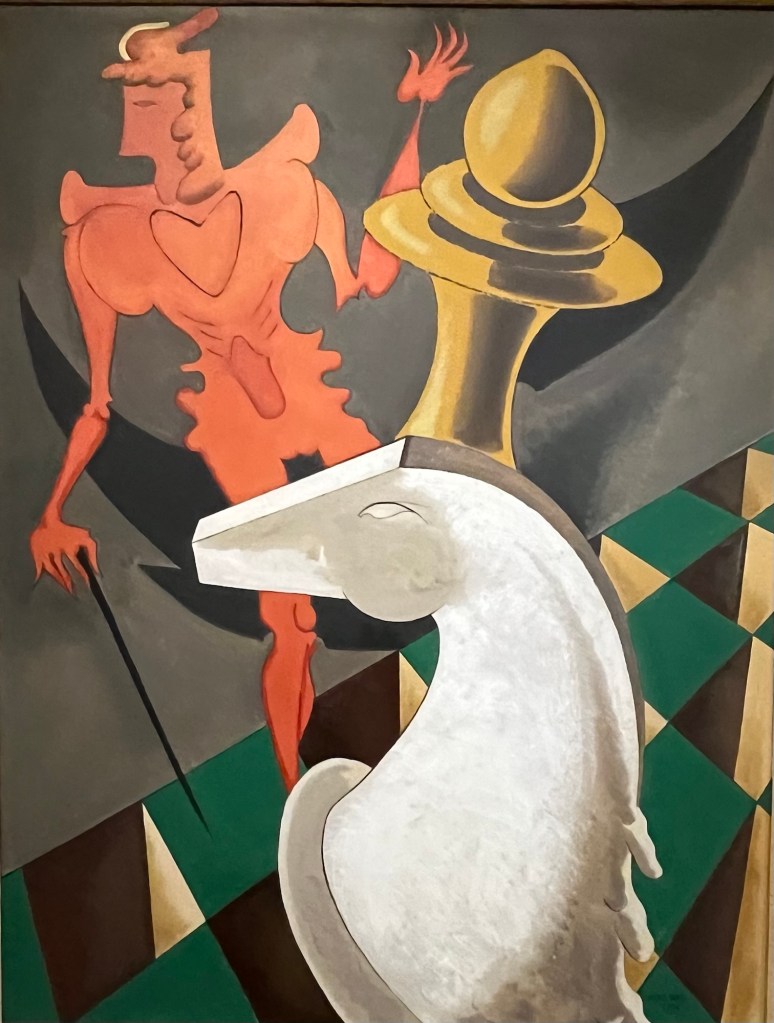
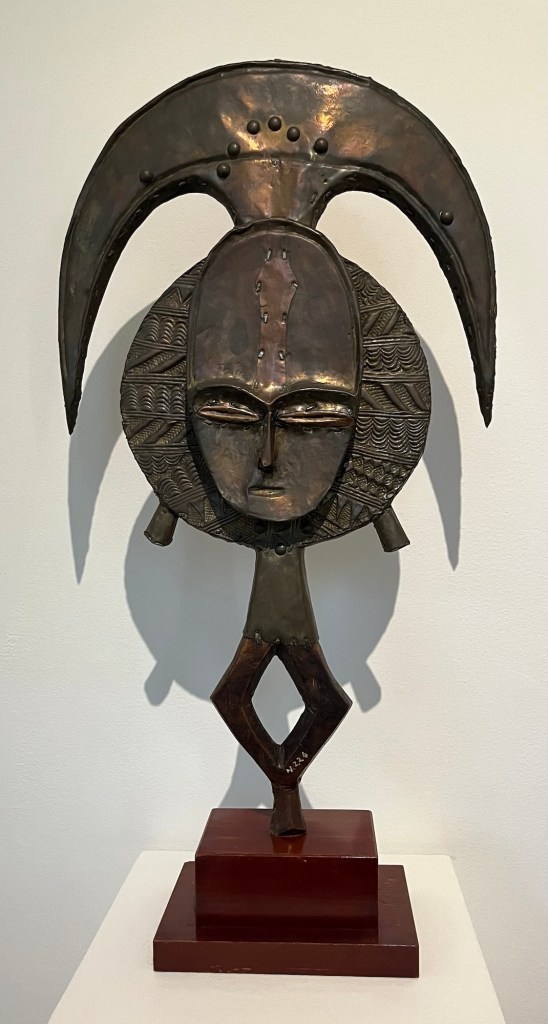
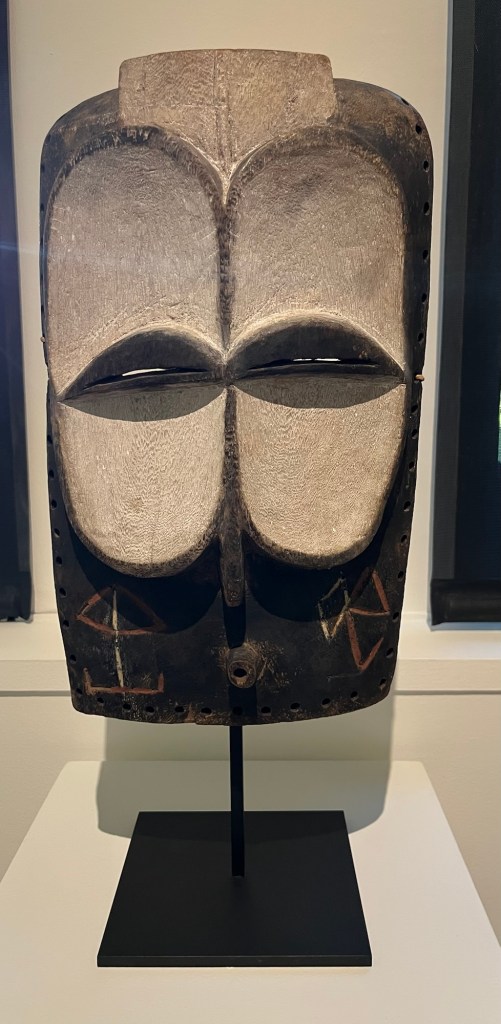
Head of Woman 1921Head of Woman 1929Woman Sitting with HatMan with Golden HelmetStill Life of a Basket of CherriesVase, Pallette and Skull, Georges BraqueImage in Xhorkom, Arshile GorkyUntitled, Arshile GorkyTwo People, Joan MiroThe Needle of Etretat, Claude MonetVase with Flowers, Vincent Van GoghThe Blue Vase, Paul CezanneWoman Doing Her Hair, Edgar DegasComposition, Marc Chagall The Look of Silk, Yves TanguyContrasts, Wassily KandinskyThe Secret, Paul DelvauxThe Prophet, David ParkChild with Accordion, Fernand LegerThe Red Knight, Man RayFlin-Flon VIII, Frank StellaGuardian Figure, GabonCommemorative Head, GhanaHead of Buddha, PakistanPart of the sculpture garden
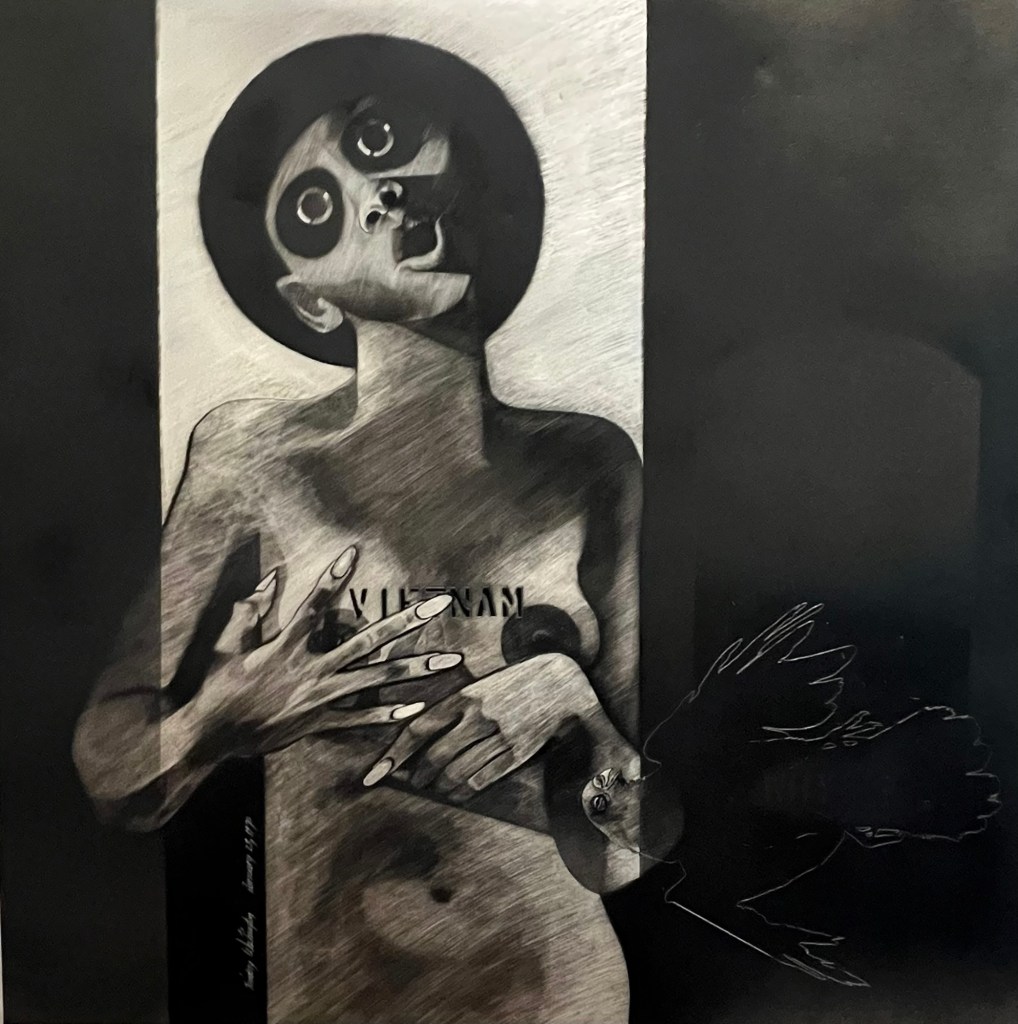
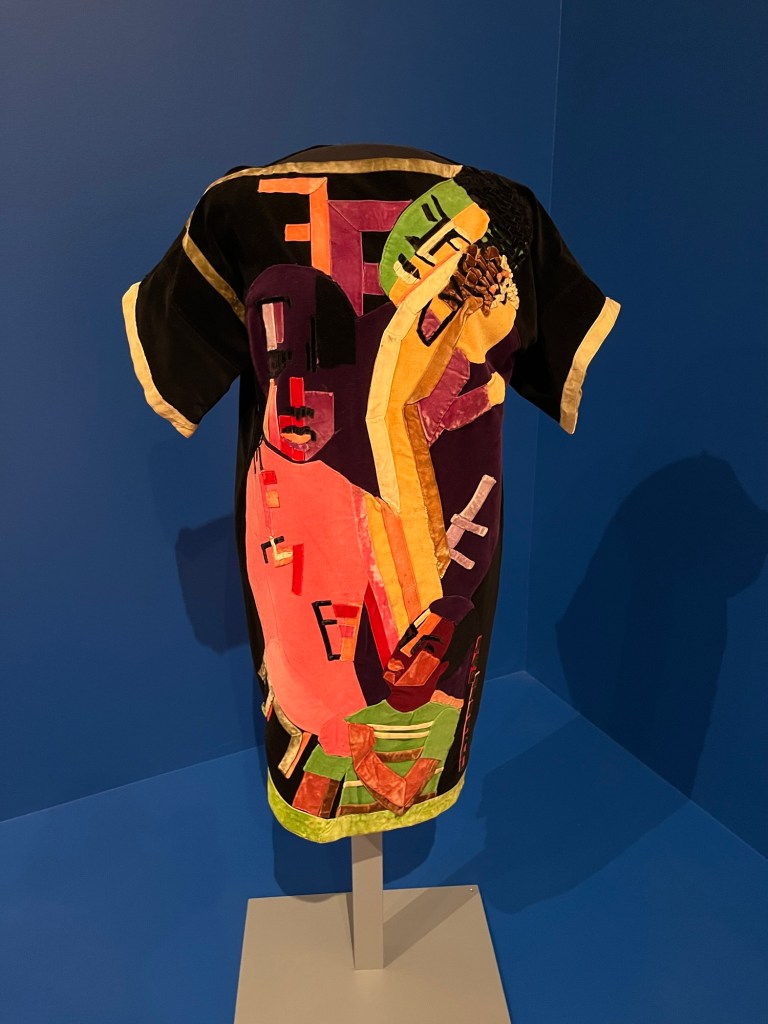
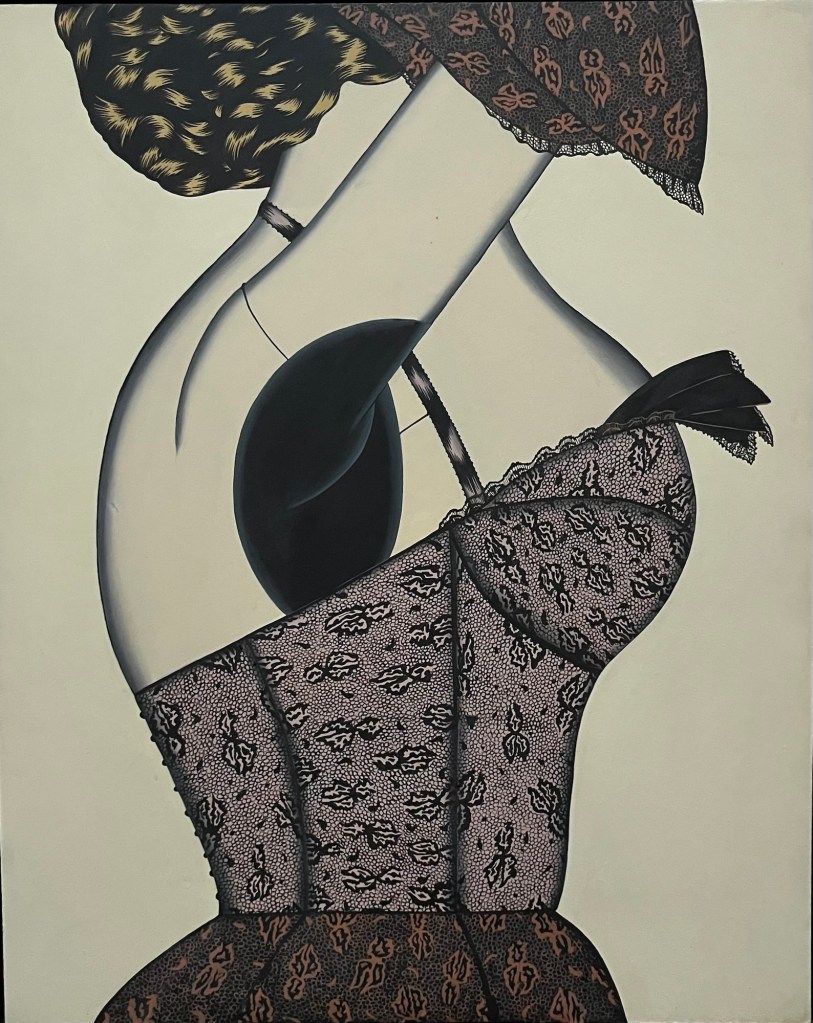
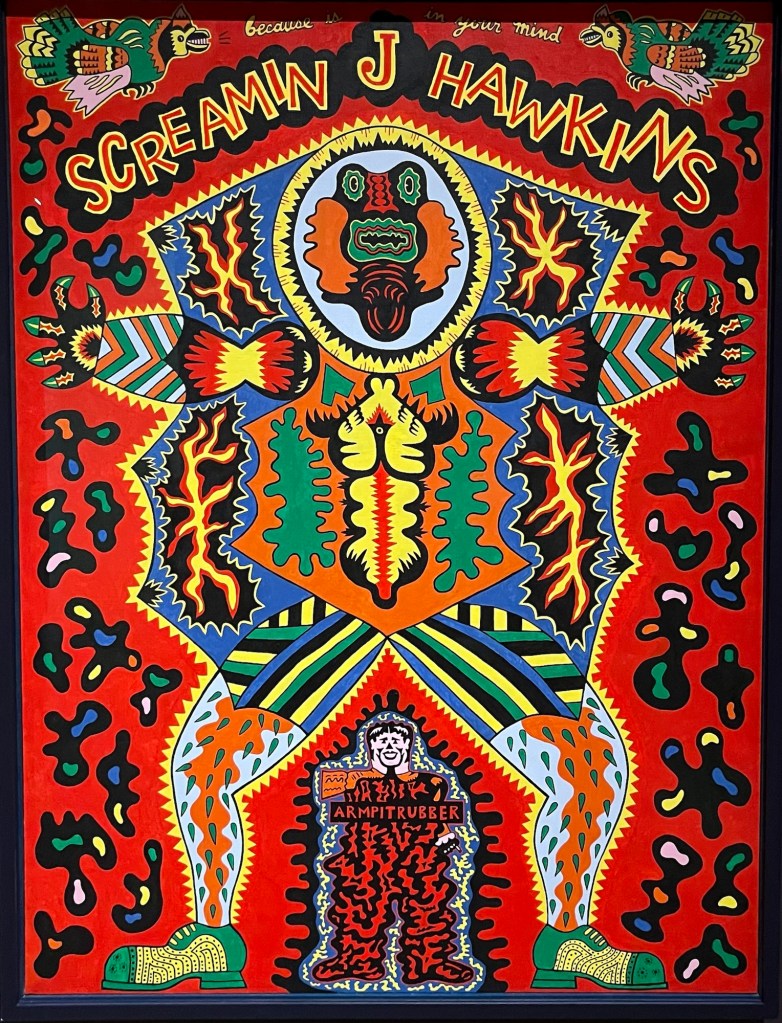
Sixties Surreal is one of the current exhibits at the Whitney Museum of American Art in New York. The Whitney describes the exhibit as an “efflorescence of psychosexual, fantastical, and revolutionary tendencies.” (Say what?) The exhibit is way more interesting than that.
Humanscape #56, Mel CasasNo More Games, Benny AndrewsViet Nam, Timothy WashingtonJohn Doe, Edward KienholzGee Baby — I’m Sorry, Kiki KogelnikEbony Family, Jae JarrellThe Big Rip Up, Anita SteckelUntitled, Luchita HurtadoWomen and Dog, MarisolUntitled, Joan SemmelweisShadow Panel, Cristina Ramberg Testament of the Holy Spirit, Eduardo CarilloR. Crumb, cover of East Village OtherThree Shadows, Adger Cowans Untitled, Paul ThekScreamin’ Jay Hawkins, Karl WirsumGive Me Anything and I’ll Sign It, Ed RuschaMan, Boy, Doe, Joseph RaffaelUntitled (Movie House with Nude Female), Roger BrownCamel VI, Camel VII, Camel VIII, Nancy Graves
This is by no means a “best of.” It is more a “best of” what fit into my schedule and had tickets available. The short reviews below include two really outstanding films, The Secret Agent and Creede USA. The Montclair festival often screens the movies that will be popping up in theaters and on streaming services over the next few eeeks. So you might want to look for a couple of these.
The Secret Agent ⭐️⭐️⭐️⭐️⭐️
A university researcher is pursued by a hit man hired by an unscrupulous corporate executive. That is the glue that holds together the plot, but there is oh so much more going on in this movie. There’s corrupt cops, corrupt government officials, bullying businessmen. There’s hired killers subcontracting to other hired killers. There’s a lovely refuge for the potential victims of all these predators run by a charming old woman. And last, but not least, there’s the mysterious story of the severed human leg discovered inside the body of a dead shark. Local media can’t get enough of that one and it finds its way into the dreams of young and old.
It’s Brazil in the 1970’s. Was the country really this dangerous and chaotic? It may well have been since it was in the throes of a military dictatorship. The movie takes place during Carnival time and the papers are keeping tabs on the fatality count. It hits 100.
The director of this movie, Kleber Mendonca Filho, won the best director award this year at Cannes. Easy to see why. One technique that he uses is to not spell everything out, leaving some questions unanswered. That may not always work but it does here. The loose ends of the story add a layer of mystery to the adventure. Wagner Moura, who played the lead role, was named best actor at Cannes.
This is by far the best fictional movie I saw at the festival. It’s nearly three hours, but it’s so engaging that the time flies by. It is Brazil’s entry in the Academy Awards for Best Foreign Film.
The Secret Agent is scheduled to be released in theaters Dec. 5.
Creede USA ⭐️⭐️⭐️⭐️⭐️
Creede, Colo., was a mining boom town. They had silver. Now they have 257 people left. But Creede has one thing you wouldn’t expect to find in a remote outpost like this: a summer repertory theater company. And with the theater comes some people who don’t look like the descendants of the town’s rough and tumble miners. Some of them aren’t white. Some of them aren’t straight. Does it work? Well, the theater has been in business for 60 years since it was founded by some University of Kansas students in the 1960’s.
You will meet some people in this documentary who you wouldn’t expect to find in a place like Creede. Most notable is the loveable young teen (maybe 13?) Lexi, who is the first non-binary person to come out as such in Creede. There’s a interracial couple from Jersey City who headed west so she could take the theater director job. And at the theater we see a version of Cinderella with a heavy-set biracial woman in the lead role.
Creede is wrestling with issues that are contentious in many places. The school board is where we see these aired. There is a debate about arming staff at the school. And even more difficult is the issue of the health curriculum. Should there be sex education? How should it deal with gender identity? Can parents opt out?
What is most remarkable about this documentary is that at a time when there really aren’t very many uplifting things going on in this country, it offers hope. In this small town with few resources and not much education, people with very different views can not just co-exist, but respect and support each other. Oh, and by the way, there’s some really beautiful mountain scenery as well.
Creede USA is currently scheduled to be screened at several film festivals.
Hedda ⭐️⭐️⭐️
Two hours or so of a supposedly high society party in a mansion. And these are academics, so it’s surely not contemporary. But because of that, a lost manuscript is a key part of the plot, that is, amidst the drunkenness, infidelity, lewdness and other forms of misbehavior that characterizes this shindig. Hedda Gabler, the evil mistress hostess, is the ringleader for most of it.
I have neither read nor seen the Henrik Ibsen play that the movie is based on so I can’t offer any comparisons. But I would think it’s a safe bet that the interracial and Lesbian trysts were probably not part of Ibsen’s 19th century work. The movie does borrow liberally from other classic pieces of literature, most notably the Great Gatsby from which both the party scene and the time frame seem to have been derived. It brings to mind a number of other books and movies about women trapped in marriages they don’t really want.
This is a story of a group of equally unlikeable people each self-destructing in their own way. As a genre, I have to say that total despair is not my favorite. That is not to say the acting isn’t excellent, the cinematography well done and the script cleverly put together.
Hedda is available on Prime Video.
Dreams ⭐️⭐️⭐️
No one’s dreams are fulfilled here. Not the young Mexican illegal immigrant Fernando who dreams of making it as a dancer in America. And not Jennifer, the wealthy, older, American heiress with whom he has an affair and who finances his journey.
This is all very timely within the context of what is happening in America now. Though it is notable that the immigration agents who capture and deport Fernando are absolutely professional compared to Kristi Noem’s masked gestapo wannabes. As an immigrant saga, the film is divorced from reality, as this illegal seems to have access to unlimited resources, thanks to his lover.
Dreams are not fulfilled that are not pursued and no one in this tale can tow a straight line. The film is moving and emotional, but equally disturbing. It’s a plot dominated by bad choices and worse consequences.
When Trump filed a lawsuit against CBS/Paramount over a 60 Minutes interview with Kamala Harris, a lawsuit that most legal experts felt had no chance of winning, Shari Redstone, then chairperson of Paramount, caved and forked over $16 million. When Trump started making noise about DEI programs, Brian Cornell, the CEO of Target, capitulated and killed all the DEI initiatives Target had launched after the death of George Floyd. Target’s sales and stock price have since tanked, they just announced layoffs and Cornell resigned. Jeff Bezos, despite having all the money in the world, didn’t have to be sued. He just dropped to his knees and started forking over money.
You know who didn’t capitulate? E. Jean Carroll. Carroll sued Trump for sexual abuse and defamation and won a $5 million judgement. When Trump, true to character, responded with vile, defamatory venom, she sued him again and this time got $83 million. At this point Trump hasn’t paid a cent. He has appealed over and over and lost every time. He will likely go to the Supreme Court.
A new documentary, Ask E. Jean, has recently been released. It appeared last week at the Montclair Film Festival. “Ask E. Jean” is the name of the advice column Carroll wrote for Elle Magazine. It also was a TV show she hosted.
From left, E. Jean Carroll, Carol Martin and director Ivy Meeropol, at Q&A following the screening. Martin is a former WCBS-TV news anchor and a friend of Carroll’s. She testified at the Trump trial.
The movie has some detail about Carroll’s career as a writer, including Esquire, Playboy and a biography of Hunter Thompson, the ‘gonzo’ journalist she has been compared to. There are also some fun biographical facts like her appearance on the TV game show “To Tell the Truth” and the fact that she was named Miss Cheerleader USA while at Indiana University.
At one point the camera catches a scene in which Trump is shown a picture of Carroll, himself and a couple others. Someone points to the picture of Carroll and asks Trump who it is. He says “That’s Marla.” (Marla Maples was his second wife.)
A substantial part of the movie is about Trump. She describes in detail how he raped her in a Bergdorf Goodman changing room. She also talks about how hard it was to go public with this, the foul taunts and threats that were directed at her and what it was like facing him in court. She said she never had sex again after this experience. She was 52 at the time.
Asked why she brought this to court 25 years after it happened. She said “Because he lied. I wasn’t going to let that go.”
At 81, Carroll is a lively, smart, funny woman. This came across both in the movie and in the auditorium where it was shown. The movie started without sound and it had to be stopped. While the audio crew worked on the problem, Carroll popped up out of the audience, grabbed a mike and engaged the audience in lively banter along with the director Ivy Meeropol.
Meeropol and Carroll ad-libbing
Meeropol is the granddaughter of Julius and Ethel Rosenberg. One of her previous films is ‘Bully. Coward. Victim. The Story of Roy Cohn.” It is Cohn who prosecuted her grandparents and he was a mentor to Trump.
The message of this movie is women need to stand up and fight for themselves. “Always press charges” is Carroll’s advice. Obviously she followed her own advice. If the film had a subtitle it might be something on the order of “a lot of men suck.”
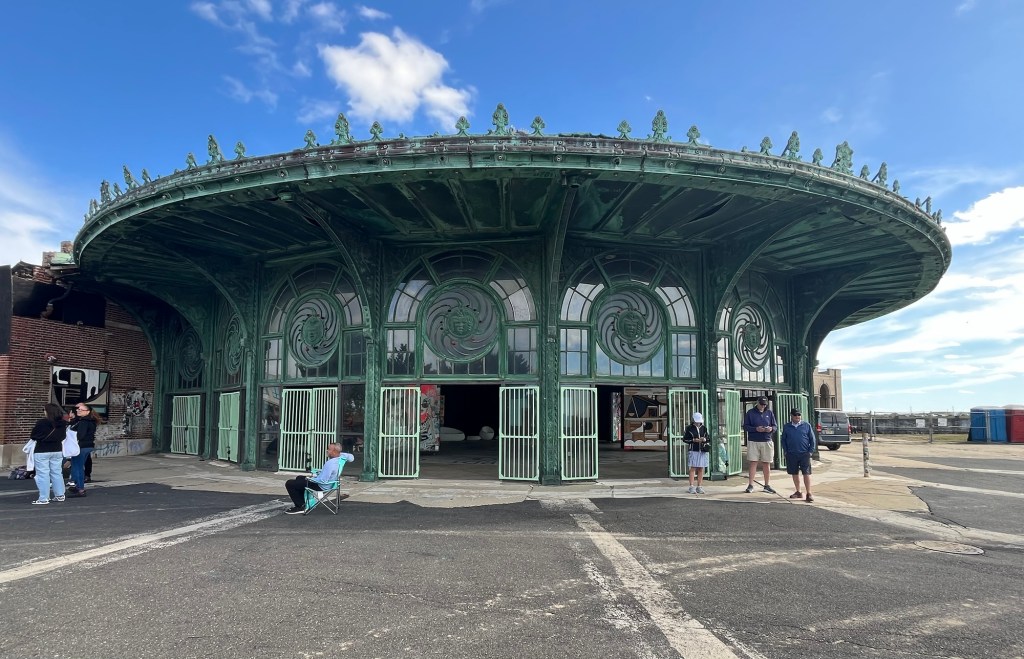
The Asbury Park Carousel House was originally built in 1904. It was rebuilt in 1928 after it and the adjacent Casino were destroyed by fire. In 1932 a carousel was installed, a Carousel #87 built by the Philadelphia Toboggan Company. The first half of the 20th century was the heyday of Asbury Park. Along the Jersey Shore, it was second only to Atlantic City as a family vacation and entertainment complex.
I remember as a child in the late 1950’s and early 1960’s being taken to Asbury by my parents to go on the rides. That included the carousel and the nearby indoor amusement park which featured a Ferris wheel that went through the roof.
Hard times hit Asbury in the last couple decades of the 20th century amid deteriorating conditions and some racial tensions. The family amusement attractions were shut down and buildings were abandoned. In 1980, the carousel was sold to Family Kingdom Park in Myrtle Beach. It is still in operation albeit with fiber glass replicas of the original wooden horses.
Asbury Park has undergone a renaissance in this century. Much of the housing stock has been renovated, partly by the LGBTQ+ community that has developed there. It also has become famous for its music scene, courtesy of Bruce Springsteen and venues like the Stone Pony. Not everything has bounced back. The Paramount Theater, where in the late 60s I went to see a Herman’s Hermits concert, closed a few years ago when conditions were deemed unsafe. And the Casino that’s next to the Carousel House was closed down earlier this year due to structural problems. But the family entertainment destination of the last century is now a diverse and inclusive shore community with a beautiful beach, a vibrant boardwalk and a distinctly artsy vibe.
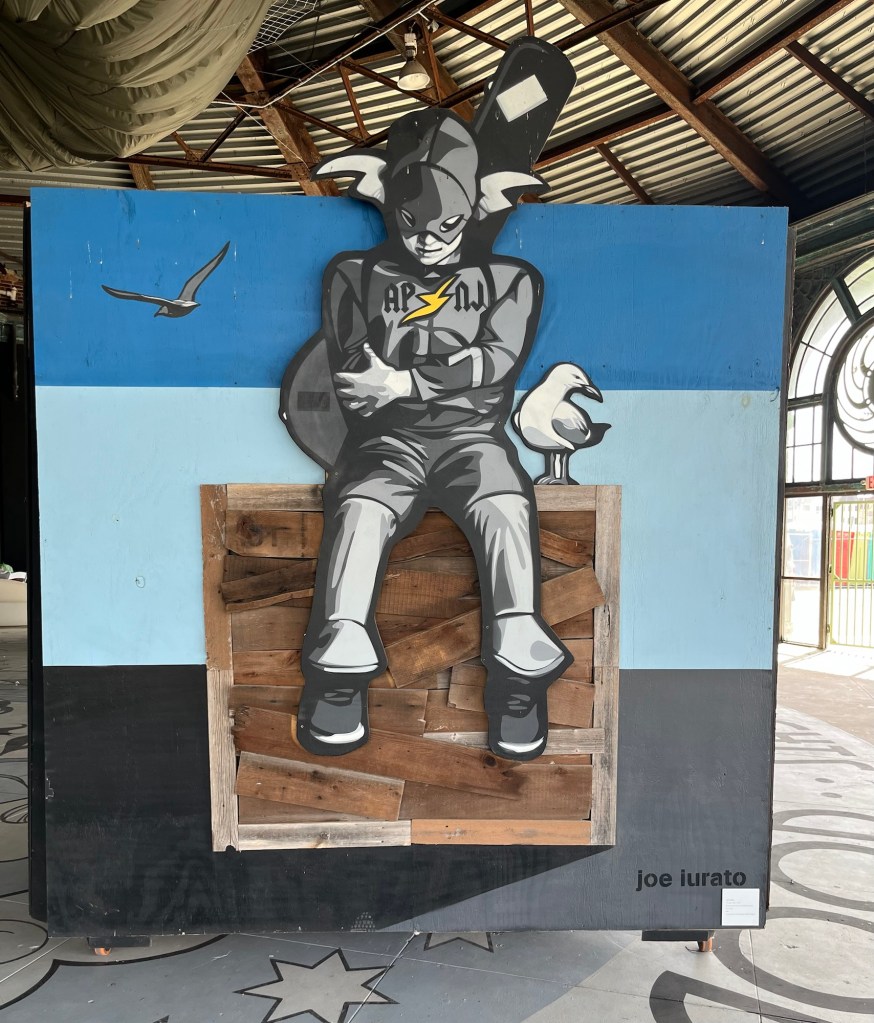
The Carousel House has undergone a couple of renovations while maintaining its beaux-arts style. For a while it was used for flea markets and then later became a skate facility. The most recent iteration of the Carousel House is as a home for Wooden Walls. The Wooden Walls Public Art Project is a 501(c)3 charity started in 2015. Through the work of this project murals grace abandoned buildings and empty walls on the boardwalk and throughout the city. On their Instagram page they describe Wooden Walls as a “ love letter to the place where art, music and history live.”
Here are some of the Wooden Walls murals in the Carousel House.
Mermaid Tattoo Company, Robert PiersantiI Am the Ghost in Your House, DeeDeeGrace Jones, Holly Suzanne RaderMora and Her Morrow Castle, Lady Sea WenchRough Gig, Joe IuratoThe Adventures of Holly and Hilde, Holly Suzanne Rader and Fru BuggeLost Object, Hyland Mather





















































 off the leash