
A Wordless Wednesday gallery of public domain photos.









Images downloaded from Unsplash and Pixabay.
A Wordless Wednesday gallery of public domain photos.
Images downloaded from Unsplash and Pixabay.
The story surrounding the 1986 impeachment of U.S District Court Judge Harry Claiborne reads like a Hollywood script. There’s a judge stashing hundred dollar bills in a Las Vegas casino vault, a brothel owner turned state’s witness and an ethically-challenged FBI agent.
Here’s the cast of characters:
Harry Claiborne was born in McRae, Ark., the son of a cotton farmer. His dad, Arthur Smith Claiborne once saved an immigrant farmer from a lynching by shooting the KKK stalker with buckshot. Harry apparently learned something from his father as while in the Army during World War II he was punished for opposing the internment of Japanese-Americans in camps.
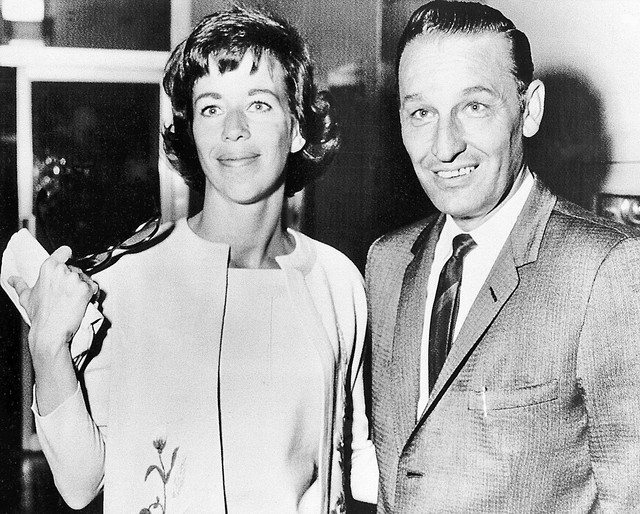
Following his wartime service, Claiborne settled in Las Vegas. He established a private law practice there and became known for his high-profile clients. He represented Judy Garland and Carol Burnett in their divorce cases and Frank Sinatra and Dean Martin in casino licensing matters. That’s in addition to a mobster or two. He was known for his antics, like bringing a giant file full of documents into the court before a case, documents that were blank pieces of paper.
Claiborne rose through the judicial ranks in Las Vegas and spent a term as a representative in the Nevada legislature. In 1978 he was appointed U.S. District Court Judge for the District of Nevada by President Jimmy Carter.
Joe Conforte is best known as the owner of the Mustang Ranch, possibly the world’s most famous brothel.
He got his start in Oakland, Calif., as a cab driver. In addition to collecting the meter fare he started matching up passengers with street walkers, and of course taking a cut. He set up his first whorehouse in Oakland where he served an exclusively Asian clientele. Seems he knew there were no Asian police officers in Oakland so this way he was sure to not get snagged by a plainclothesman.
In 1955 he moved to Nevada and set up in some trailers. He expanded from there and by 1967 he was buying out a competitor who owned the Mustang Ranch. Along the way he married Sally Burgess, who was to become the madame at the “ranch.” Conforte was known for not only paying off local officials but also entertaining them at his properties.
The Reno Gazette Journal (Sept. 23, 1990) said of Conforte, “(his) shady dealings have always haunted his efforts to present a benevolent, easy-going image. Conforte wants the world to think of him as a free-market Dionysus, the Greek god of revelry, and he’s worked hard and laid out some serious cash to get the point across.”
As an employer he was not quite so benevolent as the Gazette Journal continues, “The women will tell you in private that the Mustang Ranch is a prison under Conforte. The girls work three-week stints, and then can leave the house for no more than 45 minutes at the end of their 12-hour shift. They furnish their own room, and it’s up to them to pay rent and keep it clean.”
The self-proclaimed “King of Sting.” Yablonsky was the head of the FBI office in Las Vegas from 1980-1983.
A native of Newark, N.J., Yablonsky started his career at the FBI in 1952 and worked in Albuquerque, New York, MIami and Cincinnati before coming to Las Vegas. In his 2019 obituary in the Las Vegas Review Journal he is described as “well-spoken and outspoken, frequently insisting that the local media fostered anti-law enforcement and anti-government sentiments in Nevada, hindering his office’s investigations. In 1982, he refused to speak in front of a Rotary Club audience until a Las Vegas Sun reporter was forced to leave.
“But his cigar-chewing, rough-around-the-edges persona worked in his favor while working undercover with career criminals. He once joked to a Review-Journal reporter, ‘you wouldn’t buy a used car from me.’”
In 1977, Conforte was arrested and charged with 10 counts of income tax evasion. He faced five years in prison and a $10,000 fine. When his appeal was denied he flew the coup, heading to Brazil.
From his exile Conforte let it be known that he was willing to sing about the bribes he paid local officials and judges. That was music to Yablonsky’s ears. The FBI agent offered the whorehouse entrepreneur millions of dollars in tax breaks and a reduced sentence for testimony against Claiborne. Based on the info from Conforte, Claiborne was charged with bribery, fraud and tax evasion.
Conforte returned from three years in exile in Brazil to testify at Clairborne’s trial. The AP report from the trial notes: “brothel owner Joe Conforte said he paid Claiborne $30,000 to derail a voter fraud investigation involving prostitutes at his Mustang Ranch bordello and gave him $55,000 more to get a tax evasion conviction dropped.” In addition, “Claiborne’s attorneys won a ruling forbidding the government to introduce evidence that the judge consorted with prostitutes employed by Conforte from 1972 until his appointment to the federal bench in 1978.”
The trial was declared a mistrial as the jury remained deadlocked. Conforte was widely believed to have perjured himself, in one instance claiming he was in the country when he was not. A second trial was held on the tax evasion charge only, a charge that wasn’t dependent on Conforte’s testimony. Claiborne was found guilty of not reporting $107,000 in income on his 1979 and 1980 tax filings. He was given a two year sentence.
When Clairborne refused to resign his judgeship and continued to collect his salary, the case was brought up in the House of Representatives. He was charged with four articles of impeachment. Three related to the failure to report income on his taxes and the other was a result of his conviction in court. The House approved the articles of impeachment unanimously by roll call vote.
When the impeachment articles came up for a Senate trial that body set up a 12-member committee and decided that testimony would be presented only to this committee rather than the full Senate. (Both Mitch McConnell and Al Gore were members of this impeachment committee.) This rule change was later cited as unconstitutional by Claiborne supporters.
Claiborne insisted he was innocent and that tax preparers were responsible for the omission. He claimed he was the victim of overzealous and ambitious federal agents. “They have been pursuing me like a pack of wolves would pursue a sick caribou.” Claiborne’s attorney Oscar Goodman was quoted by Gannett New Service (Sept. 17, 1986): “Federal investigators resorted to ‘rude, crude’ tactics of intimidation and burglary to put Nevada federal Judge Harry Claiborne in jail.” Goodman would later become mayor of Las Vegas.

Claiborne was convicted by a large bipartisan majority on three of the four articles. The article that referred to his trial conviction did not get the necessary two-third votes. The senators were concerned about a precedent. If they were to convict someone because of a court conviction, would it mean that they would have to acquit an impeached individual who had been found innocent by a court?
As he was headed off to jail, Journal Gazette reporter Ken Miller (May 15, 1986) asked:
“If he could do it over, would Claiborne do things differently.
“If he would have kept quiet rather than excoriating a group of Las Vegas Strike force prosecutors as ‘rotten bastards’ and ‘crooks and liars.’
“If he would have severed any relationship with Mustang Ranch brothel owner Joe Conforte, who almost single-handedly delivered the Claiborne indictment.
“If he would have kept his money more to himself, not cashing huge checks in casinos and not leaving a shoe box full of $100 bills for years in a Las Vegas Glitter Gulch casino vault.
“If he would have been more discreet than strolling into a Reno auto dealership and scrawling out a five-figure check for a flashy sports car for a girlfriend.
“If he would have shut up instead of roasting the U.S. Justice Department’s presence in Nevada and accusing the federal government of trying to ruin the state.”
Claiborne served 17 months of his two-year prison sentence. In 1987 he was allowed to practice law again by the Nevada Supreme Court, themselves suspicious of the feds actions in the Claiborne case. By 2004 he was suffering from cancer, heart disease and the beginnings of Alzheimer’s. He shot himself in his Las Vegas home while his fourth wife, Norma Ries, and his 22-year-old grandson watched TV in the next room.
In 1990 the IRS padlocked the Mustang Ranch and put it on the auction block with the proceeds to go to paying Conforte’s tax bills. But they apparently ended up selling it to a shell company for Conforte who continued to operate it from Brazil. In November 1995, he was indicted in absentia for thirty-three violations under the Racketeer Influenced and Corrupt Organizations Act (RICO). The U.S. was never able to have him extradited from Brazil.
A Wordless Wednesday gallery of pubic domain images.










Images downloaded from Unsplash, Pixabay and Pexels.
The only Cabinet member ever to be impeached was Ulysses S. Grant’s Secretary of War. William W. Belknapp was impeached for corruption in 1876, a corruption that was closely intertwined with his marital affairs.
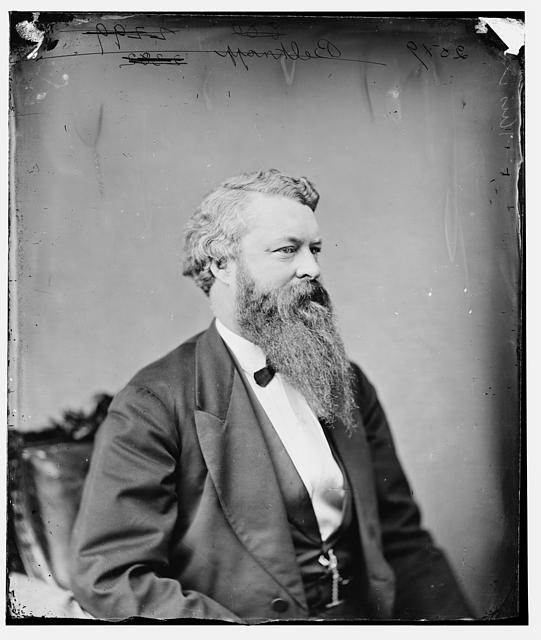
Belknapp was a Civil War hero. He was a major in the Iowa Voluntary Infantry. During his active duty he participated in the Battle of Shiloh where he had his horse shot out from under him He served under General William Tecumseh Sherman in the Battle of Atlanta and joined Sherman’s march to the sea. It was Sherman who recommended Belknapp to Grant for the Secretary of War position.
Belknapp had married Cora LeRoy in 1854, but she passed away in 1862. Seven years later he married Carita S. Tomlinson of Kentucky. In Fall of an Iowa Hero, L Edward Purcell describes the Belknapps’ lifestyle at the time. “Belknapp and Carita set up housekeeping in a fashionable home in Washington, where they entertained on a grand scale. The sumptuous furnishings of the house, including imported carpets, expensive furniture and the finest crystal and china, provided the setting for lavish dinner parties. The Belknapps were among the foremost Washington socialites, treating their guests with the best food and vintages.”
Sherman himself would later link this to Belknapp’s impeachment. He told a newspaper reporter in 1876, “Of course I do not know the cause of this demoralization, but having lived in Washington during his tenure of office, I can form a pretty good idea of it. In my opinion his downfall is due more to the vicious organization of Washington society than anything else. I refer to the ridiculous extravagance of those who move in the first social circles at the Capitol. Very few of the Cabinet officers are able to live within their salaries.” (Salt Lake Tribune, March 5, 1876)
Here’s how the Belknapps supplemented that salary. Belknapp had established rules at the department that “sutlers,” appointed by him, would control all of the purchases at military forts in the West. This generally resulted in soldiers, many of them immigrants, paying much higher prices for things like boots. It also resulted in sales of guns to Native Americans, something that General George Custer resentfully testified about before a House committee investigating expenditures at the War Department.
Carita Belknapp made contact with a contractor in New York named Caleb Marsh, who was the husband of one of her friends. She suggested that Marsh apply to be the sutler for Fort Sill, which was in the Native American territory that would later become Oklahoma. She would use her influence to assure that her husband gave Marsh the post. There was, however, already a sutler at Fort Sill, John S. Evans. No problem. Marsh and Evans worked out a deal. Evans would be allowed to continue to manage the trading post and in return would pay Marsh $12,000 a year in quarterly payments. Marsh, in turn, would send half of that Carita’s way.
Carita only received one payment before dying of tuberculosis after childbirth. Purcell describes what happened after that, based on Marsh’s later testimony before the House committee. “When Marsh came to Washington for the funeral, he was drawn aside by her (Carita’s) sister Puss, then a widow caring for Belknapp’s son. Puss artlessly informed Marsh she knew about the money due Carita and said it would go now to the child in her care, When Marsh agreed to continue payments, Puss suggested the money go directly to Secretary Belknapp. From 1871 to 1976, Marsh gave Belknapp more than $20,000, all of it from Evans payoff money.”
Three years later, Amanda Tomlinson Bower (Puss), became the third Mrs Belknapp. More than 100 years later a story in the Washington Post would suggest: “Puss Belknap’s gowns, emeralds and coral-beaded parasols were infamous in Washington, attracting attention and speculation that led to investigation into her husband’s department.” (First Ladies Amid the Fray)
The investigation in the House was led by Hiester Clymer, a Democratic congressman who had been Belknapp’s roommate at Princeton. Upon hearing that Marsh would be testifying before Clymer’s Committee on Expenditures in the War Department, he booked a meeting with Grant and offered his resignation. Writing for HistoryNet, John Kostner, chronicles Grant’s summary of that meeting: “He burst into tears and took hold of my hand.…I understood that he was expecting an investigation that he could avoid by resigning; that the facts, if exposed, would not damage him so much as his wife. He spoke of his dead wife, too. I told him that he had a great many friends and that they would help him out, but he said it was impossible; that he had shouldered all the blame and would be ruined. He insisted it would save me and the government a great deal of trouble if his resignation was accepted.…So I wrote him a letter accepting the resignation.”
The resignation did not stop the impeachment. In fact, it was unanimous in the committee.
When the impeachment trial came before the Senate, Belknapp’s defense took the position that the Senate had no jurisdiction because Belknapp was no longer in office. The whole trial followed closely what we would see at Trump’s insurrection trial. The Senate first voted on whether it was appropriate to proceed with the trial and that was approved by a vote of 37-29. The vote to convict was 35-25 in favor, not enough for the required two-thirds majority. Twenty-three of the senators who voted against conviction said they thought he was guilty but voted they the way they did because they didn’t think it was constitutional to hold the trial after Belknapp resigned. (They must have been Mitch McConnell’s ancestors.)
Belknapp suffered some lean years immediately after his impeachment but eventually established a private law practice. Amanda, aka Puss, packed up her daughters and moved to Paris.
A Wordless Wednesday gallery of public domain photos.






(Photos downloaded from Unsplash, Pixabay and Pexels.)
The one and only Supreme Court justice to be impeached was a guy known to his compatriots as Old Bacon Face. Some say Samuel Chase’s unsavory nickname was a result of his reddish-brown complexion. Others say it was a result of his temperament, as he was always prepared to sizzle with indignation.

Chase was an Annapolis, Md., based lawyer who was a member of the Annapolis Convention and represented Maryland at the Continental Congress. He was a signer of the Declaration of Independence.
But Old Bacon Face’s career was not without some bumps in the road. As early as 1862, one year after he was admitted to the bar, Chase got tossed out of an Annapolis debating club, the Forensic Club for “extremely irregular and indecent” behavior. That behavior apparently involved addressing some comments to a fellow member that were deemed “impious.”
Chase was a member of the Continental Congress, at least until 1878 when he was accused of using insider information gained as a member of the Congress to try to corner the flour market. He was part of the group that drafted Maryland’s Constitution, but when the U.S. Constitution came before the Maryland legislature for ratification, he voted against it out of distrust of central government. Around that same time Chase went bankrupt after some speculative business ventures failed.
None of this bothered George Washington enough to keep him from nominating Chase to the Supreme Court in 1796. Chase, by this time a Federalist, was a distinctly partisan Supreme Court justice. While on the bench he actively campaigned for John Adams.
So as you might imagine, when the Democratic-Republican Thomas Jefferson defeated the Federalist John Adams in the 1800 election, Chase fell out of favor. The feeling was mutual. It was Jefferson who initiated the effort to impeach Chase and in 1804, by a vote of 73-32, the House approved eight articles of impeachment against Samuel Chase. The articles of impeachment broadly focused on poor judgement on the part of Chase and on making judicial decisions based on partisan politics. At the time, Supreme Court justices also served as circuit court judges and it was Chase’s actions in these cases that were cited. In one case involving the charging of a Baltimore grand jury, Chase’s comments were characterized as “intemperate and inflammatory, peculiarly indecent and unbecoming, highly unwarrantable, highly indecent,” One of the articles of impeachment accused Chase of “tending to prostitute the high judicial character with which he was invested, to the low purpose of an electioneering partizan.”
When Chase’s impeachment came before the Senate, his defense was that he could not be removed for errors of judgement or behavior on the bench, neither of which was an indictable offense nor a high crime or misdemeanor, which is what the Constitution defined as grounds for impeachment. Despite the fact that of the 34 senators at the time, only nine were Federalists, Chase was acquitted on each of the eight votes. The closest vote was 18-16 for removal, not the two-thirds necessary. Chase would continue as a Supreme Court justice until 1811 when he died of a heart attack.
The Chase impeachment has been cited as helping establish the independence of the judiciary. All future impeachments of federal judges have involved legal or ethical misconduct, not poor judgement or obnoxious behavior, both of which are part of Old Bacon Face’s legacy.
A Wordless Wednesday gallery of public domain photos.












-0-
(Public domain images downloaded from Unsplash, Pixabay and Pexels.)
New Hampshire District Court Judge John Pickering was not the first public official to be impeached. (That honor belongs to William Blount.) But Pickering was the first to be convicted by the Senate and removed from office. His crime? Leaving aside all the legalize involved it appears to be that he was pretty much always rip roaringly drunk.

Pickering was a lawyer, a Harvard graduate, who after some time in private practice held numerous high positions in his home state. He was a member of New Hampshire’s constitutional conventions, served in both the state House and Senate and was president of New Hampshire (the equivalent of governor) in 1790. After spending the next five years as Chief Justice of the New Hampshire Superior Court of Judicature, he was nominated by George Washington to the U.S. District Court for the District of New Hampshire.
Things started heading south shortly thereafter. In 1801, court staff urged that he be replaced because he was showing signs of mental deterioration. A year later a court clerk reported that Judge Pickering “exhibited every mark of intoxication; staggered and reeled, spoke in a thick way.” Pickering himself advised one attorney arguing his case “I shall be sober in the morning; I’m damned drunk now.”
One notable case that came before Pickering involved a ship called the Eliza that was confiscated by customs officials. The owner of the Eliza was a friend of Pickering’s and a fellow Federalist. Pickering immediately ordered the ship to be restored to its owner. Upon appeal the prosecutor noted the volume of revenue due the state. Pickering retorted, “damn the revenue, I get but a thousand dollars of it.”
By 1803, Thomas Jefferson, having failed to get Pickering to resign, sent information to the House of Representatives accusing Pickering of unlawful rulings, bad character and intoxication. The articles of impeachment that were passed by the House started: “That whereas for the due faithful, and impartial administration of justice, temperance and sobriety are essential qualities in the character of a judge, yet the said John Pickering, being a man of loose morals and intemperate habits…did appear on the bench of the said court for the administration of justice in a state of total intoxication.”
When the impeachment charges came to the Senate in 1804, Pickering was a no show. His son Jacob S. Pickering explained, “John Pickering is insane and could not, from the state of his health, attend without endangering his life, and therefore prays a postponement of the trial.” Jacob’s petition went on to explain “said crimes wherewith the said John stands charged…the said John was, and for more than two years before, and ever since has been and now is insane, his mind wholly deranged…” (National Intelligencer and Washington Advertiser, April 9, 1804).
So let’s get this straight. Pickering’s defense was arguing that he should NOT be removed from his position as district court judge because he was insane!
The Senate wasn’t buying it. He was convicted with a 19-7 vote and removed from office. He passed away a year later.
Who voted against conviction and why? There were Federalists that made the argument that showing up in court drunk didn’t constitute a “high crime or misdemeanor” as specified in the Constitution as grounds for impeachment. So the legal debate that Pickering’s impeachment and trial raises is whether bad character is sufficient grounds for impeachment and conviction. All successive impeachments have involved more substantial crimes (like inciting an insurrection). Surely if bad character alone could get you tossed, Trump should have been KO’d twice and one can make the case that Clinton was essentially impeached for bad character.
A Wordless Wednesday gallery of public domain photos.







Say the word impeachment and the name that immediately comes to mind is Trump. After all, he is responsible for 50% of the four presidential impeachments that have occurred in the country’s 242-year history. Aside from the four presidential impeachments there have been 17 other impeachments in U.S. history. The majority of those involved district court judges, but they have also included a senator, a cabinet member and a Supreme Court justice.

The Constitution provides that the “President, Vice President and all civil Officers of the United States, shall be removed from Office on Impeachment for, and Conviction of, Treason, Bribery, or other high Crimes and Misdemeanors.” That leaves a lot of room for interpretation. But it didn’t take long for Congress to use this provision. The first person to be impeached was Tennessee Senator William Blount in 1798.
Blount has a few things in common with Trump. He was a real estate speculator and his purchases were on borrowed money, leaving him with a good deal of debt. He once lost a state election and challenged the result, claiming fraud. And he also was put on trial in the Senate after leaving office.
Blount had founding father credentials. His great-grandfather Thomas Blount arrived in Virginia from England in 1660. He settled on a plantation in North Carolina where William was brought up. During the American Revolution he was a paymaster in a North Carolina regiment. (At one battle he lost $300,000 of soldiers’ pay.) Prior to independence, Blount ran for a seat on the North Carolina House of Commons. He lost. But he claimed fraud and had the election voided. He later ran for the seat again and won.
Blount was North Carolina’s delegate to the Continental Congress and the Constitutional Convention. History records Blount as having showed up late, said very little, left early, and signed reluctantly. But back home he encouraged North Carolina to ratify. During this period, Blount helped foster an agreement whereby North Carolina ceded its western lands to the federal government to pay off tax debt. That land, which at the time was called the Southwest Territory, is what is now the state of Tennessee. Blount would end up being appointed by George Washington as governor of the Southwest Territory. He and his family packed up and moved west.
While this was going on, Blount, as well as his brothers, were actively accumulating land in the Southwest Territory, some 2.5 million acres of it. He also was instrumental in preparing Tennessee for statehood, something that became a reality in 1796. In that year, he was elected one of Tennessee’s first senators.
Things were looking up for Blount’s political career. Not so his finances. Land prices were depressed in the mid-1790’s and Blount had overcommitted, leaving him with a mountain of debt. With France winning a war against Spain in Europe, he was afraid the French would gain control of the port of New Orleans and decided that he and other Tennessee land speculators would be better off if England, rather than France, controlled the port. He then concocted the plan that would lead to his downfall. He schemed with two Native American tribes, encouraging them to join with the British to drive the Spanish out of New Orleans.
Unfortunately for Blount, his plan to start a war to protect the value of his landholdings was all spelled out in a letter that was passed from one hand to the next to the next until it ended up in the lap of President John Adams. He passed it on to the Senate and that body voted 25-1 to “sequester” Blount’s seat. Not a big loss for that body since he missed more than 25% of the roll call votes for the first half of 1797.
At the same time the House began impeachment proceedings. Those proceedings featured a fight between two congressmen of opposite parties. After trading insults for a bit, Matthew Lyon, Democratic-Republican congressman from Vermont, spewed a load of tobacco juice into the face of Roger Griswold, Federalist congressman from Connecticut. Griswold responded by beating Lyon over the head with his wooden cane. Other representatives broke up the fight and the two apparently escaped disciplinary actions by promising to behave. No such reprieve for Blount. The House approved five articles of impeachment.
The Senate sent a sergeant-at-arms to Tennessee to bring Blount back to face trial. He refused to budge. Blount had originally stated that he was not the author of the incriminating letter. But, after two of his co-conspirators testified that he was, it was time for a new defense strategy. Blount’s attorneys argued that he was not a “civil officer” and that secondly, since he had been expelled from the Senate already, he was no longer an “officer of the United States.”
Enough senators bought that argument to get him off the hook. By a vote of 14-11, the Senate approved the following resolution: “The court is of the opinion that the matter alleged in the plea of the defendant is sufficient in law to show that this court ought not to hold jurisdiction of the said impeachment, and that the said impeachment is dismissed.”
Constitutional scholars have debated the issue of whether Blount was acquitted because you can’t impeach a senator, or because he had already been out of office. The latter, has implications as a precedent for the trial of Trump.

And there’s one other parallel between Blount and Trump. Despite being disgraced nationally, Blount remained popular among his base, the voters of Tennessee. Within a year he was speaker of the Tennessee State Senate. Tennessee has a county named after Blount, a grammar school and a high school, as well as a town named Blountville. He died in 1800 when an epidemic swept through his home town of Knoxville where the Blount Mansion is now a museum.
 off the leash