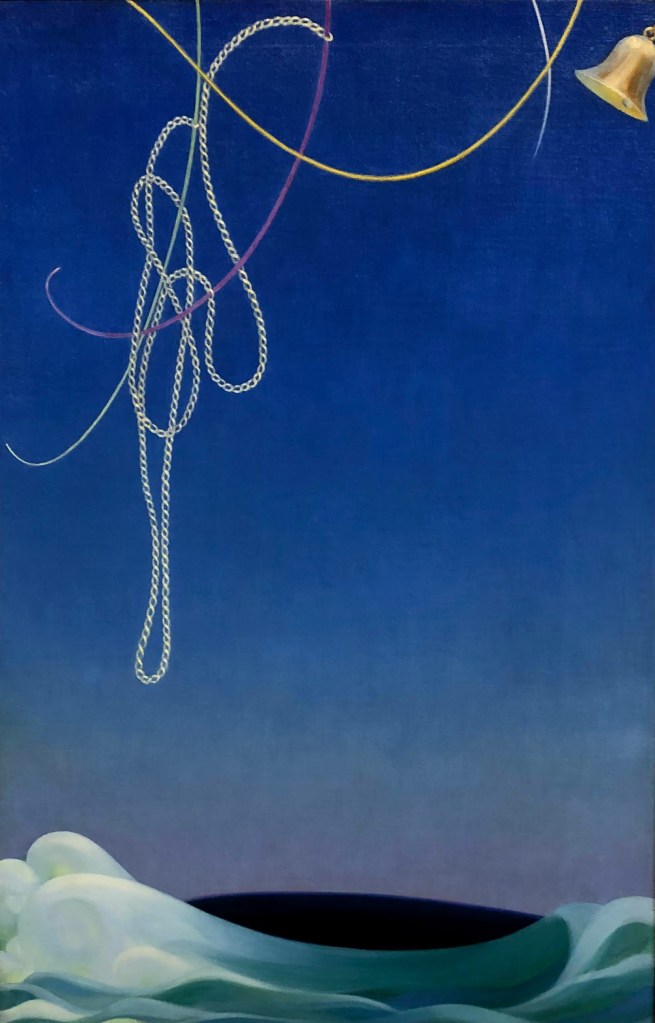
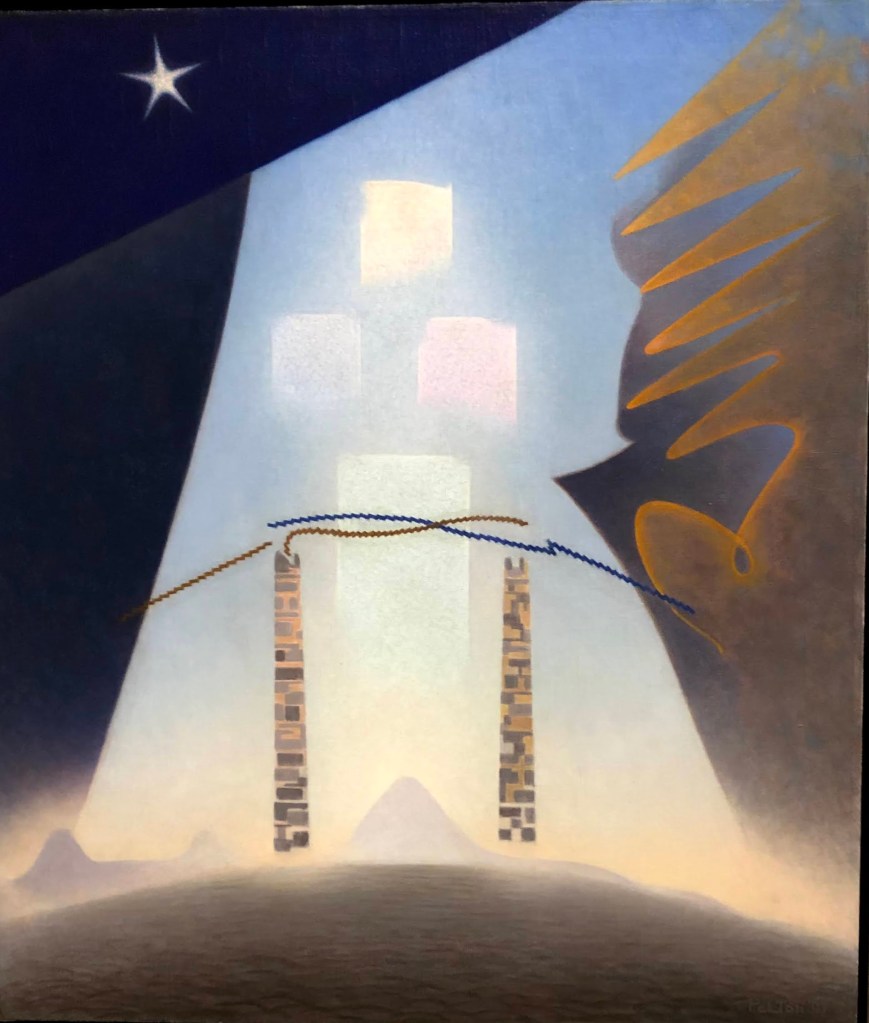
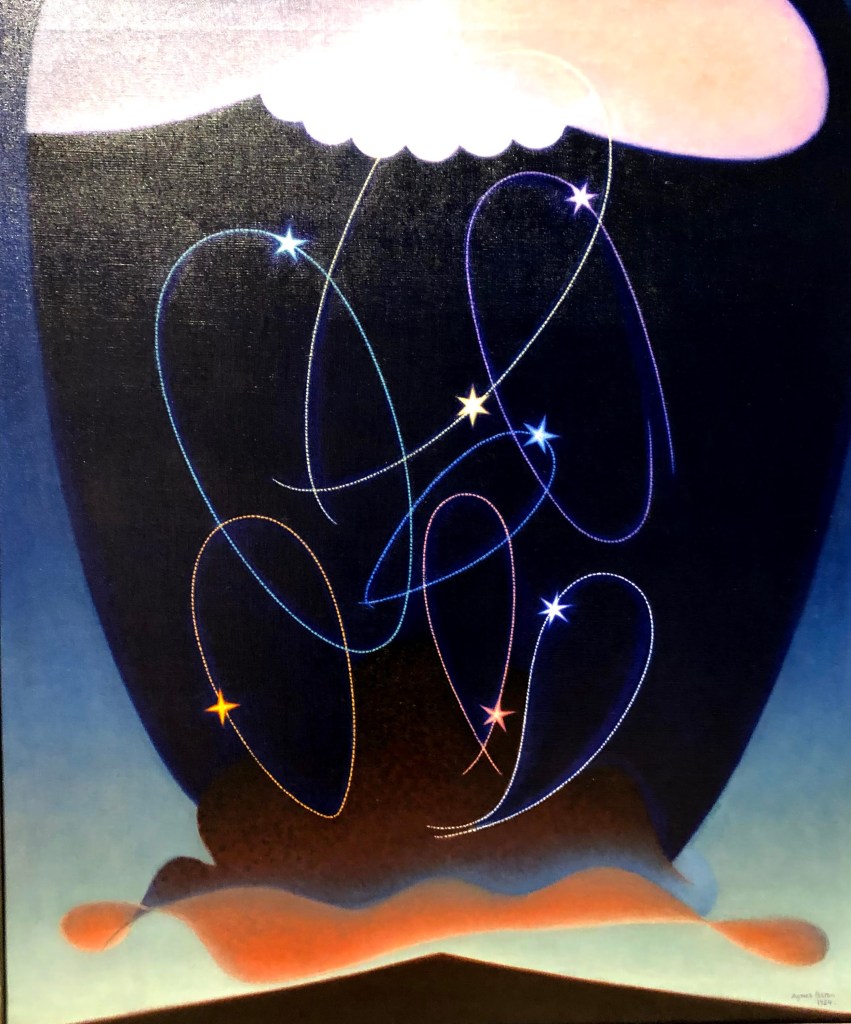
(Images are from various exhibits at the Whitney Museum of American Art. The Rockwell painting is from an exhibit at the Newark Museum of Art.)


(Images are from various exhibits at the Whitney Museum of American Art. The Rockwell painting is from an exhibit at the Newark Museum of Art.)

Peter Hasenclever, born in 1716 in Prussia, was the son of an iron manufacturer. He came to New Jersey is 1765, armed with a pile of cash he secured from a group of English investors that included in the wife of George III. He first bought an ironworks in Ringwood, N.J., and then set about building his ironmaking facility at Long Pond, the colonial name for Greenwood Lake.
To accomplish this he notes in his memoir, “I transported 565 persons to America from Germany as miners, founders, forgemen, colliers, carpenters, masons and laborers, with their wives and children.” What brought them here? In a 1998 article in the Highlander (an excerpt is available here), the author Susan Deeks identifies them as part of the Palatine immigration, an 18th century movement of Germans and Swiss who left the Rhine River region fleeing religious persecution and seeking a better life.
Apparently not everyone of these colonial ironworkers were satisfied with their situation in New Jersey. Hassenclever posted ads in both New York and Philadelphia newspapers seeking the return of “runaway” employees. While I couldn’t find any direct evidence of this, it seems as though this was some type of contractual labor situation if Hassenclever felt entitled to have his rogue employees returned.
The remains of Long Pond Ironworks, which is now a state park, show something of a picture of how Hasenclever’s Germans and their descendents lived.


These homes were built later in the civil war era. They are two-family homes. The one on the left is now part of a building that houses the visitors center and museum, both of which are closed for the remainder of the year due to the pandemic.
Below is the company store where workers bought whatever provisions they required. No need for cash here, purchases were directly deducted from your paycheck. There was no competition. The store was located on what was the main intersection of the village of Hewitt.

And here’s what’s left.

Hassenclever met with some early success. In addition to Ringwood and Long Pond, he built out iron manufacturing facilities in Charlottenburg, N.J., and Cortland, N.Y. He was one of the first large scale manufacturers in colonial America. But he was viewed as a bit of a free spender by his British investors and he was replaced in 1769 by Jeston Humphray, who in turn was replaced by Robert Erskine. It was under Erskine’s direction that Iron Pond produced the iron for armaments and supplies for Washington’s continental army. At the time there were 125 employees
During the 19th century, the iron works underwent several changes of ownership. During the Civil War, it produced rifles for the Union army. At its peak, Long Pond had about 600 employees. But later in the 19th century things began to slow down. Iron and steel manufacturing was headed west closer to the coal and iron mines of Western Pennsylvania and the Great Lakes region. The fire went out in the last furnace in 1882.
Mining remained active in the region into the 20th century. There was an ice cutting operation and sawmill, but those activities were killed off by the Depression. By mid-century most of the residents of the village of Hewitt had moved out in search of more populous and prosperous locales. In 1957 the Long Pond property was given to the state.


There were two water wheels on the site that were used to produce the forced air necessary to get the furnaces up to temperature and keep the fire going 24/7.


The Hasenclever Iron Trail is now a scenic hiking trail through the woods. It follows what had been a road that was built by Hasenclever in 1765 to connect his iron making facilities in Long Pond and Ringwood. Many of the rocks on the trail are slag from the mining operation.


In 1987, Long Pond Ironworks was dedicated as a state park. Now, in addition to the historic remains of the ironworks and the Village of Hewitt, it is a site for recreational activities including hiking, boating, ice fishing, birding and horseback riding.


(Photos by Aidan Dowell)

During March and April, New York City was the epicenter of the COVID-19 pandemic. Since then, however, New York and the surrounding area in the northeast are as close to having the virus under control as any part of the U.S. The reopening of the city has been gradual and controlled and at the end of August New York’s museums were allowed to open.
The Whitney Museum of American Art is my favorite of the New York museums so that was the first place I visited. The Whitney opened in early September and adopted a “pay what you wish” admission policy for the rest of the month. It implemented the usual protocols of limiting capacity and requiring timed tickets. My photos were taken during members only hours on a weekend morning, so the galleries may not always look as empty as they do here, but a substantial portion of Whitney customers aren’t around as there are no tourists coming to New York.

There are limited restrooms and limited elevator service. Patrons are encouraged to take the stairs, which are one way.

And, of course, face coverings are required.

No dining in the frighteningly expensive lobby level restaurant.

Nor can you get a cup of coffee in the upstairs cafe.

Some of the exhibits are holdovers from earlier in the year, like the excellent Vida Americana exhibit which features 20th century Mexican muralists and the American artists who were influenced by them.


There were a couple new exhibits as well like Around Day’s End: Downtown New York, 1970-1986

Not quite normal. You might end up huffing and puffing walking up to the 8th floor with a mask on. And you might have to search a bit to find an open restroom. But, all in all, it was great to be back.
The wave of protests in the United States and around the world that followed the murder of George Floyd included, in some places, the defacement or destruction of some pubic monuments to historical figures. For some this amounted to a long overdue removal of symbols of racism, bigotry and even genocide. For others it represented an erasure of history and desecration of sculpture. But a look at the men whose lives were memorialized in these monuments suggests the real question is why anyone would see fit to celebrate these individuals’ lives to begin with.
On Friday night, June 19, protesters in Judiciary Square in Washington, D.C., toppled and burned the statue of Confederate General Albert Pike. The protesters used rope to pull the statue off of its pedestal. In fell backward and landed in a pile of dust. Lighter fluid was then used to set it afire while the crowd chanted “no justice, no peace.” Trump, apparently watching on TV, tweeted that the DC police should have stopped the protesters and complained “These people should be immediately arrested. A disgrace to our Country.” The tweet was read aloud on a bullhorn at the scene and protesters erupted in cheers.
Albert Pike was a 19th century lawyer, author, poet, Confederate general and racist. This Confederate general was actually born and raised in Massachusetts, the descendent of colonials who had come to the area in 1635. In his twenties, he ended up in Arkansas. He started his career as a journalist and later became a lawyer.
During the Mexican-American War he joined the Regiment of Arkansas Mounted Volunteers. But he didn’t get on so well with his commanding officer and the two of them ended up in a duel. Neither of these high-ranking soldiers managed to hit their target after several shots so they gave it up. When the Civil War rolled around, Pike, who had frequently represented Native Americans in cases against the federal government, was the Confederacy’s envoy to Native Americans. In that position he negotiated a treaty with a Cherokee chief in which the Cherokees were promised a state of their own if they supported the Confederacy and if the Confederates won. PIke became a brigadier general in the Confederate Army, commanding a troop of Native Americans. But he again butted heads with his commanding officer and was to be brought up on charges that his troops scalped soldiers. Pike ran off into the hills of Arkansas. After the war he was pardoned by President Andrew Johnson.

It is a question of some dispute among his biographers and historians as to whether Pike was a member of the Ku Klux Klan. What is not a matter of dispute is his racism. Pike was a member of the Masonic Lodge and rose to the exalted position of “Sovereign Grand Commander.” He assured that he would resign if the Masons admitted Blacks. He was also a virulent opponent of Black suffrage, quoted by one of his biographers as saying: “the white race, and that race alone shall govern the country, it is the only one that is fit to govern, and it is the only one that shall.”
And somebody erected a statue of this guy in the nation’s capital?

On the same day that the Pike statue bit the dust in Washington, a group of indigenous activists at a park in downtown Los Angeles, took a moment for a blessing, then tied a rope around the head of Junipero Serra’s statue and brought it down. It bit the dust to the sounds of cheers and drumming. On the same day in San Francisco’s Golden Gate Park another statue of Serra suffered the same fate. A couple weeks later in Sacramento, a statue of Sierra was beheaded and painted red. In Ventura, Calif., they got the message and the town council voted to remove a statue of Sierra from its city hall location. At Stanford University, his name was scrubbed from campus buildings.
Junipero Serra was a Spanish priest who came to North America as a missionary and ended up being responsible for building the missions of Spanish-owned California in the late 18th century. He founded the first mission in San Diego and added nine of the eventual 21 Spanish California missions. The goal of these missions was to convert Native Americans to Christianity. They were also seen by the Spanish as a way to deter Russia from moving in on Spain’s Pacific Coast territory.
Serra had originally come to Mexico where he worked on an Indian mission. He and other Franciscans moved into what was known as Upper California after the Jesuits had been expelled from the region by the Spaniards. Serra was known for self-punishment, whipping himself with chains or pounding his chest with rocks while delivering a sermon. This apparently was a way to purify the spirit.
While Serra was building missions to save the souls of Native Californians, their population was being decimated. One reason was the syphilis that was introduced by Spanish soldiers. That was not of much concern to the missionaries. After one encounter at the San Diego mission that resulted in hostilities, Serra optimistically wrote “it seems none of them died so they can still be baptized.” Those natives who were converted were segregated from Native American society, forced to live on the mission and were subjected to forced labor. Their condition was not so different from a concentration camp.
To the Catholic Church, Serra, the ‘apostle of California’ was a saint. He was canonized by Pope Francis in 2015. To Native Americans in California he and the statues that memorialize him are symbols of colonialism and oppression.
A few weeks earlier, on May 30, protestors in Nashville, Tenn., took down the statue of Edward W. Carmack, an early 20th century politician, journalist and racist. Among those applauding was Taylor Swift who noted “Taking down statues isn’t going to fix centuries of systematic oppression, violence and hatred that Black people have had to endure, but it might bring us one small step closer to making ALL Tennesseans and visitors to our state feel safe–not just the white ones.”

Carmack served two terms in the U.S. House of Representative and one in the Senate, from 1901 to 1907. As a journalist he started out with the Nashville Democrat, became editor-in-chief of the Nashville American and later editor of the Memphis Commercial and Nashville Tennessean. His most notable activity as a journalist was his attacks on Ida B. Wells who at the time had launched an anti-lynching campaign in her paper, Free Speech. One of the most notable incidents was in 1892 when Wells wrote extensively about the mob lynching of three black store owners whose main crime seems to have been competing with a white store owner. Carmack urged his readers to retaliate against the “black wench.” The Free Press offices were raided and destroyed and Wells likely only saved herself by being out of town. She stayed away after that.
Carmack came to an end in 1908 when he attempted to kill another publishing rival, Duncan Brown Cooper. Instead he wounded Cooper’s son, who returned the fire and killed him.
How in the world did anyone think this guy should be celebrated with a public statue? Turns out it was the Women’s Christian Temperance Movement behind it. As a politician, Carmack was a prohibitionist. And the temperance folks in Tennessee thought him a Prohibition martyr. It has been suggested that the most suitable replacement for the toppled Carmack statue would be one of Ida B. Wells.
Meanwhile over in England, a demonstration in solidarity with the Black Lives Matter movement was taking place in the town of Bristol. They used a rope to bring down a bronze statue of Edward Colston. Some knelt on the neck of the statue for eight minutes. It was then rolled down to the harbor and dumped in the water.

Colston was a successful English merchant who later became known for his philanthropy. The problem is where that money came from. The slave trade. Colston was a member of the Royal Aftrica Company from 1680 to 1692 when he sold his shares to William III. He was deputy governor for part of that time. The Royal Africa Company held a monopoly in England on trading with Africa’s west coast. The commodities they traded in included gold, silver, ivory and slaves.
It has been estimated that while Colston was with the company some 84,000 Africans, including women and children, were forcibly transported to the Americas. Another 19,000 are believed to have died during the journey. The company branded the enslaved Africans with “RAC” on their chests.
The statue resulted from his philanthropy, donating to schools and hospitals in Bristol and London, where he worked. But, as a petition circulated among the citizens of Bristol states: “Whilst history should not be forgotten, these people who benefited from the enslavement of individuals do not deserve the honour of a statue. This should be reserved for those who bring about positive change and who fight for peace, equality and social unity.”


We have on the Supreme Court today two justices whose confirmation hearings were dominated by seemingly credible accusations of sexual abuse. One apparently spent part of his elite education experience with his fly unzipped. The other, who has been on the court for some time now, is best known for going years without asking a single question of the cases being presented. Surely we have lowered the bar in terms of the caliber of individuals named to don the judicial robes of the country’s highest court. But after a little research I found that the likes of Brett Kavanaugh and Clarence Thomas still have a long way to go before they can be mentioned on the same list as this group of racists, anti-Semites and underachievers.
John Rutledge was a South Carolinian with a successful law practice and considerable wealth. He was the first independent governor of South Carolina, attended the Continental Congress and later the Philadelphia Convention of 1787 where the Constitution was written.

Rutledge was a slave owner who at one time owned 60 slaves. As an attorney in private practice he twice defended individuals accused of abusing slaves. His influence has been cited by some historians as the reason the Continental Congress chose not to abolish slavery.
George Washington appointed him to the first U.S. Supreme Court in February 1790. I’d be happy to tell you about his voting record or the opinions he wrote, but neither exist. Partly due to illness he never attended a single session before resigning from the court in March 1791. He left to become Chief Justice of South Carolina.
Rutledge’s disinterest in his first Supreme Court gig didn’t dissuade him from entreating Washington to appoint him U.S. Supreme Court Chief Justice after the first chief justice, John Jay, left the court. Washington did. But since the Senate was in recess Washington gave Rutledge a “recess appointment.” By the time Congress came back into session Rutledge had worn out his welcome in the capital after making a speech vehemently criticizing the Jay Treaty which established peace with England and set up a trade agreement. Amidst concerns about his deteriorating mental health and rumors of alcohol abuse, the Senate, although dominated by the Federalists, the party of Washington, voted down his nomination by a 14-10 vote. Distraught, Rutledge attempted suicide by jumping off a bridge. Guess who saved him? Two slaves pulled his sorry ass out of the river.
The John Rutledge legacy as Chief Justice? The shortest term of any Chief Justice and the first Supreme Court nomination to be rejected by the Senate.
If you’ve ever wondered why slavery lasted so long in the United States, why it took a Civil War to end it, look no further than the fifth Chief Justice of the Supreme Court Roger B. Taney. In 1857, the Taney court delivered what is widely considered the worst Supreme Court decision ever. The court ruled against Dred Scott, an enslaved Black man in Missouri who had sued to free himself, his wife and two daughters, based on his time living in Illinois as a free man.

It was not enough for Taney to deny basic human rights to this man, he had to elaborate further, writing the majority opinion, a defense and justification of slavery. In that opinion, he wrote that Blacks are “regarded as beings of an inferior order, altogether unfit to associate with the white race … and so far inferior, that they had no rights which the white man was bound to respect.”
Taney had been brought up in a wealthy slave-holding Maryland family. He reportedly emancipated his own slaves and granted pensions to those too old to work. That appears to be a brief sliver of enlightenment from much earlier in his career. Taney was a supporter of Andrew Jackson (who gets prominent mention in my list of the country’s worst presidents). Jackson tried to repay Taney by nominating him to be Secretary of the Treasury in 1834. Instead,Taney turned out to be the first Cabinet nomination in U.S. history to be rejected by the Senate. A year later, Jackson tried again, nominating him to a Supreme Court vacancy. The Senate let the session expire without ever voting on the nomination, thus killing it. But after an election changed the makeup of the Senate, Jackson again nominated Taney, this time to be chief justice, and it was approved.
Taney served as chief justice from 1836 to 1864. At that point karma caught up with him. He died pretty much penniless on the day that his home state officially abolished slavery.
There are some legal historians who have some good things to say about Taney’s Supreme Court tenure aside from the Dred Scott case. Personally I can find little in the way of positive thoughts about a man who so negatively impacted so many lives because of his blatant racism. I tend to agree with Massachusetts Senator Charles Summer who, after the House passed a bill to fund a bust of Taney, commented: “I speak what cannot be denied when I declare that the opinion of the chief justice in the case of Dred Scott was more thoroughly abominable than anything of the kind in the history of courts. Judicial baseness reached its lowest point on that occasion.”
James Clark McReynolds served on the Supreme Court from 1914 to 1941. Born in Kentucky, he had practiced law in Tennessee where he had a reputation for antitrust litigation. He served as assistant attorney general under Teddy Roosevelt and Woodrow Wilson (himself a flagrant racist) named him attorney general in 1913. One year later Wilson nominated him for the Supreme Court.

McReynolds’ voting record is mostly known for his opposition to everything that involved the New Deal. He is said to have referred to Franklin Roosevelt as that “crippled son-of-bitch.” He voted to strike down the Tennessee Valley Authority, the Social Security Act, the National Industrial Recovery Act, the Agricultural Adjustment Act and the Bituminous Coal Conservation Act, among others, often writing the dissenting opinion in these cases.
But more than his voting record, it is McReynolds abhorrent personality that puts him on this list. He combined a general nastiness with virulent bigotry which he directed at Jews, Blacks and women alike. There are any number of instances that confirm Chief Justice William Howard Taft’s characterization of McReynolds as “fuller of prejudice than any man I have ever known.”
When Louis Brandeis became the first Jewish Supreme Court Justice, McReynolds refused to speak to him, refused to sign any opinion that he wrote and would leave the room when Brandeis spoke. When Herbert Hoover nominated another Jewish man to the court, Benjamin Cardozo, McReynolds read a newspaper while Cardozo was being sworn in. He did not attend a memorial service when Cardozo passed away and also skipped Felix Frankfurter’s swearing-in ceremony.
During a case involving the desegregation of the University of Missouri Law School, McReynolds turned his chair to face the other way when the prominent Black attorney Charles Hamilton Houston presented his case. He would frequently leave the bench on those rare occasions when a female attorney was being heard.
Not surprisingly, few seemed to mourn McReynolds passing in 1946. Certainly not his Supreme Court colleagues who unanimously chose to bypass his funeral.
You have to admire the occasional Supreme Court justice whose vote can’t be counted on by any voting bloc or political party, the justice who seems to take each case on its merits and make a decision based on the arguments presented. In the late 50’s and early 60’s, the swing vote on the Earl Warren court was Charles E. Whittaker. Was Whittaker the kind of open-minded jurist who can fill this role. No, it seems more likely it was because he was, in the words of NYU professor Bernard Schwartz, “the dumbest justice ever appointed.” Schwartz is not alone in that view. Another highly-regarded expert on the Supreme Court, University of Vermont professor Howard Ball called Whittaker “an “extremely weak, vacillating justice” who was “courted by the two cliques on the court because his vote was generally up in the air and typically went to the group that made the last, but not necessarily the best, argument.”
Whittaker was not a child of privilege, like so many other Supreme Court justices. He grew up on a farm in Missouri. He quit high school to work on his family farm. After becoming interested in law he eventually worked his way through University of Missouri Law School. Whittaker was nominated to the Supreme Court by Dwight Eisenhower. He served on the court from 1957 to 1962.

On the court he demonstrated no particular judicial philosophy. It all came to a head in 1962 when the court was hearing the case of Baker v. Carr. This case involved a challenge by Baker and other residents of Tennessee of the way legislative districts were apportioned. The court issued a landmark ruling that courts had jurisdiction on this issue. That is a ruling that is particularly relevant today as there have recently been court rulings requiring states to correct inappropriately gerrymandered legislative districts. How did Whittaker vote in this important case? He didn’t. He had a nervous breakdown while hearing the case and took Chief Justice Earl Warren’s advice and resigned.
After leaving the court Whittaker became general counsel at GM. In his later years he was heard from mainly as a critic of the civil rights movement, of Martin Luther King Jr. and of the tactic of nonviolent civil disobedience.
(Photos from the Library of Congress public domain digital collection.)

The barrier island in the southern part of the Jersey Shore that includes the towns of Avalon and Stone Harbor is known for its dunes, protecting the beaches in these towns from wind and wave damage. What is unique about these dunes is they are in their natural state. In most other places the dunes have been leveled off to support development of the resort areas. The Avalon/Stone Harbor dunes offer a rare look at what the Jersey Shore looked like before the hotels, the beach houses, the boardwalks and amusement piers.
Along the dunes is a maritime forest, a natural green area that is home to plants and wildlife. This season rabbits are all over the area, but residents have also reported seeing skunks, raccoons and red foxes. Two endangered species, the piping pover and the least tern, nest in the area.
The photos below are from the Avalon Dune and Beach Trail. The 1.1 mile walk starts at 44th Street and Dune Drive. It goes to the beach then circles back around on 48th Street. As you walk toward the beach the maritime forest gets progressively lower, from trees to shrubs to grasses.


Ocean currents pick up sand from the north end of the island and move it south. Below is a photo of dune repair being done at the north end in Avalon followed by a photo of the south end, the Stone Harbor Point protected conservation area.