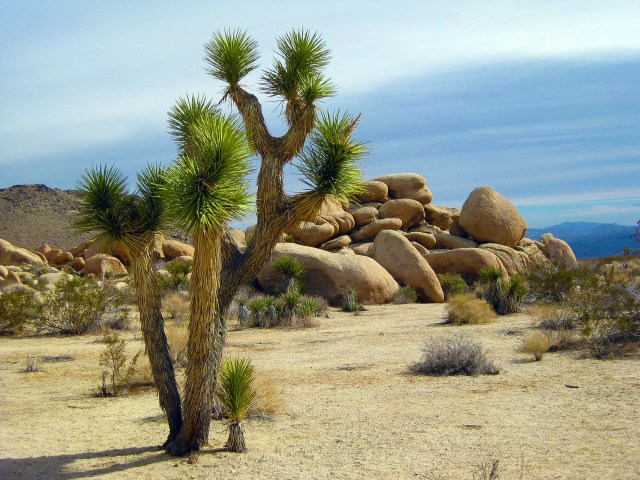
Sculpture with a View

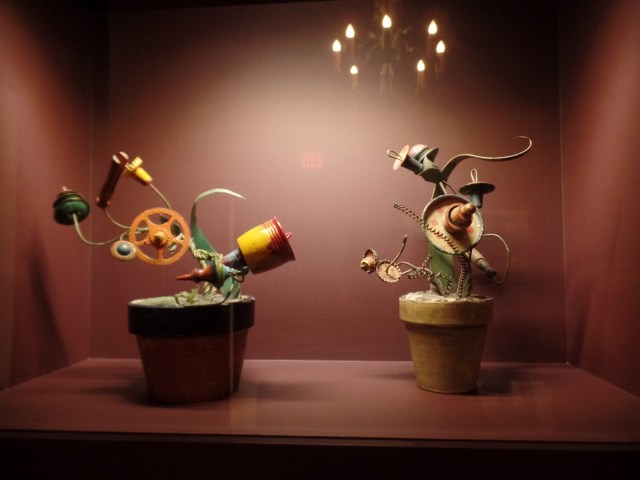
from the terraces of the Whitney Museum of American Art, New York

Rashid Johnson sculpture

Black Steel in the Hour of Chaos, Rashid Johnson

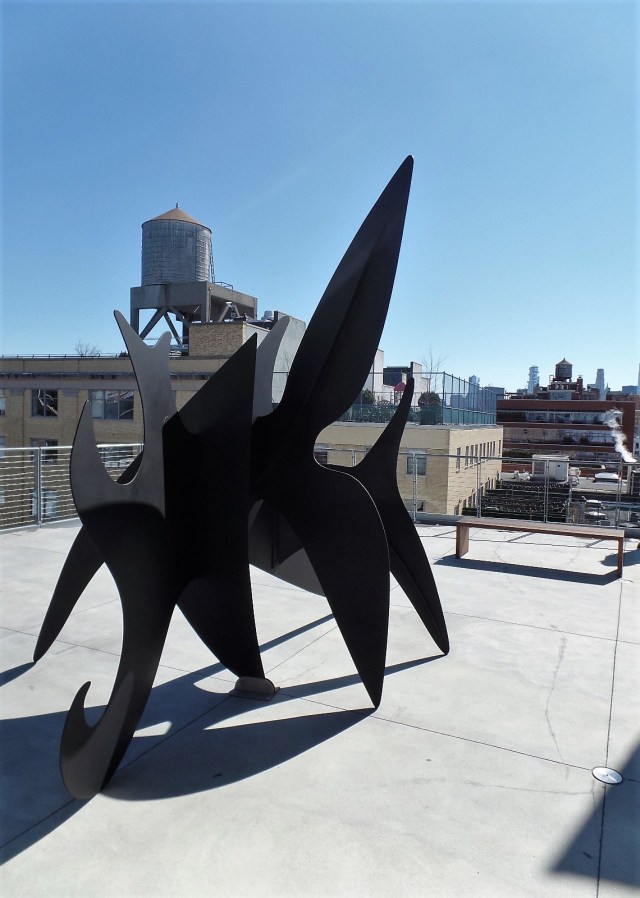
Caldor sculpture at the Whitney

The Cock’s Comb, Alexander Caldor

Number 1, Ruth Asawa

Number 1, Ruth Asawa

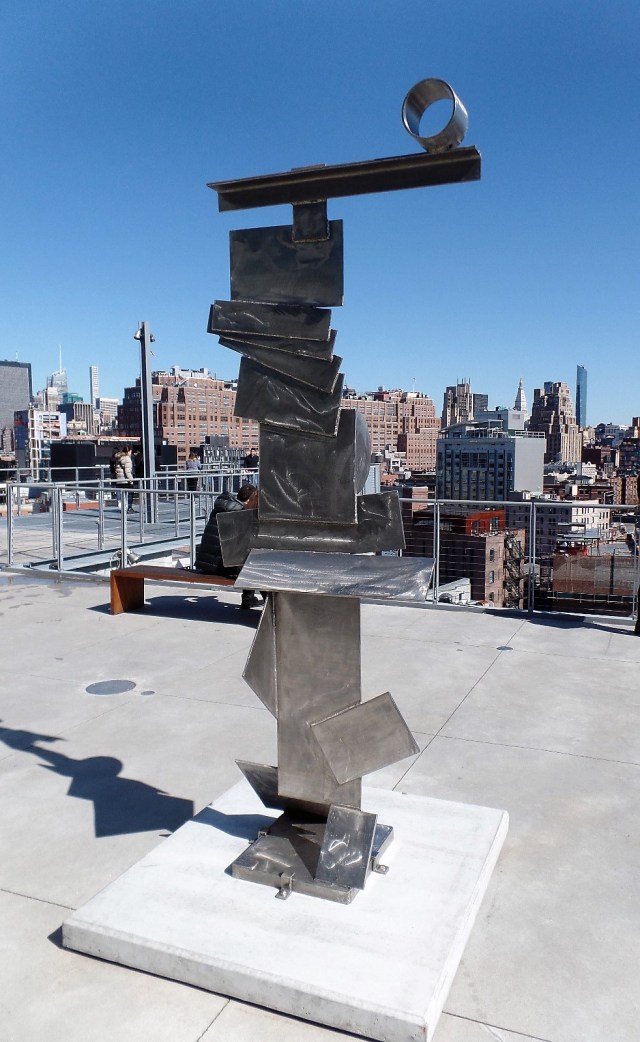
David Smith sculpture at the Whitney

Lectern Sentinel, David Smith

Posted in Art | Tagged , , , , , | 2 Comments

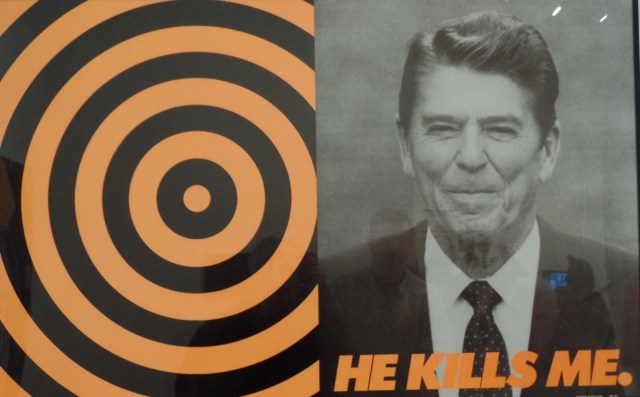
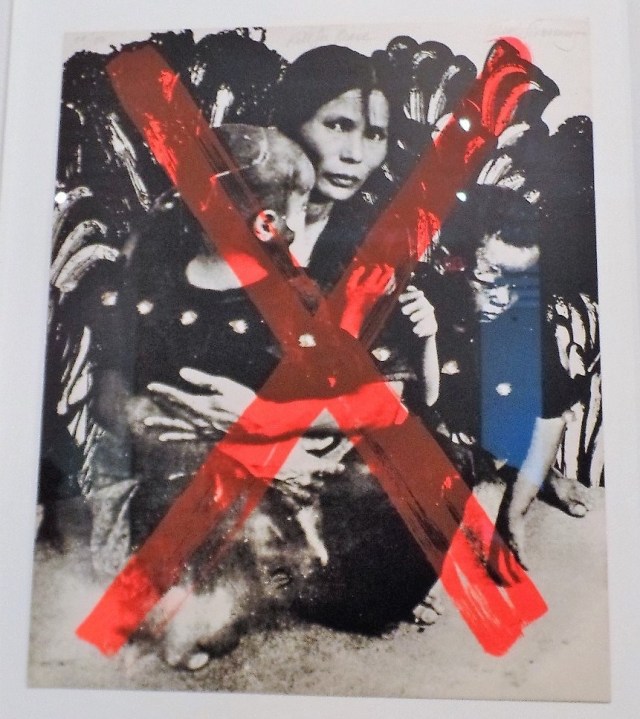
The Art of Protest

Reagan

Whitney Museum exhibit

Whitney Museum of American Art, Winter, 2018

Gary Simmons chalk drawing

Green Chalkboard, Gary Simmons

War protest painting

Kill for Peace, Carol Summers

Black Panther Party for Self-Defense

Black Panther Party for Self-Defense

On the wall at the Whitney

Posted in Art, Uncategorized | Tagged , , , , , | 2 Comments

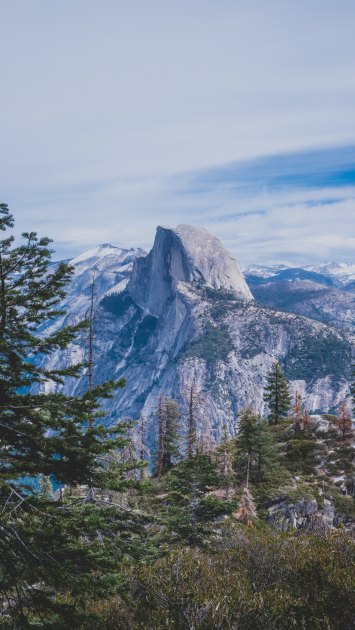
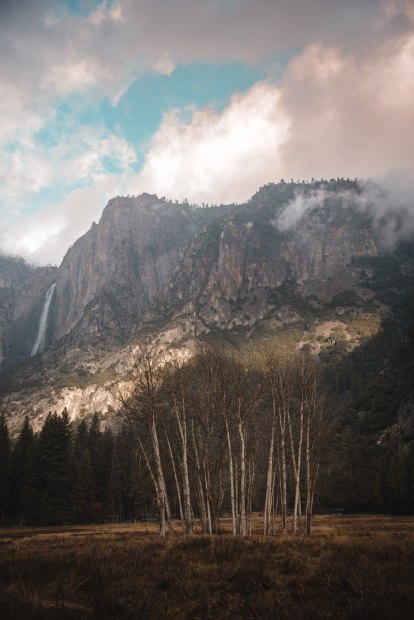
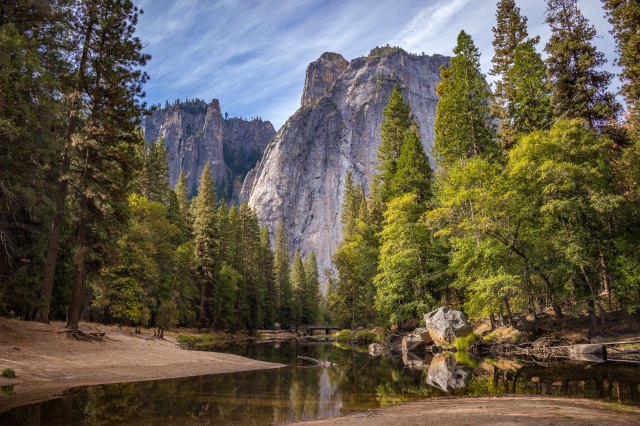
In the National Parks: The Poetry of Yosemite

Yosemite National Park, California

Pulmano image

(photo by Jordan Pulmano)

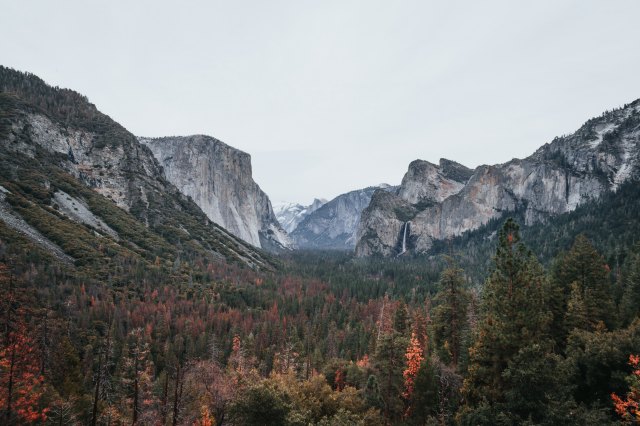
Homer Yosemite image

(Photo by Casey Homer)

Waiting to-night for the moon to rise

O’er the cliffs that narrow Yosemite’s skies;

Waiting for darkness to melt away

In the silver light of a midnight day;

Waiting, like one in a waking dream,

I stand alone by the rushing stream.

Alone, in a temple vast and grand,

With spire and turret on every hand;

A world’s cathedral, with walls sublime,

Chiselled and carved by the hand of Time;

And over all heaven’s crowning dome,

Whence gleam the beacon-lights of home.

(Excerpt from The Yosemite by Wallace Bruce)

Yosemite image by Homer

(photo by Casey Homer)

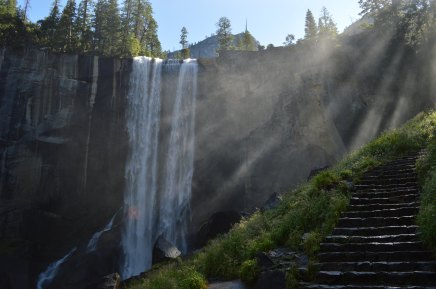
Vernal Falls

Yosemite National Park

(photo by Cam Adams)

Down from the Heavens

I come

tumbling

a galaxy of falling stars

a million white-winged doves

love weaves a daisy chain

rainbows of melting snows

ice to mist

winging

singing to the craggy steep

leaping to my emerald deep

pool

cool in granite fold

I am the song of the world

a moment old.

(Lyn Littlefield Hoopes)

Pirrkle image of Yosemite

(Photo by Nathan Pirkle)

Piche Yosemite image

(photo by Claude Piche)


A scene sublime is here disclos’d

Mountain and vale, with streams between;

A verdurous garden, far outspread,

With drooping woods of living green;

And the Sierras snow-clad crest

With all their plumy pine-trees drest.

The tourist, lost in wonder, looks

O’er mountain ranges white and vast,

Crown’d with the everlasting snows,

Swept by the fierce, tempestuous blast.

(excerpt from The Yosemite Valley by Isaac McClellan)


Homer Yosemite image

(Image by Casey Homer)


Beat! beat! beat!

We advance, but would retreat

From this restless, broken breast

Of the earth in a convulsion.

We would rest, but dare not rest,

For the angel of expulsion

From this Paradise below

Waves run onward and . . . we go.

(Excerpt from Yosemite by Joaquin Miller)


Joudrey Yosemite image

(Image by Christian Joudrey)

Posted in Travel, Uncategorized | Tagged , , , , , , | 9 Comments

The Mayor of London Comes to Texas

London Mayor Sadiq Khan arrived this week in a place he called “the hipster capital of world” to talk about the promise and pitfalls of the fourth industrial revolution.

Khan, London’s first Muslim mayor, gave a keynote address at the SXSW Interactive conference in Austin, Tex. Speaking to an audience of techies, marketers and entrepreneurs of all types, Khan called upon tech companies to ensure that the advancement of technology is used for the advancement of everyone.

What Khan referred to as the fourth industrial revolution is what others might call the tech or digital revolution. He drew parallels with earlier industrial disruption comparing the wave of nativist populism in the U.S., U.K., and Europe with the Luddites of England who responded to the first industrial revolution by smashing the machines that they viewed as taking their factory jobs and disrupting the skills they had spent a lifetime obtaining.

He commented that the Brexit vote in the U.K. and the rise of nativism in the U.S. and Europe is a result of a sizeable portion of society feeling left behind by the changes that technology is bringing and the disruption it is causing. One result is that some leaders and politicians have preyed on the fears of those that are left behind and directed their frustration at others.

Khan singled out the social networks and the gig economy. The social networks, for all the good they are doing, have also been used to create divisions within society through online abuse, misogyny and religious hatred. To make his point, Khan read some of the tweets that have been directed at him. One referred to him as a “gay, Muzzy terrorist” while another suggested that all Muslims be deported to “make London white again.”

Khan called on the major technology platforms to “live up to their promise to be a place where everyone feels welcomed and valued.”

Khan is mayor of a city which banned Uber. He discussed the gig economy and how in some cases it has driven down pay, bypassed hard-fought workers’ rights and eluded safety standards. He urged that “greater responsibility be taken by tech companies for the impact they are having on the world,’ adding, ”they can’t feel good about the negative consequences of their technology.”

Politicians also deserve a share of the blame, according to Khan. He criticized governments that have been passive while the tech revolution happened around them, something he described as “dereliction of duty.” (He did not comment on the fact that our government in the U.S. has not only failed to keep pace with technology but is now run by folks who seem to want to turn the clock back to 1950.)
Khan, who has in the past had some exchanges with Trump, did not mention the current Washington administration until asked about it after his speech. He said only, “It demeans your great country when your President tweets the stuff he does.”

The oft-repeated theme of Khan’s keynote was the need to “shape the future relationship between tech and society for the benefit of everyone.” That means becoming more inclusive and breaking down barriers for women and minorities. It also means training people for the jobs of tomorrow and embracing technology, using it to improve the lives of all communities. The alternative, according to Khan, is an “age of unprecedented inequality and division.”

Posted in Technology | Tagged , , , , , , , , | 4 Comments

In the National Parks: The Enemies of Canyonlands

Canyonlands sign

(photo by dassel)

Canyonlands National Park

(Photo by beccarobison)

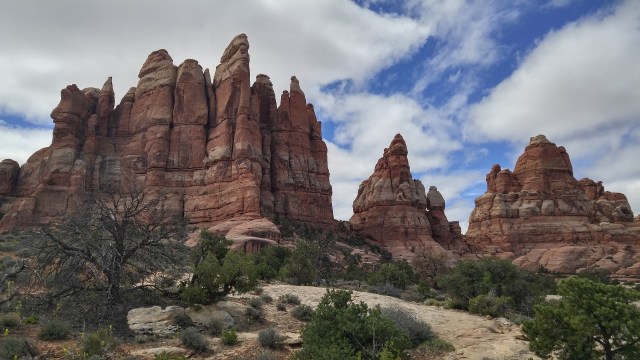
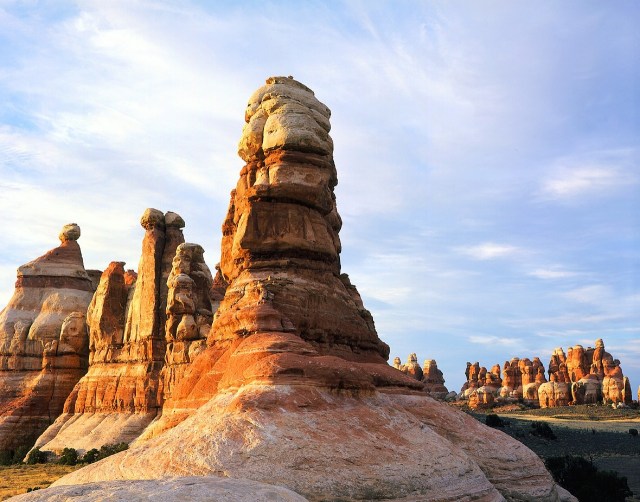
Canyonlands National Park is a breathtaking sight. The photos accompanying this blog post are an indication of the unique geologic formations and natural beauty of the park. Yet it has its detractors. As a relatively new national park, founded in 1964, it was created only after a long fight. Canyonlands is a prime example of the conflict that has always been a part of the creation of the national parks system. That conflict involves, on the one hand, the naturalists and conservationists who want to preserve these lands in their natural state and make them available for all Americans to enjoy. On the other hand are the commercial interests who want access to the territory in order to make a profit by exploiting the available natural resources, generally fossil fuels.

Utah is home to five national parks. That is a fact that is proudly touted by those who promote tourism to the state. But not so much by the Republican dominated state house and legislature. And they now have a like-minded administration in Washington.

Canyonlands National Park

Attempts in Washington to preserve the canyons area near the confluence of the Colorado and Green rivers date back to 1936 when Franklin Roosevelt’s Secretary of the Interior Harold Ickes proposed the creation of Escalante National Monument in the area. The proposal went nowhere, due to a combination of opposition by commercial interests and ultimately the distraction of war.

Another Secretary of the Interior, Stewart Udall, took up the cause in the early 1960’s. He ran into the opposition of Utah’s Republican Governor George Dewey Clyde. Clyde saw the inevitability of what would become Canyonlands but he sought to minimize its impact by working with Utah’s Republican Senator Wallace F. Bennett to try to shrink the amount of land that would be included and to make it a “mixed-use park” meaning it would be available for hunting, mining and ranching. The National Park Act of 1916 proscribed all of those activities.

Between 1961 and 1964, a number of bills were introduced by Utah’s other senator, Frank Moss, a Democrat, to create Canyonlands. He compromised on the size of the park, the activities that would be allowed there and changed the boundaries of the proposed park to exclude mineral-rich land and replace it with territory with no perceived commercial value. After several failures, Moss eventually had a compromise bill passed by the Senate in 1963. But when it went to the Democrat-controlled House, the mixed-use provisions were struck down. With some minor compromises, it was the House version of the bill that was finally approved in 1964 and signed into law by Lyndon Johnson.

The Needles

(Photo by skeeze)

More recently, the National Park Service and supporting conservationist organizations found themselves in a protracted legal battle with the State of Utah and San Juan County over the use of a pathway in the park by motor vehicles. The area is question is the Salt Creek, which is the only perennial waterway in Canyonlands other than the Green and Colorado rivers. It had been used by some recreational vehicles as a pathway to the Angel Arch, one of Canyonlands iconic geologic formations.

Citing environmental damage and threats to area wildlife the Park Service at first limited vehicular use of this pathway and then in 2004 closed it entirely to motorized vehicles. The county and the state sued the park service under an 1866 law that was enacted to allow settlers to build roads across public lands. That law, RS 2477, had been repealed by Congress, but it grandfathered established rights of way. A Utah District Court ruled that there was not sufficient evidence of 10 years of continuous use as a roadway, which is what Utah law requires. for an RS 2477 claim. The decision was appealed and it was ten years later, in 2014 that the Tenth Circuit Court of Appeals upheld the district court ruling and thus kept the Salt Creek closed to vehicular traffic.

A Road Less Traveled

Canyonlands National Park

(Photo by Rauschenberger)

During the creation of Canyonlands, supporters of the national parks in Washington offset the local and state politicians who were often beholden to commercial interests in their state in order to first establish and then support Canyonlands National Park. The current administration in Washington is far different than its predecessors, No one will even confuse Ryan Zinke with Harold Ickes or Stewart Udall.

Zinke was a Republican congressman from Montana who, in running for that office, once referred to Hilary Clinton as the anti-Christ. On his first day in office as Donald Trump’s Secretary of the Interior he rescinded a rule banning the use of lead bullets in National Wildlife Refuges that had been adopted by the Fish and Wildlife Service to prevent lead contamination of plants and animals. He then set out on a study to see which national monuments could be reduced in size. That resulted in recommendations to diminish Bears Ears and Grand Staircase-Escalante, both in Utah, Cascade-Siskiyou in southern Oregon and northwestern California and Gold Butt in Nevada.

By executive order, Trump shrunk the two Utah properties, Bears Ears by 85% and Grand Staircase by 46%. Interior Department documents recently obtained by the New York Times show that the primary motivation for shrinking these national monuments was the potential for extracting coal and oil. (Oil and coal drove Trump’s call to Shrink Bears Ears and Grand Staircase)

The documents also show the role Utah’s Republican Senator Orin Hatch played in bringing about this reduction in public lands. He had provided Zinke a proposed redraw of the national monuments’ boundaries that was largely adopted by Trump in his executive offer. So the Utah GOP, which has consistently fought against the creation of national parks in Utah and has sought to shrink them, now has some allies in the White House and the Interior Department.

Canyonlands National Park

Canyonlands arch

(Photo by Alan Rither)

Posted in History, Travel, Uncategorized | Tagged , , , , , , , , , , , | 19 Comments

In the National Parks: Living Under the Stars at Joshua Tree

Joshua Tree National Park, California

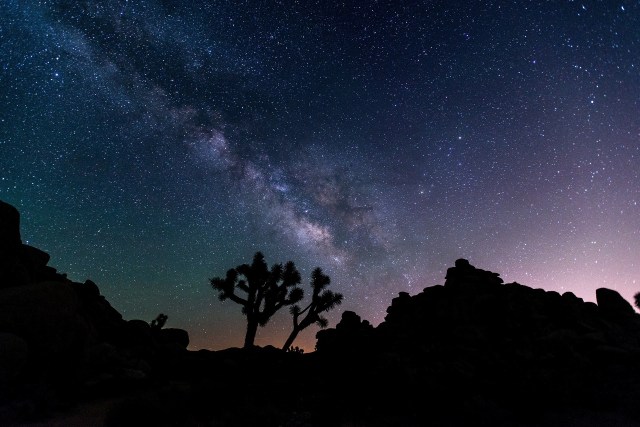
the stars at Joshua Tree

Photo by Austin Human

Officially Dark

In Tucson, Ariz., there is an organization called the International Dark-Sky Association (IDA). One of their duties is to establish and maintain a list of “International Dark Sky Parks.” Joshua Tree National Park received that designation in the summer of 2017. Why do we want to know where to find the darkest skies? Because that’s where you see the stars. The IDA describes an International Dark Sky Park as “a land possessing an exceptional or distinguished quality of starry nights and a nocturnal environment that is specifically protected for its scientific, natural, education, cultural heritage, and/or public enjoyment.” Other national parks with this designation include the Grand Canyon, Canyonlands and Death Valley National Parks.

While the west end of Joshua Tree suffers from some light pollution from Palm Springs and other nearby towns, the east side is the place to go for darkness. Situated in the desert of southeastern California, this is one national park where a night hike might be preferred, not only because of the magnificent dark sky but also because daytime temperatures in the spring and summer often surpass 100.

Once a year in November Joshua Tree is home to the Night Sky Festival. The park’s campgrounds generally fill up for that event. There are guest speakers during the day and telescope viewing posts at night. And you’ll likely get a little advice about how not to be a light polluter.

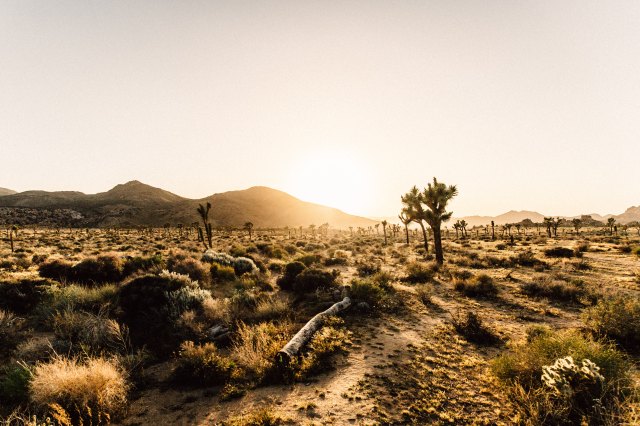
Joshua Tree National Park

photo by skeeze

Pod Living

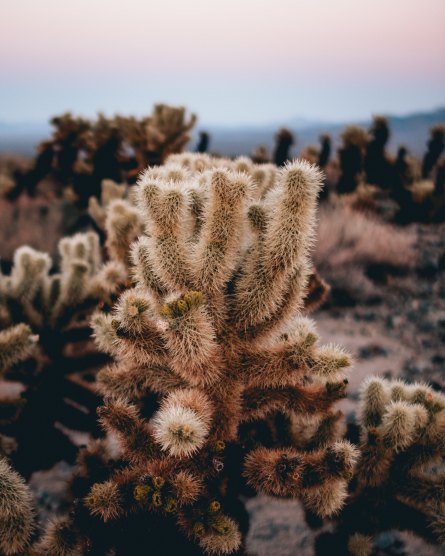
cactus

Photo by Jesse Echevarria

An alternative way to enjoy the night sky at Joshua Tree is to view it from your very own pod at the Wagon Station Encampment just outside the park’s boundaries. A complex of 12 sleeping pods, the Wagon Station Encampment is part of A-Z West which, according to its Web site, is “an evolving testing grounds for living  — a place in which spaces, objects and acts of living all intertwine into a single ongoing investigation into what it means to exist and participate in our culture today.” That’s the kind of stuff you want to ponder while you stargaze. In addition to the Wagon Station Encampment, A-Z West features a shipping container compound, a weaving studio and ‘satellite cabins.”

The whole thing was founded by Andrea Zittel, a Bay Area artist who moved to Joshua Tree some 15 years ago. Zittel makes sculptures and installations for galleries and uses the money to fund her social experiment in the desert. There are two months a year during which you can rent a wagon station, but you have to apply with autobiographical info and be accepted. Zittel suggests it’s appropriate for those “who are engaged in cultural or personal research.”

The encampment includes a communal outdoor kitchen as well as showers and toilets. The pods themselves look like metal and wood containers that are raised off the ground. They lift open from the front and inside there is a mattress and hooks for clothing. Up top there is a transparent strip, perfect for lying in bed and stargazing.


Joshua Tree National Park

Photo by Andreas Selter

Homesteading in the Desert

Stargazing was the last thing that Bill Keys had in mind when he settled on a mining property in 1910 in what would later become part of Joshua Tree National Park. Keys was from Nebraska and his background included a stint training with Teddy Roosevelt’s Rough Riders. He worked at the mine for about five years and when the absentee owner died he filed a claim for back wages which resulted in his gaining ownership of the property. He then added to his holding by filing a homesteading claim for adjacent land.

Keys was something of a whirlwind on his new property. He continued running the mine, did some farming and started a cattle ranch. He built five dams on the property and roads running through it. He even created the area’s first elementary school, originally for his own kids, of which there were seven. In the forties, Keys had a gunfight with a local sheriff’s deputy that resulted in a murder conviction. He did five years in prison before being released and was later fully pardoned.

The Keys Ranch is now part of Joshua Tree National Park and has been designated a National Historic Register Site. The ranch house, the school, a store and a workshop are still standing and there are various tools and mining equipment on the site. Ranger-guided walking tours are available to visitors to the park.

Joshua Tree National Park

Photo by sspiehs3


Posted in Travel, Uncategorized | Tagged , , , , , , , | 10 Comments

In the National Parks: Fire and Fury in the Rockies

Rocky Mountain National Park, Colorado

Rocky Mountain National ParkFire

Rocky Mountain National ParkOn Jan. 7, 2013, the Fern Lake Fire in the Forest Canyon area of Rocky Mountain National Park was declared extinguished. The fire had burned for nearly three months and had covered 3,500 acres. What had started as an illegal campfire was reasonably contained until a period of high winds after Thanksgiving that year caused the fire to spread some three miles in 35 minutes. Some homes in nearby Estes Park were evacuated, but firefighters were able to keep the fire within the park’s boundaries. A snowstorm in December helped get it under control.

One of the reasons the fire spread was that the region had suffered a long-term drought. The National Park Service also reported that mountain pine beetles had killed half the trees in the canyon leaving the remains dry and susceptible. To have a fire at that elevation in the winter is considered unusual and the Park Service believes that the area had not seen a fire in over 800 years.

By May of 2013, the Denver Post reported that the forest and meadows in the area where the fire had burned were actually revitalized. It reported “green shoots of native grass sprouting, and frogs, hummingbirds and yellow flowers emerging amid charred willows and pines.”

Five years later 9News.com reporter Will Swope observed, “..this area is anything but barren. I found flowers growing around the charred logs that lay on the forest floor. Small trees are starting to grow back. It will take time, lots of time, but Rocky’s history is long and the area is resilient.”

Fern Lake Fire

Rocky Mountain National Park

Floods

Rocky Mountain National ParkIn 2012 drought conditions led to the fire in Fern Lake. One year later there was water. Way too much of it. Four days of storms included one 24-hour period in which a foot of rain fell. Roads and bridges became unpassable and there were mudslides. Nearby Estes Park was cut off as the two main roads leading into town were shut down. Park rangers emptied the campsites and closed the park.

National Parks Traveler described the damage: “…some of the most obvious storm damage was on the northern end of Horseshoe Park near Endovalley, In paces the road into Endovalley was washed out and washed over with mud, rocks and other debris. The road into Aspenglen Campground also was damaged, and the bridge over the Fall River deemed unsafe for even foot traffic. In Moraine Park, the Big Thompson River ran bankful, as did the Fall River as it surged through Horseshoe Park.”

The park was closed although Trail Ridge Road, the highest continuously paved road in the U.S., remained open. After five days areas of the park began reopening incrementally as roads and trails became passable.

 As Storms Ease, Damage to Rocky Mountain National Park is Revealed, Length Rehab on Tap

Rocky Mountain National Park


Snow

While April showers may indeed brings May flowers in many parts of the U.S., at Rocky Mountain National Park those spring months have often surprised with something else. Snow. And lots of it.

In 2009 winter at  RMNC extended well into April. Three feet of snow fell within 24 hours at the park on on April 17. Both entrances were shut down as plows worked on getting Trail Ridge Road between the two  in passable condition.

In May of 2011 came a snowstorm of nearly four feet. Park officials measured the snowfall in the Bear Lake region at 44 inches. Avalanches were reported, some naturally and some caused by humans. And a rock slide closed the main highway from Estes Park into the park.

Just last May some 42 inches of snow fell on the park in mid-May. The storm closed roads throughout the park and park officials warned of a very high avalanche possibility; Park rangers warned those looking to ski, snowshoe or hike that they should have specialized gear and training.

Rocky Mountain National Park

Posted in Travel | Tagged , , , , , | 9 Comments

In the National Parks: Yellowstone’s Friends in High Places

Yellowstone National ParkYellowstone National Park, Wyoming, Montana and Idaho
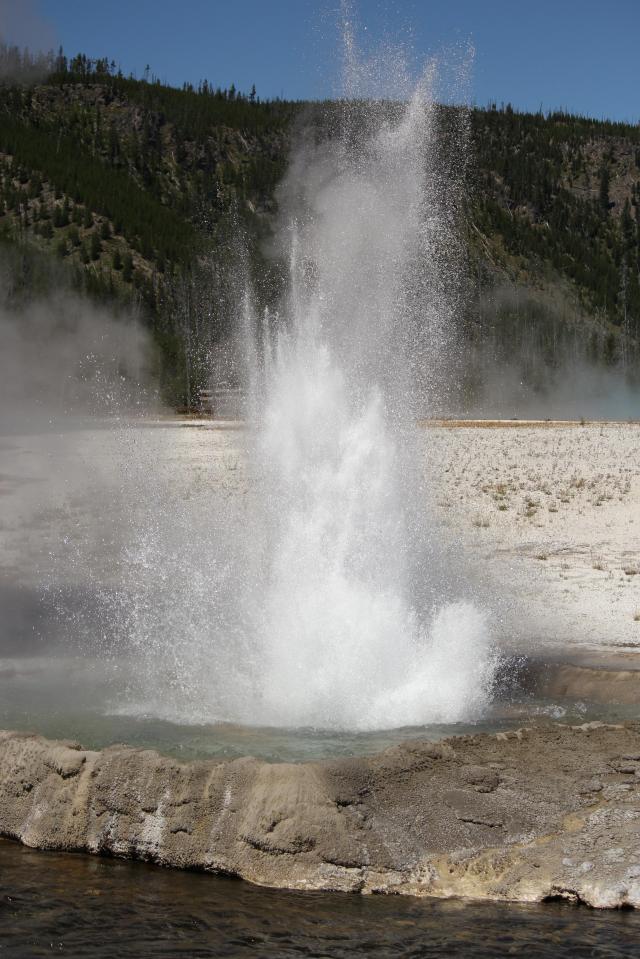
Yelliowstone hot springs

1903

Probably the greatest conservationist among all American presidents was Theodore Roosevelt. When he visited Yellowstone for a vacation in 1903, it wasn’t a quick run through. He stayed for 16 days. He was joined by naturalist and writer John Burroughs and by Park Superintendent Major John Pritcher. He dedicated a new archway to the park from Gardiner, Mont., that was named after him. He also met with architect Robert C. Reamer to go over plans for the construction of the Old Faithful Inn which would be completed the followed year.

Yellowstone National ParkBut what Roosevelt was most interested in was the wildlife at Yellowstone and he recorded his observations. Here’s an excerpt from Roosevelt’s April 16, 1903 letter to  C. Hart Merriam at the Department of Agriculture, including his observations of the elk at Yellowstone. “From very careful estimates, based for instance on actually counting the individuals in several different bands, I am convinced that there are at least fifteen thousand of these elk which stay permanently within the Park. But an insignificant number of them are killed by hunters… The cougars are their only enemies, and in many places these big cats, which are quite numerous, are at this season living purely on the elk, killing yearlings and an occasional cow; this does not damage, but around the hot springs the cougars are killing deer, antelope and sheep, and in this neighborhood they should certainly be exterminated.”

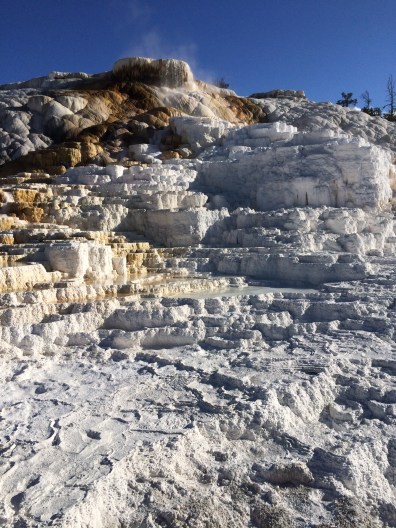
While he was president, Roosevelt created five national parks, 18 national monuments, 51 bird sanctuaries and created the National Wildlife Refuge slystem. In 1947, President Harry Truman created the national park that is named after him, Theodore Roosevelt National Park in western North Dakota.

President Theodore Roosevelt’s 1903 Visit to Wyoming


1937

Franklin D Roosevelt, accompanied by his wife Eleanor, his daughter and son-in-law arrived at Yellowstone by train on Sept. 25, then took a drive through the park in an open car. They spent the night at the private home of Harry Child, president of Yellowstone Park Company, and the following day visited Monmouth Hot Spring and had lunch at the Old Faithful Inn. Eleanor recorded her observations:

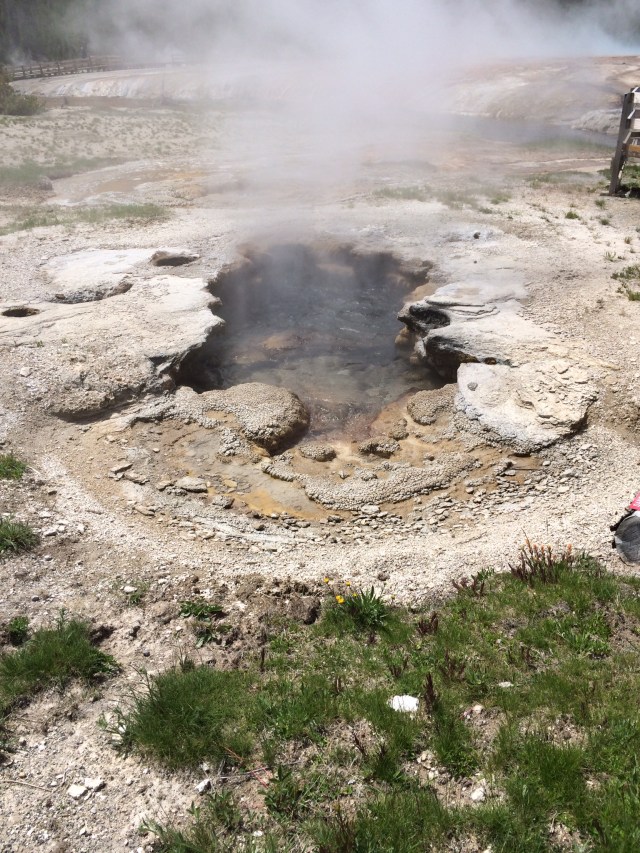
Yellowstone National Park“Of course, the first thing that strikes one is the extraordinary hot springs, bubbling up and changing constantly so that what is a colorful terrace today with the hot water flowing over it, will in a little while be white as chalk when the water ceases to bubble and flow and keep the tiny plants alive which give the color to the hillsides.
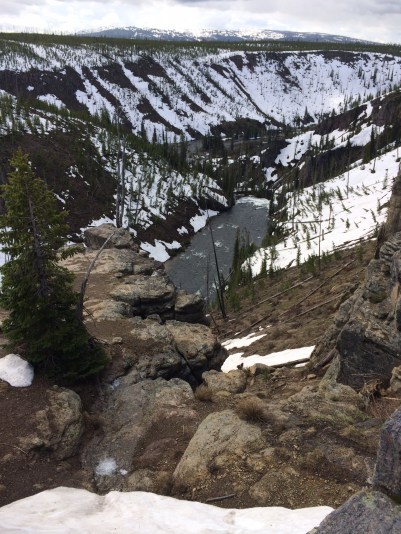
“The next greatest interest is the animals. The herd of buffalo was interesting though we only saw it from a distance, but we saw a wonderful sight in a great elk with fine antlers close to the road, herding his harem of ladies. A little later we saw a lone elk, all by himself against a background of pines and wondered if he had been driven off and had lost his ladies to the other gentleman. Even in the animal world the ladies seem to cause some trouble!”

FDR’s greatest contribution to the national park system was the creation of the Civilian Conservation Corps which provided much needed jobs during the Depression and sent an army of workers into the parks to improve infrastructure, build roads, plant trees and work on soil conservation projects. He also created 11 national monuments during his terms.

My Day, by Eleanor Roosevelt, Sept. 27, 1937

Yellowstone National Park


1978

Jimmy Carter and family took a fishing trip to Yellowstone, setting up on an island in Yellowstone Lake  and accompanied by famous fly fisherman Bud Lilly.  Based on the book “Yellowstone Ranger” by Jerry Memin the Great Falls (Mont.) Tribune provided an account of the scene on the day of Carter’s visit.

Yellowstone National Park“In 1978, President Jimmy Carter arrived by helicopter to Yellowstone Lake’s southern arm.
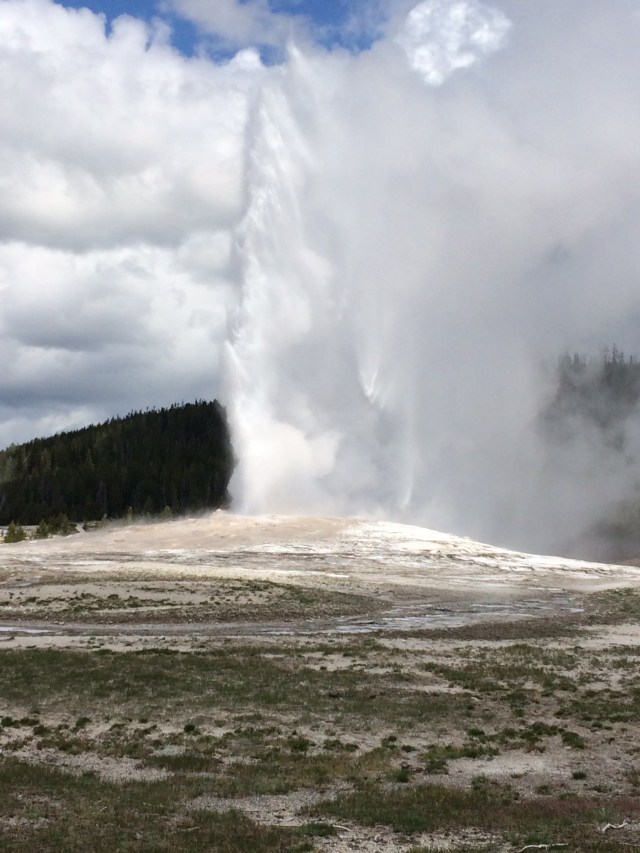
“When the helicopter landed the rangers rode over to introduce themselves. The Marine in charge said his only worry was grizzly bears.

“Then came the president, his wife, daughter and entourage. The Secret Service deployed in canoes, along with the First Family. The female anglers, especially Amy, were quick to catch fish. Things began to look awkward for the president.

“’Judging from the body language some seemed to be holding their breath while others seemed to be hyperventilating. Then the president caught a fish,’ Memin wrote. ‘a sigh of relief swept through the onlookers, and everyone seemed to relax.’

“Then Memin hopped off his horse so the president could ride it… ‘I would say he was an accomplished gentleman and an adequate horseman,’ Memin wrote.”

Carter made several visits to the park after his time in office and is remembered for joining the park staff for pizza in an employee pub at the Lake Hotel. His signature is still on the wall there.

In 1980 Carter signed the Alaska National Interest Lands Conservation Act. The law created 10 national parks and preserves, two national monuments and nine national wildlife refuges. All told it set aside 104 million acres of land.

Park ranger found a life of adventure in Yellowstone

Yellowstone National Park

Posted in History, Travel | Tagged , , , , , , , , , , | 3 Comments

In the National Parks: Lost in the Tetons

Grand Teton National Park

Grand Teton National Park, Wyoming

Missing teen

Talbot Lake trail, Grand TetonWord reached Cincinnati on the evening of Aug. 5, 2016 that a local teenager was missing in Grand Teton National Park. The 17-year-old had gone to the park on a conservation project with a group called Groundwork USA. She was working with a group of other teenagers on a trail making project when she headed off on a bathroom break and never returned. The news seemed even more ominous the following day when KLWT5 News in Cincinnati reported that one of her hiking boots had been found.

The TV reporter reached her math teacher who expressed his concern: “I’m really worried about her safety because I know her and I know this is not something that she would do of her own accord.” He added that she is a straight-A student and president of the Vegan Club. Just the day before going missing she had posted on her Instagram account “Last day in Wyoming is tomorrow. I can’t wait to be home and see everyone. Today I am blazing a trail, pretty siked.”

The search initiated by the park rangers was broadened to include the Teton County Sheriff’s Office and the Wyoming Civil Air Patrol. More than 100 people were involved. And they found her!  But when they did, she tried to run away. And she had cut and dyed her hair and changed her clothes. Eventually they corralled her and held her under “protective custody” until her parents arrived and brought her back to Ohio.

I trust all is well now and she will be able to look back on this incident and dismiss it as “one of the stupid things I did when I was 17.” We all have some of them.

Boot of missing Cincinnati teen found during search of Wyoming Park

Ohio teen found in Grand Teton National Park had changed her appearance

-0-

Missing ring

Grand Teton National ParkRichie Jones had a plan for proposing to his longtime girlfriend Ashley Allen that no woman could refuse. Packing away a purple sapphire engagement ring, he set out with Ashley to conquer the Grand Teton, a 14,000 foot peak that is the tallest at Grand Teton National Park. It took them two days to reach the summit. Here’s a companion climber’s description of what happened when they got there.

“Richie stepped back, took a knee on the summit of the Grand Teton, and looked deep into Ashley’s eyes.

“’Will you marry me, Ashley?’

“She threw her hands in the air, screamed in obvious delight, and with tears of joy streaming down her face she reached toward the ring box as Richie held it out and opened it.

“She gave Richie a puzzled look.

“Richie returned the puzzled look. He slowly rotated the box and an expression of utter astonishment swept across his face.

“The ring was gone.”

He later told ABC News “One of the guys saw it bounce off the rock and it goes spiraling, just spinning with this top spin down through the air, and saw it on another rock.” Allen never got to see the ring, but she said yes anyway and Jones tried to look on the bright side: “To know our engagement ring is on this incredibly dramatic, spectacular peak just sitting up there, what more could you ask for?”

Not exactly what he planned but a memorable proposal nonetheless. No word on whether anyone ever found the ring.

A Mountaintop Proposal Doesn’t Go as Plannd Engagement Ring Lost on ‘Spectacular’ 14,000-Foot Peak ‘Meant to be There’

-0-

Missing skier

Jacson Hole Ski ResortA Houston man and two of his buddies from Wyoming, ranging in age from 24 to 37, were spending Christmas in 2016 skiing at the Jackson Hole Ski Resort, adjacent to Grand Teton National Park.  But at 6:30 p.m. on Christmas Eve one of the men’s girlfriend got a text that they were in trouble. She called Teton County Search and Rescue who forwarded the alert to the park rangers.

The skiers were hoping to reach the Rock Spring Bowl but after they left the ski area’s boundary, they got lost in the poor visibility. They were able to hike to an area where they could get some cell reception and contact with the park rangers was established at about 10 p.m. It was determined that the men were uninjured and that they had some equipment with them, including probes and shovels. They were instructed by the Rangers to build a snow cave and fire and the rescue would take place in the morning when it was not as dangerous.

Two park rangers and two members of the Jackson Hole Mountain Resort Ski Patrol started their Christmas morning on the tram that goes to the top of the mountain. They skied into the area where they believed the lost men were camped out, were able to find their ski tracks and followed them to the three skiers. The men were safe, albeit cold, and the rescuers escorted them down the mountain and back to Teton Village.

The advice from the park rangers: “remind those that venture outside of the ski area boundary that they should be prepared for emergencies and the potential for extended stays outdoors.”

Lost Skiers Rescued in Grand Teton National Park on Christmas Day

Jenny Lake waterfall

Posted in Travel | Tagged , , , , , , , | 6 Comments

The Wounded Knees Diary

As I write this I am three weeks into recovering from a double knee replacement. I think that name makes it sound worse than it is. You don’t get your knees replaced, it’s really about slapping some titanium in where your cartilage has aged out. Rehab takes a long time and while it has been described as painful it is more about being uncomfortable. All the time. And I’m getting a little bored. (If you’re a hacker following my social media accounts to find out when no one is around, you’re out of luck. I’m here 24/7.)

knees

(not my knees)

Prior to the surgery I had osteoarthritis in both knees for about 3-4 years. It is apparently more common than I would have guessed, at least judging from the vast array of relatively worthless cremes, lotions and roll-ons you can find at any drug store aimed at the knee pain sufferer. The hospital where I had the surgery does 60 knee replacements a week. I half expected them to load me up onto a conveyor belt, but if that happened they apparently did it after they knocked me out.

Since this seems so common I thought some might be interested in what I learned along the way. But first one warning. I am the last person you should look to for medical advice. Prior to my recent knee episode you could measure my time between doctor visits in decades. I know nothing about medicine. Nothing about pharmaceuticals. And subjects like anatomy and biology are blank spots for me.

Doctor #1 – My first venture into getting some professional help for my knee problem is when I mentioned it to a general practitioner who I was visiting for a long-overdue physical. He asked if it was keeping me awake. No, it wasn’t keeping me awake and in fact never did. His advice, “Don’t go to an orthopedist until you can’t sleep at night.” No idea why he said that but I suspect it was bad advice. Had I started to get some sort of treatment early on it likely would have saved me some painful times.

knee

This is not my knee either.

Orthopedist #1 – Why are doctors seemingly so distrustful of other doctors? One of the first things this guy told me is that I was lucky I didn’t go to a university hospital because if I did they would send me straight to surgery. Not sure the rationale behind this advice either but I’ve never wanted much to do with hospitals so I readily accepted it. This visit set me on the strategy of trying to avoid surgery, of doing everything possible before going that route. He gave me cortisone shots which usually but not always relieved the pain for 3-4 months. Three times over a period of two years he gave me three-shot treatments of orthovisc. This stuff is supposed to strengthen your cartilage. It did nothing for me. He prescribed naproxen, which is prescription-strength Aleve. At one point my right knee, which had been my good knee, suddenly became my bad knee. My orthopedist diagnosed a torn meniscus.  I had arthroscopic surgery to repair. I felt great for a week. Then the painkillers wore off and I discovered I was no better off than before the surgery. Not long thereafter I came across a story in the New York Times about how this surgery is likely the most often performed unnecessary operation there is. I suspect that I did have a torn meniscus, but that isn’t what was causing me the pain. Instead it was what the professionals refer to as “bone on bone,” another way of saying your cartilage is gone. I asked about physical therapy and was told “it won’t help you.” Another piece of bad advice.


Orthopedist #2 – I thought it was time for a second opinion. But without so much as looking at an x-ray, this guy’s opinion was that I was going to need surgery and since he didn’t perform that surgery he lost interest in me as a patient right away. In fact the guy spent his whole 5 minutes with me talking to his tag-along intern. I might as well have been one of the posters on the wall that shows deteriorated joints. I did, however, prevail upon him to give me a prescription for physical therapy.

Physical therapist #1 – Physical therapy helped me more than anything I had done to this point. (Except for maybe buying the Hoka sneakers that I wore everywhere for two years.) Two weeks before she started treating me, my physical therapist was a full-time bartender. But she never chose to put my knees on ice. Instead she taught me how to exercise and what I was able to do on my own in the gym afterwards. The PT loosened me up to the point where I felt better than I had in a while. I had a prescription for eight weeks of therapy and then I renewed it for another 8 weeks. I spent a full hour twice a week with my physical therapist as opposed to 5 or 10 minutes per shot with all of the doctors. So I felt she knew me and my knees better than anyone I had been treated by.

Acupuncturist #1 – Determined to try absolutely everything, I decided to see an acupuncturist and ended up doing about eight treatments with him. We got along great. We had similar tastes in books and music and common political views. So we had a lively conversation while I laid on a table with needles stuck in me for an hour or so. Not a bad way to break up the day. As for my knees? It did nothing.

At this point I was maintaining myself on quarterly cortisone shots, working out in the gym four or five times a week and taking naproxen daily. I was uncomfortable continuing with the medication because of warnings about prolonged use making you susceptible to other things, like strokes or heart attacks. And while I could do most things, I had stopped playing tennis, I couldn’t run, I didn’t take my dog for long hikes in the woods anymore, and I found myself avoiding anything that involved a lot of walking. It was time.

Orthopedist #3 – This time I went for the best surgeon I could find. This was a guy whose waiting room walls were adorned with New Jersey Nets and New York Giants jerseys, apparently worn by guys who had their knees done there too. No question in this guy’s mind that I should go for the surgery and that I should get both knees done. (One of my knees was much less painful so there was some question in my mind about doing one or two.) This guy I had confidence in. For one thing, he looked at my x-rays and determined that I also had had a stress fracture of the fibula in my right leg. That explained why one leg felt worse than the other even though the knee cartilage looked equally decrepit on an x-ray. Why didn’t any of the other medical professionals or radiology shops notice this? So I took the plunge. That was three weeks ago.

So here are some of the issues you might think about if you are in a similar situation:

knees

(image by Autumn Goodman)

To operate or not? All the other things that are offered to people with osteoarthritis in their knees, the creams and ointments, the braces, the shots, are intended to make a bad situation tolerable. (The only crème I found that helped was some Tiger Balm that my wife brought back from Thailand. But it also smelled so strong that even my dog didn’t want to come near me.)  You won’t get better! The best case scenario is that you reach a point where you are not that troubled by the pain and are not limited in what you want to do in life. Not being prepared to accept that, I went for the surgery as what I perceived as the only cure. There are some stories out there about people who had a bad experience and had to have the surgery repeated, in some cases multiple times, but everyone I talked to who had the operation or knew someone who had it was glad they did. Some even described it as life-changing.

One knee or two? I’m not sure why you would have the cartilage deteriorate in one knee and not the other but I guess that happens. As I said up front I really know nothing about this stuff. A case can be made for doing one knee. The recovery is no doubt much easier and much less limiting if you are operating on one good leg. I also had one knee that was considerably worse than the other so in that way the one-knee option made sense. Ortho #3 talked me into the dual remake. I came to the conclusion that I didn’t want to go through this and then find I had to do it again a couple years later. The decision to have surgery a second time is likely even tougher than doing it once.

Now or later? As described above I had followed a plan, in concurrence with doctor #1, orthopedist #1 and physical therapist #1, of doing everything possible before submitting to surgery. While it made sense to me at the time, I would urge some caution in following this. I’m probably a little younger than the average knee preplacement patient and don’t have any other health problems. How otherwise fit and healthy you are has a lot to do with how well you are going to recover from this. So there is some risk in putting off surgery and finding yourself in a less advantageous position to deal with it further down the road.

At this point I’m happy with the decisions I made to have the surgery and to go for the double. The rehab, which some described to me as brutal, isn’t really. But it is tough and long. All and all, I’m doing alright.  I doubled my time in the gym for the weeks prior to surgery. I think that helped with the recovery. I was walking after a couple weeks and only use a cane for stairs.

Don’t expect me to update this anytime soon, because I’m thinking of getting out of here and doing stuff on my new knees.

Pepper and me

Canine therapy

Posted in Uncategorized | Tagged , , , , , , , , , | 19 Comments