Whatever Happened To? Skeeter Davis

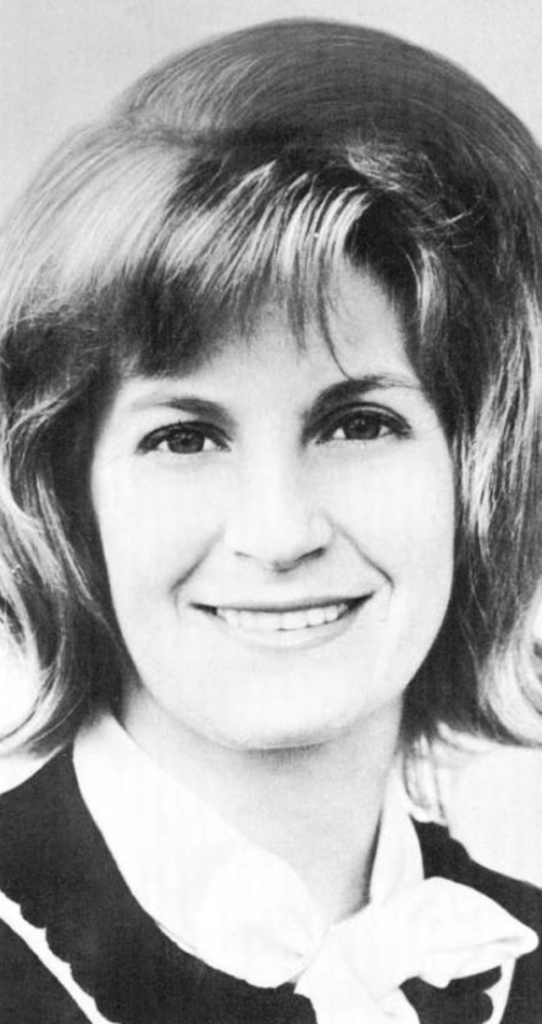
Do you remember Mary Francis Penick? Maybe you remember her as Skeeter Davis. If that still doesn’t sound familiar you may remember this:

Skeeter Davis – The End of the World (HD)

Skeeter Davis was a country music singer from Kentucky who was nominated for a Grammy five times. “The End of the World” was her greatest success, a 1963 crossover song that rose to the top ten in the country, pop, adult contemporary and rhythm and blues charts. She appeared on American Bandstand and toured with both Elvis and the Rolling Stones. She joined the Grand Ole Opry in 1959 and continued to perform on the Opry stage in Nashville until 2000.

The name Skeeter came from her grandfather, “who said she was always flittering around like a ‘skeeter.’” (Judy Morgan, Texarkana Gazette, May 2, 2024) The name Davis came from a high school friend, Betty Jack Davis. The two performed as a duet, the Davis Sisters, until a car crash killed Betty Jack.

Davis once said of herself “I don’t do anything. I’m so straight it’s ridiculous.” (Daily Telegraph, London, Oct 4, 2004). That makes her sound a lot less interesting than she really was.

During the 1960’s, Davis was an outspoken opponent of the Vietnam War, for which she got a good deal of grief from the country music community. She recorded an anti-war song, ‘One Tin Soldier.’ “At the end of the 60’s she was wearing granny dresses and blue jeans on the Grand Ole Opry. Her band was made up of scruffy, long-haired musicians — which displeased Opry management.” (Texarkana Gazette)

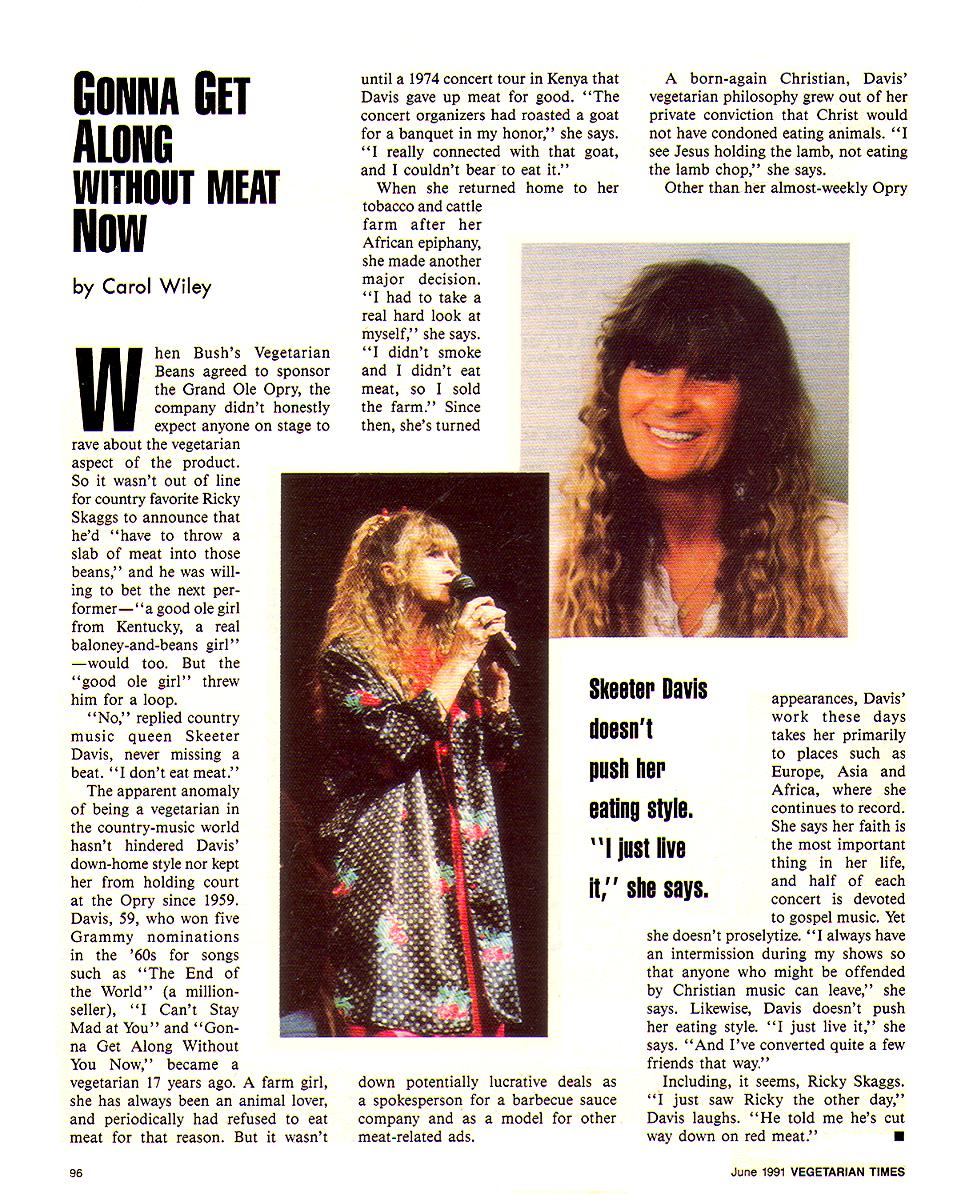
Davis was also a vegetarian. That started after an incident while she was on tour in Kenya in 1964. “’The concert organizers had roasted a goat for a banquet in my honor,’ she says. ‘I really connected with that goat, and I couldn’t bear to eat it.’ When she returned home to her tobacco and cattle farm after her African epiphany, she made another major decision. ‘I had to take a real hard look at myself,’ she says. ‘I didn’t smoke and I didn’t eat meat, so I sold the farm.’” (Carol Wiley, Vegetarian Times, June 1991)

Skeeter Davis

“Wholesomeness was Skeeter Davis’ stock-in-trade. A devout Southern Baptist, she took her religious beliefs seriously and refused to perform at venues which sold alcohol.” (Daily Telegraph, London, Oct 4, 2004)

Those religious beliefs once got her suspended from the Opry. “In 1973, a group of young people were arrested for allegedly bothering Nashville shoppers by talking to them about Jesus. When she defended the young people’s actions on the stage of The Grand Ole Opry, the management suspended her from the Opry for one year. And according to Skeeter, her manager quit and she lost her contract with RCA Records because of the incident.” (Texarkana Gazette)

Davis was diagnosed with breast cancer in 1994, then with bone cancer in 1996. She passed away in a Nashville hospice in 2004. Whenever possible, she continued to perform while she was being treated.

Rita Rose of the Indianapolis News (Aug 6, 1999) met her on the occasion of the 40th anniversary of the Grand Ole Opry at  the Country Time Music Theater in Little Nashville, Ind. She noted, “At 65, Davis is a warm, ebullient, chatty woman who embraces everything in her life: work, friends, family and several pets. And, above all, her faith in God which has carried her through some rough years lately.”

Davis is well remembered in and around Dry Ridge, Kentucky, where she was born and raised. There’s even a highway named after her there. 

The Lexington Herald-Leader had this story on March 14, 1998. “Country music singer Skeeter Davis will be honored in her hometown of Dry Ridge this morning as local officials, fans and Davis herself gather to dedicate a local highway in her name. A section of Ky. 22 from US 25 to Interstate 75 will be renamed Skeeter Davis Highway during a ceremony at 9 a.m. today at Ky. 22 and U.S. 25.”

She was inducted into the Kentucky Music Hall of Fame in 2013. And in Williamstown, Ky., there continues to be an annual all-day music festival called Skeeter Fest at the Grant County Fairgrounds. Davis is the only Grand Ole Opry member from Grant County.

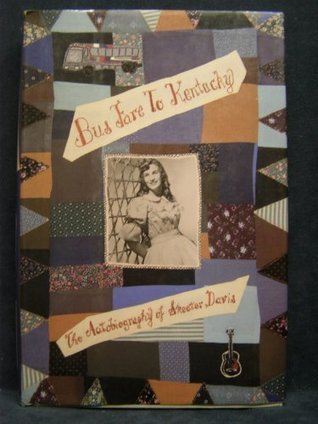
Bus Fare to Kentucky

In 1993, Davis published her autobiography “Bus Fare to Kentucky.” Lexington Herald-Leader reviewer Judy Jones Lewis (Oct. 17, 1993), had this to say: “…it is so much better than the usual crop of country singer’s autobiographies that it stands as a metaphor for the nation’s rise from the Great Depression to the excesses of the post-war boom years. The story is told with such amazing good humor, the reader comes away with more respect for Skeeter’s tenacity and wit than her singing skills.”

One point of interest in the book is Davis’ comments about Ralph Emery, her second husband, to whom she was married for four years. 

“Much of the attention the book is gathering is due to the portrait Davis paints of Ralph Emery, her former husband and former host of the Nashville Network’s popular ‘Nashville Now’ program. In the book, Davis recounts Emery’s mental and sometimes physical abuse during their four-year marriage. She says Emery was an adulterer and didn’t really like country music.” (Wayne Bledsoe, music critic, Knoxville News-Sentinel, Oct. 31 1993)

Davis had been married to a railroad worker Kenneth DePew from 1956 to 1959. She married Emery in 1960. Her third husband, who she married in 1987, was Joey Spampinato, a bass player from the rock band NRBQ. In 1985 she had recorded an album with NRBQ called “She Sings, They Play.”

Her marriage to Spampinato lasted until 1996 and ended after her bone cancer diagnosis. According to Davis “he couldn’t cope with her disease. ‘He didn’t even want to kiss me,’ she said.” (Rita Rose, Indianapolis News, Aug 6, 1999)

In her obit in the Guardian (Oct. 1, 2004), Alan Glayson said “After the break-up of her third marriage, she devoted herself to animal welfare and record releases that focused chiefly on religious material.”

Few people, other than maybe Emery, have anything bad to say about Skeeter Davis. Here’s one example: 

“Skeeter is no sophisticate, just a hard-working, hard-driving, Christian woman. That character shines through with a clarity uncharacteristic of entertainment industry hype.” (Judy Jones Lewis, Lexington Herald-Leader, Oct. 17, 1993)

-0-

(Note on sources: Newspaper articles that do not include links were accessed on newspapers.com)

Whatever Happened To?

Grace Slick

Sly Stone

Dave Clark

Bobbie Gentry

Ronnie Spector

Art Garfunkel

Billy Idol

Posted in Whatever Happened To? | Tagged , , , , , | 5 Comments

A Community Newspaper for a Distinctly Unique Community

A Review of The Freaks Come Out to Write by Tricia Romano

The Freaks Came Out to Write

When I was a teenager in the 1960’s, and later in the 70’s and into the 80’s, if it was Wednesday, I was combing the newsstand (we had those then) for the new Village Voice. It was where I could read about the kind of music I liked to listen to, the kind of movies I wanted to see and the dissident politics I subscribed to. It was at Stonewall, at the epicenter of the feminist movement and the AIDS crisis. The Voice covered off-Broadway, independent film and the downtown club and  music scene. Readers of the Times, the New Yorker and the tabloids would find nary a word of any of that. And there were the classifieds, the anything goes personal ads, and most importantly the job and apartment listings. If you were a Greenwich Villager, or wannabe Greenwich Villager, you might find yourself scheming to get an early copy of the Voice to get a first shot at an apartment. Thursday was too late. I once scored a job in the Voice, while on a brief hiatus from college, picking orders in the Grove Press book warehouse on Hudson Street. More notably, Max Weinberg tells of how he got his job with the E Street Band through the public notice music section of the Voice. At least for its first couple decades, the Village Voice was, above all else, a community newspaper for a distinctly unique community.

Tricia Romano was an intern at the Voice, and later a contributing writer. She has put together an oral history starting with its founding in 1955 and going through to the off-again, on-again recent history. We hear the voices of writers, founders, editors, owners and sometimes even subjects. It’s Mailer, Hentoff, Newfield, Christgau, Musto, et al. For some who have passed away she has used surrogates or archived interviews.

There were some surprises. Did you know the Voice was once owned by Rupert Murdoch? Or that Colin Whitehead was once a contributing writer? Here’s one of my favorite stories.

Staff news writer Wayne Barrett offered this description of lunching with Trump crony Roy Cohn:

“I had lunch many times with Roy Cohn. Roy Cohn ate with his fingers. I kid you not. He brought a little glass inside of his coat pocket. He would pop little white pills when he thought you weren’t looking. He was the most satanic figure I ever met in my life. He was almost reptilian”

I forgot that the Voice had a sports section. I loved it and read every word.

Allen St. John, a contributor, notes how it differed from other media’

“In the Wall Street Journal, you’re writing about the Yankees, the first reference would be ‘Derek Jeter.’ And the second reference would be the very stilted ‘Mr. Jeter.’ If you were writing about Derek Jeter in the Village Voice, it would be ‘Derek Jeter’ and then the second reference would be ‘Mariah Carey-banging motherfucker.’”

It was chaotic and there was no end of the intrastaff feuding. One notable example being the Marxist feminists vs. the old white guys.

Christopher Street Liberation Day, 1971 (photo by Diana Davies)

This is not necessarily a smooth read. There are dozens and dozens of folks whose voices are included here. If you are the type that needs to know exactly who is talking in each passage, you’ll go nuts going back and forth from the list of participants at the front of the book. Also I found that it wasn’t always clear who the interviewees were talking about. I remember a chapter where everyone commented on “Jack.” I had no idea what “Jack” they were talking about. Lots of discussion about various editors at the Voice which made me think how a bit of a better editing job would have benefitted this book.

Having said that, I still found “Freaks” invaluable. It documents a very notable piece of the history of New York journalism and culture, as well as my own personal history. There is still a Village Voice online, though I don’t know of anyone who reads it. I checked it before writing this review and found hardly anything written since last month.

Romano closes with this obit-sounding bit from former senior editor Joe Levy:

“So, without the Voice, there is one less advocate for the rights of sex workers, or the rights of immigrants. One less outlet hearing those voices. One less place to be noticed as an aspiring playwright, musician, choreographer.”

Posted in Book reviews, History, Uncategorized | Tagged , , , , , , | 3 Comments

New Jersey Artists Show and Tell

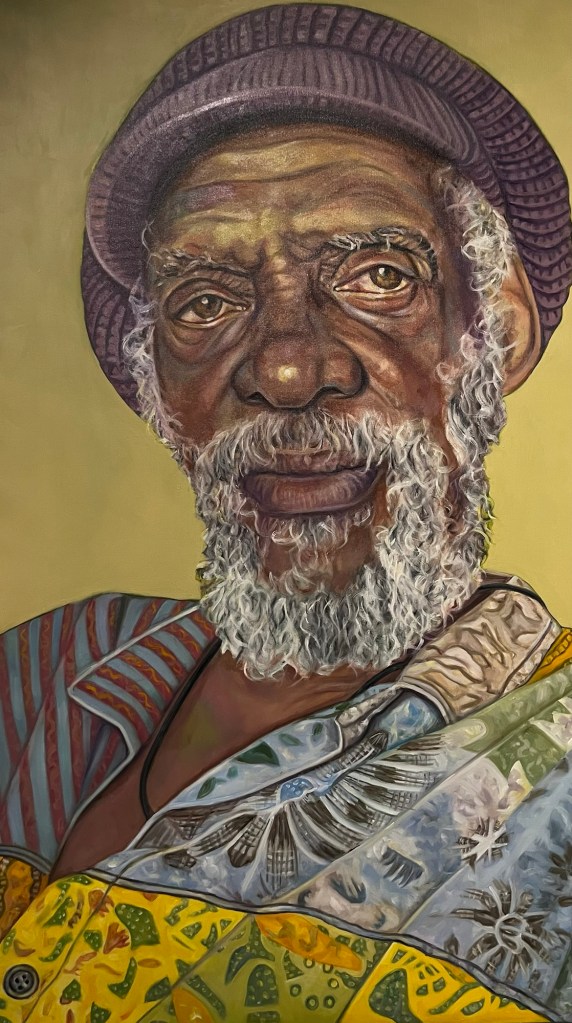
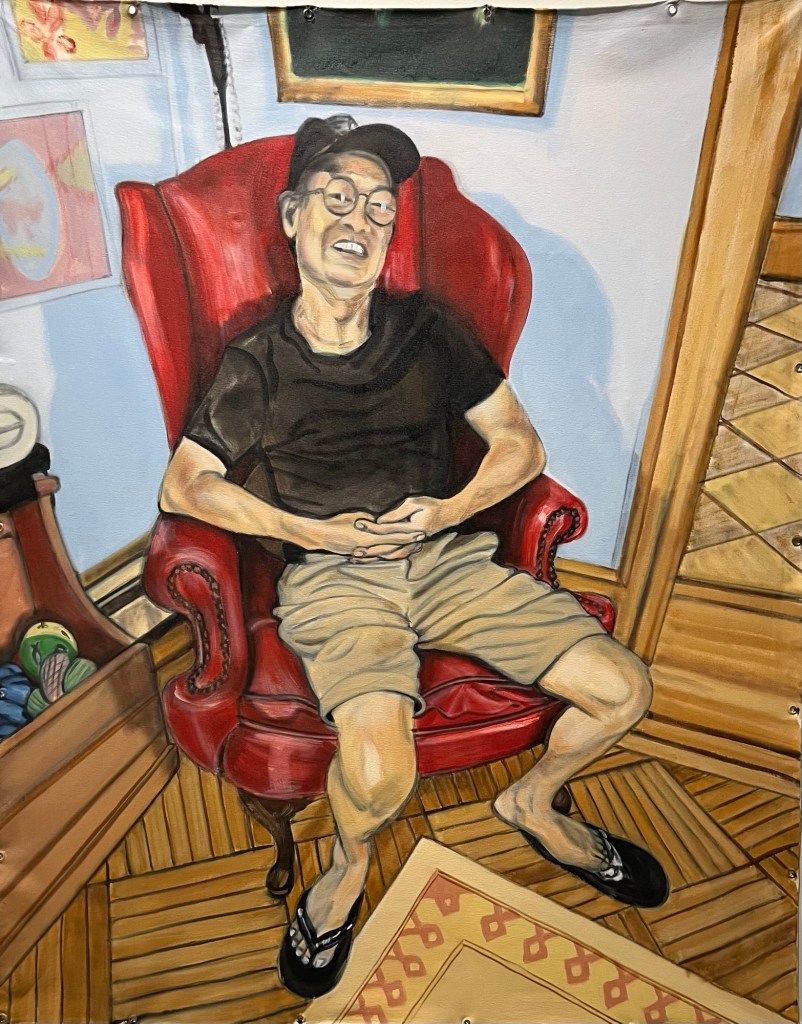
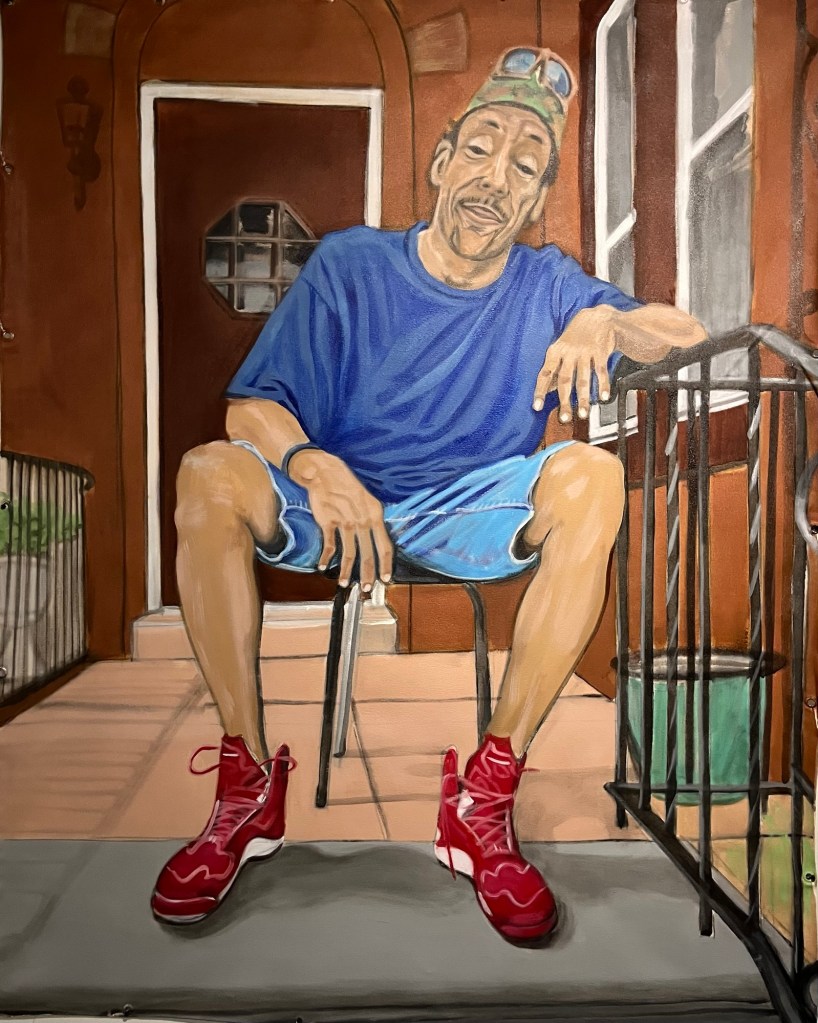
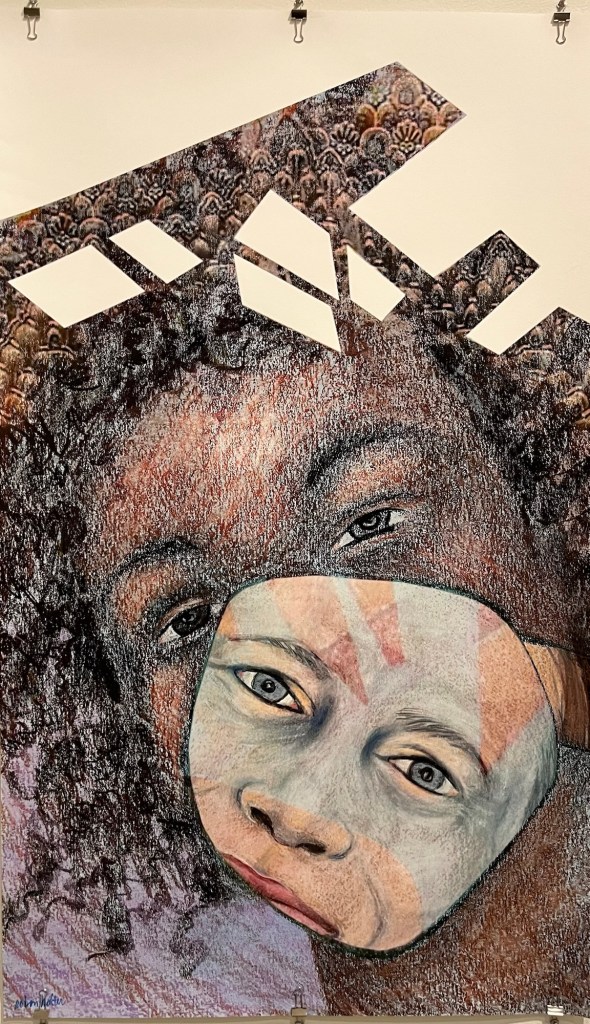
Exploring Our Connection is this year’s New Jersey Arts Annual. This is a juried exhibit open to artists through the state. The exhibit rotates to different art museums in New Jersey. This year it was in the Montclair Art Museum.

One of the most compelling parts of the exhibit is the artists’ statements that accompany each work. I’ve included some excerpts from those statements in the captions below.

Mom, Copie Rodriguez (Garfield). Rodriguez’ portrait of his mother includes a family tree with family photos. “I wanted to preserve my mother’s memory and our connection to our roots and humble beginnings.”
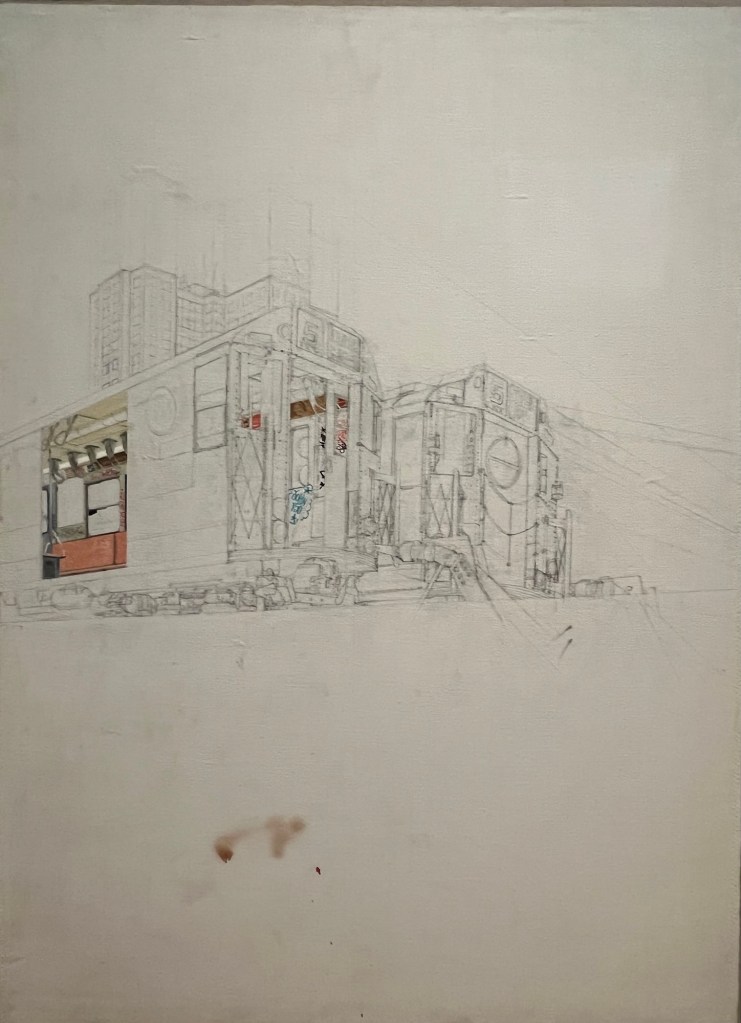
Una historia gringa, Jonathan Yubi Gomez (Bergenfield). A construction crew on the tracks of 86th Street Station in Manhattan. “Two workers gore a klansman, a third holds his hood, and others brandish pikes. Two flags wave gallantly — one representing my motherland, the other my fatherland.”
Road Trip, Janice Belove (Montclair).”A few years ago, our family took a three-week cross-country road trip… The mega-mess in the minivan created a record of the family on the go, in the confined space.”
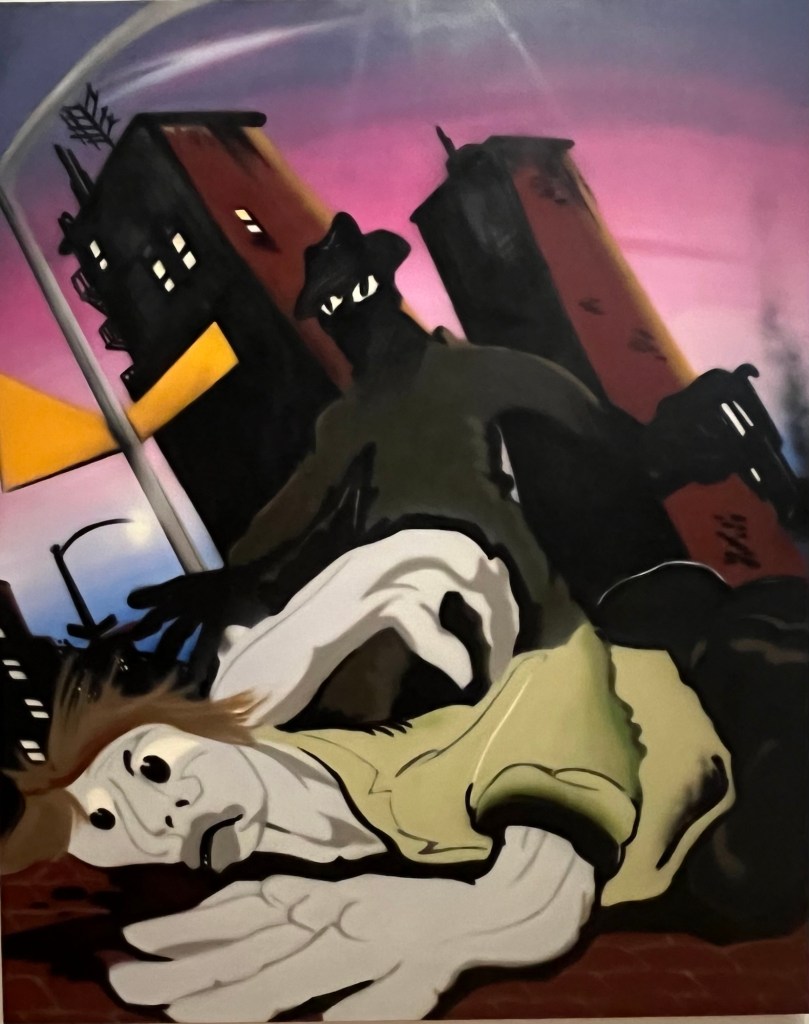
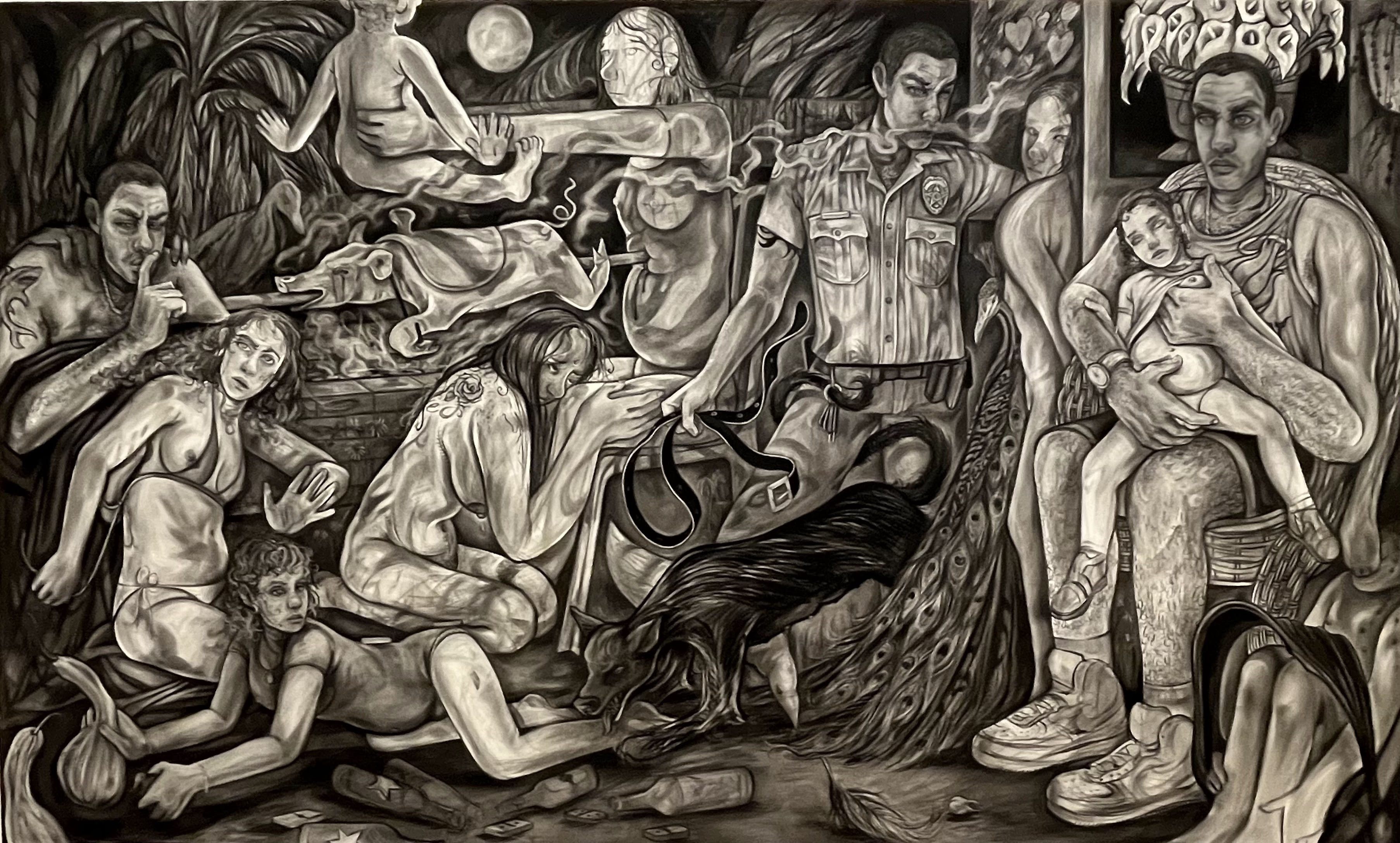
La Rogativa, Brandon Bravo (Metuchen). “The imposing figures casting shadows over my cousin symbolize the iconic statue La Rogativa, located in Old San Juan, which commemorates a women-led religious procession in 1797. La Rogativa is a tribute to Puerto Rico’s enduring spirit and a reflection of our collective journey.”
The Handshake, Johanna Foster (Montclair). “In this painting, I render a gesture of deep connection between my husband and our infant daughter, an image taken from a nearly 25-year-old photograph…
My sister and brother-in-law…together apart!, Susan Sinek (Fort Lee). “My sister and brother-in-law…are posing on a bench in Morocco…very staid and serious…they are both very successful. They are very much together and in their work they are very much apart.”
James Oliver Jones, Jr., Grace Graupe-Pillard (Keyport).”I met James Oliver Jones, Jr., on a street in the East Village in 1985. Forty years later we reconnected on social media and I found him as powerful and beautiful a presence now as he was then.”
Before Leaving, Meira Pomerantz (Fort Lee). “ The linoleum cut print..presents a familiar image of a mother enfolding and being embraced by her children. It is statement of human emotion and caring between the individuals.”
The Global Village Series #1, Mesma Belsari (Guttenberg). “I consider the world a village where families and communities are perpetually in flux. Global Village Series #1 is a continuation of that idea in pen and ink. The pen dreams in ink.”
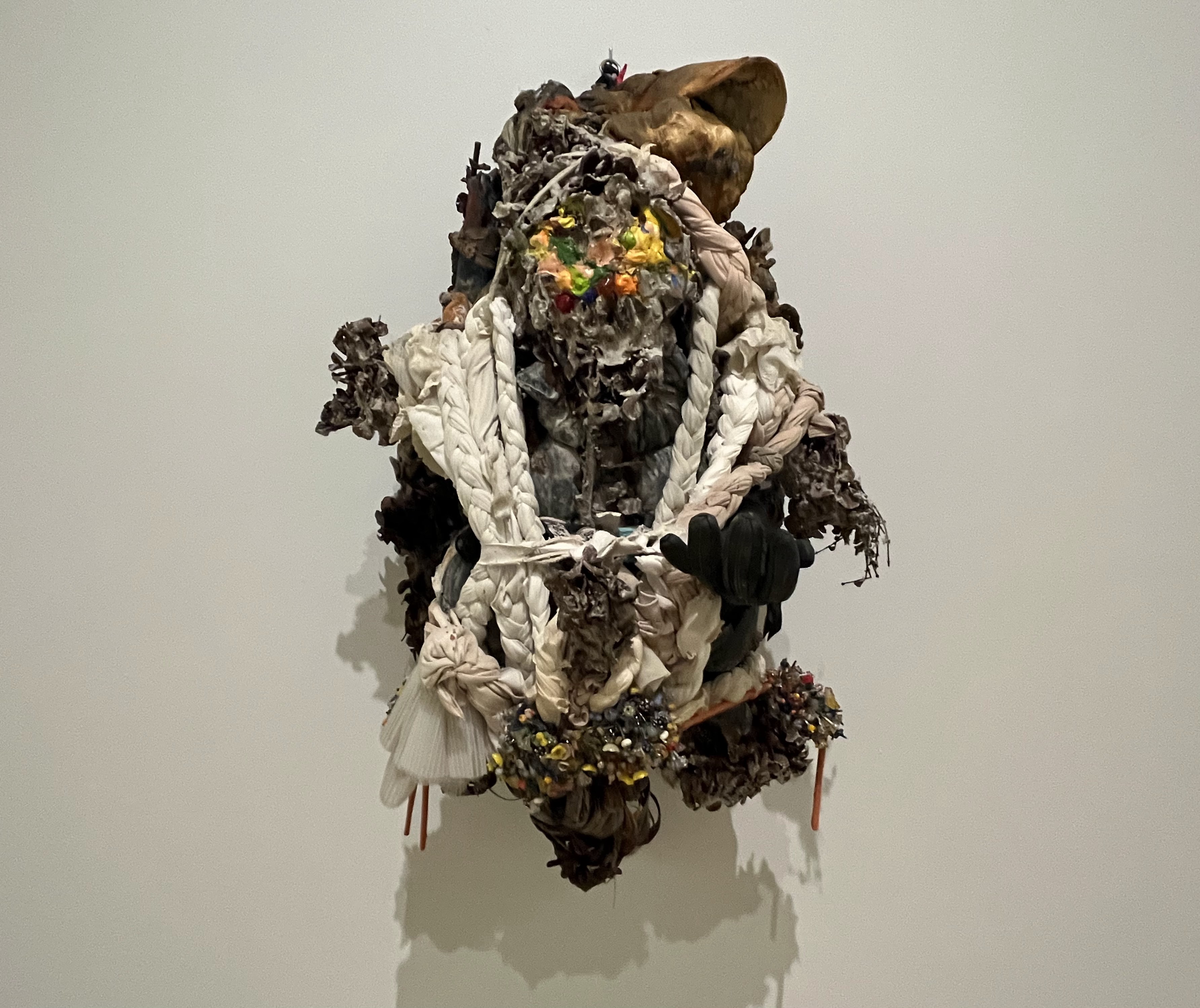
Code Switching Mask, robin holder (West Milford). “…almost all successful people of color practice code switching. It is an innovative, often obligatory, strategy of successfully navigating the workplace, society, and social platforms that are predominately white, privileged and empowered.”
Black Mirror, Kristin Kunc (Atlantic Highlands). “Black Mirror is inspired by the news, media, and complacency. It is a painting of my son, though it could be any child or oneself, and what is colloquially known as the television, aka the black mirror. Rather than go outside and enjoy a beautiful day, we are trapped by our own reflections, our own insecurities, and our own black void of overbearing information and entertainment that we sit silently waiting and watching.”
Just Tell the Truth (LOOK!), Lawrence Ciarallo (Hoboken). “I wanted to create a graphic that would address the long and sordid yet passionately determined history of the United States. The multicolored background and flowers are intended to convey that beauty. It has always existed and persevered despite many obstacles.”
CITYSCAPE-UPHEAVAL, Grace Graupe-Pillard (Keyport). “CITYSCAPE-UPHEAVAL communicates my visceral response to a world where black lives are ‘obliterated,’ fighting for the very rights that the Constitution bestows upon all Americans.”
The Invisibles: Sanctuary City, Karen Cunningham (Princeton). “The Invisibles portrays recent migrant arrivals to New York City, bused in from New Jersey, mixing into the urban landscape with the city’s longstanding homeless population.”
Tomas, Danielle Scott (Jersey City). “Tomas is the visual interpretation of the beautiful relationship between Angola and Cuba. Tomas is a depiction of joy, pain, and courage. Tomas is our history. The images behind Tomas are old slave markets in downtown Luanda, Fortaleza de Sao Miguel (where slaves were rolled from the top of the Fort to the bottom landing on Flores street).”
4 Fashion Girls, Maria Mijares (Plainfield). “4
Fashion Girls depicts my friends Yvette and Deanna in a fitting room next to framed wall decor 50s looking photograph of two models. The style of the past contrasts the fashion of our day.”
Posted in Art | Tagged , , | 2 Comments

Not Your Father’s Landscapes

Shifting Landscapes

an exhibit at the Whitney Museum of American Art, New York

This Whitney exhibit reinterprets the idea of what is a landscape. In the words of the curators it demonstrates “how political, ecological and social issues motivate artists as they attempt to represent the world around them.”  These works are all from the Whitney collection. They were all made after 1960. While the theme strikes me as a bit of a stretch, there are some pretty interesting pieces.

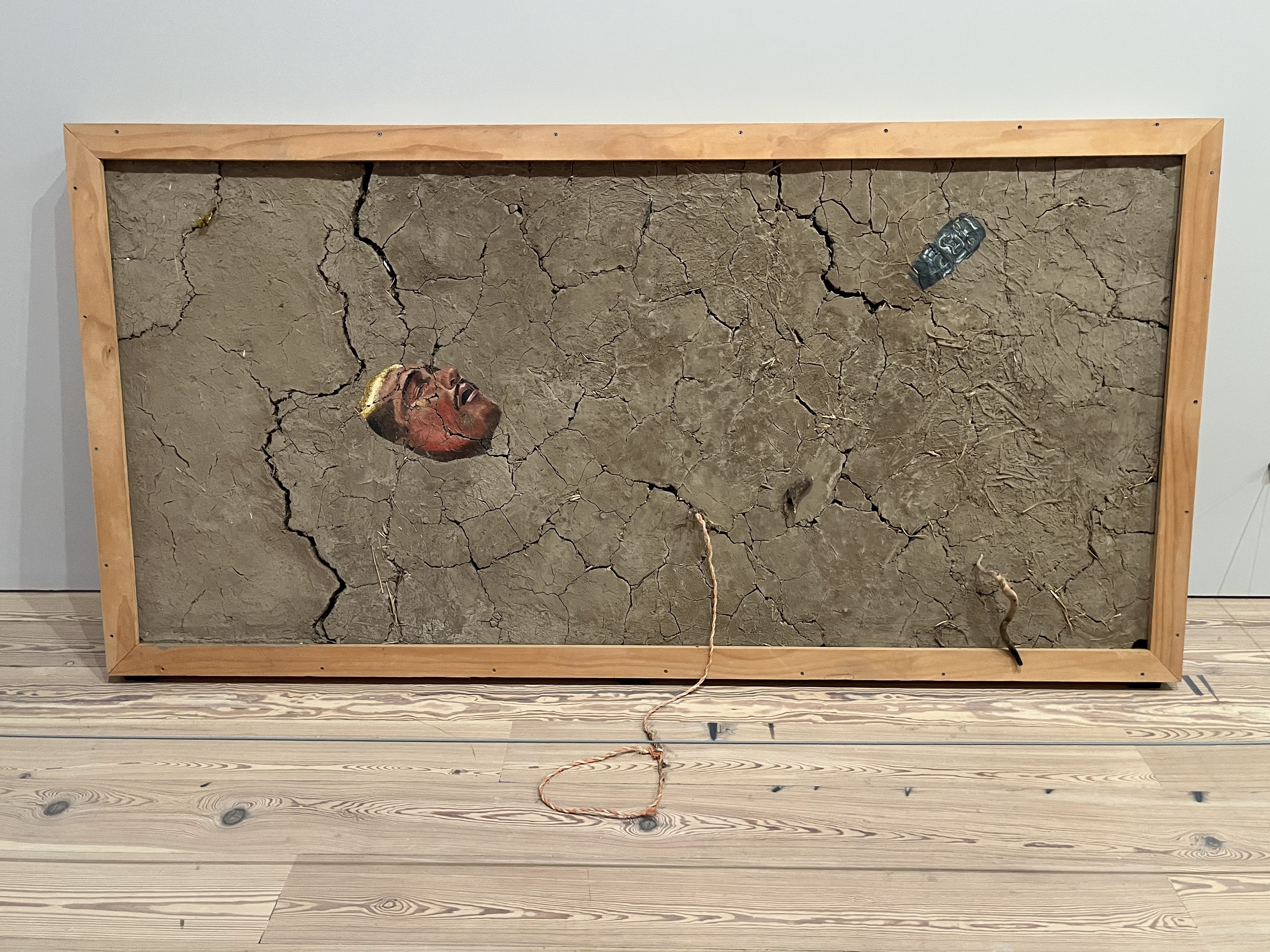
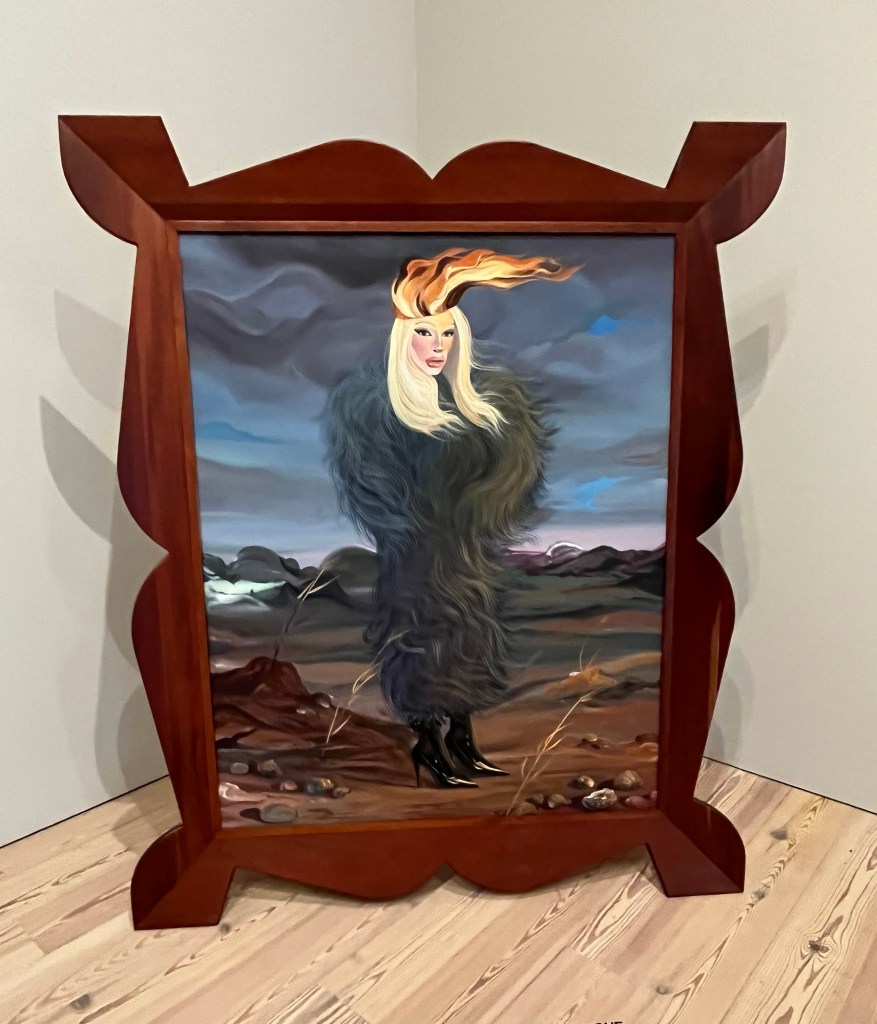
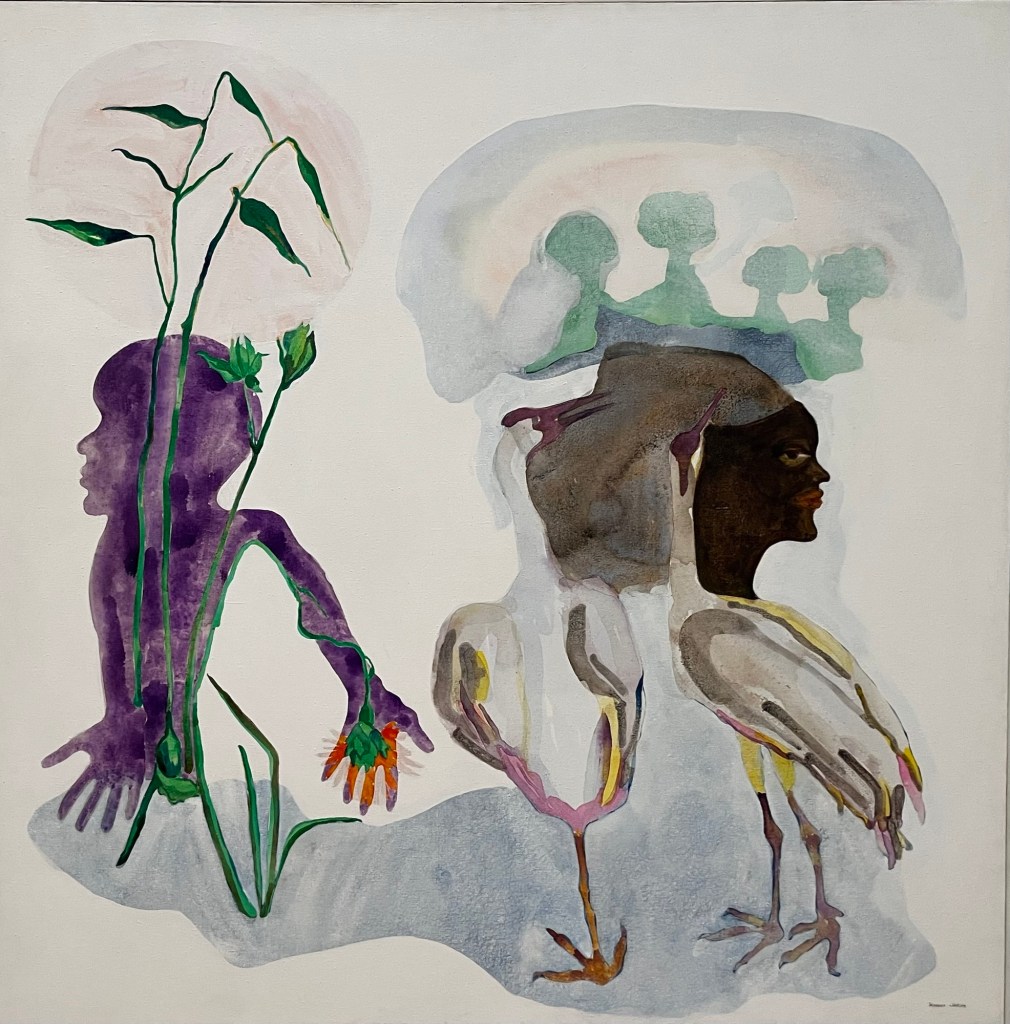
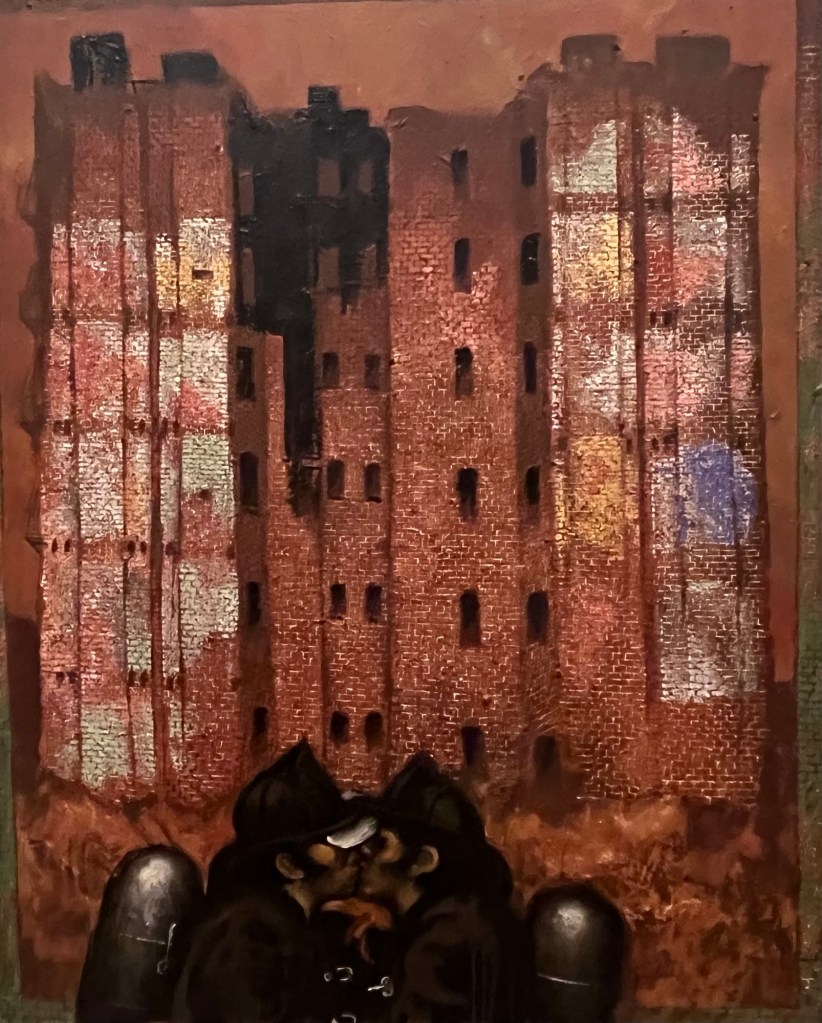
New American Landscapes. Self Portrait: Catching Feelings (Ecstatic), Rafa Esparza
I Don’t Need You to be Warm, Dalton Gata
It is our woods, Suzanne Jackson
Calentadita, Martin Wong
Heading In —Lincoln Tunnel 3, Jane Dickson
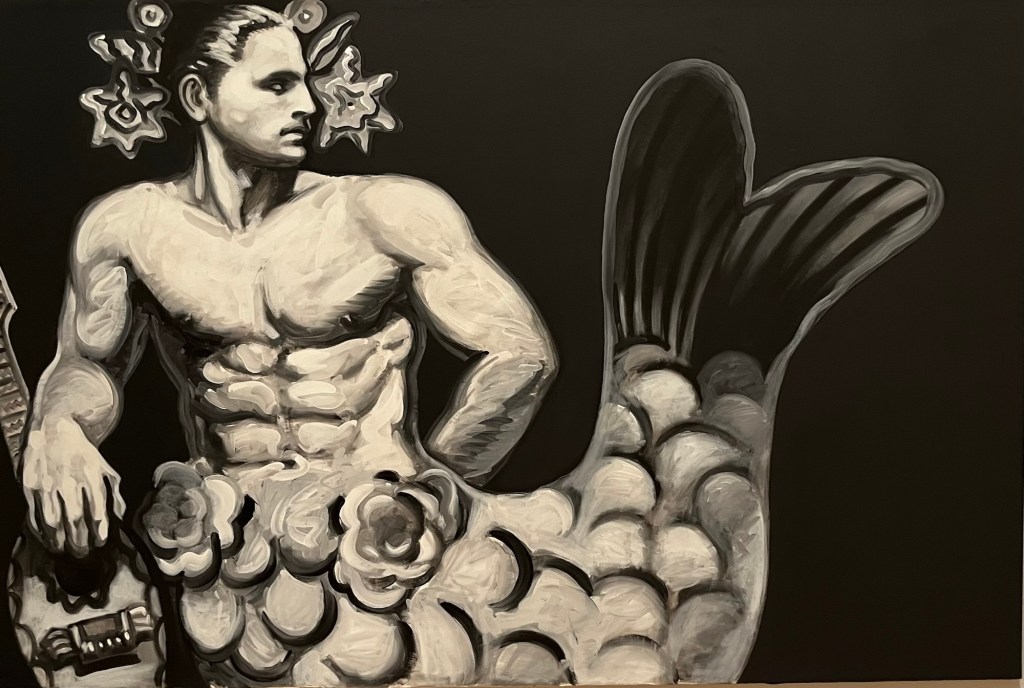
Merman with Mandolin, Munro Mozart
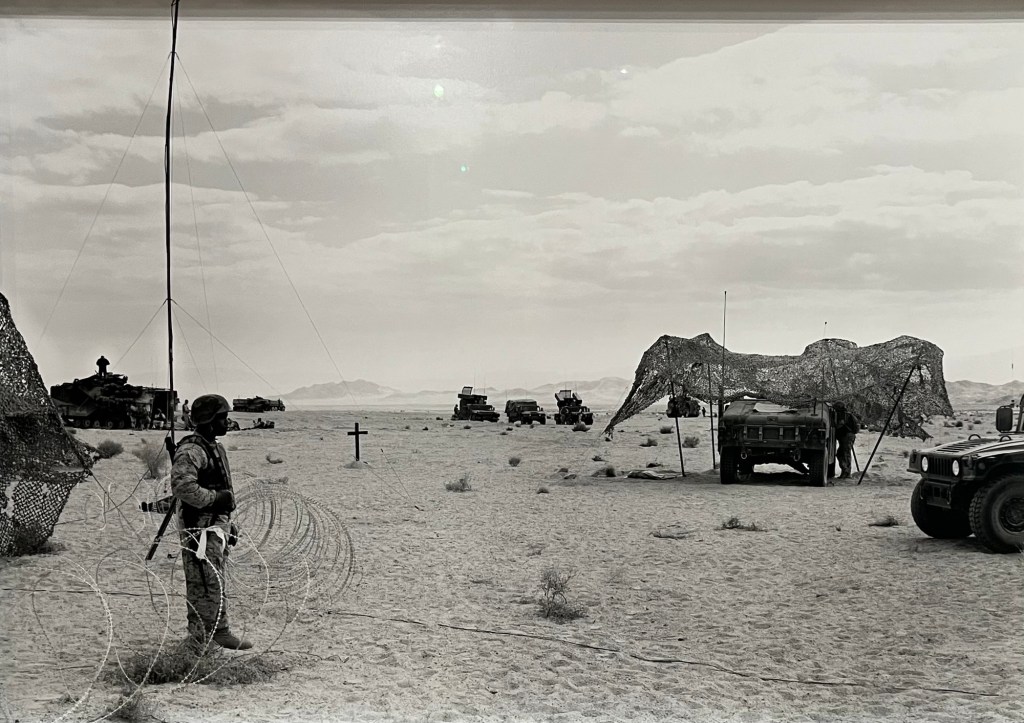
29 Palms: Guard, Combat Operations Center, An-My Le (Saigon)
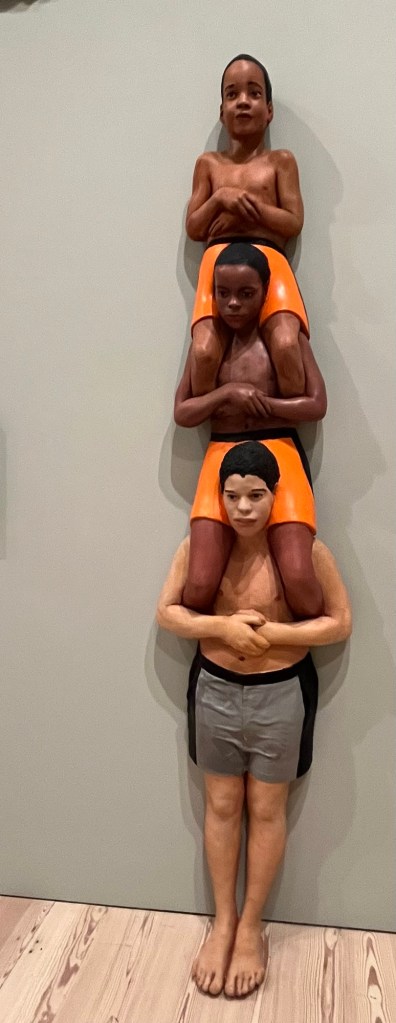
Julio, Jose, and Juanito, Rigoberto Torres
Empire State of Mind/Flaco 730 Broadway, Aaron Gilbert
NY Skyline on Canvas #1 (Woman Pressing Finger Down), Anita Steckel
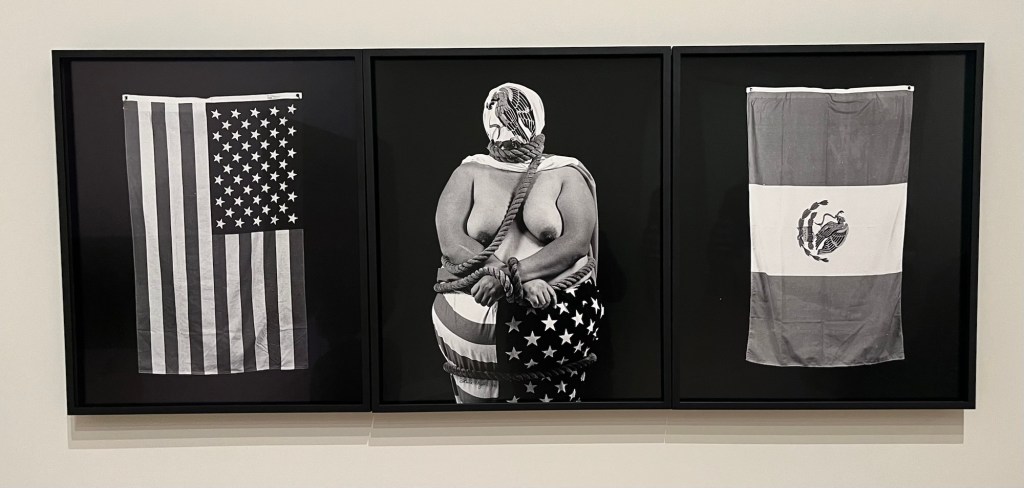
Three Eagles Flying, Laura Aguilar


Posted in Art | Tagged , , , | 4 Comments

Edges of Ailey

an exhibit at the Whitney Museum of American Art

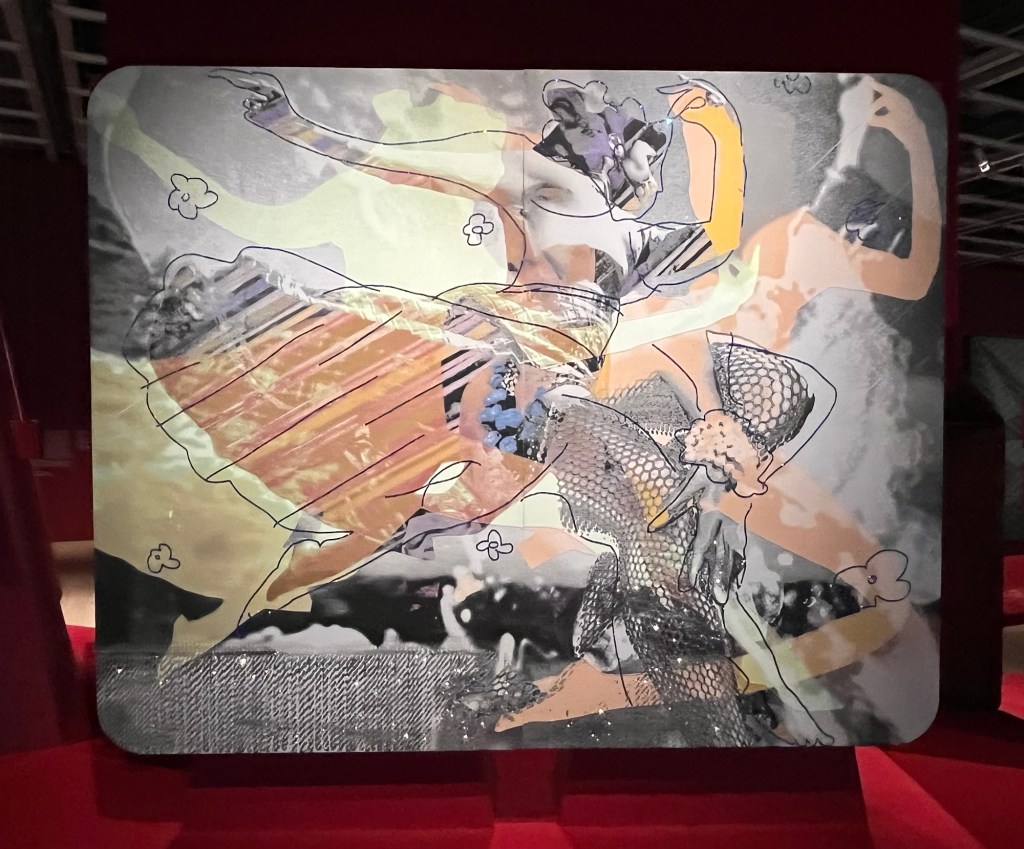
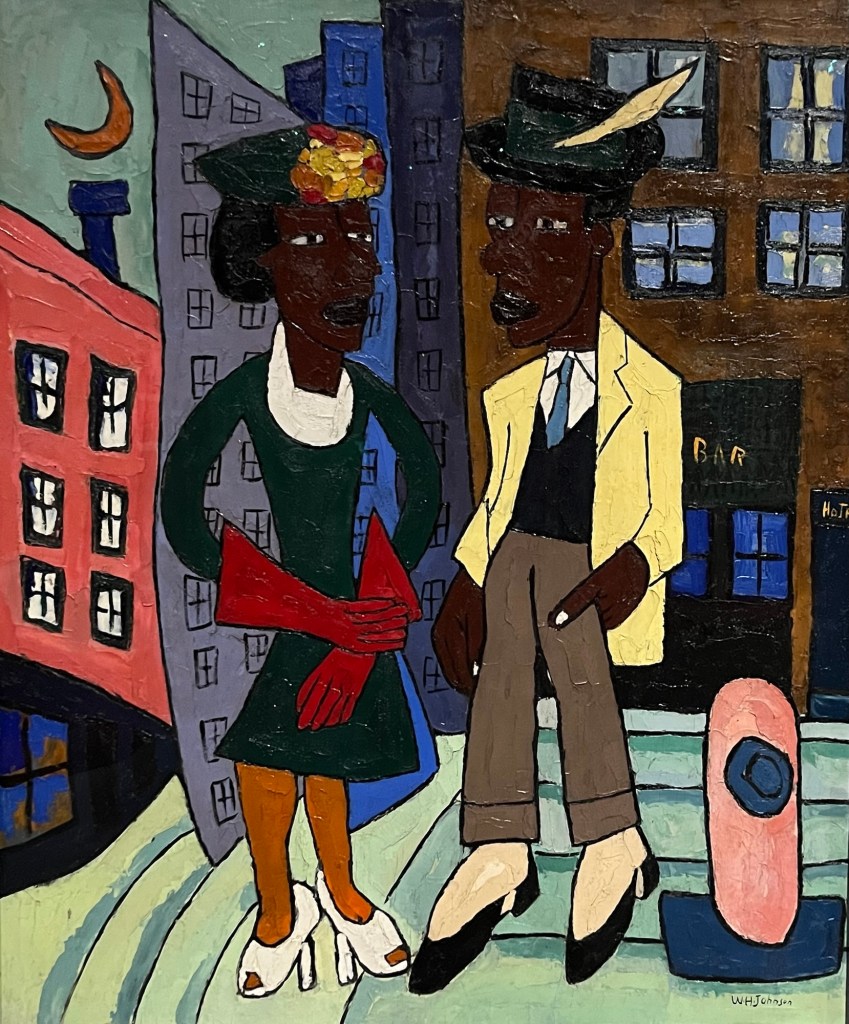
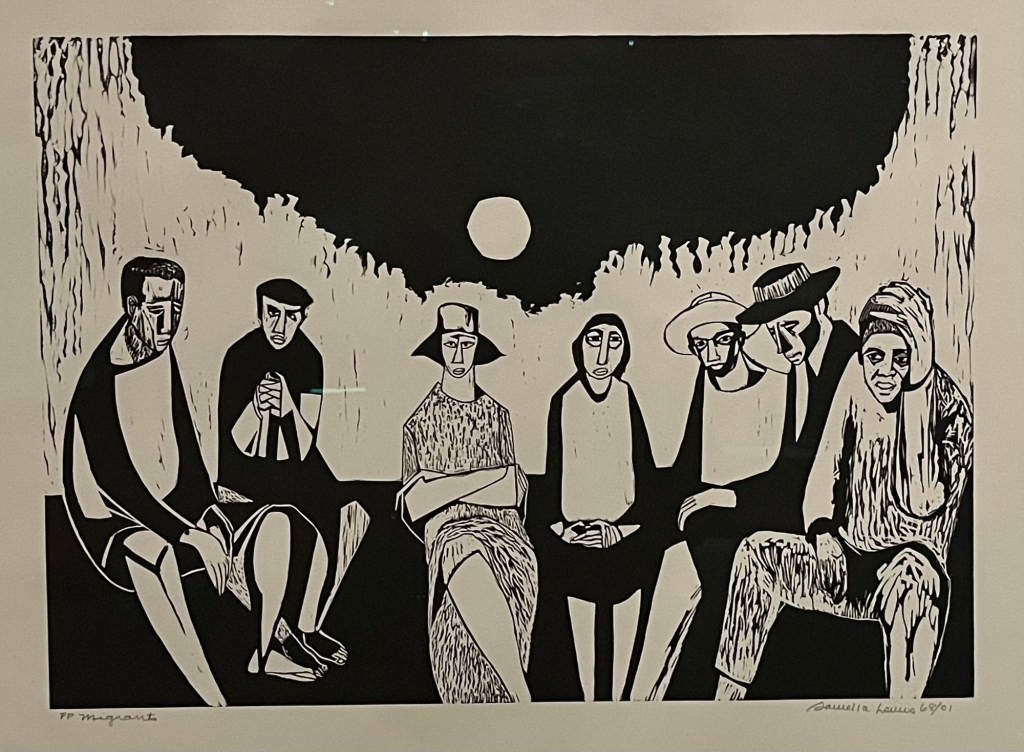
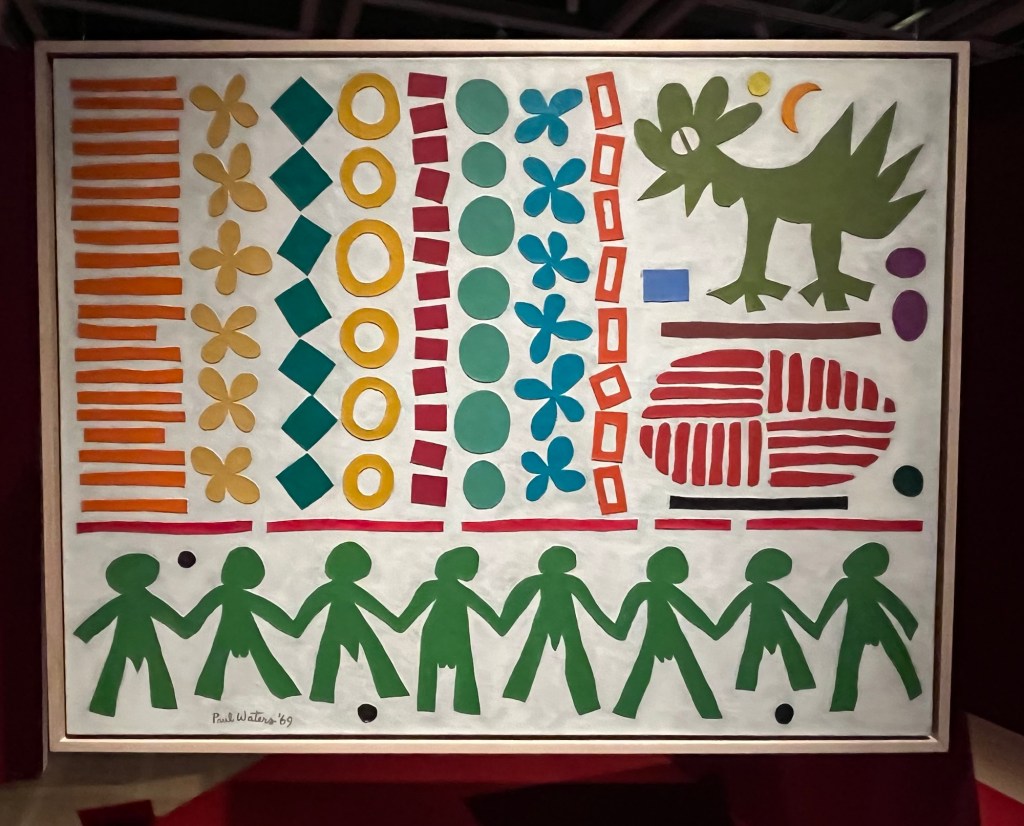
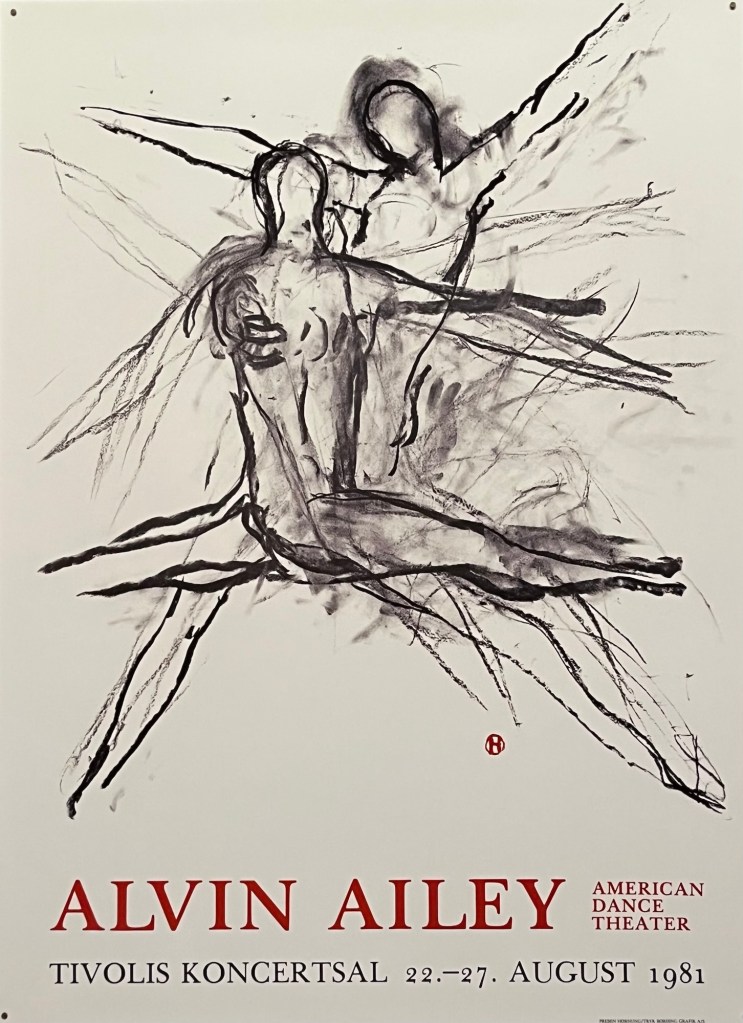
Edges of Ailey pays tribute to renowned American choreographer Alvin Ailey. The exhibit includes video, music and some live performances. This post includes images of the art work included in the exhibit. These works represent the life and times of Ailey who was born in 1931 and died of AIDS-related causes in 1989 at the age of 58.

The artists represented included those who Ailey was inspired by and who were mentioned in his notebooks. Some pieces were created for this exhibit. One is the Mickalane Thomas painting below.

Katherine Dunham Revelation, Mickalene Thomas.
Sharing the Struggle, Lonnie Holley
Hollywood Africans, Jean-Michel Basquiat
The Way to the Promised Land, Benny Andrews
Our Father, Purvis Young
Sea Islands series, Carrie Mae Weems
Street Life, Harlem, William H. Johnson
Migrants, Samella Lewis
Mars Dust, Alma Thomas
Beautiful Life, Paul Waters
Ecstatic Drought of Fishes, Ellen Gallagher
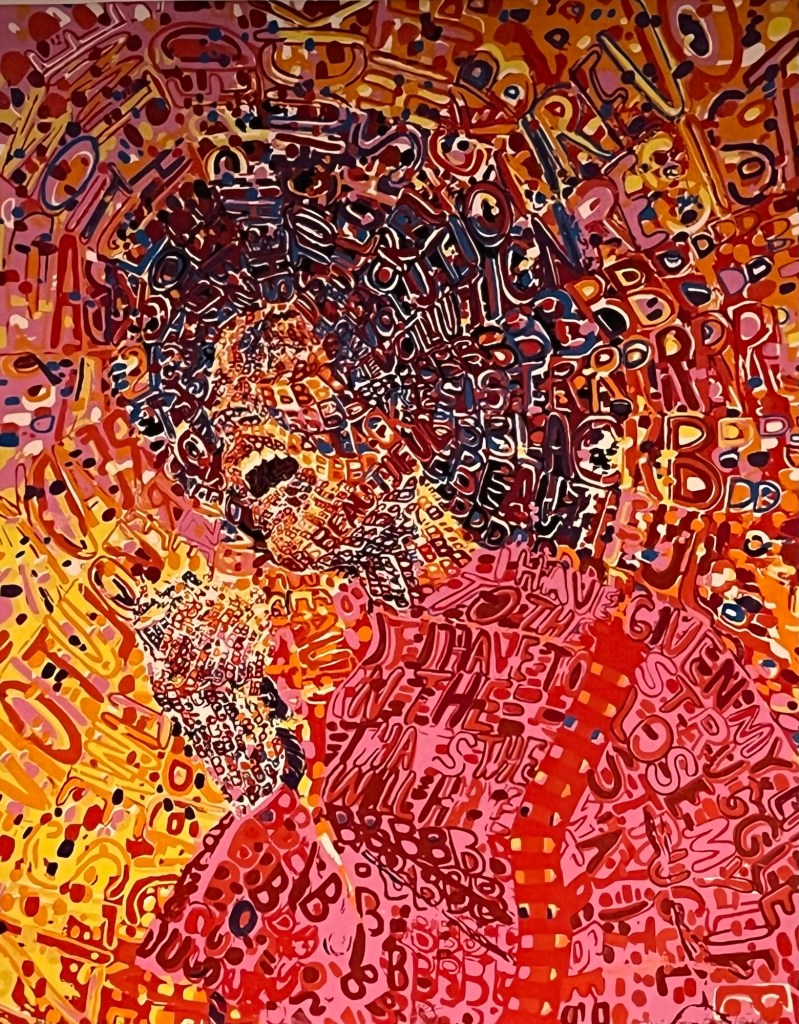
Revolutionary (Angela Davis), Wadsworth Jarrell
African/American, Kara Walker
Race Woman Series #7, Mary Lovelace O’Neal
African Dancer, Richmond Barthe
Charlie Parker Yardbird, Beauford Delaney

Posted in Art | Tagged , , , , , | 3 Comments

The Art of the Streets

Above Ground.

A graffiti exhibit at the Museum of the City of New York

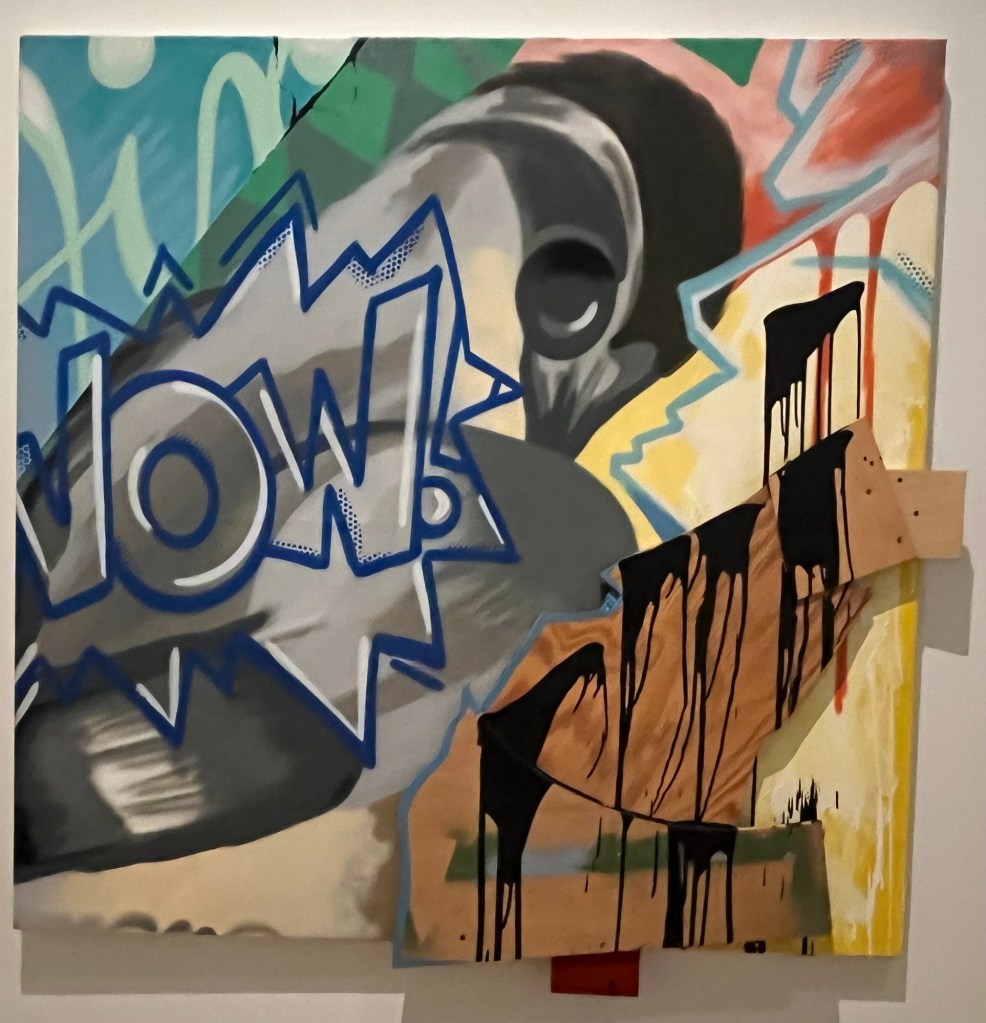
These works were donated to the museum by Chinese American painter Martin Wong. He had befriended many of the young artists who were creating graffiti in 1980’s New York and collected their works. He co-founded the Museum of American Graffiti in the East Village in 1989. Issues with the space, the top floor of a townhouse, caused the museum to close after six months.

Following an AIDS diagnosis in 1993, Wong donated his collection to the Museum of the City of New York. He passed away in 1999.

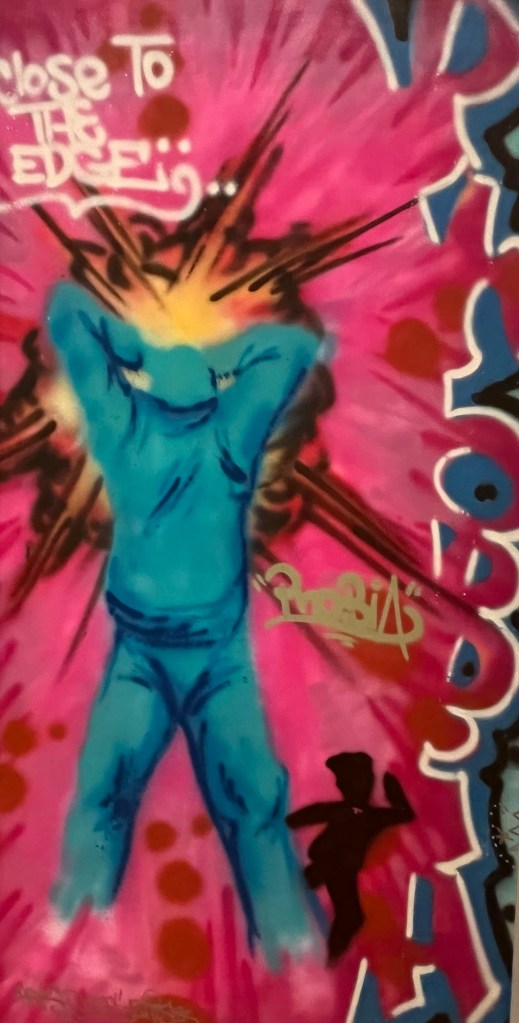
Broken Wings, Crash
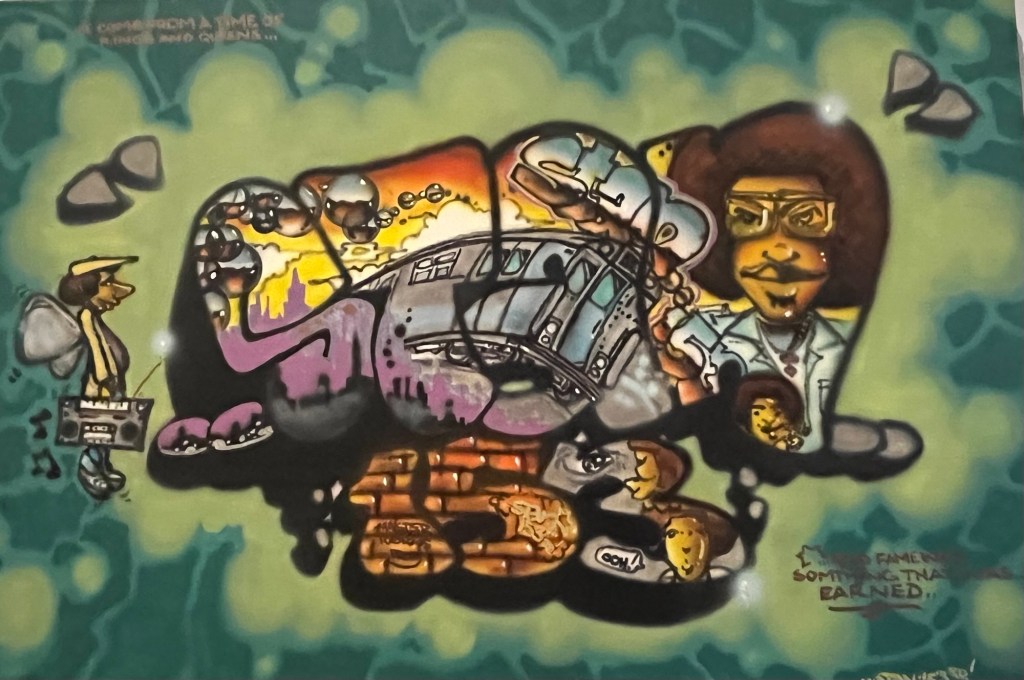
Green Kringle in Stereo, Stan 153
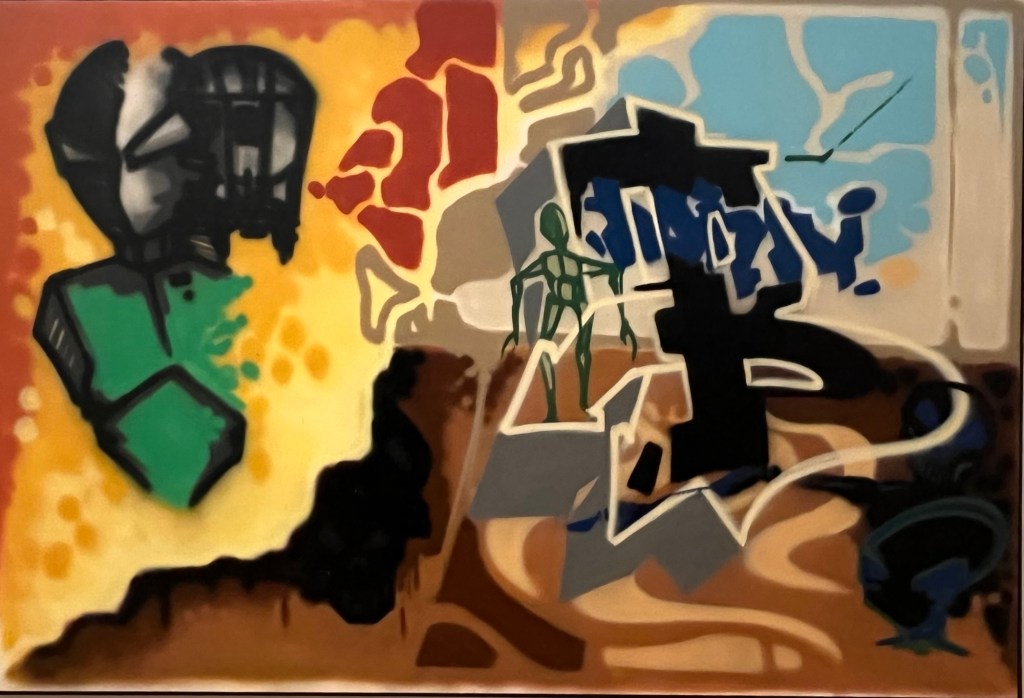
Untitled, Rammellzee
Gotham City, Haze
A Life Takes a Life, Lee Quinones
Breakfast at Baychester, Lee Quinones
Forward. Totally Moving in the Positive, A-One
Bishop of Battle, Dondi
Ero Rock, Ero
French Dream, Life Below Aerosol, Christopher Daze Ellis
Posted in Art | Tagged , , , , | 6 Comments

Contemporary Latinx Art at El Museo

Flow States, a triennial exhibition at El Museo del Barrio in New York

Untitled, Ser Serpas
Untitled, Ser Serpas, 2024
100 Altars for Roberto Chabet, Norberto Roldan
100 Altars for Roberto Chabet, Norberto Roldan, Philippines, 2014-2020
En Tu Mirada (In Your Eyes), Curlies and Aqua para Ti (Here for you), Maria A. Guzman Capron, born in Italy lives in Oakland, Cal., 2024
My dick can speak your language (from the project Can geometry be self0exciting?), Madeline Jimenez Samtil
My dick can speak your language (from the project Can geometry be self-exciting?), Madeline Jimenez Samtil, Dominican Republic, 2024
I'm the inside out
"I'm the alpha, the onega, everything in between" by Nicki Minaj and Plain Jane (Remix) A million leaves folded by the wind all at once. Mitochondria Lacrimosa Lacrimosa lacrimosa, Ruben Ulises Rodriguez Montoya
I’m the inside out
“I’m the alpha, the onega, everything in between” by Nicki Minaj and Plain Jane (Remix) A million leaves folded by the wind all at once. Mitochondria Lacrimosa Lacrimosa lacrimosa, Ruben Ulises Rodriguez Montoya, Mexico, 2024
Daughter: Also a Sun, Carmen Argote
Daughter: Also a Sun, Carmen Argote, born Mexico, lives Los Angeles, 2022
Magic Carpet, Karyn Olivier
Magic Carpet, Karyn Olivier, born Trinidad and Tobago, lives Philadelphia, 2021
Family Romance, Alina Perez
Family Romance, Alina Perez, born Miani lives New York, 2024

Posted in Art | Tagged , , , | 2 Comments

The Best Books I Read in 2024

A Man of Two Faces: A Memoir, a History, a Memorial

A Man of Two Faces bookcover

Viet Thanh Ngoyen

If you read “The Sympathizer” or “The Committed,” one about a Vietnamese refugee in America and the other a Vietnamese refugee in France, you may have wondered how much of those two novels reflected the story of their author Viet Thanh Nguyen, himself a Vietnamese refugee. His memoir “A Man of Two Faces” promises some answers. But they aren’t easy.

Nguyen was four when his parents, whom he refers to collectively as Ba Ma, fled Vietnam after the war. They were model refugees, the embodiment of the so-called American Dream. They built a business, the SaiGon Moi, which I presume is a sort of Vietnamese bodega, worked tirelessly, bought a nice house and put their sons through college. None of that prevented a sign from appearing outside their store that said “Another American driven out of business by the Vietnamese.” Nor did it stop the city from forcing them to sell their property when they decided to build a new city hall across the street.

Most books about refugees focus on the hardships of their lives and challenges they face. Nguyen, while calling himself an ingrate, offers a commentary on the society into which he was placed. What he sees above all else is racism. “The cycle repeats throughout American history: big businesses rely on cheap Asian labor, which threatens the white working class, whose fears are stoked by race-baiting politicians and media, leading to catastrophe for Asians.” You can easily substitute Blacks, Latinos or any other non-white segment of American Society in place of Asians in that sentence.

Amidst the history and social commentary in Nguyen’s story is a lot of family. In particular he writes about his mother. After a lifetime of hard work she faced “13 years of slow erosion, a death inflicted cell by cell on her body and mind.” He describes his own struggles with writing her story.

Why the “Man of Two Faces?” Perhaps it is this:

“In America’s binary of colonizer and colonized, are you, a refugee, the colonized or the colonizer? Perhaps you are both.”

Or maybe this:

“JFK dispatched (the Green Berets) to Viet Nam to save the good, freedom-loving Vietnamese (this means you) from the bad, communist-loving Vietnamese (this also means you.)”

Likely it’s something more personal. He is not afraid to lay out his contradictions and enigmas. His story is at once both proud and self-deprecating. What comes across is a very honest memoir. A read both captivating and enlightening.

Ordinary Human Failings

Ordinary Human Failings bookcover

Megan Nolan

The Greens are an Irish family living in London. There’s a brother and sister, their father, and the sister’s 10-year-old child Lucy. They have any number of ordinary human failings: alcoholism, an unwanted pregnancy, neglectful parenting and an assortment of antisocial behavior traits.

The story revolves around a moment in time when Lucy is suspected of causing the death of another child on a playground.

Throw into this mix a young reporter for one of London’s sleazy, sensationalist tabloids. He sees this opportunity to generate headlines of outrage about Irish immigrants. To that end he isolates and inebriates each family member.

It is within that context that the story of this moment in time is told backwards. The story of how each member of the family came to be what they are. Is the sum total a sensational story in a sleazy tabloid? Or just a mash up of ordinary human failings?

The plot does eventually move forward, and the characters grow. But their past never stops influencing their future. Altogether the author has produced a creative vehicle to tell a story, simple on the surface but with somewhat hidden layers of depth.

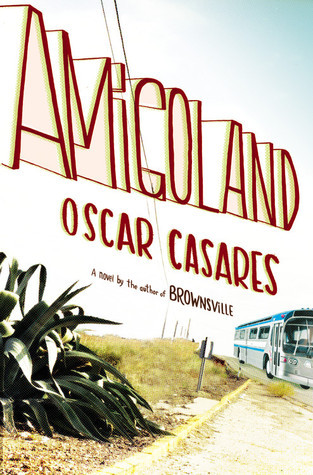
Amigoland

Amigoland bookcover

Oscar Casares

If you are of a certain age, of which I am, this book is bloodchilling. Amigoland is an assisted care facility. We follow the patient Don Fidencio who doesn’t want to be there, doesn’t want to admit he needs the care he needs, doesn’t want anything to do with the walker he needs to walk. He’s no longer proficient at remembering names so he refers to staffers with names like The One with the Flat Face, and his fellow residents have monikers like The Gringo with the Ugly Finger. An ingenious way to remember who’s who.

Fidencio’s younger brother helps him escape. He is no youngster himself and is well into retirement. He is accompanied by his Mexican house cleaner/lover who is 30 years his junior. She is the voice of common sense through this epic.

The three of them go on a bus/taxi road trip through Mexico in search of Fidencio’s childhood home. It is a journey full of angst, emotions and humor.

This is a tale of identity. The brothers, though living in Texas, are not quite American, not quite Mexican. It is maybe a fact of life living on the border. It’s also very much about being alone. About losing parents or spouses or family and losing a sense of your roots.

This is both an entertaining and insightful read. Casares reminds us of the human issues on the border, not the polarizing political ones. And one more thing, it reminds us that it sucks to get old and watch your body give out on you.

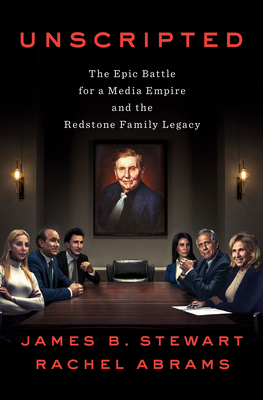
Unscripted: The Epic Battle for a Media Empire and the Redstone Family Legacy

Unscripted bookcover

James B. Stewart and Rachel Abrams

Business news stories have been circulating that Paramount/CBS may be on the market. If you read Unscripted you won’t shed any tears for the disappearance of what seems to have historically been a pit of corporate toxicity. If you haven’t had your fill of sleaze following the Trump trials, you could pick up here.

It all starts with the patriarch, Sumner Redstone. The book covers his later years when he is in his early nineties. Barely able to talk and fed through a tube, this obscenely wealthy geezer still surrounds himself with beautiful young women who he showers with dollars, cars and houses. There’s one woman who is brought in from time to time to attempt some sort of sexual acts with him, most likely without success.

Two of the women he courts end up moving in and taking control of his care, or, more importantly his bank account. These two end up feuding with his daughter Shari. It’s a feud they ultimately lose but nonetheless walk away with considerable wealth.

Did Sumner just become cranky, temperamental and vengeful because he’s so old. We can’t tell what a younger Sumner was like from reading this book but my guess would be pretty awful.

Then there’s Les Moonves, CBS’ superstar CEO. Moonves had a track record of successful programming that has boosted the stock. He has also left behind a trail of MeToo moments. Like when he went after a diabetes doctor who was treating him and masturbated in her office. Or when he hired an assistant whose duties included providing oral sex on demand.

Amidst this sea of men behaving badly, Shari Redstone is treated like something of a hero. She would become controlling shareholder of Viacom and CBS and while she runs up against the male dominated culture of the corporation she eventually prevails, largely due to Moonves being exposed. She also seems to manage to hold together the Redstone family.

However disgraceful the behavior of this cast of characters, they all walk away rich. As do scores of lawyers as these people are perpetually suing and countersuing each other.

Unscripted is written by two New York Times journalists. The style reflects that, full of facts and succinctly written. One suspects it would sail through a fact checking session pretty cleanly.

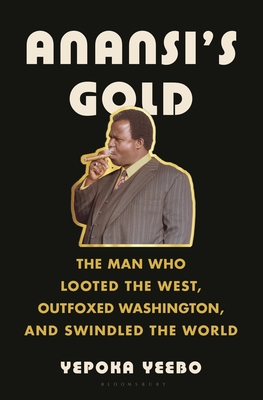
Anansi’s Gold: The Man Who Looted the West, Outfoxed Washington, and Swindled the World

Anansi's Gold bookcover

Yepoka Yeebo

A swindle of colossal proportions. The perpetrator a Ghanaian named Dr. John Ackah Blay-Miezah. Or at least that was the last name he used. And, of course, he wasn’t a doctor.

The con went something like this. It started with a tall tale told about Kwame Nkrumah, Ghana’s first prime minister after it became an independent country. The story goes that Nkrumah hid enormous wealth in the form of gold bars in a Swiss bank. Blay-Miezah seized on that and worked up a scenario whereby he held the keys to recovering this fortune. But he needed some cash to free up the gold held in something called the Oman Ghana Trust Fund, so he offered investors a ten to one return for investments in the fund. Oh how people jump at a get rich quick scheme. Blah-Miezah, working with crooks in Philadelphia and London as well as Ghana, received investments to the tune of billions.

Yeebo paints a picture of 1970’s and 80’s Ghana as infested with corruption. It would be quite a find to come up with a government official whose primary focus wasn’t enriching himself. It seemed like a place where a guy in a bar with a grievance could plot a coup for the next day and have it succeed.

I was fascinated to find that Richard Nixon’s attorney general John Mitchell was one of the crooks surrounding Blay-Miezah. This is a guy who was part of an administration that rode a law and order campaign into power. This is also a guy who went to jail because of his role in Watergate.

This book was exhaustively researched. Surely many of the folks mentioned would have wanted to hide this stuff. Yeebo brings it all out and in the epilogue offers this rather depressing conclusion: “…the story of Dr. John Ackah Blay-Miezah is not just a story about a con man. It is a story about how the world works: about how lies change history, and about how so much of today’s world is built on lies. Blay-Miezah matters because he was not the exception—he was the rule.”

No money ever shows up by the way. And the money investors gave to Blay-Miezah seems only to have enabled one man’s excessively lavish lifestyle.

Posted in Uncategorized | Tagged , , , , , , , , | 8 Comments

Whatever Happened To? Billy Idol

In 1983, William Michael Albert Broad (better known as Billy Idol) released his 2nd album, Rebel Yell. In addition to the title track, he had a string of hits like “Dancing With Myself” and “White Wedding.” His videos were in regular rotation on MTV which, at the time, was enjoying its peak of success. On stage he was “a mix of James Dean swagger, Sid Vicious scorn and futuristic cool.” (Ann Powers, New York Times, April 30, 2001)

Forty years later, Billy Idol, with his sidekick guitarist Steve Stevens, embark on a 20th anniversary Rebel Yell tour. There is no longer anyone looking for him on MTV (nor is anyone looking for MTV). The confederate flag has been buried. And the smirk is maybe not quite so menacing. Yet, all through 2024, while touring Canada, he was up on stage playing his music.

But the road from 1983 to 2024 was not always a smooth one. There are some big gaps in his resume. Ben Raynor of the Canadian Press (March 23, 2005) offered one answer to the question of whatever happened to Billy Idol:

“Rock ‘n’ roll lore recalls few career derailments as spectacular as the one suffered by Billy Idol at the dawn of the 1990s. Perhaps the first performer truly deserving of the description ‘pop-punk.,’ Idol enjoyed a long reign as one of the biggest mainstream hitmakers of the 1980s before an Olympian appetite for heroin, crack and general hard living allowed him to squander his inspiration. his credibility, his family and, very nearly, his life. A couple of dark years at the beginning of the next decade would reach their bleak nadir with the release in 1993 of Cyberpunk, …one truly awful record.” 

Idol was the epitome of the drug-fueled, out-of-control, rocker of the era. Here’s one example that happened in Thailand in 1989:

“’We went there to have a whale of a time – a sex holiday, really. But it got out of hand. Bad things started to happen.

“’We were just going to drink and not take any drugs,’ he recalled of his Thai getaway. ‘After about a week, drinking all the time was getting really heavy so we asked this cab driver if he could get us some blow. He went off and came back with this thin vial. It was six or seven inches long. We looked at each other, like, ‘What do you think this is?’ Because cocaine doesn’t usually come in a long thing like that. My friend put his finger in it and had a taste [mimes gingerly dabbing a sample on to his tongue]. It wasn’t blow.’

“This eventually led to Idol trashing his hotel suite while high, with several reports suggesting the damage ran between $140,000 and $250,000, and attempts to manage withdrawal symptoms with over-the-counter pharmaceuticals prior to their return flight to the U.S.

“Idol’s disruptive behavior in the Thai capital is said to have attracted the attention of local authorities, leading to his removal from the country. However, there is discrepancy regarding the manner in which Idol was subdued. While some versions claim Thai police shot him with a tranquilizer, others suggest a local nurse or medical professional likely sedated him.” (Nikki Dobrin, snopes.com, April 22, 2024)

In 1990, Idol suffered a life-changing event:

“Idol was still awake when dawn stretched into his Hollywood Hills living room. He’d been up from the night before thanks to a mixture of drugs, alcohol, and a rebellious attitude that kept him rocking instead of sticking to the everyman’s nine-to-five. This wasn’t any random long night of partying. There was a reason to celebrate. Idol had just finished the album Charmed Life literally that day. The partying had kind of a dark hue for Idol, who says he was feeling pressure now that the album was finished.

“That morning, he decided to take his bike out for a spin and let the air wash all the negative feelings from his mind. The ride was going well until his 1984 Harley-Davidson Wide Glide was struck by a truck while Idol was running a stop sign, according to the Los Angeles Times.” (Nick Vrchoticky, grunge.com, Sept. 29, 2020)

He nearly lost a leg in that accident and had a steel rod inserted into it. Perhaps now he had second thoughts about the lifestyle.

“I really started to think I should try and go forward and not be a drug addict anymore and stuff like that,’ he said of the accident. ‘It took a long time, but gradually I did achieve some sort of discipline where I’m not really the same kind of guy I was in the ’80s. I’m not the same drug-addicted person.’” (Anagricel Duran, nme.com, May 3, 2024)

The changeover apparently wasn’t immediate as it was four years later that he reportedly collapsed from an overdose outside an LA nightclub (Roy Trakin, Variety, Jan. 5, 2023).

The accident cut short what might have launched an acting career for Idol. 

“While he was still recovering, he got a call from James Cameron about auditioning to play the morphing, cop-impersonating T-1000 in Terminator 2. Cameron took Idol on a tour of Stan Winston’s visual effects offices, where the singer was excited to see production sketches that already showed the new Terminator looking a whole lot like Billy Idol.

“‘I even acted some of the part,’ Idol says… “I had to act that scene where he goes to the stepparents with the picture…   But the trouble is that I had this terrible limp. And James Cameron said, ‘The only problem is, I really need you to be able to run’… And I’m just about walking, you know?’” Brian Hiatt, Rolling Stone, Oct. 31, 2019. 

There was one other positive development related to the accident. He ditched the Confederate flag. These two tweets from the @BillyIdol account explain why.

“I never wear the Confederate battle flag ever since 1990 as I realized it symbolizes oppression to certain Americans…”

11:54 AM · Jun 23, 2015

“A black man washed my hair in hospital ’90 & explained his feelings on seeing the Confederate flag, I promised him I would never wear it.”

1:07 PM · Jun 23, 2015

Like many of us, his later years proved to be more grounded. He describes himself now as “California sober,” A concept that apparently means you are almost, though not entirely, sober. 

“‘I can have a glass of wine every now and again,’ the former Generation X frontman continued. ‘I’m, I suppose, California sober. I just tell myself I can do what I want, but then I don’t do it. If I tell myself I can’t do anything, I want to do it. So I tell myself, You can do anything you like. But I don’t actually do it.’” (Naledi Ushe, Palm Beach Post, May 3 2024) (The second or third time you read that quote it starts to make a bit of sense.)

A few years ago, he made an appearance with then New York mayor Bill de Blasio to promote an environmental issue:

“The campaign — ‘Billy Never Idles. Neither Should You’ — naturally led to a chant-along led by Mr. Idol, following his claim that “Billy never idles. No way!’

“With music blaring from concert-sized speakers, the two Bills walked toward the lectern outside City Hall. One was indisputably an Idol; the other was Mayor Bill de Blasio.

“What brought the two Bills together was a new campaign that aims to prevent trucks and buses from idling by getting New Yorkers to file complaints with environmental authorities.

“‘You can shut off your engines and save my health, help my lungs. I need my lungs to breath and sing,’ said Mr. Idol, who lives in Los Angeles and said he mostly rides a motorcycle.” (Jeffery C. Mays, Feb. 27, 2020, New York Times)

(I don’t think this campaign really caught on. I live in the New York area and never heard of it until I did the research for this post.)

It may be hard to imagine this hard-living punk-rocker as a grandfather, but that’s exactly what he is.

“When Billy Idol is not performing for audiences onstage, he spends some of his downtime with his grandchildren, and it’s something he loves doing.

“‘It is really lovely. It’s nice, I’ve got the best of both worlds,’ Idol tells People regarding his work and career. ‘But it’s been lovely and it’s all worked out in an incredible way that I could never imagine.’

“The 68-year-old Idol has three grandkids: 3-year-old McKenzie, his son Brant‘s daughter, and 3-year-old Poppy and 2-year-old Mary Jane, his daughter Bonnie’s kids.

“‘[What’s] lovely about being granddad, you’re not disciplining them. You’re more giving them advice if they ask you stuff like that,’ Idol says. ‘So the pressure isn’t the same as being a parent where you’re having to discipline … it’s quite different.’ (kslx.com, May 6, 2024)

But Idol has also not left the stage. Last year he played the first ever show at the Hoover Dam and in August of this year he and Stevens could be found at the Empire State Building.

“Billy Idol and his guitarist Steve Stevens performed an acoustic version of Idol’s iconic hit ‘Rebel Yell’ while tethered to a balcony atop the Empire State Building.
“After playing the first-ever concert at the Hoover Dam last year, Idol went a step further — and much higher — by strapping himself to a narrow balcony on the 103rd floor of the Empire State Building to play the acoustic number. The platform was originally built as a disembarkation deck for passengers of airships tethered to the Empire State’s spire.” (Jon Hadusek, consequence.net, Aug. 5, 2024) 

Billy Idol – Rebel Yell – Live From the Empire State Building

-0-

Note on links in story. No links are provided for stories from the New York Times and Rolling Stone since these stories are behind a paywall. Other newspaper and wire service stories cited without a link were accessed through newspapers.com.

Whatever Happened To?

Grace Slick

Sly Stone

Dave Clark

Bobbie Gentry

Ronnie Spector

Art Garfunkel

Posted in Whatever Happened To? | Tagged , , , | 8 Comments

Whatever Happened To? Jimmy Connors

Jimmy Connors was among the greatest mens tennis players of all time. He won five U.S. Opens as well as winning at Wimbledon and Australia. At one time in the mid-70’s he was the number one ranked player for 160 consecutive weeks. 

Jimmy Connors
(Fotocollectie Anefo)

But he was known as well for his on court behavior as he was for his accomplishments. New York Times writer James Kaplan (Aug. 23, 2013) described it this way:

“He strutted combatively; he pointed fingers. His displays often crossed the bounds of good taste — he knew better than anyone how to exploit the phallic possibilities of a racket…”

Connors had a long career.  While he stopped playing full time in 1991 he did not fully retire until 1996 when he was 43 years old. In 1992 he competed in the much ballyhooed “Battle of the Sexes” against Martina Navratilova. That same year he competed in the Carolina Tennis Shoot-Out exhibition in Chapel Hill with the McEnroe brothers, a benefit for the American Heart Association. In 1993 he was a primary organizer of the Champions Tour for over-35 mens players. It included several other former champions including John McEnroe and Bjorn Borg.

He also made a brief foray into coaching. Top American player Andy Roddick was one of his clients. Connors coached him for 19 months in 2007 and 2008.   He then had a brief stint working with women’s star Maria Sharapova. Very brief. After Sharapova lost her first match under Connors tutelage she put an end to the 34-day long engagement.

In 2015 he played an exhibition match against Aaron Krickstein, reprising their famous 1991 dual at the U.S. Open. Steven Wine of the Augusta Chronicle covered that event (Feb.10, 2015).

“Before the match, Connors said it would be his last in public because his hips make it difficult for him to play competitively. He hadn’t competed in front of a crowd in two years. And while he took the court looking fit, he also looked ready for retirement.”

Jimmy Connors
1981

Did Connors mellow out in his retirement? There’s some evidence of that. After the falling out with Sharapova, Kaplan commented in the New York Times: “Connors, showing a side of himself that no one who watched him in his prime would recognize, tweeted from Santa Barbara, Calif., a few days after the loss: ‘Back home in SB — family, pups, and home cooking. Oh — I forgot, and a vodka on the rocks.’”

In covering the exhibition with Krickstein, Wine noted that “Connors willingly played the bad-boy role for much of his career, but the exhibition was a lovefest, and he was on his best country club behavior.”

Steve Tignor, writing in tennis.com (May 20, 2013) recalled catching up with Connors at the Peninsula Hotel as he was promoting his autobiography ‘The Outsider.”

“…he didn’t look out of place among the spiffy tourists and businessmen sipping $20 gin and tonics. Connors was in a dark blue suit himself, and while his hair was edged with gray, none of it was out of place. Listening to him quietly answer questions that he must have been asked 10 times already that day, it was hard to imagine that this was the same man who, 20-odd years ago, had gyrated his way to the semifinals of the U.S. Open in short-shorts at age 39.”

But all was not sweetness and light with Connors, and the aforementioned autobiography told some of that story.

Jimmy Connors
1994 (John Mathew Smith)

– That ‘Battle of the Sexes’ match? Connors bet $1 million on himself. “Betting on myself was the ultimate gambler’s high. I was out of control and I didn’t realize it, though that bet should have been a big-assed hint.” (tennis.com May 16, 2013)

– That wasn’t the only thing he bet on. “…he would, as he says, ‘piss away’ an untold fortune on sports betting, until Patti finally staged an intervention and sent him to Gambler’s Anonymous.” (tennis.com May 20, 2013)

– Patti is his wife. They’ve been married since 1979. In The Outsider he acknowledges “an affair he had that was so public he even brought the woman to meet his mother in Illinois. Patti took him back, despite his infidelity. ‘I think that it’s been written many times that Patti Connors was a saint to put up with Jimmy Connors.’” (Today, May 7, 2013).

But the part of the autobiography that drew the most attention was his revealing that his engagement with Chris Evert, an equally accomplished tennis star on the women’s side, was broken off after she had an abortion. He apparently had no say in the matter. She apparently had no say in the decision to make it public. Her reaction was what you might expect.

The autobiography, while shedding some light on Connors’ post-tennis life, was less than critically acclaimed. Tim Adams of the Guardian (May 27, 2013) offered this review:

“His book is mostly written in this testosterone-induced spirit. More than once, for example, he tells his gentle reader to ‘fuck off’. The Outsider has little of the tortured introspection of the best example of the genre, Andre Agassi’s Open, or the self-aware wit of McEnroe’s Serious. In its place is an examination of a legendary American pugnaciousness, which veers often, authentically, into boorishness or sentimentality.”

At 72, Connors is no longer out on the court and he never revived his short coaching career. But he still has lots of opinions about what is going on in the sport and he freely offers them on his podcast Advantage Connors where he shares the microphone with his son Brett Connors. In recent episodes he has ruminated about the possible suspension of current top-ranked player Jannick Sinner, the ‘breakdown’ of Rafael Nadal’s body, and Novak Djokovic’ poor play in the U.S. Open.

-0-

See also:

Whatever Happened To? Jennifer Capriati

Posted in Sports, Whatever Happened To? | Tagged , , , , | 7 Comments