
On Friday, Nov. 26, 1999, newspapers throughout Florida published this Associated Press dispatch;
“A 5-year-old boy was found clinging to an inner tube off the Florida coast Thursday, one of three survivors from a boat carrying 14 Cubans that sank two days earlier in the Atlantic. Seven people were presumed drowned and three others were missing, the Coast Guard said. The body of one woman was found floating about three miles from the boy, and authorities believe she had been tied to the same inner tube, said Coast Guard Petty Officer Scott Carr. The boy was spotted by a fisherman Thursday morning about two miles off Fort Lauderdale.”
The boy was Elian Gonzalez. His mother, Elisabeth Broton Rodriguez and her boyfriend had taken Elian on the boat headed for Florida. It proved to have a faulty engine that failed during a storm. His mom did not survive. He did. Elian, who already had family in Miami, was rescued, treated and released in the custody of his great uncle Lazaro Rodriguez.
There followed the second major storm of the young boy’s life. That was the custody battle between the boy’s father in Cuba, Juan Miguel Gonzalez Quintana, backed by Fidel Castro, and his relatives in Miami, backed by the Little Havana exile community there. The decision ended up in the hands of Attorney General Janet Reno. She determined that the boy should be returned to his father. The Miami relatives refused to let him go. He was then, dramatically and controversially, seized by INS agents and returned to Cuba with his father.
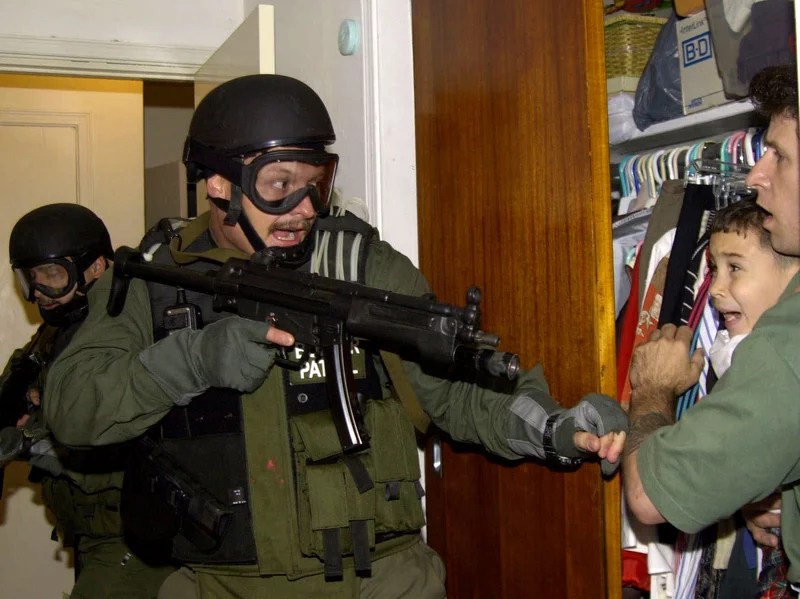
Today, Elian Gonzalez has an engineering degree and a job in the tourist industry. He is married and has a two-year-old daughter. Earlier this year he was seated as a representative of his hometown of Cardenas in the Cuban national assembly.
What happened in the interviewing years? We only really have occasional glimpses as he has been largely sheltered from international media during his childhood and youth. He returned to Cardenas, the town where he had lived before his mother’s attempt to bring him to Florida. He lived with his father, who came back to the same job of bartending at a tourist park. And he returned to the same school he had attended. It seemed like something of a normal life for a boy in Cuba. That is except when he was paraded about as the cause celebre that he had become in Cuba.
Vanessa Bauza of the South Florida Sun-Sentinel put together this picture of 11-year-od Gonzalez’ life in Cuba, based on interviews with family and associates who had traveled there, in 2005.
“Today, Elian and his family live in a roomy blue home with red trim on Cardenas’s main street, 130 kilometres east of Havana. It has a tidy fenced front yard, a porch swing and a menagerie of pets, including parakeets, fish, dogs and a rabbit…
“Today, Elian is a model student, favouring math and Spanish classes. He has been chosen leader of his sixth-grade class and will begin middle school this fall. He takes karate lessons and plays table tennis. Despite having lots of toys at home, one of his favourite games is fishing for tadpoles in the gutter in front of his grandparents’ home on Cossio St., near the rocky beach.
“Still, for a boy known around the world by his first name, ‘normal’ is a relative term. Several plainclothes security officers are stationed in front of Elian’s home to keep strangers from getting too close, and a museum in his hometown is partly dedicated to Cuba’s campaign to ‘save’ him.”

One of those not so normal moments occurred on April 22, 2005, when Gonzalez, still 11, read a prepared speech to a gathering celebrating the anniversary of the INS raid that seized the boy and set him on the road back to Cubs. Vanessa Arrington of the Associated Press filed a story on April 24 that quoted part of Gonzalez’ speech:
“Five years ago, I returned to my dad. When I saw him, I became very happy. I could hug him, I could see my little brother. That was the happiest day of my life.” The story went on to quote Gonzalez thanking both Cubans and Americans who fought for his return to his father in Cuba.
The AP reported another sighting five years later on April 6, 2010:
“Cuba has released photos of one time exile cause celebre Elian Gonzalez wearing an olive-green military school uniform and attending a Young Communist Union congress. Gonzalez, now 16, with closely cropped black hair, is shown serious-faced with fellow youth delegates during last weekend’s congress at a convention center in western Havana. The images were posted Monday on Cuban government Web sites, then widely picked up by electronic state-controlled media.”
In 2015, he did an interview with ABC News and talked about his memories of his mother and her attempt to get to Florida:
“I remember when the boat capsized, when we fell on the sea. I remember when I was put on the raft and my mom was covering me and I was raising my head, looking around… and at some point I raised my head and I didn’t see her again. There was no-one else. I was alone in the middle of the sea … and that’s the last thing I remember.”
“I believe that if today she is not here with me it is because she fought until the very last minute for me to survive. After giving life to me, I believe she was the one who saved me. She was the one who gave life back to me at a time of danger.”
He also told ABC he would be interested in visiting the U.S., not to stay, but to see a baseball game, to go to the museums in Washington and to talk to people.
“For my family it has always been, we always have the desire to say to the American people, to say to each household our gratitude, appreciation and love that we have. Perhaps one day we could pay a visit to the United States. I could personally thank those people who helped us, who were there by our side. Because we’re so grateful for what they did.”
He also talked about his feelings toward the U.S. in a 2017 interview with CNN:
“I think I would have become the poster boy for that group of Cubans in Miami that tries to destroy the revolution, that try to make Cuba look bad. I would have been used in that way. Maybe I would have become an actor on TV or maybe I would have more money than I have here with more comforts, but I wouldn’t have my family. I wouldn’t have the tranquility I have in Cuba.
“My two feet, my body, my mind are in Cuba. But there are times when I think about the United States. I wouldn’t be who I am had I not been in the United States.”
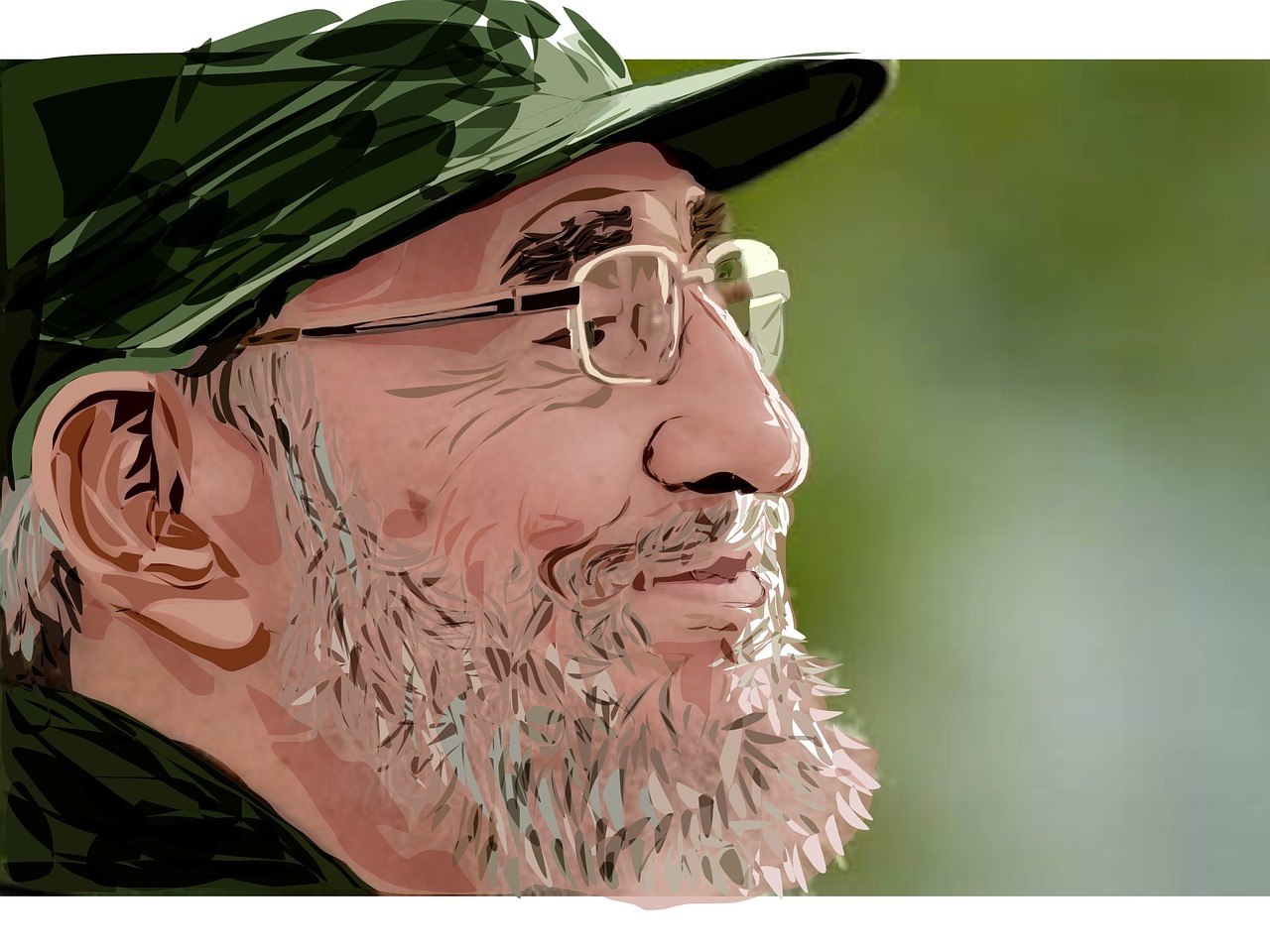
Another subject oft pursued by reporters following the Gonzalez story is his relationship with Castro. The Cuban leader was front and center in the fight to bring him home. He famously showed up at Gonzalez’ 7th birthday party and has seemed to let no opportunity pass to be seen with Gonzalez at public events.
Here’s what he told ABC News:
“I am his friend but above all I consider him my father, my grandfather. Fidel, he is an incredible person. Everyone has his own opinion. It is somewhat difficult to refer to Fidel, because everyone thinks of Fidel as a god or those who reject him call him the devil. But I’ve known one side of Fidel and what I have left to say is he is a normal person. He is a friend. He’s someone you can share with, you can laugh with.”
Gonzalez became more widely available to the media earlier this year on the occasion of his swearing in as a member of Cuba’s National Assembly of People’s Power. He sounded very much the politician, conciliatory, hopeful and almost pollyannishly optimistic.
He told Andrea Rodriguez of the Associated Press :
“From Cuba, we can do a lot so that we have a more solid country, and I owe it to Cubans. That is what I’m going to try to do from my position, from this place in congress — to contribute to making Cuba a better country.”
In an interview with CNN:
“What we want one day is Cuban exiles are no longer exiled, that they come home. When the young people that have left are willing to work for Cuba, the well-being of Cubans beyond a political party and beyond ideologies. Our doors are open to build a better country which is what we need.”

The passion that was generated by the Elian Gonzalez story is still felt in parts of the Cuban community in Miami. Some there would tell you not to pay too much attention to what you hear in these interviews, that Gonzalez is not free to speak his mind, is mimicking the message the government wants to hear, or simply that he is “brainwashed.”
Earlier this year The Miami Herald opined “At 29, he is a show pony for Cuba, as many exiles feared.”
-0-
Whatever Happened To?
 off the leash
Thanks for a fascinating read, Ken. One of the many things I liked about it was the spotlight it put on the heroic sacrifice of Elian Gonzalez’s mother.
A side note: This from the travel site Fodor’s on Cardenas, Cuba: “This once-elegant town, modeled after Charleston, SC, was founded in 1828 as a sugar-exporting port with a neat grid of streets lined with Neoclassical facades. The streets remain but, apart from some restored churches and public buildings, the state of dilapidation is sobering. Ironically, this is where many hotel workers from the glitzy Varadero hotels live. Anyone who wants to experience ‘the real Cuba’ can take a town tour in a traditional horse-drawn caleta (cart) for less than CUC$10.”
LikeLiked by 1 person
Would be pretty interesting to see, though likely depressing as well. Suspect Elian’s father was one of those hotel workers.
LikeLike
I have been to Cuba 12x and to Cardenas at least 6x of those. Like almost all of Cuba it is a mess. So very sad really and now the people are hurting even worse in the last few years. There are MANY hotels in Varadero. The people of Cardenas have things a little better than in some towns & cities because of the proximity to the resorts, but now the resorts are hurting big time also. That is what communism does. It destroys.
LikeLiked by 1 person
Very interesting story. I remember of course when he was found in the rubber dingy, but had never heard any more of his story. Thanks for sharing this. Maggie
LikeLiked by 1 person
I remember the story of Elian and the boat. It’s interesting that he has an engineering degree and works in the tourism industry. It seems that many professions work in tourism in Cuba because they can make more money there.
LikeLiked by 1 person
Did you know that the city of Cardenas where Elian was from has a big monument to this event in their downtown. I have seen it. It has a big hand giving US the finger. I am helping a Cuban immigrant resettle who know Elian. They are about the same age. He showed me the complex that Elian was given to live on out in the countryside near Cardenas. It is way more than any life most Cubans have. My friend loves America & hates communism, but he is concerned when he sees certain things that indicate to him we are going down their path. (Most recent story from a relative still in Cuba…had to wait NINE HOURS in a line to get 10 liters of oil for his car.)
LikeLiked by 1 person
Pingback: Whatever Happened To? Grace Slick | off the leash
Pingback: Whatever Happened To? Lorena Bobbitt | off the leash
Pingback: Whatever Happened To? Jennifer Capriati | off the leash
Pingback: Whatever Happened To? Dave Clark | off the leash
Pingback: Whatever Happened To? Bill ‘Spaceman’ Lee | off the leash
Pingback: Whatever Happened To? Eldridge Cleaver | off the leash
Pingback: Whatever Happened To? Gerard Depardieu | off the leash
Pingback: Whatever Happened To? Sly Stone | off the leash
Pingback: Whatever Happened To? Lenny Dykstra | off the leash
Ken, your recounting of Elian Gonzalez’s journey poignantly illustrates how personal tragedies are often intertwined with complex political narratives. Elian’s story, marked by survival and a life under scrutiny in Cuba, prompts one to ponder the impact of such narratives on individual lives. I wonder how Elian’s understanding of his own story has evolved?
LikeLiked by 1 person
Pingback: Whatever Happened To? Jerry Rubin | off the leash
Pingback: Whatever Happened To? Ronnie Spector | off the leash
Pingback: Whatever Happened To? Gennifer Flowers | off the leash
Pingback: Whatever Happened To? G. Gordon Liddy | off the leash
Pingback: Whatever Happened To? Patty Hearst | off the leash
Pingback: Whatever Happened To? Daniel Ellsberg | off the leash
Pingback: Whatever Happened To? Mary Lou Retton | off the leash
Pingback: Whatever Happened To? Roger Clemens | off the leash
Pingback: Whatever Happened To? Pam Grier | off the leash
Pingback: Whatever Happened To? Lance Armstrong | off the leash
Pingback: Whatever Happened To? Roman Pulanski | off the leash
Pingback: Whatever Happened To? George Foreman | off the leash
Pingback: Whatever Happened To? Bobbie Gentry | off the leash
Pingback: Whatever Happened To? Fernando Valenzuela | off the leash