With the specter of Trump looming over the Smithsonian museums, it seemed like a good time to take in the African American Museum of History and Culture. I spent most of my time in the history galleries. They cover slavery, the Civil War, reconstruction, discrimination and the civil rights movement. Those are likely exactly the exhibits Trump and his cohorts are apt to try to whitewash.
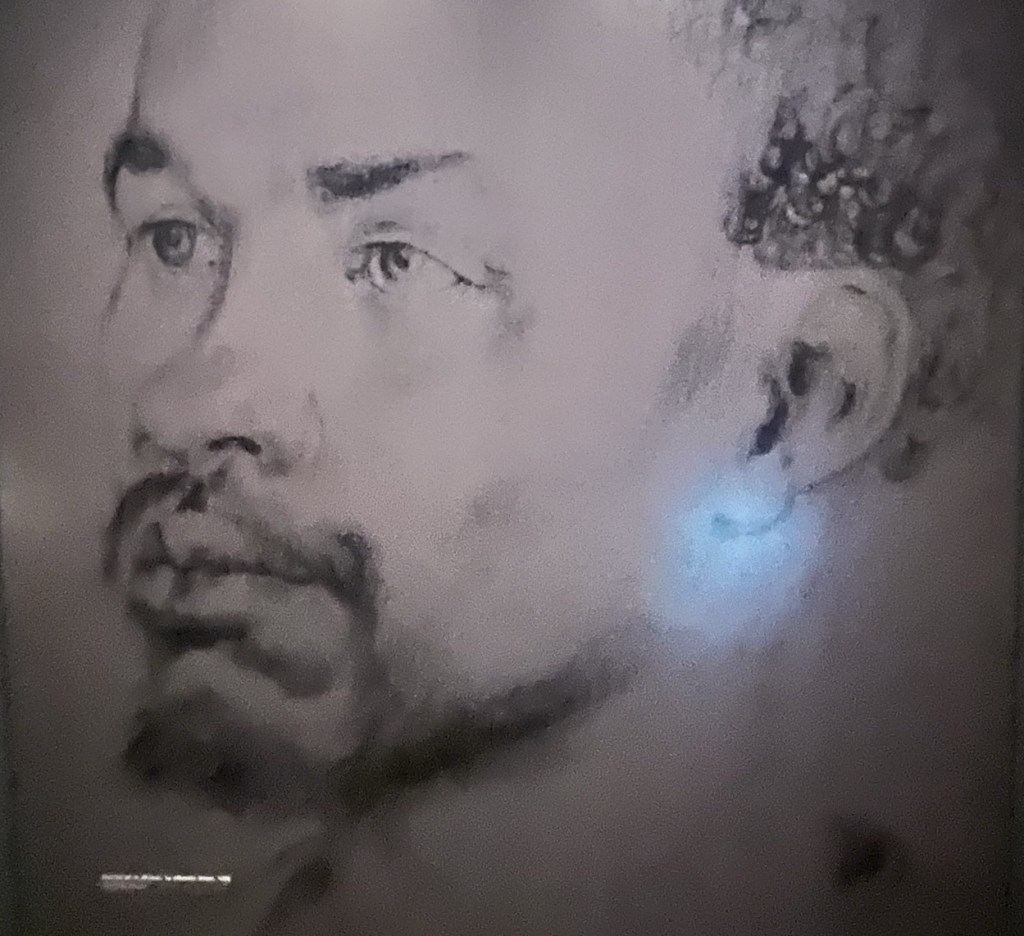
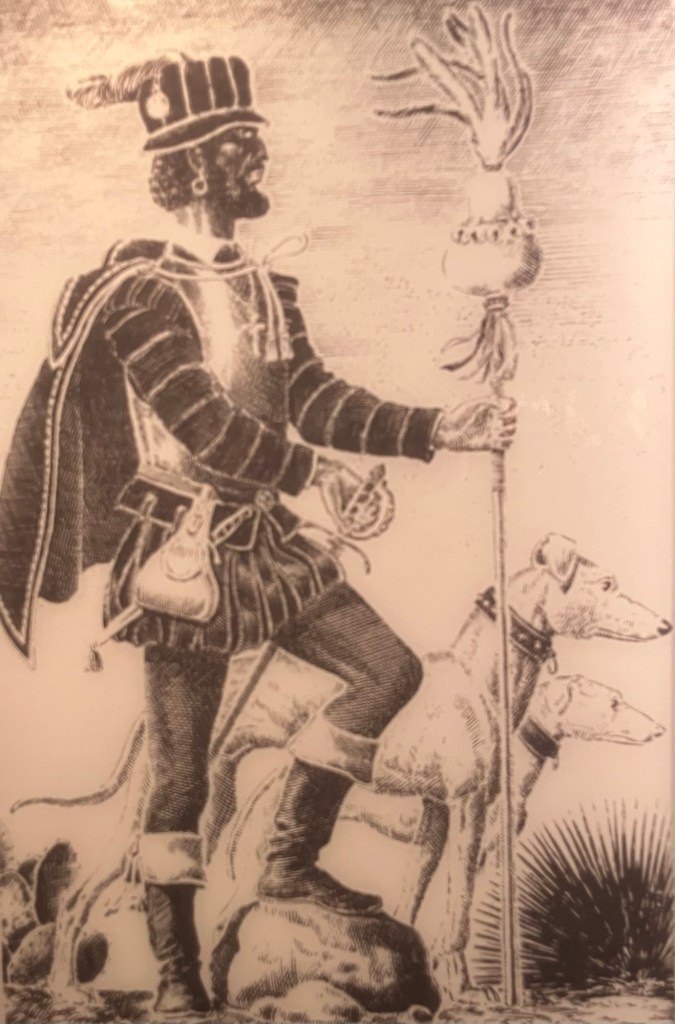
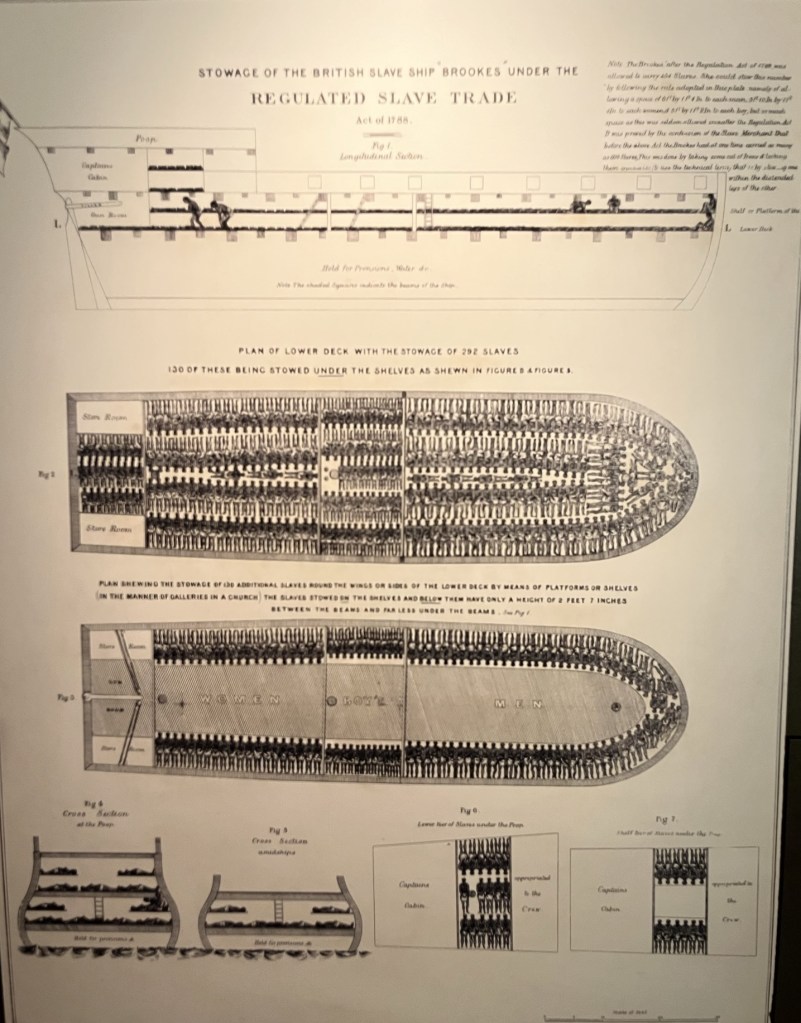
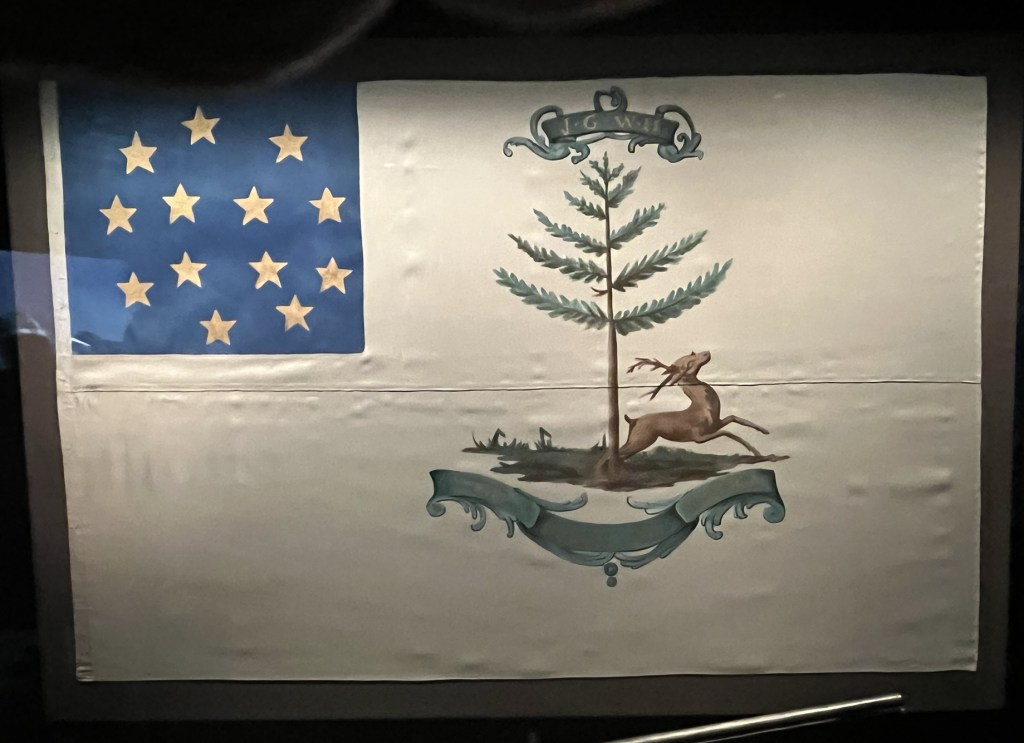
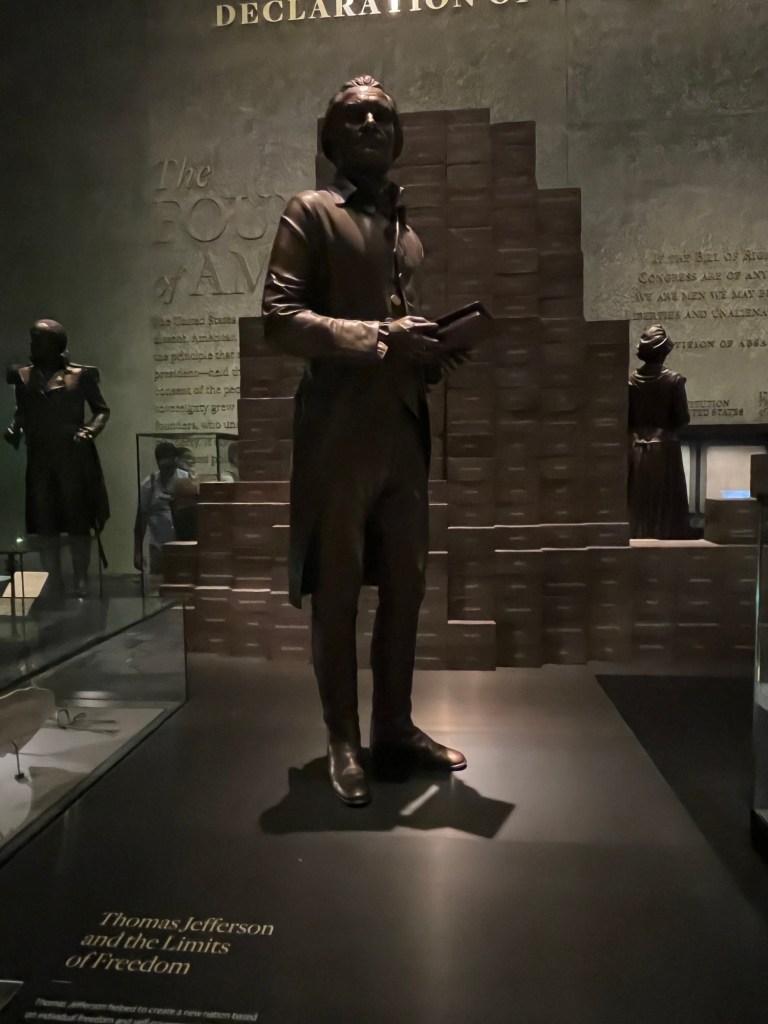
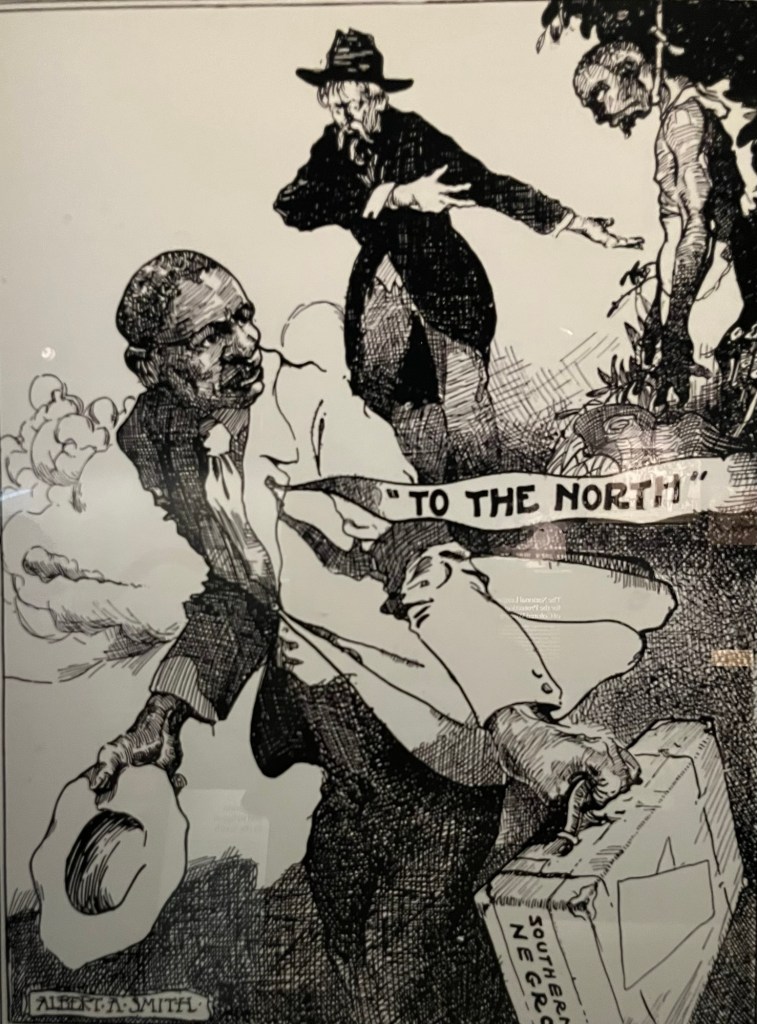
Esteban de Dorantes was an African enslaved by the Spanish. He became the first non-native explorer in the territory which is now Arizona and New Mexico.This is a diagram of how slaves were “stowed” on the British slave ship Brookes (1788). 292 Africans were packed into the lower deck while another 130 were confined to shelves on the perimeter, a space with a height of 2’7”.This is the flag of the Bucks of America, a Massachusetts militia made up of African-Americans who fought in the Revolution.Slave auctionLike 12 of the first American presidents, Thomas Jefferson owned slaves, 609 of them during his lifetime.Mother Bethel African Episcopal Church established by free Black men in Philadelphia.Some examples of demeaning stereotypes.This cartoon from The Chicago Defender points out the connection between lynchings and the northern migration.
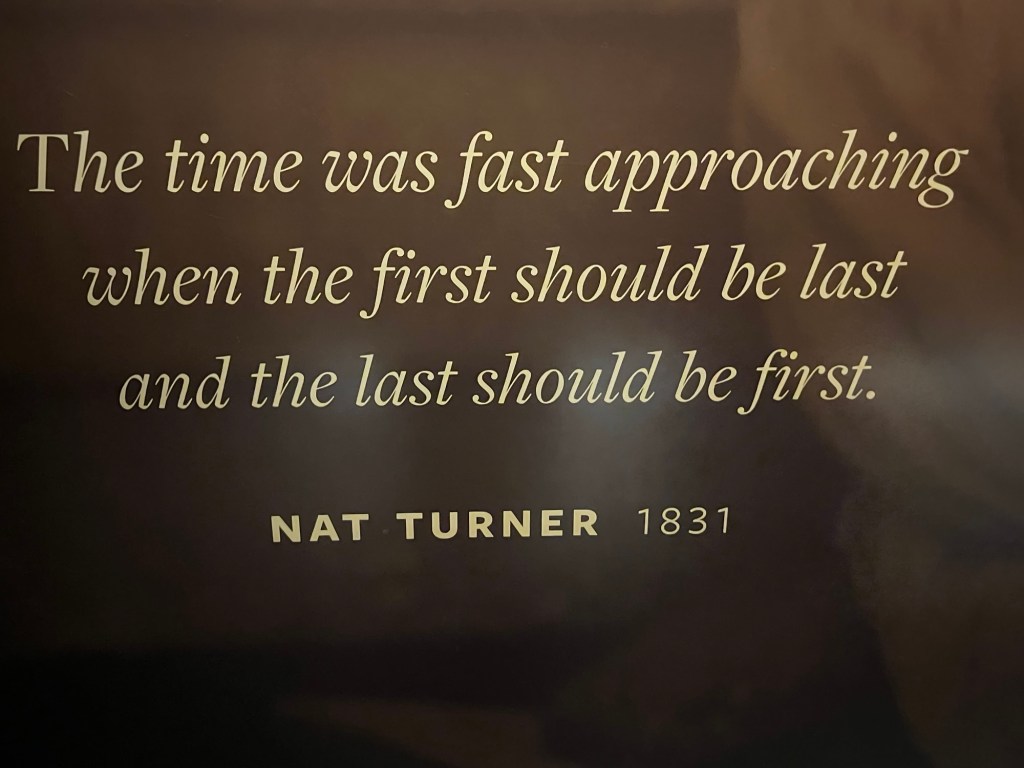
One of the themes running through the museum’s exhibits is how African-Americans fought first for their freedom and later for equal rights, starting with the earliest slave rebellions and continuing through the civil rights, Black Power and Black Lives Matter movements. Here are some samples.
The New York Conspiracy of 1741 was a rebellion of enslaved Africans and poor whites. They set fires through the city, including at the Governor’s mansion. As depicted about this led to harsh punishments for the captured participants.
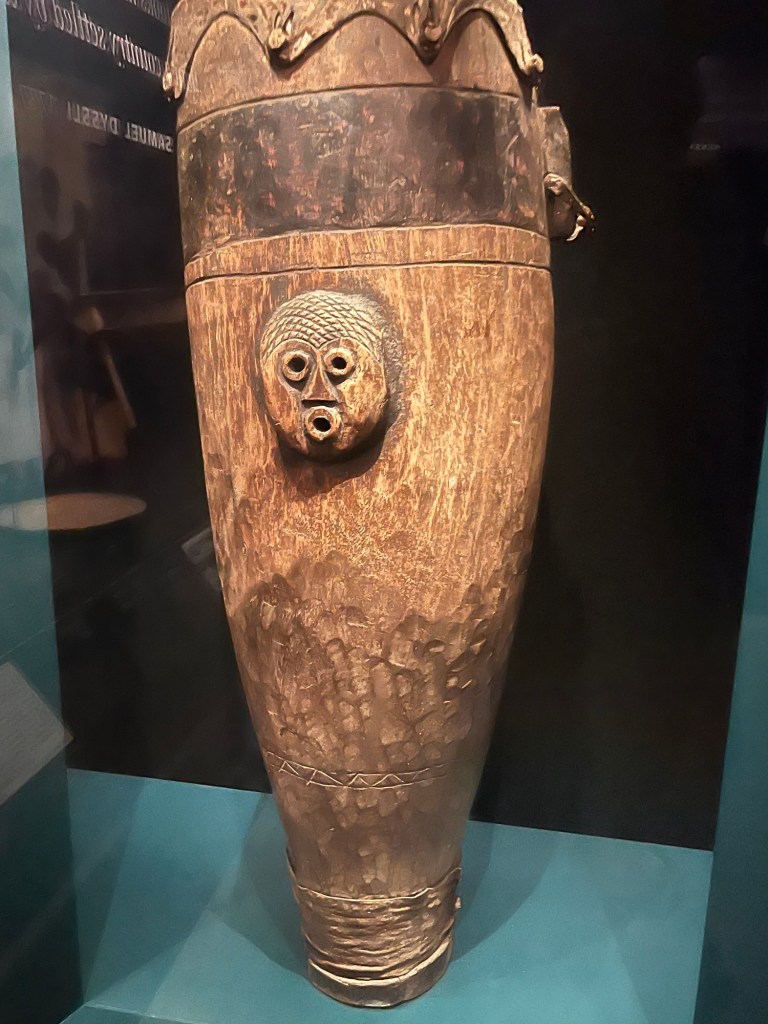
Drums like this one were used in the Lowcountry for communications. After the Stono Rebellion in 1739 in South Carolina, the state adopted the Slave Code of 1840 which banned the use of drums.
Henry Highland Garnet was a slave in Maryland who escaped and became a radical abolitionist calling for uprisings against slave owners.
Harriet Tubman escaped from slavery in Maryland in 1849. She would become a leader of the Underground Railroad.
A recruitment poster encouraging Black men to join the Union cause in the Civil War.
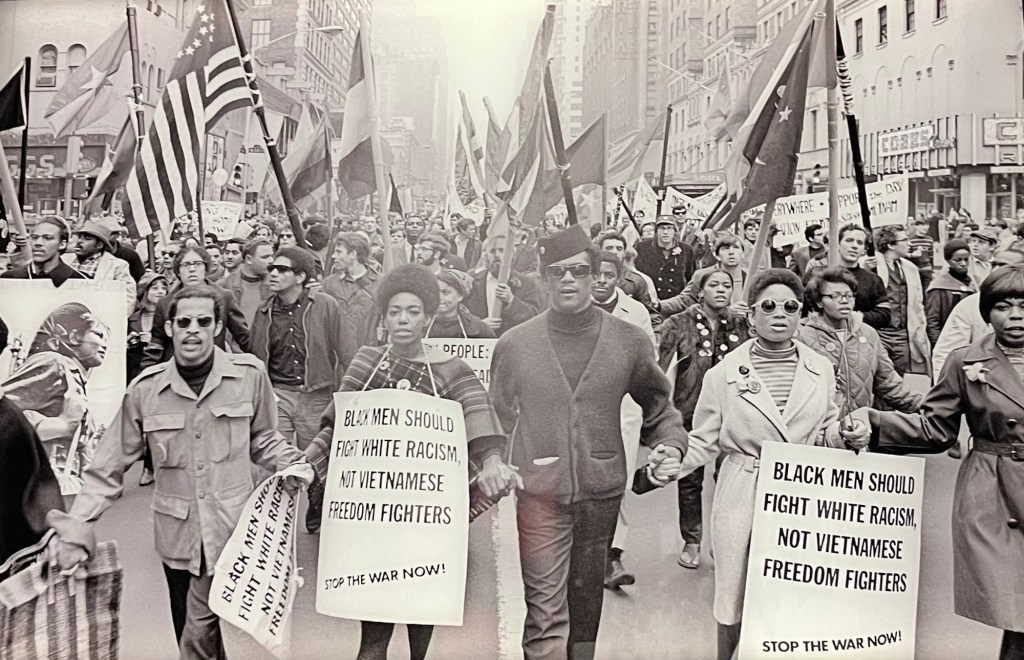
Civil rights marchers on the way from Selma to Montgomery in 1965.Many civil rights advocates were also strong opponents of the Vietnam War
I ran out of time to see all of this giant museum. There are also cultural exhibits, including those devoted to African-Americans’ contributions to the military, sports and entertainment. Here are a couple samples.
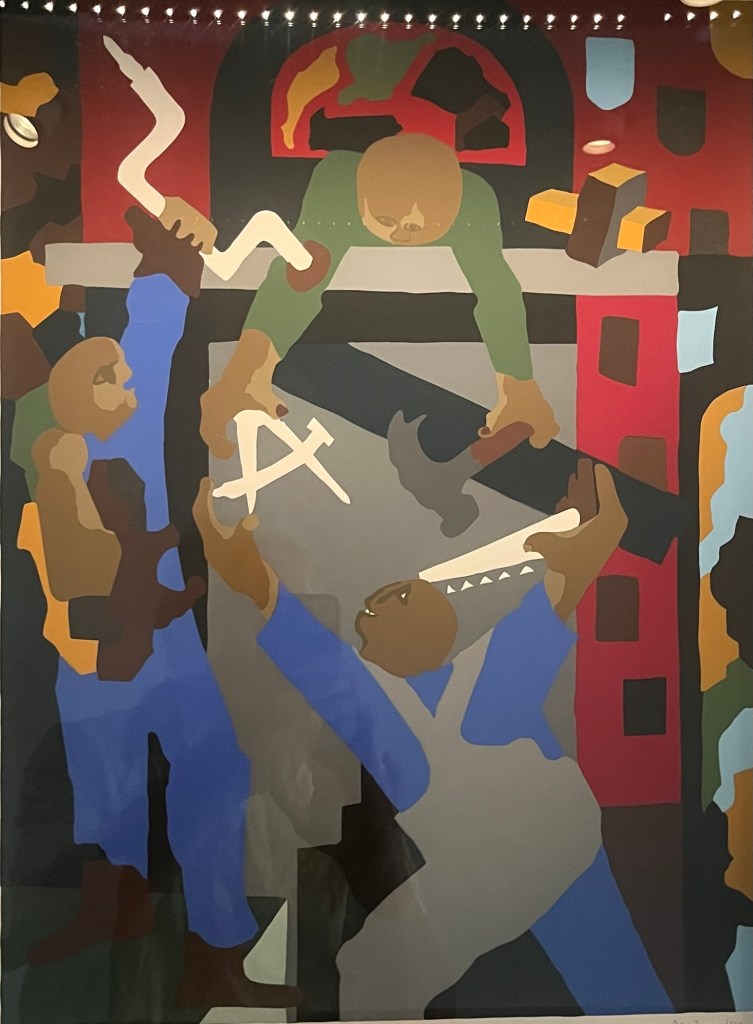
LeRoi Jones would later change his name to Amiri Baraka. His son, Ras Baraka, is currently the mayor of Newark, N.J. Ras Baraka was arrested by Homeland Security earlier this year outside an immigrant detention facility. The nonsense charges against him were dropped before they went to court.Gimme That Old Time Religion, Carolyn MazloomiBuilders: Stained Glass Window, Jacob Lawrence
Thank you so much for this, Ken. It’s an educational and inspiring post; one that vividly illustrates the long, difficult, ongoing efforts for equality and social justice.
I went there a few years ago since my niece lives in DC. You can’t see all of this museum in one day. I wish I could say that I’m surprised at Trump’s bs, but I’m not really. So sad that someone has to be this ignorant and not see history for what it is, the good, the bad, and the very ugly.
Great museum that, like so much else, may disappear if we don’t fight for it. Question is, how best to fight. (This from a person whose fight has so far been confined to online comments.)
This looks like an amazing museum. Good idea to see it now. Efforts over the past few decades have focused on telling the history that has been ignored, suppressed, or twisted (e.g. of Indigenous peoples, blacks, women). It is important, interesting, and creates a better understanding of the present and each other. It is a shame to see the possibility of it being erased or distorted.











 off the leash
Thank you so much for this, Ken. It’s an educational and inspiring post; one that vividly illustrates the long, difficult, ongoing efforts for equality and social justice.
LikeLiked by 3 people
I went there a few years ago since my niece lives in DC. You can’t see all of this museum in one day. I wish I could say that I’m surprised at Trump’s bs, but I’m not really. So sad that someone has to be this ignorant and not see history for what it is, the good, the bad, and the very ugly.
LikeLiked by 2 people
Good idea to go there now. Thanks for sharing since now, I may never be able to see it. Maggie
LikeLiked by 1 person
Great museum that, like so much else, may disappear if we don’t fight for it. Question is, how best to fight. (This from a person whose fight has so far been confined to online comments.)
LikeLiked by 1 person
This looks like an amazing museum. Good idea to see it now. Efforts over the past few decades have focused on telling the history that has been ignored, suppressed, or twisted (e.g. of Indigenous peoples, blacks, women). It is important, interesting, and creates a better understanding of the present and each other. It is a shame to see the possibility of it being erased or distorted.
LikeLiked by 2 people
“Whitewash” is an apt word to use in re Trump’s intents, because he is a white supremacist.
LikeLiked by 2 people
Wonderful museum. Requires more than one visit to do it justice. I should go back while I can.
LikeLiked by 2 people
Good reading. I was there a few years ago and it was a wonderfully well done museum. The Smithsonian museum system is such a jewel.
LikeLiked by 1 person
Where did you get the image of Dorantes? Is it a free download? Great photo essay BTW.
LikeLiked by 2 people
It’s my photo. Shot it in the museum.
LikeLiked by 1 person