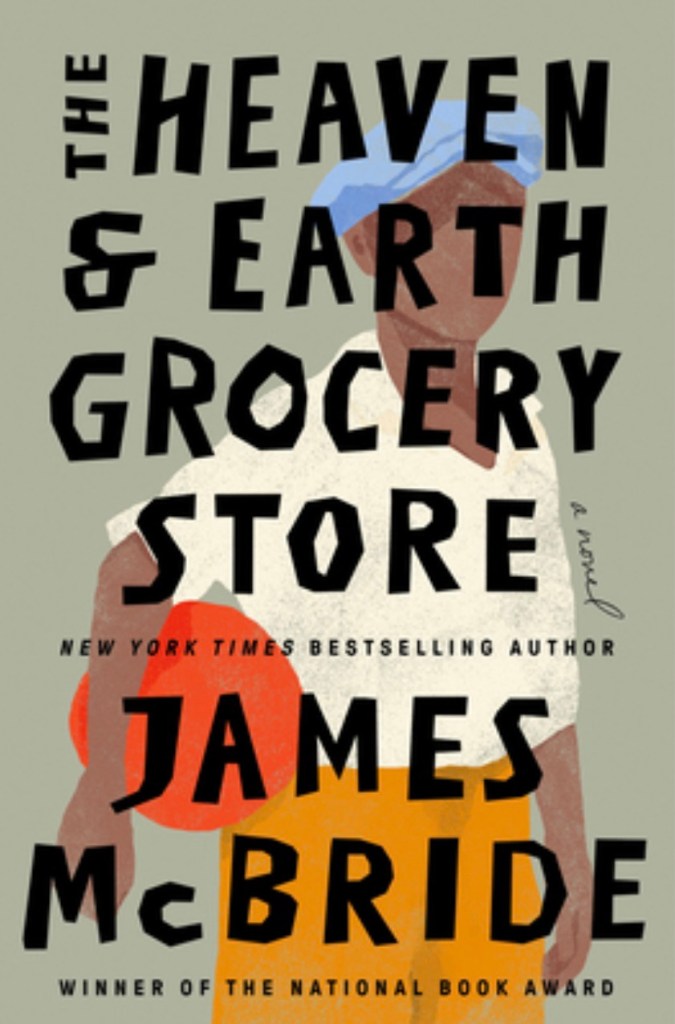
The Heaven and Earth Grocery Store is what you hoped America would become. It’s set in Pottstown, Pa., a city that was industrialized, a city where immigrants came to find jobs, a city where Blacks migrated from the south with the mistaken hope of freeing themselves from racism. The story is set in the mid-1930’s.
The general store, located in a poorer part of town called Chicken Hill, is run by a partly disabled young Jewish woman. Chona treats everyone with a smile with no regard for race, religion or ethnicity. A pretty fair percentage of Chicken Hill can remember getting food from Chona when they couldn’t afford it. The store loses money every year but her husband runs a successful theater business.
The humanity of the Heaven and Hill Grocery Store stands in stark contrast to injustice and discrimination that is rampant, much coming from the long-term residents who can’t accept the newcomers. For while the store is what you hope America is, the racism, antisemitism and vilification of immigrants is unfortunately part of what this country is now.
McBride is a brilliant storyteller. He exposes the soul of the ordinary man, the under-valued, the unnoticed. He adds a little mystery and suspense as well. In a story that’s otherwise full of love there’s also gangsters, crooks and sexual predators. This is the most human of novels.
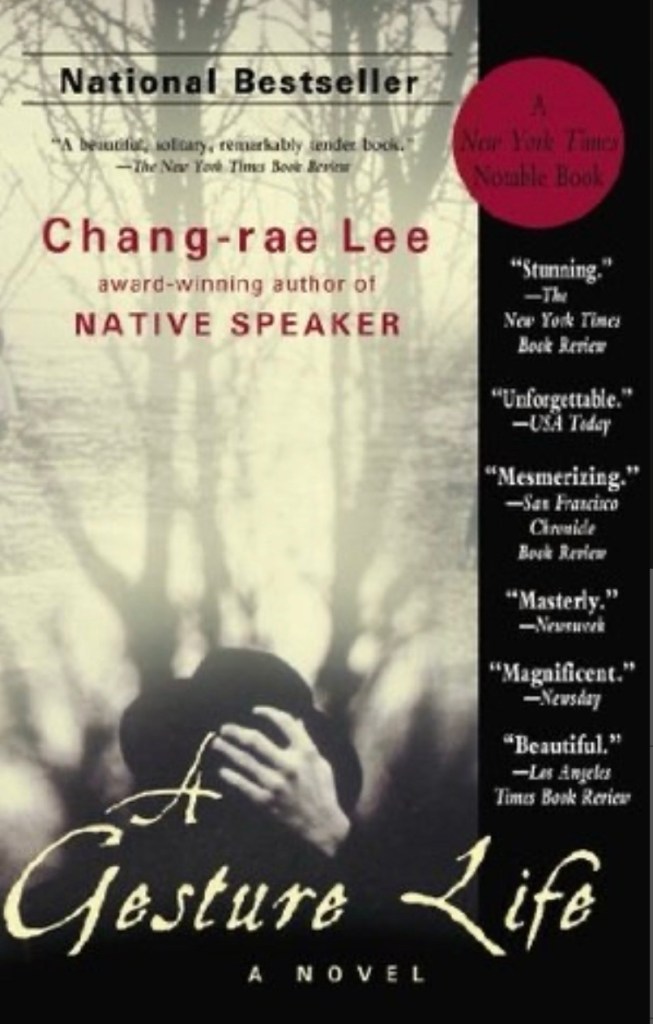
Doc Hata is what you might call a model citizen. A retired Japanese-American small businessman who ran a medical supply store in a well-heeled New York suburb, he is respected and liked by all the townsfolk. Many remember a favor he did for them at a time of need.
But that is only part of the story. Casual relationships are his stock in trade. Serious ones have proven to be a string of failures. That includes his first love, a young Korean woman forced to become a “comfort girl” at a Japanese army encampment during World War II. He failed with the widowed neighbor who he had a short relationship with. And, most importantly, he failed with the daughter he adopted from Korea.
It is in the words of that daughter that the author explains the title of this tale. “You make a whole life out of gestures and politeness.” She didn’t mean it as a compliment. His response “And why not? Firstly, I am Japanese.”
But even his Japanese heritage is called into question as Doc Hata’s personal story unfolds and becomes more and more separated from his public persona. After one uncomfortable episode, he comments “routine triumphs over everything, as it always does with men like me.” One of the things it triumphs over is passion.
This book is meticulously written. An exceptional depth of character emerges as the tale progresses, going both forward and backward in time. The pace with which the details of Doc Hata’s life is unveiled creates a slowly building, but suspenseful read.
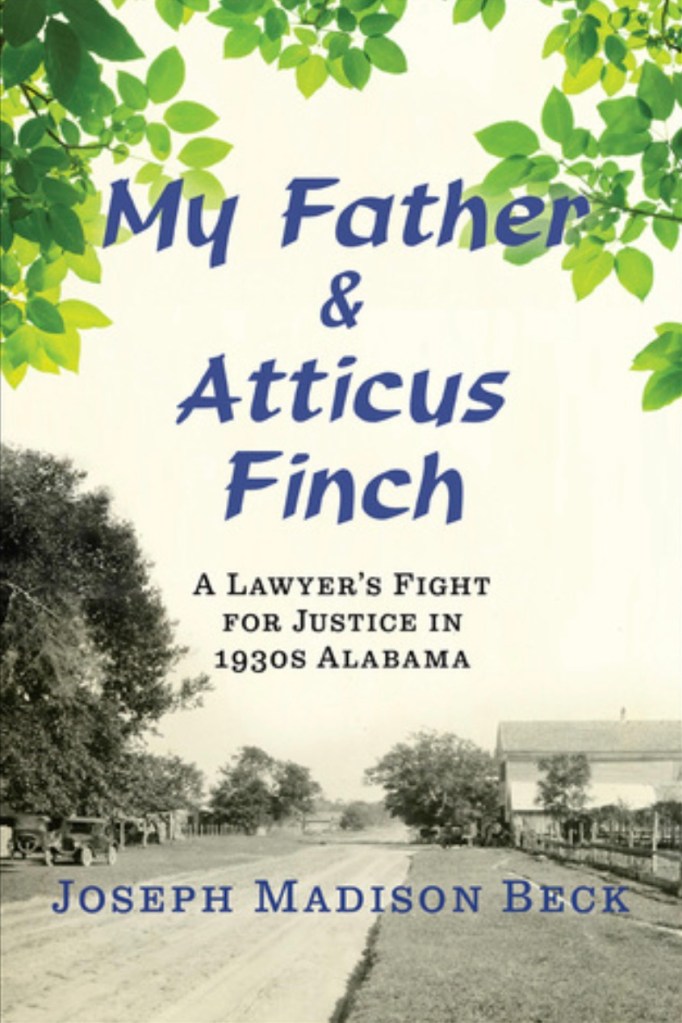
Joseph Madison Beck has written a moving tribute to his father Foster Campbell Beck. But the story is so much more. It’s about south Alabama and the people that live there, about a region that never stopped defining itself in terms of the Civil War. It’s a story of racism, historical, but seemingly never ending.
The Beck family for at least three generations, which includes the author’s grandfather, would be considered “progressive” on racial issues, at least by Alabama standards. The author himself is a lawyer in South Alabama like his father. The centerpiece of the story is Foster Campbell Beck’s decision to represent a black fortune teller from Detroit who is accused of raping a local white girl. It’s 1938 and it’s a decision that benefits neither his firm’s finances nor his reputation locally. And the ramifications go long past the actual case. What it does support is “my father’s lifelong passionate belief that the law was there for the poor as well as the rich, for blacks as well as whites.”
Atticus Finch is the lawyer in Harper Lee’s 1950’s novel “To Kill a Mockingbird.” In that story Finch also represents a black man accused of raping a white woman in south Alabama. James Madison Beck hints that some have suggested his father’s case inspired the novel, although Lee has denied any connection. Maybe from Beck’s viewpoint this best selling novel just dramatizes the courage and conviction that his own father showed.
It’s no easy task to write about a father of whom you are enormously proud without being overly sentimental or preachy. Beck has done that. His is a story told in a straightforward manner based on meticulously researched facts. There’s plenty of drama, especially in his account of the trial of the accused man, Charles White. And there’s a bit of family drama as well. All in all, a great story, skillfully told.

Thi Bui was one of three children along with her father and eight-month pregnant mother who fled Vietnam by boat after the fall of Saigon in 1975. Thi tells the story of her family but also the history of Vietnam. It’s about her parents and her parents’ parents through the years of Japanese and French occupation and American intervention.
But the best part of the book is in the story of this family as ‘boat people.’ How they managed to find a boat to escape on, their experience at a refugee camp in Malaysia where Thi’s mother gave birth, and then their resettlement in the U.S., first in Indiana and then in California. At a time when U.S. politicians are trying to win votes by demonizing refugees and immigrants this is a timely tale. A different time and place but a reminder of what these people go through and why.
There are also stories about the author and her more recent life in America. The opening chapter is about her experience with childbirth and she closes the book with a bit about how hard parenting can be. It’s these experiences that put some perspective on her thoughts about her parents, some appreciation of what these imperfect parents who she is not always in synch with went through.
This is the first time I’ve read a full-length graphic novel. It took me a little while to get used to looking at the drawings and not just reading words. The pictures tell a story too. I certainly became engaged and ended up appreciating the format. Just might pick up another one someday.

All about the in-laws. Nate and Keru (rhymes with Peru) are a Manhattan couple who rent a Cape Cod summer house and reserve one week each for the two sets of in-laws, separately of course. The two visits are equally awkward and in each case it’s not clear who’s more uncomfortable, the offspring or his/her partner. At one point Keru stations herself on the toilet while Nate showers to avoid being alone with his parents.
Keru is second-generation Chinese. Nate is from a poor white Midwestern family. No amount of surface civility can mend the chasm that seems to create.
The story then skips ahead five tears to another seasonal rental, this one is upstate New York. No in-laws this time, just curiously intrusive neighbors and Nate’s ne’er do well brother. It’s just as awkward and the awkwardness seems to have spread into Nate and Keru’s relationship.
Life just seems to happen in this novel and in the end one suspects it will continue to happen. There’s no drama, tragedy, excitement or any obvious evidence of love for that matter.
That is not to say it’s boring. This is a lively, fast read that’s often worth at least a chuckle. Few of us married folks could claim we couldn’t relate to something about these in-law interactions.
 off the leash
This is an appealing list and you are a good reviewer _ smart, concise, informative.
Most of all, thanks for encouraging enlightening reading and highlighting good books.
LikeLiked by 1 person
I love Cape Cod. For that reason alone, I might give the Wang novel a try.
Neil S.
LikeLike
Wow, I’m trying to carve out more time for reading. I envy you, Ken. And from how you describe The Heaven and Earth Grocery Store as the most human of novels, it really sounds like it rises above the rest.
LikeLike
I always like to get book recommendations from others. I haven’t read any of these, but think I’d like enjoy reading all of them. I am particularly interested in The Heaven and Earth Grocery Store.
LikeLiked by 1 person