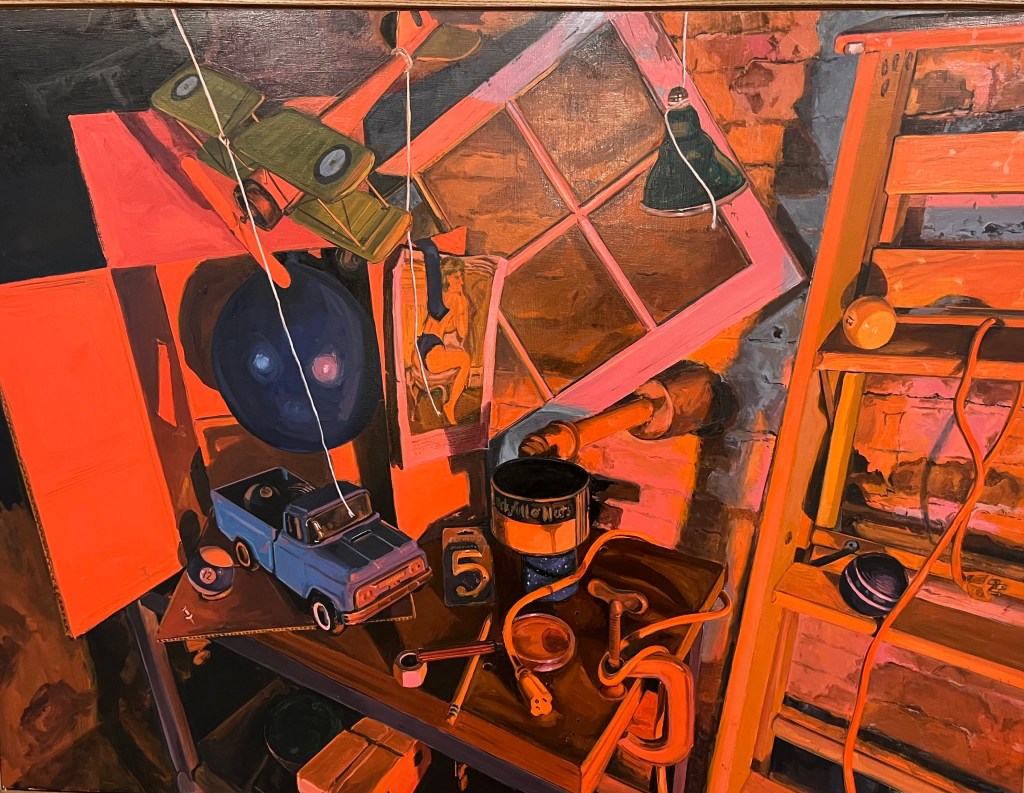
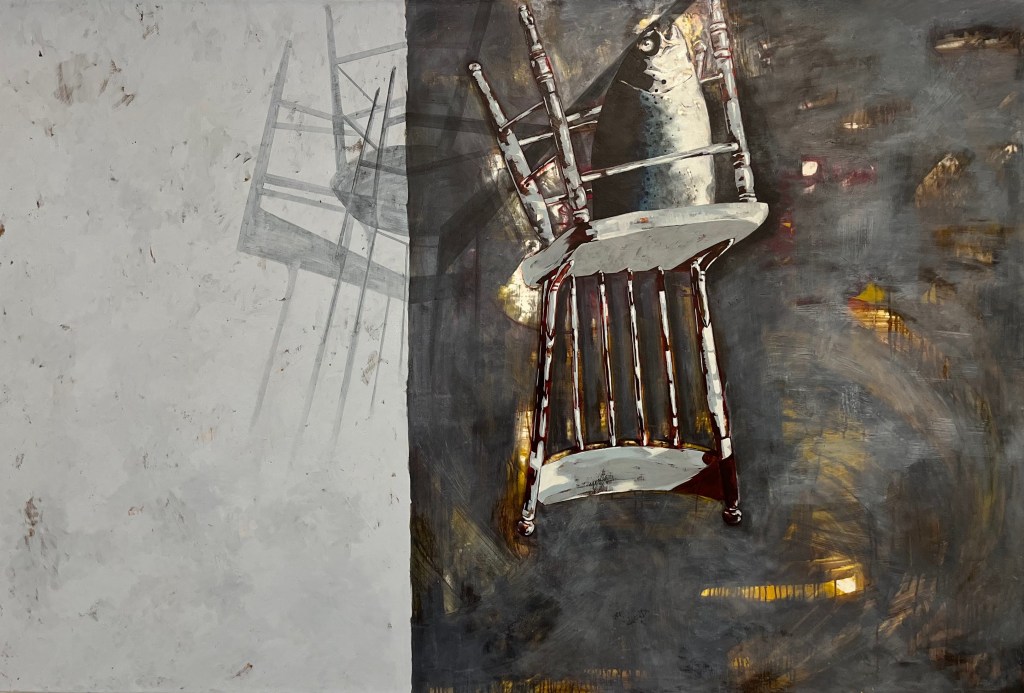
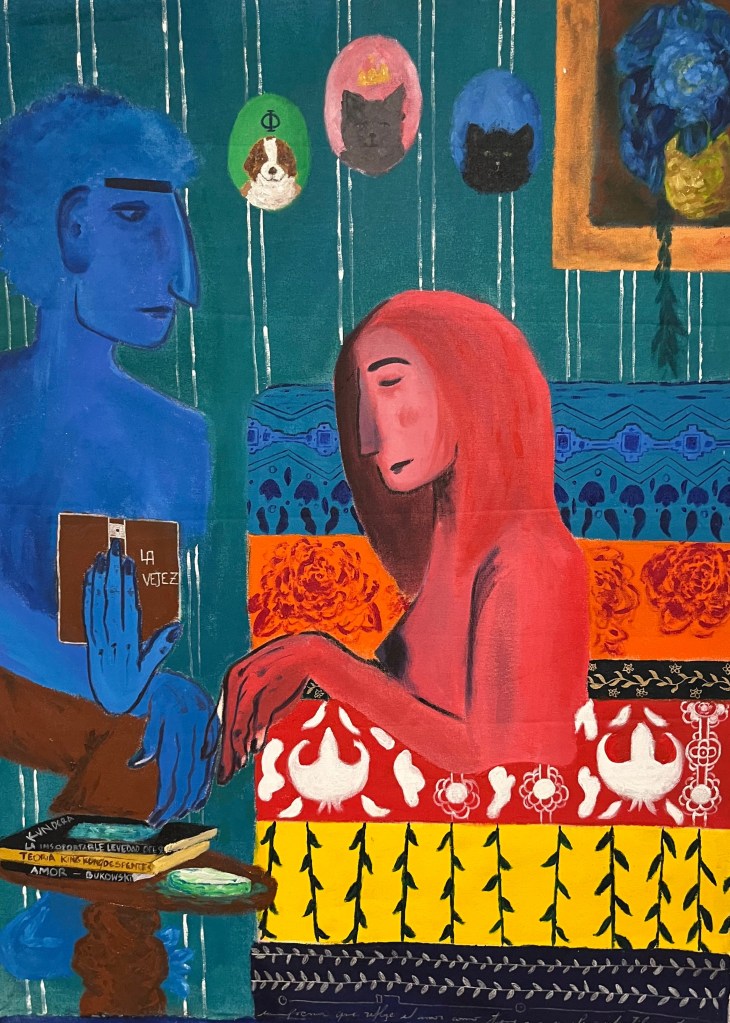
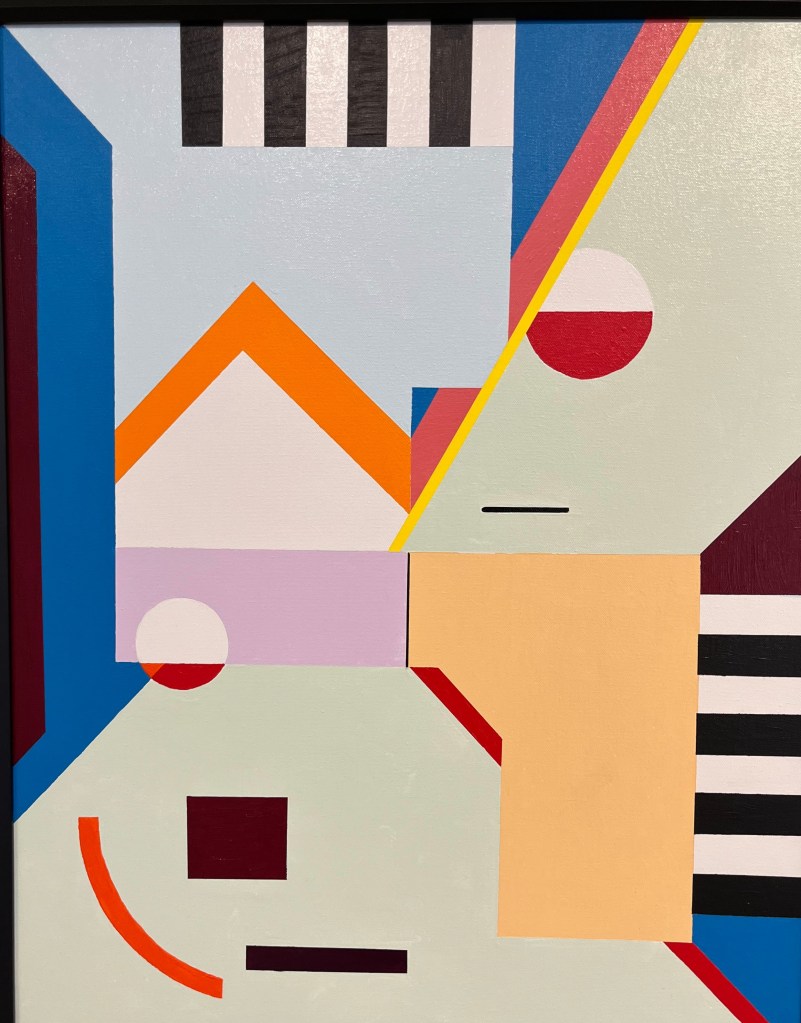
The New Jersey Arts Annual exhibit at the New Jersey State Museum features works by New Jersey based artists from 2020-2022. Like everything else, the yearly event was interrupted by COVID. The theme of this year’s exhibit is Reemergence, a rebirth from the lockdowns and sickness and isolation. Each of the pieces is displayed alongside a statement by the artist. Many of those statements talk about the pandemic and how it affected their life and work. Excerpts from some of the artists’ stories are included below with the images of their work.
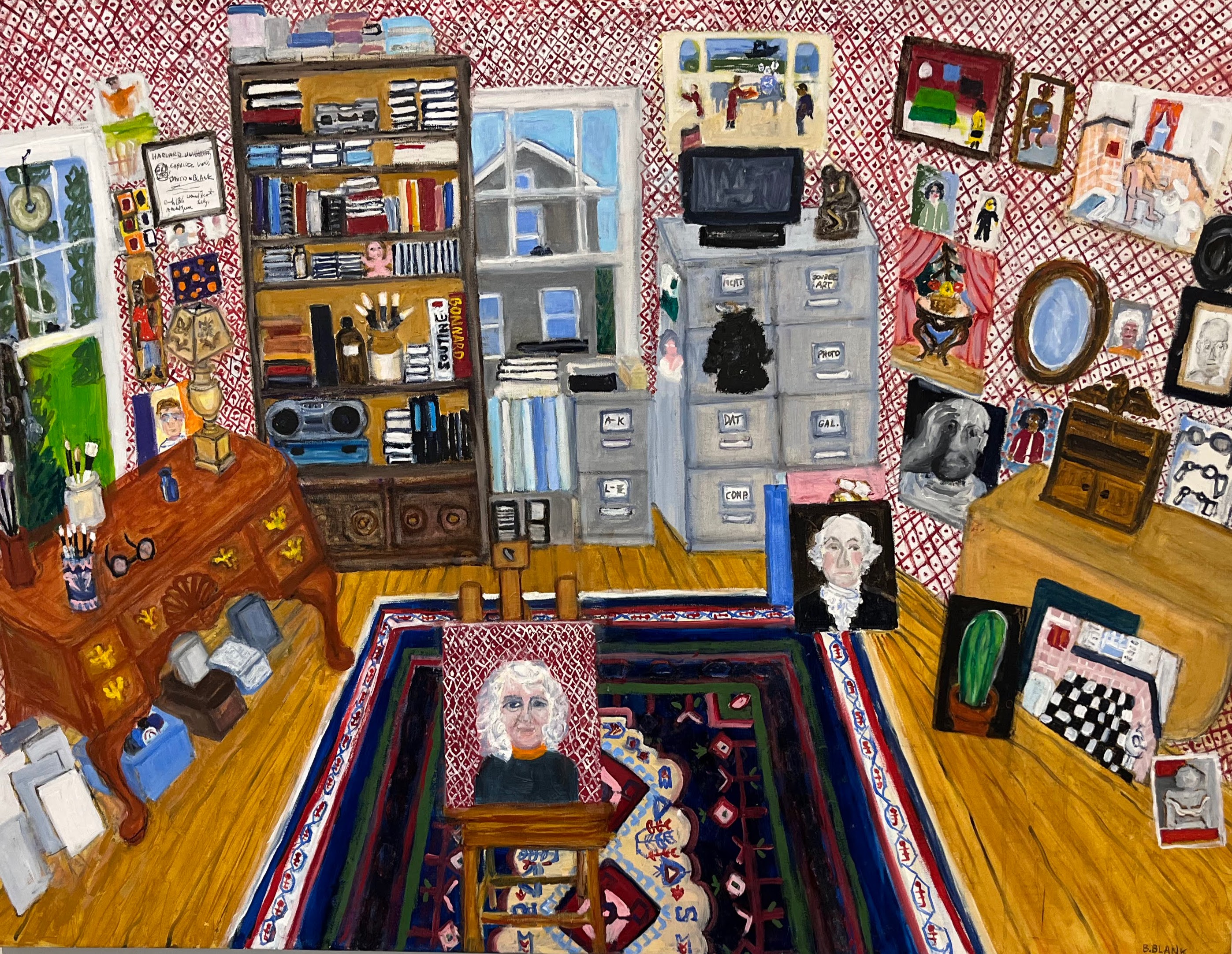
Studio with Self Portrait, Bette Blank. There is no doubt that the COVID-19 pandemic has shaped our existence over the last two years. Life as we knew it stopped, our world shrinking to four walls…yet societal changes marched on. While store shelves were empty, and hospitals full, my home became my immediate inspiration. This is reflected in Studio with Self Portrait, which is not merely a snapshot of lock-down life, but also hints at a world beyond the windows and doors
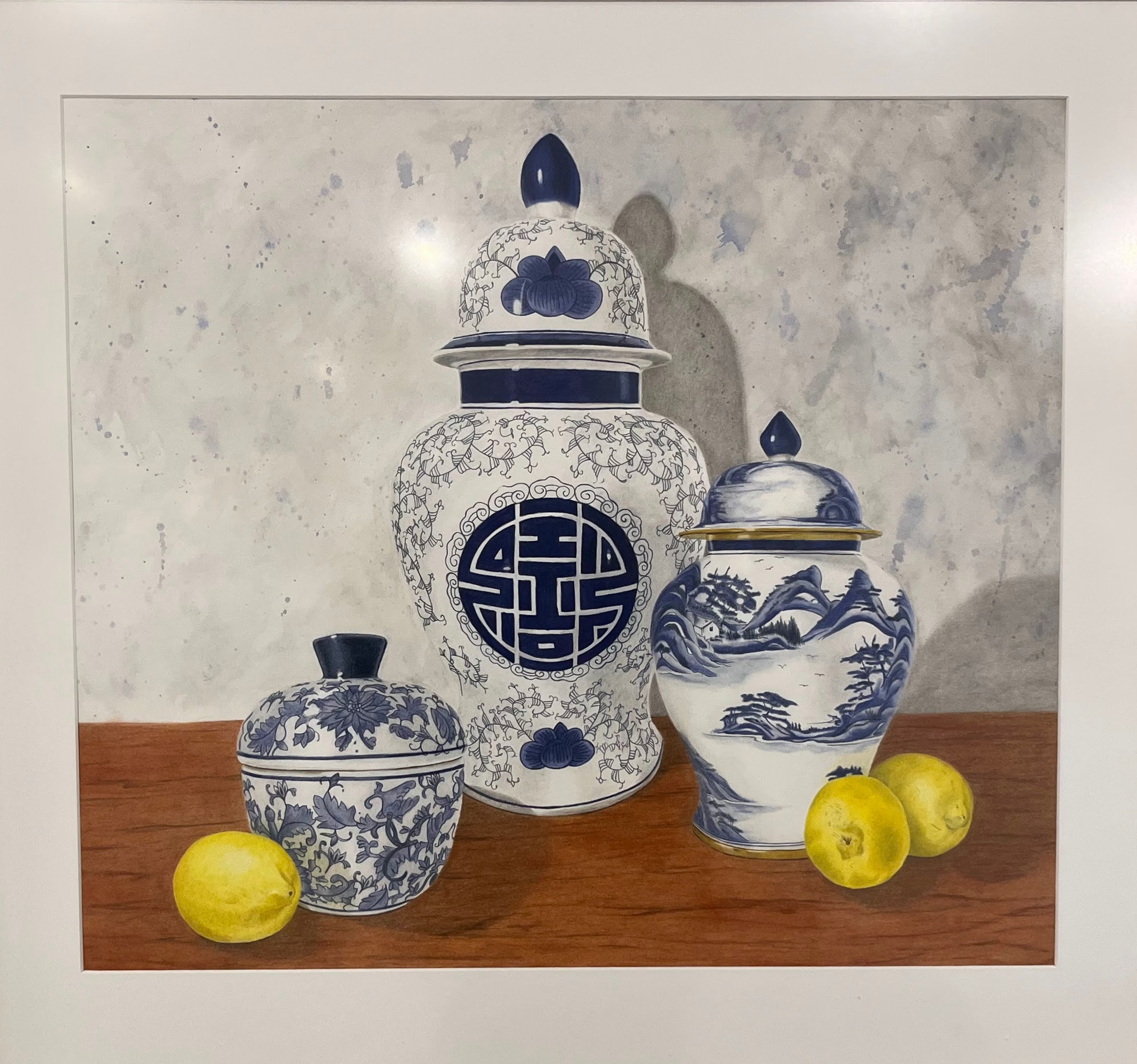
The Collection, Tammy S. McEntee. In March of 2020 when the pandemic first caused the world to shut down, I was lost. No travel no meeting with family, friends, or colleagues, and the world around me was in chaos. I could not make myself work. I was unmotivated. My pencil did not touch a piece of paper for four months. I decided to free myself from my previous constraints and work using my collection of blue and white chinaware along with florals keeping the old masters in mind. By doing so, I was able to once again get back to work and I have not stopped since.
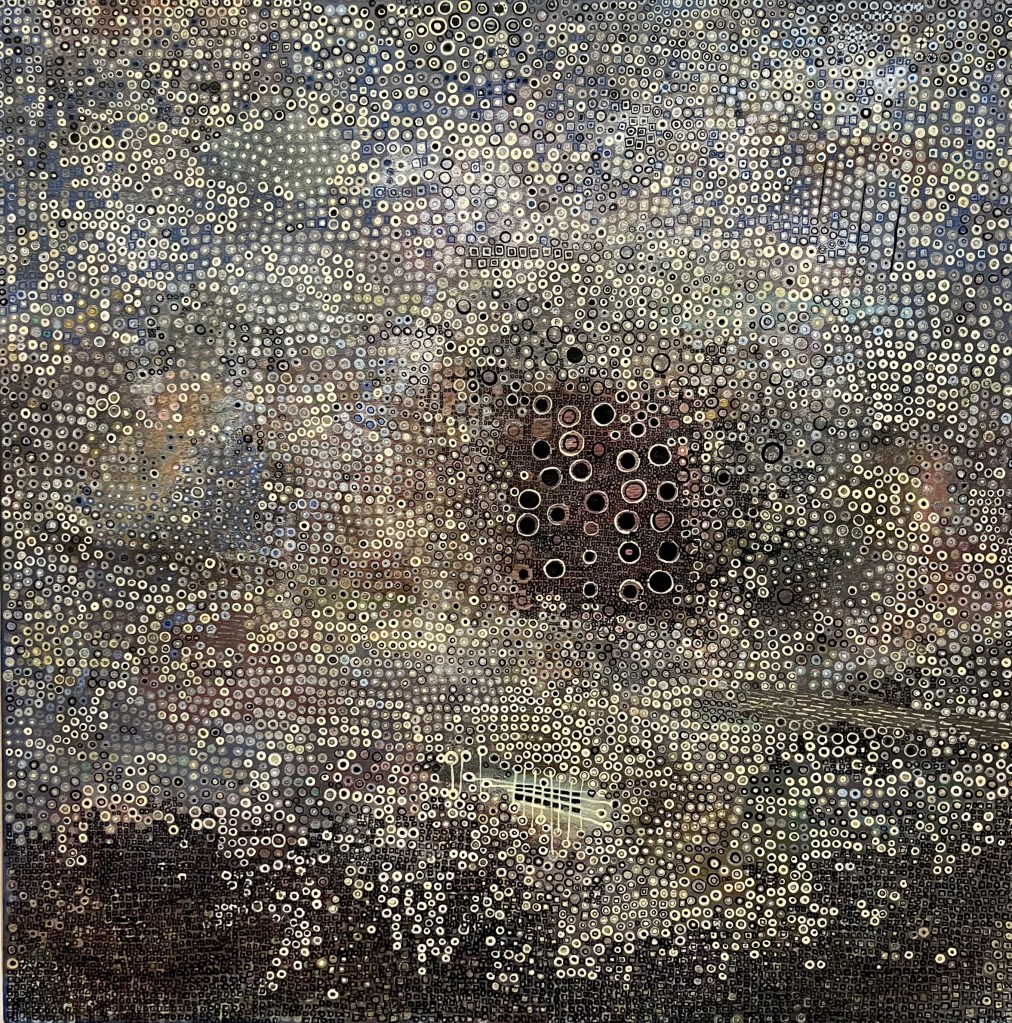
Untitled 3, Christine Sauerteig-Pilaar. My art during COVID began to shift inward. I began to work on found materials. It was also a distraction from the reality of my Dad losing his battle with Parkinson’s. Rummaging through memorabilia for photos to use during his funeral, I came upon some old upholstery patterns my Mom had sowed during my youth. With a new observation on memory, and how one sees and feels memories, and recycling materials that were personal, my Muse adapted to communicate a new vision dealing with memory and how difficult it is to see them clearly.
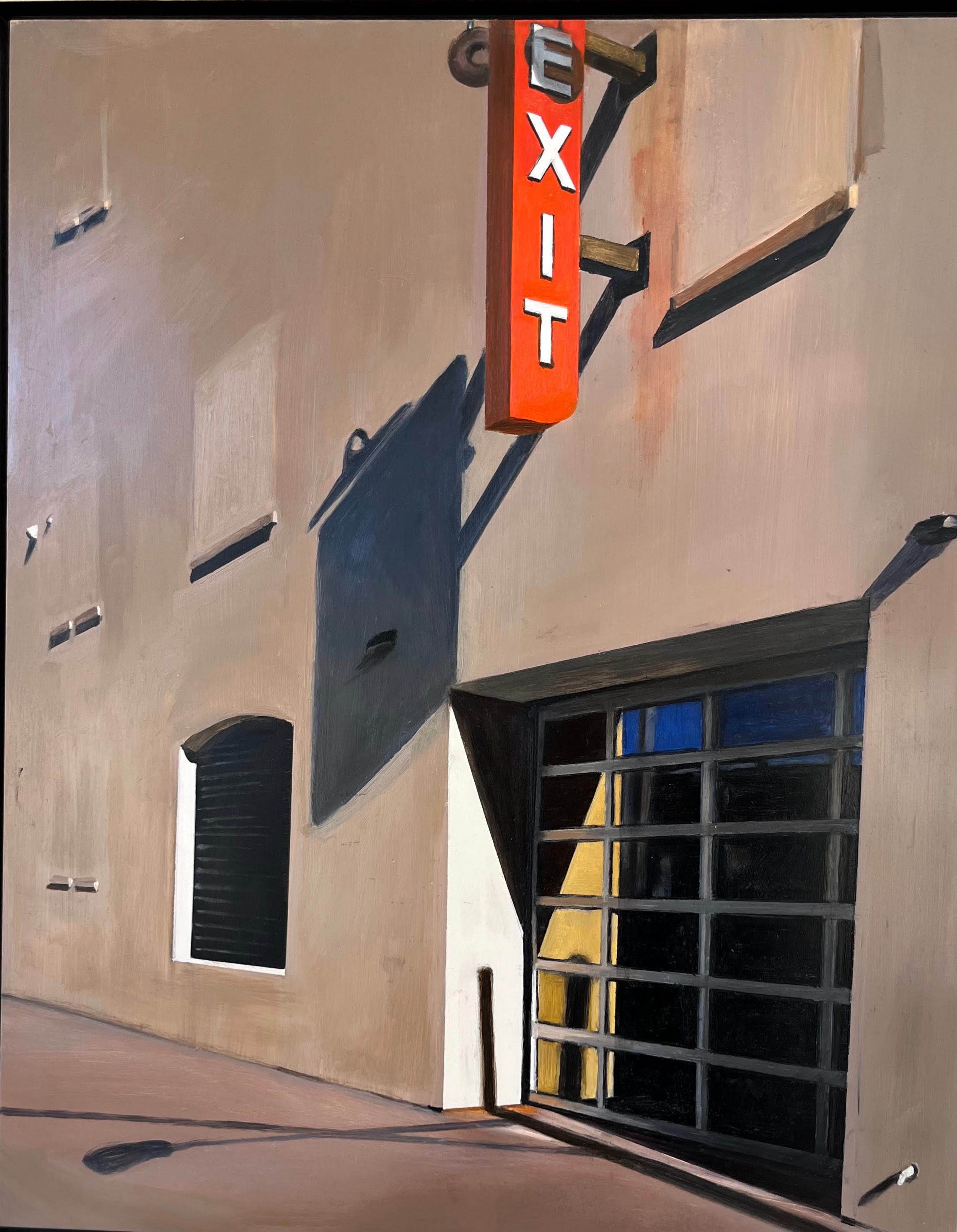
Exit, Allan Gorman. I have been making a series of paintings that capture plays of light and shadow in isolated places. Somehow they seem to capture the melancholia and loneliness most of us have felt during these troubling times of the COVID-19 pandemic.
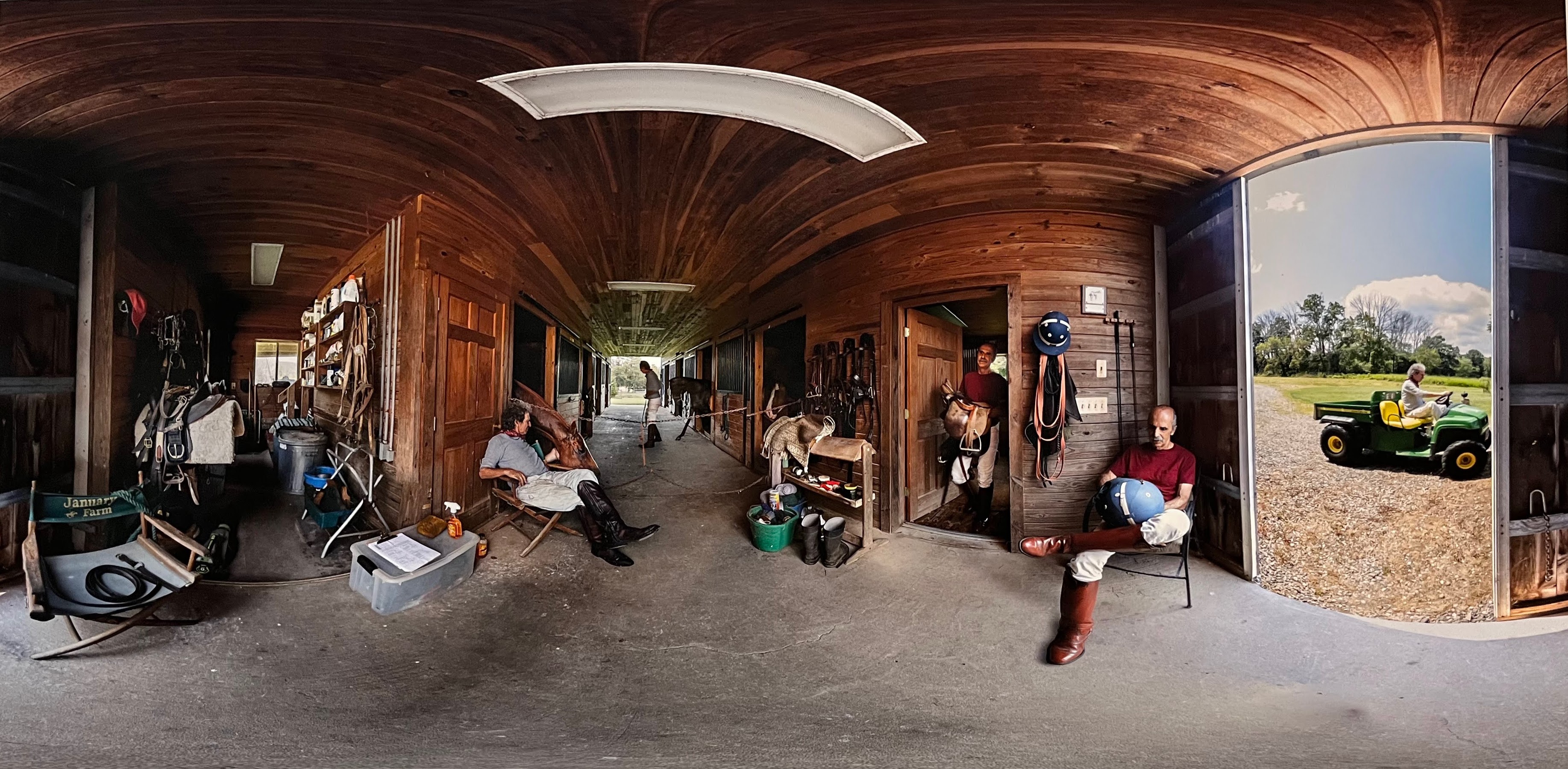
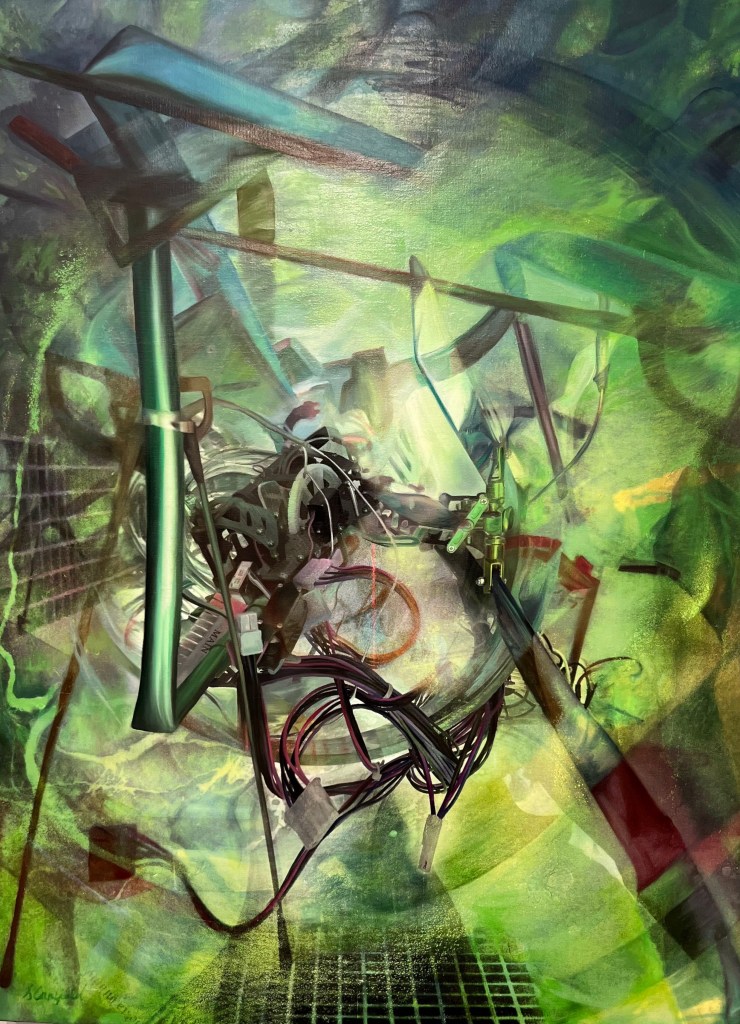
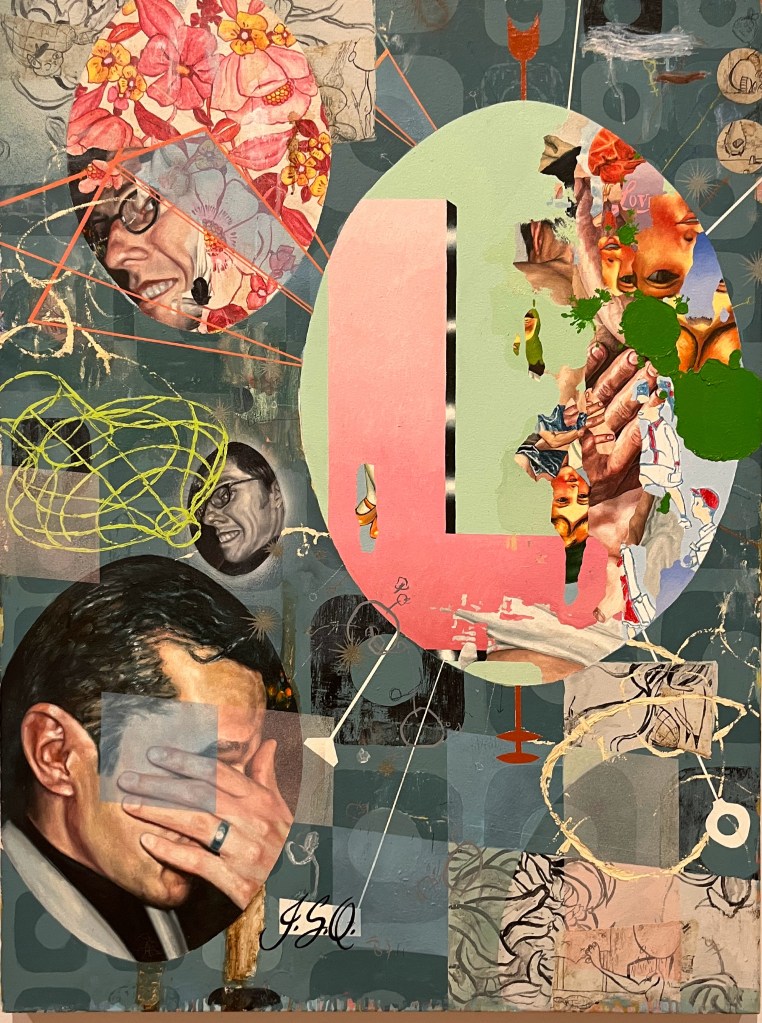
Rust, Bud McNichol. My latest series took shape during the pandemic. During the lockdown, my two young sons would keep connected with their friends through their gaming consoles. The landscape depicted in the painting is from the games they played with their cohorts.January Farm, Ricardo Barros. COVID required that we isolate ourselves, allowing for greater contemplation and purposeful work and it pushed social activities outdoors. Other than that, the pandemic was background to my artistic concerns. I make a series of still pictures from a single point while rotating my camera full circle, encompassing everything visible on the horizon. I stitch these into a single, flattened photograph. Tasks at Hand, Bennett Gewirtz. The pandemic challenged me to use my sense of style to focus on the uniqueness of these times. Being home had me to look at my immediate surroundings for inspiration.The Work Party: Biplane and Blue Truck in Red, David OrbanNorwegian Perspective, Manda GorsegnerThe Weekend, Daniel FinaldiDislocated, Wayne HoeyPandemic Posture, Janet TsakisLa vejez, Pedro MielesKarma Wins, Donald TrussElekta Infinity, Sarah CanfieldStardust Motel, Danielle CartierMan with Bag, Jay Pingree
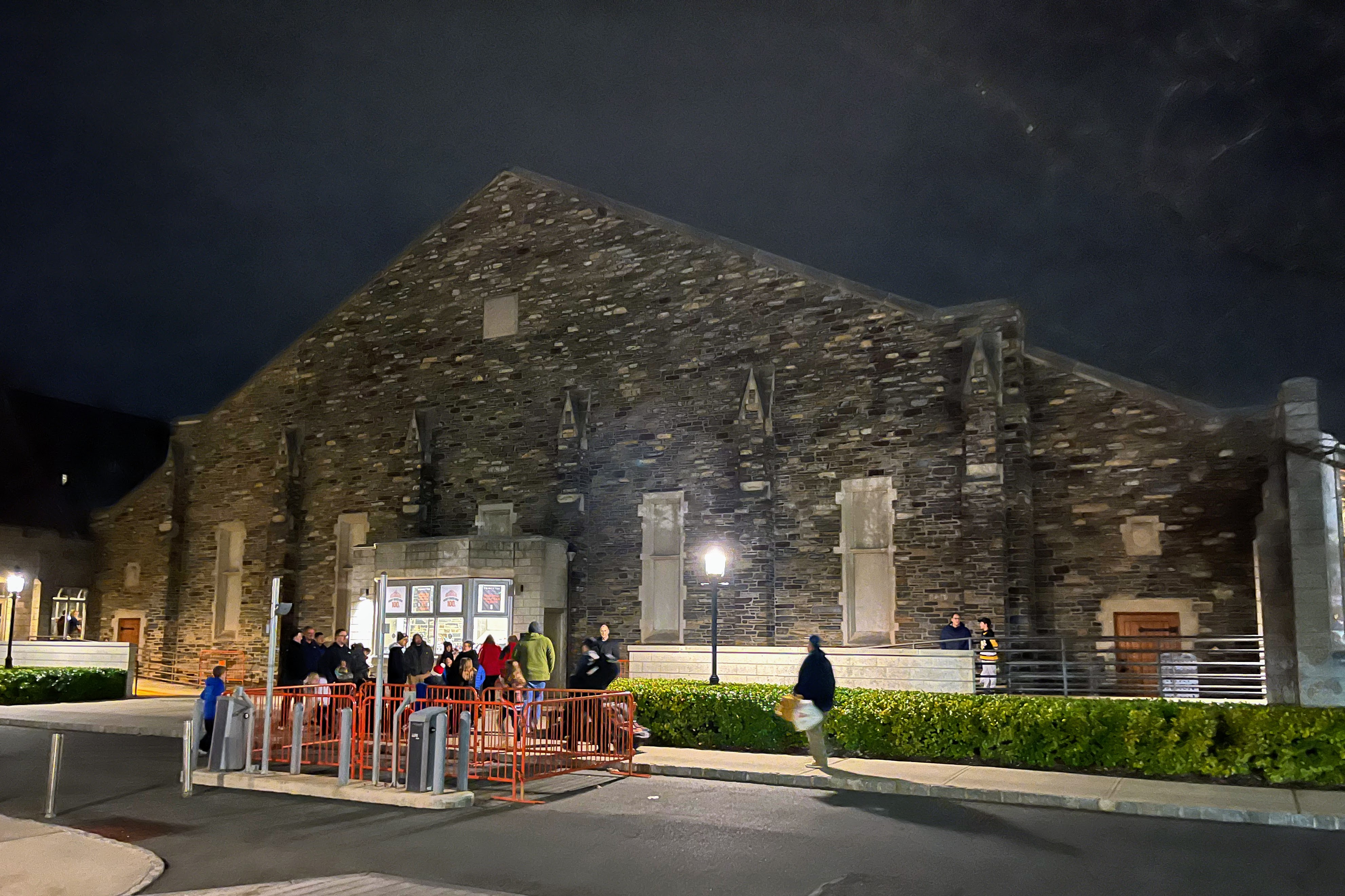
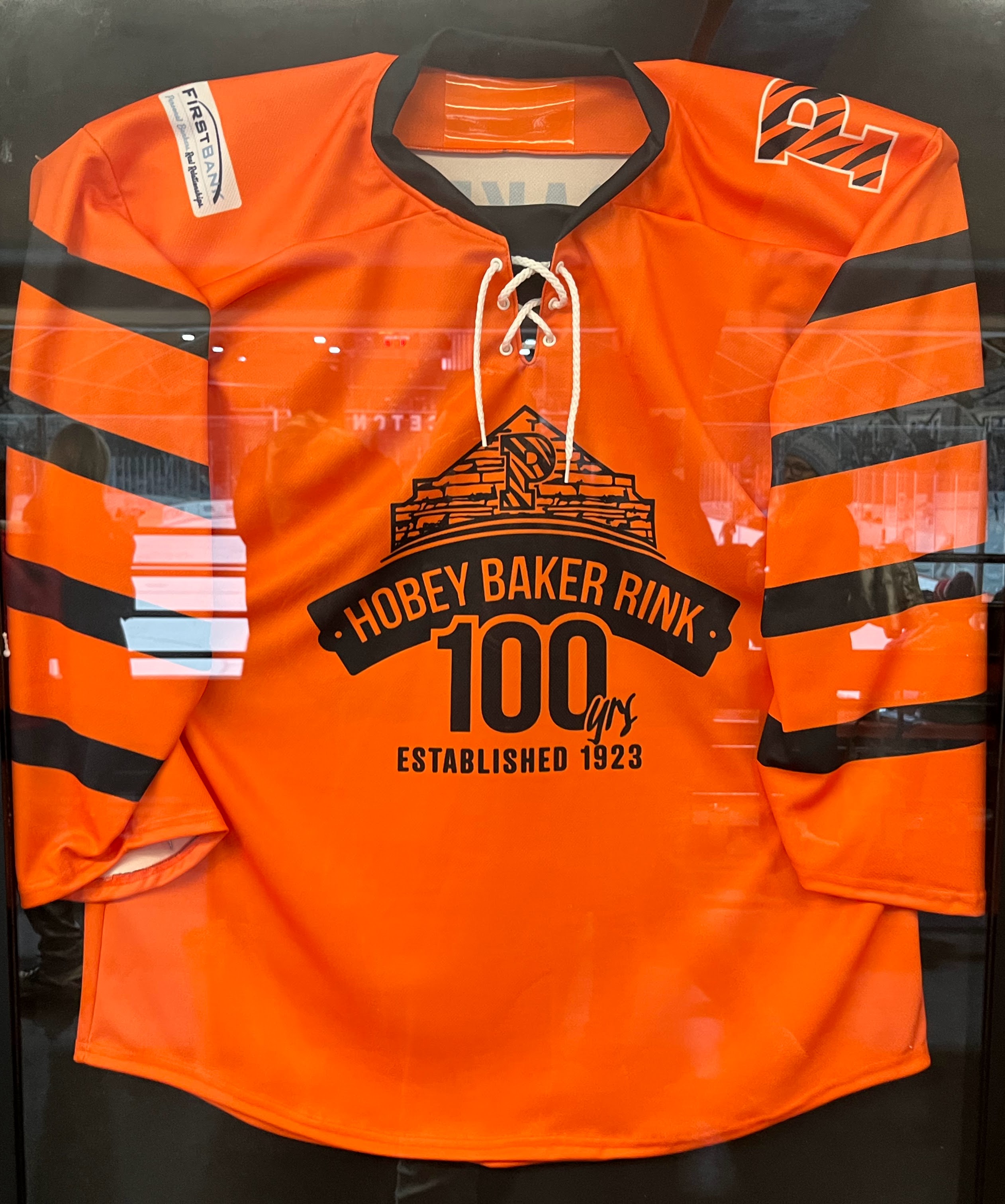
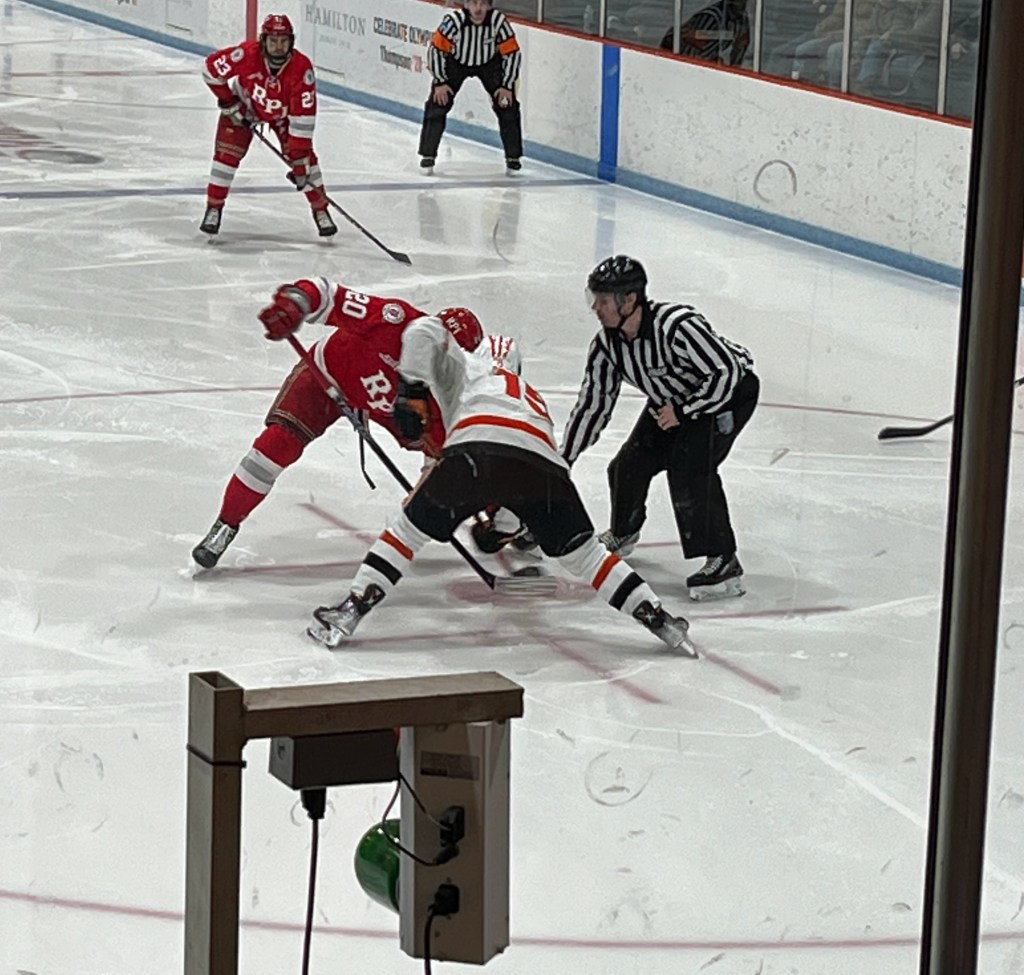
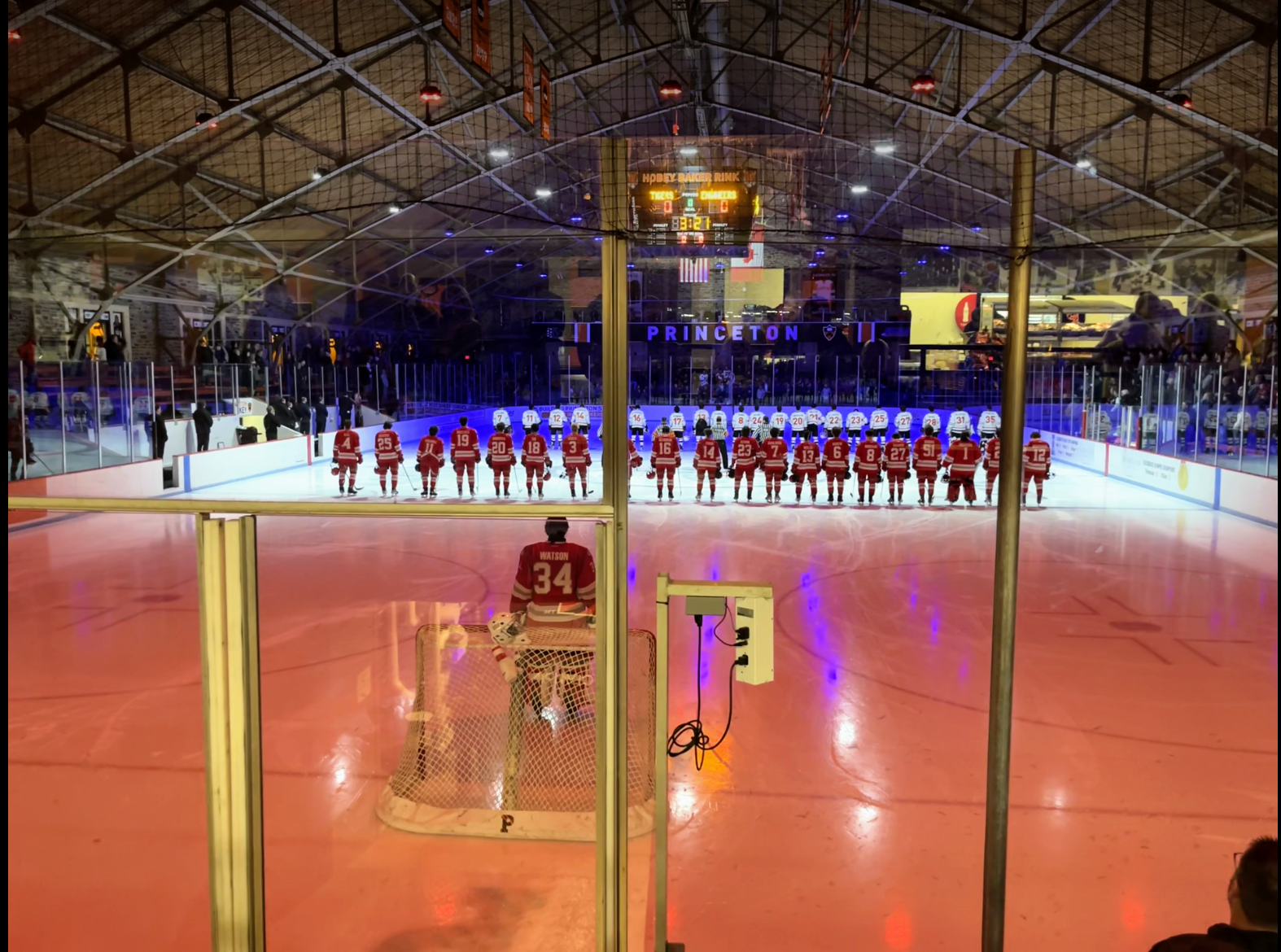
The first hockey game at Hobey Baker Memorial Rink, on the campus of Princeton University, took place on this day in 1923. Princeton beat St. Nick’s Hockey club in that game by a score of 3-2. St. Nick’s was the team Hobey Baker played for after he graduated from Princeton.
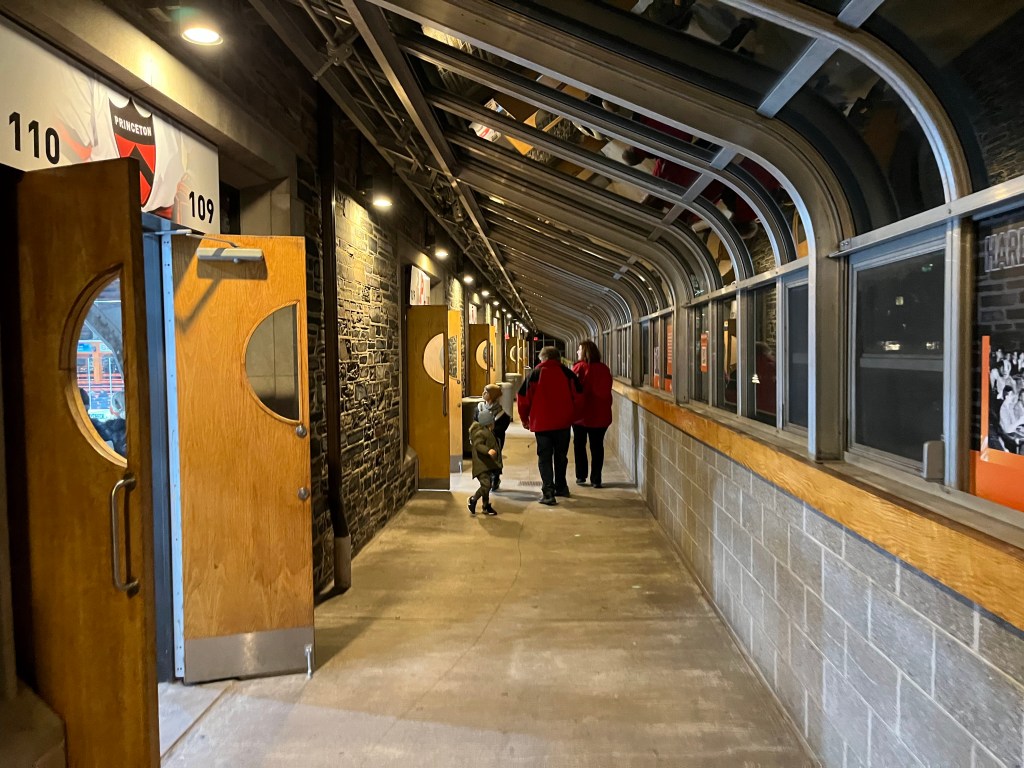
Baker Rink is the second oldest arena currently in use by an NCAA Division I hockey team. It has 2,092 seats and some space for standing room. Baker Rink was built after what today we would call a crowdfunding campaign. 1,537 individuals from 39 different colleges contributed. The arena underwent significant renovation in the 1980’s including new lighting, roof and gutters, additional locker rooms and rest rooms and additional spectator stands.
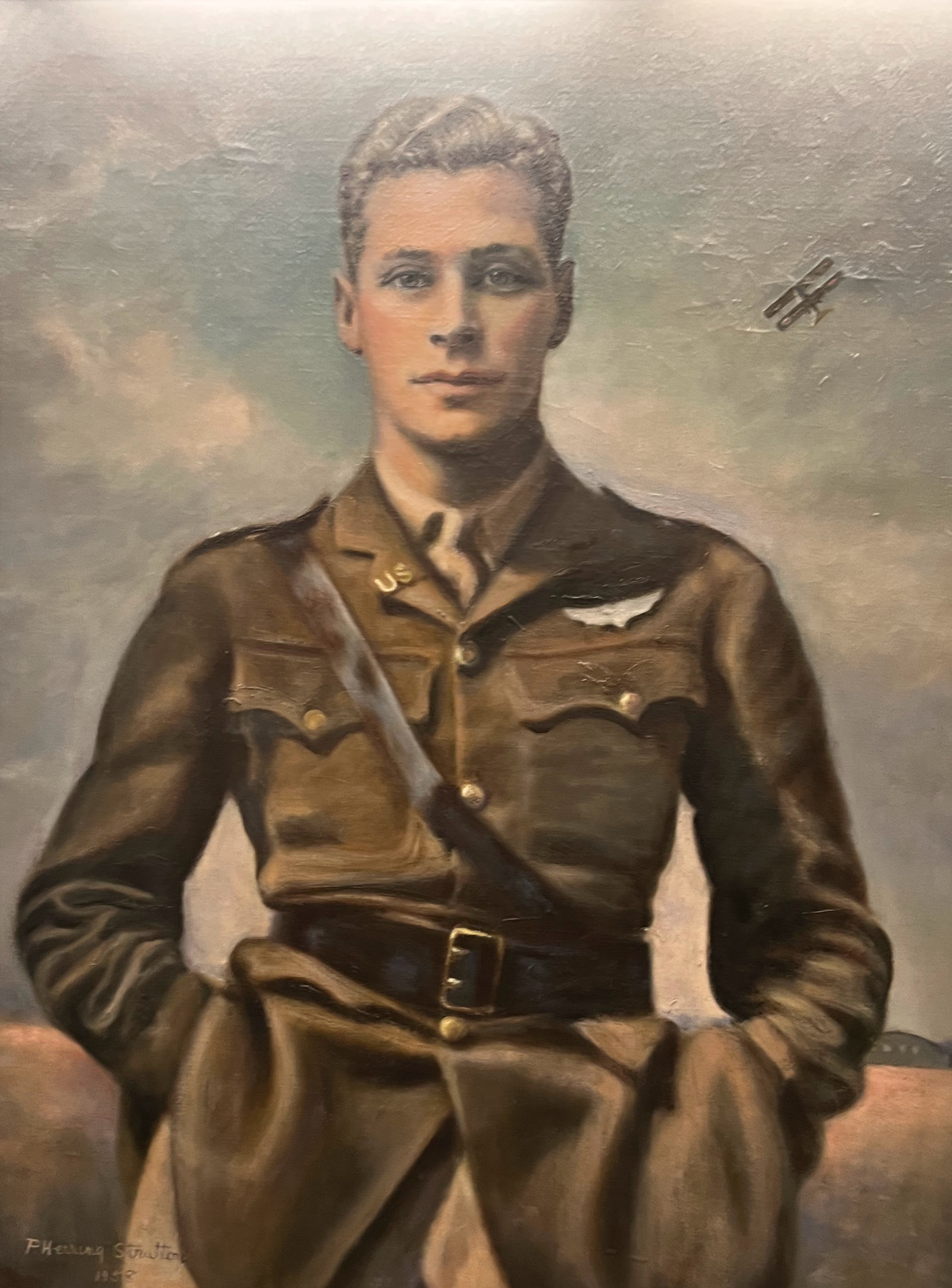
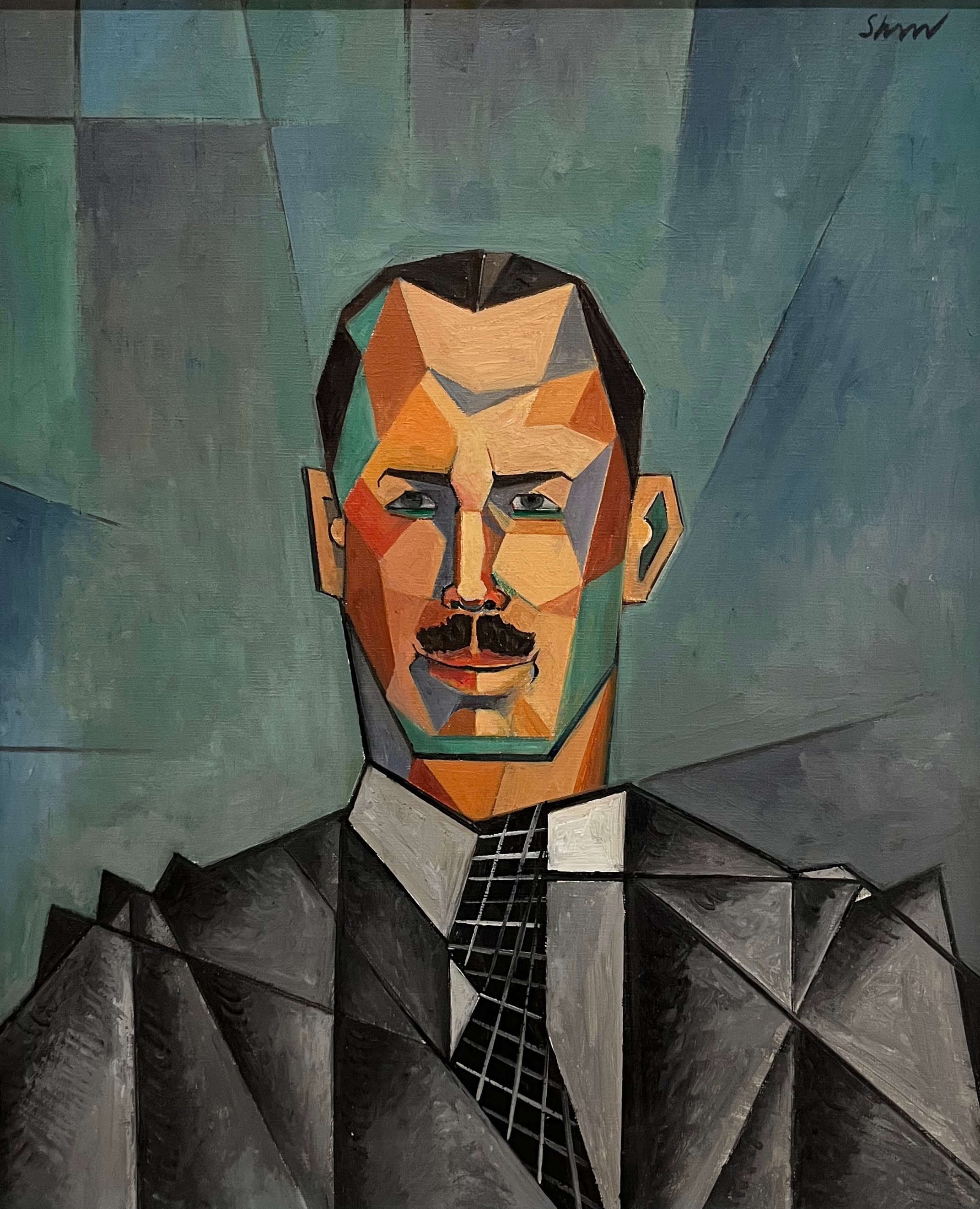
Hobart Amory Hare Baker, attended Princeton from 1910 to 1914. He graduated with a major in history, politics and economics.. Baker was considered the greatest amateur hockey player of his generation. He was also an all-American halfback on the football team. While at Princeton he won a national championship in football and two in hockey.
During World War I, Baker served as a fighter squadron commander in France. He died in December 1918 when a repaired plane he was testing crashed. He had orders to return home in his pocket when the accident happened.
In 1946 he was one of the first nine inductees into the Hockey Hall of Fame. He is the only person to be in both the hockey and college football halls of fame. The award given annually to the top college hockey player in the U.S. is named after him.
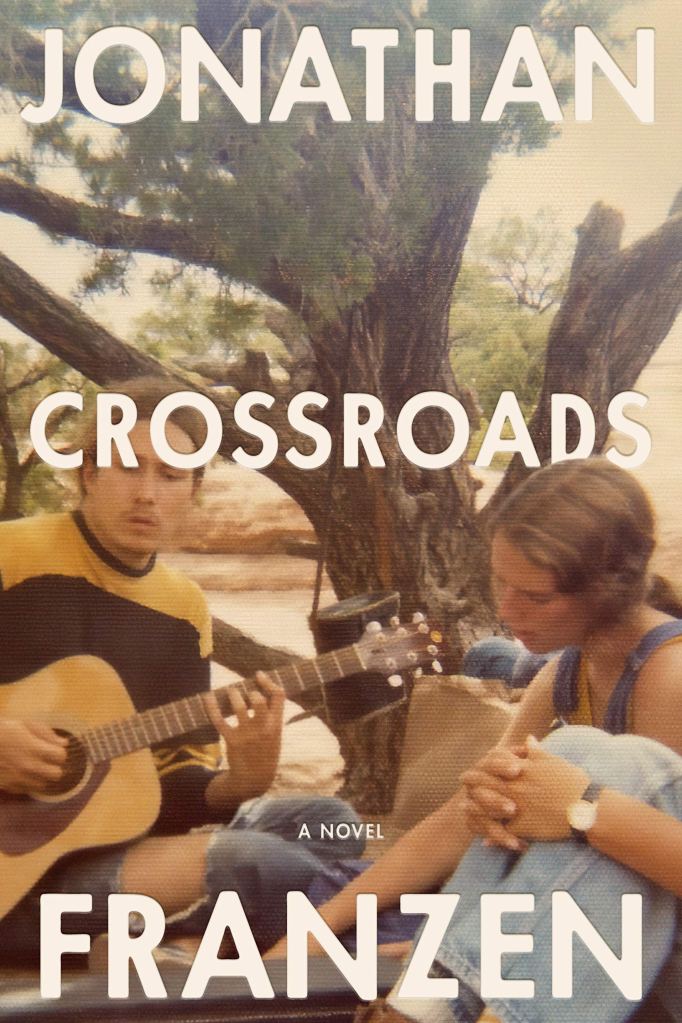
Usually when you pick up a long novel it takes two or three chapters, maybe 50 or 100 pages to get into it. With Franzen it takes about a page and a half. He writes of the ordinary life of ordinary people, but in his prose they are anything but.
Crossroads is about the Hildebrandt family. They live in a parsonage in suburban Illinois. Russ, the father, is an assistant minister. He lives with his wife and four children, one in college, two in high school and one younger. Russ and Marion do not have a happy marriage (but really who writes 500+ page novels about happy marriages). It’s 1971, so the oldest, Clem, is thinking about his student deferment and his draft status number. (At the time we were all subjected to a lottery drawing which determined what our chances were of ending up in Vietnam.)
Each member of this family is on the verge of making some bad choices, in some cases life-changing bad choices. And when they’re not contemplating these self-destructive moves they’re bemoaning the bad choices they’ve made in the past.
Crossroads is the name of a church sponsored youth social group where most of the consequential scenes in Franzen’s story take place. There’s not too much religion there but some drugs, some sex, and even a little rock and roll.
The strength of Franzen’s writing is not just the depth of his characters but his descriptive powers. Here’s one example. If you ever had this electronic NFL game as a child, you’ll enjoy this. “The sheet-metal playing field vibrated electrically, with a sound like a Norelco shaver’s, beneath two teams of tiny plastic gridders with oblongs of plastic turf glued to their feet, the quarterbacks eternally frozen in he-man forward-passing posture, the halfbacks carrying a ‘ball’ that was more like a pellet of pocket lint and frequently fumbling it, or becoming so disoriented in the buzzy scrum that they speeded toward their own end zone…”
You take a look at a Franzen book and it seems to promise a significant investment in time. It won’t be. Like the two previous Franzen novels I read, I ripped right through it. Not sure I could name a better contemporary novelist.
True: The Four Seasons of Jackie Robinson, Kostya Kennedy
One might think that everything that could possibly be said about arguably America’s most consequential athlete has already been said. If you read True, you’ll find that’s not the case.
Kostya Kennedy’s bio covers four ‘seasons’ in Jackie Robinson’s life. 1946 when he played his first year of professional baseball with the Montreal Royals, the Brooklyn Dodgers AAA farm team. 1949, his third year of major league baseball, a time when he shed the “turn the other cheek” Jackie and became the fiery competitor that he truly was. 1956, his final year of baseball, when, according to Kennedy “Robinson might, from his locker room stall reflect on civil rights, segregation, the implications of say, Brown vs. Board of Education. just as soon as he might remark on the Dodgers hotel accommodations in the South.” And 1972, the year he passed. The last chapter is really all about life after baseball when Robinson encountered personal tragedy and deteriorating health.
Kennedy does not dwell on the racist crap that Robinson had to put up with. But he does point out a few that were new to me. Like the ignorant comments of Ben Chapman, unsuccessful manager of the lowly Philadelphia Phillies, who suggested in 1947 that what Robinson was after was sex with his teammates wives. And there are the charming folks from Greenwich, Conn., who many years later sold their homes because Jackie and his wife Rachel moved into the neighborhood.
Not all is venom and vile however. There were the people of Montreal, baseball fans or not, who greeted the Robinsons with a smile on their faces. And Kennedy says of the Dodgers Brooklyn home “was there in 1949 another public accommodation in America so naturally desegregated as Ebbets Field?”
This is a really well written book. One of the things that Kennedy does so well is capture the feel of the time and place. So when Robinson in appearing in the 1949 all-star game, the author doesn’t just rattle off the stats from Robinson’s at bats, he takes us to the corner of E 95th Street and Church Avenue in East Flatbush where Dodger fans, likely not TV owners, are watching the game on a black and white screen in the window of a TV shop. Others are listening on big wooden console radios in their living rooms.
I think this book comes as close as you can come to feeling what it was like to be Jackie Robinson, especially in the latter part of the 1940’s when he was breaking through the color barrier. It is a little piece of American history as much as it is a biography of a sports hero.
The Premonition: A Pandemic Story, Michael Lewis
This is a story about health care heroes, and about the people, agencies and companies that blocked them from saving us from the pandemic.
One of those heroes is Joe DeRisi. He ran a lab at the University of California -San Francisco where he invented a tool that would identify previously unknown viruses. When the pandemic started, he set up a test facility that would provide quick turnaround on COVID test results for free. It was underutilized as hospitals and public health agencies were committed to the paid company labs like Quest despite their too slow to be useful processing.
Another of those heroes is Carter Mecher. A doctor at a VA hospital in Atlanta, Mecher would eventually write the first pandemic plan while working for the Bush administration. He used what Lewis calls ‘redneck epidemiology,’ an extensive study of the 1918 flu pandemic and a model created by a 15-year old girl for her science project. His Targeted Layered Containment plan involved telework, social distancing, banning large gatherings and closing schools. When the COVID outbreak started, neither Carter, his plan, nor anyone he worked with were in the conversation at the Trump White House where they were busy denying the existence of a pandemic.
Maybe the most interesting of Lewis’ health care heroes is Charity Dean. A young woman raised with no advantages, she got herself to college and then through medical school. Eschewing the big bucks of private practice she instead took up a county health officer position, partly because of her fascination with communicable disease. Fast forward a few years and she was the L6 in California. The concept of an L6 is based on the thought that in any organization there is someone who knows his or her stuff and knows what to do. But that person is never one of the heads of the organization. The L6 is that person and is likely six layers down the org chart.
After reading this I’m not sure I’ll ever think of the CDC the same way again. After one failed attempt to get their help Dean said, “I was mad they were such pansies. I was mad that the man behind the curtain ended up being so disappointing.”
Why were they not involved in working on Mecher’s plan? “They’d be constrained by their sense that they already knew everything worth knowing about disease control, and would be threatened by the possibility that in fact they did not.”
Lewis describes an incident shortly after the pandemic broke out in China. Fifty-seven persons traveling from Wuhan were quarantined for two weeks in Omaha. When the nearby Global Center for Health Security wanted to test them, CDC director Robert Redford refused permission claiming it would be ‘doing research on imprisoned persons.’ This despite the fact that the travelers wanted to be tested.
Ultimately what this book does is explain how it came to pass that more Americans died from COVID than any other group. Lewis writes this public health story in the same fast-paced play-by-play style that he used writing about football (The Blind Side). I know next to nothing about medical biology but everything here is clearly explained and presented. It makes for not just a very timely, but a very readable story.
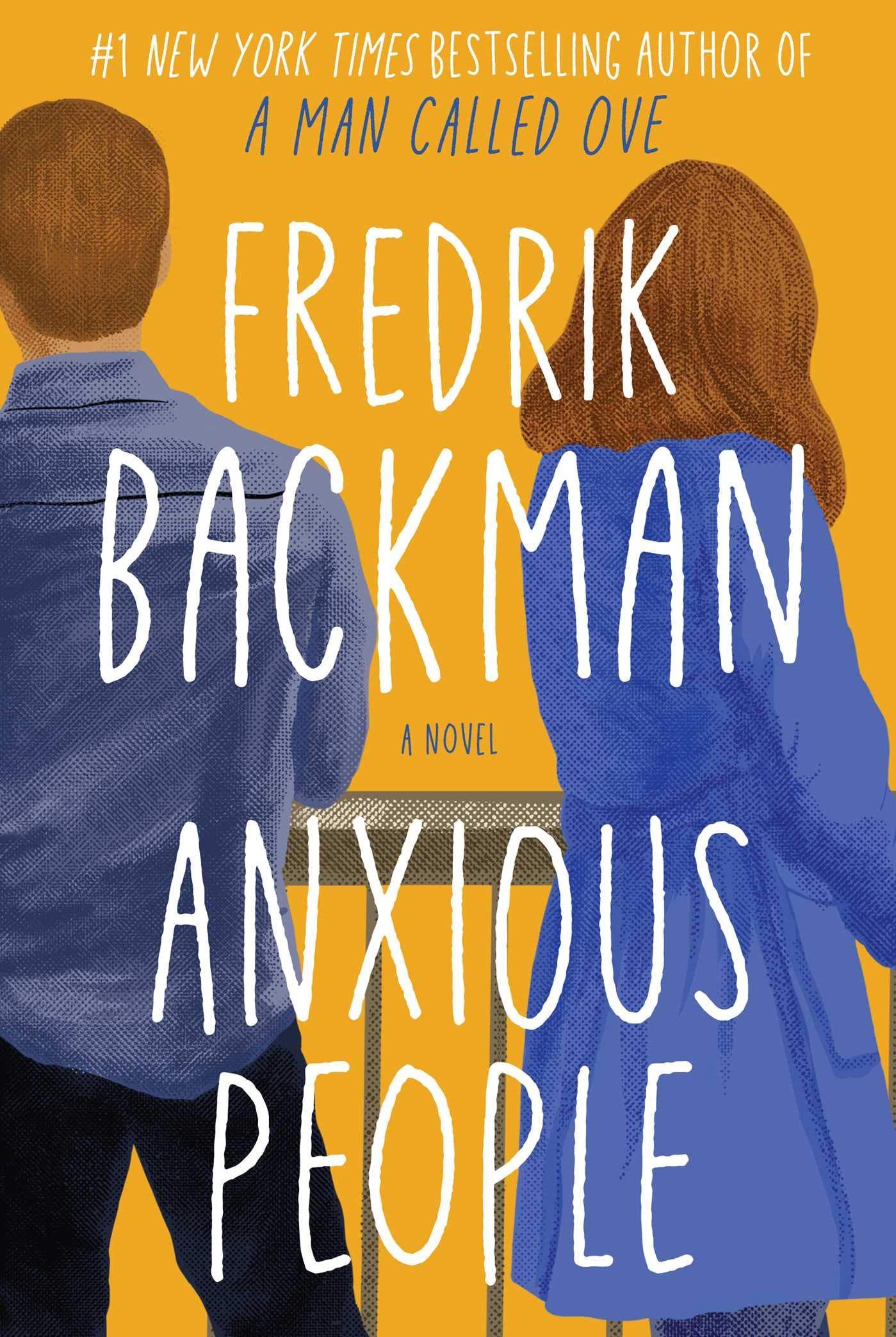
Anxious People, Fredrik Backman
The bank teller is anxious. The bank robber is anxious. The hostages are anxious. The police are anxious. Hence the title.
But this is not solely a tale of anxiety. The author tells us on page one “this is a story about a lot of things, but mostly about idiots.” Much of what follows corroborates that statement.
The basic plot involves an attempted bank robbery of a small-town institution in Sweden. It is a cashless bank. So the bank robber comes up empty handed, flees into a nearby apartment building and walks in on a viewing of a for-sale apartment. The viewers, as well as the realtor, become the hostages.
The story revolves around this odd collection of hostages, as well as a marginally functional father-son police team. There’s a bickering lesbian couple expecting a child. An older couple with a bruised ego husband. A bank exec who has made apartment viewing her hobby and a heavy drinking, reminiscing older woman. The author connects this disparate group of characters like a jigsaw puzzle, the connecting piece being a 10-year old suicide.
There is no violence and no one gets hurt. These hostages, as well as the perpetrator, need a battery of psychologists more than they need a law enforcement intervention. The story offers some suspense and some mystery. Buy mostly what it offers is humor, which occasionally hits a laugh out loud level. If there’s a moral it’s that there’s a little bit of wisdom in every idiot.
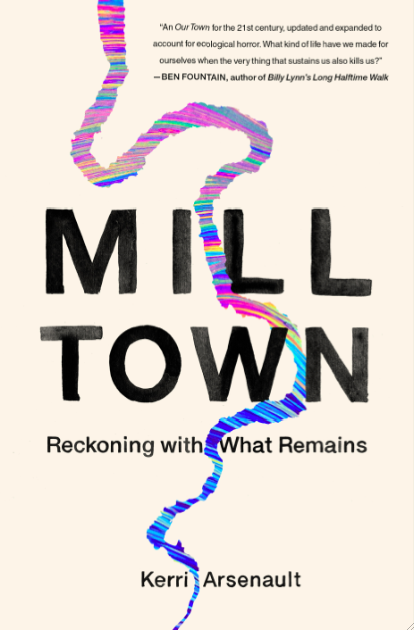
Mill Town: Reckoning with What Remains, Kerri Arsenault
It’s a story you’ve heard before. This one’s about Mexico, Maine, and it’s a paper mill. But it could be a Massachusetts town with a textile factory, a Pennsylvania town with a steel mill, or a New Jersey town with a chemical plant. A whole town is built around a manufacturing facility that provides good jobs and supports a middle-class lifestyle for a generation or two or three. Then somebody starts to figure out how to do the same thing cheaper. They figure out that they don’t need so many people and they decide they can’t afford to pay a living wage.
The younger generation begins to disappear. The movie theater closes, as does the other stores that are named after a local family, not a national chain. Homes lose their value and are abandoned or foreclosed. And to top it off, we begin to realize that the stench that hovers over the town, what they used to say was “the smell of money” instead seems to be the smell of cancer.
Kerri Arsenault’s story is, however, much more personal than that. She traces her Acadian ancestry back to the Canadian Maritime Provinces and even further back to France. She grew up in Mexico (Maine), goes back to visit her parents and old friends and remembers the sense of community nostalgically. She even connects with some community activists trying to stop neighboring Rumford from contracting with Nestle to tap into the town water supply. (If you read this book, you’ll never buy Poland Spring again.) She describes the environment in which she grew up: “We lived in a Shrinky Dink world where everything we needed was there, just smaller.” But she also realizes that she, her family, her neighbors didn’t realize that “all of what was before us was not as bright as what had passed.”
For all of the pride and backward-looking fondness Arsenault shows for the community she grew up in, she can’t look back without remembering her grandfather and father, both of whom spent most of their adult lives in that paper mill and both of whom died of cancer. “When my father retired from the mill after forty-three years, he received a toolbox (which he used), a Bulova watch (which he never wore) and asbestosis of the lungs.”
After being sold by its founder and town benefactor, the mill was sold several more times. Over the years it spewed out asbestos, mercury and dioxin. It’s toxic legacy is in the soil, in the water and in the air. One can make the case that America’s industrial polluters didn’t understand the consequences of what they were doing. But that rings hollow when you see the efforts made to not find or understand those consequences. And that’s not just from the mill owners but from the local, state and national agencies that are supposed to be looking after such things. Arsenault talks to everyone who’ll talk to her, plows through every document she can find. She can identify the poisons, she can identify the diseases, but a clear, irrefutable line between the two remains evasive, in spite of what common sense tells you.
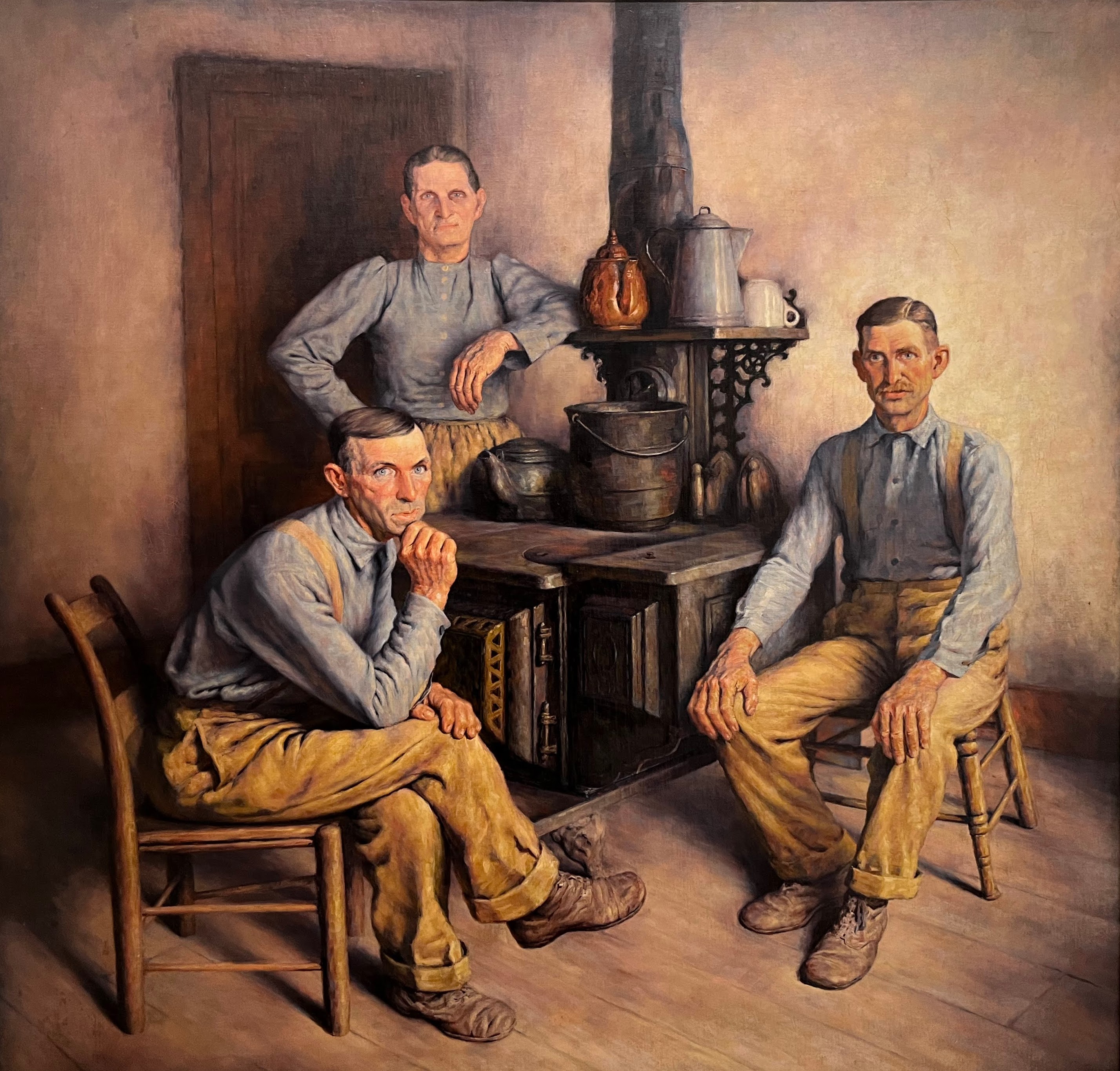
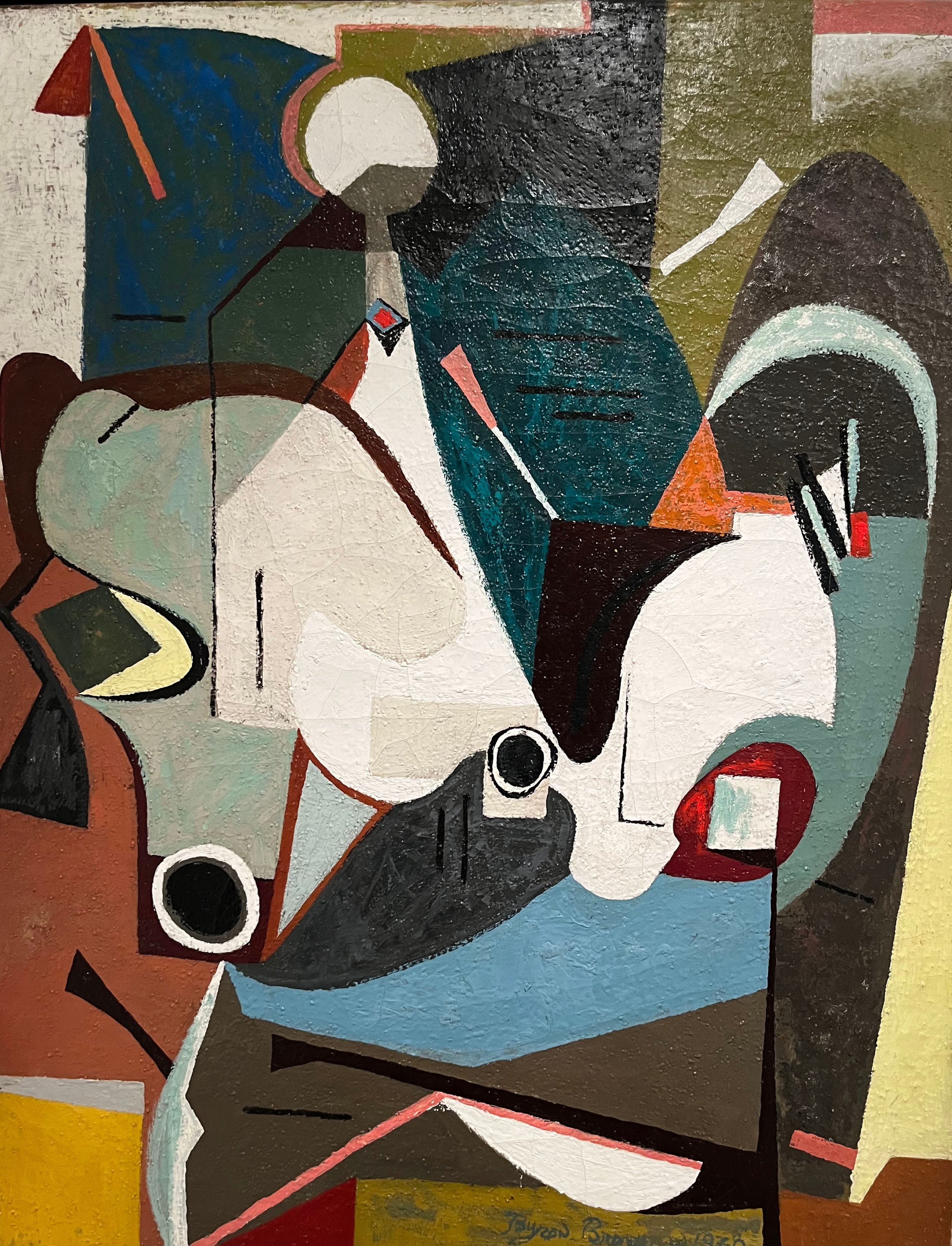
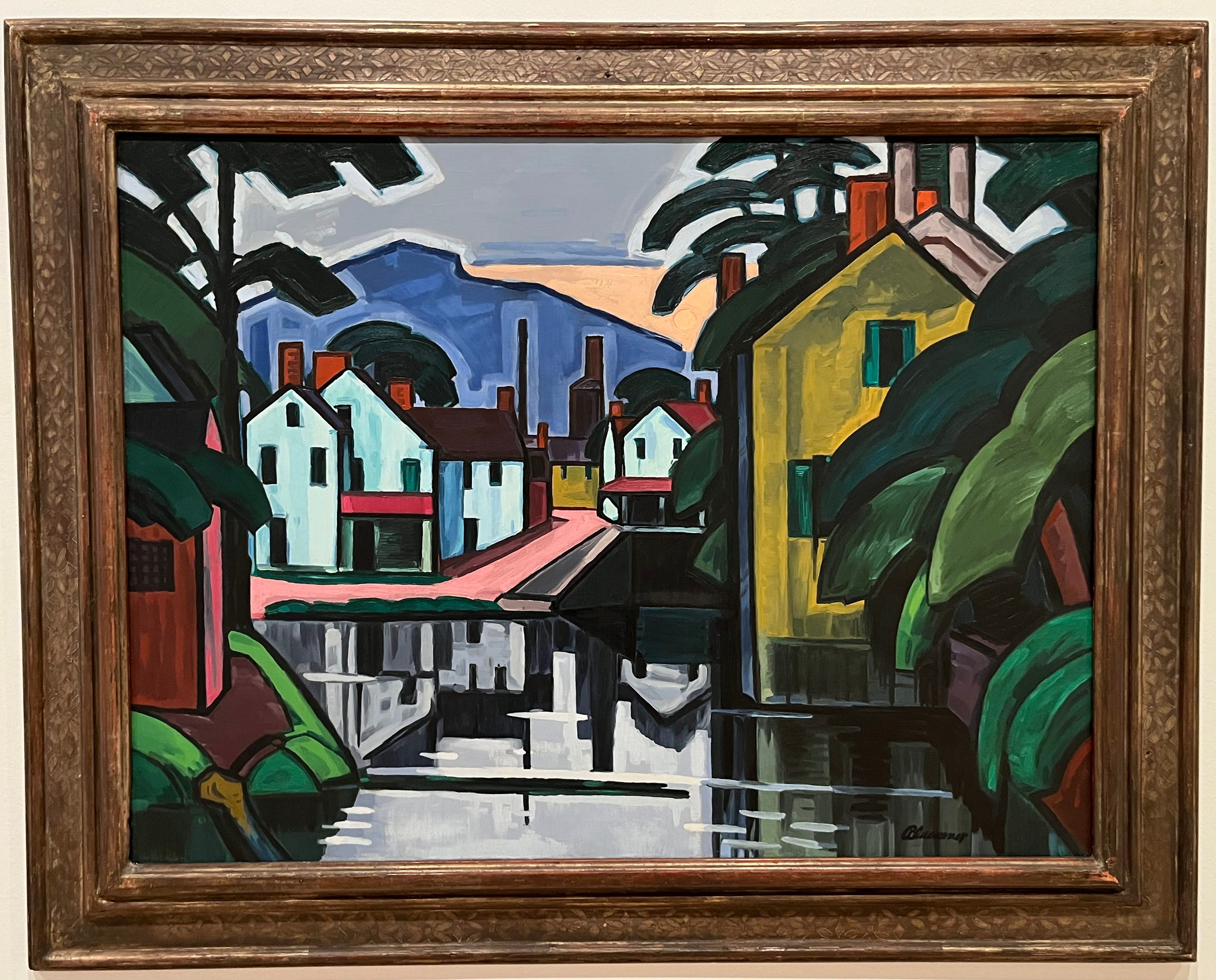
The New Jersey State Museum was founded by an act of the state legislature in 1895. Initially it was a natural history museum. It later added archaeology, ethnography, cultural history and fine arts to its collections. It moved into its current facility as part of the state’s cultural complex in 1965 and it became a division of the N.J. Department of State in 1983. It has a surprisingly diverse and interesting collection of works by 20th century American artists. Here are some samples.
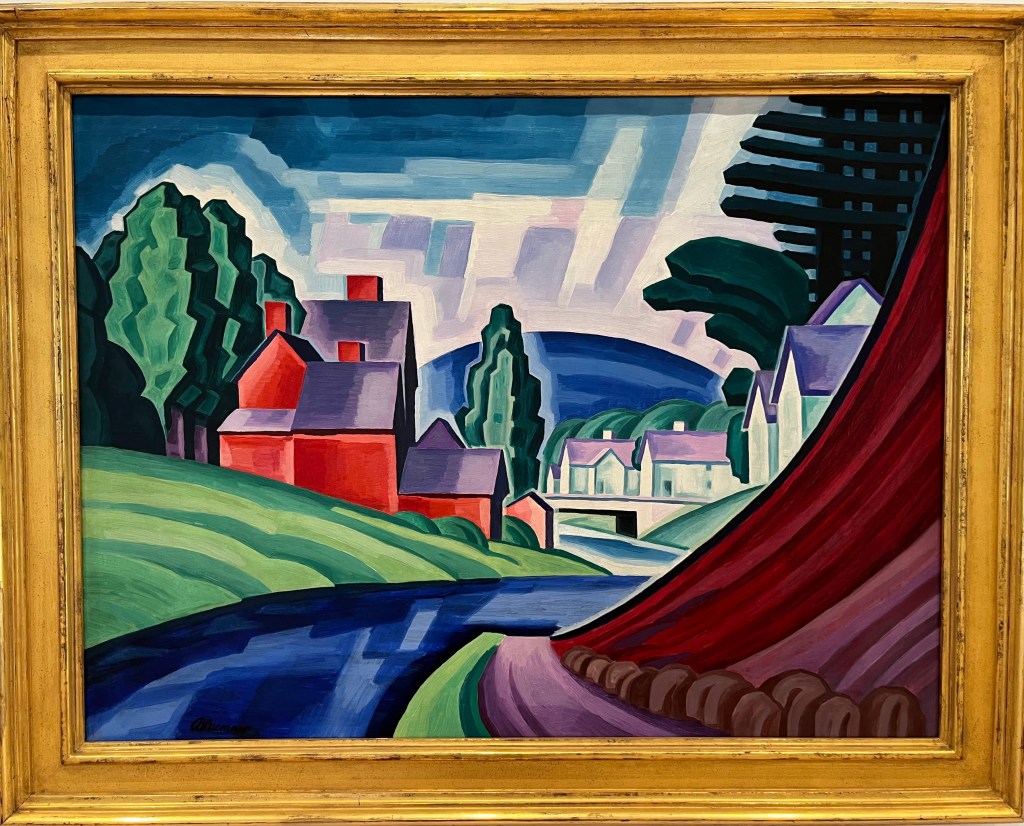
Emmet, George and Ella Marvin (The Marvin Family), James Chapin, 1934An Expression of a Silk Town in New Jersey, Oscar Bluemner, 1914-1915Whitewashed Barn, Ralston Crawford, 1937Black Division, Alice Trumbull Mason, 1944
Arrangement, Byron Browne, 1938
Ritual, Norman Wilfred Lewis, 1950
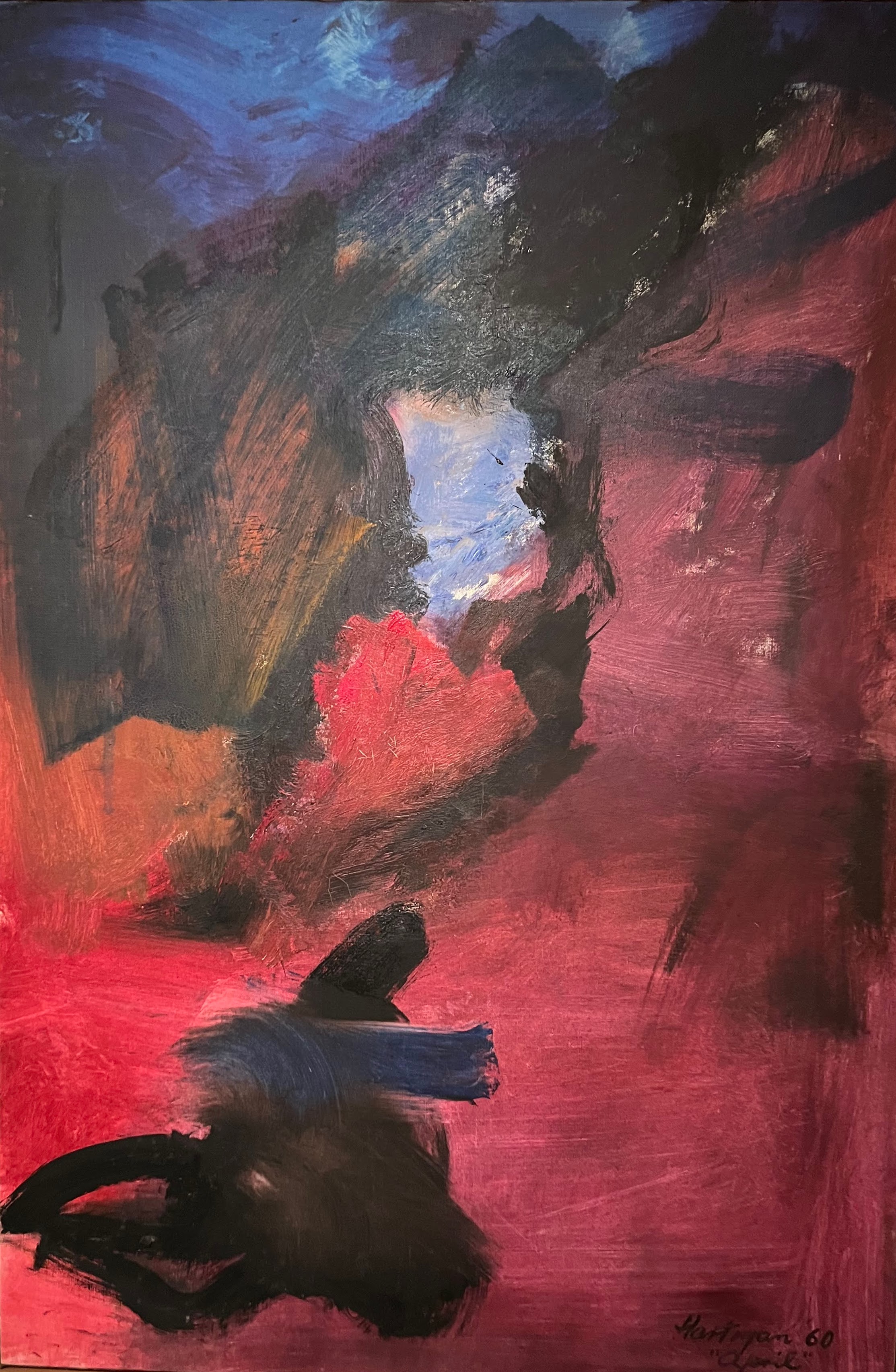
April, Grace Hartigan, 1960
Abstraction, Alfred Leslie, 1954-55
Untitled, Ben Wilson, late 1960’s, early 1970’s
Dream House Wall, Louise Nevelson
Parts of the Face, Larry Rivers, 1962
Female Model in Hammock, Arms Over Head, Philip Pearlstein, 1976
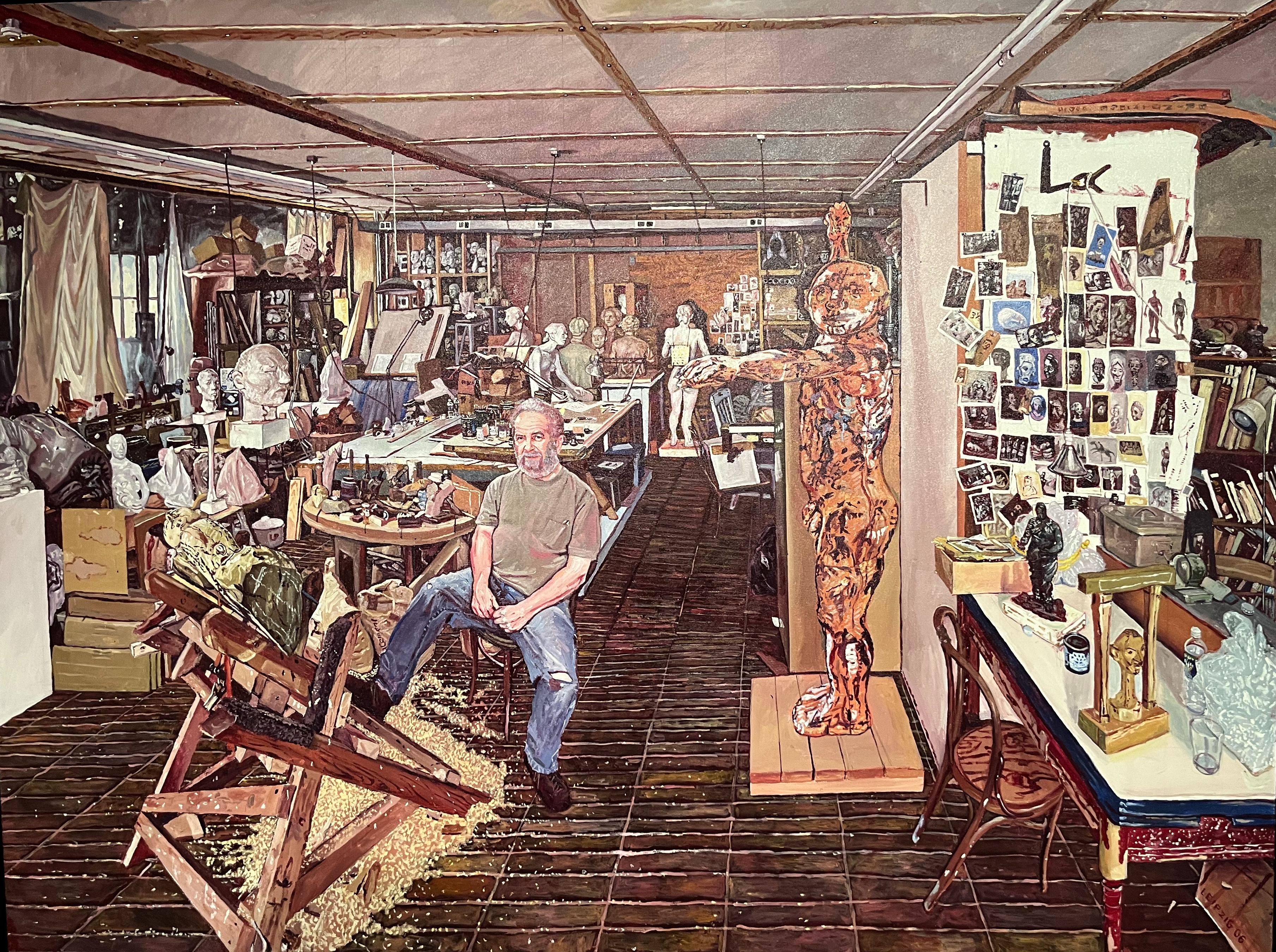
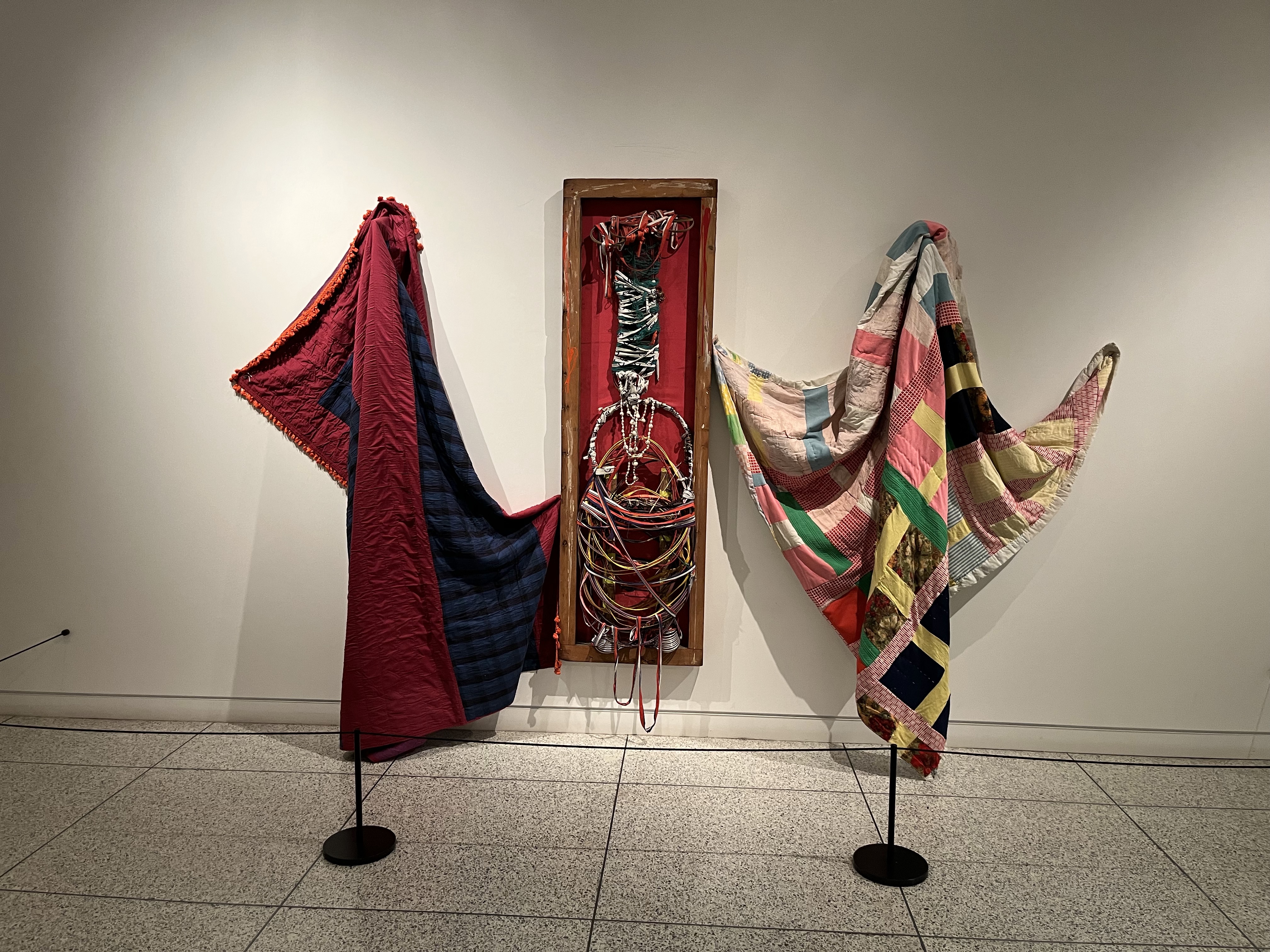
Mel Leipzig, Jonathan Shahn, 2006In the Spirit of West Senegalese Dance with Mary Alice Pace, Lorenzo Pace, 1987-97
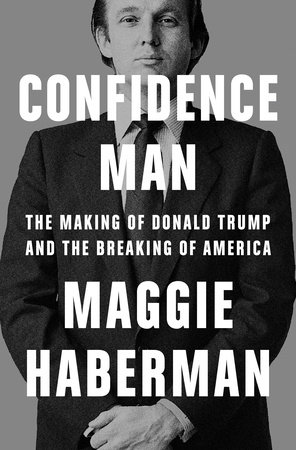
Confidence Man: The Making of Donald Trump and the Breaking of America, Maggie Haberman
To be honest, I didn’t open this book with an open mind. As far as I’m concerned, Trump is a lying scoundrel suffocating in his own narcissism. Nothing in the book suggests otherwise.
Confidence Man is not a biography. It’s a detailed chronicle of Trump’s professional life, starting with some real estate deals he did with his father, going through his emergence as a widely-known public figure in New York, something between a superstar builder and a con artist, and ending with the conclusion of his single term presidency. Taken as a whole there is little in the way of consistent ideology or commitment to any particular issues (unless it personally affects him). But there is a consistency throughout his career of personality and behavioral traits. Here’s a few examples:
– He doesn’t pay his bills.
“Trump left only scattered impressions on classmates (during his time at Fordham University). One recalled Trump somehow managing to avoid paying the Triborough Bridge twenty-five-cent toll and leaving it to a friend with considerably less economic means to pay each time.”
– He’s a serial attention hound
“When the director Chris Columbus was filming a sequel to Home Alone and went to the Plaza’s lobby, Trump forced his way into the film. ‘The only way you can use the Plaza is if I’m in the movie.’”
– He’s self-absorbed
Shortly after 9/11 and the attacks on the World Trade Center, he was interviewed on a local TV station. Was he thinking about those who were killed? Their families? First responders? Nope. He said, “Forty Wall Street (which he owned) was the second tallest building in downtown Manhattan and it was before the World Trade Center was the tallest, and then when they built the World Trade Center it became known as the second tallest, and now it’s the tallest.” (That, of course, wasn’t true.)
– He’s crude
While discussing the issue of transgender bathroom use during a practice session for upcoming debates during his initial presidential campaign, he commented, “‘well I think it matters a lot.’ What if a girl was in the bathroom and someone came in, lifted up her skirt, and ‘a schlong’ was hanging out.”
– He’s a sore loser
After losing the Iowa caucuses at the start of the 2015 primary season: “‘It was stolen from me,’ he told his advisors. For days thereafter, he called Iowa’s Republican chairman daily with an order to redo the vote, threatening to sue over what he called ‘fraud.’’
– He’s a bully
While describing a meeting with military leaders and cabinet members, Haberman observed: “Those who did not know Trump well and who sat through that meeting in the Tank with him failed to consider something that people who have dealt with him over years had experienced: Trump knew that he was being told something he did not fully comprehend, and instead of acknowledging that, he shouted down the teachers.”
– He’s irrational
After news reports about how Trump hid in an underground White House bunker during the Black Lives Matter demonstrations, “Trump felt humiliated by a disclosure that he thought made him appear incapacitated by street protests. In another meeting with aides Trump demanded to know ‘Who leaked that story?’ He proposed that the person responsible be ‘executed.’
– He’s a liar
Okay, there’s an example of that on virtually ever one of the 500+ pages.
And speaking of consistent bad behavior there’s this gem about Rudy Giuliani:
In 1992 after Giuliani lost the mayoral election to David Dinkins, he declared “They stole that election from me. They stole votes in the Black parts of Brooklyn and in Washington Heights.” City investigators found nothing to substantiate claims of fraud.
Haberman is a veteran journalist who has won a Pulitzer. Having worked for the New York Post and New York Daily News before her current position at the New York Times, she’s probably spent more time around Trump than most of his wives. Her writing reflects her professionalism. This is a book full of factual information with all sources clearly identified. The title and subtitle pretty much tells you the conclusion that it leads to, but Haberman doesn’t beat you over the head with it and lets the reader come to the obvious conclusion on his or her own.
I acquired this book when Haberman made an appearance at the Montclair Public Library. During the Q&A that followed the interview, someone asked, “Is Trump evil?” She refrained from answering.
Five hundred pages is a lot of Trump. Perhaps too much. As I mentioned in the beginning, it didn’t change my perception of the man, but even I was surprised at how grossly unfit for office he was (and is).
I couldn’t help musing about how this is a guy who doesn’t read, but who desperately needs to know what people say and think of him. So what does he do? I imagined this scenario. He commissions an aide at Mar-a-Lago to read the book and tell him what it says. The aid reads the book then comes in walking on eggshells knowing the boss’ famous temper. Maybe he starts by discrediting Haberman but eventually gets around to noting “Mr. President, she seems to think you’re a little dishonest and maybe a bit unethical.” Trump then goes off, fires the guy and refuses to pay him.
(Images used here were downloaded from Unsplash and Pixabay and are not from the book.)
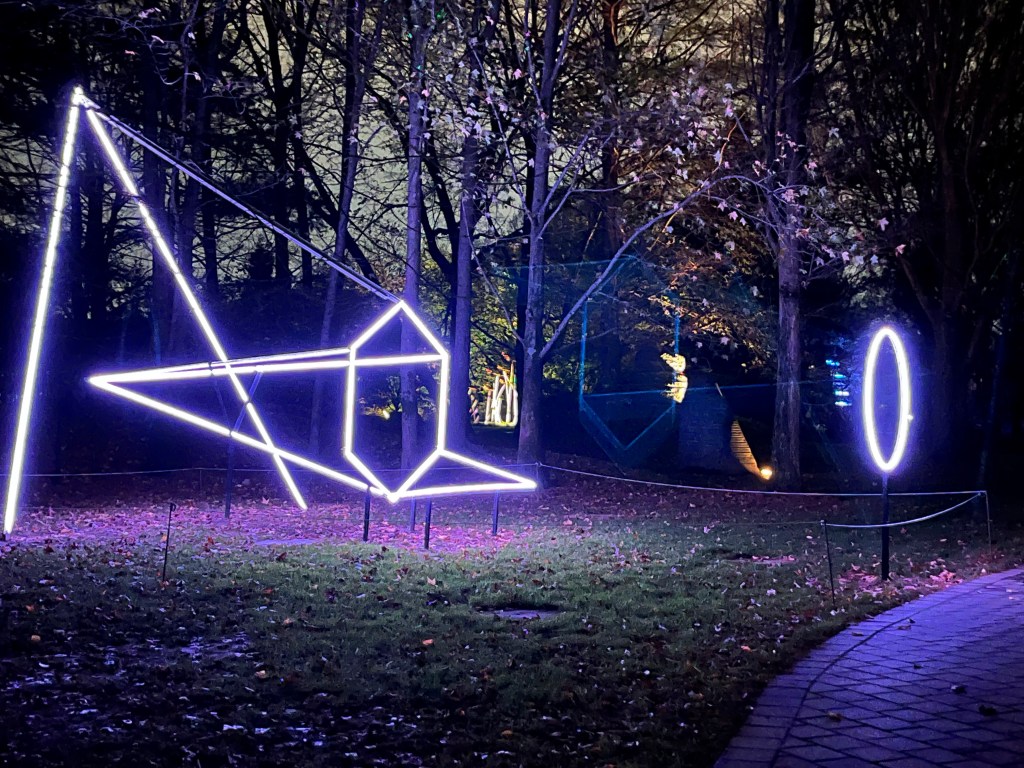
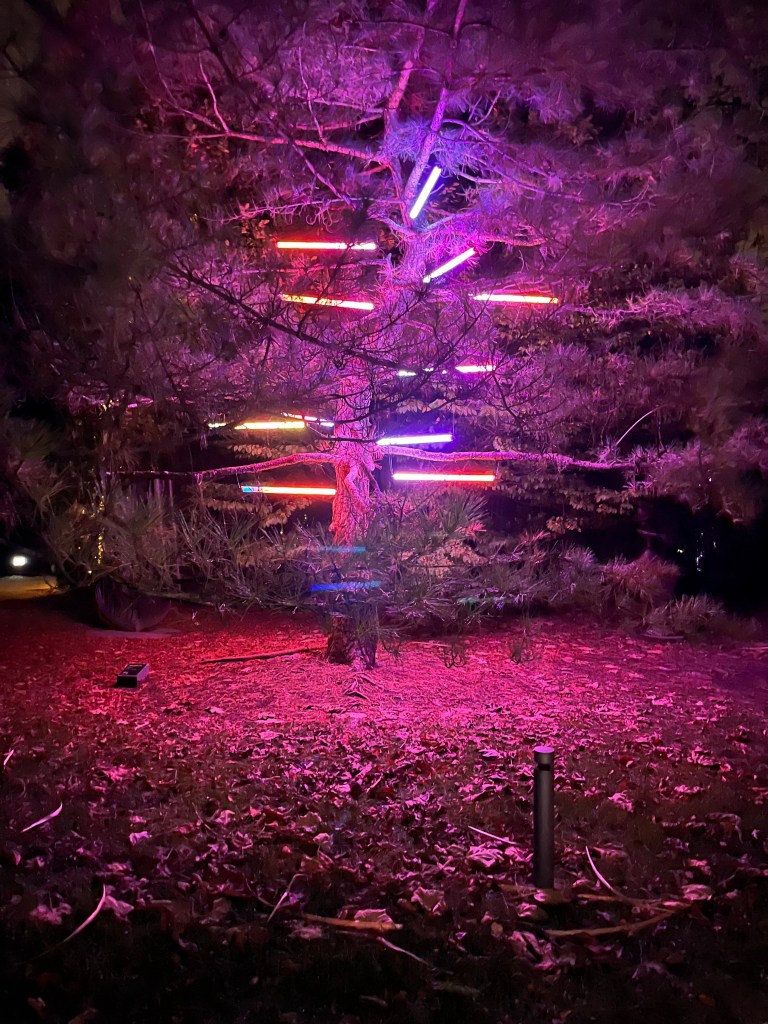
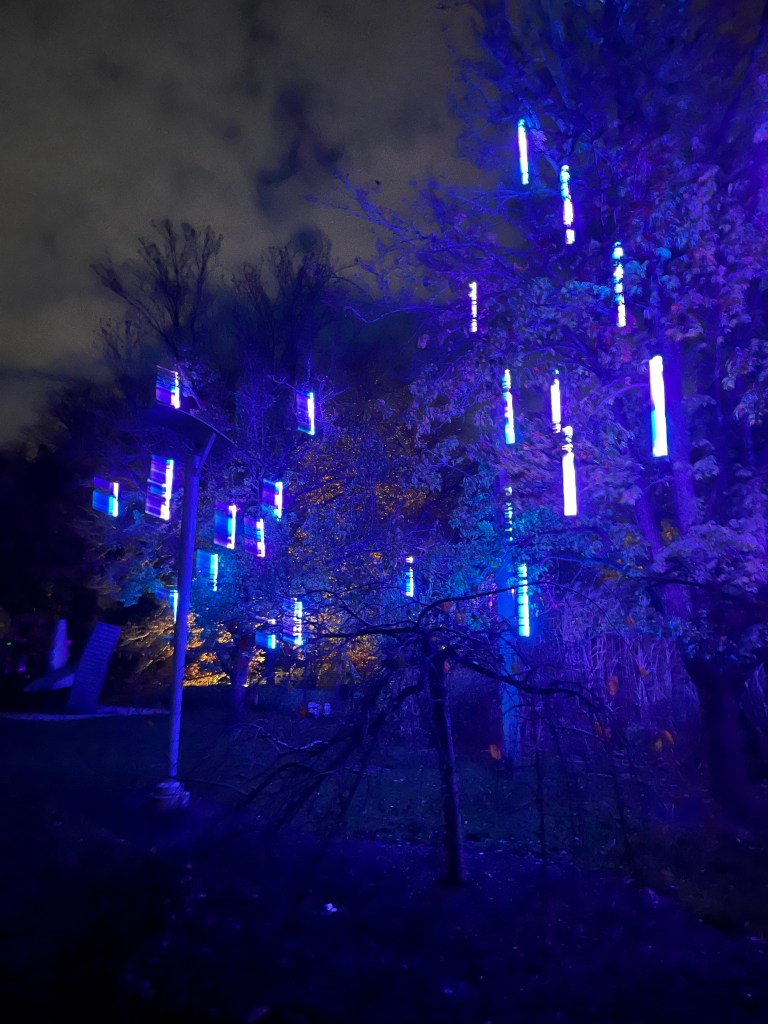
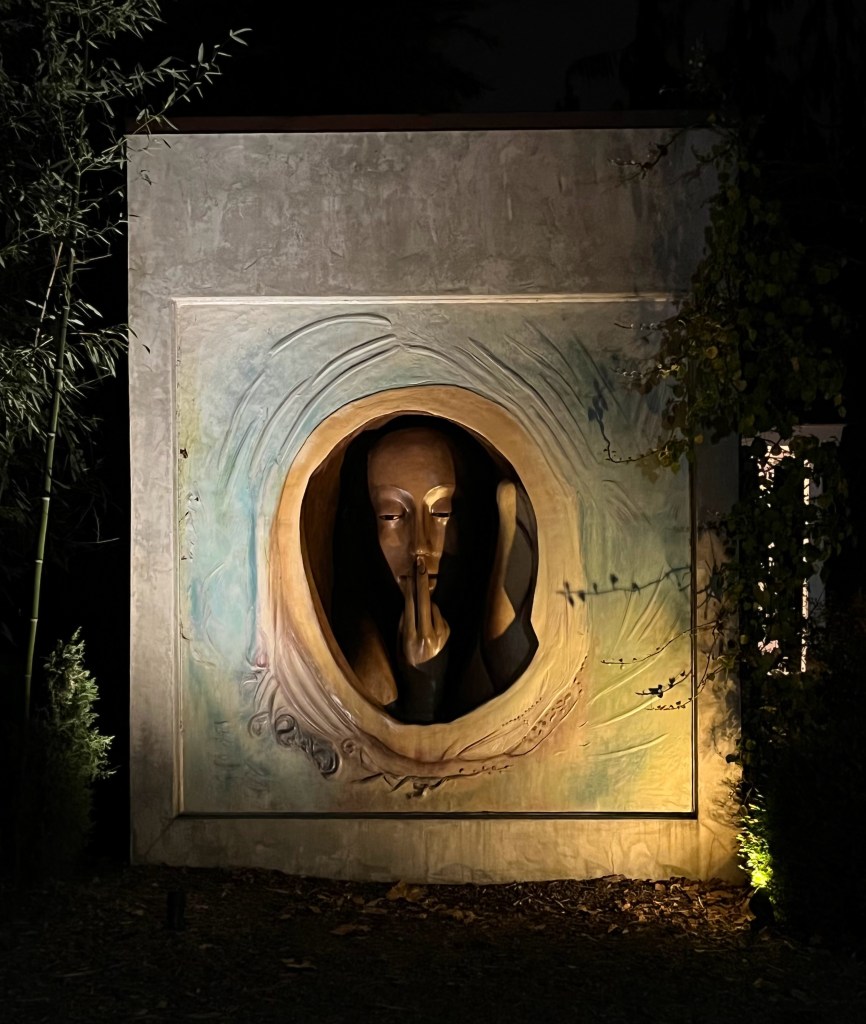
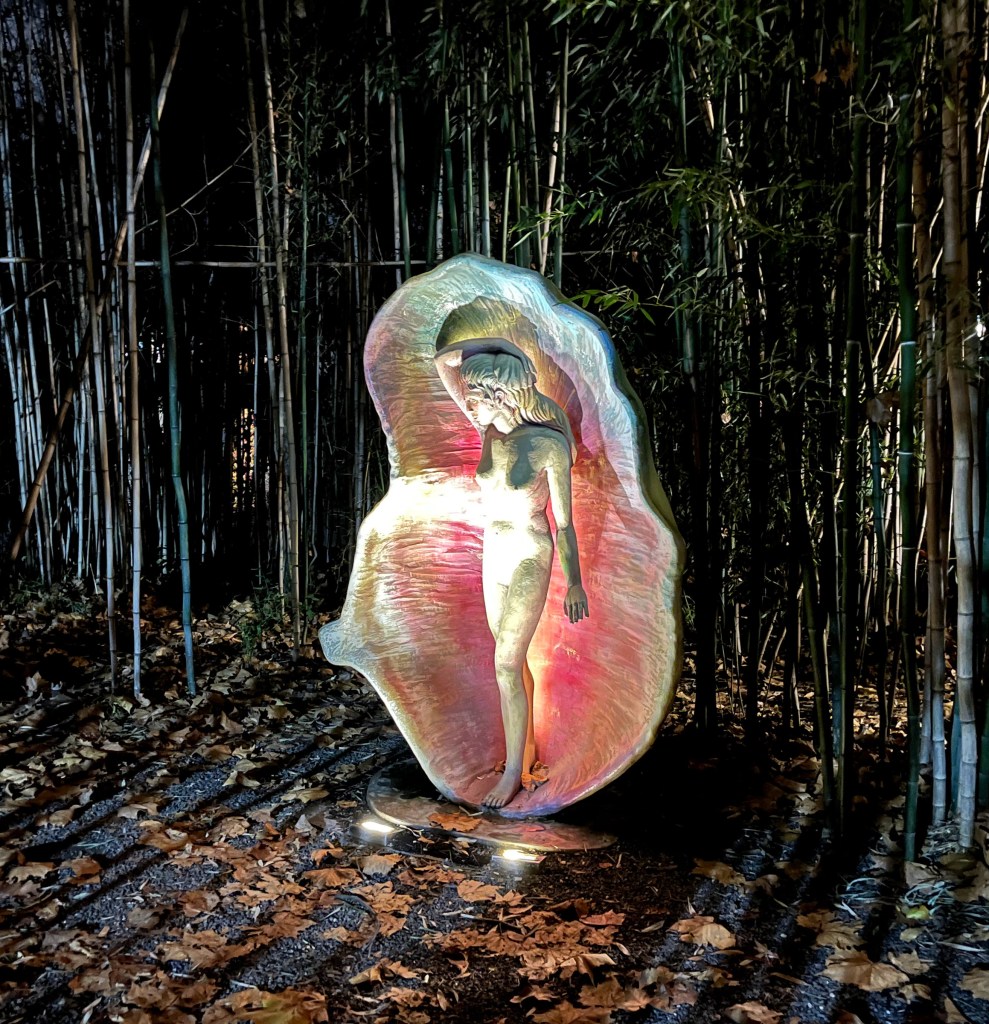
Night Forms, Infinite Wave, is a collaboration of the Grounds for Sculpture and Klip Collective, a Philadelphia-based art shop that produces video projection experiences. This is the second year that GFS has presented this after-hours light and sound exhibit. It is designed to fit with the sculptures and horticulture of the park. Night Forms will be at Grounds for Sculpture through April. Having seen a number of light shows at various gardens over the years, this one is the best I’ve ever seen.
Dorion
Eolith
Memory
Froghead Rainbow
Seward Johnson
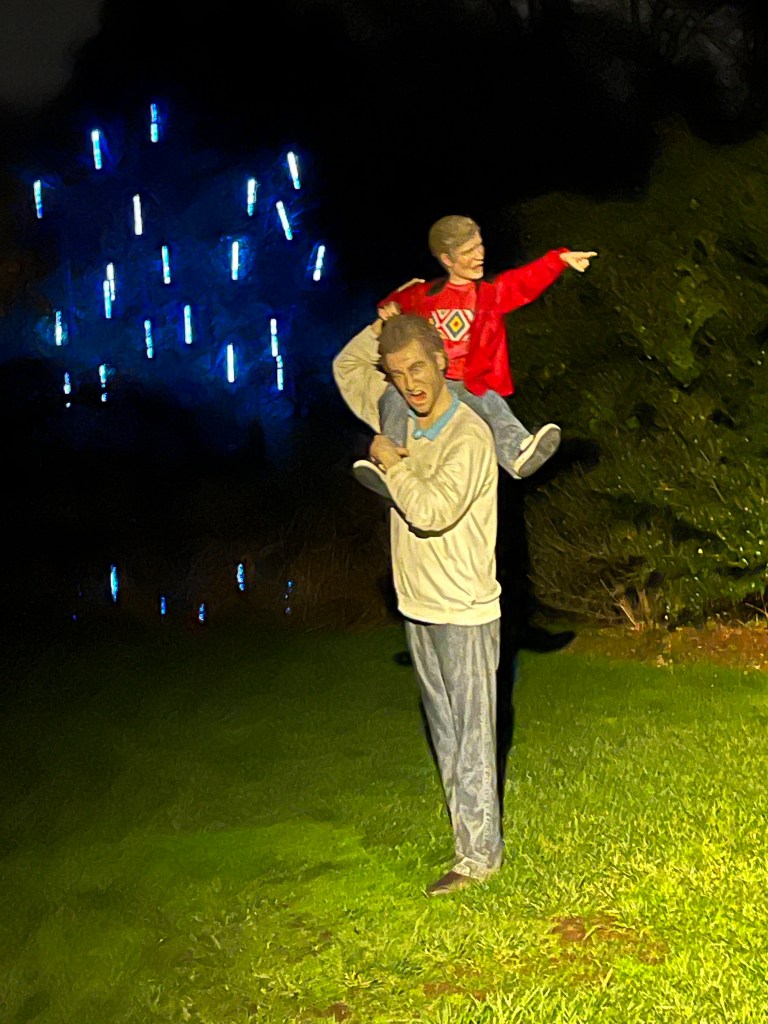
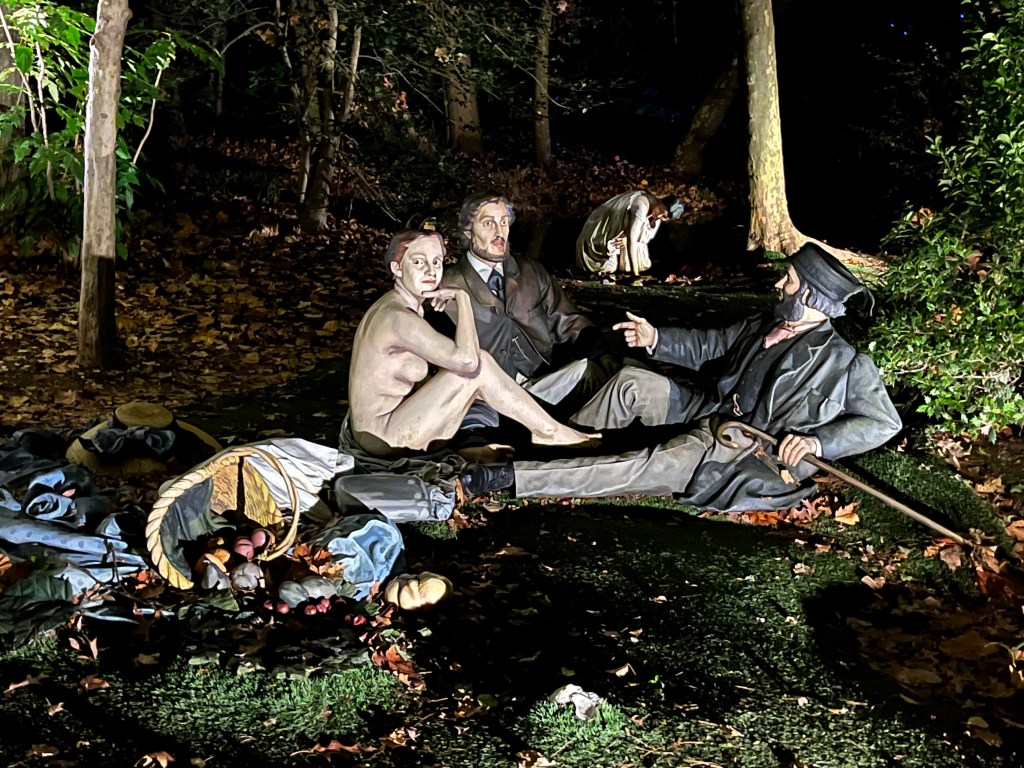
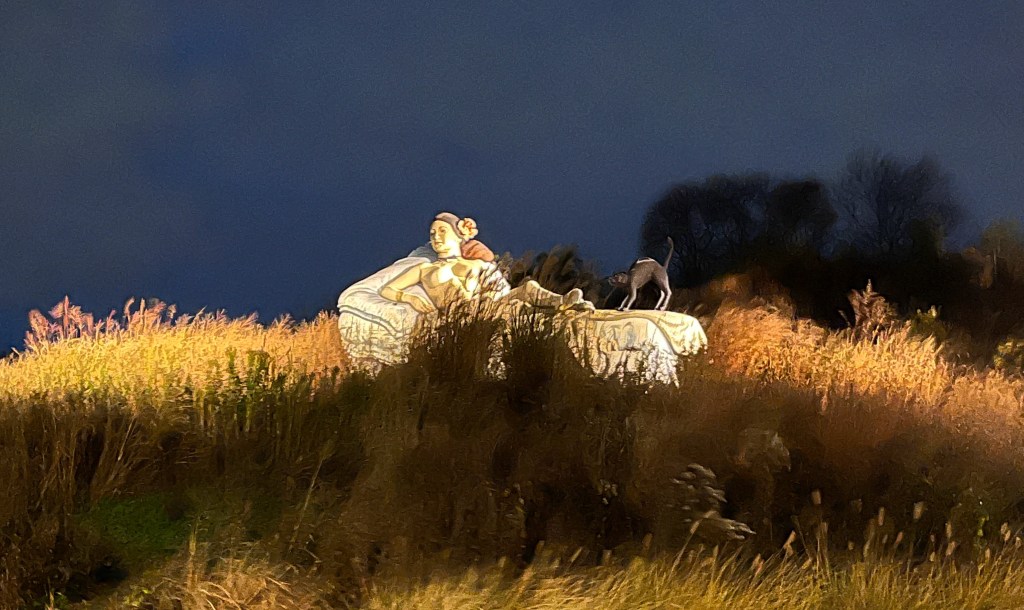
Seward Johnson was the founder of the Grounds for Sculpture and he was a fixture in the park until his death in March of 2020 at the age of 89. He used to lead sing-a-longs with park guests. His painted life-like sculptures are prominently displayed throughout the park. You can see more of his work here and here. Below are a few Seward Johnson sculptures lit up for Night Forms.
Chamber of Internal DialogueRedon’s Fantasy of VenusDejeuner Deja VuConfrontational Vulnerability
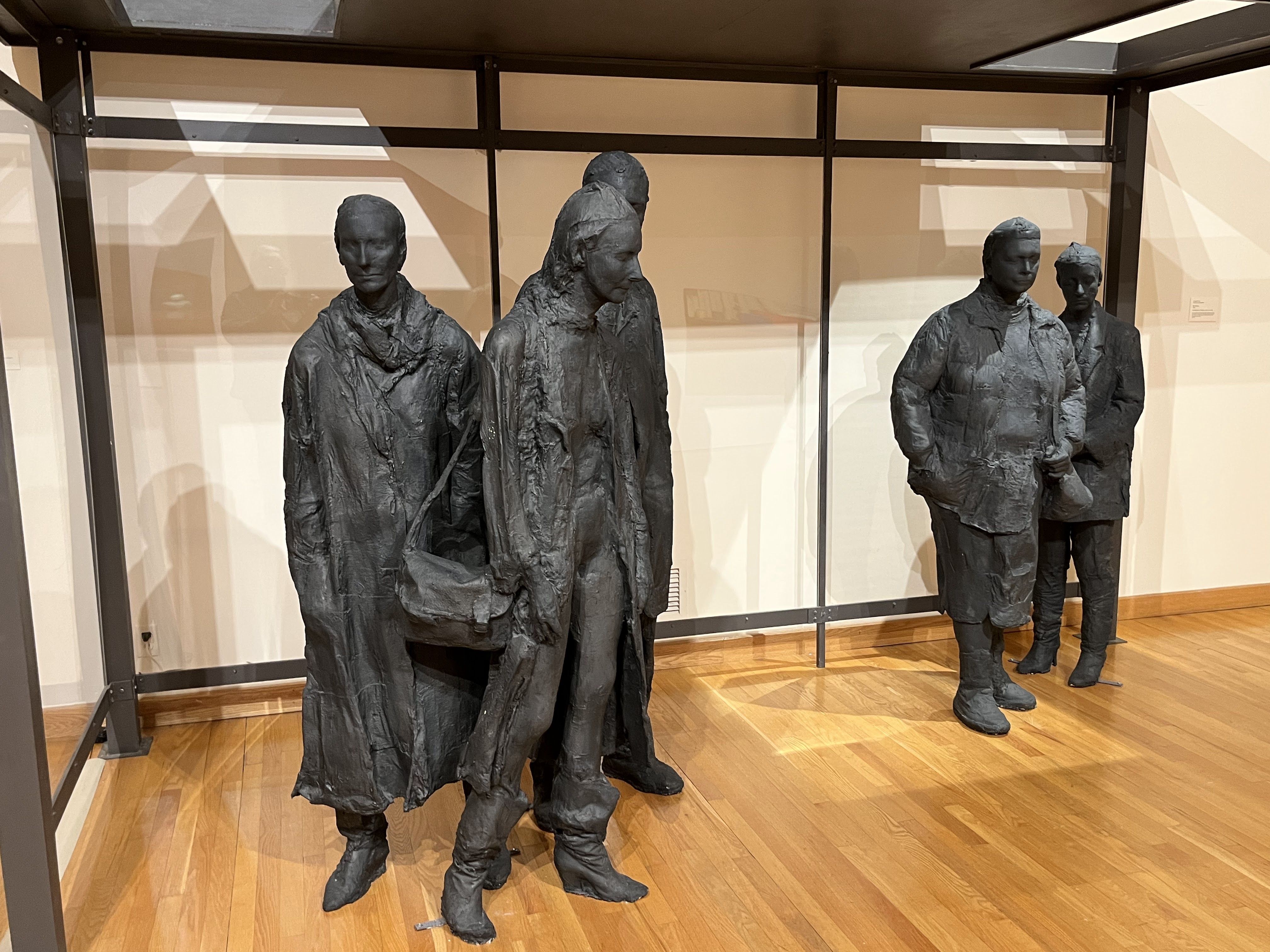
The Zimmerli Art Museum is located on the campus of Rutgers University in New Brunswick, N.J. Situated as it is between two cities, New York and Philadelphia, known for their museums, it doesn’t get a whole lot of attention. But the Zimmerli has an impressive collection of Russian art, including a vast number of works by underground artists from the Soviet era (Make Art, Not War). It also houses the collection of the Jersey City Art Museum, which was donated to the Zinnerli after that museum closed its doors. Here’s a sample of what you can see (and it’s free).
George Segal Sculptures
Blue Woman on Black BedBus Shelter
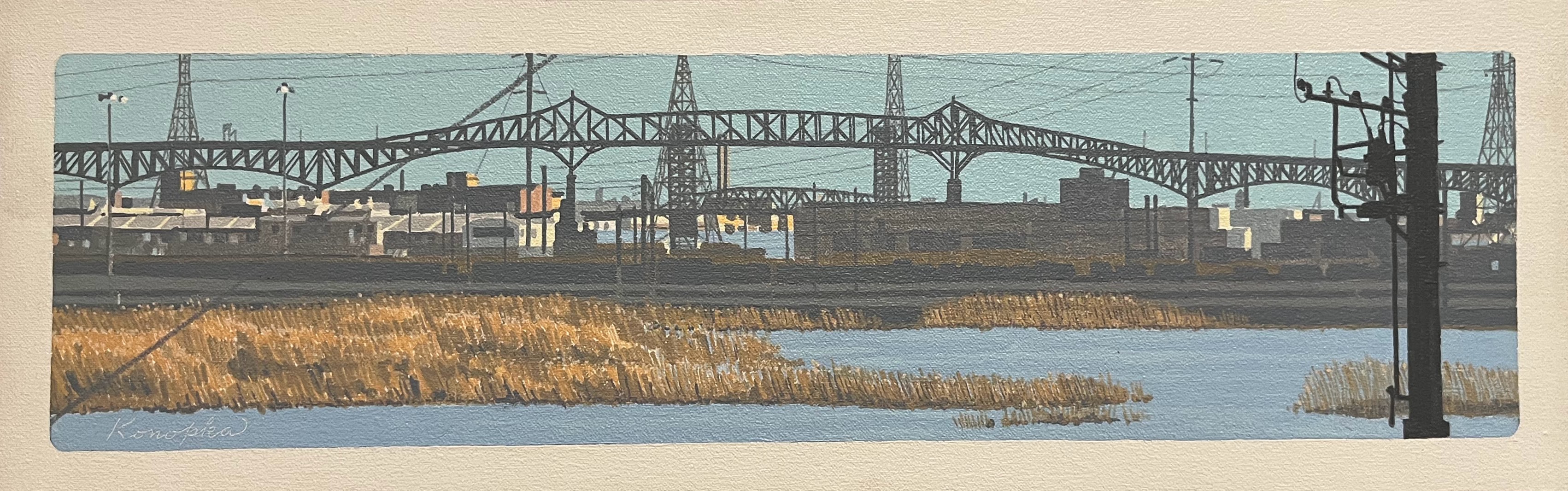
American Stories (from the collection of the Jersey City Art Museum)
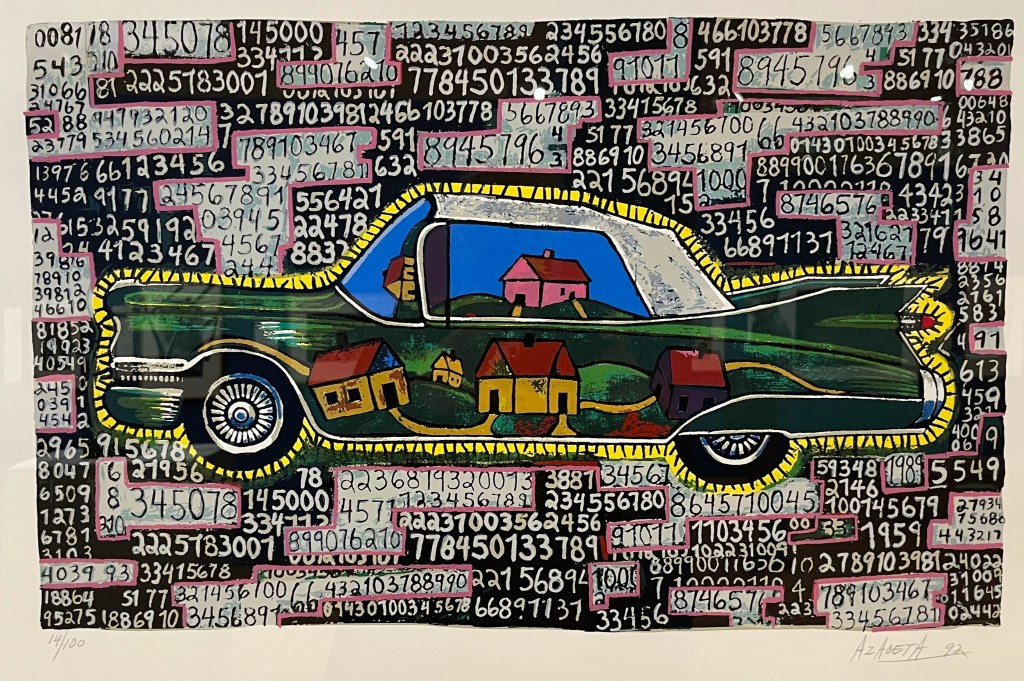
Pulaski Skyway, Joseph KonopkaJersey City Studio, Melvin LeipzigArgirio’s Portal, Giovanna CecchettiIn search of… ,Jon RappleyeBig Daddy Draped, May StevensLotto: The American Dream, Luis Cruz Azaceta
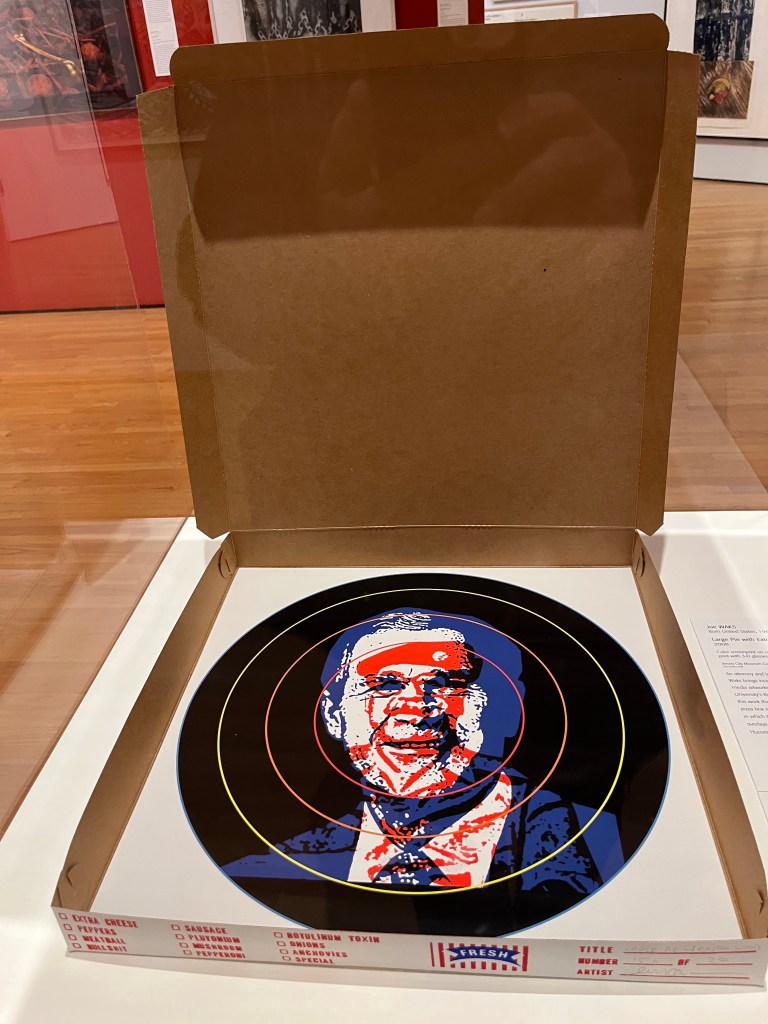
Large Pie with Extra WMD, Joe Waks
European Art
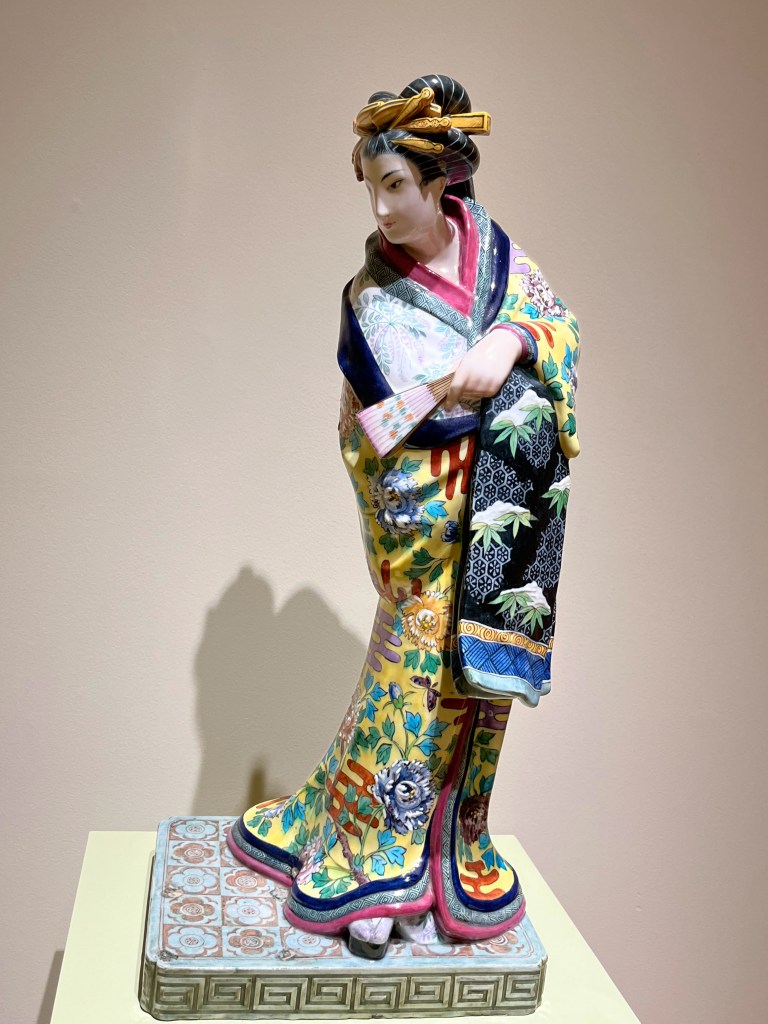
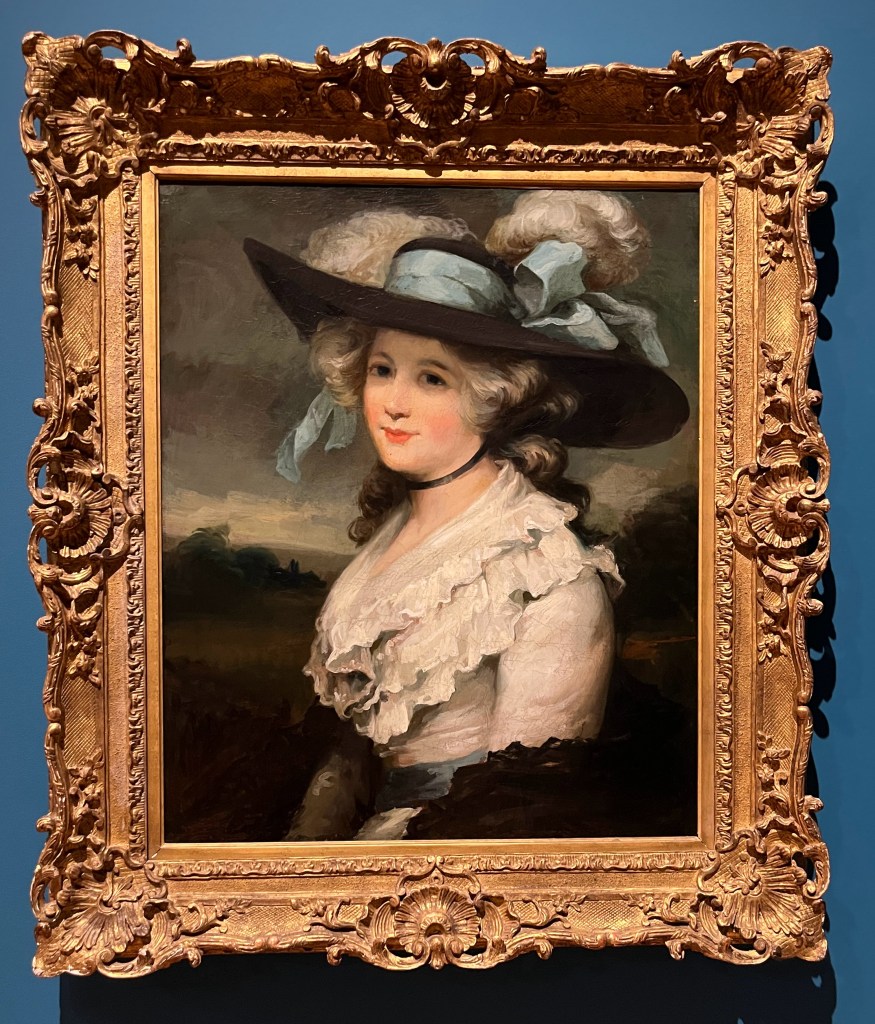
Leaving Moulin Rouge on Carnival Day, Norbert GoeneutteLa Japonaise, Joseph-Theodore DeckPortrait of a Woman, Sir John Hoppner
Russian Art
Stage Design for Korobochka, Serge SopiudeikineLes Charbonniers, Yuri Annenkov
American Women
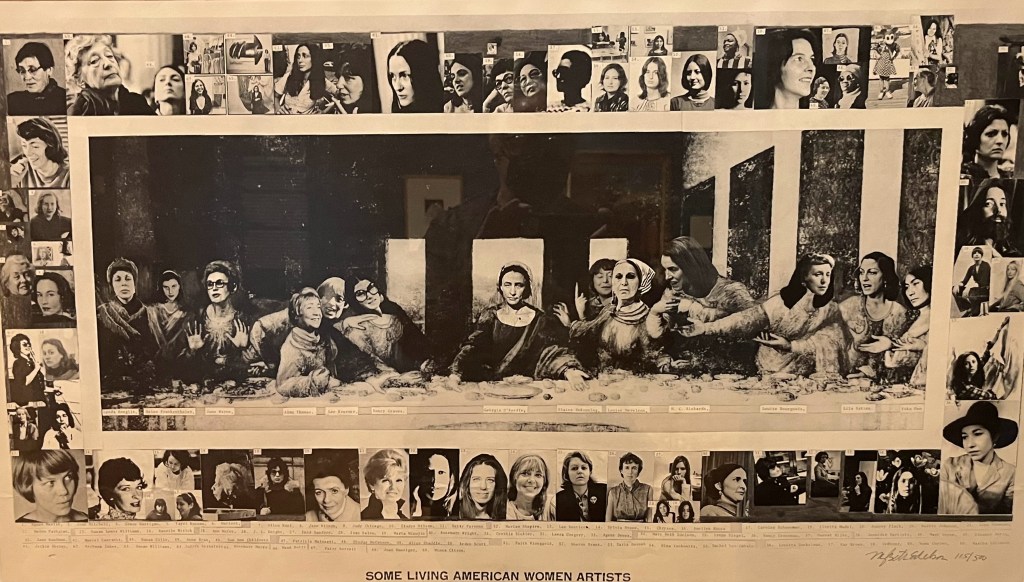
Some Living American Women Artists, Mary Beth EdelsonFaces of Collective Yearning, Helen Gao
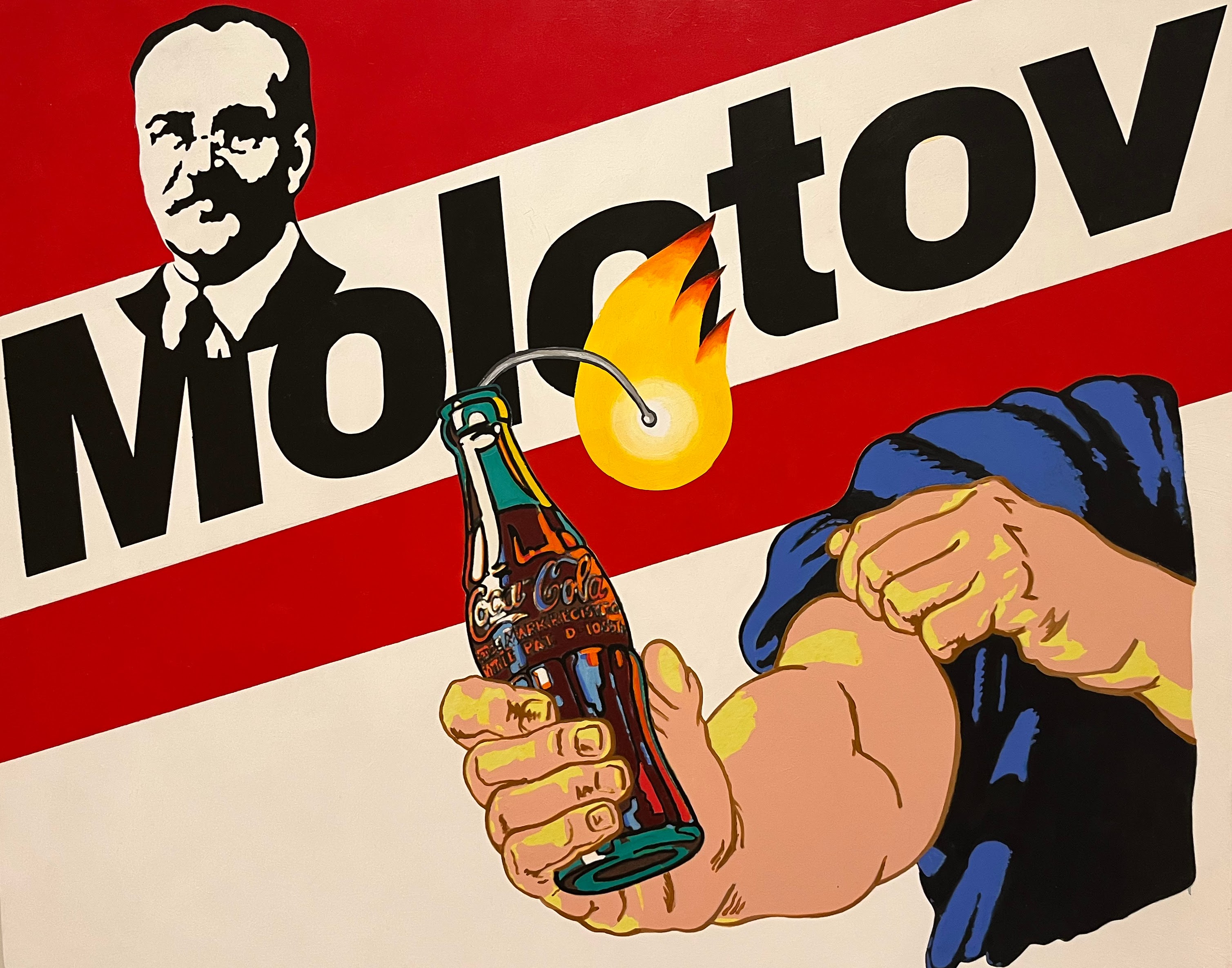
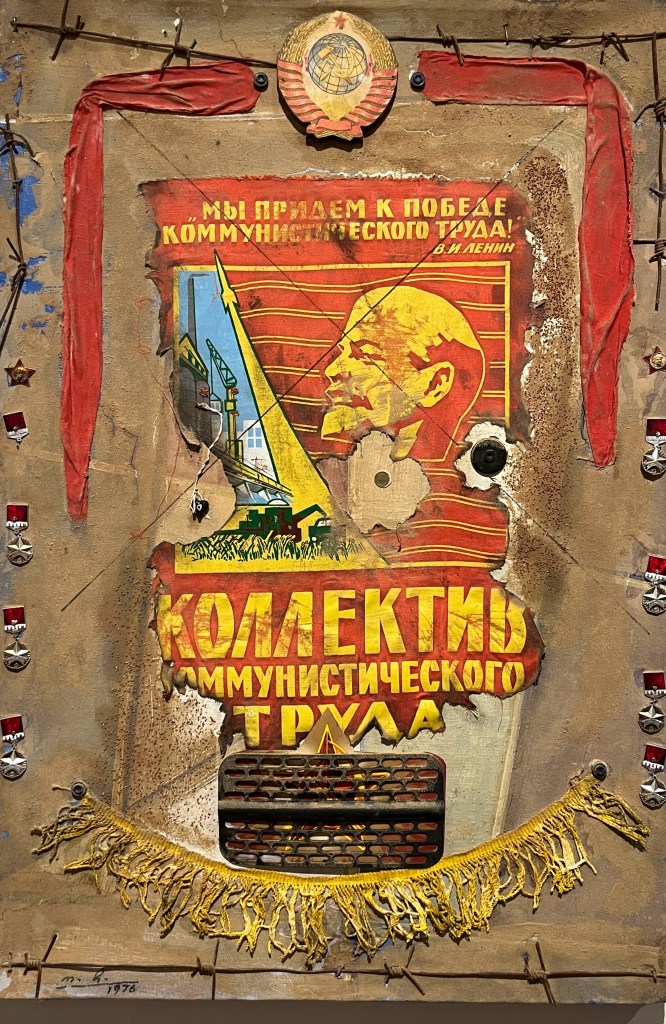
From the exhibit, Non-Conformist Art from the Soviet Union, at the Zimmerli Art Museum on the campus of Rutgers University in New Brunswick, N.J. These are works by underground artists in Russia as well as in some of the former Soviet states, from the 1950’s through the 1980’s.
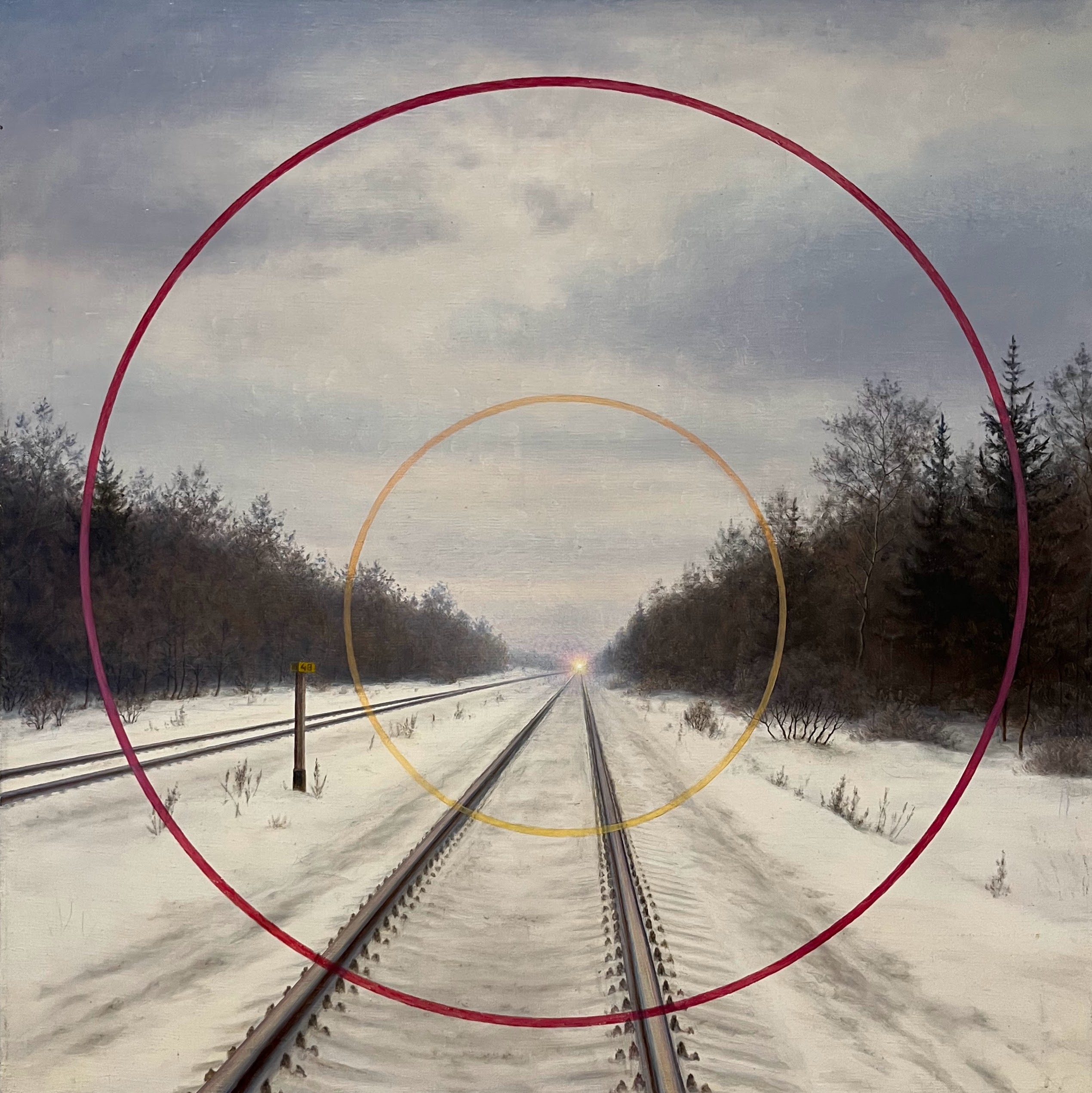
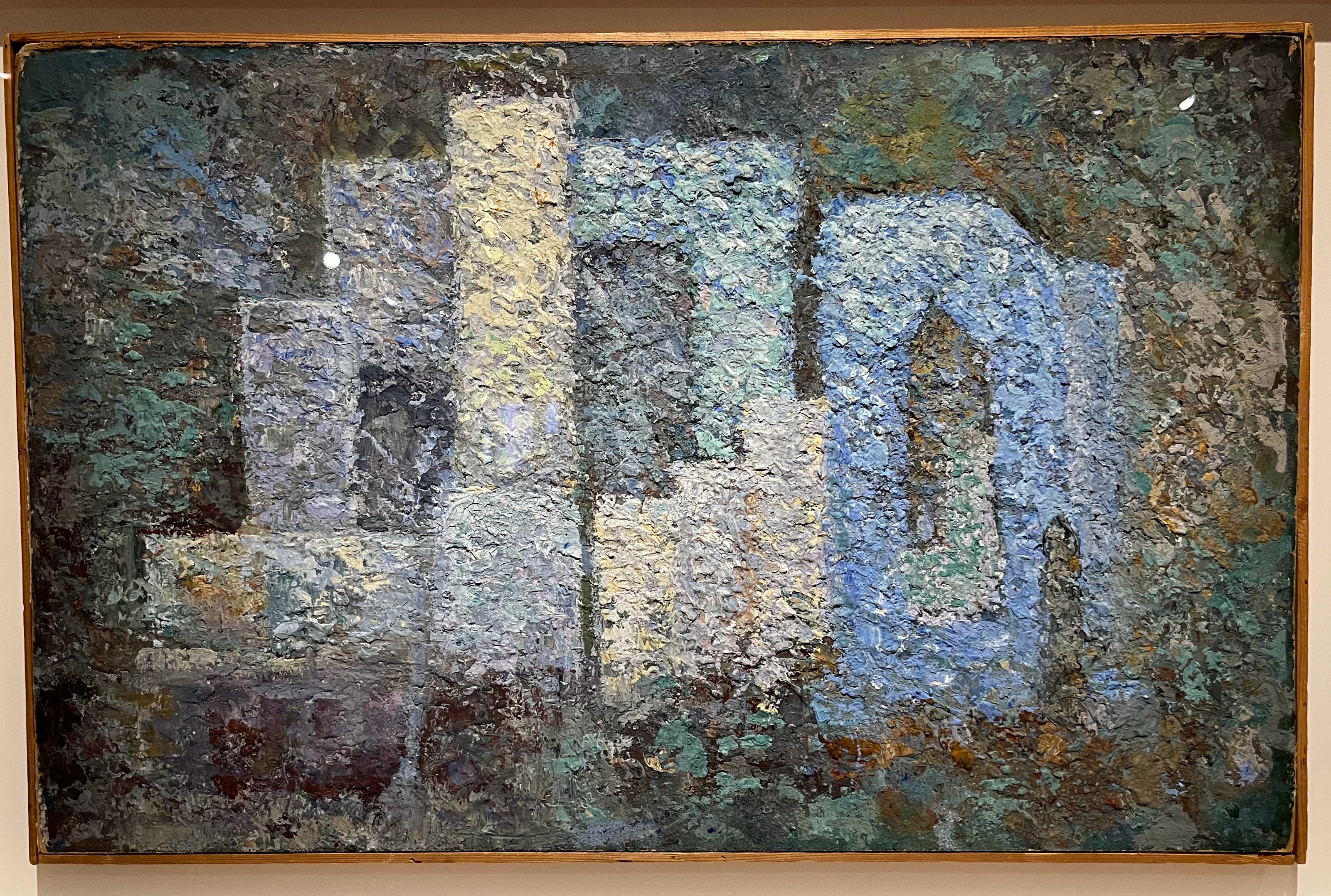
Golgotha, Oleg TselkovUntitled, Nikolai VechtomovSundew Plant, Mikhail ShvartsmanUntitled, Mikhail ShvartsmanKrasikov Street, Erik BulatovFragment from Part III of the Fundamental LexiconFragmentGrisha BruskinMolotov Cocktail, Alexander KosolapovMorning Procession, Anatolii SlepyshevUntitled, Eduard GorokhovskyRailroad, Sergei ShablavinRuins of a City, Olga Potapova
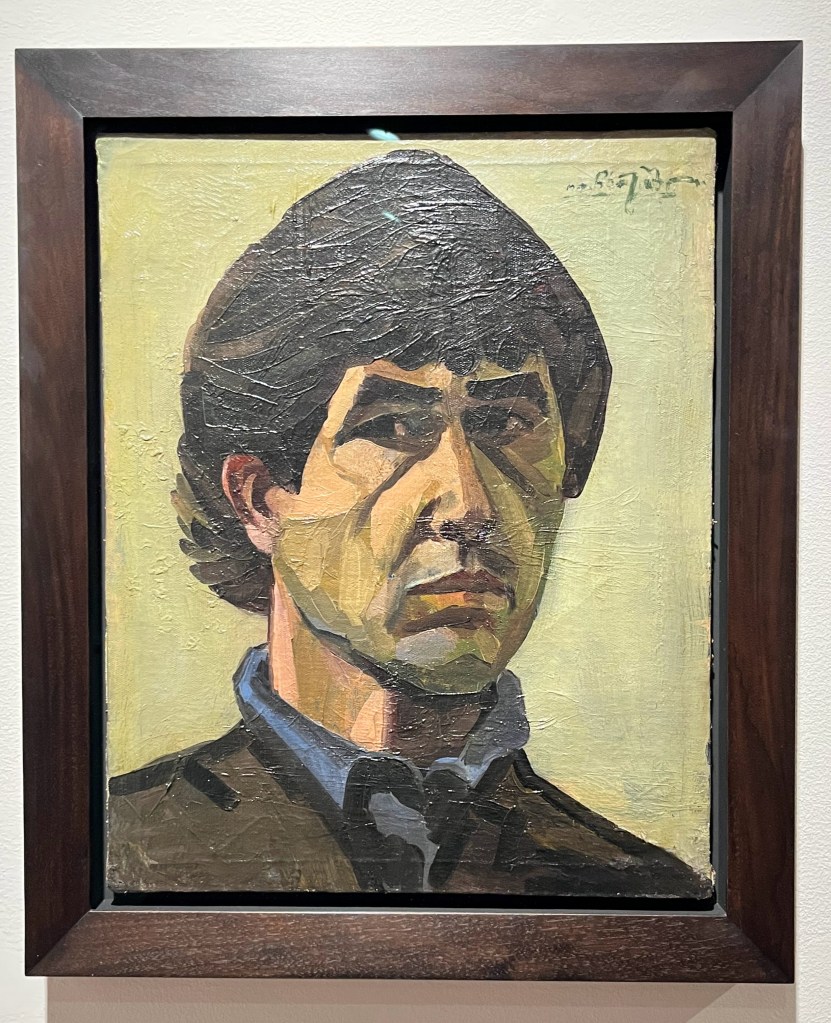
Artists from Georgia
GeorgiaValdimir Ulyanov’s CountryOtar ChkhartishviliSelf portrait, Otar ChkhartishviliUntitled, Leila SheliaPass by the City Uagadugu, Keti Kapanadze
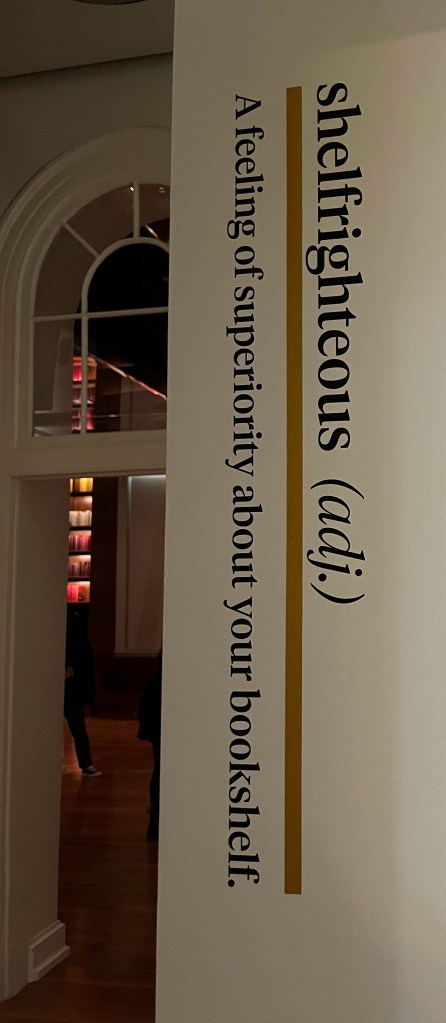
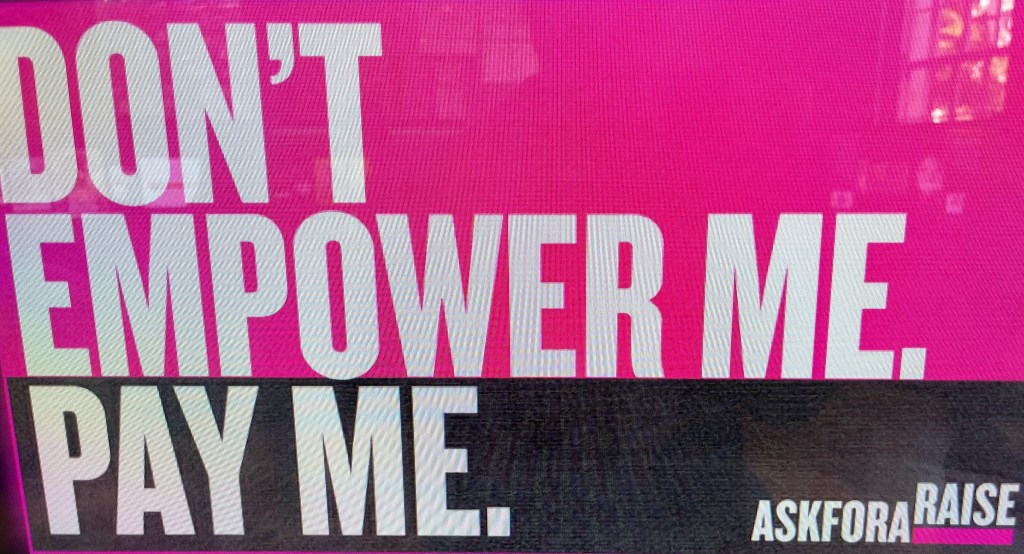
Planet Word is a museum of language. (Stifle that yawn!) It is a dynamic and interesting museum. Off the beaten path from the most popular Washington attractions, it is not beset by the hordes of visitors that many DC museums experience. It is only two years old, having opened in 2020. It is a very interactive museum, so my photos don’t really do it justice. It’s a fun place and from what I saw on my visit, kids enjoy it too. And it’s free
(answer at end of post)
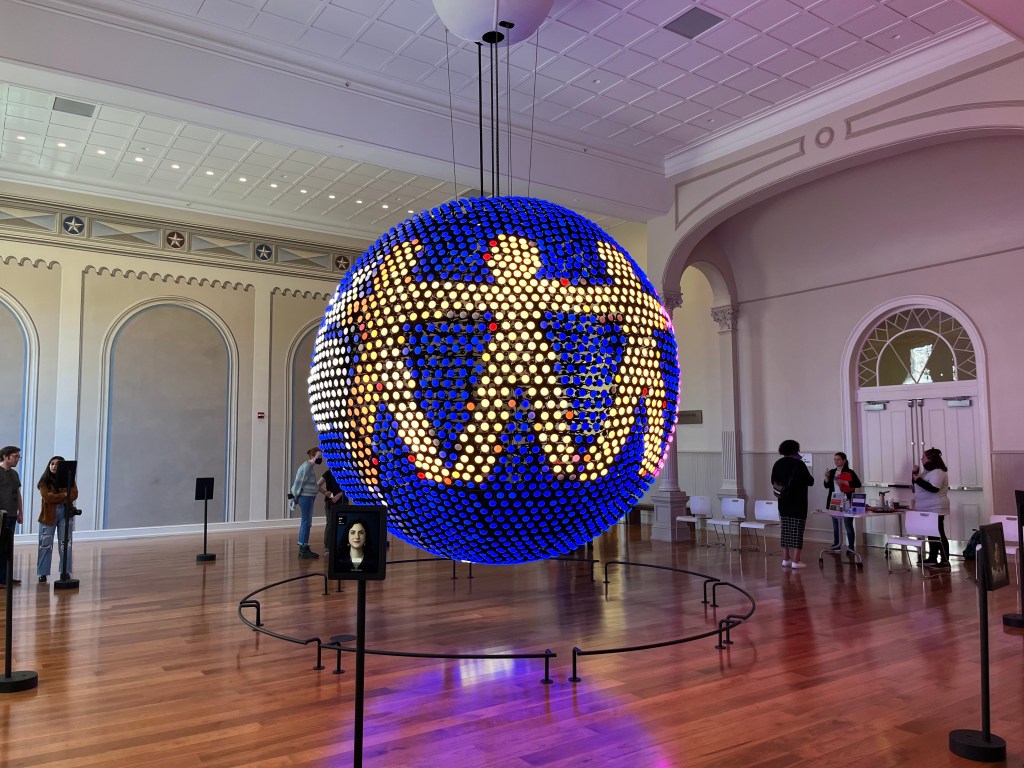
The Spoken Word. In this room you can get a taste of various world languages. On each of the screens set up on stands throughout the room, you can interact with talking heads to get a quick lesson. I tried Turkish, Ethiopian and Hawaiian. The bathroomThe elevator























































 off the leash