1980: Good Times/Bad Times for Those Seeking Asylum in the U.S.

1980 was a landmark year for refugees seeking asylum in the U.S. It turned out to be the beginning of what might be called the modern era of American refugee policy. The year began with legislation that greatly expanded the number of refugees that could be admitted. But it also was the start of a continuing trend of slamming the door on certain ethnicities, particularly Central Americans.

The Refugee Act of 1980, signed by Jimmy Carter, was a legislative response to the hundreds of thousands of refugees from Vietnam and Cambodia who came to the U.S. in the aftermath of the Vietnam War. It raised the annual ceiling on refugee admissions to 50,000 from the previous 17,400. It also established regular procedures for the adjustment of that ceiling in the event of an emergency. With these changes, the U.S. would for the next several decades (until the Trump Administration) be the world leader in accepting refugees.

The legislation refined the definition of who is a refugee, bringing the U.S. in line with the UN Convention and Protocol on the Status of Refugees. A refugee was defined “as any person who is outside his or her country of residence or nationality, or without nationality, and is unable or unwilling to return to, and is unable or unwilling to avail himself or herself of the protection of, that country because of persecution or a well-founded fear of persecution on account of race, religion, nationality, membership in a particular social group, or political opinion.”

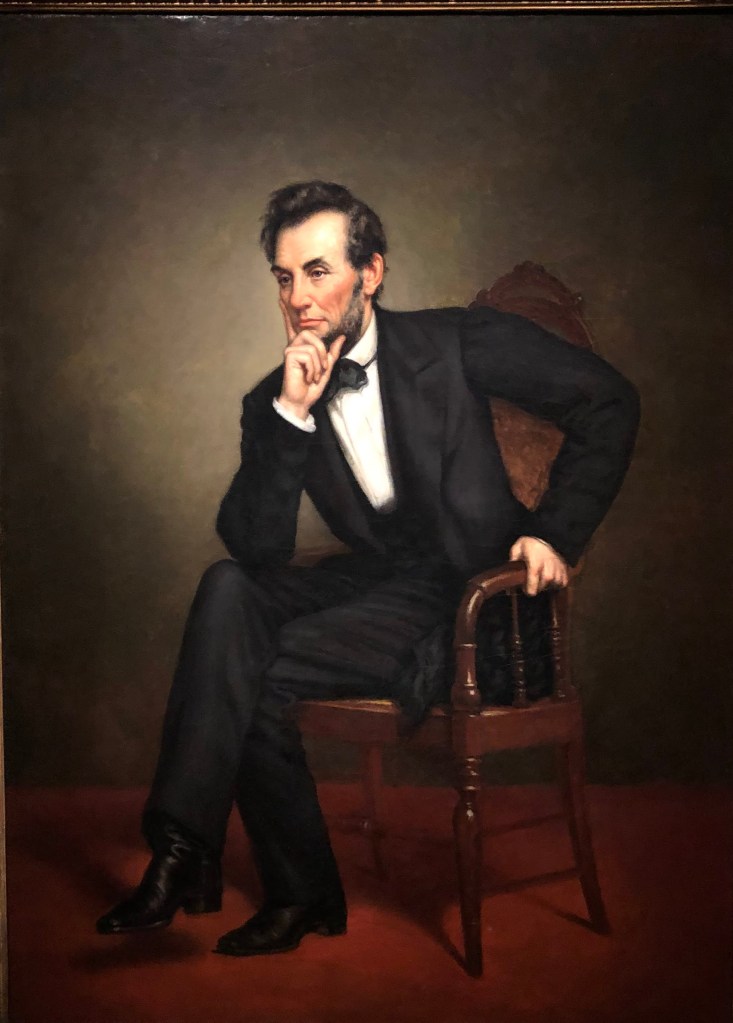
Sonadores, Sedrick Huckaby

At the same time unrest, violence and civil war were rampant in many Central American countries. The year before in Nicaragua, the socialist Sandinista government had been ousted by brutal right-wing autocrat Anastasio Somoza. A year later Archbishop Oscar Romero was gunned down at the altar by assassins believed to be associated with the El Salvador government. Romero had ordered Salvadoran soldiers to stop killing civilians. The assassination inflamed the civil war in that country.

The Migration Policy Institute stated “In El Salvador, the military and death squads were responsible for thousands of disappearances and murders of union leaders, community leaders, and suspected guerilla sympathizers, including priests and nuns. In Guatemala, the army’s counter-insurgency campaign focused on indigenous communities, resulting in thousands of disappearances, murders, and forced displacements.” And this says nothing of the violent criminal organizations in those countries specializing in the trafficking of drugs, weapons and people.

Ronald Reagan was president at that time. And as president, he was a Cold Warrior. Foreign policy was largely defined as the good guys vs. the bad guys. The anti-Communists vs. the Communists. Thus the right wing dictatorships of El Salvadore and Guatemala, both of which were fighting leftist insurgencies, came up as good guys in the Reagan White House. So too, Somoza, who had overrun the socialist Sandinistas.

Thus, according to the Southern Poverty Law Center, very few of the nearly one million Salvadoran and Guatemalan asylum seekers were approved. Using 1984 as an example, only 3 percent of the cases from those two countries were granted asylum. By contrast, in the same year, 60 percent of Iranian refugees and 40 percent of those from Afghanistan were approved. They, of course, were fleeing from countries whose governments were not on friendly terms with the U.S. (Afghanistan was controlled at the time by the USSR.)  Refusing to acknowledge the true nature of the governments we were supporting in Central America, the refugees from those countries were tagged “economic refugees” and denied admittance. (If you read last week’s post about the Haitian boat people, that may sound familiar.)
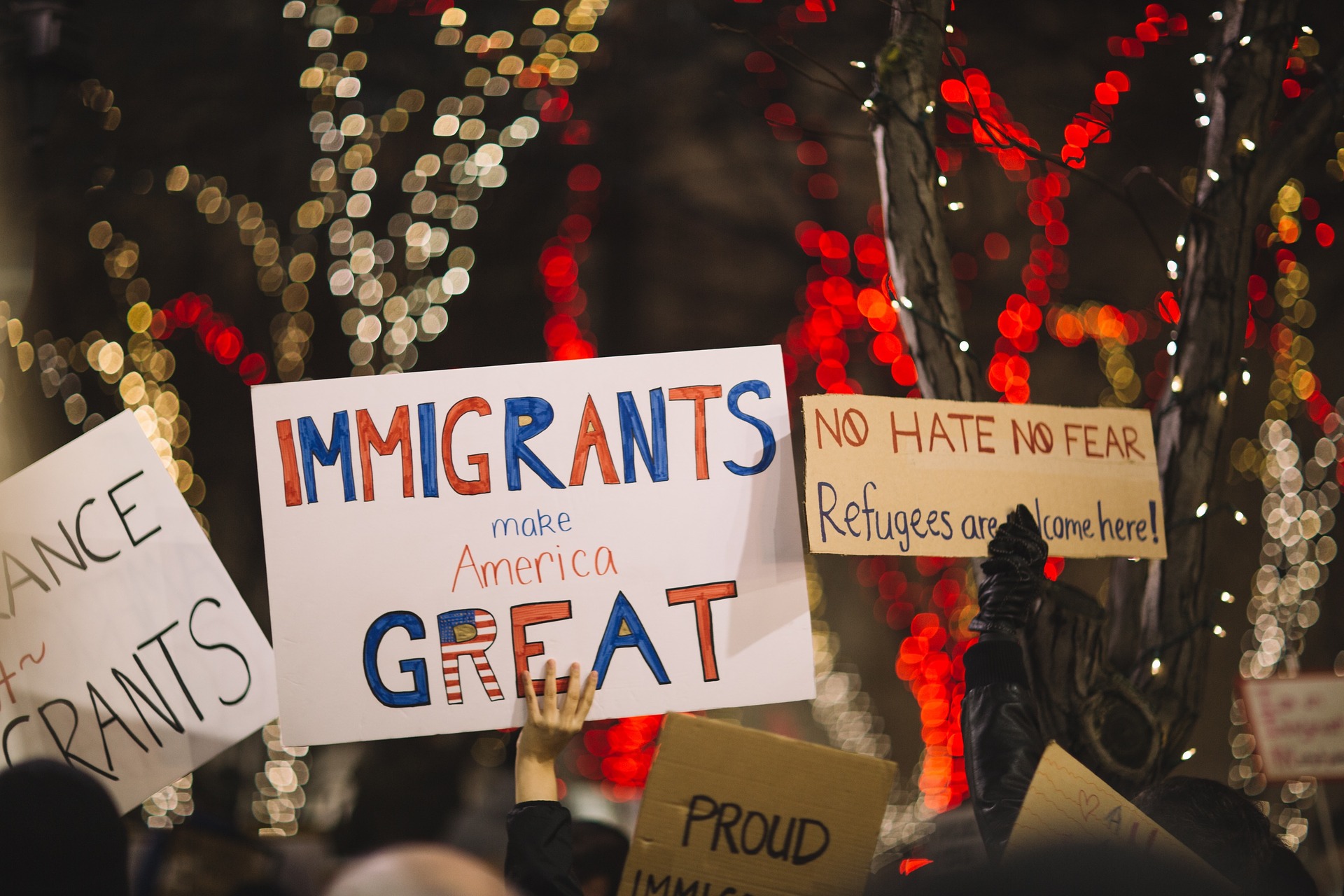
Border Crossing, Luis Jimenez

The Migration Policy Institute claims that: “The Justice Department and INS actively discouraged Salvadorans and Guatemalans from applying for political asylum. Salvadorans and Guatemalans arrested near the Mexico-U.S. border were herded into crowded detention centers and pressured to agree to ‘voluntarily return’ to their countries of origin. Thousands were deported without ever having the opportunity to receive legal advice or be informed of the possibility of applying for refugee status. Considering the widely reported human rights violations in El Salvador and Guatemala, the treatment of these migrants constituted a violation of U.S. obligations under the 1951 Refugee Convention.”
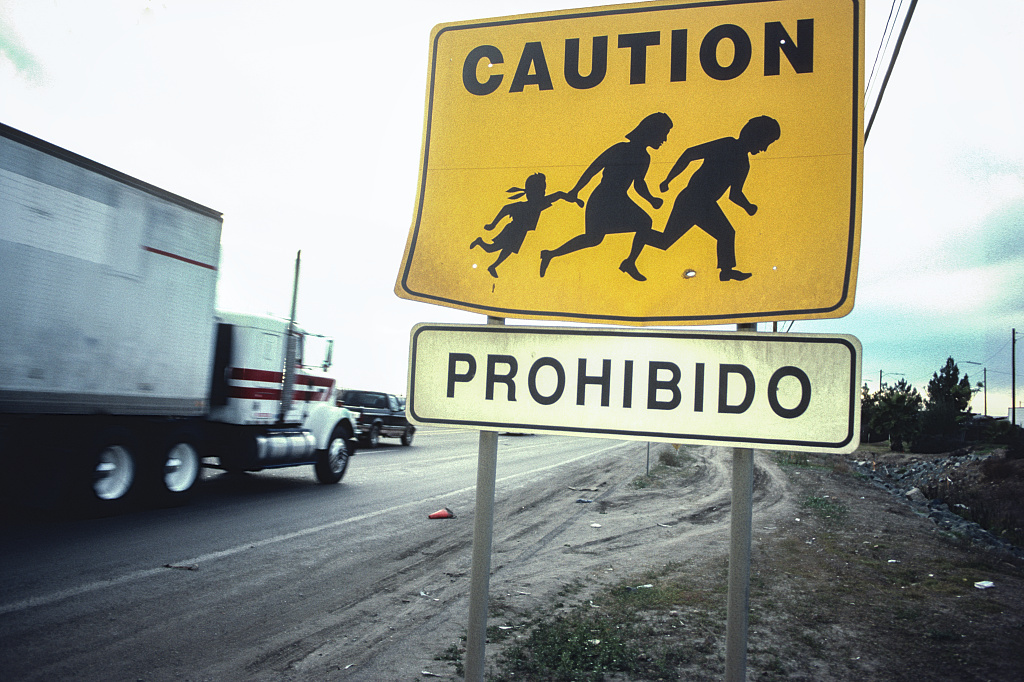
There were a number of legal challenges to the government’s actions against the Central American immigrants. Most notably, a class-action case known as American Baptist Churches v. Richard Thornburgh. (Thornburgh was the U.S. Attorney General at the time.) It resulted in 1991 in a district court approved settlement that allowed some of the denied asylum cases to be revisited and provided some protection against deportation for the class members. There was also some language about not having foreign policy considerations determine asylum case judgements.

But have things changed? The stats on the outcome of asylum cases for 2020 would suggest not. Last year 11,500 Guatamalans applied for asylum. 86% were denied. 82% of the 10,500 asylum seekers from El Salvador were denied. Hondurans were denied at a rate of 87% and Mexicans 86%. By contrast 77% of the Chinese who applied for asylum were approved.

(Images in this post are of works on display at the Blanton Museum of Art, University of Texas, Austin.)

Posted in History | Tagged , , , , , , | 3 Comments

‘There are the right kind of boat people, it seems, and the wrong kind’

In 1980, after Cuban President Fidel Castro announced that anyone who wanted to leave could do so, the Mariel boatlift brought upwards of 125,000 Cubans to the United States. Then President Jimmy Carter called it an “unprecedented emergency” and ordered the Navy and Coast Guard to assist boats in distress. They did. About 1,000 times.

A decade later some 40,000 Haitians tried to reach the U.S. by boat. They were fleeing the military rulers who had overthrown the democratically elected president Aristide, as well as the Tontons Macoutes police force whose existence dates back to the era of Francois Duvalier, aka Papa Doc. Many of the refugees perished at sea. The boats were not permitted to land in the U.S. and were instead directed to Guantanamo, the U.S. base in Cuba. Guantanamo soon filled up and President George Bush ordered the Coast Guard to intercept the boats and send the refugees back to Haiti. His successor, Bill Clinton, continued that policy.

Boat people from Haiti
Haitian migrants wait to be evacuated from a sailboat by the U.S. Coast Guard. They were sent back to Haiti. (April 2005)

Both groups would become known as “boat people.” Both were fleeing autocratic, brutal, and corrupt regimes. Why the difference in how they were treated? The official U.S. government explanation is that the Haitians were “economic” refugees, fleeing poverty and looking for jobs. As such, they cannot be granted asylum like the Cuban refugees fleeing from their government. But the real reason has to do with two factors that have been and continue to be key determinants of U.S. immigration policy.

One is ideology. Those fleeing Communist governments, whether from Cuba or Vietnam or the Soviet countries, are almost automatically granted asylum and those three groups make up the majority of the refugees that were admitted to the U.S. during the 70’s, 80’s and 90’s. On the other hand the Haitians, much like the Guatamalans and Salvadorans, were fleeing from right wing governments, no less oppressive and corrupt, but friendly to the U.S. 

The second reason is racism. It has had an influence on U.S. policy toward refugees and immigrants since the very first efforts to develop a policy. In the late 19th century it was behind the creation of the Chinese Exclusion Act. In the 20’s the U.S. tried to make the ethnic and racial makeup of the country look like it did in 1890. The ethnic quota system that was to govern U.S. policy on immigration for 40 years was, quite simply, an attempt to keep America white and protestant. What differentiated the Haitians from the groups of refugees that were readily being granted asylum? They were black.

Coast Guard intercepting Haitian refugees

A Washington Post story from April 19 1980, Haitian Boat People: Flotsam in an American Sea of Plenty, written by Ward Sinclair, describes an example of what awaited the Haitians when they came to these shores: “Like guileless waifs they had sailed, 29 of them in a rickety boat for 11 days, crossing 700 miles of ocean from Haiti to a land where men breathe free air and walk streets paved with gold.

“When this contingent of America’s ‘black boat people’ innocently hove to on sparkling Miami Beach last weekend, U.S. immigration agents swooped in and arrested them as aliens attempting illegal entry.”

Why? “The government insists that they are here for ‘economic’ reasons, which means they cannot stay. The Haitians and their defenders argue they are political refugees, entitled to asylum and the federal benefits that go to political immigrants.

“The point is that in a society such as Haiti’s, where the Duvalier family has reigned for decades and where the average annual income is $225, there is no good way to separate economics from politics, as the INS has attempted to do.”

Sinclair concludes: “…because of the Haitians, the thesis that the United States is the ultimate haven and protector for the world’s tattered underdogs is facing its most severe test.”

Haitian refugees

UPI syndicated columnist Mary McGrory opined: “There are the right kind of boat people, it seems, and the wrong kind.

“The right kind come from Vietnam. They flee an oppressive communist regime. We raise money for them, offer them asylum and weep for them in world councils.

“The wrong kind come to our shores from Haiti, but they are fleeing an oppressive fascist regime. When they try to land here, we send them back or throw them in jail. The human rights administration ignores them.”

McGrory calls this ”the great paradox of our immigration policies: victims of left-wing tyrannies are automatically ‘huddled masses yearning to be free;’ people like Haitians, who live under a fascist bully who governs with extortion and torture, can’t be let in because their admission would ‘open the floodgates’ to the merely greedy.”

Things have not gotten appreciably better for Haitian refugees seeking asylum in the United States. According to the AP, Haitians are granted asylum at the lowest rate of any nationality with high numbers of asylum bidders.

This past July, the Haitian president was assassinated. A month later the island nation was hit with a devastating earthquake. By September, some 14,000 displaced Haitians were gathered at a small Texas border town hoping to gain admission to the U.S. Most were put on planes and deported back to Haiti. The image that most will remember from that time is one of a U.S. border agent chasing down a Haitian immigrant on horseback and brandishing a whip.

Posted in History | Tagged , , , , , , | 13 Comments

FDR’s Black Eye

Franklin Roosevelt is the greatest American president of the past century. He led the country through and brought it out of the Depression. He led us through the Second World War. During his administration America’s infrastructure was rebuilt, Social Security was created, the banking industry was brought under control, and jobs were provided for everyone from construction workers to artists.

But there is a stain on FDR’s legacy. It’s about how he handled, or rather how he didn’t handle the German Jewish refugees hoping to come to America to save their lives.

The most well known, and notorious, incident involves a ship called the St. Louis, which was carrying 937 German Jewish passengers seeking to escape the Nazis when it sailed to Cuba. The refugees hoped to be admitted to Cuba from which they would later make their way to the U.S. When the Cuban government refused entry, the St. Louis sailed to Miami. But under the immigration quota system that had been put in place in 1925, no more German immigrants could be admitted, so the St. Louis passengers were not allowed to disembark. 

Jewish refugees

A group of the passengers made a direct appeal to Roosevelt: “Cabling President Roosevelt, repeating urgent appeal for help for the passengers of the St. Louis. Help them. Mr. President, the 900 passengers of which more than 400 are women and children.”

Roosevelt’s response? There was none. Turning away, the St. Louis carried its passengers back to Europe. Fortunately several European countries stopped up: Belgium took 250 of the refugees, the Netherlands, 194 and France 200. The rest were accepted in Britain. As Hitler conquered some of the countries where the refugees were relocated, 254 of them are known to have died during the Holocaust.

What is less known, is how an effort to save Jewish German children failed due to lack of support. In 1939, Sen. Robert Wagner (D-NY) and Rep. Edith Nourse Rogers (R-Mass.) introduced legislation in both houses of Congress that would have allowed 20,000 German refugee children into the U.S over a two-year period. The Wagner-Rogers Bill was backed by the American Federation of Labor, the American Friends Service Committee and the U.S. Department of Labor’s Children’s Bureaus.

Jewish refugee children

The Camden (N.J.) Morning Post (April 25, 1939) wrote: “Both those who believe that we should intervene in Europe and those who are against intervention can join in support of the Wagner-Rogers bill which will permit 20,000 refugee children from Germany to enter this country. Here is an opportunity to express, in  a practical way that harms no one, the humanitarian instincts called forth by Nazi persecution.”

The St. Louis Star-Times (June 14, 1939) said: “The most logical proposal by which this country can meet the common obligation of mankind to the helpless and oppressed is embodied in the Wagner-Rogers bill, now pending in Congress…The Wagner-Rogers Bill should be passed. Until some such measure is adopted, American protests against Nazi savagery will remain in the category of empty rhetoric.”

But the bill never made it out of committee. The Wisconsin Jewish Chronicle (April 28, 1939) explained where the opposition came from: “Opposition springs from a fear that a precedent will be established in opening the immigration gates now tightly controlled by the present quota laws; that the children, although none over 14, will eventually become seekers for jobs and thus further intensify the unemployment situation; that they will thus compete with American citizens; that they will constitute an unbalanced and unfair ratio to immigration from other countries whose quotas are very small; that they will become a ‘problem of assimilation;’ and that they will encourage the dictatorships to further persecutions because of the greater prospects of asylum for their victims elsewhere in the world.”

What the newspaper doesn’t mention in the anti-Semitism. You have to go back to Marie Antoinette to find a quote as insensitive as this one from Laura Delano Houghteling, FDR’s cousin and wife of Immigration Commissioner James Houghteling:  “Twenty thousand charming children would all too soon grow into 20,000 ugly adults.”

The Wagner-Rogers Bill never made it out of committee and never came to a vote in either house of Congress. It also never got any support from the president, despite the support of his wife Eleanor. Nor was it popular with the American public. A 1939 public opinion poll that posed the question of whether respondents would support admitting 10,000 German refugee children revealed that 67% were opposed.

It is hard to understand how a country that sent some 2 million soldiers to the European front during WWII, a country that lost 500,000+ lives fighting the Nazis in Europe, was not willing to save 20,000 German Jewish refugee children by simply opening its doors to them.

(Photos from New York Public Library public domain collection.)

Posted in History | Tagged , , , , , | 7 Comments

Ethnocentrism and the Roaring Twenties

The movies and literature tell us the 1920’s was a time of gaiety, prosperity and freedom. A time for speakeasies, jazz and flappers. A respite in the history of America between the Great War and the Great Depression.

What is not so celebrated in the chronicles of the era is the growing emergence of nativism and xenophobia and how that led to major changes in how America would deal with refugees and immigrants.

While the European immigrants to the U.S. in the 19th century primarily came from northern and western Europe, with the turn of the century more immigrants were arriving from eastern and southern Europe. As always, there were objections from labor, fear that the new immigrants would take jobs from Americans and would reduce wages in a rapidly industrializing country because of their willingness to work for less.

But the case against these new immigrants, the Italians, Jews and Slavs, was not merely economic. It was also racist and anti-Semitic, based on a desire to keep America white and Protestant. This was also a time when the phony science of eugenics was taking hold in some quarters. A bastardization of Darwinism, eugenics talked about superior and inferior “stock” in pseudo-scientific terms. It was exactly the type of thinking that led to Hitler and the Nazi movement.

immigrants

Already by the 1890’s, groups like the Immigration Restriction League were urging restriction of what they called “undesirable” immigrants. The group was founded by three Harvard graduates from prominent Boston families who derided the new immigrants as racially inferior and their proliferation as a threat to the American way of life.

In response to the lobbying of groups like this Congress appointed the Dillingham Commission in 1907, chaired by a Republican Senator from Vermont, William P. Dillingham. They were charged with studying the impact of recent immigration. Four years later their conclusion was that immigration from southern and eastern Europe should be restricted, as should all Asian immigrants. The rationale was that these immigrants were a threat to American culture and society. “The former (immigrants) were from the most progressive sections of Europe and assimilated quickly… On the other hand, the new immigrants have come from the less progressive countries of Europe and congregated separately from native Americans and the older immigrants to such an extent that assimilation has been slow.”

The first attempt to slow immigration occurred in 1917 during the war years. Congress required a literacy test to be administered to all incoming immigrants and raised the tax which these folks would have to pay to gain admittance. Also, expanding on the Chinese Exclusion Act of 1882, the 1917 Act blocked immigrants from what was called the “Asiatic barred zone,”

It was in 1921 that legislation was passed that was to define U.S. policy on immigration for the next 40 years. In an attempt to preserve the existing ethnic makeup of the U.S., Congress passed the Emergency Quota Act of 1921. It established quotas for each European nationality at 3% of the number of people of that nationality in the U.S. as of the census of 1910. 

immigrants luggage

This editorial, from the Oklahoma City Times of May 7, 1921, offers a glimpse of the thinking behind these restrictions:

“How faulty is our system of distribution is made plain by the fact that of the heavy immigration of the past year, but 2.8 percent have gone or intend to go on the farms. That means that a vast majority of them are gathered in overcrowded tenements and segregated in colonies of their kind, usually amid unwholesome surroundings. Such congestion is not beneficial to America, and Americans will not be made of those permitted to dwell in that fashion. Also, education of the foreign born will not succeed until greater facilities are provided to include the adults as well as the children and attendance is made compulsory if citizenship is desired.

“Of all factors bearing on the question, selection probably is the most vital. Scientists warn us to give greater attention to that, unless we want the race that made America great to dwindle and deteriorate, and lose control of the land they wrested from the wilderness.  One of these scientists, Madison Grant, warns America that the nation is headed for a racial abyss, unless we cease to shut our eyes to racial differences; unless, in brief, immigration is restricted to our kind of people. Such selection would not be easy. It would meet the opposition of undesirable nationalities already here. It must be handled with consummate tact, unless it is to create animosities abroad. But it is a matter deserving study. It is time to realize that America is no longer a sparsely populated vastness with room for all. It is time for America to think of the future of Americans, and less of the oppressed of other lands.”

In 1924, the quotas were lowered to 2% and in an effort to dial back the clock to a time that preceded much of the influx of southern and eastern Europeans, the Immigration Act of 1924 quotas were based on the census of 1890. In addition, it banned immigration of anyone who was not eligible for naturalization, which meant the door was closed on all Asians. The national origins quota system established by this legislation would not be abolished until 1965.

Here’s how the 1924 act impacted quotas from some countries:

Italy — based on the 1910 census Italians made up 11.75% of the U.S. population. The quota set in 1921 was 3% of that population, 42,057. That was the number of Italians who would be admitted to the U.S. annually. But in 1925 the quota were based on the census of 1890 when Italians were only 2.34% of the U.S. population. That change, in addition to reducing the quotas to 2% meant that only 3,854 Italians would be admitted to the U.S. annually, barely more than 10% of the earlier quota.

Germany — In the 1921 census, persons of German descent made up 18.90% of the U.S. population and the 1921 quota for Germans was 67,607. While the quota in 1925 went from 3% to 2%, this was partially offset by basing it on the 1890 census when Germans made up 31.11% of the U.S. population. So in the 1925 act, 51,227 Germans would be admitted annually.  

Overall immigration from Europe had totaled 800,000 in 1921 when the first quotas were enacted. By 1924, that number was reduced to 700,000. But by 1930, six years after the more restrictive quotas were enacted, European immigration was down to 100,000 per year.

The ethnic quotas also had some unintended consequences. This report appeared in the Oklahoma City Times on May 9, 1922:

“Laurel Galle, Red Cross nurse from Belgium, promised to marry Camile E. Asp, a soldier wounded in France. They planned to wed when he recovered. Since then, circumstances, the red tape of law, and fate have prevented every attempt of Camile to make Laurel his wife.

“Circumstance–in the way of the Belgian immigrantion quota–thwarted them again yesterday.

“When their ship docked, Camille was informed that the immigrantion quota for Belgium was exhausted and that his sweetheart would not be admitted.”

Posted in History | Tagged , , , , , , , , , | 8 Comments

Lange/Liu: Images of the Depression

Dorothea Lang

A documentary photographer from New York City, Lange is best known for her work in capturing the impact of the depression on film. During the 1930’s she worked for two New Deal agencies, the Resettlement Administration and the Farm Security Administration. Throughout the decade she traveled through California and the Midwest, capturing images of rural poverty, including sharecroppers, displaced farm workers and migrants.

Hung Liu

A Chinese-American artist known for her paintings inspired by historical photos. Liu was born in China where she once labored in the countryside during the Cultural Revolution. She immigrated to the United States in 1984 at age 36. She studied at University of California, San Diego, and was resident artist at the Capp Street Project in San Francisco. Liu passed away earlier this year. Her work is currently on exhibit at the National Portrait Gallery in Washington where these photos were taken.

In 2015, Liu came upon Lange’s work at the Oakland Museum in California. She would later transform some of Lange’s black-and-white photographs of Depression-era Americans into large colorful painted portraits. Below are some of those works.

Cotton picker, Hung Liu
Cotton Picker
Migrant Mother: Mealtime, Hung Liu
Migrant Mother: Mealtime
Plowboy, Hung Liu
Plowboy
South, Hung Liu
South
August, Hung Liu
August
Sanctuary, Hung Liu
Sanctuary
Catchers, Hung Liu
Catchers
Posted in Art, History | Tagged , , , , , , , | 3 Comments

Is This the Most Discriminatory Act of Congress Ever?

In 1882, President Chester Arthur signed the Chinese Exclusion Act, barring Chinese workers from entering the U.S. as well as banning those Chinese immigrants who were already here from obtaining citizenship. It is the first and perhaps only piece of legislation to come out of Congress addressed solely against a single nationality.

The move was driven by public opinion on the West Coast. Much of that opinion centered around economic issues, fear of Chinese immigrants taking American jobs or driving down wages because of their willingness to work for less. But there was also a nastier nativist element railing against people who weren’t white, weren’t Christian and who had a culture that was strange to the American West.

The Chinese first began to emigrate to the U.S. during the California gold rush of the 1840’s and 1850’s. Others came to work on the transcontinental railroad. They worked in mines, textile factories and on farms. 

As early as 1858 the California legislature passed a law prohibiting any person of “Chinese or Mongolian races” from entering the state, but that law was struck down by the state supreme court. 

The U.S. economy declined after the Civil War. The Panic of 1873 and the accompanying bank failures signaled the start of what came to be known as the Long Depression which lasted for the next decade and ratcheted up resentment of Chinese immigrants in the West. 

In 1875, Congress passed the Page Act, named after the California congressman who sponsored the legislation. The Page Act sought to circumvent a treaty with China that banned restrictions on immigration by focusing on criminals, contract laborers known as coolies and Chinese prostitutes. The enforcement of the Page Act, however, was primarily focused on women and its effect was to mostly restrict immigration by Asian women.

Another California congressman, Sen. John Miller introduced the Chinese Exclusion Act in Congress. His first effort would have banned Chinese laborers from entering the United States for 20 years. President Arthur vetoed that bill and Congress did not have enough votes to override as there was opposition to this in other parts of the country. Miller came back with another bill that banned Chinese immigrants for 10 years. Arthur accepted the compromise and signed.

During the floor debate on the bill, Miller made this extraordinary statement: “If we continue to permit the introduction of this strange people, with their peculiar civilization, until they form a considerable part of our population, what is to be the effect upon the American people and Anglo-Saxon civilization?”

A look at California newspapers in the early 1880’s shows how public opinion had turned against the Chinese. The Santa Cruz Weekly Sentinel of April 10, 1880, offered up some vaguely defined poll results: “…the people of this State were recently requested, by a statute law, to express their opinions upon the main question by ballot. The response was general; and when the ballots were counted, there were found to 883 votes for Chinese immigration, and 154,638 against it.”

The Petaluma (Calif.) Courier on Dec. 16, 1885, offered this rationale for why the Chinese were being singled out: “The great difference between Chinese and immigrants from European countries is that while the former make all they can out of the country, and take it even with their bones back to China, the latter assimilate with us and invest all they make here.”

The Pacific Bee of Sacramento on Nov. 8, 1885, expanded that economic argument, but added a racist conclusion: “Nearly all of the money these Asiatics earn goes back with them to China, and while they remain here almost all their trade is with Chinese merchants. It is a moderate estimate that each Chinaman withdraws $200 a year from circulation in this country. On the basis of the census that would give the enormous total of $15,000,000 taken out of California every year by these aliens… 

“Facts and figures such as we have here presented show what a terrible drain the Chinese are upon this State. If, instead of the 75,000 parasitic Asiatics in California, there were that number of sober, intelligent and industrious white men added to the population, what a vast improvement would be observed.”

The view from the other coast was a bit different. The New York Times of April 6, 1880, suggested: “Never in the history of this country has so much been made from so little as in the case of the Chinese in the United States. It is a pitiable thing that it has been thought necessary, for the protection of hundreds of thousands of stalwart and intelligent American citizens against a handful of foreigners, that the whole power of the National Government should be invoked.”

The impact of the Chinese Exclusion Act on the population of Chinese immigrants in America was substantial. The Chinese population in the U.S. declined from approximately 105,000 in 1880 to 89,000 in 1900 to 61,000 in 1920.

While the act was supposed to have a life span of 10 years, it was renewed for another 10 by the Geary Act. After 10 more years, in 1902, it was made permanent. The Chinese Exclusion Act remained in force for 61 years until 1943 and was likely repealed then only because China was an ally of the U.S. in World War II. The Magnuson Act of 1943 permitted a grand total of 105 Chinese to enter the country per year.

As you read this story and see the comments made you can’t help but see distant echoes of the Asian hatred that spread through this country during the past two years.

Posted in History | Tagged , , , , | 8 Comments

MFF21: Landmarks of My Youth on the Big Screen

The Montclair Film Festival always has a strong lineup of documentaries, including many produced by local filmmakers. These two were filmed in the neighborhood of my youth.

American River

I grew up about a half-mile from the Passaic River. As a kid going to day camp at the Paterson YMCA (Growing Up in the 50’s: Ode to the Y), I used to canoe on the river where we would stop and swing from the overhanging branches and jump in. It probably wasn’t so clean then either, but it was about 1960 and we didn’t know all that much about pollution, didn’t know that the fact that we couldn’t see the bottom might be representative of some toxicity. As an adult, the Passaic River has always been seen as untouchable.

American River is about two people who kayak the length of the Passaic. They start in Mendham where it originates as a small mountain stream and go for four days until they hit the end, a Superfund site in Newark. Along the 80 mile route, they head north past the Great Swamp National Wildlife Refuge, past the Little Falls and the Great Falls. The river then does a U-turn and heads south past Passaic and Rutherford and Kearny before dumping out into the Newark Bay. Mary Bruno, one of the kayakers and the narrator for much of the movie, grew up in North Arlington, also not far from the banks of the Passaic.

The Great Falls

The Great Falls in Paterson (A Day by the Falls) is the most majestic site the river has to offer. It also is a turning point, the river leaves the rural and suburban for good and becomes full-on industrial along its banks. The Falls powered the monster that nearly killed the river. It was the potential of the falls that Alexander Hamilton saw and planned to harvest to create in Paterson America’s first industrial city. It was, of course, those industries and their successors that used the river as a dumpster.

The movie is full of landmarks from my past. They even come ashore for a lunch at the iconic, and now deceased, Paterson hot dog joint, Libby’s. The closeness to me made this documentary an engaging and almost emotional experience. It won’t resonate the same way if you’re not from around here. But there’s a reason this film is called American River and I’m sure there are others who will see parallels with other rivers that maybe they grew up within a half mile of.

There’s a good deal of history in the script, especially the history of the two biggest cities the Passaic passes through, Paterson and Newark. Some of that history is ugly, but the movie isn’t. In fact, the river looks outright beautiful, and not just in the bucolic upstream areas.

(view trailer)

One All the Way

A short about a hot-dog crawl. A what? Way back in the beginning of the 20th century a Greek immigrant street vendor in Paterson created a mobile feast called the Hot Texas Weiner. It never really caught on too far beyond the borders of Paterson, but for those of us who live in this area it’s iconic. The Hot Texas Weiner is a deep fried hot dog topped with mustard, chopped onions and beanless chili sauce. None of the aficionados call them Hot Texas Weiners, we just refer to them as hot dogs all the way.

This documentary short follows a group of three older Patersonians as they head out on hot dog runs, consuming one each at four or five stops per trip. None of these places are new and one of the best of them, Libby’s (my family’s favorite for at least three generations) has since gone out of business (Last Call at Libby’s). Another of my favorites, the Hot Grill in Clifton, is still going strong. We meet some of the guys who founded and manage these places, most of whom are also of Greek ancestry. And we hear about the intrigue involving the sauce, recipes which, if written down, are kept under lock and key.

Any movie about the Hot Texas Weiner is also a movie about Paterson. The guys on the crawl talk about the city’s decline and how that led to the closing of some beloved hot-dog peddlers. One is nearly brought to tears when he looked at the site that used to be Falls View (hot dogs of course) and has since been downgraded to a Burger King. Turns out he proposed to his wife in Falls View.

This is a movie of particular local interest, but if you are like my wife, married to someone who loves their hot dogs all the way, and you wonder how someone could eat something like that, this movie has all the answers.

Hot Grill, Clifton
The day after I watched One All the Way, I headed to the Hot Grill for this lunch.
Posted in Uncategorized | Tagged , , , , , , , | 12 Comments

Morality, Sexism or Racism? The Page Act of 1875

While the Chinese Exclusion Act of 1882 is usually cited as the first time the U.S. moved to ban a specific, nationality-defined, group of immigrants from entering the country, there was a curious piece of legislation the previous decade which shut the door on Chinese and most other Asian women.

The Page Act of 1875 barred undesirable immigrants, defined as “a person from China, Japan or any Oriental country coming to the United States to be a forced laborer, any East Asian woman who would engage in prostitution, and all people considered to be convicts in their own country.”

On the surface this could be interpreted as an act of Protestant morality. You could even see it as an extension of abolition, an attempt to ban forced labor. But the comments of the bill sponsors and supporters suggest otherwise. As does the implementation of the law.

The legislation was sponsored by a California congressman, Horace F. Page, who called it an attempt to end “the danger of cheap Chinese labor and immoral Chinese women.” It was signed into law by President Ulysses S. Grant who earlier had warned Congress about “the importation of Chinese women, but few of whom are brought to our shores to pursue honorable or useful occupations.”

There was at the time a treaty in force with the Chinese Empire, the Burlingame Treaty, which prohibited any restrictions on immigration. The Page Act is viewed by some as a way to restrict Chinese immigration without violating the treaty by focusing on criminals, coolies and prostitutes. There were a considerable number of Chinese prostitutes in California. That was true at the time in most immigrant communities. For most of the 19th century prostitution was legal in California and throughout the West, where working men far outnumbered women, prostitution was common. There were no federal laws against prostitution until 1910.

The enforcement of the Page Act almost exclusively came down on Asian, and particularly Chinese women. Many of the Chinese women who sought to migrate to the U.S. were indeed prostitutes. But perhaps just as many were seamstresses, cooks, servants and launderers.

Throughout every step of the immigration process, East Asian women seeking entry into the U.S. were asked to answer questions like:  Have you entered into contract or agreement with any person or persons whomsoever, for a term of service, within the United States for lewd and immoral purposes? Do you go to the United States for the purposes of prostitution?  Are you a virtuous woman? Do you intend to live a virtuous life in the United States? These questions would be asked repeatedly with the inquisitor keenly watching for any discrepancies in the answers.

Madonna, Hung Liu

The enforcement of the Page Act reinforced negative stereotypes about Chinese women. They were viewed as immoral, dishonest, promiscuous, dirty and transmitters of STDs. The American Medical Association went so far as to proclaim that the Chinese carried distinct germs to which they were immune, but from which whites would die if exposed. (One can’t help to notice the parallel to the Asian hate that was generated during the COVID-19 pandemic.)

The San Francisco Examiner, on March 11, 1874, published this shockingly worded report under the title “Checking Immorality.” “The dock was crowded this morning with an array of Chinese women, who were arrested last night for being residents of houses of ill-repute. The ignorant creatures seemed to be entirely unconscious of their depraved condition, and laughed and chatted about the novelty of their changed position — at least we were so informed by those who were able to translate their language.”

Another example of local attitudes toward Chinese women is from the Merced Tribune on Dec. 26, 1874. “It is not only the privilege of the Government under the Constitution, but its duty, as well, to put a stop to this Coolie traffic, and shut down the gates forever against the flood of low, degraded Chinese women who come to our shores for no other purpose than to corrupt all with whom them come in contact.”

The Page Act and its enforcement had the desired effect. The invasive and humiliating procedures deterred many from even trying to migrate. Others couldn’t manage the heavy bribes that were necessary to make it past the consuls who were responsible for letting immigrants in. During one period of a few months in 1882, 39,579 Chinese entered the U.S., only 136 of them were women. This created a lasting problem in Chinese-American communities, making them substantially familyless.

While the Page Act was successful in stemming the flow of Chinese women into the U.S., that was hardly the end of the resentment and discrimination that was directed at the Chinese. They weren’t white. They weren’t Christian. And by living in their own Chinatown communities, they were resented for not assimilating. But most important of all, the 1870’s was witnessing the onset of a long depression and the competition in the labor market whipped up even more invective against the Chinese and resulted in one of the most racist pieces of legislation to ever emerge through Congress, the Chinese Exclusion Act of 1882.

Hung Liu

(All images in this post are photos of the works of Chinese artist Hung Liu, currently on display at the National Portrait Gallery in Washington)

Posted in History | Tagged , , , , , | 13 Comments

MFF21: I Can See the World from My Cinema Seat

International features from this year’s Montclair Film Festival.

A Chiara (Italy)

Ask me what I thought of this movie after the first hour, and you’d get a completely different answer than you would after the second hour. It’s slow and plodding, until suddenly it isn’t.

Chiara is a 15-year-old girl living in an Italian village with one older and one younger sister, her mother and sometimes her father. She’d like to know why her father isn’t around more. And she’d like to know why somebody blew up her father’s car. And why there’s a bunker under her house. The answer she gets: “You’re too young to understand.” Her response is to figure it out herself.

Chiara, her father and two sisters are played by the same family of actors, the Rotolos. Swami Rotolo is especially impressive as Chiara.

What does she find? Herself. A15 year old who is fearless, focused and undeterred. A young woman who will forge her own path, make her own decisions and follow her life choices. Over and above what she finds and what her father does, it is Chiara’s coming of age that moves the viewer here.

A Hero (Iran)

Rahim is in prison for a debt. On a two-day leave he is presented by his girlfriend with a found bag containing gold coins. He eventually decides to return the bag and does so to it’s supposed owner. This seemingly heart-warming story of selflessness circulates out of the prison, on TV and in the news. Rahim is a hero. And things go south from there.

There are in fact no heroes in this movie. Just victims. You can’t separate the good guys from the bad guys. Everyone tells a version of the story with some truth, but some fabrication. And no one ends up better off than they started.

A Hero is an Iranian movie in Farsi. It is simply filmed with the cinematography amounting to neither an addition nor a distraction.

In this Iranian village it is a story of the impact of social media. Perception trumps truth online and we act with a eye toward our reputation. Rahim might be a hero, a liar, a victim or maybe he just exists in some gray area, like the rest of the movie.

Power of the Dog (New Zealand)

This movie is from New Zealand, but it’s set in Montana. Go figure. It’s 1926 and it’s still pretty much the wild West. Power of the Dog is about four characters:

Phil — One ornery cowboy. Supposedly he studied classics and graduated from Yale. Now he’s a rancher herding cattle, bullying and ridiculing everyone who crosses his path. He’s unwashed, uncouth and uncaring.

Rose — A gentle, friendly, pretty widow running a boarding house and cafe in whatever god forsaken place this is supposed to be. She has a 17 or so year old son who she is ultra-protective of him.

Peter — Rose’s son. Rail thin and effeminate of gesture. Surrounded by Marlboro men, he takes a lot of abuse. While the other guys are trying to ride standing up on horses, he’s making decorative paper flowers. Neither social nor communicative, but smart. Goes to medical school.

Henry — Phil’s brother. He’s calm, considerate and soft spoken. Had been riding with Phil for 25 years, which seems preposterous. Finds Rose crying after Phil is abusive toward Peter. Marries her.

These four live on the same ranch and the movie is about their relationships. For the most part, they prove to not be what you thought they were.

Jane Campion directed this film 28 years after The Piano, a film that won the Palme d’Or at Cannes and three academy awards. I didn’t see all of the 75 movies that were part of the Montclair Film Festival, but from what I saw this was hands down the best. The western landscapes always look best on the big screen, but it’s also on Netflix and I strongly recommend it.

The Worst Person in the World (Norway)

Julie starts off in medical school. Deciding she’s more interested in souls than bodies, she switches to psychology. Then she uses her student loan to buy equipment and decides photography is her calling.

After college, things are no more settled. She goes through and walks away from two pretty serious relationships. She also walks away from a not-so-loving father. She wrestles with the question of whether she wants kids, then negotiates an unwanted pregnancy.

She is not the worst person in the world. She is a young woman who refuses to be led by others. She is ascertaining that she will be the one to make the call on her life decisions and the one to define what her life will be like, once she ultimately figures out what she wants her life to look like.

This movie is intimate, occasionally explicit, intense and emotional. Every issue is explored in depth, too much so at times. There’s also some classic European film family gatherings where all sorts of venom and resentment is bubbling up beneath the surface festive cheer. Renate Reinsve’s portrayal of Julie is the strength of the movie. She manages to be equally as convincing as an 18 year old as she is a 30 year old.

Posted in Uncategorized | Tagged , , , , , , , , | 1 Comment

‘I Know Nothing.’ The Politics of Xenophobia in the 19th Century

Before there was such a thing as the MAGA crowd. Before we had a president who called Mexicans rapists and Muslims terrorists. More than a century and a half before that, there was a national political party based on the same level of thinking. Appropriately enough, they were known as the Know-Nothings.

The Know-Nothings had their origins in secret societies, which is how the name came about. Members were supposed to respond to questions about the organization and what it does by saying ‘I know nothing.’ The Know-Nothing name was originally intended to be derisive, but apparently it stuck. On official documents, like election ballots, they were called the American Party.

Citizen Know Nothing

What were the Know-Nothings about? Mostly anti-Catholicism. They were a thing in the 1840’s and 1850’s, a time when vast numbers of Irish and German immigrants, most of whom were Catholic, were arriving on these shores. The Know-Nothing agenda included removing all Catholics from public office, deporting foreign beggars and criminals, mandatory reading of the Protestant bible in schools and a 21-year naturalization period (an avenue to voter suppression).

Like the MAGA folk, they went all in for conspiracy theories. The head villain in most of these fantasies was the pope. One line of Know-Nothing thought was that Pope Pius IX had opposed the democratic revolutions in Europe in 1848, that he was an enemy of freedom and democracy and that he was now setting his sights on America. The ‘Romanist’ plan, according to the conspiracy-believers, was to flood the U.S. with Catholics who would vote for government reps whose first loyalty would be to the Vatican.

The 1850’s were a time of upheaval for the traditional two-party system in America. The Whig Party was on the way out and the Republican Party was in its formative stages. In addition to its xenophobic agenda, the Know-Nothings attracted some who saw them as an alternative to the Democrats. They enjoyed some significant success in the non-presidential election years of 1854 and 1855. They won control of the legislature in Massachusetts, a state where there was an influx of Irish and German immigrants. The Know-Nothing majority put the Protestant Bible requirement in place, disbanded Irish militias and removed Irishmen from state jobs. They tried to pass a constitutional amendment requiring residents to live in the state for 21 years before being allowed to vote or hold public office, but didn’t get the required two-thirds vote. They even appointed a short-lived committee to investigate ‘sexual immorality’ in Catholic convents, a committee that was disbanded when one of its members was found to have used committee funding to pay a prostitute.

Torchlight meeting of Know-Nothings in New York

Similar stories played out around the country. Robert T Conrad was elected mayor of Philadelphia after a campaign that promised to hire only native-born Americans to city jobs and to close saloons on Sundays. (The latter was aimed at immigrants for whom saloons served as a gathering spot. Saloons would later become a target of the temperance movement that eventually led to Prohibition.) Chicago elected a Know-Nothing mayor in 1855 who banned immigrants from city jobs. In San Francisco, where the Know-Nothing bigotry was expanded to include the Chinese, a state supreme court justice ruled that a Chinese person could not testify against a white person in court. 

Millard Fillmore, portrait by George Peter Alexander Healy

This all led to a Know-Nothing run at the presidency. Former President Millard Fillmore was the Know-Nothing candidate.  In 1848 Fillmore had been elected vice president, running on the Whig ticket with Zachary Taylor. He ascended to the presidency when Taylor died from gastroenteritis. Fillmore declined to run for a full term in the 1852 election. As the Know-Nothing candidate in 1856, he finished third, garnering 21% of the vote.

While they were known primarily for their nativism, the Know Nothings had relatively progressive positions on issues like workers’ and women’s rights and regulation of industry. But, with members in both the North and South, they shied away from dealing with the issue of slavery and in the late 1850’s that was the issue that was tearing the country apart. In doing so, it tore the Know-Nothings apart.

The Ripley (Miss.) Advertiser in November of 1855 had this to say under the headline: “What the Know-Nothings Organization Has Done for Abolitionism. Southern Men Read!!”

“…Abolitionism has triumphed at the North, through the instrumentality of the Know Nothing Organization. This infamous party which in its incipiency, and before its real purposes were developed, was recommended to Southern men by the desperate demagogues who expected to profit by it, as a sound National organization, has shown itself to be the most potent instrument ever yet derived by the enemies of the South, for the accomplishment of their unhallowed designs.”

Samuel Morse
Samuel Morse

Some pretty prominent people counted themselves amongst the Know-Nothings They included Samuel Morse, inventor of the Morse code; Sam Houston, who was a former president of the Republic of Texas and later a senator from that state; and Henry Wilson, who would later go on to serve as vice president under Ulysses Grant. There were also some in the infamous category, including John Wilkes Booth, Lincoln’s assassin, and Bill the Butcher. Bill, whose real name was William Poole, was the leader of a nativist New York street gang, the Bowery Boys. One of their goals was to disenfranchise Irish Catholics by intimidating them from showing up at the polls. Bill, himself, was also known as a vicious bare-knuckles fighter, one who had little interest in playing by the rules. He was shot and killed at age 33 by a member of a rival Irish Catholic gang.

One prominent person who was not a Know-Nothing was Abraham LIncoln. Here’s what he had to say:

“I am not a Know-Nothing—that is certain. How could I be? How can any one who abhors the oppression of negroes, be in favor of degrading classes of white people? Our progress in degeneracy appears to me to be pretty rapid. As a nation, we began by declaring that ‘all men are created equal.’ We now practically read it ‘all men are created equal, except negroes.’ When the Know-Nothings get control, it will read ‘all men are created equal, except negroes and foreigners and Catholics.’”

Roughly a century later, in 1950, the Miami Herald was still echoing Lincoln’s message: “Ku-Kluxism, race riots, anti-Semitism are the modern offspring of the same un-American impulses that were behind the Know-Nothing Party of the early 19th century. Bigotry is a many-lifed monster.”

Posted in History | Tagged , , , , , , , , , | 10 Comments