Morality, Sexism or Racism? The Page Act of 1875

While the Chinese Exclusion Act of 1882 is usually cited as the first time the U.S. moved to ban a specific, nationality-defined, group of immigrants from entering the country, there was a curious piece of legislation the previous decade which shut the door on Chinese and most other Asian women.

The Page Act of 1875 barred undesirable immigrants, defined as “a person from China, Japan or any Oriental country coming to the United States to be a forced laborer, any East Asian woman who would engage in prostitution, and all people considered to be convicts in their own country.”

On the surface this could be interpreted as an act of Protestant morality. You could even see it as an extension of abolition, an attempt to ban forced labor. But the comments of the bill sponsors and supporters suggest otherwise. As does the implementation of the law.

The legislation was sponsored by a California congressman, Horace F. Page, who called it an attempt to end “the danger of cheap Chinese labor and immoral Chinese women.” It was signed into law by President Ulysses S. Grant who earlier had warned Congress about “the importation of Chinese women, but few of whom are brought to our shores to pursue honorable or useful occupations.”

There was at the time a treaty in force with the Chinese Empire, the Burlingame Treaty, which prohibited any restrictions on immigration. The Page Act is viewed by some as a way to restrict Chinese immigration without violating the treaty by focusing on criminals, coolies and prostitutes. There were a considerable number of Chinese prostitutes in California. That was true at the time in most immigrant communities. For most of the 19th century prostitution was legal in California and throughout the West, where working men far outnumbered women, prostitution was common. There were no federal laws against prostitution until 1910.

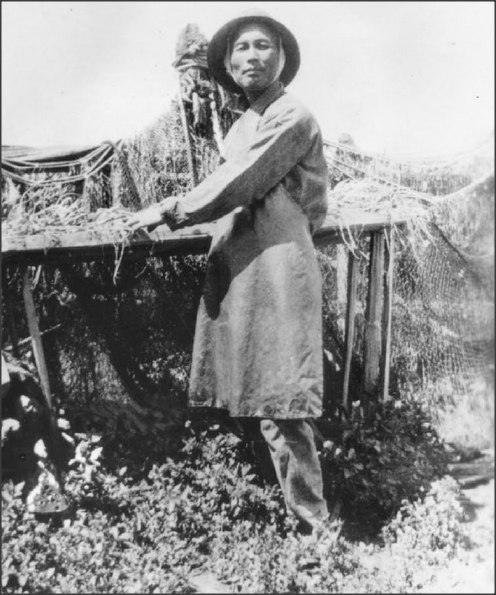
The enforcement of the Page Act almost exclusively came down on Asian, and particularly Chinese women. Many of the Chinese women who sought to migrate to the U.S. were indeed prostitutes. But perhaps just as many were seamstresses, cooks, servants and launderers.

Throughout every step of the immigration process, East Asian women seeking entry into the U.S. were asked to answer questions like:  Have you entered into contract or agreement with any person or persons whomsoever, for a term of service, within the United States for lewd and immoral purposes? Do you go to the United States for the purposes of prostitution?  Are you a virtuous woman? Do you intend to live a virtuous life in the United States? These questions would be asked repeatedly with the inquisitor keenly watching for any discrepancies in the answers.

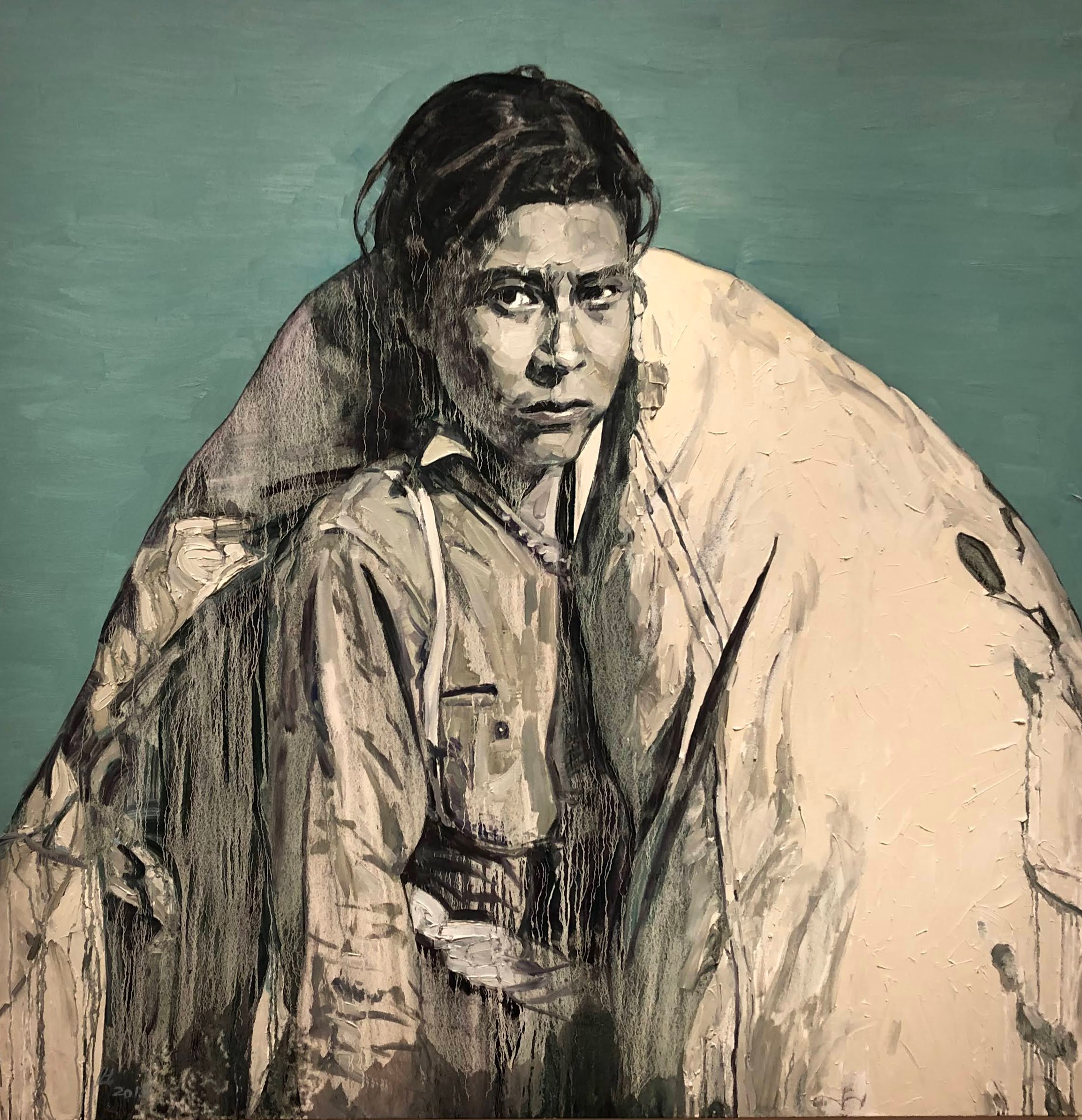
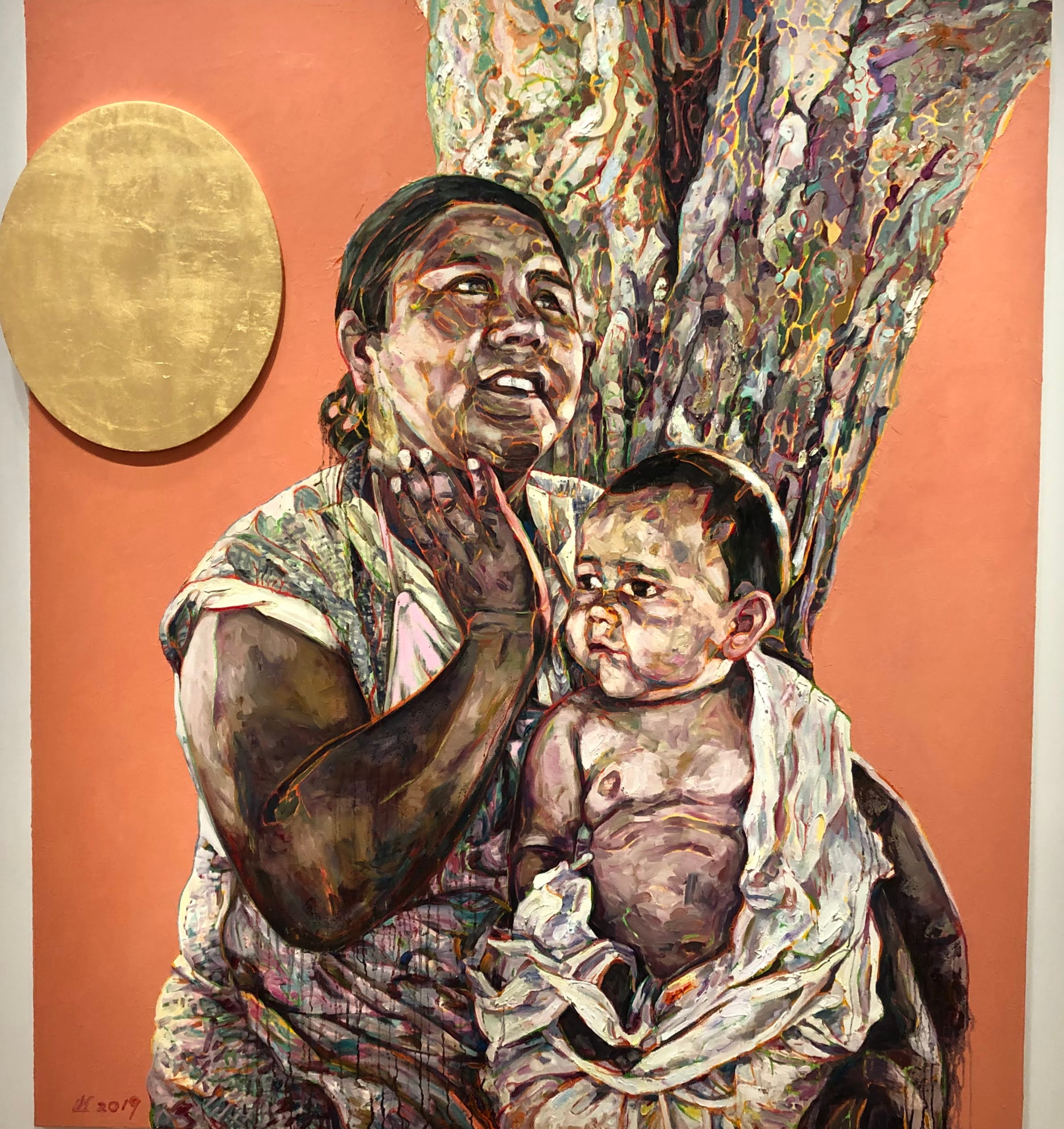
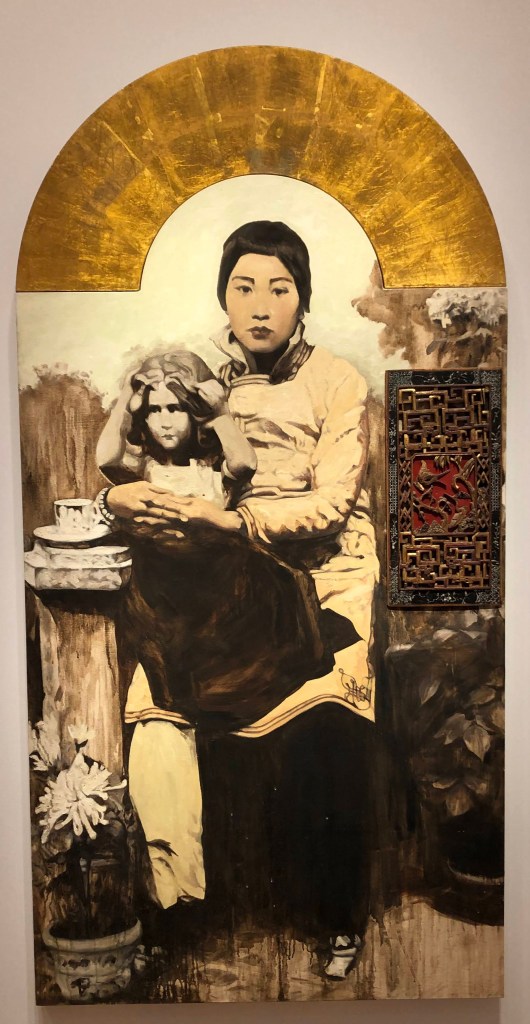
Madonna, Hung Liu

The enforcement of the Page Act reinforced negative stereotypes about Chinese women. They were viewed as immoral, dishonest, promiscuous, dirty and transmitters of STDs. The American Medical Association went so far as to proclaim that the Chinese carried distinct germs to which they were immune, but from which whites would die if exposed. (One can’t help to notice the parallel to the Asian hate that was generated during the COVID-19 pandemic.)

The San Francisco Examiner, on March 11, 1874, published this shockingly worded report under the title “Checking Immorality.” “The dock was crowded this morning with an array of Chinese women, who were arrested last night for being residents of houses of ill-repute. The ignorant creatures seemed to be entirely unconscious of their depraved condition, and laughed and chatted about the novelty of their changed position — at least we were so informed by those who were able to translate their language.”

Another example of local attitudes toward Chinese women is from the Merced Tribune on Dec. 26, 1874. “It is not only the privilege of the Government under the Constitution, but its duty, as well, to put a stop to this Coolie traffic, and shut down the gates forever against the flood of low, degraded Chinese women who come to our shores for no other purpose than to corrupt all with whom them come in contact.”

The Page Act and its enforcement had the desired effect. The invasive and humiliating procedures deterred many from even trying to migrate. Others couldn’t manage the heavy bribes that were necessary to make it past the consuls who were responsible for letting immigrants in. During one period of a few months in 1882, 39,579 Chinese entered the U.S., only 136 of them were women. This created a lasting problem in Chinese-American communities, making them substantially familyless.

While the Page Act was successful in stemming the flow of Chinese women into the U.S., that was hardly the end of the resentment and discrimination that was directed at the Chinese. They weren’t white. They weren’t Christian. And by living in their own Chinatown communities, they were resented for not assimilating. But most important of all, the 1870’s was witnessing the onset of a long depression and the competition in the labor market whipped up even more invective against the Chinese and resulted in one of the most racist pieces of legislation to ever emerge through Congress, the Chinese Exclusion Act of 1882.

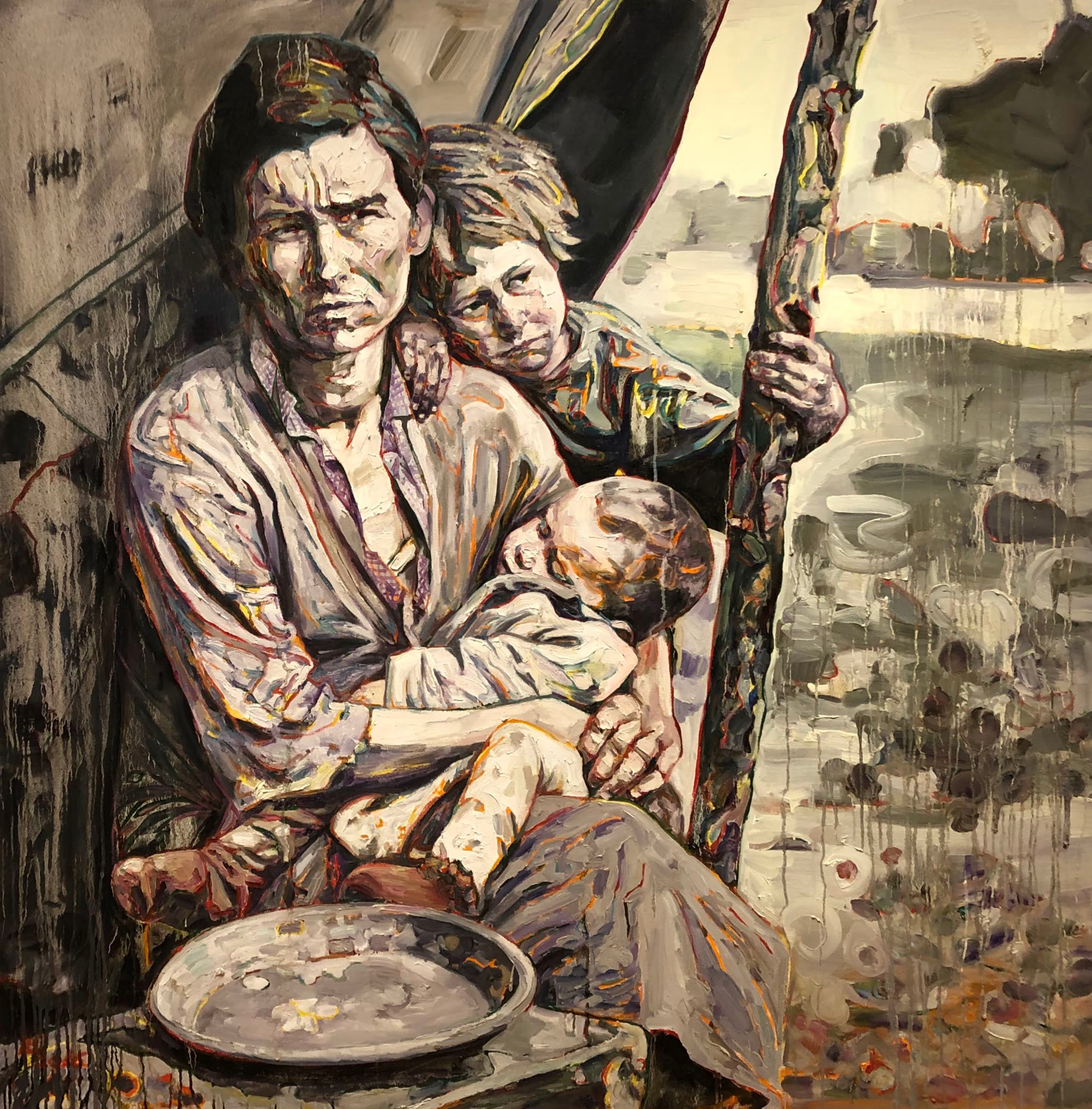
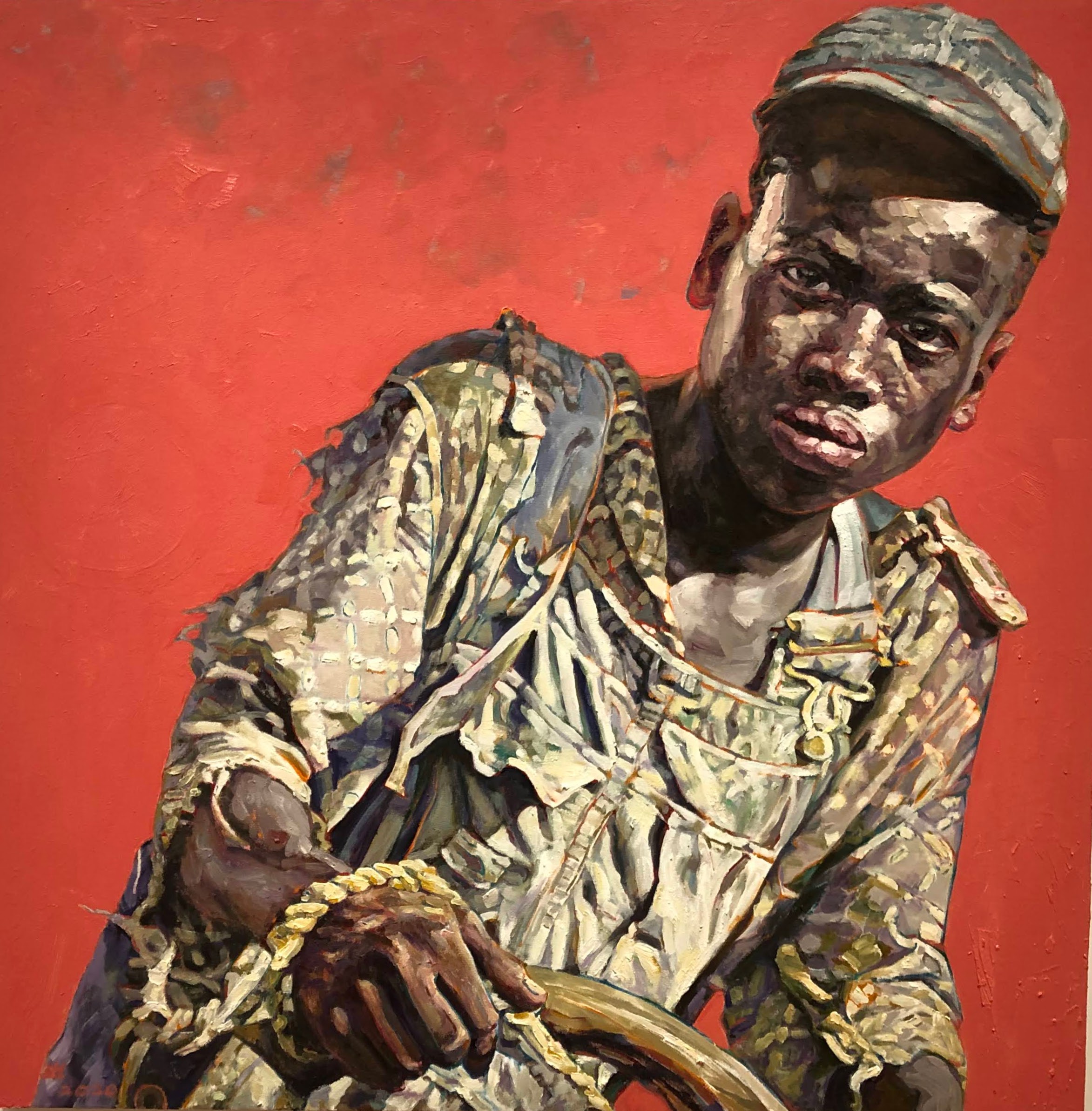
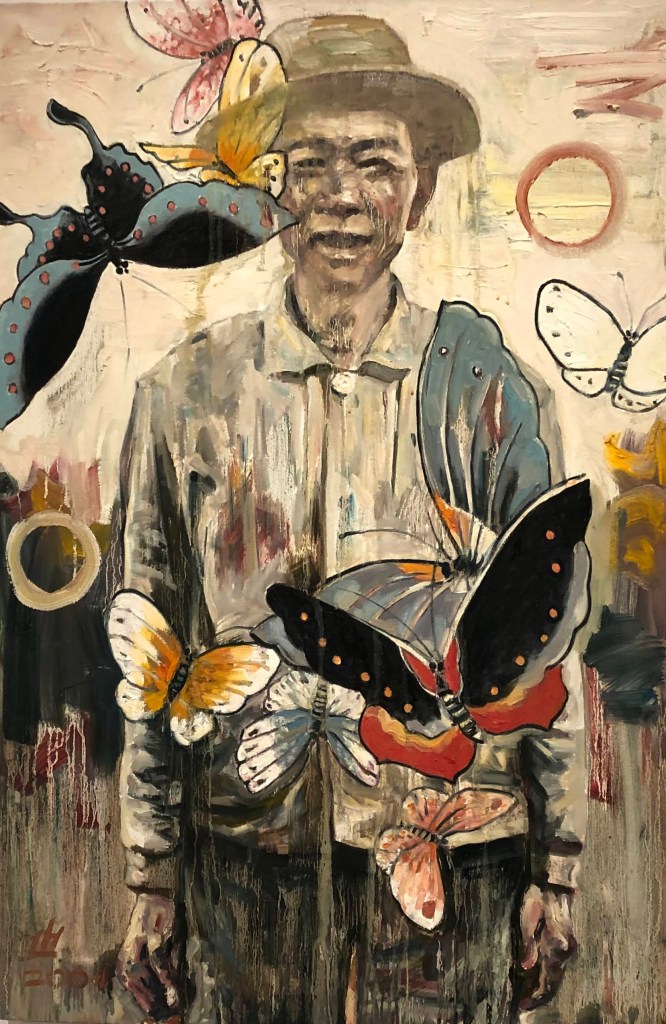
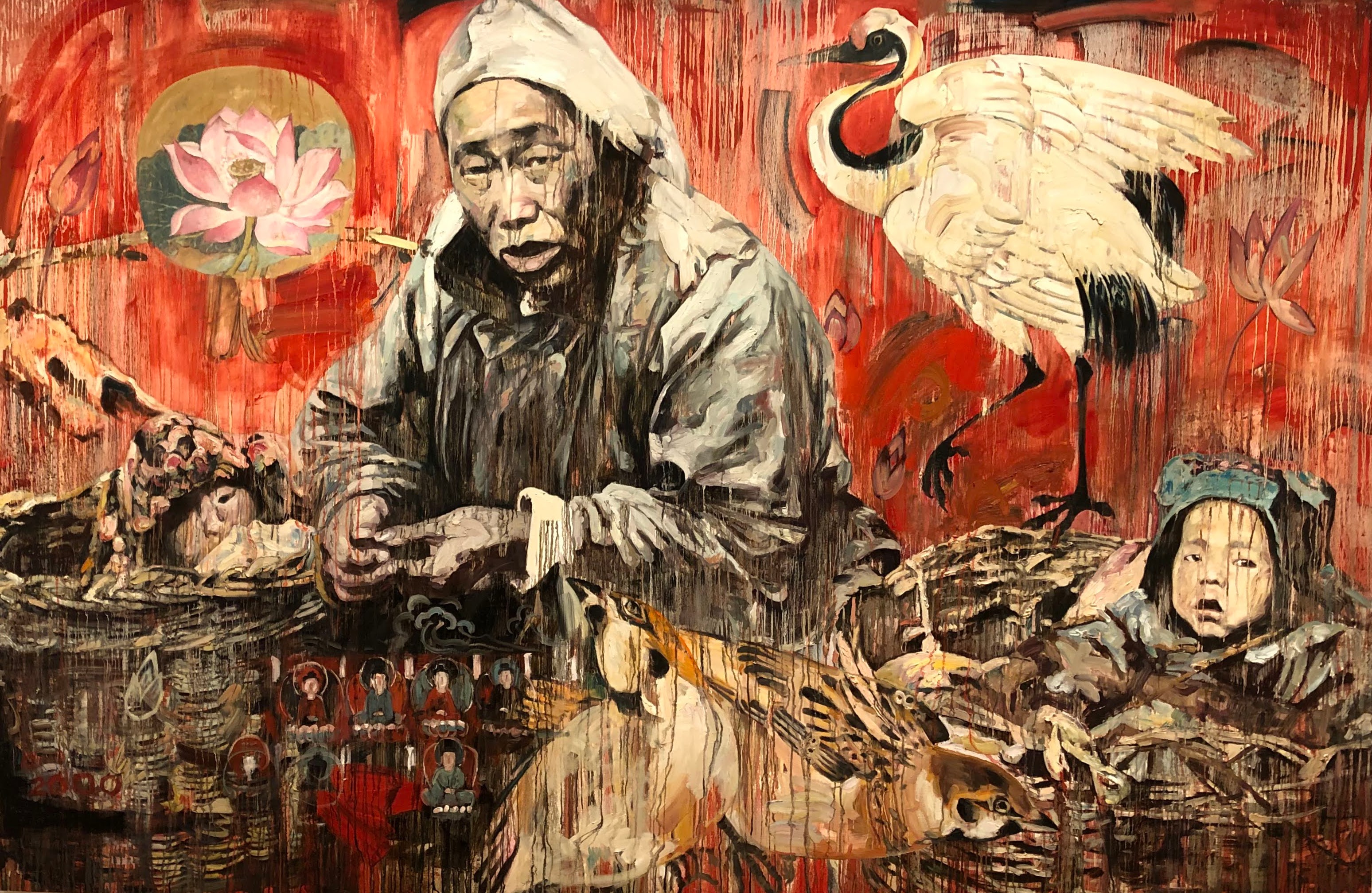
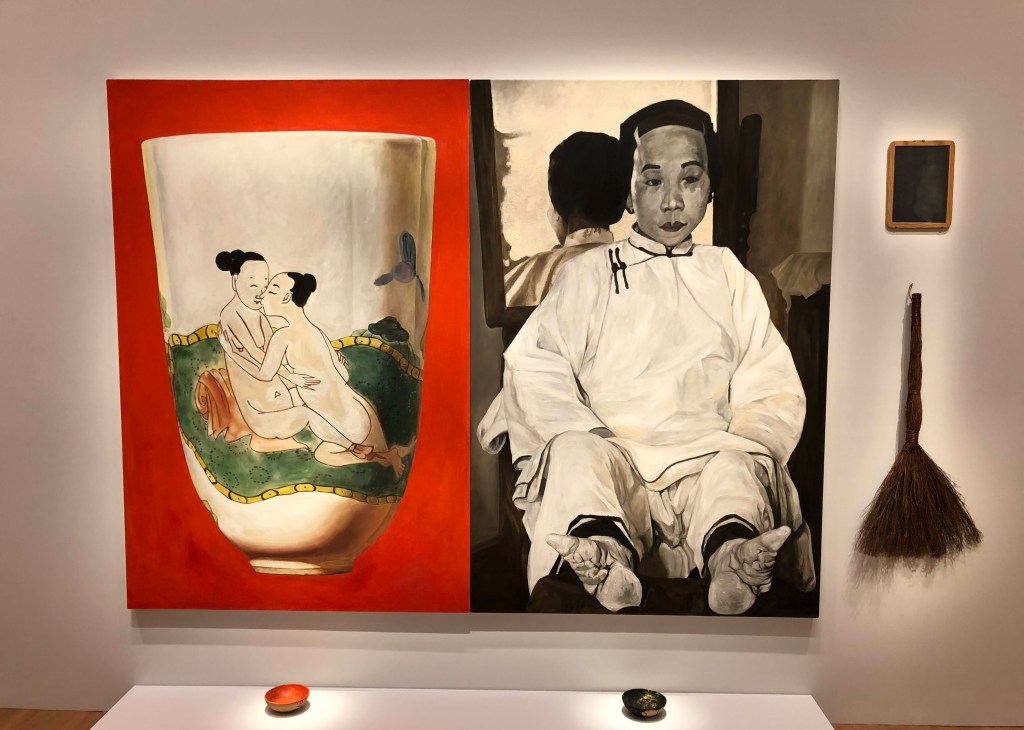
Hung Liu

(All images in this post are photos of the works of Chinese artist Hung Liu, currently on display at the National Portrait Gallery in Washington)

Posted in History | Tagged , , , , , | 13 Comments

MFF21: I Can See the World from My Cinema Seat

International features from this year’s Montclair Film Festival.

A Chiara (Italy)

Ask me what I thought of this movie after the first hour, and you’d get a completely different answer than you would after the second hour. It’s slow and plodding, until suddenly it isn’t.

Chiara is a 15-year-old girl living in an Italian village with one older and one younger sister, her mother and sometimes her father. She’d like to know why her father isn’t around more. And she’d like to know why somebody blew up her father’s car. And why there’s a bunker under her house. The answer she gets: “You’re too young to understand.” Her response is to figure it out herself.

Chiara, her father and two sisters are played by the same family of actors, the Rotolos. Swami Rotolo is especially impressive as Chiara.

What does she find? Herself. A15 year old who is fearless, focused and undeterred. A young woman who will forge her own path, make her own decisions and follow her life choices. Over and above what she finds and what her father does, it is Chiara’s coming of age that moves the viewer here.

A Hero (Iran)

Rahim is in prison for a debt. On a two-day leave he is presented by his girlfriend with a found bag containing gold coins. He eventually decides to return the bag and does so to it’s supposed owner. This seemingly heart-warming story of selflessness circulates out of the prison, on TV and in the news. Rahim is a hero. And things go south from there.

There are in fact no heroes in this movie. Just victims. You can’t separate the good guys from the bad guys. Everyone tells a version of the story with some truth, but some fabrication. And no one ends up better off than they started.

A Hero is an Iranian movie in Farsi. It is simply filmed with the cinematography amounting to neither an addition nor a distraction.

In this Iranian village it is a story of the impact of social media. Perception trumps truth online and we act with a eye toward our reputation. Rahim might be a hero, a liar, a victim or maybe he just exists in some gray area, like the rest of the movie.

Power of the Dog (New Zealand)

This movie is from New Zealand, but it’s set in Montana. Go figure. It’s 1926 and it’s still pretty much the wild West. Power of the Dog is about four characters:

Phil — One ornery cowboy. Supposedly he studied classics and graduated from Yale. Now he’s a rancher herding cattle, bullying and ridiculing everyone who crosses his path. He’s unwashed, uncouth and uncaring.

Rose — A gentle, friendly, pretty widow running a boarding house and cafe in whatever god forsaken place this is supposed to be. She has a 17 or so year old son who she is ultra-protective of him.

Peter — Rose’s son. Rail thin and effeminate of gesture. Surrounded by Marlboro men, he takes a lot of abuse. While the other guys are trying to ride standing up on horses, he’s making decorative paper flowers. Neither social nor communicative, but smart. Goes to medical school.

Henry — Phil’s brother. He’s calm, considerate and soft spoken. Had been riding with Phil for 25 years, which seems preposterous. Finds Rose crying after Phil is abusive toward Peter. Marries her.

These four live on the same ranch and the movie is about their relationships. For the most part, they prove to not be what you thought they were.

Jane Campion directed this film 28 years after The Piano, a film that won the Palme d’Or at Cannes and three academy awards. I didn’t see all of the 75 movies that were part of the Montclair Film Festival, but from what I saw this was hands down the best. The western landscapes always look best on the big screen, but it’s also on Netflix and I strongly recommend it.

The Worst Person in the World (Norway)

Julie starts off in medical school. Deciding she’s more interested in souls than bodies, she switches to psychology. Then she uses her student loan to buy equipment and decides photography is her calling.

After college, things are no more settled. She goes through and walks away from two pretty serious relationships. She also walks away from a not-so-loving father. She wrestles with the question of whether she wants kids, then negotiates an unwanted pregnancy.

She is not the worst person in the world. She is a young woman who refuses to be led by others. She is ascertaining that she will be the one to make the call on her life decisions and the one to define what her life will be like, once she ultimately figures out what she wants her life to look like.

This movie is intimate, occasionally explicit, intense and emotional. Every issue is explored in depth, too much so at times. There’s also some classic European film family gatherings where all sorts of venom and resentment is bubbling up beneath the surface festive cheer. Renate Reinsve’s portrayal of Julie is the strength of the movie. She manages to be equally as convincing as an 18 year old as she is a 30 year old.

Posted in Uncategorized | Tagged , , , , , , , , | 1 Comment

‘I Know Nothing.’ The Politics of Xenophobia in the 19th Century

Before there was such a thing as the MAGA crowd. Before we had a president who called Mexicans rapists and Muslims terrorists. More than a century and a half before that, there was a national political party based on the same level of thinking. Appropriately enough, they were known as the Know-Nothings.

The Know-Nothings had their origins in secret societies, which is how the name came about. Members were supposed to respond to questions about the organization and what it does by saying ‘I know nothing.’ The Know-Nothing name was originally intended to be derisive, but apparently it stuck. On official documents, like election ballots, they were called the American Party.

Citizen Know Nothing

What were the Know-Nothings about? Mostly anti-Catholicism. They were a thing in the 1840’s and 1850’s, a time when vast numbers of Irish and German immigrants, most of whom were Catholic, were arriving on these shores. The Know-Nothing agenda included removing all Catholics from public office, deporting foreign beggars and criminals, mandatory reading of the Protestant bible in schools and a 21-year naturalization period (an avenue to voter suppression).

Like the MAGA folk, they went all in for conspiracy theories. The head villain in most of these fantasies was the pope. One line of Know-Nothing thought was that Pope Pius IX had opposed the democratic revolutions in Europe in 1848, that he was an enemy of freedom and democracy and that he was now setting his sights on America. The ‘Romanist’ plan, according to the conspiracy-believers, was to flood the U.S. with Catholics who would vote for government reps whose first loyalty would be to the Vatican.

The 1850’s were a time of upheaval for the traditional two-party system in America. The Whig Party was on the way out and the Republican Party was in its formative stages. In addition to its xenophobic agenda, the Know-Nothings attracted some who saw them as an alternative to the Democrats. They enjoyed some significant success in the non-presidential election years of 1854 and 1855. They won control of the legislature in Massachusetts, a state where there was an influx of Irish and German immigrants. The Know-Nothing majority put the Protestant Bible requirement in place, disbanded Irish militias and removed Irishmen from state jobs. They tried to pass a constitutional amendment requiring residents to live in the state for 21 years before being allowed to vote or hold public office, but didn’t get the required two-thirds vote. They even appointed a short-lived committee to investigate ‘sexual immorality’ in Catholic convents, a committee that was disbanded when one of its members was found to have used committee funding to pay a prostitute.

Torchlight meeting of Know-Nothings in New York

Similar stories played out around the country. Robert T Conrad was elected mayor of Philadelphia after a campaign that promised to hire only native-born Americans to city jobs and to close saloons on Sundays. (The latter was aimed at immigrants for whom saloons served as a gathering spot. Saloons would later become a target of the temperance movement that eventually led to Prohibition.) Chicago elected a Know-Nothing mayor in 1855 who banned immigrants from city jobs. In San Francisco, where the Know-Nothing bigotry was expanded to include the Chinese, a state supreme court justice ruled that a Chinese person could not testify against a white person in court. 

Millard Fillmore, portrait by George Peter Alexander Healy

This all led to a Know-Nothing run at the presidency. Former President Millard Fillmore was the Know-Nothing candidate.  In 1848 Fillmore had been elected vice president, running on the Whig ticket with Zachary Taylor. He ascended to the presidency when Taylor died from gastroenteritis. Fillmore declined to run for a full term in the 1852 election. As the Know-Nothing candidate in 1856, he finished third, garnering 21% of the vote.

While they were known primarily for their nativism, the Know Nothings had relatively progressive positions on issues like workers’ and women’s rights and regulation of industry. But, with members in both the North and South, they shied away from dealing with the issue of slavery and in the late 1850’s that was the issue that was tearing the country apart. In doing so, it tore the Know-Nothings apart.

The Ripley (Miss.) Advertiser in November of 1855 had this to say under the headline: “What the Know-Nothings Organization Has Done for Abolitionism. Southern Men Read!!”

“…Abolitionism has triumphed at the North, through the instrumentality of the Know Nothing Organization. This infamous party which in its incipiency, and before its real purposes were developed, was recommended to Southern men by the desperate demagogues who expected to profit by it, as a sound National organization, has shown itself to be the most potent instrument ever yet derived by the enemies of the South, for the accomplishment of their unhallowed designs.”

Samuel Morse
Samuel Morse

Some pretty prominent people counted themselves amongst the Know-Nothings They included Samuel Morse, inventor of the Morse code; Sam Houston, who was a former president of the Republic of Texas and later a senator from that state; and Henry Wilson, who would later go on to serve as vice president under Ulysses Grant. There were also some in the infamous category, including John Wilkes Booth, Lincoln’s assassin, and Bill the Butcher. Bill, whose real name was William Poole, was the leader of a nativist New York street gang, the Bowery Boys. One of their goals was to disenfranchise Irish Catholics by intimidating them from showing up at the polls. Bill, himself, was also known as a vicious bare-knuckles fighter, one who had little interest in playing by the rules. He was shot and killed at age 33 by a member of a rival Irish Catholic gang.

One prominent person who was not a Know-Nothing was Abraham LIncoln. Here’s what he had to say:

“I am not a Know-Nothing—that is certain. How could I be? How can any one who abhors the oppression of negroes, be in favor of degrading classes of white people? Our progress in degeneracy appears to me to be pretty rapid. As a nation, we began by declaring that ‘all men are created equal.’ We now practically read it ‘all men are created equal, except negroes.’ When the Know-Nothings get control, it will read ‘all men are created equal, except negroes and foreigners and Catholics.’”

Roughly a century later, in 1950, the Miami Herald was still echoing Lincoln’s message: “Ku-Kluxism, race riots, anti-Semitism are the modern offspring of the same un-American impulses that were behind the Know-Nothing Party of the early 19th century. Bigotry is a many-lifed monster.”

Posted in History | Tagged , , , , , , , , , | 10 Comments

Festivals ‘R’ Us

Due to a combination of COVID, scheduling conflicts and New Jersey weather, my hometown of Montclair, N.J., has been an almost continuous festival for the last month of so. Here’s a look at where I’ve been spending a good part of my time.

Montclair Jazz Festival

The Montclair Jazz Festival, produced by Jazz House Kids, is now in its 12th year. Pre-pandemic, the festival was a one day affair held in August at a town park. Last year it was cancelled.This year, some events were held at downtown locations through the summer with a grand finale late in September on the town’s main commercial street. Bloomfield Avenue was closed down, with music stages set up on both ends and a street fair in the middle. As usual, Brian McBride, artistic director, was the headliner Saturday night.

Alicia Olatuja
Of the performers which I watched, my favorite was Alicia Olatuja, shown above with her band.
Montclair Literary Festival

The Montclair Literary Festival is the newest of these community events, having been launched in 2017. Normally it is held in March and they plan to resume that schedule in 2022. It is organized by Succeed2gether, a non-profit that provides various educational services to children who need them. Last year the festival consisted of a number of virtual events. The 2021 festival included a full weekend of in person events in early October. Most were held in outdoor tents at the Montclair Public Library and the Congregational Church next door. There were a couple of events held virtually and one large event held inside the church.

Among the best known authors who participated in the festival were Joyce Carol Oates, Colm Toibin and Stevie Van Zandt, who has just written a memoir called “Unrequited Infatuations.”

Stevie Van Zandt
Up in the distance you can see Stevie Van Zandt on stage with his trademark headscarf. Van Zandt went from Little Stevie, Bruce Springstein’s right hand man, to Silvio Dante, Tony Soprano’s right hand man.
Montclair Literary Festival panel
This panel included three Asian-American authors who have written memoirs about growing up as immigrant children. From left: Quian Julie Wang, Anna Qu, Ly Tran, moderator Jiayang Fan.
Montclair Literary Festival
Montclair Film Festival

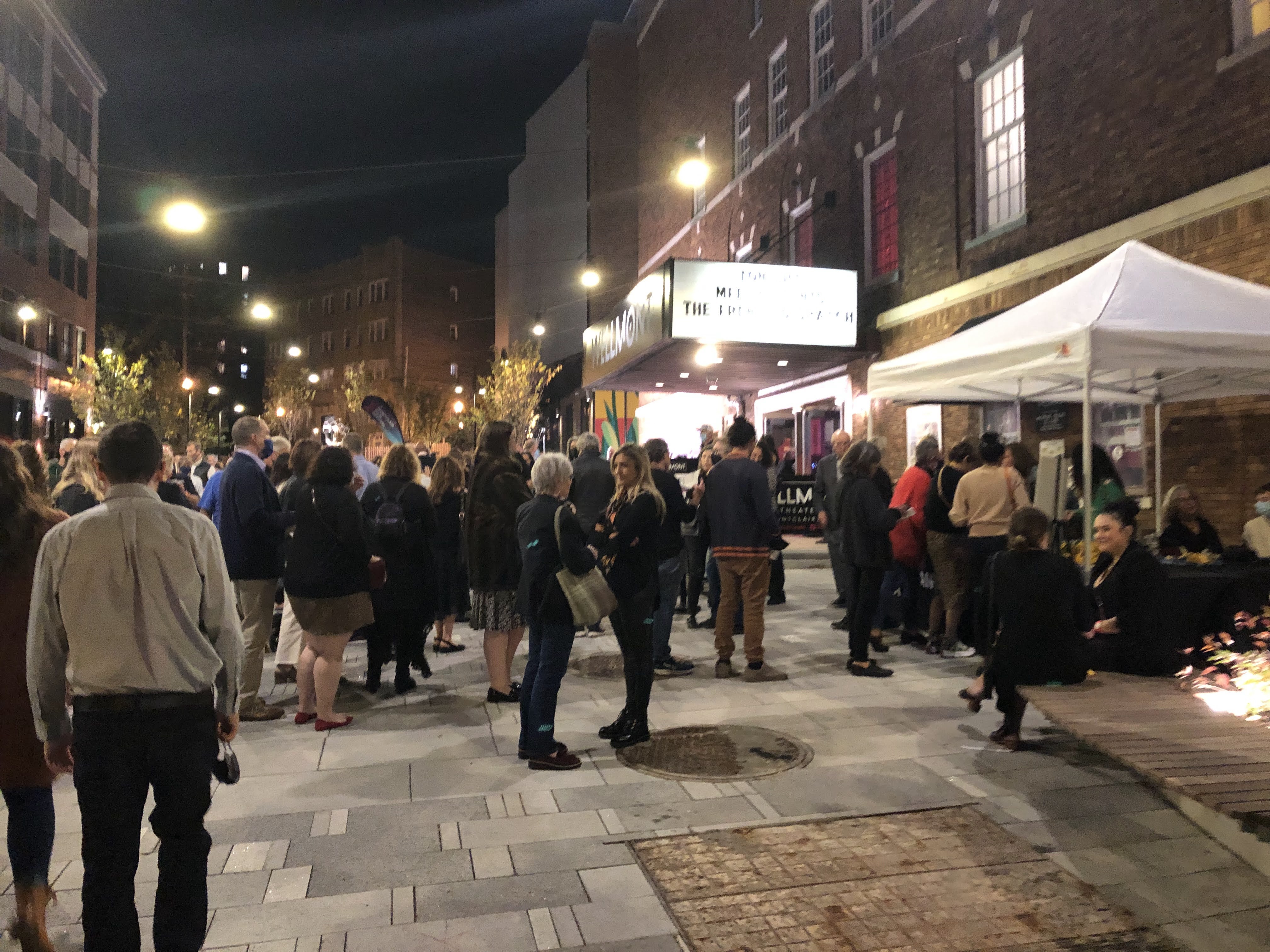
By Oct. 21, it was time for the tenth anniversary ten-day Montclair Film Festival at three venues around town. The film festival used to be held in May. It was postponed in 2020 until October when it consisted of mostly streamed screenings with a few movies shown at a makeshift drive-in in neighboring West Orange. This year they kept the October date but the films are all screened in theaters. Opening night featured The French Dispatch by Wes Anderson at the Wellmont Theater, an old theater that is primarily used now as a concert hall. I’ll have more on the MFF films in a later post.

Claridge Theater
During the pandemic Bow Tie Cinemas, the owners of Montclair’s art house theater, the Claridge, threw in the towel. Montclair Film, the parent company of the film festival, acquired and renovated it, reopening it in time for this years festival.
Montclair Film Festival
Opening night at the Wellmont
Montclair Film Festival

(I don’t want you to think we’re running a bunch of superspreader events here. All indoor events required proof of vaccination to be admitted and mask wearing at all times.)

Posted in Uncategorized | Tagged , , , | 5 Comments

The Forty-Eighters: Immigrants for Social Justice

What is our prevailing image of the 19th century immigrant to America? It’s about the Statue of Liberty inscription, the tired, the poor, the huddled masses and wretched refuse. They crowded into our cities and became the workhorses of industrialization here.

But there is one group of primarily German immigrants, or you can call them refugees, who have a very different profile. The Forty-Eighters were neither poor nor uneducated. They were supporters and in some cases active participants of the revolutions that swept through Germany and some other European countries in 1848. In their homeland they had advocated for unification and a republic. When their revolution failed, they were persecuted and for many their choice was jail or America.

German immigrants arriving in New York

The Forty-Eighters generally settled in places that had a substantial German population. Most went to New York, Cincinnati, St. Louis, Philadelphia, Baltimore, and Milwaukee. They had a lasting influence on the culture and politics of all of these areas. While German immigrants are known for their contributions in the areas of education, the military, and of course, beer making, the Forty-Eighters brought their ideals with them and their contribution was in the area of social justice at a time when the U.S. was being torn in half.

Slavery had been abolished in Germany in 1794. The Forty-Eighters became avid abolitionists.

Like other immigrants they came to this country and took up low-level jobs, on the railroad, on the farm or in the cities. But they quickly moved into the types of roles they had in Germany, many becoming journalists, educators and artists. It is in these roles that they exerted their influence. Many founded or worked for German language newspapers. Others formed political clubs known as Turner societies. These groups were active advocates of abolition. In some cities they provided bodyguards for visiting abolitionists.

In Texas, the Forty-Eighters, many of whom had come in through the port of Galveston, fought against and voted against that state’s secession from the Union. In St. Louis, they were part of a volunteer group that fought against Confederate forces in what is known as the Camp Jackson Affair. They were strong supporters of the Republican Party. Lincoln’s victory in the 1860 election owes much to the vote of immigrants and in particular the Germans in states like Wisconsin, Ohio, Indiana and Iowa. Some 200,000 German born soldiers fought for the Union in the Civil War, about 10% of the total. The Forty-Eighters both enlisted themselves and used their influence to encourage others to do so. 

Here are a few prominent Forty-Eighters:

Harold Raster.

Raster was born in Anhalt-Dessau. After graduating from the University of Berlin in 1848, he became chief stenographer for the revolutionary Erfurt Union Parliament. After the failure of the revolution, he was given a choice of leaving the country or facing trial. In 1851 he moved to New York where he initially found work as a wood chopper. A year later he moved to Buffalo for a job with a newspaper and by 1853 he became editor of the influential German language New York Abend-Zeitung. He was an active member of the Republican Party, pro-Union and anti-slavery and he used his newspaper to sway other German-Americans in that direction. After the Civil War he remained active in politics and in journalism. He was a delegate at the 1868 Republican Convention and chairman of the platform committee, He was later appointed Collector of Internal Revenue by President Ulysses Grant. At the same time he maintained his position as editor of the Chicago Staats-Zeitung.

Carl Schurz
Carl Schurz

Carl Schurz

Schurz came from Prussia. He was an active supporter of the 1848 revolution, working with an academic fraternity association that advocated for democratic reforms. He fought in the revolutionary army that was defeated in 1849, Schurz fled to Paris, then London and in 1852 arrived in Philadelphia. Shortly thereafter he moved to Watertown, Wis. There he was admitted to the bar. He was active in the Republican Party and the anti-slavery movement. He made speeches on Lincoln’s behalf in German. He became a general in the Union army, fighting in the Battle of Gettysburg, amongst others. He would go on to have a distinguished political career. His first elected position was lieutenant governor of Wisconsin. He would later become a senator from Missouri, the first German born member of that body. He was appointed Secretary of the Interior by President Rutherford B. Hayes. Along the way he became editor of the German language newspaper in St. Louis. After Hayes left office he moved to New York where he had stints with the New York Evening Post, the Nation and Harper’s Weekly.

Karl Daniel Adolph Douai

Douai was the son of a school teacher in Saxon-Altenburg. His family had little money and he worked as a newsboy during his childhood. But he was well educated. He lived in Russia for a time but returned to Germany with the promise of a more democratic country in the air. His efforts to organize workers and students landed him in jail in 1848. When released he was encouraged to leave the country and headed to Texas. He launched a newspaper in San Antonio which he used to rail against slavery. He advocated the creation of a slavery-free state in western Texas. That didn’t go over well in a slave state and he ended up selling the paper and moving to Boston, where he resumed his teaching career. In 1959 he established a three-classroom school there which is credited with having the first kindergarten in the U.S. He later moved to New York and then Newark and was a prominent member of the Workingman’s Party of the United States, which later became the Socialist Labor Party of America.

And then there’s this guy named Breitenbucher. My grandmother had some sort of certificate that showed he fought in the Civil War. I think he was my great, great grandfather. (I might need one more great in that description.) I don’t know too much about Herr Breitenbucher and there is no one left in my family that has any knowledge of him. Ancestry.com shows some 20 Breitenbuchers who fought in the Civil War, several from New York, which is where that side of my family lived. I have no idea if Grandpa Breitenbucher was a Forty-Eighter, but I like to think he had the same ideals and the same commitment to social justice.

Posted in History | Tagged , , , , , , , | 3 Comments

Welcoming With One Open Arm

The Europeanization of America all started with refugees. After the initial wave of fortune-seekers who we have sometimes incorrectly labelled discoverers, the folks who came to these shores with the intention of making a home here were for the most part fleeing persecution. There were Protestants fleeing Catholics. Catholics fleeing Protestants. And Protestant sects escaping the intolerance of other Protestant sects. Once they got here, more often than not they proved not so tolerant themselves.

There is no more iconic an American image that the Statue of Liberty and its famous inscription:

“Give us your tired, your poor,

Your huddled masses yearning to breathe free

The wretched refuse of your teeming shore.”

But over the years, many Americans have not been too anxious to see or the accept huddled masses and wretched refuse. This contradiction well represents the response to immigrants and refugees in the U.S. They have brought out the best in us, but also the worst.

There are many, many organizations in the U.S. that have tirelessly worked to raise money to support the resettlement of refugees here. Churches and synagogues, in particular, have opened their doors to the tired and poor, sheltered and fed them, found them clothes and taught them English. Whether its Central American farmworkers in New York State, or Africans in ice-cold Minnesota, there are, in every part of the country, warm-hearted American families who have welcomed the members of the formerly huddled massses into their homes and guided them into a new life.

Demonstrating for immigrants
(Image by Nitish Meena)

Yet every step of the way there have been those ready to vilify and expel anyone with a different skin color, a different religion or a different language. In the 1850’s there was a national political party, the Know-Nothings, that based their appeal on anti-Catholicism. In the 2020’s there is a national party, guided by a former president, that pegs various immigrant and refugee groups as terrorists, drug dealers and rapists.

Other than the folks like the Pilgrims in the 17th Century and the Syrians in the 21st, refugees fleeing religious persecution or civil war, most of the broad waves of immigrants came to this country for economic reasons. The had no money, no food, no work. Opposition to immigrants is likewise often cast in economic terms. Are they taking jobs from Americans? Are they pushing wages down because they’ll work for less?

Strange Fruit: Comfort Women, by Hung Liu

The nativists set their hateful gaze on Irish and German Catholics in the mid-19th century. Later in the century it was the Chinese. In the 1920’s, Jews and Italians were the boogeymen. In the latter half of the 20th century Haitians and Central Americans drew their wrath. And with 9/11, all Muslims came under attack.

Our immigration and refugee policy has also been strongly influenced by politics and ideology. In the latter quarter of the 20th century, the majority of refugees that were admitted to the U.S. were fleeing Communist countries. They were from Cuba, Vietnam, Russia or other Soviets states. On the other hand, refugees from countries with right-wing dictatorships supported by the U.S. were far less likely to be admitted. Using the statistics from 1984 as an example, 100 percent of Cubans who applied for asylum were granted such while 3 percent of the applications from Guatemalans and Salvadorans were approved.

There are two recent events that clearly demonstrate the mixed American reaction to the uprooted and unfortunate who come to our shores. One is the evacuation of Afghanistan. We were all horrified at the thought of Afghan girls and women, as well as those who worked with the U.S. during our military occupation, being left behind at the mercy of the Taliban. It was a truly bipartisan reaction that we needed to do more than we were doing to get these people out. Some of the loudest voices were the Republican critics of President Biden. But wait, does that mean they would be coming here? Some of the same people, following the lead of Trump, started urging that they be turned away, claiming, with no evidence, that there were terrorists among them.

Leaving Afghanistan
Operation Allies Refuge (U.S. Air Force photo by Staff Sgt. Brandon Cribelar)

Not long after, masses of displaced Haitian refugees showed up in the border town of Del Rio, Texas. An organization called World Central Kitchen, founded by Jose Andres, a well-known Spanish-born chef who migrated to the U.S. in 1990, set up shop there and began providing meals for these people. At the same time, we saw images of border patrol chasing them down on horseback brandishing whips.

In spite of all the vitriol that has been aimed at people coming to this country, we have historically been the world leaders in resettling refugees. Since 1975, about 3.3 million have come to our shores. For most of the past couple decades, 70,000-80,000 have arrived each year. That number was reduced during the Trump Administration and Canada passed us up as the top resettlement country. By 2020, the number was less than 12,000. Biden had talked about increasing that, but so far, it doesn’t appear to have happened.

Looking at our history, you can’t say that we’ve welcomed the tired, the poor, the huddled masses with open arms. But Lady Liberty still has one arm aloft holding the torch.

In a series of weekly blog posts over the next couple months, I’ll be looking at how America has historically responded to the people seeking a new home here, including the German Forty-Eighters, the Chinese railroad workers, Jews fleeing Hitler, Haitians fleeing Duvalier.

Posted in History | Tagged , , , , | 5 Comments

An American Artist

Is any artist more American than Norman Rockwell? He has captured the soul of America, drawn the wide-eyed eagerness of our children and painted the steadfastness of our traditions. Some of his works may come across as over-sentimentalized Americana. But he was also a champion of equal rights and created some iconic images of the civil rights movement like the image below of little Ruby Brooks integrating a New Orleans school.

Some critics have been dismissive of the fact that much of his work was done for magazine covers. That in no way should detract from the quality of his creations and the enormity of his talent.

These images are from the Norman Rockwell Museum in Stockbridge, Mass., the town where he lived from 1959 until his death in 1978 at age 84.

Rockwell on race

Rockwell’s Kids

Rockwell on Rockwell

Rockwell on work.

The Four Freedoms (1943, during World War II)

Happy Skiers on Train
American LaFrance
An ad Rockwell was commissioned to paint for a subsidiary of the A-T-O Corporation. He painted the scene in front of the fire station in his hometown of Stockbridge.
Rockwell Museum
Rockwell Museum
Posted in Art | Tagged , , , , , , , | 9 Comments

A Mass of Contemporary Art

MASS MoCA

MASS MoCA

North Adams, Mass.

The Massachusetts Museum of Contemporary Art opened its doors in 1999 in a former industrial complex that was built by the Arnold Print Works in 1860. It has since expanded to include some 250,000 feet of exhibition space. There is an excellent documentary called Museum Town that tells the MASS MoCA story, as well as the impact the museum has had on this post-industrial Western Massachusetts town.

Blane De St. Croix, How to Move a Landscape

Moving Landscape at MASS MoCA
Moving Landscape
Alchemist Triptych at MASS MoCA
Alchemist Triptych

Spencer Finch

Cosmic Latte at MASS MoCA
Cosmic Latte

ERRE, Them and Us

Sing Sing at MASS MoCA
Sing Sing
Eye Chart, Dennis Chavez

Sol LeWitt, Wall Drawing

Louise Bourgeois

Richard Nielsen, This is Not a Gag

This is Not a Gag, Richard Nielsen
Richard Nielsen
Self Portrait

Gunnar Schonbeck, No Experience Required

Posted in Art | Tagged , , , , , , , , , , , , , | 6 Comments

Old Town, Quito

Winged virgin of Quito
The winged virgin of Quito looks out over the city. This is an aluminum replica of the statue created for the Church of San Francisco in the 18th century. She has occupied this perch atop El Panecillo since 1976.
Winged virgin
Church of San Francisco
Church of San Francisco, 1534
Church of San Francisco
All that glitters is gold (leaf)
The Basilica of the National Vow
Quito street
Plaza de la Independencia
Republica del Cacao
You are never far from a chocolate shop in Quito
La Iglesia de la Compania
La Iglesia de la Compania,1765
La Iglesia de la Comanie
La Iglesia de la Compania
This is the back of the church. To the left of the door is a stairway. To the right is a painting of a stairway
Posted in Travel | Tagged , , , , , | 11 Comments

Casa del Alabado

Museum of Pre Columbian Art in Quito, Ecuador

The term Pre Columbian is used for art created by indigenous peoples in the Americas up until the 16th century. The IDs on these pieces show the civilization that they came from and the period of time when that civilization existed.

Pre Columbian art
Bahia, in coastal Ecuador, 450-700 ad
Pre Columbian art
Jama-Coaque, northern Manabi Province in Ecuador, 350 bc -1530 ad
Pre Columbian Art
Soldiers. Jama-Coaque, 350 bc-1530 ad
Pre Columbian Art
This feline with human traits is a bottle that makes the noise of the character when filled with water. La Tolita, island in Ecuador which has an acrheological site that has become a tourist attraction. 350 bc – 350 ad
Pre Columbian Art
La Tolita. 350 bc – 350 ad
Pre Columbian Art
Jama-Coaque 350 bc — 1530 ad
Pre Columbian Art
Napo, province in Ecuador. 1200-1600 ad
Pre Columbian Art
Manteno-Guancavilca, coastal Ecuador, 1100-1520 ad
Pre Columbian Art
Carchi, northern highlands of Ecuador, 750-1550 ad
Pre Columbian Art
Bahia 450 bc – 700 ad
Pre Columbian Art
Shaman’s Table, Jama-Coaque, 500 bc -1500 ad
Pre Columbian Art
Pre Columbian Art
Stamps. Jama-Coaque, 500 bc-1530 ad
Pre Columbian Art
The ancestor with six faces. Valdivia 4000-1500 bc
Pre Columbian Art
Valdivia, 4000-1500 bc
Posted in Art, History | Tagged , , , , , , | 3 Comments