Why Can’t You Pump Your Own Gas in New Jersey?

If you spent your teen years in New Jersey and began your life as a driver in the state, you have probably had this experience. Driving out-of-state, usually in neighboring Pennsylvania or New York, you stop for gas. You pull up to the pump and wait…and wait…and wait. But you’re not in New Jersey anymore and no one is going to come and pump your gas.

Even though it might be cold and rainy. Even though you might have just had a manicure and your nails are still wet. Even though you might not want the icky smell of gas on your hands. You’ve got to get out of the car, figure out the instructions and pump your own gas.
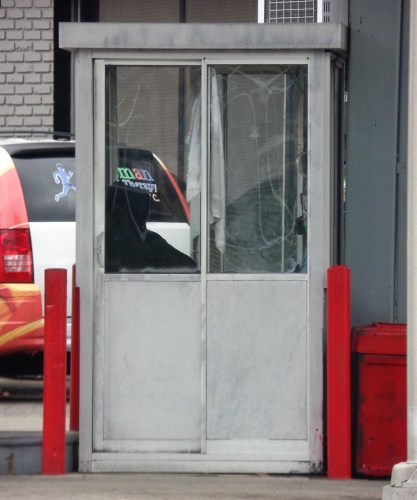
SAMSUNG CAMERA PICTURES

Hello. Excuse me. HELLO! Is this the full service booth?

New Jersey is one of only two U.S. states, the other being Oregon, where gas station attendants pump your gas while you sit in your car, perhaps checking your email and maybe listening to music. Having only spent about four days in Oregon I can’t speak for them but in New Jersey there are a number of explanations as to why we don’t fill ‘er up ourselves.

Officially the ban on self-service gas dates back to the 1949 Retail Gasoline Safety Act. That piece of legislation went into quite a bit of detail about the risks of gas pumping. Here are some highlights of what is officially known as 34:3A-4.

  • There are fire hazards associated with dispensing fuel.
  • It is difficult to enforce safety regulations without staff at the pumps. (Supposedly the gas station attendants who would fill your tank with a cigarette hanging out of their mouth are qualified to enforce these regulations).
  • Self-service stations are subject to higher insurance premiums.
  • Exposure to gasoline fumes is a health hazard, particularly to pregnant women. (In 1949 we had no problem with pregnant women smoking and drinking.)
  • Because stations in self-service states charged much higher prices for “full service” it was a discriminatory practice that subjected low income individuals to health risks. (Last documented evidence of the state legislature showing serious concern for income inequality.)

This makes pumping your own gas sound like pretty risky behavior. Perhaps some of my readers who happen to live in the 48 states that seem so oblivious to these risks can let me know if there have been instances of self-immolation at gas pumps in your neighborhood or a rash of miscarriages traced to gas pumping.SAMSUNG CAMERA PICTURES
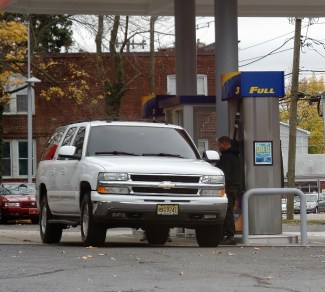
But according to Paul Munshine of the Star Ledger, there is another typically Jersier reason (The real reason self-service gas was banned in NJ: Corruption). According to Munshine everyone in 1949 was selling gas for about the same price, 21.9 cents a gallon. And then along came an entrepreneur by the name of Irving Reingold who opened a 24-pump self-service station in Hackensack offering the discount price of 18.9 cents per gallon. Angered by this intruder who didn’t adopt to the pricing collusion that everyone else did, the Gasoline Retailers Association lobbied the state legislature, the result of which was the 1949 legislation. Munshine quotes WOR radio commentator Lyle Van reporting “Chalk up another victory for the organized pressure groups.” (This move sent Reingold off looking for a career change. He resurfaced as the owner of The New Bell, a club that featured male go-go dancers for female audiences.)

That legislation is 65 years old.. Presumably the technology of pumping gas has improved enough to be less hazardous than is was in 1949. So why do we still not have self-service pumps? Some say it would take away jobs. Others point to the difficulty it would pose for some of the physically disabled. And apparently no elected official in the state (including the big man who is now running for President) wants to touch the issue after a Fairleigh Dickinson University poll in 2012 found that 62 percent of New Jerseyans (73 percent of female drivers) want to keep things the way they are.

And then there’s one other theory proffered by some cynical out-of-staters who believe that New Jerseyans are perhaps too dumb to pump gas. I can assure you that despite having lived most of my life in New Jersey, I have pumped gas in states all over the country even in such high pressure situations as the last gas station before the rental car return at LAX.

But then there’s this video evidence:


Posted in Uncategorized | Tagged , , , , | 19 Comments

Crossing the Hudson, Upstream

Walkway Over the Hudson

Walkway Over the Hudson

The Walkway Over the Hudson, a 1-1/4 mile span that crosses the Hudson River between Poughkeepsie and Highland, N.Y., is the world’s largest footbridge. It was originally built as a railroad bridge in 1889 and was in service until 1974. Backed by a combination of government and private funding the non-profit Walkway Over the Hudson worked with state and local agencies to convert it into a pedestrian walkway. It reopened on Oct. 3, 2009, with Pete Seeger providing the music. The bridge is listed on the National Register of Historic Places.

downstream view

The view downstream

Highland

The wst bank in full fall color.

Highland entrance

Entrance to the walkway on the Highland side.

Poughkeepsie side

Heading toward Poughkeepsie

On the Hudson

The Poughkeepsie riverfront

Under the bridge

Under the bridge

Boat heading under bridge

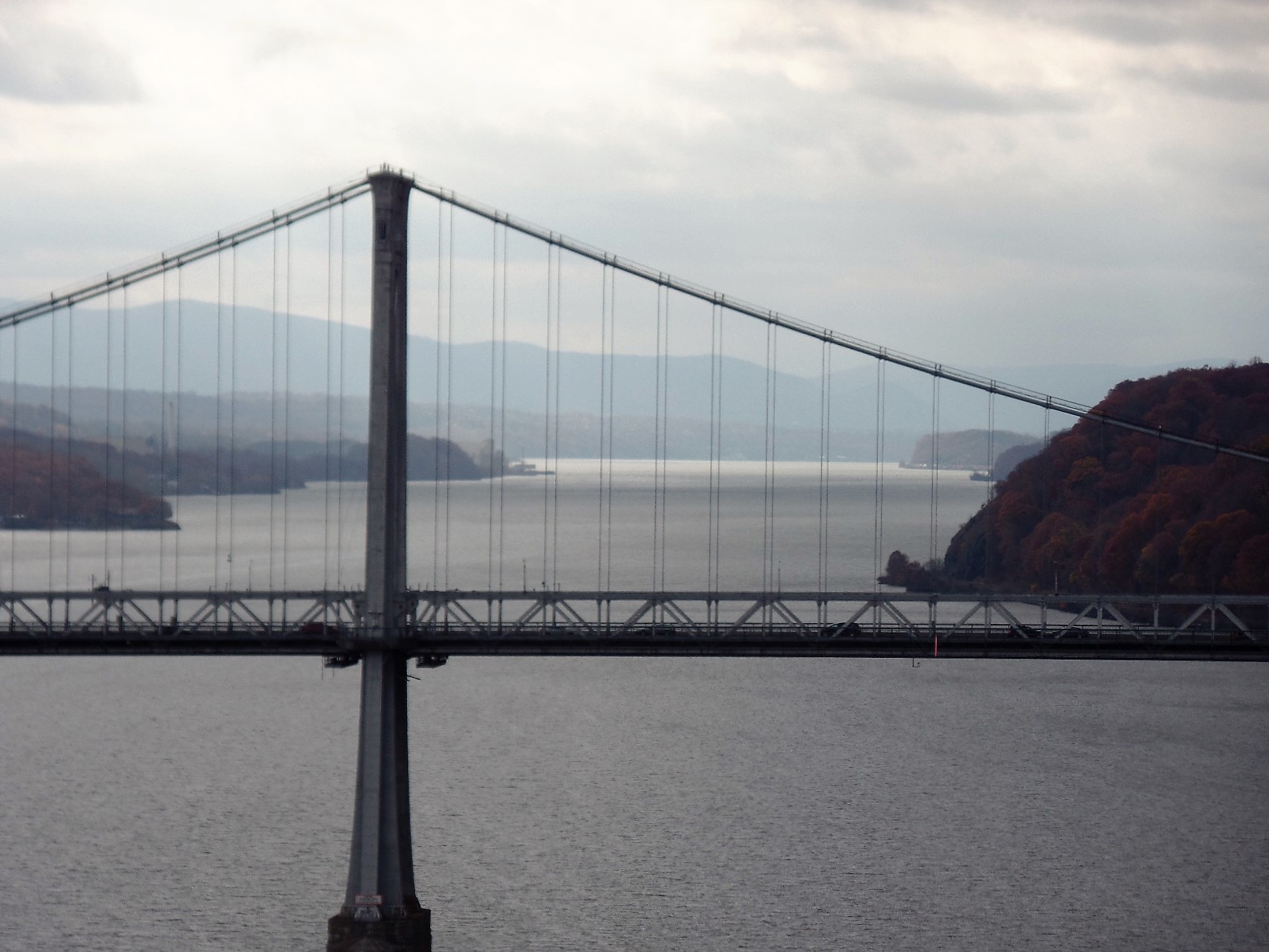
Heading south under the adjacent Mid-Hudson Bridge

Posted in Travel | Tagged , , , , , | 3 Comments

A Place to Celebrate Immigrants

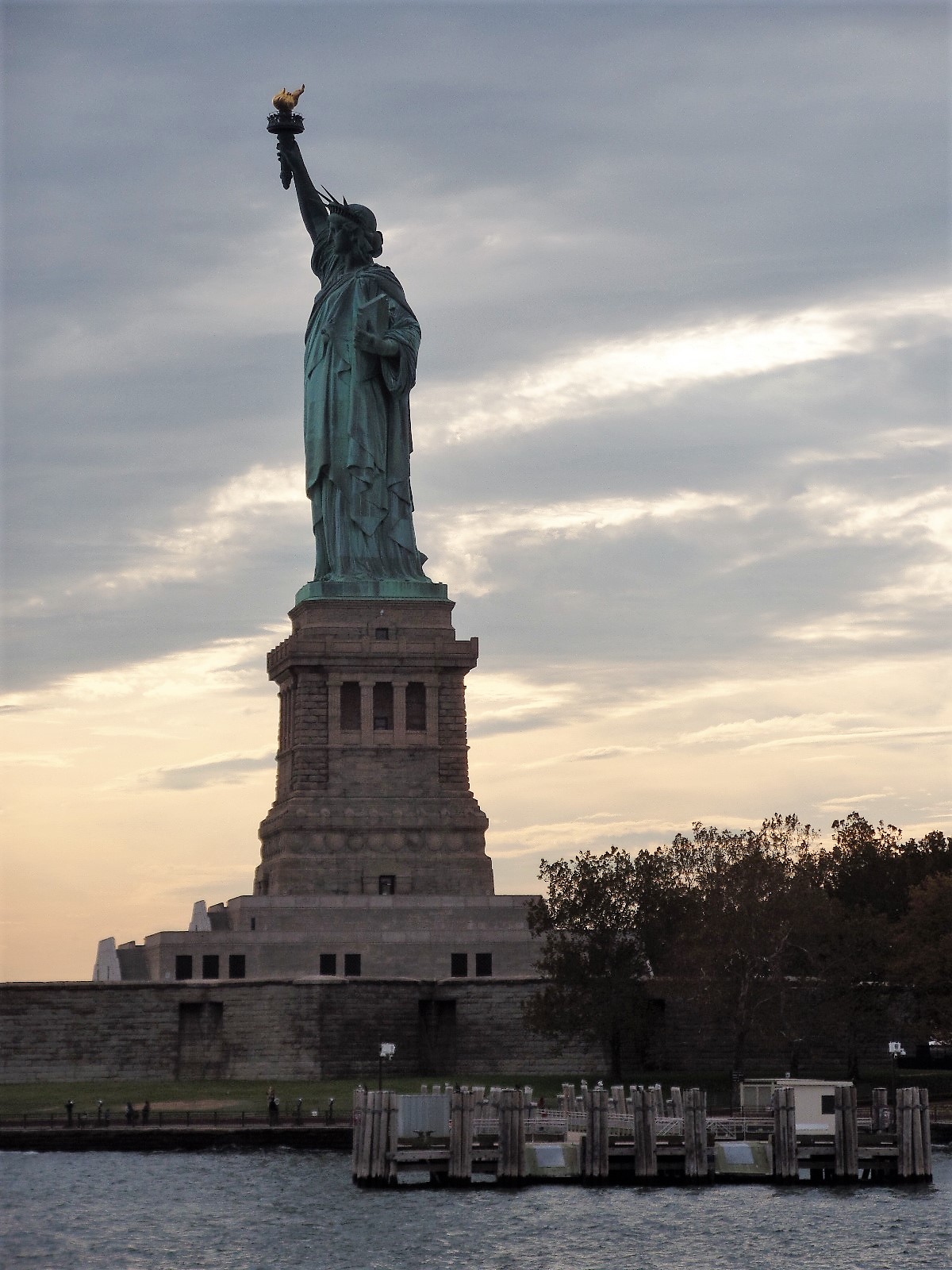
Statue of Liberty

“Give us your tired, your poor, your huddled masses….”

Ellis Island

Between 1892 and 1954, more than 12 million people immigrated to the United States through the portal of Ellis Island. It had in 1890 been designated by President Benjamin Harrison as the first federal immigration station. When it opened on Jan 1, 1992, Annie Moore, an Irish teenager travelling with her two brothers, became the first immigrant to be processed at Ellis Island.

Arrivals at Ellis Island could expect to spend three to five hours there during the inspection process. Only about two percent of the people who arrived were turned away. Those that were turned back were believed to have an infectious disease, were judged likely to become a public charge, or had been engaged as an illegal contract laborer.

Ellis Island

Registry Room

The first stop for immigrants arriving at Ellis Island was the Registry Room. It has been restored to the way that it appeared in 1918.

Mental exam

Part of the inspection that immigrants were given at Ellis Island was a mental acuity test like the one above. Here they were asked to identify the identical images.

Hearing room

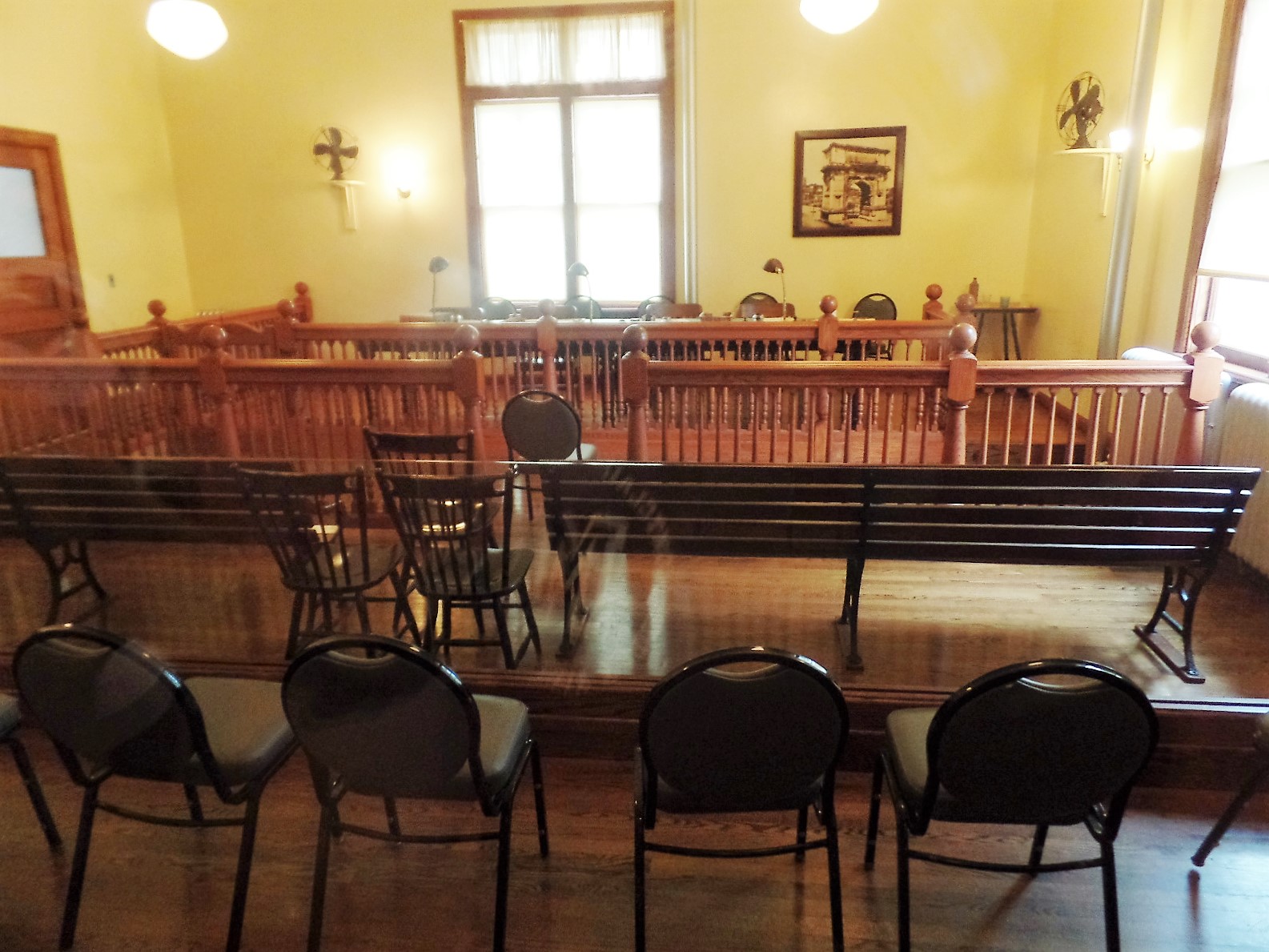
Immigrants who were being held for a legal hearing were sent here.

telegram

Jersey City Terminal

The next stop for most was the Central Railroad of New Jersey Terminal in Jersey City. More than 10 million immigrants entered the country through here.

Wall of Honor

The American Immigrant Wall of Honor currently lists the names of more than 700,000 perople who immigranted to the U.S.

Posted in History | Tagged , , , , | 30 Comments

Of Technology and Humanity

Many of us live with a growing unease about how technology will change the humanness of humanity. What tasks and jobs will be replaced by automation? Does artificial intelligence eat away at the exercise of human judgement? How much of society will keep pace with advances of technology?

Technology and human values was the theme of this week’s Techonomy 15 conference. In his opening remarks Techonomy CEO David Kirkpatrick described it like this: “We have to make judgements about what is right and what is wrong as we enter this world of technology immersion.”

In a session titled Gods in Boxes, Orin Boiman, CEO of Magisto, noted how algorithms control two important things in our lives, search and notifications. The fact that he would identify these as key parts of our lives does in itself speak to the changes that have come with technology.

One example of the influence of algorithms is the Facebook feed. Adam Mosseri, who manages that feed, was on stage at the conference and described the priorities of Facebook’s algorithms:

  1. Connect with family and friends
  2. Inform people about the world around them
  3. Provide fun, entertaining content.

The goal of the feed is to provide the content that each user is most likely to read, to like, to comment on. But how successful is this? Personally I don’t find the algorithm driven feed any better than the early stage chronological feed. And, like search results, it is probably self-reinforcing. Move an item to the top of the queue and it will in fact get more likes, more comments.

Algorithms without human values may have limited usefulness. One example is in human resources where the predictive powers of an algorithm might in fact lead an employer down a path that is illegal. “You might find out that a piece of software you bought is racist,” Boiman noted.

auto assembly lineJames Manyika of McKinsey & Company presented the findings of the consulting firm in a study of the future automation of work. He offered some moderation from the more common doomsday forecasts of what technology will do to the labor market. “Wholesale automation of jobs is unlikely, but middle-skill jobs could be replaced at twice the rate of recent decades.” He further noted, “45% of tasks could be automated but only 5% of jobs.”

A more disruptive vision of the future was offered by Cisco Executive Chairman John Chambers who predicted that 80% of American enterprise that exists today will not exist in 10 years. He suggested that we will see the day when a billion dollar enterprise has two employees, a CEO and CIO, while sales, production, legal and engineering are outsourced.

There are many areas where technology holds great promise for improving our lives. Among those raised at the conference were examples in healthcare where giving people the ability to monitor themselves and identify warning signs potentially creates a healthcare system focused on prevention rather than just treatment. It may also offer the solution to the need to increase food production without destroying the environment through such things as climate-stabilized indoor agriculture and city farms.

Online

(geralt)

But it is pretty clear that society doesn’t change at the same pace that technology is advancing. And technology has increased the spread of inequality. For example, according to Eileen Guo of Impassion Afghanistan, there are 1.2 million Internet users in that country which has a population of 30 million. In the U.S., Secretary of Commerce Penny Pritzker said 20% of households do not have access to high-speed Internet. The unconnected slide further and further from the connected. Think for example of the implications for education and what that means in an economy where education is vital to developing the skills that will be required to attain and hold a job in the future.

Jaron Lanier, author of Who Owns the Futurespoke of the importance of assuring that the benefits of technology advances are more widespread. He used the historical example of Henry Ford who insisted on paying good wages so that workers could buy his cars. “If we accept that not only the top of the zip curve needs to be funded, if we accept that lots of people are valuable, we might solve a big looming problem.” Lanier said.

He added that we think of AI algorithms as being able to do more than they can really do. As an example he pointed to automated language translators. Do they eliminate the need for human translators? No. In fact they couldn’t exist without them. The programs were based on the work of millions of human translators and will continue to need that input or fall out of date. “Let’s pay people who contribute,” he said.

Virtually no one sees where in the United States the leadership will come from to build a strategy for the changes that are likely coming to our economy. Kirkpatrick talked about a football field of Presidential candidates whose knowledge of the impact of digitalization on the future of the economy is about what you would expect from a football player. Of the four or five Presidential debates that have been held thus far, nary a word of this has been spoken.

(Archive video of Techonomy 15 is available on Livestream.)

Posted in Technology | Tagged , , , , , , | 2 Comments

Beer in New Jersey: The Renaissance

The history of beer in New Jersey has at least six distinct stages:

  1. Birth of an industry. Mid 19th century breweries pop up in New Jersey cities created for the most part by the influx of German immigrants.
  2. The Heyday. Late 19th century and early 20th. 51 breweries are active in the state at the turn of the century.
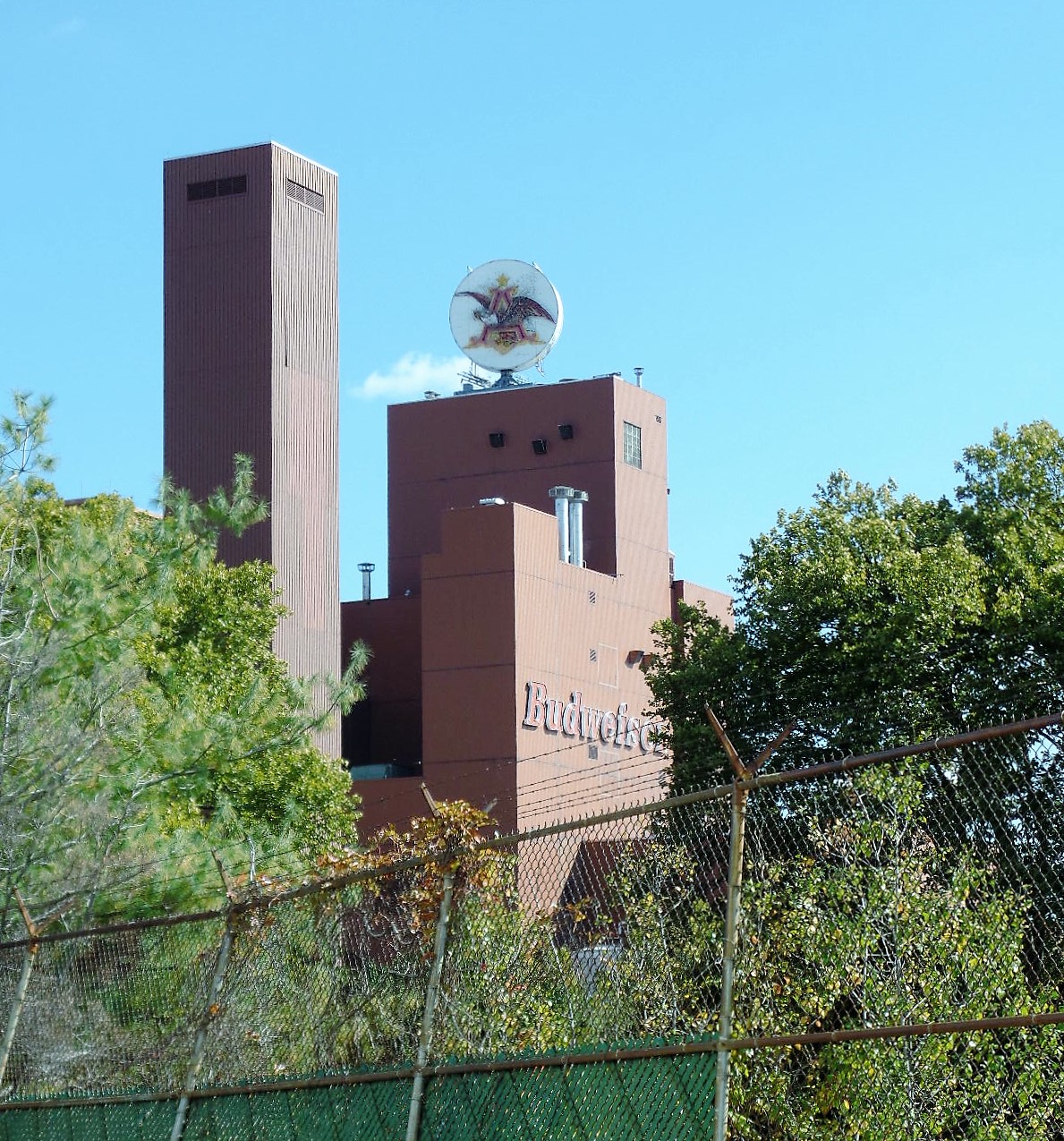
  3. Budweiser plantProhibition. 1920-1933, it becomes a crime to brew beer, so beer brewing gets turned over to the criminals.
  4. The Big Brewer era. Mid 20th century the big breweries, Pabst, Rheingold, Ballantine, Krueger, are thriving.
  5. The Dark Ages. 1965-1995, corporate consolidation and the domination of a few national brands results in closure of all but one of New Jersey’s breweries, the Anheuser Busch facility in Newark.
  6. The Renaissance. 1995 to present.

Despite its history as a hub for beer brewing, New Jersey was late to the party as the rest of the country began to take an interest in locally brewed craft beers. Laws that prohibited the sale of beer where it was made and restrictions on who microbreweries could sell to, what they could sell and how they could sell it slowed the growth of the craft beer movement.  (See Beer in New Jersey: All the Laws We Never Followed)

The state didn’t have a brew pub until 1995 and it didn’t have a microbrewery until the following year. At the end of the 20th century, there were still only five: Climax, Flying Fish, High Point (Ramstein), Cricket Hill and River Horse.

Changes in the laws passed in 2012 finally opened up the state to an influx of new microbreweries. Today there are 38, and, according to New Jersey Craft Beer, there are an equal number of start-ups that are planned but not yet operational. According to the Brewers Association there were 0.5 microbreweries for every 100,000 adults 21 or over in the state in 2014. This compares to 1.3 and 1.5 in neighboring states New York and Pennsylvania, respectively. 67,000 barrels of craft beer were produced in 2014, ranking New Jersey as 34th among U.S. states.

Here are a few of New Jersey’s Renaissance breweries:

Climax Brewing Company, Rochelle Park

Climax BrewingNew Jersey’s first microbrewery was founded by the father and son team of Kurt and Dave Hoffmann. Dave got his start as a home brewer and is responsible for the design of the custom made equipment at the Roselle Park location. The first beer brewed by Climax in 1996 was an ESB (extra special bitter).  They still brew the ESB along with a Nut Brown Ale, IPA and Cream Ale. They also produce seasonal and limited edition brews.

Flying Fish Brewing Co., Somerdale

FU SandyOne of my favorites and probably now the largest and most successful of New Jersey microbreweries.  Flying Fish started online as a virtual brewery in 1995 then opened its doors in its original location in Cherry Hill the following year. True to its New Jersey roots, some Flying Fish beers are named after exit numbers on the New Jersey Turnpike. Exit 4, which is the exit you would take to go to Somerdale, is brilliant, but it’s a triple so if you have a few of these you probably aren’t going to do much else. After Hurricane Sandy hit New Jersey in 2012, Flying Fish issued a limited edition brew FU Sandy which was used as a fundraiser for hurricane relief efforts. The brewery donated about $75,000. Flying Fish also prides itself on its commitment to sustainability, describing its operation as a “showcase for recycling, reuse and conservation.”

High Point  Brewing Company, Butler

Brewers of Ramstein beers, another of my favorites. In fact this is where I go when I want to fill my growlers with fresh beer. That is partly because it’s not too far away (although not the closest microbrewery). But it is also because they make wheats and lagers, which are my preferred brews. These are German style beers using ingredients imported from Bavaria. The name Ramstein comes from a town in Germany. They’ve been around since 1996. They recently renovated and expanded their tasting room in the old rubber factory where the brewery is housed.. The plant was closed by Amerace in 1974. That closing eliminated the biggest employer in Butler, N.J., and heralded hard times for this gritty, blue-collar town. The fact that Ramstein, and other tenants, have taken space in the old Amerace plant is a sign of revival for Butler, just as the existence of microbreweries like Ramstein are a sign of revival of the beer industry in New Jersey.

Magnify Brewing Company, Fairfield

Magnify is an example of the recent explosion in microbreweries throughout the state. It opened earlier this year. Magnify was founded by Eric Ruta, a New Jerseyan who headed off to Bates College in Maine. There he was introduced to the craft brewing scene in Portland and upon graduation came home to start this brewery in Fairfield. Some of Magnify’s beers are a bit hoppy for my taste but I am a fan of their Black Wheat. They also have a great tasting room. Like many of new microbrewers, Magnify is an environmentally conscious operation. That includes donating used grain to farmers.

Posted in History | Tagged , , , , , , , , , , , | 2 Comments

On Top of New Jersey

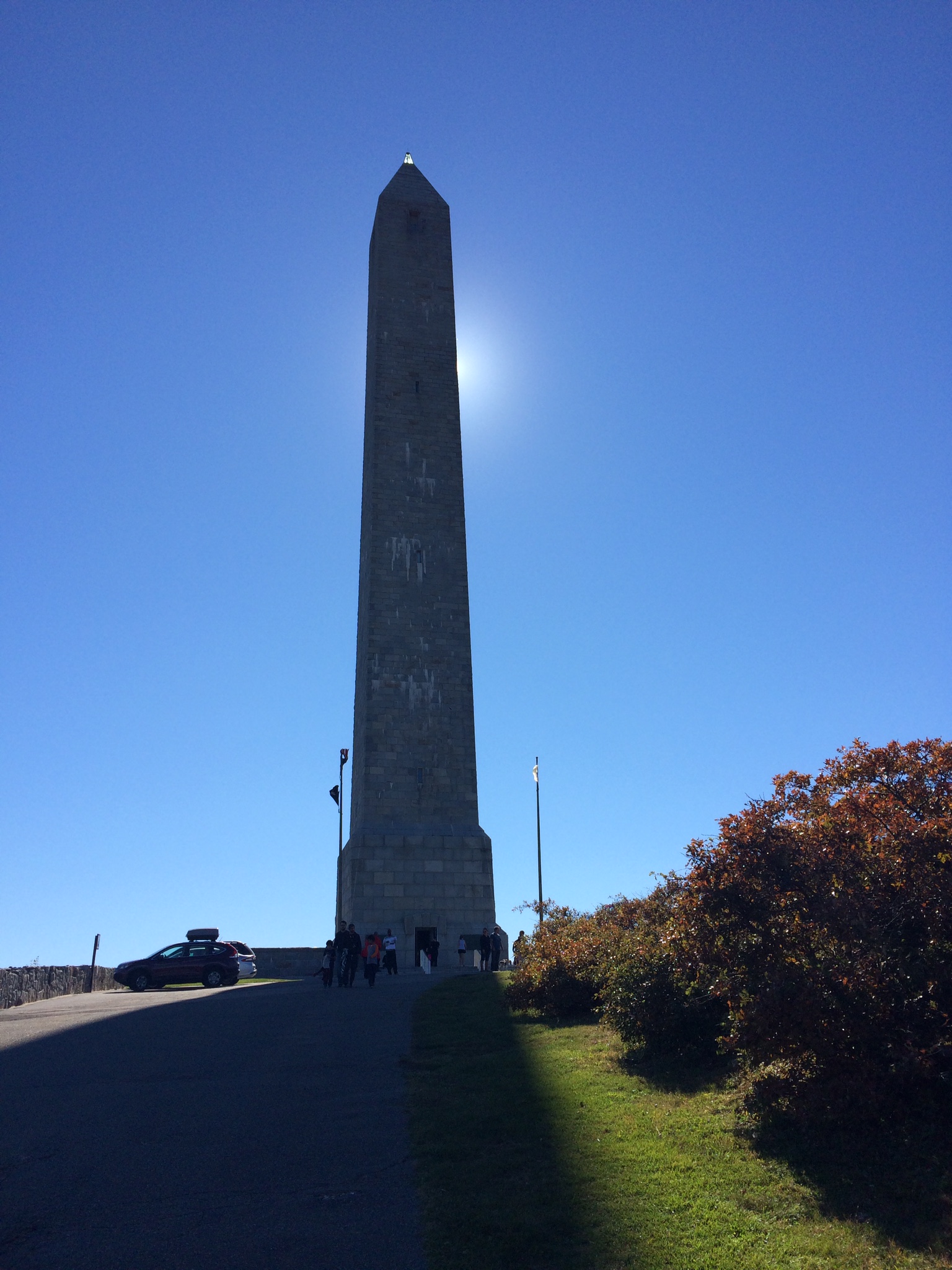
High Point Monument

This monument stands atop the highest point in New Jersey, 1,803 feet above sea level. If you’re from someplace like Vermont or Colorado, I’m sure you’re having a chuckle of over that. But it is in fact 133 feet higher than the highest point in Iowa and a whopping 1,458 feet above the highest point in Florida.

The High Point Monument was built in honor of war veterans. Construction started in 1928 and it was completed in 1930. Images below are from High Point State Park.

High Point trail

Posted in Uncategorized | Tagged , , , | 1 Comment

Beer in New Jersey: All the Laws We Never Followed

This is a state with a long history of resisting any attempts to stem the flow of alcohol, a state which probably produced more beer than anyone during Prohibition, and yet New Jersey ended up with some of the most confusing and restrictive alcohol and beverage laws that you’ll find anywhere.

beer pitcherDespite the often radical religious nature of the Europeans who came to America there was very little attempt to limit beer or other alcohol during colonial times. It is believed that the Mayflower arrived with a hearty stock of brew. When concerns were raised about alcohol, and these usually came from a pulpit, they were not about drink itself but about excessive drinking.

Things started to change with the growth of the temperance movement in the late 19th and early 20th century. This was largely a Protestant led effort, Catholics and Jews tended to show very little interest in temperance. In New Jersey, it led to the passage of a law in 1906, called the Bishops law, which prohibited the sale of alcohol on Sunday and raised the fees for liquor licenses.

With the passage of this law, many New Jersey taverns closed and locked their front door on Sunday. But not the back or side doors. And in many of New Jersey’s cities, the police force was made up of folks whose preference was taverns over temperance. Two years later, most of the legislators that were closely associated with this law were voted out of office.

The ultimate triumph of the temperance movement was the 18th amendment, Prohibition. All but three states ratified this constitutional amendment in 1919. New Jersey was one that didn’t, the others were Rhode Island and Connecticut. In 1919 Edward I. Edwards was the Democratic candidate for governor. He campaigned with the pronouncement “I am from Hudson County and I am as wet as the Atlantic Ocean.” He won.

Here are a few examples of how New Jerseyans reacted to Prohibition:

  • Col. Ira L. Reeves, an army man and supporter of the 18th Amendment, was appointed New Jersey’s Prohibition Czar. He lasted eight months after which he quit and called for repeal of Prohibition commenting that all it did was raise the price and lower the quality of alcohol.
  • When the feds tried to raid one Trenton brewery, the local police showed up and arrested them for carrying guns in the city.police action
  • The Jersey Trio (see Beer Barons of New Jersey) operated more than a dozen breweries in New Jersey and in neighboring states. In Camden, they pumped beer out of the brewery to a warehouse by using firehouses in the city sewer line. Thus if there was a raid the brewery only had the near beer that they were licensed to produce in stock.
  • When a restaurant in Oradel was raided and the alcohol that was being used for a dinner party was seized, the enforcers had some problems shipping it out. They left the restaurant only to find all of their tires had been slashed.
  • Some New Jersey doctors prescribed beer as a cure for nervousness or hysteria. Congress reacted by making “medical beer” illegal as well.
  • The Anti-Dry League of New Jersey, which claimed to have 60,000 members, lobbied for the legalization of beer and wine.

In his book Jersey Brew, Michael Pellegrino sums it up: “Prohibition just had no chance in Jersey where people seem to pick and choose which laws really need to be followed, especially when it comes to alcohol consumption.”

FDR finally pulled the plug on the Prohibition experiment in 1933. That ushered in some boom years for New Jersey’s biggest brewers like Krueger, Pabst and Ballantine. Later in the century the number of breweries dwindled in New Jersey due to corporate consolidation and the control by a small number of national brands over the distribution system. And by the end of the 20th century, New Jersey found itself behind most of the rest of the country in developing microbeweries and brew pubs. The the reason was some of the laws that had their roots in Prohibition.

By the 1990’s these laws were no longer about moral or religious issues, but instead were maintained because of the interests of groups who benefited from the restrictions.

New Jersey didn’t have a brew pub until 1995 when the Ship Inn opened in Milford. Before that year it was illegal in New Jersey to sell beer at the location it was made. The first microbrewery in New Jersey, Climax Brewing in Roselle Park, opened one year later. By 2010 there were still only five microbreweries in New Jersey.

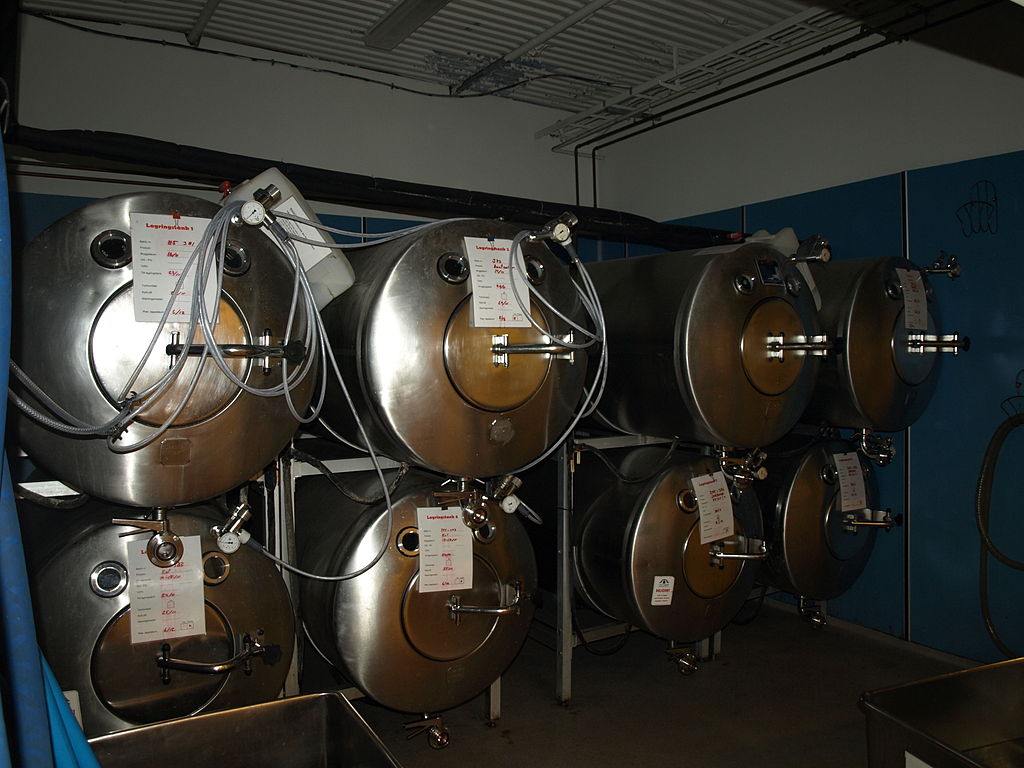
Fermentation tanksIt was after new legislation in 2012 was signed into the law that the microbrewery movement really gained momentum. That legislation allowed brew pubs to increase their production and to sell to retail outlets through wholesalers. It also allowed microbreweries to sell beer at the brewery location and permitted the sale of a limited amount for home consumption.

The state legislature is likely not done with the job of updating liquor laws as a number of bills are currently under consideration.   There is a farm brewery/winery bill pending that would allow wineries to produce some beer and to sell it for home consumption. It also provides for a cheaper license, between $100 and $300. A brewery food consumption bill would allow customers to bring food into a brewery with them, although the brewery is still not allowed to offer food. Another proposal would streamline the licensing process.

Lest you think all this legislation would put an end to the weirdness of New Jersey alcohol beverage laws, consider these:

  • There are 29 different types of liquor licenses in New Jersey.
  • Most supermarkets and convenience stores don’t sell wine and beer because of the restrictions on the number of licenses a single corporation can hold
  • A bar owner can offer a free drink as long as it isn’t advertised.
  • Bars are prohibited from having “ladies nights” as the pricing would be considered discriminatory.
  • We have BYOB restaurants but it is illegal to advertise that fact and restaurants cannot charge a cover or corkage fee.
  • Strip clubs cannot offer both alcohol and full nudity. If alcohol is served, they can have partially clad “go-go dancers.”
  • If you are carrying a bottle of beer or alcohol in a car that had previously been opened, it has to be transported in the trunk.
  • A brewery license allows you to sell beer on the premises but only as part of a tour of the brewery.
  • It is illegal to charge a flat fee for unlimited drinks except on New Year’s Eve.

Given our heritage, you can imagine what the level of compliance is for some of these.

Posted in History | Tagged , , , , , , , , , , | 24 Comments

It’s World Series Time and I’m Thinking About Yogi

Yogi

Yogi Berra played in the World Series 14 times between 1947 and 1963. Ten times he won the championship, more than any other player. All were with the New York Yankees. He leads all players in World Series games played (75), plate appearances in the World Series (249) and has the most World Series hits (71). In his first World Series in 1947 he hit the first pinch-hit home run in World Series history. He also managed two different teams in the World Series, the Yankees in 1964 and the New York Mets in 1973.

Yogi MVP

1954 American League MVP

Neiman's Yogi

Leroy Neiman’s Yogi

I’m a resident of Montclair, N.J., where Yogi lived since the 1950’s. Here we remember him as a good baseball player but even more as a really good person.

————————————

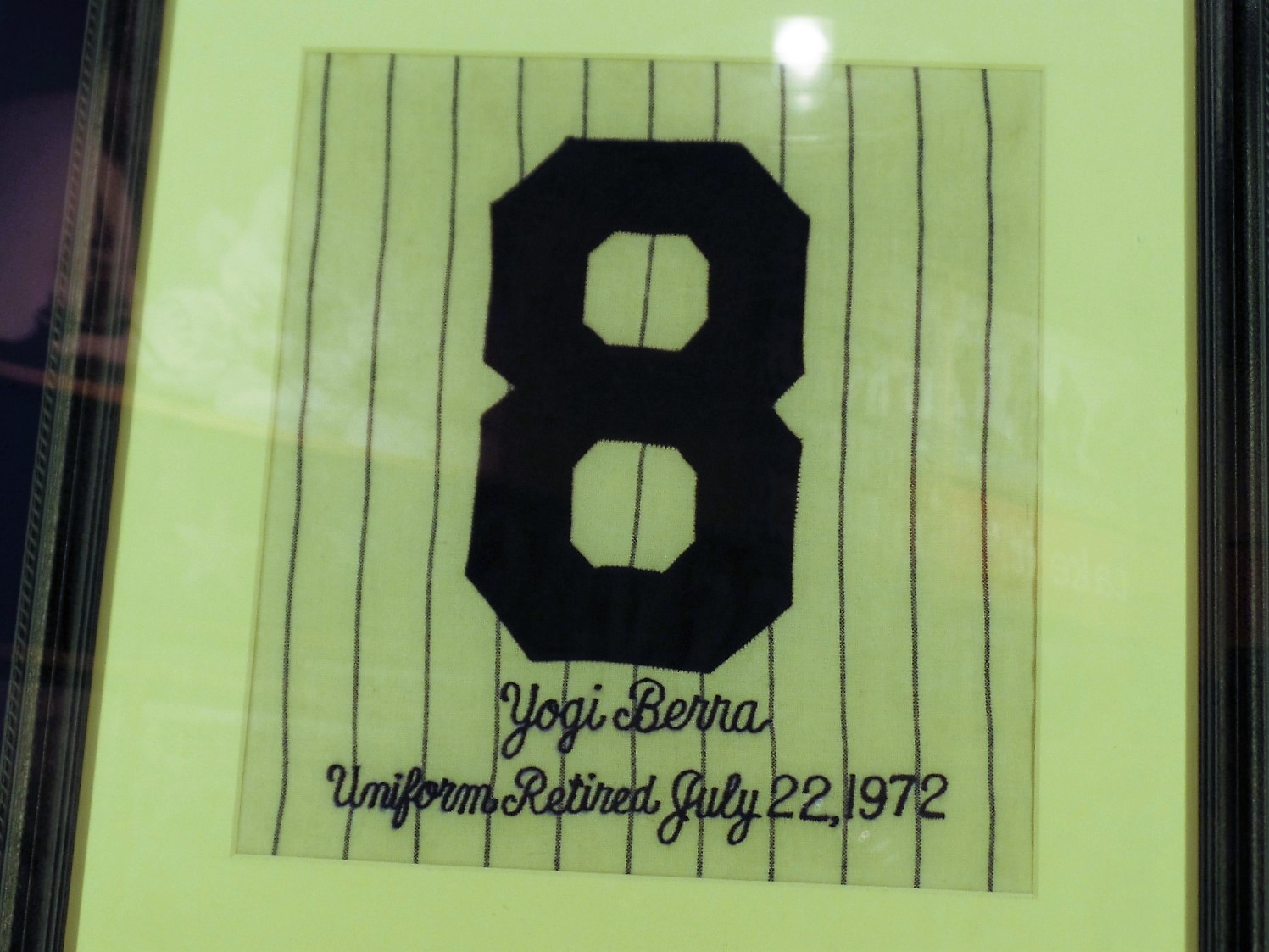
These photos were taken at the Yogi Berra Museum and Learning Center on the campus of Montclair State University.

retired uniform

Yogi Berra

Posted in Baseball, Sports | Tagged , , , , , | 2 Comments

Beer Barons of New Jersey: Gottfried Krueger and Max Hassel

Gottfried Krueger

German-born Gottfried Krueger showed up in America in 1853, a 16-year old who stepped ashore wearing wooden shoes and knew not a word of English. He settled in Newark where his brewer uncle, John Laible, took him under his wing. Together they founded the company that was to become the Gottfried Krueger Brewing Company in 1858. When Laible died in 1975 Krueger became sole owner. It was a business that would last for more than a century until it was bought out by Narragansett in 1961.

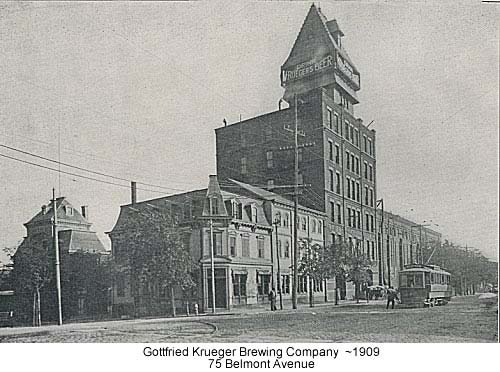
Krueger brewery

Krueger branched out into real estate, entertainment and politics. He owned interests in several other breweries. His real estate holdings included the Krueger Auditorium. Located on Belmont Avenue in what was then the heart of the German district of Newark, the auditorium became a cultural center for German Americans. Krueger became a Newark City councilman and as Essex County Freeholder. He also held the odd position of “lay judge” in the equally odd Newark institution called the “Court of Errors and Appeals.”

Unlike his contemporary Peter Ballantine, there was no bungalow living at the brewery for Krueger. In 1888 he spent $250,000 on a High Street home that was heralded as the most lavish mansion ever built in Newark.

Krueger Mansion

The Krueger Mansion, Newark (Jim Henderson)

In 1914 Gottfried and his wife Bertha set out for a trip to the homeland. It turned out to be a far longer visit than they expected. World War I broke out while they were in Germany and the Kruegers were trapped. To make matters worse, a character by the name A. Mitchell Palmer who paraded about as the “Great War Alien Property Custodian” seized the Krueger holdings.

After the war ended Gottfried found his way back to Newark and was able to regain possession of his business and properties. He died in 1926 during Prohibition as his heirs tried to keep the business afloat by making soda. He never got to see his company make beer history when, in 1935, Krueger left its mark on the brewery business by introducing the first beer in cans.

Max Hassel

An 11-year old boy named Mendel Gassel left Latvia and arrived on these shores in 1911. His father had already preceded him, his mother and his four siblings and had settled in Reading, Pa. The family adopted the name Hassel and the Latvian Mendel became the American Max. Max Hasell would only live to age 32 but during that time he was alternately the “Beer Baron of Berks County,” the “Jersey Gentleman Beer Baron,” and a member of the legendary bootlegging Jersey Trio.

Max got his start in Reading as an enterprising young man. He left school at age 14, worked for a while hawkling newspapers, then went into business with a friend making cigars. They eventually opened a retail cigar store.

Then came Prohibition. The ban on alcohol was neither a religious nor a moral issue for Max, it was an economic opportunity and despite his young age he was quick to take advantage of it. Before long he had interests in three Reading based breweries, Lauer Brewing, Reading Brewing and Fisher Brewing. But unlike New Jersey, Pennsylvania took Prohibition seriously.

In 1923 the feds raided Fisher Brewing after arresting one of its truck drivers, Max’s 19-year old brother Morris. Shortly thereafter, Lauer Brewing was raided and tax evasion charges were levied against Hassel.  So the Beer Baron of Berks County crossed the Delaware. Hassel put down a stake in Camden by acquiring the Camden County Cereal Beverage Company. It was there that he utilized the common Prohibition era technique of piping beer in fire hoses through the city sewer lines to a warehouse while keeping only the low-alcohol near beer that he was licensed to produce at the brewery.

Prohibition raid

Max Hassel was of the non-violent sort. At this point in his career he never carried a gun, nor did he surround himself with gun-toting thugs. History has crafted an image of Max Hassel as a fair-minded honest businessman, albeit in a dishonest business.

Beer during Prohibition was not a gentleman’s game and Hassel would soon come face-to-face with that fact when a mobster from Philadelphia named Mickey Duffy paid a visit to Hassel and offered to become his partner. Max said no and shortly thereafter Duffy’s thugs came to Camden and physically tossed Hassel out of the Camden brewery.

Hassel laid low for a bit then decided it was time to change tactics. He made a deal with Duffy, who wasn’t long for the world anyway. He moved to Elizabeth, setting up operations in the Carteret Hotel in 1929. He hooked up with a couple other successful bootleggers, Waxey Gordon and Max Greenberg, to form the Jersey Trio. These guys ran a network of 16 breweries. In addition to Camden Brewing, New Jersey holdings included Eureka Brewing (Paterson), Harrison Brewing, Rising Sun (Elizabeth), Union Brewing and Superior Manufacturing in Newark and Union City Brewing. The Jersey Trio may have been responsible for pumping more beer into the market during Prohibition than just about anyone.

Their success however caught the eye of some high profile mobsters, including Dutch Schultz, It is believed that the hitmen who entered the Carteret Hotel on April 12, 1933, were hired by Schultz. Hassel and Greenberg were killed. Gorden escaped because he had skipped out to spend the afternoon with a prostitute in one of the other hotel rooms.

Max Hassel was killed five days after prohibition ended. Later in the decade Paul “Frankie” Carbo was charged with the murders but he never made it to trial as all of the prosecution’s witnesses disappeared. Welcome to New Jersey Max!

————-

See also Beer Barons of New Jersey: Aert Tuenissen van  Putten and Peter Ballantine

Posted in History | Tagged , , , , , , , , , , | 22 Comments

Beer Barons of New Jersey: Aert Teunissen van Putten and Peter Ballantine

Aert Teunissen van Putten

Not a whole lot is known about Aert Teunissen van Putten, New Jersey’s first beer baron. Perhaps his contemporaries didn’t realize the significance of being the first person in New Jersey to start up a brewery.  We do know that Aert was born in 1612 in Putten in the Netherlands, that he married Susanna Jans van Schuenburgh, also from the Netherlands, and that they were among the first European settlers of Hoboken.

New Netherland

New Netherland

In 1640 Willem Kieft, governor of what was then called New Netherland, granted van Putten a lease on the property that is now Hoboken, beginning on Jan. 1, 1641. As rent van Putten agreed to pay “the fourth sheaf with which God Almighty shall favor the field.” (I suspect that means some produce.) The agreement also involved Kieft building a house on the property for the Dutchman and his family. van Putten cleared the land, fenced it in and got some farming going. He brought in cattle, pigs, goats and sheep. And he built New Jersey’s first brewery.

One suspects that this early colonial ale was a favorite in the van Putten household, but it was also trade bait. van Putten offered his brew to the native peoples who inhabited the region in return for furs. Some of these trades took place on an inlet near the Sandy Hook area called Beeregat which translates from the Dutch to beer hole.

So while it appears Gov. Kieft set the young Dutchman up, he also laid the groundwork for his demise. Kieft ordered the massacre of 120 Native Americans in Pavonia in 1643 and in doing so started what has been known as Kieft’s war. A retaliatory strike by the Lenni Lenape killed the 31-year-old brewery pioneer that same year while he was on a trading trek. They also destroyed his land and livestock, but spared Susanna and apparently left the brewery standing although there is no evidence of operations there ever resuming.  Not sure of the exact location but given that it’s Hoboken, there’s a good chance there is a bar on the site now.

Peter Ballantine

Peter Ballantine was born in Ayershire, Scotland in 1791. He came to the U.S. at the age of 29 and pretty much immediately began a career around beer. His first job in the New World was at a tavern in Block Rock, Conn. After moving to Albany he learned brewing at a Troy, N.Y., based brewery and started one of his own in 1830.

Ten years later he headed south settling in Newark. Along with a partner he purchased a brewery on High Street. That partnership lasted five years. In 1850 he built his own brewery on the banks of the Passaic River in the Ironbound section of Newark. In 1857 he brought his three sons into the business and renamed it P. Ballantine and Sons. Later in his career Ballantine decided to expand into lager. His sons were not up with the move, so he bought another brewery (Schalk Brothers) and set up a separate company, Ballantine & Co.

While many of our captains of industry from the 19th century built substantial mansions that still stand, Peter Ballantine was not one for ostentation. He lived in a bungalow on Front Street on the grounds of the brewery. The Ballantine House on Washington Street (photos below), which is now part of the Newark Museum, was built in 1885 for his son, John Holme Ballantine.

Of all of New Jersey’s big brewers, Ballantine is the one that is most known for the quality of its product. While Peter Ballantine’s operation was at one time the third largest brewery in America it in some ways operated like a modern craft beer producer, making seasonal and one-time release brews. It was known for its XXX ale (the XXX signifies the strength of the brew, not pornographic packaging) and is considered by some to be the first commercial producer of an IPA. Ballantine’s IPA was aged in wood for a year. They also produced a Burton Ale which was aged at least 10 years and was used solely as a gift for friends, family and associates.

Ballantine ad

Ballantine’s brewery lasted until 1972. The brand was purchased by Pabst. Last year, in what many consider Pabst’s effort to move into the craft beer market, they made an attempt to reverse engineer Ballantine’s recipe and re-introduced Ballantine IPA.

——-

In my next post, I’ll profile one of Newark’s most successful German brewers and Camden’s “gentleman beer baron.”

Posted in History | Tagged , , , , , , , , , | 6 Comments