




S

I have a rescued dog. He’s from Georgia. An organization called Home for Good found him in a shelter there where he likely would have been euthanized. So they packed up his 8-week old butt along with his brothers and sisters and brought him to New Jersey where he became a Christmas present for my son.
Now at age 4, he enjoys a leisurely canine lifestyle. After breakfast he goes to the park to play with his friends. Then, after a full day of sleeping on whatever couch has the most sunshine, he enjoys a dinner of dog food topped with leftovers from the fridge. Just about everybody in my neighborhood has a dog, most of them rescues and all as spoiled as mine.

Two rescued Southern mutts and a stick.
Dog rescue is usually a two-part process. The first is to get abandoned or abused animals into a shelter. The second is to find a home for these dogs. That is what organizations like Home for Good does.
Animal shelters originally came on the scene as pounds and they date back to colonial times in America. The first pounds were originally focused on rounding up stray livestock that would end up being sold. Dogs weren’t seen as having any market value, so they were usually killed.
The first shelter was opened by the Women’s Society for the Prevention of Cruelty to Animals in Pennsylvania in 1869. Many others followed, including New York City based shelters run by the ASPCA. Most of the shelters that came into being, however, were municipally owned and managed and their goal was to eliminate what was considered a public nuisance. Stray dogs were often assumed to carry disease and were perceived as dangerous. So the goal was to get them off the street, not to find them a home.
It wasn’t until the last quarter of the 20th century that things started to change. Starting in the 1970’s, a time when euthanasia rates for shelter animals were at their highest, privately-owned shelters began to be created. These shelters were usually funded by donations and run by volunteers. And their focus was on animal welfare. The ASPCA estimates there are about 5,000 animal shelters in the U.S. today.
Dogs usually end up in shelters for one of two reasons. They were either abandoned or abused. One of the most common reasons dogs are abandoned is because of restrictive housing policies. Their families move into housing that doesn’t allow pets. Or they may be with families who cannot afford the cost of feeding and caring for them or the cost of medical care that they need. They might get tossed for making too much noise and chewing stuff up. And some are left homeless due to death or divorce.
Others find themselves in a shelter because they’ve been rescued from cruel or abusive treatment. Some may have found themselves in the hands of lowlifes who promoted dog fighting. Or they may have been saved from puppy mills where dogs are kept in cages and bred continuously. Some animals are rescued from situations where owners have hoarded more animals than they can care for. All in all, close to 4 million dogs enter shelters in the U.S. each year.

Tess was adopted through the Southern California Golden Retriever Rescue
While animals entering a shelter are no longer targeted for quick euthanization, the clock still starts ticking when they enter many shelters. And if they are not adopted within a certain period of time they are put to sleep. Dog rescue organizations, which have largely come into being in the last 25 years, are focused on getting dogs out of shelters where they might be euthanized and finding homes for them. In addition to volunteers who physically rescue the animals, these organizations often provide foster homes where the dogs can stay until being adopted. A key piece of the rescue operation is the Web site petfinder.com where upwards of 100,000 rescued dogs and cats are posted for adoption at any given time.
A releatively recent trend is the no-kill shelter. Richard Avenzino, who headed the San Francisco SPCA for 22 years, is often credited as the founder of that movement. In 1984, Avenzino convinced the city to take back the contracts that had gone out to laboratory suppliers for “animal control.” A decade later he introduced the Adoption Pact which guaranteed a good home to any healthy, recoverable dog or cat in the shelter. A year later New York City followed his lead and went “no kill.”
In its 2015 annual report, the Animal Humane Society announced that it had reached its decade-long goal of saving 90 percent of the animals who enter their shelters. They in fact hit 91.2%.
But despite the proliferation of rescue organizations and the increasing commitment of shelters to saving dogs, there are still more than a million that are euthanized every year.
Sometimes I feel a bit silly for not finishing a restaurant meal to make sure I have something to bring home to my dog. And I laugh at the friend who makes scrambled eggs for his rescued dog’s breakfast every day. And there is my neighbor who brings her dog to the park every morning with a pocket full of hot dog pieces. And not just any hot dogs, her rescued mutt apparently prefers the organic uncured variety that she buys at Whole Foods. But then I remember that these guys had a rough start or a turn of bad fortune before we found them.
(The author, Ken Dowell, is a trustee of the Tess McIntyre Foundation The foundation raises funds to support dog rescuers and to provide health care for dogs who need some medical attention before they can be adopted. You can follow the foundation on Twitter @TessMcIn.)


The NCAA tournament made its first stop in Brooklyn this year. The Barclay’s Center hosted four first round games and two second round games. Participating colleges included UNC-Asheville, Iowa, Villanova, Temple, West Virginia, Stephen F. Austin, Notre Dame and Michigan. From that group, Villanova and Notre Dame moved on to the regionals.
Here’s what March Madness looked like in Brooklyn:


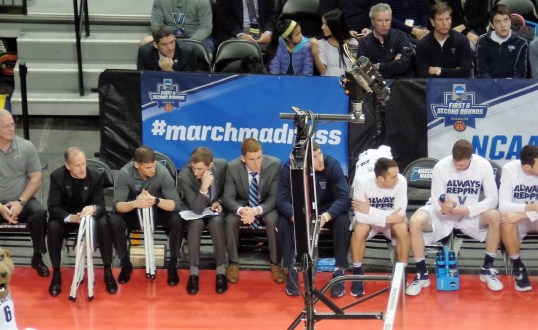
Villanova bench

Iowa celebrates after last-second shot that beat Temple


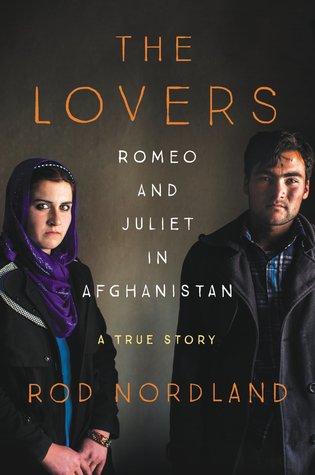 The Lovers is a love story. Of course it is. But it’s also a news story. A news story about women’s rights. A news story about what U.S. intervention has and hasn’t done in Afghanistan. And a news story about some of the most backward social customs on earth.
The author, Rod Nordland, is a journalist who at one time was the New York Times Kabul bureau chief. He was on the hunt for a story about an honor killing. Instead he found the story of an Afghani Romeo and Juliet. Zakia and Ali are illiterate peasants from a remote region of Afghanistan where they met when their farming families worked side-by-side in the fields. They had never seen a TV or a personal computer and had never been on the Internet. Zakia is Tajik, a Sunni Muslim. Ali is Hazara, a Shia Muslim.
They are now in hiding from Zakia’s family who are out to kill them. Zakia’s crime: she fell in love with Ali, and at age 18 ran away with him and married him. That, in Afghanistan, is wrong in so many ways. First there’s the ethnic mismatch. Then there’s the fact that Afghani girls and women are generally considered the property of their men, whether it be father or husband, and thus not free to make their own decisions about who they should marry. And last, but sadly not least, ‘what will the neighbors say?’
Nordland quotes Maniztha Naderi, executive director of one of the women’s shelters that at one time protected Zakia, “…most families think this way in Afghanistan. They would rather kill their female family members if they are thought to have committed wrongdoing than lose face in the community.”
During a stop at the Montclair Public Library to promote the book, Nordland suggested that Afghanistan might be the worst place on the planet to be a woman. He compared the status of women in that country to what it was for European women in the 1600’s.
Maybe none of that comes as a surprise, but reading some of the details is nonetheless shocking:
Zakia is not the only Afghan woman hiding from her family. Nordland also reports on the story of Breshna, a 10-year-old girl who was brutally raped by a mullah in a mosque. Breshna was protected in a women’s shelter from a family that threatened to kill her. Ultimately the shelter turned Breshna back over to her family when they vowed not to kill her. So instead they solved their “honor” problem by forcing her to marry her rapist.
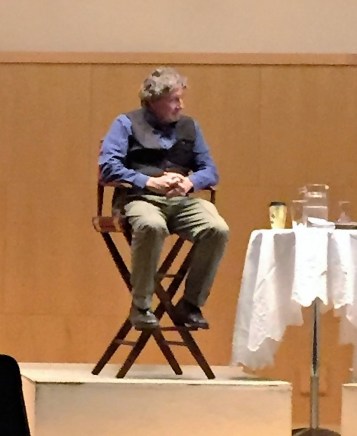
Rod Nordland at Montclair Public Library
Where he didn’t get any help was at the American Embassy. Apparently they were concerned about intervening and offending the sensibilities of the government with which they are supposed to be allied. Norland’s comment: “Give me break. We’re not talking here about a woman who wants to put on a miniskirt and dance at the disco – she wants to marry the man she loves and live an Islamic, religious life.”
According to Nordland, the U.S. has made an investment of more than $1.2 billion to promote women’s rights. The shelters that protected Zakia, Breshna and others are largely American financed. Some of our efforts, however, border on the ludicrous. Consider this one:
There was a “$35 million ‘go fly a rule-of-law kite’ program, dreamed up and funded by a United States Agency for International Development contractor. Their idea was to stage a public event at which they would hand out kites, comic books and posters with slogans printed on them touting equal rights for women and respect for the rule of law. Hundreds of kids and some adults showed up. First, no one could read the slogans on the kites and poster, let along the text-heavy comic books. Then handing out the kites went badly awry when policemen systematically stole them from the kids who had come, in order to take them home to their own children, beating some of the kids at the event with sticks when they didn’t cooperate. Finally, gender equality was hard to come by. The few times any girls got their hands on the free kites, their fathers took them away and gave them to their sons instead.”
When you consider that this young couple, whose lives are endangered, cannot get any help from the U.S., despite the large number of private American citizens willing to help and support them, it is totally infuriating to listen to the blowhards and posers who are running for president with the promise that they will ban Muslim immigration. Personally I’d much prefer to welcome Ali and Zakia to my home than Trump or Cruz.
This is a story with no end. Zakia and Ali managed to flee Afghanistan once going to Tajikistan, largely because it was the one place they could go where they could understand the language. Tajikistan is, in Nordland’s words “a country characterized by pimping policemen and roving drug dealers.” So the couple was robbed by police of the donated money they were carrying, Zakia’s jewelry and all of their possessions. And though they were deported and driven to the border, they had a bit of trouble crossing back into Afghanistan due to the border police who were expecting a bribe.
Zakia has given birth while they were on the run. They now have a daughter who Ali maintains will be able to choose her own marital partner. This is a story with no end. As of a month ago when I heard Nordland speak, Ali and Zakia are still in Afghanistan, still in hiding, and still in danger.
You can’t have a digital or Web or online publishing conference of one type or another without having at least one session on “the future of the media.” Often you would see execs from the Times or Post or Gannett put on panels to talk about “What now.” What now that their circulation is drying up. What now that breaking news is passing them by. What now that classified advertising has blown up and display is not far behind.
I didn’t hear from those folks at SWSX Interactive. What we used to think of as the next wave of media, digital first, mobile-friendly, visual, etc., is actually here. The sessions at SXSW were with the brands that reflect that. Frank Cooper, CMO of Buzzfeed, did a presentation on “The Future of Media Companies.” And the conversation with Jim Bankoff, CEO of Vice Media, was about “Creating the Modern Media Company.”
You can’t call either of these guys a futurist. If you ask them what the media company of the future is going to look like they will have a one-word answer. “Us.”
A defining strategy of both is publishing cross-platform. That means that you don’t confine yourself to your own properties, be they are print or digital or broadcast, but put your content on multiple platforms, whether it is Facebook or YouTube or Snapchat. That’s a pretty significant distinction from the traditional approach of older media. It wasn’t that long ago that some media organizations were trying to bring Google to court over using their content (headlines in search results) without paying for it. My guess is those same organizations are likely now scrambling to achieve the same level of search placement that Buzzfeed and Vox’s brands like SB Nation routinely get.
Just last year some of the big name traditional media properties were agonizing over what they consider a deal with the devil, allowing Facebook to render their stories rather than linking back to their own properties.
Cooper described Buzzfeed’s approach as “instead of trying to lure people to your platforms, go to where they are.” Similarly, Bankoff said “We want to be where audiences are and we want to create content that is native to the platform where it was living.”
The importance of publishing on non-owned platforms is likely to increase. Web sites have been declining in importance for a while, fueled by the growth of mobile, as apps proved to be easier to use than browsing the Web on a small screen. Bankoff now sees apps as declining the same way Web sites did because of the greater ease of using some type of aggregated platform. No wonder a news app popped up in one of the last updates of my iPhone. Apple is not alone. Google, Facebook and many start-ups have been putting out a steady stream aggregated news apps.
Cooper even suggested that the spread of content across platforms could even go back to analog. Buzzfeed’s food brand Tasty, for example, could become a TV show or even give rise to a pop-up restaurant.
Focusing on content quality is certainly nothing new, but these popular digital brands talk about quality in different terms than their more traditional predecessors. Not a word about depth of research, objectivity or investigative reporting. Instead they talked about adapting content to the platform where it is going to be published. That’s what Bankoff meant by “native.”
They encourage, rather than discourage, having a voice or an opinion. “Having a point of view is necessary in an intimate medium,” Bankoff says. Cooper expressed it like this: “Empathy and human connection are the new superpowers of building a large audience.”
Bankoff emphasized the overall quality of user experience that goes beyond just the news content you produce. He brought up as an example a really high-quality engaging video that can be ruined by a crappy intrusive pre-roll. “We want to create advertising that doesn’t suck,” he said.
While traditional media organizations bemoan the loss of readers and advertisers, these guys, like Bankoff, are wondering why ad dollars aren’t leaving newspapers and magazines faster. But I’m sure all media organizations would like to believe in Bankoff’s response to a question about whether Vox is making money by distributing content through other platforms: “You have to have faith that over time quality content has a business model.” If I published a newspaper, I might be tempted to say, “We had one until you guys came along.”
Both of these SXSW sessions are available on YouTube.
If I were a graphic artist I’d adorn this post with a graphic of the classic ‘Uncle Sam Wants You’ image and replace Uncle Sam with Mark Zuckerberg, or maybe the Twitter blue bird. The social networks are really among the first massively successful technology companies to demonstrate how to use their users (are they customers?) as their product. When Wall Street evaluates Facebook or Twitter, what do they look at? They start with how many of you are signed up and how active you are on the service. When the social networks look to monetize by selling ads, or sponsored tweets or posts, the pitch to marketers is all about you guys who use the service.
Another great example is the consumer review sites. The value of Yelp is what? Without all of us using the service, rating and writing reviews, they are no more than digital yellow pages. TripAdvicsor? Same thing.
One of the pioneers of turning your user base into a product is Biz Stone. He is best known as a co-founder of Twitter and of Medium. In his presentation at SXSW Interactive today, he introduced and discussed his latest venture, Jelly.
Jelly is a re-invention of the search engine. Instead of indexing a gazillion Web pages that are processed to deliver instant answers to your search queries, Jelly focuses on another source of answers – YOU.
The idea is to provide human answers to a search query, sort of like what you got before there were search engines. Instead of accumulating data from Web pages, Jelly captures data from its users about their experience and their expertise and the more they use the service, the more it learns about you. Hence the more valuable you become as part of their product. When a query is made, the system will match it to the users with the most expertise or most relevant experiences, send them the query and then return their answers. Stone estimates the process might take 15 minutes. But once you get the answer back, it’s an invitation to start a conversation.
Jelly is currently in closed beta. From this presentation there does not appear to be any incentives provided to answer. It works because, Stone says, “People love answering questions and they love getting the credit for answering.”
“We need Google search, the Internet is broken without Google,” Stone explains, “but you can’t beat human experience and human opinion.” He calls Jelly “the only search engine in the world that has an attitude, that has an opinion.”
While Stone did not address this, there does seem to be a built in way to monetize this kind of search engine by enabling commercial interests to provide the answers and to perhaps re-jigger the priority of responses. Stone pointed out that Lowe’s signed up as part of the beta and provided answers to home improvement type questions without getting commercial. If successful, that is surely going to be a challenge. But then again the top listings on your search engine results aren’t organic either.
Max Levchin was the CTO of PayPal. He was involved in the start-up of Yelp and served as a director of Yahoo and Evernote. Currently he is CEO of digital lender Affirm. So when he looks into his crystal ball, he’s viewing it in terms of opportunity. His “Unstoppable Trends That Are Changing the World” presentation at SXSW Interactive this weekend is about predicting the future from an entrepreneurial perspective.
The first of these unstoppable trends, or what Levchin called “waves,” is beneficence. The simplest definition of beneficence is doing the right thing. And from a business perspective it is doing the right thing for your customers. An easy target here is the banking industry. If you didn’t know it already, the financial crisis of 2008 pretty clearly showed big banking didn’t have your best interests at heart. They were instead, in Levchin’s words, “looking to line their own pockets.” Levchin’s online banker Affirm is intended to take advantage of that. He describes it as a “financial service company committed to doing the right thing for its customers even if it means making less money.”
Screwing the customer to maximize profit is not solely confined to financial services. Try calling your utility company. You’re likely to sift through interminable automated menus then sit on hold for a good while because they decided to maximize profit by cutting staff even though it means a decline in service for their customers. If you’re a techie sort of innovator this is opportunity. “If you go in and say you are going to do what’s right for the customer you can win a lot of market share.”
Pretty much everyone in the tech world sees a growing role for AI. The second of Levchin’s waves is human-assisted AI. “AI is going to be performing a vast majority of intellectually demanding routines and services. We will be on standby.” He used heathcare as an example. We will want our phones to provide a diagnosis. If, for example, you are in an accident of some type, you could use your phone to take a picture of your injury and get a diagnosis from AI that has been developed through opinions of multiple doctors around the world. If, however, there is more than one or conflicting diagnoses, that is when you would seek human intervention, as in going to a doctor.
Software eating old software seems like natural selection Silicon Valley style. Levchin’s point is that being first provides you with significant advantages, however, it can also marry you to the original software. The disruptor, at least after a period of time, has the advantage of attacking the problem that you’ve already demonstrated a need to address but without having the baggage of the first generation software.
What Levchin termed regulatory arbitrage is about the role of government, which he sees as a “hidden pool of capital.” Electric cars and solar energy are two examples of where government funding for development is robustly available. But government can also inadvertently play a role in developing technology through its requirements for compliance. The Affordable Care Act is one example Levchin pointed out, suggesting that companies will be happy to pay for software that helps them avoid paying even more costly fines.
Levchin quipped that luck is the single most important success factor for an entrepreneur. But predicting future trends can work pretty well too.
You can watch Levchin’s presentation here.
Any discussion of driverless cars is likely punctuated by the question “When?” Chris Urmson is the director of driverless cars for the Google Self Driving Car Project, but the best he could do for an answer is between 3 and 30 years.
That may not be much help is you’re wondering whether you will be able to trade in your Toyota for a Google when the lease expires. But the point that Urmson was making during his presentation at SXSW Interactive is that this is a technology that will be rolled out incrementally over time. You might be able to catch a ride in a driverless car on a freeway in sunny, dry Arizona, before you can get one on a blustery winter day in Detroit.
What Urmson did offer up to his audience was a fascinating look at some of the technology behind the Google self-driving car. The cars do not use GPS. As all of us know who have been dropped off of a highway ramp into a stretch of desolateness while our GPS announces ‘you have arrived at your destination,’ GPS isn’t accurate enough if you don’t have a human driver. Instead the Googlemobiles use a combination of maps and sensors. The car’s OS captures 1-1/2 million laser measurements per second. It can zoom in and see up to 200 meters. And it anticipates the actions of other cars on the road 10 times per second. That information can be used, for example, to identify signs that a car with its left turn signal on is really going to try to shoot a U-turn. The vehicles are also equipped with something called anomaly detection, which, Urmson pointed out, could identify if some folks are playing frogger with your car.
Google driverless cars have already racked up 1.4 million miles on public roads. They currently do 10,000 miles of road testing very week in addition to 3 million miles of simulation testing daily.
Urmson made a compelling case for the driverless car. “The technology can’t get into the world fast enough for safety reasons.” He recited the statistics of 38,000 fatalities on U.S. roads every year. Globally the number is 1.2 million.
There are other potentially important benefits for the self-driving vehicle. If provides convenient transportation for people who can’t drive due to vision impairment or illnesses. If aging folks might seem to be losing some of the sensory sharpness that enables safe driving, why not transistion them to a driverless model? It also might alleviate the amount of time you spend sitting in traffic, or at minimum it gives you the ability to do things while your robotic chauffeur sits in traffic. One of Urmson’s slides calculates that the amount of time Americans sit in traffic every day is equivalent to 162 lifetimes.
But getting back to that question about when you’ll be able to trade in your Toyota for a Google the answer is probably never. Google has no interest in making cars, according to Urmson. Its interest is in the technology and they would look to partners for the manufacturing. Nor is Google interested in producing technology components, such as automatic braking, for driver-operated cars. Their goal is the fully driverless car.
Here’s some good news. Arunson believes the technology will become “relatively inexpensive” and will be accessible to everyone. Guess the car companies will have to get us on the next generation entertainment systems that we can enjoy while we are robotically escorted from place to place.
Urmson’s presentation can be viewed on the SXSW Interactive Channel on YouTube or by clicking here.
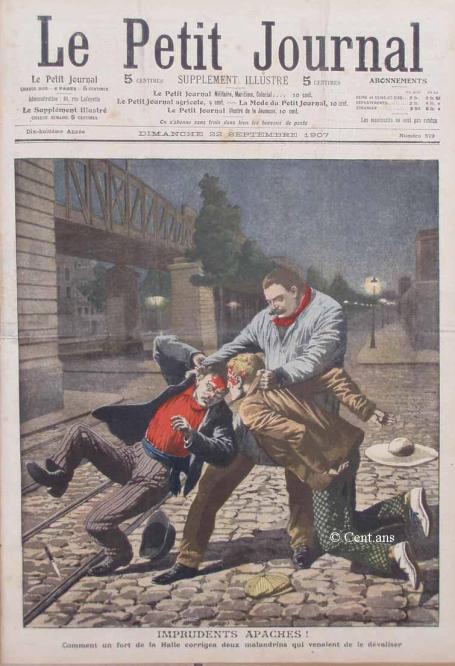 Les Apaches
Pioneers of juvenile delinquency. In Paris, no less. Urban, working class and young, they were known for their flamboyant dress, black jackets over bright colored shirts, with a silk scarf, and “tummy-ache” pants. The name was attributed to a French journalist, reflecting the European perception of the savagery of the Native American tribe. French historian Michelle Perot described the Apache as “an intellectual anarchist, he considers theft to be fair restitution and practices ‘individual recovery’ on the bourgeois.”
Britain’s men in black of the 1930’s. They were the militia of Oswald Mosley’s New Party of the early 1930’s. Originally founded by former Labour Party members as an answer to the Depression, Mosley eventually gravitated toward fascism. Dressed from head to toe in black, the biff boys, recruited mostly from among the disaffected young in London, were charged with “maintaining discipline” at Mosley’s fascist gatherings. This often involved clashes with protesters.
Teenage girls who were fans of swing and big band music in the 1940’s. These girls were regulars at dances and since many of those dances happened in gyms where you had to take your shoes off they danced in their bobby socks. In addition to the socks these girls likely wore skirts and sweaters and the footwear they discarded were most often saddle shoes. Frank Sinatra could make a bobby soxer swoon.
The kids who left home during the Depression and started riding the rails. Mostly they were boys and of the girls who joined them, many would dress as boys. They were a product of the Depression. With no job, no food and a family that might have lost their homes and moved into increasingly cramped quarters, these teens hopped freight trains in hope of finding some work picking fruit, harvesting grain or chopping lumber.
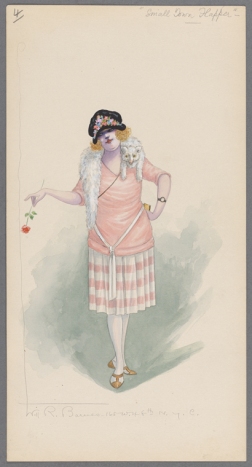 Flappers
The feminine persona of the Roaring 20’s. Flappers listened to jazz. They also drank, smoked, drove cars and wore a lot of makeup. Short skirts and bobbed hair was the signature style of the flappers. Author Jon Savage (Teenage) calls flappers the “first mass female adolescent generation.” They were sexy and flirtatious and as such represented something of a liberation from the traditional perception of the female teenager.
The term was part of the jive language for the 1940’s version of hipster. An icky was someone who wasn’t very hip. Someone who just doesn’t get it. Getting it involved being a part of swing culture with its zoot suits and bobby socks and jitterbugging. The icky was perhaps a predecessor of the modern day nerd.
 Jitterbugs
One who did the jitterbug, which was the dance you did to swing music. You might wear a zoot suit to jitterbug or you might wear bobby socks. Variations of the jitterbug included the Lindy Hop, the Jive and the East Coast Swing. The term jitterbug was popularized by Cab Calloway. He issued a recording called “Call of the Jitterbug” and later a film titled “Cab Calloway’s Jitterbug Party.”
Today Neo-Pagans are associated with spiritual movements, usually involving some type of magic or witchcraft. In the early 20th century, the neo-Pagans were a group of privileged young British intellectuals whose distinction was in defying Victorian customs. For example, male and female neo-Pagans freely intermingled, although they preached abstinence. They were socialist, some were vegetarian and they espoused a sort of Peter Pan like forever young philosophy. Apparently the movement died before it got old.
Latino zoot suiters of the 40’s. But since they were mostly Mexican-American youth who were the children of poor immigrants, the public perception was of a gang of dangerous delinquents. Boys and girls alike donned zoot suits. The Pachucos added triple sole shoes and sported a long slicked back duck tail. Pachucas went for a heavy dose of dark red lipstick and black mascara. They were also the primary victims of the 1943 zoot suit riots in which servicemen would attack, beat and “depants” pachucos in Los Angeles, Oakland and Venice, Calif.
Members of Sub-Deb clubs, social groups of teenage girls that were popular in the middle of the decade. You might think of them as a high school version of sorority sisters. They set the standard for high school style and behavior and focused on the achievement of popularity. You would likely find them hanging out at the drugstore. They were generally an upper middle class group that were heavily into consumption.
Short for Victory Girls. During World War II with men off to war and women off to the factories these often unattended teenage girls made their contribution to the war effort by entertaining soldiers and sailors. That might not have always involved sex, but usually it did. An organization called the American Social Hygiene Association described V-girls as “sexual delinquents of a non-commercial character.” Countries in Western Europe experienced some of the same resulting increases in venereal disease and out-of-wedlock births as the U.S. did during the war years, but only the Americans tried to frame it in a veil of patriotism.
The Cambridge dictionary defines wide boy by as “a man who is dishonest and decieves people in way he does business.” The British term was first used in a 1930’s novel “Wide Boys Never Work.” That is, of course, because they were crooks of one sort or another. Wide Boys were most likely found in the Soho and Paddington sections of London and they included racetrack gangsters, prostitutes and the gay and Jewish undergrounds.
French zoot suiters. Came into being during World War II. Like their American counterparts they had a distinct style of dress including garish and oversized clothes. The women wore short skirts, striped stockings and carried umbrellas. And, like the zoot suiters they danced to swing. The zazous are viewed by historians as a way that young people in France expressed their resistance to the Nazi occupation. As the war years went on they became the targets of attacks by fascist youth organizations.
Folks who wore zoot suits. That includes the Pachucos, the Jitterbugs, the Zazous and the bobby soxers’ dates and dance partners. It was the preferred uniform of swing music afficionados. The zoot suit included an oversized jacket called a king coat, and wide legged, pegged pants and it was often topped with a fedora. The style originated in America’s black and Latino communities and went mainstream along with the music it is associated with.
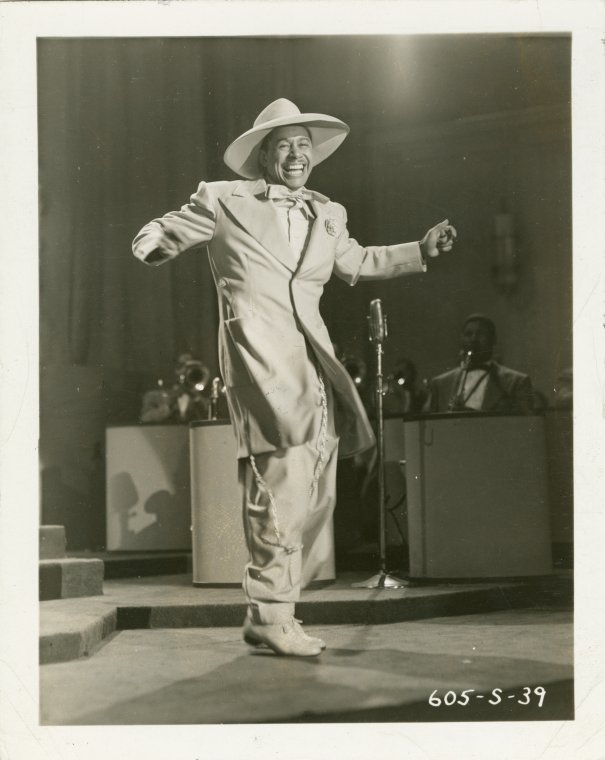
Cab Calloway performing in a zoot suit
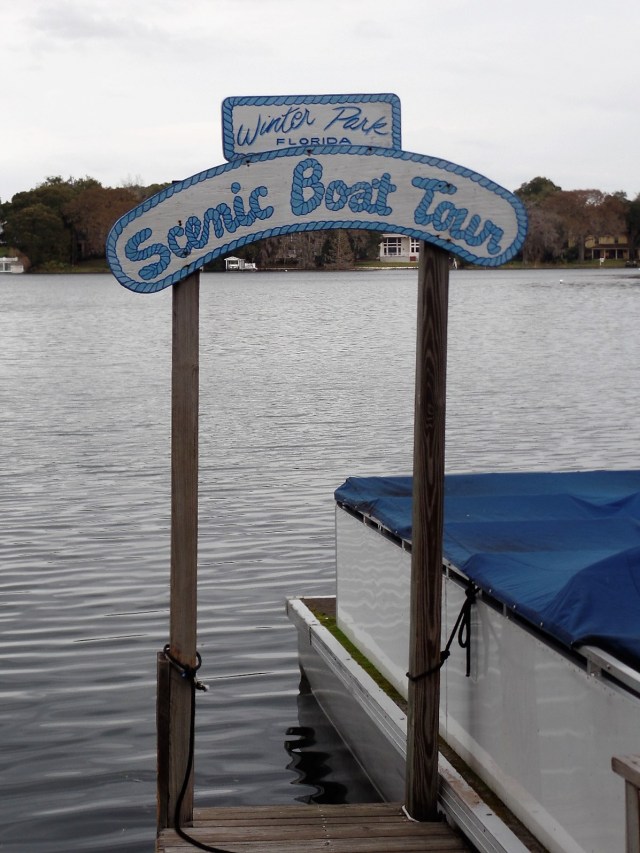
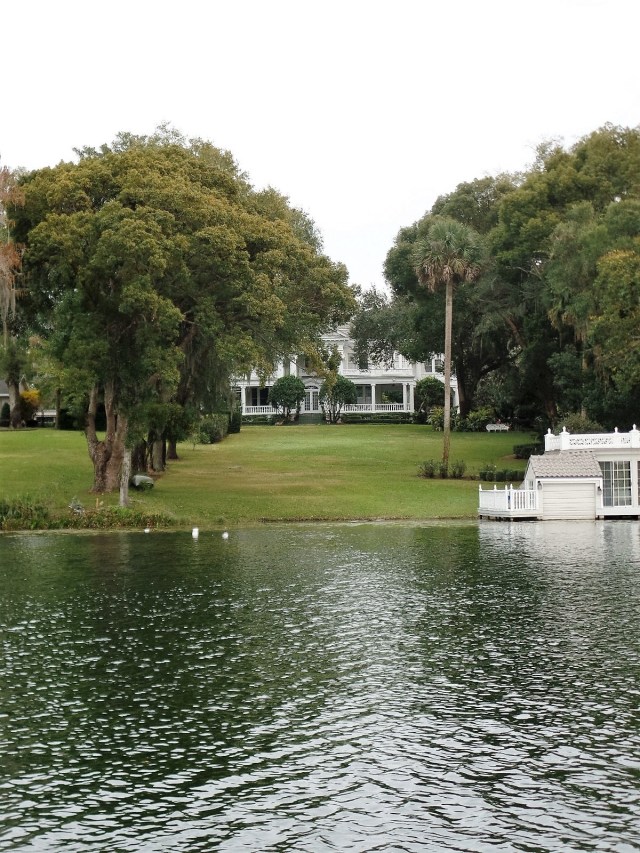
The Winter Park Scenic Boat Tour has been operating since 1938. It is docked on Lake Osceola. Pontoon boats take riders thorugh the winding canals of the Winter Park, Fla., chain of lakes, including visits to Lake Virgina and Lake Maitland, the largest of the group.


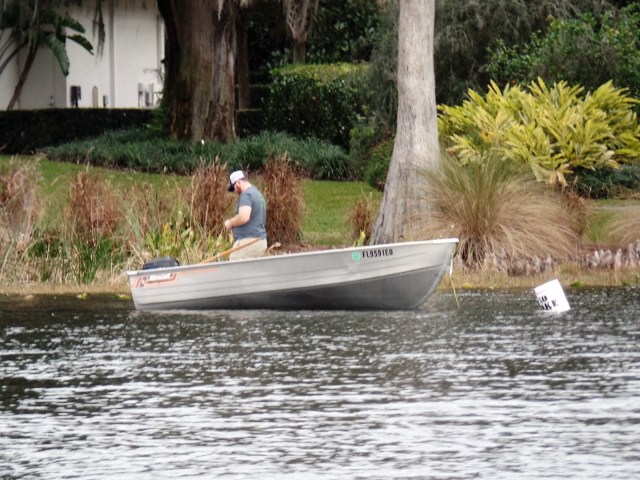
Cyprus trees on Lake Virginia

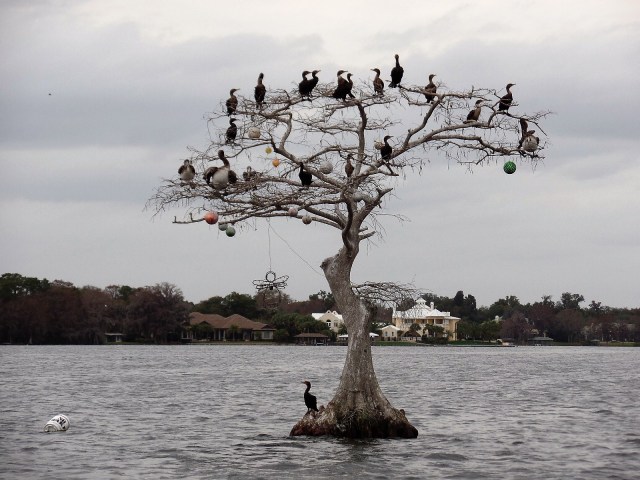
An aviary Chrismas tree

Banana tree

Rollins College