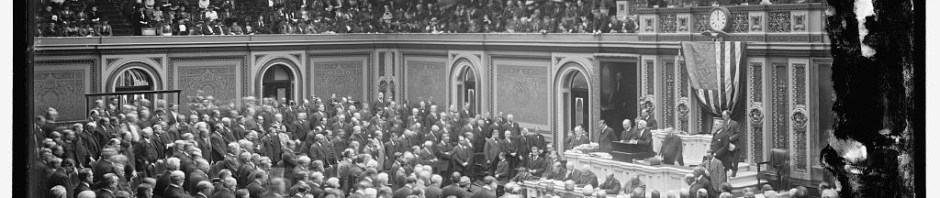
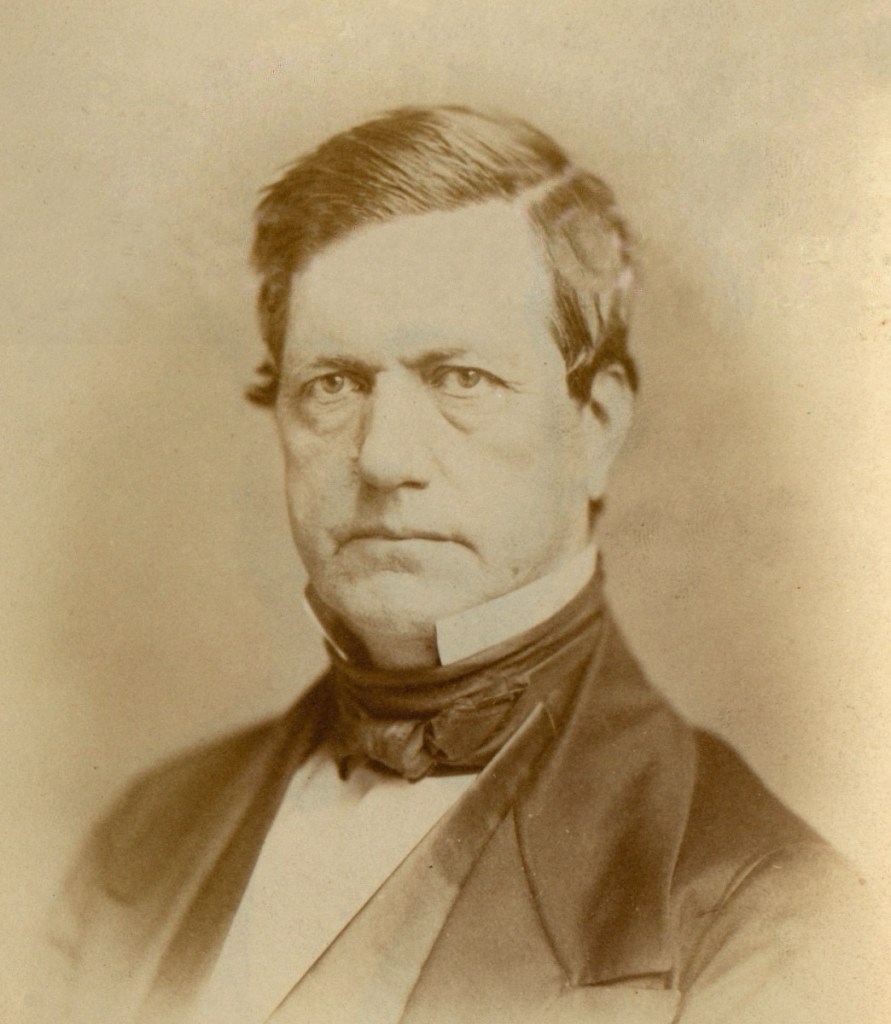
When George Santos, the shambolic Republican congressman from Long Island was expelled from the U.S. House of Representatives in 2023, he became only the sixth congressman to have suffered that fate. The first, in 1861, was Missouri Rep. John Bullock Clark.
Clark had been elected to Congress in 1858. He was reelected in 1860, but before he could be seated, he was expelled. The reason: treason. Clark, a practicing attorney, became an officer of the Missouri State militia and rose to the rank of brigadier general. When Missouri seceded from the Union and joined the Confederacy, Clark led troops in battle against the country for which he had been elected as a congressman.
It takes a two-thirds vote to expel a member from the House. This seemed a pretty clear-cut case. The vote was 94-45. How is it that 45 members opted not to expel Clark? I can tell you why two of them did. Another Missouri rep, John W. Reid, and a Kentucky congressman, Henry C. Burnett, had likewise fought for the Confederacy and they would both be expelled from Congress later that year.
Upon being expelled, the New York Times said of Clark that he would “henceforth roost as low as any bird that ever hawked as saucily as he.” (Pete Bowles, Newsday Service, Oct. 3, 1980)
In Missouri, Clark was viewed as anything but a low-roosting bird. His obit in the Kansas City Times (Nov. 10, 1885) concluded:
“Thousands of reminiscences could be spoken of and told of the man of whom we write, of his conduct and career as a soldier; the strange and interesting lawsuits in which he has been engaged; of his wonderful career as a politician; of his tact of overcoming the want of education; and of the wonderful hold he had upon the affections of the masses… Here where he lived we may say that he was held in high esteem and warm affection by all our people. Here he lived and labored, and here his memory will ever be green.”
The Missouri Historical Review offered the following in its Remisiscences of General John B. Clark (W.D. Vandiver, State Historical Society of Missouri, January 1926):
“He is revered in memory as a kind and generous neighbor, a great pleader at the bar, a veteran of five wars, a statesman of two governments, and as yet one who lived to enjoy the peace of old age and the prosperity of a reunited country.”
But here are some things that these local historians felt were unnecessary to bring to their readers attention:
— One of those wars in which he participated was the so-called Missouri Mormon War in 1838. Clark received an executive order from Governor Liburn Boggs to expel all Mormons from the state. According to the Joseph Smith Papers (John Bullock Clark – Biography) he “Insisted Saints leave Missouri; in conjunction with civil authorities, oversaw prosecution of Latter-day Saint prisoners at preliminary hearing, Nov. 1838.” The Mormons ended up fleeing Missouri.
— In 1840 he unsuccessfully ran for governor of Missouri and almost ended up in a duel. “M.M. Marmaduke, the Democratic candidate easily defeated him. But the contest produced a famous feud with Clairborne Fox Jackson after an article in the Boon’s Lick Democrat claimed that Clark as a Whig had inserted his name on fake Democratic ballots. In a letter to the editor, Jackson charged Clark with fraud. Clark wrote to Jackson seeking redress, believing Jackson had ‘sullied his integrity, even his manhood.’ Jackson sent terms for a duel to be held within one mile of Fayette.” (Kansas Bogus Legislature – John Bullock Clark) Apparently, the two couldn’t agree on terms so the whole thing was called off.
— Clark owned 140 slaves. Why would a practicing attorney need 140 slaves?!!! Nothing in my research could even begin to answer that question. I’m pretty sure these unfortunate men and women were not preparing and reviewing legal documents.
— Having been tossed from the U.S. House of Representatives, Clark was appointed to the Missouri Confederate State Senate in 1862. After serving a two year term Confederate Governor Thomas Canute Reynolds’s chose not to appoint him for a second term. According to the authors Ezra J. Warner and W. Buck Yearns (Biographical Register of the Confederate Congress, 1975) Clark was accused of alcoholism, mendacity and womanizing. Specifically they claim he “attempted seduction of Albert Pike’s mistress.” Pike was also a Confederate Army general.
— When the Civil War ended, Clark flew the coup. With a $10,000 reward on the table for his capture, he escaped to Mexico. He eventually came back, was arrested and detained but in 1866 was pardoned by President Andrew Johnson.
Clark returned to Missouri and resumed his legal practice. He would make one more run for a house seat. That was in 1872, but he failed to get the nomination. Who got it? His son, John Bullock Clark Jr. Junior was elected and would go on to serve for five terms. The younger Clark had also fought for the Confederacy in the Civil War.
-0-
The Congressional Hall of Shame


Excellent research, Ken. Thanks for putting the spotlight on this scoundrel.
History teaches us lessons that too often go unheeded.
LikeLike