Art in Every Corner, Blanton Museum of Art, Austin, Texas
The Works Progress Administration was part of the New Deal, an initiative of the Franklin Delano Roosevelt administration to deal with the Depression. Started in 1935, it employed some 8 million people during its 8-year existence. While perhaps best known for the large public works created through the labor of these men and women, it also hired musicians, actors, writers and artists.
The Federal Art Project was part of this WPA program. It has been estimated 400,000 works of art were created by WPA employed artists. Below are the stories of some of these artists. It is based on an exhibit “Art in Every Corner” at the Blanton Museum of Art on the campus of the University of Texas in Austin. The pieces shown are all from that exhibit.
When the WPA closed up shop in 1943, the commissioned works were donated to institutions throughout the country. Some went to the Blanton and the pieces below were part of that allocation.
Donato Rico
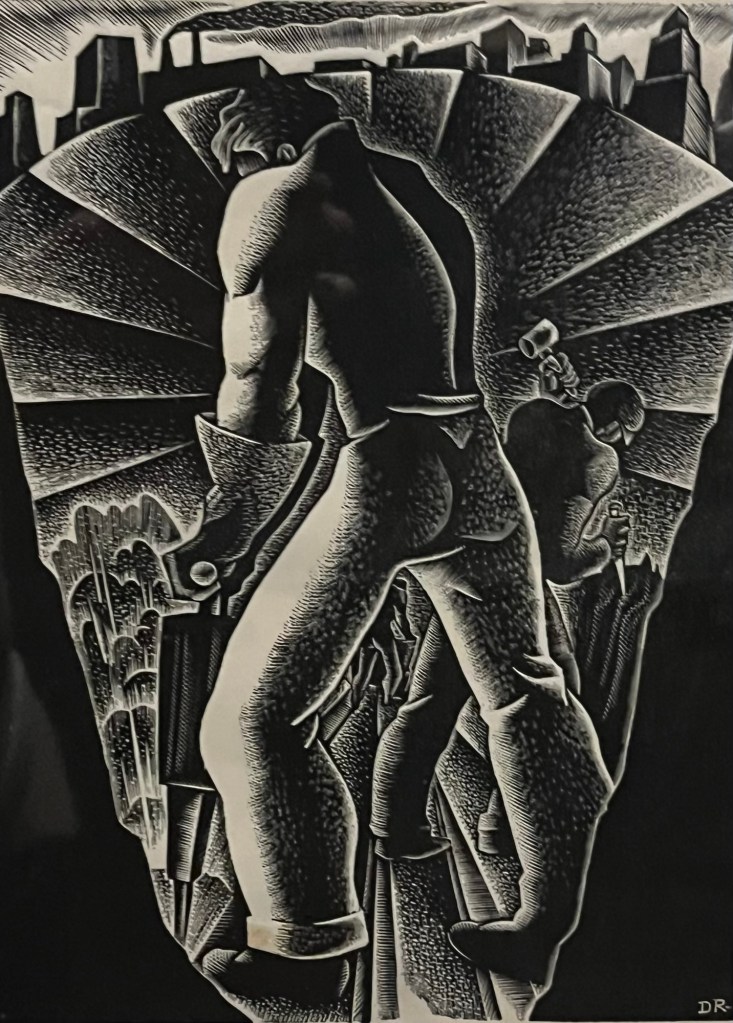
Donato Rico was born in 1912, the son of Italian immigrants. He learned wood engraving at an early age. Working for the Federal Art Project he produced a number of engravings depicting life during the Depression. One of those, Subway Driller, is shown above. Some of his other engravings are in the Metropolitan Museum of Art, the New York Public Library and the Library of Congress. Rico would go on to have a prolific and varied career. By the end of the thirties he began creating comic books. He is credited with co-authoring the Marvel Comic characters Black Widow, Jann of the Jungle, Leopard Girl and Lorna the Jungle Girl. In the 1960’s, he turned to writing paperback novels. He created more than 60 of them using various pen names. A decade later he co-wrote the story for a bisexual vampire movie Mary, Mary, Bloody Mary.
Rockwell Kent
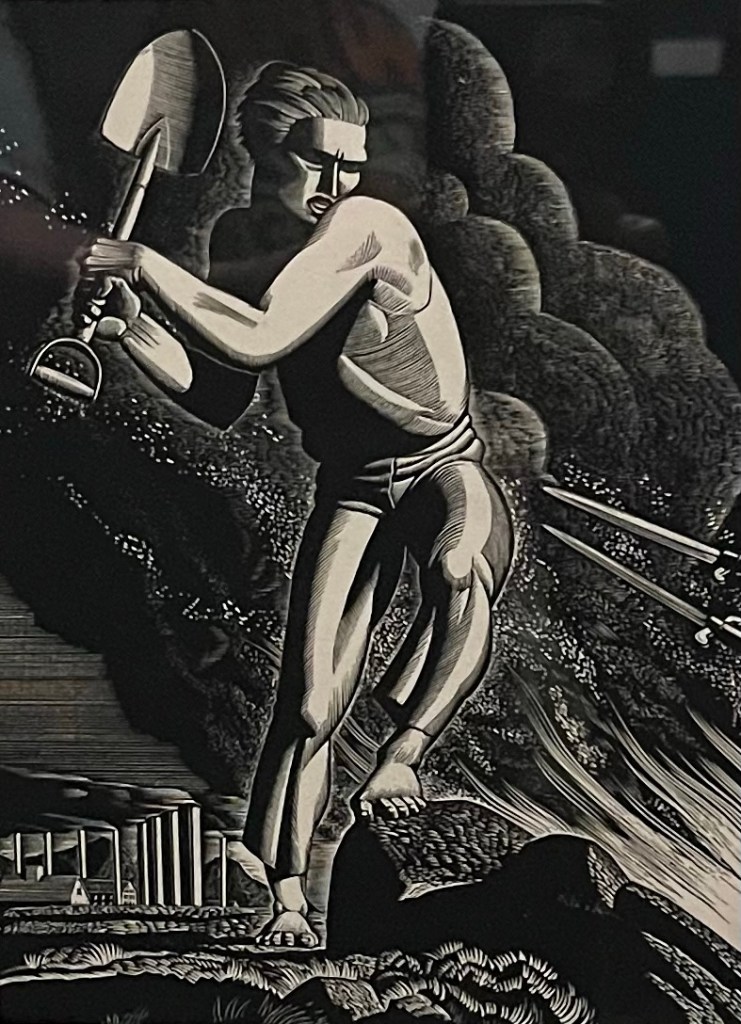
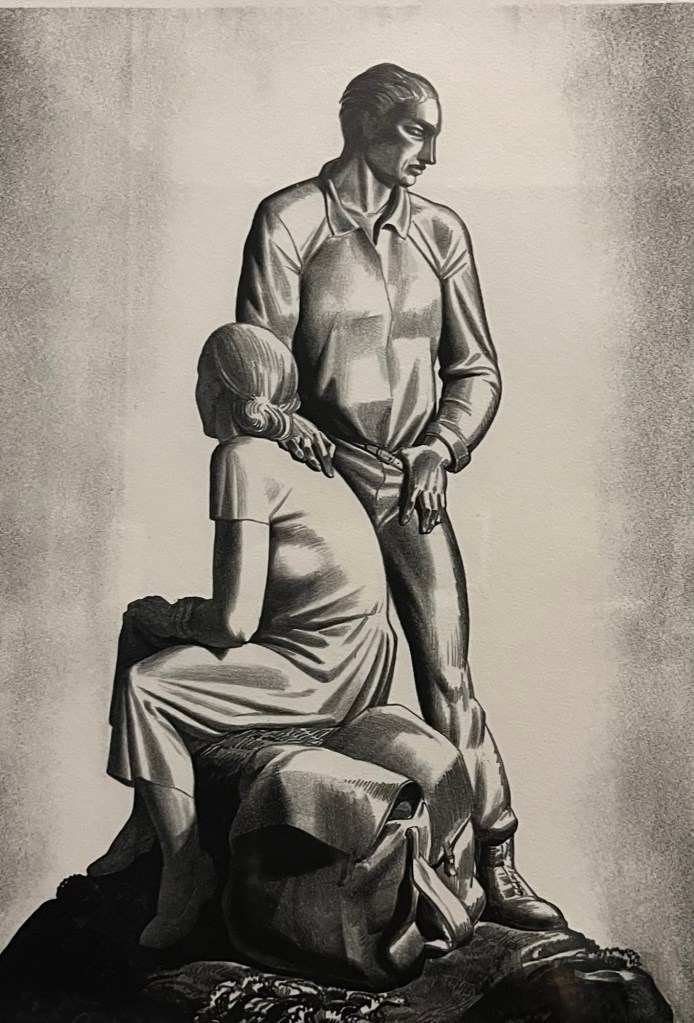
Born in 1882, Rockwell Kent made a name for himself early in his career as a painter of landscapes and seascapes. His painting focused on the natural beauty of places like Newfoundland, Alaska and Greenland. He was hired in 1937 by the WPA to paint murals on the New Post Office Building in Washington. The above wood engraving (left), Workers of the World Unite!, was created that same year. It was the cover illustration for an issue of New Masses magazine. On the right is a lithograph, And Now Where, created in 1936. Kent was an advocate for labor who was at times a member of the IWW, the AFL and the CIO. He was a member of the Socialist Party of America and would later become president of the American Society of Soviet Friendship. His works were exhibited in Soviet Russia. His politics led to his having his passport revoked in 1950. That was later overturned by the Supreme Court (Kent vs. Dulles, 1957) which ruled it a violation of his civil rights.
Walker Evans
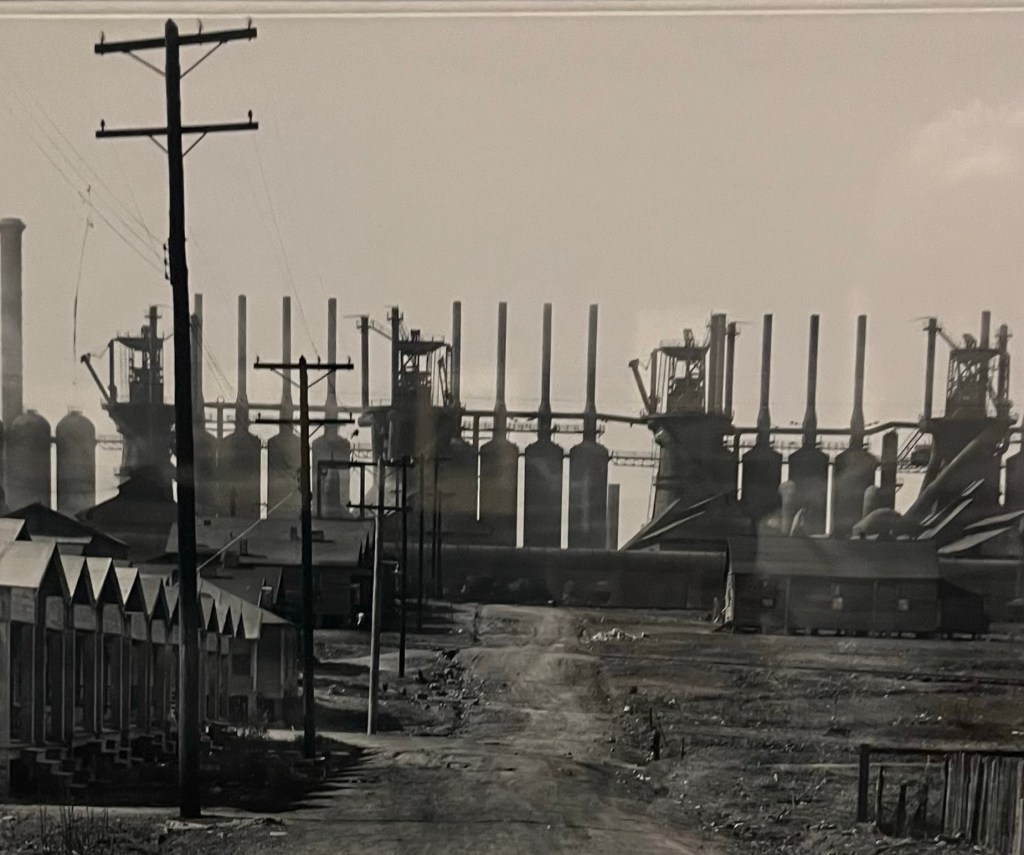
Born in St.Louis in 1903, Walker Evans is best known as a photographer who produced a number of iconic images chronicling the impact of the Great Depression, particularly on rural Americans. He was hired by the Resettlement Administration, which later became the Farm Security Adminstration. His photos were used to promote public support for government relief efforts. Some of these photos are now housed at the Metrolitan Museum of Art, the Whitney Museum of American Art and the National Galleries of Scotland. The above photo, Bessemer, Alabama or Birmingham Steel Mill and Workers Houses, was taken in 1936 while in the government employ. That same year he teamed with the writer James Agee to produce Let Us Now Praise Famous Men. The book was based on their experience living with three tenant farmer families in Alabama. Evans photos in that book are among the most famous photographic depictions of the Depression.
Betty Waldo Parish
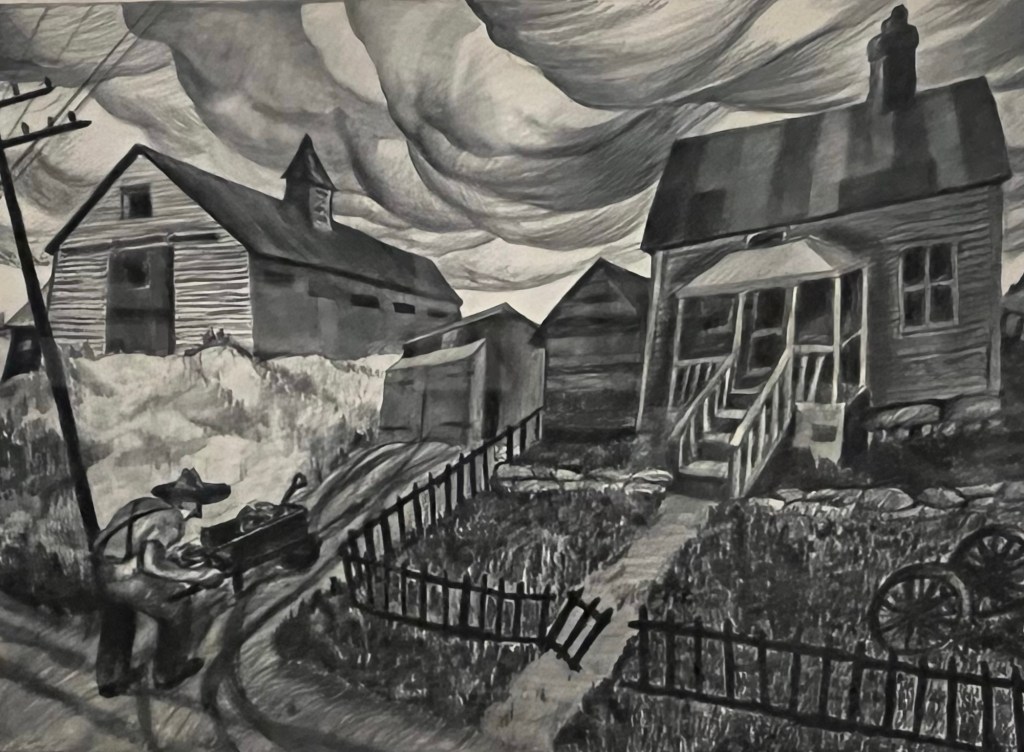
Born in 1910 in Germany to American parents who moved back to the states before World War I. They eventually settled in New York where Parish was a regular exhibitor at the Washington Square outdoor art shows. During the Depression, Parish studied at the Spokane Art Center which was sponsored by the WPA. Later in the decade she would go on to make prints as an employee of the Federal Art Project. Waldo exhibited her work in group exhibitions with the National Association of Women Painters and Sculptors, the Pen and Brush Club and the American Society of Etchers. She had posthumous solo exhibitions (she died in 1986) at the Sylvan Cole and Susan Teller Galleries.
She created the above lithograph, “Cooper’s Farm” in 1941.
Minnie Lois Murphy
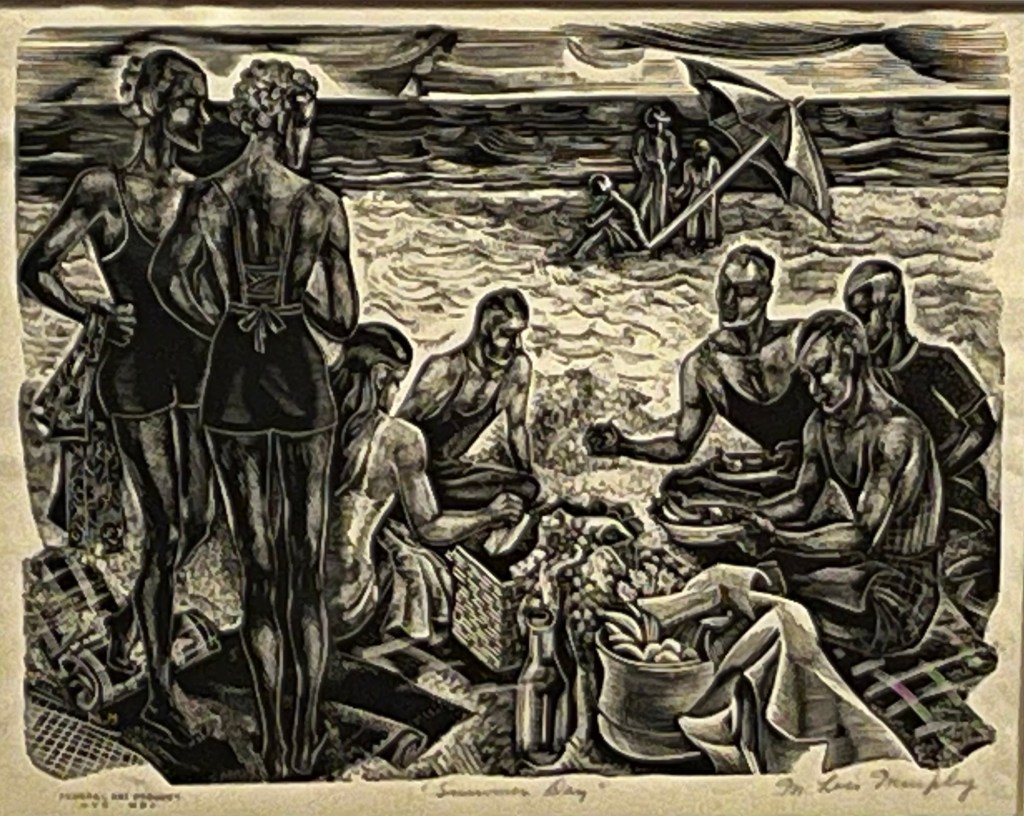
Born in Kansas, Murphy was a Columbia University graduate. The above print “Summer Day” (1937) is one of several of her works published by the WPA. Murphy has prints at the Metropolitan Museum of Art and National Gallery of Art.
Otis William Oldfield
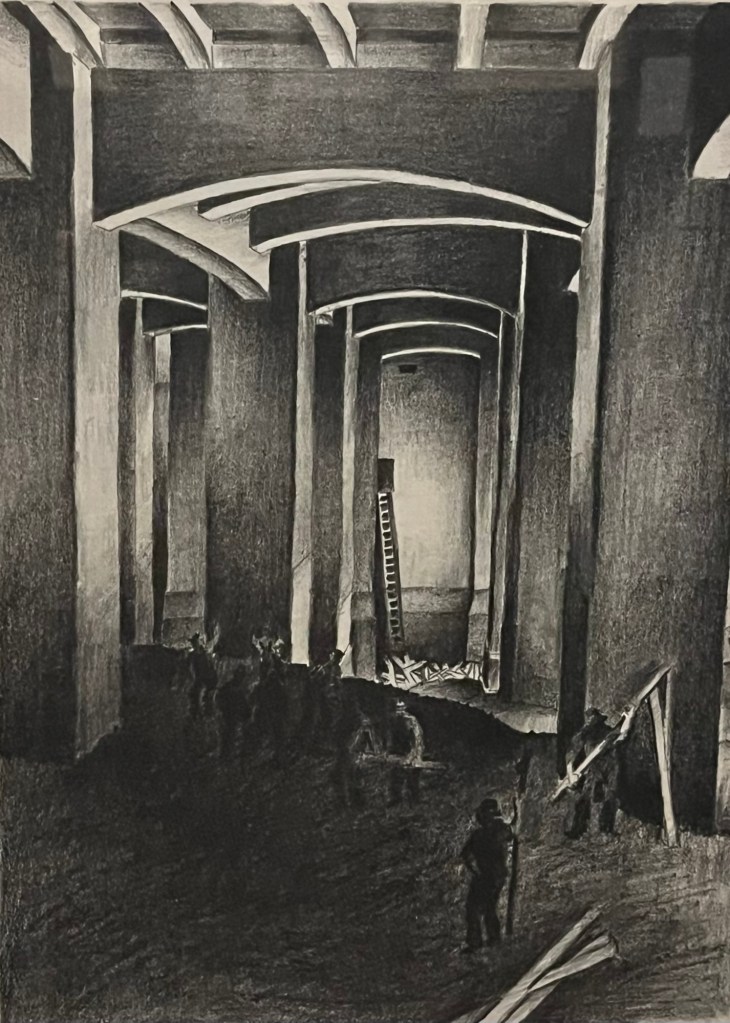
A San Franciscan, Oldfield created the above lithograph in 1936 as part of a series depicting the construction of the San Francisco Oakland Bay Bridge. Oldfield was employed by the WPA at the time and the bridge itself was a WPA financed project. He would later become a teacher at the California College of Arts. He has works in the collections of the Metrolitan Museum of Art, National Gallery of Art and Smithsonian American Art Museum.
Bernard P. Schardt
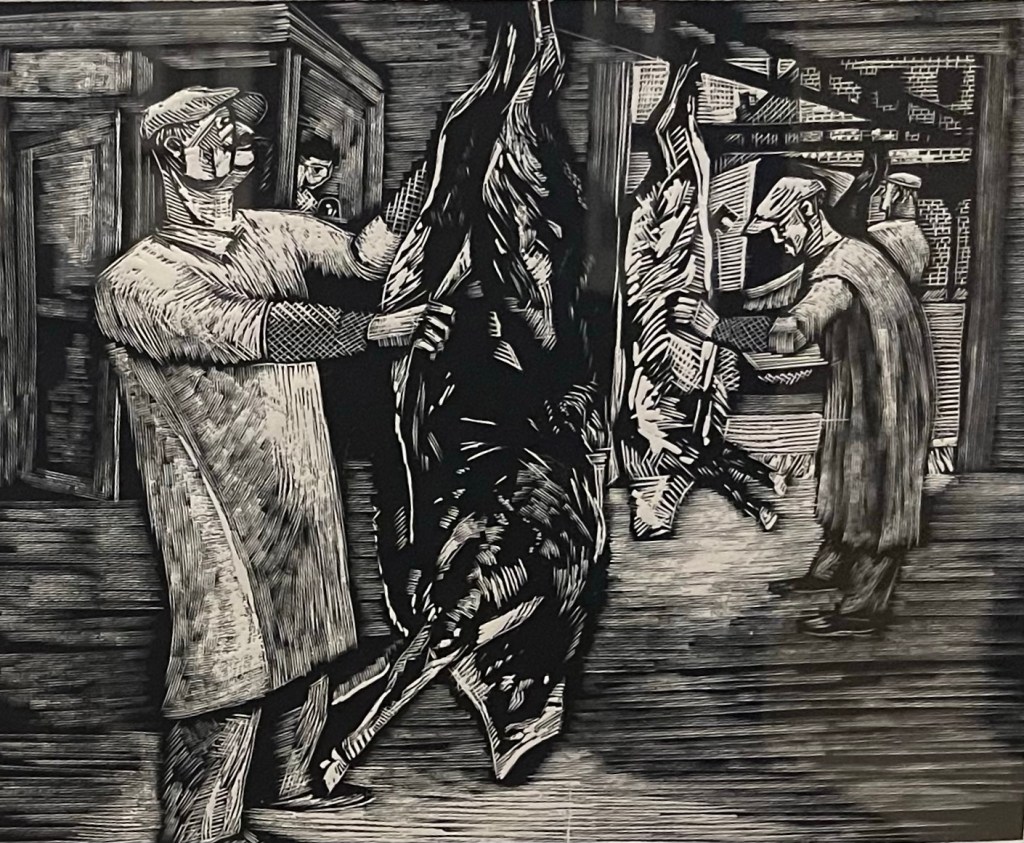
Born in 1903 in Milwaukee, Schardt at one time shared a New York apartment with Jackson Pollack and the two of them co-owned a farmhouse in Bucks County, Pa. Schardt was employed by the Federal Art Project in 1935. His works were exhibited at the Art Institute of Chicago and in 1939, he was put in charge of the FAP’s poster division. He supervised exhibitions at the New York World’s Fair that same year. The above wood engraving, Slaughter House, was created in 1938 while working for the WPA.


It’s inspiring that from the agony of the Great Depression came such magnificent art. Three cheers to the WPA, CCC and FDR for giving people a chance. Thanks, too, for the helpfully informative captions with each work.
LikeLiked by 3 people