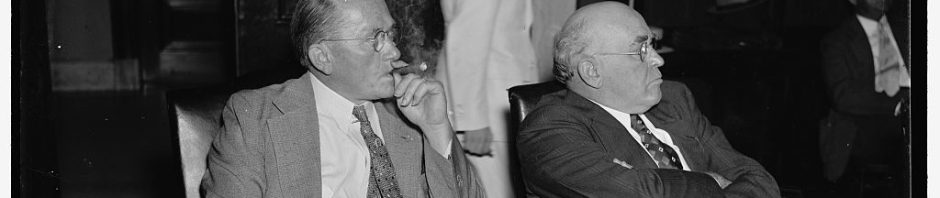
Over its 250 year history the United States Congress has housed an untold number of racists. There are still some in place today. But few if any compare to the vileness of Mississippi Senator Theodore G. Bilbo.
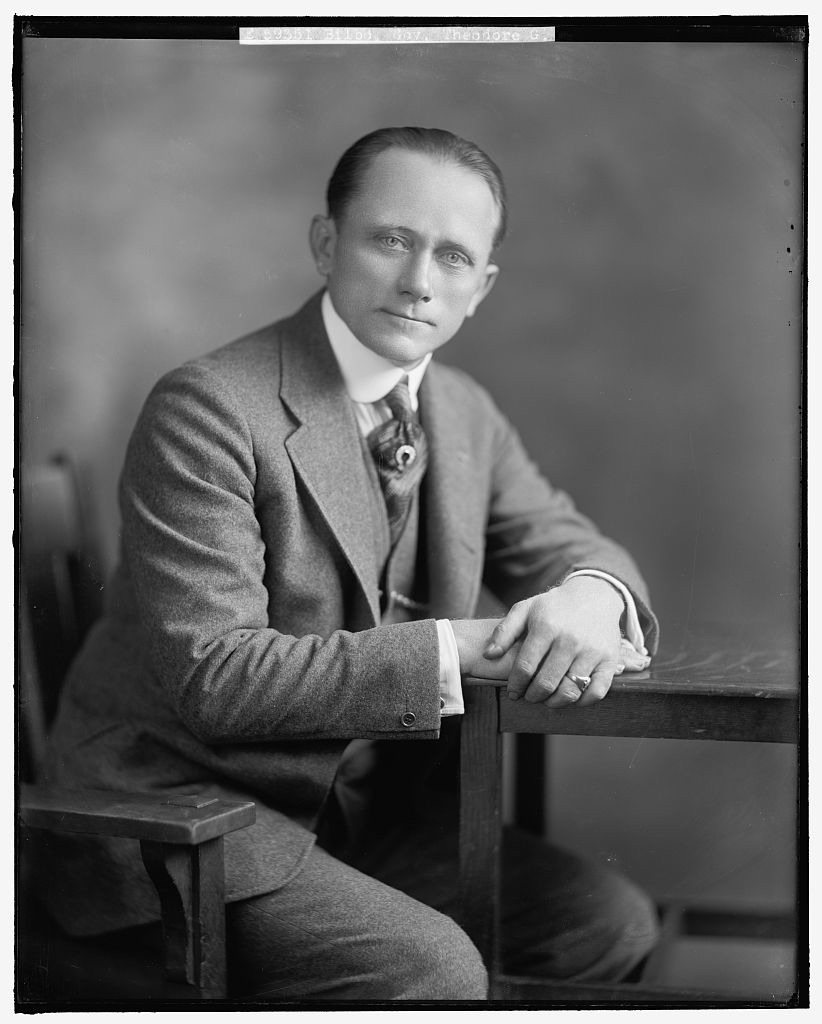
Bilbo served two terms as governor of Mississippi. He was elected to the Senate in 1934, re-elected in 1940 and again in 1946. But he never served his third term. His seating was held up as the Senate investigated charges of election interference and inappropriate payments from contractors. Before that inquiry was completed Bilbao succumbed to cancer in 1947.
His career long advocacy of white supremacy included:
— Membership in the KKK in the 1920’s.
— Authoring a book titled Take Your Choice: Separation or Mongrelization.
— He once criticized the Mississippi National Guard for preventing a lynching (1927).
— He proposed a bill in the Senate to deport 12 million Black Americans to Liberia.
— He filibustered to try to prevent the Senate from passing an anti-lynching bill.
— He encouraged white Mississippians to prevent Blacks from voting.
His prejudices went beyond just Blacks. He once argued in a lettter to General MacArthur after World War II that all Japanese should be sterilized. The New York Times ran this United Press story on July 23, 1945:
“Representative Vito Marcantonio of New York demanded today that Senator Theodore G. Bilbo of Mississippi apologize to a Brooklyn woman for calling her ‘My Dear Dago,’ but Bilbo’s reply was ‘Hell, no.’”
In fact, his bigotry was so legendary that Pete Seeger sang a song about it:
There were a number of other unethical checkpoints in Bilbo’s career.
— In 1910, as a State Senator, he admitted to taking a bribe to change his vote on choosing a candidate to fill a vacant Senate seat. The Mississippi Senate voted 28-10 to expel him, one vote shy of the 3/4ths needed
— In 1923 he made the announcement that he was running for Governor from his jail cell where he was doing time for contempt of court for refusing to testify in a case involving a sex scandal with the current governor.
— He was accused of taking bribes from contractors, one of which was a Christmas present of a Cadillac.
This election year incident, described below in the Charlotte News (June 26, 1946), proved to be the flashpoint that raised doubts about whether Bilbo should remain in the Senate.
“A few days ago a Negro veteran attempted to exercise his franchise by registering for the Democratic Primary in that state: he was, according to his uncontested story, not only refused but beaten. The incident has served as the springboard for one of the most remarkable statements yet to come out of a political campaign distinguished for its demagogy. Senator Theodore Bilbo has called on ‘every red-blooded Anglo-Saxon man in Mississippi to resort to any means to keep hundreds of Negroes from the polls in the July 2 primary. If you don’t know what that means you are just not up on your persuasive measures.’ The Senator’s statement was broadcast.”
Freedom House, an organization founded by Eleanor Roosevelt and Wendell Wilkie, was quick to call for Bilbo’s censure.
“In an open letter to Senator Alben W. Barkley, majority leader, the board of directors of Freedom House urged yesterday that the United States Senate, when it reconvenes, should entertain a resolution censuring Senator Theodore G. Bilbo of Mississippi, ‘so that all Americans may be assured that the United States Senate disassociates itself from the shameful acts of one of its members.’ The letter condemned ‘the insulting letters which he has written to loyal Americans who differ with him and, above all, his open scorn of American public opinion and human decency.’ It suggested that the resolution of censure should be a prelude to removal proceedings if Senator Bilbo should ‘persist in using his high office to undermine the American way of life.’ (New York Times, Aug. 9, 1945)
There were even some folks in Mississippi who wanted to see Bilbo unseated.
“Over 50 Negro and white qualified voters of Mississippi, including Editors, Educators, Ministers and Veterans filed today a sworn complaint in Washington D. C., with a Special Committee to Investigate Campaign Matters, charging that Senator Bilbo’s election in the Democratic primary for United States Senator was ‘tainted with fraud, duress and illegality’ and ‘acheived by force and violence and the use of criminal, extra legal and illegal tactics’ and asking that he be denied his seat in the Senate for the new term commencing next January. The original was filed with the Special Committee to Investigate Senatorial Campaign Expenditures and a duplicate was filed with the Senate Privileges and Elections Committee. The complaint charges that Senator Bilbo ‘conducted an aggressive and ruthless campaign.’” (The Black Dispatch, Oklahoma City, Sept. 28, 1946)
On Jan. 1, 1947, the AP reported: “Senator Hocy (D-NC) said today an agreement had been reached between Theodore G. Bilbo (D) and Senate leaders on a compromise: which would grant the Mississippian his senatorial salary but deny him his seat temporarily.
“Hocy told a reporter that Republican and Democratic leaders have agreed and Bilbo has acquiesced. This procedure which would permit 35 other senators-elect to take their oaths while Bilbo’s case remains in abeyance. The agreement would permit Bilbo to appear in the Senate in his own defense when charges are heard against him that he profited by dealing with war contractors and prevented Negroes from voting in the Mississippi primary. But the Mississippian would be denied the oath of office and could not vote on his own case, while the charges are pending.”
By that time Bilbo’s cancer had already been diagnosed. He remained defiant: “Debt-free and author of a new book setting forth the creed of ‘white supremacy’ so dear to his heart, Senator Theodore G. Bilbo is now resting at his ‘dream house’ in Poplarville with assurances pouring in that his ‘popularity’ in this State has increased immeasurably. Senator Bilbo has served notice publicly that nothing will deter him from demanding his Senate seat ‘immediately’ after surgeons have pronounced him ‘fit for duty.’ However, there seems little doubt that at least another three months must elapse before he receives a ‘medical mandate.’ The attitude of Mississippians in general was well illustrated this week when the State Legislature, meeting in extraordinary session, received resolutions in both branches calling upon the United States Senate to seat Mr. Bilbo in recognition of the constitutional right of the Magnolia State to have national representation ‘of its own choosing.’ (New York Times, March 9, 1947)
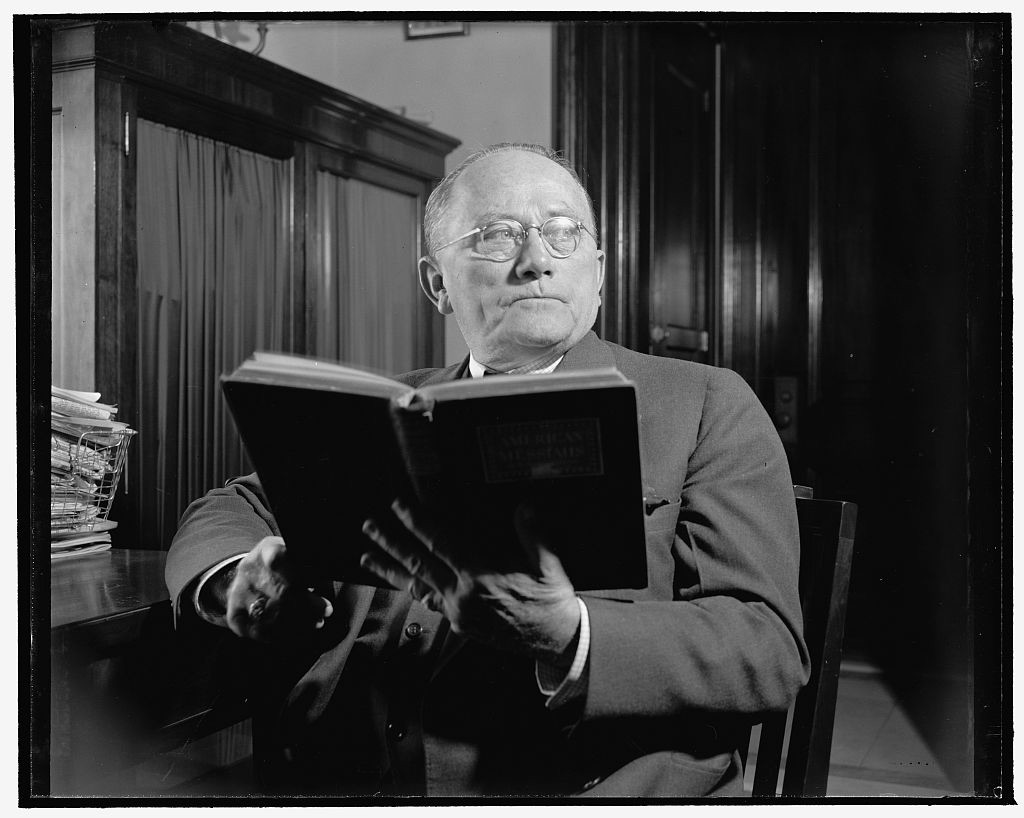
The ‘fit for duty’ pronouncement never came. He passed away on Aug. 21, 1947. Here are two very different eulogies. The first is from the Jackson Clarion-Ledger (Aug. 23, 1947)
“Theodore G. Bilbo, twice Governor of Mississippi by the votes of the people, three times elected to the United States Senate by Mississippi Democrats, ‘stormy petrel’ of Mississippi politics for 35 years, one of the most colorful figures in the State’s history, last perhaps of the factional chieftains, a man of many enemies and many weaknesses but who was able to hold the loyalty of thousands of Mississippians of two generations, is dead.
“The manner in which Theodore G. Bilbo, through the last year of his life, fought the deadly cancer, fought and endured pain and mutilation, fought and planned to keep on fighting those who barred him without trial from the Senate seat to which Mississippi Democrats elected him, won for him the respect and admiration of thousands of Mississippians who had never been numbered among his personal friends or political supporters. His enemies, including groups which are the enemies of the social and political institutions cherished by Mississippi Democrats, attacked without pity, moved to bar him from his Senate seat, even as he was having to summon strength and courage to fight the deadly cancer which had appeared in his mouth and throat. His answer was a challenge.”
The Northwest Enterprise, Seattle, (Aug. 27, 1947) had a different take:
“The 70 years of his lifetime have been 70 years of obvious, shameful degeneracy for the South. It is fitting that death should remove him, like an obscene and putrid blot from the face of the South at the very time it appears to be trying to shake itself free of degenerating influences and rise to the level of the rest of the nation. No man could tell the lies, could wallow in the profanity, could intoxicate and excite himself with the obscenities Theodore Bilbo directed against the Negro race unless he were a degenerate. We submit that Theodore Bilbo’s hatred of Negroes was linked with the rest of his vulgar nature, his red galluses and red neckties, his gaudy, diamond-studded stickpins, to form a personality repulsive to decency, unhealthy, unclean and paranoic. It should be to the everlasting shame of the nation that it tolerated an unmanageable, obscene mad man in one of the highest offices of the land.”
The last word on Bilbo would fall to a state house clerk in Jackson:
“Mystery solved: The top administrator in the Mississippi House says he unilaterally made the decision to take a statue of a racist former Gov. Theodore Bilbo off public display and put it into storage.
“House clerk Andrew Ketchings spoke to reporters Wednesday, answering a question that has been all the buzz at the state Capitol: Where’s Bilbo?
“He said a work crew moved the Bilbo statue on a Saturday in October, at a cost of about $4,000 to $5,000, paid by public money. It is now covered by a fire-resistant blanket, in a large closet behind one of the Capitol elevators.” (Emily Wagster Pettus, AP, Feb. 9, 2022)
(All photos from the Library of Congress public domain collection.)
-0-
The Congressional Hall of Shame
 off the leash
I’m not sure what bothers me more, his beliefs or the fact that he was elected and re-elcted twice. Neither give a good impression of the people of Mississippi. Maggie
LikeLiked by 4 people
Thank you for the valuable history lesson. Now we know who created the blueprint for the maga crowd. If there is a hell, one hopes Bilbo has a special spot there after creating hell on earth.
LikeLiked by 2 people
It’s interesting how many racists are also criminals.
LikeLiked by 2 people
Trump might try to arrange to have that statue put back on public display.
LikeLiked by 1 person