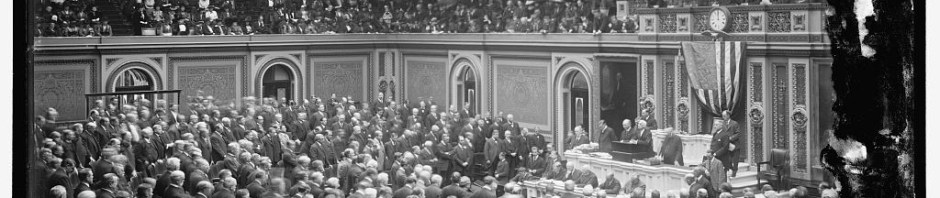
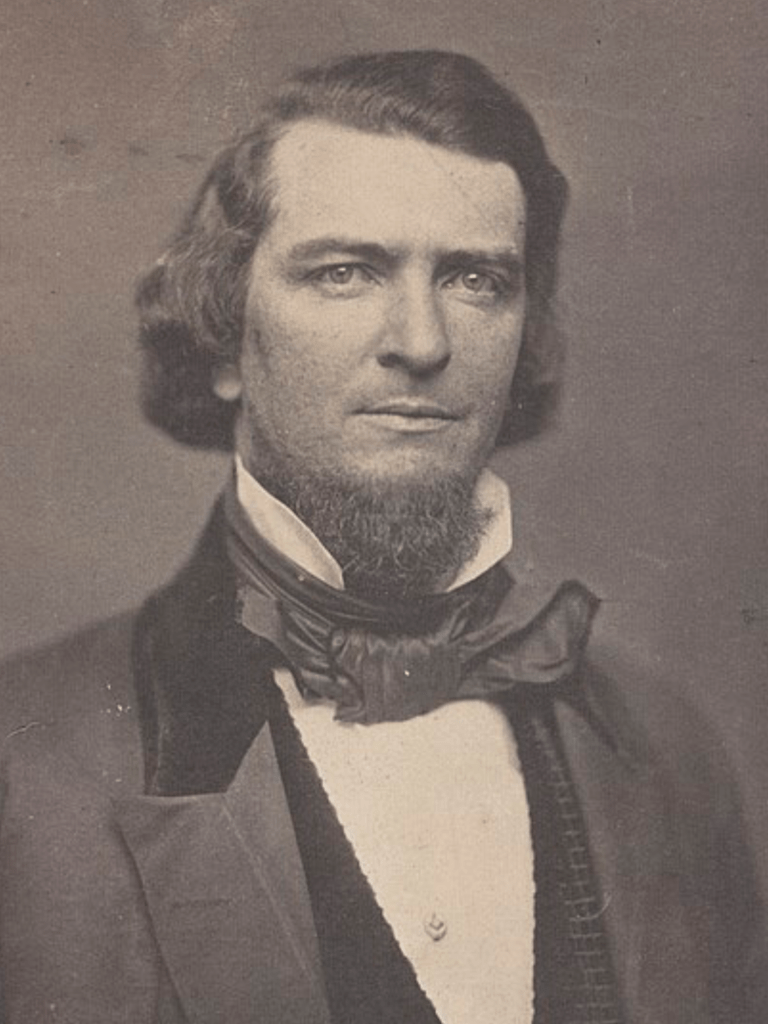
Preston Brooks was a congressman from South Carolina’s fourth district which includes Brooks’ home of Edgemont County. He served in the House from 1853-1857. His service in Congress was pretty inconsequential, he missed 42.7% of the roll call votes that occurred during his two terms (govtrack.us). But that all changed on May 22, 1856. That’s when Brooks, a slaveholder, attacked and viciously beat abolitionist Senator Charles Sumner of Massachusetts on the Senate floor.
“Shortly after the Senate had adjourned for the day, Brooks entered the old chamber, where he found Sumner busily attaching his postal frank to copies of his ‘Crime Against Kansas’ speech.
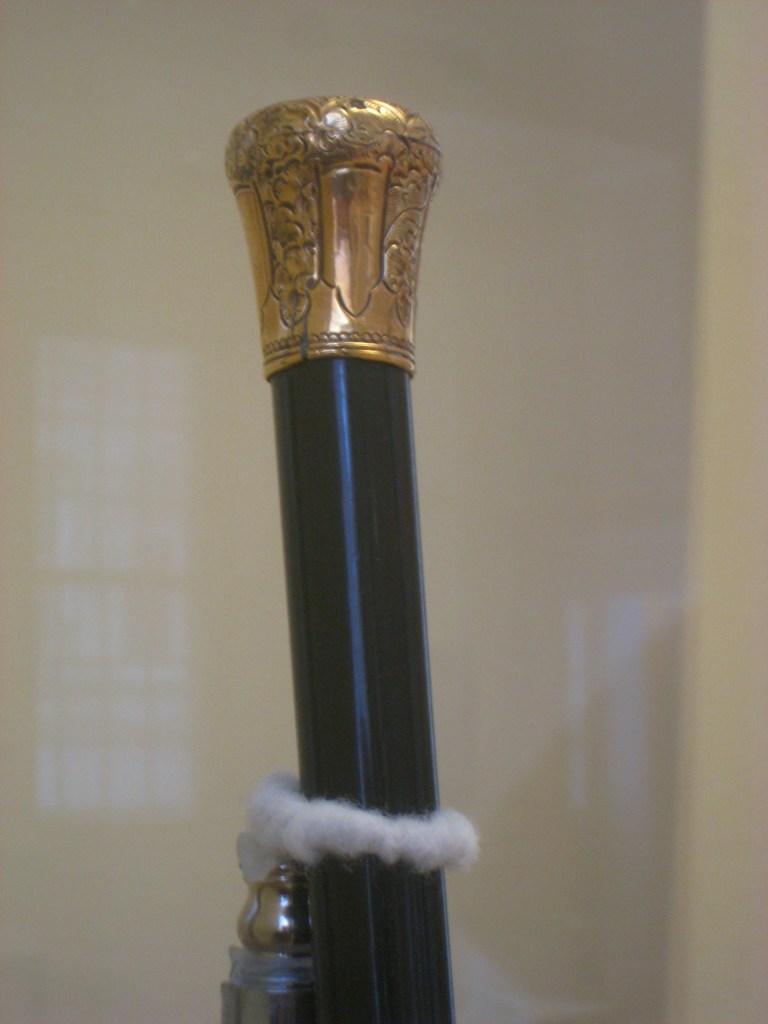
“Moving quickly, Brooks slammed his metal-topped cane onto the unsuspecting Sumner’s head. As Brooks struck again and again, Sumner rose and lurched blindly about the chamber, futilely attempting to protect himself. After a very long minute, it ended.
“Bleeding profusely, Sumner was carried away. Brooks walked calmly out of the chamber without being detained by the stunned onlookers.” (US Senate web site)
In Brooks’ words: “I struck him with my cane and gave him about 30 first rate stripes with a gutta percha cane.
“…every lick went where I intended. For about the first five or six licks he offered to make fight but I plied him so rapidly that he did not touch me. Towards the last he bellowed like a calf.” (Paul Quigley, Civil War Monitor Magazine, Spring 2026)
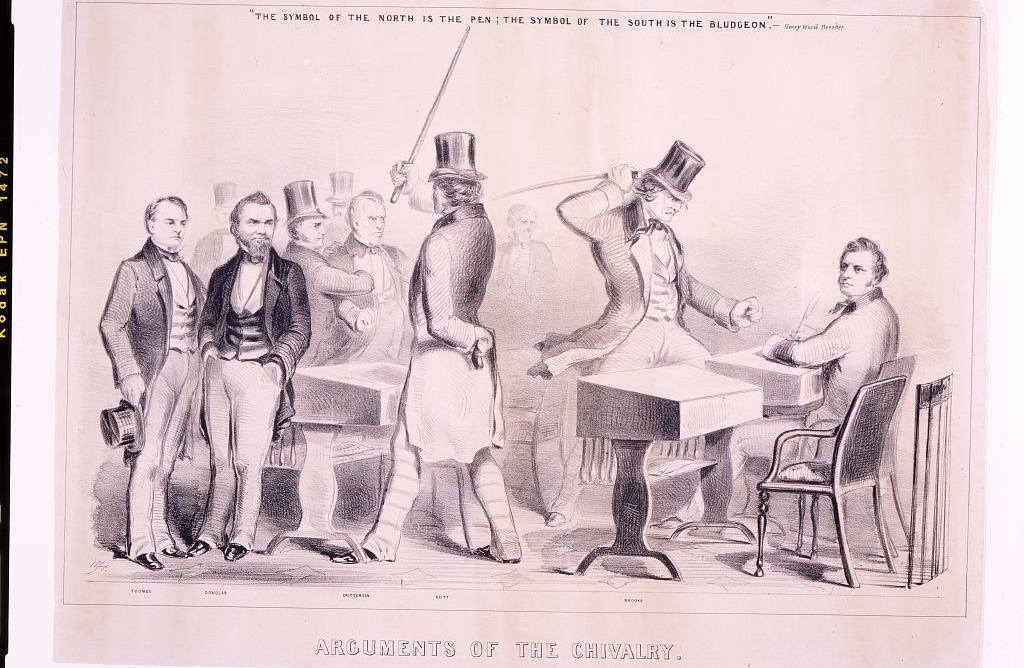
This attack occurred two days after Sumner had offered up some fiery oratory as part of the Senate’s debate over the Kansas-Nebraska Act which he opposed. That act would open the door for slavery in those territories. During his speech Sumner specifically called out South Carolina Senator Andrew P. Butler, who co-authored the bill and was a relative of Brooks. Hence the congressman took offense.
There is no shortage of incidents in Brooks’ background that suggest he was a hothead prone to resorting to violence. That’s why he got tossed out of college.
“He attended South Carolina College, where he impressed the faculty with his work but displayed a tendency for undisciplined behavior. After passing all his exams and awaiting graduation, Brooks heard a rumor that his brother had been mistreated by police. Preston rushed to the jail with brandished pistols and threatened the officers. Police calmed the incident, but university officials expelled Brooks.” (American Battlefield Trust)
And then there’s the story of how he came to be walking with a cane.
“In 1840, Louis T. Wigfall (later to become a Texas senator) engaged in a dispute with Preston’s elderly father, Whitfield Brooks. Preston challenged Wigfall to a duel on his father’s behalf and was wounded in the showdown. His injuries forced him to walk with a cane for the rest of his life.” (American Battlefield Trust)
Following his attack on Sumner, the House established a committee to investigate the incident. They returned a recommendation for expulsion. Here’s an excerpt from their report as published in the Charleston Daily (June 7, 1856).
“There is no evidence beyond the character of the attack tending to show an intention on the part of Mr. Brooks to kill the senator, his expressions being that he did not intend to kill but to punish him; but the committee cannot but regard the assault as a most flagrant violation, not only of the privileges of the Senate and of the House as co-ordinate branches of the legislative department of the government, and the personal rights and privileges of the senator, but of the rights of his constituents and of our character as a nation. It was premeditated during a period of at least two days, without any other provocation than words lawfully spoken in debate in the Senate chamber, not ruled out of order by the President of the Senate, nor objected to by any senator as violative of the rules established for the government and order of that body. The act cannot, therefore, be regarded by the committee otherwise than as an aggravated assault upon the inestimable right of freedom of speech guaranteed by the constitution.
“It asserts for physical force a prerogative over governments, constitutions and laws; and, if carried to its ultimate consequences, must result in anarchy, and bring in its train all the evils of ‘reign of terror.’ The committee, therefore, in conformity to the spirit of the resolution of the House and their sense of public duty, are constrained to recommend to the House the passage of such a resolution as will vindicate its own character and rebuke the member who has, so unhappily for himself and the country, perpetrated this great wrong.”
Brooks had one more potentially deadly confrontation before the vote on expulsion would take place.
“The last dramatic incident of Brooks’ life was the proposed duel with Congressman Burlingame of Maine. This was the outcome of the Sumner affair. A challenge was passed and accepted. Rifles were chosen as the weapons but Burlingame insisted on fighting in Canada. Brooks’ friends dissuaded him, telling him he would have to go through the North, which was hostile and he would be assassinated. The meeting never took place and Northern papers characterized Brooks as a bully backed down.” (Newberry SC Weekly, May 8, 1914)
The vote on expulsion was 121-95, short of the two-thirds majority needed to send him packing. Brooks’ response? He resigned. “They have written me down upon the history of the country as worthy of expulsion, and in no unkindness I must tell them that for all future time my self-respect requires that I shall pass them as strangers.” (US House of Representatives web site, History, Art and Archive)
He was promptly re-elected. However, he passed away before being able to be re-seated. He died unexpectedly from croup on Jan. 27, 1857. He was 37.
The polarization in America in 1857 was such that in the South, Brooks was treated as a hero, at least among the white slaveholding south. This death announcement in the Petersburg, Va., Democrat (Feb. 5, 1857) is an example.
“The telegraph yesterday startled our readers with the announcement of the sudden death of the Hon. Preston Brooks. With but a few moments warning, this gifted and true representative of South Carolina has been called from the earth. His death will moisten many eyes and throw the shadow of sorrow over many hearts that have long been wont to look upon and love him.
“At the threshold of a brilliant congressional career, having enjoyed but a foretaste of the honor which his State had in reserve for him, beloved by all whose good opinion is worth having, devotedly attached to his State and section, his loss reaches beyond the severance of family and friendly ties, and puts a sovereign State in mourning. It is difficult to estimate the value to the South of such a man as Preston S. Brooks. An open, bold, free thinker, an accomplished scholar, a finished orator, and the very incarnation of chivalry, he was armed with all the weapons necessary to a successful defence of her interests and institutions.
“There is no true Southerner who will not hear with melancholy feelings the unexpected death of Carolina’s honored son. May the grass grow greenly upon his grave, and the earth press lightly upon his bosom, for it was once the prison home of a noble soul.”
I’m sure many in other parts of the country offered a different take. One might consider that the blows from Brooks’ cane amounted to one of the first battles of the Civil War.
-0-
(Note on sources: Excerpts from newspapers that do not include links are accessible on newspapers.com, subscription required. Photos are from Wikimedia Commons.)
The Congressional Hall of Shame


A well-told post that deserves wide readership on this “Independence Day” weekend; the biggest threat to American independence being the bigotry, bullying, oppression of the Preston Brooks types who remain from generation to generation.
LikeLiked by 2 people
Will Rumpy commission a statue of Brooks for the White House?
LikeLiked by 2 people