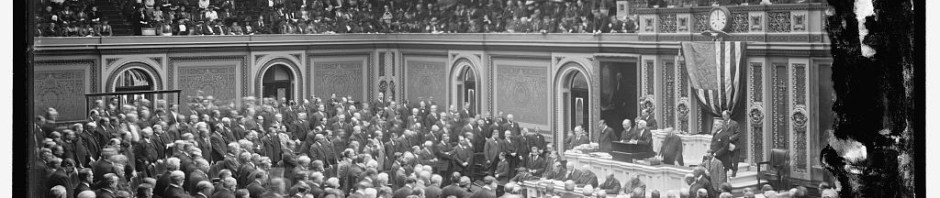
Brigham Henry Roberts (usually known as B.H. Roberts) was elected to the House of Representatives from the state of Utah in 1899. Roberts was the president of the First Council of the Seventy of the Church of Latter Day Saints, a position he would hold for forty+ years. Over the course of his career he wrote two biographies, a novel and numerous works about Mormonism. He served as a chaplain in the military. But he had one problem. Or maybe you could call it three problems: Sarah Smith Roberts, Celia Dibble Roberts, and Margaret Curtis Shipp Roberts. He would never be allowed to take his congressional seat.
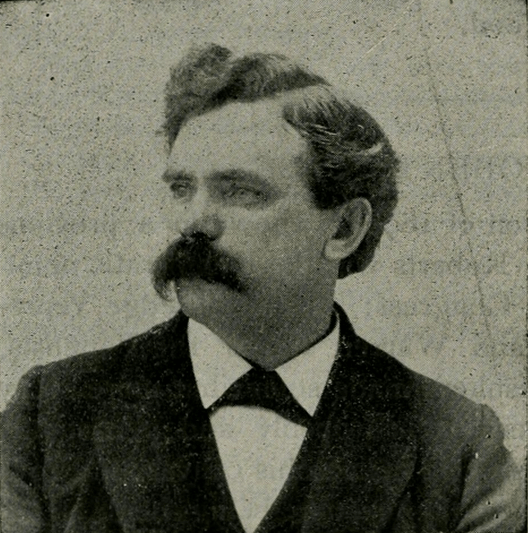
Reaction to the news of Roberts election was quickly forthcoming. A pamphlet produced by an organization called the League for Social Service and published in the Scranton Tribune (Nov. 1, 1899) under the headline “Roberts Must Walk the Plank” explained why:
“1. The said B.H. Roberts is an avowed polygamist, having at least three wives.
“2. The said B.H. Roberts has married all his polygamous wives since the Edmunds Anti-polygamy law of 1882, or since the Congressional Anti-polygamy law of 1862, and hence his marriages have all been consummated in open and willful defiance of law, as well as in willful defiance of the sense of morality of the American people.
“3. The said B.H. Roberts was convicted of living with plural wives prior to the amnesty proclamation of President Benjamin Harrison, January 4th, 1893, and of President Grover Cleveland, September 25th, 1894, for which offense he served a term of imprisonment, to which he was sentenced on May 1st, 1889.
“4. Part of the penalty for living with plural wives, as prescribed by the Edmunds law of 1882 (see 8th section of said law) and reaffirmed by the Edmunds-Tucker law of 1887, is disqualification to vote or to hold office as an American citizen.
“5. The said B.H. Roberts has confessedly lived with plural wives and has begotten polygamous children since November 1st, 1890.”
The pamphlet goes on the list another 17 reasons to keep Roberts out of the House before concluding:
“Upon such grave issue as is herein involved every true American citizen will expect the House of Representatives to stand uncompromisingly for honesty, for morality, for the Christian home, and for our free institutions, by seeing to it that B.H. Roberts is not permitted to have a voice in our national legislation for a single day, or even for an hour.“
Roberts married his first wife, Sarah Smith, in 1878. His second wife, Celia Dibble came along in 1884. He had seven children with Smith, eight with Dibble. At times he moved families to Colorado to avoid “co-habitation” charges. He was in 1889 charged with unlawful co-habitation and was sent to prison where he served five months. After he got out in 1890 he took on his third wife Margaret Curtis Shipp.
The American Baptist Home Mission Society added their two cents with this resolution (San Francisco Examiner, June 1, 1899)
“Other men in public life may be wicked, but they are not flaunting their sin in the face of the American people and glorying in their shame as the highest social ideal. We call upon all good people everywhere to insist that their Representatives in Congress use all honorable means to unseat Mr. Roberts. For his retention in legislative halls while practicing that for which a few years ago he was incarcerated in the penitentiary will be regarded by the Mormon people as the very seal of heaven upon their system of marriage, which, like a monster octopus, is reaching out everywhere with its blighting touch of death and has already filled every valley in Utah with uncounted floods of tears, with broken hearts innumerable, and with forgotten graves.”
The Michigan congressional delegation needed no further convincing (Lansing State Journal, Jan. 28, 1899):
“Whereas, A pure and righteous family is of the supremest importance to the welfare of the nation, and
“Whereas, One of the darkest blots upon the history of our country has been the existence of polygamy within our territory, which the good citizenship of the nation has attempted for many years to stamp out, by religious and educational effort and by statutes of the national Legislature, especially those known as the Edmunds Law of 1882, and the Edmunds Tucker law of 1887, and by the operation of the courts, and
“Whereas, B.H. Roberts who has been elected to the House of Representatives of the United States from the State of Utah is a confessed polygamist and has stated, May, 1898, ‘Polygamy is not adultery.’ It ‘must be not only not bad but positively good, pure and holy,’ and
“Whereas, The admission of B. H. Roberts to a seat in the United States House of Representatives would be an encouragement to the polygamists whose evil practices the nation has been long striving to suppress, and
“Whereas, The United States House of Representatives is the judge of the qualifications of its own members according to section 5, of article 1, of the constitution of the United States, therefore it is hereby
“Resolved, By the House (the Senate concurring), That we express to the Representatives in Congress from the various congressional districts of Michigan, that in our judgment for B.H. Roberts to be permitted to take his seat as a member of the Congress of the United States would be in conflict with all those standards of high civilization, for which our nation stands, an offense to the good citizenship of the nation and contrary to sound public policy, and we recommend to the representatives in Congress from the State of Michigan that for these reasons they vote against the seating of B.H. Roberts as a member of the national House of Representatives.”
The House did what the House does. They set up a Special Committee on the case of Brigham H. Roberts and held a hearing. Several witnesses were called to the stand. One example is T.T. Brandon, a resident of Centerville, Utah, who had been postmaster and probate judge.
“…asked by (committee member) Morris as to the marital repute of Roberts and Celia and Louisa Roberts. ‘There is such a general repute.’ the witness replied. ‘It is that Celia Dibble Roberts Is recognized by the entire community as B.H. Roberts’ second wife. She is dealt with by the Mormon church as his second wife.’
“’How about Louisa Roberts?’ ‘She is recognized as his first wife.’ Brandon said that the third reputed wife, Marguerite Shipp Roberts, had come there once to attend the funeral already referred to. The records of these marriages, the witness said, were in the Temple, which was the only depository of plural marriages.” (San Francisco Call, Dec. 20, 1989)
After hearing much similar testimony, the committee issued its findings. Their report is available online at the Library of Congress:
“ Upon the facts stated, the majority of the committee assert that the claimant ought not to be permitted to take a seat in the House of Representatives, and that the seat to which he was elected ought to be declared vacant.
“I. By reason of his violation of the Edmund’s law.
“II. By reason of his notorious and defiant violation of the law of the land, of the decisions of the Supreme Court, and of the proclamations of the presidents, holding himself above the law and not amenable to it. No government could possibly exist in the face of such practices. He is in open war against the laws and institutions of the country whose Congress he seeks to enter. Such an idea is intolerable. It is upon the principle asserted in this ground that all cases of exclusion have them based.
“III. His election as representative is an explicit and offensive violation of the understanding by which Utah was admitted as a state.”
Roberts was out before he ever got in.
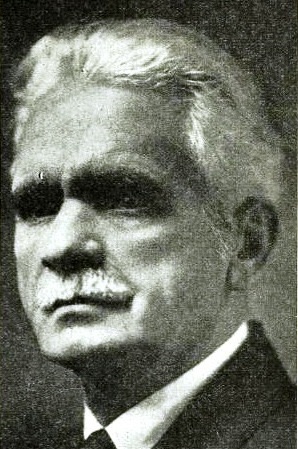
Roberts had his supporters back home. The Ogden (Utah) Morning Examiner (Aug. 25, 1906) would comment “The Hon. B.H. Roberts should have been allowed to retain his seat in congress, for he represented the choice of a sovereign state.”
Roberts obit in the (Salt Lake City) Deseret News, Sept. 28, 1933, offered this assessment:
“The stalwart, princely figure. of President Roberts will be missed by his associates and by the people of the Church generally among whom he had mingled during his long and active years in the ministry. An acknowledged veteran of many religious battles and debates in his former years he has been recognized as one of the outstanding defenders of Mormonism.
“Through his efforts the teachings of Joseph Smith have found the hearts of multitudes. They honor and revere him as their friend and his passing will be a shock to them. Through his fearlessness and his staunch defense of the principles of the Gospel President Roberts has won many outsiders to friendship for the Church.”
The modern day reader would also take issue with Roberts views on women’s suffrage (he was opposed) and on race (he was a segregationist). But those issues were of little consequence to the 1900 Congress. The three wives, on the other hand, were a different story.
-0-
The Congressional Hall of Shame
 off the leash
Oh, well. It’s for the best he wasn’t allowed to serve in Congress. Three wives. At least 15 offspring. Ol’ B.H. (Bad Henry) Roberts would have had even less time to cast votes than New Jersey’s present-day invisible-man Congressman Tom Keane Jr.
LikeLiked by 1 person
The most surprising thing about Kean Jr.. is that anyone actually noticed he wasn’t there.
LikeLike