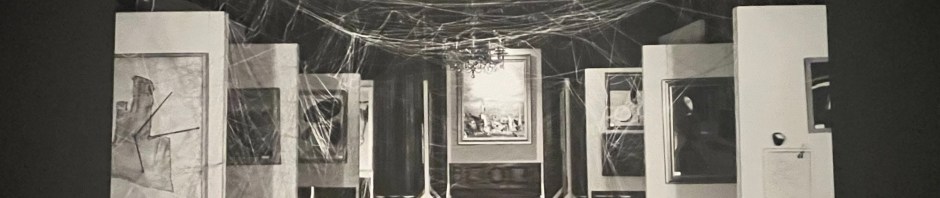
Marcel Duchamp (1887-1968) was a French painter and artist who later in life became a U.S, citizen. A retrospective of his work was held this summer at the Museum of Modern Art in New York. Photos in this post are from that exhibit.
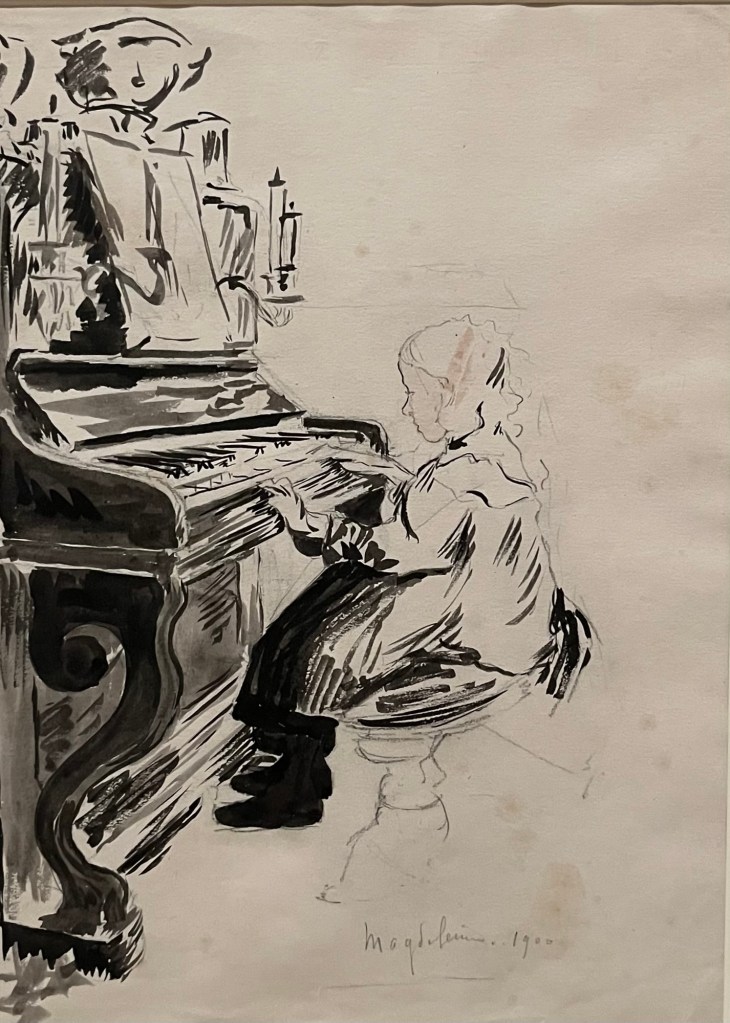
This drawing, Magdeleine at the Piano was created by Duchamp in 1900 when he was 13.
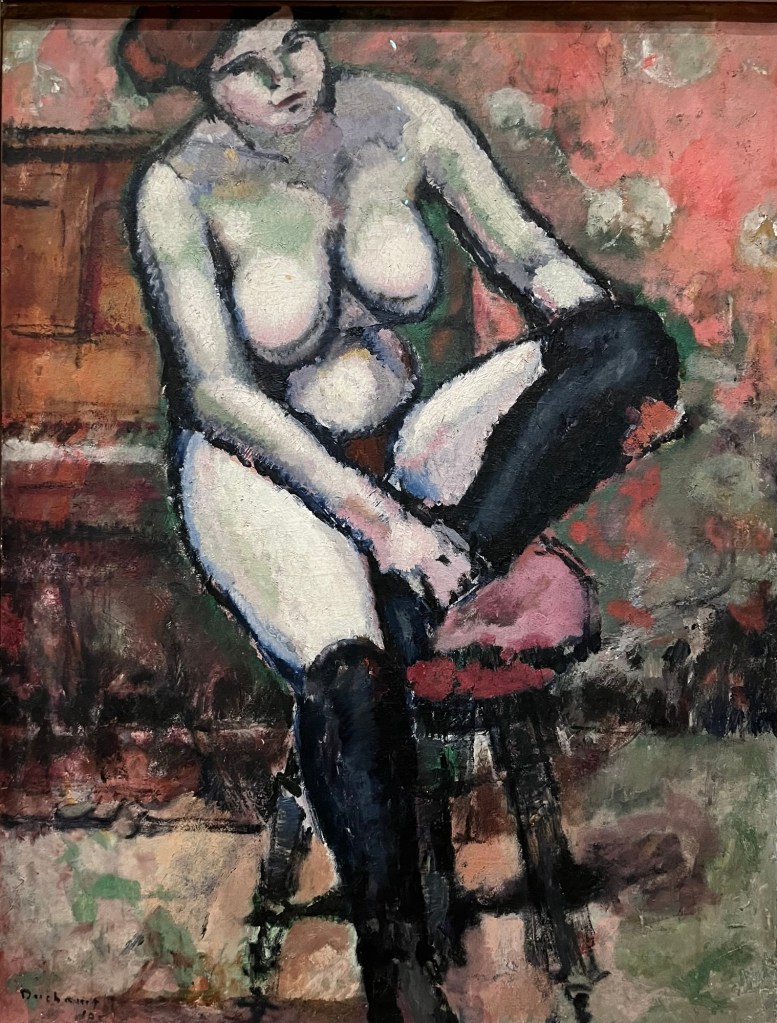
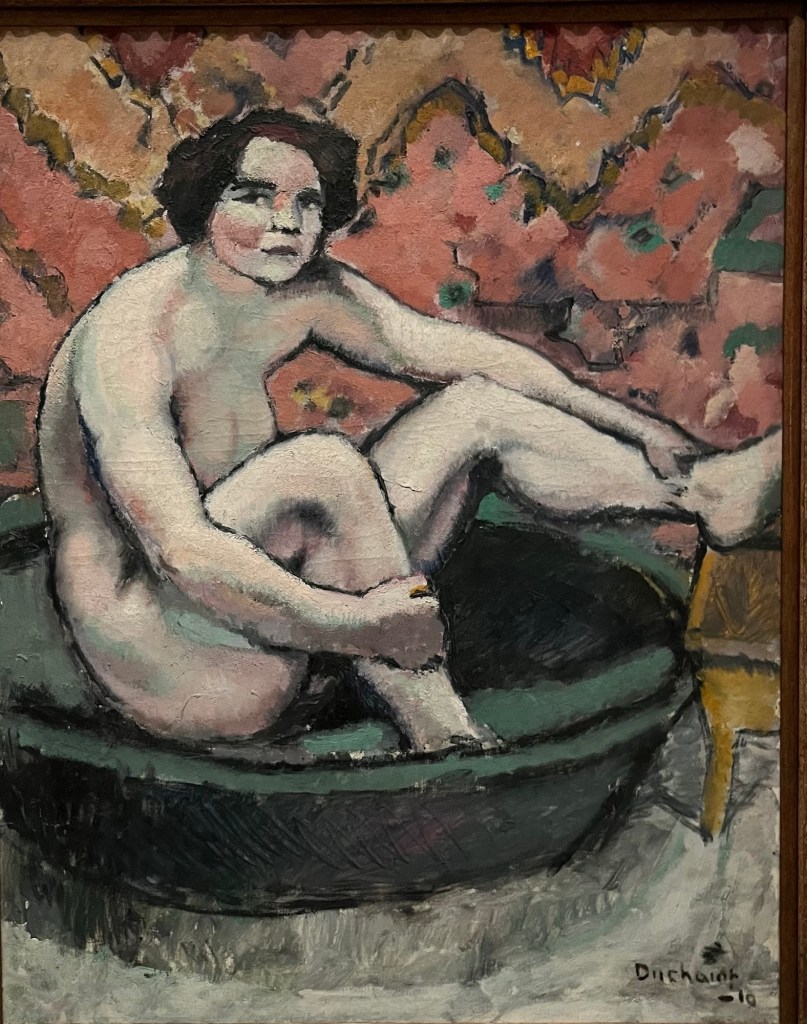
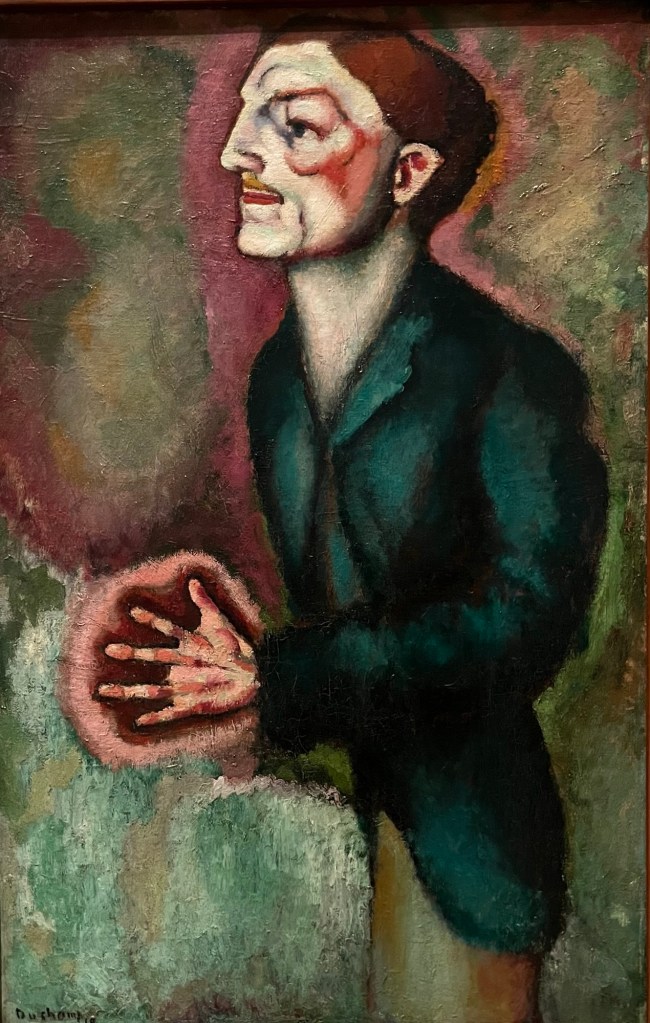
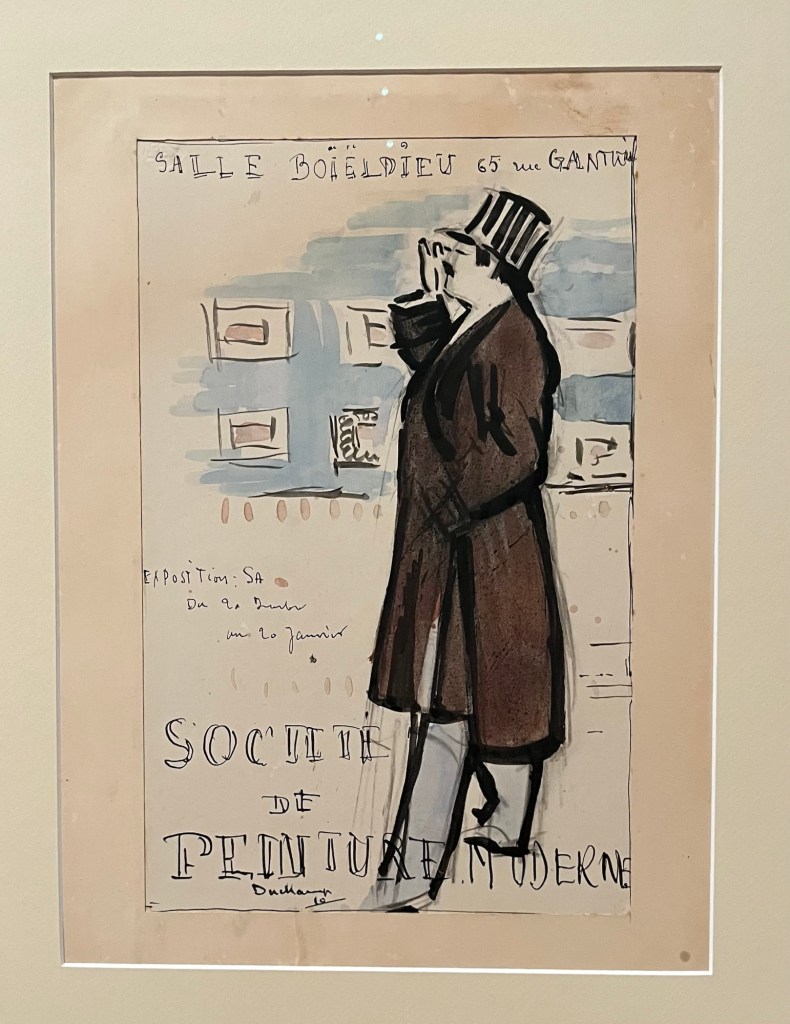
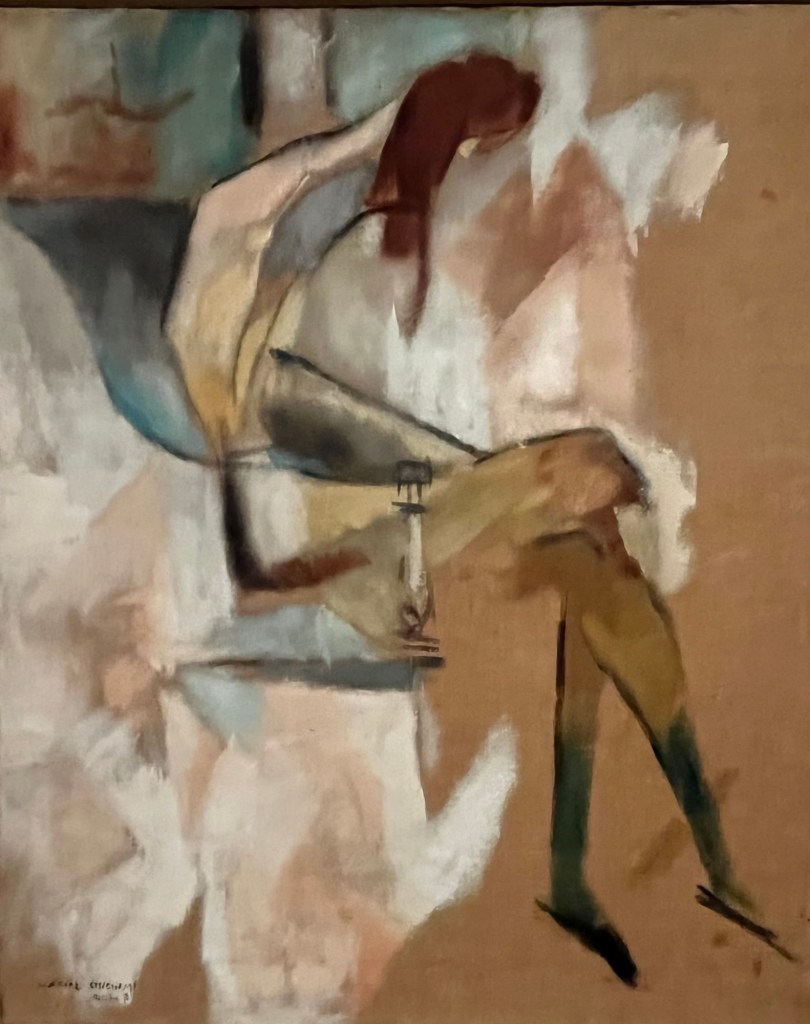
Early in his career Duchamp’s painting was influenced by the post impressionists. His nudes, like the two below, were described as ugly ay the art critic Guillaume Apollinaire. Duchamp and Apollinaire would later become good friends.
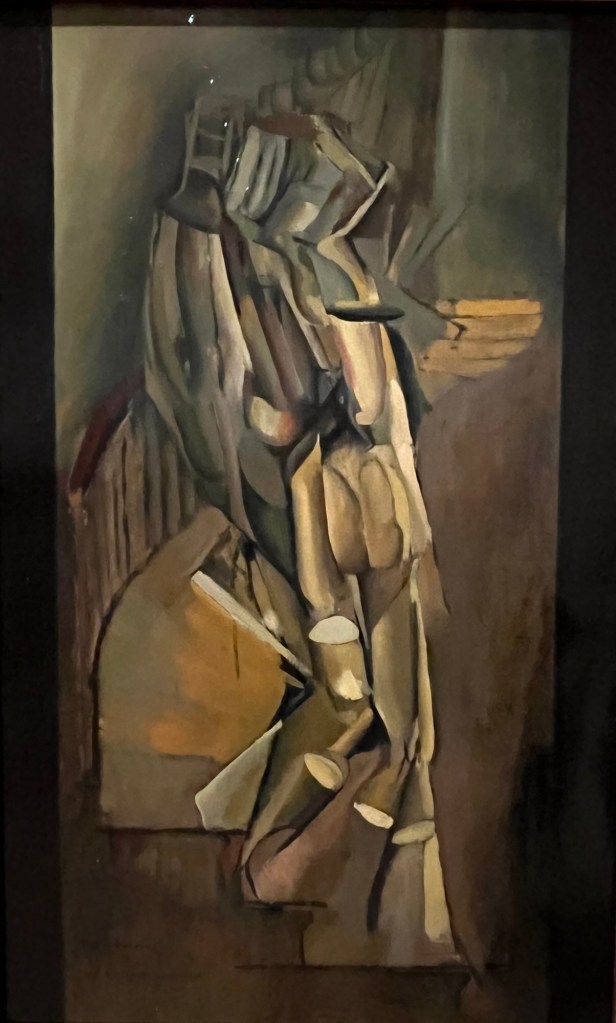
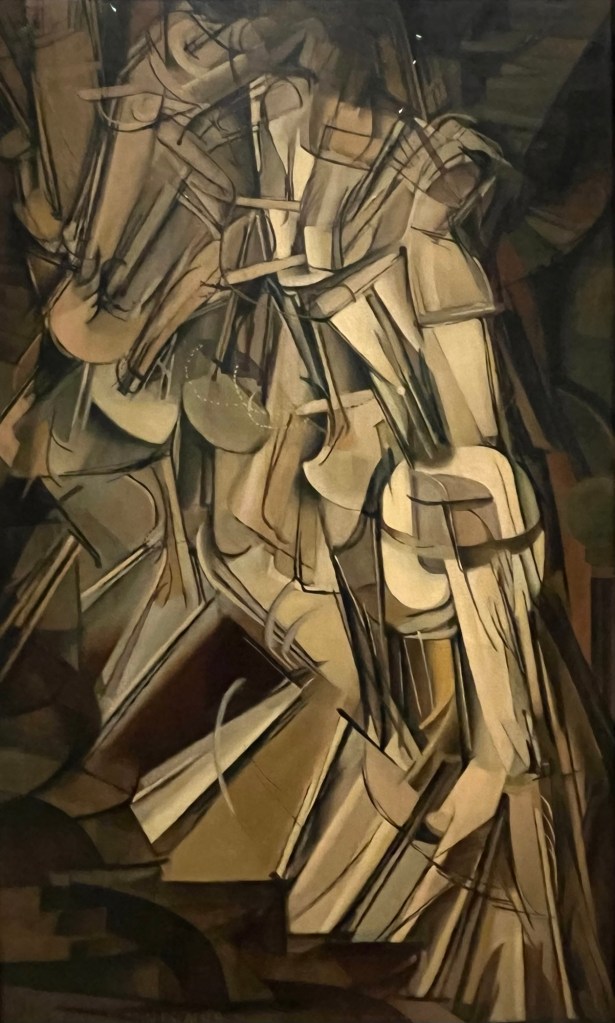
Later Duchamp would gravitate toward Cubism. Perhaps his best known paintings, the Nude Descending a Staircase, demonstrate this.
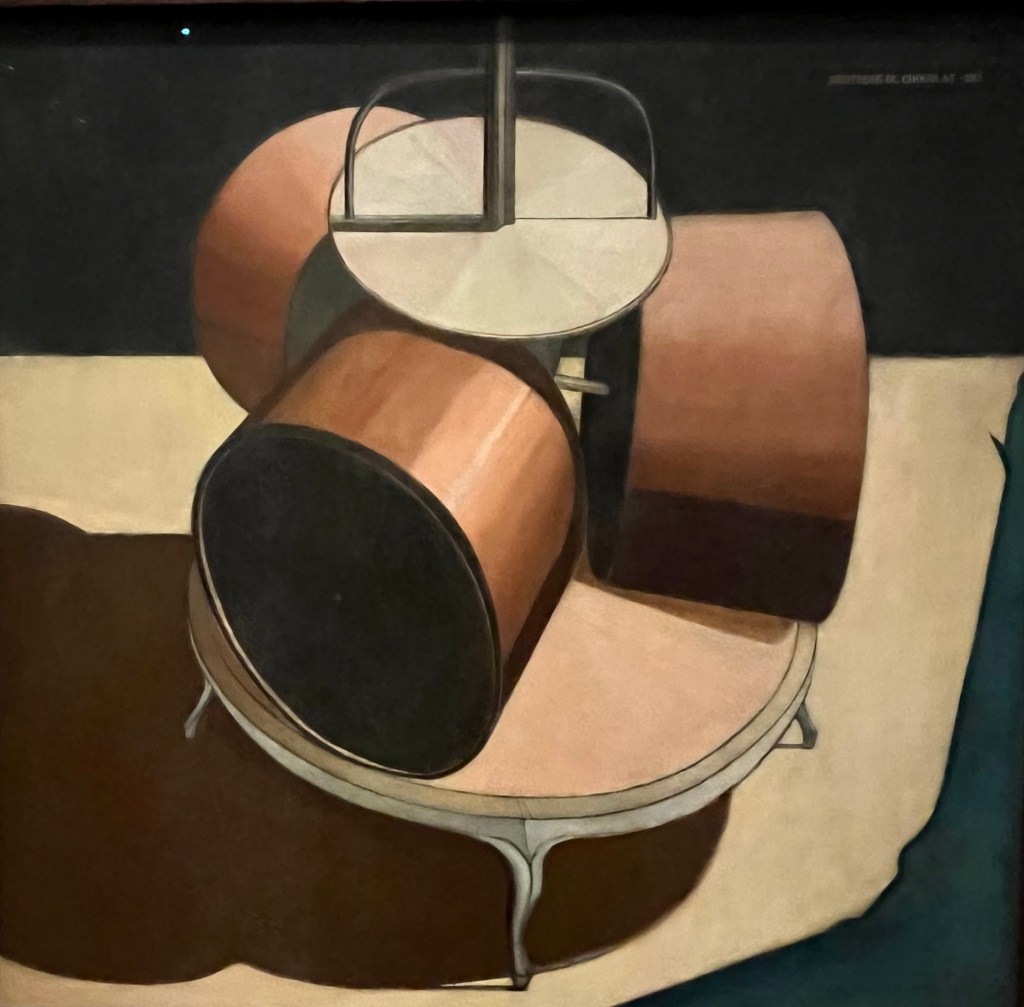
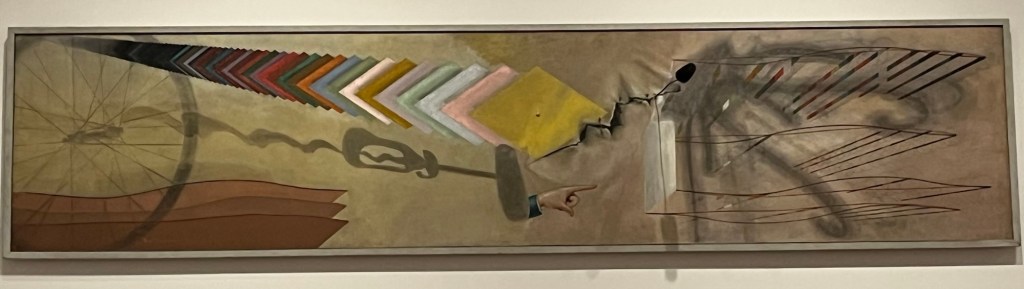
Shortly afterward Duchamp declared that he was done with “retinal art.” He would do one last painting Tu m’ in 1918. It takes some imagination to translate Tu m’ but one of those efforts came up with “you are bored.”
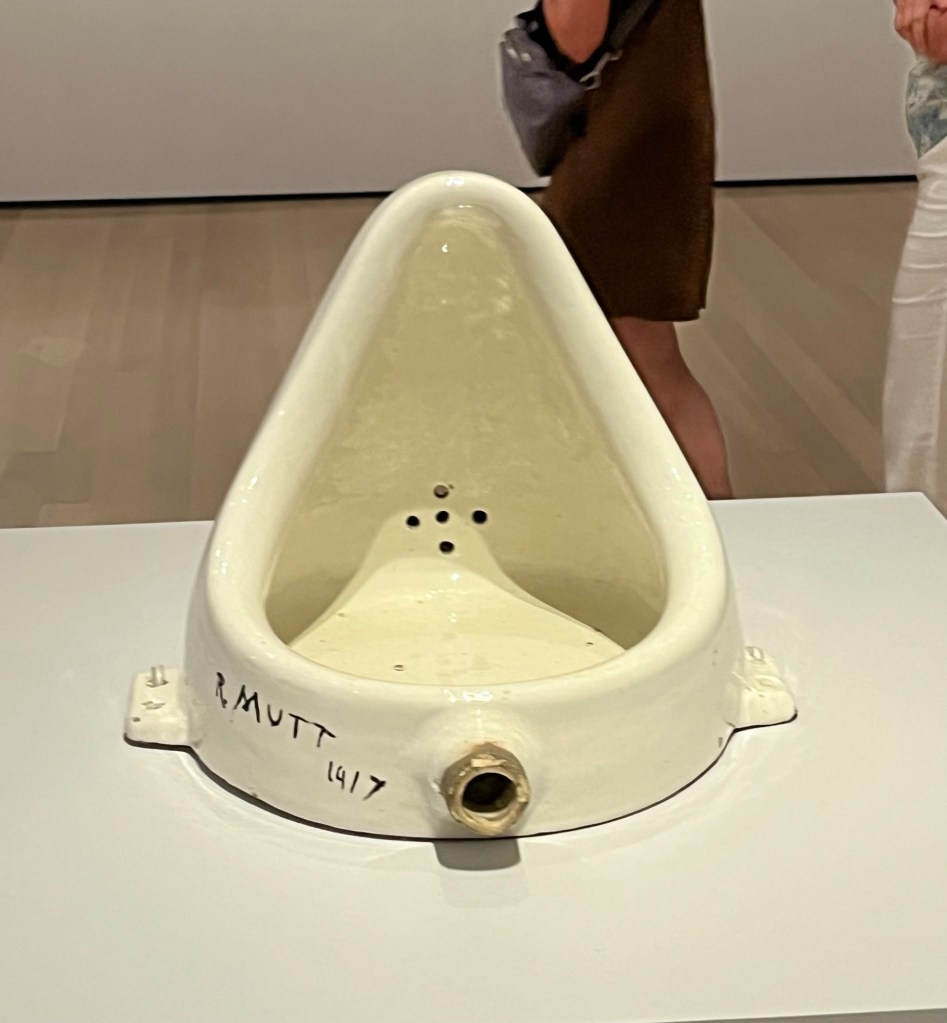
In lieu of painting, Duchamp began exhibiting what he called “ready mades.” These were manufactured objects, some as simple as a plain snow shovel. His best known ready made, and perhaps his best known work is The Fountain. The fountain is in fact a urinal that he acquired at a flea market in Paris. He signed it R Mutt and submitted it to a Society of Independent Artists exhibit. The organizers declared it was not art and placed it behind a partition. The 1917 original has been lost. Below is a reproduction.
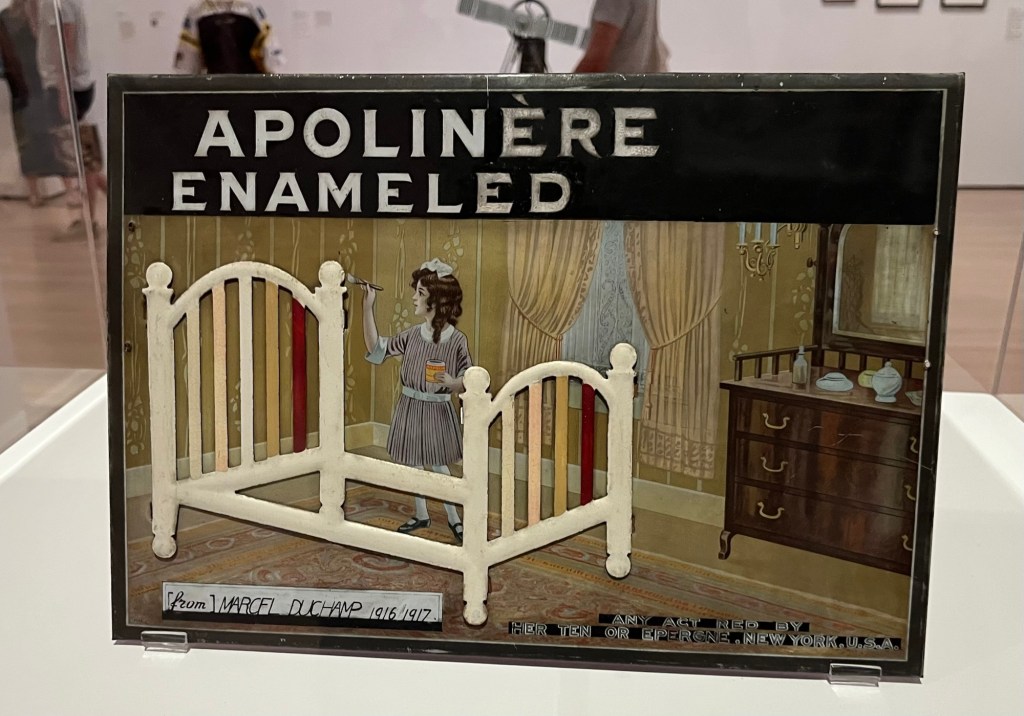
The ready mades also included machines that Duchamp built.
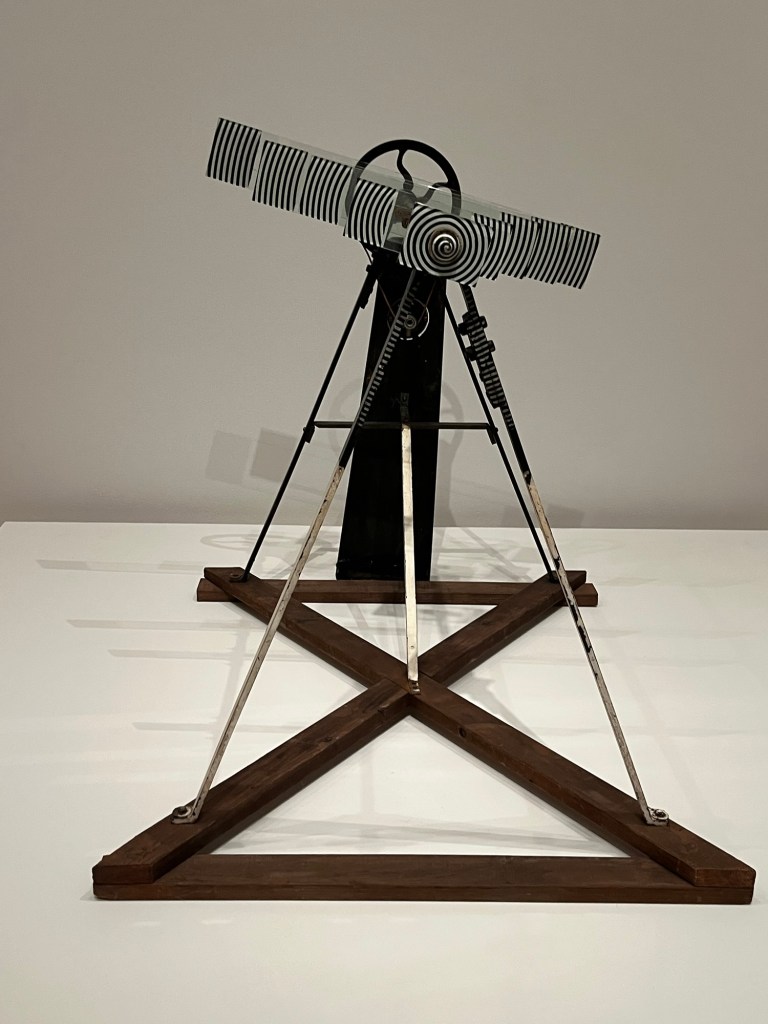
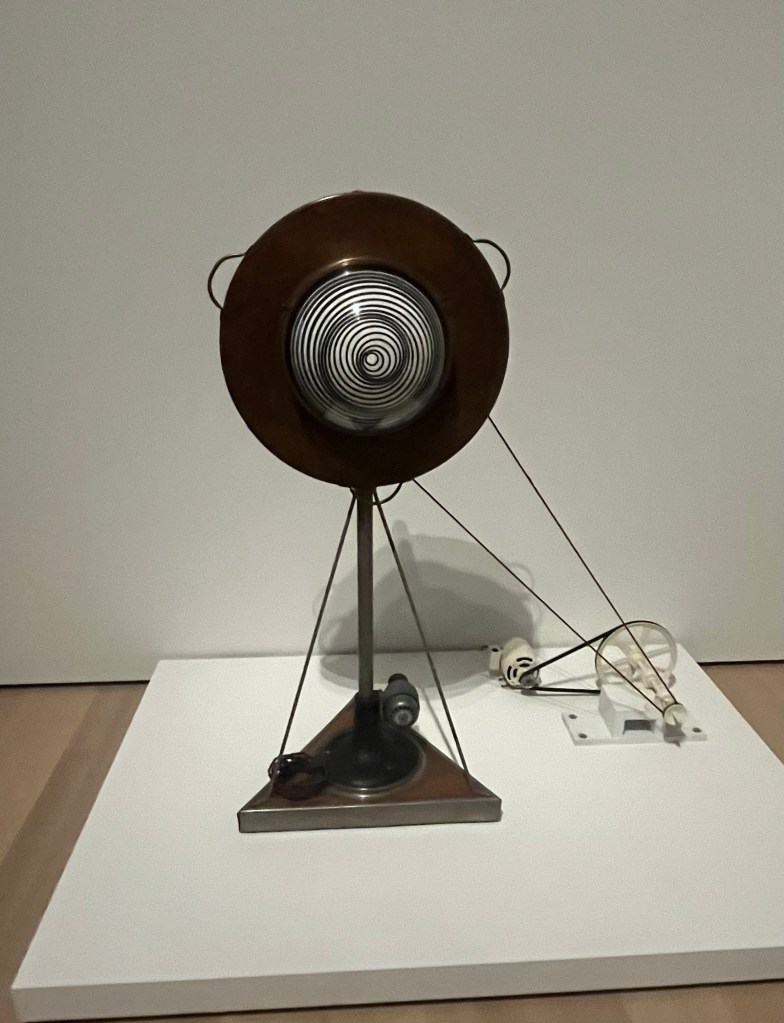
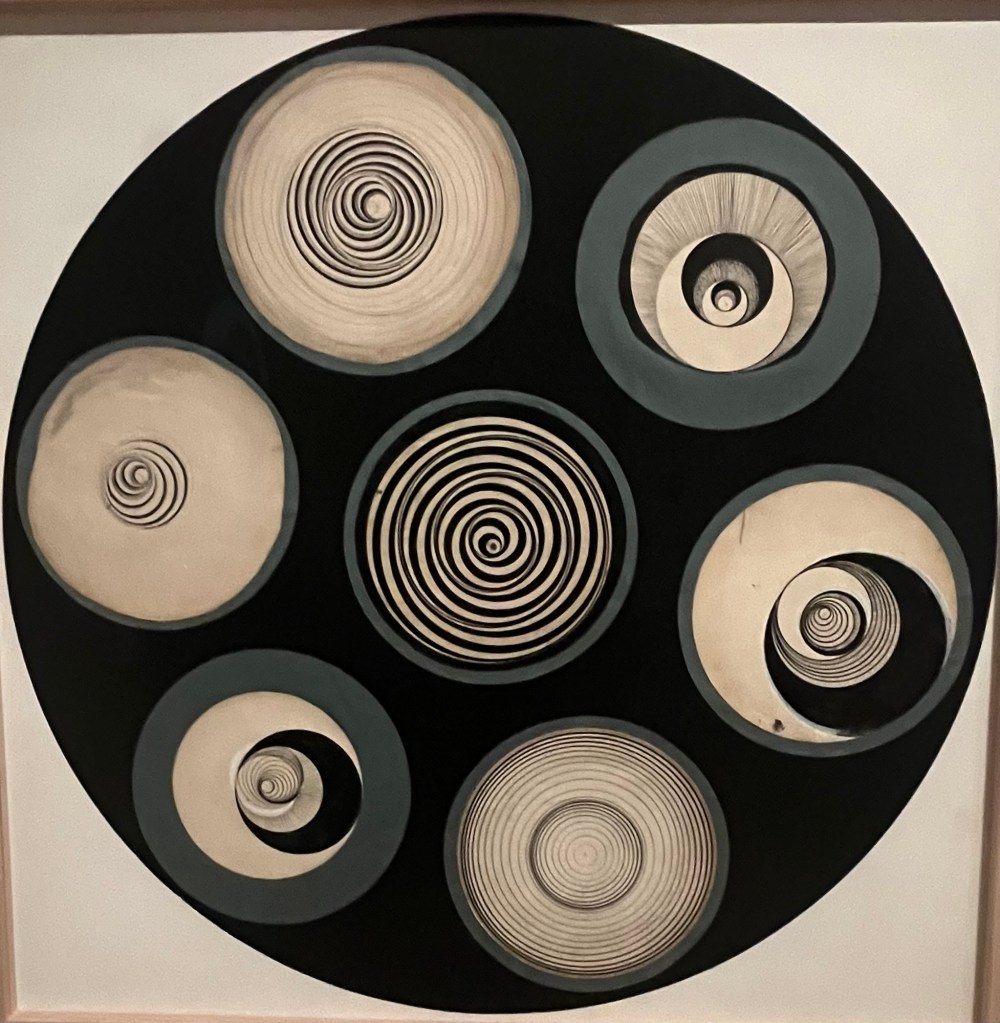
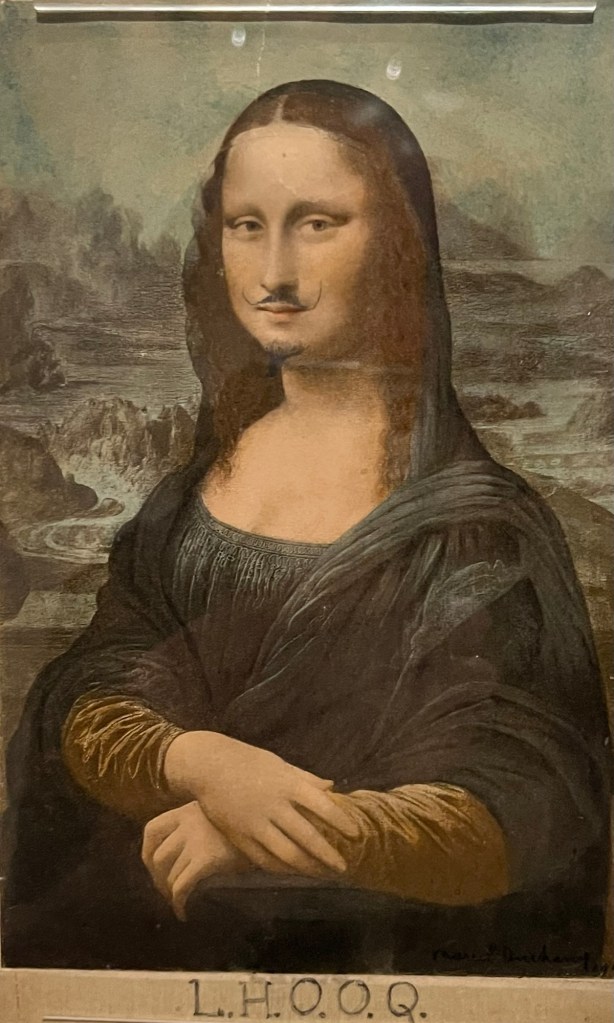
L.H.O.O.Q. (1919) was created by taking a cheap souvenir print of the Mona Lisa and penciling in a mustache and goatee. Duchamp would later translate L.H.O.O.Q. as “there is a fire down below.” Others have suggested a more literal translation is “she has a hot ass.”
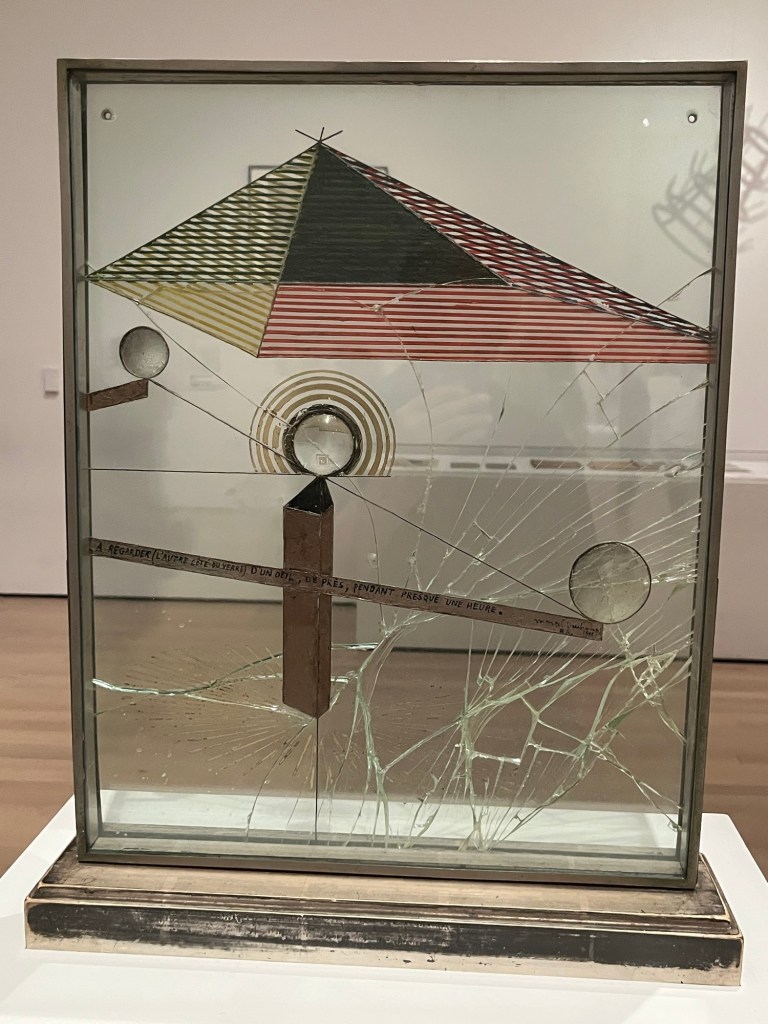
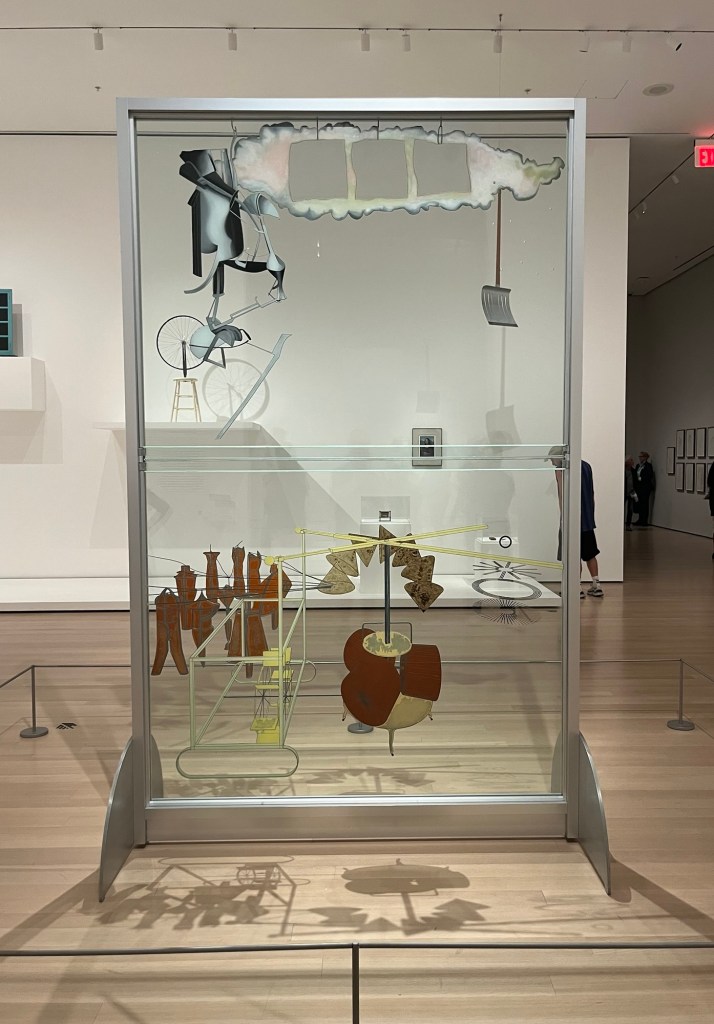
From 1918 to 1923 he worked on To Be Looked at (From the Other Side of the Glass) with One Eye, Close to, for Almost an Hour. More commonly it is known as The Large Glass. The cracks you see were not part of the original work but occurred while the piece was being transported. Below the original is a 1965 reproduction by Richard Hamilton.
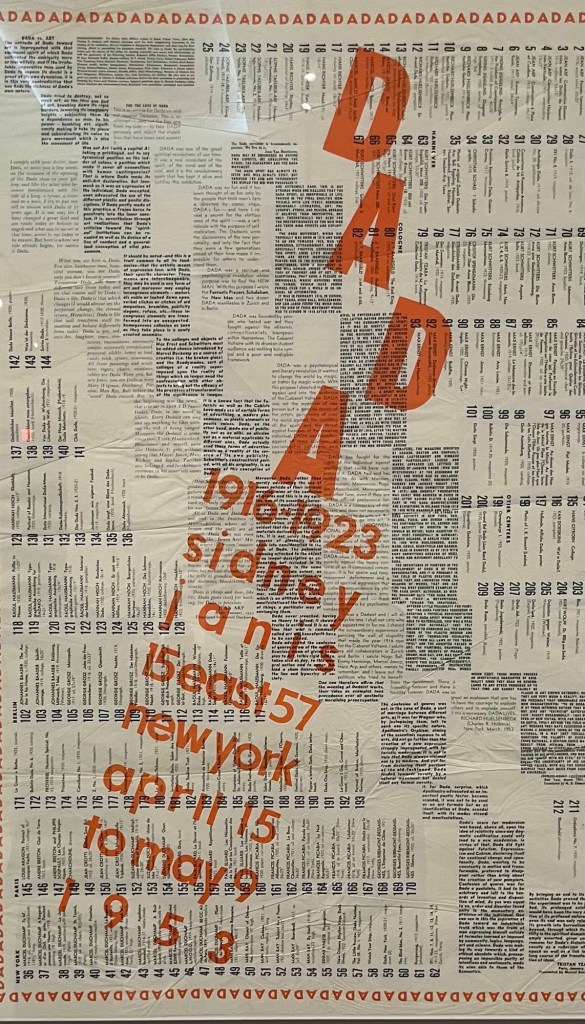
Duchamp became involved with the Dada movement in New York in the 1920’s. Reacting to the horrors of World War I, the Dadas were both anti-war and anti-bourgeois. Duchamp created this poster.
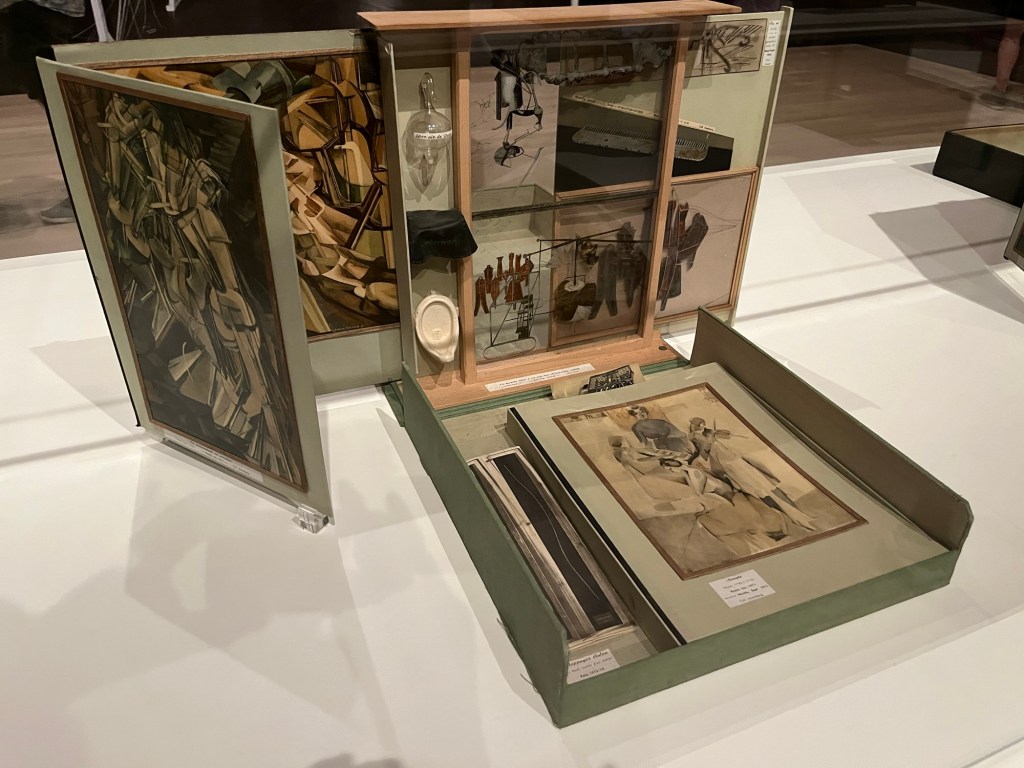
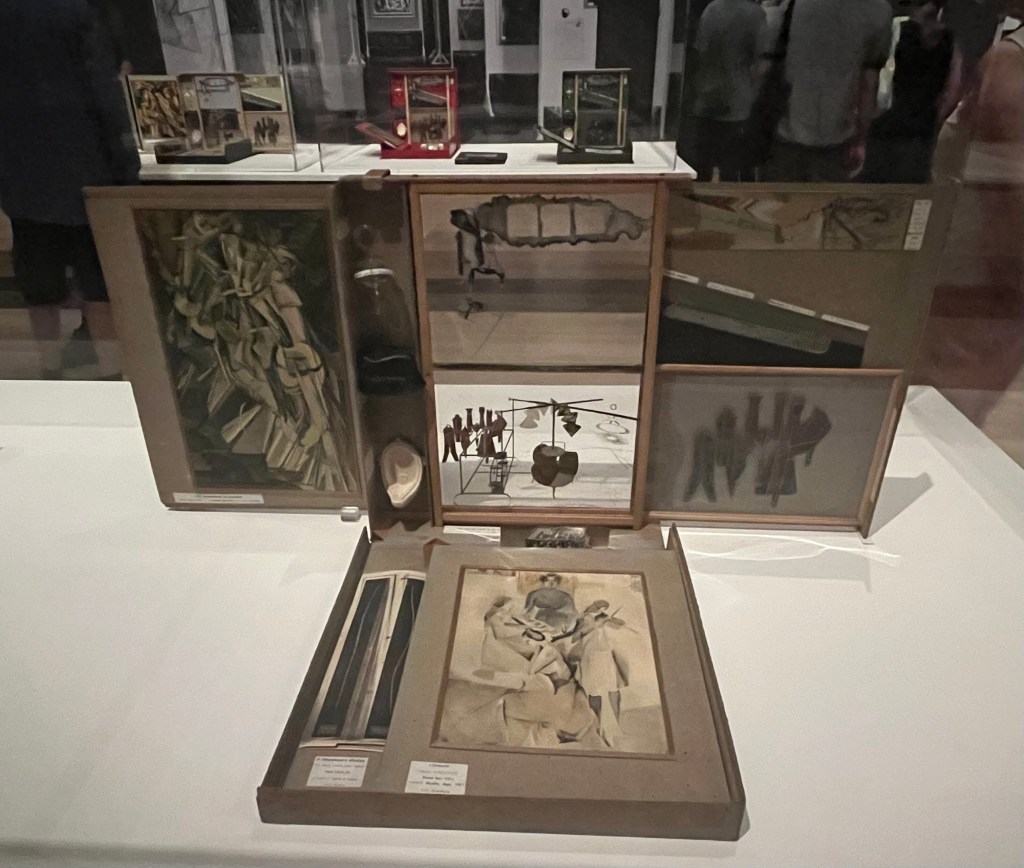
In the 1920’s and 1930’s, Duchamp largely gave up producing art and focused on playing chess competitively. Later in his career he created a series of Box in a Valise (1935-1941). These boxes contained miniature versions of Duchamp’s art. They were signed “from or by Marcel Duchamp or Rrose Selavy.” The latter was Duchamp’s female persona.
 off the leash
I appreciate the order in which you displayed his work because it was fascinating to see his excellence with drawing at 13 and then how he morphed and evolved his skills into other forms and expressions.
LikeLiked by 1 person
He was brilliant. I like some of his works. But he is not one of my favorites, by any means. That’s because much of his art is cerebral rather than emotional.
LikeLiked by 1 person