From the exhibit “Black Power to Black People: Branding the Black Panther Party” at Poster House, New York
1967
H. Rap Brown (Man with Match), Emory Douglas
H. Rap Brown was a member of both the Student Nonviolent Coordinating Committee and the Black Panther Party. He is associated with the phrase “burn, baby, burn,” hence the match.
1968
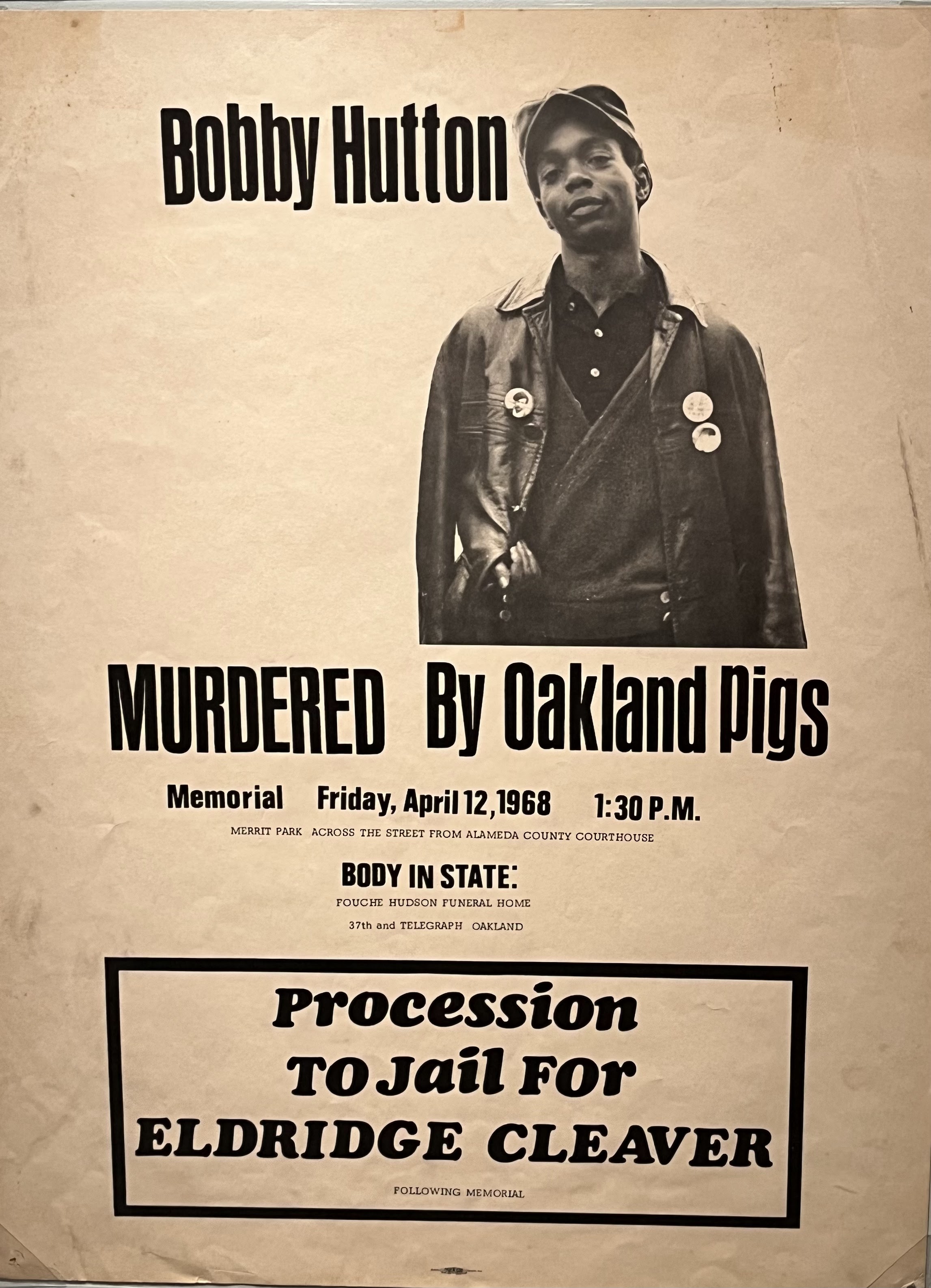
Bobby Hutton Murdered, Designer Unknown
Sixteen-year-old Bobby Hutton had joined the Black Panther Party two years earlier. Two days after the assassination of Martin Luther King, he was part of a group of Panthers led by Eldridge Cleaver who engaged in a shootout with the Oakland police. The Panthers claim that Hutton had surrendered and was unarmed when he was shot 12 times by the police.
Cleaver for President (designer unknown)
Eldridge Cleaver ran for president in 1968 on the Peace and Freedom Party Ticket. His running mate was Peggy Terry, a white working-class organizer.
1969
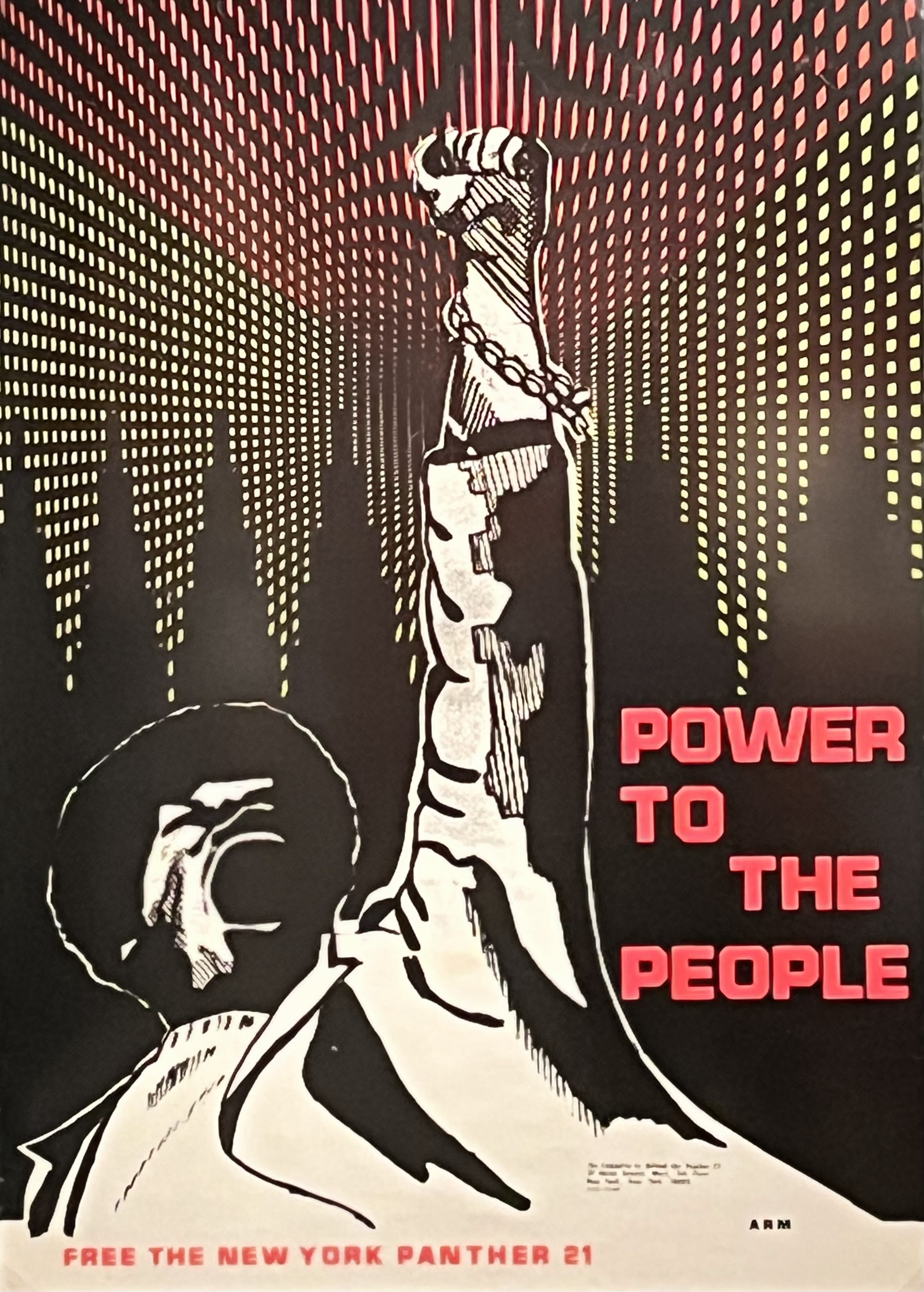
Power to the People (designer unknown)
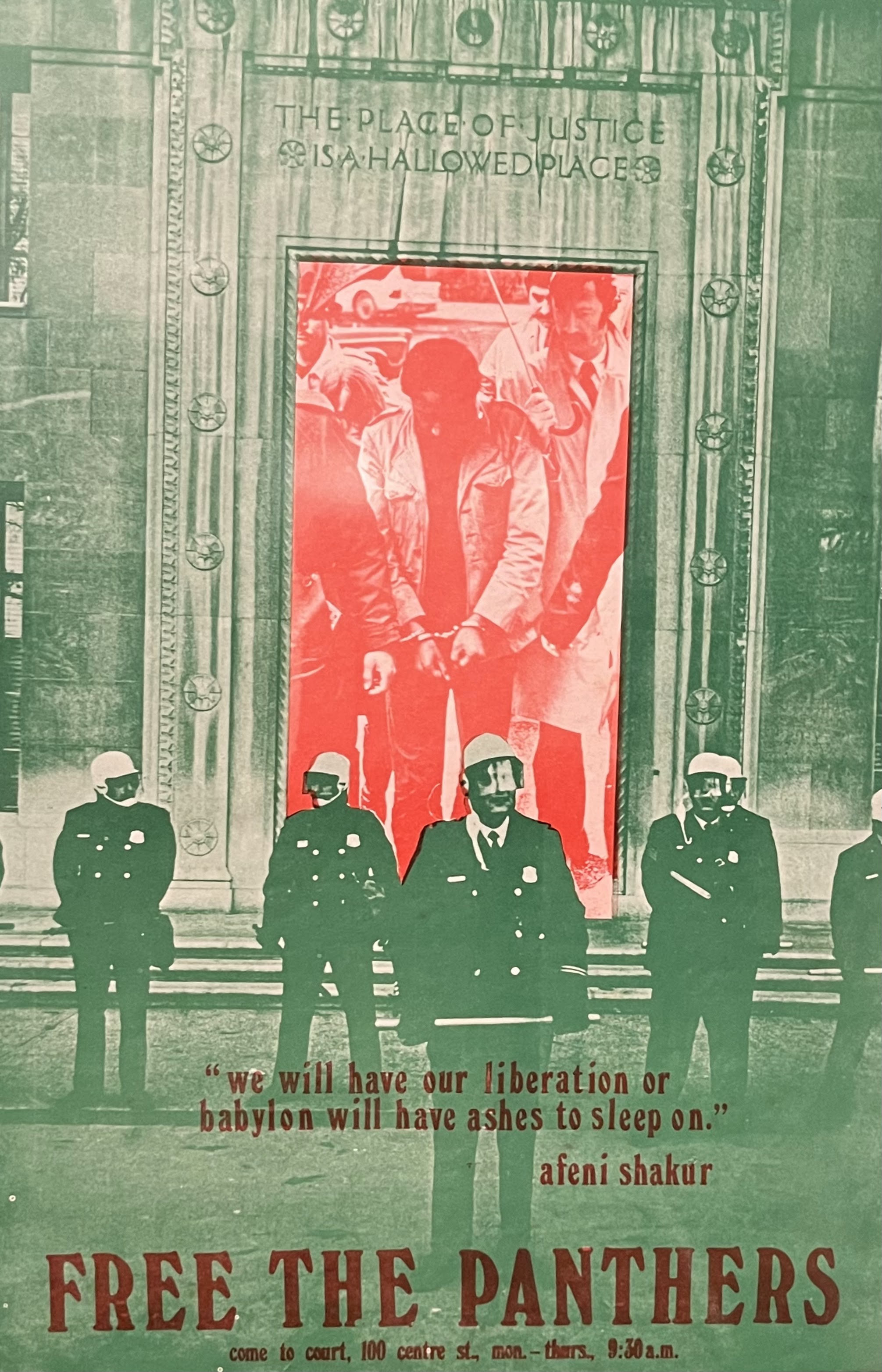
Free the Panthers (designer unknown)
Poster refers to a group of 21 Panthers who were arrested in New York and charged with a plot to blow up three buildings and conspiracy to kill police officers. Those who couldn’t post bail was held at Rikers Island. All 21 were acquitted after an eight-month trial.
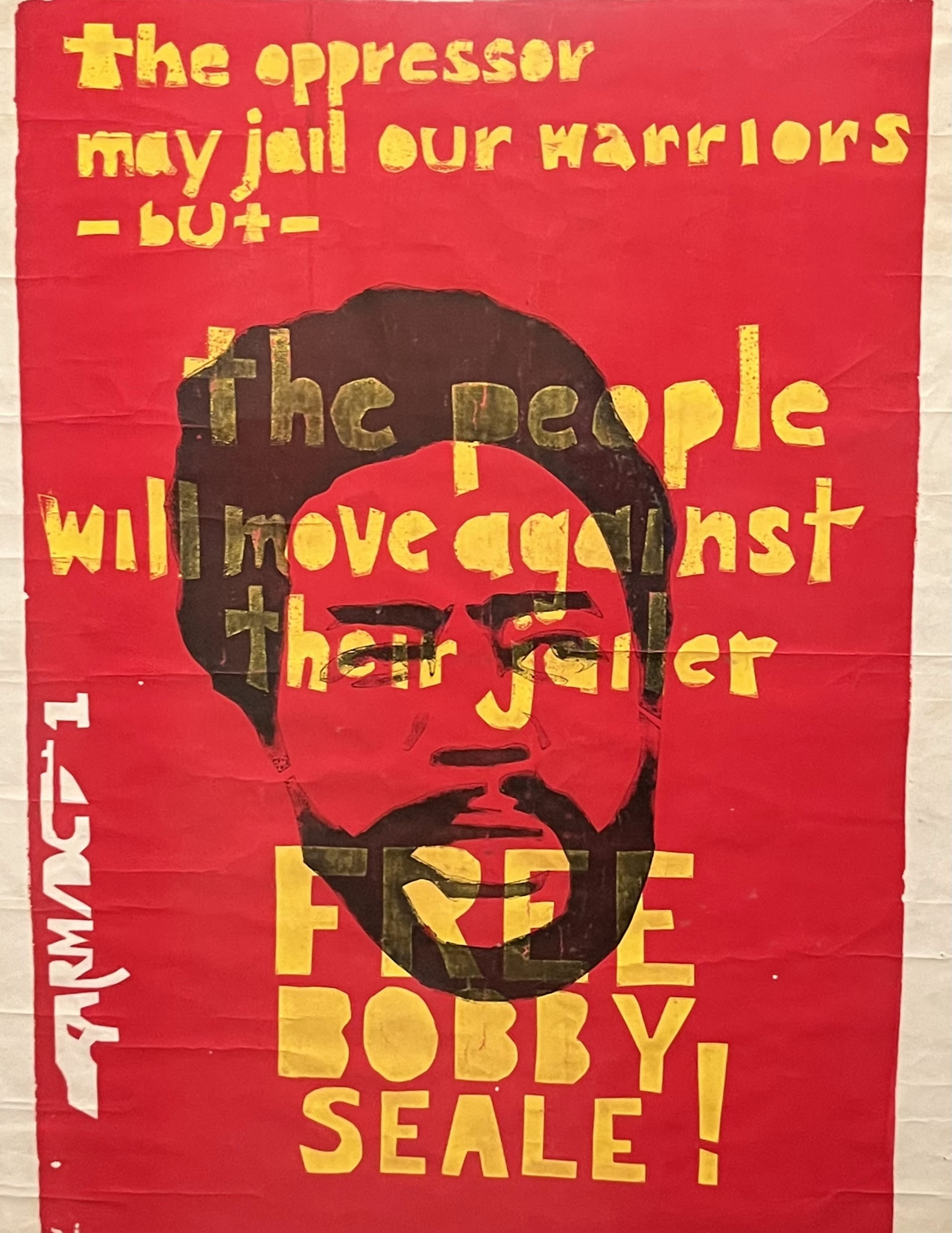
Free Bobby Seale! (designer unknown)
Bobby Seale was one of the original Chicago Eight, charged with conspiracy to incite a riot at the 1968 Democratic National Convention. The judge refused to grant Seale’s request that he represent himself. At one point he was gagged and bound in the courtroom. His case was declared a mistrial and the Chicago Eight became the Chicago Seven.
1970
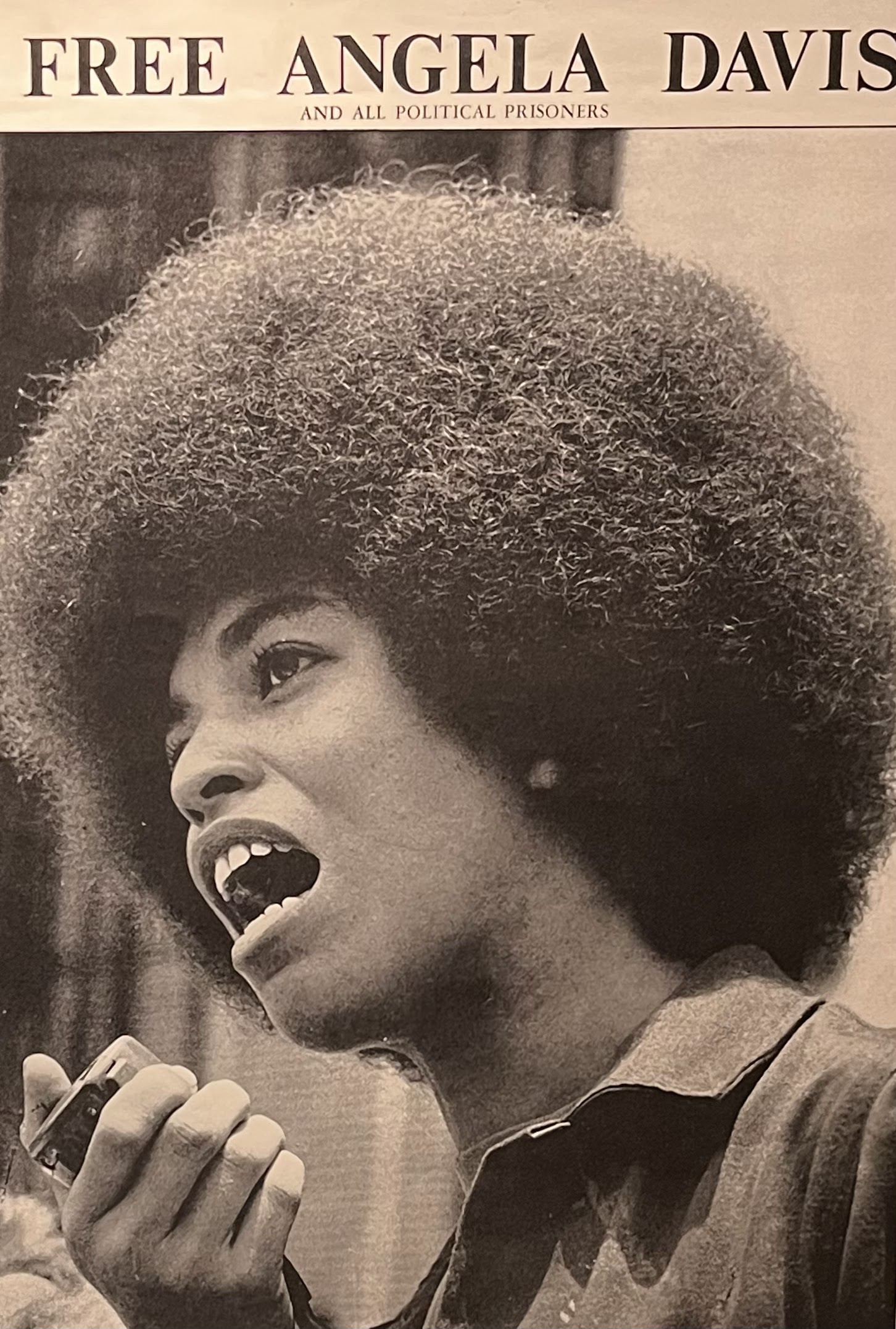
Free Angela Davis (designer unknown)
In 1970, Angela Davis was arrested at a Howard Johnson’s in Manhattan. She was charged with murder, kidnapping and criminal conspiracy. It was alleged that she purchased the guns used by the Soledad Brothers, three inmates who murdered a prison guard in Soledad Prison in California. Davis was acquitted of all charges.
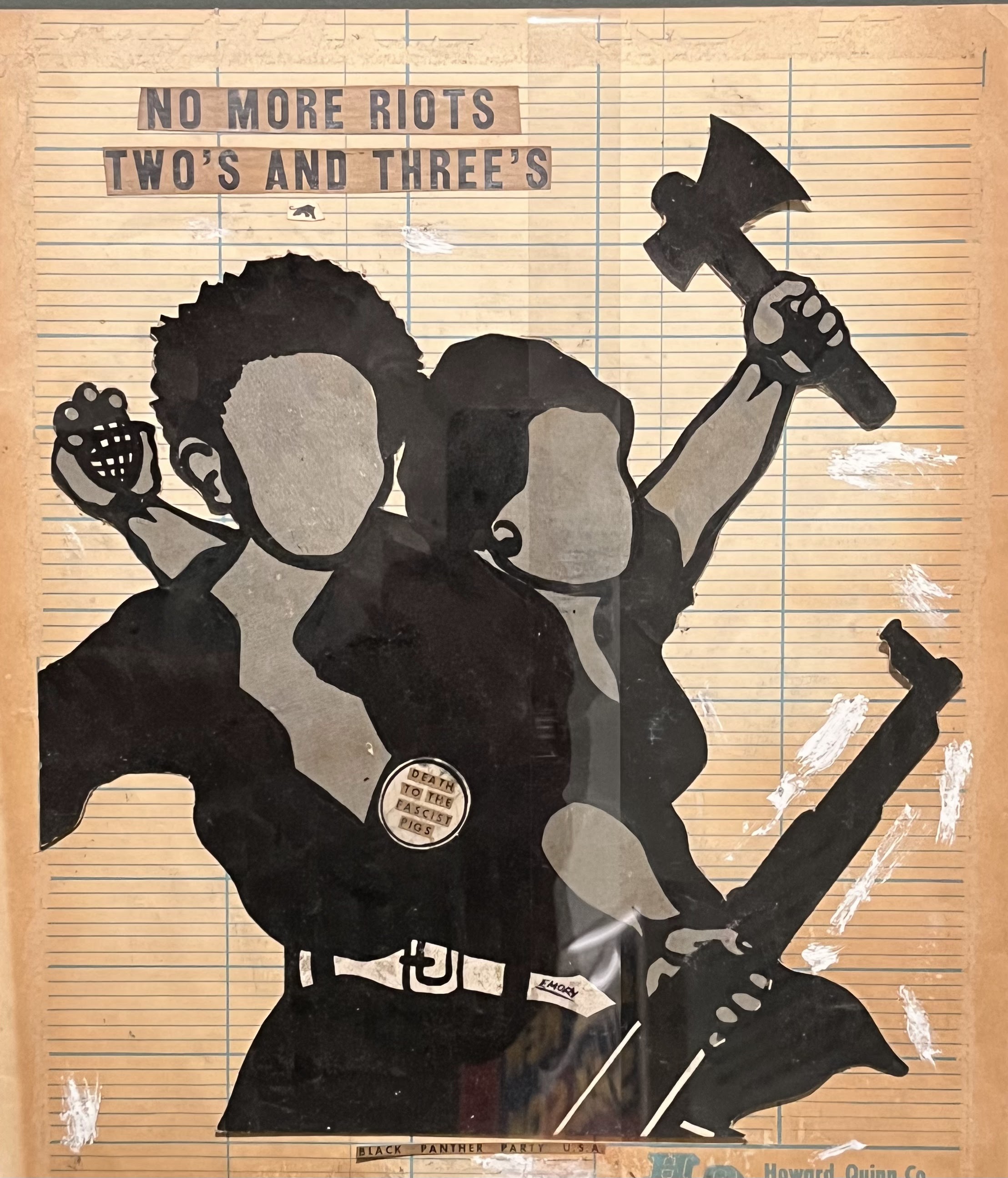
No More Riots Two’s and Three’s, Emory Douglas
The title of this poster reflects a strategy proposed by Huey Newton to use small groups in their rebellion rather than large-scale riots.
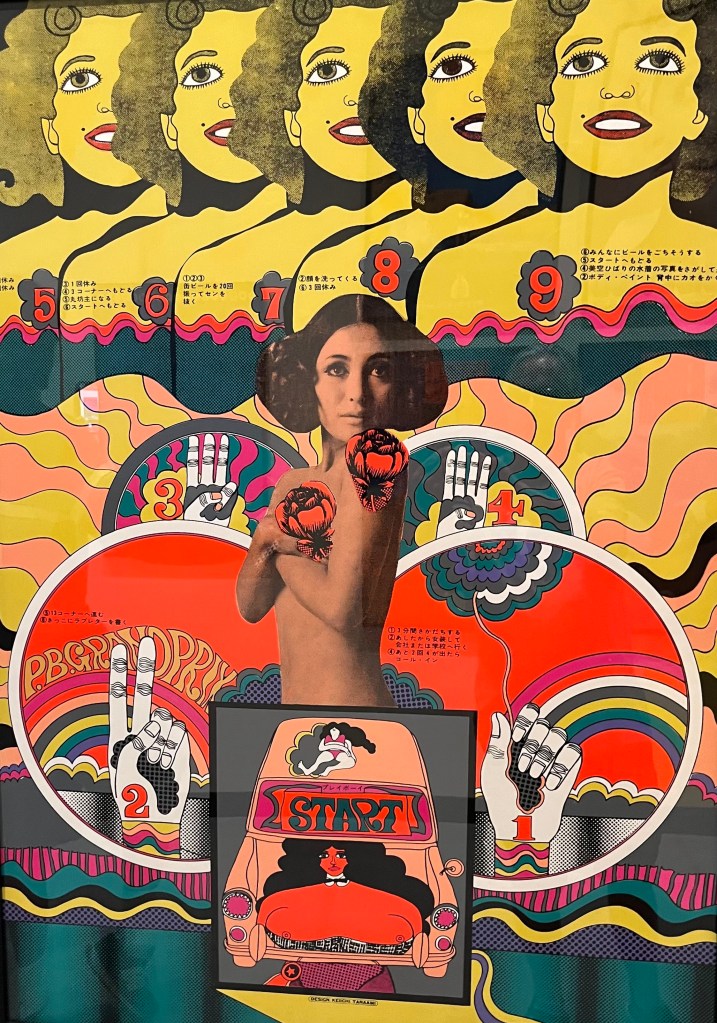
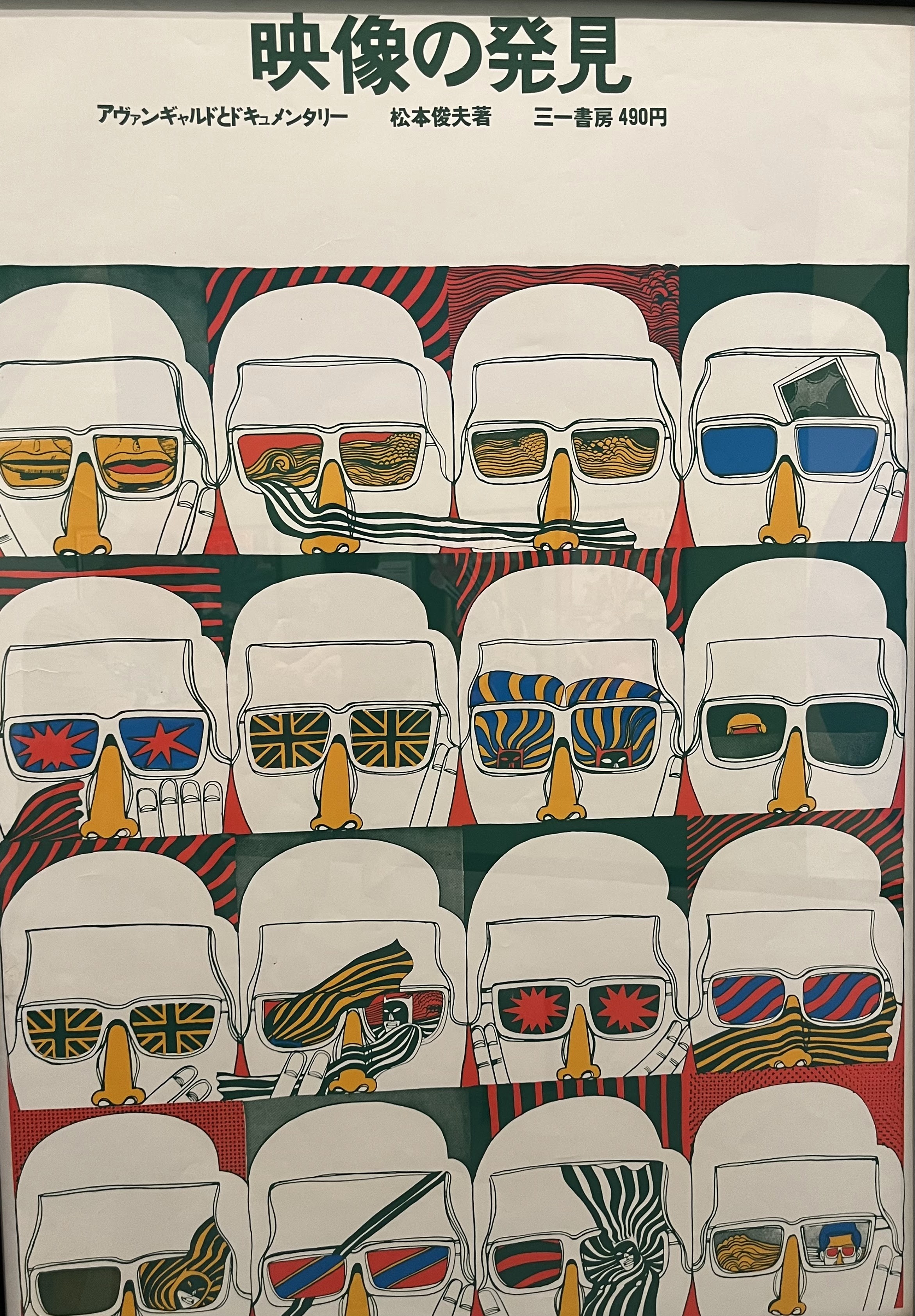
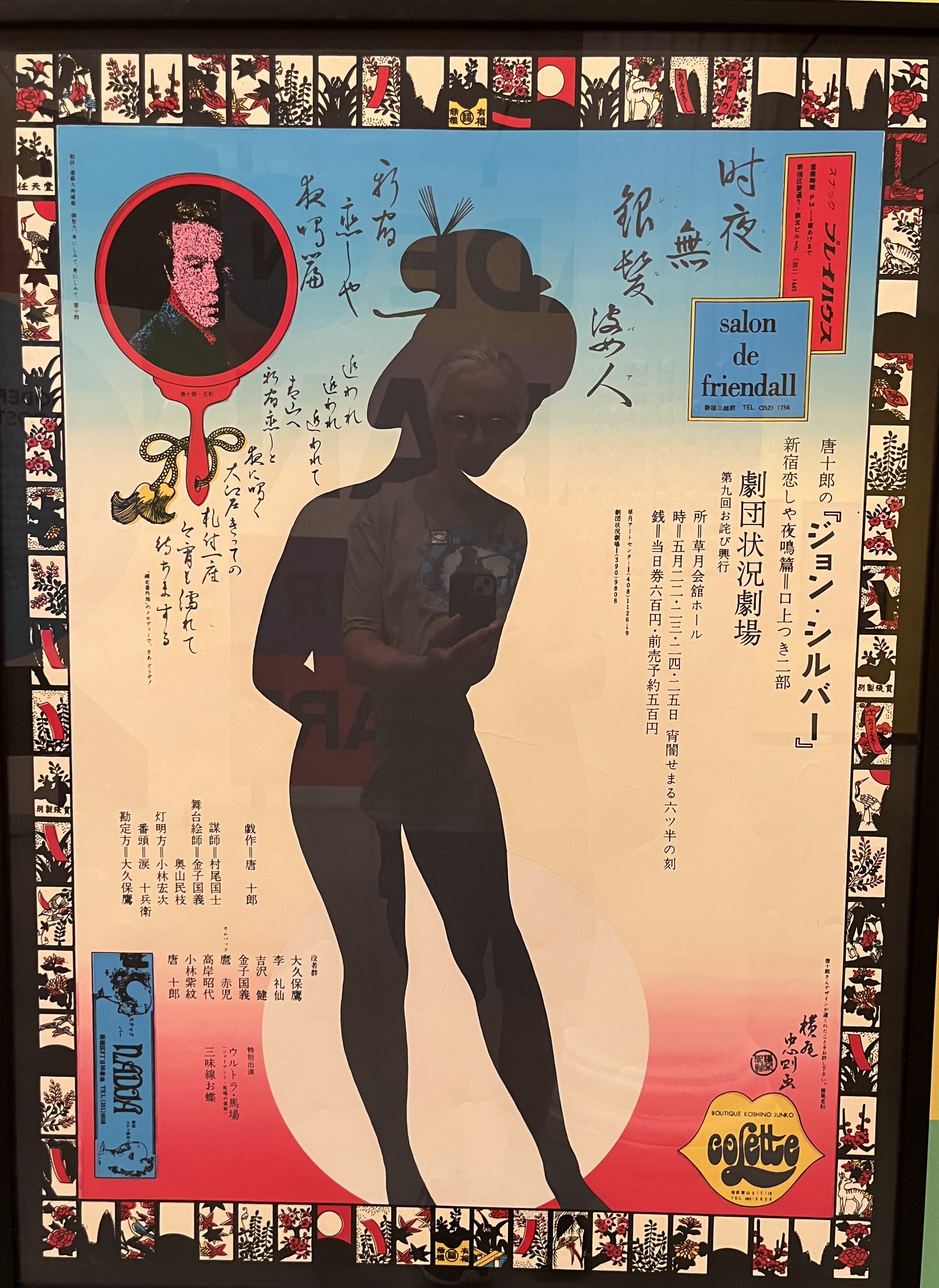
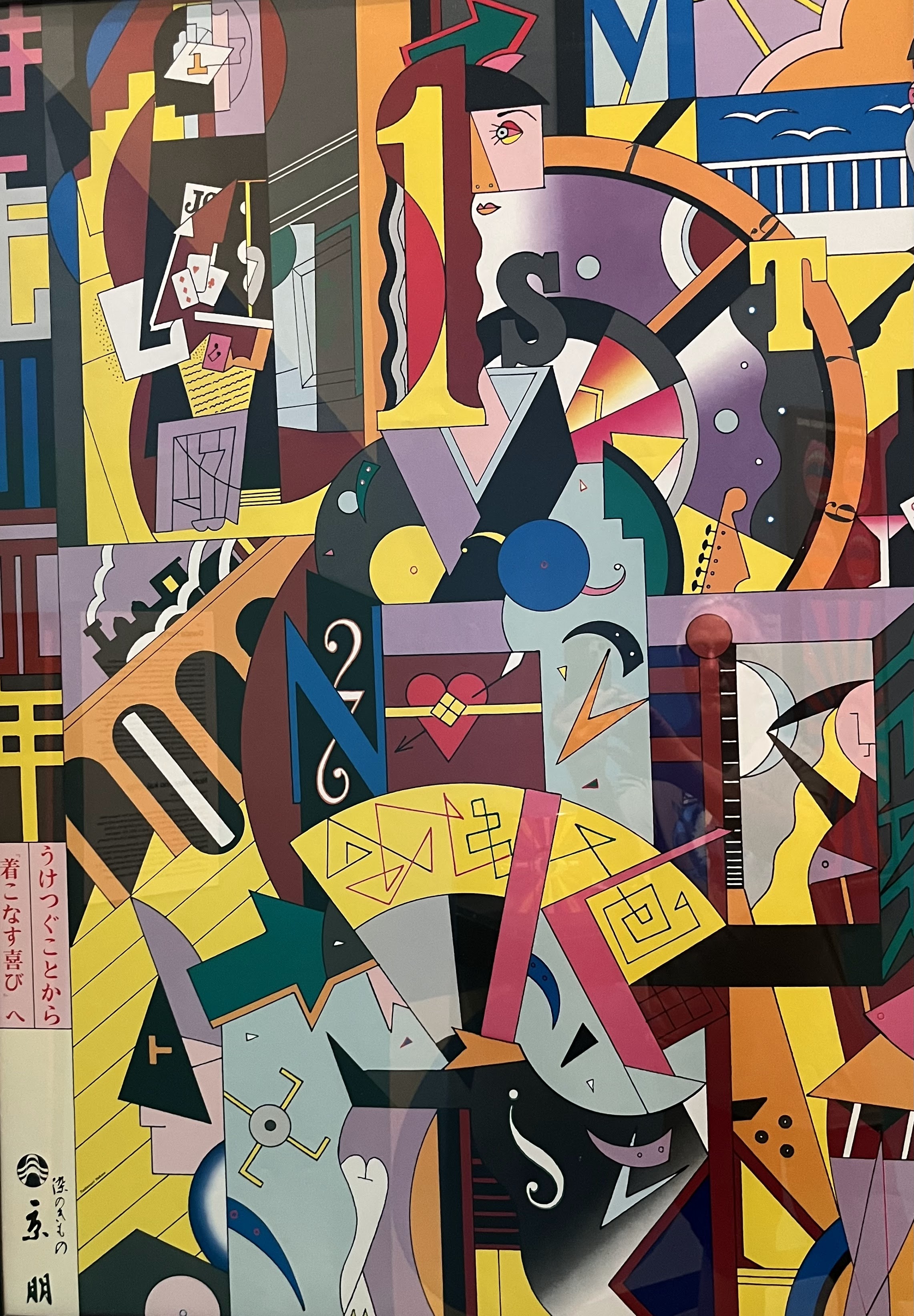
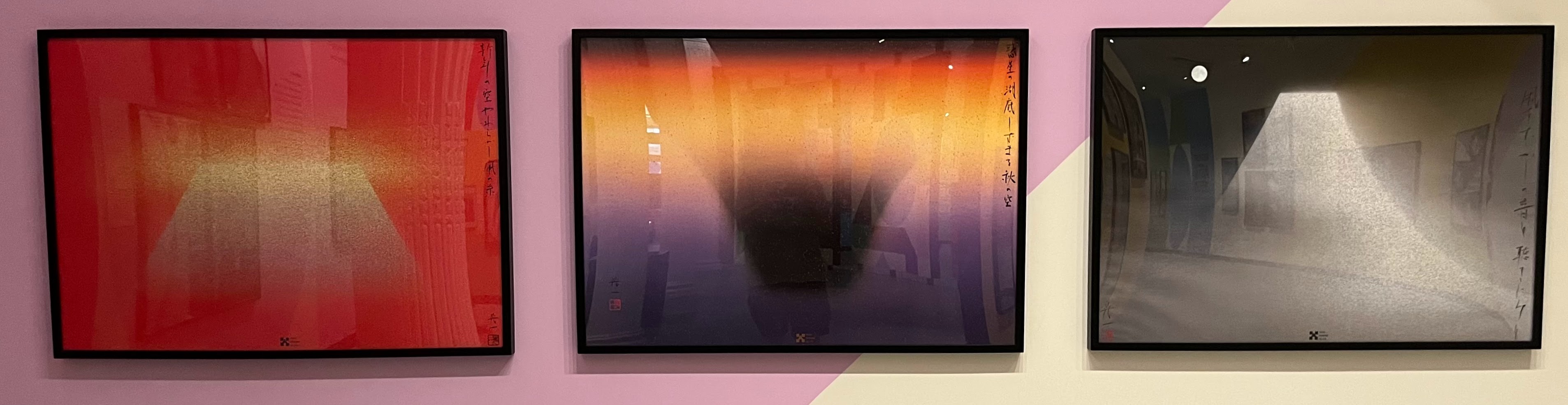
From the exhibit “Made in Japan: 20th Century Poster Art” at Poster House, New York
Nikke, Okuyama Gihachiro, 1935.
Poster produced to promote the company’s western style clothing.
PB Grand Prix, Tanaami Keichi, 1936. Poster represents a popular Japanese board game, Sugoroku. The PB stands for Playboy. The winner of the game is the first to reach the actress Matsuoka Kikko, shown in center of poster.
Matsuda Quick Special Oil Colours. artist unknown, 1961.
Posters promote oil paints produced by Matsuda Gaso.
Discovery of the Image, Tanaami Keichi, 1966.
Yukio Mishima/The Aesthetics of End, Yakoo Tadamori. 1966. Poster was designed to promote the novel of the same name.
Kara Juro’s “John Silver: Love in Shinjuku,” Yokoo Tadenori, 1967. Poster promotes a play by that name. Border consists of Japanese flower cards.
The Monkees, Tanaami Keiichi, 1968. Promotional poster for the band’s appearances in Japan.
Kimono/The First Year, Yakoo Tadanori, 1978. Promotional poster for Kyoto textile manufacturer.
Hiroshima Appeals, Kamekura Yusaka, 1983. First in a series of Hiroshima Appeals posters projecting a hope for peace.
Japan, Kamekura Yusaki,1988. Created for the Japan Graphic Designers Association
Five Seasons, Sato Koichi, 1988. Images of Mt. Fuju during different seasons.
I didn’t grow up eating Big Macs or Whoppers or Chalupas. The fast food burger chains were just starting to expand in the 50’s but in Totowa, N.J., where I grew up, we didn’t know anything about McDonald’s or Burger King.
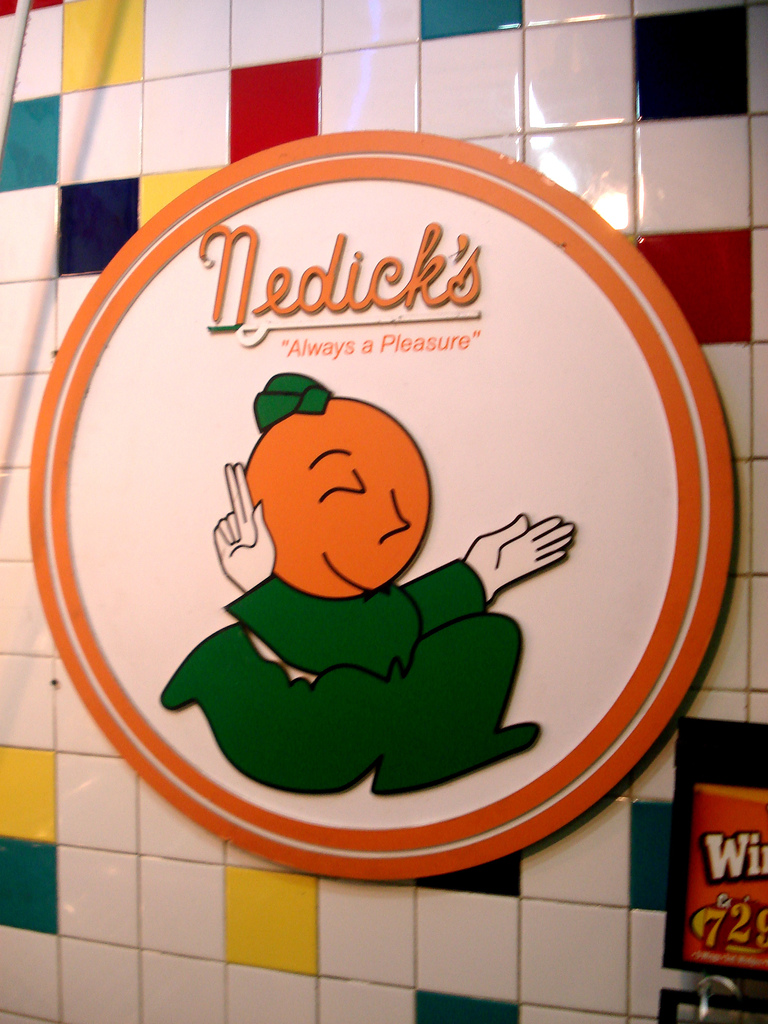
Fast food for me was Nedick’s.
Nedick’s was urban. It wasn’t on any highway. There was no drive-thru, not even a parking lot. You could find Nedick’s at a bus depot or train station, at a sports venue or hotel.
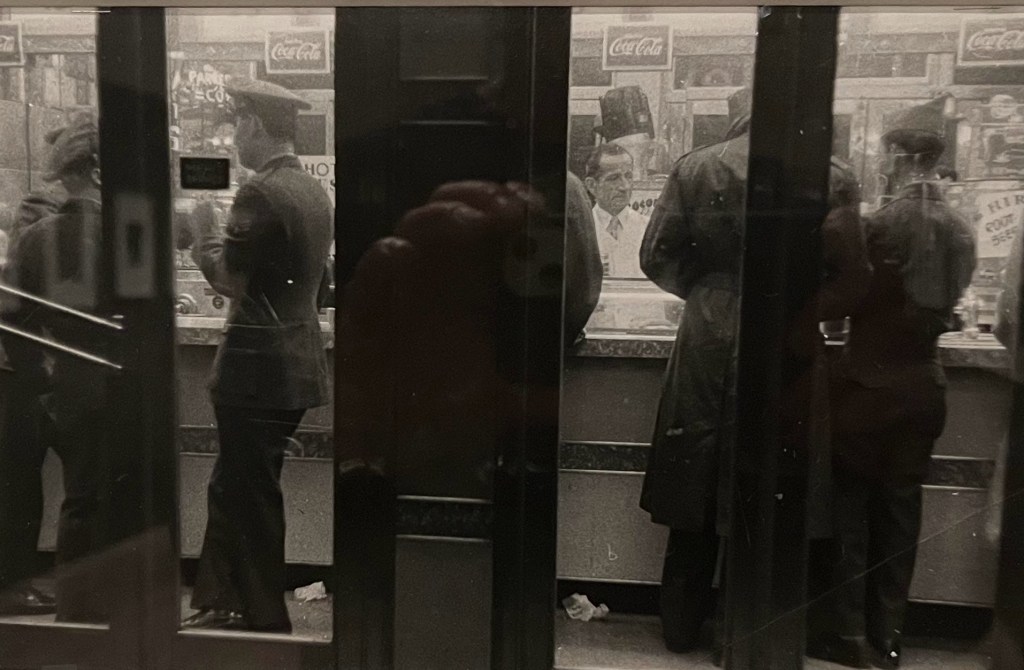
Photo by Angelo Rizzuto 1957
My go-to Nedick’s was on Washington Street near City Hall In Paterson. As a pre-teen my look at the outside world was pretty much confined to Paterson. I could take the #12 bus to downtown Paterson and there was a Nedick’s right where I would pick up the bus to go home. And I rarely did without stopping at the Nedick’s, even if it meant waiting for the next bus. I could always kill time checking out the 45’s at the record store next door.
One New York Times writer described Nedick’s as New York’s Starbucks. And for a younger me, indeed it was. On those rare occasions when my dad would take me into the city we usually entered via the Lincoln Tunnel and parked in the Times Square area to avoid further driving in the city. That meant a quick bite at Nedick’s on 42nd Street. When I went to the old Madison Square Garden on 49th and 8th, there was a Nedick’s on the premises. There was also one in Penn Station and outside Yankee Stadium.
Nedick’s at the old Madison Square Garden
Nedick’s served food to take out. But most of the outlets also had an old fashioned lunch counter with wait service.
(Jerry Paffendorf)
I’m sure they must have had some other food, but my order was always the same: a hot dog and an orange drink. The hot dogs were made on the type of rolling grill you commonly see at concession stands at sports venues. I imagine you can let the dogs roll around on one of those grills for quite awhile and still have them taste fresh. No wrapping the food in paper and stuffing it in a bin at Nedick’s. Your tube steak would come straight off the grill. It was served in a toasted split top roll like the ones commonly used for lobster rolls.
What was even more iconic than the Nedick’s hot dog was the Nedick’s orange drink. There are still folks on the internet looking to puzzle out the Nedick’s orange drink recipe. Non-carbonated, it was some mix of orange juice, sugar and water. It had some pulp and a hearty pour would leave a frothy top. It was addictive.
Nedick’s dates back to 1913 when the first store opened in a hotel on 23rd Street and Broadway. The name is a mashup of the last names of the two founders, Robert T. Neely and Orville O. Dickinson. It would eventually expand along what we now call the I-95 corridor between Boston and Washington. Size wise it reached its peak in the 1920’s when the number of locations grew to 135. It shrunk during the depression but by the 1950’s had rebounded to 75-80 stores.
The last Nedick’s shut its doors in 1981. Most commentators cite the competition from the new chains of fast food restaurants. But the demise of Nedick’s was a symbol of the changes in American cities. As retail stores moved to suburban malls, as movie theaters were built in strip malls on highways rather than city downtowns, as more and more Americans owned cars and bus and train service shrunk, Nedick’s ultimately found itself in the wrong place at the wrong time. I probably haven’t ordered an orange drink anywhere since.
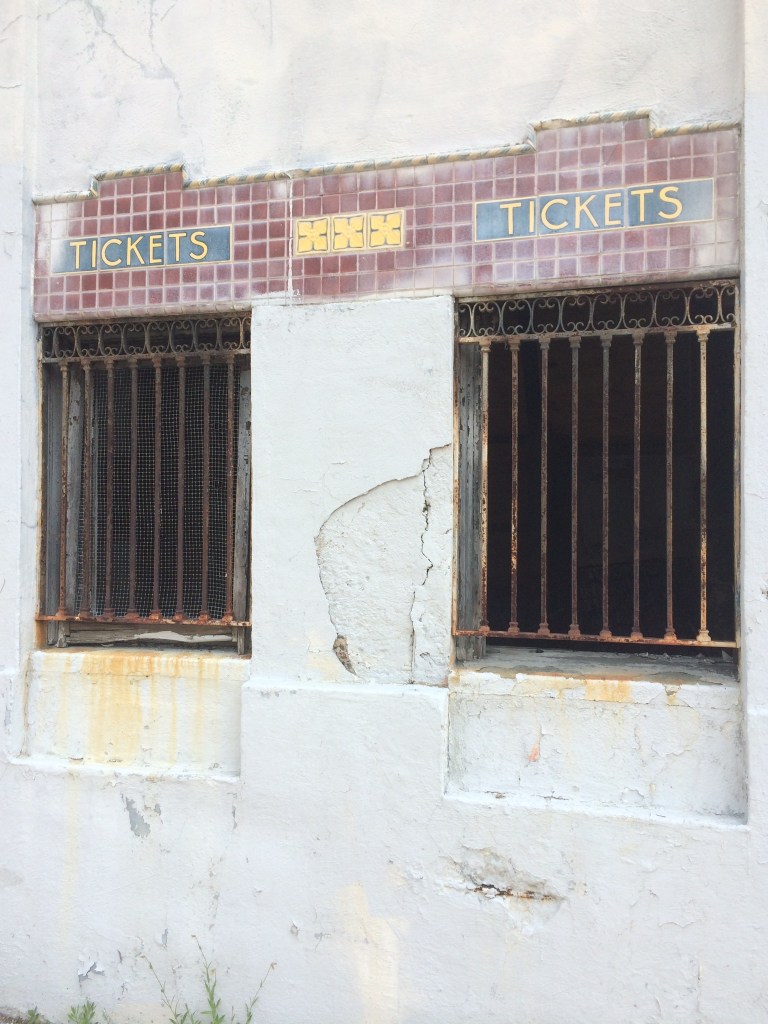
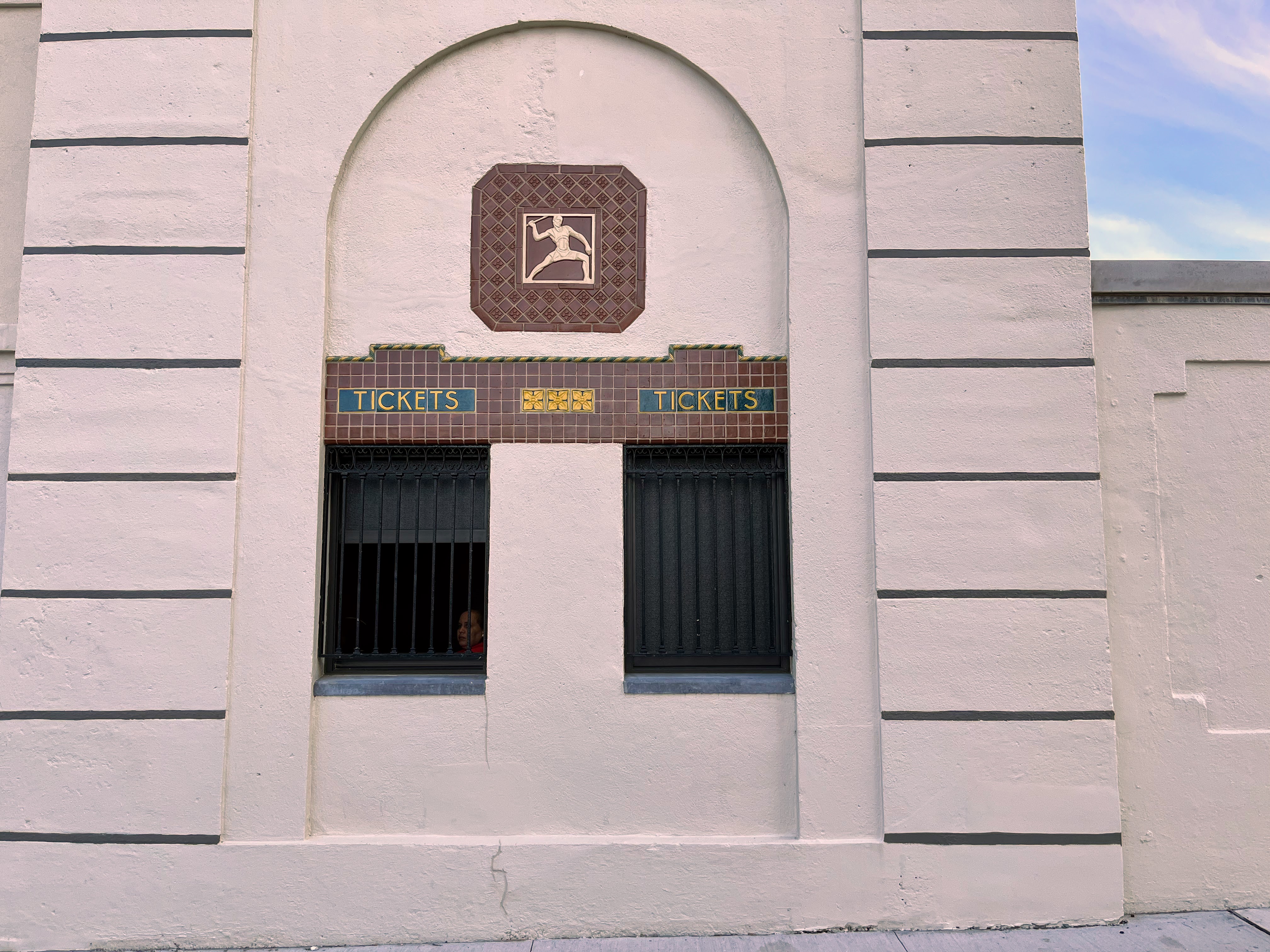
In 2014, I wrote a blog post about an abandoned and dilapidated New Deal era stadium in Paterson, N.J. At the time there were actual trees growing up through the cracks in the concrete stands and what was once the playing surface was a mix of dirt, broken glass and cracked pavement. Some Paterson high school kids had volunteered to paint the outside walls with paint donated by Valspar. That improved the eye sore but Hinchliffe Stadium had little going for it other than its history.
Built in 1932, Hinchliffe was home to two Negro League baseball teams, the New York Black Yankees and the New York Cubans. It had track meets, soccer, even auto racing. Abbott and Costello performed here. So did Sly and the Family Stone. It hosted numerous high school athletic events, most notably for many Patersonians, the annual Thanksgiving football games between the city’s two high schools, Central and Eastside.
The last Thanksgiving football game was played in 1996. In 1997, the stadium was condemned when part of the playing field collapsed into a sinkhole. It sat unused for some 25 years.
But around the time of my blog post, Hinchliffe was designated a national historic landmark. Shortly thereafter an act of Congress redrew the boundaries of the adjacent Great Falls National Park to include the stadium. A couple decades later a $100+ million renovation got underway that included a parking garage, senior housing and a yet-to-be completed Negro League museum.
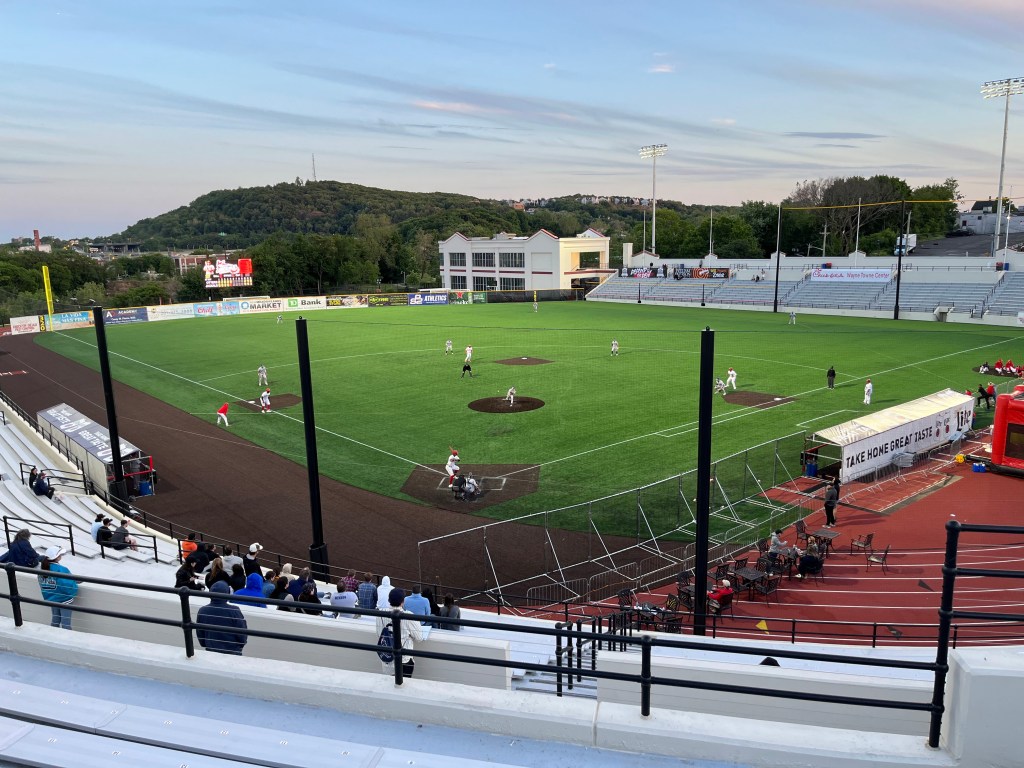
Now, 85 years after the NewYork Black Yankees played their last full baseball season in Paterson, the independent minor league New Jersey Jackals have begun their first Frontier League season here. There is even some talk of reviving the Thanksgiving Day football game between Eastside and Kennedy (the school that replaced Central).
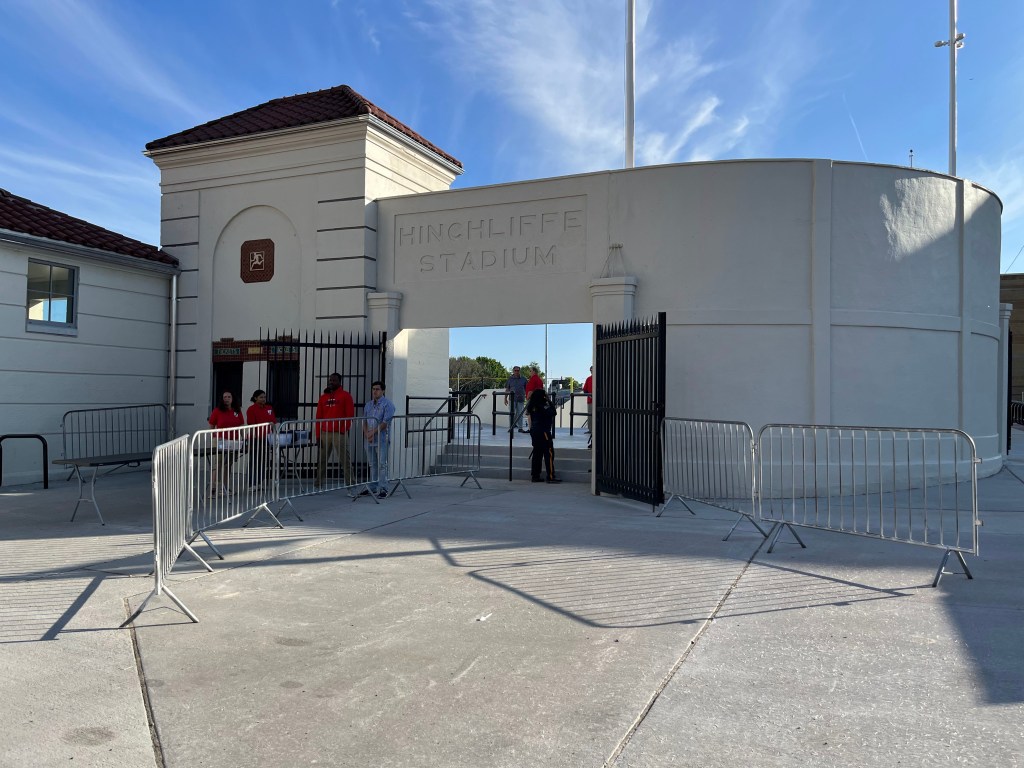
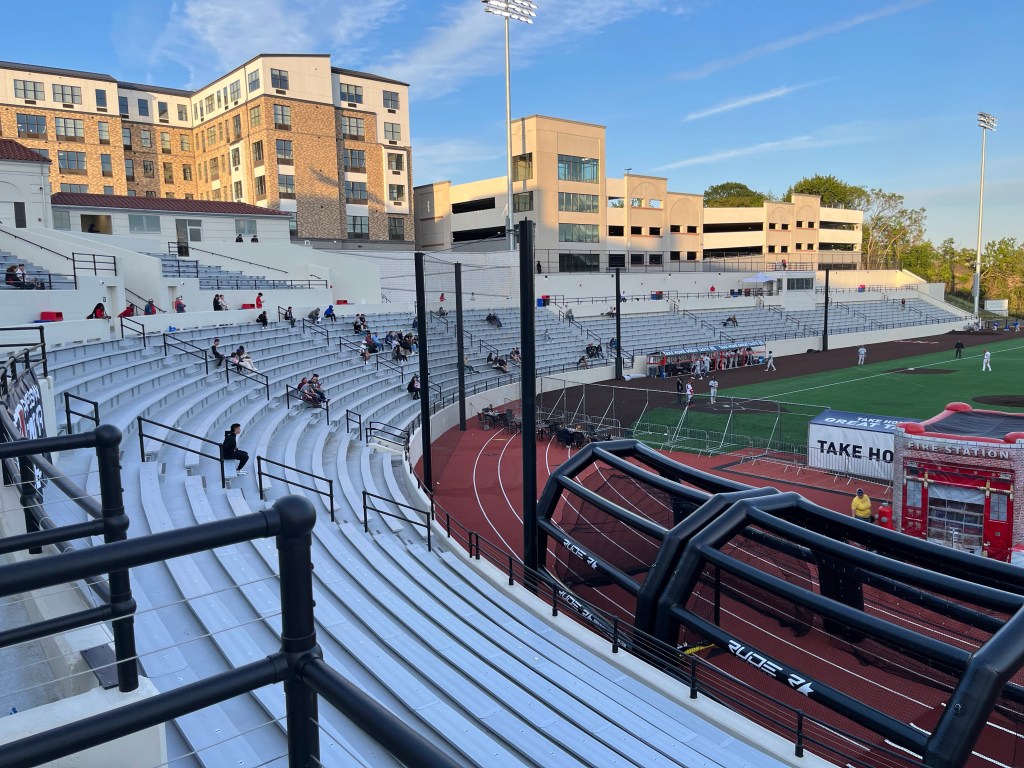
Here’s a look at Hinchliffe reborn on Jackals game night.
Some before and after:
beforeafterbeforeafterbeforeafter
But however good the stadium renovation, this is what it looked like in the stands on a pleasently cool Thursday night. The Jackals would appear to have a massive marketing task ahead of them.
I grew up in a suburb about 15 miles west of New York City. For my family it might just as well have been 1500 miles. Neither of my parents commuted. Public transportation in the town I lived in was limited to a bus to Paterson.
To my father New York might have been the name of one of Dante’s circles. He may have passed through Manhattan on his way to a ballgame but that was about it. My mother would take me into the city occasionally, showing me things like the Museum of Natural History, the UN and Radio City. She also brought me to an eye specialist when I was a first grader for treatment of a lazy eye condition.
What do I remember about those trips to New York City with my mother? The automat. Every venture ended at one of them.
The automat at 877 Eighth Avenue may well have been one of the ones I enjoyed with my mom.
The automats were mostly in big open spaces with cafe tables. There would be at least one wall of glass fronted cubes, maybe 6X8 inches. You put coins in a slot, opened the glass door, and pulled out your food. Like a vending machine? Not quite because there was a kitchen on the other side of that wall and staff was filling and refilling each compartment with freshly prepared food, appropriately hot or cold.
What did I eat at the automat? I have no idea, although I remember my mom liked the coffee. For me, it was all about the process and as a kid, I wouldn’t dream of going anywhere else.
Horn & Hardart promotional photos of food served at the automat (from New York Public Library public domain collections).
Older New Yorkers may be surprised to learn that the idea for the automat came from Germany. The first automat, named Quisisana, opened in Berlin in 1895. When Philadelphia restaurateur Joe Horn visited after the turn of the century, he bought into the technology and he and his partner Frank Hardart opened the first Horn & Hardart Automat in Philadelphia in 1902. Here’s how the Philadelphia Inquirer (June 10, 1902) described America’s first automat:
“Horn and Hardart have solved the rapid transit luncheon problem by opening a restaurant called the Automat, at 818-821 Chestnut Street. It is a mammoth nickel-in-the-slot scheme, and the only one of its kind in the United States. Heretofore, the man with one minute and thirty-seven seconds for lunch has fumed while a waiter has been getting his order. In the Automat all this is changed. If a patron’s lunch is not forthcoming speedily it will only be because he is unable to decide, oft hand, whether he wants one of a large assortment of sandwiches, pies, coffee, soup, ice cream and the unusual variety of quick lunch fare….
“There was a great rush at the Automat yesterday, and its success will doubtless continue as the service is as neat as it is rapid.”
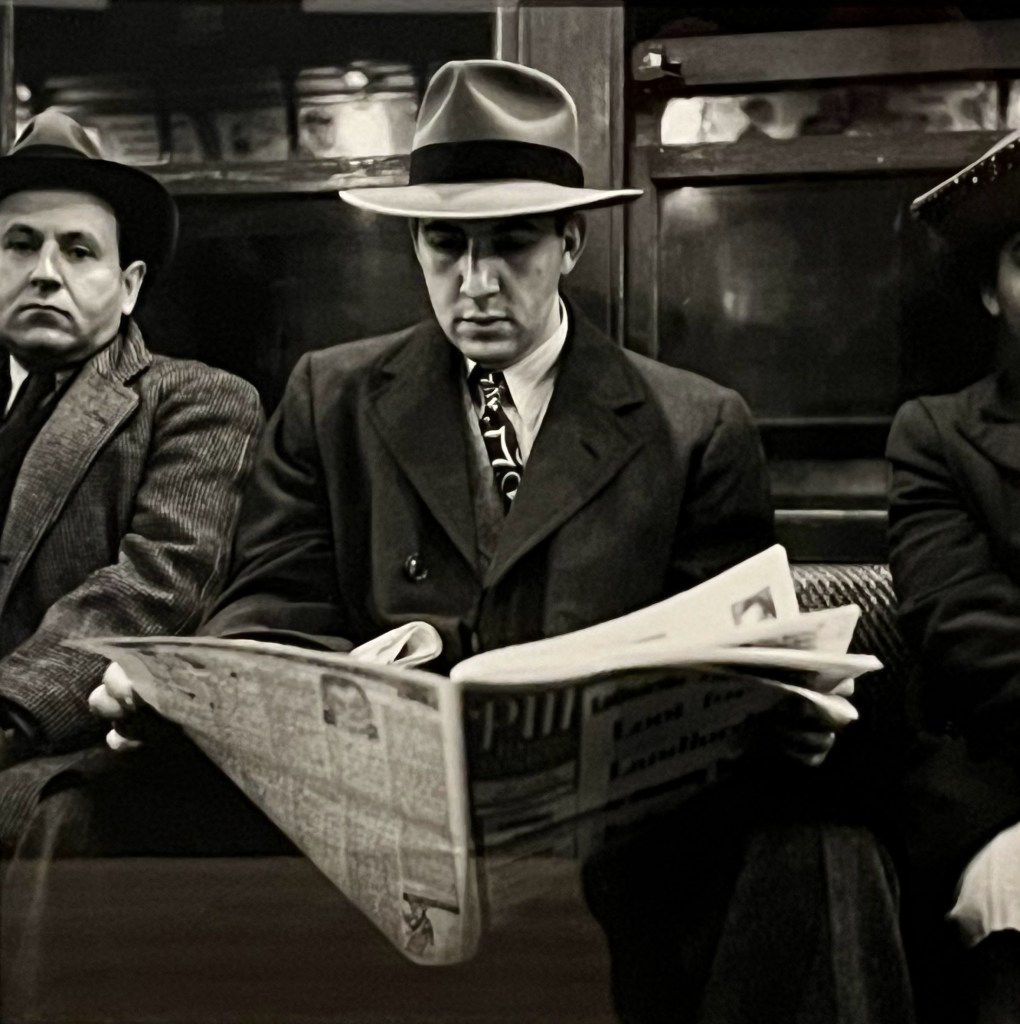
Two Ladies at the Automat, NYC, 1966 photo by Diane Arbus
The first New York automat opened in 1912. Eventually there would be 40 of them in the city. Despite being confined to Philadelphia and New York, it became America’s largest chain eatery. The New York Daily News (Sunday, May 15, 1921) offered this colorful description of the volume of food served up at the automats:
“Automats feed 100,000 people a day, enough to fill the Hippodrome, with a capacity of about 5,000, twenty times.
“Used 9,000 eggs a day. If placed in a line would reach 2,200 feet or 7 times as high as the Statue of Liberty.
“Use 18,000 pies a week — enough to cover the grass in City Hall Park.
“Use 11,000 loaves of bread a week for sandwiches alone — placed in a line would be twice as long as Brooklyn Bridge.”
It is not just the food or the technology that automat patrons remember fondly. It is also celebrated as a place for everyone. Race, mother tongue and social status mattered little. The same Daily News article cited above noted: “At the Automat restaurant at 1241 Broadway I saw a theatrical gentleman, evidently in reduced circumstances, lunching on a cinnamon bun and a cup of coffee.” It was also kind of a predecessor to the modern coffee shop. You could buy a cup of coffee and sit there with it for hours. That is, perhaps what Edward Hopper was thinking when he created his famous “Automat” painting.
What happened to the automat? Ultimately it was replaced by a different sort of fast food restaurant, the McDonald’s and Burger Kings. (I can’t imagine that decades from now anyone is going to wax nostalgic about a Burger King.) There are many other reasons offered to explain the decline. One is the much despised decision in 1950 to raise the price of a cup of coffee from five cents to ten cents, though it is also noted that before that increase Horn and Hardart was losing money on every cup of coffee they sold. Inflation in general made the “nickel-in-the-slot” approach impractical. (How many rolls of nickels would it take to buy a meal in a New York City restaurant today.) Hard economic times in the 1970’s may have taken their toll and it has been suggested that cost-cutting impacted the quality of the food.
The last automat closed in New York City in 1991. There have been and continue to be attempts to revive them, most only lasting a couple of years. There is a website by a company calling itself Horn and Hardart that sells “automat” coffee.
I am hardly alone in fondly remembering the automat of my childhood. A recent documentary “The Automat,” which is currently streaming on HBO Max, offers up the similarly fond reflections of Mel Brooks, Ruth Bader Ginsburg, Colin Powell and former Philadelphia Mayor Wilson Goode, among others.
Statues and Monuments in Savannah, Ga.’s, historic district.
The Waving Girl is Savannah’s Florence Martus. Between 1887 and 1931 she waved a cloth as a greeting to ships entering the port of Savannah and to say goodbye to those heading out.Les Chasseurs Volontaire de Saint Domingue were a regiment of soldiers from Haiti who volunteered for a campaign to capture Savannah from the British. They were the largest unit of soldiers of African descent to fight in the American Revolution.A World Apart. Wiorld War II memorial honoring Chatham County, Ga., veterans who died in the war.In 1819, the S.S. Savannah became the first steamship to cross the Atlantic Ocean.
John Wesley is best knows as the founder of Methodism. he spent some time in Savannah ministering to colonists beginning in 1735. The Reynolds Square site of this monument is believed to be near where he lived.
James Edward Oglethorpe , a British soldier and former Parliamentarian, is considered the founder of the colony of Georgia. During his time as colonial governor, he banned both slavery and alcohol.
Oglethorpe welcomed the Jewish community to his colony and donated this plot to be used as a Jewish burial ground.The African American Monument in honor of Dr. Abbie H. Jordan, educator and community activist.This monument to Revolutionary War hero Gen. Nathanael Greene is in Johnson Square. Greene’s remains are buried under the monument.
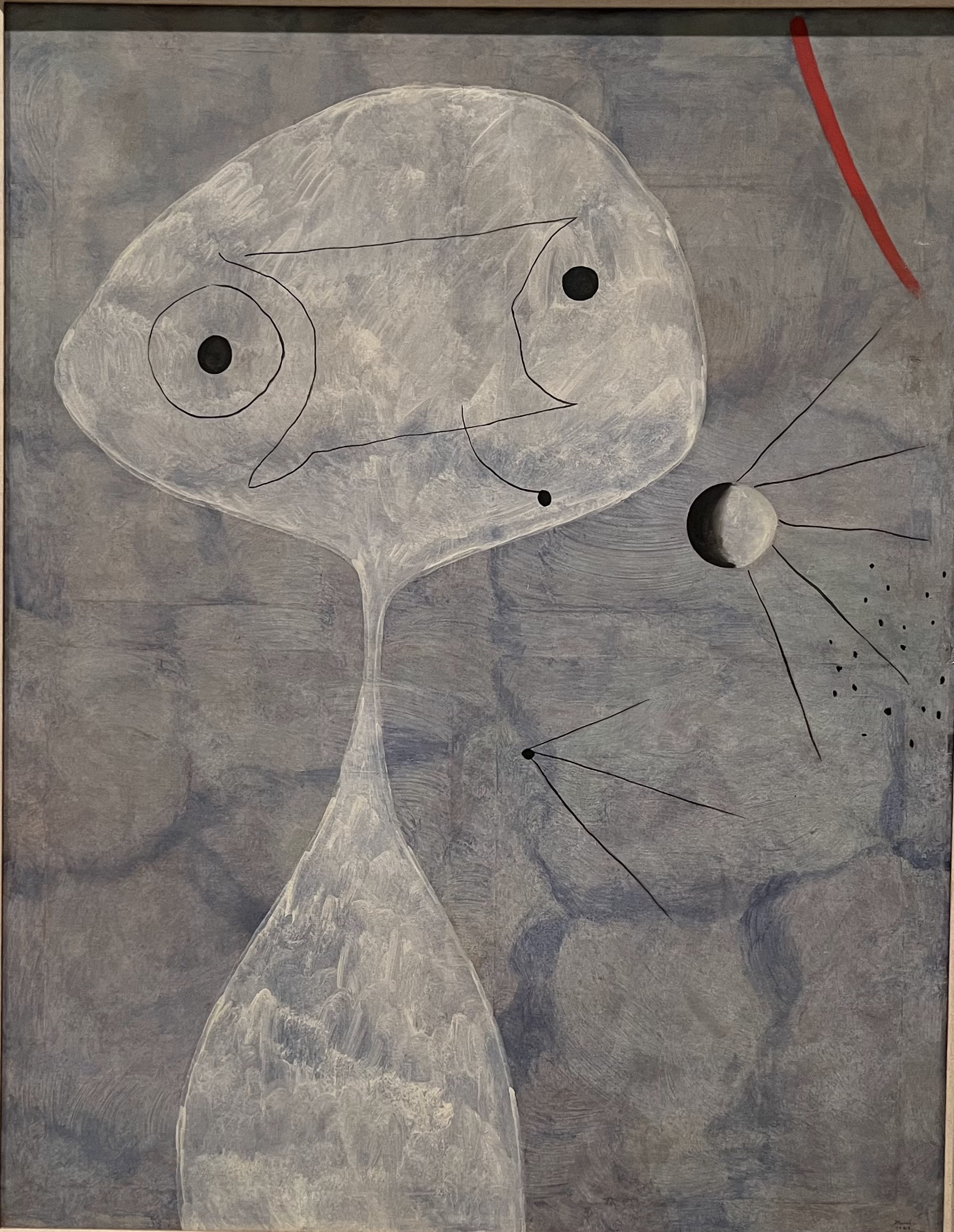
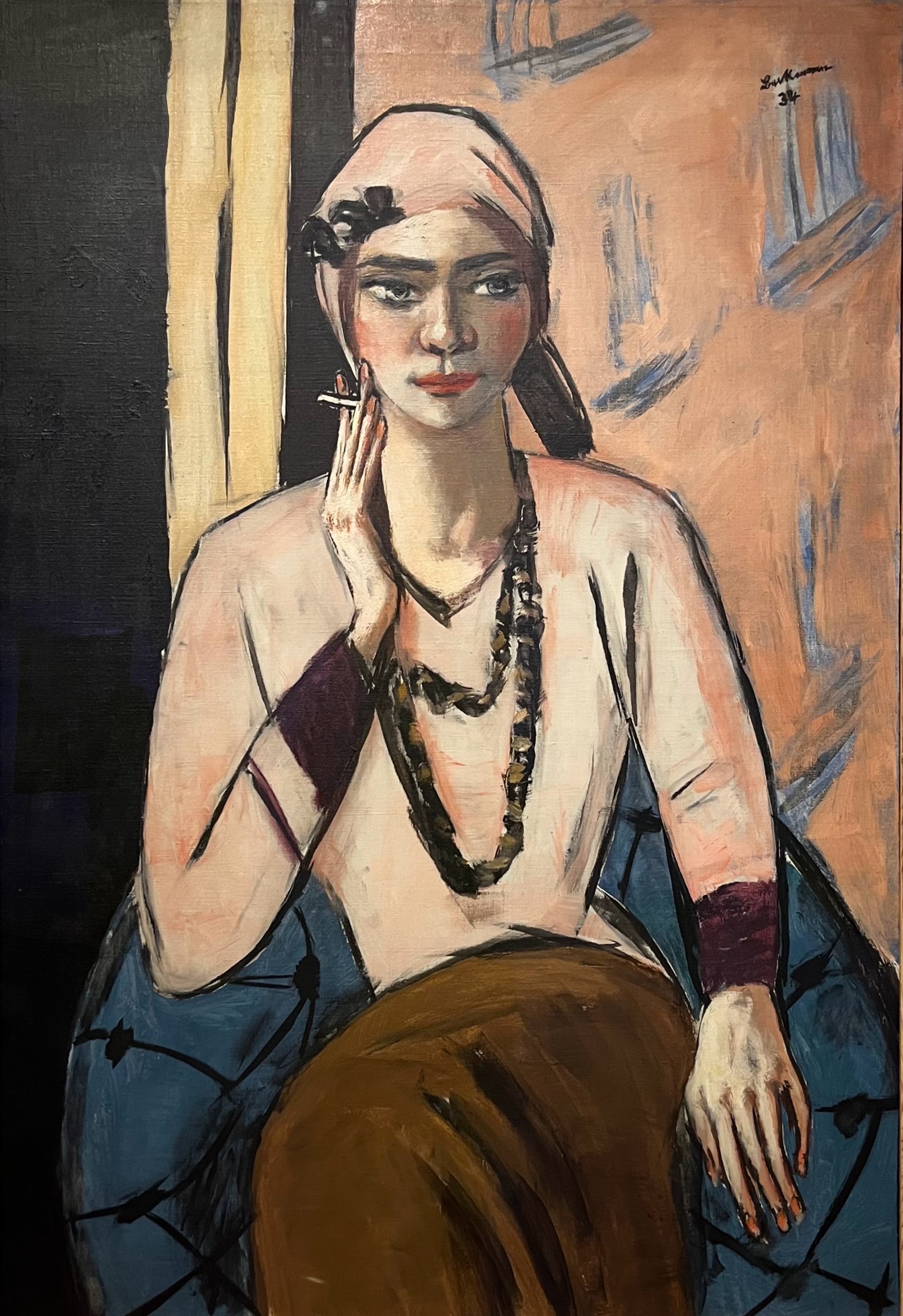
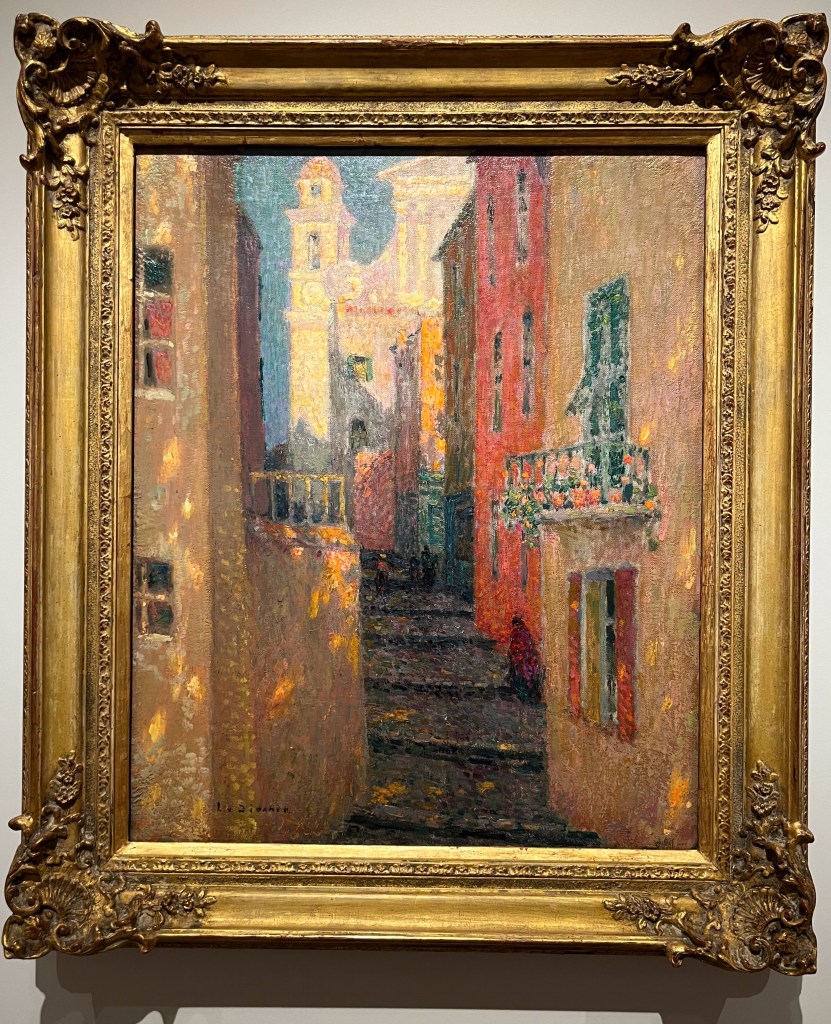
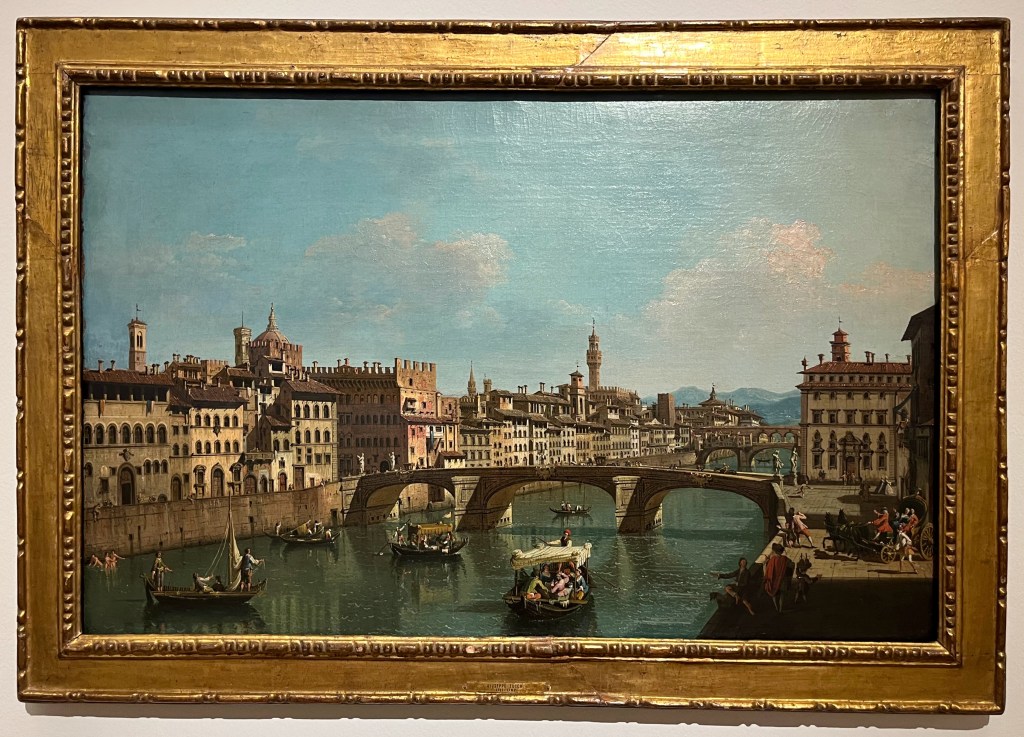
The Scapegrace, Jan Theodoor TooropPortrait of Kahlil Gibran, Lilla Cabot PerryPortrait of the Artist’s Mother, Kahlil GibranFrost und Nebel, Georg SauterBordeaux, View from the Bridge, Winter Day, Alfred SmithStuyvesant Square in Winter, Ernest LawsonIce Boats on the Hudson, Henry Golden DearthMarketing, Robert Gwathney
Savannah Scenes
Bird Girl, Sylvia Shaw JudsonSmoke Plumes of Savannah, Eliot Candee ClarkRiver Nocturne, Mark SheridanOld City Market, Augusta OelschigShrimp Boats, Augusta Denk Oelschig
Carrie Nation made a name for herself by busting up bars with her hatchet, the result of which was usually an arrest and a spike in popularity for the attacked bar.
And then it happened…
To keep the business alive, Bud sold frozen egg, Coors opted for malted milk and Stroh’s gave malt syrup a shot.What does this remind you of?
Mrs. Thelma Holland, a 22-year-old pregnant mother, was arrested in 1929 for operating a liquor still in Los Angeles. She was given probation.
And like Prohibition itself, the museum ends with a speakeasy.
SCAD Beach, an immersive art installationTwelve Moons (or at least three of them), Ann CravenMuseum of the Lost (Strangers at Home), Leung Chi Wo and Sara Wong. Leung and Wong create life sized photographic prints of old found images from family photo albums.Nido BouchraWhite-and-red-checked shirt lookAlia AliHassan HajjajGoldstein, Rachel FeinsteinTuskegee AirmanThelonious NumberChase Hall
A review. “A Refugee’s American Dream: From the Killing Fields of Cambodia to the U.S. Secret Service,” by Leth Oun with Joe Samuel Starnes
In 1976, Leth Oun is a 10-year-old working in what amounted to a slave labor camp in the Killing Fields of Cambodia. In 2012, Leth Oun is part of the uniformed Secret Service detail traveling with President Obama on his visit to Cambodia. This book is about everything that happened in between. The title refers to an American Dream, but the subtitle could well have been about a Cambodian nightmare
It is unfathomable that a young boy could come of age going through what this man did and not only survive, but eventually thrive. He spent almost four years in the Killing Fields. His days went like this. A guard with a rifle would shout to wake up and head out to the rice paddie. Standing in a few inches of water, with leeches attaching themselves to his legs, he would plant rice seedlings or harvest the rice depending on the season. There would be a break for lunch which was always a watery rice soup in a dirty bowl. Then it was back to work until sundown when the armed guard would send him back exhausted to sleep on the ground. And, since he survived, that was a good day.
When the Vietnamese overran the Khmer Rouge, Leth and his mother found their way across the Thai border and into a series of refugee camp’s run by the U.N. In 1983 they were flown to America and settled in Maryland where they had a family connection. It is there where the Horacio Alger part of the story begins. It starts with Leth riding his bike through dangerous Washington traffic to work every shift he can get at a Tenleytown convenience store, a place where he would first encounter Secret Service agents who would come in for a sandwich or a coffee.
There is a lot more to the story of Leth’s life in America but for me the power of this book is the amazing first hand account of the Killing Fields. No historical tract or news report could come close to capturing the Khmer Rouge era the way this personal memoir does. Leth and his co-author Joe Samuel Starnes describe his experiences in such a straightforward manner that it almost belies the cruelty and degradation that was inflicted upon his family and so many of his countrymen.
There are heartwarming parts of the story as well. Despite being separated and shepherded about, his family continued to find and support each other. And there are well-meaning folks, in Cambodia, in Thailand and in America, who help make Leth’s story turn out the way it does.
As I read this book, I thought about the xenophobes in America who want to put a padlock on the border. I thought about the people responsible for the wave of Asian-American hatred that reared its ugly head. If only they could read or hear this story or meet this man. For me, Leth Oun is a lot more of what America is about than any of them are.