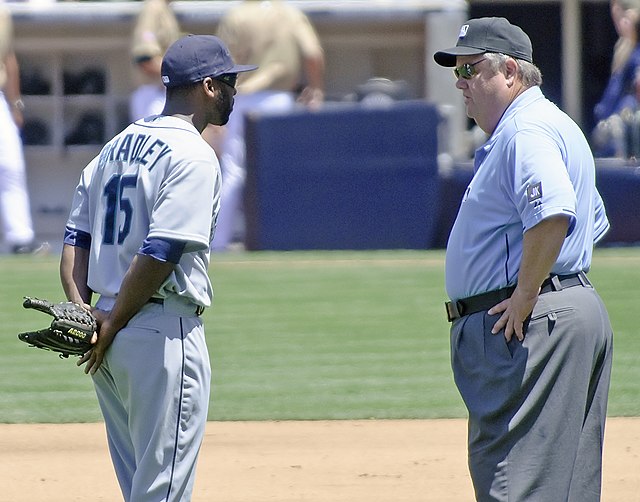
What Were You Thinking? Minnesota Twins vs. Chicago Cubs, June 12, 2009

I have been a lifelong baseball fan, but I admit there are times the game can be a bit slow. From my schoolboy days as a player I can remember how long the innings seemed when you are out in the field and no balls ever come your way. So it is not surprising to find that sometimes a ballplayer’s mind wanders a bit while he standing out in the sunshine doing…nothing.

Do you think that happens to major leaguers? Do they start thinking about where they’re going after the game or what they’re going to do at the end of a long road trip? Surely we expect them to at least keep track of how many outs there are, and e en if they do temporarily lose the plot there’s always the teammates holding up one or two fingers. And that’s not to mention the modern baseball stadiums’ 360 degree signage that makes the number of outs in an inning clearly visible even if you’re buried in a long line at a hot dog stand.

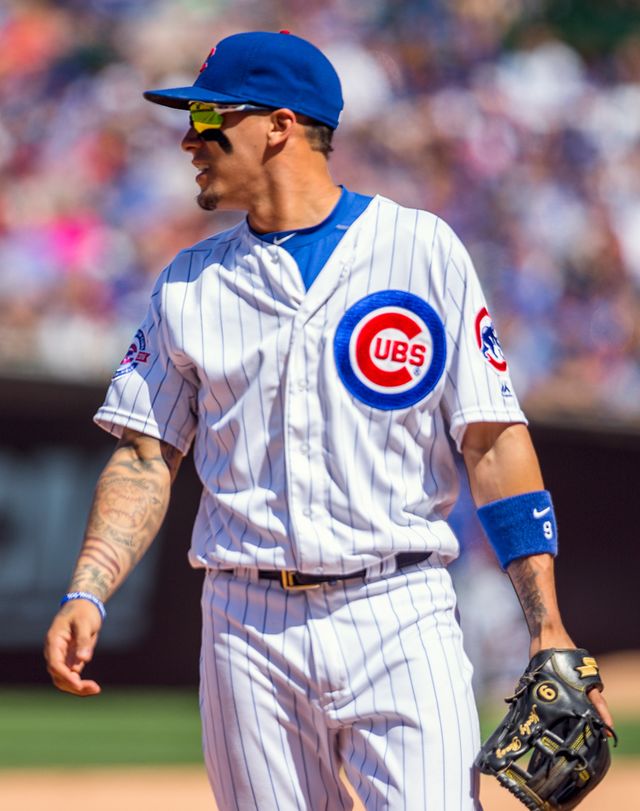
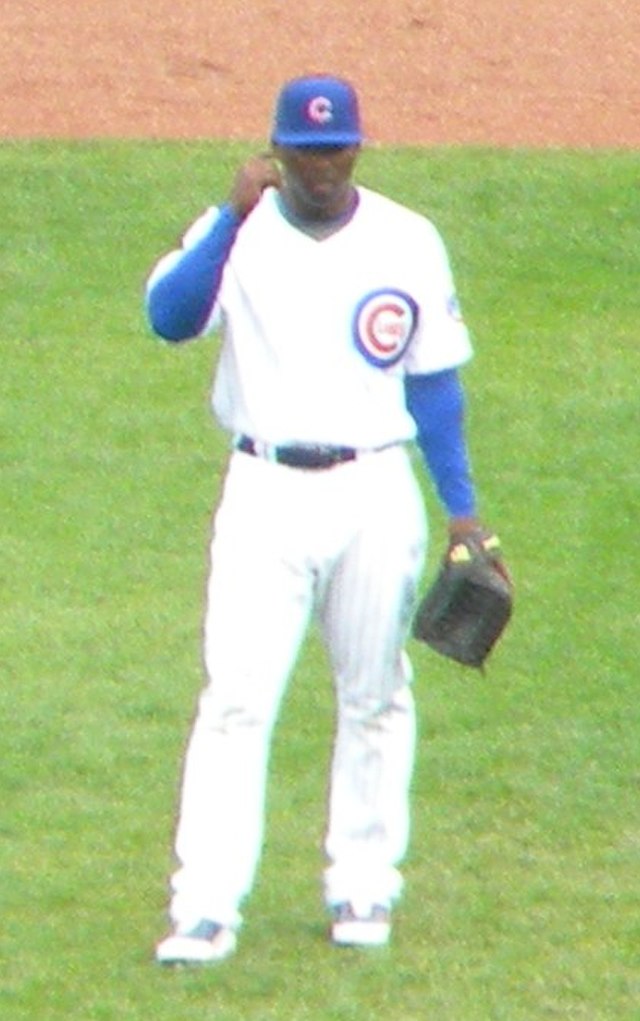
Milton Bradley

We don’t know what Chicago Cubs outfielder Milton Bradley was thinking on the night of June 12, 2009, that caused him to lose track of how many outs there were with the MInnesota Twins batting in the top of the 8th inning. But knowing what would transpire later in life it’s not likely that he was distracted by warm thoughts about his wife.

What transpired that night was what Bleacher Report writer Doug Mead would call one of The 15 Stupidest Defensive Plays in MLB History

Here’s his description:

“In an inter-league game against the visiting Minnesota Twins, Bradley had already had a bad day by the seventh inning, losing a fly ball in the sun that led to a run for the Twins.

“In the eighth inning, with two men on base, Bradley camped himself under a routine fly ball and caught it, flipping the ball into the bleachers and posing for a picture.

“However, there was only one problem. There was only one out at the time. The lead runner was sent home on the stupid mental mistake.”

Bradley was always something of a loose cannon. During the 2004 season, he sauntered up to the plate, started arguing with the home plate umpire and got himself ejected. At first he walked calmly back to his dugout, but then threw a bag of several dozen baseballs out onto the field and followed that up by throwing some of them into the stands. Later that season, a Dodgers fan threw a water bottle at him after he had lost a fly ball in the lights. Bradley picked up the bottle and headed to the stands, throwing it right back. He was restrained by one of the umpires who then ejected him. He was suspended for the rest of the season (it was September) and ordered to go to anger management counseling.

Milton Bradley
Milton Bradley

Despite incidents like this Bradley fashioned an 11 year MLB career. He played for eight different teams. He was a guy prone to wearing out his welcome. But he was a .271 lifetime hitter and was talented enough that there always was another team willing to give him a go.

After that game against Minnesota, the next day AP story had this to say:

“The Cubs’ Milton Bradley wasn’t so beloved by the home fans even though his two-run double in the sixth off Slowey halved what had been a 4-0 deficit. 

“In the seventh, he lost Jason Kubel’s pop-up in the sun for a single and got a late jump while failing to catch Michael Cuddyer’s RBI bloop double for a 5-3 Twins lead and then it got worse. 

“With Nick Punto on third, Harris on first and one out in the eighth inning, Bradley caught Mauer’s flyball and, thinking the inning was over, posed for several seconds before throwing the baseball into the seats. As Punto scored easily on the sacrifice fly to make it 6-3, Harris was awarded third base on Bradley’s error as boos cascaded down from every section of the ballpark.”

And what did Bradley have to say for himself:  “That’s life. These people have high expectations. I have high expectations for myself. I never made a mistake like that (losing track of the outs) in my life. Sue me.”

The Twins won that game 7-4. Bradley was nearing the end of his career. The Cubs traded him to Seattle at the end of 2009 season. He lasted until early in the 2011 season when the Mariners cut him loose.

Things didn’t go substantially better for Bradley after his playing days. In 2013, he was convicted of nine counts of physically attacking and threatening his wife as well as several other charges and was sentenced to 32 months in prison. He got out, remarried and in 2018 he pleaded no contest to charges of spousal battery. This time he was sentenced to 36 months of probation and 52 weeks of domestic violence counseling. No word on how that worked out.

-0-

Baseball’s dumbest plays:

Chicago Cubs vs. New York Giants, Sept. 23, 1908

New York Giants vs. Washington Senators, Oct. 10, 1924

St. Louis Cardinals vs. New York Yankees, Oct. 10, 1926

Philadelphia Phillies vs. Pittsburgh Pirates, July 4, 1976

Arizona Diamondbacks vs. San Francisco Giants, May 27, 2003

Minnesota Twins vs. Chicago Cubs, June 12, 2009

Chicago Cubs vs. Pittsburgh Pirates, May 27, 2021

Posted in Baseball, Sports | Tagged , , , , , | 9 Comments

Jennifer Packer’s Friends and Family

The Eye is Not Satisfied with Seeing, Whitney Museum of American Art

Blessed Are Those Who Mourn (Breonna! Breonna!)
Fire Next Time, Jennifer Packer
Fire Next Time
For James, Jennifer Packer
For James
Jordan, Jennifer Packer
Jordan
A Lesson in Longing, Jennifer Packer
A Lesson in Longing
Posted in Art | Tagged , , , , | 2 Comments

What Were You Thinking? Arizona Diamondbacks vs. San Francisco Giants, May 27, 2003

Major League Baseball teams have a bench full of coaches. There’s always a hitting coach and a pitching coach. There’s a bench coach, who I assume is the guy who takes over if the head man blows a gasket and gets ejected. There’s a specialist to coach first base and another to coach third. Out in the outfield is a bullpen coach. But having done the research for this series of the dumbest plays in baseball, I have to think it might be a good idea to trade in one of these guys for a baserunning coach.

While so many of the gaffes I’ve been describing involve bad baserunning. there is one that stands out above all the others. It happened on May 27, 2003 in a game between the Arizona Diamondbacks and the San Francisco Giants.

Ruben Rivera
Ruben Rivera

Ruben Rivera was on his fifth major league team at that time. The cousin of legendary Yankee closer Mariano Rivera, the Panamanian was signed by the Yankees in 1990. Five years later Baseball America labelled him the number two prospect in baseball. He made his debut as a September call-up with the Yankees that same year. San Francisco was the last stop in an 8-year major league career. 

Rivera did not make much of an impression with the Giants that year. That is until the May 27 game against the Arizona Diamondbacks. The game was tied 2-2 in the bottom of the ninth. The Giants sent up a pitch hittter Andres Galarraga who reached on an error. They then sent Rivera to first base to pinch run for Galarraga.

AP baseball writer Ben Walker describes what then ensued:

“Ruben Rivera got so lost on the bases, even fans at Pacific Bell Park tried to point him in the right direction. His misadventure was blooper tape material, for sure. And he could afford to laugh about it later, too, because his team won.

“Rivera was running as Marquis Grissom hit a high fly that right fielder David Dellucci misjudged, and the ball landed for an error.

“Rivera had already made it to second base, but retreated once he thought the ball would be caught. When it wasn’t, he reversed course again and took off for third.

“Only one problem: While scrambling, Rivera missed second base and wound up on the infield grass.

“At that point, many fans in the crowd were standing, pointing at the skipped bag.

“So Rivera went back, retouched second and headed for third. The relay from second baseman Junior Spivey was in plenty of time to get Rivera at third, but the ball skipped away for another error.

“When the ball rolled loose, Rivera bumped into third baseman Alex Cintron and sped home.

“Arizona shortstop Tony Womack recovered and threw to the plate, and Rivera was easily tagged out.”

Giants announcer Jon Miller called it “the worst baserunning in the history of the game.” Here’s his call:

After that adventure on the bases, Rivera only played in one more major league game. He was released by the Giants a week later. At the time he had 50 at bats and was hitting .180. Rivera resumed his career in Mexico where he played until he retired in 2019. He also played for the Panama team in the World Baseball Classic in 2006 and 2009.

-0-

Baseball’s dumbest plays:

Chicago Cubs vs. New York Giants, Sept. 23, 1908

New York Giants vs. Washington Senators, Oct. 10, 1924

St. Louis Cardinals vs. New York Yankees, Oct. 10, 1926

Philadelphia Phillies vs. Pittsburgh Pirates, July 4, 1976

Arizona Diamondbacks vs. San Francisco Giants, May 27, 2003

Minnesota Twins vs. Chicago Cubs, June 12, 2009

Chicago Cubs vs. Pittsburgh Pirates, May 27, 2021

Posted in Baseball, Sports | Tagged , , , , , , , | 9 Comments

The sun shines on Hyde Park (every now and then).

Hyde Park, London

Easter Sunday in Hyde Park, London

Hyde Park
Pakistani demonstration
Members of London’s Pakistani community rally in support of ousted Prime Minister Imran Khan
Speakers Corner
Achilles
Achilles
Joy of Life Fountain
Joy of Life Fountain (dry)
Rotten Row
Posted in Travel, Uncategorized | Tagged , , , , , , , | 2 Comments

What Were You Thinking? Philadelphia Phillies vs. Pittsburgh Pirates, July 4, 1976

Tim McCarver

Tim McCarver is one of baseball’s best known broadcasters. Working mostly for Fox, he has been behind the mike for 23 World Series and has received a Sports Emmy Award three times. His role is color commentator, the expert. It is a role requiring perceptiveness and insight. Those are qualities that escaped him on the night of America’s bicentennial (July 4, 1976) during a doubleheader between the Philadelphia Phillies and Pittsburgh Pirates at Three Rivers Stadium.

McCarver had a storied career in Major League Baseball, spanning four decades from 1959 to 1980. Most of his best years were with the St. Louis Cardinals. Twice he represented the Cardinals in the all-star game and he was their regular catcher in both 1964 and 1967 when they won the World Series. 

After 10 years with the Cardinals, McCarver was traded to the Philadelphia Phillies in 1970. His career waned after that and he moved to Montreal, back to St. Louis and then on to Boston. He was pretty far down the pecking order, third string catcher, at Boston when he was released and joined Philadelphia for the second time.

During his end of career stint with Philadelphia he was primarily known as Steve Carlton’s personal catcher. The Phillies ace preferred the veteran McCarver over the team’s regular catcher Bob Boone.

That’s why McCarver was behind the plate for the first game of a doubleheader at Pittsburgh’s Three Rivers Stadium on Bicentennial Day.

An Associated Press story describes what happened:

“It isn’t every day that you hit a grand slam home run in the major leagues. It’s even more rarely that it turns into a three-run single

“That’s what happened Sunday to Tim McCarver of the Philadelphia Phillies in a National League baseball game.

“After McCarver hit the ball 380 feet into the right field seats at Pittsburgh’s Three Rivers Stadium, he inadvertently passed team-mate Garry Maddox as he rounded first base.

“McCarver was immediately called out by home plate umpire Satch Davidson and his drive was reduced to a three-run single.”

Maddox had been on first base and had slowed down to see if McCarver’s shot would be caught. It would have been McCarver’s first home run of the year. He ended up only hitting one homer in the 47 games he played for the Phillies that year. His baserunning guffaw proved to have little effect on the outcome of the game. His bases loaded ‘single’ put the Phils ahead 4-0 in the second inning and they would go on to win 10-5. The Pirates came back to win the second game of the twinbill.

Three Rivers Stadium
Three Rivers Stadium, Pittsburgh

But on that night, McCarver showed another quality that would stand him in good stead in his later career as a broadcaster: some good humor. He told Philadelphia Inquirer sportswriter Bill Lyon: “”Hey, what could I do except laugh about it?

“I mean, you screw up right out in front of 30,000 people it’s kinda tough to hide. Besides, how can you dig a hole in artificial turf? 

“Anyway, it’s definitely the longest single I’ve ever hit. I knew it was gone (McCarver had hit 83 previous homers, five of them grand slams) and I’m into my Cadillac trot, head down. 

“First time I notice Garry is when I’m even with him. I tried to back-pedal but Ed Vargo (first base umpire) looks at me and says I’m out. 

“I guess the moral is to hit ’em so they get out of the park quicker.”

-0-

Baseball’s dumbest plays:

Chicago Cubs vs. New York Giants, Sept. 23, 1908

New York Giants vs. Washington Senators, Oct. 10, 1924

St. Louis Cardinals vs. New York Yankees, Oct. 10, 1926

Philadelphia Phillies vs. Pittsburgh Pirates, July 4, 1976

Arizona Diamondbacks vs. San Francisco Giants, May 27, 2003

Minnesota Twins vs. Chicago Cubs, June 12, 2009

Chicago Cubs vs. Pittsburgh Pirates, May 27, 2021

Posted in Baseball, Sports | Tagged , , , , | 8 Comments

What Were You Thinking? St. Louis Cardinals vs. New York Yankees, Oct. 10, 1926

Babe Ruth
Babe Ruth

That Babe Ruth was one of the greatest of the greats on the baseball field is indisputable. He was one of the first five ballplayers elected to the Baseball Hall of Fame. His season and career home run records stood for decades, without steroids or souped up baseballs. Twelve times he led the American League in home runs. Seven times he was a World Series winner. He was an All-Star, an MVP and a batting champion. And yet was it possible that the great Bambino had a rush of blood to the head that cost his team a game? And, not just any game, but the seventh and deciding game of the 1926 World Series.

The Yankees and the St. Louis Cardinals split the first six games of the World Series. The decider was played at Yankee Stadium. The Cardinals had kept their hopes alive in game six as their ace Grover Cleveland Alexander pitched a complete game. One day later, Alexander came out of the bullpen in game seven and entered the ninth inning looking to protect a 3-2 Cardinals lead. He quickly disposed of the first two batters when up to the plate strode the mighty Babe. Ruth hit .300 in the World Series, with four home runs and five RBI’s. He had already cracked one in the fourth inning of game seven. Alexander pitched cautiously and ended up walking Ruth. That brought Bob Meusel to the plate.

Meusel was a fixture in the Yankee outfield throughout the 1920’s. He was a .309 career hitter and had hit .315 in 1926 with 12 homers and 78 RBI’s. But Meusel’s turn at bat would turn out to be inconclusive. On Alexander’s second pitch, Ruth took off for second base. The throw to second base was on the money. Ruth was out. And the Yankees were out. Game over. The Cardinals were the champions.

Ruth, Landis and Meusel
Ruth (left) with Commissioner Kenesaw Mountain Landis and Meusel.

So Babe Ruth, for all of his glorious accomplishments, cost his team the series with an ill-advised break for second. Well, not so fast. While Ruth’s attempted steal has often been treated as a massive mistake on his part, there is some revisionist history afoot. And the revisionists are pointing the finger at Meusel.

Writing for a web site called Baseball Egg, Dan Holmes, pointing to the Sporting News as his source, offers a different take on the game’s pivotal play:

“He (Alexander) started Meusel with a fastball that Bob was late on. At that point, something happened that has been forgotten to history. Apparently, Meusel signaled to Ruth for the hit-and-run. The Sporting News reported that ‘Meusel, after swinging viciously at the first pitch, put on the hit and run with the Babe on the next pitch.’

“This is where the Babe’s reputation is exonerated. Where a mistake is corrected. Ruth wasn’t stealing second base. It wasn’t a lark, a moment of hubris. It was a set play called by the batter.

“Alexander went to the fastball again with the same result: Meusel missing it on a big swing. Ruth got his jump and sped his piano legs toward second base. But at the moment he arrived, Rogers Hornsby also received a perfect throw from catcher Bob O’Farrell and slapped on the tag, getting Ruth on the right toe. The game was over, the series was over, the season was over.

“But Babe Ruth has been wearing goat horns for too long. His steal attempt that ended the 1926 World Series was not a steal attempt. The real goat was Bob Meusel, who called for a hit-and-run and didn’t succeed in the ‘hit’ part.”

Yankee Stadium
Yankee Stadium 1925

What did the sportswriters covering the game think of this play?  Jon Flynn, sports editor of the Berkshire Eagle, Pittsfield, Mass., corroborated the hit-and-run story.

“Bob Meusel, who had collapsed afield in the fourth and had fallen down at bat in the fifth and seventh innings with men yearning to score, again had a chance to keep himself out of the world’s series boob ranks. The first pitch was a strike, Meusel swinging and missing the ball. Manager Huggins called for a hit and run play. Babe got off with the pitch but Meusel failed again. He swung and missed the sphere which O’Farrell caught and got to Hornsby ahead of Ruth. George Herman slid for the bag and was tagged out, the night watchman at second base deciding that Babe arrived behind schedule.”

Perhaps it is a testament to Ruth’s popularity that no one was ready to point the finger at him. Brooklyn Daily Eagle writer Thomas S Rice, offered this justification:

“Ruth’s attempt to steal second yesterday was logical in that he had a good gambling chance. He was beaten mechanically. He is still an excellent base-runner, despite his large size, his troubles with his legs and his ankles, and the natural slowing up that comes from continuously playing major league baseball through 18 seasons. He made a clean steal of second on Saturday.

“Ruth figured he had a gambling change to steal second and score on a long single. John J. McGraw would almost certainly have figured the same at that stage of the game. This writer would have taken the gamble on Catcher Hank Severeid making a poor throw with a wet ball. As it was, the play was close. Like Icarus, Ruth failed, but he failed in a great attempt.”

-0-

Baseball’s dumbest plays:

Chicago Cubs vs. New York Giants, Sept. 23, 1908

New York Giants vs. Washington Senators, Oct. 10, 1924

St. Louis Cardinals vs. New York Yankees, Oct. 10, 1926

Philadelphia Phillies vs. Pittsburgh Pirates, July 4, 1976

Arizona Diamondbacks vs. San Francisco Giants, May 27, 2003

Minnesota Twins vs. Chicago Cubs, June 12, 2009

Chicago Cubs vs. Pittsburgh Pirates, May 27, 2021

Posted in Baseball, Sports | Tagged , , , , , , | 10 Comments

Q. Where is the largest collection of Japanese Cherry Blossom trees in the U.S.? (hint: it’s not Washington)

Cherry Blossom trees, Branch Brook Park

A. Branch Brook Park, Newark and Belleville, N.J.

There are more than 5,000 of the Japanese flowering trees in Branch Brook Park. The Essex County park was the first county park in the United States, dating back to 1895. It was designed by the Olmstead Brothers landscape architects. The first Cherry Blossom trees were donated to the park in 1927 by Caroline Bamberger Fuld.

Cherry Blossom trees, Branch Brook Park

Posted in Uncategorized | Tagged , , , , , , | 8 Comments

What Were You Thinking? New York Giants vs. Washington Senators, Oct. 10, 1924

Hank Gowdy
Hank Gowdy in 1914 as a Boston Brave

There are no doubt some really dumb baseball plays that have been made by undistinguished players in meaningless games between mediocre teams. Those plays are neither remembered nor recorded. But a gaffe in the deciding game of a World Series takes a long time to forget. That was the fate of Hank Gowdy.

Gowdy not only had a distinguished 17-year major league baseball career, but he was a war hero that participated in two world wars. Perhaps his finest moment as a ballplayer came during the 1914 season with the Boston Braves. It was Gowdy’s first year as a regular major league catcher. This was a team that was christened the “Miracle Braves,” a team that came back from more than 20 games behind in July to overtake the more fancied New York Giants and find their way into the 1914 World Series against the Philadelphia Athletics.

It was during that series that Gowdy became the first slugger to earn the nickname “Hammering Hank.” He batted an amazing .545 for the series and in game four, he went 3-for-4 to lead the Braves to a sweep.

Hank Gowdy
Hank Gowdy in his military uniform with manager John McGraw, 1918

Three years later, Gowdy would be doing a different kind of hammering. In 1917 he was the first active major league ballplayer to enlist. He joined the Ohio National Guard and was sent to France. There he fought on the Western Front, active in the brutal trench warfare that was so much a tragic part of World War I.

Gowdy returned to the Braves after the war. He once caught an entire 26-inning game, a 1920 contest between the Braves and the Brooklyn Robins that was eventually declared a 1-1 tie.

In 1923 he was acquired by the New York Giants and a year later he would find himself once again center stage in the World Series. This time for a very different reason.

The series between the Giants and the Washington Senators was tied three games apiece with the deciding seventh game to be played Oct. 10 at Washington’s Griffith Stadium. Going into the 12th inning, the game was tied 3-3 as well. In the bottom of the 12th the Senators Muddy Ruel hit what seemed to be an easily corralled foul pop up. Gowdy, behind the plate for the Giants, threw off his mask and headed for the ball. But he stepped on his mask, struggled to disengage his foot, and the ball dropped harmlessly to the ground. Ruel then smacked a double and he would come home with the game and series deciding run.

The following day, the Pittston (Pa.) Gazette offered this account of the fateful play: “Along with all the other throbs in one of the greatest games of ball ever played .was the tragic spectacle of Hank Gowdy, the hero of the 1914 series, one of the heroes of the 1917-1918 series with the A.E F., and the most popular player in the National League, losing the series and all that dough – $2,000 each – for the Giants. 

“Hank stepped into his mask, which he had hurled to the baseline when he went after Ruel’s foul in the last Inning. He kicked the thing away and then stepped into it again and stumbled, dropping the ball. Ruel, with his life at the bat prolonged by Hank’s error, doubled and came in with the run that made the master mind of that well known John McGraw look not so good some more.”

Griffith Stadium
Griffith Stadium, Washington, 1925.

Gowdy was not one to go into hiding. The United News ran a story on Oct. 11 that Gowdy himself wrote. Here’s how he described the incident:

“I never made an alibi in my life and I’m too old to start. Yes, I dropped Ruel’s foul in the twelfth and instead of being put out Kuel came back and knocked a double which placed him in the position from which he scored the winning run. I had stumbled and was off stride when the foul got away from me. In my years I have caught several thousand fouls. I never stop to give myself three rousing cheers for catching one. But when I miss one, I feel pretty sore at myself. However, it was a 12-inning ball game and no one play decided it.”

He then showed his character by adding: “Washington won cleanly and with fine sportsmanship. I know it is customary for the loser to say that, but I say it with real sincerity.”

After that Gowdy was up and down between the minors and the majors. His big league career ended in 1930. He had a couple of coaching jobs throughout the 30’s but with America’s entry into World War II he interrupted his coaching career to enlist again. He was 53 at the time. He was assigned to Fort Benning, Ga., where he had the title of Chief Athletic Officer. The baseball diamond at Fort Benning has since been known as Hank Gowdy Field. 

-0-

Baseball’s dumbest plays:

Chicago Cubs vs. New York Giants, Sept. 23, 1908

New York Giants vs. Washington Senators, Oct. 10, 1924

St. Louis Cardinals vs. New York Yankees, Oct. 10, 1926

Philadelphia Phillies vs. Pittsburgh Pirates, July 4, 1976

Arizona Diamondbacks vs. San Francisco Giants, May 27, 2003

Minnesota Twins vs. Chicago Cubs, June 12, 2009

Chicago Cubs vs. Pittsburgh Pirates, May 27, 2021

Posted in Baseball, Sports | Tagged , , , , , , | 7 Comments

Jasper Johns: Seven Decades

From the recent Mind/Mirror exhibit at the Whitney Museum of American Art

1950’s

Target with Four Faces, 1955

1960’s

1970’s

Decoy, 1971

1980’s

1990’s

2000’s

Numbers, 2007

2010’s

2020’s

Untitled, 2021

At age 91, Jasper Johns continues to produce works of art.

Posted in Art | Tagged , , , , | 6 Comments

What Were You Thinking? Chicago Cubs vs. New York Giants, Sept. 23, 1908

Fred Merkle
Fred Merkle

Any discussion of the biggest gaffes in Major League baseball history usually starts in 1908 and involves a New York Giants first baseman named Fred Merkle. Merkle had a long career, making his debut in 1907. Before retiring in 1926, he played for the New York Giants, Brooklyn Robins, Chicago Cubs and New York Yankees. Over that time he produced a career batting average of .273. He played in more than 1,600 major league games and had 1,580 base hits.

But none of those hits proved to be as memorable as his baserunning on Sept. 23, 1908 in a game between the New York Giants and the Chicago Cubs at the Polo Grounds. This was a big game. The two teams were tied atop the National League standings and the season was fast drawing to a close. When Giants first baseman Fred Tenney turned up unfit to play, Merkle got his first major league start.

The score was tied 1-1 going into the bottom of the ninth and things were looking good for Merkle. With two out and a runner on first he slapped a single, moving the potential winning run to third base. When the next batter, Al Bridwell also singled, the apparent winning run crossed the plate. As Giants fans ran onto the field to celebrate, Merkle, rather than running to second, headed straight to the clubhouse. Cubs second baseman, Johnny Evers, came up with a ball (in the confusion there are conflicting views on whether it was really the game ball), touched second base and Merkle was called out, nullifying the run.

Johnny Evers
Johnny Evers

The next day’s New York Times, under the headline “Blunder Costs Giants Victory,” described it like this:

“Censurable stupidity on the part of player Merkle in yesterday’s game at the Polo Grounds between the Giants and Chlcago placed the New York team’s chances of winning the pennant in jeopardy. His unusual conduct in the final Inning of a great game perhaps deprived New York of a victory that would have been unquestionable had he not committed a breach in baseball play that resulted In Umpire O’Day declaring the game a tie.

“With the score tied in the ninth inning at 1 to 1 and the New York’s having a runner, McCormick. on third base waiting for an opportunity to score and Merkle on first base looking for a similar chance, Bridwell hit into center field. It was a fair hit ball and would have been sufficient to win the game had Merkle gone on his way down the base path while McCormlck was scoring the winning run. But instead of Merkle going to second base to make sure that McCormlck had reached home with the run necessary to a victory, Merkle ran toward the clubhouse, evidently thinking that his share in the game was ended when Bridwell hit the ball into safe territory…

“Umpire O’Day finally decided that the run did not count, and that inasmuch as the spectators had gained such large numbers on the field that the game could not be resumed O’Day declared the game a tie.”

Polo Grounds
Polo Grounds

Writing in the Sept. 25 Washington Post, reporter Ed Grillo, suggested Merkle had no reason to be in such a hurry: “It was because Fred Merkle was anxious to get to the clubhouse on Wednesday that the New York and Chicago clubs got into a muddle. Just because he was in such a great hurry to get his uniform changed for his street clothes a riot almost ensued and yet Merkle, like most ball players, had nothing to do after the game was over.”

The Louisville Courier-Journal on Sept. 30 sympathized: ““There isn’t a sorer man in baseball than Fred Merkle, the Toledo boy with the Giants. Fred’s foolish play in the game which robbed New York of a victory after the Cubs had been beaten may cost the New Yorkers a pennant. If it does, what a sorry chap Merkle will be. The play only illustrates that baseball is complicated and so full of surprises that it always pays to play every point of it for all it is worth.”

How complicated would it have been to run to second base? One can only imagine. The Giants did in fact lose out on a trip to the World Series that year. This, of course, was an era with no wild cards and multiple playoff series. It was the regular season champion of the National League versus the regular season champion of the American. The Cubs and Giants finished the regular season tied for first place. In a one-game playoff on Oct. 8 at the Polo Grounds, the Cubs won 4-2. They would go on to defeat the Detroit Tigers by four games to one in the World Series. Then it would be another 108 years before the Cubs were crowned champions again.

-0-

Baseball’s dumbest plays:

Chicago Cubs vs. New York Giants, Sept. 23, 1908

New York Giants vs. Washington Senators, Oct. 10, 1924

St. Louis Cardinals vs. New York Yankees, Oct. 10, 1926

Philadelphia Phillies vs. Pittsburgh Pirates, July 4, 1976

Arizona Diamondbacks vs. San Francisco Giants, May 27, 2003

Minnesota Twins vs. Chicago Cubs, June 12, 2009

Chicago Cubs vs. Pittsburgh Pirates, May 27, 2021

Posted in Baseball, Sports | Tagged , , , , , | 9 Comments