




Images are from Programmed: Rules, Codes and Choreographies in Art, 1965-2018, an exhibit at the Whitney Museum of American Art in New York.
Images are from Programmed: Rules, Codes and Choreographies in Art, 1965-2018, an exhibit at the Whitney Museum of American Art in New York.
The annual SXSW Conference and Festival in Austin, Texas, has three official segments: music, film and interactive. But considering the speakers at this years event which is currently ongoing, they are well on their way to adding a fourth: SXSW Politics. The audiences in Austin this week often found the conversation drifting away from algorithms, AI and coding, to racism, healthcare and income inequality. And if there was a central theme at SXSW Politics, it was that the system in the U.S. is broken.

Alexandria Ocasio-Cortez pointed to the role of moneyed interests in government. “Special interests have taken over our government.” We are, in her view, reckoning with the consequences of “prioritizing profit and accumulation of money above all else and at any human and environmental cost.”
She called the divisions in our society a tool of the powerful. It is a strategy that “pits white working class Americans against brown and black working class Americans in order to screw over all working class Americans.”

Howard Schultz, former CEO of Starbucks who may or may not be running for president in 2020 as an independent, blamed it on a dysfunctional and broken two-party system. “Both parties are steeped in a level of self-preservation and self-interest that overrides their core responsibility to all of us.”
“American people have never been more dissatisfied. The two parties have never been more dysfunctional,” he said. Schultz noted that 100 million Americans didn’t vote in 2016. Some no doubt because of apathy but others because they didn’t think they had a very good choice.

But according to Stacey Abrams, who lost a contentious and controversial Georgia gubernatorial election in 2018, there may be another reason: voter suppression. Abrams lost the election to Brian Kemp, who was secretary of state at the time. According to Abrams, Kemp purged 1.4 million voters while he was in that position. She also noted that not all Georgians have equal access to the voting booth. Some African-Americans had to wait up to four hours to cast their vote.
The problem is not specific to Georgia. There is, Abrams noted, “no uniform Democratic process in the U.S. “
Ocasio-Cortez is too young (28) to run for president and who knows what Schultz will do. In his words he is “seriously considering running for president as a centrist independent outside the two-party system.” But the ideas they presented represent the choices Americans will have to derail Trump.
It not hard to figure out where Ocasio-Cortez is coming from. She is pretty clear and straightforward about her objectives, which are, in her words: “healthcare for all people, save our planet and all jobs paid a dignified wage.”
“It doesn’t feel good to live in an unequal society,” she said. In her home state in New York “there are more homeless than at any time since the Depression while so many penthouses are vacant because they are peoples’ third or fourth homes.”
Schultz, while not naming her specifically, described some of the progressive proposals as an “Alice in Wonderland” approach. “Moving toward socialism is an extreme proposal. The vast majority of Americans are not going to embrace socialism.” Instead he suggested that what is needed is to “disrupt the system with a centrist approach.”
He did add, “I will do nothing to re-elect Donald Trump.”
My conclusion from what I heard at SXSW: we could use some more under-30 Congresspeople.
For as long as there have been digital conferences, online conferences, or as they call it at SXSW, interactive conferences, a standard agenda item has been a discussion of the “future of the media.” And one of the most heard voices in that discussion has been Jonah Peretti, co-founder and CEO of Buzzfeed. Not that long ago, Peretti seemed to have all the answers. It was about digital content, about SEO, about social network distribution. That was what traditional media had failed to recognize and why they were struggling.

But things changed along the way. Earlier this year, Buzzfeed laid off 200 staffers. It hasn’t been a good year for digital media and what was once seen as the way forward it now viewed with a heavy dose of skepticism. So when Peretti stepped to the podium at this week’s SXSW Interactive conference in Austin, Texas, he was taking on more than just how to save the media. His talk was about how to save the internet.
We have, in Perretti’s words, “never been more connected but never felt more divided.” And the source of the problem is what he called the internet’s ‘dumpster fire.” That is the racists, the anti-vaxxers, the trolls and scammers and pedophiles who have overwhelmed the internet platforms with dangerous, dishonest and generally mean-spirited content.
The approach of the platforms has been to try to police the content, at Facebook for example, that means hiring as many of 20,000 people to try to keep a clean feed. Peretti sees this as a Sisyphean task that will never achieve success.
His suggestion is that rather than focusing on the bad content, focus on good content. He called on platforms and digital media to join together to accomplish this. How? By having platforms pay digital media to produce the kind of high quality content that will keep the internet “weird and magical.” Funny how this might also be the answer to Buzzfeed’s financial woes.
Peretti claims Buzzfeed received $84 million in revenue from platforms last year. While that in itself does not support the kind of news operation that his company has put in place, he talked about other revenue streams that digital media need to develop. Examples he pointed to that are being used at Buzzfeed are a brand safe advertising network (presumably to keep your ad for men’s underwear from showing up on toxic sites like Infowars), product showcases that drive traffic straight to Amazon, and the launch of consumer products with brand partners.
Peretti also talked about making the kind of quality content that takes advantage of the internet as a medium. In his words, “make good internet content, not shitty TV.” Among his Buzzfeed examples is a morning show where the hosts and guests connect directly with the audience during the show.
“We need more joy and truth on the internet,” says Peretti. Will that drive away the trolls and the scammers? Probably not. But who can argue against good content and I think we have all come to value what digital media companies can provide.














Dia:Beacon
The Dia Arts Foundation maintains exhibition spaces in Chelsea and in Beacon, N.Y., a small Dutchess County town on the east bank of the Hudson River. The Beacon space is a former Nabisco box printing factory.
In April of 2017 Mashable ran a story with the headline “The end is near for cinema. Go to the movies while there is still time.” The author, Josh Dickey, was sounding the death knell for the cinema. “The movie theater is poised to die a slow, mostly peaceful death. But it is certain.” Dickey’s dire forecast was based on the availability of movies on demand on your home TV and personal devices.
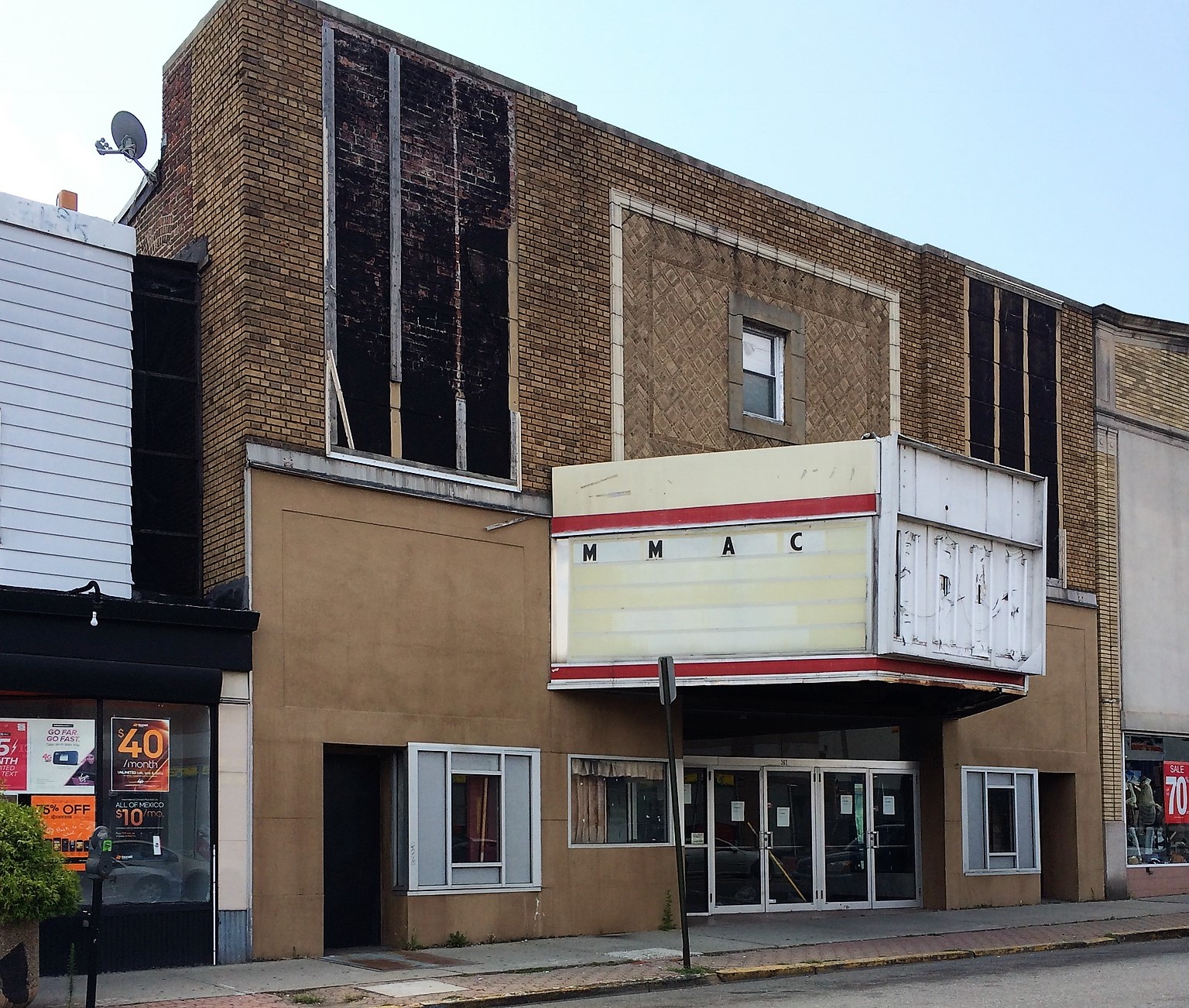
It’s not the first time that we’ve heard predictions like this. In the 1950’s, many thought the proliferation of TV’s meant the end of movie theaters. And in the 80’s it was the VCR that was supposed to put the cinema out of business. But now, two years after Mashable printed its obit, the future of cinema is not so bleak. According to an IBIS World industry market report the movie theater industry has grown at an annualized rate of 3.1% in the last five years. Some 1.35 billion tickets were sold in 2018. While that number has had its ups and downs through the years, it compares to 1.22 billion in 1995. The increase in the box office is more substantial: $8.97 billion in 2018 versus $4.35 billion in 1995. That is due to the increase in the average ticket price from $4.35 to $8.97.

While the outlook for the overall movie industry is relatively stable, that’s not the case for all movie theaters. The old-school downtown movie theater, the grand urban movie palace and the drive-in are all declining. While the number of screens in the U.S. has jumped from 28,000 in 1995 to 41,000 in 2018, the number of movie theater sites where those screens are located has declined from 7,700 to 5,800 over the same period. The downtown movie theater has gone the way of the downtown department store. Just as the Walmart on the highway knocked out the mom and pop local variety store, the movie chain megaplex knocked out the town cinema with its single-screen double feature.

In New York City two dozen of the grand movie palaces that were built between 1910 and 1932 have been closed down. Some have been razed. Some others have been turned into concert venues or retail stores.
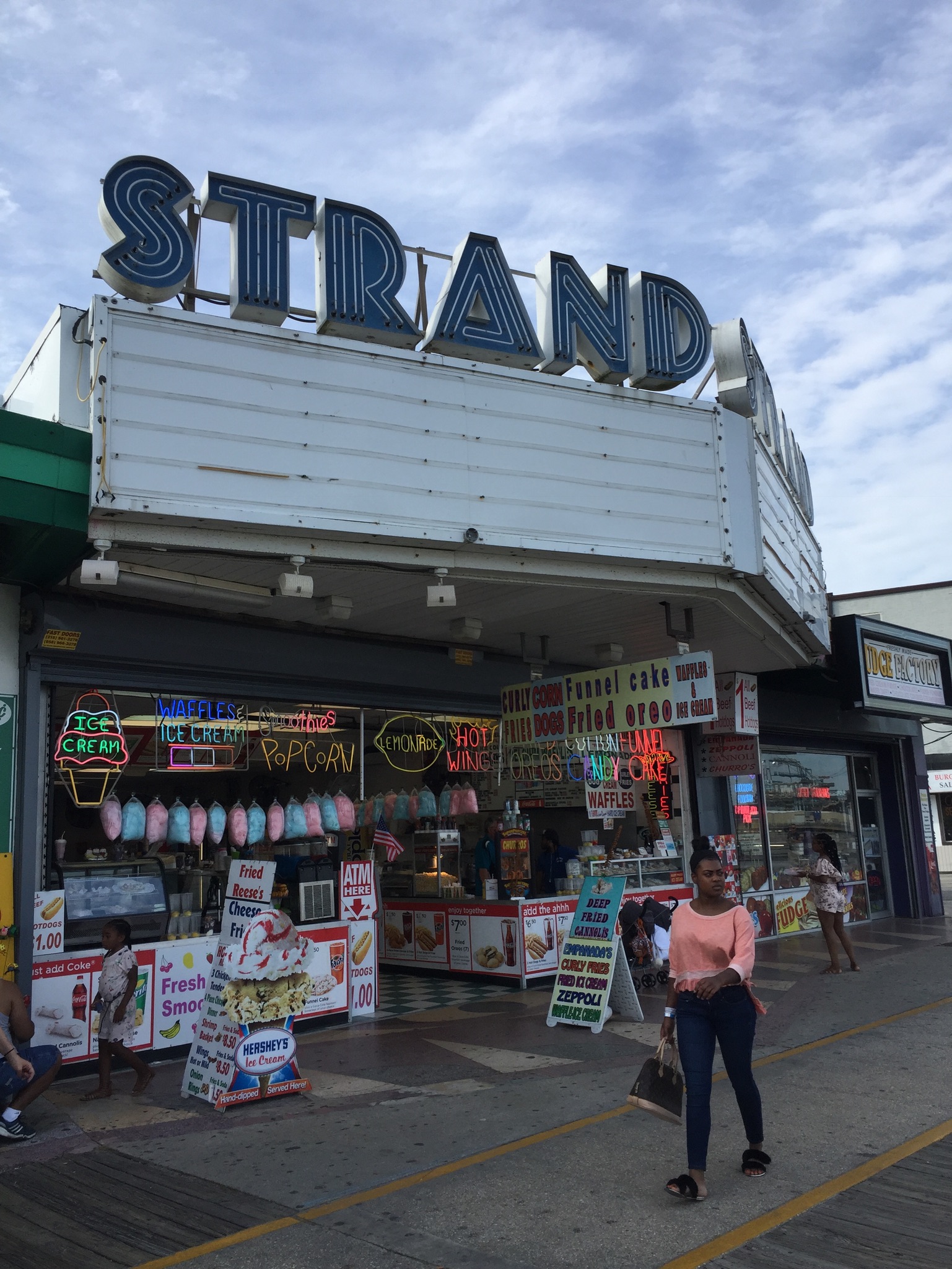
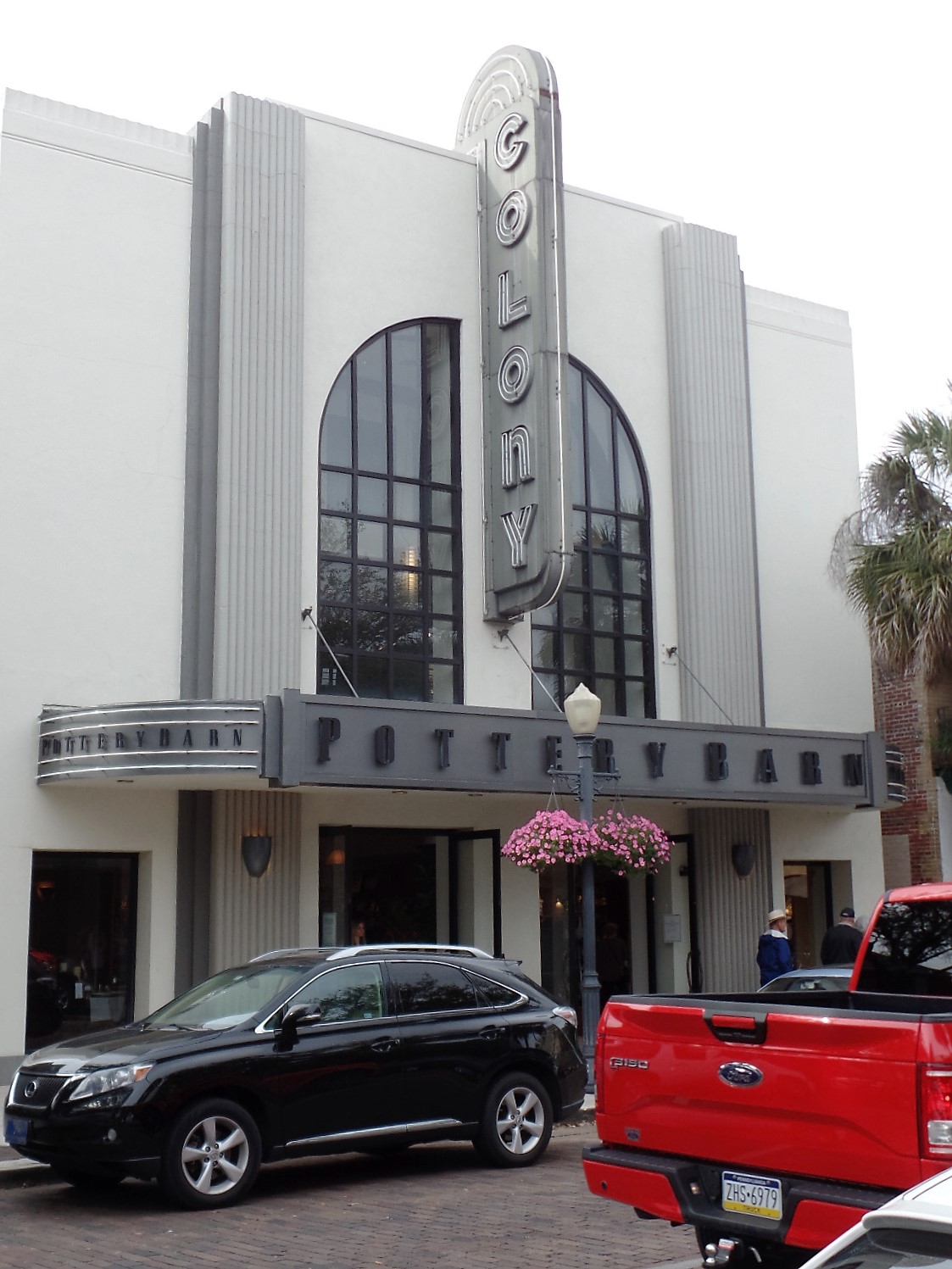
Drive-ins have also suffered a steep decline. If you are in an area with enough people to support a theater business, you need a lot of valuable land to have a drive-in and it’s hardly the most profitable use of that land, compared to say a condo complex. There were 2,084 drive in screens in the U.S. in 1987. There are now 524
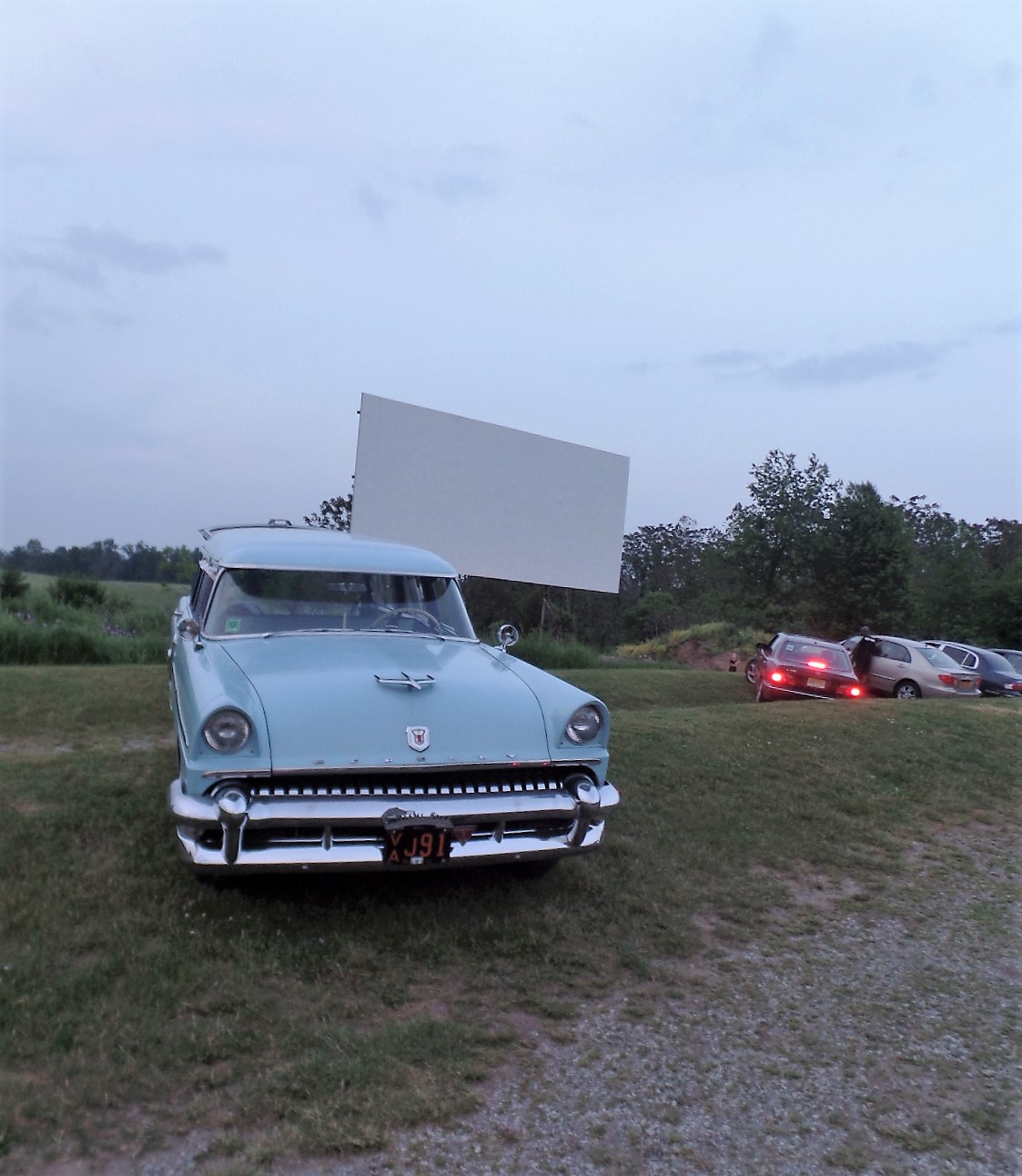
One of the reasons the Mashable author gave for his dim view of the future of cinema is: “The magic of the movies has been, is, and always will be exclusive content.” I think he’s missing something. For me the magic is the giant screen, the surround sound, and even the popcorn. I am fortunate to live in an area with a few movie theaters nearby and a healthy selection of movies playing. If I didn’t I might feel differently, but when I want to watch a movie, I want it to be in the theater. I want to see and feel the cinematography and I don’t want to have to answer the phone or the doorbell or be reminded it’s garbage night. Personal devices? No thanks. How would you like to have watched Black Panther on your phone?

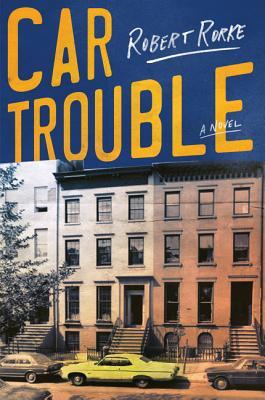
A story of a family as told in chapters defined by the junkers and low riders that the alcoholic dad brings home from poker games and police auctions. There’s no Lexus. No Prius nor a sensible family SUV. This is about widebodies with tail fins, smoking tailpipes and noisy mufflers. And chrome. Lots of chrome. There’s the Green Hornet, the Black Beauty and the Red Devil.
Rorke’s novel is set in an Irish neighborhood in Brooklyn in the 1960’s. It reminds me of the people Jimmy Breslin would write about. It also reminds me of the working class Italian-American neighborhood where I grew up in northern New Jersey. Until I read this story I’d forgotten about boil-in-the-bag chicken a la king that my mom would serve to me on toast. And I had long since forgotten what a head of hair adorned with Vitalis smelled like.

The similarities go beyond such trivial things. Both Rorke’s fictional family and my real one were representative of the gender roles of the time in neighborhoods like these. The dad in Car Trouble, like so many of my friends’ fathers, was a walking time bomb. You tiptoed around them to avoid the inevitable explosion, an explosion that meant a lot of shouting and at least the threat of physical violence. These were the predecessors of today’s angry white men in MAGA hats. Part of it was the alcohol, of which there was always plenty. But it also had to do with being raised in a culture where you were supposed to be the chief provider and protector, the “king of the castle,’ yet finding yourself tied to a dead-end job or profession where you worked like a dog, didn’t really have enough and had little hope of things getting better.
Yes the women were housewives who cooked, cleaned, looked after the kids and did the laundry. But they had an even more important role. Mom was the voice of reason, the voice of sobriety, the sole source of empathy. Most often it was the mother who was chief financial advisor and banker. My dad was in his sixties when my mom died and one of the first things I had to do was teach him how to use a checkbook.
By the late 60’s things were starting to change but in neighborhoods like this it was driven more by economic need than by enlightenment. In both the Car Trouble family and mine the mom ended up as the sole breadwinner.
But back to the cars. This was not yet a seat belt era. Most of the 50’s era cruisers that found their way into the hands of Rorke’s fictional family had a bench front seat that fit three across. The middle seat was affectionately known as the “death seat.” But it had its advantages. The deluxe models had a record player stored under the dashboard and the death seat occupant had control over what 45’s to spin. You can’t really ride in widebodies like these without a little Motown in the background.

This is a great novel. You don’t have to have experienced boil-in-the-bag chicken a la king to enjoy it. It’s 400 pages that reads like 150. I hated to see it end.
And in the end Nicky, the oldest child and only boy in a family of five children, helps his father drive the Blue Max backwards through the Brooklyn streets. Backwards because that’s all that’s left of the transmission. When they find a sufficiently secluded spot, dad, who the other family members refer to as Himself, takes out the pliers, destroys the plate with the VIN number, removes the license plates and that’s a wrap. (The novel doesn’t really end this way but you don’t want me to spoil it, do you?)

223 South 33rd St., Philadelphia


The Palestra, located on the campus of the University of Pennsylvania, opened its doors for the first time on Jan. 1, 1927. Penn beat Yale 26-15 in that first game. A crowd of 10,000 filled the arena to capacity and at the time was the largest attendance ever for a college basketball game.

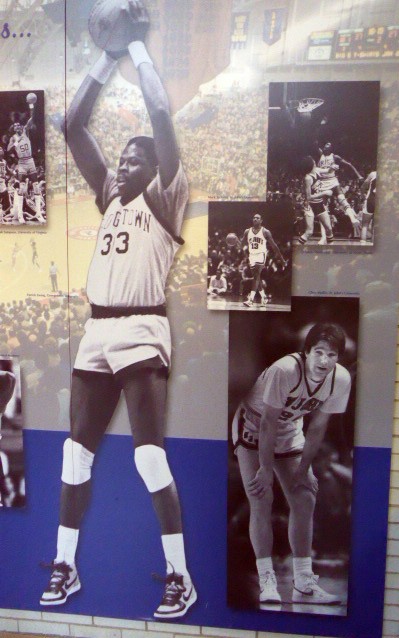

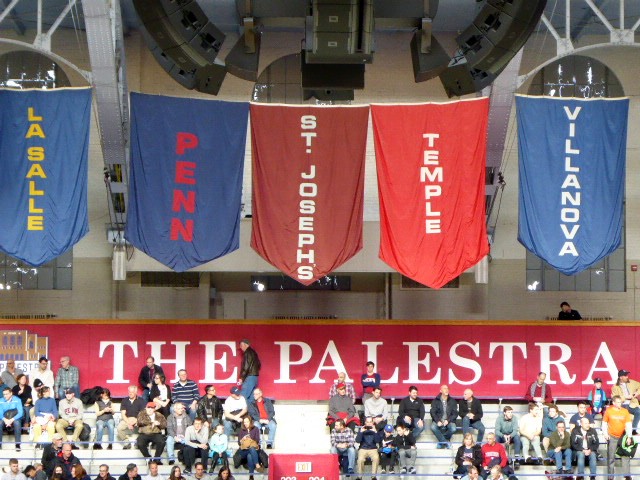
The Palestra is the home of Penn’s men’s and women’s basketball teams. It also hosts many games of Philadelphia’s Big Five: Temple, Villanova, Penn, LaSalle and St. Joseph’s. The arena has hosted more college basketball games and more NCAA tournament games than any other facility. Fifty-two NCAA tournament games have been played here beginning in 1939. It also hosted the first ever Ivy League championship tournament in 2017.

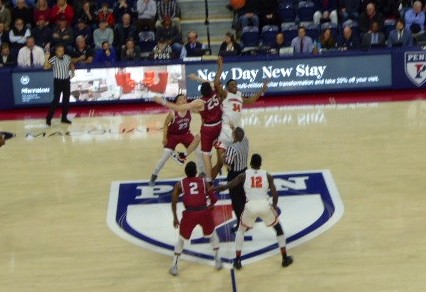
Penn and Princeton have played each other 240 times beginning in 1903. Penn has won 126 of those games. Between the two they have won 26 Ivy League titles. Each team has been to the NCAA tournament 24 times. That’s more than schools like Wisconsin, Virginia and Florida. Each has made it to a Final Four. This year Princeton won both games, including a 62-53 victory at the Palestra when these photos were taken.


“Headed by the great Satchel Paige and an all-star cast of colored and white players of world fame, Kansas City Monarchs (colored) and House of David (white) baseball professionals will present Helena’s greatest baseball treat of the season when they clash at 6:15 this evening at the East Helena baseball park.”
That quote from the Helena (Mont.) Independent Record on June 28, 1939, reflects the excitement in towns like Helena when the Kansas City Monarchs and House of David baseball teams came to town. The Monarchs were a Negro League team that broke away and opted to travel around the country on their own. The House of David was a team composed primarily of members of the Benton Harbor, Mich., based religious cult. With major league baseball nowhere in sight the barnstorming baseballers were as good as it got for local baseball fans.
The Independent Record went on: “Fans are sure to see a great contest between two teams of big league caliber and one of the largest crowds of all time is expected for the game. Every fan in this part of the country will want to see the famous House of David trio, Tally, Tucker and Anderson, with their internationally famous ‘pepper ball game’ a delightful treat well worth the admission price alone.”
The Helena paper went on to preview some of the players who would be participating. From the House of David they included:
“Third base Andy Anderson. Twelve years with the team. Original long haired player and ‘pepper game’ artist. Can play any position on the team and is a reliable hitter and fielder.
“First base. John R. Tucker, manager. This is Tucker’s sixteenth season with this organization. He is noted for his antics around first base and is a member of the famous ‘pepper game’ trio.”
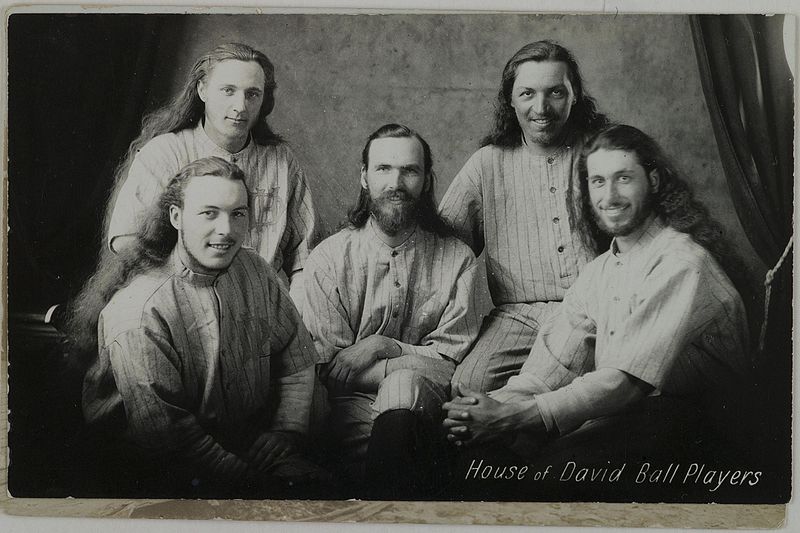
Apparently the game did not disappoint. The Monarchs won a high-scoring back and forth affair 12-6. And the House of David ‘pepper game’ didn’t disappoint either. The next day Independent Record effused: “The great ‘pepper ball game’ delighted the crowd in the seventh when Anderson, Tucker and Tally put on their brilliant show that has made them internationally famous. They were given a fine ovation from the audience.” Paige, who also had a stint hurling for the House of David, did not pitch this game but was held over to the next night when the Monarchs played a local team, thus assuring another big crowd.
-0-
A little more than a decade earlier, the House of David made headlines for another reason, one that has become an unfortunately familiar story involving cults. Several women came forward with charges of sexual abuse against the founder Benjamin Purnell. Some described a ritual in which Purnell paired up commune members and forced them to marry, but only after his “blood cleansing” ceremony that involved him sleeping with the prospective brides. This is going on in a commune where members are sworn to celibacy. Purnell also came under suspicion for financial irregularities after a series of investigative reports in the Detroit Free Press. A Michigan court ordered Purnell to leave the colony in 1927 and he died shortly thereafter.
Following Purnell’s death there was a leadership struggle between his wife Mary and Judge T.H. Dewhirst who had been the head of the commune’s board of directors. This eventually led to a split. In 1930, Mary left the commune, along with her followers, and created a separate organization, known as the City of David. The split affected the ballplayers as well with some staying with the original group while others left with Mary Purnell and formed a second House of David team. It was the group associated with City of David which barnstormed through Montana with the Kansas City Monarchs in 1939.
The original House of David team stopped travelling the country in the late 30’s. The City of David version played all the way until 1955. In the intervening years there were a number of other House of David teams touring the country, most being the product of promoters who took advantage of the fact there was no copyright on the name.
The House of David still exists and has a Web site. On that site they say “We remain among America’s oldest practicing Christian communities. Working closely with local artisans, craftsmen, and dozens of dedicated workers, we are restoring our most beautiful buildings to their former grandeur and preserving our heritage. As this work is still ongoing, we remain a private residential religious community, we are regretably not open to the public.” But lo and behold, they’ve got a Facebook page.
Part of that heritage is on the baseball diamond. As the cult team traveled from town to town, fans in cities across America, in Canada and in Mexico, flocked to see games that included white and black players and even a female player here and there. And they did so long before the integration of major league baseball.
-0-
See also:
In 1934 baseball was segregated. The major leagues were white. All white. Black players played in the Negro Leagues. No one was crossing that line. It was still 13 years before Jackie Robinson broke the color barrier in the major leagues.
But things were different in Denver at a tournament that has been called “The World Series of the West.” The annual Denver Post tournament invited white teams, They invited black teams. And in 1934 the tournament featured the rarest of all 1930’s American baseball squads, an integrated team.
There were two clear favorites at the start of the 1934 tournament. One was the Kansas City Monarchs, a former Negro League team that broke loose and traveled the country playing in mostly non-major league towns. The other was the House of David, the team of the Benton Harbor, Mich., religious cult.
Kansas City’s black newspaper, The Call, offered this preview of the tournament: “The Monarchs have given the white players some knowledge of the game which the white boys expect to use against the Kansas City team in the tournament. Nor are the white boys a bit prejudiced. They have sent east and Satchel Paige of the once famous Birmingham club but now of the Pittsburgh Crawfords of the Negro National League, will hurl for the House of David team.”
Paige was a legendary Negro League pitcher who started his career in 1924 and finally, at the age of 42, became a major league pitcher in 1948. The “Jesus boys,” as Paige called his House of David teammates, also brought in Paige’s catcher Cy Perkins.
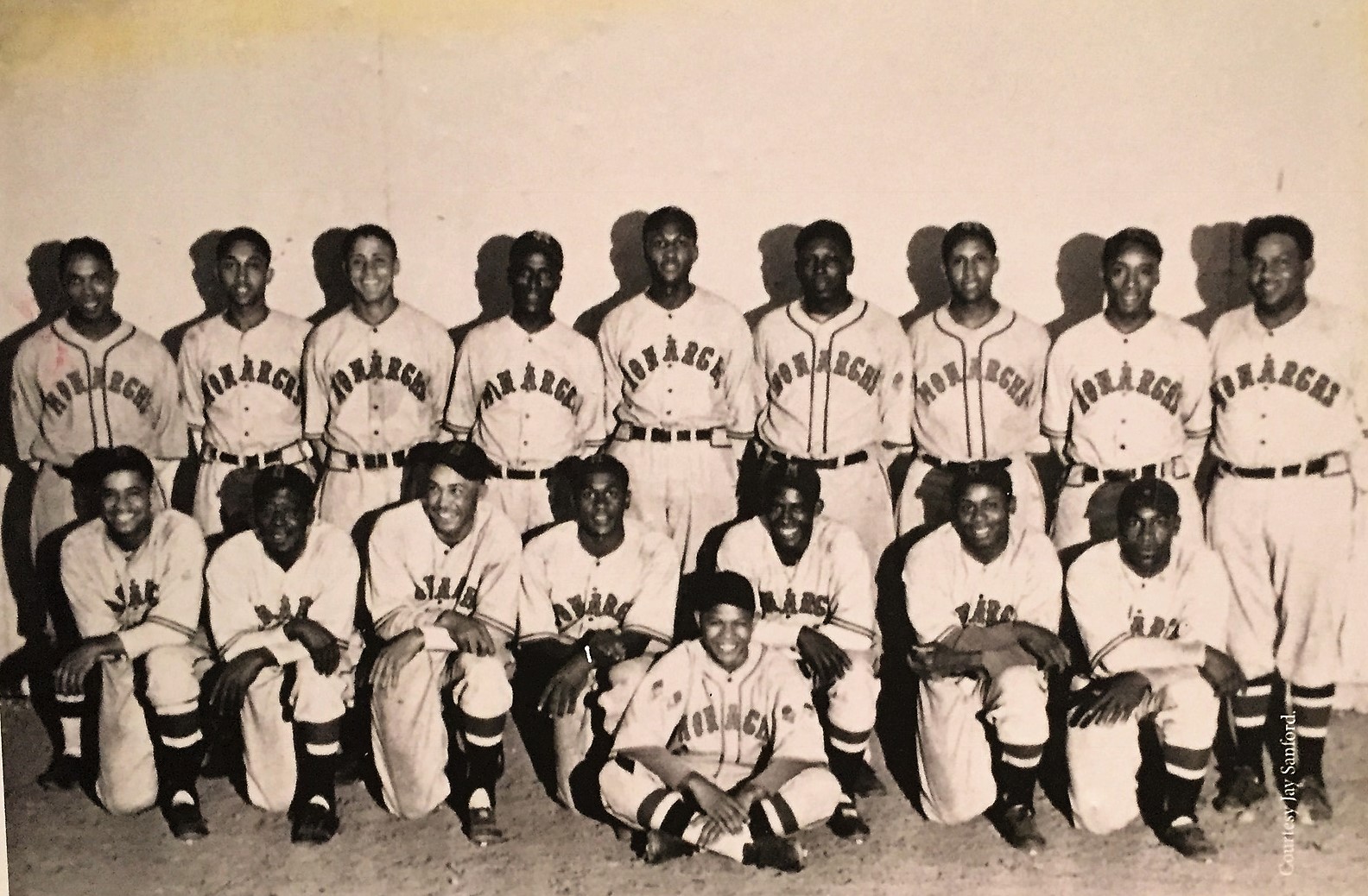
In the tournament, the Monarchs breezed to a 12-1 opening game victory over the Greeley Advertisers. The House of David followed suit blitzing the Italian Bakery of Denver team 16-0. Paige made his debut in the tournament in the second game, beating the Eason Oilers 6-1. Two nights later, he was on the mound again, striking out 17 batters in a 4-0 shutout win over the Humble Oilers of Overton, Texas.
In their fourth game of the tournament the House of David came head-to-head with the Kansas City Monarchs. Paige took the mound for the third time in five days and recorded another victory, this one by a 2-1 score. A whopping crowd of more than 11,000 witnessed that one.
The same two teams met in the tournament championship. Paige was on the bench for this one. Some say the House of David manager was holding him back for a possible second game, if they had lost the first. Others suggest the real reason was that Paige was getting paid by the win and he could already lay claim to a significant portion of the House of David’s winnings. The House of David went on to win the championship by a 2-0 score in a game described by the Reno Gazette Journal as “fast and devoid of fielding miscues.” Paige was named the tournament’s outstanding pitcher. His prize: a coffee percolator.
-0-
The Benton Harbor, Mich., based cult first put a baseball team on the field in 1913. They initially played local competition. In 1915 they joined the Berrios County League and won it. A year later they expanded their schedule, playing in Indiana, Chicago and Wisconsin. By 1917 they were traveling the country. They bused from town to town sometimes playing as many as three games in a day. At their peak, in 1936, they traveled 35,000 miles and compiled a record of 144-46-5.

Baseball increased the visibility of the cult and led to the recruitment of new members. It also raised money for the commune. Most of the players were cult members. Chris Siriano, curator of the House of David Museum, claims “they were good players, but they couldn’t play in the majors because they wouldn’t shave or cut their hair.”
But they also brought in guest players, like Paige. In 1934 they signed Babe Didrikson, a winner of two gold medals in track and field in the 1932 Olympics and an accomplished basketball player. Didrikson was the most famous female athlete of the time. A year earlier the Davids had sent a 19-year-old woman pitcher, Jackie Mitchell, to the mound to face the St. Louis Cardinals. (see Pt. 1, St. Louis Cardinals vs. House of David.)
From 1931 to 1935 the House of David manager was Hall of Fame pitcher Grover Cleveland Alexander. He occasionally took the mound for a relief stint with the cult team. He was easy enough to spot in the dugout; he was the one without the beard. There was even a point when Babe Ruth was considering signing with the House of David as his major league career was winding down. One suspects that one side or the other came to their senses and realized the no sex, no alcohol, cult lifestyle was not going to be a good fit for the Babe.
The cult team was one of the first to play night games on a regular basis, hauling their own flood lights across country with them. And they invented the game of pepper which was to become a widely used warm-up exercise for baseballers. As played by the House of David, “the pepper game” as they called it was a spectacle. Presented as some between-inning entertainment, the House of David players would throw the ball between their legs, over their shoulders and behind their back.
The Davids played local baseball clubs, semi-pro teams, the occasional major league team and teams from the Negro Leagues. In his book “J.L. Wilkinson and the Kansas City Monarchs,” author William A. Young notes, “Often the Monarchs and House of David team traveled together. The Monarchs toured an area, defeating local teams, followed by the House of David team, who bested the same clubs. Then the Monarchs and House of David staged ‘championship games’ in the same little towns, guaranteeing large crowds.”
The House of David players not only shared the diamond with black teams, they traveled, dined and lodged with them as well. And if some promoter objected to that arrangement, well he could just pass on the payday of the large crowd that a House of David game was certain to attract.
In next week’s post, I’ll catch up with the House of David barnstorming with the Monarchs through Montana.
On the night of Sept. 12, 1933, the St. Louis Cardinals took the field for only second night game in the history of Sportsman’s Park. This Cardinals team included eight players who would ultimately be elected into baseball’s Hall of Fame. They included Leo Durocher, Frankie Frisch, Rogers Hornsby and Dizzy Dean. In the visitors’ dugout was a squad of celibate, vegetarian guys with long beards and even longer hair. Except for the starting pitcher that is. On that night the House of David team sent to the mound a 19-year-old Chattanooga woman, Jackie Mitchell.

Here’s how the St. Louis Star and Times of Sept. 13 described Mitchell’s appearance: “The 19-year old blond southpaw went through her ‘act’ in grand fashion. She wore a white uniform while her mates were clad in traveling grays and her first move upon reaching the mound was to bring out her mirror, rouge stick and powder puff and delay the game for a brief period while she applied the cosmetics.”
But “the feminine star encountered no difficulty in disposing of the big leaguers.” Star reporter Ray J. Gillespie added: “The 19-year old miss…didn’t have enough speed to break a pane of glass, but she cut loose with a dandy ‘hook’ and a fine cross-fire delivery.”
MItchell left after one inning. The score for that inning: House of David 4, Cardinals 0.
Jackie Mitchell first achieved notoriety as a 17-year-old who signed for her hometown Chattanooga Lookouts, a double-A affiliate of the New York Yankees. In a 1931 exhibition game against the Yankees, Mitchell struck out Babe Ruth and Lou Gehrig in consecutive at bats. While some commentators have questioned the efficacy of those at bats, there is video evidence that they did in fact happen. Shortly after that, Mitchell’s contract was voided by Commissioner of Baseball Kenesaw Mountain Landis who apparently opined that women weren’t tough enough to play baseball.
In an interview in the St. Louis Post-Dispatch the day after the game, Mitchell said: “I believe I could qualify and might be signed by a major league team and might someday get to play in a World Series if Judge Landis hadn’t ruled against my playing in major league ball. He doesn’t give any reason for his ruling either.”
Following the loss of her contract Mitchell signed with the House of David touring team. In that interview she commented on her teammates. “Look at their record: won 17 and lost four since I have been with them. They are all fine, clean living athletes and so nice to me. I never really have heard what you might call a cuss word from one of the them, and when an opposing player forgets himself they are quick to remind him that there is a lady present.”
The Post-Dispatch reporter added: “Jackie is decidedly feminine in appearance and weighs 132 pounds. She wears her cap at a jaunty angle and is meticulous about her uniform. Some of the male members of the House of David team chide her about stopping ball games to powder her nose. Miss Mitchell is accompanied on all of the House of David trips by her parents, Dr. and Mrs. Mitchell of Chattanooga.”
Why would the major league team interrupt their National League season to play an exhibition game against these barnstormers? Some 10,000 people turned out for the Cardinals game against the House of David. During the 1933 season the Cardinals averaged just over 3,000 a game for their major league schedule. The final score of the game: House of David 8, St. Louis Cardinals 6.
-0-
The House of David was a religious cult based in Benton Harbor, Mich. It was founded by Benjamin and Mary Purnell in 1903. Benjamin hyped himself as the “seventh messenger of God.” They believed that Jesus was coming back and he would restore the Garden of Eden. By the end of the decade they had attracted several hundred followers and controlled 1,000 acres. Followers of the House of David turned over all their possessions to the cult and lived in the commune in Benton Harbor. They swore off sex, alcohol, meat, haircuts and shaves.

They built out the commune with its own electric plant, cannery, bakery and carpentry shop. They sponsored an orchestra and a jazz band and erected an amphitheater for them to perform.
Among the innovations that the House of David has been credited with are veggie burgers, sugar cones and bottled spring water. They operated a zoo and amusement park called Eden Springs that was a major tourist attraction by the 1930’s. To support the tourist business they opened a hotel, a motor lodge and some cabins. But what this bearded cult is most known for is its baseball team.
In next week’s post I’ll tell the story of how the House of David added a legendary Negro League pitcher to its roster to compete in a rare baseball event for 1930’s America: an integrated tournament.
 off the leash