Guns in America: Where’s the Blaze of Glory?

Few things have had a greater impact on popular culture in America than images of the Wild West. The cowboy, the gunslinger, the frontier lawman, all with six guns hanging from their hips, were the heroes of dime store novels, of the early radio dramas, decades of movies and for many, many years on TV. Wild West shows were among the most popular forms of entertainment in the late 19th and early 20th centuries. We even created children’s theme parks based on our romantic image of the Wild West, most replete with reenactments of the main street gunfight. Most of this stuff was only a touch more realistic than Spongebob Squarepants.

Denver Art Museum

In the classic Western, the good guy and the bad guy face off man-to-man on Main Street. The bad guy reaches for his gun but our cowboy hero is lightning fast and pulls his six-shooter out of its holster and deposits a bullet into his opposite’s forehead. Historians of the Western frontier, however, can only identify a couple times when this really happened. One of those involved one of our famous TV cowboys, Wild Bill Hickok. He shot a former Confederate soldier named Davis Tutt in a duel after Tutt confiscated Hickok’s watch to pay off a gambling debt. Eleven years later Hickok died after being shot in the back of the head while playing poker. That incident was much more representative of gun violence on the Western frontier than the romanticized notion of the gunfight as a pre-planned duel.

The word gunslinger itself was never used in the old West, but rather was an invention of printed and filmed fiction. The first recorded use of the term was in a movie called ‘Drag Harlan’ that was released in 1920. It came into popular use later in the decade with Zane Grey’s Western novels.

gunslinger

There is in fact some question as to how wild the Wild West really was. According to the Criminal Justice Research Center of Ohio State University, in Dodge City Kansas, a popular gunslinger hangout in literature, TV and film, 0.165 percent of the population was murdered each year from 1876 to 1885.  Other sources site the highest number of murders on record in one town as five in one year (Tombstone 1891). Those numbers probably compare pretty favorably with many current day American cities.

You may be surprised to find out that gun control was an issue in the West in the 19th century. In fact there were stricter gun control laws 150 years ago than there are today, at least in Republican controlled states. Old west cities such as Tombstone, Deadwood, Dodge City and Abilene all had laws requiring folks to disarm upon entering town by leaving their guns at designated locations. And those gun control rules seemed to work. Writing in Smithsonian Magazine , UCLA law professor Adam Winkler says, “Most established towns that restricted weapons had few, if any, killings in a given year.”

Wyatt EarpIn the century and a half since this era on the Western frontier, we have portrayed as heroes some pretty dubious men. Wyatt Earp, for example, the subject of a TV series that had a six year run starting in 1955 and a movie in 1994, is portrayed as a lawman fighting crime in Dodge City and Tombstone. The real Wyatt Earp was a somewhat less appealing character. His career included opening a brothel in Wichita, a lifetime of gambling and some gold rush saloons. He raced horses and at one time refereed boxing matches, a pursuit that some say ended when he fixed a high-profile fight.
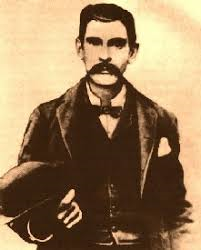
Doc HolidayEarp is known as one of the good guys in the gunfight at the OK Coral, along with his buddy Doc Holiday. Holiday was a virulent racist. At one time he fired his gun at a group of black boys who he found at a swimming hole that he wanted to use. During his time in Dallas in the 1870’s Holiday was indicted for illegal gambling and arrested for trading gunfire with a saloon keeper.

There is no better example of America’s love affair with guns than the glorification of individuals like this and the misguided romanticization of gun violence on the Western frontier. We created a gunfighting narrative about fair and square, man against man, good vs. evil. None of it reflects the reality of the time.

Today the narrative of gun advocates is about the upstanding citizen ensuring the safety of his home and family by exercising his constitutional right to own a gun. But the reality of gun violence in America is about the ready availability of  guns, putting them in the hands of psychopaths, criminals, extremists and domestic abusers.

-0-

Other Guns in America posts

Who Fired the First Shot?

The Americanization of the Duel

Prominent Americans Shooting Each Other Up

‘Well Regulated’ Militias and the Right to Bear Arms

Posted in guns, History | Tagged , , , , , , , , , , | 12 Comments

Along the Way to Ousel Falls

Ousel Falls Trail

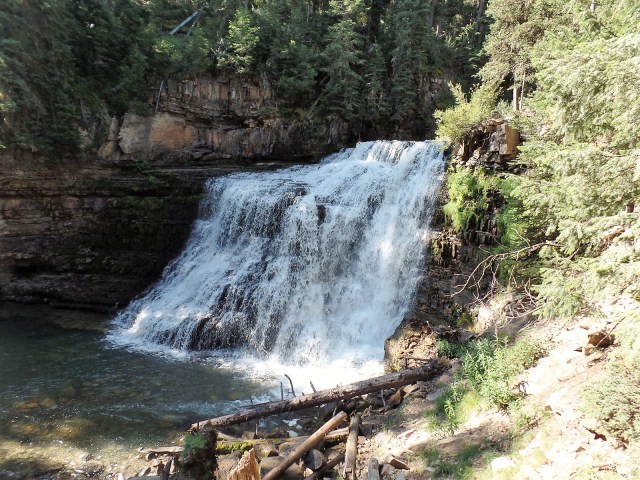
The Ousel Falls Trail is a 1.6 mile trail through the Gallatin National Forest in Montana. It ends at the falls. The trail is maintained by a volunteer community group, the Big Sky Community Organization. (And your dog is welcome to hike along with you.)

Ousel Falls Trail

Bridge over the Gallatin River

Gallatin River in Gallatin National Forest

South Fork of the West Fork of the Gallatin River

Gallatin National Forest

Gallatin National Forest

Gallatin River on Ousel Falls Trail

Ousel Falls Trail

Ousel Falls

Ousel Falls

Posted in Travel | Tagged , , , , , , , | 3 Comments

Looking Down from Big Sky

Big Sky, Mont.

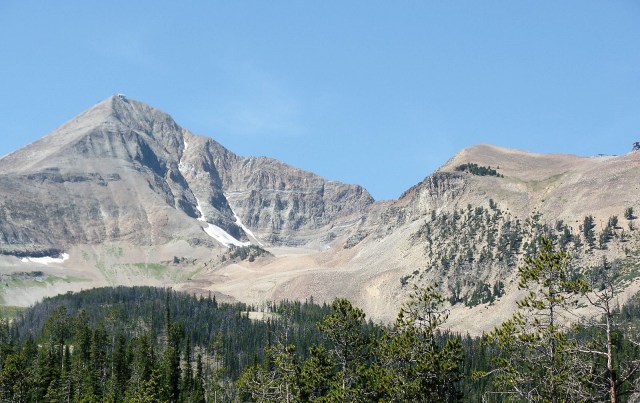
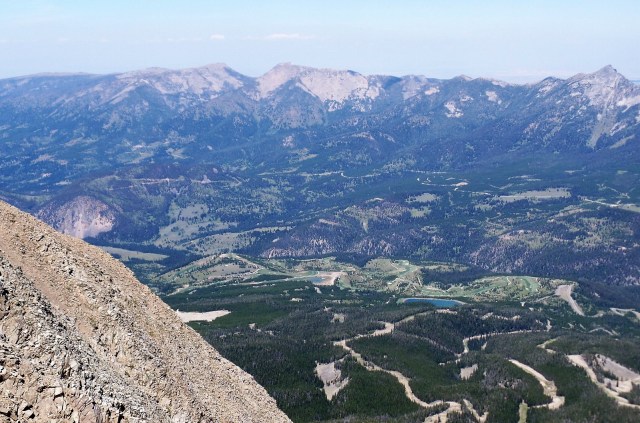
Lone Mountain, elevation 11,166 feet, in Montana’s Big Sky Resort. That is snow on the mountain and this photo was taken in August. Here’s what it looks like from the top.

Big Sky, Mont.

Big Sky, Mont.

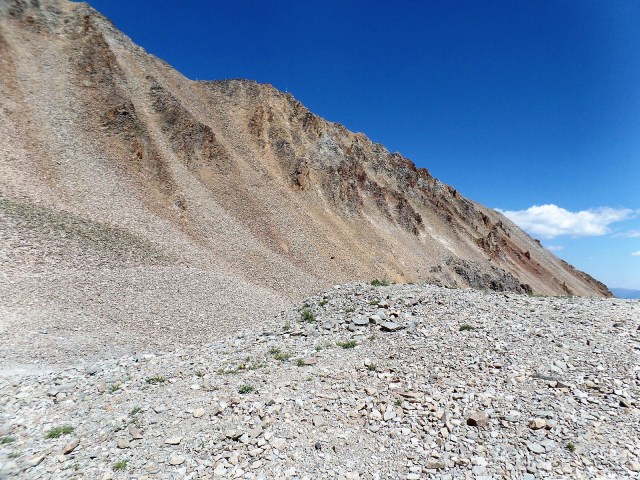
Atop Lone Peak

Saloon atop Lone Mountain

This is the last chance saloon.

Cedar Mountain

Next door is Cedar Mountain;, elev. 10,788 ft.

View from Lone Peak

Lone Mountain

Big Sky

Lift to Lone Peak

Lone Mountain

Big Sky ski lift

Posted in Travel | Tagged , , , , , , , | 7 Comments

‘For the Benefit and Enjoyment of the People’

Entrance to Yellowstone National Park

Entrance to Yellowstone National Park

Roosevelt Arch

“For the benefit and enjoyment of the people.” With those words President Theodore Roosevelt dedicated the arch at the Gardner, Mont., entrance to Yellowstone National Park. Roosevelt was a Republican who supported the national parks. Had a current-day GOPer crafted an inscription it might well read “for the benefit and profit of the fossil fuel industry.”

The Roosevelt Arch stands at the first entrance to the world’s first national park. So, I took TR’s advice, walked through the arch and enjoyed the beauty of the park.

Roosevelt Arch

Doorway to Yellowstone National Park

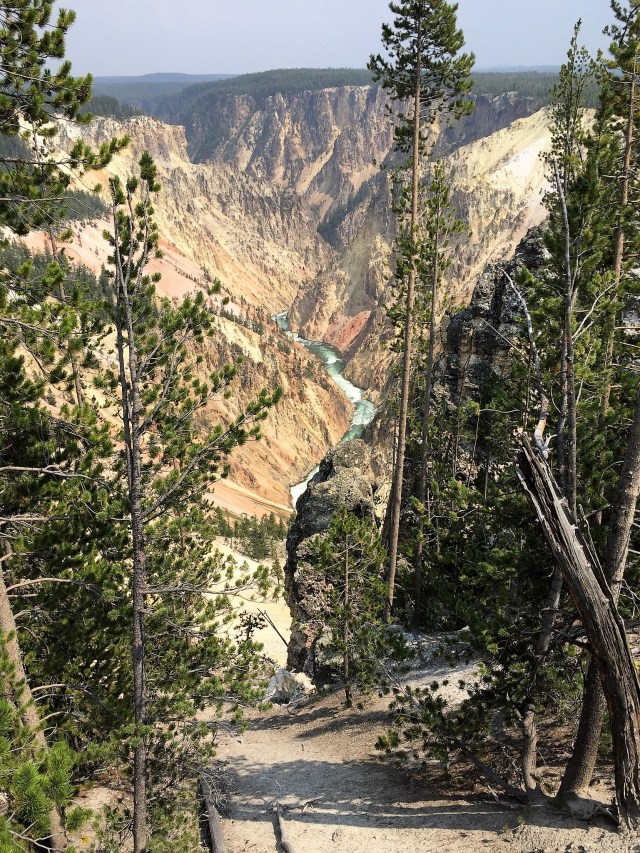
Grand Canyon of Yellowstone

Grand Canyon of Yellowstone


Lower Falls, Grand Canyon of Yellowstone

The Lower Falls

Mammoth Hot Springs

Lamar Valley in Yellowstone National Park

Yellowstone river

Grand Prismatic Spring

Yellowstone National Park

Posted in Travel, Uncategorized | Tagged , , , , , , | 15 Comments

The Earth Gazers: A Book Review

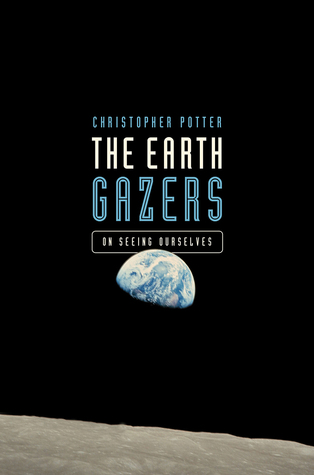
Earth Gazers book coverA fascinating book. Couldn’t be more interesting. Potter’s story begins with Charles Lindbergh in Cape Kennedy watching the launch of Apollo 8. That scene describes the range of the book, from Lindbergh’s flight across the Atlantic to the Apollo missions to the moon.

Included are the popular heroes of aviation and space history: Lindbergh, Alan Sherman, Yuri Gagarin, John Glenn and Neil Armstrong. But we are introduced to others whose legacy is more obscure, like the Russian scientist Konstantin Tsiolkovsky who “lived on bread and water, his hair uncut, his clothes eaten away.” In 1903 he wrote a  paper on the mathematics of space flight.

The Lindbergh story alone makes the read worthwhile. Most of us know about the Spirit of St. Louis, the kidnapping and murder of his son and the World War II era speech that forever after tagged him as an anti-Semite. But I knew little else about him. Turns out in later life he devoted himself to saving endangered species. He became something of a recluse, although that didn’t stop him from visiting Europe to see the two or three families he had produced with German mistresses.

Lindbergh's grave

Lindbergh’s grave in Hana, Maui

Rocketry and space exploration needed war to advance. The rockets that would launch both American and Russian spaceships were derived from those built by the Nazis during World War II. While the scientists responsible may have had visions of visiting the Moon or Mars, the Nazis paying the bills were looking for weapons to knock out England. After the war, the German scientists were divided up between the U.S. and Russia like the spoils of war. One, Wernher Von Braun, was to the become the engineering rock star of the U.S. space program.

Many of these scientists were an important part of the two countries accomplishments in space. The Cold War fueled the space race and was the reason that the U.S. and Russia made billions of dollars available to their programs. Von Braun for one knew how to play this game, dredging up the frightening prospect of being behind Russia whenever approval or funding was needed. And as Cold War fever cooled in the late 60’s and 70’s, so did government interest in space programs.

Potter goes beyond the dates and accomplishments of the various noteworthy and record-breaking flights and focuses on the experience of the pilots, astronauts and cosmonauts.

For example, Lindbergh, toward the tail end of his sleep-deprived trans-Atlantic flight, described feeling that the fuselage behind him was filled with ghostly beings “vaguely outlined forms, transparent, moving, riding weightless with me in the plane.”

True to the title of the book many of these astronauts try to put into words what it was like to see the earth from a perspective that only a few dozen have ever had. Apollo 8 astronaut Frank Borman, a member of the first space crew to leave earth’s gravitational pull, said, “We were the first human beings to see the world in its majestic totality. This must be what God sees.’” Gemini astronaut Mike Collins described his sighting of his home planet as follows: ”The little planet is so small out there in the vastness that at first I couldn’t even locate it. And when I did a tingling of awe spread over me. There it was shining like a jewel in a black sky.”

Earthrise

Earthrise (NASA photo)

For some it was a religious experience. Many returned home and became environmentalists. I doubt that few if any of these explorers of the heavens would buy into Trumpian climate change denial. They came back to earth feeling the need to protect it and, in spite of the nationalism that often surrounded the space program, the experience left them with a more global view.

Blue Marble

Blue Marble

NASA was a micromanaging sort of organization and one of the aspects of this narrative that I enjoyed was the stories of the astronauts who as a group were not that keen on being told what to do. When John Glenn heard that NASA didn’t want their astronauts taking “tourist photos” from space, he went out and bought a $20 camera to sneak on board with him. Another of the astronauts hid a corned beef sandwich in his space suit to better enjoy the flight.

As a baby boomer who came of age during the space race, I always figured that NASA had everything under control before they zapped a man or two up into the cosmos. Wrong. There were a frightening number of failed tests and problems associated with many of these flights. When Frank Borman’s wife Susan was advised by a NASA official that he had a 50/50 chance of returning safely she actually began planning his memorial service.

This is not my usual reading fare. I doubt that I ever would have found my way to the shelf where this book is placed in most book stories. I got it as an unexpected premium after making a donation to a listener-sponsored radio station (thank you WFMU). Sure glad I did. Potter tells the story brilliantly and has crammed in as many interesting facts and anecdotes as you could possibly fit onto 400 pages. It may seem weird to describe a book about aviation history as a page-turner, but trust me on this one.


Posted in Uncategorized | Tagged , , , , , , , , , , , , , | 4 Comments

Guns in America: ‘Well Regulated’ Militias and the Right to Bear Arms

If you ask Americans who own guns why, the most common answer, according to the Pew Research Center is protection. Sixty-seven percent of the gun owners queried by Pew gave that answer. Another 38% cited hunting and 30% sport shooting. (Some gave more than one answer hence the total is more than 100).

colonial militia

(image by Craig Sybert)

None of that was on the mind of James Madison, the founding father most closely associated with the 2nd Amendment, the right to bear arms. Back in 1789, the United States was a confederation of independent states that had banded together to free themselves from an English overlord. The framers of the Constitution were Federalists and anti-Federalists, divided over the issue of how much authority (and muscle) should be placed in the hands of the newly created federal government.

Madison, who is considered the father of the U.S. Constitution, was initially a Federalist, although he was to abandon the Federalist Party in the future. The 2nd amendment was positioned as a states rights issue, a level of protection for individual states and their citizens against the possibility of an over-aggressive or over-assertive federal government. Hence the wording:

“A well regulated Militia, being necessary to the security of a free State, the right of the people to keep and bear Arms, shall not be infringed.”

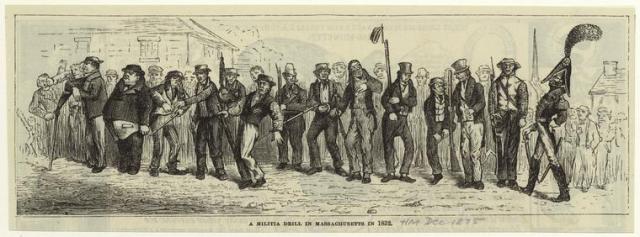
1821 militia drill

A militia drill in Massachusetts in 1821 (New York Public Library Digital Collection)

Most of us at this point in time do not see ourselves banding together with our neighbors and taking on the federal government in a firefight. Yet that idea of a militia has not disappeared the way you might have expected, or hoped. There are still 23 states that maintain separate organizations that are the successors of the state militia. They are now called State Defense Forces and rather than manning the trenches to fight off a federal invasion they are mainly mobilized in the event of a natural disaster.

A scarier group, however, are the militias that have been formed that in fact still think of themselves as a force to stave off the feds. For the most part these are secluded, secretive and extremist, running the gamut from libertarians to white supremacists and Nazis. The South China Morning Post estimates there are 165 of these organizations in the U.S. One example is the group that armed themselves and took possession of a wildlife refuge in Oregon in 2016. They were protesting federal ownership of the land and wanted it turned over to the states. Another product of these anti-government militias was Timothy McVeigh, the Operation Desert Storm veteran who murdered 168 people and injured hundreds more when he bombed an Oklahoma City federal building in 1995. His goal was to incite an uprising against the federal government, McVeigh, a white supremacist, had been involved with militia groups in the Midwest. Likely those militia groups were not what you would call well regulated. But just as likely, they would see themselves as the type of organization that the 2nd Amendment was aiming to protect.

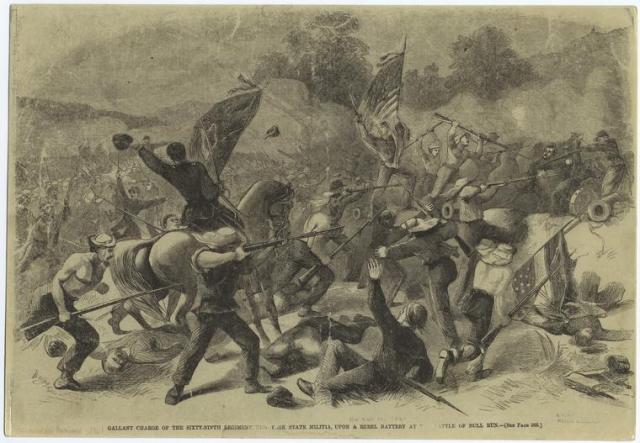
Civil War battle

New York State militia in the Battle of Bull Run 1861. (New York Public Library Digital Collection)

While these militia groups are a lunatic fringe, the question of whether the 2nd Amendment guarantees gun ownership rights for individuals has been a topic of debate in mainstream American politics for a couple of centuries now. Right-wingers and gun-lobby groups like the NRA say yes; gun control groups say no. The Supreme Court says: errrr…. maybe.

There were three cases heard by the Supreme Court in the last quarter of the 19th century in which the court ruled that the 2nd Amendment did not guarantee the individual’s right to bear arms and that individual states were within their rights to regulate gun ownership.  So while the 2nd Amendment was created with states rights in mind, the court was ruling that based on states rights individual states could set controls on guns without being in violation of the constitution. In 1939, the court ruled against an individual who was appealing his arrest for violating the National Firearms Act noting that his possession of a sawed-off shotgun had little to do with preserving “well regulated militias.”

In 2008,  in a case involving the District of Columbia, the court headed in the other direction saying the 2nd Amendment did in fact protect the rights of the individual to own a firearm. The court ruling invalidated a law that forbade handgun possession in the District of  Columbia. In a similar case in 2010 involving a handgun ban in Chicago, the court, by a slim 5-4 vote, ruled that states cannot infringe upon the individual rights granted by the 2nd Amendment. 

Militiaman

(Image by James DeMers)

The 2nd Amendment is a one of a kind law. Only two other countries, Mexico and Guatemala, address the issue of the right to bear arms in their constitutons. And those laws come with much more restrictive clauses. Mexicans can buy guns, but they can’t buy military weapons and they are restricted in being able to carry weapons into “inhabited places.” In Guatemala, government approval is required to buy a gun and there are restrictions in how much ammunition you can own. Six other countries, Bolivia, Costa Rica, Colombia, Honduras, Nicaragua and Liberia, once had gun ownership rights in their constitutions, but they have all since thought better of it.

While you can debate the intent of the 2nd Amendment to the U.S. Constitution, I don’t think any of our founding fathers would have been interested in protecting the rights of the guy who brought more than 20 rifles and a revolver into his Las Vegas hotel room and fired some 1,100 rounds at concert goers killing 58 of them. Nor would they have wanted to protect  the rights of the guy who used a semi-automatic rifle and revolver to kill 49 people at a nightclub in Orlando, nor the two murderers who brought four guns into Columbine High School and killed 12 of their fellow students. 

Yet, citing the 2nd Amendment, our federal government has chosen not to implement any of the restrictions that are in place in virtually every other country in the world. And as a result our record of mass killings and gun violence is pretty much unparalleled.

Posted in guns, History | Tagged , , , , , , , , , | 10 Comments

‘Put your make up on, fix your hair up pretty, and meet me tonight in Atlantic City’

Welcome to Atlantic city

Atlantic City is one of America’s oldest and grandest resorts. As far back as 1874, some 500,000 people were taking the train from Philadelphia and New York to take a stroll on America’s first boardwalk.

Tourism peaked in the early decades of the 20th century. Shortly after the turn of the century, Atlantic City experienced a building boom with numerous large beachside hotels being erected. The 1920’s was the heyday for tourism, especially amongst those who sought to find their way around Prohibition. Since then the city’s fortunes have waxed and waned.

By the 50’s and 60’s the city was in decline. As more and more Americans took to the road in their family automobiles and airline travel grew in popularity, more travel and vacation options became available. At the same time Atlantic City was suffering from the crime and poverty that plagued many east coast cities at the time.

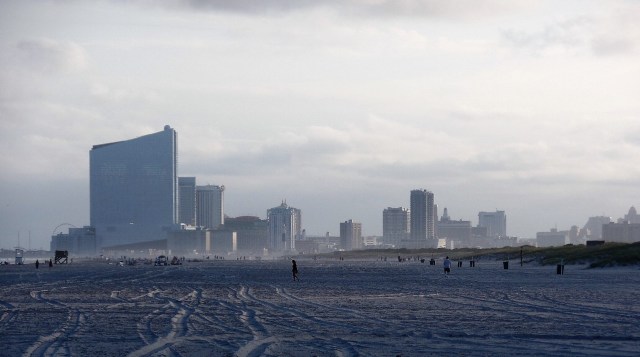
View of Atlantic City from Brigantine

In 1976 New Jersey decided that gambling was the answer to reviving the city’s tourism industry. The first casino opened in 1978 and several more followed. At the time, casino options for Americans were Las Vegas or Atlantic City.

But by the 2000’s, casinos opened in metro New York and Philadelphia as well as Connecticut. Those were the areas where most of Atlantic City’s visitors came from. Tourism declined, as did casino revenues and local employment. This decline reached its peak in 2014 when five of Atlantic City’s 12 casinos closed. At the time Politico headlined a story about Atlantic City “Detroit with a Boardwalk.”

But it turns out the doomsayers may have spoken too soon. A.C. is anything but the ghost town some predicted, as evidenced by the photo below taken two weekends ago.

.Summer weekend in Atlantic City

While you can build a casino just about anywhere, what you are never going to have in Yonkers or Wilkes-Barre or Mashantucket, Conn., is the ocean and the beautiful sandy beach. And on top of that, two new casinos opened in Atlantic City this year, revenues are up and Stockton University just built on Oceanside campus that opens this fall.

Hard Rock Atlantic city

The new Hard Rock Hotel and Casino opened in June.

If you’ve played monopoly, you know the names of many of the streets in Atlantic City since the popular board game, which was first marketed in 1935, was based on the Jersey resort. And you will also know what the most valuable property is. Here’s a virtual tour of the Atlantic City boardwalk.

Atlantic City boardwalk

Boardwalk pushcart, Atlantic City

The Atlantic City rolling chair, originally introduced on the boardwalk in the 1880’s

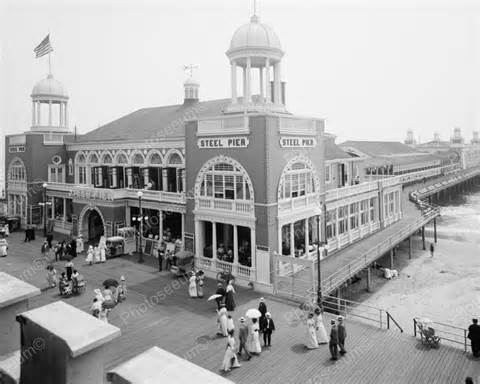
Steel Pier, Atlantic City

Steel Pier

Steel Pier 2018

1913 Steel Pier

Steel Pier, 1913

Atlantic City helicopter

Helicopter tour taking off from Steel Pier

Fralingers Salt Water Taffy

Joseph Fralinger began selling salt water taffy at his boardwalk stand in 1884.

Bankrupt Trump hotel

All that’s left of Trump is the M and the P.

Home of the Miss America pageant

Boardwalk Hall, built in 1926, began hosting the Miss America pageant in 1940

Ripley's believe it or not

New Jersey Korean War Memorial

New Jersey Korean War Memorial

And some not-so-classic Atlantic City


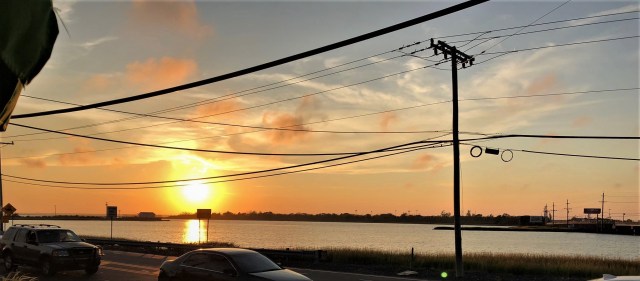
Atlantic City sunset

Back bay sunset


Posted in Travel | Tagged , , , , , , , , , , | 12 Comments

In the National Parks: Gurgling, Spewing, Oozing

Yellowstone National Park – Montana, Wyoming, Idaho

Old Faithful

Yellowstone National Park has the largest collection of geothermal features in the world, more than 10,000. That includes 500 geysers, a number which surpasses all other areas. Here’s a dozen or so of those geothermal features.

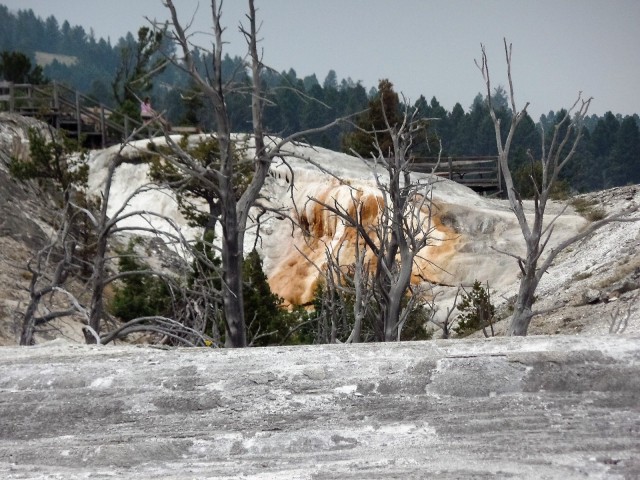
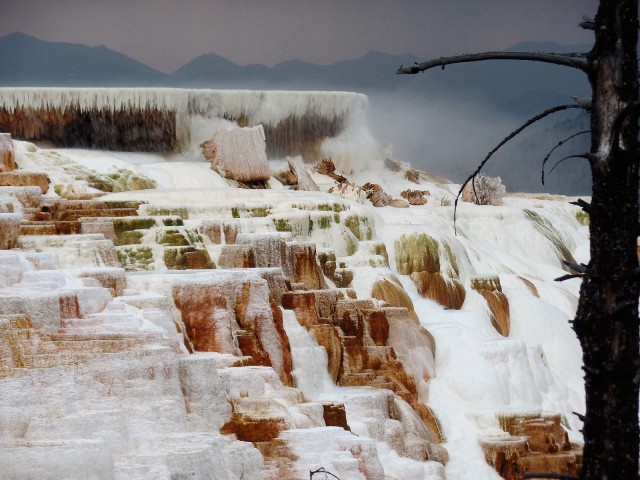
Mammoth Hot Springs

Mammoth Hot SpringsMammoth Hot SpringsMammoth Hot Springs

Liberty Cap

Liberty Cap, a dormant hot spring cone

Palette Spring

Palette Spring

Fountain Paint Pots

Celestine Pool

Celestine Pool

Silex Spring

Silex Spring

Fountain Paint Pot

Fountain Paint Pot

Clepsydra Geyser

Clepsydra Geyser

Grand Prismatic Spring

Grand Prismatic SpringGrand Prismatic SpringGrand Prismatic Spring

Old Faithful

Old FaithfulOld Faithful

Excelsior Geyser Crater

Excelsior Geyser Crater at Midway Geyser Basic

Posted in Travel | Tagged , , , , , , , , | 5 Comments

In the National Parks: Where the Buffalo Roam

Yellowstone National Park — Montana, Wyoming, Idaho

Bison in Yellowstone Park

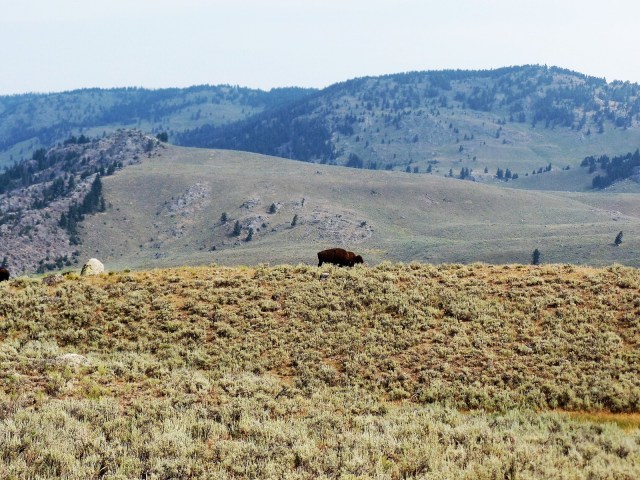
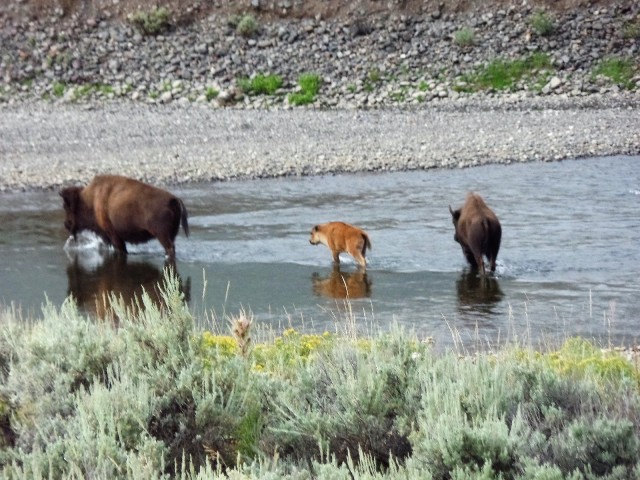
Well not exactly buffalo. The American bison was one of the many things that the Europeans who came to this country misidentified. Today, Yellowstone hosts the largest bison population in America. There are about 4,800 bison in the park, for the most part roaming freely. The majority of them are in the Lamar Valley where these photos were taken.

Herd of American bison

Bison family

Bison in Yellowstone Park

Bison family

More Yellowstone wildlife

Baby elk at Mammoth Hot Springs

This young elk is trying to figure out the signs in Mammoth Hot Springs Village.

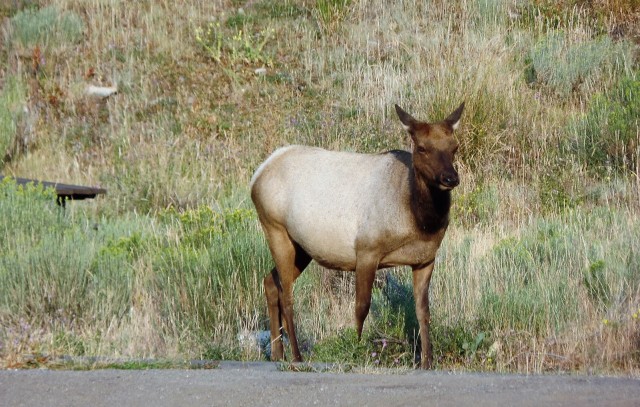
Adult elk at Mammoth Hot Springs

While mama keeps a wary eye on me

Yellowstone pronghorn

Pronghorn

Yellow-bellied marmots

These yellow-bellied marmots have made a home for themselves under a Yellowstone Park outhouse.

Osprey nest

This osprey nest is in the Yellowstone Canyon area

The Grizzly and Wolf Discovery Center in nearby West Yellowstone, Mont., is a non-profit that hosts rescued animals that are no longer capable of living in the wild. Some came from Yellowstone and some from other national parks. Here are some of the center’s inhabitants.

Grizzly bear

Grizzly bear

Posted in Travel | Tagged , , , , , , , , , , , , | 10 Comments

Guns in America: Prominent Americans Shooting Each Other Up

In 1804 the vice president of the United States shot and killed one of the founding fathers and the former secretary of the treasury in a duel. Gun violence, something that would continue to plague our society some 200+ years later, was already taking its toll on this young nation.

Site of Hamilton-Burr duel

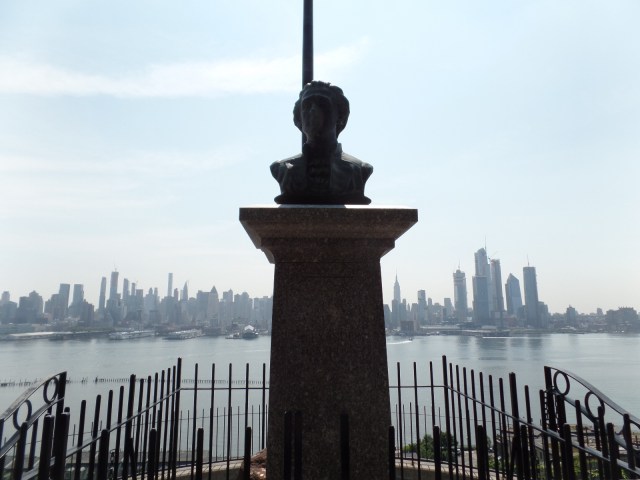
Hamilton statue at the site of the Weehawken Dueling Grounds.

The conflict between Aaron Burr and Alexander Hamilton had been going on for years. In 1804, Burr, with his VP term expiring and with the knowledge that Jefferson would drop him from the ticket, ran for governor of New York State. A third party quoted Hamilton in some scathing criticism of Burr that demeaned his character. Burr demanded an apology. He didn’t get one. So he delivered the challenge. Hamilton, though a self-styled opponent of dueling, accepted nonetheless because he feared the consequences to his future and reputation were he to refuse.

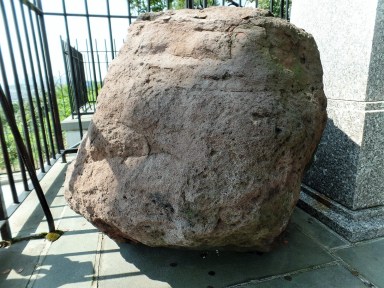
Weehawken Dueling Grounds rock where Hamilton laid his head.

Hamilton laid his head upon this rock after being shot in Burr duel.

So they headed out to the dueling grounds in Weehawken, N.J., with their seconds, their pistols and their adherence to the Code Duello, the rules of dueling. Each fired a shot. It has been widely speculated that Hamilton intentionally fired over Burr’s head. We’ll never know for sure whether he intentionally “wasted” his shot because Burr didn‘t waste his.

Many in America had grown weary of this means of dispute resolution and Hamilton’s death came as a shock. A jury in Bergen County, N.J., indicted Burr for murder but the charges were thrown out by the N.J. Supreme Court. Many urged lawmakers to ban the practice, but in fact dueling was already illegal in both New York and New Jersey. The reason they chose to square off in Weehawken is because New Jersey was perceived to be lax in enforcement. The duel ended Burr’s political career although he did serve out his term as vice president. It also represented something of a turning point in that the practice began to decline in the northeast. Not so the south. That region of the country, which to this day supports unlimited private ownership of guns, continued to be the setting for numerous duels up until at least the Civil War.

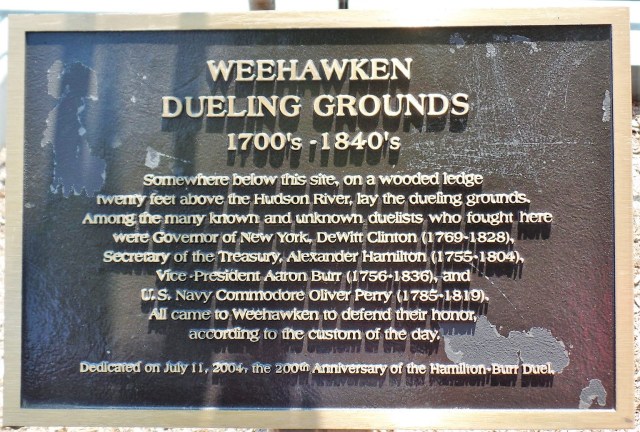
Plaque at Weehawken Dueling Grounds

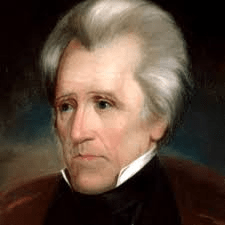
Burr and Hamilton were not the only prominent American leaders to kill or be killed in a duel. There were senators, congressmen, military leaders, and then there was Andrew Jackson. Jackson boasted that he had been in 14 duels. Some historians have pegged that number at 2. Ah, but we live at a time when presidential braggadocio seems the norm. His most famous duel occurred in 1806 against Charles Dickinson.

Andrew Jackson

Andrew Jackson

Dickinson was a lawyer, horse breeder and like Jackson, a plantation owner. Despite his young age, 26, he had already participated in numerous duels. The fact that he was still alive suggested he was good at it. What motivated these two men to risk their lives? It all started with a dispute over a bet on a horse race. Their animosity bubbled over from there. Dickinson called Jackson’s wife a bigamist. (Her first marriage had not been dissolved yet when she married Jackson.) Then he published a statement in the Nashville Review calling Jackson a “worthless scoundrel, a poltroon and a coward.” (I’m good with the scoundrel bit.) Jackson made the challenge, Dickinson accepted and off they went.

Dueling was also outlawed in Tennessee, so this one was moved to Kentucky. As per the rules Dickinson took the first shot and lodged a bullet in Jackson’s chest, damaging a rib or two but missing his heart. Jackson then cocked his gun and misfired. If you were to play by the rules the duel should have ended there. But Jackson re-cocked his gun and shot Dickinson fatally. Jackson’s behavior was widely disparaged and seen as cheating. Twenty years later he was elected to the first of two terms as president.

Button Gwinnett

Button Gwinnett

Button Gwinnett is primarily noted in American history as one of Georgia’s signers of the Declaration of Independence. The British born Gwinnett was something of a failure as a merchant and as a planter. Yet he turned out to be a successful local politician. He rose to a position in the Georgia Provincial Congress where his chief rival was Lachlan McIntosh, Scottish American Revolutionary War veteran who was a landowner and slaveholder. By 1877 Gwinnett had become president of Georgia filling the vacant position after his predecessor had passed away. McIntosh meanwhile had become a brigadier general in the continental army, a position Gwinnett had also sought. As head of the Georgia Provisional Congress Gwinnett ordered McIntosh to lead an invasion of East Florida, which at the time was controlled by England. It failed. They blamed each other and when McIntosh publicly pronounced Gwinnett a “scoundrel and lying rascal” the challenge was on.

The duel took place at a Georgia plantation. Each took a shot. Each was hit. Gwinnett died. McIntosh lived.

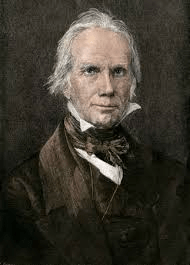
Henry Clay

Henry Clay

One of the more ridiculous episodes occurred in 1826 involving secretary of state and presidential hopeful Henry Clay, who described himself as an opponent of duels, and Virginia Senator John Randolph. It all started with a speech on the Senate floor in which Randolph referred to President Adams and Clay as “a puritan with the blackleg.” I have no clue what that means but it is apparently highly insulting because after some debate about whether Senate rules prohibited challenging Senators for comments made on the Senate floor, Clay did indeed issue the challenge and Randolph accepted. Virginia was another state where dueling was illegal, but our lawmakers and cabinet members paid that no mind and squared off there anyway. Randolph rationalized that he wouldn’t be breaking any law since he had no intention of hitting Clay. Each fired one shot and the only victim was Randolph’s jacket. They set up for another round. Randolph hired in the air. Clay put his gun away. Game, set, match. They lived happily ever after.

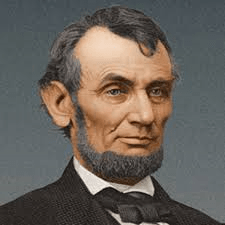
Abraham Lincoln

Abraham Lincoln

One 19th century American president who you might not expect to have been found on the dueling grounds is Abraham Lincoln. Yet a young Lincoln, who was simply a country lawyer in 1842, ended up in a dispute with the Illinois state auditor James Shields related to the bankruptcy of the Illinois State Bank. Lincoln wrote a letter under a pseudonym that was published in the Sangamo Journal attacking both Shields’ actions relating to the bankruptcy and his character. Shields squeezed the publisher for the identity of the author and when he found out demanded a retraction from Lincoln. Upon being refused he issued the challenge and Lincoln accepted.

Illinois was yet another state where dueling was illegal so they headed off to Missouri. Both of these men had seconds who were determined to keep their charges alive. While both showed up at Bloody Island, Mo., at the appointed date and time, a negotiated settlement kept an actual duel from taking place, one that might well have altered the course of American history.

Mark Twain

Samuel Clemens

If you think Lincoln an unlikely duel participant, consider Mark Twain. The story of Mark Twain’s duel has been told by Twain himself. His real name was Samuel Clemens and early in his career Clemens worked as a journalist for the Territorial Enterprise newspaper in Virginia City, Nev. (Nevada, by the way, also outlawed dueling.) The Enterprise’s main competitor was the Virginia City Union owned by James Laird. Clemens wrote a story which he claimed that he never intended to publish that, among other things, accused the Union of reneging on a pledge to support a Civil War charity. When Baird called Clemens a liar, Clemens issued the challenge and Laird accepted.

So Clemens and Laird show up at the dueling grounds and Clemens admits to his second Steve Gillis that he didn’t know how to fire a gun accurately. By way of demonstration, Gillis takes the gun, fires a shot at a bird and beheads it. Laird drops by, sees the dead bird and asks who fired that shot. Gillis assures it was Clemens and elaborates on his client’s marksmanship. Laird gets the idea. He apologizes and the duel is over before it began. At least that’s how Mark Twain told the story.


Posted in guns, History | Tagged , , , , , , , , , , , , , , , | 11 Comments