History of Radio: Big Voices

Graham McNamee

The very first words to ever be broadcast over network radio were uttered by Graham McNamee, his signature greeting “good evening ladies and gentlemen.” That was in 1926 and it was the inaugural program of the National Broadcasting Network (NBC).  By that time the 38-year old McNamee had already won the Radio Guide 1925 Gold Cup Award for the World’s Best Radio Announcer. He had already called the 1923 World Series for WEAF in New York and had covered the 1924 Democratic National Convention.

Raised in Minnesota, McNamee came to New York with the dream of becoming an opera singer. While on jury duty he auditioned at a radio station during his lunch break and his career took off from there. He would cover both political parties’ national conventions and presidential addresses to Congress. He broadcast Charles Lindberg’s return from Paris after his trans-Atlantic flight. He was the straight man on comedian Ed Wynn’s show “The Fire Chief,” and in the 30’s he was the voice of Universal Pictures newsreels.

But McNamee’s greatest impact was as a sportscaster. He was repeatedly NBC’s man for the three biggest radio sports events at the time: the Rose Bowl, heavyweight championship fights and the World Series. He broadcast 12 World Series. McNamee has been called the inventor of play-by-play. He brought both color and excitement to his broadcasts, which had previously been handled mostly by journalists in an unemotional and dry manner. By contrast McNamee exclaimed during one boxing match (Carnera vs. Baer) “Oh boy! Oh boy! These boys are fighting!” In her history of radio, Listening In, author Susan J. Douglas described McNamee’s style: “What McNamee invented was the combination of the blow-by-blow or play-by-play with what came to be called color, the telling, visual details about how the event looked and felt. He reported the event as it occurred, but he also dramatized it, so listening to the broadcast was often better than going to the game or match itself.”

Posthumously McNamee was awarded the Baseball Hall of Fame Ford Frick Award for Broadcasting. He was entered into the American Sportswriters Association Radio Hall of Fame and has a star on the Hollywood Walk of Fame.


Father Coughlin

If you think angry demagogues making outlandish statements on radio to stir up their listeners is a modern phenomenon, consider Father Coughlin. This Roman Catholic priest turned political firebrand at one time in the 1930’s had 30 million listeners to a weekly show.

Charles Edward Coughlin was born in Ontario to Irish-Canadian parents. He bounced around a couple different religious trainings until he landed in Detroit where he was incardinated and assigned to a parish. Coughlin was on the radio in Detroit by 1926. Initially his show dealt with religious issues. He was signed by CBS in 1930 but the network later dropped him when he refused their request to screen his scripts in advance. Coughlin put together his own radio network and at the time his show became more and more political.

Like many people of his type it is much easier to identify what Father Coughlin was against than it is to figure out what he was for. He was a virulent anti-communist. But he was also a virulent anti-capitalist. He supported FDR when he was elected in 1932 but by 1934 he was railing against the President for his monetary policies. He founded an organization called the National Union for Social Justice. One of his slogans was “less care for internationalism and more concern for American prosperity.” Sounds a little like a certain recent Presidential inauguration speech.

During the latter half of the decade as American public opinion was beginning to shift toward intervening to support the Allies, Coughlin increasingly took a sympathetic view of the Nazis and his anti-Semitism became more and more obvious. He blamed Jews for both Communism and the excesses of Capitalism. A watershed moment in Father Coughlin’s decline was after Kristallnacht, the Nazi attack on German Jews, when Coughlin suggested “Jewish persecution only followed after Christians first were persecuted.” I found an even more outrageous and obnoxious quote on a Web site devoted to Coughlin (www.fathercoughlin.org): “When we get through with the Jews in America, they’ll think the treatment they received in Germany was nothing.”

By the end of the 30’s many had heard enough of Father Coughlin. Some stations dropped his show including his two New York outlets. Many in the church were anxious to get him off the air. After the outbreak of war in 1939 the Roosevelt administration forced his radio show off the air and made it illegal to distribute his daily newspaper via the mail. In 1942 Bishop Edward Aloysius Mooney of Detroit ordered Coughlin to cease all political activities and focus on his parish. He complied and continued as pastor of the Shrine of the Little Flower until he retired in 1966.


Edward R. Murrow

News was not an important part of radio programming in its early years. Up until the late 1930’s the radio networks did not even have news divisions. That all changed leading up to and during World War II when millions of Americans were glued to their radios awaiting news from the two fronts. Between 1940 and 1944 the number of hours devoted to news on radio went up 300 percent. No one is more closely associated with the emergence of radio as the nation’s primary news source than Edward R. Murrow.

Born to Quaker parents in a log cabin in North Carolina, Murrow moved west to Washington at the age of 6 and later attended Washington State. His first job at CBS was in 1935 when he was hired as director of talks and education (there was no news group until 1938). Two years later he was sent to London as head of European operations.

Murrow usually did his best to conform to CBS’ standards for objectivity. But being in London and witnessing first hand what the British were facing he increasingly became an anti-isolationist and anti-fascist. At one point he confided, “I am finding it more and more difficult to suppress my personal convictions.” Murrow would become the gold standard for foreign correspondents. Listen to the clip below and you’ll understand why. It is Murrow on a rooftop in London awaiting the arrival of German bombers.


During the war itself he went on a Royal Air Force bombing mission over Berlin. He laid his microphone on the ground so listeners could hear the sound of advancing tanks. He was one of the first to file a report from the Buchanwald Concentration Camp in Germany interviewing emaciated survivors. Of that experience he said “I have reported what I saw and heard, but only part of it. For most of it I have no words.” With his ever-present cigarette (he smoked three packs a day) and his signature sign off “good night and good luck” he was, according the Douglas “the apotheosis of American manhood.”

After the war Murrow got bumped up to a VP position but he was soon back on radio. He had two shows on CBS. “This I Believe” was a program that gave ordinary Americans five minutes to speak on the radio. The other was “Hear It Now” which later moved to television and became “See It Now.” It is on that program in 1954 that Murrow made a famous speech denouncing Sen. Joseph McCarthy. Murrow left the radio and became active in television news broadcasting but through the 50’s his relations with CBS started to sour. In 1961 he resigned and was appointed by JFK to head the United States Information Agency. He died in 1965 at the age of 57.

Posted in History, Radio | Tagged , , , , , , , , | 3 Comments

Indian Canyons, a Palm Springs Oasis

The Indian Canyons are a group of palm oases on the tribal lands of the Agua Caliente Band of Indians in Palm Springs, Calif. The canyons are home to wildlife, beautiful desert vegetation, scenic mountains and most importantly to the ancestors of the Agua Caliente, water in the form of mountain streams. They have been maintained in their natural state and are now an oasis for residents of and visitors to Palm Springs.

Palm Springs trail

Andreas Canyon trail sign

The Andreas Canyon is the ancestral home of the Paniktum Clan of the Agua Caliente Band of Cahuilla Indians. Andreas was one of the leaders of that clan. This is the second largest native California Fan Palm oasis. These photos were taken along the Andreas Canyon Trail.

Andreas Canyon

Posted in Travel | Tagged , , , , , , , , , , | 4 Comments

History of Radio: Race and Radio

Throughout its history, American radio reflected the racial attitudes of the society within which it operated. In the early days that involved a racism that was expressed in the racially demeaning characters of radio comedies like Amos ‘n’ Andy and Beulah and in the fact that blacks were shutout of jobs in radio. But radio has also been a leader in bringing black music and culture to a larger audience and making it part of the American culture. Radio was also well ahead of other entertainment and sports industries in providing black performers with a voice and an audience.

Throughout the 20’s there was nary a black face to be seen in the radio studios. It is telling that the radio show Amos ‘n’ Andy, two laughable and gullible Southern blacks who migrated to Chicago, were actually voiced by white actors. By the end of the decade it was the most popular show on the air. But the 20’s was also the jazz age and jazz is rooted in the African-American community. Young people of all ages were attracted to this music and for many young whites, their first exposure was on the radio. While you may not have found a black actor, a black announcer or a black manager in radio, listeners began to hear musicians like Duke Ellington and Paul Robeson. In 1929 WSBC Chicago introduced the “All Negro Hour” a variety show that featured music, comedy and drama by all black performers. Jack Cooper, the emcee of the All Negro Hour, is considered the first black DJ.

In the early thirties, the CBS radio network signed a three-year contract with the Mills Brothers, the first African-American act to receive a network contract. And one black man who was a hero to all Americans, was the heavyweight boxing champion Joe Louis. In her radio history Listening In, author Susan B. Douglas notes, “For African-Americans some of the most important broadcasts of the 1930’s were the matches of Joe Louis, whose victories over white opponents galvanized black pride and spirit and suggested that, even in a deeply racist society, black men could occasionally embody the national will.” Much like Jesse Owens in the 1936 Olympics, Louis’ 1938 rematch against the German champion Max Schmeling became a source of national pride for both black and white Americans. Hitler touted Schmeling as an example of the racial superiority of Aryans, but Louis knocked him out in a little over two minutes.

Joe Lewis fight

Joe Lewis and Max Schmeling

Back in 1922, ASCAP, the American Society of Composers, Authors and Publishers, had been formed to license songs and collect royalties on the music. One of their goals was to keep recorded music off the air as a way to protect record sales. Another of their goals was to exclude blacks. This was still the case in 1939 when the National Association of Broadcasters created the rival BMI. The new organization built its membership with young, ethnic and black musicians. In Last Night a DJ Save My Life, author Bill Brewster writes, “With BMI’s close ties to radio and its more ethnic membership, this was great news for the rise of black music.”

We even had Jim Crow record charts. In 1942, Billboard started compiling a separate listing which it called the “Harlem Hit Parade.” It later changed the name to “Race Records” which of course means records by black artists. Brewster credits Atlantic Records Jerry Wexler with the advent of a more acceptable name, rhythm and blues. Billboard adopted that name in 1949 and most of the rest of us have gone along with it ever since.

It wasn’t until after World War II that radio began to lose its whiter shade of pale. Two things prompted that. One was the beginning of the emergence of a teen culture that would set the nation’s trends in music and style. And it was a culture that was fueled by rhythm and blues and later rock and roll. Like the younger audiences of the 20’s, it included both blacks and whites, but the music had in roots in the African-American communities. The other factor was that as the country emerged from a decade of Depression and a half-decade of war, prosperity was just around the corner and blacks, like teenagers, were an as yet unexploited but large market that all kinds of advertisers were anxious to reach.

The 50’s and the 60’s were probably the time in the history of radio when the music, the audience and the guys introducing the music to the audience were most integrated.  Douglas says “As America became more repressive in the 1950’s with the grip of conformity and McCarthyism tightening, black music became especially attractive to the young.” Young whites were listening to black artists on the radio, buying their records and going to their concerts. By the mid-50’s about one quarter of the records sold in the U.S. were by black artists.

radio DJ

(by Ron Pinkney)

White audiences embrace of black music coincided with the emergence of the DJ. One of the early star deejays, Alan Freed of WJW Cleveland, played an important role in bringing rhythm and blues to mainstream radio, and hence to the attention of white listeners. And there was just as much interest in listening to black DJs as well as black singers. Brewster reports statistics compiled by Ebony that in 1947 there were only 16 black DJs. By 1955 there were 500.
As a medium, radio was well ahead of its competitors in integrating. But it also should be noted that some stations, while recognizing the attractiveness of the black sound to their audience, chose not to hire black DJs but instead to hire white DJs and encourage them to sound black. One is again reminded of the radio comedies of an earlier era in which the black characters who were being presented for laughs were actually voiced by white actors.

During the same time a more authentically black version of radio was also emerging. By the late 40’s the African-American market was estimated to be worth some $12 billion. That caught the attention of advertisers and station owners. WDIA in Memphis, Tenn., was the first station to move to exclusively black on-air talent in 1948. And in 1949 WERD in Atlanta became the first black owned commercial station. According to Jesse Walker, author of Rebels on the Air, there were four outlets that offered black-oriented programming in 1943. Ten years later there were 260.

In the 50’s both the programming and the audience for radio were more integrated than they were for any other media or entertainment business. And this at a time when American society was very substantially segregated. But it didn’t last. One reason is that DJ’s lost their freedom. The choice of music on popular stations was taken over by station managers who, following the rating services, narrowed playlists on Top 40 stations to as few as 20 songs, played over and over and over again. During the 60’s, radio DJ’s not only were restricted to a fixed list of songs, they were often given scripts telling them what to say.

There was an all too brief flurry of free-form radio in the late sixties with the emergence of the FM dial as the preferred place for music. Some of these stations might have played blues and jazz as well as folk music and rock bands. A few of these stations still exist but not enough to fill up even half of the presets on my car radio. With the consolidation of corporate ownership of the FM as well as the AM stations, the FM DJ’s, like the AM guys before them, lost their influence and instead we got narrowly defined formats with tight playlists. The effect was to re-segregate radio.

Posted in History, Radio | Tagged , , , , , , , , , , | 6 Comments

Flight Delay! Passing Some Time in Palm Springs

On a recent trip to Palm Springs I was unable to take my favorite airline ABU (Anything But United). On the return flight I followed conventional wisdom and showed up at the aitport an hour before flight time. Only to find that my flight would be delayed for two hours.

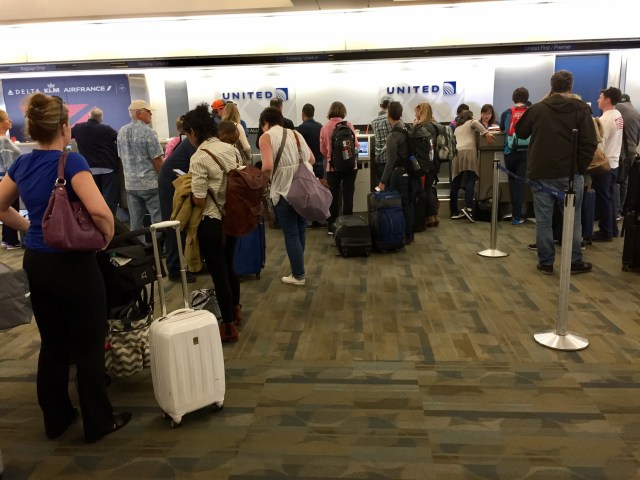
United customer service

My first stop was at United ‘customer service.’ Since the two hour delay would mean that I’d miss my connection in Denver I had to be booked onto a later connection.

View from cab

Downtown Palm Springs is only about 10 minutes from the airport so we hopped in a cab and off we went.

Sunday brunch

One more outdoor brunch before heading back to winter in the northeast doesn’t sound so bad.

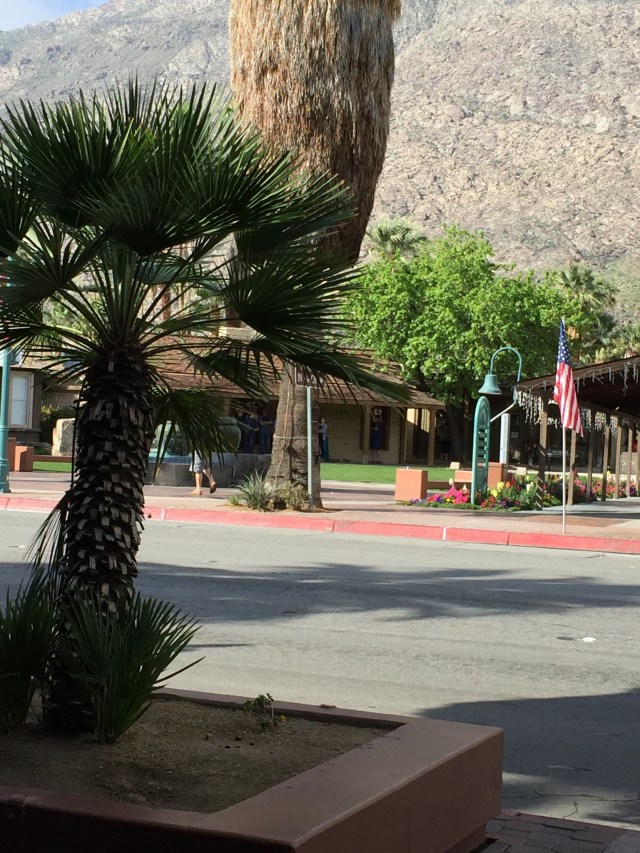
Downtown Palm Springs

The view from my cafe table

Some Palm Springs history

California fan palm

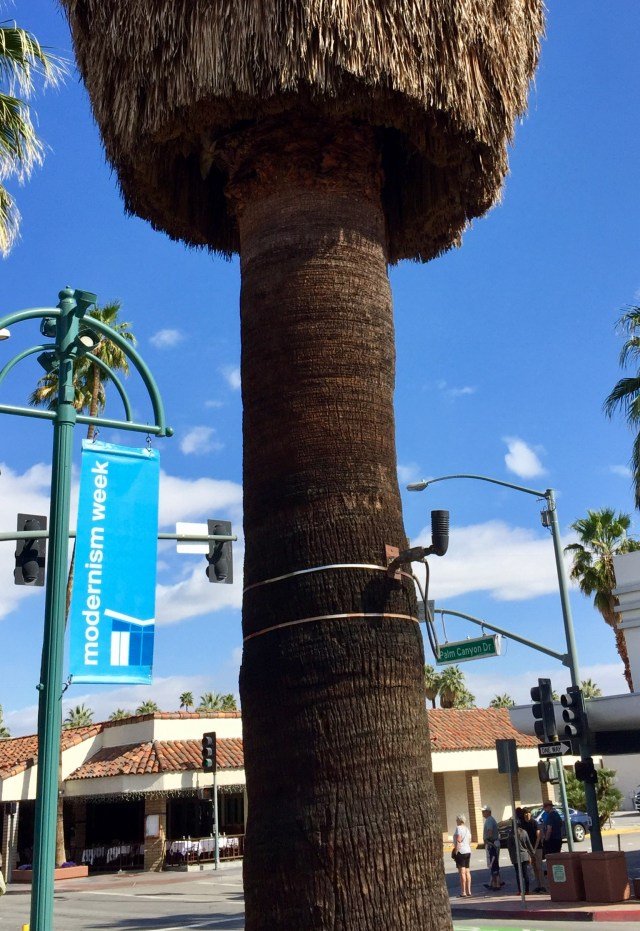
Is that some sort of IoT device on that plam tree?

Some Palm Springs celebrity

Palm Springs pet store

I miss my dog, cover boy on the home page of this blog.

Downtown

Riding thorugh Plam Springs

Uh oh! Flight time has been moved up a half hour. Call an Uber car.

Palm Springs airport

Just wait a little bit more

Boarding plane

All aboard!

My plane landed in Denver in time to make my original connection. But I had lost that seat when I was rebooked onto a later connection that was due to leave in three hours. And then that flight was delayed 2-1/2 hours. And they call it the friendly skies.

Posted in Travel | Tagged , , , , | 4 Comments

History of Radio: Hucksters, Pitchmen and Sponsors

Commercial radio arrived in America in the 1920’s. It didn’t come with much of a business plan. Like many of the digital and Internet startups that came 80 years or so later, the first goal of radio stations was to build an audience. Then they had to figure out how to monetize it. Advertising was not the first option. In the 20’s the idea of broadcasting ads was considered offensive if not downright unethical. Herbert Hoover, who would later become the president associated with the onset of the Depression, was Secretary of Commerce for most of the 20’s. He is quoted as saying it was “inconceivable that we should allow so great a possibility for service and for news to be drowned in advertising chatter.”

Not everybody saw things that way. In fact, from the very beginning, there was those who saw the opportunity to sell stuff. Amongst the early radio stations were some owned by department stores and by manufacturers of radio equipment. KDKA Pittsburgh, one of if not the first commercial station, was owned by a manufacturer, Westinghouse. The first New York station, WJZ, was owned by RCA which envisioned an advertising free operation that would promote sales of their equipment.  WOR in Newark, N.J., was owned by Bambergers and in Philadelphia, WIP was a product of Gimbels. Both of those stations outlived the retailers that started them.

The early years of radio were chaotic with hundreds of stations all presenting local programming based on local talent. Talent might not be the right word for some of the hucksters who worked their way onto the airwaves. In his book The Great American Broadcast, Leonard Maltin described one such character, Dr. Maurice B. Jarvis, who convinced the owners of KMPC in Los Angeles to put him on the air. “He had a formidable gift of gab; he greeted his listeners in five languages, then said, ‘I’m your cousin Maurice; I’m related to everybody in the world..’ People were mesmerized, so much so that when he started pitching things – from a memory course to a red liquid you could pour in your bathtub to cure a variety of ailments, people bought what he had to sell.”

The honor, or dishonor, of broadcasting the first commercial goes to another New York station, WEAF, which was owned by AT&T. The station sold 10 minutes of airtime to the Queensboro Corporation for a promotional message about an apartment complex. It was delicately referred to as a “toll message.”

More common, however, were different forms of indirect advertising. The Cliquot Club Eskimos, a banjo orchestra that played on a radio variety show, was named after the soft drink manufacturer. The radio vocal duo, the Happiness Boys took their name from Happiness Candy.

Advertising messages were also embedded into the programming. Radio announcers delivered commercial messages and comedians worked plugs into their routines. Newscasters were not immune either, although there were some who insisted on separating the duties of reading the news and being pitchmen. Gabriel Heatter was a popular newscaster with WOR, the flagship station of the Mutual Broadcasting Network. In between covering breaking news items he could be heard extolling the virtues of Kreml hair tonic or Peter Paul candy bars.

Sports fans remember Red Barber as the legendary radio voice of the Brooklyn Dodgers and later the New York Yankees. His contemporaries may remember him as the voice of Old Gold cigarettes.

By the 30’s much had changed in the radio world. Most American homes now owned devices and radio had become the nation’s primary form of home entertainment. Two large radio networks, NBC and CBS, controlled a large portion of the programming which became national in scope and featured stars from the worlds of music, cinema and vaudeville. The cost of the programming was rising, the cost of radio sets was declining and radio was free for its listeners. So who paid the bills? Advertisers.

Both the networks themselves and the FCC tried to police the growing commercialism. In 1932, CBS adopted a rule that commercials would be limited to 90 seconds for every 15 minutes of programming. At the time, the move was hailed by Radio Guide as the “most drastic step thus far in cutting down the sometimes tedious blurbs which clutter the air.” The Federal Communications Commission, which was created in 1934 as a replacement for the Federal Radio Commission, tried to take on the issue of truth in advertising. One of their targets was “radio doctors” who offered any number of snake-oil based cures to be sold over the airwaves.

Before the decade of the 30’s was over, advertisers had pretty much taken control of network programming, and that is what most Americans were listening to. Networks would lease airtime to sponsors and the sponsors would produce the programming, hire the talent and often be involved in managing the content of the shows. Thus many of the most popular ones had names like the Chase and Sanborn Hour, Philip Morris Playhouse and Philco Radio Time.


Shows had one sponsor. Even the baseball broadcasts of Red Barber and other sports events had a single sponsor. By the 50’s thee might have been two, often a beer and a cigarette brand. Today a live sports broadcast might feature as many as 50 different sponsors.

Maltin notes that “shamelessness reached its zenith on the adventure shows for children that aired in the afternoons and early evenings. Here impressionable listeners were wheedled, cajoled and bamboozled into buying Ovaltine, Quakers Puffed Wheat, Hot Ralston cereal and other products because they were enthusiastically endorsed by the show’s darling hero and it was necessary to buy the stuff in order to send away for some swell premium.” That recalls a scene from the movie A Christmas Story during which Ralphie anxiously awaits the decoder offered on the Little Orphan Annie radio show. Ecstatic when it finally arrives in the mail he heads straight for his radio only to be deflated when he learns the super secret message is something on the order of ‘drink more Ovaltine.’

The single-sponsor network show format began to break down in the late 40’s as the networks themselves turned their attention to television and radio once again became more local. Programming came to consist predominately of recorded music and advertising time was sold in smaller chunks to multiple sponsors.

Susan J. Douglas, author of the radio history Listening In, notes, “Radio has been the mass medium through which the struggles between rampant commercialism and the loathing of that commercialism have been fought over and over again.”

Rampant was in fact the word for it. But no one was turning on the radio to hear the commercials. Since you can’t install an ad blocker on your radio what many listeners did in the 60’s was switch the button to FM. At the time FM did indeed offer an alternative, both in the type and diversity of music available and in a format that didn’t revolve around commercials. But as it became popular it fell victim to the same type of commercialism that plagued the AM dial. In Douglas’ words the difference between the 60s and the 70s on FM radio was “ads for record stores that gave away free rolling papers were replaced by ads for Michelob.”

Posted in History, Radio | Tagged , , , , , | 5 Comments

History of Radio: Communities of Listeners

Radio emerged as America’s favorite pastime in the mid-to-late 20’s. It would stay that way for a little more than two decades. It emerged at a time when Americans contact with those in other parts of the country was much more limited. Travel was not as common nor as widespread.  For one full decade during the heyday of radio, the country was in a Depression, and that was followed by several years of war.

For many, radio was their primary connection to the world outside of their immediate neighborhood. It connected people with similar minded folks all around the country. It connected the German speaking immigrant in Queens to the one in Milwaukee. It connected Cubs fans in Chicago with those in North Dakota and it connected teenage fans of jazz with others around the country discovering new music. Listening to radio created communities.

The first community of radio was the radio operators themselves. In the early days of the medium, it wasn’t that easy. Radio kits were do-it-yourself projects that required some know-how. And up until the mid-20’s, the airways were unregulated, interference was rampant and so was static. The amateur radio operators of the day, or hams as they came to be called, weren’t dialing in for programming. They were hobbyists looking to make connections, the further away the better.

One of the early goals of the hams was to make a trans-Atlantic connection. That happened for the first time in 1923 when two hams in Connecticut connected with a French station.  Ham radio is now more than 100 years old and shows no sign of going away. On a recent visit to the Ontario Science Center in Toronto I stopped by a booth offering an amateur radio demonstration. The ham on duty explained her set and then connected with a man in Ireland. I was impressed. Imagine how it felt 100 years ago.

One of the earliest forms of popular radio programming was live sports broadcasts. The feeling that you would have in a stadium as part of a community of fans was now expanded to all those fans listening on radio. In Sports and New York Radio, David Halberstam, describes the impact of sports radio where he grew up. “At the barbership, the Chinese laundry, or on the Sixteenth Avenue bus in Brooklyn, the game on radio was seemingly always on, especially baseball.” There were three baseball teams in New York until the mid-50’s. Being a Giants fan, a Dodgers fan or a Yankees fan was part of your identity. And you participated in communities of like-minded fans not only by turning your radio on but by listening in public places.

At the time the westernmost baseball team was in St. Louis, the southernmost in Washington D.C. If you were a baseball fan in Colorado or Texas or Georgia your connection with other fans was through the radio. If you were a college graduate you may also have maintained your identity as an alumnus of your college by listening to the Saturday broadcasts of college football games that were a staple on all the radio networks.

American cities have long been the site of ethnic neighborhoods and radio almost from the start reflected the diversity of the area where it operated. Foreign language radio stations helped keep the language alive and fueled nostalgia for the old country through music and news. In Philadelphia, the Polish American Radio Program, offering polka music and news, started in 1926 and is still going strong today. In Rockford, Ill., a 30-minute Swedish radio program recently went off the air after 75 years.

One only needs to press scan on your car radio in most areas to discover the breadth of Spanish-language radio in the U.S. Spanish-language radio also dates from the 1920’s. At that time some mainstream stations would rent off-hour times to Spanish broadcasters. Today there are more than 700 U.S. stations that broadcast either in whole or in part in Spanish.

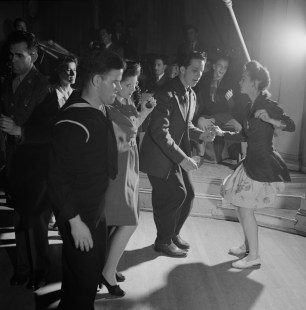
Dancing

(Esther Bubely)

Pretty much every genre of music has its community of listeners. For decades, as new types of music become popular, usually to the dismay of adults, teenagers discovered and listened to it on their radios. As with sports fans, this was not just about a private session with your set, but something that you shared in public amongst those with similar tastes. That might have been on a car radio parked outside the drug store or at a dance at the local church or community center.

No example of this is more dynamic than the DJ-fueled emergence of AM rock ‘n’ roll radio in the 1950’s.  “Listeners were made to feel that…they constituted a vibrant energetic community that mattered to the DJ.,” according to Listening In author Susan B. Douglas. “Cousin Brucie addressed us as cousins, we were all part of the same cool family.”

At the same time a new type of community radio was emerging. Shunning advertisers and corporate sponsors, listener funded radio gave the community of listeners a voice, often literally, through call-in shows. The first listener sponsored radio station was founded by the Pacifica Foundation in San Francisco. KPFA went on the air in 1949 as the voice of Bay Area Bohemia.

Other types of community radio emerged through microbroadcasting, low powered signals in an isolated georgraphic area, some licensed and some not. In Rebels on the Air,  Jesse  Walker describes one example station in Canada’s far north. “Distant Indian communities had been experimenting with low-power radio since 1958, if not earlier, scavenging equipment from white bureaucrats and Mounties. Those first stations were unlicensed, and their programming bore little resemblance to the radio of the south. They were more like village centers, informal places where neighbors could share information, be it local gossip or an emergency announcement.”

WTRA, described by some as pirate radio, started in a housing project in Springfield, Ill in 1986. It was run by the Tenant Rights Association as a community organizing vehicle. Three decades later it’s still going, still unlicensed and is now known as Human Rights Radio.

No amount of corporate ownership and consolidation, government regulation and enforcement, has stopped the offbeat and off-center from finding a voice on radio. That’s not going to change as new forms of radio mature, digital and Internet based, and freed from the limitations of bandwidth and geographic reach.


Posted in History, Radio, Travel | Tagged , , , , , , , | 7 Comments

History of Radio: Tuesday, April 28, 1942

1942 and America is at war. During the course of the year the Japanese invade the Philippines, Malaysia and Burma. FDR signs an order for the internment of Japanese Americans. Gas is rationed and in Chicago the Manhattan Project team produces their first nuclear chain reaction. Pan American Airways schedules the first commercial flight around the world, Joe Louis successfully defends his heavyweight boxing title and the movie Casablanca premiers in New York. At the grocery store, Kellogg’s introduces Raisin Bran for the first time.

Oddly, the cover story in the April 25, 1942 edition of Radio Guide is written by film actress Irene Dunne, who stars in an upcoming movie “Lady in a Jam.” Dunne writes about life in Hollywood. Also, war correspondent Elizabeth Wayne tells her story about what it’s like broadcasting from a war zone. Readers learn that Chinese actors will be used to portray the Japanese in the film “Remember Pearl Harbor,” which was in production at the time. We find out that NBC news reporter Alex Dreier returned from Germany 20 pounds heavier due to a diet of cabbage and potatoes. And as citizens are urged to conserve on energy during the war, the editors of Radio Guide advise to turn the lights off while listening to radio. They suggest the listener “would not only be saving power but would find his radio appreciation increased.” There’s now a half-page ad on the inside cover. Pepsi touts itself as “Hollywood’s best bet for good taste.” And a little further in there’s a curious ad by the Newspaper Institute of America offering a free writing aptitude desk. Presumably the results of that test might qualify you to pay such institute for some further training.

Americans are anxious to hear the news from the war fronts. Many have friends or relatives fighting in Europe or who, like my father, are on ships in the Pacific. The first commercial television broadcasts began in 1941 but TV did not initially catch on and few families owned television sets during the war years. So on the night of Tuesday, April 28, 1942, American families instead turned on their radios. The network programming for the night was not that different from the 30’s. Lots of comedy, variety, drama and music. But there’s one big difference. There’s news on both the networks and the local stations and lots of it.

At 7 p.m. CBS aired its popular radio drama “Are You a Missing Heir?” It dramatized cases of unclaimed inheritances and actually employed detectives to find the missing heirs. They apparently found quite a few of them. One suspects that listeners tuned in for much the same reason that modern-day listeners tune it to lottery drawings. More drama follows in the form of Ned Jordan, Secret Agent. Jordan is an FBI agent and he often is involved in war-themed cases like protecting the U.S. from terrorists.

At 8 p.m. it’s time for a variety show hosted by the popular comedy team of George Burns and Gracie Allen. Their guests this evening include the Paul Whiteman Orchestra, Senor Lee and Jimmy Cash (not to be confused with Johnny who was only 10 at the time.) The comedy duo of Burns and Allen got their start in vaudeville in the early 20’s. Later they made several motion pictures. Their radio show first hit the airwaves 1936 and continued until 1950. After that they made a successful transition to television. What is perhaps most notable about Burns and Allen’s routines is Gracie’s portrayal as the air-headed wife whose seemingly inane comments end up being far wiser than her more practical husband.

One of radio’s most popular shows, Fibber McGee and Molly, is on at 8:30. This NBC comedy show had an even longer run than Burns and Allen. It was on the radio from 1936 to 1959. Like Burns and Allen these comedians were a married couple, Jim and Marion Jordan. On the show they were a working class couple living in a suburban hamlet called Wishful Vista in a home they won in a raffle. A common plot involved Fibber setting off on unsuccessful schemes to bring in some money. Here’s the episode that was on the air on April 28, 1942.

At 9 p.m. CBS offered Suspense, a radio drama that in 1942 was in its first year. It would prove to be among radio’s most popular dramatic series and continued on the air until 1962. It would win a Peabody Award and be inducted into the Radio Hall of Fame. But in 1942 it did not yet have a sponsor and was backed by the network itself until a sponsor came on board in 1944. The early shows were introduced by “The Man in Black” who sounds a little like Rod Serling. During its heyday the characters in this drama were often played by prominent films actors and actresses and many of the episodes were penned by well-known mystery writers.

While CBS was offering spine tinglers, NBC stuck to the tried and true comedy variety format. At 9:30 that meant the Red Skelton show. Skelton had followed the familiar path of vaudeville to film to radio to TV. His show went on the air in 1941 under the sponsorship of Raleigh cigarettes. Skelton was known for creating different characters, among the best known is Clem Kadiddlehopper. Some consider Kadiddlehopper a forerunner of the cartoon character Bullwinkle. No comedy program was complete on 1940’s radio without some music and Skelton’s house band was the Ozzie Nelson Orchestra. Nelson later was known for the TV sitcom the Adventures of Ozzie and Harriet. That show also started on radio. It included Ozzie and Harriet’s son Ricky Nelson who went on to have a successful recording career. As was typical of radio stars of the era, Ozzie and Harriet were really a married couple and Ricky was really their son. As for Skelton, his show was interrupted in 1944 when he was drafted into the army. Assigned to the entertainment corp, he entertained troops in the U.S. and Europe. He resumed his radio career upon his return in 1945.

By 10 p.m. news was the most prevalent program on the radio. Many local stations had their own news programs at 10 or 10:30. The networks had a full newscast at 11. It was during the war that news became a major part of the radio mix. Radio had by now replaced newspapers as the most up to the minute source of breaking news and with the war raging on two fronts, Americans followed developments on their radios.


Posted in History, Radio | Tagged , , , , , , , , , , | 6 Comments

History of Radio: Thursday, Sept. 29, 1932

In 1932, the U.S. was in the throes of the Depression. 13 million Americans were unemployed, almost 25% of the population. Herbert Hoover was president but he was about to be defeated by Franklin Roosevelt in a landslide. Charles Lindbergh’s 20-month-old son was kidnapped and later found dead. Al Capone was convicted of tax evasion. Amelie Earhart became the first women to make a solo crossing of the Atlantic. And in Oklahoma, the parking meter was invented.

The lead story in the current week’s Radio Guide, the issue dated Oct. 1, 1932, was headlined “Crime Pays – On Air.” It discussed the proliferation of crime drama on radio and the broadcasters search for more mystery writers. There was a news story that both networks, CBS and NBC would be carrying the upcoming World Series between the New York Yankees and Chicago Cubs and the announcing teams would include two legends of early sports broadcasting, Graham McNamee for NBC and Ted Husing for CBS. Another story revealed that, under pressure from advertisers, the networks were dropping a long-standing ban on mentioning prices on air. NBC agreed to one-price mention per 15 minute program. CBS would allow two but added the further restriction that “sales talk” could not exceed 90 seconds during a 15-minute span. Radio Guide hailed this as the “most drastic step thus far in cutting down the sometimes tedious blurbs which clutter the air.” Ads in this week’s edition were few and far between but included a pitch for a new lighter microphone and a display ad from station WGES promising listeners official race results.

On the night of Thursday, Sept. 29, 1932, a typical American family may have been worried about finding work, keeping their home and maybe just finding the money to put food on the table. Radio though was free, and here’s what they might have heard that night.

There was canine drama on the NBC network at 7:30 with Rin Tin Tin.  The radio show was inspired by a German Shephard that had been rescued by an American soldier in World War I. Rin Tin Tin became a film star appearing in some 27 films, most of them silent. They had titles like Rinty of the Desert and Hero of the Big Snows. The radio program started in 1930 as the Wonder Dog and while some of the early shows had the real Rin Tin Tin offering a bark or two, most of the dog noises were created by man with the appropriate last name Barker. By 1932 the show had been renamed Rin Tin Tin. It was sponsored by Ken-L Ration and, after a move to the rival CBS network, lasted until 1934. It reappeared as a TV series, the Adventures of Rin Tin Tin in 1954.

Radio programs at the time were usually 15 minutes long. After the excitement of Rin Tin Tin you could calm down at 7:45 with the undoubtedly more serene National Oratorio Society program. And at 8, a switchover to CBS would deliver a solid block of music including “Music That Satisfies,” “The Mills Brothers,” and “Gus Arnheim’s Orchestra.”

The Mills Brothers were four African-American brothers, sons of a barber shop owner in Ohio. As a jazz quartet they are an example of how radio gave African American artists an audience at a time when many segments of American society was segregated. They originally became local radio stars through their appearances on WLW in Cincinnati. After appearing with the Duke Ellington Orchestra in Cincinnati they caught the attention of a record company that moved them to New York. After getting an audition with William Paley of CBS, he signed them to a three-year contract making them the first black artists to get a network radio show.

NBC at the time ran two networks, the blue network and the red network, and at 9 p.m. they offered options of Phil Lord, the Country Doctor, or the Lucky Strike Dance Hour. Most programs at the time had one sponsor. The opening for the Lucky Strike program went like this: “Ladies and gentlemen , the Lucky Strike Dance Hour presented for your pleasure by the manufacturers of Lucky Strike cigarettes. Three times each week we bring you the Lucky Strike thrills, 60 modern minutes with the world’s finest dance orchestras, and, in addition, the melodrama and mystery of real New York Police cases on Tuesdays ; your New York correspondent Walter Winchell on Thursdays, and Bert Lahr, Broadway’s craziest comedian, on Saturdays.”

After 60 minutes of “Lucky thrills” 10 p.m. was Amos ‘n’ Andy time. (Radio Guide was published in Chicago so all times herein are Central time.) Amos ‘n’ Andy was the top rated show at the time. It was perhaps the most popular radio show ever, on for 15 minutes every night. It was also a show that created humor out of demeaning racial stereotypes. The basic plot was about two black farmers from Atlanta, portrayed as gullible stumblebums, who moved to Chicago and started their own business, the Fresh Air Taxi Company, so named because their car had no roof. The dialogue was characterized by one prominent black church official at the time as “crude, moronic and repetitious.” The characters were actually voiced by two white actors, Freeman Gosden and Charles Correll, who also were the writers of the show. Andy’s daughter was voiced by a Chinese American woman. It is estimated that at one point the show attracted 40 million listeners, a full third of the U.S. population.

In the 30’s, perhaps because of the struggles faced by so many Americans, comedy replaced music as the most popular radio programming.

CBS had no answer to Amos ‘n ‘ Andy’s popularity. The second network followed with more music, bandleader Little Jack Little at 10:30 and the Ozzie Nelson Orchestra at 10:45. There was no 11 o’clock news and the rest of the evening was given over to music programming, primarily dance orchestras.


Posted in History, Radio | Tagged , , , , , , , , | 3 Comments

History of Radio: Music, Sports, News and More Music

It was nearly 100 years ago that an engineer named Dr. Frank Conrad decided to stick a mike a front of his phonograph and send the signal out over the radio transmitter he had built in his garage. Conrad’s Saturday night broadcasts not only gave rise to the first commercial radio station in the U.S. (KDKA Pittsburgh) but the Westinghouse employee was setting the tone for what would be the predominate type of programming over the airwaves for decades, music.

In the early years of radio, when most shows were local, the music came from wherever broadcasters could find it. According to Leonard Maltin, author of The Great American Broadcast, “In the earliest days of broadcasting, almost everyone who could sing or play an instrument found a home on radio.”

That began to change with the advent of radio networks, NBC in 1926 and CBS in 1927. The plethora of local stations were connected into networks and their programming began to dominate the airwaves. What didn’t change was the importance of music as a part of that programming. NBC’s first broadcast was a live event at the Waldorf Astoria which featured an orchestra, an opera and dance bands. Music continued to be the most popular form of radio programming throughout the 20’s. In addition to symphonies and opera, radio introduced wider audiences to jazz.

Almost all the music on radio, even as late as the mid-1940’s was performed live. The record industry and the artists themselves were opposed to playing recorded music on radio for fear it would impact record sales. They were about as successful as the recording industry would be decades later when they tried to stop MP3s. Recording tape was not invested until the 40’s. The first pre-recorded radio program was Bing’s Philco Radio Time in 1946.

But music was not the only way to find an audience in the ether and stations were quick to catch onto the attraction of sports. One of the first big sporting events on radio was the Jack Dempsey-Georges Carpentier heavyweight championship fight in 1921. Receivers were placed in theaters and it is estimated that some 300,000 heard the call of the match. David J. Halberstam, author of Sports on New York Radio, believes “boxing is not only the root of sports on radio but it is the very root of all radio.” Of the Dempsey-Carpentier fight he says: “The experiment was such a smash success it resulted in the proliferation of radio stations and the spiraling of radio receivers.”

In 1927, the second championship fight between Gene Tunney and Jack Dempsey held at Soldier Field in Chicago drew a network listening audience of 50 million. To appreciate how popular heavyweight boxing was on radio, consider that the most recent World Series between the Cubs and the Indians, one of the most widely viewed baseball games in decades, drew a viewing audience of 40 million.

Other sports were also quick to find their way onto radio. KDKA broadcast the Pittsburgh-West Virginia college football game in 1921. That same year WJZ New York aired the Yankees-Giants World Series. Throughout the 20’s, 30’s and into the 40’s the most popular sports on radio were boxing, college football and baseball. And the biggest events were heavyweight championship fights, the Rose Bowl and the World Series.

In took a little bit longer for news to catch on. Radio gradually became the go to medium for important events. KDKA, already a pioneer in music and sports broadcasting, covered the Harding-Cox presidential election in 1920. In 1927, the new NBC network put together 50 stations and drew 15 million listeners for the Charles Lindbergh ticker tape parade. Two events in 1932 helped propel radio into the forefront of news media: one was the Hoover-Roosevelt election and the other was the kidnapping of Lindbergh’s baby. Until that time the newspaper “extra” edition was the primary source of breaking news. Radio disrupted that. By 1941 when FDR made his “day that will live in infamy speech” following the attack on Pearl Harbor, it is estimated that 79% of all American homes were listening on radio.

Some other changes in the popularity of programming began to appear in the 30’s. Some attribute this to the Depression causing American listeners to look to the radio for some escape from hard times. Others see it as a reflection of the fact that network programs were generally produced and controlled by advertisers. What they found is that nothing drew a bigger audience in the 30’s than comedy. The first comedy to achieve a mass audience was Amos ‘n’ Andy, a show that was based on demeaning racial stereotypes. It was also the most popular show in the nation by 1929. At one point Amos ‘n’ Andy reached 40 million listeners, about one-third of the entire U.S. population.

Many other comedy shows echoed vaudeville. Well-known comedians like Jack Benny and Burns and Allen, who later went on to TV stardom, got their start in radio.

Another popular form of programming was drama. Two of the early dramatic series were Roy Rogers and Sergeant Preston, both of which came on the air in the late 20’s. Radio also presented condensed versions of novels, plays and even popular movies. Soap operas came to dominate daytime listening. WGN in Chicago introduced the first daytime radio soap, Painted Dreams, in 1930.  It lasted until 1943. And the first quiz show, Professor Quiz, made its debut in 1936.

This mix of sitcoms, live sports, adventure series, daytime dramatics and game shows is exactly what television would offer when it started to come into widespread use in late 1940’s and 1950’s. To this day, many of the types of programming that you see on TV had their origins during the heyday of radio.

While sports and news continue to have some place on radio, once the cowboys, the comedians and the weepy jilted lovers moved over to TV, they disappeared from the radio dial. And that sent radio back to its roots, music.  The authors of Last Night a DJ Saved My Life note that “By the fifties, broadcasters had finally settled most of their disputes with the wider music industry and there were no more legal obstacles to filling airtime with records. The transistor had been invented in 1948, so a radio receiver could now be cheap and portable. And around the same time society invented the teenager.”

All that translated into a new era of radio personalities, DJ’s. Just as radio had found a mass audience for jazz in the 20’s, it introduced many Americans to rhythm and blues and rock ‘n’ roll in the 50’s. According to Listening In author Susan J. Douglas. “Perhaps radio’s most revolutionary influence on American culture and its people was the way it helped make music one of the most significant, meaningful, sought after, and defining elements of day-to-day life, of generational identity and of personal and public memory. Radio gradually made music available to people at most times of the day and night.”

Posted in Radio | Tagged , , , , , , | 7 Comments

Who Was America’s Worst President?

I don’t know why I thought of this on Inauguration Day. I was following my usual morning routine of drinking coffee, reading news on my iPad and procrastinating about walking the dog. Then it suddenly occurred to me to ask Google a question that I figured would be too nuanced for Siri. Who was the worst American president in history?

James Buchanan

New York Pubic Library Digital CollectionU.S. News and World Report averaged the results of five different polls. Their answer was James Buchanan, president from 1857 to 1861, preceding Abraham Lincoln. He was believed to have influence over the infamous Dred Scott decision by the Supreme Court that denied the government’s ability to prevent the spread of slavery into the Western territories. He helped precipitate and then presided over the Panic of 1857, assuring Americans that there was little he could do about it. His most definitive response was to reduce the amount of gold and silver in coins. As for foreign policy, he once sent troops into South America to try to annex parts of Paraguay. And he rushed troops to the Canadian border to participate in a standoff that resulted when a Hudson’s Bay Company pig was shot by an American settler. It was under his watch that Southern states began to secede from the Union.

Andrew Jackson

New York Public Library imageWhen the question was put to Quora users, a popular choice was the man whose oversized head defaces the $20 bill. Influenced by having watched the play Bloody, Bloody Andrew Jackson not too many years ago, he’s my personal choice. He is most widely reviled, and deservedly so, for the Indian Removal Act, which forced the relocation of 45,000 Native Americans and led to the Trail of Tears. This slave-owner virtually institutionalized the practice of patronage in his hiring to federal jobs thus paving the way for future generations of Cabinet nominees like Betsy DeVos. He openly defied the Supreme Court after the justices issued a ruling that was favorable to Native Americans in Georgia. With a human rights record that is about the same level as that of Attila the Hun, jail would have been a more appropriate home for this guy than the White House.

George W. Bush

Wikipedia commons imageNow that the Presidency is in the hands of a narciscistic blowhard, I have softened by view of Dubya. Here is a man who probably would know the right people to put together a dynamite backyard barbeque. But a History News Network poll of historians tabs Bush Deux as our worst-ever president. That reminded me of the fact that he sent us into war based on utter bullshit. He turned a healthy budget surplus into a massive deficit by reducing taxes for the wealthy while increasing spending. And he let Wall Street run amok until the combination of their greed and challenged ethics produced the recession of ’08. One of the surveyed historians characterized him as “glib, contemptuous, ignorant, incurious, a dupe of anyone who humors his deluded belief in his heroic self.”

Andrew Johnson

New York Public Library imageA 2006 Siena College poll that included 744 professors placed Andrew Johnson at the bottom of the pile. Johnson was president from 1865-1869. He had been vice president when Lincoln was assassinated. Based on some administrative rules that I don’t understand, Congress impeached Johnson in 1868 but fell one vote short of removing him from office. A former pro-slavery governor of Tennessee (how the hell did Lincoln pick this guy?), Johnson vetoed every civil rights bill Congress passed and condoned white terrorism in the south. He is generally considered to have set the stage for the Jim Crow south. His total unfitness to hold the office can be summed up in his own words. “This is a country for white men, and by God, as long as I am president, it will be a government for white men.” This is not a president who was ever elected.

Warren Harding

New York Public Library imageA 1996 poll of academics by noted historian Arthur Schlesinger, Jr., points the finger of shame at Warren Harding. Harding won a landslide victory in the Presidential election of 1920 campaigning against Woodrow Wilson’s globalism and becoming the first Presidential candidate to play the red scare card. In office he refused to recognize post-revolution Russia. Harding is not so much reviled for what he did but rather for how little he did. He only lasted two years. He suddenly died of a heart attack in 1922 after originally being diagnosed with food poisoning. His brief time in office was characterized by charges of corruption against others in his administration, the best known of which is the Teapot Dome Scandal. Affairs with other women were also part of the buzz around his presidency and it is believed that the Republican Party paid hush money to one, Carrie Phillips, who was a German sympathizer during the war. No one has ever substantiated the rumors that his wife poisoned him.


Posted in History, Uncategorized | Tagged , , , , , , , , , | 10 Comments