Fifty percent of the world’s population lives in urban areas. Even the most conservative estimates suggest that number will go to 60% in the next decade. Yet these growing cities the world over are often beset by issues like rotting transportation infrastructure, troubled policing, poor quality schools, pockets of poverty and water supply problems. For many of them you can make the case that they have already outgrown their ability to provide services and a clean, safe environment.
Silicon Valley, and other outposts of technology providers, believe they have the answer. Make our cities smart.
The Utopian vision for the smart city goes something along the lines of what Steven Poole describes in the Guardian: “A woman drives to the outskirts of the city and steps directly on to a train; her electric car then drives itself off to park and recharge. A man has a heart attack in the street; the emergency services send a drone equipped with a defibrillator to arrive crucial minutes before an ambulance can. A family of flying maintenance robots lives atop an apartment block – able to autonomously repair cracks or leaks and clear leaves from the gutters.”
The technologists vision of the smart city in a result of the shrinkage of computing combined with the enlargement of data. It potentially puts to use all of the buzzword technologies of the 21st century: sensors, drones, machine learning, big data, cloud computing, the internet of things, artificial intelligence. At its core is the proliferation of sensors, ultimately almost infinitesimally small, that can be installed everywhere, utility poles, cars, bikes, traffic lights, heating systems. The U.S.-based research firm Gartner estimated that by 2020 there will be 25 billion connected “things.” These sensors can capture various information and wirelessly transmit it to cloud computing systems where various forms of data analysis can supposedly tell us what to do about traffic, how to reduce energy usage, where to deploy our law enforcement resources or even when trash cans need to be emptied.
The promise of smart cities is not new. Yet I live in a relatively affluent urban corrider and I can say with some certainty that neither New York, Newark nor Philadelphia seem particularly smart. Is the smart city a realistic solution to the bevy of problems that potentially accompany urban growth? Or is it merely, in Poole’s words, “rhetoric that has, for the past decade or so, been promulgated most energetically by big technology, engineering and consulting companies.” According to Gartner, the technology market for local, state and federal governments will amount to $430 billion globally this year and will grow to $476 billion by 2020. That’s some powerful incentive for tech companies big and small to enthusiastically make the smart city pitch.
Others, including some social scientists, have raised questions about whether the smart city is really someplace where we would want to live. There’s the issue of privacy and surveillance. Not to mention the potential for always on, always with you marketing. And, as Boston Globe writer Courtney Humphries notes, “the more successful smart-city programs become, the more they risk diverting resources into the problems that can be solved with technology, rather than grappling with difficult issues that can’t be easily fixed with an app.”
In next week’s post, I’ll look at some smart things that some cities are doing.
Labor Day weekend is traditionally the last hurrah for beachgoers at the Jersey Shore. This year all eyes are on a potentially unwanted visitor. A tropical storm is threatening to park itself offshore and bring high winds, erosion and flooding to communities that in some cases have not yet fully recovered from Hurricane Sandy four years ago. This holiday weekend my thoughts are with the homeowners and businessowners on the coast. Fingers crossed you all get through unscathed.
I spent a good part of my summer at the Jersey Shore and loved every minute of it. Here are some of the reasons why.
Exit 102 — Asbury Park
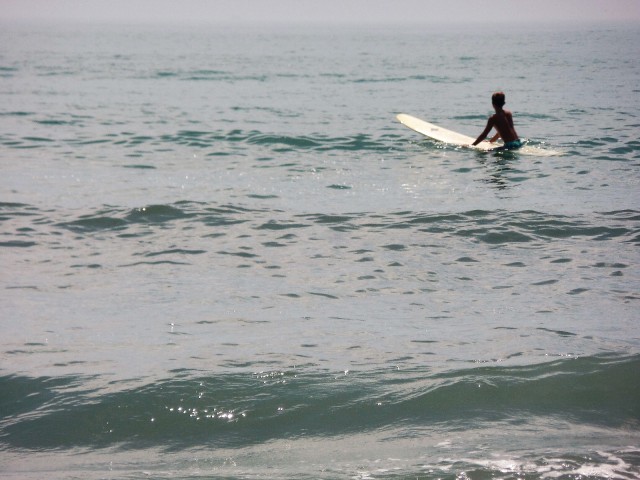
Asbury Park surf
Boating in Asbury Park
Sunbathing Asbury Park
Exit 63 — Long Beach Island
SAMSUNG CAMERA PICTURES
Exit 25 — Ocean City
Exit 13 — Avalon
Exit 10 — Stone Harbor
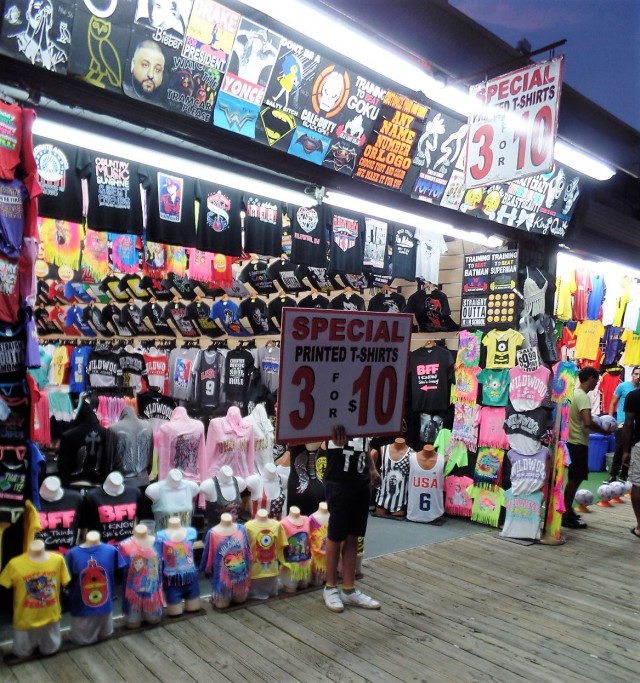
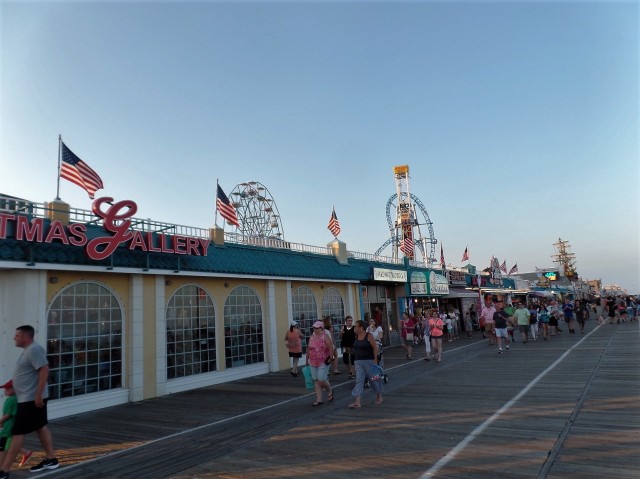
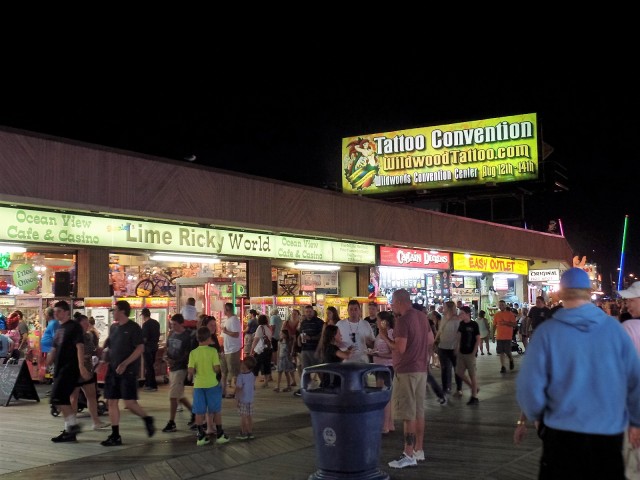
Exit 4 — Wildwood
Exit numbers are the exits on the Garden State Parkway that you would use to access each of these shore towns. The exit numbers run south to north starting at Exit 0 for Cape May. The numbers correspond to the mileposts on the parkway.
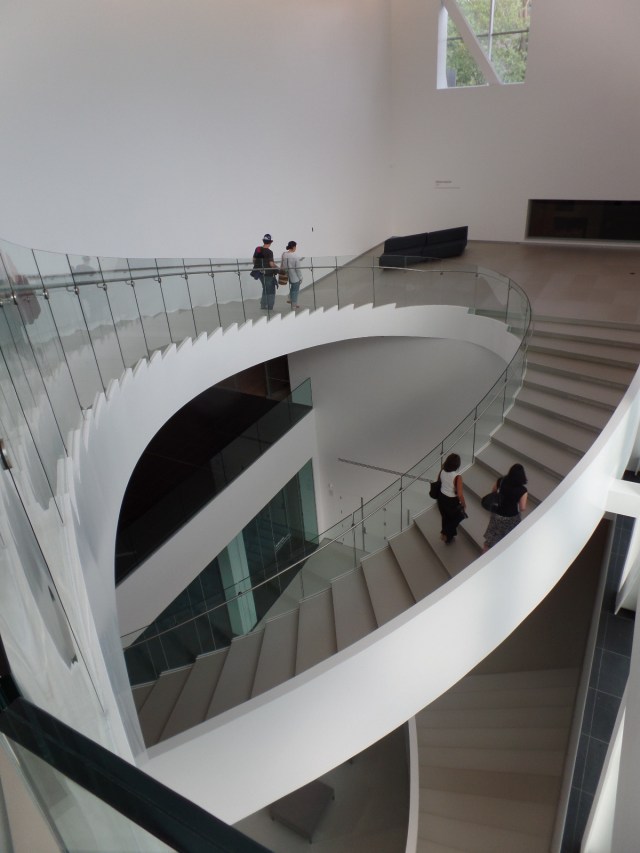
Pierre Lassonde Pavillion. Musee National des Beaux-Arts
The Pierre Lassonde Pavillion opened in June. It hosted 100,000 visitors in its first six weeks. It is the fourth building of the Musee National des Beaux Arts. The Lasonde Pavillion, itself a work of art, is dedicated to contemporary pieces.
Brome Lake, Edmund Alleyn
A Construction in Venice, Part 2, Melvin Charney
Manasie Akpaliapik
Tribute to Rosa Luxemburg, Jean Paul Riopelle
Tribute to Rosa Luxemburg, Jean Paul Riopelle
Musee de la Civilisation
Located in Old Quebec the Museum of Civilization offers exhibits focusing on the human experience, ranging from ancient civilization to modern socioeconomic movements. When I visited this summer there was major exhibit about cats and dogs. A very family-friendly museum with lots of hands-on attractions.
Augustinian Monastery
This includes a museum, restaurant and hotel. All are dedicated to the values of the Augustinian sisters who founded a hospital on this site in the 17th century. Healthcare in the theme of the museum. the restaurant menu is based on healthy foods and the hotel is positioned as a place to retreat into comfort and simplicity.
Musee de la Place-Royale
Located on the Place-Royale where Quebec was founded by Samuel de Champlain. It’s exhibits cover the history of New France and of Place-Royale, the first French outpost in North America.
A Rebrousse-Temp, Giles Girard
Fortifications of Quebec
Quebec City’s defense system, dating back to the 17th century. The photos below are from the Fort de Saint-Louis. The fortifications also include the Citadel and Artillery Park.
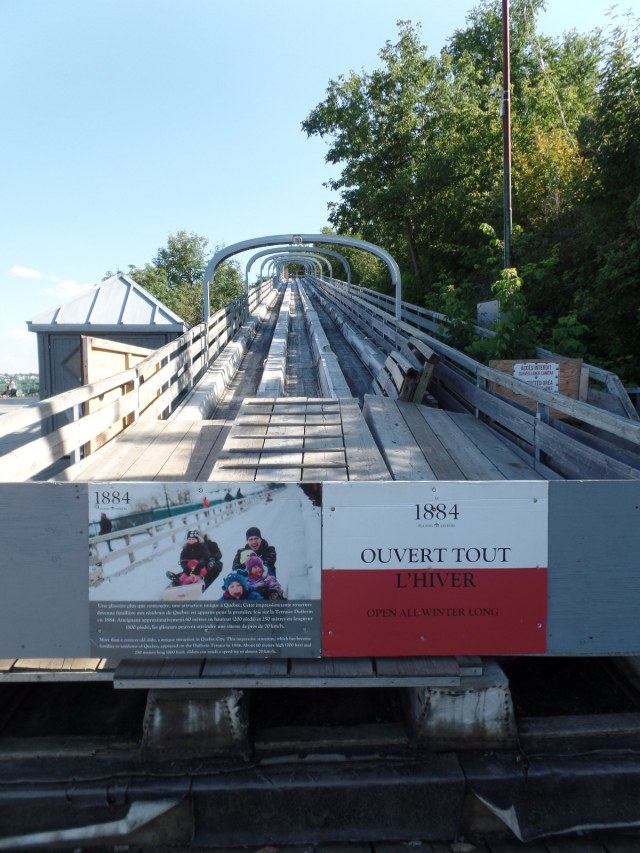
Heading down toward Place-Royale on the funicular from Terrasse Dufferin
Place-Royale
Place-Royale is known as the cradle of French civilization in America. Samuel de Champlain began building this first Quebec settlement in 1609 as a trading post. It is part of Old Quebec, a UNESCO World Heritage site.
Looking out at the St. Lawrence from Place-Royale
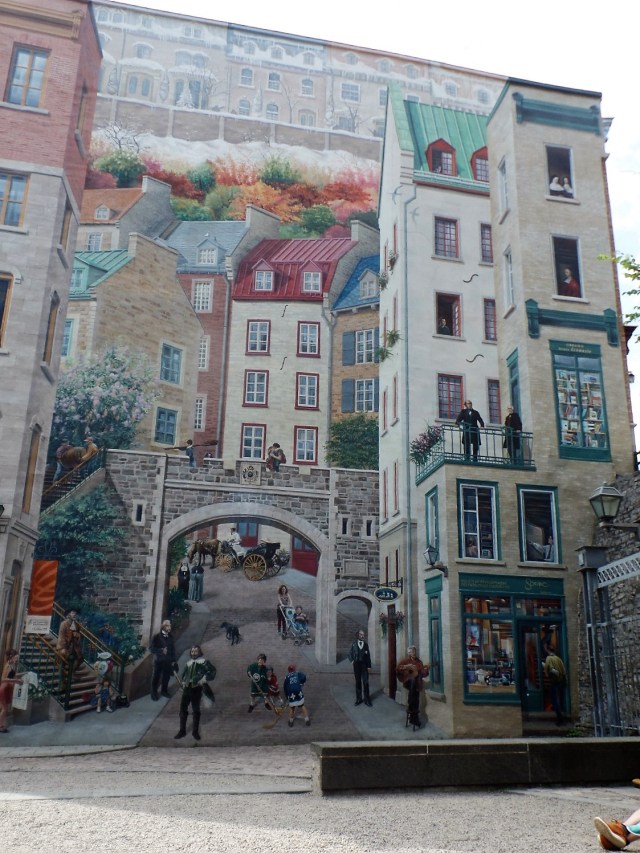
La Fresque des Quebecois
La Fresque des Quebecois tells the history of Quebec City. The mural includes historic figures as well as artists and writers. Finished in 1999, it covers 4,500 square feet on the side of the Soumande House on Notre-Dame Street.
Vieux-Port
Farmers Market at the Old Port
Farmers Market
Bassin Louise
The funicular bringing passengers down to Place-Royale from Terrasse Dufferin.
This year marks the 20th anniversary of the New France Festival. The festival celebrates Quebec’s colonial era in the 17th and 18th centuries when it was part of New France. The festival is usually held at the old port but due to construction on that site related to preparations for next year’s 150th anniversary of Canada activities, the 2016 festival was moved to Artillery Park, amidst the Fortifications of Quebec National Historic Site.
Rue Marchande
Looking the part
Sounds of another era
Vittles
Corn eating contest
Fencing lessons
Artillery Park
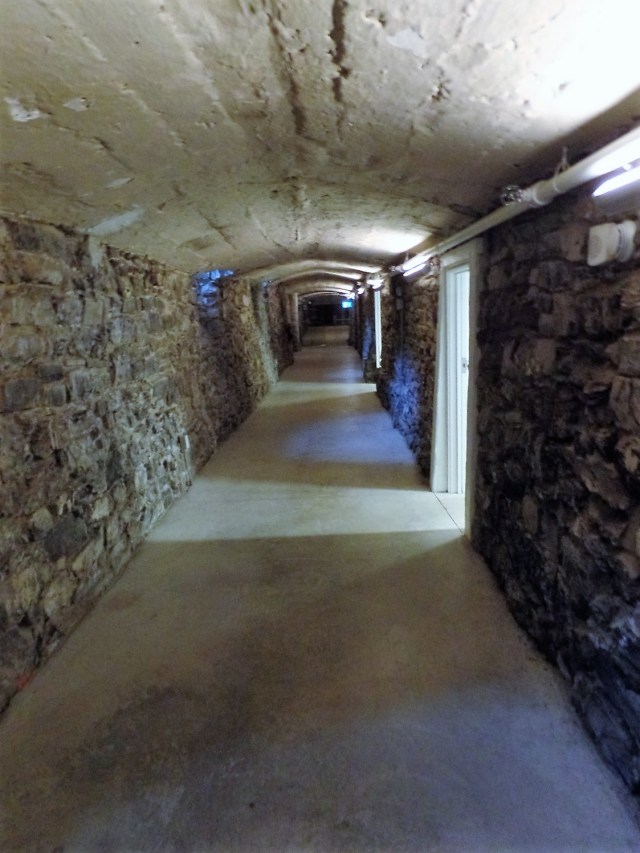
Artillery Park, where this year’s New France Festival was held, was considered a strategic site by the French who began building defense fortifications here in the early 18th century. The images below show the barracks where French soldiers were housed up until the time of the British conquest in 1760. The British later used it to house some of their regiments
Prime time for me as far as amusement parks go was between the ages of 8 and 15. Old enough to jump on almost any of the rides and to go about without constant adult supervision, but not old enough for some of the things that would capture my attention later. So my fondest memories of amusement parks are of the ones I visited during that time in my life. Most are long gone, victims of the reality that real estate development has a bigger payoff than putting kids on rides.
Palisades Amusement Park
This was my idea of the happiest place on earth. One of the most memorable days of my childhood was our 8th grade end of year trip here. It almost made 8 years in a mediocre elementary school worthwhile. Unleashed on the midway surrounded by all by classmates.
Palisades Park had a good run. It opened in 1898 as a trolley park picnic grounds and lasted until 1971. Perched on the Palisades on the west bank of the Hudson River across from Manhattan, it was a scenic setting, albeit one that as a child I barely noticed. It had a 400 X 600 foot saltwater pool which generated waves. But I was a Jersey boy who went to the shore in the summer and swam in the Atlantic, so I had no interest in a fake ocean. What I was interested in was the rides, like the Super Himalaya and the Flying Cages, the midway, pinball arcades and the vinegar fries.
The park was immortalized in Freddy Cannon’s hit song. In this video the song is preceded by the Palisades Park advertising jingle.
Music played a big part in the experience. There were rock bands, do-wop groups and Motown acts. Often they were introduced by “Cousin Brucie,” the loudest and jiviest of the DJ’s of the era. Bruce Morrow’s voice also accompanied much of the saturation advertising that the park did on WABC radio, the dominant pop/rock New York station at the time.
Alas, Palisades Park may have been too successful for its own good. The two towns that it straddled, Cliffside Park and Fort Lee, as well as surrounding towns became gridlocked with park related traffic and were anxious to see it go. In 1971, the land was sold to a developer for $12.5 million. It is now the site of four luxury high-rises.
The former site of Palisades Amusement Park
Bertrand Island
In an earlier post, I talked about my experience as a day camper at the Paterson YMCA (Growing Up in the 50’s: Ode to the Y). Part of that experience was the Friday bus ride to Lake Hopatcong in Mount Arlington, N.J., to spend the day at the beloved Bertrand Island Amusement Park. This was perhaps the amusement park that I most visited as a child and as a bonus I was there without parents. Built on a piece of land that jutted out into the lake, Bertrand Island opened in 1925 and lasted until 1983. It wasn’t much bigger than a carnival but also had a beach and a boardwalk. What I remember are some of the rides, the haunted house, the bumper cars, the Boomerang and the Whip. The latter was a favorite of mine, a ride with round cars pulled along an elliptical shaped track, it would go slowly on the straightaways then whip you around the corners. Seems this is not a ride that stood the test of time. Neither did Bertrand Island Amusement Park. This one ended up giving way for a townhouse development.
Wild West City
I didn’t grow up in the type of family where we would hop on a plane and fly across the country to go to a theme park. The only theme park I remember involved about a one-hour drive north into Sussex County to visit Wild West City. Like the many similar cowboy themed parks around the country, Wild West City was a re-creation of a western town, or maybe I should say a re-creation of the way TV westerns portrayed western towns. It bills itself as offering “the best of the West in the heart of the East.”
I was somewhat incredulous to learn that Wild West City is still in business. (I guess nobody is building luxury condos in Netcong, N.J.) I was equally incredulous to see that Uncle Floyd was appearing this summer in the saloon at Wild West City. The clock must of stopped ticking up there a couple or three decades ago.
(Colin Bedson)
There was lots of cowboy gear to be had at Wild West City: cowboy hats, toy guns and holsters, chaps and some hombre scarves. But the big attraction at this park was the live shows. There was a stagecoach holdup, a bank robbery and, the big one, the gunfight on main street. I think I was a little too old to accept this as real, but a few years ago, things did in fact get real. A 17-year old cowboy actor who was playing Wyatt Earp was paralyzed after he was shot in the forehead by another actor who inexplicably had loaded real bullets rather than blanks in his six-shooter. The victim received a $1.9 million settlement paid by the company who owns the land and an outfit named Arizona Territorial Rangers, a group of cowboy re-enactors.
1964-65 New York World’s Fair
Technically the World’s Fair is not an amusement park. But, as I pointed out in an earlier post, is was World’s Fairs that were at least in part responsible for inspiring amusement parks, so I’m including it here. The New York World’s Fair is also one of the few memories I have of a happy family outing. Many of our outings consisted only of me and my mother with my father opting instead to sit in his recliner and drink beer.
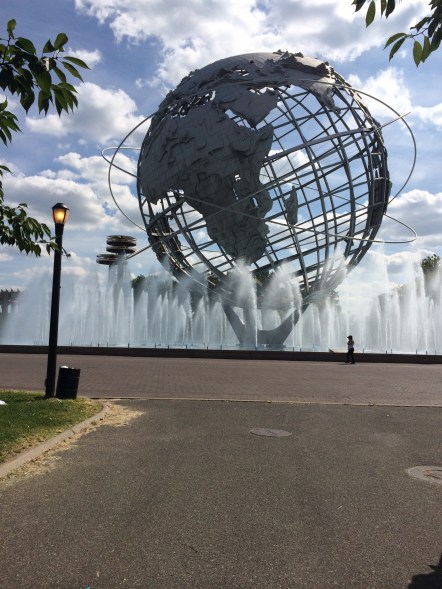
The Unisphere
We all went to the World’s Fair, probably at least three or four times. It is possibly the only time I ever traveled with my family 0n public transportation. We went via the New York City subway #7 train from Manhattan to Queens. Making it even better from my perspective is that in the same year that the World’s Fair opened, Shea Stadium opened with only a boardwalk between the two. So our visits to the World’s Fair usually culminated with a Mets game.
As I remember this event, it was very much dominated by large American corporations. We went to the General Electric Carousel of Progress and marveled at the some-to-be conveniences that would be available in our single-family home kitchen. Another glimpse of the future was provided by General Motors’ Futurama.
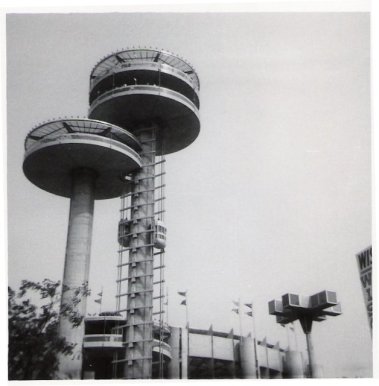
The New York State Pavilion (Doug Coldwell)
Some pieces of this World’s Fair are still in place in Flushing Meadows Park. The Unisphere has been meticulously maintained and is as magnificent as ever. The New York State Pavillion is still in place but in an advanced state of decay. I remember the Pavillion being used for rock concerts in the 70’s. I saw Steppenwolf and Poco there, as well as a then up-and-coming band called Led Zeppelin. The small stadium that was called the Singer Bowl at the World’s Fair (because everything was named after a U.S. corporation) has been renamed Louis Armstrong Stadium and is still used for the U.S. Open tennis tournament.
Freedomland
I mentioned this short lived park in an earlier post. It had an American history theme. I think I went once. It was pretty interesting to me. I remember the attraction about Mrs. O’Leary’s cow kicking over a lantern and starting a fire that destroyed 3.3 square miles of Chicago in the 19th century. And I remember the one about the turn of the century earthquake in San Francisco. I was of course a child who would grow up to be a history major so maybe other kids didn’t find this park that interesting.
Freedomland opened in 1960 and shut down in 1964, the same year the World’s Fair opened. It gave way to the granddaddy of all real estate developments on former amusement park sites, Co-op City.
So while most of these parks have been replaced by luxury condos, luxury townhouses or luxury high rises, there is one other childhood favorite of mine that is still going strong, the Jersey Shore. I still spend at least a couple of weeks of every summer there.
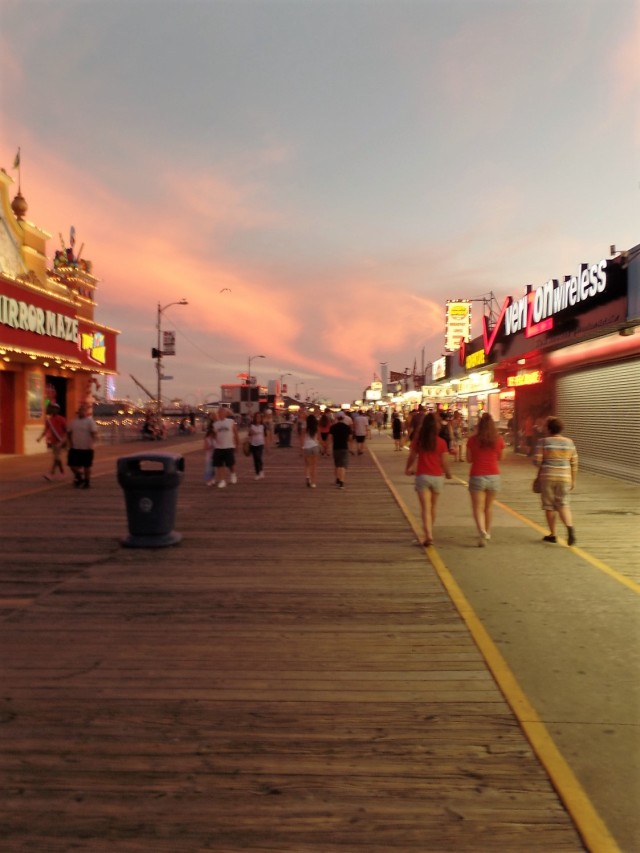
My memories include going to the Steel Pier in Atlantic City at an early age where my mother took me to see Bill Haley and the Comets perform Rock Around the Clock. (I think Dad was in the bar.) I remember the building in Asbury Park with the ferris wheel going through the roof and Casino Pier in Seaside Heights with its roller coaster and majestic carousel, both destroyed by Hurricane Sandy. And in my immaturity, the ride I remember from the Wildwood boardwalk amusement pier was a spinning thing with the unfortunate name Schitzenfahrt.
This is what was left of the Jetstar roller coaster in Seaside Heights after Hurricane Sandy.
The Wetlands Institute occupies 600 acres of marsh in Stone Harbor N.J., which is between Cape May and Atlantic City. The non-profit organization offers educational programs intended to increase knowledge of and appreciation for the wetlands ecosystem for children, university students and visitors to the Institute. Attractions include a salt marsh trail, an aquarium that includes the lively little octopus shown below and a terrapin station.
Click here for a live cam view of the Wetlands Institute Osprey nest.

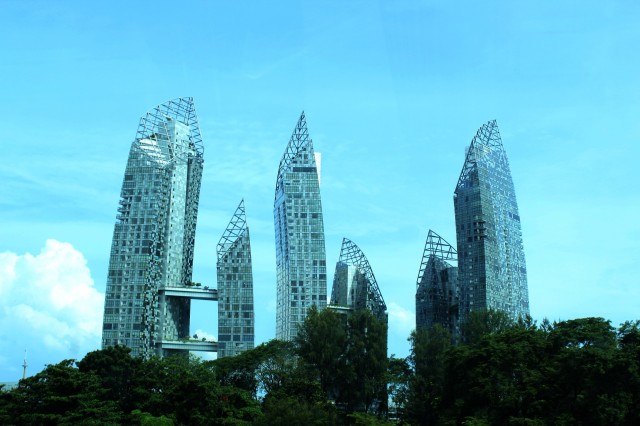 The Utopian vision for the smart city goes something along the lines of what Steven Poole describes in the Guardian: “A woman drives to the outskirts of the city and steps directly on to a train; her electric car then drives itself off to park and recharge. A man has a heart attack in the street; the emergency services send a drone equipped with a defibrillator to arrive crucial minutes before an ambulance can. A family of flying maintenance robots lives atop an apartment block – able to autonomously repair cracks or leaks and clear leaves from the gutters.”




































 off the leash