In a city full of museums, this one is my favorite.

Whitney Museum of American Art, New York

Stewart Uoo sculpture

No Sex, No City: Miranda, Stewart Uoo

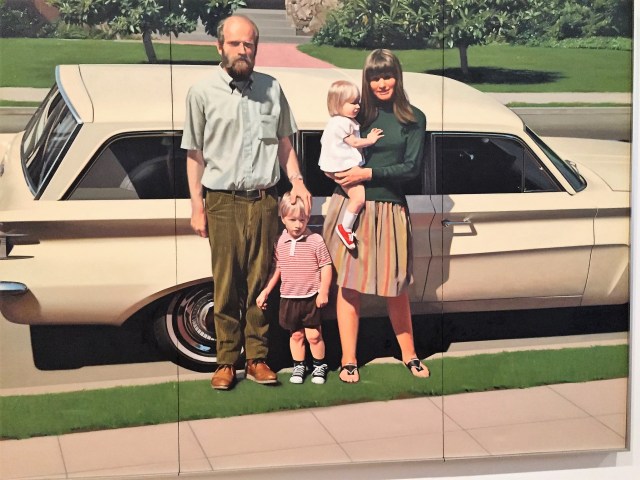
Robert Bechtle painting at Whitney

’61 Pontaic, Robert Bechtle

Steyerl video

Factory of the Sun, Hito Steyerl

VanDerBeek mixed media

Movie Mural, Stan VanDerBeek

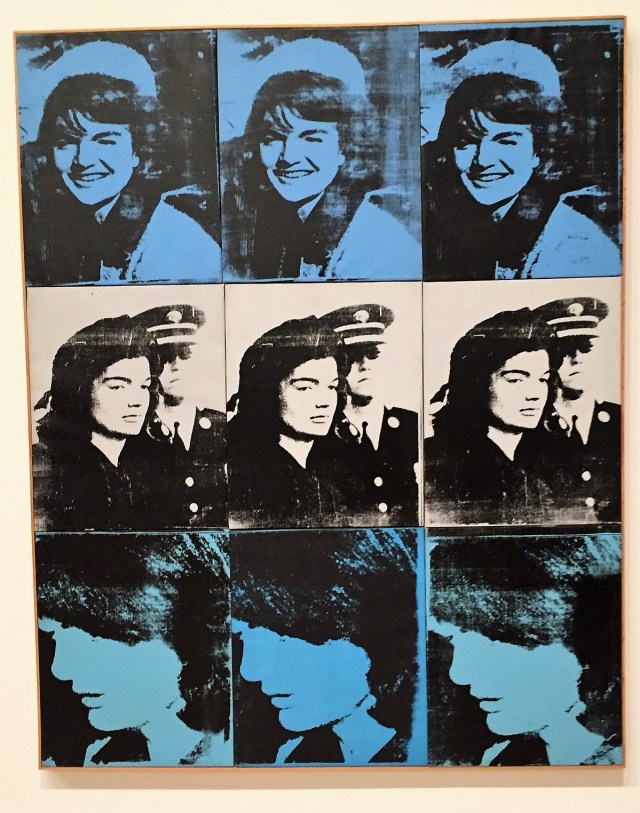
Warhol at the Whitney

Nine Jackies, Andy Warhol

Wax candle by Urs Fischer

Standing Julian, a wax candle by Urs Fischer

Nicole, Sunnydale Avenue

Nicole, Sunnydale Avenue by Katy Grannon

Brune Nauman portrait

Opened Eye, Bruce Nauman

Hanson sculpture at the Whitney

Woman with Dog, Duane Hanson

Herrara painting at the Whitney

Green and White, Carmen Herrara

Saar work at the Whitney

Sklin/Deep, Alison Saar


Posted in Art | Tagged , , , , , , | 5 Comments

Not Your Grandmother’s Vase; Chihuly Blown Glass

Blown glass by Chihuly

Sapphire Neon Tumbleweeds

Dale Chihuly is a 75-year old American artist who builds sculptures out of blown glass. A native of Tacoma, Washington, he holds masters degrees in sculpture from the University of Wisconsin-Madison and the Rhode Island School of Design. He also studied glass blowing on the island of Murano in Venice, Italy. He is known for location specific installations in public spaces and gardens. In addition his work is featured in more than 250 museum collections. After an accident made it difficult for him to hold a glass blowing pipe in 1979 he continued his work by hiring others to do the glass blowing.

Chihuly blown glass

Red Reeds on Logs

Chihuly blown glass

Icicle tower and chandelier

Chihuly drawing

Basket and reed quad drawing

Chihuly blown glass

Royal Ontario Museum exhibit

All photos are from the Chihuly exhibit at the Royal Ontario Museum in Toronto

Posted in Art, Uncategorized | Tagged , , , , , , , | 14 Comments

Hockeytown Toronto

at the Toronto Christmas Market

Hockey equipment past and present

Hockey Then and Now, an Ontario Science Center exhibit

at the Hockey Hall of Fame

The first Stanley Cup

Souvenir T-shirt

Canadians vs. Leafs

Canadians vs. Leafs. As a child I played this exact game for a countless number of hours.

Sharks hockey shirt

the Hockey Hall of Fame

Posted in Sports | Tagged , , , , , , , | 4 Comments

It’s Christmastime in Toronto

Christmas in the mall

The Beaches

Eaton Center

Toronto Christmas Market

Santa at the Chelsea Hotel

Santa in the hotel lobby

Phillips Square

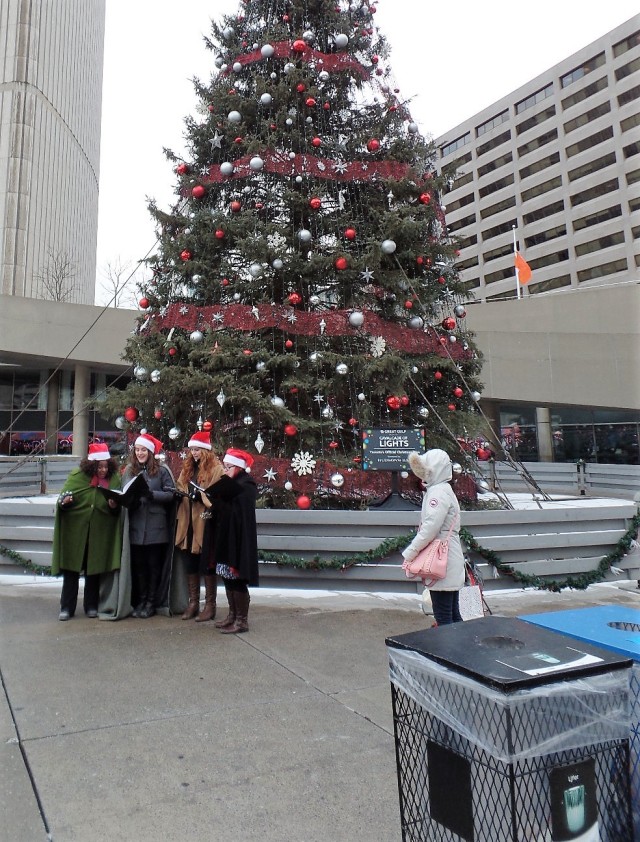
Christmas tree

Posted in Uncategorized | Tagged , , , , , | 4 Comments

10 Really Interesting Things I Saw in Toronto

1.  A green sawfish

Ripley's Aquarium of Canada

at Ripley’s Aquarium of Canada

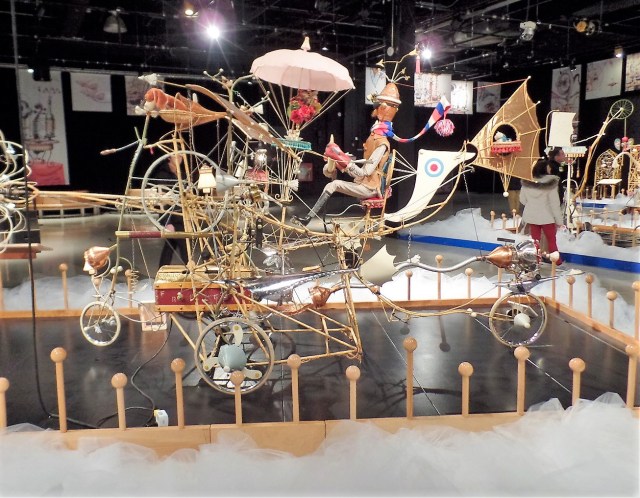
2. Featherstone Kite Flying Machine

Emett design

Rowland Emett creation at Ontario Science Center

3. The Stanley Cup

Great Room, Hockey Hall of Fame

At the Hockey Hall of Fame

4. Peameal bacon on the bun

Home of the Peameal Bacon sandwich

Carousel Bakery in the St. Lawrence Market

5. Standing Bear and Ensnared Grizzly

Standing Bear and Ensnared Grizzly

Totem pole at the Royal Ontario Museum

6. Pipe Dreams


Pipe dreams

My portrait in bubbles at the Ontario Science Center

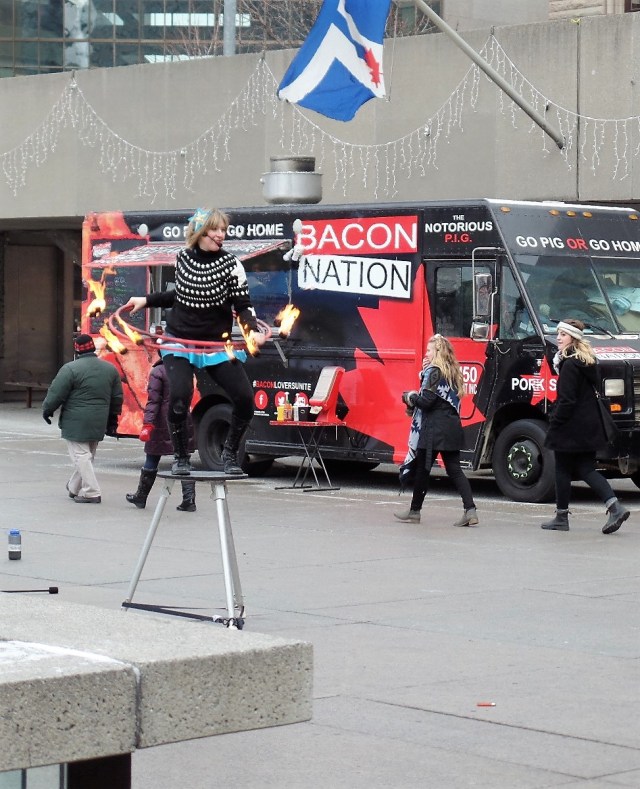
7. Fire and ice

fire and ice

Street performer at Phillips Square

8. TFC party bus

TFC party bus

Toronto FC fans getting ready for MLS Cup

9. Peel-a-way mural

Building in Toronto

10. Jellyfish wall

aquarium jellyfish

at Ripley’s Aquarium of Canada


Posted in Travel | Tagged , , , , , , | 4 Comments

African Art

from the collection of the Newark Museum

Untitled

Untitled (Portrait of a Nigerian Policeman), Sunday Jack Akpan, Nigeria

Naked Gelede

Naked Gelede, Sokari Douglas Camp, Nigeria

Nigerian headdress

Epa Headdress, Bamgboye of Odo-Owa, Nigeria

Les Gendarmes d'Afrique

Les Gendarmes d’Afrique, Sokey Edorh, Togo

Berkeley III

Berkeley III, Wosene Worke Kosrof, Ethiopia

National Theater

National Theater, Olu Amoda, Nigeria

Ghaniian art

Movement #36, Kwesi Owusu-Ankomah, Ghana

Nigerian headdress

Gelede Headdress, Yonuba artist, Nigeria

Posted in Art, Uncategorized | Tagged , , , , , | 7 Comments

Digital Deception Redux: Is Fake News a Laughing Matter?

Two years ago I published this blog post about fake news. At the time I had no idea how big an issue it would become. After what has happened it makes for an interesting read, so I’m re-publishing the original post.

Digital Deception: Is Fake News a Laughing Matter?

An Invading Martian

(photo by wintersixfour)

It was Oct. 30, 1938 and Americans were glued to their radios awaiting further news about a reported invasion by Martians. They heard about how a meteorite had landed in Grovers Mill, N.J. An onsite reporter described how a crowd had gathered around a Martian who was sighted inside the vehicle and who incinerated all present, including the reporter. They awaited further bulletins on casualties and heard about how an army of Martians were preparing to invade New York City.

Orson Welles adaptation of the H.G. Well’s novel “War of the Worlds” is the pinnacle of fake news. At the time it was treated as an outrage by some journalists who claimed it created havoc. But we now think of it as brilliant drama.

Seventy-five or so years later, the tools to publish are available to everyone, as is the ability to promote what you publish through social media. The Web is full of fake news sites, the most popular of which is probably The Onion. While it calls itself “America’s finest news source,” its substantial following knows full well what the deal is.

But fake news also has a dark side. A recent story by the relatively unknown National Report carried the headline “17 Texas Kindergarteners Contract Ebola After Exposure to Liberian Foreign Exchange Student.” This prompted a story in Fast Company “Friends Don’t Let Friends Share Fake News About Ebola” which began: “This is a public service announcement about Ebola. If you see a story from a source called the National Report, ignore it.” The site dnaindia.com commented: “These sites claim to be satirical but lack even incompetent attempts at anything resembling humor.”

What motivates a nothing publication like the National Report to publish this kind of crap? The two million clicks it got in one day on this story, most of which were generated from Facebook. (Remember those statements from Facebook about elevating quality content in their news feed?) Fake news operations are using the same kind of clickbait tactics popularized by services like Buzzfeed and Upworthy, but without going to the expense of employing a real editorial staff.

Big American News is another fake newsjacker trying to produce clicks by feeding the potential panic over the spread of Ebola. These guys published a picture that they claimed showed an Ebola victim rising from the dead. Turns out the photo was a screenshot of a zombie from a movie. Imagine how the trend meter would percolate when you combine Ebola and zombie apocalypse.

Some other stuff that has gone viral recently includes another National Report story with the headline “The Big Lebowski 2 Filming Begins in January 2015.” It doesn’t really. And a site called Huzlers.com chipped in with “NASA Confirms That the Earth Will Experience 6 Days of Total Darkness in December 2014.”

But it is not just clickbaiters that use fake news to accomplish their goals. It has also reportedly been a tactic of both the FBI and the Republican Party.

(photo by nightfall)

(photo by nightfall)

Just last month, the FBI used fake news to nab a bomb threat suspect. (FBI Under Fire for Fake News Site to Nab Suspect.) They created a news story with an AP slug and posted it on a site that looked like the Seattle Times. They then sent it to the suspect on his My Space account. Since the story was about the suspect, he clicked on it, as they expected, and the file included malware that allowed the FBI to track his location. The Seattle Times called this an “affront to a free press.” But one also needs to consider that if catching this guy saved even one life does that result justify the tactics used?

In the ugly world of Washington politics, the National Republican Congressional Committee was reported earlier this year to have used fake news sites to attack Democratic congressional candidates (NRCC Launches Fake News Sites to Attack Democratic Candidates.) They created one page sites with names like “North County Update” to give the impression of a local news site. There were disclaimers at the bottom of the page acknowledging that the site was paid for by NRCC. The story in the National Journal also states that the NRCC had been the subject of a Federal Elections Commission complaint earlier for creating fake Democratic candidate sites.

Let us not forget, however, that there is some good satire out there, fake news that is both funny and insightful. Here are some examples:

After the governors of New York and New Jersey announced Ebola quarantine rules that went beyond what was being recommended by the CDC and the President, The Borowitz Report in newyorker.com reported “Christie Sworn In as Doctor.”

The staff at NewsMutiny apparently took note of the military arsenal available to the police dealing with demonstrators in Ferguson, Mo., and took it one step further with this story “Local Police Department Acquires Nuclear Weapon to Fight Crime.”

And as football season draws to a close and sports reporters start to look at post season awards, the Onion felt this group worthy of recognition: “Penn State Honors Legendary 2012 Legal Team During Halftime.”

Posted in Digital Deception, Uncategorized | Tagged , , , , , , | 7 Comments

Data, Technology and the Future of Cops and Robbers

Baltimore police

(Image by Bruce Emmerling)

What comes to mind when you think of the tools that your local police have? Guns? Handcuffs? Billy clubs?  A radio-equipped car? These haven’t changed much for decades. Perhaps the most advanced piece of technology before the turn of the century was the radar gun to catch speeders. But in the 21st century technology is delivering a whole new set of policing tools and delivering them at a pace that is probably too fast to be fully absorbed and understood by your local police department, the lawmakers or the community they are supposed to serve. There’s sensors and data, body cams, drones, aerial surveillance and facial recognition.

At a Future Tense event in Washington this week titled “Law and Order Circa 2050” these questions were asked: Will technology make crime obsolete? (no) Will crime-fighting technologies make privacy obsolete? (likely) Will technology improve police-community relations? (maybe)

One of the biggest promises of law enforcement technology is that predictive policing can lead to a significant reduction in crime. The basic idea is by using predictive analytics police resources can be deployed to the locations where and at the time when crimes are most likely to be committed. The data analysis can divide a city into a grid and identify the hot spots where crime is most likely to occur. It can, for example, project a 45% chance of a crime being committed in a specific place between 7 and 8 p.m. on Tuesday. The follow-up to that kind of information is obvious.

Crime scene

(image by Geralt)

A piece of data that is mostly missing at this point is just how accurate predictive policing really is and whether it is helping to really reduce crime. Data analytics is as good as the data itself and since the crime data being used is what was reported by the police in the past, some of the Future Tense panelists questioned whether it measures crime or police activity. Jennifer Lynch, senior staff attorney at Electronic Frontier Foundation, commented, “You can only predict crime that looks like past crime and if it is based on bias policing….you’re going to look for future crime in neighborhoods that are already over-policed.”

Security cameraData is not only being accumulated geographically but is also being used to identify individuals. Most of us have no clue how much surveillance is going on. Security cameras may or may not be visible, but do we know when they are using facial recognition technology to identify us? Does your police department analyze social media accounts? Do they have access to your call records?

While law enforcement is collecting data about citizens, are they also collecting data about their own policing? After Ferguson, the Obama administration created a Police Task Force on 21st Century Policing and out of that came a Police Data Initiative. The goal of that initiative was to make public data sets about such things as use of force, traffic stops, citizen complaints and 911 calls. Denice Ross, who is a co-founder of that initiative, said that participation by the City of New Orleans has resulted in a 16% improvement in citizen satisfaction with the police. But for the most part the transparency of this type of data is pretty limited.

One of the most widely used new tech tools for policing is Shotspotter. This involves installing sensors around a city that can detect gunshots and report to the police the exact location of that activity. Ralph Clark, who is CEO of Shotspotter, claimed that it is being used by 90 cities. He commented that when police respond to Shotspotter notifications, they may not apprehend a suspect but they might be able to aid victims or to capture evidence. Asked whether the knowledge that these sensors are in place and that gunshots would be immediately reported to the police department has resulted in a drop in gun violence, he cited “a reduction of up to 35% is some of our cities.” Hopeful but not yet that conclusive.

The promise of technology reducing crime and improving policing was perhaps best summed up by Philadelphia City Councilman David Oh. “My dream would be that we would see the technology of policing leading to a reduction in the amount of money we spend in locking up people, putting them in prison. And then we can use that money to have more beautiful communities, better education and better quality of life.” He noted that one quarter of his city’s operating budget is spent on police and prisons.

Alternatively Samuel Sinyuangwe, co-founder of WeTheProtesters, warned, “The other path is we double down on the police state.”

-0-

Future Tense is a partnership of the New America Foundation, Slate and Arizona State University. An archived video of the Law and Order Circa 2050 event is available here.

Posted in Technology, Uncategorized | Tagged , , , , , , , , | 4 Comments

Once We Made Bowling Balls and Pocket Combs

Borough of Butler

Butler, N.J., is a middle class residential community in Northern New Jersey. Nearly 8,000 people live in its two square miles, a population that has increased modestly over the last couple decades. I worked for a local newspaper in Butler in the 70’s. The town has just undergone the shock of having the Amerace plant, the centerpiece of the local economy and the primary employer in town, shut down. This was a company town, a place where at one time the rubber company rented housing to its workers and donated the land for schools and churches. Once a small industrial center, Butler is a post-industrial, post-company town. But it’s a place that never lost its character.

American Hard Rubber Company sign

Butler rubber plants c. 1900

The rubber plant c. 1900


Butler rubber plant site

The plant site now.

The town is named after Richard Butler, a 19th century entrepreneur who played a large part in bringing industry to the town. He was president of the Butler Hard Rubber Company. In 1898 that company merged with two others to form the American Hard Rubber Company which some 60 years later became a division of Amerace. The Ace Comb Company was a division of Amerace. The rubber business started to come under pressure in the mid-20th century with the widespread use of plastics. Amerace moved its rubber operations to the south in 1974, leaving behind 400 unemployed workers and a massive plant in the center of town.

The building, like the town itself, has refused to die. A new post office was built at the front of the plant. Much of the space has been leased to small manufacturers. There is a brewery, Ramstein (a personal favorite) and some retail stores, Butler Place.

Butler Museum drum

New home of Butler Museum

Butler train station

Two years after the plant closed, the last train left Butler downtown station, ending train service that had begun in 1872. The station has since been renovated and is now the Butler Museum. Many of the images in this post were taken at the museum. Some of its exhibits are Butler specific like the municipal band base drum above and press clippings of a 60’s Butler High football star. But it is also a museum of historical reminders of small town industrial America.

Soda fountain from The Nugget

What small American town main street didn’t have a soda fountain that looked like this?

Butler Museum

Western Electric switchboard

Western Electric switchboard


Butler Museum fire alarms

The fire alarm system


Butler Museum adding machine

The predecessor of the pocket calculator

Posted in History, Uncategorized | Tagged , , , , , , , | 15 Comments

Zuckerberg and Trump

In the aftermath of the presidential election the U.S. media is awash in soul searching, hand wringing and finger pointing. They have a lot to think about.

To begin with there are the polls, many of which are sponsored by, if not actually produced by, media organizations. In this so-called age of data journalism, it seems their data sucked. How could they have been so unanimously wrong? Do they all poll the same people using the same methodology?

Election 16 signMore important is the fact that the result of this election can only lead to the conclusion that the influence of the media, and specifically newspapers, has dropped off as fast as their circulation and advertising revenue. Has there ever been an election where the endorsements were so one sided? I can’t think of any. The only reasonable sized daily I know of that backed Trump is the Las Vegas paper owned by Sheldon Adelson, one of the primary financiers of the far right.

New York Magazine, among many others, offered this answer: “Donald Trump Won Because of Facebook.” The author, Max Reed, pointed to “the social network’s wholesale acquisition of the traditional functions of news media,” adding, “The most obvious way in which Facebook enabled a Trump victory has been its inability (or refusal) to address the problem of hoax or fake news.”

Reed cited a pre-election story in Buzzfeed about “How Teens in the Balkans Are Duping Trump Supporters with Fake News.” According to Buzzfeed there were more than 100 pro-Trump web sites that could be traced to Macedonia. Their creators could not have cared less who won the election, but they seized on an opportunity to make some cash.

One example the Buzzfeed authors described was the site Worldpoliticus.com. It ran a story with the headline “Your Prayers Have Been Answered” which claimed that FBI sources indicated that Clinton would be indicted next year based on her emails. That completely fictitious story generated 140,000 shares, reactions and comments on Facebook, according to Buzzfeed. Now, consider that almost all digital advertising is done programmaticly with the advertiser often having little control over or knowledge of where their ad will appear. When a story generates that amount of traffic, ads get placed on the site, and the hoaxsters cash in.

While it was not a direct response to the New York story, another headline caught my eye at the same time. Mike Masnick’s piece in TechDirt carried the not-so-subtle title “If You’re Blaming Facebook for the Election Results, You’re an Idiot.” Masnick offered the now familiar argument, “This was a ‘throw the bums out’ vote, and many of the bums deserved to be thrown out. That they voted in someone likely to be worse (especially given who he’s surrounded himself with so far) wasn’t the point.”

So what does Mark Zuckerberg have to say about all this? Two days after the election Zuckerberg made an appearance at the Techonomy 16 conference in California where he was interviewed by David Kirkpatrick of Techonomy, who is also the author of the book The Facebook Effect. Zuckerberg dismissed the notion that fake news on Facebook was a deciding factor in the election. He said there is a “certain profound lack of empathy in asserting that the only reason someone could have voted the way they did is they saw some fake news. If you believe that you haven’t internalized the message the Trump supporters are trying to send in this election.”

Zuckerberg suggested that you get a more diverse range of news on Facebook than you would get on any of the three TV news stations. This is because company research shows “almost everyone has friends on the other side.” But he also commented that while Facebook users are presented with posts reflecting a different view of the world, they rarely click on these posts.

Social networkZuckerberg described the Facebook news feed as a work in progress, something that will continue to evolve. He noted that it was originally configured primarily to address the more common usage of the service, sharing updates and photos with family and friends. Facebook’s goal is “to reflect what people want” and he promised “we’ll keep improving it.” One of the things Facebook users want is a safe community and that involves eliminating bullying and hate speech. But he acknowledged that when comments that might otherwise be considered hate speech are uttered by “the president-elect of the United States who has 60 million followers” those comments become “mainstream political discourse.” On thing he didn’t address is what about the people who might make the same hateful comments but who don’t have millions of followers. Facebook’s mission, per Zuckerberg, is “to give people a voice.An consider that Facebook tries to do this with algorithms rather than human beings. Good luck Mark.

Zuckerberg’s comments do pretty accurately reflect my experience on Facebook. I do in fact have a few ‘friends’ who supported Trump. I saw and read their posts but rarely clicked on the links they provided. I think most of my friends who backed Trump at least cast a wary eye toward fake news. (The pope endorsed Donald Trump? Seriously?) But I did see a couple get shared.

This whole election cycle has made clear how we live in a substantially segregated country that is widely divided. Neither digital media nor its more traditional predecessor seem poised to improve that. All signs are that it will only polarize us further.

(The Zuckerberg interview at Techonomy 16 is available on Livestream.)

Posted in Uncategorized | Tagged , , , , , , , , , , | 4 Comments