History of the Minors: El Comandante on the Mound

When the Rochester Red Wings headed to Havana for a four game series against the homestanding Sugar Kings, July 24-26, 1959, they had every reason to expect a raucous crowd. July 26 was an important holiday in revolutionary Cuba. It marked the anniversary of the attack on the Moncada Barracks, the start of the insurrection. Before the Red Wings even took the field on Friday night they got a taste of what the atmosphere would be like. There was a pre-game exhibition between Los Barbudos (the bearded ones) and a military police team. Camilo Cienfuegos, a revolutionary leader who later became head of the armed forces, was the beardos shortstop. On the mound was El Comandante himself.

Here’s how the Chicago Tribune described the scene:

Castro and Cienfuegos
Cienfuegos and Castro take the field for Los Barbudos

“HAVANA, Cuba, July 24 — Fidel Castro made his debut as a revolutionary pitcher Friday night before a crowd of 23,000 at Havana stadium. He pitched to three men, striking out two. The third hit to the first baseman.

“The crowd, which included President Osvaldo Dorticos, arose and sang the 26th of July victory march as Castro went to the mound in the third inning. In the second half of the inning, Castro hit to the shortstop and was thrown out at first base.

“He was presented a check for the proceeds of the game receipts by Bobby Maduro, manager of the Havana Cuban Sugar Kings, for his agrarian reform fund. Several Cuban firms also gave him checks for the fund.”

The Havana Sugar Kings got their start in 1946 when they were called the Havana Cubans and were members of the Class C Florida International League. Maduro bought the team in 1954, changed the name to the Sugar Kings and brought them into the Class AAA International League. They became an affiliate of the Cincinnati Redlegs.

The Batista government was ousted in January 1959. Castro was a Sugar Kings fan and it didn’t take long for him to arrange a meeting with Maduro. Castro supported Maduro’s plans to bring Major League Baseball to Cuba. He guaranteed the Sugar Kings a home in Havana and offered the franchise a $70,000 cash injection to help get their finances in order. 

It turns out raucous was an understatement of what the Red Wings would encounter in Havana. The Saturday night game extended into extra innings and, as the clock ticked past midnight marking the beginning of the anniversary celebration, all hell broke loose. A United Press International wire dispatch recounted the scene:

“A Red Wing spokesman said more the 500 Rebel soldiers poured onto the playing field at the stroke of midnight Saturday, signalling the beginning of a July 26th celebration commemorating the attack on Moncada Army Headquarters that launched the revolution in 1953. He said the soldiers fired machine guns, rifles and pistols into the air and ‘everything was in a terrible state of confusion.’

”Police reported that 17 people were treated for bullet wounds in Havana early Sunday morning.”

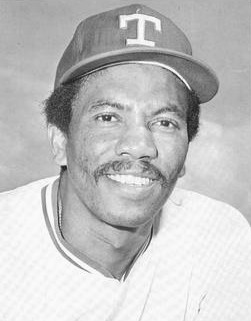
Leo Cardenas
Leo Cardenas 15 years later with the Texas Rangers

The Red Wings third base coach Frank Verdi took a stray bullet, as did the Sugar Kings shortstop Leonardo Cardenas. Neither was seriously injured. That was the end of the Saturday night game and the Sunday doubleheader was cancelled as well. The UPI report suggests that the Sugar Kings thought the Red Wings had ‘chickened out.’ “They accused the Red Wings of using an ‘unimportant incident’ to get out of playing yesterday’s double-header ‘because we are hot and they are cold.’ They pointed out Cardenas, one of their own players, also was hit by a bullet ‘and didn’t complain.’”

It was not the last time that the Sugar Kings would get hot during the 1959 season. They ended up finishing third with a 80-73 record. In the playoffs they swept second-place Columbus in four straight, then beat Richmond four games to two for the International League title. That put them in what was called the Junior World Series against the champions of the American Association, the Minneapolis Millers, a team that included future Red Sox great Carl Yastrzemski.

When the series moved to Havana, 35,000 fans were in the stands, Fidel threw out the first ball, and Che Guevara watched from his box seat. When the Sugar Kings won on a walk off in game seven, the Gran Stadium field was again flooded with celebrating players, fans and soldiers. This time, nobody got shot.

The 1959 Sugar Kings had no less than 22 players who would go on to make the majors. Ted Wieand was ace of the pitching staff, winning 16 games. He was not that successful at the next level, making six appearances as a relief pitcher for the Cincinnati Reds and suffering an ERA of 9.95. Rogelio Alvarez led the Havana squad with 22 home runs. He also met with limited success in Cincinnati, playing parts of two seasons and accumulating a .211 batting average.

But several other Sugar Kings has long and successful major league careers including:

Luis Arroyo
Luis Arroyo
  • MIke Cuellar, who was Cuban, pitched in the major league for 18 years and was a member of the 1970 Baltimore Orioles championship team. He won 20 or more games four times and was the co-Cy Young Award winner in 1969. With the ‘59 Sugar Kings he had a 10-11 record and a .476 ERA.
  • Leo Cardenas, also from Cuba, had a 15-year major league career. The first eight years were with Cincinnati. He was a five-time all-star, a Gold Glove winner and was inducted into the Cincinnati Red Hall of Fame.
  • Luis Arroyo has an eight year major league career, the last four with the New York Yankees. He was the first Puerto Rican Yankee. The two-time all-star was a member of the 1961 World Champion Yankees. He led the American League in saves that year.
  • Another Cuban player Cookie Rojas had a 15 year major league career, including extended stints with the Philadelphia Phillies and Kansas City Royals. He was a five-time all star and is a member of the Royals Hall of Fame. He later went on to become a major league manager with the California Angels and Florida Marlins. He currently is a color commentator for the Marlins.

Despite their success on the field, politics caught up with the Sugar Kings. The following year, Castro began to nationalize U.S. owned businesses in Cuba. Under pressure from the State Department, Baseball Commissioner Ford Frick arranged a mid-season move of the franchise to Jersey City where they became a short-lived team called the Jersey City Jerseys.

-0-

Other History of the Minors posts:

Ty Cobb’s Side Hustle

Was This the Worst Team Ever?

When the Mighty Babe Struck Out in Chattanooga

There’s No Equal Rights in Baseball

Rochester Fans Step Up to the Plate

Posted in Baseball, History, Sports | Tagged , , , , , , , , , , , , , , , , | 10 Comments

History of the Minors: Rochester Fans Step Up to the Plate

If there is such a thing as a storied franchise in minor league baseball, it’s the Rochester Red Wings. In operation since 1899 they are considered to be the oldest continuously operating sports franchise in the United States. While others have seen a steady churn in affiliate agreements, the Red Wings have been uniquely stable. They were a Cardinals affiliate for 32 years, followed by 42 years with the Orioles and 18 with the Twins. A member of the International League since 1912, they have appeared in the league championship series 21 times, winning 10.

The 1956 season concluded with the Red Wings winning their second straight title. They had finished second in the regular season with a record of 83-67. They beat the Miami Marlins four games to one in the playoff semifinals, then went on to best the Toronto Maple Leafs in a seven-game championship series. 

Off the field the outlook was not as rosy. Despite their winning ways, Rochester posted the second lowest attendance in the league. In his column in the local Democrat and Chronicle on Oct. 8, sportswriter George Beahon warned of trouble on the horizon: “Top brass of St. Louis Cardinal organization pulled out of this baseball capital (dateline New York) yesterday. High level meetings with brewery owners are scheduled this week in St. Louis. Biggest decision on docks is whether to drop Rochester Red Wings (and real estate) from list of farm affiliates. As matters stand now, Rochester figues to be guillotined along with Fresno (Class C), Peoria (B) and Allentown (A). Cardinal chieftains hope to keep the verdict a secret until December winter meetings. Right now the odds are 10-1 St. Louis will quit on Rochester.”

Like many other major league teams in the 1950’s, the Cardinals owned their minor league affiliates. They owned both the Red Wings and their home ballpark, Red Wing Stadium. But the mid-50’s were troubled times for minor league baseball. The growth of television and the availability of major league baseball games on TV resulted in a precipitous drop in attendance at minor league parks. Many major league teams were divesting of their farm system properties. In mid-November Cardinals general manager Frank Lane, noting that “the Rochester club has operated at a great deficit for the past several years,” made the announcement Rochester fans had been dreading.

The Cardinals did not pack up their bags and disappear. To their credit they left some time for a potential buyer to emerge and promised to maintain the affiliation agreement if a buyer was found. Beahon wrote in the Nov. 20 Democrat and Chronicle: “The fact remains, however, that if no Rochester individuals step into the picture, the only remaining hope is a public stock sale, which in recent experiments in other communities has had varying degrees of success — and failure.”

It is at that point that a Rochester native named Morrie Silver stepped into the picture. Silver was the president of M.E. Silver Corp., a local appliance distributorship. Rochester Mayor Peter Barry named Silver the head of Rochester Community Baseball Inc. The Nov. 20 Democrat and Chronicle quoted Silver announcing his intent: “I think Rochester can make baseball history by not only coming up with the $200,000 originally announced as the goal, but can go all the way and raise all the money needed to go into this project without a mortgage.” The cost of going ‘all the way’ was half a million.

Frontier Field statue
Statue of Morrie Silver outside Frontier Field, current home of the Red Wings.

In February 1957, Rochester Community Baseball placed the following ad in the Democrat and Chronicle with the headline “Rochester Writes Baseball History.” It read: “On Wednesday Feb. 27, the Rochester Red Wings officially become a ‘home-owned’ baseball club. Your splendid support has written a new chapter in sports history. Our hats are off to each and every one of you stockholders in Rochester and all of the area towns and villages who have made this home-owned team a reality.”

In what has been dubbed the “72 day miracle,” 8,222 shareholders bought shares priced at $10 per. Red Wings fans bought both their team and their stadium. The Cardinals would maintain their affiliation with the Red Wings until 1960.

The Rochester franchise would continue to be publicly owned. There are currently 5,100 shareholders and the $10 shares are now worth $90. The Red Wings franchise that the Cardinals sold for $500,000 was valued in 2016 at $27.5 million (Forbes).

After the sale Morrie Silver became president of the Red Wings in 1957 and later became general manager. Red Wing Stadium was renamed Silver Stadium and the team retired Silver’s number…8,222.

The franchise faced another potential crisis just last month when the Minnesota Twins announced they were dropping Rochester as an affiliate. But that crisis was quickly averted when the Washington Nationals added the Red Wings as their AAA team.

-0-

More History of the Minors:

There’s No Equal Rights in Baseball

When the Mighty Babe Struck Out in Chattanooga

Was This the Worst Team Ever?

Ty Cobb’s Side Hustle

Posted in Baseball, History, Sports | Tagged , , , , , , , , , , | 3 Comments

History of the Minors: There’s No Equal Rights in Baseball

As the summer of 1952 approached in Harrisburg, Pa., it looked like it was going to be a long season for local baseball fans. The current iteration of the Harrisburg Senators, one of several teams to adopt that name over the years, were on their way to a 26-94 season, good for dead last in the Interstate League. That Class B league itself would not survive beyond the ‘52 season. The Senators were averaging just over 400 fans a game and would see their attendance drop from 90,000 in 1947 to 30,000 in 1952.

Eleanor Engle

But in June, Senators president Dr. Jay Smith had an idea. He decided that the person to turn things around for his sagging team was a 26-year old Pennsylvania Utilities Commission stenographer by the name of Eleanor Engle. The Senators signed Engle to a contract on June 21. She had been a softball and basketball player in high school and team general manager Howard Gorden claimed she had tried out for the Senators. Smith commented that she could “hit the ball a lot better than some of the fellas on the club.”

She never got to demonstrate that as along came a former Ohio State University basketball coach George Trautman, who at the time was head of the governing association of minor league baseball.  Engle suited up and took part in pre-game workouts before the Senators June 22 game against Lancaster, but in her words, “I guess Trautman threw me a curve and I struck out.”

An AP story on June 23 had the details: “Trautman, in a telephone conversation from San Francisco, said today that ‘such travesties’ as the signing of women players will not be tolerated, and that clubs signing, or attempting to sign, women players will be subject to severe penalties.”

Likewise, the male enclave of minor league baseball reacted in a less than egalitarian manner. The same AP story quotes Senators manager Buck Etchinson, he who guided the Senators to a last place finish and in nearly-dead league, as saying “I won’t have a girl playing for me. This is no-woman’s land and believe me, I mean it.”

Umpire Bill Angstadt said, “If I was umpiring at the plate and she walked up to bat, I’d quit umpiring. That’s all. I’d quit.”

The AP also interviewed Engle. “I’m sure I would have been able to remain as a player with the Senators,” she said. “Why, women are good for a lot of things, like golf, politics, track and all other sports. Why not baseball? After all there has to be a first time for everything, doesn’t there?”

Not all the men were so unenlightened. Oscar Fraley, author of the syndicated UP column, Sports Parade, offered a different perspective: 

“Baseball is agog today over the fungo fable of ‘Beauty and the Beasts’–and Fearless Fraley has just got to say that the baseball boys seem to be a bit stuffy.

“Times, as any reinstated recluse will tell you, have changed. The ladies came out of the pantry a few years back and frozen food stock has been jumping ever since. We have women welders, curvaceous cops and lassies who tool taxicabs with all the reckless abandon which marks the male of the species.”

The St. Louis Post-Dispatch interviewed fans to find out how they felt about women in baseball. They got a mixed reaction. Howard McColley of Wichita, said, “Of course women should be allowed to play. It would be good for baseball crowds and therefore good for baseball.”

Not so in the eyes of a dude from Oakland, Calif., named Dirk Schwartz. “I don’t pay to see a bunch of powder puffs,” he declared.

One might have thought Engle would get some support from Jackie Mitchell, the 17-year old Tennessee girl whose career with the Chattanooga Lookouts included a three batter appearance against the New York Yankees in 1931 (see History of the Minors: When the Mighty Babe Struck Out in Chattanooga). But alas, in an interview with UP, Mitchell lamented, ”Baseball is really too hard for a girl.”

Eleanor Engle baseball card
Eleanor Engle said of the image that was used for her baseball card, “I look like a skunk at a picnic.”

Engle went back to her stenographer job. In 1963 she got a job with IBM and stayed there for 27 years until her retirement in 1990. She generally shied away from publicity and avoided interview seekers for decades, although she did allow Topps to make a baseball card and was usually generous with those who sought to have their’s autographed. She passed away in 2012 at age 86.

And as for the Senators, they trotted their exclusively male entourage onto the field on June 22, 1952, and, true to form, got thumped by Lancaster 9-4.

-0-

Other History of the Minors posts:

Ty Cobb’s Side Hustle

Was This the Worst Team Ever

When the Mighty Babe Struck Out in Chattanooga

Posted in Baseball, History, Sports | Tagged , , , , , , , , | 13 Comments

History of the Minors: When the Mighty Babe Struck Out in Chattanooga

The Chattanooga Lookouts, a Double-A affiliate of the Cincinnati Reds, got their name in 1909 after a fan contest resulted in naming the team after nearby Lookout Mountain. The Lookouts have played in four different leagues, have been affiliated with seven different major league teams in addition to the Reds. They have called three different ballparks their home, Andrews Field, Engel Stadium (opened in 1930) and the current AT&T Field (opened in 2000).

The Lookouts have won seven Southern League division titles and three league championships, the most recent being in 2017. But the most famous night in Lookout history occurred during a pre-season exhibition game on April 2, 1931. That was the night when a 17-year-old local girl who signed with the minor league team as a way to earn money for college pitched in an exhibition game against the New York Yankees. Jackie Mitchell only faced three batters. The first two were Babe Ruth and Lou Gehrig. Both struckout.

Baseball historians will scratch their heads over whether to take this seriously. There is no doubt that it happened. Here’s how it was described the next day in the Chattanooga Daily Times:

Babe Ruth

“Jackie Mitchell hied (sic) herself to the hill, while the crowd arose with deafening applause. Babe Ruth, the Bambino himself, was at the plate. After warming up, Jackie shot one over with all disdain for the mighty slugger, but it was inside and was called a ball. While most girls would have been so excited that they would have thrown the ball in the stands, Jackie was 4 degrees cooler than the proverbial cucumber.

“Second pitch came with a quick hop and the Babe swung and missed. Another ball, then Babe cut under another. Babe waited, looking for another inside and Jackie breezed one straight through the middle. A perfect strike. Babe threw down his bat in disgust and stalked into the dugout.

“Lou Gehrig did the same thing except different. He went down swinging.”

MItchell walked the third batter she faced, then was pulled from the game. 

MItchell herself wrote the following description of the fateful strike three  for the United News: “I thought he would look for another one close and high, so I threw the next one straight down the alley with all the smoke I could put on it. The Babe let this one go, but the umpire called it for the third strike. Mr. Ruth was pretty mad, but I am sure he was mad at the umpire and not me.” (Pittsburgh Post Gazette, April 4, 1931).

While Chattanoogans were likely pretty proud of their local hero. They weren’t buying it in Brooklyn.

“Jackie Mitchell has struck out Babe Ruth and Lou Gehrig and now she can go home and tend to her knitting.

Jackie Mitchell

“The 17-year-old girl pitcher who so impressed Joe Engel, president of the Chattanooga Lookouts of the Southern Association, that he signed her up for his ball team, was given her chance against the Yankees here yesterday and she ‘made good,’ with a little assistance from the Messrs. Ruth and Gehrig. 

“Ruth did his act perfectly, calling for an examination of the ball after he ‘struck out.’ For this fine piece of showmanship he was given a Chattanooga version of the Bronx cheer.” (Brooklyn Times Union, April 3, 1931)

And there was no shortage of snide comments. This one came in a column called “Fodder for Sports from the Press Box” in the Bluefield (W.Va.) Daily Telegraph. “They tell me you may as well forget Miss Jackie Mitchell, the woman pitcher of Chattanooga, as far as pitching is concerned. She couldn’t throw a ball hard enough for a hop, nor spin it enough for a curve. It takes curves to pitch baseball and Jackie’s aren’t that kind.” Probably best for the author that there is no byline on this story.

A couple weeks after the Yankee game, Engel, a guy who once traded his shortstop for a 25-lb. turkey, had second thoughts. He announced that Mitchell would not be accompanying the team on their season-opening road trip and that perhaps she would be in a position to contribute further next year. There was no next year as Judge Kennesaw Mountain Landis, the racist commissioner of baseball known for keeping the game segregated, voided Mitchell’s contract, suggesting that women weren’t tough enough to play baseball. In an interview with the St. Louis Post Dispatch, Mitchell commented, “I believe I could qualify and might be signed by a major league team and might someday get to play in a World Series if Judge Landis hadn’t ruled against my playing in major league ball. He doesn’t give any reason for his ruling either.”

But there was also a lot of publicity and a lot of people bought tickets. Recognizing this the Joplin Miners of the Western Association signed a female catcher Vada Corbus, though it seems that Corbus never actually took the field for the Miners.

Mitchell went on to have a successful season for the Chattanooga Junior Lookouts, drawing crowds wherever she played. Later she joined the barnstorming House of David team.

Gehrig, Mitchell, Engel and Ruth

As for the Lookouts, they finished the 1931 season 79-74. The following year they won the Southern Association championship with a record of 98-51. They then won the only Dixie Series title in their history beating the Beaumont Explorers of the Texas League four games to two.

Joe Engel remained with the Lookouts for 34 years and in 1960 was presented the ‘King of Baseball’ award by Minor League Baseball.

Sadly the Lookouts, despite their long and storied history, are rumored to be on the MLB’s list of minor league teams that will be cut before the 2021 season.

-0-

Other History of the Minors posts:

Was This the Worst Team Ever

Ty Cobb’s Side Hustle

Posted in Baseball, History, Sports | Tagged , , , , , , , , , | 5 Comments

History of the Minors: Was This the Worst Team Ever?

The 1926 baseball season in Reading, Pa., started like this:

“Well, your Reading Keystones, 1926 edition, stepped out into Lauer’s Park yesterday afternoon to open the International League season against the Toronto Leafs.

“It was an occasion! It was the inaugurating of the eighth International League season for Reading! 

“Just then the game started. All the rooting after that was done by visiting rooters, for blime if those Cannucks (sic) didn’t sock the Keys right on the nose for an 8 to 2 verdict.”

Those were the words of Shandy Hill of the Reading Times, who had the misfortune of being the beat writer for the Reading Keystones 1926 season. Six months after that opening day, and three managers later, the Keystones would finish 75 games behind the Toronto Maple Leafs, an organized baseball record. They won 31 games, They lost 129.

Reading Keystones logo

The Reading Keystones played in the International League, at the time a AA league, but still in existence as a AAA league. The Keystones got their start in 1923 as the new name for the Reading Aces. In that first year they finished third. It was the best they would ever do. They only had one other winning season, in 1928 (84-83). But none of the other losing campaigns were quite as bad as 1926.

In 1927 the team was purchased by William Wrigley and became an affiliate of the Chicago Cubs.

The Keystones best player was Frank Sigafoos. He started the season as the second baseman but was moved around the infield. He didn’t create a very good first impression, at least not with Shandy Hill:

““Master Frank Sigafoos, who was given the second base assignment, fielded and batted with the enthusiasm of an oyster meeting a squirt of lemon juice, and possessed about as much color as a quart of dishwater.”

What Hill apparently did not anticipate was that Sigafoos was a pretty good hitter. He led the team in batting with a .321 average. That led to a September call-up with the Philadelphia Athletics where he hit .256 in 13 games. Not enough to get an invite for the following season.

Sigafoos ended as a career minor league and a good one at that. He had a lifetime batting average of .313, playing is some 1,700 games over 13 seasons. Some of his best years were with the Indianapolis Indians and he was inducted into that team’s Hall of Fame.

The ace of the pitching staff was Charles “Moose” Sweeney. He lost an astounding 29 games, finishing with a record of 10-29 and a 4.75 ERA, the best on the team. Sweeney led the league in complete games with 28, possibly because none of the Keystones three managers wanted to put the ball in the hands of the other pitchers: Jim Marquis, 8-23, 5.83; John Beard, 4-15, 7.25; and Red Shea, 2-12, 5.50.

Sweeney also was a career minor leaguer who bounced around Hartford, Newark, Scranton, Buffalo and Binghamton among others. He had 120 career wins and if you take the 1926 season out of his stats, his career record was a more than respectable 110-83.

By the time September rolled around it has been a long season and Shandy Hill’s Sept. 7 game report in the Reading Times reflected that:

“The business of losing ball games is taken quite seriously by those Reading Keystones. Yesterday they returned from a very encouraging road tour, when 13 games were lost in a row, and took up the losing streak right where they left it.

“Those Keys dropped the first game of a scheduled double-header to the Baltimore Orioles, 6 to 1. A shower prevented them from losing the second game, as the nightcap tilt never did get under way.”

One suspects Hill was happy to get out of there after one game. He was not alone. The Keystones drew a total of 32,000 fans for their entire 80 game home season, an average of a paltry 400 fans per game. By 1932, they packed their bats and balls and moved to Albany.

ballpark

-0-

See also:

History of the Minors: Ty Cobb’s Side Hustle

Posted in Baseball, History, Sports | Tagged , , , , , , , | 14 Comments

History of the Minors: Ty Cobb’s Side Hustle

In the 1916 World Series, the Boston Red Sox beat the Brooklyn Dodgers four games to two. The clincher was played on Oct. 12. Three days later they were in a ballpark called Lighthouse Park in Connecticut playing a semi-pro team called the New Haven Colonials. But this wasn’t just your run-of-the-mill small town semi-pro team. The game report in the next day’s Bridgeport Times and Evening Farmer tells you why:

Ty Cobb
Ty Cobb

“Ty Cobb played first base for the Colonials and put forth his best efforts from kickoff to curfew. He hit the Boston pitcher for a double and a single, displayed speed on the paths that do not show in the box score…”

Cobb, the Detroit Tigers Hall of Fame center fielder, was coming off a season in which he hit .370, had over 200 hits, and led the league in stolen bases with 68. And who was that pitcher who he got two hits off of?

“Babe Ruth, the big left-hander, who pitched the Red Sox to victory in the second game of the world’s series classic, was on the mound for the visitors. Ruth yielded his opponent but six hits, Cobb helping himself to two.”

The game ended in a 3-3 tie, abandoned after the ninth inning. The Bridgeport Times reporter explains, “The impending darkness, together with a cold wave which made it uncomfortable for players and spectators alike, forced operations to cease before the knot could be untied.”

Baseball players were not awash in lucrative contracts back in 1916. The New Haven game was an extra payday, a side hustle.The American League didn’t see it that way and the league fined Cobb and each of the Red Sox players $50. Not a problem for Cobb, who still cleared $750 for the day’s work.

The Colonials were the brainchild of George Weiss, who as a 21-year old Yale dropout, put the team together in 1915 with two former high school teammates. Later the Colonials would become a member of an “outlaw” minor league affiliated with the Federal League, a third major league created to compete with the American and National at the time.

New Haven Colonials
New Haven Colonials 1915

Weiss is the one who brought Cobb into the picture. It was in August 1916 when Weiss enticed Cobb to spend his day off playing in New Haven by floating an offer of $300. Cobb joined the Colonials for a game against their inter-city rivals the New Haven Murlins. Cobb hit a single and double and scored a run in four at bats. More importantly for Weiss, the game attracted 5,000 fans.

The Murlins were an Eastern League single-A team affiliated with major league baseball. That should have provided an advantage for the Murlins, but they were no match for Weiss. Since New Haven had a ban on playing baseball games on Sunday, the Murlins were on the sidelines as Weiss took his team to Lighthouse Park just outside the city limits. The fact that Major League Baseball also banned Sunday games gave Weiss the opportunity to bring in top ballplayers for an extra payday on Sunday.

Among his other promotions were games against a bloomers womens team and a team from China. The Murlins couldn’t compete at the gate. They didn’t do that well head-to-head either. The two New Haven teams met on Sept. 23, 1917. Here’s the Hartford Courants game report:

“With Ty Cobb on first base, the New Haven Colonials overthrew the New Havens 6-3 today… Cobb fanned once, smashed out two hits, scored two runs and drove in another.”

Eventually the Murlins threw in the towel and they sold the Eastern League franchise to Weiss for $5,000. The new Eastern League franchise was named the New Haven Profs, although it was also known as the New Haven Weissmen. Cobb and Walter Johnson, a Hall of Fame pitcher who had also played some games with the Colonials, were shareholders. The team lasted until 1930.

George Weiss

Weiss went on to have a long career with Major League Baseball and was elected to the Hall of Fame as an executive. He is credited with creating the New York Yankees farm system which produced the players that made the Yankees a dominant team for much of the mid 20th century. He was general manager of the Yankees for 13 years and later became the first president of the New York Mets.

Posted in Baseball, History, Sports | Tagged , , , , , , , , | 9 Comments

Seasons Change

Kittatinny Valley State Park, Newton, N.J.

Lake Aeroflex
Water lilies
Aeroflex/Andover Airport, operated by N.J. Forest Fire Service
Yuca in northern New Jersey?
Off the leash
Posted in Travel, Uncategorized | Tagged , , , , , | 8 Comments

The Gentle, Dreamy Abstractions of Agnes Pelton

Departure, Agnes Pelton
Departure, 1952

A several decade long career as an artist brought Agnes Pelton neither fame nor fortune. There is a story about a collector in Santa Barbara, Calif., who bought two of her abstract paintings. He ended up unloading them at a garage sale. Initial asking price was $40. They sold for $5. Today, Pelton is the subject of a one-woman exhibit that occupies the entire eighth floor of the Whitney Museum of American Art in New York

Agnes Pelton was born in Germany to American parents in 1881. She grew up in Brooklyn in the 1890’s. Her father died of a morphine overdose when she was 10 and her mother became a recluse. Agnes was home schooled, largely due to illnesses.

Pelton studied art at Pratt Institute where she had the same instructor who would later work with Georgia O’Keeffe. She lived a modest existence, largely off the grid. From 1921 to 1932 she lived in an abandoned windmill on Long Island. After that she moved to Cathedral City in the desert area of southeastern California. 

Pelton made a living painting conventional landscapes and portraits. But it is her abstract works that have posthumously raised her profile in the art world. Pelton was a believer in numerology, astrology and faith healing and a follower of Agni Yoga. Her paintings are an expression of her spirituality.

When the Phoenix Museum of Art organized the exhibition Agnes Pelton: Desert Transcendentalist it was the first time her works had been exhibited since a 1995 exhibit at the Palm Springs Art Museum. It is the Phoenix Museum exhibit that is currently at the Whitney.

Pelton’s paintings are soft and dreamy with a sort of implied movement. Many of her works were painted at a time when other artists were focused on depression, class struggle and war. Today, living in a pandemic America rife with violence and political dishonesty, a stroll among the works of Agnes Pelton can’t help but chill you out a little.

Messengers, Agnes Pelton
Messengers, 1932
Agnes Pelton painting
Prelude, 1943
Resurgence, Agnes Pelton
Resurgence, 1938
Posted in Art | Tagged , , , , , | 10 Comments

Montclair Film Festival 2020: Movies That Make You Want to Go Out and Vote

The Montclair Film Festival was held two weeks before the U.S. presidential election. The festival program, filled as always with documentaries, covered a wide range of election-time issues: race in America, the economy, gun violence and the influence of money in politics. The way the festival was presented, seven months delayed and shown at a makeshift drive-in or streamed, is a reminder of the biggest election issue of all, the pandemic and how it has been handled.

Here are some highlights of movies that make you realize how important it is to vote this year.

Surge

The surge is women running for office. It is presented as an outgrowth of the 2016 election and the next step after the Women’s March on Washington that followed Trump’s inauguration.

The film follows the campaign of three women running for congressional seats in 2018. All started as rank underdogs running as Democrats against Republican incumbents in traditionally red districts. The candidates are Jana Lynn Sanchez in Texas, Liz Watson in Indiana and Lauren Underwood in Illinois. All are running in predominantly white suburban districts and all have to win primaries to get on the ballot in November.

If you saw the Netflix documentary Knock Down the House, this might sound familiar. It is essentially the same movie, following three female candidates for Congressional seats. Since they are both filmed during the same campaign, I assume they were made at the same time, although the Netflix doc came out a year earlier.

I was prepared to watch more of the same, but found Surge to be a riveting and inspiring movie. These women campaign the hard way. They knock on doors, shake hands in the street and appear at senior citizen club tricky trays. 

What stands out in both of these movies is the incumbents that these candidates are seeking to unseat. They are all the same: wealthy, old and white. Disconnected from the folks in their district, if there’s a debate they usually use a surrogate. They are used to throwing money at the campaign and cruising to one re-election after another. They only show up when it becomes apparent that they may for once be facing a competitive race.

Knock Down the House was lucky to have chosen as a subject Alexandria Ocasio-Cortez, who won her race and turned out to be something of a political superstar. Surge has a star too. Lauren Henderson is a smart, fearless, energetic woman with an engaging personality. She’s a registered nurse. She would become the youngest black woman ever elected to Congress, and this from a very white district.  I’d be proud to have her represent me in Congress.

Will we be watching documentaries like this in 2021 and 2022 about the 2020 campaign? Or will we get to the point where women running for office is so expected and accepted that it’s not noteworthy enough to make a movie about?

Us Kids

Not much has happened in American politics and society since the election of Trump that could give much cause for optimism. The kids at Marjorie Stoneham Douglas High School in Parkland, Fla., are an exception. That is the high school where a mass shooting that killed 17 took place in February 2018.

This isn’t a documentary about what happened. It’s the story of what happened afterwards. It shows a group of teenagers responding not just with grief and anger but with determination and commitment. They confront NRA supporting politicians. They organize the mass march on Washington. They bus around the country mobilizing kids their age to fight the laws and lawmakers that enable gun violence, whether in our schools or in our neighborhoods.

Some of these kids, like Emma Gonzalez and David Hogg, have become pretty well known and widely-recognizable. But the film also follows a girl who was wounded in the attack, Sam Fuentes. Being a leader, being on stage and on camera, doesn’t come so easily for Sam, but her path to healing and her emergence as an activist is perhaps even more resonant as she is a bit more like what many would consider a typical high school girl.

Of all the things these kids are shown doing, the one that stands out to me is how they deal with the so-called counter-protesters, the crackers and rednecks who dress up like GI Joe and come marching around armed to the teeth. These kids don’t shout at them or hide from them, they walk on over to them and try to engage them in an intelligent and empathetic conversation. 

Lots of other kids joined them. Inner city kids dealing with gun violence on the streets worked together with high schoolers from affluent suburbs. Will these kids do a better job of sorting out this country than we did? I’m 50 years older than most of the kids in this movie but I look up to them and listen to them. And I sure hope they’re all old enough to vote now.

Nomadland

Why would I include a fictional movie based on a book written three years ago in a list of movies about election time issues? It’s the economy, stupid.

If I had to describe this movie in one word it would be lonely. The beautiful, vast and empty desert landscapes. The somber, moody piano music score. And a woman living on her own in a van.

The nomads of Nomadland are people who have had a rough turn later in life. They have lost a job or a spouse, have been bankrupted by healthcare costs or foreclosed. They live on the road in campers or vans. One even lives in her Prius. In the words of Fern, the woman who is followed by the cameras: “I’m not homeless, I’m houseless.”

They travel from place to place chasing mostly temporary gigs. There’s seasonal work at an Amazon warehouse, where a fringe benefit is a place to park your van, a nomad pow-wow in Arizona where they teach each other things like how to fix your own flat, a season cleaning toilets at a campsite. One did a season at Wall Drug, while another headed to the bee harvest in Nebraska.

This is not a story of despair. Many deep and lasting friendships are created and there is a strong sense of community.

The movie is based on a brilliant book by Jessica Bruder (you can read my review here). The book is non-fiction. The movie is fictionalized although some of the background characters are nomads from Bruder’s book. While the book is about the sociology, camaraderie and community, the film makes a more personal story. Fern, a fictitious character, is presented with opportunities to move back in under a roof. She defers. Yet nothing about her life on the road seems to make her particularly happy. In the end, she starts another round in an Amazon warehouse. 

The New Corporation: The Unfortunately Necessary Sequel

This is a follow-up to a 2003 documentary. The filmmakers suggest that corporations have changed their approach to the public, focusing on their role as socially responsive entities. The filmmakers call BS.

BP is one example. The company CEO was one of the first in the fossil fuel industry to acknowledge the impact of climate change and talk about the company’s commitment to addressing it. We then see footage of fatal oil rig explosions and massive leaks, courtesy of BP.

Jamie Dimon of JPMorgan Chase talks about how his bank is undertaking a massive initiative to revive the city of Detroit. The filmmakers talk about how the reckless policies of his bank helped lead to the 2008 recession that devastated that city and its residents. The priority of corporations is return for shareholders and that always takes precedence over issues like climate change and income inequality. That point is hammered home.

There are interviews with scholars, authors and activists. I don’t remember who said what but there are some memorable quotes: “the greed economy is killing us;” “the destructive corporate agenda is completely out of control;” “you don’t need a PhD in economics to know your life sucks under capitalism.”

The latter part of the movie is devoted to activism. We hear from Alexandria Ocasio-Cortez, Bernie Sanders, Greta Thornberg and others. And the cameras visit Zucotti Park, the protests for a $15 minimum wage and the Black Lives Matter demonstrations. The message is not solely take to the streets, not just vote, but run for office.

And, as a reminder that the legalization of marijuana is on the ballot in several states, including New Jersey where I live……

Freeland

Answers the question of what happened to the hippies who headed off to live on communes. Answer: they became pot farmers.

You might think these are good times for marijuana growers but the fate of Deb the cannabis farmer suggests that just like in other areas of farming the little guy is getting squeezed. In Freeland, which is a fictional film, the local authorizes come after Deb, her customers get spooked and despair continues to spiral from there.

The movie is filmed in Humboldt County, Calif. The cinematography is amazing and the beauty of the scenery paired with the somber score reflects the story being told. The other highlight is the performance of Keisha Fairchild in the lead role as Deb. Timely viewing in my state where we’ll shortly be voting on legalizing marijuana.

Posted in Uncategorized | Tagged , , , , , , , , , , | 7 Comments

Montclair Film Festival 2020: Best Of

The pandemic has brought movie theaters to their knees. Big studios, armed with productions that they expect to bring in big cash, are holding back. But that doesn’t mean filmmakers aren’t at work. And the film festivals that many independents depend on as their initial outlets, are soldering on, albeit without red carpets and opening night parties.

The Montclair Film Festival, now in its ninth year, usually takes place the beginning of May. This year it was rescheduled for October. They used a makeshift drive-in at a county-owned archery field to screen a couple movies a night and presented the rest online.

The various restrictions associated with the content made the Eventive site which they used for streaming somewhat maddening to use if you wanted to cast the films onto your TV screen. But there was one advantage to having the festival online. I watched 18 movies (two at the drive-in and the rest virtually) during the 10 day festival.

I can’t promise that these were the best films of MFF20, but these were my favorites out of the 18 I saw.

My Name is Sara

How many movies have been made about young Jewish girls in Nazi-occupied Europe? No matter how many, they don’t lose their moral weight. Nor do they fail to be heartbreaking.

Sara is a 13-year old girl who lives in western Poland. Poland is occupied by Nazis and they are systematically exterminating Jews. Sara’s parents know their fate and they encourage her and her brother to run off and hide in the woods. Sara swims across the river to the Ukraine where she ends up as nanny and all-around servant to a gruff Ukrainian farm family. She assumes a new identity, a new life story and to pass the test of non-Jewishness learns to cross herself properly, takes communion and goes to confession.

This is a true story and with that comes the astonishing cruelty of German Nazis. In one scene they round up all of the Ukrainian residents in their small agricultural village and announce that two German soldiers were killed by resistance fighters. They will kill 10 civilians for every German soldier killed. Ten people are rounded up and shot before their husbands, wives, mothers and fathers.

Like all the films of this genre, this is a story of survival, not just for Sara but for the farm family she is living with. The Nazis steal their animals, the resistance fighters do too. They have to turn over much of their grain to the occupiers. On top of that, they cheat on each other, fight with each other and generally seem to hate each other. A grim story, but they all make it. It is only after the Russians have driven the Germans out of the Ukraine that we hear the words “my name is Sara.”

I’m sure at least some of my readers are thinking ‘that’s not for me,’ But it’s a brilliant movie. The best I saw at the festival. The cinematography is exceptional, the actors and actresses convincing. You can’t watch this and not be moved. I’m sure it will stay with me for a long time.

Down a Dark Stairwell

On a November night in 2014 Akai Gurley and his partner got tired of waiting for the elevator in their East New York high rise. They started down the stairs. Coming up the stairs was NYPD officer Peter Liang doing what the police referred to as a vertical patrol. Liang pulled his gun and what he later referred to as an accidental discharge resulted in a bullet that ricocheted off the wall and killed Gurley. Gurley is Black. Liang is Chinese-American.

Gurley’s family, neighbors and supporters took to the streets demanding justice. He was unarmed and did nothing wrong. Liang was indicted by the Brooklyn prosecutor on eight charges including second degree manslaughter. Then the Chinese-American community took to the streets. They called a Liang a scapegoat who was paying the price for the murders of Eric Garner, Michael Brown and other Black men at the hands of police who were never indicted or charged. In all Chinese-Americans demonstrated in 43 cities. And a third group took to the streets, Chinese-Americans who supported the African-American community, calling for an end to police violence against minorities.

The movie goes through the entire episode: killing, indictment, trial, sentencing. The filmmaker notes that in 14 years in New York City, 130 black men were killed by police and Liang was the only one to face charges.

I can’t remember a more powerful documentary about race and racism in America than this one. There are times when these groups of demonstrators end up on opposite sides of the street shouting at each other. But there remains a broad recognition that the other minority community is not the enemy. The film captures numerous conversations, not just between the community leaders, but literally with men on the street. These conversations reveal the diversity of views within both minority communities. The comment that stands out for me comes from a Chinese-American man talking to an African-American demonstrator: “This is all about white supremacy.”

Two of Us

Two older French women, Madeleine and Nina, have a romantic relationship that they have kept secret from those around them. They live together is one apartment but rent separate apartments across the hall from each other for appearances sake. When Madeleine has a stroke and loses her ability to speak, their secrecy creates seemingly insurmountable barriers for them to be together. Not the least of those barriers is Madeleine’s daughter and son, as well as a 24-hour caregiver.

The story is simply told. We learn very little of their previous lives and most of the movie takes place in a single apartment. Given the plot you may be surprised to hear that this film is filled with suspense and tension.

The movie is punctuated by silences. The story oft times moves along without dialogue. This is the first feature film for director Filippo Meneghetti. He has taken a unique story and given it a stylish rendering.

Farewell Amor

You would be hard-pressed to find a more unique and insightful movie. Farewell Amor is the story of an Angloan immigrant family in New York. Amor is the nickname that the wife Esther uses for her husband Walter. 

Walter has been in New York for 17 years before his wife and daughter join him. He works as a cab driver and has been living with another woman. When Esther arrives, they find themselves with little in common. They  are unable to connect physically. Esther has turned deeply religious, which is something of a mystery to Walter. And along with Esther is teen daughter Sylvia who has her own struggles, coming almost literally right off the plane into a New York City high school, and dealing with an extremely overprotective mother.

The film is presented in segments. The same time frame and events are presented from the perspective of each of the three principal characters. The situation they face seems to be a recipe for disaster. Yet what we see is an honest and sincere dedication on the part of each to reconstruct this family.

On the surface you might think how lucky this family is to escape a country torn by civil war and to be reunited in the U.S. It was no doubt a very long hard road to get where they are. Once here though it is still a long hard road. I’m not sure this story has been told that often or this effectively, It is a moving one.

Zappa

Zappa played guitar. He fronted a rock and roll band. He composed orchestral music. He even made movies. This documentary covers it all. It is the most extensive source of information about Frank Zappa I’ve encountered.

There are interviews with musicians who played with Zappa and with his wife. Alice Cooper tells us that he thinks Zappa sabotaged his own records because he was afraid to have a hit record. But he did have a hit record. One. Valley Girl. That was inspired by his daughter Moon who, at age 13, slipped a note under his door introducing herself and reminding him that she lived in the same house.

That’s the side of Zappa that the fans of his music don’t have to deal with. He was obsessive, self-absorbed and no doubt to many around him a complete prick. He is, of course, not the first famous musician to turn out to be a shitty father. He wasn’t that good of a husband either. “I like to get laid.” was his explanation. 

There are all sorts of tidbits of information about Zappa that show up in this documentary. His initial fascination as a child was with explosives and he planned to blow up his high school (with nobody in it). At the other end of his life he was invited, and accepted, an invitation to appear at the celebration of Czechoslovakia’s independence after the Velvet Revolution. He testified in Congress against the mature audience labels that were eventually put on albums. 

But amongst all this he was making music like no one else, whether it was played in rock clubs or by chamber music ensembles. This is a long documentary. If you’re a Zappa fan, like me, you’ll be glued to your seat. My wife, on the other hand, stayed in the next room and just popped in for the parts she thought sounded interesting. You can do stuff like that when everything is streamed. 

Posted in Uncategorized | Tagged , , , , , , , , , , | 10 Comments