There is precious little chance that you are going to walk into a casual restaurant or diner today and find a jukebox sitting at the end of your booth or table. Scrolling through the choices was always a great way to entertain yourself while waiting for your food. And waiting for your songs to play helped prolong a leisurely meal.
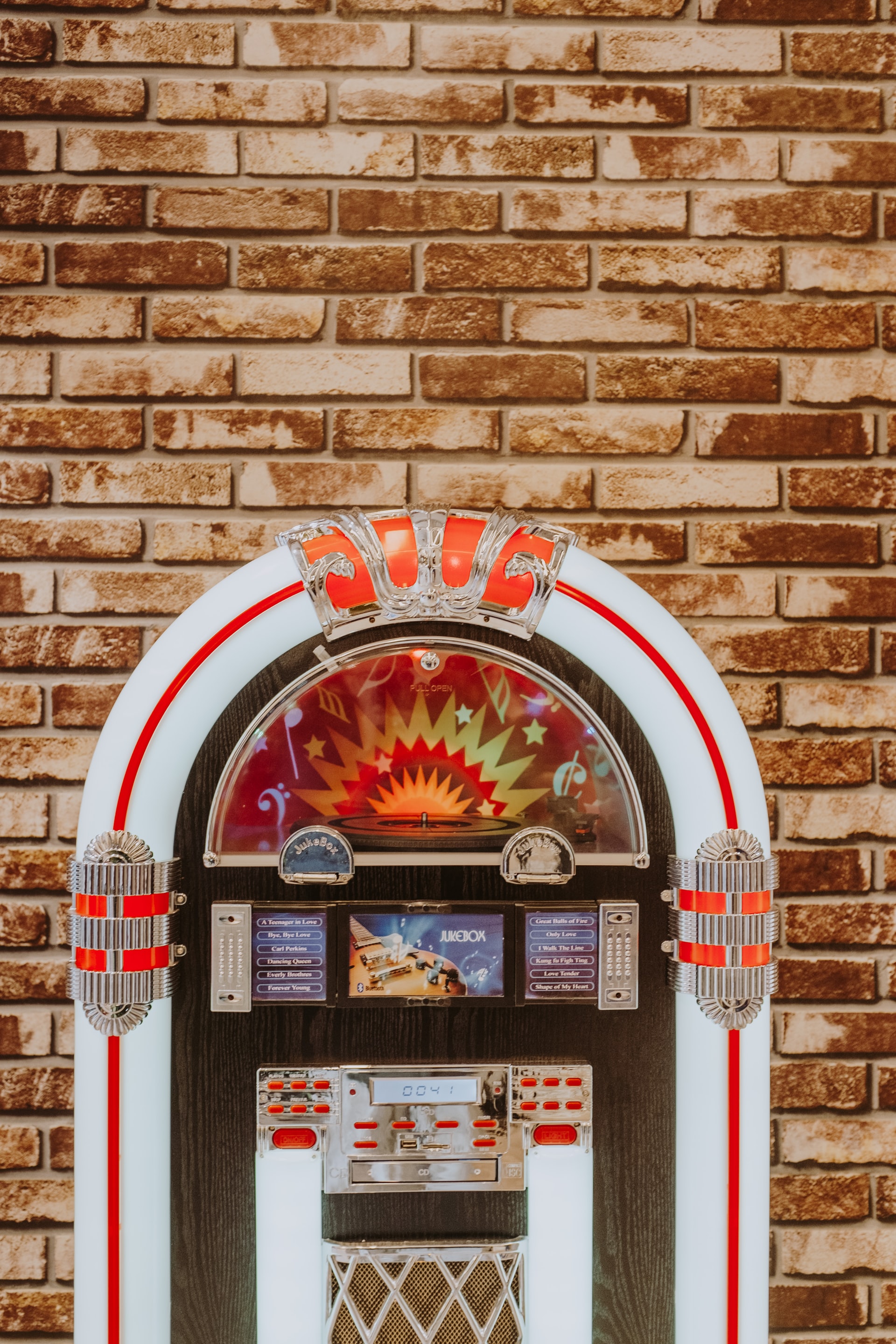
The jukebox is not nearly as prevalent as it was in its roughly two-decades long heyday starting in the late 1940’s. But it hasn’t gone away either. If you’re a collector you can find yourself a classic Wurlitzer that has been refurbished. You might have to drop $20,000 for that. At the other end of the spectrum you can buy a table-top digital jukebox to drop on your mantle for about $150 and then use it to play the music stored on your phone.
Jukeboxes first became popular in bars, although at the time they might have been called saloons or speakeasies or juke joints. They expanded their reach to diners, restaurants, soda fountains, even drugstores and laundromats. Now they’re mostly back where they started, in bars.
If you’re a bar-owner and you’re thinking about a juikebox, there are two ways you can go. You can look backward, or you can look forward. Some bars have opted for the classic jukebox, the big flashy chrome and lights cabinet with the big speakers and the big sound. But more have switched to the digital jukebox which may not look like much more than a touch screen hanging on the wall.
Two new jukeboxes represent the two different types you’ll find in today’s bars: The Rock-Ola Bubbler Vinyl 45 and the TouchTunes Angelina.
Rock-Ola bills itself as “America’s last authentic jukebox.” It’s history supports that claim. They been building jukeboxes since 1927. Rock-Ola was one of what was known as the big four jukebox manufacturers. It is the last one standing.
The company’s most recent model, the Bubbler Vinyl 45 is a testament to that legacy. While more modern jukeboxes switched from vinyl to CD’s or DVD’s, the Bubbler houses 45’s, 100 of them. Played on two sides that produces 200 song choices. Exactly like the jukeboxes in the 50’s. (Although the Bubbler can also bring in music via Bluetooth.)
The new Rock-Ola machine also reflects the design standards of an earlier era. It has a die-cast metal grille and eight light-up bubble tubes. It retails for $9,295.
While Rock-Ola is the largest manufacturer of classic jukeboxes, TouchTunes is the leader when it comes to digital jukeboxes. You may remember the Joan Jett song in which she sang “put another dime in the jukebox, baby.” (I Love Rock and Roll) Well if it was a TouchTunes jukebox, that line might have been more like “put another ten on the credit card, baby.”
You “play” these digital jukeboxes by going to the TouchTunes app on your phone. You never have to leave your bar seat. You can get 12 credits for $5, 24 credits for $10. Or you can be ‘that guy’ and buy even more. The app works with a location tracker so, unless you’re a hacker, you can’t juke bomb the bar across town.
The latest TouchTunes model, the Angelina, takes up just 24 inches of vertical wall space. It offers something called a wall wash light show that is triggered by the music. Technically it offers modular, removable components.
The promotional blurb on the TouchTunes web site offers the following: “Music is core to the TouchTunes experience and our latest smart jukebox allows the interface to learn from the music most played in a location and adapt over time to highlight the songs, artists and search results that are most relevant. Our leading mobile app lets users find nearby jukebox locations and control their in-venue music experience from their smartphones. Since launch, the app has been downloaded over 8 million times. Also available on the jukebox is our integrated photo booth solution and a first fully licensed commercial karaoke system.”
There are some 65,000-75,000 TouchTunes systems installed. They are cheaper (you can’t spend more than maybe $2,500 on a digital system), they’re easier to maintain, and they offer more music choices. But not everyone is a fan.
In an article in the Atlantic with the headline “Digital Jukeboxes Are Eroding the Dive-Bar Experience,” Lauren Michele Jackson writes “TouchTunes erodes the premise of quaint regionalism as bars of all kinds transform into Top 40 danceries.”
Phillymag.com writer Dan McQuade offers a similar lament: “The soundtrack of every bar is slowly becoming the same.”
And Fast Company’s John Paul Titlow adds this concern: “Put this thing on my phone and get a couple cocktails in me, and I’ll be blowing through my hard-earned disposable income in no time.”
If you are a fan of independent professional baseball, or even if you just live in a town that has an independent team, this is a must see. The ‘Battered Bastards’ are the 1973-1977 Portland Mavericks. They were at the time the only independent professional baseball team in the United States. They played in a Class A affiliated league, the Northwest League.
You would think that with its vast scouting network and multiple team minor league system that all of the best ballplayers in America get signed into the MLB ;system. But as fans of the Somerset Patriots, the Long Island Ducks, the St. Paul Saints and others know to this day, there’s plenty of good players that have fallen out of that organization or never got into it. Usually because at some point they were deemed too old or too small or too flaky.
The Portland Mavericks were proof of that. As they were putting the team together I was reminded of Major League. They had a left-handed catcher, a manager who would later end up in jail and a star player who disappeared but some suspect was in the witness protection program. A 24-year-old woman served as general manager. One player went on to invent Big League Chew and another became an Academy Award nominated filmmaker. And they had Jim Bouton, the former New York Yankees star pitcher who was blackballed by Major League Baseball because of his book Ball Four.
The team was the brainchild of Bing Russell, a former actor whose most notable role was on the supporting cast of Bonanza. He is the father of Kurt Russell who narrates a good part of the story. One especially excellent segment is when the filmmakers show a Northwest League championship game with no narration, just telling the story with the original footage.
MLB doesn’t come off looking very good. The Mavericks had replaced a failed Triple-A Portland team that faded and eventually moved out. The Mavs set minor league attendance records. But having revived the Portland market for baseball they were bullied out by organized baseball who placed another triple-A team there. One that also failed. And as for the championship game…the Mavericks lost to an affiliated team who dropped players down from a higher level to make sure the outlaws didn’t win.
There are now four or five independent leagues and several dozen teams. At a time when MLB is considering a controversial plan to reduce the number of minor league teams, this documentary makes you feel like maybe there’ll be another Portland Mavericks in the future.
(available on Netflix)
Screwball
As baseball came to a complete halt in March, the main topic of discussion was cheating. As in the sign-stealing the Houston Astros, and very possibly the Boston Red Sox, were involved in. Already it had taken down the GM and manager of the Astros and the managers of the Red Sox and Mets, both former Astros. So it seems entirely appropriate to watch a documentary about the previous generation of cheaters in baseball.
Screwball has nothing to do with the pitch. The lead man in this story is Tony Bosch, a Cuban-American kid in South Florida who wanted to be a baseball player. He wasn’t good enough so he then sought to follow in the footsteps of his father and become a doctor. Best he could do for that was a medical school in Belize from which he got a degree that never allowed him to be licensed in the U.S. He eventually went into the anti-aging business, starting a firm called Biogenesis. Fast forward a bit and he’s the PED supplier to Manny Ramirez, Alex Rodriguez, Ryan Braun, Melky Cabrera, Bartolo Colon and countless others.
There are lots of pretty shocking parts to this story, such as:
Parents would bring their high school athlete kids to Bosch.
Alex Rodriguez supposedly was the one who ratted out Braun, as well as his teammate Fransisco Cervelli, because he thought the more players who were involved, the less he’d be singled out. (Remember A-Rod is the highest paid player in baseball and at the time Cerveli was probably around the minimum wage, substantial though that may seem to us.)
But the real shocker comes with Major League Baseball’s investigation after a local Miami paper broke the story. MLB paid $100,000+ to a crook who stole documents out of a witness’s car. They paid Bosch, possibly in seven figures, for his cooperation. Meanwhile Rodriguez’ ‘people’ were working to pay some of the same folks to not cooperate. The guy responsible for this investigation… Rob Manfred, who is now commissioner of baseball. Wonder how the investigation of the sign-stealers is going?
One really odd thing about this documentary is that the director uses what appears to be 12-13 year olds to reenact some of the scenes between these characters, including Bosch and Rodriguez. I understand that real footage might have been scarce, you’re unlikely to get a video of Bosch shooting up Rodriguez in the bathroom of a club, but the middle school style reenactments? Maybe that’s the reason for the title Screwball.
(available on Netflix)
No No: A Documentary
Dock Ellis was the ace pitcher for a Pittsburgh Pirates team that included Roberto Clemente and Willie Stargell. He started an all-star game. He pitched in the World Series. He was the pitcher in a 1971 game when the Pirates started nine black players, a first for Major League Baseball.
So why is this movie called No No? Because of the no-hitter Ellis pitched in 1971. A sloppy no-hitter that included a pile of walks and hit batsman, but a no-hitter nonetheless. A no-hitter that he pitched while on LSD. “My teammates knew I was high but they didn’t know on what,” Ellis said. He added that he couldn’t even see the batters he just knew there was someone on the right side or the left. He said he never pitched a game in the major leagues when he wasn’t on drugs. Sometimes he took 14 or 15 pills before a start. He did it to calm his fear of failure.
Dock Ellis was a proud, militant black man who had no problems expressing that. If Jackie Robinson belonged to the civil rights movement, Dock Ellis belonged to the Black Power movement. He wanted to be the Muhammed Alli of baseball. He was also one crazy dude. Probably the first major league player to wear an earring. Once he came to the mound with curlers in his hair. (He got suspended.) He started a game against the hated Cincinnati Reds and drilled the first three batters before being taken out of the game.
Ellis did make a comeback after retiring from baseball. He sobered up, went back to school and became a substance abuse counselor. He worked with ballplayers, convicts, students and seemingly was pretty good at it.
There’s a lot of serious stuff here, but this is also a fun movie. Much of the story is told in interviews with Ellis mimself. We also hear from numerous teammates including Al Oliver, Dave Cash, Manny Sanguillen and Steve Blass. One of them notes that when they had to play a day game there wasn’t a guy on the team who wasn’t hung over. Another commented that if you played for the Pirates at the time and got traded to another team, you were going to find that team boring.
Dock Ellis was a guy who refused to fit the mold that MLB wants their players to drop into. None of his teammates seem to regret having had him on the team.
(available on Amazon Prime)
Ted Williams
A one-hour documentary that was part of a PBS series called American Masters. As most baseball fans probably know Ted Williams was an immeasurably great baseball player and an immeasurably difficult personality. He had a long career that was twice interrupted, not entirely voluntarily, by stints as a Marine pilot in World War II and the Korean War. He was an all-star, a triple crown winner, an MVP, a Hall of Famer.
He also hated sportswriters. Because of the occasional criticism or booing of some fans he refused to tip his cap to the fans, a baseball standard for home run hitters, throughout his career. He was foul mouthed and hot headed. He wasn’t very good at marriage, which he tried three times, and was likewise lacking as a father.
The Ted Williams story is anything but heartwarming. But there are a couple stories here that show a different side to his character. In 1941, the year that he hit .400 (hasn’t been done since), he went into the last day of the season hitting exactly .400 and his manager offered to have his sit out the final day’s doubleheader to preserve that distinguished mark. He refused, played both games, went 6 for 8, and raised his average to .406. Another positive piece of biography involved his acceptance speech at his Hall of Fame induction ceremony. Despite being asked not to, he mentioned how great Negro League players like Josh Gibson and Sachel Paige belonged in the hall even though the major leagues never game them the chance. Williams was Mexican-American, though he seemed to go to great lengths to bury his heritage.
There is a lot of great footage here and not just of Williams’ exploits on the diamond. There is an interview with Williams by Bob Costas, extensive comments by his daughter, and a number of other major leaguers who offer up their views, including Willie McCovey, Jim Kaat, Wade Boggs and a particularly effusive Joey Votto.
Ultimately there’s just so much about Ted Williams that makes you scratch your head. Not the least of which is the fact that after his death his body was frozen or freeze dried or some such thing. I’m no more clear on that after watching this documentary.
(available to subscribers on the PBS app or to buy or rent on Apple TV or Amazon Prime)
Baseball
Baseball
Of course the mother of all baseball documentaries is the 9-part, 18 or so hour Ken Burns Baseball. It was available for streaming at the PBS app once the baseball world went into shutdown. Like all of Burns’ documentaries it has amazing footage, Ty Cobb, Babe Ruth, Sachel Page, Joe DiMaggio, Ted Williams and pretty much all of the greatest stars of the game.
One of the greatest strengths of the film is telling the story of blacks in baseball. The Negro Leagues and their stars are not only covered but in fact treated pretty much as equals. There’s mention of Fleet Walker, a 19th century catcher, who was really the first black major league ballplayer and it devotes a lot of time to baseball’s greatest story, Jackie Robinson. We hear from Curt Flood, whose career ended when he chose to take on the reserve clause, and Burns is there to remind us all along the way of how blacks are under-represented at management level both in the dugout and front office. He also is quick to expose baseball’s racists ranging from Cap Anson to Kennesaw Mountain Landis to Enos Country Slaughter.
I do think he misses the mark in not telling the story of the emergence of Latin ballplayers. Who was the first Latin player? The first to come from Cuba? What did Tony Oliva of the Twins mean to aspiring Cuban players and what did the Dodgers’ Fernando Valenzuela mean to Mexican-American fans. The documentary is more than 25 years old and ends with the 1980’s, yet even then I think you could see how important the influx of Latin players would be to the game.
The film was a little heavy on literary types philosophizing on the larger meaning of the game. Takes the fun out of it. But I surely enjoyed hearing from Mario Cuomo about his short-lived baseball career and there are great interviews with Mickey Mantle, Ted Williams and Curt Flood.
Despite these disappointments, this is baseball history 101, the unabridged version. I consider taking the time to watch it one of the few benefits of sheltering in place for so long.
(available at no charge on the PBS app while the baseball season is locked out by the coronavirus)
Teenagers in leather jackets. Sitting on the fender of a shiny, wide-body car. Hanging at the local soda fountain or in the diner. It’s the 1950’s. The soundtrack is rock and roll. And it’s playing on a jukebox. You could see it in the movie American Graffiti. The Fonz was leaning on one in the TV show Happy Days. It’s a must for every 50’s style burger and shake place. The jukebox is a symbol of the 50’s lifestyle. It represents the emergence of teens as trendsetters. It is a symbol of how young Americans thought of themselves and the world around them, and of course, the music they would listen too.
Bert’s 50’s Diner, Mechanicsville, Md. (Image by Carol Highsmith)
Just about every form of music that is uniquely American, whether it’s jazz, country, rhythm and blues or rock and roll, owes at least a part of its popularity and growth to the exposure provided by the jukebox. Each started out as a form of music that was outside the mainstream, looked down upon by parents, if not their kids, and at least initially shut out of radio and TV. As far back as the 20’s, the machines that had not yet been christened jukeboxes were playing what at the time was called “race” and “hillbilly” music, music that would come to be known as jazz, blues and country.
In its formative years the jukebox was color blind in a world that was anything but. No black performers had a radio show until the MIlls Brothers were signed by CBS in 1929. Most record companies didn’t market the recordings of black artists to white audiences. This despite the fact that during a four year period in the mid-1920’s Bessie Smith, an African-American blues singer, sold six million records. Many radio stations at the time, and for some time after, wouldn’t play black artists. Jazz was the most popular music of the era and it was embraced by white audiences as well as black, especially young white audiences, but not by the folks who controlled the airwaves.
Many black jazz musicians were also involved in a brief experiment with video jukeboxes, starting in 1939. The Panoram was the most popular of the video jukeboxes and it played three-minute video music clips called “soundies,” a predecessor of the videos that would become popular on MTV in the 1980’s. Among the artists producing soundies were Louis Armstrong, Fats Waller, Duke Ellington and Nat King Cole.
Like the black jazz and blues musicians, the artists who made what was at the time called “hillbilly” music were largely absent from the era’s most popular and prevalent home entertainment medium, the radio. And like the creators of “race” music, “hillbilly” music got its airings on the jukebox. During the Depression in the 1930’s it has been estimated that about one-fourth of record sales were of hillbilly music and that most of those sales were going to jukeboxes (Discovering Country Music, Don Cusic). By 1944, Billboard had created its first country music chart. It was called “Most Played Juke Box Hillbilly Records.” It lasted until 1958. In the 40’s Billboard also had a “race records” chart.
Jukeboxes in the Country Music Hall of Fame, Nashville
The older generation of the 50’s and the media and music outlets they controlled were similarly slow to embrace rock and roll. But the start of a new half-century saw a new generation of teens, more empowered and prosperous than their predecessors. And they brought the jukebox along with them. Up until the 50’s, jukeboxes were primarily to be found in bars, and often the seedier bars as that. They were, therefore, primarily used by adults.
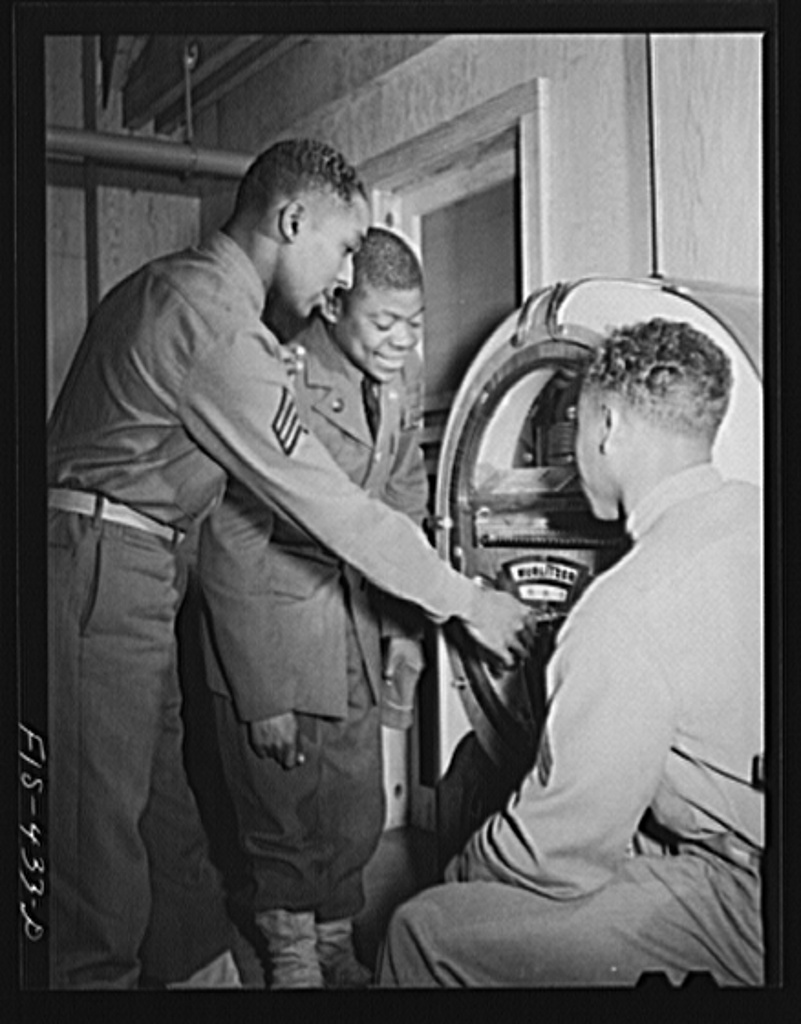
By the time the 50’s were in full swing, you could find jukeboxes in diners, soda fountains, drug stores, military barracks, video arcades and laundromats. And the teenagers of the 50’s were right there with them. (Well, maybe not the laundromats.) What is the most played song ever on jukeboxes in America? Hound Dog by Elvis Presley, 1955. Also among the top six are Elvis’ Don’t Be Cruel (1956) and Bill Haley’s Rock Around the Clock (1955). (The second most popular song ever on jukeboxes is the country music classic Crazy, by Patsy Cline.)
Jukeboxes continued to fuel record sales. By the late 40’s when 45’s replaced 78’s as much as three-quarters of the records sold went to jukeboxes. Record companies often sent their new recordings to jukeboxes first as a way to test market new songs.
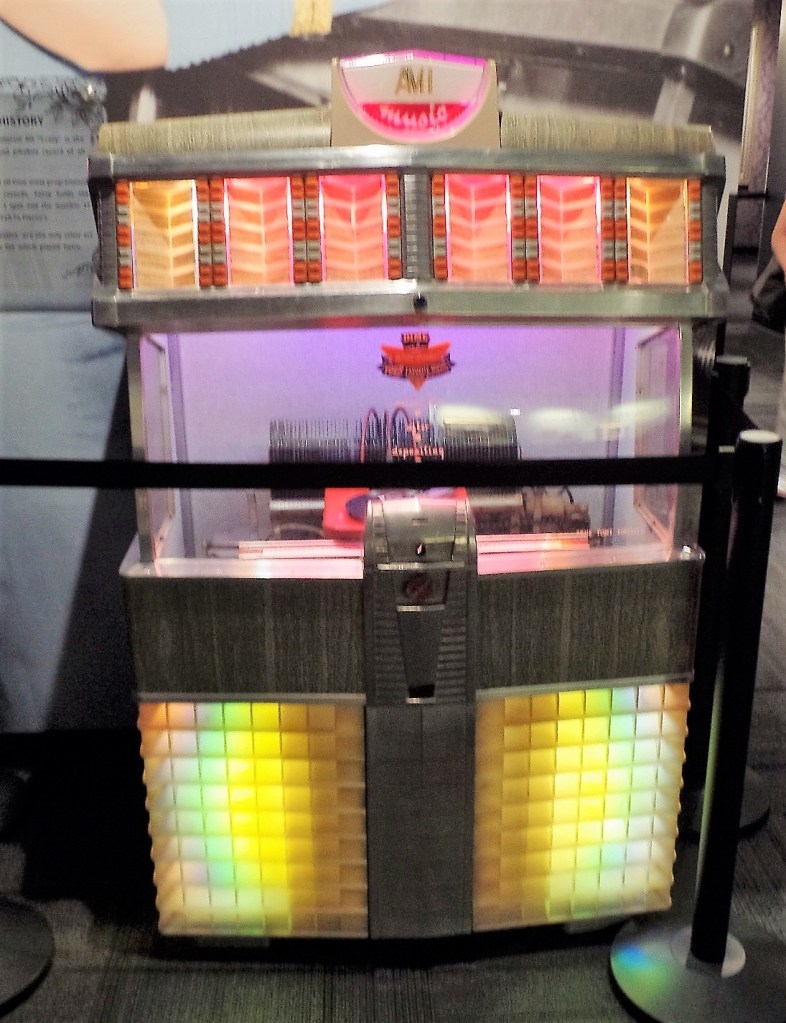
Jukeboxes of the era reflected the style of the 50’s. They were bright and shiny, lots of chrome, bright colors and tube lights. Stylistically similar to the trendier cars of the era.
The diners themselves stopped looking like old railroad cars and took on the same shiny metal, bright lights image.
By the mid-60’s the oversized influence of the jukebox on American music and culture was fading away. But, in the words of Richard Havers, writing for the web site udiscovermusic.com, “standing around the record machine, deciding what to play, is an enduring image of a bygone era of uninterrupted happiness.”
In the first half of the 20th century the jukebox industry grew by fits and starts, influenced primarily by the political and economic factors of the time: two world wars, Prohibition and depression among them. But by mid-century technical innovation and changes in American culture, most notably the emergence of a teen culture and the growth of rock and roll, set the jukebox up for its two-decade long heyday.
While some of the earliest jukeboxes, those that were invented in the late 19th century, were placed in bars, the lack of broad amplification proved limiting in that setting. So initially jukeboxes were largely used by the curiosity seeker in arcades. While we are acc;ustomed to the idea of jukeboxes playing pop music, the early versions included classical and orchestral music, something that early 20th century listeners could otherwise only hear through live performances.
Prohibition was enacted in the U.S. in 1920. That meant the closing of saloons and the illegal speakeasies that replaced them were subject to closure at a moment’s notice, not something that made their owners eager to invest in a jukebox. New types of entertainment, the radio and the movies, were gaining in popularity and record sales were declining. But technology changes positioned the jukebox for growth in the next decade. In the late 1920’s new models were introduced that both increased the number of musical choices and provided the electrical amplification that brought the music to an entire room of people.
Prohibition ended in 1933 and with it bars reopened and new establishments were created, expanding the potential market. During the Great Depression, few individuals had the resources to buy their own phonograph equipment so nickel-a-shot coin-op players were an attractive alternative. There were musical influences as well. Jazz and swing music found their way onto jukeboxes, as did the African-American artists who were often not played on white-run radio stations. In 1934, 18,000 jukeboxes were produced. Three years later, in 1937, that number was 210,000. (Source Dead Media Archive-NYU Dept. of Media, Culture and Communication.)
Soda fountain jukebox
Fort Bragg, N.C., 1942
The now-defunct web site Toms Zone tracked jukebox production from 1935 to 1979. The research showed that more jukeboxes, 291,000 of them, were produced during the period 1935-1939 than any other half decade. In the first half of the 40’s, that number slipped to 112,000 as jukebox manufacturing plants were repurposed to produce war supplies and materials.
Wurlitzer, the company that would be the leading producer of jukeboxes until 1950, got into the business in 1933 when Farny Wurlitzer, the youngest son of founder Franz Rudolph Wurlitzer, acquired a patented jukebox machine. By the end of the decade Wurlitzer was turning out 35,000 a year.
The fortunes of the jukebox makers often mirrored those of the record industry. As America began to emerge from the Great Depression, record sales picked up. And a significant portion of those sales were for use in jukeboxes.
The late 1940’s saw another round of technical innovations that would position jukeboxes for a new growth spurt. The wall box was invented. A way to remotely access and play a jukebox, the wall box was perfect for restaurants, diners, soda fountains, ice cream parlors and any place else that had booth seating. By 1949, the smaller and lighter 45 rpm record was replacing the 78 rpm. Seeberg led the way in developing the 45 rpm based jukebox and the company produced a model that offered 100 choices, 50 45’s played on both sides. These innovations vaulted Seeberg into the lead among jukebox manufacturers.
(Image by Alex Holyoake)
But there were other things happening in America that had an even more profound influence on the popularity of the jukebox. Rhythm and blues and later rock and roll replaced the jukebox standards of 1940’s swing music. At the same time, teenagers were emerging as the country’s cultural trendsetters. Rock and roll was the music they listened and danced to and the jukebox happened to be planted in the very places they would hang out. That is something that record companies were keenly aware of. It is estimated that 75% of the records produced during that time went to jukeboxes. Often they went to jukeboxes first as the companies saw jukebox users as a test market. Since jukeboxes could record the number of plays per individual song, Billboard started an index based upon jukebox plays, something that would continue until 1959.
Depending on whose numbers you go by, there were between 700,000 and 750,000 jukeboxes in operation by the mid-1950’s. By the 1980’s that number was down below 300,000 and some estimate it to be as low as 175,000. What happened?
(Image by Alex Antropov)
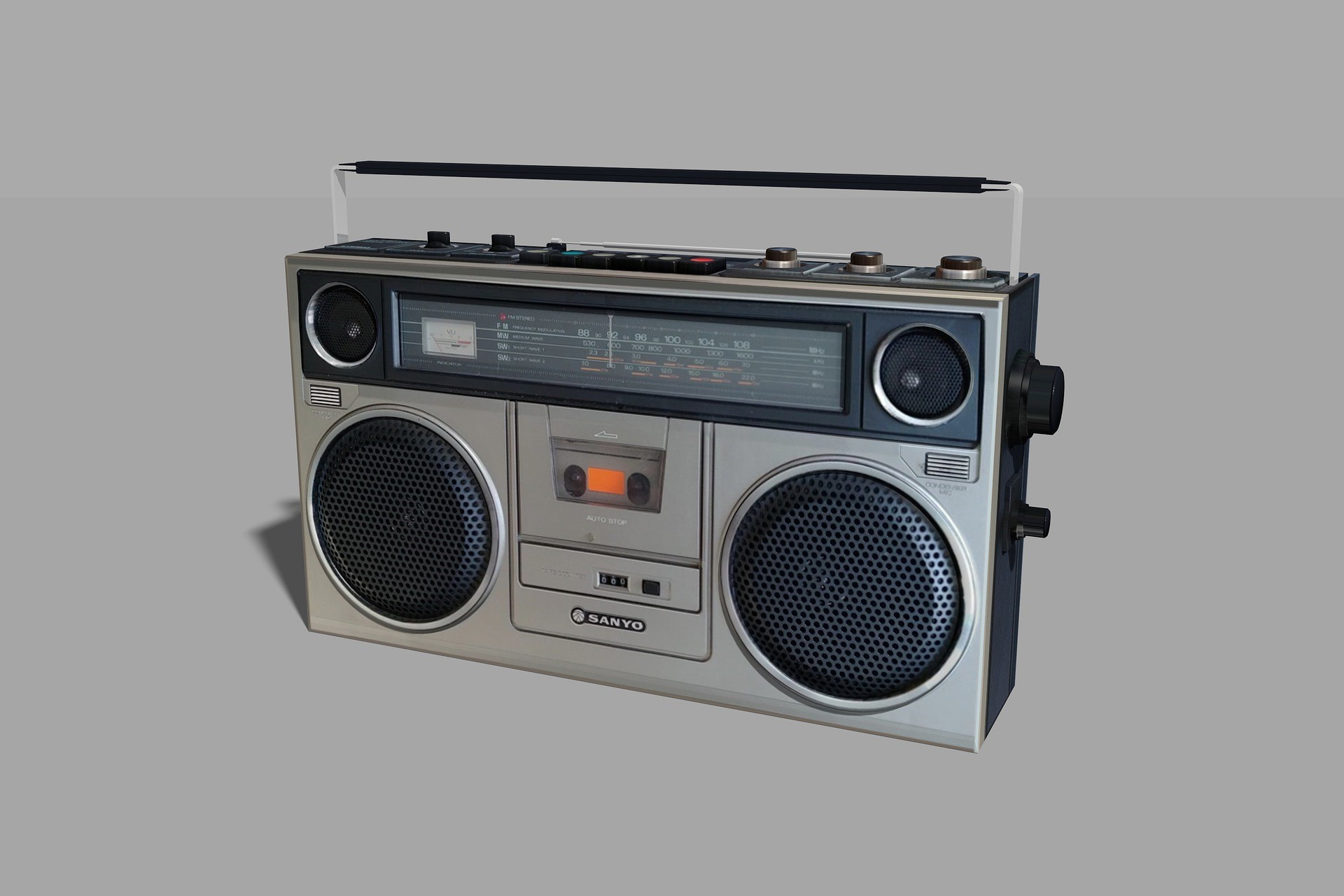
For one thing the number of options for accessing music was growing. The transistor was invented in the 1950’s and by the 1960’s, most teenagers walked around with a transistor radio. Portable cassette players, aka boom boxes, were popular by the 1970’s and at the end of that decade Sony introduced the first Walkman. Also by the 60’s rock and roll was no longer just for the plugged in hanging out at the diner or soda shop. It had gone mainstream, there were all kinds of rock and roll radio stations and TV shows. On top of that teenagers were to be found more often in different venues. Live music was back in vogue and there were numerous concert halls and converted old theater spaces offering up rock bands. The 70’s saw the rise of discotheques and DJ’s took precedence over jukeboxes. Wurlitzer stopped producing jukeboxes in 1974. Seeberg went bankrupt in 1979. The company division that made jukeboxes was subject to a number of acquisitions and mergers, but by the mid-80’s it too was gone.
An AP story published in the New York Times on July 21, 1982, described it like this: “It was found almost anyplace people gathered to eat or drink — in soda shops and pizza parlors, diners and truck stops. For a nickel, then a dime and now a quarter, people could play if they were willing to pay.
“Those days may be over. Beset by rising costs, declining profits, video games and even Muzak, the coin-operated music machine, or jukebox may soon be a distant melody.”
The jukebox never again achieved the penetration it had in the 50’s. But the AP’s doomsday forecast didn’t come about either. Since the 90’s there have been about 250,000 jukeboxes in operation. CD’s and later video DVD’s offered new options and eventually they became digital, with much greater available music selections and much less commitment in terms of space and operating expenses for the establishments that housed them.
Two companies still make classic jukeboxes. Rockola in the U.S. was one of the original “big four” jukebox producers. There’s also a UK company, Sound Leisure, building the classic style models. A market has emerged among collectors as well as the nostalgia eateries like Johnny Rockets. Those guys need a jukebox almost as much as they need the burgers and shakes.
For most of the past month, or has it been six weeks, I’ve rarely ventured further than my backyard. But an occasional walk in the woods with my dog makes spending the rest of the week in the house a lot easier. When last seen Sheltering in Place with Nature, I was roaming around Garret Mountain Reservation in Woodland Park, N.J. Since then all state and county parks in New Jersey have been closed down. So I had to head north of the border (the New York/New Jersey border) to get a quick hike in. These photos are from Goosepond Mountain State Park in Chester, N.Y.
Goosepond is an undeveloped state park in Orange County, N.Y. There are no facilities other than trails for hiking and horseback riding. The Highlands Trail, a 100+ mile trail that goes from the Hudson River in New York to the Delaware River in New Jersey goes through Goosepond Mountain Park. The trail passes through land at the southern end of the park which was purchased by the Open Space Institute, a New York-based conservation organization, in 2016, preserving it from a planned golf course and residential development. The OSI turned the land over to the Palisades Interstate Park Commission, making it part of Goosepond Mountain State Park and connecting that park to Sterling Forest State Park.
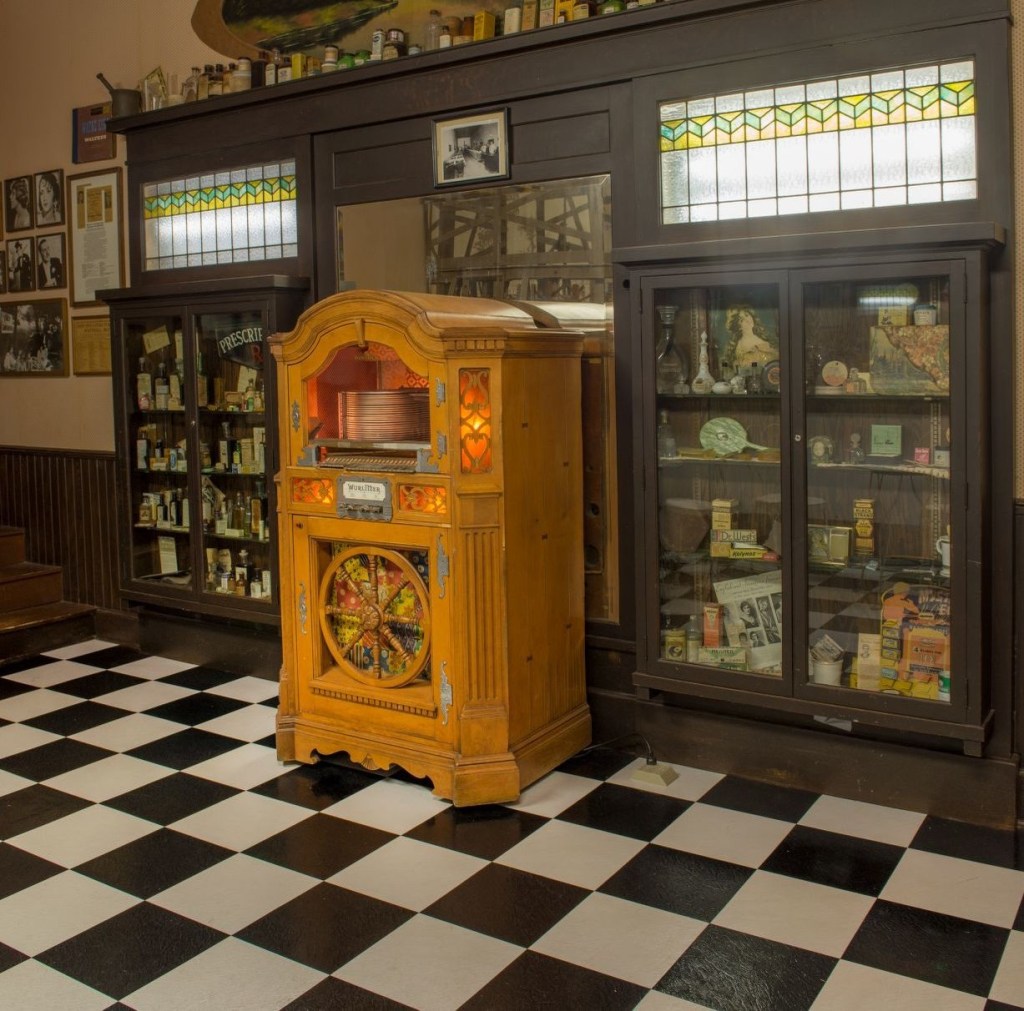
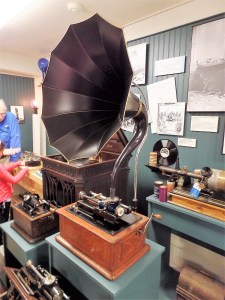
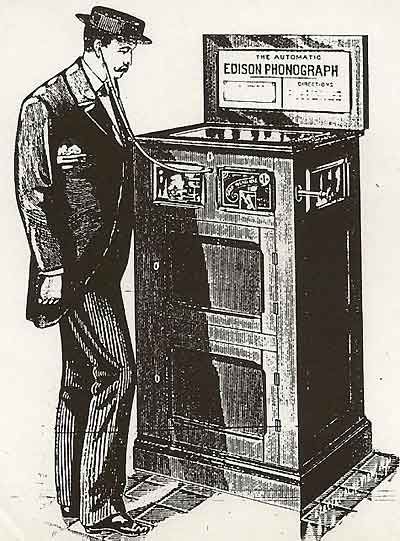
The early jukeboxes, the automated phonographs and the nickel-in-the-slot machines had some serious limitations. They were built as coin-op attachments to the early Edison phonographs which used cylinders to hold the music. The early model jukebox had a single cylinder that held a single song. How many nickels are you going to throw in the slot if the damned machine keeps playing the same song over and over again? Especially since you likely had to crank it up yourself. In addition, there was no amplification. The listening device was a few tubes that came out of the machine. That sort of thing might work if you’re in a museum, but the initial sites for jukeboxes were mostly bars and you can just imagine how limiting the listening tubes were. (See The Jukebox Story: Whose Idea Was This Anyway?)
And yet the early jukeboxes were successful enough to arouse the interest of a number of entrepreneurs and manufacturers looking to produce more of them. And with them came inventors ready to address those limitations. So the evolution of jukebox technology involved creating ways to give the user more and more songs to choose from, improving the sound experience, and eventually making them look a little cooler.
Initially the issue of limited choice was addressed by installing multiple machines in the same location. Improving the capacity of the jukebox to play more than one song required the music to be in a more convenient form than the old metal cylinders. That problem was addressed in 1890 when a German immigrant named Ernie Berliner created the first disc record. Berliner had come to the U.S. in 1870 at the age of 19, primarily to avoid serving in the Franco-Prussian War. Among his inventions was a telephone transmitter that he patented and later sold to Bell Telephone. In 1887 he received a patent for the “gramophone,” a device which, according to his patent application, was capable of “recording sound using horizontal modulation of a stylus as it traced a line on a rotating cylindrical surface.” Basically that is the technology that turntables use to play vinyl up to this day. Berliner produced the first gramophone in 1890.
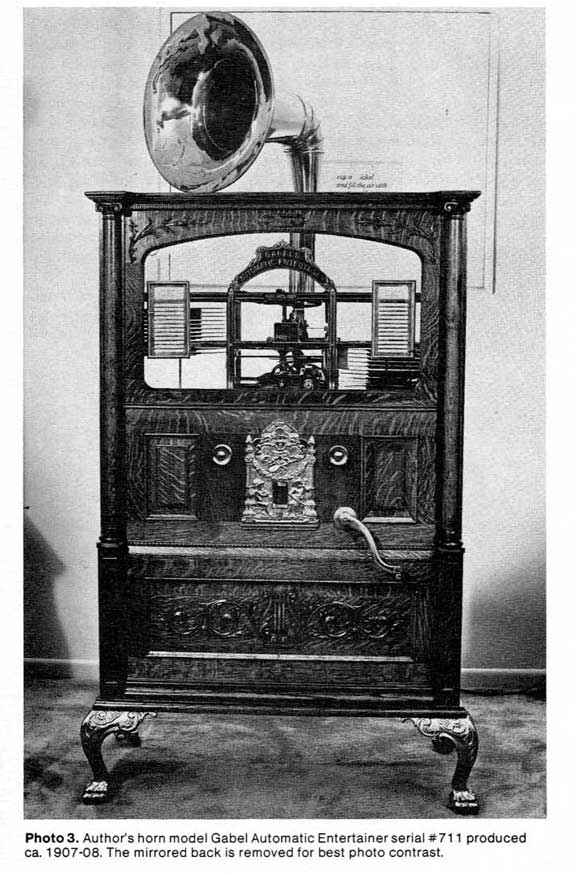
It took another European immigrant to apply Berliner’s invention to the jukebox. John Gabel was born in 1872 in what is now Slovakia but at the time was part of the Austro-Hungarian empire. He left Europe at age 14, joining his brother in Cleveland. He later moved to Chicago where in 1898 he founded the Automatic Machine and Tool Company. The company’s primary business was in making arcade games. But in 1905 Gabel’s company produced a coin-operated music player, the Automatic Entertainer. It offered 24 choices, based on two stacks of 12 records. It also automatically changed the needle after each record, a feature he received a patent for. I’m old enough to have regularly used a “record player” and would have loved an automatic needle changer.
Franz Rudolph Wurlitzer was another 19th century German immigrant. In 1850 he founded the Wurlitzer Company, producer of primarily keyboard instruments. Wurlitzer is perhaps best known for its organs, but it also was for a time the leading producer of jukeboxes. By 1930 it was being run by Wurlitzer’s heirs and they positioned the company as a jukebox producer. In 1933 Prohibition ended. That gave rise to the opening and reopening of bars all around the country and with those new bars came a new demand for jukeboxes. Wurlitzer was the primary beneficiary of that, selling up to 40,000 jukeboxes a year by the end of the decade.
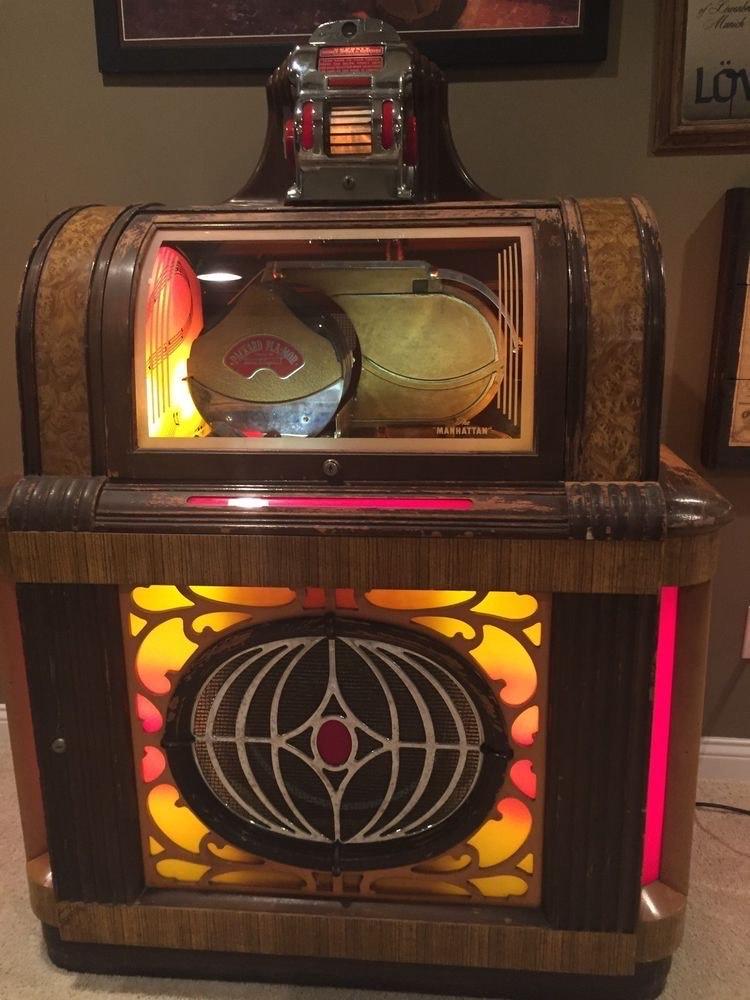
“The Manhattan” a Wurlitzer Jukebox, included
the Simplex mechanism to change records. The Simplex was invented by Homer E. Capehart of Indiana who eventually sold his company, Packard, to Wurlitzer.
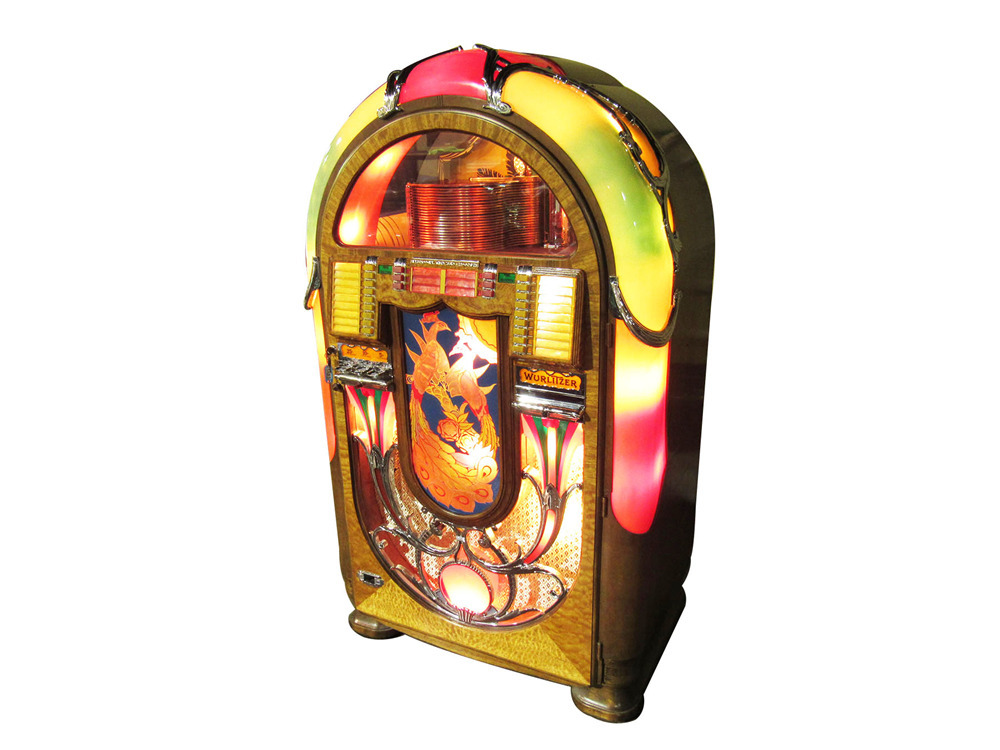
In 1941, Wurlitzer produced a jukebox that demonstrated the change in style and appearance of the jukebox. The Wurlitzer 850 Peacock, with its art deco styling, bright lights and colors, bore little resemblance to the old wooden cabinets of bygone years.
The Wurlitzer Peacock
Wurlitzer is one of what is called the big four of jukebox producers. Another was Seeberg, a company that is responsible for a series of innovations that created the classic jukebox of the 50’s and 60’s, when the devices had their heyday. Not surprisingly, the company was founded by a European immigrant. Justus P. Seeberg came to the U.S. from Sweden in 1897 at the age of 16. Ten years later he founded the J.P. Seeberg Piano Company and 20 years after that, the company gave up on pianos and focused on jukeboxes.
In 1928 Seeberg produced the Audiophone, a coin-up player that housed eight separate turntables in a ferris-wheel type configuration. But the audiophone also introduced the electrostatic speaker providing greater amplification of the sound that came from the jukebox.
(Image by Partick Fore)
From the 1950’s and for a couple of decades after that you could hardly find a diner in the U.S. that didn’t have a jukebox set at every booth. Seeberg was responsible for that innovation as well. Now run by Justus’ son Noel, the company introduced in 1948 the 3W1 wallbox. It operated as a kind of remote control for the jukebox and eventually would have speakers to play the music right at the user’s table. The first Seeberg wallboxes used either a multi-wire cable or a wireless signaling system to get the customer’s choice sent to the master box.
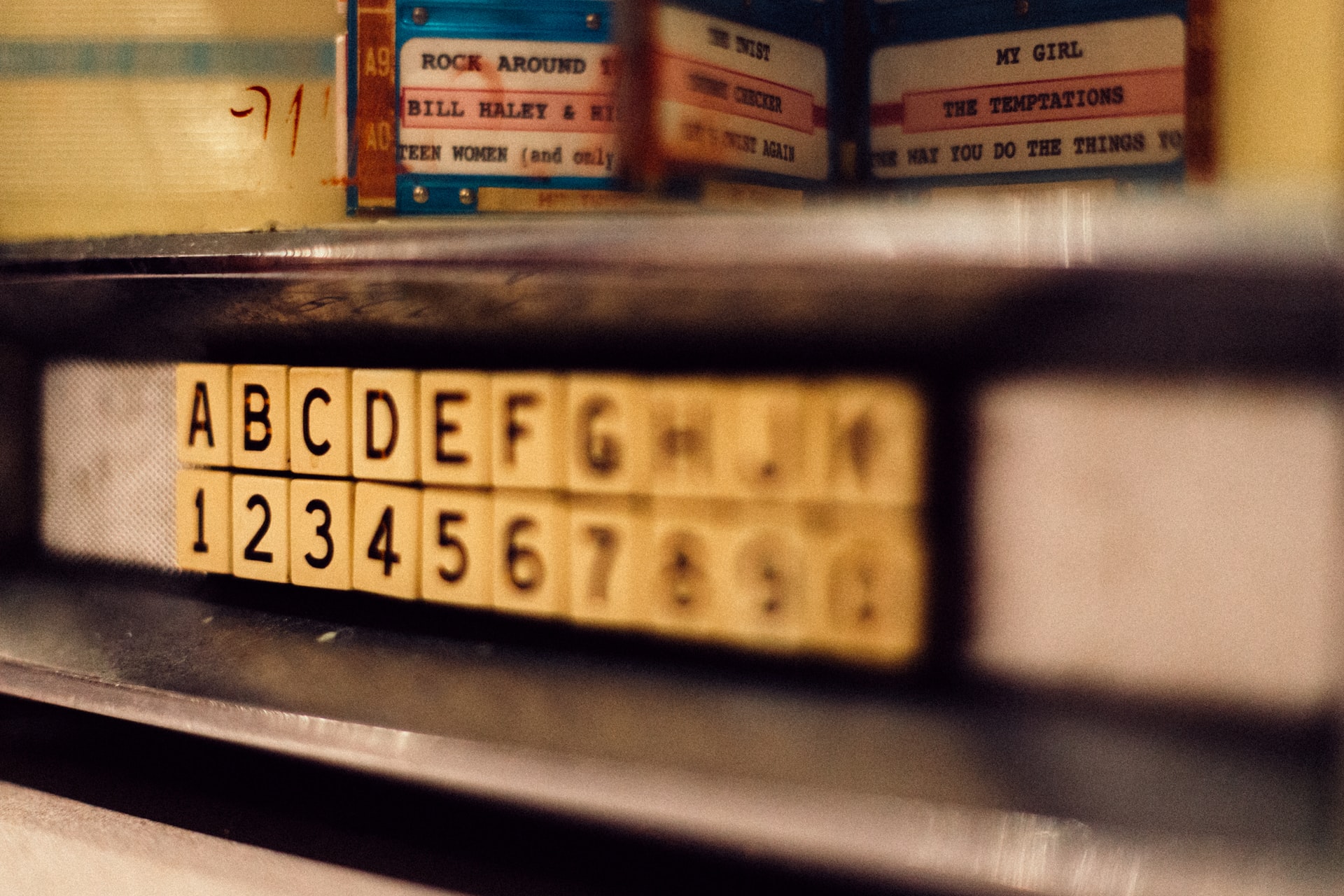
One year later came an equally profound innovation and one that sent Seeberg to the top of charts in terms of jukebox sales. The 1949 model used the smaller and lighter 45 rpm disc in place of the bulkier 78 rpm versions. This enabled Seeberg to create a jukebox with 100 choices, 50 45-rpm records that could be played on either side. The new Seeberg players held the records in a magazine-type set up and played the records vertically on a flywheel turntable. By the mid-50’s Seeberg was producing 200-choice models.
This is what jukeboxes would look like for at least the next 25-30 years. 45-rpm records played on both sides with “orders” of what to play being sent in from remote boxes. Many times I can remember sitting in a diner getting one coffee refill after another waiting for my songs to finally come up on the jukebox.
Jukeboxes would later change as the way listeners accessed their music changed. Records would eventually give way to CD’s and then video DVDs. Eventually jukeboxes would be run off of digital music, choices would become practically unlimited and the grand old eye-catching cabinets became dinosaurs.
Had he been born a century later, Louis Glass would probably have been known as a geek. And for a geek, he ended up in the right place, Northern California. Glass was born in 1845 in Delaware but moved to California as a young boy. One of his first jobs was as a telegraph operator. It was the telephony that caught his eye and he used savings from his Western Union post to buy into telephone companies in Oakland and San Diego.
Glass also became an agent of the Edison General Electric Company and was general manager of Pacific Phonograph Company when it was founded in 1889. In May of 1890 the Los Angeles Express carried this description of Glass demoing the Edison phonograph: “The Phonograph, that greatest achievement of Wizard Edison’s inventive genius, is in the city, ready to reproduce human speech for business or pleasure. The wonderful instrument is at the Nadean. Mr. Louis Glass, manager of the Pacific Phonograph Company, exhibited its workings to several well known citizens to their extreme mystification and delight in his room last evening and today.”
But Glass, along with business associate William S. Arnold, already had a variation of the Edison machine in mind. In December of 1889, Glass had installed a contraption known as the “nickel-in-the-slot” machine in a gin joint called Palais Royale, a couple blocks from his office in San Francisco. Glass and Arnold had attached a coin operated device to an Edison Class M electric phonograph. Inserting a nickel activated the cylinder that played the music. Without any sort of electric amplification, listeners used one of four listening tubes that were attached to the machine. Glass claims his Palais Royale nickel-in-the-slot machine pulled in $1,000 in six months.
There was only one song per cylinder, so there were no buttons with letters and numbers to push. Glass varied the musical selections by adding a couple more devices at the bar. It is the Glass nickel-in-the-slot that is often viewed as the first jukebox and as such Glass is the man most often credited as the inventor of the jukebox.
Charles Adams Randall
One year before Glass’ device was sucking up nickels in a San Francisco bar, an electric engineer and inventor by the name of Charles Adams Randall filed for a patent for a device he called the Parlophone. Adams-Randall was an American living in London and filed the patent application in the U.K. He had at one time been an assistant to Edison. His inventions included an “Electro Mechanical Time Stamp,” a business tool enabling the time-stamping of packages or documents when they are received, and an “Electric Time Alarm and Indicator” for which he was granted a U.S. patent.
The Parlophone would be capable of recording and then playing back on phonograph cylinders. And if it were ever to have been built, which it apparently wasn’t, it would have been coin operated. The uniqueness of the device which Adams-Randall specked out was in the way the sound was created through the movement of a stylus by an electromagnet. While never introduced commercially, Adams-Randall’s patent filing gives rise to the claim that the jukebox was his idea.
Albert K. Keller
Yet another claim to being the father of the jukebox comes from a Philadelphian named Albert K. Keller. In 1891, Keller filed a patent application (granted in 1894) for a “machine for operating phonographs.” In his patent application Keller described his invention: “My invention relates to machines or attachments for operating phonographs after the manner of what are known as vending machines, such attachments remaining normally locked but being released by a coin to be moved to operate the phonograph, and my invention consists of the novel devices and combination of parts hereinafter described and set forth in the claims hereof.”
Keller is viewed as the first successful manufacturer of automatic phonographs. His machines were manufactured by Ezra Gilliland of the Gilliland Sales Co. The Keller designed machines were installed in arcades in numerous cities. It is Keller’s claim that his first automatic phonograph was built in 1887, thus preceding the Glass nickel-in-the-slot.
The Keller coin-operated phonograph
But When Did They Start Calling Them Jukeboxes?
While devices that allowed folks to pay-to-play their favorite songs have been around for some 130 years, the name jukebox didn’t come into play until the late 1930’s or early 1940’s. It was derived from the term juke joint. Juke is a Gullah word. Gullah is a Creole like language that was spoken by African-Americans living in the low country of Georgia and South Carolina. A juke joint is a little like what we might call a dive bar. But not the kind of dive bar with alcoholics sitting in the corner on stools all night. Instead a juke joint is a lively sort of place for music, dancing and carousing.
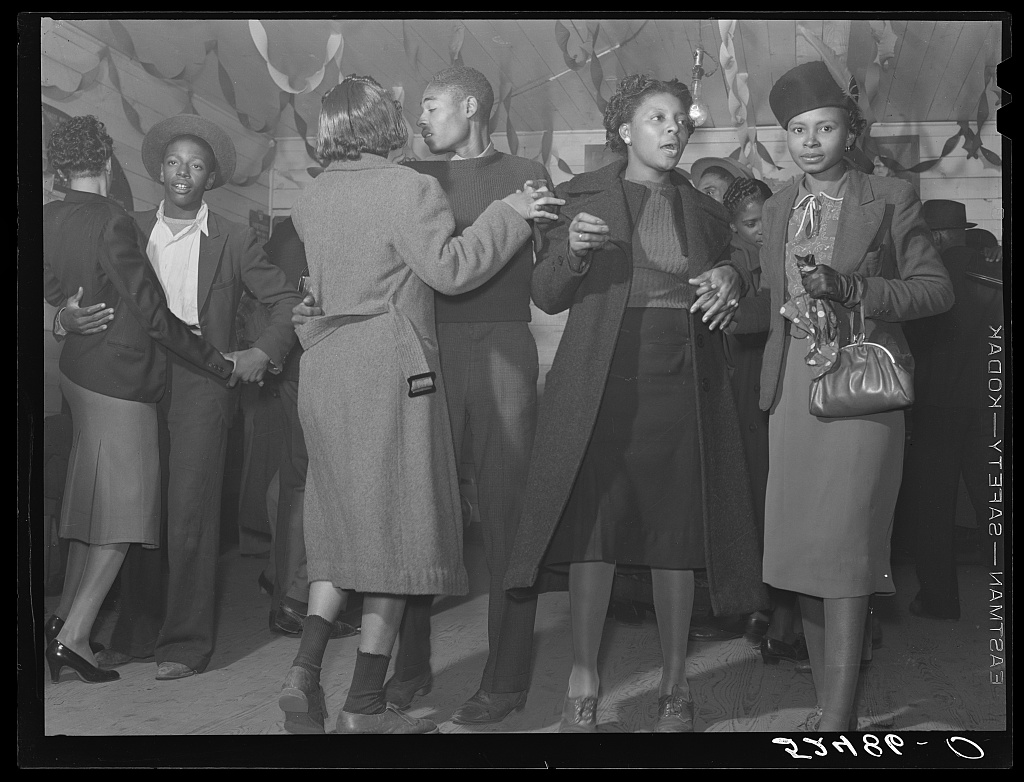
A Clarksdale, Miss., juke joint. 1939
I searched newspapers.com and the first mention I found of a “juke box” was in a gossipy column called the Town Crier in the Akron Beacon Journal of December 14, 1939. The author, Anthony Weitzel, reported that “Bernard and Viola Berk plotting New Year’s eve at their winter place in Eustis, Fla., where the hottest dive in town is a hamburger palace equipped with a “juke-box”….A “juke-box” in case you haven’t been south, is a nickel music-box…the kind the syndicates are squabbling over.”
A September 22, 1940 article in the Baltimore Sun clarified: “You may not know that powerful instrument, the juke-box, by its trade name, but you have surely seen it in the corner of the local drugstore, the roadside hamburg bar, or any of the eat-drink-and-dance places which can’t afford homemade music.”
The 2010’s were not a good decade for for-profit colleges. Investigated by Congress, sanctioned by regulators, charged by state attorneys general and sued by thousands of their students, the result was tumbling stock prices, shrinking enrollment and closure of hundreds of campuses. (See The For-Profit College Industry: Dropouts, Debt and Padlocked Doors.)
But there is a light at the end of the tunnel. It comes in the form of Trump’s choice for Secretary of Education Betsy DeVos. DeVos seems to know little about the public education that most American children receive, nor does she apparently care. But when it comes to investors looking to make a profit by exploiting underserved segments of students, she’s all in.
One of DeVos’s first actions was to fill the department with staffers whose background was in the for-profit college industry. She named Robert S. Eitel as her senior counselor. Eitel worked for both Bridgeport Education Inc. and Career Education Corporation. Bridgeport, which owned Ashford University, has been investigated by several states, was banned from receiving GI Bill benefits by a court in Iowa, was sued for violation of the Telephone Consumer Protection Act because of its robocalls, and admitted to the SEC that it had made unreliable statements of its earnings. It has since changed its name to Zovio. Career Education has shut down most of its 50 campuses in the U.S. and it too has changed its name, now calling itself Perdoceo Education Corporation. Eitel was a vice president at both of these firms.
Another former Career Education employee (senior vice president 2010-2015), Diane Auer Jones, was named by DeVos as senior advisor on post secondary education. She also worked for CollegeAmerica, an institution run by the Center for Excellence in Higher Education (CEHE). CEHE was put on probation by the agency that had accredited it. It has been sued by the State of Colorado and the Justice Department for its recruiting practices. Jones also spent time with a for-profit college lobbying concern, CECU.
The Department of Education general counsel position went to Carlos G. Muniz, a legal consultant to Career Education. At one time he was a deputy attorney general in Florida where he helped convince the attorney general not to take action against Trump University. He has since been appointed to the Florida Supreme Court. DeVos also hired attorney Linda Rawles, who was “regulatory counsel” at Bridgeport.
And then there is Julian Schmoke. His resume included 15 years as associate program dean at DeVry University. Only one year before he joined DeVos, the FTC had announced a $100 million settlement with DeVry over inflated claims of job placement. DeVry also settled with the New York State attorney general for $2.25 million. That action was based on fraudulent claims about graduates’ job placements and their salaries.
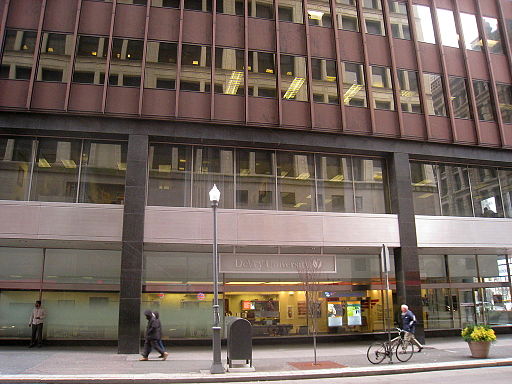
DeVry University Pittsburgh campus
Schmoke’s new job at the DOE: head up the unit that was charged with investigating fraud involving student loans. By the following year, the New York Times was reporting, “Members of a special team at the Education Department that had been investigating widespread abuses by for-profit colleges have been marginalized, reassigned or instructed to focus on other matters, according to current and former employees. The unwinding of the team has effectively killed investigations into possibly fraudulent activities at several large for-profit colleges where top hires of Betsy DeVos, the education secretary, had previously worked.” Among the institutions that group had been investigating, DeVry Education Group.
In keeping with the overall focus of the Trump Administration, DeVos also set out to eliminate regulations that were created under the Obama department. In 2019 she rescinded the the gainful employment rule that had been created following the Higher Education Act of 2014. The gainful employment regulation was designed to identify schools where graduates found themselves without the ability to earn enough to pay off their student debt. Schools that did not meet that threshold would have their ability to receive federal loans and grants terminated. The department estimated that the rescinding of this rule would result in about $5 million in student aid going to institutions that otherwise would not have qualified.
And to make sure there would be no further barriers to for-profit colleges getting federal funds, the DOE reinstated a formerly discredited accreditation agency. In order to be eligible for federal funding, a college needs to be accredited. Public and private non-profit colleges and universities are usually accredited by regional agencies that have academic standards that the institutions are required to meet. For-profit colleges are more often accredited by national organizations that have less-stringent academic standards. One of those agencies is the Accrediting Council for Independent Colleges and Schools (ACICS). Among the schools that had been accredited by ACICS were Corinthian Colleges and ITT Technical Institute, both of which collapsed under a bevy of lawsuits and allegations of fraud. In 2016, the DOE announced that it would no longer recognize ACICS as a credible accrediting agency. Two years later DeVos restored ACICs recognition.
Just last month an investigative piece in USA Today found that ACICS had accredited Reagan National University, despite the fact that it has no faculty, no students and no campus.
An editorial in the New York Times in August of 2018 summed it up as follows: “Executives in the for-profit education industry will soon be sleeping better, secure in the knowledge that even the worst are no longer at risk of being thrown off their taxpayer-backed gravy train, no matter how epically they fail their students.”
What is perhaps even harder to understand is that DeVos has used every effort to avoid forgiving the debt of students who were defrauded or whose schools disappeared before they could complete their studies. This includes the 20,000 students who got shut out with the closing of Corinthian Colleges. (See All the Debt Without the Degree.)
There is a federal student loan to forgiveness program known as “borrower defense to repayment.” It is explained on the Department of Education web site as follows: “If your school misled you or engaged in other misconduct is violation of certain state laws, you may be eligible for ‘borrower defense to loan repayment forgiveness,’ which is the forgiveness of some or all of your student loan debt.”
It was expected that this law would provide relief to the students of Corinthian Colleges and other for-profit colleges that were shuttered. Not so fast, says Betsy DeVos. She was already at work making the process for applying for this benefit more difficult. For example, the requirement that you had to apply within six years was changed to three. And while the law had stipulated that once a school was determined to have defrauded its students, all were eligible for the forgiveness, the DeVos changes required each individual student to apply and be approved.
She was taken to court over the delay in forgiving these loans and was ordered by a federal court to proceed with the loan forgiveness. The students of Corinthian Colleges and others were finally notified by the DOE in December of 2018 that they would be eligible for loan forgiveness or a refund based on a provision known as the Automatic Closed School Discharge.
Despite being taken to court repeatedly, the DeVos DOE continued to ignore this order and continued to try to collect on these loans. After nearly one year DeVos was held in contempt of court.
It is not clear at this point whether the actions of Betsy DeVos and her Department of Education will lead to the revival of the for-profit college industry. They have a lot to overcome, like a track record of underperformance and fraud, and the existence of community colleges that offer similar courses of study at a far lower cost. What is clear is where students stand on the priority list of this Department of Education. Rock bottom.
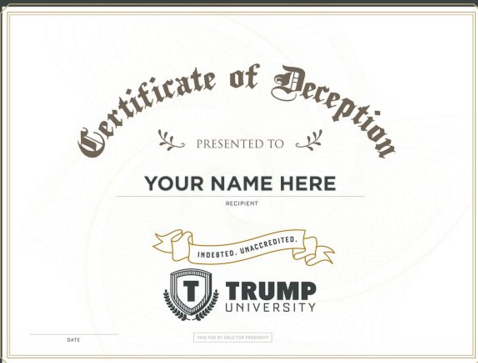
For-profit colleges have been on a decade long decline largely because they have oversold, overpromised, overcharged and seriously underdelivered. But even the worst of the for-profit colleges offered at least a whiff of an education program. You can’t even say that about Trump University. It wasn’t a university, it wasn’t a college, so maybe it shouldn’t even be called a for-profit college. It was simply a for-profit.
Trump U. opened in 2005 and lasted five years. It was 93% owned by Donald Trump, whose name was a key selling point. It offered “courses” in real estate, asset management, entrepreneurship and wealth creation. These courses were not unlike the sales tactics used to sell time-shares. Usually, the first one was free. Prospective students would be attracted to a webinar in a rented space, like a hotel ballroom, and once there they would learn that if they paid a lot more money they could dream of being a get-rich quick real estate investor.
The offerings started with a 3-day, $1,500 seminar. But to really get on the fast track, participants were pressured to buy up to higher level programs that varied from $10,000 to $35,000. According to a complaint filed by the New York State Attorney General Eric Schneiderman, “the contents and material presented by Trump University were developed in large part by a third-party company that creates and develops materials for an array of motivational speakers and seminar and timeshare rental companies.” Trump had little or no involvement, although students did get the opportunity to have a picture of themselves taken with a life-sized cardboard cutout of Trump.
Here what some of the employees and students of Trump U. had to say about their experience:
Ronald Schnackenberg was a former salesman for the ‘university.’ In his testimony in one of the suits brought against Trump, he said, “while Trump University claimed it wanted to help consumers make money in real estate, in fact Trump University was only interested in selling every person the most expensive seminars they possibly could. Based upon my personal experience and employment, I believe that Trump University was a fraudulent scheme, and that it preyed upon the elderly and uneducated to separate them from their money.”
The New York Times reported on the testimony of a former Trump U. event manager Corrine Sommer. “She said she was startled by the qualifications of some Trump University instructors. Ms. Sommer recalled that a member of the Trump University sales team, who had previously sold jewelry, was promoted to become an instructor. He had ‘no real estate experience,’ she said. She added that many of the instructors had the quality that the school seemed to value most: ‘They were skilled at high-pressure sales’.”
The Guardian interviewed Kathleen Meese, a Trump University student and mother of a Down’s syndrome son, who was pressured into buying a Gold Elite plan. ““I maxed out my credit card,” she said. “You were supposed to write yourself a check for $1m and tape it to your mirror, and in three years you would be able to cash it. I didn’t have three cents from them. I didn’t make a penny.”
Jeffrey Tufenkian, another former Trump University student, told CNBC , “When attorneys and other experienced real estate advisors raised red flags about the legality of techniques Trump University people were saying we should use, I knew we had been cheated.”
Both Richard Hewson and his wife were Trump U. students. In an affidavit he said “we had paid over $20,000 for nothing., based on our belief in Donald Trump and the promises made at the free seminar and three-day workshop. The whole thing was a scam.”
Regulators went after Trump U. from the very beginning. Already in 2005 the New York State Department of Education sent Trump a notice that his use of the word “university” was illegal. Eventually the name was changed to the Trump Entrepreneurial Institute, but that was near the end in 2010. That same year Texas Attorney General Greg Abbott began an investigation. No charges were ever filed, though, as Trump U. pulled out of Texas. (Trump himself would be back in 2014 as a major donor to Abbott’s gubernatorial campaign.)
When the ‘university’ folded in 2010, it was facing several legal actions. Tarla Makaoff, a former Trump University student who paid them $60,000, was the lead plaintiff in a class action suit for students in three states, California, Florida and New York, for violations of consumer protection laws in those states. A California businessman filed a class action suit in 2013 against Donald Trump the individual on behalf of consumers who bought “live events” from Trump University. The suit alleged violations of the RICO (Racketeer Influenced and Corrupt Organizations) statute stating that Trump University delivered “neither Donald Trump nor a university.” In the same year the State of New York filed a $40 million civil lawsuit charging illegal business practices and false claims.
In November of 2016, the month when Donald Trump was elected president by a minority of Americans, a $25 million settlement was announced. $21 million went as reinbursement for the plaintiffs in the two class action suits, $3 million was designated for New York residents who were not covered by the class actions and $1 million was a fine paid to New York State for the illegal use of the name “university.”
You call this a university? Pacific Standard, an online magazine published by the Social Justice Foundation, has some other suggestions: “If it’s called Trump University, what else can we call it besides a university? Try: business, enterprise, seminar, class, failure, place where people get pressured into paying tens of thousands of dollars to be taught how to flip houses by instructors who have no background in real estate and lie about having personally met Trump. There are a lot of options. Just don’t call it a university.”
In these times it’s hard to write about anything other than the coronavirus pandemic. I thought about a post that would elaborate on all the good things that have come from sheltering in place. I just couldn’t think of too many. It has made my dog happy. We’re pretty much home all the time and when we go out it’s usually to take him hiking in a park.
Then there’s the parks. Whether it’s national, state or local, the parks are full of people. Folks who otherwise might be consuming in a shopping mall or watching March Madness in a bar, are instead out enjoying nature, getting some fresh air and a little exercise.
I live in New Jersey where on Saturday the governor issued a stay at home order. Specifically exempted from that order, however, is outdoor recreation. The New Jersey state parks have remained open. Facilities, restrooms and historic buildings are closed and all events have been cancelled, but we’re free to enter and enjoy the parks. Locally, regulations vary. I live in Essex County which has closed its parks and reservations. But in neighboring Passaic County, they’re still open.
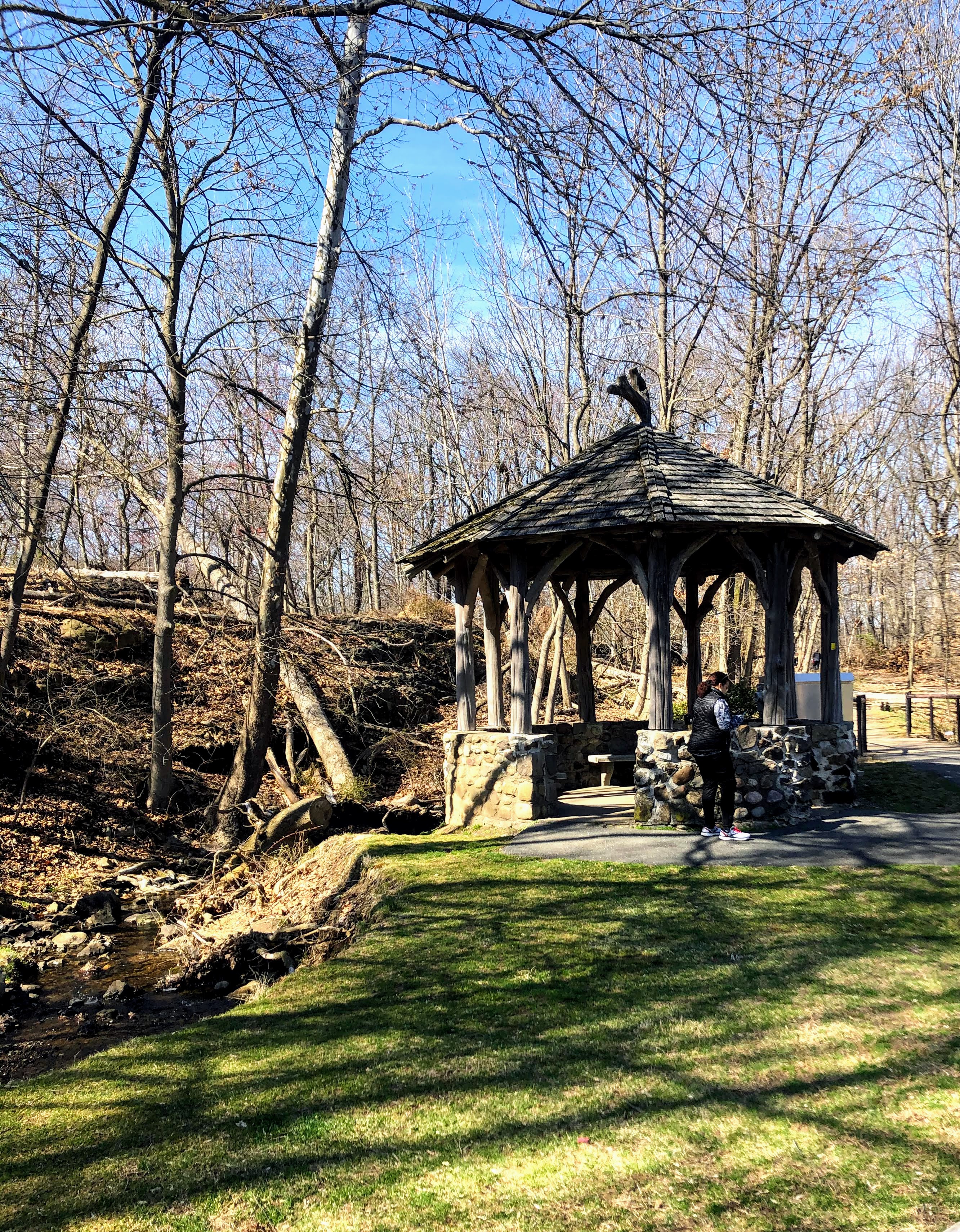
These photos are from Garrett Mountain Reservation in Passaic County.
Garret Mountain Reservation is on the First Watchung Mountain in the towns of Woodland Park, Clifton and Paterson, N.J. In addition to hiking trails and picnic areas, it has an equestrian center and a boathouse. It is a favored site for high school cross country meets.
Lambert Tower, which is located within the reservation, was built by the silk-magnate Lambert family, who lived in nearby Lambert Castle. The 70-foot tall observation tower, which sits atop a cliff overlooking the surrounding area, was built in 1896.


























 off the leash