1950’s lifestyle. The centerpiece is the TV. While television was invented more than a decade before it wasn’t until the 1950’s that TV took off and assumed its place front and center in the family living room. TV brought the entertainment home. And well it did because it was a decade that saw more and more Americans becoming homeowners as well as TV owners. Post war prosperity, GI benefits and early-stage white flight brought families like the one shown above (black families were redlined out of this migration) to the suburbs.
While the television was one of the most essential pieces of furniture in the suburban home, another was the TV tray table. And atop the TV tray table? A TV dinner. The TV dinner captured the essence of the 50’s. It was an era that marveled at modern conveniences. And what was more convenient than a freezer full of pre-made dinners the preparation for which involved no more than turning on the oven. And while the 50’s can hardly be considered an era for the liberation of women, the housewives of the time were increasingly abandoning the habit of spending the afternoon over the stove, often in favor of joining the workforce.
Swanson, the premier maker of TV dinners, captured this in one of its early ads: “Now Mom is in on the TV fun at the start, and thanks to Swanson she’s ready to serve an extra-special chicken dinner.” Another ad showed mom bursting through the door, proudly proclaiming “I’m late, but dinner won’t be.”
Swanson did not invent the TV dinner. What they did was present it in the familiar aluminum tray, create the packaging, supply the moniker and promote it, heavily. The first TV dinner was a Thanksgiving style offering, turkey with cornmeal dressing and gravy, sweet potatoes and peas.
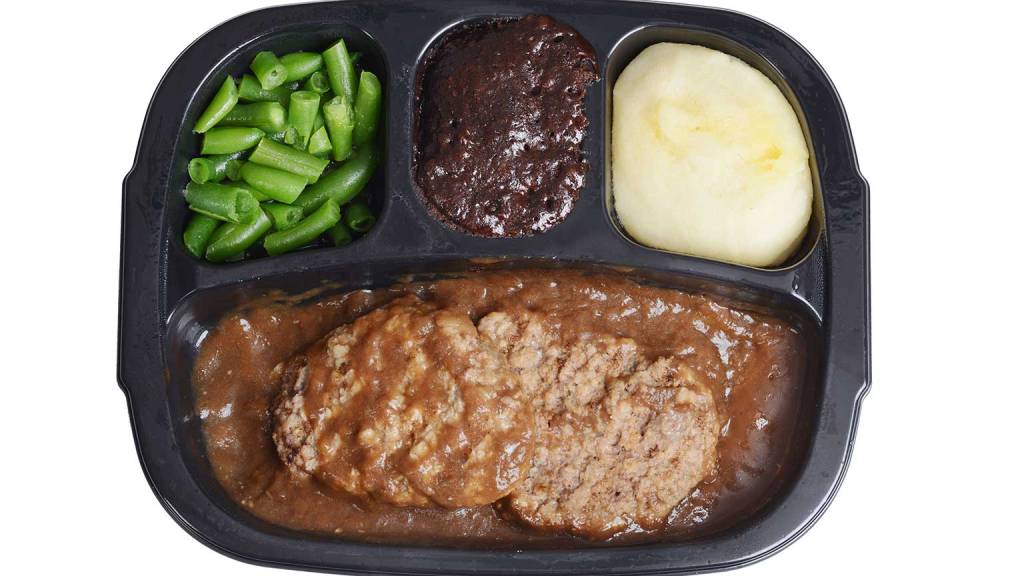
I remember four different Swanson TV dinners: turkey, beef, fried chicken and Salisbury steak. I understand there was also a fish dinner, but those never found their way into my family’s freezer. The original TV dinners came in an aluminum tray with three sections. The largest was for the entree, and a key element of this was gravy. The TV dinner featured a thick, gelatinous gravy, the main ingredients of which were likely cornstarch and salt, as well as some coloring in different shades of brown depending on beef or turkey. Salisbury steak is something I’ve never really experienced outside of a TV dinner. It could also be called a hamburger with gravy. The other two sections of the tray included potatoes and a vegetable. The potatoes likely came from some kind of powder rather than real potatoes, but they did have a bit of real butter on top, butter being another of Swanson’s products. The vegetable, corn or green beans, peas, carrots or a combination thereof where the standard frozen vegetables of the day. About the best that could be said of them is that they allowed for the perception that you were getting a balanced meal.
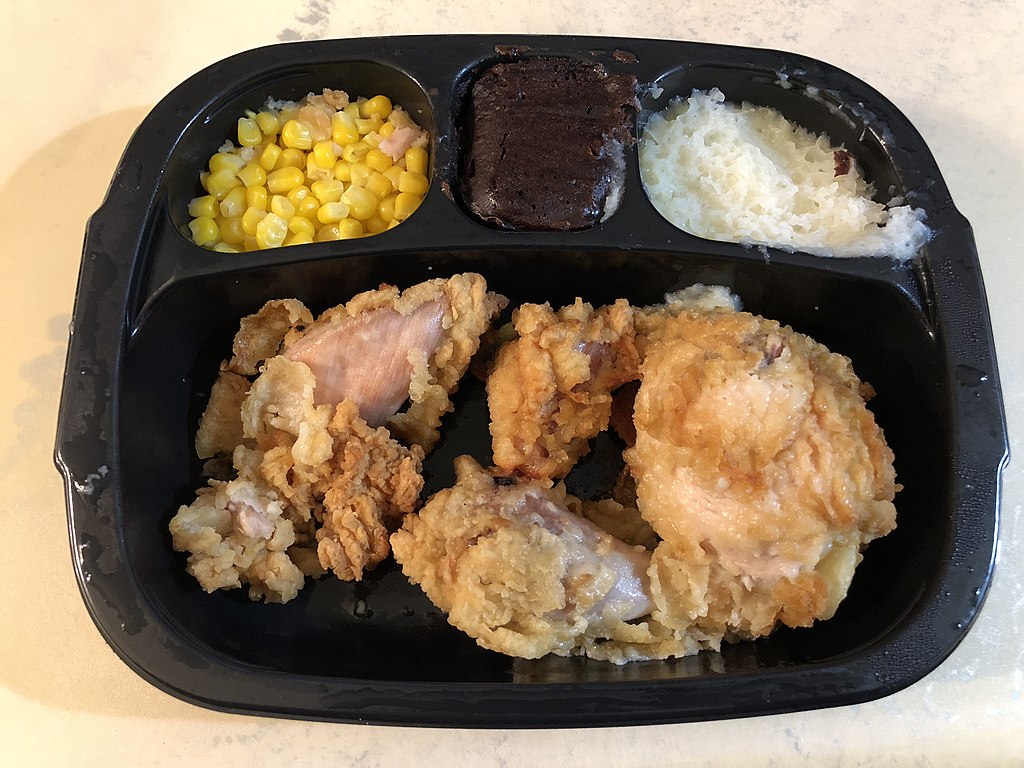
Initially the TV dinner cost less than a dollar. Preparation consisted of shoving it in a 425 degree oven for 25 minutes. The fried chicken dinner, my favorite, was a little trickier. You had to take the dinner out of the oven after the first 15 minutes and cut away the part of the foil that covered the chicken portion of the dinner so that the chicken would come out crispy. And it did.
I ate dozens, if not hundreds of TV dinners. Even though my mom worked, she usually cooked a dinner. But the TV dinners were ready and waiting in the freezer in case my mom was going out or just for a snack as I got older and ate more. I considered them a treat.
Were they healthy? Definitely not. The foods were generally high in fat and sodium, something that was done to add flavor because the flash-freezing process denigrated the taste of the food. You also would find that TV dinners pretty much tasted the same whether you just bought them or if they had been in the freezer for months. Trans fat-laden partially hydrogenated oils accomplished that.
I wasn’t the only one eating TV dinners. In 1954, a year after Swanson introduced them, the company sold 10 million of them. By 1956 that number had increased to 13 million. In that year, Swanson was bought out by the Campbell Soup Company. Some competitors emerged, the one I remember being Banquet. Generally they were cheaper but not as good. Being as my appetite for frozen fried chicken at the time was unlimited, I partook of the Banquet version as well.
The Swanson company was, after the sale, not particularly innovative and it would eventually lose share to companies that marketed a broader range of frozen dinners. One of the two main innovations that Swanson made was the introduction of a dessert, filling a fourth section of the aluminum serving tray with either a small brownie or a sticky apple cobbler. The other was the advent of the “Hungry Man” dinner. Same stuff, just more of it.
By 1982, the brand name TV dinner was retired. The company used the Hungry Man brand, and still does, though the unit has since been sold to PInnacle Foods. And in the 80’s, here’s the first family, sitting with their TV trays in place in the White House. Being true conservatives, they are trying to demonstrate that nothing had changed in the last thirty years.

And as for the subject of nothing having changed, it was earlier this year that the Tribune Publishing’s web site thedailymeal.com tagged the Hungry Man chicken dinner on its list of the “unhealthiest.” “Despite packaging that makes it look like a nutritious dinner mom could have made from her vintage recipes, Hungry-Man’s mesquite chicken dinner has 1,050 calories and 72 grams of fat. Containing more than 2,000 milligrams of sodium, it comes just shy of meeting the daily maximum of 2,300 milligrams suggested by the Centers for Disease Control and Prevention. At such a high amount, the sodium alone could put your blood pressure through the roof.”
I probably haven’t had a TV dinner since I graduated college, although I likely snuck in a box or two of frozen fried chicken.