Lucy the Elephant, built in 1881, stands tall, 65 feet tall, with her butt facing Atlantic Avenue in the Jersey Shore town of Margate.
Lucy’s creator James Lafferty was awarded a patent in 1882 giving him exclusive rights for making animal-shaped buildings for a period of 17 years.
During her formative years, Lucy survived spells as a restaurant, a business office and a rentable summer cottage. She survived an early 20th century venture as a bar. That ceased with the onset of Prohibition.
In 1929 Lucy survived a storm that blew away her howdah.
A view of the Margate beach from atop Lucy’s howdah.
Lucy survived the Great Atlantic Hurricane 1944.
During the mid-20th century she survived a period of neglect and decrepitude that resulted in being condemned by the City of Margate in 1962.
In 1970. Lucy survived a two-block move down Atlantic Avenue that took eight hours.
In 2006 Lucy survived being struck by lightning.
Inside Lucy the Elephant
In 2012, Lucy survived Superstorm Sandy unscathed.
In July, on her 138th birthday, Lucy is still standing tall.
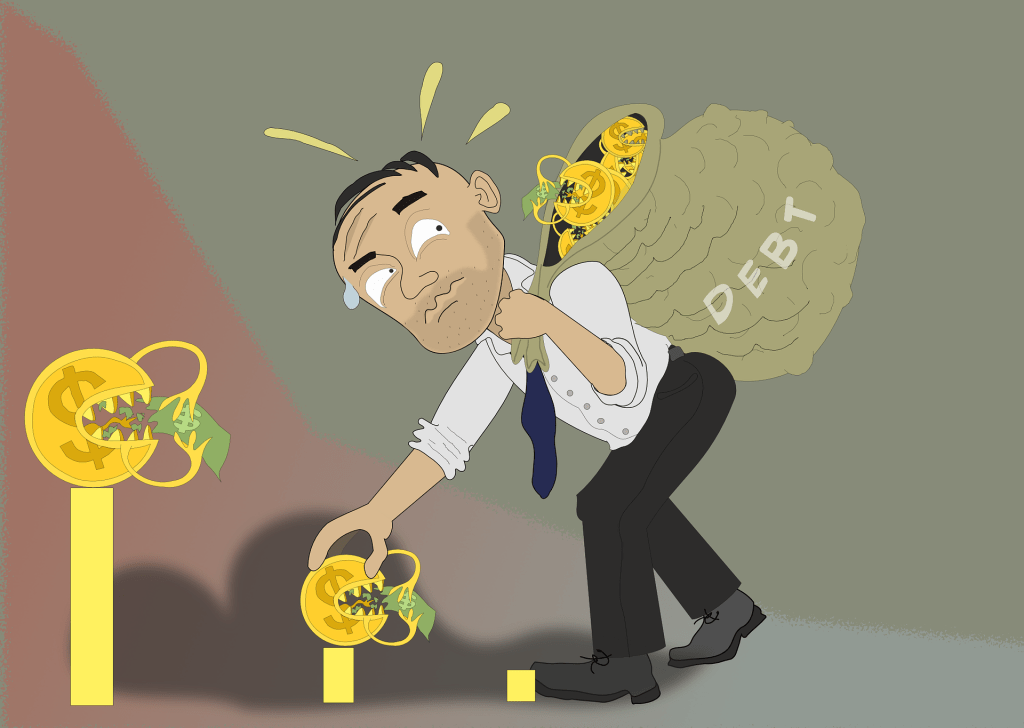
Consumer debt has skyrocketed. More and more Americans have debts that they have scant ability to pay and little of no access to legal or government protection against insane interest rates or predatory lenders. At the same time we have an administration whose focus is on removing any barriers for the lender with no empathy for the consumer.
(Image by Carri Dobbins)
One of the most blatant examples is the Department of Education under Betsy DeVos. Student loan debt is the single biggest category of consumer debt, somewhere around $1.5 trillion. It impacts 44 million Americans. Some researchers have suggested that as much as 40% of these borrowers will default by 2023. Close to 90% of these loans come from the federal government.
At a Senate subcommittee hearing in February, DeVos was asked about a backlog of claims from defrauded student loan borrowers. Specifically asked whether any had been approved she couldn’t answer. The next question came from Sen. Richard J. Durbin (D-Ill.,): “Don’t you have a heart when it comes to 140,000 of these victim students who are trying through the borrower defense rule to get relief from the fraud that was perpetrated on them by these schools?” Apparently not.
At about the same time, a report was issued by the Office of the Inspector General within the Department of Education which concluded that lax oversight of student loan companies was putting borrowers at risk. Specifically it said that violations were not being tracked and the companies that committed them were not being held accountable.
Even another Trump appointee, Kathy Kraninger, director of the Consumer Financial Protection Bureau (CFPB), pointed the finger at DeVos. In a letter responding to questions by Sen. Elizabeth Warren, she said CFPB efforts to investigate student loan services were being hampered by the fact that these services, under the guidance of the Department of Education, were refusing to supply requested information.
DeVos has also been both a promoter and protector of for-profit colleges. About 90% of the revenue for these colleges comes from student loans. And these are the colleges, like the Art Institutes, the defunct Corinthian College, the defunct Trump University and Virginia College, whose degrees largely been judged to be worthless. These colleges tend to focus on minorities, single mothers, veterans and working adults. Often they are left with a ton of debt and a crappy degree that does little to enhance their job prospects. The National Center for Education Statistics reports that the 12-year default rate for student loans for for-profit colleges is 52%. For African-Americans who attend for-profit colleges it is 65%.
(Image by Turmisu)
In one case, DeVos stepped in to save one of these institutions, Virginia College, after an accreditation agency refused its accreditation. DeVos reinstated a previously discredited accreditation agency, the Accrediting Council for Independent Colleges and Schools, which allowed Virginia College students to continue to receive federal student loans. A few months later, the college folded. Some of those students are now suing DeVos.
It is the CFPB that is tasked with monitoring lenders of all types and theoretically protecting consumers. The agency was created after the 2008 banking meltdown. Trump appointed an acting director, Mick Mulvaney, who as a South Carolina congressmen, had voted to abolish the agency. It has in fact been standard procedure in the Trump administration that if a regulation cannot be abolished, as in the many cases in which he has been blocked by the courts, he has simply let the positions at the enforcement agencies sit vacant, or appointed directors who simply refused to enforce the regulations.
(Clker Free Vector Images)
Under Mulvaney’s direction the CFPB dropped a suit against payday lenders who were charging 900% interest rates. Regulations limiting dealer markups on auto loans were abolished. He shut down the Office for Students and Young Consumers which had investigated student loan complaints. A few months ago, Kraninger was appointed as a permanent replacement. Where did they find her? Over at Homeland Security where she worked on the family separation policy on the border.
So where do we go from here? If you’re a lender looking to jack your profit margin the future is paved with opportunity. If you’re a payday lender or a for-profit college, you can breathe a sigh of relief that the sheriff ain’t going to be on your tail. But if you’re a borrower? Beware! And maybe try to find a good lawyer.
Consumer debt in America is at chart-busting levels. In some cases we are even surpassing the debt statistics from the 2008 recession. And yet economic indicators say this is a healthy economy with a 10-year growth record and full employment. So how did this happen?
One simple answer is things cost more. And the things that cost the most are necessities: housing, healthcare, education. As the same time that these costs have been skyrocketing public support has been waning.
According to the Centers for Medicare and Medicaid Services, U.S. healthcare costs were at $3.5 trillion in 2017. That amounts to an annual health care cost of $10,739 per person. In 1960 it was $146 per person. Is it any wonder that 1 million or so Americans experience medical bankruptcy every year? What is surprising is that of this total, more than 70% have insurance. But as healthcare costs have skyrocketed the private insurance companies that most Americans depend on for coverage have been increasing co-pays, raising deductibles and shrinking coverage.
(Image by Tim Gouw)
The biggest segment of consumer debt is student loans. That has been fueled by the fact that college tuition has increased more than 200% over the past 30 years. And at the same time public support for higher education has been declining. The Center on Budget and Policy Priorities estimates that state support for higher education is down some $9 billion over the last ten years.
Some observers have pointed to behavioral issues to explain why so many Americans are willing to take on so much debt. Many derive their sense of self worth from their possessions. Take a look at a TV ad for Cadillac or Lincoln. The marketing of luxury products clearly fuels conspicuous consumption, consumption that the consumer may only be able to keep pace with by going further and further into debt.
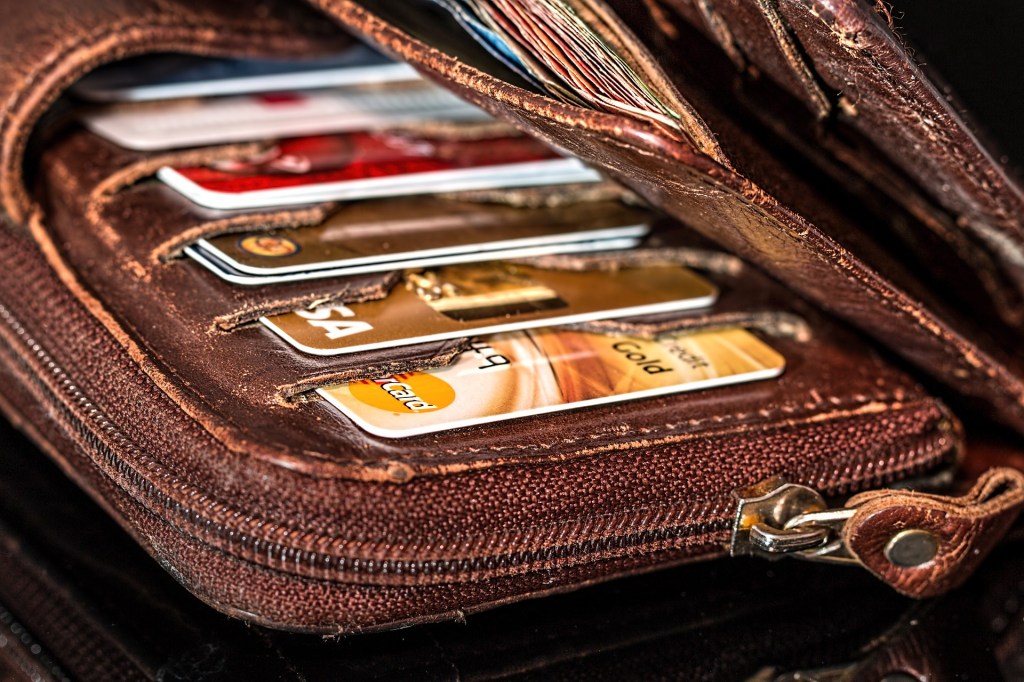
And then there is the behavior of the lenders. It is generally acknowledged that the 2008 recession was the result of wide-scale mortgage lending by banks to buyers who did not have to ability to repay those loans. Subprime lending left the buyer in debt while the bank either made money from the high interest loan or the foreclosed property. While mortgages are no longer as easy to come by for the non-qualified applicant, there is no shortage of other loans made without reasonable assurance of the consumer’s ability to repay. One of the more grievous examples are payday loans, loans made in advance of a paycheck. Most of these loans become churn loans, meaning you end up borrowing to pay back the previous loan. The average annual percentage interest rate for a payday loan is 400%.
(Image by Steve Buissinne)
There have also been court rulings and legislation that have paved the way for banks, credit card companies, retailers and other lenders to engage more borrowers at higher interest rates while at the same time offering the consumers fewer protections.
In 1978 there was a Supreme Court case, Marquette National Bank of MInneapolis vs. First of Omaha Service Corp., that is widely cited as a boon to credit card issuers, and a boom in credit card debt. In that case the court ruled that national chartered banks issuing credit cards were subject to the regulation of the state in which they were based, but if they issued cards to individuals who lived in other states, they were not subject to the regulations of the cardholder’s state. This sent credit card issuers in search of the states with the loosest regulation so they could charge the highest interest rates. Many of the states, competing to attract the banks to headquarter in their state, did so by loosening regulations. For credit card holders, this means higher interest rates and fewer protections.
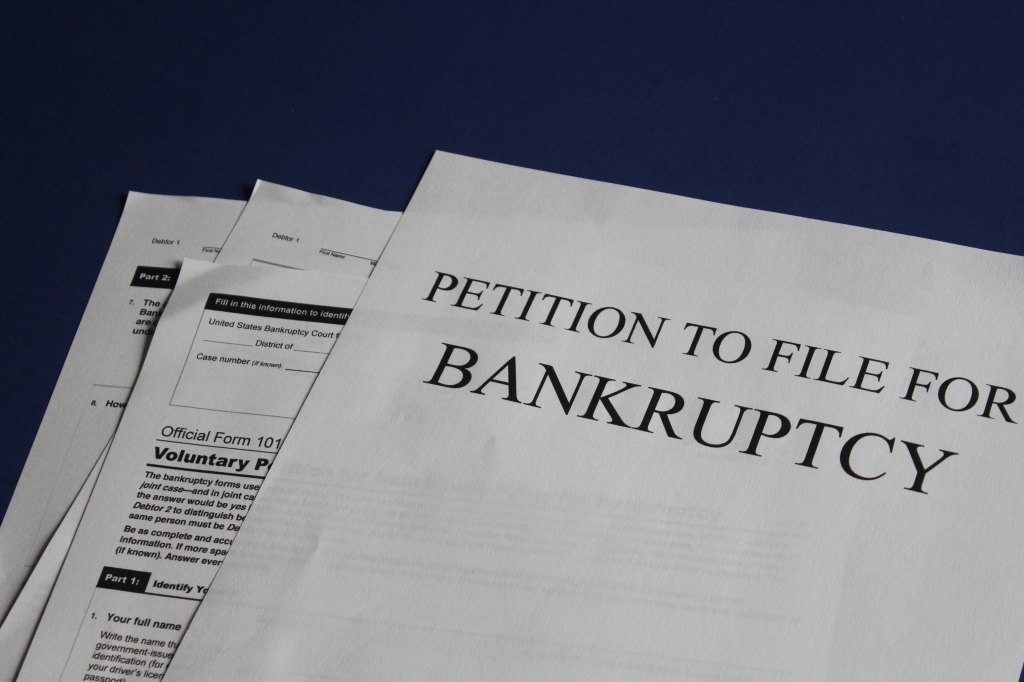
In 2005, Congress passed legislation that would further fuel credit card debt. The Bankruptcy Abuse Prevention and Consumer Protection Act, did anything but protect consumers. Instead it made it more difficult for debtors to file for bankruptcy. Thus many who found themselves with insurmountable debt, unable to get relief from bankruptcy laws, instead maxed out their credit cards. This legislation was heavily promoted by the banking and credit card company lobbyists.
(Image by Melinda Gimpel)
So what happens to the levels of consumer debt at a time when the current administration has promised deregulation. All signs point to a government that wants to help lenders ride the gravy train with little empathy for the borrowers who suffer the consequences. I look at some examples in my next post.
The U.S. economy has experienced uninterrupted quarter by quarter growth since 2009. We are at full employment. Even wages have risen this year after lagging behind other economic statistics for a long time. And yet, household debt in the U.S. has risen to $13.67 trillion, the highest level it has been at since the recession in 2009. This staggering number includes record levels of student loan debt, credit card debt, personal loans and auto loans.
Some will say that all this debt is not all bad. When mortgages and auto loans are booming it makes for a healthy real estate and auto industry, two key indicators of the state of the American economy. And debt that leads to an improvement in one’s future financial status is sometimes called “good debt.” A student loan that enables a college degree that increases one’s earning potential is an example.
(Image by Rilsonav)
But the consequences of debt on the individual are not so rosy. Taking on debt pretty much assures that you will pay more for anything you buy because of the interest, more than what the item you bought was worth. Debt may cause your credit rating to drop to the point where you are unable to buy a home or make other large loan-based purchases. Of even greater consequence are loans that you have no ability to repay that may prevent you from accumulating any savings or retirement account. Or it may lead to foreclosure.
A stunning example was provided by a recent investigative piece in the New York Times about loans made to cab drivers for their medallion yellow cabs. Drivers, many of whom are immigrants, were loaned up to $1 million to buy the medallions when realistically they were likely to earn no more than $25k to $30k a year. For a number of these cabbies the answer was suicide.
Student loan debt in America is now at a record $1.5 trillion. One out of every four Americans has student debt. So we’re not just talking about young people right out of college. It’s some 44 million people. And as the volume of student loan debt has increased so has the delinquency rate. Nitro, a college planning service, pegs the rate of loans that are 90 days past due at 11.5%. That’s higher than delinquency rates for mortgages, auto loans, credit cards or home equity loans.
(Image by Mohamed Hassan)
According to the Federal Reserve, U.S. consumers had $1,057 trillion in credit card debt in March of this year. The average per household was $8,286. They claim that 53% of Americans make only minimum payments on their cards. That, of course, makes credit card debt the gift that keeps on giving…to the credit card issuer, that is. The Fed also notes that 43% of Americans spend more than they take in each month.
One of the reasons for the record volume of credit card debt is medical expenses. About a half million Americans declare medical bankruptcy each year. This is something that is unthinkable in most other Western democracies. These people may have maxed out their credit cards or they may have lost their jobs because of their illness or condition. One statistic that I found particularly alarming is that of these bankruptcy declarations, 78% had insurance, but they were still unable to keep up with the co-pays, deductibles and uncovered expenses.
(Clker Free Vector Images)
While the enormous wave of foreclosures due to delinquency on mortgages has eased since the peak years following the recession, there remains a lingering trail of delinquencies and foreclosures.
It is estimated that about 9 percent of U.S. properties are significantly “underwater,” meaning that the value of the property is less than the amount owed on the mortgage. The Fed reports delinquency rates holding steady in the 4-5% range, but a report earlier this year by Moody’s predicted this would go up in 2019 because of looser lending practices and rising interest rates.
How did this debt explosion happen? In my next post, I look at some of the reasons why American consumers are off the charts when it comes to debt.
Above is what the Museum of Modern Art in New York looks like right now. The museum is closed while it undergoes a renovation, it is scheduled to reopen in October.
While MOMA itself is closed, Virtual MOMA takes you behind the closed doors for a look at the museum’s collection. These photos are from the design floor. The Value of Good Design is a distinctly retro exhibit. In the 1950’s more and more Americans were becoming homeowners. This was due in part to the prosperity that followed World War II and because of the availability of affordable mortgages for GI’s. So it’s not surprising so much design of the times was geared for the modern homeowner, modern that is in a 50’s sort of way.
This is what’s going on in the Museum of Modern Art in New York this summer. The museum is closed while it undergoes a renovation, it is scheduled to reopen in October.
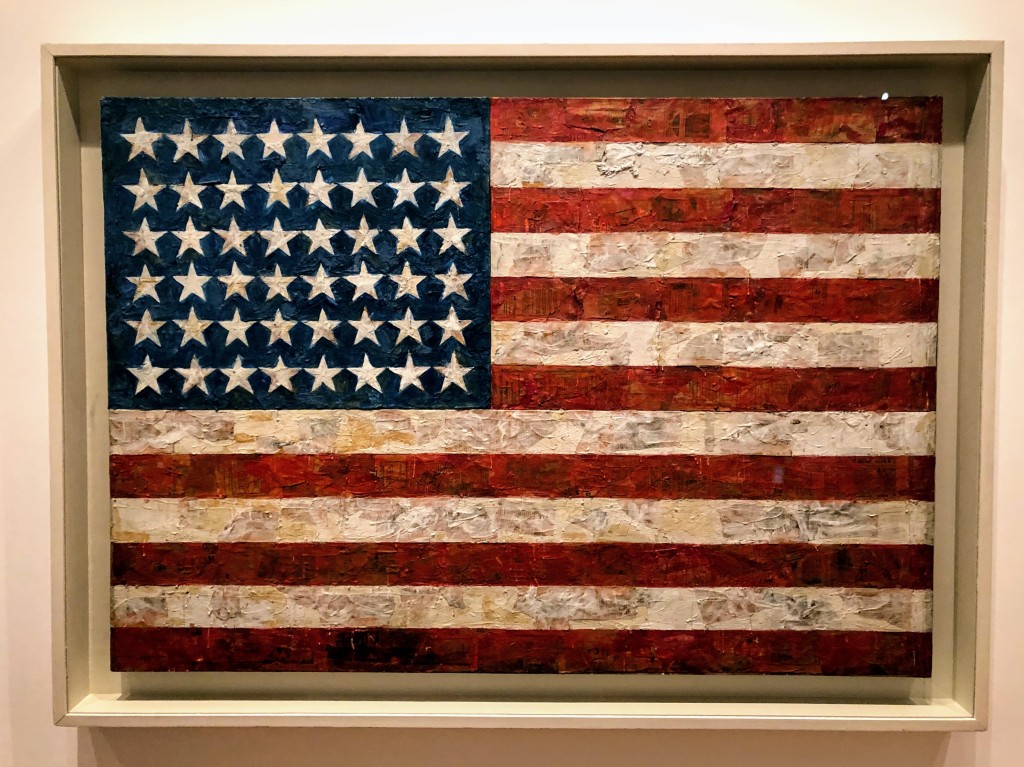
While MOMA itself is closed, Virtual MOMA takes you behind the closed doors for a look at the museum’s collection. These photos are from the fifth floor where you’ll find the paintings that MOMA is best known for, the early 20th century European masters. Lots of familiar stuff here. These are modern classics, the paintings that you see images of on tote bags, coffee mugs and coasters.
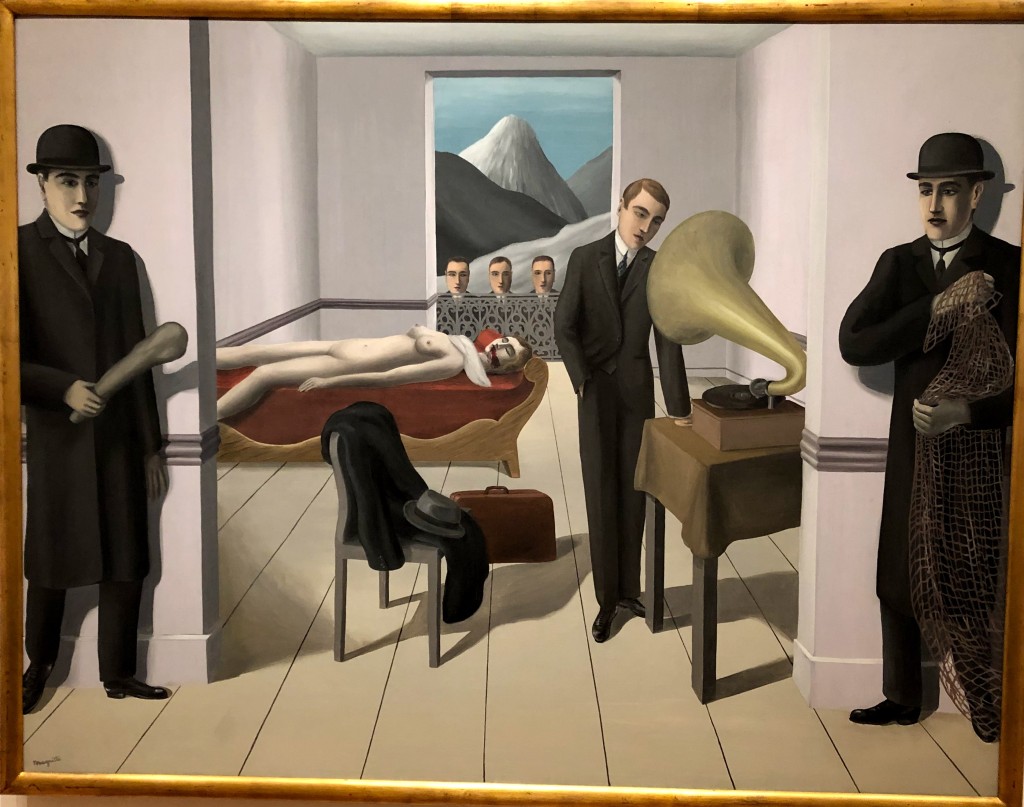
Y’all know what this is, right?Girl before a Mirror, Pablo PicassoDance, Henri MatisseThe Menaced Assassin, Rene MagritteThe Dream, Henri Rousseau
Jar, bottle and Glass, Juan Gris
The passage from Virgin to Bride, Marcel Duchamp
Exit the Ballets Russes, Fernand Leger
The Bather, Picasso
Les Demoiselles d’Avignon, Picasso
The Moroccans, Matisse
The Piano Lesson, Matisse
Painting, Willem de Kooning
The Channel at Gravelines, Evening, Georges-Pierri Seurat
Take a jaunting car ride through Killarney National Park.
Learn how to play hurling at O’Loughlin Gaels GAA in Kilkenny.
Take a kayak out into Dingle Harbor to see Fungie the dolphin.
Fungie is a bottlenose dolphin that has lived in the Dingle Harbor since 1983. While I was unable to catch him on camera, we did see the Dingle dolphin on this kayaking trip.
Go for a hawk walk at Ashford Castle.
Make chocolates at Cocoa Couture in Mountmellick
Fish like a monk in Cong.
This monk’s fishing house on the grounds of the Cong Abbey was probably built in the 15th or 1s6th century.
but then again, if you decide you just want to have a beer…
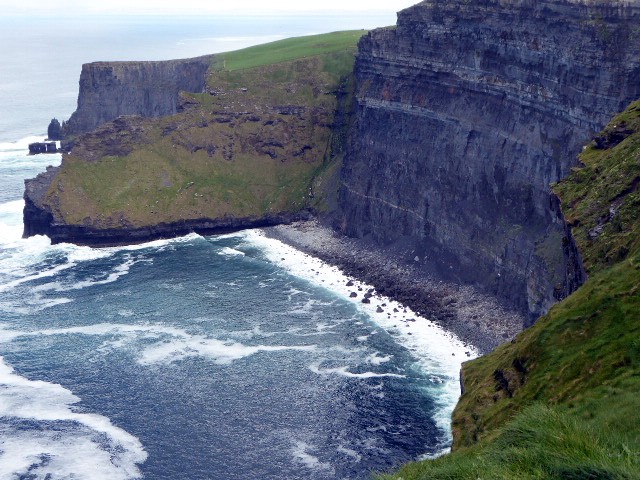
Located in County Clare, the Cliffs of Moher are one of the most visited tourist attractions in Ireland. They run for about 10 miles and at their highest are some 700 feet above the Atlantic Ocean. The cliffs are believed to have been formed about 320 million years ago during the Upper Carboniferous period.
Remember when social media networks first became popular and when you first started using them. I re-connected with friends I hadn’t heard from in years, some in decades. I was able to keep up with what friends and relatives were doing, where they lived, how they spent their vacations, even what music they listened to or movies they watched.
(image by Marvin Meyer)
It was part of an expanded social environment on the internet that gave all of us a voice, a publishing platform. I could offer up my opinion, my photos and my videos, as I’m doing on this blog, without having to find a publisher, pitch an editor or go through any gatekeepers. I thought of it as the democratization of information and publishing. The only drawback I saw was a petty one, the tediousness of one too many cute cat photos, cute dog photos or cute kid photos.
But then a dark side emerged. This democratized publishing platform became the platform for neo-Nazis, racists, scammers, bullies and various types of hate mongers and disinformation providers. It became a virtual recruiting office for terrorist organizations and a tool for foreign governments to try to manipulate election outcomes.
At Recode’s Code Conference, held this week in Scottsdale, Ariz., current and former executives from Twitter, Google, Facebook, YouTube and Instagram were asked about this. Their answers were all pretty much the same and it goes like this:
1, Each was anxious to remind the audience that the toxic stuff is only a small percentage of the information available on their platforms. Susan Wojcicki, CEO of YouTube, calls it the 1%, suggesting that the other 99% is good quality stuff of interest to their users.
2. The poisonous content is an unintended consequence of their noble effort to provide an open platform and give everyone a voice. As a former head of communications at Google, Jessica Powell was more blunt than some of the others: “They have been there from the start. Historically the platforms have been way too lax about what is allowed.”
3. But now, they say, we recognize the problem and, while we’re not there yet, we’re working on it. YouTube says they have 10,000 people dealing with controversial content and took 8 million items down in the last quarter. Twitter says 110 groups were banned from the platform, 90% of which were white supremacist organizations. And so on and so on.
Wojcicki deserves credit for being the only one in her position to get up on stage and answer questions about this for an hour or so. But her comments only seem to prove the inability of these companies to deal with the problem.
Wojcicki started her session noting that a recent decision by YouTube was deeply hurtful to the LGBT community. She apologized. This comment referred to the recent public disclosure by a Vox reporter Carlos Maza that he has been harassed for the past two years on YouTube by a racist homophobic pig named Steven Crowder. His videos refer to Maza as a “lipsy queer” and “gay Mexican.” Some of his comments are delivered while wearing a t-shirt that says “socialism is for fags,” an item he sells.
This stuff was made public while YouTube was blowing the trumpet about its new hate speech policy. So they took Crowder videos down right, despite the fact that he has almost 4 million subscribers? Nope. They decided these videos did not violate their hate speech policy. And when that announcement produced the predictable uproar they decided that while they weren’t taking the videos down they were going to block Crowder from monetization. So now everybody’s pissed and things are even worse for Maza as some of the cretins who follow Crowder are now harassing and threatening him.
Amongst Wojcicki’s litany of excuses was “if we took down that content there was so much other content that we had to take down.” And that’s a bad thing? Seems to me to be a start for cleaning up this digital cesspool.
The tech industry is in the midst of what has always been an issue in American capitalism. Whenever an industry, in its quest for greater and greater profits, starts to damage consumers, the society that they operate in or the environment, it raises a call for government regulation. The response of the giants in that industry, whether its banking or real estate, energy or autos, is always to try to convince that they can self-regulate.
That is what the giant tech companies are doing now. But they can’t do it. And the best explanation I heard of why came from NYU marketing professor Scott Galloway. “When it’s raining money, your vision gets blurred.”
Like everyone else I know, I believe in free speech. And I want an open internet. But how much weaponization can we tolerate. Do we protect free speech that threatens, humiliates or victimizes? No. Nor can these companies effectively self-regulate. So there has to be some government regulation and most of the execs at the Code Conference are resigned to that.
But regulation by the U.S. government in its current state is sure to be a challenge. So many of the government leaders and officials both in the White House and in the Capitol are pretty out of touch when it comes to technology and some barely seem to understand what the internet is. How would you like, for example, to have internet policy set by the likes of Mitch McConnell.
We have an administration that is touting de-regulation, run by a party that likely benefits from far-right disinformation. But it’s a bipartisan problem that most elected officials seem far more focused on partisanship and their own self-preservation than they are on benefiting and supporting their constituents. That is unless you mean by constituents the corporations, billionaires and interest groups that fund their campaigns. How else could you explain why congressmen would vote against an open internet other then that they’ve been bought by Comcast or Verizon.
(Image by Sticker Mule)
It is reasonable to point out that the social networks are a reflection of the society in which they operate. But they have attached a megaphone to it. Here is a small example of how small issues become big problems on social media. In the town where I live two middle school kids had sex in the bathroom of a local pharmacy. Not exactly what you would like to think is going on while your filling your prescriptions, but how do I know about that anyway? The issues could well have stayed within the crusty walls of the public restroom, had not one of the kids posted it online. So everyone in town now knows about it. While that doesn’t change how acceptable or unacceptable the initial behavior is, the consequences have been amplified for the kids involved, their parents and families, their schools and teachers and likely for the staff of the drugstore which is part of a giant chain.
Government regulation won’t address the issue of having a portion of our citizenry that is hateful, bigoted and violent. But maybe by taking the megaphone away from them they will crawl back under the woodwork from whence they came.