

Mertens’ Water Monitor
Reptile and Amphibian House
Cape May County (N.J.) Park and Zoo

Burmese Python

Leopard Tortoise

Green Tree Python

Chinese Alligator

Chinese Box Turtle
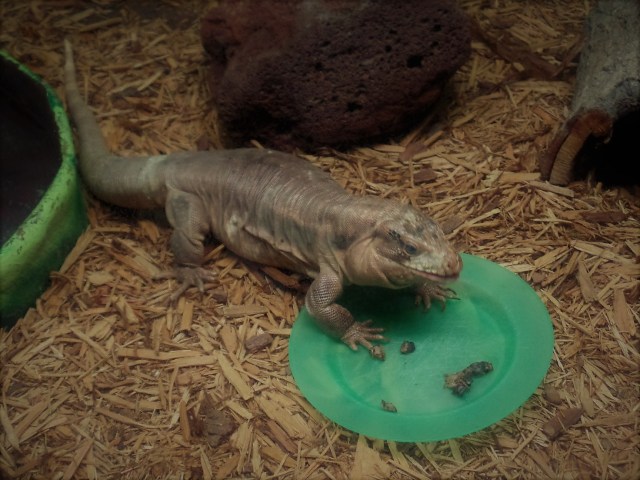
Red Tegu
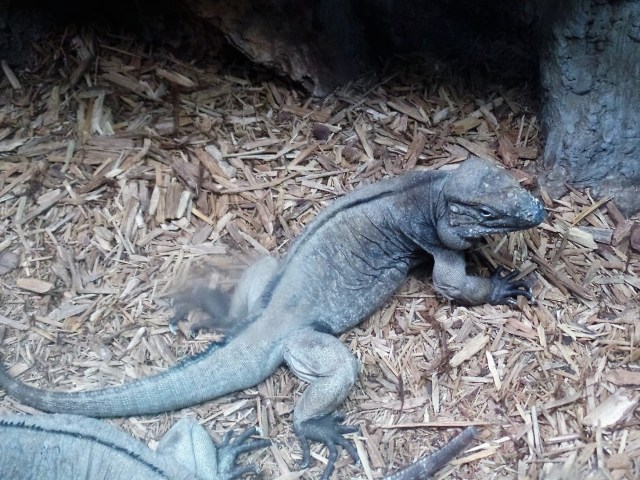
Rhinocerus Iguana
Mertens’ Water Monitor
Burmese Python
Leopard Tortoise
Green Tree Python
Chinese Alligator
Chinese Box Turtle
Red Tegu
Rhinocerus Iguana
It’s the 1970’s in a remote Yukon Territory town. A guy with a back hoe is digging out a future construction site and he sees film popping up out of the earth. Lots of it. Fast forward to when it’s dug out, stored, clean up and processed and what he has found includes some 300+ silent movies for which no other copy is in existence.

Front Street, Dawson City
The short version of the story behind this discovery is this. Dawson City, a Klondike gold rush town in the late 19th and early 20th centuries, attracted tens of thousands of miners. At one time 40,000 people converged on this pop-up western town and it had three theaters. By the time first run silent movies of the 1910’s and 1920’s got to Dawson City they were two or three years old and this was the end of the distribution line. They were of little value to other theaters and no one wanted to pay to ship them back. So they got discarded and buried until this discovery.
An interesting story made fascinating by the way it is told by director Bill Morrison. This isn’t about talkies, so there’s not much dialogue. Occasional sparse sentences appear on the screen with some explanation. But mostly this is visual and the visuals are the clips from the movies that were literally unearthed in Dawson City.
 For any period of history, there are a few classics that survive over time, whether that is movies or literature or music. Most of us have seen one of the silents that survived, maybe Birth of a Nation or the Great Train Robbery. But these are exceptions and may not tell us what it was like to spend every Saturday night in the theater in 1915 or 1920. Morrison’s documentary does.
In addition to the film clips there are photos recovered from a photography studio that operated in Dawson City at the start of the century. Like the movies there are no words with these. There’s no names or stories. You see the faces, the clothes, the settings and you use your imagination to picture what is was like living in one of these boom then bust towns on the outskirts of civilization.
Morrison also shows us some rare historical footage recovered from newsreels that were shown in the theaters. For example, there is footage of the 1919 World Series with the infamous Chicago Black Sox.
If you are at all interested in film history, you can’t miss this. If you’re not you are still in for a unique entertainment if you can find it. I don’t think it will be coming around to your local highway megaplex anytime soon but it is enjoying a limited run at some art houses. IFC is showing it in New York. And everything eventually shows up online.
(Photos from New York Public Library Public Domain Digital Collection.)

King crab legs, Sylvester’s Fish Market, Avalon

Crabmeat cocktail with mustard sauce, Oceanside Seafood, Avalon

Bavarian pretzel stuffed with crab dip and cheese, Joe’s Fish Co., Wildwood

Shrimp stuffed with crabcake. Joe’s Fish Co., Wildwood

Crabmeat guacamole, Quahog’s Seafood Shack, Stone Harbor

Broiled crabcakes, Sylvester’s Fish Market, Avalon
Throughout this series of posts about the future of radio, I’ve made a point of how surprisingly well traditional terrestrial radio has hung on and how it has maintained its audience despite a plethora of digital alternatives. But ultimately few question the inevitability of the internet replacing the technology that was derived from Marconi in the early 20th century. One country, Norway, has already announced a date for the full replacement of FM transmissions with new digital audio broadcasting technologies.
Digital can free up radio in a number of ways:
 Traditional radio, despite having proved more entrenched than some other traditional media, nonetheless will face the same sort of digital transformation that other media have faced in the last couple decades. As the internet and the web became more and more popular and as the number of people with broadband proliferated, print and television in particular were often slow and awkward in making the transitions. The print media initially responded by taking what they published in print and posting it online. Only after they started to see their audience drift away to online information services, whether it be Google or Facebook, or even the Huffington Post, they began to realize that a digital information service required a different approach than a once a day print newspaper.
Radio’s first response to the digital world was similar. Put up the live stream of the radio programs that currently existed on the station. What came to be called Web 2.0 emphasized interactivity, personalization and on demand information. Digital audio services have delivered some of these same qualities. Pandora lets you program your own radio station. Podcasting lets you subscribe only to the programs you want to receive and to listen to them at your leisure. You can even ask a digital assistant like Siri or Alexa to play only the song you want to hear at that moment. Are we perhaps on the verge of seeing Radio 2.0?
But we should also keep in mind that terrestrial radio has not hung onto its audience because anyone thinks the century old technology is better. It’s because of the programming and specifically the local programming that is led by people who are part of the community. It has local news and traffic and weather, community service announcements and even local advertisements. Radio builds communities and it’s not just geographic but can be ethnic or age group or lifestyle communities. That’s all something that algorithms aren’t very good at. It’s a blind spot for digital news and digital video and it is likely to continue to be for digital audio as well.
 Can radio 2.0 leverage the capabilities that digital offers while maintaining the characteristics that make radio unique? Here are a few possibilities:
But more than anything else, what I look forward to with digital radio is hundreds of stations, localized maybe even to the point of a neighborhood or a building, managed by local talent who are part of the community the stations serve. A little bit like the way radio got started.


Happy Fourth!


The 78th Whitney Biennial was held this year at the Whitney Museum of American Art in New York. The Biennial is a kind of state of the art exhibit of contemporary work. The emphasis is on young and emerging artists. All the pieces shown here were done between 2015 and 2017. The Biennial dates back to 1932 when it was established as an annual event. It went biennial in 1973. Art critics look to the Biennial to identify new trends in contemporary art. Not sure I could identify any of those trends. But I can show you some brilliant works that were part of the exhibit.
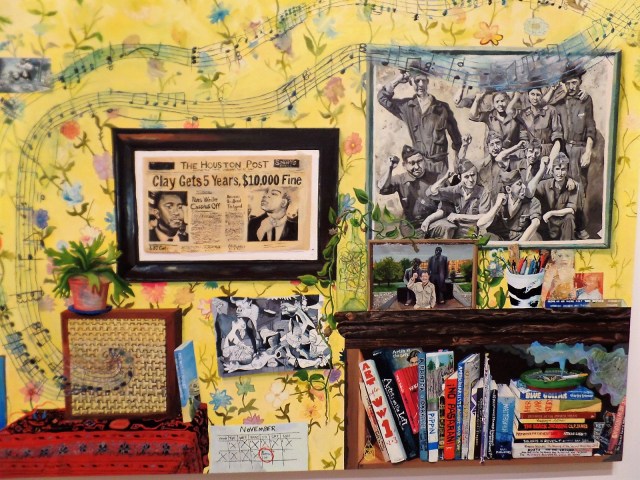
Veterans Day,Celeste Dupuy-Spencer

Jessi Reaves

La Talaverita, Sunday Morning New York Times, Aliza Nisenbaum

November Edit, Jack Riepenhofff with Peter Barrickman
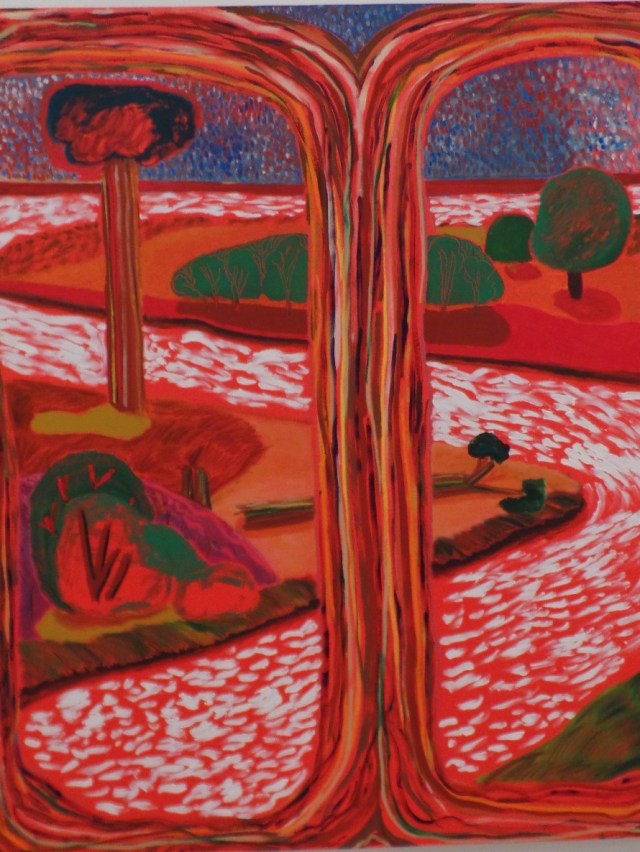
Split Ends, Shara Hughe


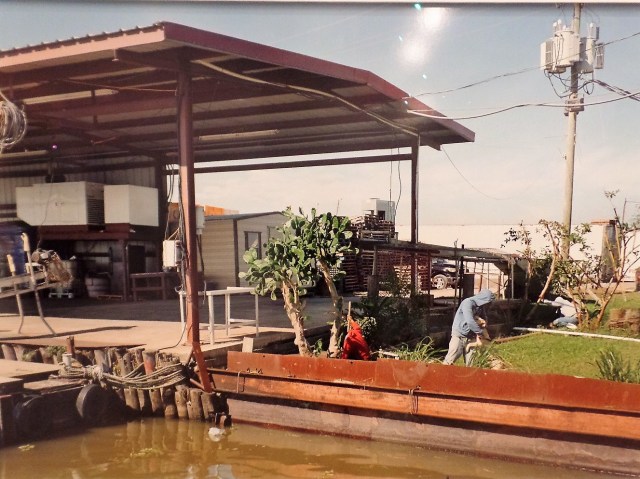
November 10, Workers, Venice, Louisiana, An-My Le
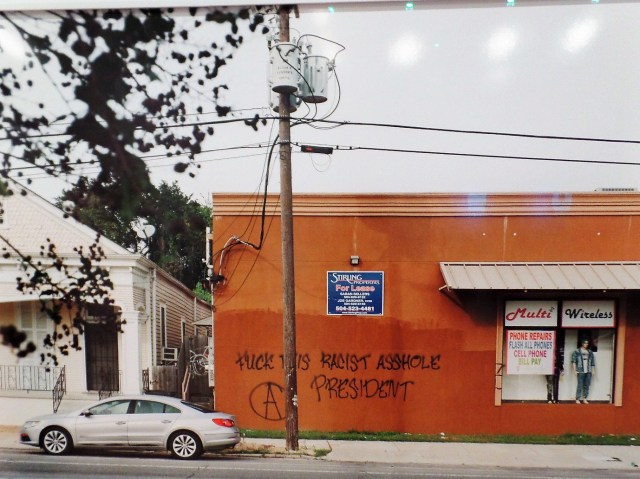
Part of the Silent General project, photos by An-My Le

Heart Atrium, Kaari Upson
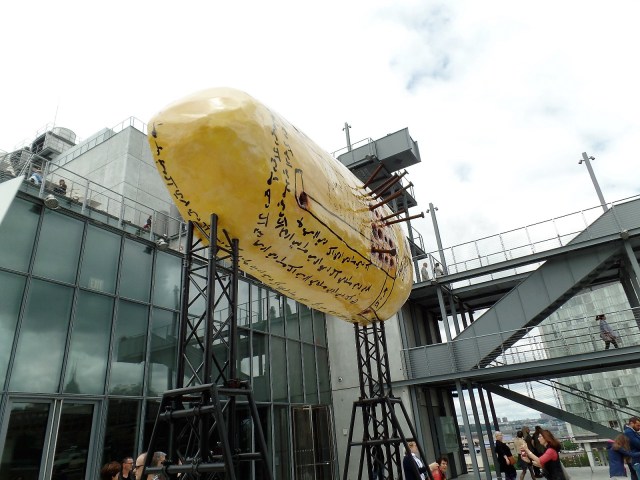
Local police find fruit with spells, GCC

One Thousand Museum, Zaha Hadid Architects

Man’s best friends Raul de Nieves
Back in 2009, when the Pew Research Center released its annual state of the media report, it had this to say about radio: “Radio is well on its way to becoming something altogether new – a medium called audio.” It added: “Audio’s future, unlike print or television’s, seems less a crisis and more an intriguing fragmentation.”

(Image by Averie Woodard)
Radio as audio means it is not just the AM and FM stations on your traditional radio dials. It’s streaming services like Spotify, Pandora or iHeart Radio. It’s Internet only radio stations, its satellite radio and it’s the music channels on your cable TV system It’s podcasts, in fact you might even add Audible. Another word to describe it is listening.
Defined like this, radio will surely never die. Pew’s 2009 projection was spot on. Almost all of the alternative forms of radio/audio mentioned above have grown since that time and terrestrial radio itself, however destined it seems to be replaced by a digital only version, has hung on smartly. In an earlier post I described it as the last stand of the analog world.
Here are a few stats that back this up:
I don’t see any future time in which we are not listening to radio as a set or type of audio programming. What we might not listen to, however, is the radio device. At a recent conference Roger LaMay, the GM of WXPN, a public radio station in Philadelphia, provided some statistics that show the different device preferences of different aged listeners. The numbers pretty clearly show the listeners to radio in its traditional forms are older and the new options are first embraced by younger listeners.
“Across NPR member stations, the average age of over-the-air listeners is 58… On tablets, it’s 53. On smartphones via the NPR News app, it’s 49. On Facebook, it’s 42. For NPR Music and NPR Twitter, it’s 39. On NPR’s website, it’s 38. For NPR podcasts, it’s 33. And for NPR on social media, it’s below 30.”
One of radio’s greatest assets as a medium in the number of places where it has been embedded. Most stereo systems and several generations of music players included a radio, your bedside alarm clock may well have included a radio and even some TV’s. Perhaps most importantly, pretty much every car has a radio.
Now there is a whole new set of devices to access a whole new set of audio options, including classic radio. There’s the desktop, the tablet, likely some wearables. But above all else there’s the smartphone. How many other devices has this palm of hand computer replaced? Firstly the telephone, but then the camera and the alarm clock. For me it has meant retiring my watches, a whole drawer full of maps and a vehicle installed GPS system. No more rolodex, no more calendars or personal diaries, no more phone books and no more printed newspaper.
 And likely no more free-standing radios. The smartphone not only has apps that deliver streaming music services but it also gives you access to online apps of radio stations, breaking the geographic access barriers of terrestrial radio. And while it doesn’t seem to be widely known, most phones include FM chips that allow you to listen to over-the-air radio.
As with other forms of entertainment and information, the future of radio, or if you prefer, audio, is likely to be device agnostic. And the type of delivery, streaming, over-the-air, archived or on-demand is also likely to be of far less significance than the content itself. We will choose among them in the same way we have traditionally chosen from among different radio stations, maybe the touch of an icon instead of the push of a button or turn of the dial. And we might have to go to a museum to see a free-standing radio.


Taking the twins for a swim

Mom and dad’s watchful eye

Snacks!

Baby portrait
Edgemont Memorial Park, Montclair, N.J.
In the 1990’s the FCC relaxed its restrictions of radio station ownership and set the stage for large corporate consolidation of radio stations. Before long, two or three giant operators gobbled up a majority of the nation’s radio stations in most of the major markets.
 Chief among those consolidators was Clear Channel Communications, which was later sold in a private equity transaction to Bain Capital and Thomas Lee Partners. It was renamed iHeart Media. iHeart owns 858 radio stations in more than 150 markets.
The ClearChannel/iHeart stations are the epitome of big corporate radio. They are divided into narrowly defined formats. Their playlists are computer generated based on ratings. They are intentionally and unashamedly predictable and repetitive. I don’t think that puts them in a very competitive position.If that’s what you want to hear, there are plenty of places to find it without having to listen to all the ads on commercial radio.
So how’s it working out for them.? Well, according to a financial statement by iHeart earlier this year, ““We incurred net losses and had negative cash flows from operations for the years ended December 31, 2016, and 2015, as well as for the quarter ended March 31, 2017.”
The leveraged buyout of ClearChannel in 2008 saddled the new entity with $20 billion in debt And they can’t pay it off. In a recent SEC filing iHeart acknowledged that they might not in fact make it through the year.
Then there’s the number two player, Cumulus Media. They own 454 stations in 90 markets. Seems as though they aren’t doing much better. In a filing at the end of last year they warned, “we may be required to seek protection from our creditors through a bankruptcy filing.” Their stock, which was worth about $30 a share a couple years ago, is now worth about 50 cents per. And in the first quarter they lost $7 million.
 The financial troubles of these behemoths has meant there are even fewer local DJs, less local staff, less local programming, less local news. Instead we’re subjected to packages of data driven and computer generated programming that comes out of headquarters and is broadcast nationally. Robo-radio.
So if you want to consider what is a threat to the existence of radio, it may not be about Pandora or YouTube or Spotfiy. Instead the biggest threat is radio stripped of its local interest and built for the ad sales department rather than the audience.
Viewed in this light, the pending collapse of these large corporate consolidators can hardly be considered bad news. There’s the potential for more than 1,000 FM and AM stations to be put in play as these corporate entities collapse. Will one corporate owner replace another, accumulating the same sort of suffocating debt and delivering the same non-descript programming.
I’d like to think this could be the opportunity for a renaissance for radio. Maybe dozens, if not hundreds, of these stations could fall into the hands of independent local owners. In that case, radio can go back to its roots with local talent building communities of listeners with local programming tailored to their interests.
In my series of posts on the history of radio, one was titled “Video Didn’t Kill the Radio Star After All.” It was about the time when television became popular, the late 40’s and early 50’s, and the networks, NBC, ABC and CBS, virtually abandoned radio. Many, including the guys who ran those networks which supplied the most popular of radio programming, were ready to write the medium off.
 But instead of fading away, radio had a revival. Transistors, car radios, teenagers, DJ’s, rhythm and blues and rock and roll all combined to make radio more popular than ever with both more listeners and more influence on a few successive generations of Americans.
Fifty years later, many are again questioning the future of radio. With streaming services, Spotify and Pandora, with satellite radio, podcasts and internet radio, with smartphones that allow you to carry your whole music collection in your pocket, what happens to all the those AM and FM radio stations?
Maybe nothing.
The Pew Research Center’s 2016 State of the News Media annual report didn’t have a lot of good news when it came to traditional media. That is, except for radio. “The American public’s consumption of audio content, which includes radio news and talk shows in addition to music, sports and other programming, continues to increase. Advances in consumer technologies allow increasing numbers of Americans to choose to listen to radio on a variety of newer platforms, while at the same time, terrestrial radio continues to reach the overwhelming majority of the public.”
The Pew report continues: “Traditional AM/FM terrestrial radio still retains its undiminished appeal for listeners – 91% of Americans ages 12 and older had listened to this form of radio in the week before they were surveyed in 2015, according to Nielsen Media Research.”
The radio industry trade publication Radio Ink concurs. “Still as strong as ever, radio continues to confound competitive naysayers by expanding its connection to analog listeners despite the proliferation of pureplay alternatives like Pandora and commercial-free experiences like satellite radio. In fact, radio was the only analog medium to show growth year-over-year in Nielsen’s analysis (+1% in time spent listening) and it is the only medium to command a consistent share of daily media activity (17%), no matter the demographic.”
So why is radio the medium with nine lives? Turns out that simple old AM/FM radio has a lot of things going for it.

Is it the end for terrestrial radio? No. At least not for now. Radio is looking like the last holdout of the analog world. But will radio have another revival? I’ll discuss that in next week’s post when I raise the question “Is It the End for Big Corporate Radio?”
 off the leash