It is part of America’s legacy that we don’t have much interest in obeying laws we don’t like. That’s what the Boston Tea Party was about. And this national will to resist didn’t go away after independence.
Perhaps no law was as widely disrespected and disregarded as the 18th Amendment to the U.S. Constitution. Commonly known as Prohibition, the amendment banned the manufacture, sale and transportation of intoxicating liquors. Even before it went into effect, there were protests in many cities, including one in Boston Commons that included 50,000 people One clue about how this law would be received could be found in the New York Daily News on the day Prohibition took effect in January of 1920. They published a citizen’s guide on how to keep drinking.
One of the ways that could be accomplished was to exploit loopholes in the Volstead Act, the legislation that was supposed to provide for enforcement of the Prohibition amendment. The legislation was passed a few months before it went into effect and distillers used that time to move their stock out of the country. One of the favorites destinations was the Bahamas. Then, when the law was in force, they loaded up floating liquor stores and anchored three miles offshore in international waters. Local fisherman would ferry customers out to the booze boats.
The law allowed for the sale of alcohol for medicinal purposes. (Sound familiar?) In Chicago alone, 15,000 doctors and 57,000 retail pharmacists applied for licenses to sell medicinal alcohol. Dentists and veterinarians got into the act as well. Thirty million gallons of “medicinal” liquor was consumed during the first five years of prohibition. Another way around the Volstead Act was by partaking in “sacramental wine.” Quite a lot of that passed through the hands of priests and rabbis during their 20’s as their Catholic and Jewish constituents where almost universally opposed to Prohibition. The 18th amendment also produced a boon in legal production of industrial alcohol which tripled in the first half of the decade.
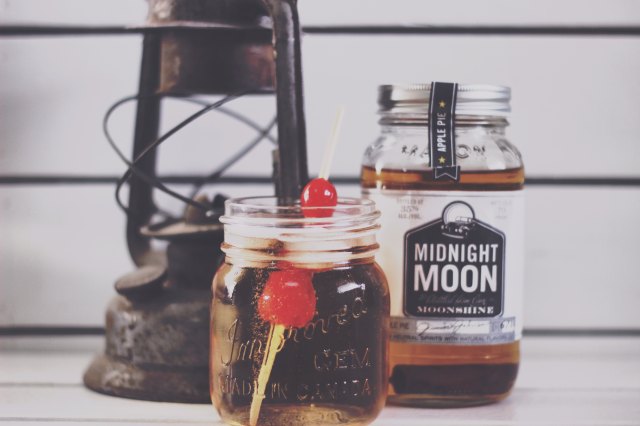
(Image by Levi Saunders)
One other way around the law was to make your own. Breweries that were supposedly put out of business by the 18th amendment initially tried selling soda and something called near beer, but eventually found a more lucrative path to pursue – malt extract. With the addition of yeast and water you could home brew real beer. Malt shops opened up in many cities selling the malt, yeast and various paraphernalia like bottles, filters and bottle-stoppers. These were the predecessors of the head shops that would emerge later in the century.
In Last Call, Daniel Okrent tells the story of a product called the Vino Sano Grape Brick, produced by some California grape growers. The brick came with instructions to add water to produce grape juice. But it also came with a warning. Customers were cautioned not to “add yeast or sugar, or leave it in a dark place, or let it sit too long before drinking it because it might ferment and become wine.” He also tells the story of Bowdoin College students brewing their own beer in their science labs. Prohibition led to an increase in student drinking as drinking age laws meant little when alcohol was banned entirely.
Making your own and consuming it at home was within the law. But some, mostly working class families, went a step further and turned their apartments into “blind pigs,” offering up some of their production to their neighbors, for a price. Prior to Prohibition, in 1917, Americans consumed 70 million gallons of legal wine. In 1925, they were putting away 150 million gallons of the homemade stuff.

Prohibition hung in effigy. (From New York Public Library public domain collection)
Resistance to Prohibition was not confined to the moonshiners, rumrunners and bootleggers. In fact, it went all the way to city hall and the statehouse. Running for governor of the state of New Jersey Edward I. Edwards promised to keep his state “as wet as the Atlantic Ocean.” He was elected. In Chicago when Big Bill Thompson was running for re-election as mayor he promised “we will not only re-open places these people have closed, but we’ll open 10,000 new ones.” He won as well. New York Mayor Fiorella LaGuardia went one step further. He announced a plan to go to the drugstore and buy the ingredients to make beer and then make it, inviting Prohibition agents to come and arrest him. They didn’t show. In the courthouses, federal Prohibition agents found that local juries had no interest in convicting their peers of Volstead violations.
By 1924, the state of New York passed legislation rescinding its Prohibition regulations. There was essentially no local enforcement of Prohibition in New York, New Jersey, Montana, Nevada and Wisconsin. In cities there was a situation similar to the current day “sanctuary cities.” Federal Prohibition agents got little help from local police or officials much the way ICE agents today are shunned in their hunt for undocumented immigrants.
By the end of Prohibition, many, many Americans were drinking openly and very publicly. The mostly male working class saloons which were the target of the advocates of Prohibition were indeed closed. But they were replaced by speakeasies, patronized by men and women. In New York City by 1927, there were 30,000 of them.
The resistance was ultimately successful, albeit 13 years later. The 21st Amendment, which repealed the 18th Amendment, was ratified on December 5, 1933, Repeal Day.
-0-
Sources:
The War on Alcohol, Prohibition and the Rise of the American State, Lisa McGirr, 2017.
Last Call: The Rise and Fall of Prohibition, Daniel Okrent, 2010
Prohibition: Thirteen Years That Changed America, Edward Samuel Behr, 1996
 In the first decades of the 20th century, America was experiencing a new flood of immigrants from Europe. Industrialization concentrated these new Americans in its cities. Labor unions were growing and making themselves heard. Socialist, Marxist and anarchist ideologies were finding followers among the immigrants and workers. The folks that filled the tenements in our cities and production floors of our factories were no longer all Protestant, no longer all white and no longer all English speakers. And for many of the more comfortable classes, this was a cause for alarm.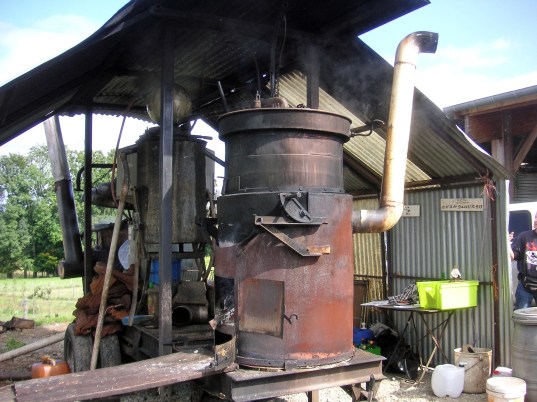

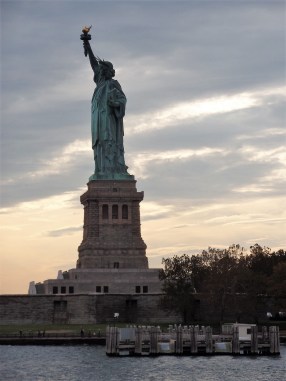 The United States is a nation of immigrants. We have the largest immigrant population of any country in the world. One of the most iconic symbols of the American democracy is the Statue of Liberty with its inscription “give us your tired, your poor….” In 2015, 13% of our population was foreign born. According the Census Bureau, one out of every four children under 18 in the U.S. has at least one foreign born parent.


 Many of those who supported Prohibition were the progressives and reformers of their day. One such group was the Women’s Christian Temperance Society, a key influencer in the “dry” movement. Their agenda was not just about turning off the taps. They also campaigned for women’s suffrage, prison reform, child welfare, free kindergarten, an 8-hour work week and an end to prostitution. For the most part they were upper and middle class white women who genuinely thought of themselves as working to improve the lot of their less advantaged countrymen (and women).
 Their allies on the right had some very different reasons for supporting the cause. Today we think of the KKK mainly in terms of their despicable racism. But these spooks hated everybody. They hated the Irish and Italian immigrants because they were Catholic, they hated the Mexicans because they were Mexicans and they of course hated blacks. Since alcohol and the saloons where it was consumed were so much a part of the lives of these minority groups, racists and xenophobes were strong advocates of Prohibition even though many probably had no intention of giving up alcohol themselves.
 Adami
Adami Aiden
Aiden Carolina
 Darius



 I was a teenager at the time growing up in an all-white middle-class town not too far from Newark, living with my blatantly racist father. He and people like him processed this as blacks looting stores and burning buildings until the National Guard came in and restored peace. That narrative conveniently leaves out the cause, both the short-term cause and the long-term cause. To acknowledge either would have skewed his oversimplified vision of the world.
 On this 50




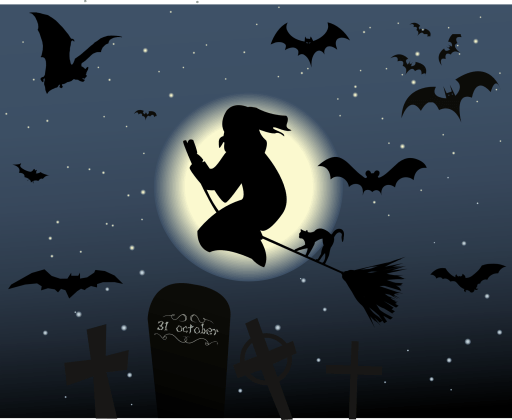 We never tried, but there is the belief that if you wear your clothes inside out and walk backwards on Halloween, you will see a witch. Another superstition is that you might be followed by the death itself, and if you turn around to look who is following you, it will be your end. Another tradition which seems to us really weird and kind of dangerous is to hold a candle in one hand and a mirror in the other and walk backwards down the stairs. It will allow you to see your future husband. However, these superstitions were created in the past, and no one really believes in them now. But as all the things for Halloween, they create the required atmosphere.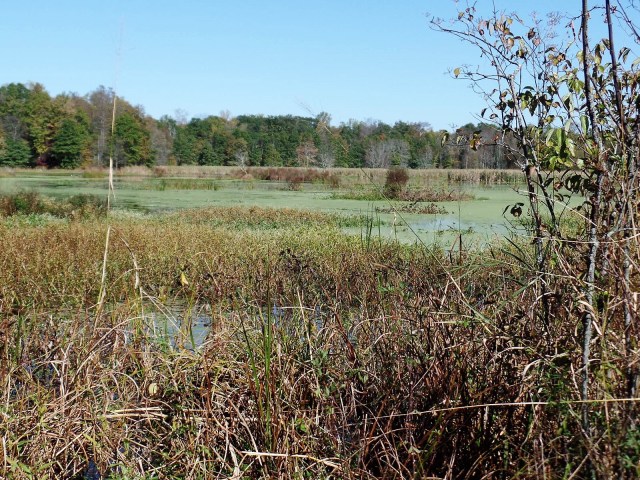
 The Great Swamp National Wildlife Refuge at one time had been designated by the Port Athority of New York and New Jersey as the preferred site for a fourth New York City area airport. The swamp is in Morris County, New Jersey, about 25 miles west of Manhattan. It was the late 50’s when the PA put forward its plan and at the time there wasn’t a great deal of understanding about the importance of this natural oasis to the surrounding ecosystem.