

Taking the twins for a swim

Mom and dad’s watchful eye

Snacks!

Baby portrait
Edgemont Memorial Park, Montclair, N.J.
Taking the twins for a swim
Mom and dad’s watchful eye
Snacks!
Baby portrait
Edgemont Memorial Park, Montclair, N.J.
In the 1990’s the FCC relaxed its restrictions of radio station ownership and set the stage for large corporate consolidation of radio stations. Before long, two or three giant operators gobbled up a majority of the nation’s radio stations in most of the major markets.
 Chief among those consolidators was Clear Channel Communications, which was later sold in a private equity transaction to Bain Capital and Thomas Lee Partners. It was renamed iHeart Media. iHeart owns 858 radio stations in more than 150 markets.
The ClearChannel/iHeart stations are the epitome of big corporate radio. They are divided into narrowly defined formats. Their playlists are computer generated based on ratings. They are intentionally and unashamedly predictable and repetitive. I don’t think that puts them in a very competitive position.If that’s what you want to hear, there are plenty of places to find it without having to listen to all the ads on commercial radio.
So how’s it working out for them.? Well, according to a financial statement by iHeart earlier this year, ““We incurred net losses and had negative cash flows from operations for the years ended December 31, 2016, and 2015, as well as for the quarter ended March 31, 2017.”
The leveraged buyout of ClearChannel in 2008 saddled the new entity with $20 billion in debt And they can’t pay it off. In a recent SEC filing iHeart acknowledged that they might not in fact make it through the year.
Then there’s the number two player, Cumulus Media. They own 454 stations in 90 markets. Seems as though they aren’t doing much better. In a filing at the end of last year they warned, “we may be required to seek protection from our creditors through a bankruptcy filing.” Their stock, which was worth about $30 a share a couple years ago, is now worth about 50 cents per. And in the first quarter they lost $7 million.
 The financial troubles of these behemoths has meant there are even fewer local DJs, less local staff, less local programming, less local news. Instead we’re subjected to packages of data driven and computer generated programming that comes out of headquarters and is broadcast nationally. Robo-radio.
So if you want to consider what is a threat to the existence of radio, it may not be about Pandora or YouTube or Spotfiy. Instead the biggest threat is radio stripped of its local interest and built for the ad sales department rather than the audience.
Viewed in this light, the pending collapse of these large corporate consolidators can hardly be considered bad news. There’s the potential for more than 1,000 FM and AM stations to be put in play as these corporate entities collapse. Will one corporate owner replace another, accumulating the same sort of suffocating debt and delivering the same non-descript programming.
I’d like to think this could be the opportunity for a renaissance for radio. Maybe dozens, if not hundreds, of these stations could fall into the hands of independent local owners. In that case, radio can go back to its roots with local talent building communities of listeners with local programming tailored to their interests.
In my series of posts on the history of radio, one was titled “Video Didn’t Kill the Radio Star After All.” It was about the time when television became popular, the late 40’s and early 50’s, and the networks, NBC, ABC and CBS, virtually abandoned radio. Many, including the guys who ran those networks which supplied the most popular of radio programming, were ready to write the medium off.
 But instead of fading away, radio had a revival. Transistors, car radios, teenagers, DJ’s, rhythm and blues and rock and roll all combined to make radio more popular than ever with both more listeners and more influence on a few successive generations of Americans.
Fifty years later, many are again questioning the future of radio. With streaming services, Spotify and Pandora, with satellite radio, podcasts and internet radio, with smartphones that allow you to carry your whole music collection in your pocket, what happens to all the those AM and FM radio stations?
Maybe nothing.
The Pew Research Center’s 2016 State of the News Media annual report didn’t have a lot of good news when it came to traditional media. That is, except for radio. “The American public’s consumption of audio content, which includes radio news and talk shows in addition to music, sports and other programming, continues to increase. Advances in consumer technologies allow increasing numbers of Americans to choose to listen to radio on a variety of newer platforms, while at the same time, terrestrial radio continues to reach the overwhelming majority of the public.”
The Pew report continues: “Traditional AM/FM terrestrial radio still retains its undiminished appeal for listeners – 91% of Americans ages 12 and older had listened to this form of radio in the week before they were surveyed in 2015, according to Nielsen Media Research.”
The radio industry trade publication Radio Ink concurs. “Still as strong as ever, radio continues to confound competitive naysayers by expanding its connection to analog listeners despite the proliferation of pureplay alternatives like Pandora and commercial-free experiences like satellite radio. In fact, radio was the only analog medium to show growth year-over-year in Nielsen’s analysis (+1% in time spent listening) and it is the only medium to command a consistent share of daily media activity (17%), no matter the demographic.”
So why is radio the medium with nine lives? Turns out that simple old AM/FM radio has a lot of things going for it.

Is it the end for terrestrial radio? No. At least not for now. Radio is looking like the last holdout of the analog world. But will radio have another revival? I’ll discuss that in next week’s post when I raise the question “Is It the End for Big Corporate Radio?”

In Ybor City, they still roll cigars by hand.
In 1886 Don Vicente Martinez-Ybor established a cigar factory in what is now known as Ybor City, a section of Tampa, Fla. Martinez-Ybor was a Spaniard who moved to Cuba at the age of 14. His career is cigar manufacturing started there. He later established a factory in Key West and then moved it to Ybor. Other manufacturers followed and Ybor City became Florida’s first industrial town. Those factories and the jobs that they offered attracted a work force made up almost exclusively of immigrants from Cuba, Spain and Italy. Romanian merchants followed, establishing stores in the city, and German lithographers came along and are credited with inventing a new art form, the cigar label.


A central feature of life in late 19th century and early 20th century Ybor was the social clubs for Cuban, Spanish and Italian immigrants. El Club Nacional Cubano was founded in 1899. Two years later another cigar manufacturer Igancio Haya started the Centro Espanol. L’Unione Italiana came along in 1894 with the initial membership of 116 Italians and eight Spaniards. These clubs not only served as the hub of social life for their membership, but fulfilled a variety of functions that included a type of trade union and a healthcare provider.
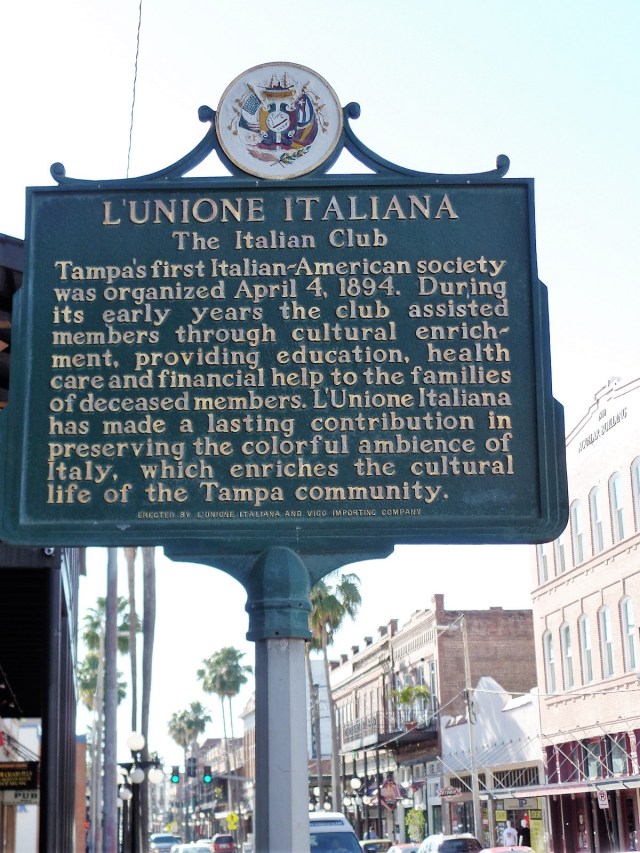
The heyday of Ybor City as a cigar manufacturing hub was between 1890 and 1930. At one time it had tens of thousands of residents and it was almost entirely owned and occupied by immigrants. 500 million cigars were made in Ybor in 1929, but that also proved to be the beginning of the end for the industry. During the 30’s the demand for premium cigars waned and in future years manufacturers would turn to automated processes rather than hand-rolling. A decline set in that lasted through the 50’s and 60’s until the city was almost completely abandoned by the 1970’s.


Ybor began to make its comeback in the 1980’s as artists moved into the district. Gentrification followed and by the 1990’s Ybor was being reinvented as an entertainment hub, the “Latin Quarter” of Florida. It continues to be a thriving nightlife center with bars, clubs, restaurants and retail. The Ybor Chamber of Commerce describes it as “a cultural and intellectual hub for new-age immigrants.” It is a National Historic Landmark District and 7th Avenue, the main retail drag, was named by the American Planning Association as one of the “Ten Great Streets in America.”
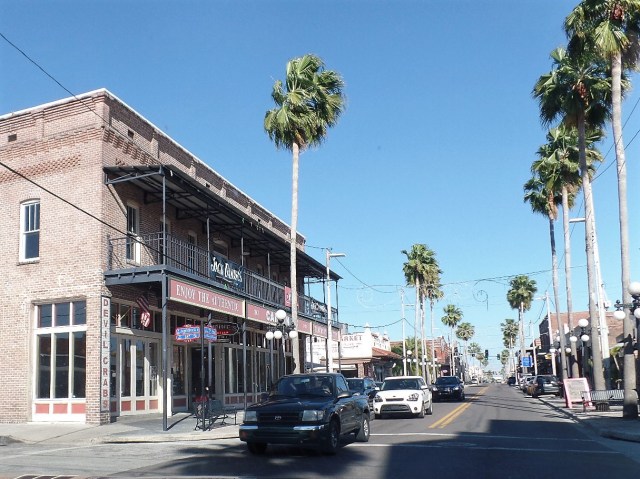
7th Avenue, one of the ‘Ten Great Streets of America’


Setting off from the docks of the Fairmont Mayakoba.

Mayakoba is a one square mile resort area in the Riviera Maya section of the Yucatan Peninsula in Mexico. It is home to four luxury hotels. But it is also surrounded by undeveloped lands that include beach, sand dunes, mangrove and jungle. It is home to some 300 species and that number is growing as surrounding areas become developed and birds and wildlife find a refuge here. There are canals running throughout Mayakoba. These images are from a boat tour on those canals.






Quintana Roo is one of 31 Mexican states. It is on the eastern coast of the Yucatan Peninsula. These images start in Cancun and proceed south along the coast through the Riviera Maya region to Playa del Carman and end in Tulum, an overall distance about 80 miles.



Tulum is a Mayan city believed to date back to 564 AD. It is built on the cliffs overlooking the Caribbean Sea on the east coast of the Yucatan Peninsula in the Mexican state of Quintana Roo. It is one of the few Mayan cities that had a wall. Tulum peaked as a city between the 13th and 15th centuries when estimates suggest between 1,000 and 1,600 people lived here. It is during that period that most of the buildings were erected. As a seaport it served as a trading post and artifacts found at the site suggest it was a trade hub for other parts of Mexico and Central America. The city was abandoned after the population was decimated by European diseases brought to the New World by the Spanish.


In the middle of this building are the remains of a cistern.

Temple of the Frescoes

The Castle



Watchtower

The view from the top of Tulum. Today there is a bathing beach at the bottom of the cliff.
The last days of the Montclair Film Festival took me from Denmark and Belgium to Mexico, by way of England. Actually I was just sitting in one of Montclair’s three theaters, but that’s where the films were from. Here are some short reviews from the second half of the sixth annual festival.
Fiona is an awkward young Canadian woman from some desolate hamlet in the frozen north. She heads to Paris at the behest of her 88-year old aunt Martha who is being stalked by a woman in a nurse’s uniform who wants to move her to a nursing home. Once in Paris, Fiona falls into the Seine, gets her nose caught in an elevator and is presented the ashes of a different old woman named Martha. The title Lost in Paris might make you think you’re in for some existential study of ennui. Nope. This is screwball comedy. There’s a third character, a homeless guy who lives in a tent on the river bank, who separately ends up having a relationship with both women. The title is to be taken literally as all three are more or less lost. This is a Belgian movie, set in Paris and mostly in English. Light and fun. I left the theater wondering if there really is such a thing as a biodegradable urn so you can toss your loved one’s ashes into the river without doing any damage to the environment. If so, throw me into the Great Falls.


This is a fictional narrative movie that was made to look like a documentary. In fact, had I not listened to the comments of screenwriter Andrew Keatley, who was at the screening,  I might well still think I had seen a documentary. Keatley also plays Ben, the main character in the movie. And the guy who plays the director in the ‘documentary’ is in fact the director of the movie. Have I lost you yet? The movie is about a man who sets out to find his biological parents. The search takes him to Dungeness, which honestly looks like the end of the earth. The movie drags us into the suspense of finding Ben’s real family. In the end what he finds is a different definition of what a real family is. I hesitate to say much else because spoilers will truly spoil this one. The title “For Grace” refers to Ben’s baby. The baby is played by a baby whose real name is Grace and the actress who plays the baby’s mother is really the baby’s mother. One member of the audience said after watching the film she felt “emotionally manipulated.” The rest of us just felt we’d watched a really good movie.
Nobody killed anybody and nobody committed suicide. But when a middle-aged Danish couple with a teenage daughter decided, after inheriting a house that was too big for just them, to start a commune, no one really lived happily ever after. It’s Europe and I think it’s the 60’s based on what was on the TV newscasts, so everybody smoked. I think the commune turned them all into chain smokers. People started sleeping with people they shouldn’t have been sleeping with, someone lost their job because they couldn’t deal with the drama in the house, and not everybody marked off the beers that they consumed the way they were supposed to. It especially sucked for the teenage girl. About the best adjusted commune member was the guy who picked everything up that his housemates left on the floor and burned it all. No room for clutter in a commune. This is a movie that makes you just agonize over the life choices that the main characters make. Will someone come to their senses? No, not really. This one was far from my favorite of all the films I watched this week.
Think the running of the bulls is insane? You should see the burning of the bulls. The place is Tultepec, Mexico, a place where just about everybody with a job is busy making fireworks. A place where the candle on a kid’s confirmation cake turns out to be a sparkler that shoots up to the ceiling. It is on the day of the festival of San Juan de Dios, the patron saint of fireworks makers, that the bulls are rolled out They appear to be made of some sort of plaster or paper mache attached to a wooden frame. They’re the size of garbage trucks, brightly and intricately painted and stuffed with fireworks. The guys at the controls, and they appear to be all guys, light the fireworks and push and pull the bull through the main street with the rockets’ red glare shooting out in every direction. Did I mention that the streets are packed with people, seemingly with someone standing on every square foot of space? It apparently is some sort of badge of honor to come home with a scar or two. The combat scenes from most Hollywood war movies don’t look as scary as this. The filmmakers even show the army of EMTs getting they’re last minute instructions. “Drunks and shouters go last.” And there is an uncomfortable sight or two at the first aid tent. My guess is that as a short documentary feature (67 minutes) it will be hard to catch this one on a big screen except at a film festival. But a big screen is a must because the glory is in the sights and sounds.
-0-
See more reviews of Monclair Film Festival screening here.
Five days into the Sixth Annual Montclair Film Festival I’ve seen four of the 150 movies that are being screened. I’ve fallen off the pace I set last year when I watched 11 in 10 days. Sometimes life gets in the way. But what I’ve seen has been pretty impressive. I can recommend all of these.
For the third time in five years, the festival opened with an inspirational documentary, Step. The title refers to a kind of rhythmic stomping, chanting group dance which is most  popular in predominately African-American schools. The movie follows members of the step team at a Baltimore charter school, the Baltimore Leadership School for Young Women. While the film follows the team through to a regional competition in Bowie, Md., the inspiration comes more from their experience at the school. The three team members which the documentary follows are girls with at least one caring parent, but with no resources to speak of. One of them, in telling us how her mother has always taken care of her, comments that they were homeless for a little while and she didn’t even know it. 2016, when the movie is filmed, is the first graduating class at the school. One hundred percent of these girls went on to college. One of the subjects of the film achieved her dream of a full scholarship to Johns Hopkins. Another got into some sort of college with a 1.0 GPA. Talk about a great guidance counselor. It also makes for a great movie. And, as was the case last year when Life, Animated opened the festival, some 1,500 people filled the Wellmont Theater to watch a documentary.
Ever heard of Dolores Huerta? Me neither. But Angela Davis and Gloria Steinem and Robert Kennedy knew all about her. As does Barack Obama, who in awarding her the Presidential Medal of Freedom, admitted stealing the slogan “Yes, We Can” from Huerta. She was the co-founder with Cesar Chavez of the United Farm Workers and a primary organizer of the successful 10-year-long grape boycott that ended with growers signing the first contracts with UFW. She also fought against the use of DDT and police brutality. She was a feminist more in her actions than in her words. She married and divorced two husbands and had 11 kids, some from a later relationship with Cesar Chavez’ brother Richard. A better role model than a mother, many of her kids are interviewed in this film. They acknowledge that mom wasn’t around as much as they would have liked, but seem proud of her and some have continued her work. All 11 kids rallied to her bedside when she was hospitalized for a good period of time after being beaten by a coward with a badge and a billy club. Dolores herself is still going strong at 86. She was in Montclair for the first screening, unfortunately for me I went to the second screening. So why haven’t so many of us heard of her? The simple answer is because she is a woman, but there are other problems in our society that help answer that question. The Texas Board of Education banned her inclusion in the social studies curriculum. And in Arizona they went one step further when Governor Jan Brewer signed a bill into law banning the teaching of ethnic studies in Arizona schools. How ignorant is that? Brewer should be forced to watch this excellent documentary because she obviously is lacking some education.
Nothing about the movie Paradise has anything to do with any vision of paradise that I’m aware of. This sub-titled Russian film is set in Nazi Germany at the end of World War II. A Russian princess and a German nobleman who had a fling in Italy in the early 30’s find each other a decade later in a German prison camp. He’s a cold-as-ice concentration camp inspector for the Nazi ruling party and she has been imprisoned for hiding two Jewish children. The movie is in black and white. Because grim doesn’t come in color. How many ways are there to despair? This film covers most of them. There is one major act of humanity that at least offers some hope in not quite paradise. The movie title Paradise comes from a Nazi vision of such. Having said all that, this is a brilliantly scripted and engrossing movie. It’s just not always that easy to watch. The movie is part of the competition for audience choice awards. I gave it a four out of five.
What’s the first thing you think of when you think of New Jersey? Bravery, right? It’s a part of our heritage which is explored in this fictional movie about how the rural Central Jersey town of Lullaby responded to Orson Welles’ “War of the Worlds” radio broadcast in 1938. One of Lullaby’s brave residents jumped in his truck and crashed it into a tree. Another took off in the family car, without the family. And the town minister saw the light after whacking himself n the head with a collection plate. On this night when the good folks of Lullaby thought it might in fact be their last, a marriage and an engagement fell by the wayside. And a new couple or two discovered each other in the darkness. Brave New Jersey mixes fact and fiction, just like Orson Welles himself. This is the funniest movie I’ve seen about Central Jersey since “Clerks.” You don’t have to be from New Jersey to enjoy this one. Fun for everyone.
Earlier I noted how impressed I was that 1,500 people showed up for a documentary on opening night. The third screening of Brave New Jersey was on a Tuesday at 11:30 a.m. And the largest theater at the Bellevue Cinema was full.
Washington Post Executive Editor Marty Baron admitted “it hurts” when discussing attacks on the press by the Trump Administration and the declining public perception of the credibility of the media. Baron appeared this week at Montclair State University in conversation with Merrill Brown, former director of the MSU School of Communication and Media which sponsored the event.
We are well aware of the sensitivity in the White House to criticism. But the journalism community as well is probably not as think-skinned as they’d like us to think. Baron was able to recite all the names his journalist colleagues have been called by Trump, including one I hadn’t heard: “the lowest form of humanity.” He cited one poll in which 36% of Republicans believed that freedom of the press does more harm than good.
The Trump Administration is not the first to go after the media. Baron recalled Richard Nixon’s first vice president Spiro Agnew who referred to the press as the “nattering nabobs of negativity.” Of course we know how that story turned out. After a couple of nabobs at the Washington Post broke the story of Watergate, Nixon was exposed and eventually impeached.

Marty Baron, left, executive editor of the Washington Post, and Merrill Brown, former director of the MSU School of Communication and Media
Baron said the current administration is engaging in a campaign to “turn a substantial portion of the public against us.” Their intent to is create the perception among the public that any negative or critical story is “an attack by an opposition party.” He countered the perception of the Washington Post as elitist, noting that there are reporters on staff that include Afghanistan veterans, a woman who grew up on a farm and the son of a minister. He also bemoaned the fact that in the current political climate evidence, expertise and experience have been devalued.
Brown asked Baron what the Post might have done wrong in covering the election. While not stated out loud, the underlying question seemed to be “Did you do enough to expose what Donald Trump is really like to the people who voted for him?” Baron expressed satisfaction with the job his staff did in covering the election. “We did an incredibly thorough job of investigating Trump and his dealings,” he said, adding “we provided the public the information they needed.”
His only criticism was that “we should have detected the level of anxiety and grievance in America even before Donald Trump became a candidate.” The lesson to be learned, from his perspective, is “we always have to be out in the country spending a lot of time talking to ordinary people.”
Baron did criticize the cable networks for showing Trump rallies in their entirety without interruptions, something that was not done for Hillary Clinton’s campaign appearances.
Brown also asked Barron about the Post’s approach to determining when to say the President lied. He responded that he had no problem with saying something Trump said was false but cautioned that to use the word lie you have to have documentation of intent, that the statement was made even though the President knew it was false. He added that the Post’s fact checkers “have been busier than ever.”
What to do? According to Baron, “We need to do our job and to do it right. Not sure what else we can do.”
 off the leash