Scenes from the Jersey Shore

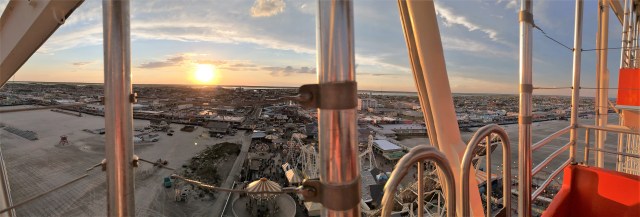
Ferris wheel view

Sunset over Wildwood, from the top of the Mariner’s Pier ferris wheel

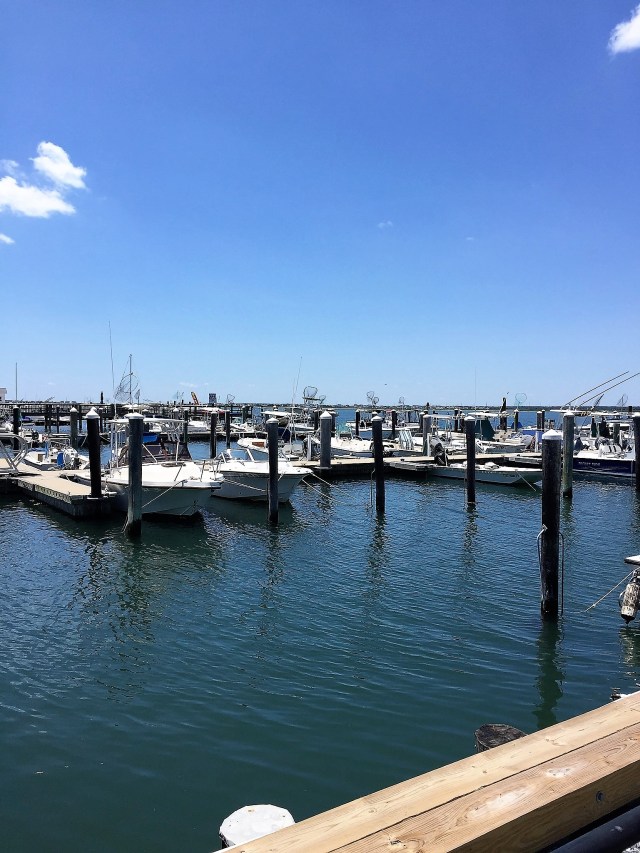
shore marina

Sea Isle City near Townsend’s Inlet

Stone Harbor beach

Beach entrance, Stone Harbor

salt marsh

The Wetlands Institute, Stone Harbor

Wetands Institute bird house

Wetlands Institute, Stone Harbor

Avalon bay

Sunset over the bay in Avalon

Wildwood beach

The beach in Wildwood


Posted in Travel, Uncategorized | Tagged , , , , , , , , | 7 Comments

Glass in the Garden

Chihuly exhibit

New York Botanical Garden

Summer 2017
Chihuly glass

Scarlet and Yellow Icicle Tower

Chihuly glass

Red Reeds on Logs

Chihuly glass

with duck and ducklings

Chihuly glass

Macchia Forest

Chihuly glass

Persian Pond and Fiori

Chihuly glass

Neon

Chihuly glass

White Tower with Fiori


Chihuly glass

Sol del Citron


Posted in Art | Tagged , , , , , | 11 Comments

Oh the Things Thomas Edison Thought Of

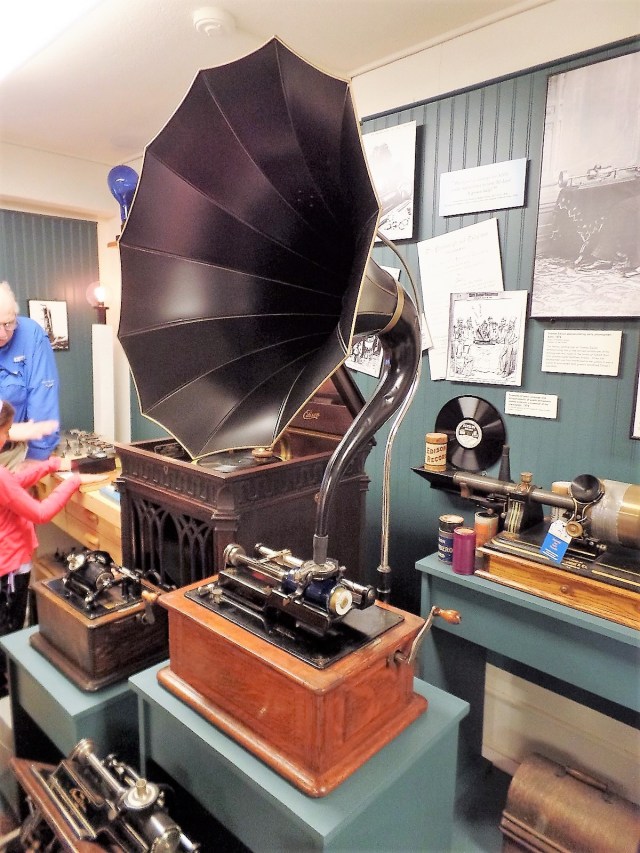
like the phonograph

Edison phonograph

Edison’s first sound recording was of himself singing Mary Had a Little Lamb. But the inventor saw the phonograph as something with far more uses than just recorded music. Among his suggestions for future uses of the phonograph were:

  • To record books for the blind.
  • Letter writing
  • Record and preserve the last words of dying family members.
  • Speaking dolls
  • The teaching of elocution
First phonograph record

The first phonograph ‘records’ consisted of a sheet of aluminum foil wrapped around a cylinder

and the light bulb

Site of Edison's Menlo Park lab

This tower stands at the site of Thomas Edison’s Menlo Park, N.J., lab which was built in 1876. The original tower was built in 1929 on the occasion of the 50th anniversary of the invention of the light bulb. That tower was destroyed by lighting and was replaced by this one which was built in 1938. Atop the tower is a replica of the Edison light bulb.

Edison's light bulb

Edison was not the first to create a light bulb. But the earlier versions were expensive, didn’t last and used up large amounts of energy. Edison promised, “to make electricity so cheap that only the rich will burn candles.” He produced a bulb that ran on a generator and lasted 13.5 hours.

One of the first buildings to be illuminated with Edison’s electric light bulbs was Sarah Jordan’s boarding house. “Aunt Sallie” was a distant relative of Edison’s. She left her home in Newark at his behest to run a boarding house in Menlo Park for Edison’s single employees (all male). It was the best lit place in town.

and the motion picture

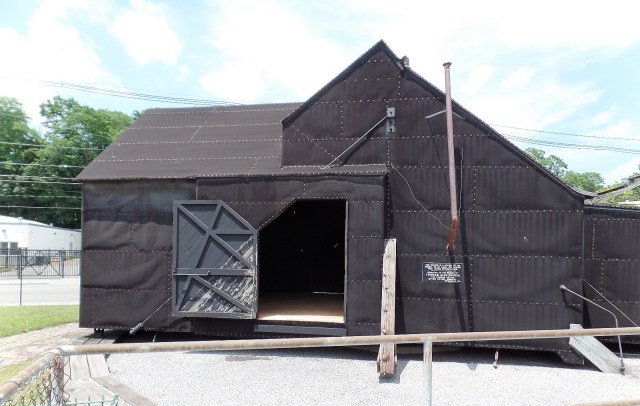
the first film studio

Replica of Black Maria at the Edison National Historic Park in West Orange, N.J.

Black Maria was the nation’s first film studio. The slanted roof on the right side of the studio would open and allow the sun to shine on the stage. As the hour of the day changed the position of the sun, the staff would get out and rotate the studio to keep nature’s spotlight on Edison’s motion picture stage.

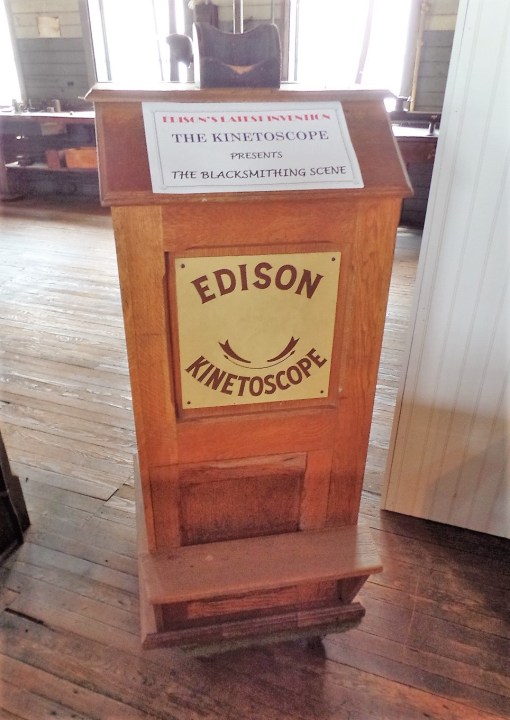
In 1894 a kinetoscope parlor opened in New York City. The kinetoscope was an individual viewing machine with which a customer could insert a quarter and see some of the films produced at Black Maria. Among the early titles were Blacksmiths, Barber Shop, Cockfight, Wrestling and Trapeze.

the kinetoscope

and the waffle iron?

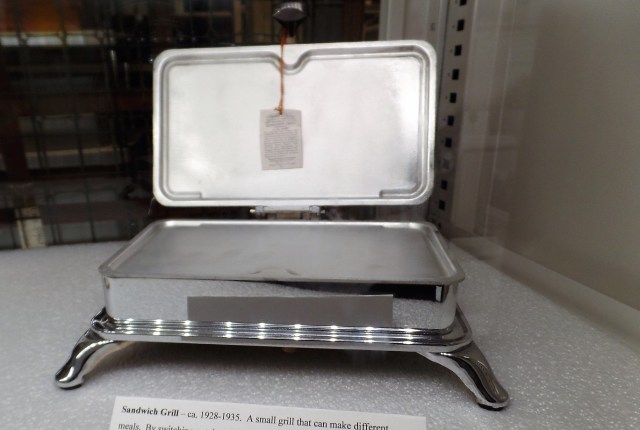
sandwich grill

Edicraft sandwich grill

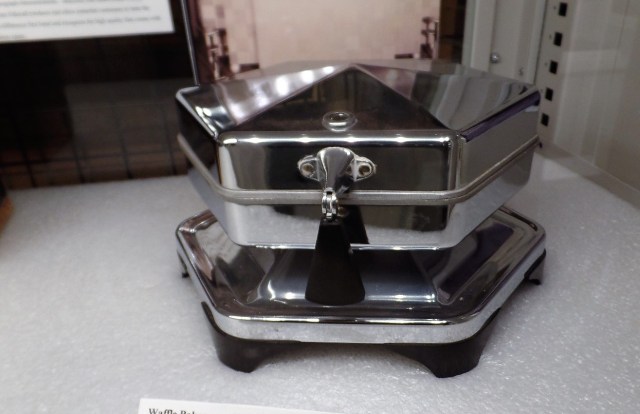
Edicraft was one of Thomas Edison’s companies that was housed at his lab in West Orange. Edicraft produced “electric servants” like the waffle maker below in the 1920’s. But alas, the Depression destroyed the market for luxury kitchen appliances and Edicraft went out of business in the 1930’s.

Edicraft waffle maker

Waffle maker

Edison's lab

Edison’s West Orange laboratory, originally opened in 1887, has been preserved as the Edison National Historic Park

Thomas Edison's desk

Edison’s desk

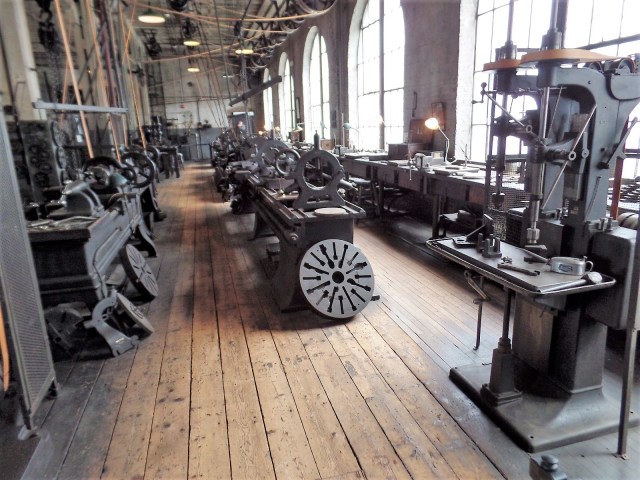
Edison machine shop

The machine shop in West Orange


Posted in History, Uncategorized | Tagged , , , , , , , , , | 11 Comments

Slithering Through the Reptile House


Water monitor

Mertens’ Water Monitor

Reptile and Amphibian House

Cape May County (N.J.) Park and Zoo

Cape May zoo snake

Burmese Python

Cape May Zoo turtle

Leopard Tortoise

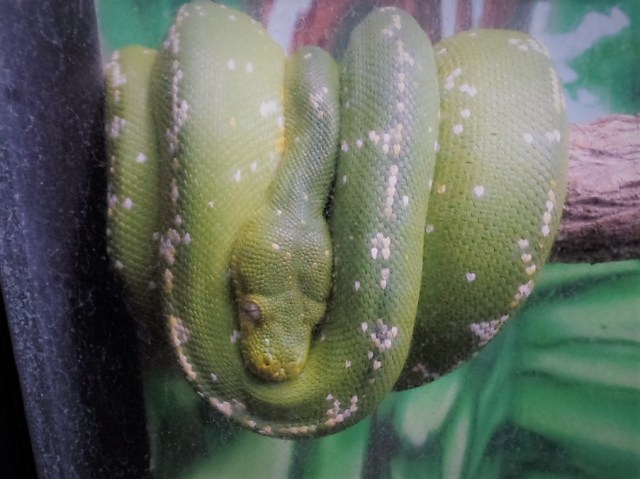
Cape May Zoo snake

Green Tree Python

Cape May Zoo alligator

Chinese Alligator

Cape May Zoo turtle

Chinese Box Turtle

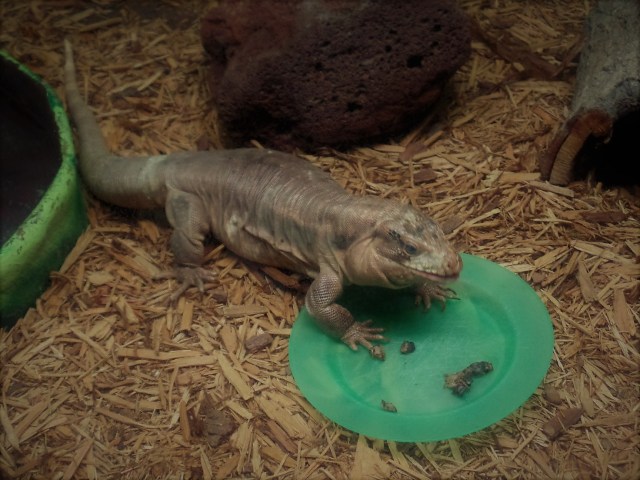
lizard eating lunch

Red Tegu

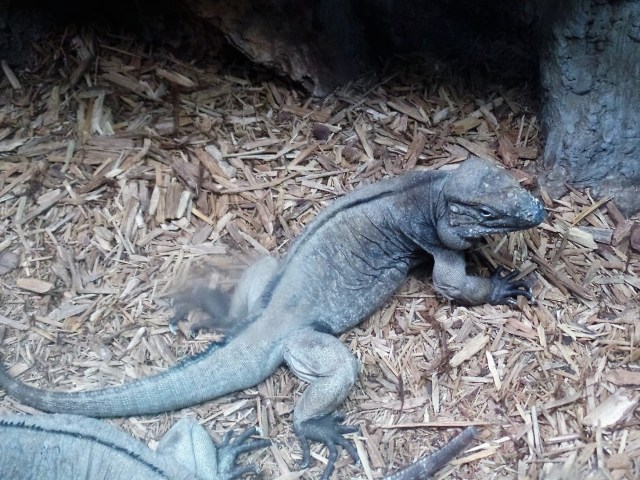
Cape May Zoo iguana

Rhinocerus Iguana

Posted in Uncategorized | Tagged , , , , , , , , | 8 Comments

Film Review — Dawson City: Frozen Time

It’s the 1970’s in a remote Yukon Territory town. A guy with a back hoe is digging out a future construction site and he sees film popping up out of the earth. Lots of it. Fast forward to when it’s dug out, stored, clean up and processed and what he has found includes some 300+ silent movies for which no other copy is in existence.

Front Street

Front Street, Dawson City

The short version of the story behind this discovery is this. Dawson City, a Klondike gold rush town in the late 19th and early 20th centuries, attracted tens of thousands of miners. At one time 40,000 people converged on this pop-up western town and it had three theaters. By the time first run silent movies of the 1910’s and 1920’s got to Dawson City they were two or three years old and this was the end of the distribution line. They were of little value to other theaters and no one wanted to pay to ship them back. So they got discarded and buried until this discovery.

An interesting story made fascinating by the way it is told by director Bill Morrison. This isn’t about talkies, so there’s not much dialogue. Occasional sparse sentences appear on the screen with some explanation. But mostly this is visual and the visuals are the clips from the movies that were literally unearthed in Dawson City.

Silent filmFor any period of history, there are a few classics that survive over time, whether that is movies or literature or music.  Most of us have seen one of the silents that survived, maybe Birth of a Nation or the Great Train Robbery. But these are exceptions and may not tell us what it was like to spend every Saturday night in the theater in 1915 or 1920. Morrison’s documentary does.

In addition to the film clips there are photos recovered from a photography studio that operated in Dawson City at the start of the century. Like the movies there are no words with these. There’s no names or stories. You see the faces, the clothes, the settings and you use your imagination to picture what is was like living in one of these boom then bust towns on the outskirts of civilization.

Morrison also shows us some rare historical footage recovered from newsreels that were shown in the theaters. For example, there is footage of the 1919 World Series with the infamous Chicago Black Sox.

If you are at all interested in film history, you can’t miss this. If you’re not you are still in for a unique entertainment if you can find it. I don’t think it will be coming around to your local highway megaplex anytime soon but it is enjoying a limited run at some art houses. IFC is showing it in New York. And everything eventually shows up online.

(Photos from New York Public Library Public Domain Digital Collection.)


Posted in Uncategorized | Tagged , , , , , , , | 2 Comments

I spent a week at the Jersey Shore and all I ate was crab.

Crab legs

King crab legs, Sylvester’s Fish Market, Avalon

Crabmeat cocktail

Crabmeat cocktail with mustard sauce, Oceanside Seafood, Avalon

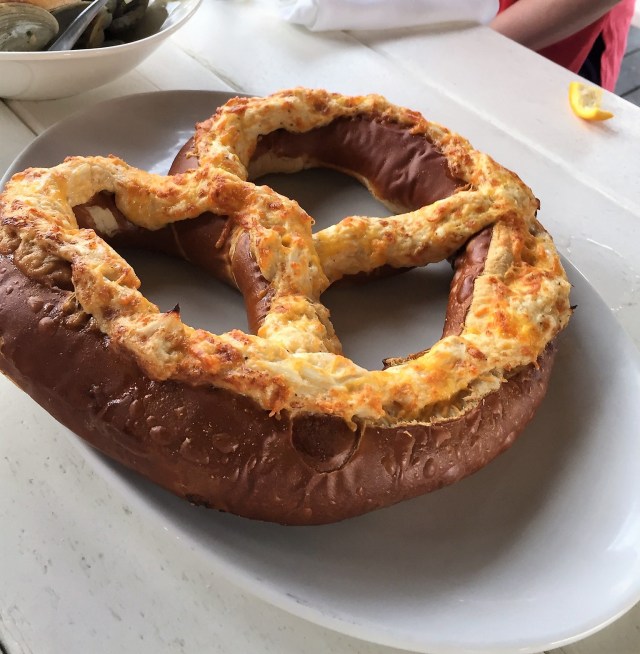
pretzel

Bavarian pretzel stuffed with crab dip and cheese, Joe’s Fish Co., Wildwood

Shrimp stuffed with crab

Shrimp stuffed with crabcake. Joe’s Fish Co., Wildwood

Guacamole with crab

Crabmeat guacamole, Quahog’s Seafood Shack, Stone Harbor

Broiled crabcakes

Broiled crabcakes, Sylvester’s Fish Market, Avalon

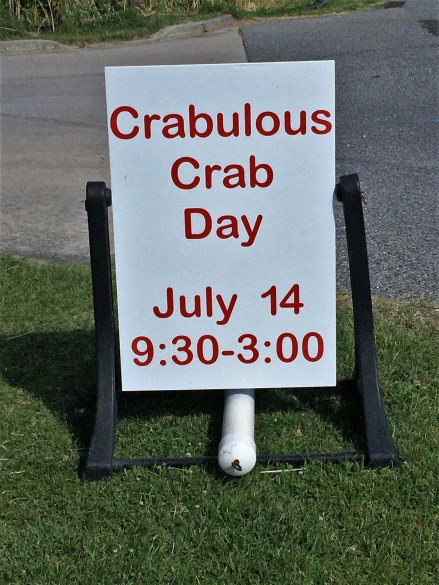
Wetlands Institute event

Posted in Travel, Uncategorized | Tagged , , , , , , , , | 14 Comments

Future of Radio: Radio 2.0

Throughout this series of posts about the future of radio, I’ve made a point of how surprisingly well traditional terrestrial radio has hung on and how it has maintained its audience despite a plethora of digital alternatives. But ultimately few question the inevitability of the internet replacing the technology that was derived from Marconi in the early 20th century. One country, Norway, has already announced a date for the full replacement of FM transmissions with new digital audio broadcasting technologies.

Digital can free up radio in a number of ways:

  • There can be an unlimited number of stations.
  • On the internet there are no geographical limitations as to where a station can be heard
  • Broadcasts need not be live, and the audience can have the ability to listen when and where they choose.
  • Government regulation and fees go away as their control over bandwidth loses relevance.
  • It is far less likely that a few large corporations can monopolize whole markets as they currently do on AM and FM.
  • Radio can be available on an even broader set of devices than terrestrial radio already is and importantly, it can be available on the devices most commonly used by younger generations.
  • It makes broadcasting available to everyone, much as the internet potentially made everyone a publisher.

radio towerTraditional radio, despite having proved more entrenched than some other traditional media, nonetheless will face the same sort of digital transformation that other media have faced in the last couple decades. As the internet and the web became more and more popular and as the number of people with broadband proliferated, print and television in particular were often slow and awkward in making the transitions. The print media initially responded by taking what they published in print and posting it online. Only after they started to see their audience drift away to online information services, whether it be Google or Facebook, or even the Huffington Post, they began to realize that a digital information service required a different approach than a once a day print newspaper.

Radio’s first response to the digital world was similar. Put up the live stream of the radio programs that currently existed on the station. What came to be called Web 2.0 emphasized interactivity, personalization and on demand information.  Digital audio services have delivered some of these same qualities. Pandora lets you program your own radio station. Podcasting lets you subscribe only to the programs you want to receive and to listen to them at your leisure.  You can even ask a digital assistant like Siri or Alexa to play only the song you want to hear at that moment. Are we perhaps on the verge of seeing Radio 2.0?

But we should also keep in mind that terrestrial radio has not hung onto its audience because anyone thinks the century old technology is better. It’s because of the programming and specifically the local programming that is led by people who are part of the community. It has local news and traffic and weather, community service announcements and even local advertisements. Radio builds communities and it’s not just geographic but can be ethnic or age group or lifestyle communities. That’s all something that algorithms aren’t very good at. It’s a blind spot for digital news and digital video and it is likely to continue to be for digital audio as well.

broadbandCan radio 2.0 leverage the capabilities that digital offers while maintaining the characteristics that make radio unique? Here are a few possibilities:

  • As a community builder, radio is a perfect partner for social media. Not just as a way of promoting radio, social media itself could be a broadcast vehicle, or it could offer a kind of conference call environment that talk radio currently lacks.
  • Advertisers salivate over the potential for GPS to bring very targeted, perhaps even hyperlocal ads, to your smartphone. Can GPS be a kind of program selector for radio, offering one type of programming for someone in the car, another for someone on a hike in the woods and maybe some chill-out programming for people waiting on line at the DMV?
  • Many of the successful early web-based information services relied heavily on curation. Can radio be a curator of audio? Take podcasts, for example. As they continue to proliferate they become harder and harder to find and organize. Radio could fulfill that function and could broadcast podcasts on demand. It would even be a way of providing ‘stations” for niche audiences that want things like poetry or short stories.
  • As we approach a time of sensor equipped wearables, can your wrist band tell your smartphone delivered radio to play something with a beat when you’re exercising or maybe something dreamy when you’re sitting in the park?

But more than anything else, what I look forward to with digital radio is hundreds of stations, localized maybe even to the point of a neighborhood or a building, managed by local talent who are part of the community the stations serve. A little bit like the way radio got started.

Posted in Radio, Uncategorized | Tagged , , , , | 3 Comments

Faces of the Fourth

Fourth of July Parade, Montclair, N.J.

Happy Fourth!

Posted in Uncategorized | Tagged , , , , | 3 Comments

Once Every Couple of Years at the Whitney

The 78th Whitney Biennial was held this year at the Whitney Museum of American Art in New York. The Biennial is a kind of state of the art exhibit of contemporary work. The emphasis is on young and emerging artists. All the pieces shown here were done between 2015 and 2017. The Biennial dates back to 1932 when it was established as an annual event. It went biennial in 1973. Art critics look to the Biennial to identify new trends in contemporary art. Not sure I could identify any of those trends. But I can show you some brilliant works that were part of the exhibit.

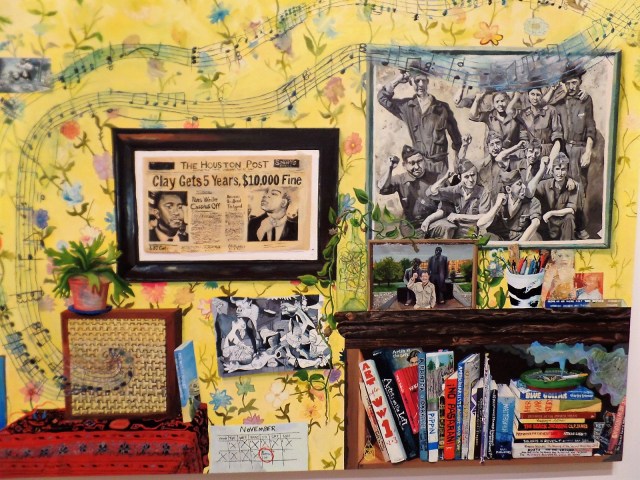
Veterans Day

Veterans Day,Celeste Dupuy-Spencer

Whitney Biennial

Jessi Reaves

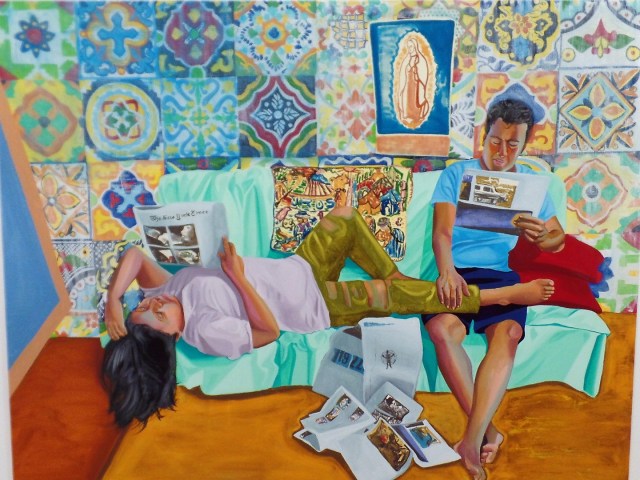
Painting by Aliza Nisenbaum

La Talaverita, Sunday Morning New York Times, Aliza Nisenbaum

November Edit

November Edit, Jack Riepenhofff with Peter Barrickman

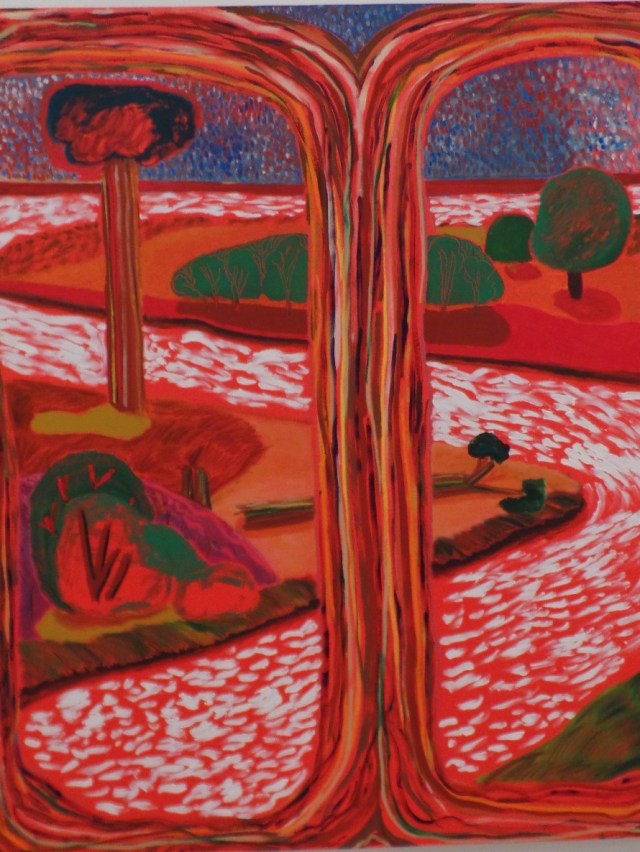
Painting

Shara Hughes painting

Split Ends, Shara Hughe


Photography

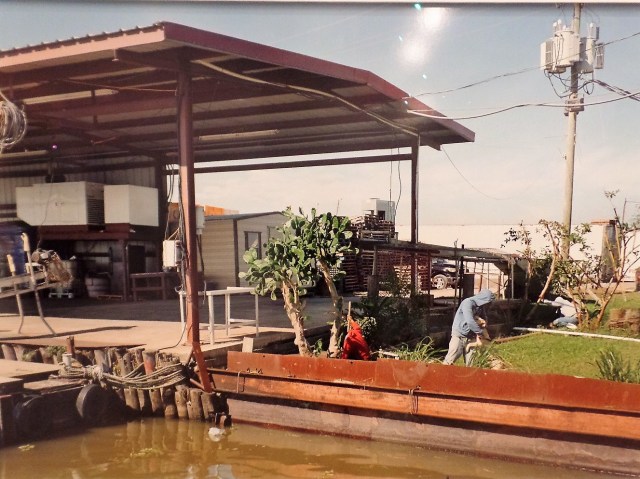
An-My Le photo

November 10, Workers, Venice, Louisiana, An-My Le

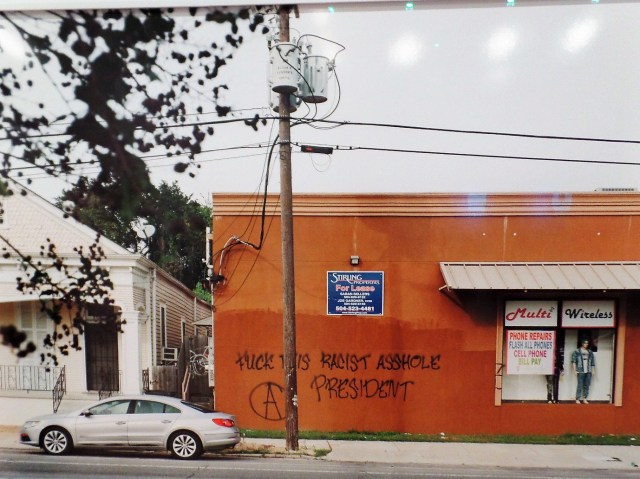
The Silent General

Part of the Silent General project, photos by An-My Le

Sculpture

Kaari Upson sculpture

Heart Atrium, Kaari Upson

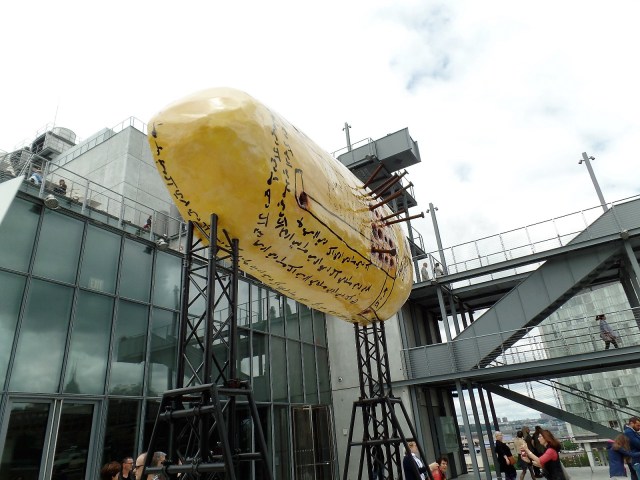
Whitney Biennial sclupture

Local police find fruit with spells, GCC

One Thousand Museum

One Thousand Museum, Zaha Hadid Architects

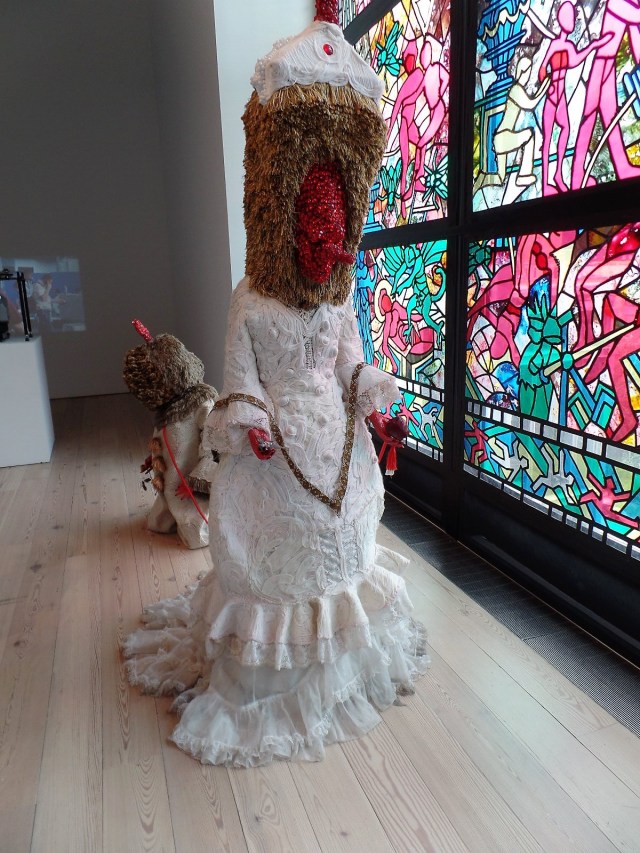
Raul de Nieves sculpture

Man’s best friends Raul de Nieves


Posted in Art | Tagged , , , , , , , | 6 Comments

Future of Radio: Will We Still Call It Radio?

Back in 2009, when the Pew Research Center released its annual state of the media report, it had this to say about radio: “Radio is well on its way to becoming something altogether new – a medium called audio.” It added: “Audio’s future, unlike print or television’s, seems less a crisis and more an intriguing fragmentation.”

listening

(Image by Averie Woodard)

Radio as audio means it is not just the AM and FM stations on your traditional radio dials. It’s streaming services like Spotify, Pandora or iHeart Radio. It’s Internet only radio stations, its satellite radio and it’s the music channels on your cable TV system  It’s podcasts, in fact you might even add Audible. Another word to describe it is listening.

Defined like this, radio will surely never die. Pew’s 2009 projection was spot on. Almost all of the alternative forms of radio/audio mentioned above have grown since that time and terrestrial radio itself, however destined it seems to be replaced by a digital only version, has hung on smartly. In an earlier post I described it as the last stand of the analog world.

Here are a few stats that back this up:

  • eMarketer.com estimated the number of internet radio listeners in the U.S. in 2016 at 176 million, almost double the number from 2010.
  • In 2009 Pandora had 7 million active users. In 2016, it has 81 million.
  • While the shine may be off SiriusXM, it is in fact still growing with 30 million subscribers in 2016, an 8 percent increase over prior year.
  • All this however, does not seem to be taking away from traditional radio’s audience as a 2015 Nielsen survey showed that within a one-week period, 92% of Americans age 12 and over listened to AM or FM radio

I don’t see any future time in which we are not listening to radio as a set or type of audio programming. What we might not listen to, however, is the radio device. At a recent conference Roger LaMay, the GM of WXPN, a public radio station in Philadelphia, provided some statistics that show the different device preferences of different aged listeners. The numbers pretty clearly show the listeners to radio in its traditional forms are older and the new options are first embraced by younger listeners.

Across NPR member stations, the average age of over-the-air listeners is 58… On tablets, it’s 53. On smartphones via the NPR News app, it’s 49. On Facebook, it’s 42. For NPR Music and NPR Twitter, it’s 39. On NPR’s website, it’s 38. For NPR podcasts, it’s 33. And for NPR on social media, it’s below 30.”

One of radio’s greatest assets as a medium in the number of places where it has been embedded. Most stereo systems and several generations of music players included a radio, your bedside alarm clock may well have included a radio and even some TV’s. Perhaps most importantly, pretty much every car has a radio.

Now there is a whole new set of devices to access a whole new set of audio options, including classic radio. There’s the desktop, the tablet, likely some wearables. But above all else there’s the smartphone. How many other devices has this palm of hand computer replaced? Firstly the telephone, but then the camera and the alarm clock. For me it has meant retiring my watches, a whole drawer full of maps and a vehicle installed GPS system. No more rolodex, no more calendars or personal diaries, no more phone books and no more printed newspaper.

hand-held musicAnd likely no more free-standing radios. The smartphone not only has apps that deliver streaming music services but it also gives you access to online apps of radio stations, breaking the geographic access barriers of terrestrial radio. And while it doesn’t seem to be widely known, most phones include FM chips that allow you to listen to over-the-air radio.

As with other forms of entertainment and information, the future of radio, or if you prefer, audio, is likely to be device agnostic. And the type of delivery, streaming, over-the-air, archived or on-demand is also likely to be of far less significance than the content itself. We will choose among them in the same way we have traditionally chosen from among different radio stations, maybe the touch of an icon instead of the push of a button or turn of the dial. And we might have to go to a museum to see a free-standing radio.

old radio

Posted in Radio | Tagged , , , , , , | 3 Comments