It’s the 1970’s in a remote Yukon Territory town. A guy with a back hoe is digging out a future construction site and he sees film popping up out of the earth. Lots of it. Fast forward to when it’s dug out, stored, clean up and processed and what he has found includes some 300+ silent movies for which no other copy is in existence.

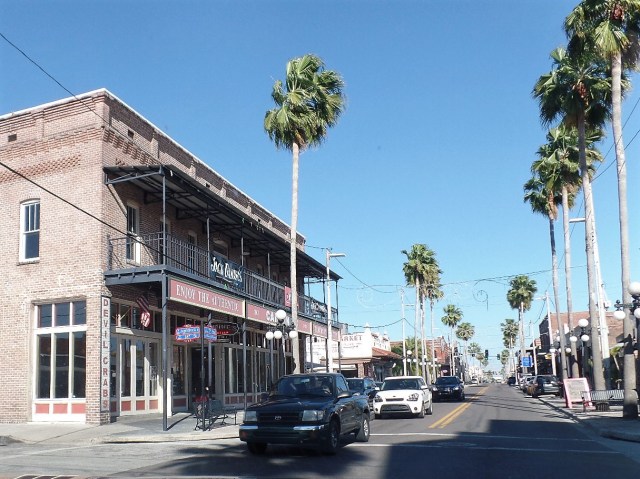
Front Street, Dawson City
The short version of the story behind this discovery is this. Dawson City, a Klondike gold rush town in the late 19th and early 20th centuries, attracted tens of thousands of miners. At one time 40,000 people converged on this pop-up western town and it had three theaters. By the time first run silent movies of the 1910’s and 1920’s got to Dawson City they were two or three years old and this was the end of the distribution line. They were of little value to other theaters and no one wanted to pay to ship them back. So they got discarded and buried until this discovery.
An interesting story made fascinating by the way it is told by director Bill Morrison. This isn’t about talkies, so there’s not much dialogue. Occasional sparse sentences appear on the screen with some explanation. But mostly this is visual and the visuals are the clips from the movies that were literally unearthed in Dawson City.
 For any period of history, there are a few classics that survive over time, whether that is movies or literature or music. Most of us have seen one of the silents that survived, maybe Birth of a Nation or the Great Train Robbery. But these are exceptions and may not tell us what it was like to spend every Saturday night in the theater in 1915 or 1920. Morrison’s documentary does.
In addition to the film clips there are photos recovered from a photography studio that operated in Dawson City at the start of the century. Like the movies there are no words with these. There’s no names or stories. You see the faces, the clothes, the settings and you use your imagination to picture what is was like living in one of these boom then bust towns on the outskirts of civilization.
Morrison also shows us some rare historical footage recovered from newsreels that were shown in the theaters. For example, there is footage of the 1919 World Series with the infamous Chicago Black Sox.
If you are at all interested in film history, you can’t miss this. If you’re not you are still in for a unique entertainment if you can find it. I don’t think it will be coming around to your local highway megaplex anytime soon but it is enjoying a limited run at some art houses. IFC is showing it in New York. And everything eventually shows up online.
(Photos from New York Public Library Public Domain Digital Collection.)







 Traditional radio, despite having proved more entrenched than some other traditional media, nonetheless will face the same sort of digital transformation that other media have faced in the last couple decades. As the internet and the web became more and more popular and as the number of people with broadband proliferated, print and television in particular were often slow and awkward in making the transitions. The print media initially responded by taking what they published in print and posting it online. Only after they started to see their audience drift away to online information services, whether it be Google or Facebook, or even the Huffington Post, they began to realize that a digital information service required a different approach than a once a day print newspaper.
 Can radio 2.0 leverage the capabilities that digital offers while maintaining the characteristics that make radio unique? Here are a few possibilities:











 And likely no more free-standing radios. The smartphone not only has apps that deliver streaming music services but it also gives you access to online apps of radio stations, breaking the geographic access barriers of terrestrial radio. And while it doesn’t seem to be widely known, most phones include FM chips that allow you to listen to over-the-air radio.





 Chief among those consolidators was Clear Channel Communications, which was later sold in a private equity transaction to Bain Capital and Thomas Lee Partners. It was renamed iHeart Media. iHeart owns 858 radio stations in more than 150 markets.
 The financial troubles of these behemoths has meant there are even fewer local DJs, less local staff, less local programming, less local news. Instead we’re subjected to packages of data driven and computer generated programming that comes out of headquarters and is broadcast nationally. Robo-radio.
 But instead of fading away, radio had a revival. Transistors, car radios, teenagers, DJ’s, rhythm and blues and rock and roll all combined to make radio more popular than ever with both more listeners and more influence on a few successive generations of Americans.