This year marks the 20th anniversary of the New France Festival. The festival celebrates Quebec’s colonial era in the 17th and 18th centuries when it was part of New France. The festival is usually held at the old port but due to construction on that site related to preparations for next year’s 150th anniversary of Canada activities, the 2016 festival was moved to Artillery Park, amidst the Fortifications of Quebec National Historic Site.
Rue Marchande
Looking the part
Sounds of another era
Vittles
Corn eating contest
Fencing lessons
Artillery Park
Artillery Park, where this year’s New France Festival was held, was considered a strategic site by the French who began building defense fortifications here in the early 18th century. The images below show the barracks where French soldiers were housed up until the time of the British conquest in 1760. The British later used it to house some of their regiments
Prime time for me as far as amusement parks go was between the ages of 8 and 15. Old enough to jump on almost any of the rides and to go about without constant adult supervision, but not old enough for some of the things that would capture my attention later. So my fondest memories of amusement parks are of the ones I visited during that time in my life. Most are long gone, victims of the reality that real estate development has a bigger payoff than putting kids on rides.
Palisades Amusement Park
This was my idea of the happiest place on earth. One of the most memorable days of my childhood was our 8th grade end of year trip here. It almost made 8 years in a mediocre elementary school worthwhile. Unleashed on the midway surrounded by all by classmates.
Palisades Park had a good run. It opened in 1898 as a trolley park picnic grounds and lasted until 1971. Perched on the Palisades on the west bank of the Hudson River across from Manhattan, it was a scenic setting, albeit one that as a child I barely noticed. It had a 400 X 600 foot saltwater pool which generated waves. But I was a Jersey boy who went to the shore in the summer and swam in the Atlantic, so I had no interest in a fake ocean. What I was interested in was the rides, like the Super Himalaya and the Flying Cages, the midway, pinball arcades and the vinegar fries.
The park was immortalized in Freddy Cannon’s hit song. In this video the song is preceded by the Palisades Park advertising jingle.
Music played a big part in the experience. There were rock bands, do-wop groups and Motown acts. Often they were introduced by “Cousin Brucie,” the loudest and jiviest of the DJ’s of the era. Bruce Morrow’s voice also accompanied much of the saturation advertising that the park did on WABC radio, the dominant pop/rock New York station at the time.
Alas, Palisades Park may have been too successful for its own good. The two towns that it straddled, Cliffside Park and Fort Lee, as well as surrounding towns became gridlocked with park related traffic and were anxious to see it go. In 1971, the land was sold to a developer for $12.5 million. It is now the site of four luxury high-rises.
The former site of Palisades Amusement Park
Bertrand Island
In an earlier post, I talked about my experience as a day camper at the Paterson YMCA (Growing Up in the 50’s: Ode to the Y). Part of that experience was the Friday bus ride to Lake Hopatcong in Mount Arlington, N.J., to spend the day at the beloved Bertrand Island Amusement Park. This was perhaps the amusement park that I most visited as a child and as a bonus I was there without parents. Built on a piece of land that jutted out into the lake, Bertrand Island opened in 1925 and lasted until 1983. It wasn’t much bigger than a carnival but also had a beach and a boardwalk. What I remember are some of the rides, the haunted house, the bumper cars, the Boomerang and the Whip. The latter was a favorite of mine, a ride with round cars pulled along an elliptical shaped track, it would go slowly on the straightaways then whip you around the corners. Seems this is not a ride that stood the test of time. Neither did Bertrand Island Amusement Park. This one ended up giving way for a townhouse development.
Wild West City
I didn’t grow up in the type of family where we would hop on a plane and fly across the country to go to a theme park. The only theme park I remember involved about a one-hour drive north into Sussex County to visit Wild West City. Like the many similar cowboy themed parks around the country, Wild West City was a re-creation of a western town, or maybe I should say a re-creation of the way TV westerns portrayed western towns. It bills itself as offering “the best of the West in the heart of the East.”
I was somewhat incredulous to learn that Wild West City is still in business. (I guess nobody is building luxury condos in Netcong, N.J.) I was equally incredulous to see that Uncle Floyd was appearing this summer in the saloon at Wild West City. The clock must of stopped ticking up there a couple or three decades ago.
(Colin Bedson)
There was lots of cowboy gear to be had at Wild West City: cowboy hats, toy guns and holsters, chaps and some hombre scarves. But the big attraction at this park was the live shows. There was a stagecoach holdup, a bank robbery and, the big one, the gunfight on main street. I think I was a little too old to accept this as real, but a few years ago, things did in fact get real. A 17-year old cowboy actor who was playing Wyatt Earp was paralyzed after he was shot in the forehead by another actor who inexplicably had loaded real bullets rather than blanks in his six-shooter. The victim received a $1.9 million settlement paid by the company who owns the land and an outfit named Arizona Territorial Rangers, a group of cowboy re-enactors.
1964-65 New York World’s Fair
Technically the World’s Fair is not an amusement park. But, as I pointed out in an earlier post, is was World’s Fairs that were at least in part responsible for inspiring amusement parks, so I’m including it here. The New York World’s Fair is also one of the few memories I have of a happy family outing. Many of our outings consisted only of me and my mother with my father opting instead to sit in his recliner and drink beer.
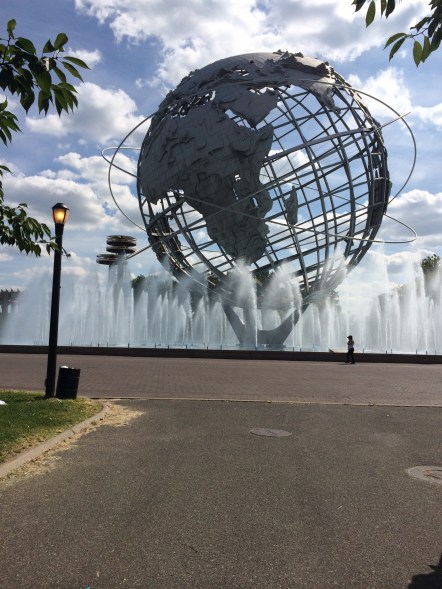
The Unisphere
We all went to the World’s Fair, probably at least three or four times. It is possibly the only time I ever traveled with my family 0n public transportation. We went via the New York City subway #7 train from Manhattan to Queens. Making it even better from my perspective is that in the same year that the World’s Fair opened, Shea Stadium opened with only a boardwalk between the two. So our visits to the World’s Fair usually culminated with a Mets game.
As I remember this event, it was very much dominated by large American corporations. We went to the General Electric Carousel of Progress and marveled at the some-to-be conveniences that would be available in our single-family home kitchen. Another glimpse of the future was provided by General Motors’ Futurama.
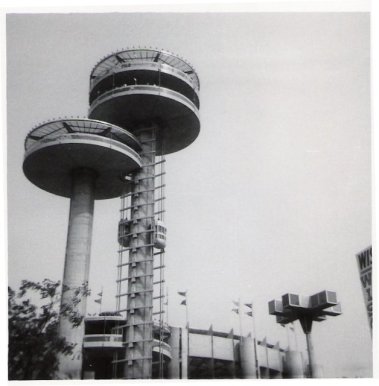
The New York State Pavilion (Doug Coldwell)
Some pieces of this World’s Fair are still in place in Flushing Meadows Park. The Unisphere has been meticulously maintained and is as magnificent as ever. The New York State Pavillion is still in place but in an advanced state of decay. I remember the Pavillion being used for rock concerts in the 70’s. I saw Steppenwolf and Poco there, as well as a then up-and-coming band called Led Zeppelin. The small stadium that was called the Singer Bowl at the World’s Fair (because everything was named after a U.S. corporation) has been renamed Louis Armstrong Stadium and is still used for the U.S. Open tennis tournament.
Freedomland
I mentioned this short lived park in an earlier post. It had an American history theme. I think I went once. It was pretty interesting to me. I remember the attraction about Mrs. O’Leary’s cow kicking over a lantern and starting a fire that destroyed 3.3 square miles of Chicago in the 19th century. And I remember the one about the turn of the century earthquake in San Francisco. I was of course a child who would grow up to be a history major so maybe other kids didn’t find this park that interesting.
Freedomland opened in 1960 and shut down in 1964, the same year the World’s Fair opened. It gave way to the granddaddy of all real estate developments on former amusement park sites, Co-op City.
So while most of these parks have been replaced by luxury condos, luxury townhouses or luxury high rises, there is one other childhood favorite of mine that is still going strong, the Jersey Shore. I still spend at least a couple of weeks of every summer there.
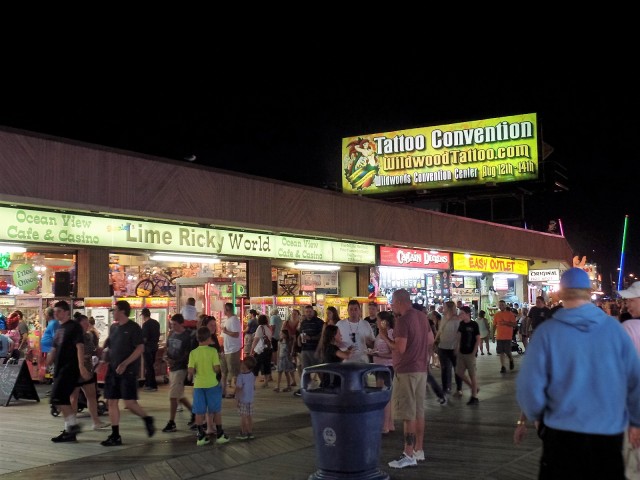
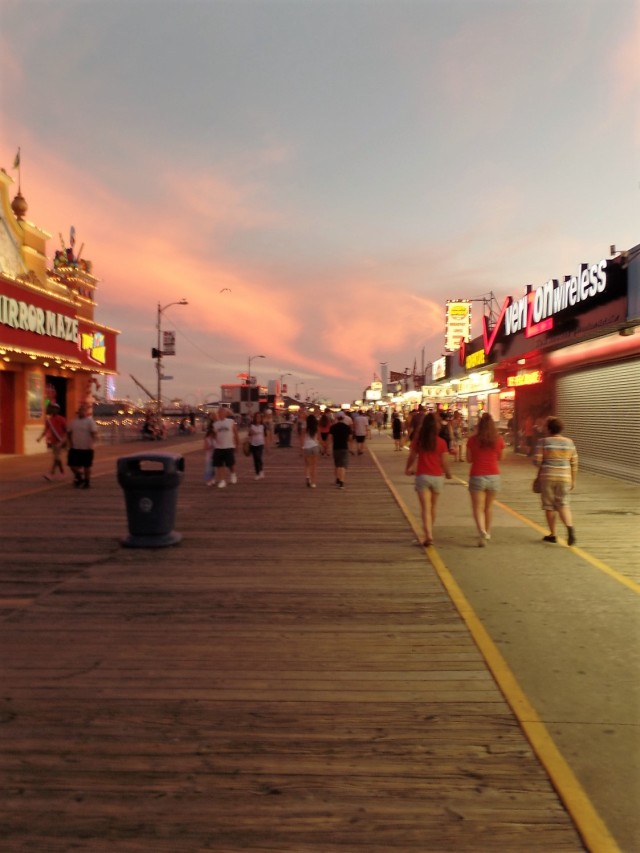
My memories include going to the Steel Pier in Atlantic City at an early age where my mother took me to see Bill Haley and the Comets perform Rock Around the Clock. (I think Dad was in the bar.) I remember the building in Asbury Park with the ferris wheel going through the roof and Casino Pier in Seaside Heights with its roller coaster and majestic carousel, both destroyed by Hurricane Sandy. And in my immaturity, the ride I remember from the Wildwood boardwalk amusement pier was a spinning thing with the unfortunate name Schitzenfahrt.
This is what was left of the Jetstar roller coaster in Seaside Heights after Hurricane Sandy.
The Wetlands Institute occupies 600 acres of marsh in Stone Harbor N.J., which is between Cape May and Atlantic City. The non-profit organization offers educational programs intended to increase knowledge of and appreciation for the wetlands ecosystem for children, university students and visitors to the Institute. Attractions include a salt marsh trail, an aquarium that includes the lively little octopus shown below and a terrapin station.
Click here for a live cam view of the Wetlands Institute Osprey nest.
A key marketing strategy during the emergence of theme parks in the 1950’s and 1960’s was to bring popular television characters to life. That was the theme behind Disneyland. Among the most popular shows of the era were westerns with cowboy heroes like the Lone Ranger, Roy Rogers and Gene Autry. And also Hoppalong Cassidy, aka William Boyd. An entrepreneur as well as an actor, Boyd tried to capitalize on his movie and TV success by opening Hoppyland in the Los Angeles area in 1951. Typical of the attractions was a pony cart ride around a man-made mountain stocked with goats. And Boyd himself made personal appearances espousing the “Hoppy code of conduct.” That involved drinking milk, eating vegetables and listening to your parents. One can only imagine how that resonated with the teenagers who the family dragged along. Apparently, Hoppyland didn’t resonate that well with anyone and was shuttered after four years.
Bedrock City
As the baby boom generation began to graduate from Mickey Mouse Clubhouse, in addition to Westerns they began to watch more mature (slightly) prime time animated shows like the Flintstones. The popularity of this cartoon saga of a caveman family with modern blue collar sensibilities inspired a number of theme parks. One of those was Bedrock City in Williams, Ariz., not far from the Grand Canyon. Opened in 1972 with actors playing Fred Flintstone and Barney Rubble, Bedrock City offered attractions like foot-pedaled cars and a slide that looked like a brontosaurus tail. For lunch you could snag a Fishasaurus sandwich. Why is this park listed in the past when it is still open? One recent blogger visitor noted: “The park employs two or three people at best. Infrequent visitors drift in and out.” It is apparently in an advanced stage of decay although they continue to play Flintstones cartoons over the loudspeakers. A sister Bedrock City park in Custer, S.D., closed last year. This one has been up for sale for $2 million since 2015.
Entrance to Bedrock City, Custer, S.D.
Action Park
This northwest New Jersey water park has the reputation as the most dangerous theme park ever. It opened in 1978 at the site of the Great Gorge Ski Resort and closed in 1996. During that time six customers were reported to have died at the water park, which locals commonly refered to as “Traction Park” or “Class Action Park.” A Mashable story referred to it as “A lawless land that was ruled by drunk teenage employees, frequented by even drunker teenage guests, and filled with rides that seemed to defy even the most basic notions of physics and common sense.”
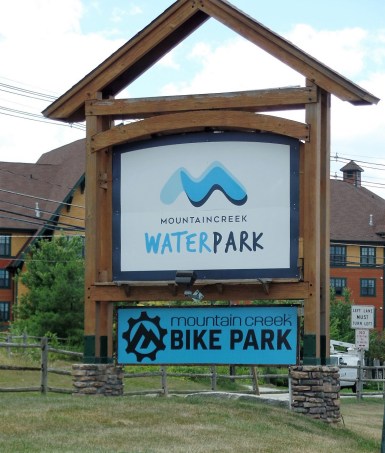
The park was reopened in 1998 with new owners, a new name, Mountain Creek, and without the unsafe rides. After the wave of publicity that followed the Mashable article and with a more adventurous new owner, the name was changed back to Action Park in 2014. But alas, the ownership changed again and with this owner not wishing to perpetuate the “lawless land” image, the name was changed back to Mountain Creek for this summer season. Mountain Creek is actually a lovely water park built on a ski slope in mostly wooded terrain. It is refreshingly pleasant on even the hottest summer days. I visited recently and only whacked my head against a sidewall once.
2. The Present
Diggerland USA
sGranted this sounds like a better theme for a Playground sandbox than for a theme park. Diggerland, West Berlin, N.J., is a construction themed park and is the U.S. outlet for a group that includes five parks in the U.K. Attractions include “dumper trucks,” a back hoe adventure and big diggers. You might think the Shake N’ Roll attraction is about music, but no, it a vehicle with rollers like the ones that smooth newly paved asphalt. You can get a taste of Diggerland online by looking at their web site live goat cam. Since our governor has stalled all road construction projects because he is bickering with the state Senate about how to fund them, Diggerland might offer the most heavy equipment action in the state.
Holy Land Experience
Sandwiched amidst some of the biggest and best theme parks in the world in Orlando, Fla, is the Bible-themed Holy Land Experience. I took a look at the daily schedule and noticed that you can begin the day with “Holy Communion with Jesus” and catch “Baptisms with Jesus” right before park closing, weather permitting of course. There are also dramas throughout the day including “Four Women Who Loved Jesus” (do they dance and sing?) and a 60 minute “Passion of the Christ.” What else spells family fun like a bloody Jesus? This is a theme park? Well, not exactly, according to the owners who classify it as a museum and hence avoid paying property taxes.
Parque Ecoalberto
If crucifixion themed attractions aren’t your thing, how about this one? The Parque Ecoalberto in Cajon, Mexico, invites you to experience a simulated illegal border crossing. This 3-hour experience costs $20 and comes complete with sirens, whistles, chases and border guard impersonators yelling at you. The owners say this Caminata Nocturna attraction is in fact intended to discourage Mexicans from attempting to make the real trip. Though one wonders whether theme park goers are the right demographic for deterring illegal border crossers. There are some more conventional attractions like outdoor swimming pools and water slides. No word yet on whether they’ve been able to book Donald Trump to film a video in which he calls you a rapist as you leave the park.
3. The Future
Eataly World
Billed as Disneyland for foodies, this park is scheduled to open in Bologna in 2017. It promises to have some 25 restaurants as well as grocery stores and food courts. The intent is to cover all aspects of Italian food, “from farm to fork” according to a park spokesman. Other planned attractions include a chocolate fountain, oil mills and citrus greenhouses. And there will be lots of culinary education programs. But don’t book your trip yet as this was originally supposed to open in 2015 in conjunction with the Milan World Expo.
ErotikaLand
If you’re not a foodie, perhaps you’re more interested in sex. Mauro Morata, who is in charge of the project to build a sex-themed park in Piracicaba, Brazil, offers some high-minded ideals for this clearly not family-friendly attraction. The park is intended, he says, to teach people about sex and the history of sex and to encourage the use of condoms. Among the planned educational experiences will be a nudist pool, a snack bar selling aphrodisiac laced food items, rides shaped like genitals and a theater with vibrating seats. What is not supposed to happen at this park is actual sex. (Will they be patrolling the restrooms?) But, no worry, there will be motels nearby, operated by none other than ErotikaLand.
(All photos, except the ones from Mountain Creek, are from Wikipedia Commons public domain collection.)
Adami is a one-year-old Golden Retriever living with a foster family in Ladera Ranch, Calif. He is being treated for a severe case of heartworm. Adami’s treatment requires that he be contained. That’s not easy for a playful one-year old. But it sure beats what was in store for him in his native Korea.
Adami was purchased from a dog meat market while still in one piece by a South Korean animal rights activist She contacted Barbara Gale of Southern California Golden Retriever Rescue (SCGRR) and before long Adami was on his way to Los Angeles rather than the dinner table.
Adami at the butcher shop from which he was rescued.
The Tess McIntyre Foundation recently made a $2,000 donation to SCGRR to help defray the cost of Adami’s heartworm treatment and hospital stay. The Foundation is seeking additional donations to provide further assistance as Adami proceeds along the path to recovery and adoption.
Upon his arrival in the U.S. on April 18, Adami was neutered and treated at the Animal Medical Center (AMC) in Los Angeles. He remained there until early May when he was released to his current foster home. His initial 60-day treatment involves two injections of Immiticide. The veterinary staff at AMC will determine if a third injection is necessary.
Adami at SCGRR shelter
SCGRR has been working to rescue dogs not only from Korea, but from China and Taiwan as well. While the production and consumption of dog meat is illegal in South Korea, there are some traditional Korean dishes that are made with dog meat and the law often goes unenforced. According to the Korea Animal Rights Activists (KARA), some 2.5 million dogs are slaughtered each year in that country.
The Tess McIntyre Foundation was founded last year. It is named after Tess, a three-year-old Golden Retriever who was adopted from SCGRR. Tess was killed in an accident not long after moving into her new home. Her owners have dedicated their efforts in her memory to helping other rescued dogs. One of the primary goals of the Foundation is to support dogs who need medical care before they can be put up for adoption.
By the middle of the 20th century amusement parks were still primarily based on the model that had been established in 1890’s. Though they may have been re-invented over and over again the centerpiece was still the midway, the roller coaster, the Ferris wheel.
It took another wave of prosperity, the one that followed World War II, to bring about a new flurry of amusement park openings. In the late 40’s and the 50’s productivity, employment and wages were all on the uptick. Car ownership increased dramatically and, as the baby boom generation began to grow up, family road trips became the preferred form of vacationing.
So you’ve got a car, a backseat full of kids and some money and time to spend. Where to? Starting in the mid 50’s, the theme park increasing became the answer.
Walt Disney
It was the opening of Disneyland in Anaheim, Calif., in 1955 that heralded the emergence of the theme park. Countless parks have been built since based on the Disneyland model. To this day many would argue that the Disney resorts are the gold standard of theme parks.
Already a popular and widely recognized movie and TV brand, Disneyland brought its characters to life. It was a destination. Not the end of a trolley line or an accessible day trip venue, but a place to get in the car and travel to from all over the country and to stay and make a vacation of it.
What distinguishes the theme park from the classic amusement park is simply the theme. At Disneyland that was the characters, Mickey and Donald and Pluto et al., that were already beloved by the nation’s children. There was also the Disney cultivated theme of wholesome and clean. No Coney Island Blowhole Theater here, nor any of the Gumpertz-like freak shows. Within the park, attractions were divided into sub-themes. There’s Frontierland, Fantasyland and Tomorrowland.
While Disney is widely viewed as the creator of the theme park, Disneyland was not, in fact, the first. Storytown USA, a Mother Goose themed park, opened in Queensbury, N.Y. (near Albany) in 1954. It later changed its name to the Great Escape, added a water park and was purchased by Six Flags. On the other coast Knotts Berry Farm in Buena Vista, Calif., which is still in operation and remains very successful, has its roots back into the 1940’s. That’s when the original owner Walter Knott built a replica Ghost Town on his berry farm.
Among those that claim to be the first theme park is Knotts Berry Farm
Knott’s Berry Farm circa 1920 when it was a stand to sell berries on the side of the road.
Holiday World in Santa Claus, Ind., also claims to be the country’s oldest theme park. It is currently celebrating its 70th anniversary. The park opened as Santa Claus Land in 1946. One of its guests, in 1955, was Ronald Reagan. It later expanded beyond the Christmas theme by adding a Fourth of July and a Halloween section. In 1984, its name was changed to Holiday World and in 1993 it too added a water park.
Not all of these theme parks were successful. One of the more prominent failures was Freedomland, a 95-acre American history themed park in the Bronx, N.Y. In the same way that Disneyland was broken down into themed sections, Freedomland was subdivided based on historical themes such as Little Old New York 1850-1900, the Great Plains 1803-1900 and the Old Southwest 1890. Freedomland opened in 1960 and was troubled from the start. There was a stagecoach accident in the Great Plains that injured 10 people. Six unfinished buildings were destroyed by fire. The front office was robbed and, built as it was on a city landfill, mosquitos turned out to be prominent if uninvited guests.
By 1964 Freedomland filed for bankruptcy and it was demolished the following year. The Freedomland property is now the site of the enormous Co-Op City housing development. That has led to speculation that developers may have played a role in hastening the theme park’s demise.
This Pirate Ride was salvaged from Freedomland and moved to Cedar Point.
Freedomland aside, theme parks have flourished over the last several decades. Disney alone has expanded not only to Florida, but to Japan, China, Hong Kong, France and Hawaii. According to attendance statistics compiled by the Themed Entertainment Association, nine of the eleven theme parks with the highest attendance in 2015 were Disney properties. The Magic Kingdom led the way with more than 20 million annual visitors. Disneyland in Anaheim was not far behind with 18 million+. Overall nearly 138 million people visited Disney Theme Parks in 2015.
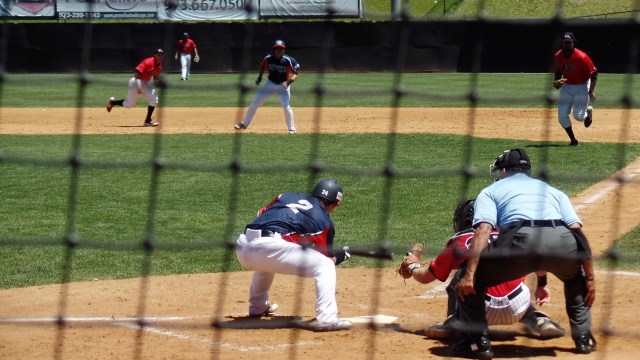
The Canadian-American Association of Professional Baseball is already a two-language, two-country league. This year the independent league expanded its international footprint even further by playing host to teams from Japan and Cuba. Below are photos from four Can-Am League games played in June, involving teams from four different countries.
Rockland Boulders 14, Trois Rivieres Aigles 4
Palisades Credit Union Park, Pomona, N.Y.
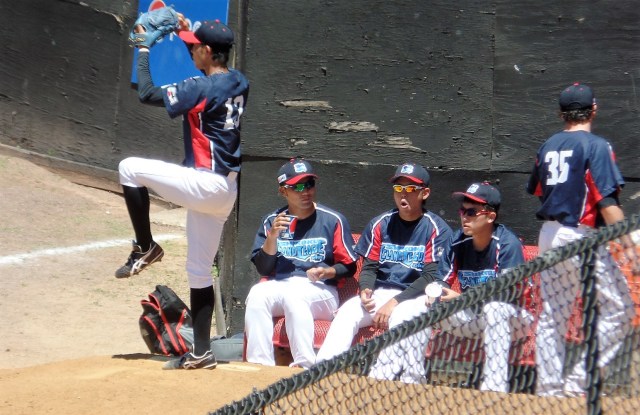
New Jersey Jackals 6, Shikoku Island All-Stars 5 (10 innings)
Yogi Berra Stadium,. Little Falls, N.J.
The Shikoku Island All-Stars are a select team of players from the four-team Shikoku Island League, Japan’s first independent professional league. Like the players in the Can-Am, the Shikoku League players are hoping to get a shot at the majors, in their case Nippon Professional Baseball. This is the second year the Shikoku team has traveled to the U.S. to play the Can-Am teams. Last season they were 6-10 on their tour but impressed with their fundamentals. This year’s 8-12 mark was a slight improvement.
Cuban National Team 6, Sussex County Miners 4
Skylands Park, Augusta, N.J.
The Cuban National Team that toured the U.S. and Canada playing Can-Am League teams included a few of the players that participated in the game against the Tampa Bay Rays in Havana under the watchful eye of President Obama. Cuba swept all three games in Sussex County, although one of their players reportedly slipped off into the sunset during this leg of the trip. Overall, Cuba posted an 11-9 record against Can-Am competition. They won eight of their last ten and beat Shikoku 5-3 in their final game
New Jersey Jackals 3, Cuban National Team 1
Yogi Berra Stadium, Little Falls, N.J.
The New Jersey Jackals are the Can-Am League’s perpetual runners-up. For five straight years they have made the playoff finals only to lose, last year to Trois-Rivieres, in 2014 to Rockland and for three straight years to Les Capitales de Quebec. Once again this year, the Jackals are among the league’s top teams and they won both international series two games to one. In this game, Jackals pitcher Lee Sosa brought a no-hitter into the ninth inning before giving up a walk and a single and being removed from the game.
This is a guy who at 15 lied about his age so he could join the Union Navy and fight in the Civil War. This is a guy who swam across the English Channel in an inflatable rubber suit, feet first. This is a guy who took a job with the Peruvian government that involved swimming offshore and trying to plant torpedoes on the Chilean ships that were embargoing Peru.
Paul Boyton was probably born in Ireland in 1848. But it might have been Pittsburgh where he grew up. The “Captain” might have come from his adventure in Peru or it might have been bestowed on him for his involvement with the United States Life-Saving Service, a predecessor to the Coast Guard, in Atlantic City.
Boyton in his rubber suit
Known as the “Fearless Frogman,” Boyton was once credited with making 71 life-saving rescues during a two-year stint as a lifeguard in Atlantic City. But it was the English Channel crossing that made him an international celebrity in the late 19th century. He toured Europe for five years with his rubber suit, putting on exhibitions that included going down waterfalls and through rapids. He did the same in the U.S., going down the Mississippi in 1876 from Alton, Ill., to St. Louis.
The rubber suit had inflatable tubes. Boyton likely was hoping to sell it as a life-saving device but had no luck with that. It appears that Boyton spent most of what he received and thus was almost always in need of a way to generate cash.
He managed an aquatic show as part of the Barnum circus for a while then settled in Chicago in 1885. It is there that he began to make his mark in the amusement business. In 1894 he opened Paul Boyton’s Water Chutes. This park is the first amusement park in America to rely solely on mechanical attractions, as opposed to places like Coney Island and Atlantic City where there is beach and ocean.
Boyton also brought the Chutes ride to England (Earlscourt World’s Water Show) and to Belgium (1894 Antwerp World’s Fair). But if you were into building and promoting amusements in the 19th century, Coney Island was the place to be. And Boyton opened Sea Lion Park in Coney Island in 1895. In addition to Shoot the Chutes, Boyton still did swimming exhibitions in his rubber suit and there were as many as 40 sea lions who juggled and competed in races.
Boyton sold Sea Lion Park in 1902 after a difficult, rainy season. It was incorporated by the new owners into Luna Park. Boyton’s Chutes ride kept going at Luna Park until 1944. Boyton himself settled in Brooklyn and lived there until his death in 1924.
Samuel W. Gumpertz
While George Tillyou and Paul Boyton was instrumental in making Coney Island the birthplace of American amusement parks, Gumpertz contribution was to add the sideshow. Gumpertz took the amusement park and added a little circus and a bit of carnival.
Gumpertz was born in Washington in 1868 and moved to St. Louis at an early age. By the time he was nine, he had run away with a circus. Given his size he became the “top mounter” in the pyramid of acrobats. A variety of entertainment related gigs followed. At one time he was a child actor at the Tivoli Opera House in San Francisco, but lost that position when his voiced changed. He left a ranching engagement to run away with Buffalo Bill’s Wild West Show. His resume also included producing some Shakespearean plays and he was manager for a young Harry Houdini.
Gumpertz eventually settled into Coney Island and shifted his focus to the display of human oddities. One of his best known creations was Lilliputia, part of Dreamland, another Coney Island amusement park. Lilliputia was set up as a miniature city populated by some 300 small people, many of whom Gumpertz had recruited from various expositions. They had their own parliament and their own fire department, the latter of which staged a false alarm every hour for park guests.
Lilliputia, or Midget City, at Dreamland, Coneyland
Dreamland, like its other wood-structured neighbors burned down in 1911. Gumpertz kept going, setting up the Dreamland Circus Sideshow, operating out of a tent on Surf Avenue. One of his lead attractions was the pinhead “Zip What Is It.” And there was two-foot tall Baron Paucci and Lionel the dog-faced boy. Gumpertz’ freaks were real. He traveled to Asia, Africa and Europe and it is estimated that he imported 3,800 unusual people. For his Wild Man of Borneo exhibit he leased 19 “wild men” from a tribal chieftain in Borneo. He also paid the government of French Equatorial Africa $3,000 a week to bring over 12 “platter-lipped” women. The women were part of a tribe where it was custom to stretch their lips on wooden platters, sometimes as much as 10 inches wide. They were accompanied by their husbands, although not all the husbands made the return trip as a couple ran off with normal lipped African-American women.
Gumpertz kep his show going through the 1920’s. In 1929, at age 67, he once again ran away with a circus, leaving Coney Island to join Ringling Brothers.
Lina Beecher
Not just an engineer, Lina Beecher has gone down in history as a roller coaster engineer. His contribution to the science was the creation of the looping, gravity force type of coaster.
Beecher was born in Byron, N.Y. in 1841. He was a lieutenant in the Union army during the civil war. He was an inventor and among his creations were the flangeless railway system, the Monorailway and the acoustic phone, a predecessor of the mobile phone. In between inventions he held a number jobs that included working in the railroad business in Tennessee and the orange industry in Florida.
Beecher’s signature creation was the Flip Flop Railway, a circular vertical loop coaster that Beecher sold to Paul Boyton to be moved to Sea Lion Park in Coney Island. Beecher had initially tested the coaster with sand bags and then with monkeys before trying it out on human beings. There were no seatbelts on Beecher’s coaster, you were held in your seat by gravity alone. The Flip Flop Railway lasted a few years at Sea Lion Park. There are no reports of anyone completely falling out of their seat but there were lots of complaints about whiplash due to the g-force generated.
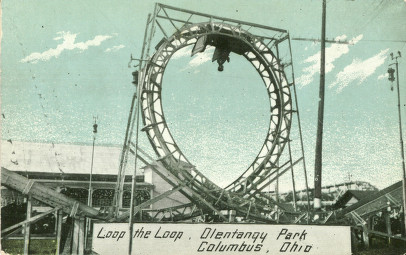
Beecher’s Loop the Loop coaster at Olentangy Park
Beecher modified his design and built a Loop the Loop coaster for Olentangy Park in Columbus, Ohio. He built this one out of steel rather than wood and the loop was elliptical rather than circular. While seemingly less dangerous than its Coney Island ancestor, the riders weren’t buying it. The Loop the Loop had a short life before being taken out of services.
Beecher gave it one more try. He built a looping coaster for the Pan-American Exposition in Buffalo, N.Y., in 1901. Fair organizers, however, deemed it too dangerous and refused to allow it on the grounds.
Little information is available about Beecher after that. He died in 1915 at age 75. His concept of the looping roller coaster obviously lived on, albeit with seatbelts and some neck protection.
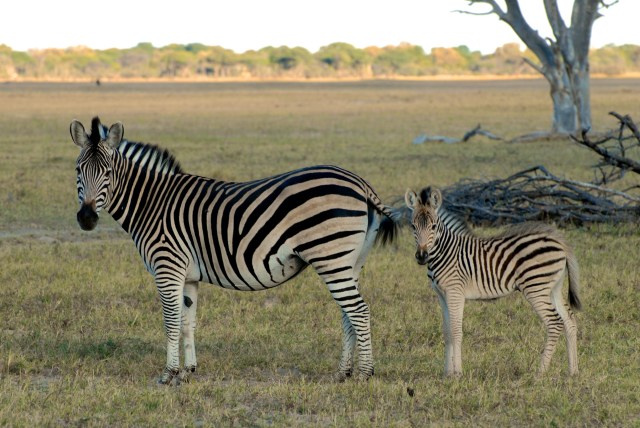
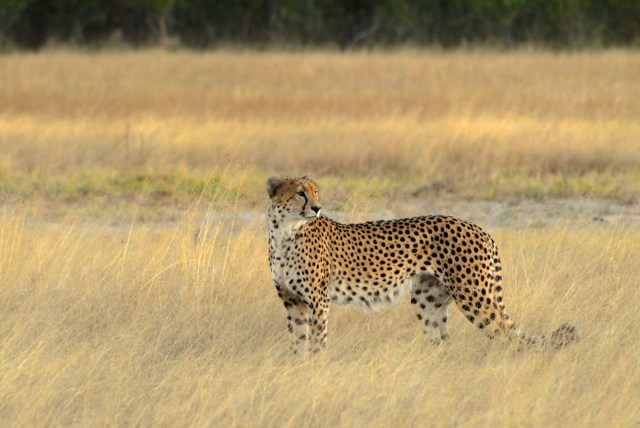
Photos are from Wilderness Safari’s Ruckamechi Camp in Mana Pools National Park and Linkwasha Camp in Hwange National Park in Zimbabwe and Toka Leya Camp at Victoria Falls, Zambia.














 A key marketing strategy during the emergence of theme parks in the 1950’s and 1960’s was to bring popular television characters to life. That was the theme behind Disneyland. Among the most popular shows of the era were westerns with cowboy heroes like the Lone Ranger, Roy Rogers and Gene Autry. And also Hoppalong Cassidy, aka William Boyd. An entrepreneur as well as an actor, Boyd tried to capitalize on his movie and TV success by opening Hoppyland in the Los Angeles area in 1951. Typical of the attractions was a pony cart ride around a man-made mountain stocked with goats. And Boyd himself made personal appearances espousing the “Hoppy code of conduct.” That involved drinking milk, eating vegetables and listening to your parents. One can only imagine how that resonated with the teenagers who the family dragged along. Apparently, Hoppyland didn’t resonate that well with anyone and was shuttered after four years.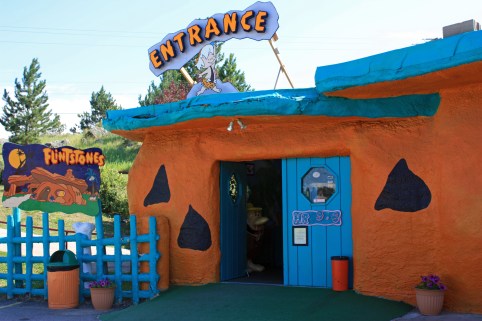
 The park was reopened in 1998 with new owners, a new name, Mountain Creek, and without the unsafe rides. After the wave of publicity that followed the Mashable article and with a more adventurous new owner, the name was changed back to Action Park in 2014. But alas, the ownership changed again and with this owner not wishing to perpetuate the “lawless land” image, the name was changed back to Mountain Creek for this summer season. Mountain Creek is actually a lovely water park built on a ski slope in mostly wooded terrain. It is refreshingly pleasant on even the hottest summer days. I visited recently and only whacked my head against a sidewall once.
 Granted this sounds like a better theme for a Playground sandbox than for a theme park. Diggerland, West Berlin, N.J., is a construction themed park and is the U.S. outlet for a group that includes five parks in the U.K. Attractions include “dumper trucks,” a back hoe adventure and big diggers. You might think the Shake N’ Roll attraction is about music, but no, it a vehicle with rollers like the ones that smooth newly paved asphalt. You can get a taste of Diggerland online by looking at their web site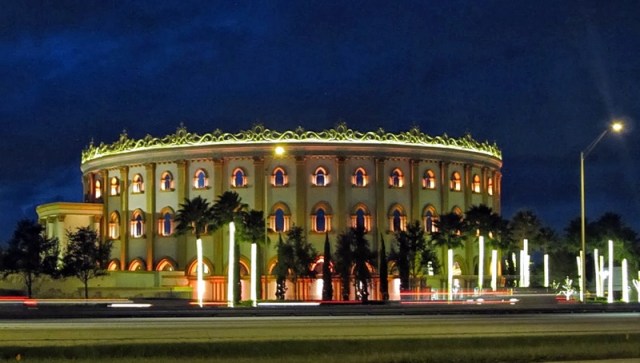

 If you’re not a foodie, perhaps you’re more interested in sex. Mauro Morata, who is in charge of the project to build a sex-themed park in Piracicaba, Brazil, offers some high-minded ideals for this clearly not family-friendly attraction. The park is intended, he says, to teach people about sex and the history of sex and to encourage the use of condoms. Among the planned educational experiences will be a nudist pool, a snack bar selling aphrodisiac laced food items, rides shaped like genitals and a theater with vibrating seats. What is not supposed to happen at this park is actual sex. (Will they be patrolling the restrooms?) But, no worry, there will be motels nearby, operated by none other than ErotikaLand.






 Captain Paul Boyton