There are many claims of first in the amusement park business. But the oldest belongs to Bakken near Klampenborg, Denmark. Its roots go back to 1583. Originally it was the site of a natural spring and attracted Danes as a source of natural spring water. The amusements, originally in the form of entertainers and hawkers, built up around it. Bakken continues to operate today and features six roller coasters as well as attractions like the Crazy Theater (indoor laser shoot-out), Extreme (a giant swing) and Samba Tower (air carousel).
There are many other claims of first, but most came a few centuries later. Paul Boynton’s Water Chutes, opened in Chicago in 1894, is said to be the first modern amusement park in that it relied solely on mechanical attractions rather than a natural setting. One year later, Sea Lion Park opened in Coney Island. It was one of the first to enclose the area and charge admission Kiddie Park in San Antonio is believed to be the first amusement park for children. It was opened in 1925 and is also still in business today.
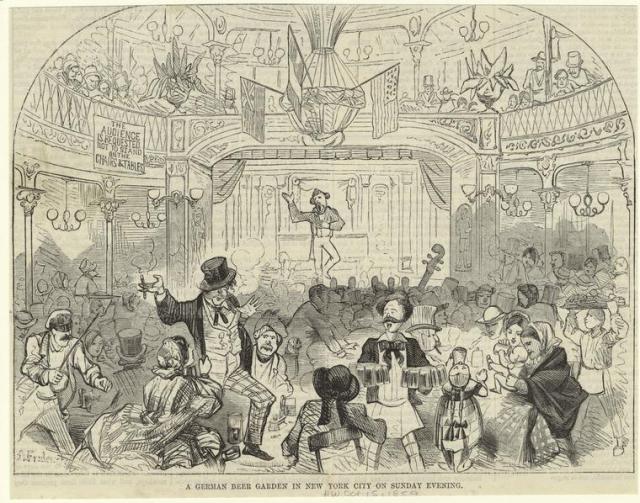
The creation of amusement parks began in earnest in the late 19th century. Changes in society in the U.S. were creating a new customer base. Earlier in the century the elite had their retreats and the workers had their picnic grounds and beer halls. But in the late 19th century a middle class was emerging, a group with some money to spend and some time to spend it. At the same time modern transportation systems, trains and trolleys and streetcars, were making excursions and day trips more accessible. Some of the transportations companies themselves engaged in building recreational and amusement centers along their routes as a way to attract more customers.
Many of the early amusement parks were built within existing resorts. Seaside communities that already attracted visitors to their beaches and oceans began to add mechanical rides and other amusements to increase their appeal. They were also becoming more accessible due to new transportation options. Two early examples are Coney Island and Atlantic City.

Steeplechase Park, Coney Island
After the opening of Sea Lion Park in 1895 the amusement business boomed in Coney Island. Steeplechase Park opened its gates in 1897. Luna Park came along in 1903 and Dreamland followed a year later. By 1910 as many as a million people would visit Coney Island on peak days. The Brooklyn entertainment center lays claim to the country’s first roller coaster and the first amusement railroad.

Steel Pier, Atlantic City
On the Jersey shore, Atlantic City was already becoming a popular destination as the terminus of train lines from New York and Philadelphia. It was here that the amusement park built on a pier out over the ocean became popular. The first was Ocean Pier in 1891 followed by the Steel Pier, known for attractions like the horses that dove into swimming pools, in 1898. Others were soon to follow: Heinz Pier, also in 1898, the Million Dollar Pier in 1902 and the Steeplechase Pier (by the owners of Steeplechase Park in Coney Island) in 1908. It was from the Million Dollar Pier that Houdini dived shackled into the ocean.
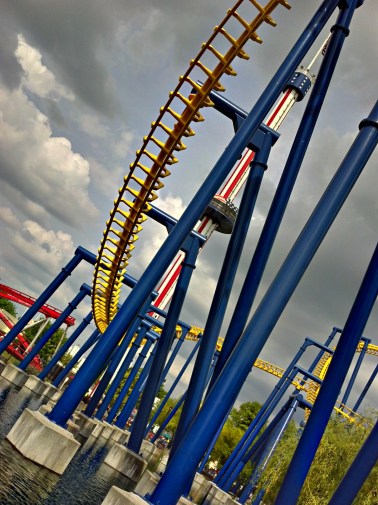
Cedar Point roller coaster. (image by Alex Grichenko)
According to Arthur Levine, writing in USA Today, the ten oldest amusement parks still operating are: Lake Compounce, Bristol, Conn., 1846; Cedar Point, Sandusky, Ohio, 1870; Six Flags New England, Agawam, Mass., began as Gallup’s Grove in 1870; Idlewild, Ligonier, Pa., 1878; Seabreeze, Rochester, N.Y., 1879; Coney Island, Brooklyn, N.Y., 1884; Dorney Park, Allentwon, Pa., 1884; Coney Island, Cincinnati, Ohio, 1886; Lagoon, Farmington, Utah, 1886; Arnold’s Park, Arnold’s Park, Iowa, 1889.
Lake Compounce started as a picnic ground and was not much more than some picnic tables on the shores of the lake. It later became an example of what were to become known as trolley parks. A train station was built at Lake Compounce in 1895. The same year the Casino, the park’s first permanent building, was erected and a restaurant opened. With many more visitors now accessing the old picnic grounds, a carousel and an electronic powered roller coaster were soon to follow.
The late 19th century and the first quarter of the 20th century were the heyday of early American amusement parks. While some of these older parks are still alive and well, many others didn’t make it. The early amusement parks and most of their attractions were built out of wood. And in an era when you could probably ride a roller coaster with a cigarette hanging off your upper lip, many went up in flames. Steeplechase Park was largely destroyed by fire in 1907 and had to be rebuilt. Dreamland, also in Coney Island, burnt to the ground in 1911. Luna Park followed in 1944. The Steel Pier suffered significant damage due to fire in 1924. It was rebuilt shortly thereafter only to burn down in 1982. It was replaced by a concrete structure in 1993.

Dreamland, Coney Island
Some others were felled by a decade of Depression sandwiched between two world wars. The next wave of amusement parks, including the advent of the theme park, didn’t take place until the 1950’s, fueled by the return of prosperity, the growth of automobile travel and the need to find something to do with all those baby boomer children.












 There was also the signature Steeplechase ride and the Parachute Drop. He brought the Trip to the Moon ride to Coney Island, although within a year he got into a dispute with the proprietor who bolted for neighboring Sea Lion Park. He built replicas of the Eiffel Tower and Big Ben, a ballroom and a large saltwater pool (conveniently located behind his dad’s joint). It all went up in smoke in 1907, reportedly because a patron threw a lit cigarette into a garbage can. So what does a guy who hit up Midwestern tourists for boxes of sand do when his amusement park is burned to the ground? He charged admission (10 cents) for folks to come and look at the smoldering remains.

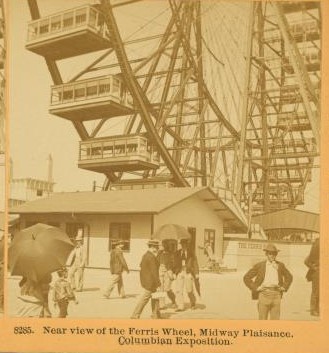
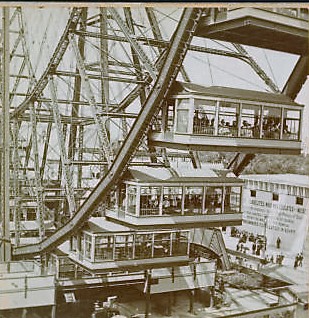 Ferris more than exceeded expectations. It was seven weeks after the fair opened that he climbed aboard for the first ride, along with his wife, the mayor of Chicago and a marching band. George Ferris’ Great Wheel operated flawlessly for the entire duration of the fair. It shrugged off gale force winds, thunder and lighting, even the remnants of a hurricane. It was the highlight of the exposition, accommodating 1.4 million passengers.