If you spent any part of your young adulthood in northern New Jersey, you probably spent a night or two in the Hoboken bars. Or maybe three. So it will come as no surprise that the first brewery in the state was situated right in the middle of the Mile Square, although it was not yet called Hoboken.
A Dutch settler by the name of Aert Teunissen van Putten set up a brewery amidst a Dutch settlement on the banks of the Hudson in 1641. He lasted two years, not because of either the Hoboken police or New Jersey’s alcohol and beverage regulations, neither of which yet existed. Rather, a raid by a tribe of Lenni Lenape in 1643 wiped out both van Putten and his brewery.
For the next couple of centuries most new world beer was home brewed. By most accounts is was a think murky sort of ale. But it was the preferred beverage of many Americans at the time, not because they were anxious to get hammered, but rather because many Europeans came from places where there was nothing in the beer that equaled the toxicity of the water.
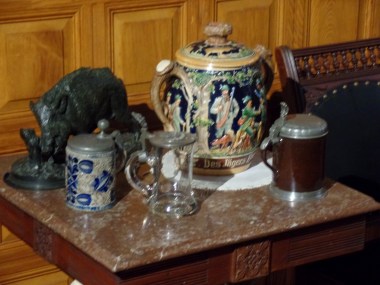
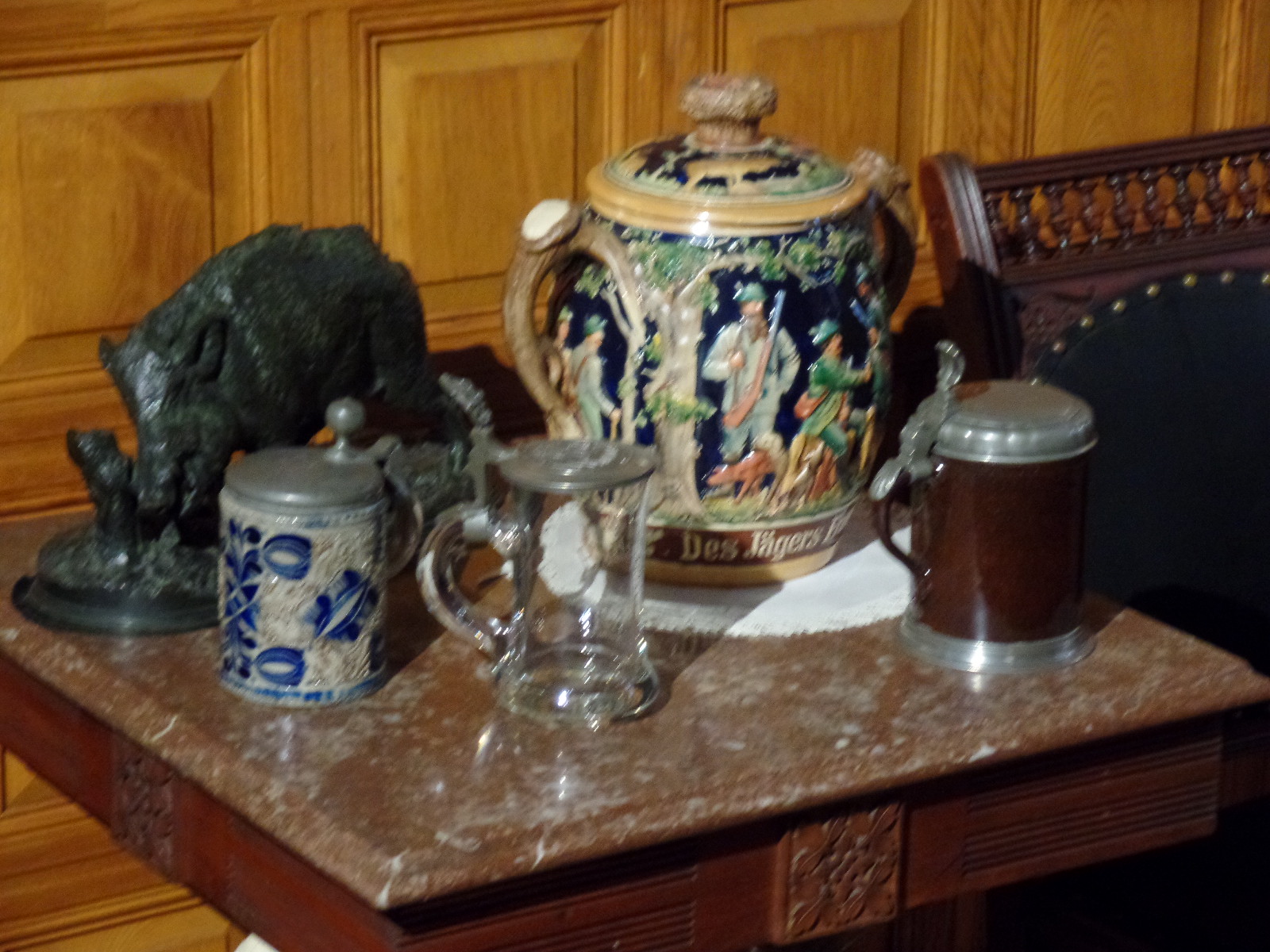
Drinking vessels from the 19th century on display at the restored Ballantine House in the Newark Museum.
Fortunately in the 19th century we did not have politicians campaigning on the promise to build a wall to keep out immigrants, because it was the flood of German immigrants into the U.S. that made beer brewing a serious business. They brought knowledge, they brought ingredients, and they brought lager, the type of brew that would eventually become the defining style of American beer.
Beer brewing in New Jersey had a definite German accent. So it isn’t surprising that Newark became the state’s beer capital. By 1865, half of Newark’s population was German. The city was home to 242 brewers in 1880, 204 of them were German born.
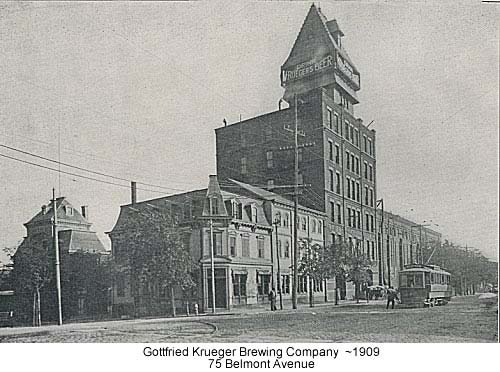
Gottfried Krueger came here from Germany in 1853 at the age of 16. By 1858 he founded, with a partner, the company that would become Krueger Brewing. Joseph Hensler, son of a German brewer, arrived in Newark with his father in 1854 and founded the Joseph Hensler Brewing Company. Both of those breweries lasted for more than a century. In 1873 the three Winter Brothers migrated from Germany to Pittsburgh. They founded M Winter Brothers Brewing in 1893. Six years later they sold that firm and moved to New Jersey where they founded the Orange Brewing Company.
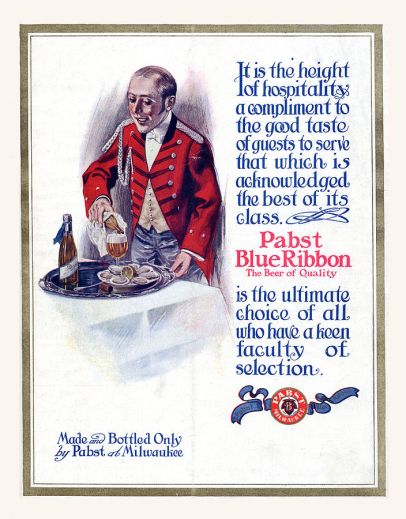
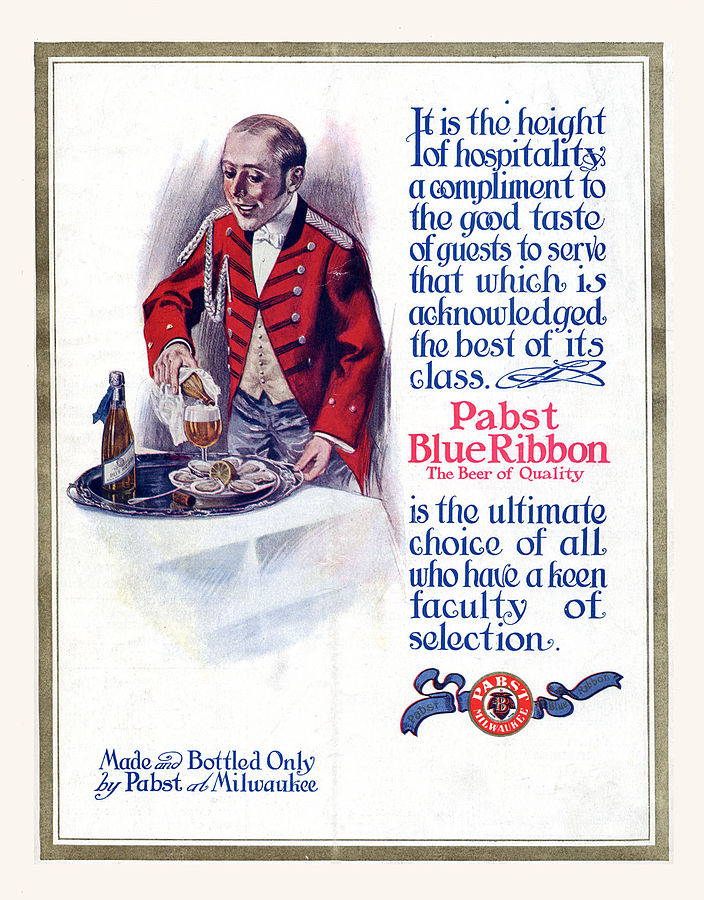
1911 ad for Pabst Blue Ribbon from the back cover of Judge Magazine
The heyday of beer brewing in the New Jersey was the early 20th century. At the start of the century there were 51 breweries in the state. Twenty-five of those were in Newark. By 1934 that number had been cut in half. Some of New Jersey’s German brewers split for the Midwest due to the anti-German sentiment generated during World War I. But the big blow was the 18th amendment, Prohibition.
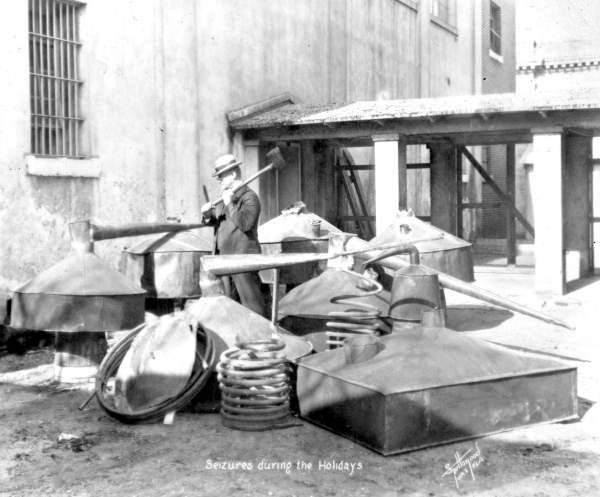
New Jersey was not exactly a Prohibition friendly state. In his book Jersey Brew, author Michael Pellegino notes a federal study that estimated that 40% of all alcohol consumed in the U.S. during Prohibition came through Newark. But for legitimate Jersey breweries the onset of Prohibition in 1920 left them with three options: pack it in; try to keep afloat by producing alternatives like soda or near beer (Is that what they called Bud Light in those days?); or go black market and link up with the gangster distribution network.
Among the breweries that closed in 1920 were the Weidenmayer Brewing Company of Newark, Columbia Brewing and Lembeck and Betz Eagle Brewing, both in Jersey City. Newark Trefz’s Brewing was sold to Krueger in that year.
But some of the largest breweries bounced back strong and in fact made beer brewing history. Krueger was ready to go from day one and when Prohibition ended in 1933 they were selling beer in cups from the brewery doorways. This was so popular it gave rise to New Jersey’s first beer riot since the Lenni Lanape raid on Hoboken. The Newark brewery was to change the nature of beer drinking in America when, in conjunction with American Can, it introduced canned beer in 1934. Beer, which was primarily consumed in public houses, was now accessible and convenient for house consumption. It is also during the 30’s that another Newark brewer, Ballantine, is credited by some with producing the first IPA. The Ballantine offering was wood-aged for a year before being bottled.
Another Jersey beer innovation, noted by Pelligrino in his book, came from the Eastern Brewing Corporation in Hammonton. Nude Beer included on its label a bikini clad woman. It was a scratch off. This one didn’t catch on and was pulled from the market.
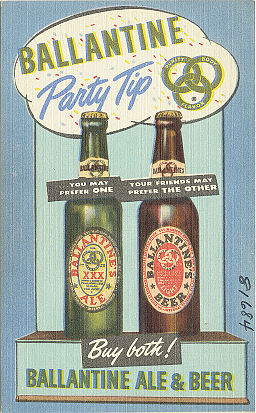
At mid-century, while Ballantine and Pabst and Krueger were going strong, another milestone in New Jersey beer history occurred. Anheiser-Busch opened a Budweiser plant in Newark in 1951. Thirty-five years later it would be the only remaining brewery in New Jersey.
Garden State brewers survived anti-immigrant sentiment and wars, the religious Right and prohibition, they even survived the gangsters. What they couldn’t survive is the larger trend in American business of consolidation. In the beer industry, like so many others, large national brewers who dominated the marketing and distribution, gobbled up the local and regional manufacturers.
Krueger was merged into Narragansett in 1961. Falstaff bought out Narragansett in 1965 and closed the Newark plant. Ballantine, at one time the third largest brewer in the country, was also bought by Falstaff in 1965 and their Newark site was shut down as well. Newark’s Joseph Hensler Brewing Company, which dated back to 1855, closed in 1958. The Orange Brewing Company was acquired by Rheingold which closed its doors in 1977. Pabst in Newark shut down in 1985. When they took down the big Pabst bottle, which was actually a water tower, from the roof of the old brewery in Newark, it symbolized the end of an era. The big brown bottle had been a landmark for New Jerseyans as they headed down the Garden State Parkway for the shore.
Those closings ushered in the dark ages of beer brewing in New Jersey. Not only had the breweries that thrived in the state for a century closed their doors, but the archaic and confusing alcohol and beverage laws in the state left it behind others in the renaissance of American beer brewing that was just getting started.
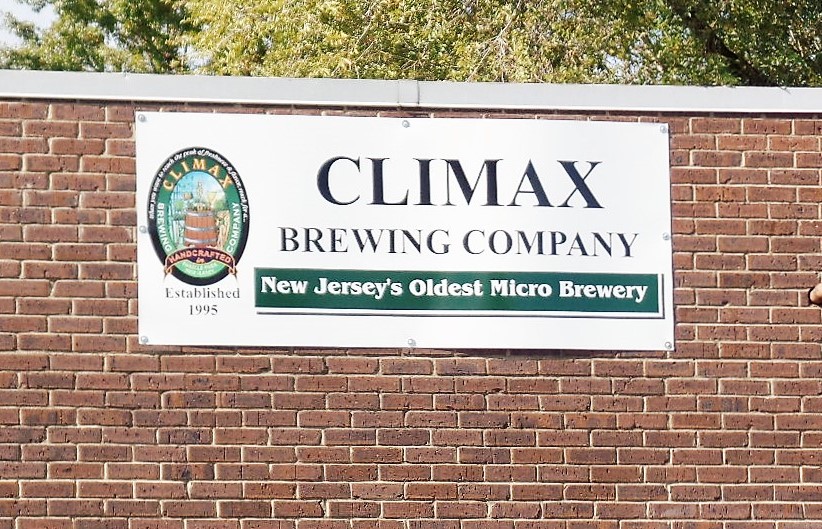
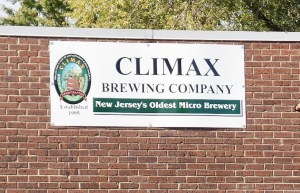 A gradual loosening of some of those regulations led to the rebirth of microbrewing in New Jersey. Climax Brewing in Roselle Park became New Jersey’s first modern microbrewery in 1993. One the most successful, Flying Fish in Cherry Hill, started in 1995 as a virtual brewery then opening its doors in 1996 as did River Horse Brewing in Lambertville. Brew pubs finally became legal in New Jersey in 1994 and one year later the Ship Inn Restaurant and Brewery in Milford became the first brew pub in New Jersey.
According to New Jersey Craft Beer there are in 2015 37 operating breweries in the state and 15 brew pubs. Another 22 start ups have a license, permit or physical location and 16 more are planned but haven’t yet gotten to that point. So we’re getting close to the 51 breweries that were in production in 1900.