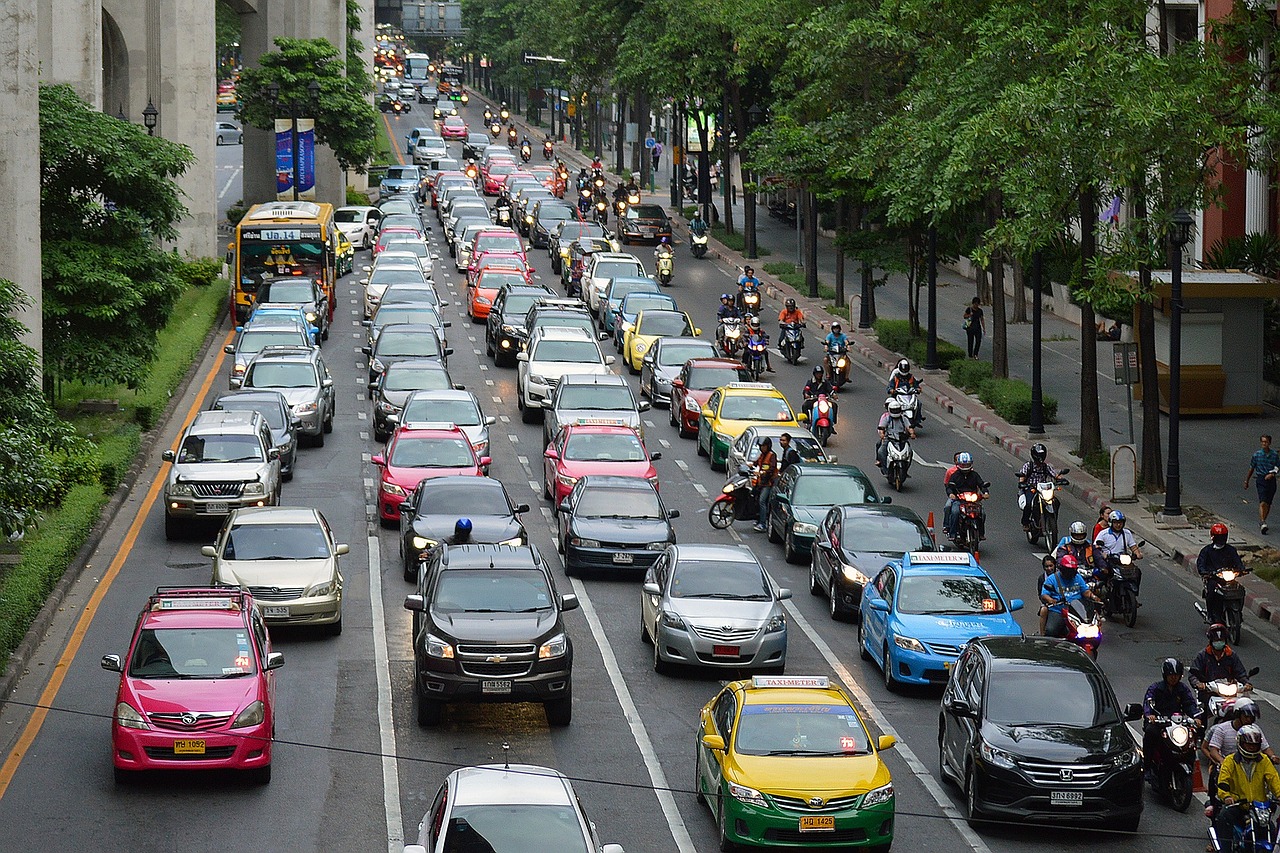
Earlier this year, the U.S. Department of Transportation issued a report on the current status and likely future of transportation systems in the U.S. Beyond Traffic: Trends and Choices 2045 did not paint a rosy picture. Here are just a few of the findings:
- If you drive a car, you now spend, on average, the equivalent of five vacation days every year sitting in traffic.
- 65% of our roads are rated in less than good condition.
- 45% of Americans don’t have access to transit.
(quinntheislander)
Now toss into the mix population growth, the aging of the population (all of us boomers are aging fast), an increase in freight volume and the impact of climate change on highways, bridges, public transportation, coastal ports and waterways. The result, the DOT suggests, is that by 2045 “at the airports and on the highways, every day will be like Thanksgiving is today.”
Technology promises a way around this dire prediction with visions of systems that make mass transit faster, more comfortable and more accessible.
One of those technologies, called hyperloop, involves capsules traveling in reduced pressure tubes. Engineers working on prototypes of hyperloop trains predict they could move passengers from Los Angeles to San Francisco in about a half hour traveling at speeds of around 600 mph.

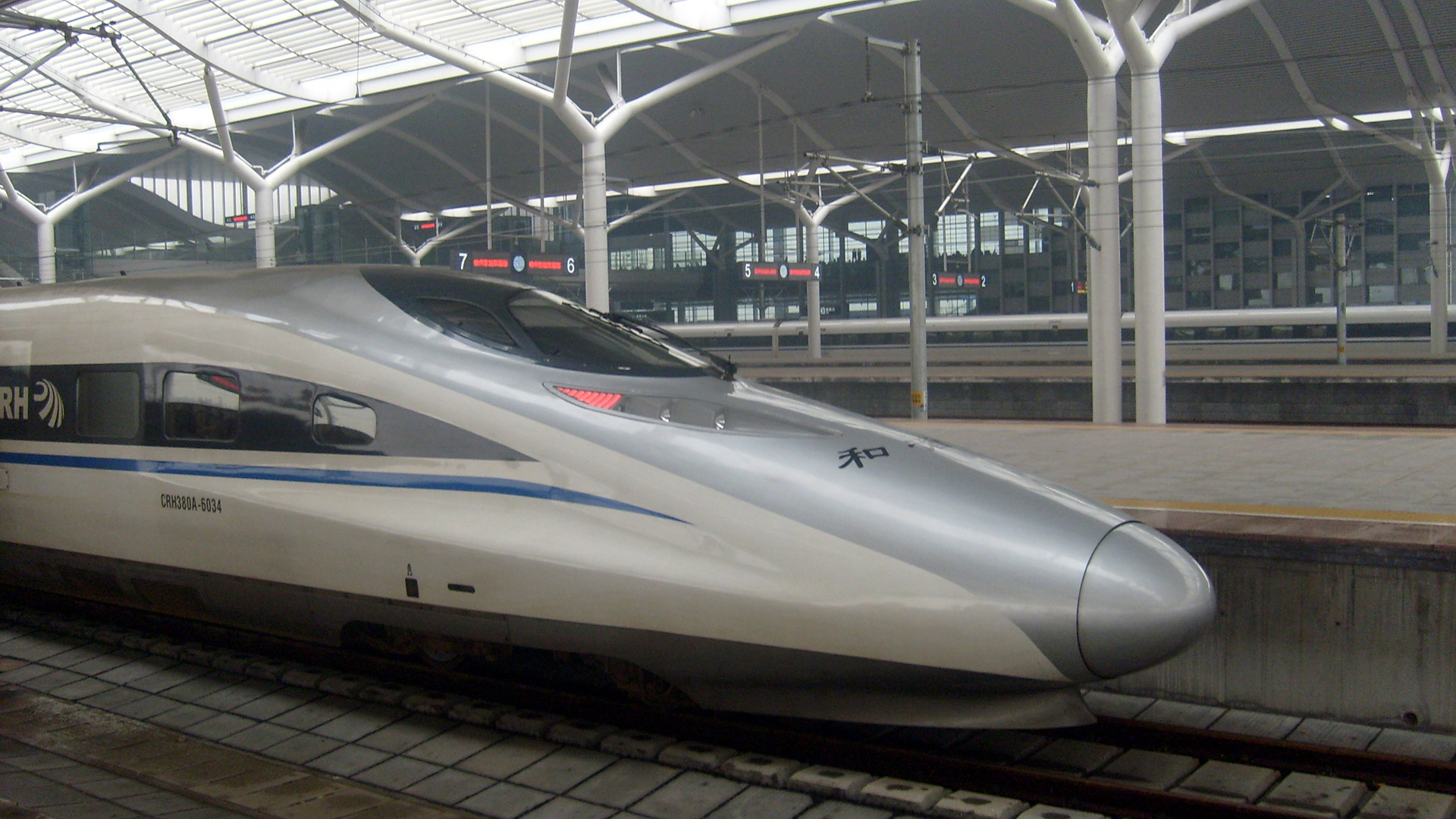
China high speed train (Peter Griffin)
Another developing technology is called maglev, short for magnetic levitation, Maglev trains are guided by magnets so they do not touch the ground, making for a smooth, reduced friction ride. This technology is already being used in China. The Transrapid in Shanghai has recorded speeds of 270 mph.
For slower local transit, an early version of the driverless car is being planned at Milton Keynes in the UK. They are expecting to deploy by 2017 a system of small electric vehicles called urban transport pods that carry up to two passengers at speeds of 10 mph or less on dedicated traffic lanes that go from the train station to destinations up to a mile away.
In Hawaii an elevated train system is being built that is scheduled to open in 2017 and be completed by 2019. The system, which will include 20 miles of elevated track on the island of Oahu, will be fully automated allowing frequency of service to be altered based on demand. The trains will be driverless.
A somewhat less exotic option is a Bus Rapid Transit system, which is simply a redeployment of existing traffic lanes for buses only. Typical features of a BRT system include location in the center of the road, priority access at intersections, higher speed buses with multiple doors and station platforms that are level with the bus floor. Chicago is planning a 16-mile BRT system along Ashland Avenue. The bill: $160 million.
What all of these solutions have in common is they need funding. The DOT report comments that “public revenues to support transportation are not keeping up with the rising costs of maintenance and capacity expansion.” And the folks in Washington and the various state capitals who have made a bipartisan effort to allow our transportation infrastructure to rot are no more likely to sign the check for innovative mass transit systems.
The Obama administration had announced a high-speed rail plan in 2009 which has gone nowhere. The link between Miami and Orlando was cancelled by Florida Governor Rick Scott who refused the federal money for the project. The governors of Wisconsin and Ohio did likewise. Both are now running for the GOP nomination for President.
Closer to home for me, the once reliable commuter train line from New Jersey to New York City has just gone through a summer of virtually perpetual delays. This is largely because Amtrak and New Jersey Transit share a 100-year-old single-track tunnel across the Hudson River. And it’s five years after Governor Chris Christie, another Presidential nomination seeker, canceled a plan to build a new rail tunnel.

(WikimediaImages)
In May, eight people were killed and 200 injured when an Amtrak train from New York to Washington derailed near Philadelphia. According to the DOT report “the Northeast Corridor (Boston to Washington) alone requires investments of nearly $1.5 billion per year over 15 years to bring the corridor into a state of good repair and maintain it in that condition.” But the day after that crash the House Appropriations Committee voted to cut Amtrak’s funding by $300 million.
The California High Speed Rail Authority was created in 1996. Its goal: a high speed link between Los Angeles and San Francisco. But the San Diego Union Tribune refers to the plan as “dead train walking” noting last weekend, “the state still doesn’t have the money firmly identified or the necessary environmental approvals.”
So there are very few signs that suggest America will make the investments necessary to take advantage of the new technologies that could reinvent mass transit. That will mean that passenger vehicles remain the dominant mode of transportation in the U.S. and the decrepit bridges and tunnels, the substandard roads and highways, will see more volume and more deterioration.
The virtual default by government on transportation issues also leaves us clearly in the hands of the private sector. That includes the big three U.S. automakers; the guys who have a longstanding track record of trying to push bigger and more expensive cars into the market with only an occasional sideways glance at fuel economy, safety or environmental impact and only then when they are forced to do so by regulators, gas prices or Asian and European competition.
Will technology produce cars of the future that enable us to avoid the gridlock forecast by the DOT report? Will GM, Chrysler and Ford lose control of the industry to some combination of Google, Tesla, Apple or Uber? Will we all continue to own private vehicles? Those are some of the issues I’ll be discussing in future posts.