Techonomy Policy Conference: Two Senators and a Geek Make the Case Against Regulation

Regulation is the enemy of innovation. That was the clear conclusion of two non-presidential candidate senators and a high profile Silicon Valley personality at Tuesday’s Techonomy Policy conference in Washington.

Cory Booker, Democratic Senator from New Jersey; Deb Fischer, Republican Senator from Nebraska; and Sean Parker, whose tech engagements include Napster and Facebook, got together on stage to shoot some barbs at the regulators during a panel discussion on “Technology Innovation and American Progress.”

Booker proclaimed that America is in danger of losing its position as a leader in global technology. “We are now choking innovation rather than creating an environment where innovation can flourish.”

Parker noted that companies like Facebook and Napster were able to grow before there was much regulation in place. He added, “Technology leads in terms of transforming society and government and politics have to catch up.”

One of the specifics Parker pointed out was the FDA approval process. Unless that is changed he predicted that “20 years from now we’ll be going to China to buy drugs.”

The patent office is another part of the bureaucracy that stymies innovation. “We need a 21th century patent office,” Booker said, “a patent office that doesn’t restrict or price out innovation.” In response to a question from the audience, he also agreed that legislation is needed to stop patent trolls. Patent trolls are lawyers who represent holders of patents that are often old and obsolete, and then go after companies that they claim are violating that patent. Their cases usually range from vague to preposterous, but the companies they attack will often settle to make them go away.

“Have can you have a group of lawyers just going after innovation,” Booker said. “They don’t create anything.”

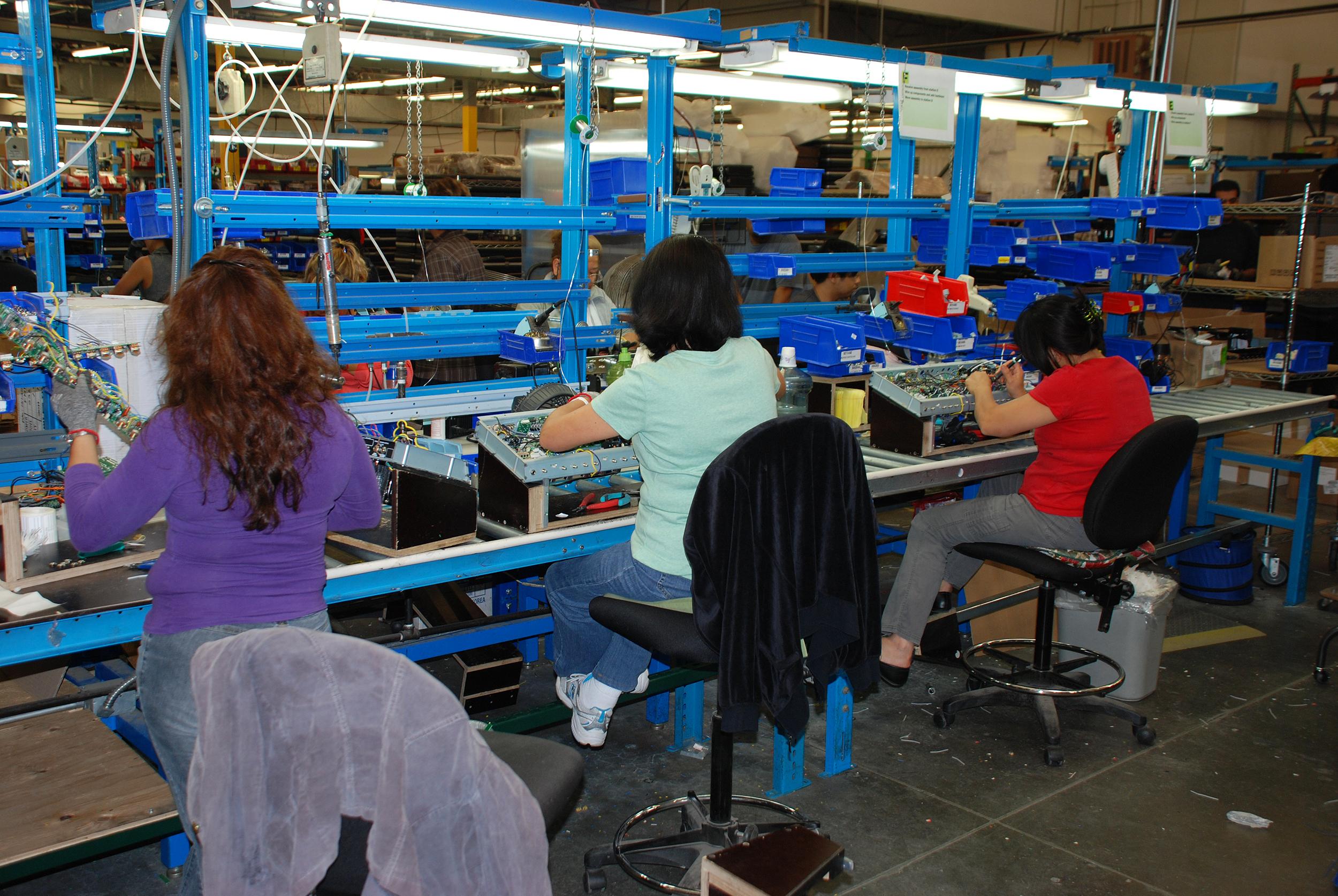
While technology is often seen as the cause of job loss, Parker sees it as a way to keep jobs and bring some of them back to the U.S. Automation potentially gives us the ability to compete in a global market in industries where jobs have been lost to foreign competition due to lower salary costs. “Tech can bring some of this back to the U.S. ,” he said, but “we have to fix the bureaucracy.”

Booker and Fischer pitched themselves as bipartisan senators who work together to get things done, brushing aside the narrative of a legislature gridlocked by partisanship. But they also offered a lot of reasons why things don’t happen in Washington. “If you really want to get something done with government don’t ask for a government study,” Fischer counselled.

As an example of how the Senate isn’t keeping pace, Booker noted that it still doesn’t even use cloud technology.

Fischer summed it up: “Technology moves fast, government moves slow.” No surprise there.

Posted in Technology | Tagged , , , , , , , , | 1 Comment

Techonomy Policy Conference: The Sharing Economy and What It Means for Work

Many of us use or at least have heard of peer-to-peer sharing services like Uber, used in lieu of taxis, or Airbnb for rental of homes. But did you know about these:

  • Getaround. Rent other people’s cars.
  • Yerdle. Where you can check out other people’s unused stuff.
  • Traity. An online reputation service where you can build a profile and import endorsements from services like eBay and airbnb
  • eaze. Promises to deliver medical marijuana to your door.
  • Funding circle. Provides loans to small businesses that “the banks have left behind.”

At today’s Techonomy Policy Conference in Washington, Arun Sundararajan of NYU Stern School of Business talked about the two narratives that go along with the development of the sharing or on-demand economy. One is that of empowered entrepreneurs. The other is the “race to the bottom” in terms of wages. In Sundararajan’s view, neither is entirely true.

Uber, Lyft and other ride-sharing services are a good example of the uncertain impact such services have on jobs and employment. The taxi companies are quick to claim that these services will potentially put licensed cabbies out of work. But some say Uber and others are creating more jobs than they are replacing and some Uber drivers claim to do far better than they could with a cab company.

This is also an example of what Sundararajan referred to as the “blurring of the lines between personal and professional.” The employers of the professionals are quick to note the lack of license or certification of the ride-sharing driver.  (I live in the New York area and every time I get in a cab the driver is on the phone for the entire ride. Professional?) But when we use an app to get an on-demand ride, or apartment for the night, or dog walker, Sundararajan says “We are willing to trust semi-anonymous peers based on certain digital signals.”

The on-demand economy is growing outside of the regulatory framework we are accustomed to. When we think of regulation, we usually think of government, but that’s not where Sundararajan thinks we should look. He discussed the feasibility of self-regulation using as an example local homeowners associations as potential local regulators of real estate rental services.

There are other implications for what Sundararajan described as the unbundling of employment. We need a new way to categorize employment as more and more workers piece together work rather than taking on full time jobs.

He also noted the need to create a safety net for these workers. The existing safety net, income stability, workmans’ comp, disability are all keyed off of full-time employment.

You read more of Sundararajan’s views at his home page.

Posted in Technology | Tagged , , , , , , | 2 Comments

Duomo di Milano

Street view from the DuomoConstruction on the Duomo di Milano started in 1386. The largest spire was topped in 1762 with a statue of the Madonna. The last details were not finished until 1965.

Entrance to the DuomoDuomo terraceMark Twain visited in the Duomo in 1867. He described it in Innocents Abroad: “What a wonder it is! So grand, so solemn, so vast! And yet so delicate, so airy, so graceful!”

Duomo spiresThe Duomo di Milano is the second largest Catholic Church in the world. It is the seat of the Archbishop of Milan.

Inside the DuomoDuring the Milan Expo there is an exhibition of contemporary art on the terraces. The photos below show the works of Tony Cragg

Roof of DuomoTony Cragg sculpture

Posted in Travel | Tagged , , , , , | 19 Comments

Pochuk Boardwalk and Suspension Bridge

Pochuk boardwalkThe Pochuk Boardwalk and Bridge is a 1-mile stretch of the Appalachian Trail in Vernon, N.J., which lies between the Pochuk and Wawayanda mountains. The boardwalk was built by 350 volunteers and is maintained by the New York/New Jersey Trail Conference. It crosses a freshwater marsh that is home to endangered animals including Cooper’s hawk, the barrel owl and wood turtles.

Pochuk small bridgePochuk bridge

The Pochuck Quagmire Suspension Bridge was completed in 1995. It is 110-feet long and crosses the Pochuk Creek. The bridge and boardwalk took seven years to build at a cost of $800,000.

Pochuk Quagmire BridgeUnder the bridgeBoardwalk ends

Posted in Uncategorized | Tagged , , , , , , , | 4 Comments

Venice Photo Blog — Where the Streets Are Paved With Water

Chiesa della Salute

Chiesa della Salute, Roman Catholic church opened in 1681

Gondole in Venice

Gondole

Ponte della Accademia

View of the Grand Canal from the Ponte della Accademia

Venica canalVenice canal

Casanova lived here

The Palazzo Malipiero, the one-time home of Casanova

A bridge over a Venice canal.

One of 409 bridges in Venice.

Giudecca canal at twilight

Twilight on the Canale della Giudecca

Posted in Travel | Tagged , , , , , , | 20 Comments

Streets of Milan

Vitorio Emanuele strett scene

Corso Vitorio Emanuele

Galleria Vitorio Emanuale archway

Archway of the Galeria Vitorio Emanuele

Princi Bakery

street performerMilan shop window

Home of The Last Supper

Santa Maria della Grazie, home of The Last Supper

Ruins in MilanBiblioteca Ambrosiana

Milan train station

Stazione di Milano Centrale

Posted in Travel | Tagged , , | 4 Comments

How We Celebrated Dylan’s Birthday at the Winery

E'lissa Jones BandMemorial Day weekend, for those of us who live in a four-season climate, is often thought of as the beginning of summer. It may mean the season’s first trip to the shore or beach or lake. It may mean pulling out all the deck and backyard gear and having a barbeque. For me it means at trip to Warwick, N.Y., for the Dylan Fest at the Warwick Valley Winery.

Here’s Rod Macdonald, joined by the E’lissa Jones Band and the Kennedys.

Error
This video doesn’t exist

The Bob Dylan Festival is three days of music, food and, not surprisingly, wine. Sometimes there are headliners. This year Steve Forbert played one day. But for the most part it involves local musicians, like those in he video above, covering Dylan songs. In this part of New York State, there is no shortage of talented musicians.

Dylan Fest audienceDog at Dylan FestWine barThese photos were taken on Sunday, May 24. Bob Dylan’s birthday. Dylan turned 74. His first album, The Freewheelin’ Bob Dylan, was released in 1963. It included songs that would be covered here in Warwick and all over the world, including “Don’t Think Twice It’s Alright,” “Masters of War,” and “A Hard Rain’s A-Gonna Fall.”

Anthony FioreRod Macdonald and the Kennedys

E'lissa Jones Band

Posted in Uncategorized | Tagged , , , , , , , | 18 Comments

Venice Photo Blog — Giudecca

Canal GiudeccaGiudecca is a residential island in the southern lagoon of Venice. It is made up of 8 small islands connected by bridges. It is only accessible from the rest of the city by boat or water taxi.

Giudecca waterfrontGiudecca canalResidential street in Giudecca

Bakery in GiiudeccaThe MIlan Club of Giudecca

Giudecca church

Il Redentore

Hotel Cipriani grounds

Grounds at the Hotel Cipriani

Posted in Travel | Tagged , , , | 4 Comments

A Growing Up in the 50’s Book Review: The Shame of What We Are

The Shame of What We Are, by Sam Gridley

In the 50’s we did stuff like this:

  • Drive cross country with a baby sitting on its mother’s lap in the front seat.
  • Let 5-year-olds on trikes explore the neighborhood on their own.
  • Cook dinner with cigarette smoke wafting out of our nostrils
  • Watch comedies like Ozzie and Harriet and westerns like Gunsmoke.
  • Read books like The Power of Positive Thinking.

Shame of What We Are, by Sam GridleyAll this stuff happens in Sam Gridley’s “The Shame of What We Are.” Described as a “novel in pieces” it follows the childhood of Art Dennison from age 5 in 1951 to high school in 1963. The book is written almost as a series of short stories. It’s a little like looking through a family scrapbook. You see the person during those times when someone was around with a camera and piece together the rest of the story on your own. I’m reminded also of the movie Boyhood, a coming of age tale covering roughly the same time of life albeit a half century later.

Like my Growing Up in the 50’s blog posts on Off the Leash, the book tries to give the reader a child’s eye view of the decade. Art Dennison and I did experience a lot of the same things, beginning with a patch on the right eye to keep the weaker left eye from losing interest.

Jackson drawing for Shame of What We Are

One of several drawings by Philadelphia artist Tom Jackson that grace the pages of The Shame of What We Are.

Art’s father is generally pissed off at everything. In one story, after Art did something kind of dumb, he expressed the anxiety that his father, if he found out, would class him with “the furnace idiots, the Communist dopes, the people who made DeSoto door handles – all the dumbbells who ought to be despised.” I remember during childhood how foul tempered many of my friends’ fathers were, how your entire interaction with them was geared to avoiding setting them off about something. Art gets so used to his father referring to ethnic groups in slang terms that when he refers to the neighbors as the carloochies Art assumes it’s a slang term for Italians. But instead the Italian neighbors are actually the Carlucci’s.

His dad’s political views would have produced a knowing nod from my father. “People who liked (Adlai) Stevenson were Communists at heart, he said, or else fools, ‘the type that can’t find their own rear end when they are sitting on it.’”

Having been shuffled off to Sunday school through much of my childhood, I appreciated Art’s take on it. “The Bible readings mentioned things Art vaguely knew about, the birth of a so-called savior, an angel appearing to shepherds—stuff he had no reason to believe.”

The title “The Shame of What We Are” refers to the fact that Art’s family is divorced. For a kid in the 50’s that is about on the same level as having a felon or two as parents. It became the way you were defined and the way you defined yourself. But while the decade was based on the ideal of the nuclear family, Art, after his experience, wasn’t buying it. In his mind “there was no need to force small groups of incompatible people to live together because they had a sexual or biological connection.”

For most of his childhood, the narrator of Gridley’s tale is a withdrawn, almost reclusive, kid. As I’m reading this story, and it’s a quick read, I’m hoping nothing really bad happens to Art. But despite the constant relocation, appearing and disappearing parents, broken and reformed families, he grows up. What Gridley effectively captures, and it’s a lesson for parents of all eras, is that more often than not we don’t really understand what our kids think is important and what isn’t.

Jackson drawing of Sputnik

In the 50’s we were worried about Sputnik.

Posted in Book reviews, Growing Up in the 50s | Tagged , , , , | 31 Comments

Venice Photo Blog — Gli Artisti

Au Velodrome by Jean Metzinger

Au Velodrome by Jean Metzinger. Part of the Peggy Guggenheim Collection.

Making music

Interpreting Vivaldi on the street

Musicians at teh Caffe Florian

Musicians at the Caffe Florian in the Piazza San Marco. Built in 1720, this was Europe’s first coffee house.

Painted ceilings at the Doge’s Palace

Doge's Palace ceilingCeiling art at the Doge's Palace

The Bisanzio glass factory in Murano

Making glass at BisanzioFrom the Bisanzio GalleryAt the Hotels

Hotel Baglioni sitting room

A room at the Hotel Baglioni

Hotel Cipriani sculpture

On the grounds of the Hotel Cipriani

Posted in Art, Travel | Tagged , , , , , , , | 5 Comments