Americans Discover Vacation: Finding the Time

The history of American vacationing in the 19th and early 20th century is a story of gradual growth in the number of people who went on vacation and the places they choose to go.  But by well into the 20th century, those people were still almost exclusively white and members of the upper and middle classes.

(photo by Grafixer)

(photo by Grafixer)

It would be quite a while before working class vacationers would be part of the tourism scene in America. There were a number of barriers to workers taking vacation. Transportation in the 19th century, consisting of stage coaches and later canals, steamboats and railroads, was slow and expensive. Even as rail travel proliferated at the end of the 19th century and automobile travel emerged in the early decades of the 20th century, it’s benefits were available primarily to the financially comfortable.

A few cheaper vacation options emerged in the late 1800’s and early 1900’s. Camping was always posed as an affordable alternative. While some Americans were camping in style with lots of equipment, guides and cooks, those of more modest means could simply camp on local farmland.  Or they could go “tramping” on foot with their gear on their backs. Later auto camping became popular with the less well healed segments of society and camping provided a means for working class families to enjoy the national parks. Religious camp meetings also attracted a broader cross-section of attendees.

There were a few philanthropic groups who arranged vacations for working class Americans. Usually their efforts were directed toward women.  In her book, Working at Play, author Cindy S Aron describes some of these. The YMCA ran a “seashore cottage” on the New Jersey shore that offered very low rates for working class women. The Working Girls Vacation Society was founded in 1884 and funded by wealthy philanthropists. They provided retreats in Connecticut for “working class girls” from New York City. Typical of the time these charitable offerings came with very heavy religious and moral overtones.

Coney Island

Coney Island

These efforts touched a very small percentage of working class Americans because they didn’t address the issue of time. Even as transportation became faster and more affordable, the initial impact on workers was to make day trips more popular.  The urban working class would take advantage of accessible transit to spend the day in Coney Island or Rockaway, N.Y., Revere Beach in Boston and Dream City in Pittsburgh.  But working class families, dependent as they were on their week-to-week paydays, may not have been able to take time off work, may have feared for their jobs if they did so, and in fact could not afford to take time off work unless it was paid.

America’s working class did not go on vacation regularly until the practice of paid vacation expanded to their level of society.  According to Donna Allen, author of Fringe Benefits, in 1930 only 10% of wage earners had vacation plans compared to 80% of salaried middle-class employees.

There were a few, a very few, companies in the U.S. who provided vacation benefits earlier in the century. They did so, not out of altruism, but because they believed they would benefit from a healthier, happier workforce. These progressive-minded businessmen saw an advantage to themselves by improving the morale and the loyalty of their employees.

The corporate pioneer in this respect was the National Cash Register Company in Dayton, Ohio.  Aron describes how NCR started in 1902 by closing its factory for a two-week period albeit without pay.  Two years later the company filled four trains with some 2,000 NCR employees for a trip to the World’s Fair in St. Louis.  By 1913, 20 year veterans were given one week’s pay and by the 1920’s the threshold was reduced to 10 years served. “NCR’s interests in its workers vacations made it unusual for an early 20th century company,” Aron noted. “The vast majority of businessmen opposed the idea of vacations for production workers.”

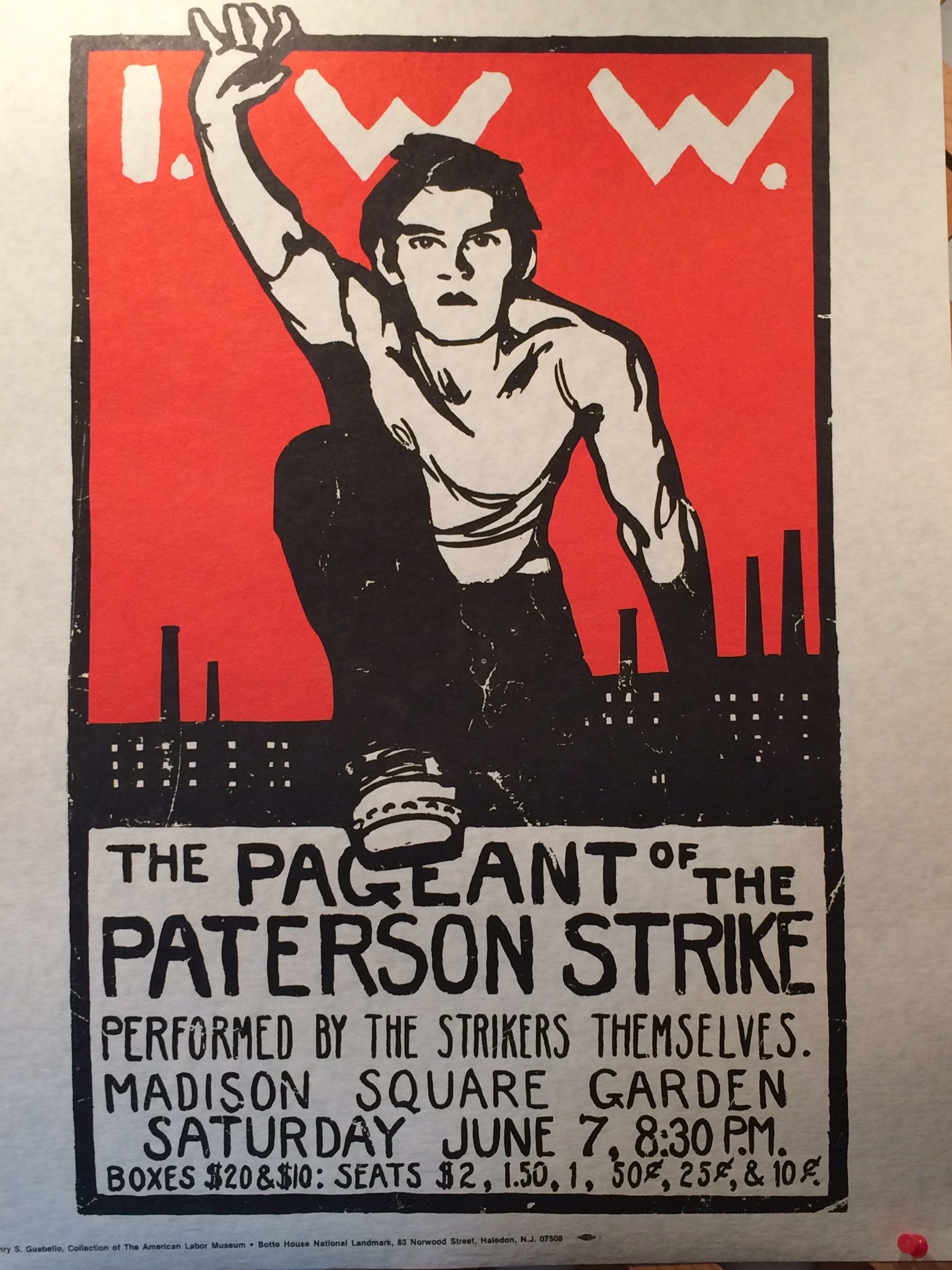
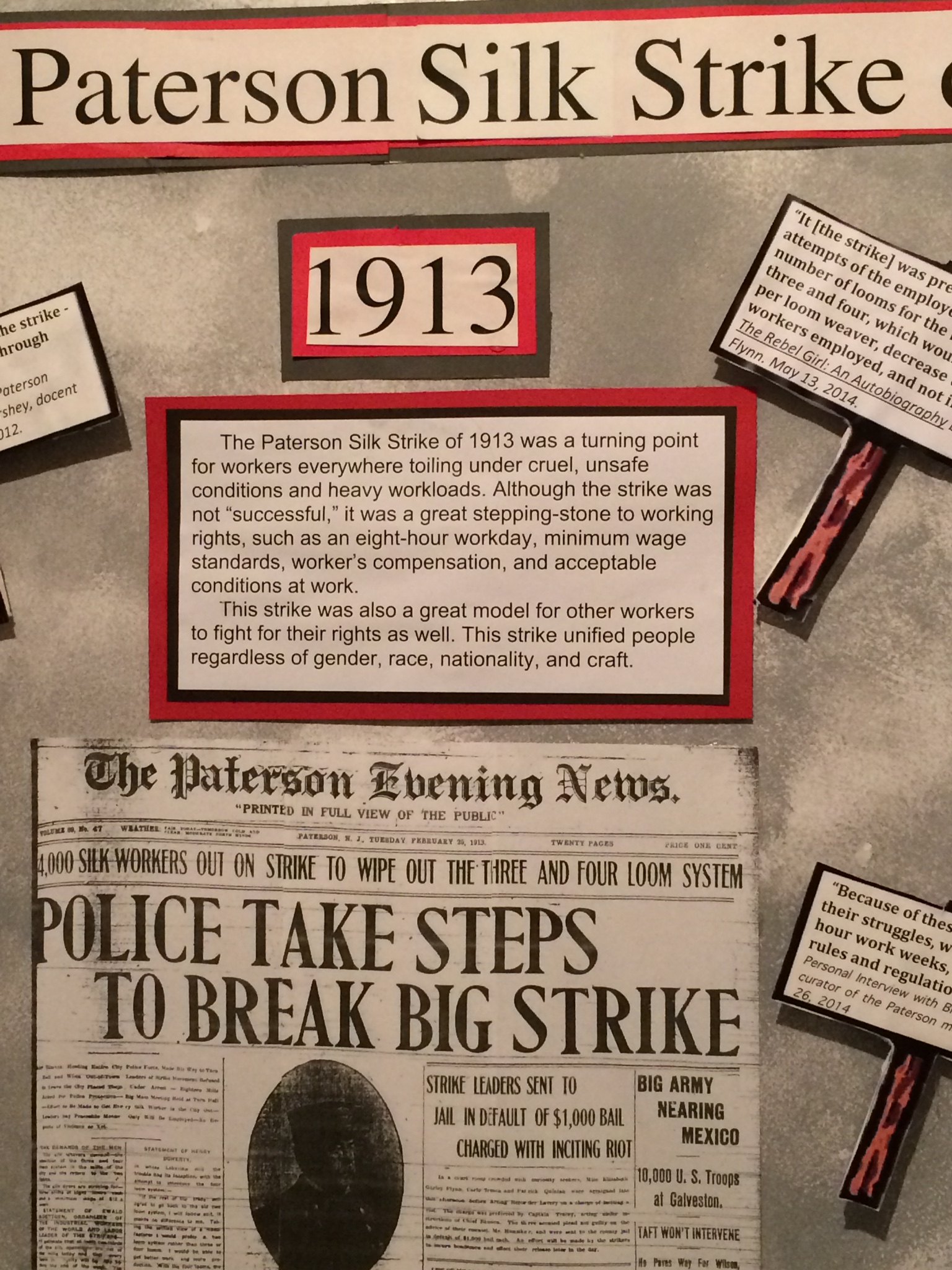
1913 Paterson Silk StrikeAs unionization spread through the industrializing cities of America, paid vacations were not a focus of the unions. Workers at the time were often victimized by shutdowns. Companies would close their plants for slow periods, sometimes during the summer or during the holiday, causing their blue collar employees to be temporarily out of work and out of money. Time off was for many something more feared than aspired to. Unions at the time fought for the 8-hour day and the 5-day work week, not for the two-week vacation.

Some unions were, however, involved in creating sites for vacationing workers. The International Ladies Garment Workers opened Unity House in Stroudsburg, Pa., in 1920. For a modest sum of $13 a week, union members could swim in the lake, hike in woods , and attend courses like “The Economic Basis of Modern Civilization” or “Appreciation of Art.” The ILGWU also bought a Catskills resort at White Pines in 1924 from a local union that had tried to establish an education and leisure vacation home for workers. This Unity House, like the one in the Poconos, was successfully run for several decades.

While unions were not actively advocating paid vacations, Aron notes that they indirectly contributed to the cause. Companies who were trying to stave off unionization would sometimes attempt to do so by improving their employment practices, including vacation policy. By 1937 70% of companies were offering paid vacations and according to Marguerite S. Shaffer, author of See America First. By 1949, 93% of union contracts included some type of paid time off.

The last piece of the vacation puzzle for the working class was the widespread ownership of affordable automobiles and the availability of roads that made auto trips faster and more accessible.

So by the time we reached what author Susan Sessions Rugh (Are We there Yet?) calls the “Golden Age of American Family Vacations” in the decades following World War II, all classes of Americans are on the road and on vacation. “The postwar family road trip was made possible by paid vacation and affordable family cars,” writes Rugh. By 1952 there were 62 million licensed drivers in the U.S. and in 1962 Rugh cites government reports that state 81% of Americans traveled by car on their vacation.

But challenges still existed for racial and religious minorities. I’ll discuss those barriers and how they were overcome in next week’s post.

(See also Americans Discover Vacation: Women on the Loose.)

Posted in Americans Discover Vacation, History, Travel | Tagged , , , , , , | 25 Comments

Light Show!

Tunnel of Light

ElephantPlane

SnowmanReflectionsChristmas Tree

Posted in Uncategorized | Tagged , , | 4 Comments

Americans Discover Vacation: Women on the Loose

The 19th century was not a great time to be a woman in America. Large portions of our nation fell under the influence of the Protestant ethic, a philosophy that valued women primarily for their ability to birth and raise children. Combine that with the stifling mores of Victorianism and you have what historians have dubbed the Cult of Domesticity.

Family SecretThis of course was still a time when women couldn’t even vote, no matter how many useless dolts the men of America elected. But for at least some women discovering vacation freed them from this trap even if only temporarily.

Working at Play author Cindy S. Aron says vacations define “what people choose to do rather than what they are required to do.” By that definition who needed a vacation more than the Victorian era American woman. Aron writes, “Summer resorts encouraged more relaxed rules of conduct. Women found and helped create a resort culture freed from some traditional middle-class constraints. “

Cape May street

Cape May

This was apparent at the earliest American resorts, places like Saratoga Springs and Cape May. Women fished, bowled and played billiards. They swam in the same ocean the men swam in. At these more fashionable and affluent resorts flirting and courting were commonplace. Raised in a culture that expected them to be in the house some women found places where they could instead see and be seen. By the late 19th century women outnumbered men at the popular high end resorts. Some city-dwelling wives and their children would spend part of the summer in places like the mountains in New York State or the beaches of Long Island and their husbands would commute there on weekends.

As vacationing spread to a broader segment of society, women were among the participants in different types of vacations, among them camping. They climbed and fished side-by-side with men and accompanied hunting parties. Early in the 20th century, they joined in “tramping” trips, camping and traveling on foot carrying gear on their back.

Improved transportation options and an expansion of tourist accommodation, particularly in the West, sped the development of tourism in the early decades of the 20th century. See America First author Marguerite S. Shaffer notes, “The landscape of tourism offered women a venue outside of the domestic sphere in which they could re-imagine themselves as independent, self-sufficient active members of society.”

John F. Sears, author of Sacred Places, adds, “Tourism, unlike hunting or plowing, tending a flower garden or caring for children, was never gender identified. Both men and women participated in it, often together.”

The story of the growth of vacationing in America has largely been put together through the diaries, memoirs and narratives of early travelers. Authors of these recorded experiences include many women who could be considered pioneers of the American vacation experience.

Margaret Cruikshank, a 58-year old teacher from Minneapolis, was one of the early visitors to the new Yellowstone National Park in 1883. She went by train to Montana and then took a coach to the hotel at Mammoth Hot Springs. Her travel around the park was by carriage or horseback. She wrote a story about her trip titled “Earth Could Not Furnish Another Such Sight” that was later published in Montana: The Magazine of Western History.  Cruikshank describes accommodations in the park as “ludicrously insufficient.”  “Wherever you go there are streams to ford, corduroy to fall over, sagebrush plains to crawl along and mountains to cross,” but also “every stop reveals new wonders.” Cruikshank suggested that “the strong can stand it and enjoy it. But this is no place for the delicate.”  She concluded “All who have made the tour of the park are expected to return half-dead, spent and powerless.”

Mammoth Hot Springs

Mammoth Hot Springs

Alice Huyler Ramsey was a 22-year old housewife from Hackensack, N.J. In 1909 when she set off on her gender’s first transcontinental auto voyage. She left from New York with three other women in a Maxwell touring car and arrived in San Francisco 59 days later. During the trip she changed 11 tires, cleaned the spark plugs, and repaired a broken brake pedal. During her journey she caught bedbugs in a hotel in Wyoming, was surrounded by a Native American hunting party with bows drawn in Nevada and slept in the car when it got stuck in the mud. But she survived and in later years drove across country more than 30 times. In the year 2000 she became the first woman inducted into the Automotive Hall of Fame.  In an interview with Ms. Magazine in 1975 she stated the obvious: “Good driving has nothing to do with sex.”

In 1923 Katherine Hulme set forth on a cross country trip with a female companion referred to as Tuny in her later published account of the journey. Shaffer comments that “in many respects their decision to make a transcontinental tour represented a declaration of independence.” The two logged 6,000 miles motoring from New York through Minneapolis, South Dakota, Wyoming, Montana, British Columbia, Idaho, Washington and Oregon before ending up in San Francisco. While many men gave their cars women’s names, Hulme christened her’s “Reggie.” There is a story in the book about a garage attendant who warned the two not to try to cross the Big Horn Mountains at that time of year. Hulme blew him a kiss and Tuny drove on.

(See also American Discover Vacation: Overcoming Our Heritage)

Posted in Americans Discover Vacation, History, Travel | Tagged , , , , , , | 30 Comments

Digital Deception: You know you’re a sockpuppet if…

(image by Karen Arnold)

(image by Karen Arnold)

…your profile picture is of an attractive young woman wearing a bikini.

…you put your cell phone number on your profile page

…you have thousands of likes on Facebook  and tag every photo 100 or more times

…but you don’t have any local friends

…you claim to be an executive of a major corporation on LinkedIn but don’t have a premium account

–your LinkedIn profile has a lower case first and last name, a minimally filled out profile and you work for a company with a generic name

…you have less than 50 connections on LinkedIn

…but you follow 2,001 people on Twitter (Twitter rules prohibit following more than 2,000 people until  2,000 people follow you)

twitter blank

…your Twitter bio is empty

…your Twitter URL has nothing to do with the first and last name on your profile.

(A sockpuppet is a false online identity used to deceive or spam other social media users.)

On the other hand, if you’re a real person who wants to avoid the spammers and scammers who are trying to connect, follow or friend you, here are some tools that may help:

(image by mzacha)

(image by mzacha)

Posted in Digital Deception | Tagged , , , , , , | 2 Comments

Americans Discover Vacation: Overcoming Our Heritage

The first European settlers to come to America were religious extremists who rebelled against the Church of England because it was too tolerant. The Puritans and Pilgrims of the New World believed in moral and behavioral purity down to the minutest detail. They objected to things like Christmas celebrations, drama and music. Puritans in England were known to take an axe to church organs.

Their legacy in the modern history of America is what later came to be known as the Protestant ethic, a philosophy which worshipped the purity of hard work, thrift and discipline. Fair enough. But it also viewed leisure, recreation and anything that could be associated with idleness with disdain. And it relegated women to a secondary public role and viewed their primary purpose as motherhood.

So if you are an Anglo-Saxon American, your ancestors were not the type of say “let’s take a few days off and have a good time.” And since a good percentage of the American public with some disposable income in the 19th century was pretty Waspy, the whole idea of vacation took hold rather slowly here.

But take hold it did, beginning in the 1800’s. While philosophically opposed to the idea of “a few days off to have a good time,” if you could reinterpret your vacation as therapy, religion, education or nationalism, you were good to go.

In her comprehensive history of vacations in America, appropriately titled Working at Play, Cindy S. Aron explores how the prejudices of our forefathers affected how we spent our vacation. “The fear of leisure and relaxation – expressed as soon as mid-19th century middle class vacationers began traveling to beaches, springs and mountains – took new forms but endured not only through the 1930’s but, I would suggest, until today,” says Aron.

Mohonk LakeWhile the word vacation does not appear to be used, other than to describe student breaks, until mid-19th century, some members of the elite were traveling to destinations such as mountain houses, springs and seashore towns throughout the 1800’s. The choice of destination reflected the motivation for this travel, which at least publicly was discussed in terms of health benefits. Aron quotes a certain Dr. Thomas Goode who published guides in 1846 that included testimonials as to how spring waters cure deafness and paralysis. Coincidentally, Goode was the proprietor of Virginia Hot Springs.

The elite who visited these early resorts were believed by many descendents of the Puritans to be somewhat more casual about the purity of their behavior, although one should consider the possibility that they were not necessarily morally looser but rather better positioned to record their behavior in memoirs. In John F. Sears book, Sacred Places, he quotes the author James Kirk Paulding in 1828 as categorizing travel as “the most exquisite mode of killing time and spending money ever yet devised by lazy ingenuity.”

One of the first appearances of middle and lower middle class activity that could be interpreted as vacation was attendance at camp meetings that were organized by religious groups, initially mostly Methodists. Some of the sites of these religious camp meetings later became more permanent resorts. One example is Ocean Grove, N.J., founded in 1869 as a “retreat for Christians” by the Ocean Grove Camp Meeting Association. The camp meeting association still exists, still owns Ocean Grove, and now promotes it as “God’s square mile at the Jersey Shore.” To this day there is no liquor sold in Ocean Grove and the beach is still closed on Sunday morning.

Camping itself was positioned as an exercise in purity. Aron cites an 1875 New York Times writer extolling the virtues of camping as “imbibing in integrity and simplicity (while) the bathers at Cape May that season were busy flirting and gossiping.”

Another type of vacation destination that the moralistically-minded 19th century citizen deemed acceptable was the self-improvement resort . The best known of these was in Chautauqua in Western New York. Similar resorts, combining recreation with education, were opened in the latter part of the 19th century and they were collectively known as chautauquas. Aron observes: “Nobody who visited at Chautauqua intended to spend nights in a drunken stupor and days smoking in the billiard hall or playing cards in a gambling den.”

Old Faithful

The number of Americans who vacationed, even with the growth of these “acceptable” sorts of destinations, was still relatively small and did not show widespread growth until the 20th century. Yet it was in the late 19th century that an important reason for that growth began to take shape.  That is when land at Yosemite and Yellowstone was set aside for public use. These and other national parks would play an important role in the growth of vacationing in America. This type of travel was fueled by an appeal to nationalism.

Marguerite S. Shaffer, in her book, See America First, writes that “tourism was promoted as a ritual of American citizenship.” The phrase “See America First,” which was initially used in the first decade of the 20th century, reflects that promotion which came from the railroads that carried passengers to the West, artists and writers of the time (some of whom were being paid by those railroads) and a little later by government agencies that promoted the national parks.

White America didn’t have much history. We were at the time often reminded by Europeans that we didn’t have much culture. But what we did have was landscape, awesome natural scenery that rivaled anything known to 19th and early 20th century Westerners. “To celebrate American wilderness was in some ways to declare America was superior to the Old World,” writes Shaffer.

The early years of the national parks saw only a small stream of visitors as it was still a trip that was available only to the elite. They traveled West via luxury Pullman cars. In the first couple decades of the 20th century the competitiveness of the railroad companies led to widespread promotion of the sites along their routes as well as cheaper fares. This brought a larger segment of visitors to Yosemite, Yellowstone, Glacier National Park and the Grand Canyon. But the real explosion in this kind of “look for America” vacation came with the growth of the automobile in the 1920’s.

The patriotic vacation undertaken in an auto grew in popularity until at least the 70’s. And the destination was not just the national parks. In Are We There Yet: The Golden Age of American Family Vacations, Susan Sessions Rugh writes that postwar family motorists commonly “set off on tours of historic sites or took their children to Washington, D.C.”

Shaffer quotes Lyndon Johnson’s Secretary of the Interior Stuart Udall expressing the nationalism pitch to vacationers in the 1960’s: “When it comes to the search for history, we have our own castles, kingly places and even ancient cathedrals.”

Still no mention though of knocking off for a week to have a good time.

(This is the first in a weekly series of blog posts about the history of Americans on vacation.)

Posted in Americans Discover Vacation, History, Travel | Tagged , , , , , , , , , | 31 Comments

Every Thanksgiving

Bloomfield vs. Montclair

Woodman FieldBloomfield v. Montclair

Montclair Mounties

Montclair cheerleadersBloomfield fanBloomfield cheerleaders

Montclair fanInjured Montclair player

Bloomfield vs. MontclairMontclair cheerleaders

Posted in Sports, Uncategorized | Tagged , , , , , | 4 Comments

A Few Great Music Documentaries

  1. Searching for Sugarman

Searching for Sugar ManSometimes you see a documentary and you walk out thinking if that had been a fictional movie it would have seemed too preposterous. This is one of those stories.  This guy in Detroit named Sixto Rodriguez makes a couple of records in the 70’s (Cold Fact, 1970;  and Coming From Reality, 1971 ). He is his 20’s at the time. Pretty much nobody buys them. He then spends several decades working in Detroit as a manual laborer often doing nasty demolition jobs. Thanks to the slimebuckets who owned the rights to his music he has no idea that somebody was buying those records. In fact so many hundreds of thousands of South Africans bought up his two albums that he was a legend in that country.

Rodriguez possibly would never had known that, and he never got a dime for all those sales, but for the  fact that a South African record store owner, Stephen “Sugar” Segerman, dedicated himself to tracking him down. And he did. And before you know it Rodriguez is playing live in Cape Town before a packed house of adoring fans some 30 years after his records were released.

I was fortunate to get to see Rodriguez last year at NJPAC. Now in his 70’s, he’s had a long, hard life and it shows, but the venue was packed with people who came to celebrate his story. And to listen to his music. Because while this incredible tale overshadows the music itself, he’s a quality songwriter and the music is really good. I don’t know why Americans let this guy slide by until the South Africans, and these filmmakers, woke us up to his music.

See trailer.

  1. 20 Feet From Stardom

20 Feet From StardomNot just a great music documentary, this is a great movie. The story of the trials and tribulations, as well as the massive talent, of backup singers. Among those whose career the storyline follows is Darlene Love, hard-working, underappreciated and exploited for much of her career. The movie reminds us that at one time she was taking on housecleaning jobs. She rises above it all, builds a successful solo career, and eventually is inducted into the Rock and Roll Hall of Fame with Bruce Springsteen backing her up at the induction ceremony. She’s the exception.

There’s Claudia Lennear who started as an Ikette in the Ike and Tina Turner Revue, worked with Joe Cocker and Leon Russell, and was the inspiration for the Stones’ song “Brown Sugar.” She wasn’t successful in building a solo career and now teaches languages at Mt. San Antonio College in California. There’s the story of Merry Clayton, asleep and with her hair in curlers, summoned to the studio to belt out lyrics about rape and murder in “Gimme Shelter.” (A song that was in my head for weeks after seeing this movie.) When you watch Lisa Fischer do a duet with Mick Jagger during a Rolling Stones tour, you forget to even notice Jagger.

While not front and center these talented women did not always go unnoticed by the musicians they worked with. Among the folks who pay tribute in the film are Springsteen, Jagger, Stevie Wonder, Sting and Bette Milder. Turns out that when you tilt the focus at little bit off center you might discover the reason why some of your favorite songs are as good as they are.

See trailer.

  1. Respect Yourself: The Stax Records Story
Respect YourselfThe rise and fall of Stax, the Memphis label that positioned itself as the antithesis of the mass-produced cookie-cutter sound of Motown. Running through this film are themes about race relations in America, about the evolution of the entertainment industry and the struggle of small independents to survive. But mostly it’s about the corps of brilliant musicians who passed through Stax.

To be honest, I had no idea how good Booker T. is until I saw this movie. He also seemed to be the heart and soul of Stax Records even though they had some better selling acts. From the early 60’s Booker T. and MG’s was a mixed-race band in the segregationist South, a symbol of what Stax stood for. There’s also Otis Redding, who arrived at the Memphis studio carrying someone else’s bags, but with a demo tape in his pocket. They ended up cutting a record right then and there. As far as I’m concerned, Otis Redding has no equal.

Stax was founded in 1957 by brother and sister team Jim Stewart and Estelle Axton. He ran the studio in an old movie theater and she operated the adjoining record shop. It lasted until 1975. In addition to Otis and Booker T. and the MGs, the Stax roster included Sam and Dave, the Staple Singers, Isaac Hayes, Wilson Pickett, Albert King and Carla and Rufus Thomas.  You’ll be amazed at how many great songs came out of Stax. A few of them are on the trailer.

  1. David Bromberg Unsung Treasure

Unsung TreasurePerhaps more people would be aware of David Bromberg if he hadn’t decided to a take a couple decades off. But that’s what makes the story as told in Unsung Treasure so interesting.

Bromberg’s heyday was in the 70’s and 80’s. An accomplished guitarist, he played blues and bluegrass, jazz, rock and folk. He played at the head of the David Bromberg Big Band and he played solo.  And he’s a pretty interesting guy to listen to as he is not adverse to telling a story or two on stage. The movie has some vintage clips of Bromberg performances and also shows some of his more recent collaborations with Keb’ Mo’ and Dr. John. The latter pronounces in his ever more raspy voice, “David Bromberg is an American icon.”

At some point in the 80’s he packed it in, decided he had enough of touring and wanted to stay home and hang around with his wife. For 20 years or so he ran a violin shop in Chicago. Later he moved to Wilmington, Del., (said he couldn’t take the cold in Chicago and couldn’t afford New York). The documentary shows how he achieves some success in working to revive the desolate downtown area he relocated to.

Bromberg plays some gigs now and again mostly on the east coast. I saw him last year at William Paterson College with the remnants of the big band. He was as good as ever. If you get a chance to see him, you won’t be disappointed. You can get a taste of the film and his music here.

What are your favorite music documentaries?

Posted in Art | Tagged , , , , , , , , | 24 Comments

WashPo’s Baron: The Future of News is About Entrepreneurs and Ideas

Marty Baron is the executive editor of a big newspaper.

(photo by chelle)

(photo by chelle)

The Washington Post is a big media company. And it is one of the pillars of what has come to be known as traditional media.

So in making a presentation on the future of news, you might not expect him to talk about entrepreneurs and their ideas. That is unless he had chosen to bemoan how his publication’s audience was being spirited away by the Googles and Facebooks of the world, or challenged by the likes online upshots Buzzfeed or Upworthy. That’s not what he talked about. But he did talk about why journalism needs entrepreneurs and ideas.

Speaking before students at Florida International University’s School of Journalism and Mass Communication, Baron ticked off those attributes that you are going to need if you are planning to go into journalism.

  • The ability to report well
  • Know how to write
  • Curiosity about the world around you
  • Contemporary skills like audio, video, data collection and basic coding
  • Knowledge of the new forms of storytelling
  • Expertise in social media to promote your own stories

Those are the no-brainers for aspiring journalists. But Baron emphasized that the future of journalism depends upon finding a different kind of person. “We need entrepreneurs, not just employees.”

I suspect that the individual will, and to some extent is already is, assuming some of the roles that were part of the purview of the media brand in the past. The journalist as individual brand may become the primary way his or her work is accessed when the distribution means are social media accounts and search engines. When the distribution was throwing the newspaper on your front lawn, it was the masthead brand that mattered. So from a marketing perspective, the media company of the future may be the sum of individual brands rather than a single company brand.

The point that Baron was focusing on is that more than anything else what journalism needs is ideas.  “We used to hire people who would learn from us. Now we hire people to teach us something we don’t know.”

Referencing a previously noted fact that we sent a man to the moon before we put wheels on luggage, he said we don’t need a “moonshot.” He dismissed the idea that there is a silver bullet to save journalism. Instead we “need to do a lot of things.” Hence the paramount importance of ideas.

Baron also dismissed the notion that data holds the key to the future of news. “Nothing is more important than having a good idea. This has gotten lost in a world consumed with metrics. Metrics tell you how you did not what to work on.”

In other words, data is all about the past, ideas are about the future.

Posted in Digital publishing | Tagged , , , , | 2 Comments

Hockey Night in Newark

Pre-Game

Could there be a more aptly named place for Devils fans to congregate

Could there be a more aptly named place for Devils fans to congregate

The Fans

Just as a point of clarification, this is not me, nor did I come with this guy.

Just as a point of clarification, this is not me, nor did I come with this guy.

Presumably the other members of the 7 Dwarfs party were still in the seats.

Presumably the other members of the 7 Dwarfs party were still in the seats.

I don't know what to say about this one.

I don’t know what to say about this one.

The RockThe Rock

The Prudential CenterNew Jersey Devils hockey

devils 1The Legends

New Jersey Devils LegendsChico Resch night

There's a lot more where these came from...and three Stanley Cups

There’s a lot more where these came from…and three Stanley Cups

The Stanley Cup

After winning the Stanley Cup in 2005, the Devils brought it to my Jersey City office building for a visit.

Posted in Sports | Tagged , , , , , | 2 Comments

A Couple of Days In and Around Denver

Atomic CowboyThe Atomic Cowboy

Denver Biscuit Company

Voodoo DonutVoodoo Doughnut

Voodoo Donut

The Geology Museum at Colorado School of Mines

Geology MuseumGeology Museam

Coors Brewery

Coors Brewery

Coors Brewery

Argo Mine and MillArgo Mine and Mill, Idaho Springs

Argo Gold MineArgo TunnelArgo MillArgo Mill and Mine

Idaho Springs

Idaho Springs Town Hall

Idaho Springs Town Hall

Tommyknocker Brew Pub

Tommyknocker Brew Pub

Keeping the Mile High

Pot Shop SpecialsPot shop

Posted in Travel | Tagged , , , , , , , , , | 29 Comments