If I were a graphic artist I’d adorn this post with a graphic of the classic ‘Uncle Sam Wants You’ image and replace Uncle Sam with Mark Zuckerberg, or maybe the Twitter blue bird. The social networks are really among the first massively successful technology companies to demonstrate how to use their users (are they customers?) as their product. When Wall Street evaluates Facebook or Twitter, what do they look at? They start with how many of you are signed up and how active you are on the service. When the social networks look to monetize by selling ads, or sponsored tweets or posts, the pitch to marketers is all about you guys who use the service.
Another great example is the consumer review sites. The value of Yelp is what? Without all of us using the service, rating and writing reviews, they are no more than digital yellow pages. TripAdvicsor? Same thing.
One of the pioneers of turning your user base into a product is Biz Stone. He is best known as a co-founder of Twitter and of Medium. In his presentation at SXSW Interactive today, he introduced and discussed his latest venture, Jelly.
Jelly is a re-invention of the search engine. Instead of indexing a gazillion Web pages that are processed to deliver instant answers to your search queries, Jelly focuses on another source of answers – YOU.
The idea is to provide human answers to a search query, sort of like what you got before there were search engines. Instead of accumulating data from Web pages, Jelly captures data from its users about their experience and their expertise and the more they use the service, the more it learns about you. Hence the more valuable you become as part of their product. When a query is made, the system will match it to the users with the most expertise or most relevant experiences, send them the query and then return their answers. Stone estimates the process might take 15 minutes. But once you get the answer back, it’s an invitation to start a conversation.
Jelly is currently in closed beta. From this presentation there does not appear to be any incentives provided to answer. It works because, Stone says, “People love answering questions and they love getting the credit for answering.”
“We need Google search, the Internet is broken without Google,” Stone explains, “but you can’t beat human experience and human opinion.” He calls Jelly “the only search engine in the world that has an attitude, that has an opinion.”
While Stone did not address this, there does seem to be a built in way to monetize this kind of search engine by enabling commercial interests to provide the answers and to perhaps re-jigger the priority of responses. Stone pointed out that Lowe’s signed up as part of the beta and provided answers to home improvement type questions without getting commercial. If successful, that is surely going to be a challenge. But then again the top listings on your search engine results aren’t organic either.
Max Levchin was the CTO of PayPal. He was involved in the start-up of Yelp and served as a director of Yahoo and Evernote. Currently he is CEO of digital lender Affirm. So when he looks into his crystal ball, he’s viewing it in terms of opportunity. His “Unstoppable Trends That Are Changing the World” presentation at SXSW Interactive this weekend is about predicting the future from an entrepreneurial perspective.
The first of these unstoppable trends, or what Levchin called “waves,” is beneficence. The simplest definition of beneficence is doing the right thing. And from a business perspective it is doing the right thing for your customers. An easy target here is the banking industry. If you didn’t know it already, the financial crisis of 2008 pretty clearly showed big banking didn’t have your best interests at heart. They were instead, in Levchin’s words, “looking to line their own pockets.” Levchin’s online banker Affirm is intended to take advantage of that. He describes it as a “financial service company committed to doing the right thing for its customers even if it means making less money.”
Screwing the customer to maximize profit is not solely confined to financial services. Try calling your utility company. You’re likely to sift through interminable automated menus then sit on hold for a good while because they decided to maximize profit by cutting staff even though it means a decline in service for their customers. If you’re a techie sort of innovator this is opportunity. “If you go in and say you are going to do what’s right for the customer you can win a lot of market share.”
Pretty much everyone in the tech world sees a growing role for AI. The second of Levchin’s waves is human-assisted AI. “AI is going to be performing a vast majority of intellectually demanding routines and services. We will be on standby.” He used heathcare as an example. We will want our phones to provide a diagnosis. If, for example, you are in an accident of some type, you could use your phone to take a picture of your injury and get a diagnosis from AI that has been developed through opinions of multiple doctors around the world. If, however, there is more than one or conflicting diagnoses, that is when you would seek human intervention, as in going to a doctor.
Software eating old software seems like natural selection Silicon Valley style. Levchin’s point is that being first provides you with significant advantages, however, it can also marry you to the original software. The disruptor, at least after a period of time, has the advantage of attacking the problem that you’ve already demonstrated a need to address but without having the baggage of the first generation software.
What Levchin termed regulatory arbitrage is about the role of government, which he sees as a “hidden pool of capital.” Electric cars and solar energy are two examples of where government funding for development is robustly available. But government can also inadvertently play a role in developing technology through its requirements for compliance. The Affordable Care Act is one example Levchin pointed out, suggesting that companies will be happy to pay for software that helps them avoid paying even more costly fines.
Levchin quipped that luck is the single most important success factor for an entrepreneur. But predicting future trends can work pretty well too.
Any discussion of driverless cars is likely punctuated by the question “When?” Chris Urmson is the director of driverless cars for the Google Self Driving Car Project, but the best he could do for an answer is between 3 and 30 years.
That may not be much help is you’re wondering whether you will be able to trade in your Toyota for a Google when the lease expires. But the point that Urmson was making during his presentation at SXSW Interactive is that this is a technology that will be rolled out incrementally over time. You might be able to catch a ride in a driverless car on a freeway in sunny, dry Arizona, before you can get one on a blustery winter day in Detroit.
What Urmson did offer up to his audience was a fascinating look at some of the technology behind the Google self-driving car. The cars do not use GPS. As all of us know who have been dropped off of a highway ramp into a stretch of desolateness while our GPS announces ‘you have arrived at your destination,’ GPS isn’t accurate enough if you don’t have a human driver. Instead the Googlemobiles use a combination of maps and sensors. The car’s OS captures 1-1/2 million laser measurements per second. It can zoom in and see up to 200 meters. And it anticipates the actions of other cars on the road 10 times per second. That information can be used, for example, to identify signs that a car with its left turn signal on is really going to try to shoot a U-turn. The vehicles are also equipped with something called anomaly detection, which, Urmson pointed out, could identify if some folks are playing frogger with your car.
Google driverless cars have already racked up 1.4 million miles on public roads. They currently do 10,000 miles of road testing very week in addition to 3 million miles of simulation testing daily.
Urmson made a compelling case for the driverless car. “The technology can’t get into the world fast enough for safety reasons.” He recited the statistics of 38,000 fatalities on U.S. roads every year. Globally the number is 1.2 million.
There are other potentially important benefits for the self-driving vehicle. If provides convenient transportation for people who can’t drive due to vision impairment or illnesses. If aging folks might seem to be losing some of the sensory sharpness that enables safe driving, why not transistion them to a driverless model? It also might alleviate the amount of time you spend sitting in traffic, or at minimum it gives you the ability to do things while your robotic chauffeur sits in traffic. One of Urmson’s slides calculates that the amount of time Americans sit in traffic every day is equivalent to 162 lifetimes.
But getting back to that question about when you’ll be able to trade in your Toyota for a Google the answer is probably never. Google has no interest in making cars, according to Urmson. Its interest is in the technology and they would look to partners for the manufacturing. Nor is Google interested in producing technology components, such as automatic braking, for driver-operated cars. Their goal is the fully driverless car.
Here’s some good news. Arunson believes the technology will become “relatively inexpensive” and will be accessible to everyone. Guess the car companies will have to get us on the next generation entertainment systems that we can enjoy while we are robotically escorted from place to place.
Urmson’s presentation can be viewed on the SXSW Interactive Channel on YouTube or by clicking here.
Pioneers of juvenile delinquency. In Paris, no less. Urban, working class and young, they were known for their flamboyant dress, black jackets over bright colored shirts, with a silk scarf, and “tummy-ache” pants. The name was attributed to a French journalist, reflecting the European perception of the savagery of the Native American tribe. French historian Michelle Perot described the Apache as “an intellectual anarchist, he considers theft to be fair restitution and practices ‘individual recovery’ on the bourgeois.”
Biff boys
Britain’s men in black of the 1930’s. They were the militia of Oswald Mosley’s New Party of the early 1930’s. Originally founded by former Labour Party members as an answer to the Depression, Mosley eventually gravitated toward fascism. Dressed from head to toe in black, the biff boys, recruited mostly from among the disaffected young in London, were charged with “maintaining discipline” at Mosley’s fascist gatherings. This often involved clashes with protesters.
Bobby soxers
Teenage girls who were fans of swing and big band music in the 1940’s. These girls were regulars at dances and since many of those dances happened in gyms where you had to take your shoes off they danced in their bobby socks. In addition to the socks these girls likely wore skirts and sweaters and the footwear they discarded were most often saddle shoes. Frank Sinatra could make a bobby soxer swoon.
Boxcar boys (and girls)
The kids who left home during the Depression and started riding the rails. Mostly they were boys and of the girls who joined them, many would dress as boys. They were a product of the Depression. With no job, no food and a family that might have lost their homes and moved into increasingly cramped quarters, these teens hopped freight trains in hope of finding some work picking fruit, harvesting grain or chopping lumber.
Flappers
The feminine persona of the Roaring 20’s. Flappers listened to jazz. They also drank, smoked, drove cars and wore a lot of makeup. Short skirts and bobbed hair was the signature style of the flappers. Author Jon Savage (Teenage) calls flappers the “first mass female adolescent generation.” They were sexy and flirtatious and as such represented something of a liberation from the traditional perception of the female teenager.
Ickies
The term was part of the jive language for the 1940’s version of hipster. An icky was someone who wasn’t very hip. Someone who just doesn’t get it. Getting it involved being a part of swing culture with its zoot suits and bobby socks and jitterbugging. The icky was perhaps a predecessor of the modern day nerd.
Jitterbugs
One who did the jitterbug, which was the dance you did to swing music. You might wear a zoot suit to jitterbug or you might wear bobby socks. Variations of the jitterbug included the Lindy Hop, the Jive and the East Coast Swing. The term jitterbug was popularized by Cab Calloway. He issued a recording called “Call of the Jitterbug” and later a film titled “Cab Calloway’s Jitterbug Party.”
Neo-Pagans
Today Neo-Pagans are associated with spiritual movements, usually involving some type of magic or witchcraft. In the early 20th century, the neo-Pagans were a group of privileged young British intellectuals whose distinction was in defying Victorian customs. For example, male and female neo-Pagans freely intermingled, although they preached abstinence. They were socialist, some were vegetarian and they espoused a sort of Peter Pan like forever young philosophy. Apparently the movement died before it got old.
Pachucos and Pachucas
Latino zoot suiters of the 40’s. But since they were mostly Mexican-American youth who were the children of poor immigrants, the public perception was of a gang of dangerous delinquents. Boys and girls alike donned zoot suits. The Pachucos added triple sole shoes and sported a long slicked back duck tail. Pachucas went for a heavy dose of dark red lipstick and black mascara. They were also the primary victims of the 1943 zoot suit riots in which servicemen would attack, beat and “depants” pachucos in Los Angeles, Oakland and Venice, Calif.
Sub-debs
Members of Sub-Deb clubs, social groups of teenage girls that were popular in the middle of the decade. You might think of them as a high school version of sorority sisters. They set the standard for high school style and behavior and focused on the achievement of popularity. You would likely find them hanging out at the drugstore. They were generally an upper middle class group that were heavily into consumption.
V-girls
Short for Victory Girls. During World War II with men off to war and women off to the factories these often unattended teenage girls made their contribution to the war effort by entertaining soldiers and sailors. That might not have always involved sex, but usually it did. An organization called the American Social Hygiene Association described V-girls as “sexual delinquents of a non-commercial character.” Countries in Western Europe experienced some of the same resulting increases in venereal disease and out-of-wedlock births as the U.S. did during the war years, but only the Americans tried to frame it in a veil of patriotism.
Wide boys
The Cambridge dictionary defines wide boy by as “a man who is dishonest and decieves people in way he does business.” The British term was first used in a 1930’s novel “Wide Boys Never Work.” That is, of course, because they were crooks of one sort or another. Wide Boys were most likely found in the Soho and Paddington sections of London and they included racetrack gangsters, prostitutes and the gay and Jewish undergrounds.
Zazous
French zoot suiters. Came into being during World War II. Like their American counterparts they had a distinct style of dress including garish and oversized clothes. The women wore short skirts, striped stockings and carried umbrellas. And, like the zoot suiters they danced to swing. The zazous are viewed by historians as a way that young people in France expressed their resistance to the Nazi occupation. As the war years went on they became the targets of attacks by fascist youth organizations.
Zoot suiters
Folks who wore zoot suits. That includes the Pachucos, the Jitterbugs, the Zazous and the bobby soxers’ dates and dance partners. It was the preferred uniform of swing music afficionados. The zoot suit included an oversized jacket called a king coat, and wide legged, pegged pants and it was often topped with a fedora. The style originated in America’s black and Latino communities and went mainstream along with the music it is associated with.
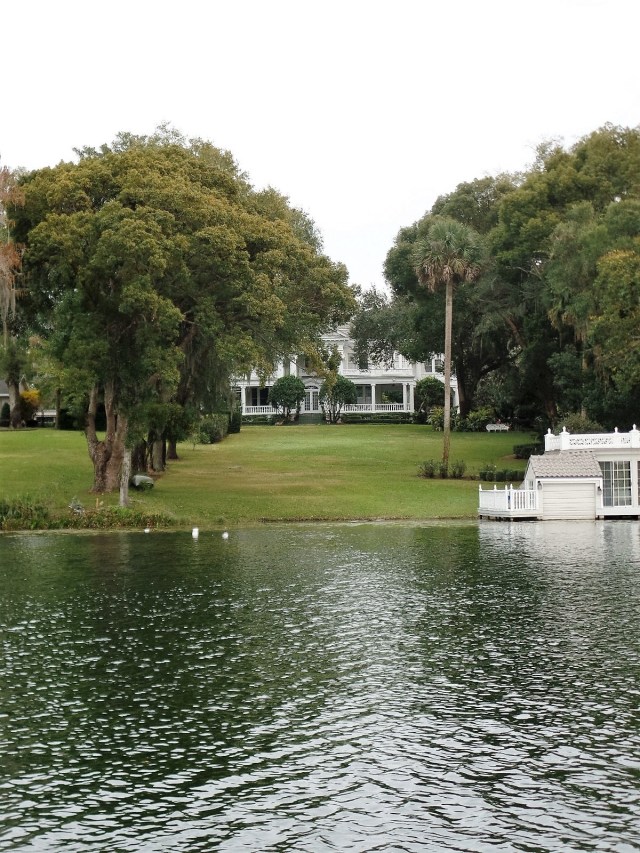
The Winter Park Scenic Boat Tour has been operating since 1938. It is docked on Lake Osceola. Pontoon boats take riders thorugh the winding canals of the Winter Park, Fla., chain of lakes, including visits to Lake Virgina and Lake Maitland, the largest of the group.
Every surge of teenage identity has come with a soundtrack. The history of teen personas, of teenage style and teenage lifestyle, is always associated with if not defined by the music of the era.
New genres of popular music are invariably embraced initially by the young. The adult world more often than not looks at emerging musical styles with disdain if not outright hostility. In the 20th century most of this new music came from America, and specifically from black America. Usually it came with a look, a dance and an attitude.
Perhaps the first example of this is ragtime. It first came into prominence in black communities like St. Louis. That’s where the Scott Joplin House is located and when I think of ragtime it’s Joplin compositions like the “Maple Leaf Rag” and “The Entertainer” that come to mind. Ragtime went mainstream with Irving Berlin’s “Alexander’s Ragtime Band” in 1911.
Ragtime brought teenagers to the dance halls, establishing what would be a standard of teen social life for the next several decades. Their parents hadn’t taught them any dances that worked with this kind of music, so they created and popularized the so-called animal dances: the chicken scratch, the turkey trot and the grizzly bear to name a few.
Still from the movie “Alexander’s Ragtime Band”
Ragtime faded from the scene with the emergence of jazz. Another musical style that was created by black Americans, jazz had its origins in New Orleans. Starting in the late 19th and early 20th centuries you could hear jazz played by dance bands in bars and brothels and even by marching bands at New Orleans’ lavish funerals. Jelly Roll Morton used to play in Storyville, the town’s famous red light district. Jazz began to spread around the country as tourists came to New Orleans and heard these performances. Apparently Storyville was a pretty common destination for these tourists.
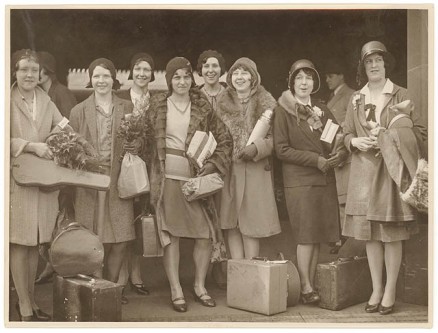
Ingenues, an American women’s jazz band
The Jazz Age was a key part of the Roaring 20’s. It was a time of prosperity and a time to emerge from the death and destruction of the Great War. It was also the time of Prohibition, but I suspect that the way that this ill-advised law was so freely disregarded only added to the sense of freedom.
Auther Jon Savage (Teenage: The Creation of Youth Culture) calls jazz the “lingua franca” of American youth at the time and notes, “The young men and women of 1922 had found their cause…if drinking, dancing and jazz were to be excoriated by bishops, generals and politicians alike, then those activities would be their standard.”
The Jazz Age was also the time of the flapper. I’m not sure you can associate flappers with femimism but they surely represented an emergence of girls and young women out of their historic domestic roles. Flappers presented themselves as fun-loving and carefree and exuded an air of sexiness.
A lot of the fun came to a grinding halt in 1929 when the stock market crashed ushering in a decade of tough times. Perhaps it is appropriate that the popular music of the Depression was the sound of crooners like Rudy Vallee and Bing Crosby.
Duke Ellington and His Orchestra
The tempo started to pick up toward the end of the decade with another new musical style coming out of the U.S., swing. It would be the dominant genre for popular music well into the 1940’s, led by big band leaders such as Benny Goodman, Cab Calloway, Count Basie, Glenn Miller and Duke Ellington.
Benny Goodman
Swing definitely brought along a style. The dance of the times was the Jitterbug. The uniform for girls, who would become known as bobby soxers, included saddle shoes, sweaters and skirts that you could twirl around in on the dance floor. The zoot suit for boys meant baggy pants and long jackets, topped perhaps with a pork pie hat. Much like jazz in the 20’s swing grew in popularity as prosperity returned and the world had escaped from the devastation of another world war.
The swing bands of the era also demonstrated the role of music in making some inroads in what was still a primarily racially segregated society. There were integrated swing and jazz bands long before there were integrated sports teams or military units. Or houses of Congress for that matter.
Up to this point, working class teens had yet to be heard from. That began to change by the 1950’s. Grace Paladino, author of Teenagers: An American History, describes a “growing underworld of working-class teenage ‘cats’ who had no intention of following adolescent rules. Both black and white, teenage cats dressed in dazzling shirts with oversized collars and flashy drape pants in color combinations like pink and black. They wore their hair long and swirled in the back with greasy pomade.” And they listened to rhythm and blues, once again adopting their musical accompaniment from black America.
James Dean
Few rock ‘n’ rollers will deny the influence of R&B on their music. Rock emerged as mainstream, at least as far as young people were concerned, in 1954 with Bill Haley & the Comets hit “Rock Around the Clock.” Rock ‘n’ roll in the fifties provided the theme songs for the teenage rebel. Like Elvis Presley and James Dean. Rebels wore leather jackets or jeans, the girls used too much makeup and donned tight skirts. And they spent a good part of their time hanging out on the street.
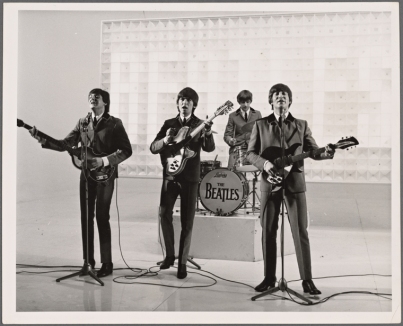
The Beatles
A decade later it was the Beatles who, in Paladino’s words, “made rock ‘n’ roll as acceptable as high school yearbooks. The Beatles drew their fans from affluent teenagers, kids who wanted to be rebels but not greasers.” A different kind of rebel emerged in the 60’s and 70’s. Instead of just rebelling against the social conventions that their predecessors showed such disdain for in the 50’s, they took an active role in the civil rights and antiwar movements. They stopped cutting their hair, paid little attention to their clothes and challenged authority at every turn.
The best musical representation of this is Bob Dylan, who, according to Paladino, “expertly tapped a bulging vein of teenage alienation.” That’s right about the time when I was a teenager. So here’s one of the anthems of my generation:
In 1979, a nuclear meltdown occurred at the Three Mile Island Nuclear Generating Facility in Pennsylvania. The accident released radioactive gases into the environment although how much and to what effect has never been clearly determined.
A few years out of college at the time, I was already convinced that nuclear was a dirty word. It of course brought to mind the most devastating terror weapon that had ever been unleashed. And we were still in a Cold War world where some of the world’s leaders seemed more than willing to start an all-out war over territorial disputes in places like Southeast Asia or the Middle East. With the news of Three Mile Island, it seemed that we were also now on course to radiate ourselves.
Forty years later and we face a different threat that can potentially make Earth a much less pleasant place to inhabit: climate change. Last year’s Paris Climate Summit concluded with an agreement to set a goal of limiting global warming to lesss than 2 degrees Centigrade above pre-industrial levels. Doing that means limiting carbon emissions and nuclear energy is in fact clean energy, at least in terms of production.
(Daniel E. Musella)
Can you be an environmentalist without embracing nuclear energy? That was the question discussed earlier today by a Future Tense-sponsored panel in Washington.
Eleven percent of worldwide electricity is now produced by nuclear power. In the U.S. nukes account for 20% of electricity production. In France, it’s 70%. Some countries, notably China and India, are making major investment to develop nuclear energy.
Most of the nuclear reactors in the U.S. were built in the 60’s and 70’s. After that we got “cold feet,” according to Aaron VanDeventer, chief scientist of the Founders Fund, a VC firm that makes energy investments. He attributed our “cold feet” to the cinema generated “narrative of nuclear disaster” that caused us to overestimate the risk.
Robert Hill, technical director of nuclear energy R&D at Argonne National Laboratory, also downplayed the risk, suggesting that since Three Mile Island, “the safety record of the nuclear industry in the U.S. has been stellar.” Hill raised doubts about whether renewable energy sources like solar and wind will ever be enough to replace fossil fuels. He described the next generation of nuclear plants, reactors that have not yet been built, which will be designed to reduce costs and allow recycling of spent fuel. He also talked about the future development of smaller, modular reactors.
But the economics are working against nuclear energy in the opinion of Joseph Romm, founding editor of ClimateProgress.org. Over the past couple of decades Romm’s charts show a continuous decline in the costs of clean energy techniques including solar, battery, wind and LED. “Renewables have largely crossed over the price point they need to,” Romm said. At the same time costs for nuclear plants have steadily increased. Combine that with the low cost and wide availability of natural gas and the result is that utilities are in no rush to move to nuclear.
Despite the fact that “we’re going to get very desperate to reduce carbon pollution over the next decade,” Romm estimated that the best scenario for nuclear power by the year 2050 is that it will account for 17 or 18% of global electricity. He expects the solution to be wind, solar and hydropower because “nuclear has priced itself out of the market.”
Three Mile Island was of course not the last nuclear mishap. The Chernobyl Nuclear Power Plant in the Ukraine had a catastrophic accident during a systems test in 1986. Fifty emergency workers died in the immediate aftermath of the accident and the World Health Organization reports that “about 4000 cases of thyroid cancer, mainly in children and adolescents at the time of the accident, have resulted from the accident’s contamination and at least nine children died of thyroid cancer.”
More recently, in 2006, damage from a tsunami produced three nuclear meltdowns at the Fukushima Daiichi nuclear power plant in Japan. Estimates of the fatalities that will be a result of that accident vary but some are as high as 10,000. A screening program in 2012 found that 35% of the children who lived in the area had abnormal growths on their thyroids.
I now live about 50 miles south of the Indian Point nuke in New York State. I’ve often worried that they might have built that one too close to the Ramapo Fault. And when I drive south to the Jersey Shore every summer I’m not happy to see the Oyster Creek Nuclear Plant located just off the Garden State Parkway and only a short distance from the beaches and ocean that the shore economy in based on. You can even see people swimming, boating or fishing within sight of the plant. I’m not anxious to get closer to either of them.
Future Tense is a partnership of the New America Foundation, Arizona State University and Slate magazine. You can view today’s event on the New America Web site.
When we think of baby boomers we think of the people born after World War II. But there was also something of a baby boom after the First World War. In Great Britain, for example, the number of births between 1918 and 1920 increased 40 percent. For most of the Western World the number of births wasn’t higher than before the war but reflected significant increases over the depressed wartime levels.
If you were born in 1920, by the time you were about to turn ten a tremor that started on Wall Street had laid low the global economy. Your teen years may well have been spent with no job, no money and not much food. And the world only bounced out of that by going to war again. That same generation of young folks would now be 19 or 20, the ideal age to be conscripted and sent to the slaughter.
The World War I boomers, as teenagers and young adults, reacted to the times they were living in by immersing themselves in extremist politics, resorting to crime, or in some cases, hitting the open road.
In his book Teenage, British author Jon Savage notes that street clashes between Fascists and Communists became common in England in the 30’s. Several thousand young Englishmen traveled to Spain to join in the civil war against Franco.
Nowhere did extremist politics take hold of the country’s youth as thoroughly as in Germany. Young Germans were, according to Savage, “fodder for Fascist regimentation under the guise of self-rule.” The Nazis spun their twisted ideology as a triumph of youth. The Hitler Youth offered a sense of belonging and mission to a group who had known nothing but hard times. Eventually they had no choice.
Juvenile delinquency increased in most Western nations starting in the 30’s. Street gangs were a threat in both England and in the United States, in particular in New York. The term “wide boys” came into usage in the UK following the publication of a popular novel Wide Boys Never Work. That’s because they were criminals.
By the start of the Second World War, between 1939 and 1941, juvenile delinquency in Britain increased 100 percent, according to Savage. Venereal disease increased 70 percent and during the war years one-third of all babies were born out of wedlock. There was a spike in STDs and unwanted pregnancies in America as well, triggered in part by the “Victory Girls,” teenagers whose contribution to the war effort involved providing some short-term companionship for soldiers and sailors.
Whether it was the open space or their frontier heritage, American teens, or at least a quarter-million of them, responded to their situation by hitting the road (see Riding the Rails.) Many saw no other choice. Teenagers weren’t competitive in the job market. Even among high school graduates, less than one in ten could find a job. In the 1933-34 school year some 5,000 schools, with no resources to keep going, closed their doors. Of the 10 million Americans of high school age, only 4 million were in school.
A ‘Hooverville”
According to Grace Palladino, author of Teenagers: An American History, “Social workers reported that unemployed youth described themselves as discouraged, disgusted, sullen and bitter.” Some became “Hoover tourists.” However romantic the notion, riding the rails was generally not a good time. Thousands lost life or limb hopping on or off freight trains and those that survived were most often tired, cold, lonely and hungry. And if they were black, they faced the added problem of brutal racism.
One type of despair was soon to replace another as a decade of Depression ended with another world war. By now, the World War One baby boomers were to become the World War Two conscripts. The generation of 1920 was between 19 and 21 when their country went to war. Eight million British men were drafted into compulsory military service. Ten million American conscripts were signed into service. While most countries started with 18 or 21 as their minimum age, it was lowered as the war dragged on. While you had to be 18 to be conscripted in England, younger teens, some reportedly as young as 15, could enlist. In Germany, as defeat began to appear imminent they lowered the draft age to 16, thus sacrificing a larger portion of their youth.
There were between 60 and 80 million casualties in World War II. Not all were on the battlefields or the seas. Some 50 million were civilians, killed in acts of war, in crimes against humanity, and in the case of about 20 million, from famine and disease.
By 1945 the generation of 1920 had reached full adulthood. They had experienced little of the fun and carefree existence that we have come to associate with youth. They lost their adolescence and were now faced with a world in which 3% of the pre-war population had just been killed. A world in which the barbarities and inhumanities of the Nazis had now been brought to light. A world in which more than 100,000 Japanese civilians had been wiped out by two atomic bombs.
Those who survived produced a new generation of baby boomers. Through the forties and fifties, the now-middle-aged generation of 1920 were to prove a socially conservative lot. Their goals involved security, a nuclear family in a single family home in the suburbs. They were fearful of not just nuclear holocaust but of “subversives” everywhere. When you consider the times during which they grew up and came of age, its easy to understand.
In 1900, nobody used the term teenager. If you were an adolescent boy in Europe, you were likely being prepared for the military. In the U.S., you would be expected to take your part in industry, as in maybe a factory job. And if you were a young girl, most preparation was aimed at marriage.
Seventy-five years later adolescents are now called teenagers. They hang around mostly with each other and set standards among their peers for music, style and behavior. They are, in the words of author Thomas Hine (The Rise and Fall of the American Teenager) “the future in your face.”
Throughout that 75-year period the adult world pretty consistently denounced the outward signs of the emerging teenage world. At the same time, they were forfeiting their influence and authority by screwing up both the peace and the prosperity, problems for which young people bore an inordinate amount of the consequences.
The earliest signs of a self-defined teen culture and style were in the 1920’s. Jazz, dance halls and flappers signaled an interest in the here and now and in having fun over and above any concern with preparing for an adulthood that seemed to matter only to the adults in their lives. And with each iteration of often musically-inspired teen culture, whether it be jazz or swing or rock ‘n’ roll, bobby socks, zoot suits or leather jackets, the adult world was there to greet it with scorn, if not outright panic. It has always been the case that, as Hine writes “teenagers bear an inordinate share of the blame for society’s failures.”
Consider these examples:
As early as 1898, the British press coined the term “hooligan” in response to the public’s panic over juvenile delinquency.
Once they were finished with the fiasco known as Prohibition, the religious right of the 1930’s turned their attention to denouncing movies, a preferred pastime of the young, and called for censorship.
In the late 30’s the Catholic bishop of Dubuque denounced swing as “evil” and “communistic.”
Meanwhile in Nazi Germany, the SS felt the need to specifically denounce Benny Goodman and George Gershwin.
One British commentator explained the rise in rates of venereal disease between 1939 and 1941 as a result of “the jungle rhythms heard by juveniles from morning till bedtime.“
And in Los Angeles, in 1944, the city council banned the zoot suit referring to it as a “badge of hoodlumism.”
Meanwhile in New York, the education commissioner blamed Frank Sinatra for making adolescents lose control.
In the 1950’s the town of Bridgeport, Conn., banned rock ‘n’ roll dances.
In 1957 when the Soviet Union launched Sputnik, some Americans actually opined that this space race loss was proof of the link between teen culture and the Communist conspiracy.
A wary eye was cast on music and dancing and virtually any style that arose from the teen ranks. A non-orthodox appearance was associated with delinquency. We still haven’t gotten over that. But the delinquency was more perception than reality, as, for example, with the emergence of the rock ‘n’ roller. The press and the public bemoaned an associated rise in delinquency, but actual crime statistics suggest there was no real escalation.
Viewed from the perspective of the young, the adult world was rapidly losing credibility, not only because of their ridiculous focus on jazz and zoot suits, but because they were seriously making a mess of the world. All those European boys who were being trained for the military as the 20th century started were likely sacrificed in the brutal and senseless Great War. Jon Savage, author of Teenage, described it this way: ““In this mass war, millions of adolescents would be involved together in the surrender of their youth, if not their life, a generational holocaust that would have unforeseen and long-lasting consequences.” He adds, “The Great War had forever destroyed the automatic obedience that elders had expected from youth.”
That scene would be replayed in the 40’s with the second World War and in America again in the 60’s in Vietnam where “American youth were expected to pay the highest price for this military adventure although no one could give them a good reason why,” according to Grace Palladino in Teenagers: An American History.
Then there were the adults who ran the economy. In 1929 they brought it down, ushering in a decade of hunger and desperation that for teens meant no money, no food and often no home as their families broke apart. Wall Street was to treat us to another economic debacle blow, albeit a lesser one, decades later as they redeployed their resources to back financial instruments built from sub-prime mortgages.
Even in the relatively good times of the 1920’s in America, young people lost considerable respect for the adult world and their laws thanks to Prohibition, a Constitutional amendment that most Americans didn’t want, didn’t respect and routinely violated.
While this was going on, another important factor in the emergence of teens as teens was their increased separation from adults. As high school became commonplace for most American teens, peers replaced parents as sources of influence. The growth of car ownership offered teens some privacy. And during the Second World War, with large numbers of young men conscripted into Europe and Asia, younger teens and girls entered the work force, drew paychecks, and afterwards were no longer willing to return to a dependent or domestic role.
There’s no better example of the growing disconnect between teens and their parents in the 20th century than on the issue of sex. Teen sex was generally denied and denounced by the adult world. That is when they weren’t ignoring the topic altogether. In the meantime, the average age at which teens lost their virginity dropped with each generation.
By the 1970’s, Paladino writes, “The controversial counterculture of sex, drugs and rock ‘n’ roll suggested the generation gap was now unbridgeable.” She adds “Teenagers in the 1970’s had won the battle for freedom that high school students had been waging since the 1930’s.”

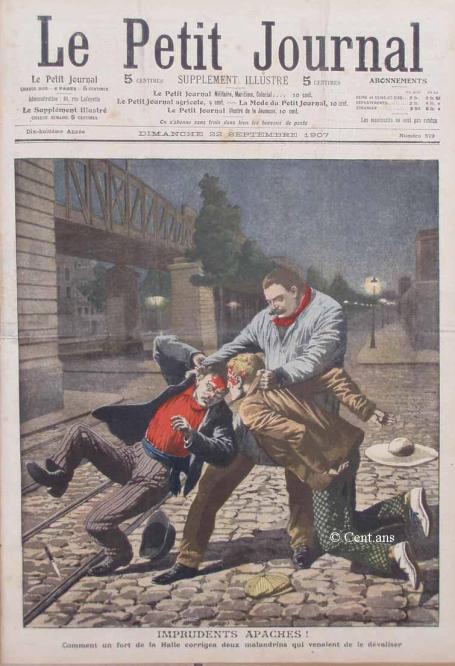 Les Apaches
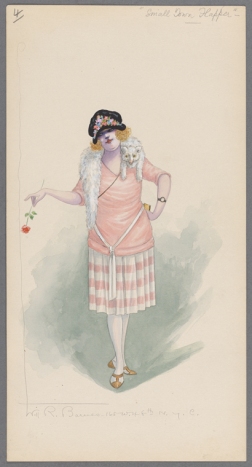 Flappers
 Jitterbugs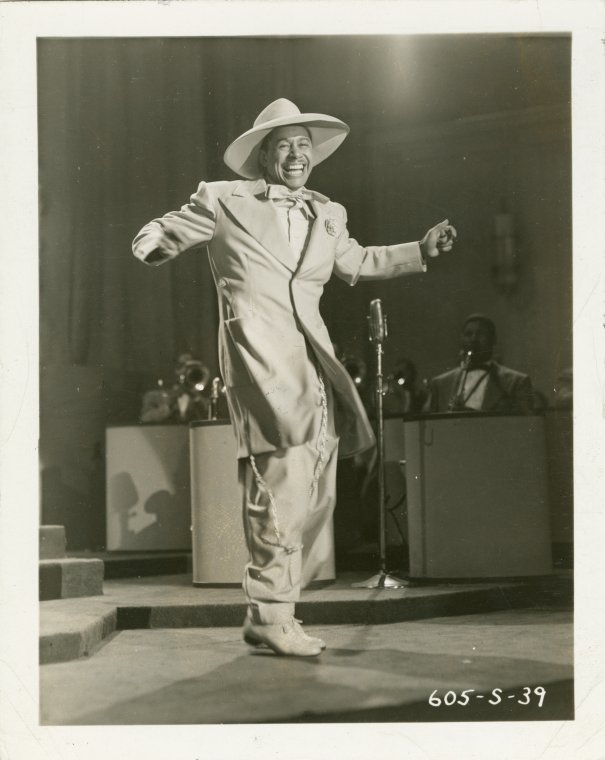







 Perhaps the first example of this is ragtime. It first came into prominence in black communities like St. Louis. That’s where the Scott Joplin House is located and when I think of ragtime it’s Joplin compositions like the “Maple Leaf Rag” and “The Entertainer” that come to mind. Ragtime went mainstream with Irving Berlin’s “Alexander’s Ragtime Band” in 1911.



 Nowhere did extremist politics take hold of the country’s youth as thoroughly as in Germany. Young Germans were, according to Savage, “fodder for Fascist regimentation under the guise of self-rule.” The Nazis spun their twisted ideology as a triumph of youth. The Hitler Youth offered a sense of belonging and mission to a group who had known nothing but hard times. Eventually they had no choice.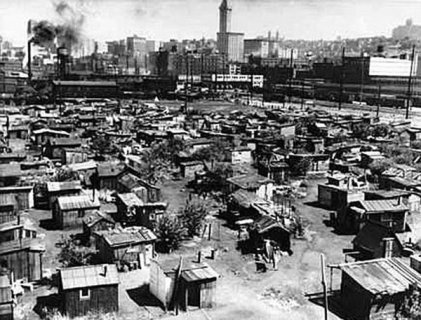


 The earliest signs of a self-defined teen culture and style were in the 1920’s. Jazz, dance halls and flappers signaled an interest in the here and now and in having fun over and above any concern with preparing for an adulthood that seemed to matter only to the adults in their lives. And with each iteration of often musically-inspired teen culture, whether it be jazz or swing or rock ‘n’ roll, bobby socks, zoot suits or leather jackets, the adult world was there to greet it with scorn, if not outright panic. It has always been the case that, as Hine writes “teenagers bear an inordinate share of the blame for society’s failures.”
 While this was going on, another important factor in the emergence of teens as teens was their increased separation from adults. As high school became commonplace for most American teens, peers replaced parents as sources of influence. The growth of car ownership offered teens some privacy. And during the Second World War, with large numbers of young men conscripted into Europe and Asia, younger teens and girls entered the work force, drew paychecks, and afterwards were no longer willing to return to a dependent or domestic role.
 off the leash