The first European settlers to come to America were religious extremists who rebelled against the Church of England because it was too tolerant. The Puritans and Pilgrims of the New World believed in moral and behavioral purity down to the minutest detail. They objected to things like Christmas celebrations, drama and music. Puritans in England were known to take an axe to church organs.
Their legacy in the modern history of America is what later came to be known as the Protestant ethic, a philosophy which worshipped the purity of hard work, thrift and discipline. Fair enough. But it also viewed leisure, recreation and anything that could be associated with idleness with disdain. And it relegated women to a secondary public role and viewed their primary purpose as motherhood.
So if you are an Anglo-Saxon American, your ancestors were not the type of say “let’s take a few days off and have a good time.” And since a good percentage of the American public with some disposable income in the 19th century was pretty Waspy, the whole idea of vacation took hold rather slowly here.
But take hold it did, beginning in the 1800’s. While philosophically opposed to the idea of “a few days off to have a good time,” if you could reinterpret your vacation as therapy, religion, education or nationalism, you were good to go.
In her comprehensive history of vacations in America, appropriately titled Working at Play, Cindy S. Aron explores how the prejudices of our forefathers affected how we spent our vacation. “The fear of leisure and relaxation – expressed as soon as mid-19th century middle class vacationers began traveling to beaches, springs and mountains – took new forms but endured not only through the 1930’s but, I would suggest, until today,” says Aron.
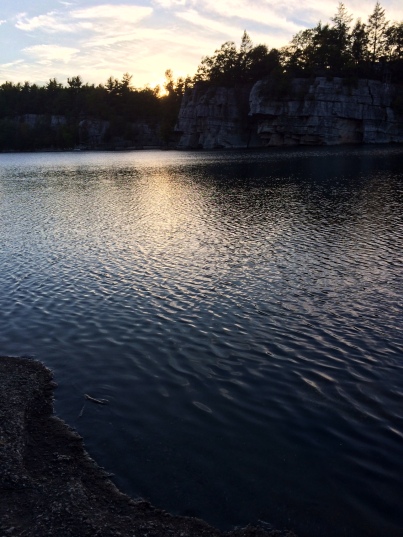 While the word vacation does not appear to be used, other than to describe student breaks, until mid-19th century, some members of the elite were traveling to destinations such as mountain houses, springs and seashore towns throughout the 1800’s. The choice of destination reflected the motivation for this travel, which at least publicly was discussed in terms of health benefits. Aron quotes a certain Dr. Thomas Goode who published guides in 1846 that included testimonials as to how spring waters cure deafness and paralysis. Coincidentally, Goode was the proprietor of Virginia Hot Springs.
The elite who visited these early resorts were believed by many descendents of the Puritans to be somewhat more casual about the purity of their behavior, although one should consider the possibility that they were not necessarily morally looser but rather better positioned to record their behavior in memoirs. In John F. Sears book, Sacred Places, he quotes the author James Kirk Paulding in 1828 as categorizing travel as “the most exquisite mode of killing time and spending money ever yet devised by lazy ingenuity.”
One of the first appearances of middle and lower middle class activity that could be interpreted as vacation was attendance at camp meetings that were organized by religious groups, initially mostly Methodists. Some of the sites of these religious camp meetings later became more permanent resorts. One example is Ocean Grove, N.J., founded in 1869 as a “retreat for Christians” by the Ocean Grove Camp Meeting Association. The camp meeting association still exists, still owns Ocean Grove, and now promotes it as “God’s square mile at the Jersey Shore.” To this day there is no liquor sold in Ocean Grove and the beach is still closed on Sunday morning.
Camping itself was positioned as an exercise in purity. Aron cites an 1875 New York Times writer extolling the virtues of camping as “imbibing in integrity and simplicity (while) the bathers at Cape May that season were busy flirting and gossiping.”
Another type of vacation destination that the moralistically-minded 19th century citizen deemed acceptable was the self-improvement resort . The best known of these was in Chautauqua in Western New York. Similar resorts, combining recreation with education, were opened in the latter part of the 19th century and they were collectively known as chautauquas. Aron observes: “Nobody who visited at Chautauqua intended to spend nights in a drunken stupor and days smoking in the billiard hall or playing cards in a gambling den.”
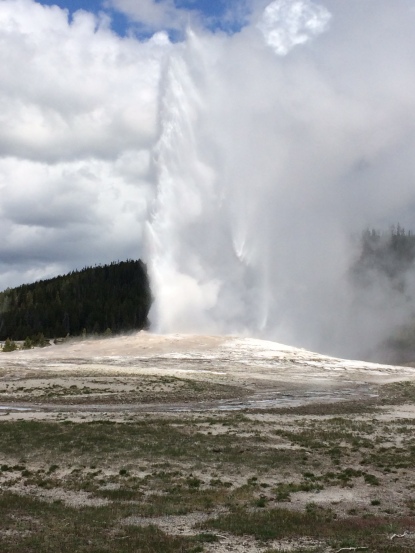
The number of Americans who vacationed, even with the growth of these “acceptable” sorts of destinations, was still relatively small and did not show widespread growth until the 20th century. Yet it was in the late 19th century that an important reason for that growth began to take shape. That is when land at Yosemite and Yellowstone was set aside for public use. These and other national parks would play an important role in the growth of vacationing in America. This type of travel was fueled by an appeal to nationalism.
Marguerite S. Shaffer, in her book, See America First, writes that “tourism was promoted as a ritual of American citizenship.” The phrase “See America First,” which was initially used in the first decade of the 20th century, reflects that promotion which came from the railroads that carried passengers to the West, artists and writers of the time (some of whom were being paid by those railroads) and a little later by government agencies that promoted the national parks.
White America didn’t have much history. We were at the time often reminded by Europeans that we didn’t have much culture. But what we did have was landscape, awesome natural scenery that rivaled anything known to 19th and early 20th century Westerners. “To celebrate American wilderness was in some ways to declare America was superior to the Old World,” writes Shaffer.
The early years of the national parks saw only a small stream of visitors as it was still a trip that was available only to the elite. They traveled West via luxury Pullman cars. In the first couple decades of the 20th century the competitiveness of the railroad companies led to widespread promotion of the sites along their routes as well as cheaper fares. This brought a larger segment of visitors to Yosemite, Yellowstone, Glacier National Park and the Grand Canyon. But the real explosion in this kind of “look for America” vacation came with the growth of the automobile in the 1920’s.
The patriotic vacation undertaken in an auto grew in popularity until at least the 70’s. And the destination was not just the national parks. In Are We There Yet: The Golden Age of American Family Vacations, Susan Sessions Rugh writes that postwar family motorists commonly “set off on tours of historic sites or took their children to Washington, D.C.”
Shaffer quotes Lyndon Johnson’s Secretary of the Interior Stuart Udall expressing the nationalism pitch to vacationers in the 1960’s: “When it comes to the search for history, we have our own castles, kingly places and even ancient cathedrals.”
Still no mention though of knocking off for a week to have a good time.
(This is the first in a weekly series of blog posts about the history of Americans on vacation.)



































 off the leash