Growing Up in the 50’s: Tricky Dick on Main Street

It’s 1956. I’m in first grade at Washington Park Elementary School in Totowa, N.J. It must be in the fall, shortly before the presidential election that year, and one day my whole class was lined up and marched in formation out to Union Boulevard, the one and only main street in Totowa, where we were positioned along the sidewalk to see….

Nixon!!!! That’s right f’ing Richard “I am not a crook” Nixon. Nixon was at the time running for re-election as vice president on the ticket headed by Dwight Eisenhower.

Ticky Dick Makes Checkers Speech

Did I know anything about Nixon? Of course not. I was only 2 in 1952 when he made the famous Checkers speech. That of course was the first real public clue that ‘I Am Not a Crook’ would be a recurring theme throughout his long political career. It showed Tricky Dick to be petulant, petty and somewhat pathetic. If you haven’t seen the Checkers speech by the way it is an excellent introduction to the bizarre cultural/political environment that was America in the 50’s.  The Checkers Speech

But while I knew nothing about Nixon I was in fact a boomer. And what made boomers boomers is that most of our fathers were in World War II. My dad was not an exception, having been stationed in the Pacific, so for him and the whole generation of adults like him there was no greater hero than General Dwight Eisenhower (other than maybe General Douglas MacArthur who later proved to be off his rocker). So as a family we supported Ike and I suspect he was a pretty decent guy (aside from his choice of running mate).

What occurs to me now is that weren’t we doing exactly the sort of thing that we accused various despotic regimes of doing? Parading the populace and especially the children out for demonstrations of adoration for despicable leaders.

Posted in Growing Up in the 50s | Tagged , , , | 4 Comments

Pictures From My Walls

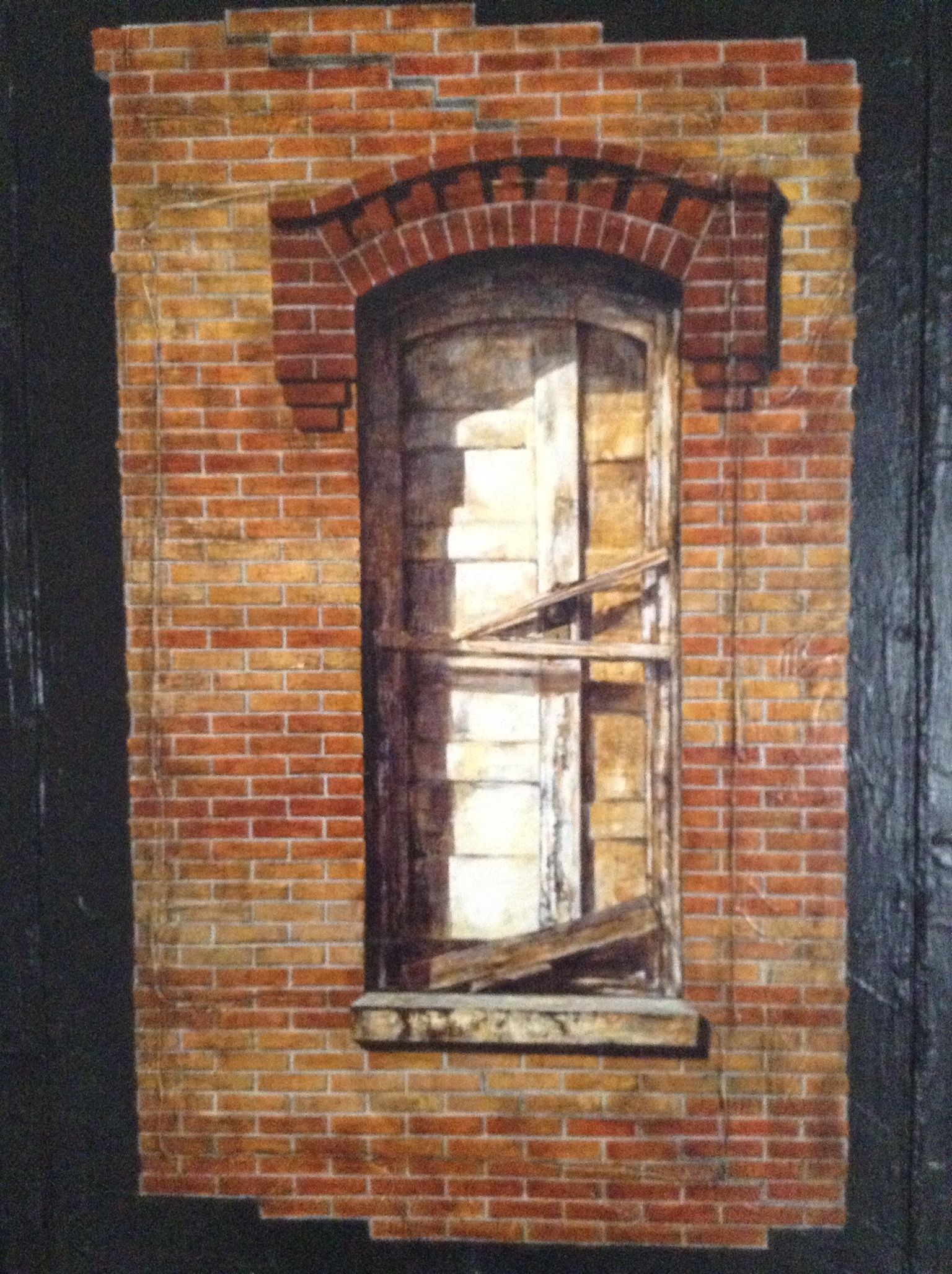
My collection of art by Tom Greaves:

01bff54d7d9bc8664d11b40edb27825c9fd627bf1f 01c640501a0fdcb553f43e5611665c9b5f0bc4e5af 01dc08a129a6461d8d162b7455071444b9513f6c51 01bd17de763fd8044045d0e11563e04d51055e3ec4

My iPad photos don’t do justice to the texture of these pieces. To see more check out Tom’s site.


Posted in Art | Tagged | Leave a comment

Growing Up in the 50’s: Bomb Scare!

basement fallout shelterLike most suburban houses built in the 50’s, ours had a stairway to the basement in the center of the house. Under the stairway was an empty space with progressively lower head room, since the ceiling was in fact the stairs.

My father used this space to build a closet. It was closed in with a shiny, highly varnished wood and the door had black cast iron hinges and handle. It was about 5 feet wide and probably 8-10 feet long. You could enter and stand for maybe 4 or 5 feet after which the amount of vertical space rapidly declined. Both side walls were lined with shelves.

On the surface the purpose of this space was food storage. Stuff that we bought in bulk to save money. Stuff that didn’t fit in the kitchen cabinets. Stuff that we prepared while in season to enjoy during the long off-season. We weren’t importing strawberries from California, cherries from Washington or plums from Chile at the time, so you either figured out a way to preserve this stuff or you waited until next summer.

I remember the storage closet being full of mason jars of peaches that my mom packed in August. She may have done tomatoes too, but I primarily remember the peaches because they were delicious.

But food storage was only a fringe benefit of recovering this space from under the stairs. The real value of this underground hideaway is that this was to be our salvation when they dropped the big one. They , of course, were the Russians. And the big one was some sort of atomic, nuclear, radioactive bomb that no one doubted the dirty Commies would use to obliterate Totowa, N.J., and its environs.

So we kept a couple of gallon sized glass jugs of water there that we changed out sporadically. I suspect that Dad also slipped in a couple jugs of the cheap vin rose that he bought by the half-gallon. Hopefully he did not have a stash of his cigars in the our bomb shelter because the jury is out on whether nuclear fallout is in fact more or less toxic that being in a closed space while my father toked on his cigars.

The food that I remember being there included cans of Spam and cans of Campbell’s condensed soup. Not sure whether Dad thought to leave a can opener and I don’t remember any stockpile of utensils. So I suspect saving ourselves from the holocaust outside would have involved having Dad take out his pocketknife, hack open a can of Campbell’s condensed navy bean soup and having us scoop out that sludge with our fingers.

Another possible missing item was a communications device. If we are sitting in our basement oasis waiting for the air to clear of Krushchev’s red poison, how do we get the all clear signal? What if we step out too soon and get disintegrated. Who wants to spend the last day of their life eating cold Spam out of the can while watching their father get plastered on rotgut wine?

In retrospect I think I would have grabbed a jar of Mom’s peaches and taken my chances under a tree in the backyard.

Posted in Growing Up in the 50s, History | Tagged , , | 6 Comments

Work and the Economy in the 2010’s: A Novelist’s Perspective

Some of the best insight I’ve read about the impact of current U.S. economic trends on individuals is in the last two Dave Eggers Novels, A Hologram for the King and The Circle. A Hologram deals with outsourcing, employment and the offloading of older employees. The Circle is directed at the mores of the technology driven economy and specifically about the conflict between transparency and privacy.

A Hologram for the King Circle

The title of Hologram represents the last ditch effort of Alan Clay to salvage not only his career but his personal life as he makes a pitch to a Saudi Arabian king on behalf of an IT firm. Somewhere in Clay’s past he was in a management position at an American bicycle manufacturer when the decision was made to outsource. It’s been all downhill for Clay since then and as the author brings us through his last stand pitch what we see is a string of failures in every aspect of his day-to-day life. Aside from the economic issues this is simply a great novel that is hard to put down.
The Circle is about a young woman, Mae Holland, who drinks the Kool-Aid. Gallons and gallons of it. The Circle is the technology behemoth that consumes all others and Mae scores a dream gig there. She dives whole-heartedly into the corporate mission of total transparency and in doing so pretty much destroys everyone close to her. The Circle experience is replete with such tech trendy corporate practices as converting subjective performance information into misleadingly objective data and obliterating the distinction between employees’ personal and professional lives.
One is a man facing the wind down of his career, the other a woman just starting hers. Both are reflections of the economic times of when the stories were penned.

Posted in Book reviews | Tagged , , , , , | Leave a comment

Growing Up in the 50’s: Baseball

For an American boy growing up in the 50’s there was one sport, baseball.

For a substantial part of my childhood I played baseball every day. Day after day, I would eat breakfast, pick up my glove and head out to the field. There we would choose sides and play slow pitch. No parents, no helmets, no umpires, no catchers, no base stealing or bunting. Nobody ever negotiated those rules, that’s just the way it was. That was what I did until it was time to come home for dinner. The glove was the device I couldn’t do without. Bats and balls were more treated as communal property but the glove was always in my possession.

I was, as you could imagine, more than anxious to hit the age when I could play Little League. Little League in Totowa was for kids aged 9-12 (boys only of course) and that presented an issue I hadn’t given much thought to. There is an enormous developmental difference between the 9-year-old and the 12-year-old. So standing at the plate as a 9-year-old and having the biggest, strongest and most athletic 12-year-old firing in his hardest fastball was a paralyzing experience. During that first year I usually got one or two at bats per game and if I was able to achieve one foul tip in those at bats it was a good night.

Ebbets Field, Brooklyn, 1956 World Series

Ebbets Field, Brooklyn, 1956 World Series

My dad was a Giants fan, as in New York Giants. He was not a big fan of travelling into New York. When he took me to the Polo Grounds he wanted to get the biggest bang for his buck so we always went to Sunday doubleheaders. I remember a doubleheader against the Pittsburgh Pirates in which the Pirates pitcher Bob Friend won both games, starting the first and relieving in the second. He also batted seventh in the batting order. I also remember a doubleheader against the Cubs in which Willie Mays had what I considered an inside-the-park home run that was actually a multiple error. Starting with a ground ball that produced a bad throw to first, Mays tried to go all the way to third and when that throw got by the third baseman he headed home. Ernie Banks was the Cubs first baseman.

When the Dodgers and Giants left town there wasn’t going to be any Yankees baseball or any American League baseball in our house. Instead of the House That Ruth Built, my dad would take me to Philly when the Giants were visiting Connie Mack Stadium.

We were a split family in terms of rooting interests and my Dad’s mother was a die-hard Dodgers fan. My Mom was a little more open minded than my Dad so she brought me and my grandmother to Ebbets Field. I was probably five or six at the time and all I remember about that game is that the Dodgers played Cincinnati who at the time were still known as the Redlegs. (Maybe it was just that my grandmother still called them Redlegs.) Weird name but Red Sox was already taken and Red Shoes was not sufficiently masculine for the 50’s. Baseball players in the 50’s wore pants that stopped at the knee so the long red socks made the Redlegs name seem to fit.

I also saw the Dodgers play the Redlegs at Roosevelt Stadium in Jersey City. The site is currently a townhouse complex called Society Hill. The Dodgers played a couple games a year there and I went with some connection of my father’s who knew Redlegs second baseman Johnny Temple. After the game he took me to the locker room where I met Johnny Temple and got an autograph. MLB marketers say those kind of memories last a lifetime. There’s your proof.

Eventually we were all able to re-unite and live in peace as Mets fans but that was the 60’s and thus beyond the scope of this post.

If I wanted to see American League baseball I had to hang with the other side of the family. My maternal grandmother had a guy living in her house we called Uncle Rob although no one has ever explained to me how we were related. Uncle Rob rarely left his room where he watched the ballgames on TV and kept score. But one of the times he did step out he brought me along and we went by bus to Yankee Stadium. We got there about two hours early, bought general admission bleacher tickets, and set ourselves up in the front row of right field. The two extra hours at the ballpark was no problem. I couldn’t get enough.
The Yankees were playing the Washington Senators. They are not to be confused with the existing Washington baseball team, nor were they the Washington Senators who packed up in 1971 and became the Texas Rangers. These Senators started in Washington in 1901 and in 1960 moved to Minneapolis and became the Twins.

No event was bigger in the 50’s than the World Series. Everyone found a way to watch it, even though the games were all played in the day. And there were no playoffs just the big event, National League champion vs. American League champion, with the pennant decided solely by regular season record.

I was in 5th grade when the Yankees-Pirates World Series went to game 7. (Not actually the 50’s since that was the 1960 World Series but culturally we hadn’t crossed into a new decade.) Since this was a must see event being played on a Thursday afternoon my teacher brought into school what was probably a 13 inch TV, black and white with rabbit ears, set it on a chair in front of the classroom, and that is how we watched Mazerowsky’s home run. As a Giants fan that blow was more dramatic and traumatic for me.


Posted in Baseball, Growing Up in the 50s, Sports | Tagged , , , , | 4 Comments

Boardwalk Fashion

Sunset LBIWinter in New Jersey this year has been a continuing cycle of snow, frigid temperature and ice. So at times our minds drift off into warmer times and think of where we go in the summer. For many of us that’s the Jersey shore.
I waited out the last major snowstorm by calling my real estate agent and booking a rental house at the shore.
That left me thinking of the wide sandy beaches, the waves of the Atlantic breaking over me on a hot day. I thought of the oceanfront restaurants with their fresh crabmeat, clams and flounder. Of kayaking on the bay.
Because despite what you might hear in some quarters the Jersey shore is more beautiful than tacky.

Uhhh…that is until you run into something like this.

Wildwood boardwalk

Posted in Uncategorized | Tagged , , , | Leave a comment

How I Learned to Use SEO Like a Tabloid Headline Writer

I wrote this blog post for Beyond PR and was immediately set upon by the SEO community as you can see from the comments.

Good chance that a lot of those members of the SEO community have since re-imagined themselves and now pose as content marketing gurus. Also a good chance that they never read my post and reacted instead to the “SEO is Dead” headline.

The point I was trying to make is that SEO is by its nature self destructive. If you find an SEO tactic that works, that tactic is going to proliferate and when it does it will, from Google’s perspective, damage the efficacy of their search results. Search users no longer get the best answer, but rather the answer with the most effective SEO. So Google goes to work on its algorithms and tweaks away until it has at best neutralized the SEO tactic in question and possibly even punished users of that tactic by decimating their page rank. This is essentially what happened with keyword based SEO and later link based SEO.

So the larger issue for me is that if you are writing for the purpose of publishing digitally you should be writing for your readers and not for Google’s algorithms. SEO is a moving target. Informative interesting stories will always be that.newyorkpost

But I then realized that I had stumbled upon an effective SEO tactic that was indeed time-tested. Write an eye-catching provocative headline and you’ll get your readers’ attention. The same tactic that has worked for decades to sell print newspapers in stores and on newstands works just as well to attract readers online.

Posted in Digital publishing | Tagged , , , , , , | 3 Comments

Thanks Sarah!

Sarah Skerik

A big thank you to my friend Sarah Skerik who came up with the name for the Off the Leash blog. I had something much lamer in mind before I talked to her. Sarah is herself a prolific blogger and you can read her posts on public relations and content marketing at Beyond PR.

Posted in Uncategorized | Tagged | Leave a comment

Assholes vs. Facebook

I wrote this short review of the book Assholes: A Theory by Aaron James on Goodreads https://www.goodreads.com/review/show/634449320. As I usually do with my Goodreads reviews I shared it on Facebook. The next time I went to my time line on FB I noticed it wasn’t there. Assuming I did something wrong I went back to Goodreads, shared it again and then checked to confirm it was posted. Couple hours later, gone again.

So it wasn’t something I had done wrong technically. It then occurred to me I had run afoul of an apparent obscenity bot at Facebook. Bear in mind that the name of the book is ‘Assholes’ and it is about, well you guessed it. The term asshole refers to a personality type not a body part.

So I could have adapted my review to make it Facebook friendly by using a different word. Butt? Anus? Derriere? That of course would have rendered the review completely meaningless. Just as the book would have been rendered completely meaningless if the author had used a synonym of asshole in order to get exposure on check out lines.

So what’s wrong here. Meaningless gibberish is perfectly acceptable to Facebook. Using the word asshole to discuss a book named ‘Assholes’ that is about assholes? No good.

I thought of that when I read some of the more recent pronouncements by Facebook about changes in its newsfeed. Facebook has described these changes as putting a greater emphasis on content quality. Who’s kidding who? Facebook uses machines to rank quality and algorithms know nothing about quality. So basically what you will get on top of your news feed is content that appears to a robot to have certain attributes that the FB programmers have associated with quality. (Repeated use of the word asshole not being one such attribute.)

So Facebook is going down the same road as Google, rewarding links or sites that are highly trafficked, probably to the detriment of members who are posting the kind of status updates about themselves which is really what brought people to Facebook in the first place. There are an awful lot of places to go to see what was published by Upworthy or Buzzfeed or the New York Times. Not so many places for me to see what my friends have to say.

So while social media has been credited with democratization of publishing, the largest of the social media networks seems to be moving the opposite direction, a result of catering to advertisers not members. Is that the reason for the well-documented decline in Facebook usage?

Posted in Book reviews | Tagged , , , , , | Leave a comment

Growing up in the 50's.

My father had his own small business where he worked with his brother and their father. They repaired electric motors. The motors they repaired were about the size of footballs and generally came from appliances like washing machines or refrigerators. That was of course a doomed business as over time the motors became cheaper to produce than to repair and hence disposable. But in the 50’s we didn’t know that.

My dad didn’t go out and fix people’s washing machines or fridges, he worked for the repairmen. So your fridge breaks down, you call the repairman, he comes, indentifies the motor as the problem and takes it away. The motor goes to my father’s shop where it sits for maybe a week, gets repaired, picked up by the repairman who then brings it back and installs it. The whole process could have been same day, rather than leaving the customer with no fridge for a week, but that’s not how things worked.

My dad’s customers were usually small independent guys like him, though he had an occasional big customer like GE Service. The way these guys worked explains why you had no fridge for a week if your motor died.

I know about this because my father would bring me to work with him on Saturdays, on school holidays and during the summer. It wasn’t particularly helpful for him. And it wasn’t either enlightening or fun for me. So the main beneficiary of this arrangement, and probably the driving force behind it, was my mother. She not only got a morning or a day to herself but also felt that my presence would keep dad from going to the bar for lunch and start knocking them back by noon.

What did I do in the shop? I would sweep. Sometimes I would put the fan belts hanging in the front room in correct size order and I would strip burnt out motors of old wiring, insulation and various other shit so the carriage could be sold as scrap. In the later task I worked side-by-side with my grandfather. Grandpa apparently was at the same skill level that I was so he got assigned the same tasks. But he was a funny man and I always enjoyed his company. Grandpa really wanted to be a musician, not a stripper of burnt wire from dead electric motor carcasses.

That doesn’t sound like much, but after 3 p.m. I might have been the most productive guy in the shop. Because at that point some of the customers came to visit. For example, one of my father’s favorite customers was a guy who owned some laundromats. Once in a while he’d bring a motor in to fix but on a far more regular basis, like just about everyday, he showed up with a six pack or two at which point there as a lot more customer relations going on in the shop than there was motor fixing.

Laundromats by the way were apparently good businesses in the 50’s because Pete, the aforementioned laundromat guy, was the first person we knew to get a color TV.

One of the highlights of the day for me was the appearance of George. George was the guy who came around mid-morning in what passed for a food truck in the 50’s. This is not to be confused with the sort of trendy gourmet food trucks that are now popular. This was more what you would call a coffee wagon set up for guys steeling themselves for a day of beer drinking by starting with a bacon and egg sandwich that was probably cooked four hours earlier and carried around on George’s truck ever since.

George called everyone George, so everyone called him by that name. So each morning I would be treated to a fascinating dialogue that went something like this.

Dad: Hey George, little late today huh.

George: Lot of traffic out there George. What can I get you today George.

Dad: Give me a coffee with milk and sugar and a buttered roll, George.

George: Sure thing George.

(followed by some gathering of food from the truck)

George:  Here you go George.

Dad: What do I owe you George.

George: $1.50 George.

Dad: Okay George, see you tomorrow.

George: Thanks George, see you tomorrow.

Apparently this guy kept this up all day as he did his route from one shop or worksite to another.  Did he bring his work home with him? Did he call his wife and kids George? Was George his real name? Or was it just branding, 50’s style, in a working class neighborhood?

Posted on by Ken Dowell | 4 Comments