The History of Beer in New Jersey

If you spent any part of your young adulthood in northern New Jersey, you probably spent a night or two in the Hoboken bars. Or maybe three. So it will come as no surprise that the first brewery in the state was situated right in the middle of the Mile Square, although it was not yet called Hoboken.

A Dutch settler by the name of Aert Teunissen van Putten set up a brewery amidst a Dutch settlement on the banks of the Hudson in 1641. He lasted two years, not because of either the Hoboken police or New Jersey’s alcohol and beverage regulations, neither of which yet existed. Rather, a raid by a tribe of Lenni Lenape in 1643 wiped out both van Putten and his brewery.

For the next couple of centuries most new world beer was home brewed. By most accounts is was a think murky sort of ale. But it was the preferred beverage of many Americans at the time, not because they were anxious to get hammered, but rather because many Europeans came from places where there was nothing in the beer that equaled the toxicity of the water.
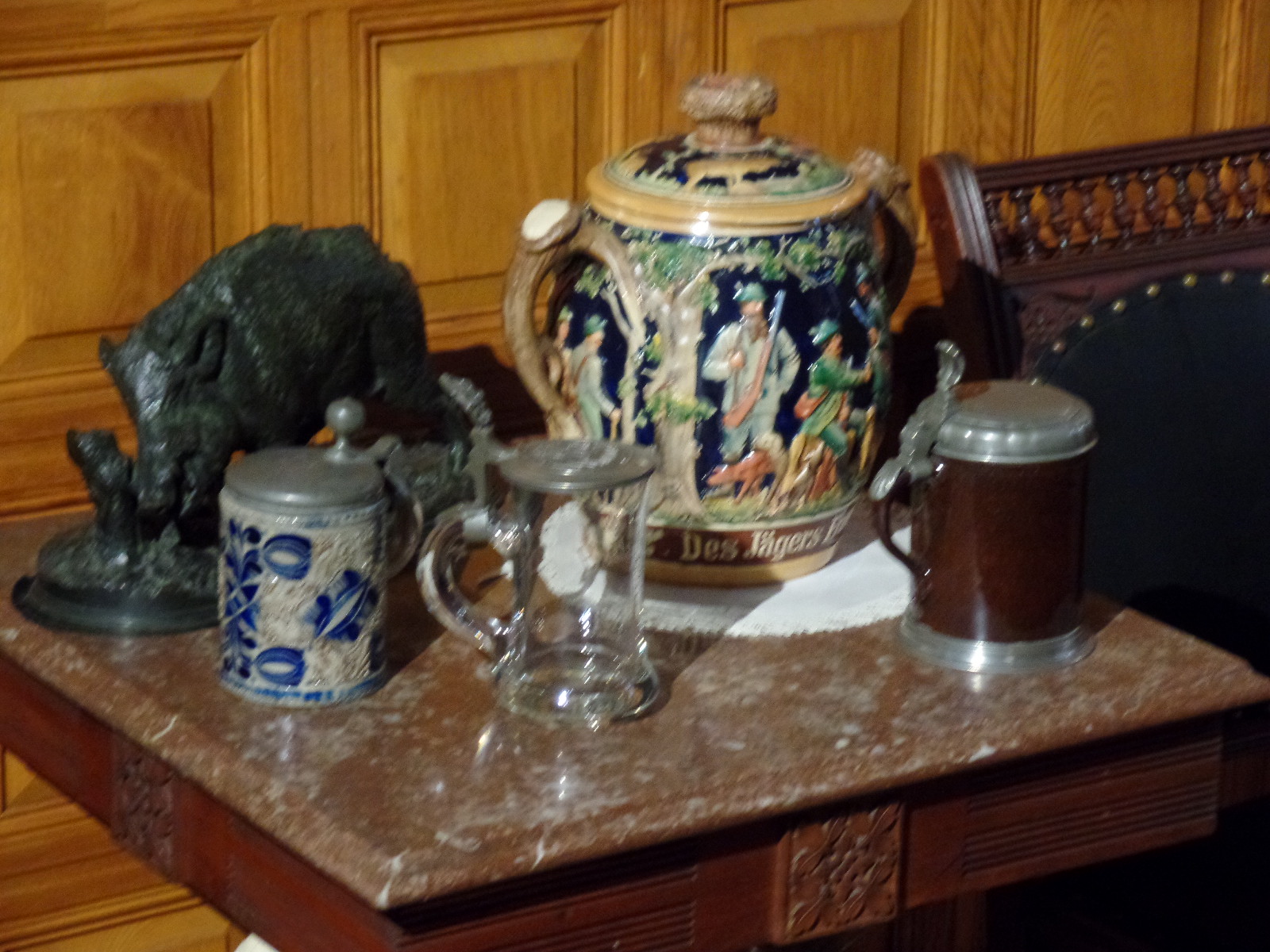
beer steins

Drinking vessels from the 19th century on display at the restored Ballantine House in the Newark Museum.

Fortunately in the 19th century we did not have politicians campaigning on the promise to build a wall to keep out immigrants, because it was the flood of German immigrants into the U.S. that made beer brewing a serious business. They brought knowledge, they brought ingredients, and they brought lager, the type of brew that would eventually become the defining style of American beer.

Beer brewing in New Jersey had a definite German accent. So it isn’t surprising that Newark became the state’s beer capital. By 1865, half of Newark’s population was German. The city was home to 242 brewers in 1880, 204 of them were German born.

Gottfried Krueger came here from Germany in 1853 at the age of 16. By 1858 he founded, with a partner, the company that would become Krueger Brewing.  Joseph Hensler, son of a German brewer, arrived in Newark with his father in 1854 and founded the Joseph Hensler Brewing Company. Both of those breweries lasted for more than a century. In 1873 the three Winter Brothers migrated from Germany to Pittsburgh. They founded M Winter Brothers Brewing in 1893. Six years later they sold that firm and moved to New Jersey where they founded the Orange Brewing Company.
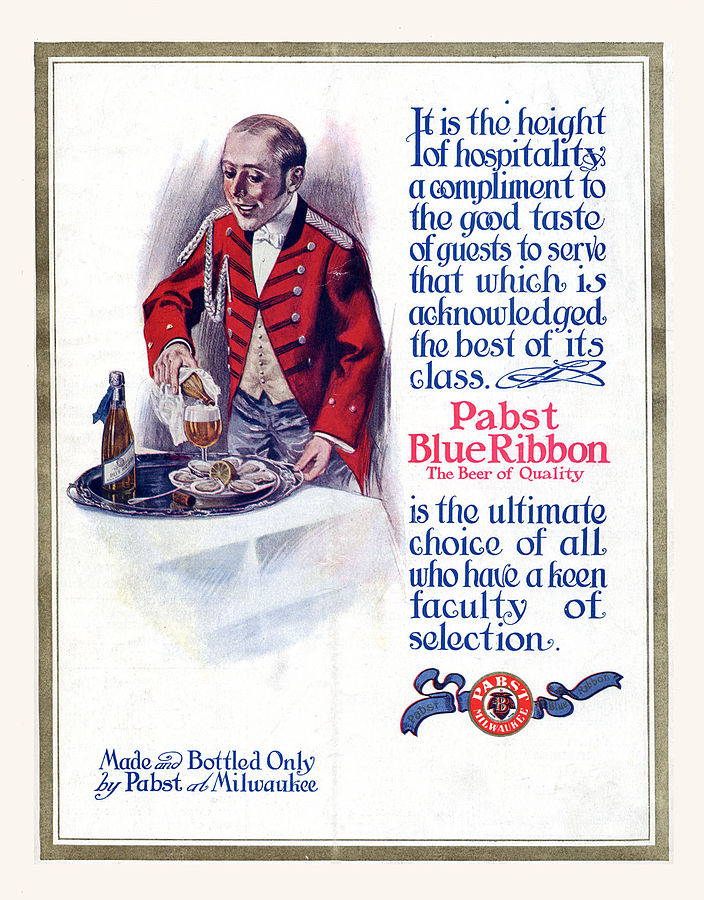
Pabst 1911 ad

1911 ad for Pabst Blue Ribbon from the back cover of Judge Magazine

The heyday of beer brewing in the New Jersey was the early 20th century. At the start of the century there were 51 breweries in the state. Twenty-five of those were in Newark. By 1934 that number had been cut in half. Some of New Jersey’s German brewers split for the Midwest due to the anti-German sentiment generated during World War I. But the big blow was the 18th amendment, Prohibition.

New Jersey was not exactly a Prohibition friendly state. In his book Jersey Brew, author Michael Pellegino notes a federal study that estimated that 40% of all alcohol consumed in the U.S. during Prohibition came through Newark. But for legitimate Jersey breweries the onset of Prohibition in 1920 left them with three options: pack it in; try to keep afloat by producing alternatives like soda or near beer (Is that what they called Bud Light in those days?); or go black market and link up with the gangster distribution network.

Among the breweries that closed in 1920 were the Weidenmayer Brewing Company of Newark, Columbia Brewing and Lembeck and Betz Eagle Brewing, both in Jersey City. Newark Trefz’s Brewing was sold to Krueger in that year.

But some of the largest breweries bounced back strong and in fact made beer brewing history. Krueger was ready to go from day one and when Prohibition ended in 1933 they were selling beer in cups from the brewery doorways. This was so popular it gave rise to New Jersey’s first beer riot since the Lenni Lanape raid on Hoboken. The Newark brewery was to change the nature of beer drinking in America when, in conjunction with American Can, it introduced canned beer in 1934. Beer, which was primarily consumed in public houses, was now accessible and convenient for house consumption. It is also during the 30’s that another Newark brewer, Ballantine, is credited by some with producing the first IPA. The Ballantine offering was wood-aged for a year before being bottled.

Another Jersey beer innovation, noted by Pelligrino in his book, came from the Eastern Brewing Corporation in Hammonton. Nude Beer included on its label a bikini clad woman. It was a scratch off. This one didn’t catch on and was pulled from the market.

At mid-century, while Ballantine and Pabst and Krueger were going strong, another milestone in New Jersey beer history occurred. Anheiser-Busch opened a Budweiser plant in Newark in 1951. Thirty-five years later it would be the only remaining brewery in New Jersey.

Garden State brewers survived anti-immigrant sentiment and wars, the religious Right and prohibition, they even survived the gangsters. What they couldn’t survive is the larger trend in American business of consolidation. In the beer industry, like so many others, large national brewers who dominated the marketing and distribution, gobbled up the local and regional manufacturers.

Krueger was merged into Narragansett in 1961. Falstaff bought out Narragansett in 1965 and closed the Newark plant. Ballantine, at one time the third largest brewer in the country, was also bought by Falstaff in 1965 and their Newark site was shut down as well. Newark’s Joseph Hensler Brewing Company, which dated back to 1855, closed in 1958. The Orange Brewing Company was acquired by Rheingold which closed its doors in 1977. Pabst in Newark shut down in 1985. When they took down the big Pabst bottle, which was actually a water tower, from the roof of the old brewery in Newark, it symbolized the end of an era. The big brown bottle had been a landmark for New Jerseyans as they headed down the Garden State Parkway for the shore.

Those closings ushered in the dark ages of beer brewing in New Jersey. Not only had the breweries that thrived in the state for a century closed their doors, but the archaic and confusing alcohol and beverage laws in the state left it behind others in the renaissance of American beer brewing that was just getting started.
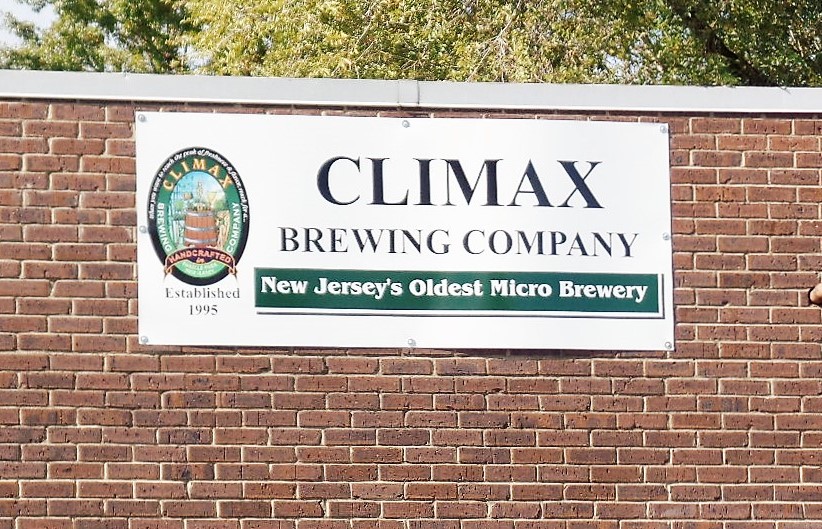
Climax breweryA gradual loosening of some of those regulations led to the rebirth of microbrewing in New Jersey. Climax Brewing in Roselle Park became New Jersey’s first modern microbrewery in 1993. One the most successful, Flying Fish in Cherry Hill, started in 1995 as a virtual brewery then opening its doors in 1996 as did River Horse Brewing in Lambertville. Brew pubs finally became legal in New Jersey in 1994 and one year later the Ship Inn Restaurant and Brewery in Milford became the first brew pub in New Jersey.

According to New Jersey Craft Beer there are in 2015 37 operating breweries in the state and 15 brew pubs. Another 22 start ups have a license, permit or physical location and 16 more are planned but haven’t yet gotten to that point. So we’re getting close to the 51 breweries that were in production in 1900.
Posted in History | Tagged , , , , , , , , , , | 30 Comments

Curious Things I Saw at the Liberty Science Center

construction

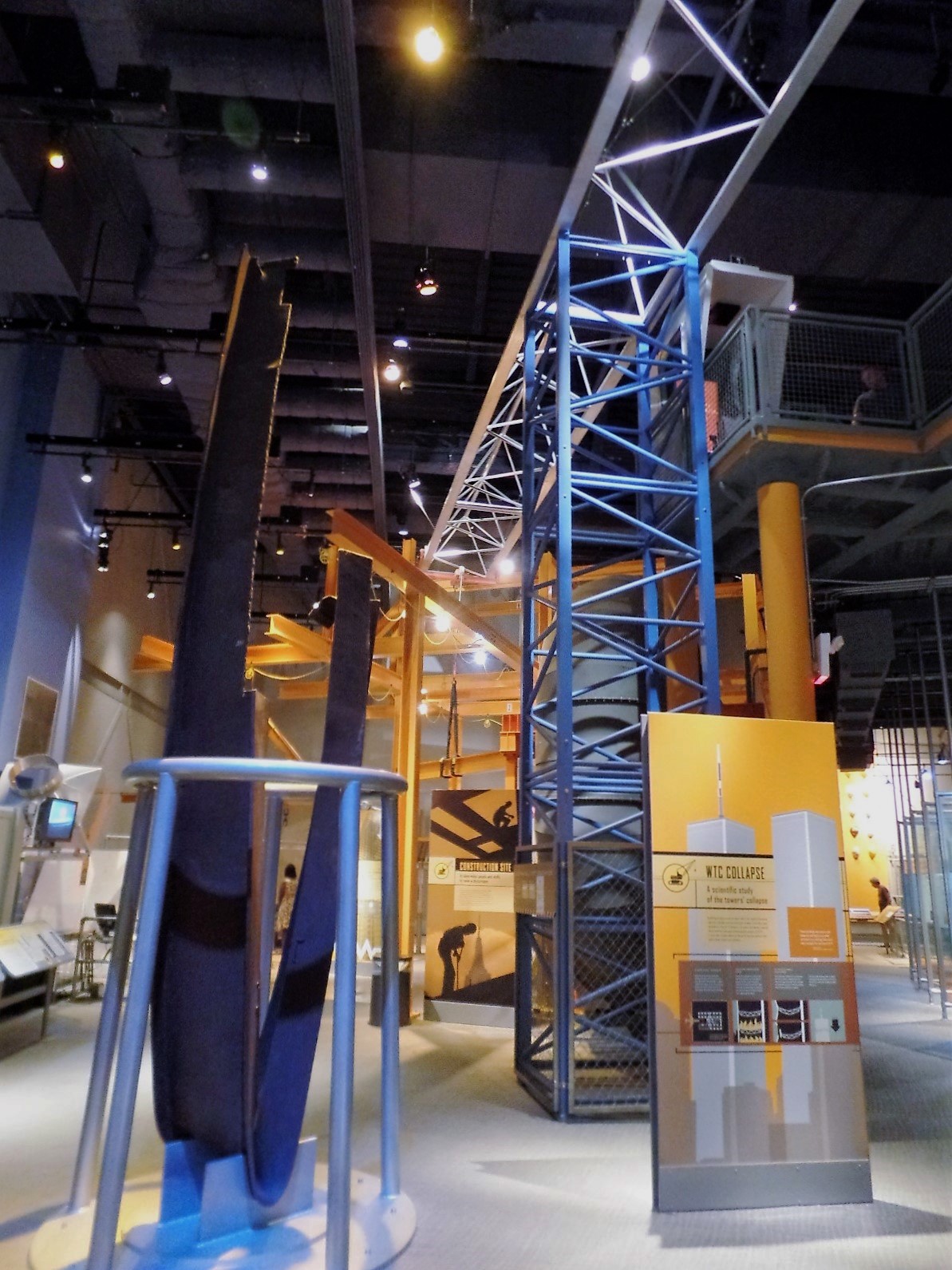
Beam in foreground from World Trade Center

lunchtime for turtles

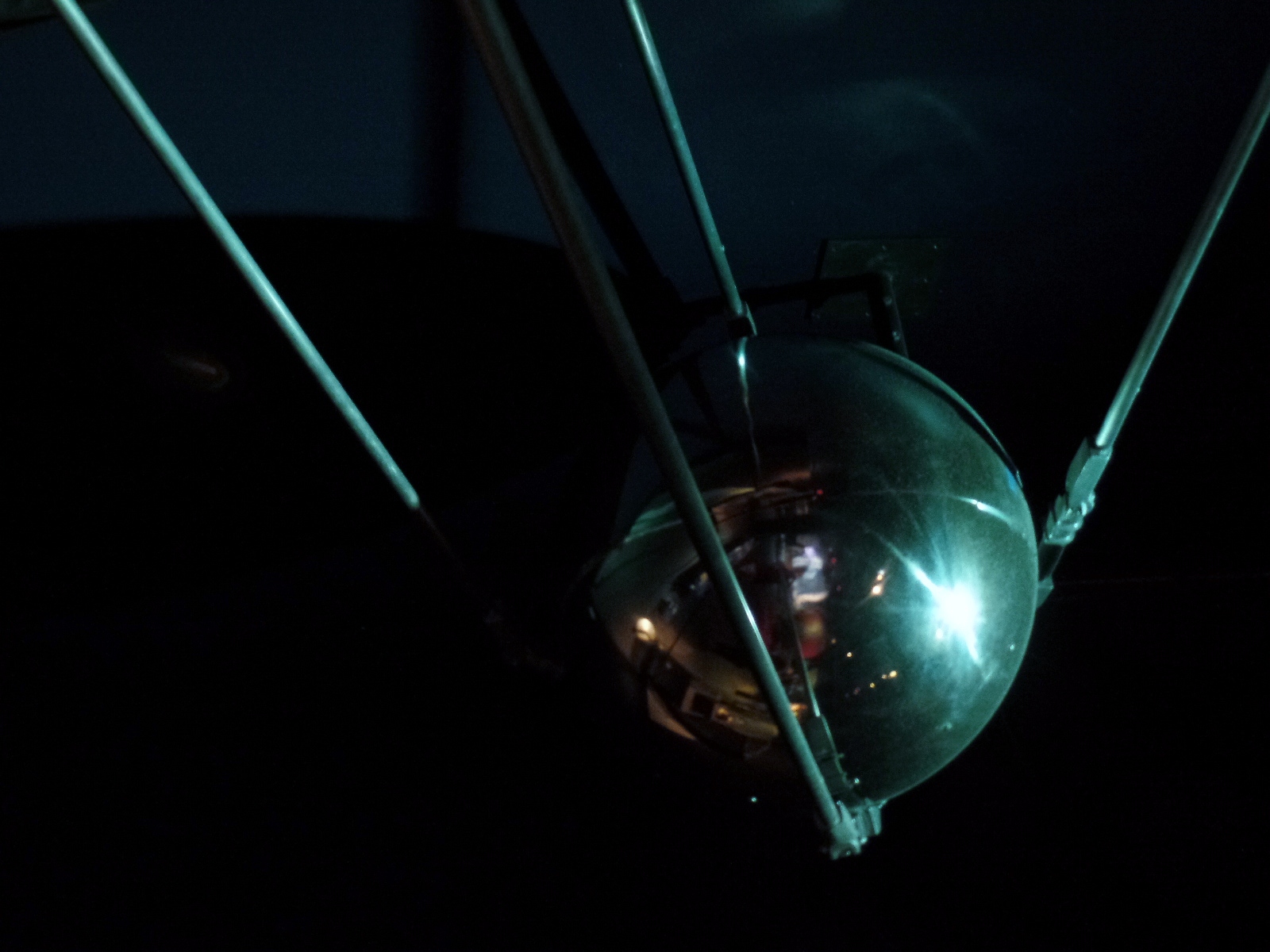
Sputnik

Sputnik

Posted in Uncategorized | Tagged , , , , , , | 3 Comments

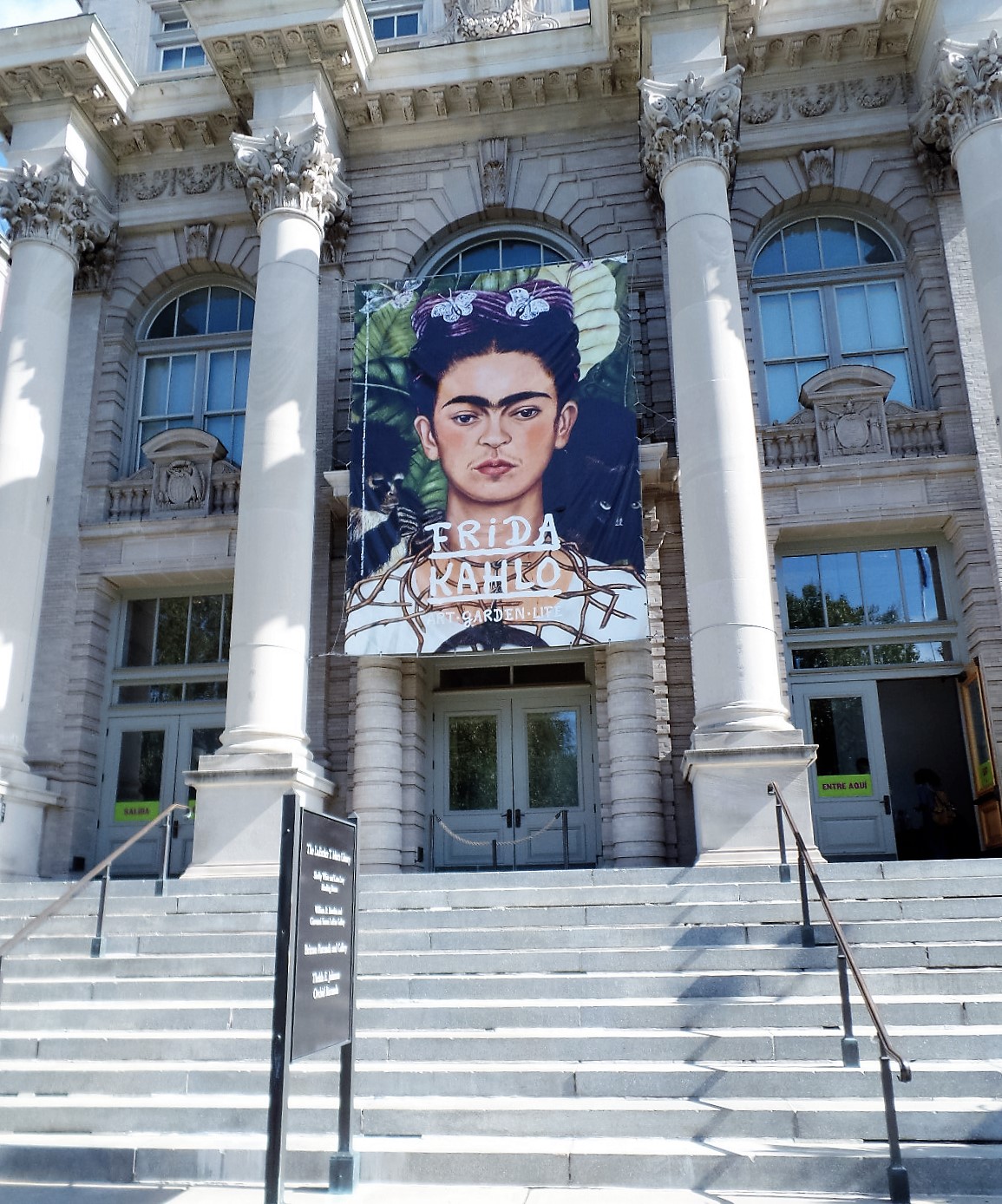
Frida

Frida Kahlo self portrait

Images are from the Frida Kahlo Art Garden Life exhibit at the New York Botanical Garden. It includes a small collection of Kahlo’s works highlighted by the self portrait that adorns the exhibit banner shown above. The setting is a botanical garden so there is a recreation of the gardens in Casa Azul where Kahlo lived with Diego Rivera and an exhibition of Mexican trees, plants and flowers..

The Two Fridas (shown below) is an artwork created by Humberto Spindola. It is adorned by Kahlo-style dresses and was inspired by the artist’s double self portrait.

The Two Fridas

Kahlo Museum

Posted in Art | Tagged , , , , , , | 3 Comments

Vintage Advertising Slogans: A Pop Quiz

This 1969 TV ad opened with the line “mama mia, thatsa spicy meatball.”

meatballs

(alvimann)

  1. Chippendales
  2. Chef Boyardee
  3. IKEA
  4. Alka Seltzer

Answer

This advertiser promised “we put you in the driver’s seat.”

  1. Harvard Universcity
  2. Hertz
  3. Zamboni World
  4. Chevrolet

Answer

This advertiser claimed that “his prices are insane.” That is, until he went bankrupt.

  1. Crazy Eddie
  2. Sam Goody
  3. Robert Hall
  4. F.W. Woolworth

Answer

Late night radio in New York was dominated for a short period of time by this advertiser who popularized the tagline “Money talks, nobody walks.”

money

(DodgertonSkillhause)

  1. Dennison Clothes
  2. Fannie Mae
  3. Newark City Hall
  4. The law firm of Goldman, Silverman and Cashman

Answer

You apparently didn’t need to get a lot of this stuff because the ads said “a little dab’ll do ya.”

  1. Brylcreem
  2. Super Glue
  3. Viagra
  4. Tobasco

Answer

This is the advertiser that brought us the exclamation “where’s the beef!”

cow's head

(Werner22brigette)

  1. Chippendale’s
  2. Dinty Moore
  3. Wendy’s
  4. Chick fil A

Answer

This advertiser acknowledged that it was not #1 but interpreted that as a good thing because “we try harder.” (Hint: They had the foresight to not hire OJ as spokesperson.)

  1. City of Chicago
  2. Banquet Frozen TV Dinners
  3. Avis
  4. Ford

Answer

And finally, who said their stuff was “good to the last drop.”

  1. Pepsi
  2. WD-40
  3. Maxwell House
  4. Southern Comfort

Answer

Posted in Uncategorized | Tagged , , , , , | 26 Comments

Advertising: The Big Fail

The recent announcement by Apple that its newest operating system would allow ad blockers has set off a wave of consternation among advertisers and the publishers that live off of those ads. Estimates of how many online folks currently use ad blockers range from 20% to 35%, but that appears to be rising rapidly and with Apple’s announcement the fear is that ad blockers will be downloaded onto most of our phones.

In response, I’ve seen doomsday forecasts about the future of journalism. I’ve seen moralistic pieces trying to shame us into not using ad blockers. Others have bemoaned the “greed” of the producers of those apps. And still others have tried to portray publishers as innocent victims in the war between tech giants (in this case Apple vs. Google).

But the problem here isn’t the morals of the digital reader, nor is it about any unsavoriness amongst the developers. Rather I think it’s a logical outgrowth of a failed industry, advertising.

highway billboard

(JessicaGale)

The very premise of advertising was always to get you to see something that you in fact never chose to see. Whether it was ads on the printed page, commercials on television, or billboards on the highway, advertisers sought to thrust themselves into your line of vision when you were hoping to see something else.

That advertising produced what was an assumed audience. Rates were based on the circulation of the newspaper, the viewership of the TV program that an ad interrupted, or the number of people that drove down the highway a billboard sat next too. Advertisers tallied up these numbers and sold their clients on this as an audience. Did anybody notice, read or react to these ads? Who knew?

But the jig was up when all this went online. All of a sudden we had measurement. Initially advertisers and publishers tried to sell their customers on the same sort of assumed audience numbers. They would talk about how many people accessed a page that a display ad appeared on. Then some of the guys paying the bills starting asking the next question. How many people clicked on the display ad? The answer came back pretty quickly. Pretty much no one.

loud ads

(geralt)

The response of the advertising industry was to take the commercial drivel that online audiences had already rejected as being of no interest and to deliver it in increasingly more intrusive ways. Hence we had the likes of pop-ups and video pre-roll. So what’s happening now is we’re taking something that consumers have already rejected as undesirable and thrusting in the way of something that they are trying to get to. Does that sound like the makings of a successful business?

At the same time the marketing and advertising industry has moved into the espionage business, accumulating all sorts of data about each and every one of us through various means of tracking. The promise is that they will be able to deliver targeted ads to the most appropriate audience. So far they’ve missed the boat here also.

Amazon is one of the leaders in this area, recommending products based upon our past purchases. Here’s an example of what Amazon does for me. A couple years ago I bought a book about a fashion designer as a Christmas present for a relative. So Amazon solicits me to buy more books about fashion designers. But I have no interest in fashion or the designers and I’ll probably never buy another book like that. I guess something was missing in their data.

About six months ago I was in the market to buy a new car. I shopped around a bit online. Ever since I get lots of new car ads. But I already bought a new car and I’m years away from buying another one. Looks like this data has a hole in it too.

The use of data to target ads has grown at the same time as most online advertising has been placed programmatically. What that means is that you don’t buy an ad on a specific page or even a specific site. Instead the “program” identifies appropriate online placement for your ad. I have a hard time imagining that this works since most of what I see is on the order of the miracle pill that enables you to lose 50 pounds in a week. (And I don’t need to lose 50 pounds so they didn’t get that right either.)

winkingIn the past few years advertisers have been pretty open about acknowledging how ineffective their traditional tactics have been and have turned to what it now called native advertising. The idea behind native advertising is that it involves content that looks to be “native” to the Web site on which it is published. While both the buyers (advertisers and marketers) and the sellers (media and publishers) of native advertising will expound upon how they are committed to identifying these paid entries as just that, they surely are winking at each other as they say this. Because the effectiveness of this type of advertising is directly related to how well it deceives the reader into thinking that it is in fact native content, that is, non-commercial, journalist-written, editorial content.

I can’t think of any other industry that has a standard mode of operations to give their audience what they don’t want. Is it any wonder this is blowing up? We don’t download ad blockers because we don’t want publishers to get paid. And we don’t download them because we want to get back at Google. We use them to keep stuff we don’t want to see from getting in the way of the stuff we do want to see.

Ad blockers won’t eliminate advertising. And they won’t destroy publishing. But they are a pretty good indication that advertisers have to rethink their tactics and some publishers are going to have to look at new ways to meet their payroll.

Posted in Digital publishing | Tagged , , , , , | 24 Comments

Time Spent In and Around Los Angeles

LAX

Footbridge at LAX

Redondo Beach

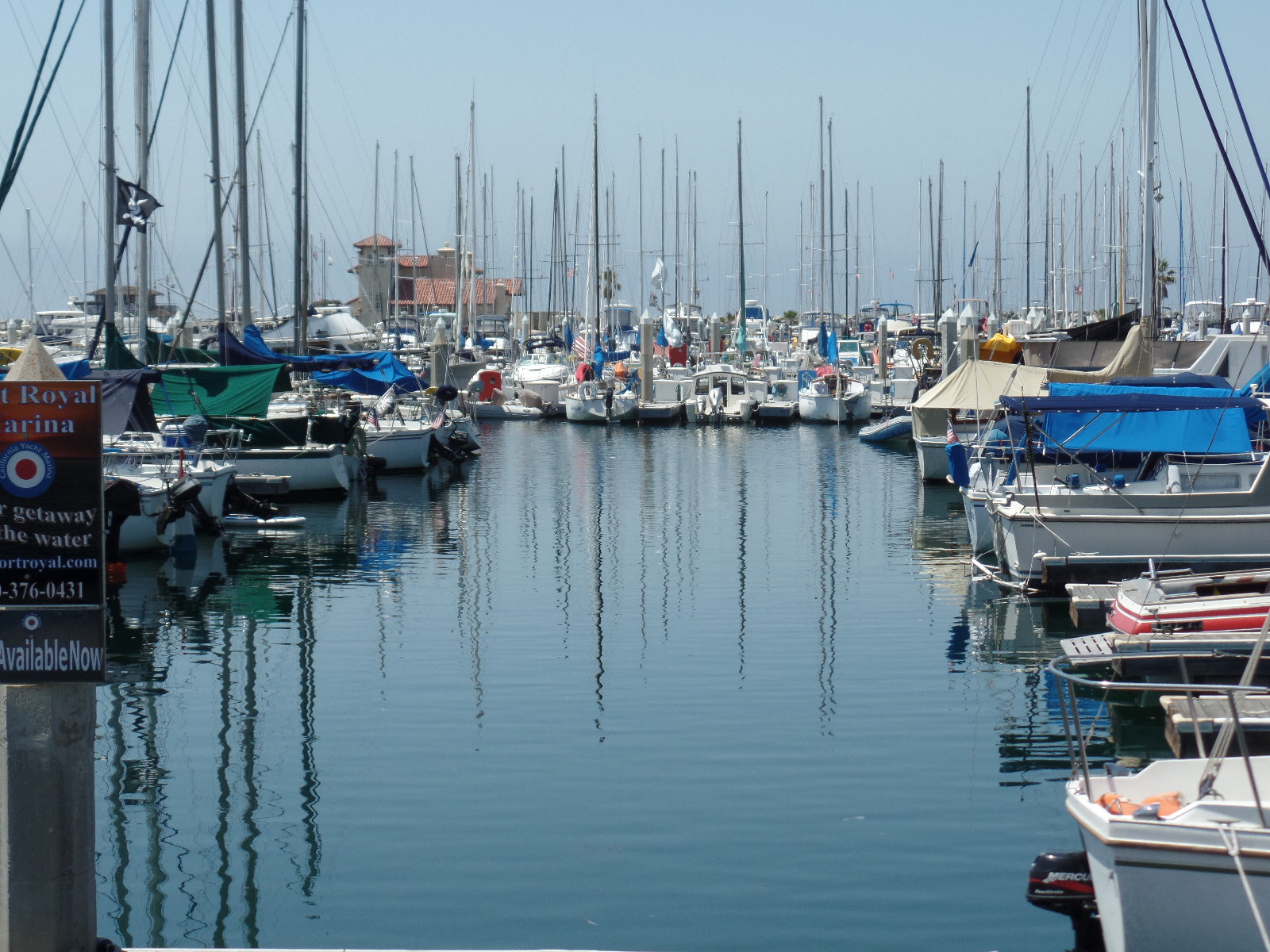
Port Royal Marina

Port Royal Marina

Sea lions at Redondo Beach

Manhattan Beach

Hollywood Bowl

Getty Center

Santa Monica

What brings me to Santa Monica? The Border Grill

What brings me to Santa Monica? The Border Grill

Posted in Travel | Tagged , , , , , , , | 2 Comments

The Future of Car Ownership

The number of cars per 1,000 people in the United States is 809. That is the highest of any large rich country in the world. By comparison, Canada is 607, Japan 588, Germany 582, and the U.K. 519. Depending on whose numbers you believe the number of vehicles per household in the U.S. is either slightly more or slightly less than two.

The automotive industry is the largest manufacturing sector in the country. It is the largest retail business. And it accounts for 4.5% of private sector employment in the U.S.

But there are many recent statistics that suggest that car ownership has peaked and may be on a downward slide. According to Advisor Perspectives, an investment research company, the number of miles driven in the U.S. peaked in 2005 and has declined every year since. There are other studies that show a decline in interest in owning cars or in even getting a driver’s license.

Not all of the stats are headed in that direction. Industry sources predict that car sales in 2015 will be 2.4% over last year. And in the developing world it appears that folks in Africa, Asia and Latin America are buying cars as soon as they can afford them.

What is particularly noteworthy is the apparent lack of interest in car culture among younger Americans. The consumer group US PIRG found that driving by young people (16-34) decreased 23% between 2001 and 2009 (Millennials in Motion). The AAA Foundation for Highway Safety reported that between 1996 and 2010 the percentage of high school seniors with drivers licenses dropped from 85% to 73%.

There are some compelling reasons why society at large might welcome a decline in car ownership. Transportation is the second largest producer (behind power plants) of gas emissions. Cars take up more space per person than any other form of transit. In 2013 (most recent DOT stats), 32,000 people died as a result of motor vehicle accidents. The Economist estimated that one rental car can take the place of 15 owned vehicles (Seeing the Back of the Car).

taxi cab

(unsplash)

But the reasons cited for what appears to be the beginning of a decline in car ownership are more personnel. The redevelopment of urban centers as attractive places to live, particularly for young people, makes car ownership both more expensive and less necessary. More young people socialize online and shop online. Most of us hate the traditional car buying process and we all hate traffic.

There are also some pretty substantive economic issues like the cost of vehicles, gas and insurance, the later being especially high for young drivers. For college graduates, the growth in student loans may have put the squeeze on other types of loans.  The rise of telecommuting has lessened the need for the car-based commute.

At this point what we are seeing is what has been termed “car peak.” But there are also some things on the horizon which could totally transform private car ownership: technology and the rise of the on-demand, sharing economy.

Automotive technology is clearly headed in the direction of the driverless car. A study by the University of Michigan Transportation Research Institute predicts that driverless cars would cut car ownership in half. Their conclusion is largely based on calculating the number of two-car and multi-car households that would no longer need more than one vehicle.

No more room

(kevinrosseel)

But even without the autonomous car, ride-sharing services like Uber and Lyft and car sharing services like Zipcar are beginning to raise questions about the value of owning your own car. For urban dwellers in particular, who in addition to car payments, insurance, maintenance and gas, also may have to pay a couple hundred dollars a month in garage fees, ownership is starting to look like a less-advantageous option.

By the end of last year, Uber said it was providing a million rides a day. Zipcar now has 900,000 members using 10,000 vehicles.

At some point these two developments, driverless cars and ride sharing services, will merge. If you can, with a couple of clicks on your phone. summon a driverless car that will show up in a couple minutes and economically take you wherever you’re going, it starts to look a lot better than bringing your own car in for an oil change every few months.

I am part of a two car family, despite the fact that neither my wife nor I drive to work. If I were to add up all the costs associated with these two cars and compare it to having one or both of us use a ride sharing service I’m not sure it would make sense. I’ve probably never gotten over the 17-year-old view, that an available car means freedom. Pretty soon I might have to think this through again.

Posted in Technology | Tagged , , , , , , , , | 25 Comments

The View From the High Line

EinsteinThe High Line is a 1-1/2 mile long elevated park on Manhattan’s west side. It runs from the meat packing district to the area near the Javits Convention Center. These photos are mostly taken in the Chelsea area between 11th and 23rd streets. The park was built on top of the tracks of a disused railroad line. Construction began in 2006 and it was opened in three stages, with the final piece completed in 2014.

mural painter

residences

fountain

walkway bridge

Posted in Travel | Tagged , , , , | Leave a comment

Can-Am ’15: A Season of Images

The Last Game

Trois-Rivieres Aigles 2, New Jersey Jackals 1

Skylands Park

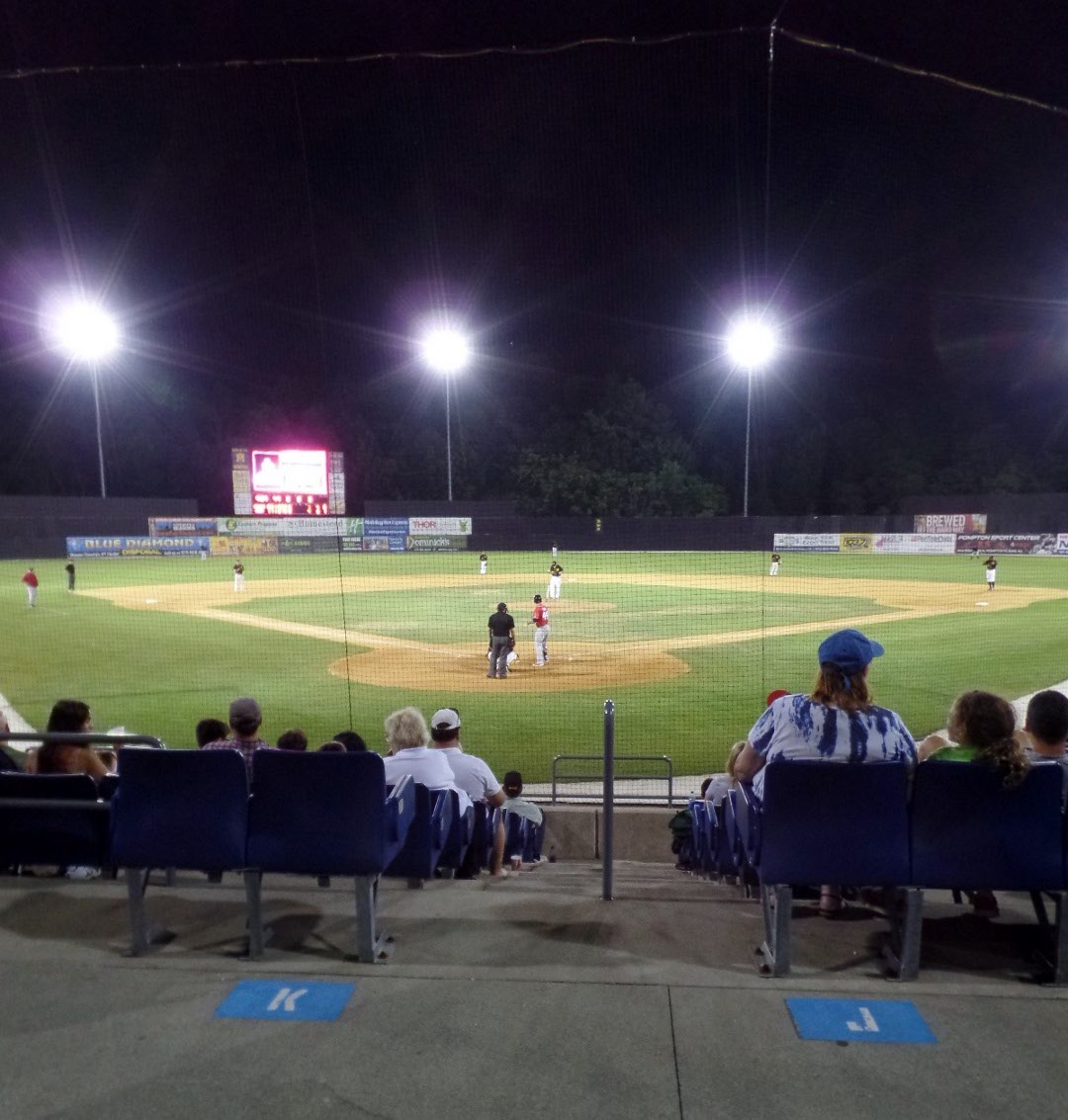
Baseball returned to Skylands Park in Augusta, N.J. after a four-year absence. The Sussex County Miners joined the Ottawa Champions as expansion teams in 2015

Yogi Berra Stadium

The New Jersey Jackals welcomed their new local rival Sussex County Miners in this early season game. The Jackals have been without an in-state rival since the Newark Bears folded after the 2013 season.

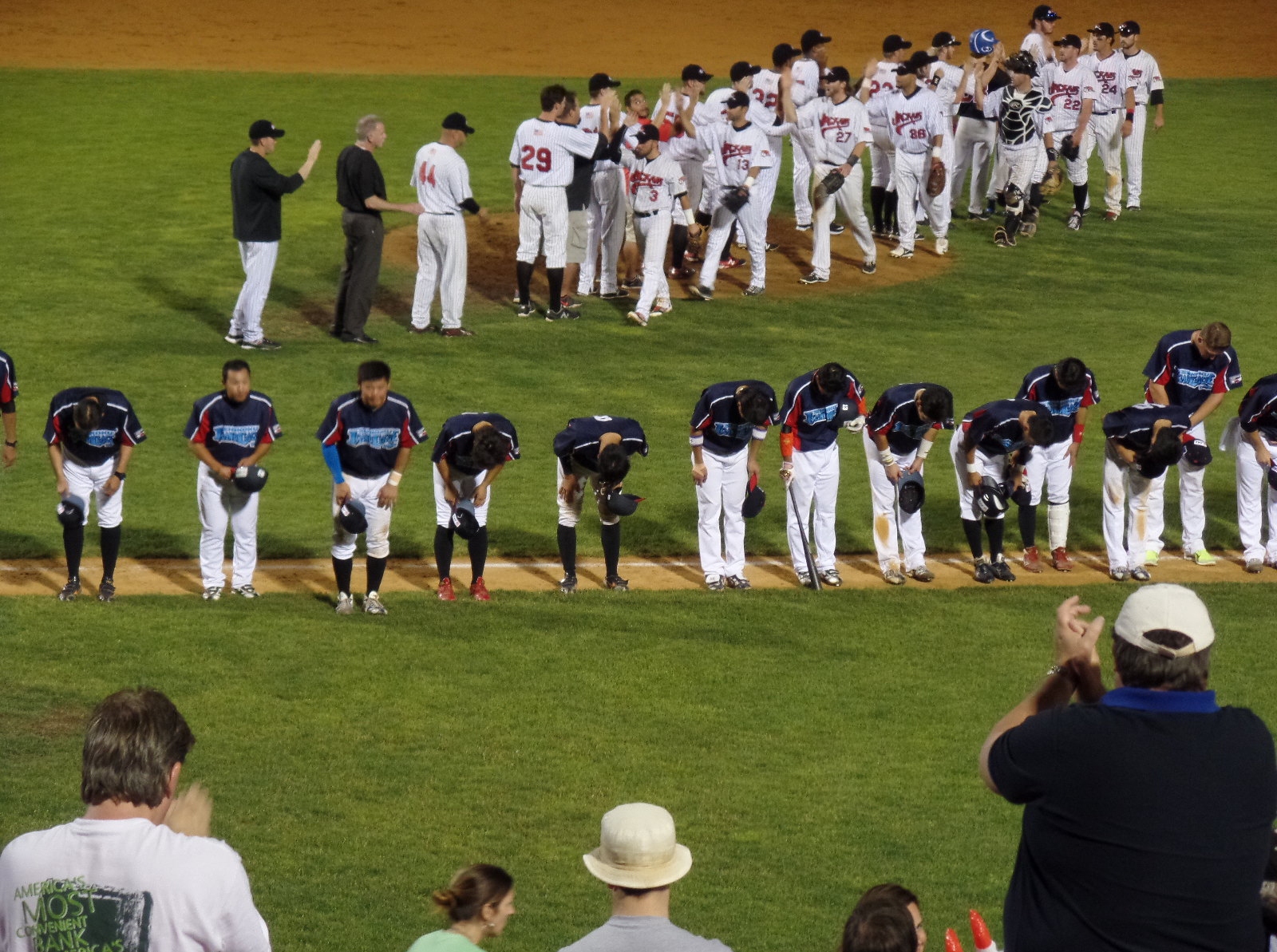
Shikoku All-Stars

International baseball was added to the schedule this year as the league hosted the Shikoku Island All-Stars. The Japanese team, shown here taking a bow, visited all 6 Can-Am League stadiums and compiled a 6-10 record.

Aigles at Rockalnd

The Trois-Rivieres Aigles were the last team to quality for the playoffs, edging the Ottawa Champions for 4th place in the final series of the season. They then shocked the defending champion Rockland Boulders in a five-game series, winning the deciding fifth game 7-2 at Provident Bank Park. Photo above is from a earlier visit to Rockland by the Aigles.

Quebec bats

Les Capitales de Quebec defeated the New Jersey Jackals in the Can-Am League finals for three straight years between 2011 and 2013. The Jackals gained some revenge this year beating Les Capitales 5-4 in the deciding game five of their semifinal series at Le Stade Municipal

The Aigles are champions

The Trois-Rivieres Aigles, in only their second year in the league, won their first Can-Am League championship in a five-game series. For the New Jersey Jackals it was the fifth straight year they have lost in the final series.

Posted in Baseball, Sports | Tagged , , , , , , , , | 3 Comments

Can Techies and Makers Save Our Cities?

Is civic tech the answer to rebuilding our cities? Is this a way to address rotting infrastructure, high unemployment and a history of failed governance? There’s probably no better case study to look at in America than Detroit. And that’s what this week’s Techonomy Detroit Conference, held at Wayne State University, was about.

Detroit skyline

(ellemclin)

There are a whole range of apps that offer the opportunity to increase civic engagement and to improve not just the perception but the actual performance of local government. One example in Detroit is an app that allows citizens to report problems to the city from their smartphones. Things like gaping potholes or dead traffic lights get routed automatically to the appropriate parties in government and the person who reports the problem gets an immediate response and follow up.

Policing is another area where technology can play a critical role. We’ve seen in recent weeks how body cams have been posed as a way to protect citizens against over-aggressive policing and to protect officers against unwarranted allegations. Apps that connect residents with the police department offer some promise in both making neighborhoods safer and in improving police-community relations.

Like many post-industrial cities in the U.S., Detroit’s downfall was loss of jobs. It was particularly acute here because of the city’s dependence on a single industry, automotive. One conference speaker, Carl Bass, CEO of Autodesk, noted. “We aren’t going to reinvent factories with tens of thousands of jobs.” While the auto industry could indeed return to the Detroit, it will come back with robots doing what those tens of thousands of workers used to do.

abandoned plant

(gellinger)

One answer put forward at the conference was the growth of local, low-volume manufacturing as a replacement for giant global manufacturers. The maker movement was described by Peter Hirshberg of the Re:Imagine Group as something that is key to the reinvention of cities, “something with Franklin written all over it.”

Detroit Mayor Mike Duggan talked about Detroit’s efforts to support budding entrepreneurs and would-be manufacturers. A program called Motor City Match puts entrepreneurs in touch with professionals who can help them with business plans, real estate experts who can help them find locations and architects and contractors who can advise on build-outs.

During the conference a number of trends were identified that are encouraging the application of civic tech in urban areas.

  1. College graduates and young entrepreneurs have shown a preference for locating in urban areas.
  2. The cost of prototyping and getting started has been substantially reduced with the cloud and with 3-D printing.
  3. James Fallows of The Atlantic, who moderated one of the sessions, described what he called a reverse talent migration. Real estate costs in cities like New York, San Francisco and Los Angeles are pushing entrepreneurs and start ups to more affordable places, including Detroit.
  4. Fallows also pointed to the general “despair about national level politics” as something that is making Americans more interested in local level issues and government.

One of Duggan’s goals is to “create a city where entrepreneurs want to come.” But maybe even more important is to show this opportunity to the young people who are growing up in the city. “You can move up to be your own boss,” Duggan said. “something young people in Detroit haven’t seen as a viable alternative.”

Posted in Technology | Tagged , , , , , , | 17 Comments