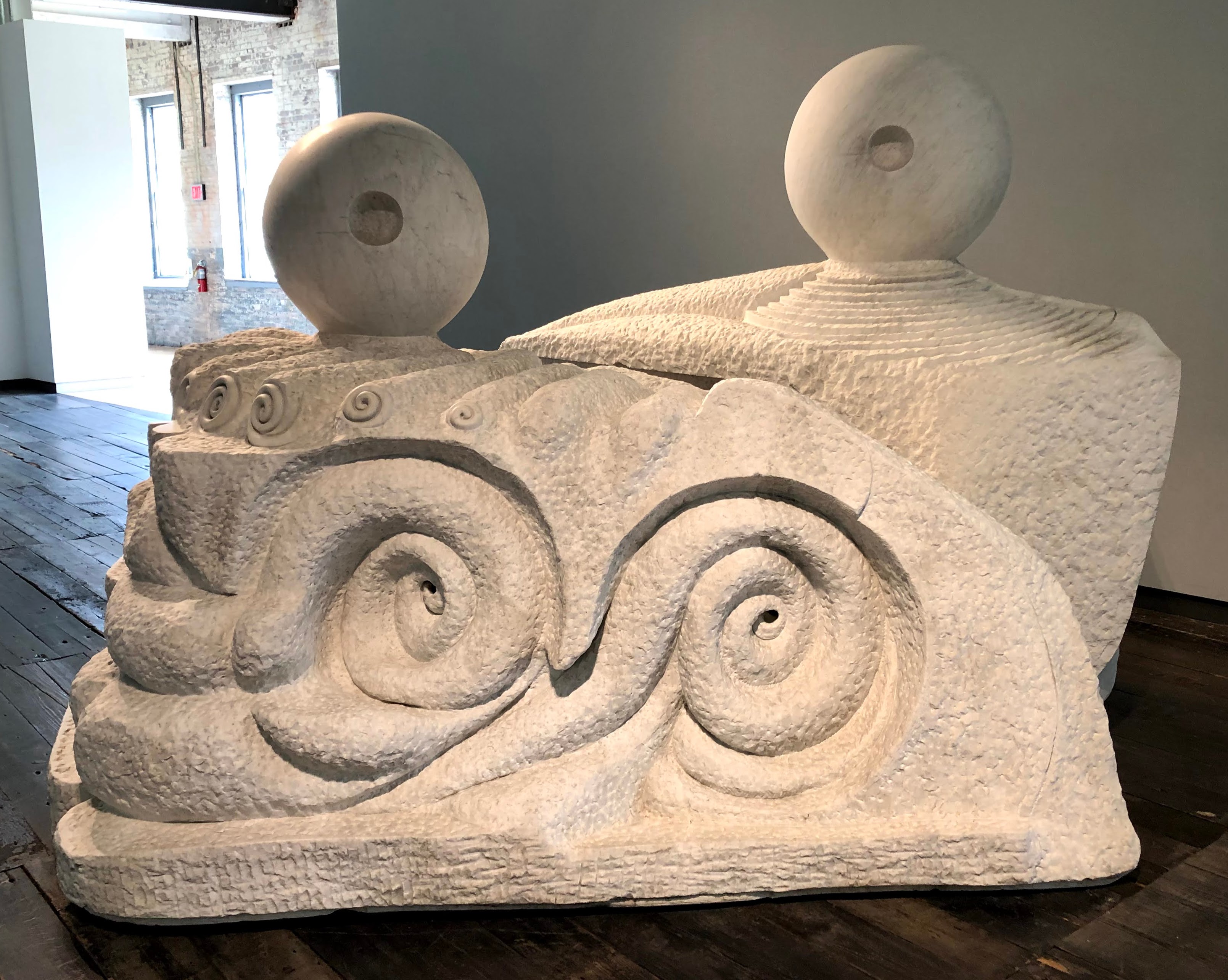
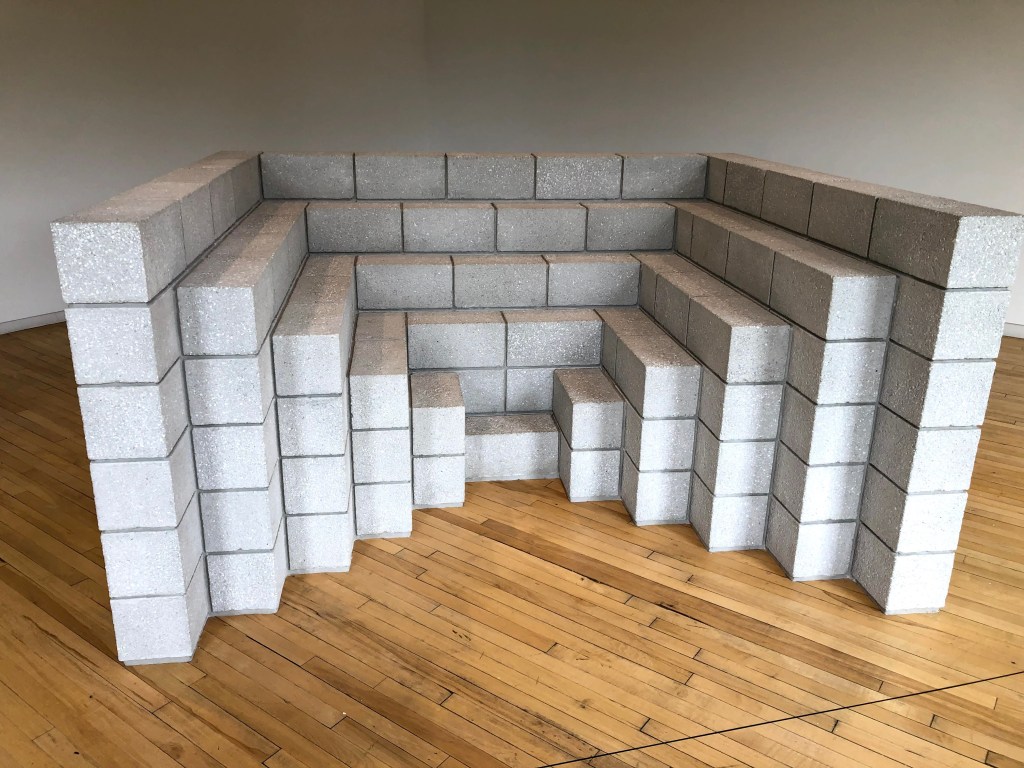
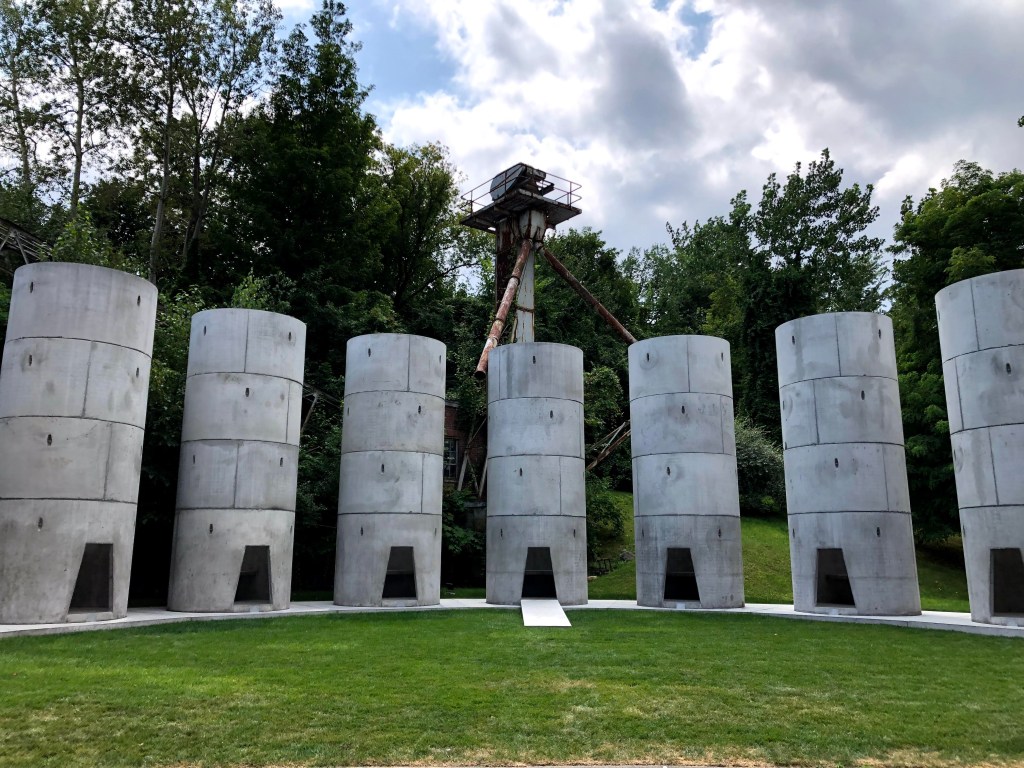
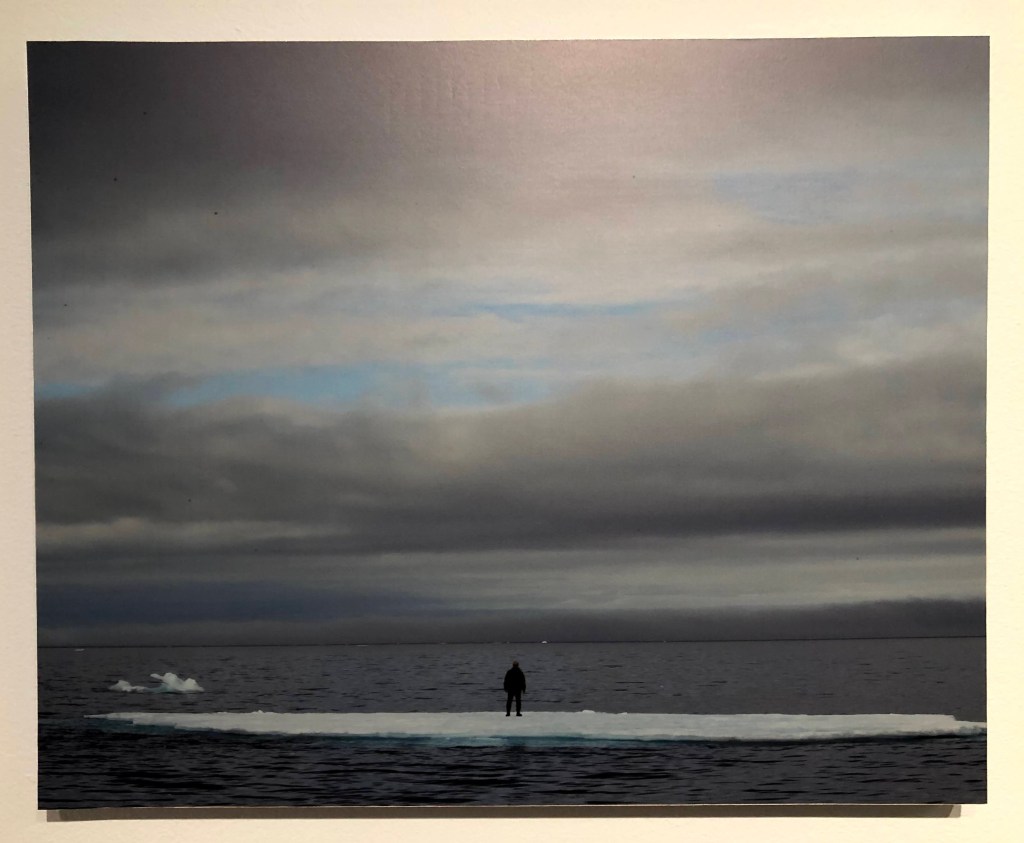
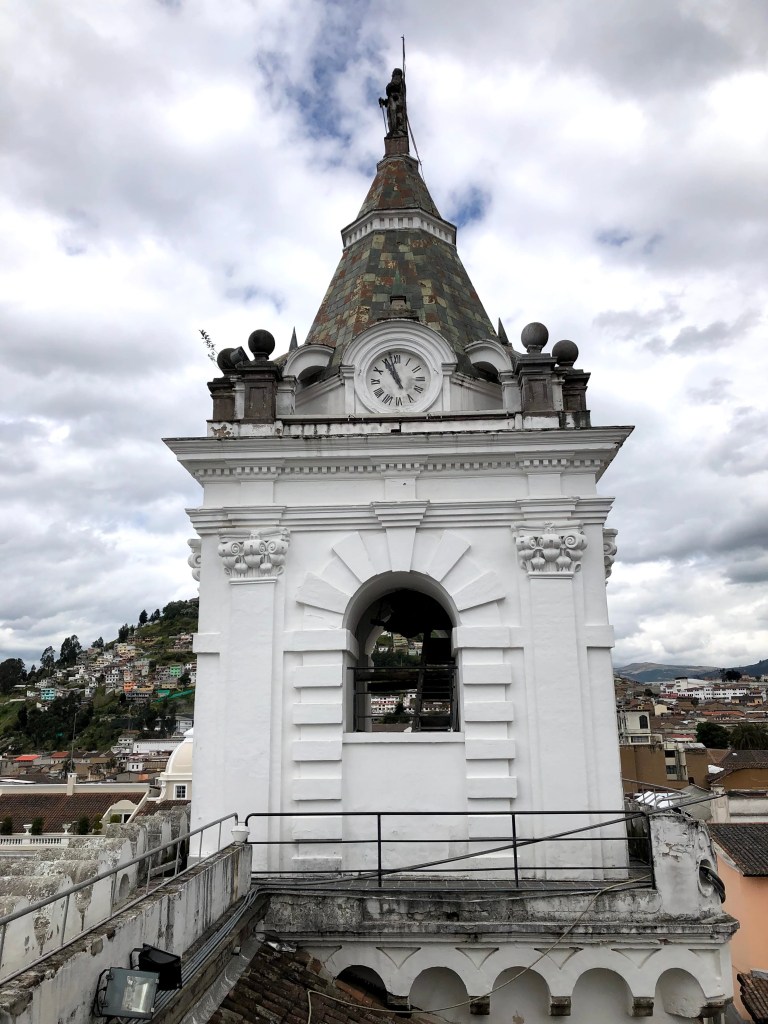
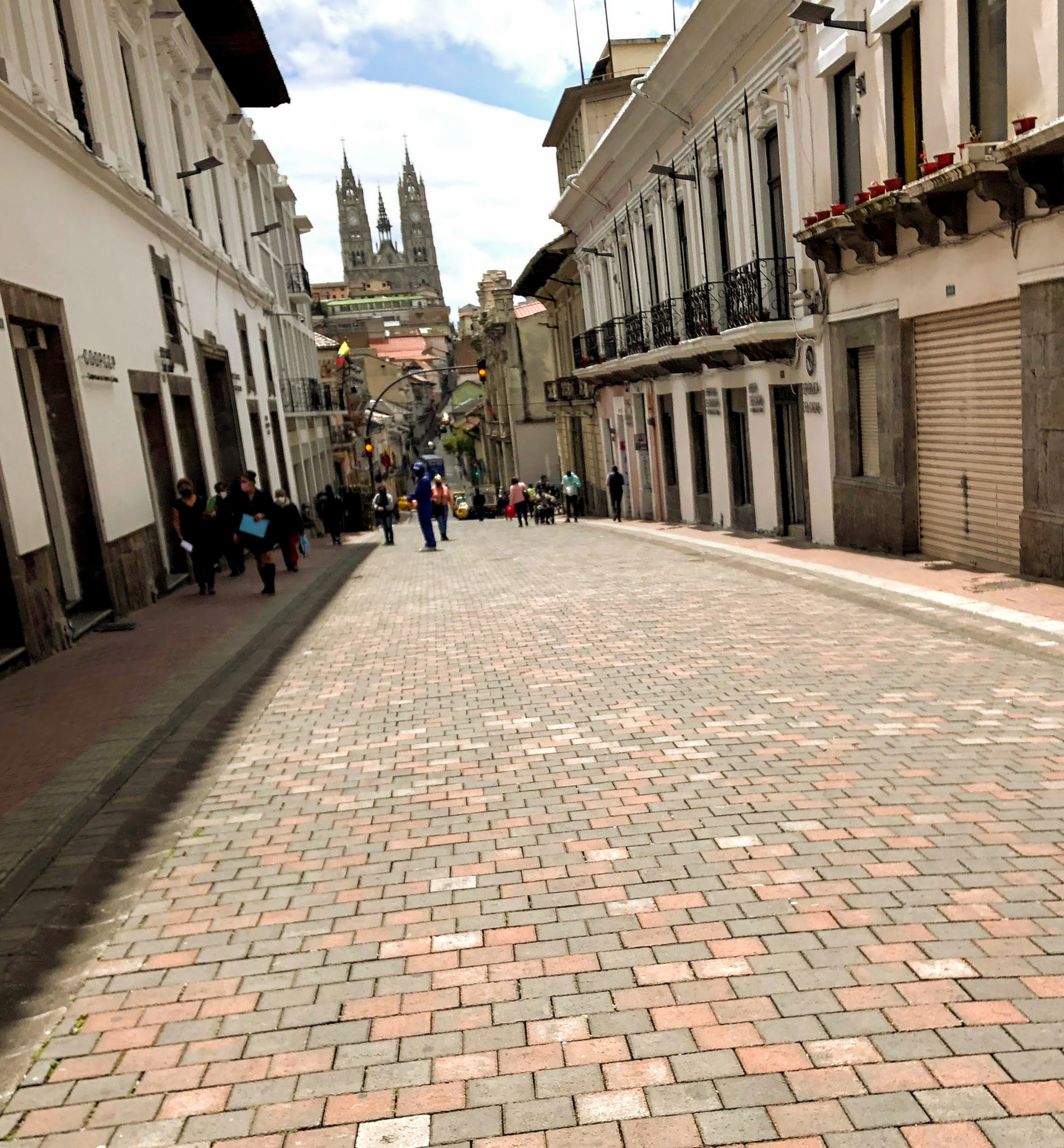
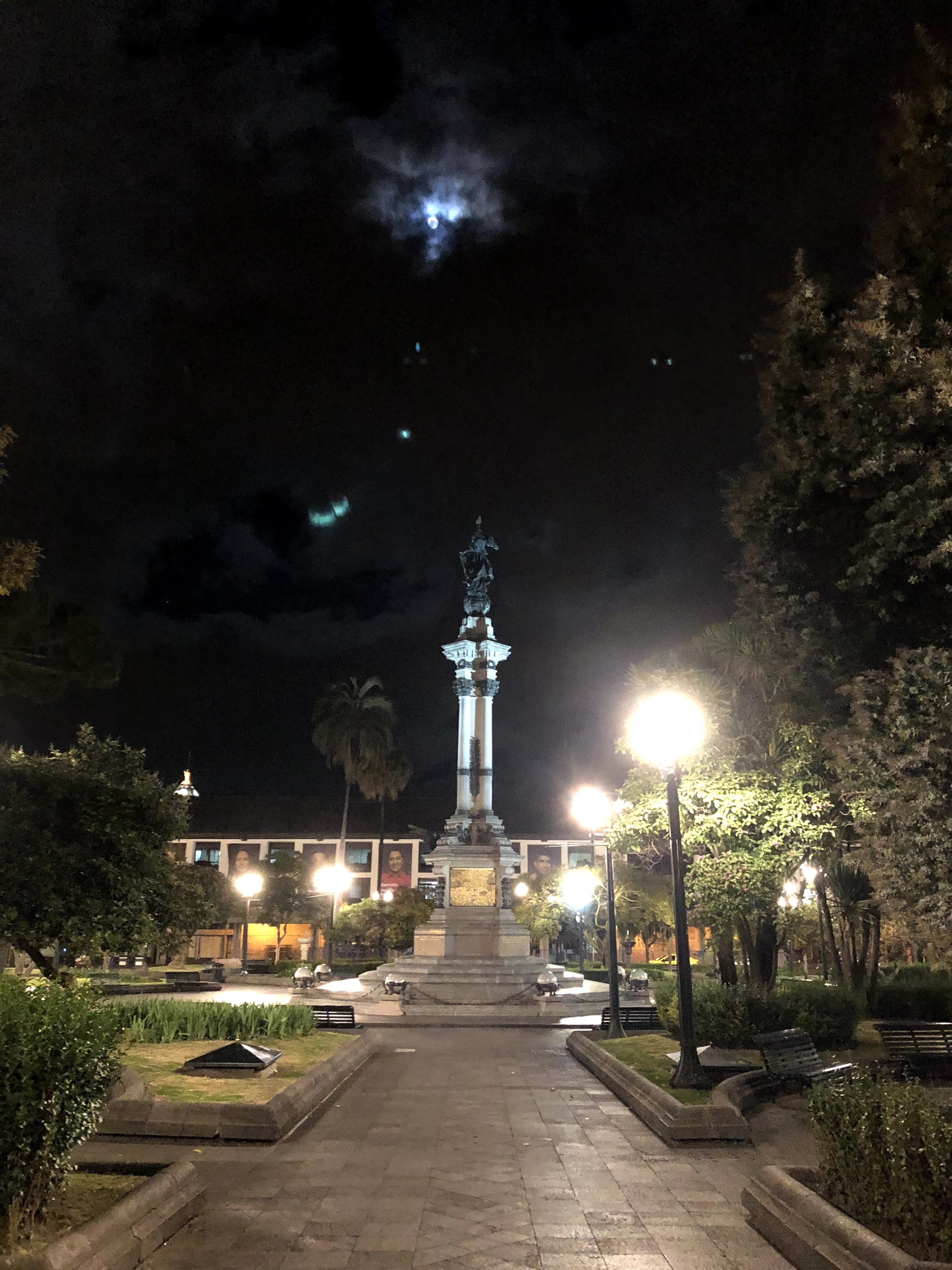
Crown Fountain opened in 2004 with the opening of Millennium Park (four years late). The 50-foot high video sculpture was designed by Spanish artist Jauna Plensa. There are some 900 videos of Chicagoans that appear on the fountain for about five minutes at a time.
Cloud Gate
British sculptor Anish Kapoor named his piece Cloud Gate. Chicagoans renamed it The Bean. The design in based on liquid mercury. It was built with 168 steel plates, but there is not a seam to be seen. It opened in 2006.
Jay Pritzker Pavillion
The Millennium Park amphitheater is home to musical performances and shows of all types. Designed by Los Angeles architect Frank Gehry, it has 4,000 seats, behind which is a 95,000 square foot Great Lawn.
Chicago artist Christine Tarkowski named this installation: “When we call the Earth by way of distinction a planet and the Moon a satellite, we should consider whether we do not, in a certain sense, mistake the matter. Perhaps – and not unlikely – the Moon is the planet and the Earth the satellite! Are we not a larger moon to the Moon, than she is to us?”
Most slang words fall into a handful of categories. Among the most common:
Body parts.
Sex acts.
Racial, ethnic or gender slurs
Fools
Since the first three categories are completely off limits for this ‘I don’t want to offend anybody’ blog, I’ve had to double down on the fourth category for the Wednesday’s Word series. Already I’ve covered prat, nincompoop, berk, jerk, and goober. Today’s entry is hoople.
Perhaps I’m showing my age when I say that when I hear the word hoople, the first thing I think of is this:
It turns out that the 70’s rock band Mott the Hoople was named after a book. An American author, Willard Manus, wrote a novel titled Mott the Hoople in 1966. I haven’t read it, but from the reviews I take it that the main character Norman Mott was a lazy dude who thought up various scams so as to avoid work. Manus himself borrowed the term hoople from a syndicated newspaper cartoon strip called Our Boarding House, an establishment overseen by the proprietress Martha Hoople.
Hoople is also a place. There is a town by that name in North Dakota with a population under 250. It was named after an early settler Alan Hoople. Hoople is the home of Southern North Dakota University at Hoople, an institution that exists solely in the imagination of composer/comedian Peter Shickele, who is also the mastermind behind the equally fictional P.D.Q. Bach.
My understanding of the word hoople goes back to the days when I was a teenager working in an ice cream store in Clifton, N.J. Whenever one of us, in our youthful state of distracted nonchalance, would screw something up, our boss would pronounce the offending party a hoople. He was a cheerful guy and it was said in a jocular, not abusive manner. Thus I think of hoople as somewhat synonymous with goofball.
In that vein there is a variation, hooplehead, defined by slanglang.net as “an idiot. He’s stupid, ignorant and illiterate.”
Not too many of the dictionaries seem to want to consider hoople. But the Urban Dictionary has no such reservations and here’s some choice entries:
–A useless or self-serving organization. A wasteful business run by incompetents. A public sector organization with no useful purpose other than to generate paperwork, internal reports and provide incomes for its executives.
–A derogatory term describing or referring to an unsophisticated person from a rural background or community. Sometimes disparaging. A white member of the Southern rural laboring class. A person who is an irresponsible or unscrupulous operator in business and pleasure.
–A person who frequently drinks alcohol to excess; to the point where it becomes his or her defining characteristic.
–A bird that cannot fly straight. Someone not responsible with money.
The glass house at the Cleveland Botanical Garden is a replica of a cloud forest. It is modeled after the forest in Monteverde, Costa Rica. I have neither the equipment nor the patience to come up with pictures of butterflies, but there are so many here you can’t miss them.
And that’s not all. You can draw water from a well or draw water for a bath. If you have a regular job, you likely draw a salary. If not, you may buy lottery tickets and hope to draw a winning number. If you do win some money it might be wise to draw up a will. You can draw straws and if the outcome is not so good for you, it can be said you drew the short straw.
There are all sorts of draws in the world of sports. In hockey it is a face off. In baseball, if the pitcher throws four balls, you’ve drawn a walk. There is a football play called a draw which is a running play that is designed to fool the defense into thinking you’re going to pass. In golf, a draw is a shot that hooks to the left (if you’re right-handed).
The draw. (John Macarthur)
Sports played in a tournament format will sometimes have a draw to determine who plays who. If you get a particularly easy or difficult opponent, it is said to be the luck of the draw. Popular teams or athletes are good draws and when they play they are likely to draw a large crowd. And if a game or match ends in a tie? You guessed it.
(Andrew Gearhart)
Draw can also be a thinking person’s word. If you are honing in on something, you are drawing a bead on it. You may draw a comparison that will help you draw a conclusion. But you might also draw a blank, which means it’s back to the drawing board.
And with that, the end draws near for this week’s Wednesday’s Word.
–an annoyingly stupid or foolish person (Merriam-Webster)
–a contemptibly naive, fatuous, foolish, or inconsequential person (dictionary.com)
–a dull, stupid, fatuous person (vocabulary.com)
–a person regarded with contempt, esp. a stupid or ignorant person (Collins English Dictionary)
Or, if we go to the Urban Dictionary, we find some more specific types that qualify under that heading:
— a person who does not use their turn signal.
— final stage of evolution of any male who spent at least one year dating in America, no matter his origin (very likely entered into this crowd-sourced dictionary by a woman)
— mandatory mindset for self-survival within corporate America
There are other definitions of jerk, I just chose to focus on the most colorful one. Commonly, jerk is used as a verb to describe a quick, sudden movement. You may jerk your dog’s leash when you see he’s about to investigate a dead varmint. Or a magician might jerk a tablecloth out from under a set table without breaking any dishes.
soda jerk
In the Caribbean, jerk suggests something to eat. It is a style of cooking, usually meat, that involves a dry rub and a wood fire. If you’re lifting weights, a jerk gets the bar up skyward.
What’s curious about the word jerk is how it can be transformed by adding a few letters here and there. A tearjerker is so sad it literally makes you want to cry. Usually this is used to describe a book or movie.
There is no consensus as to whether proper usage is jerkoff, jerk-off or jerk off. I’m going to use it as one word. The most literal definition involves male masturbation. But it is commonly used as a more venomous variation of jerk.
Jerk can be used a bit light-heartedly in a teasing, playful manner. But there is no such ambiguity about the intent if you step up to the more pointed jerkoff.
Jerkwater is a dismissive description of something, usually a town or place, as being insignificant. Jerky is a dubious looking piece of dried meat that you chew on, A jerkin is a tight-fitting men’s jacket. (In fact, in all its various definitions, jerk is a very masculine word.)
For example, circle jerk. The dictionaries willing to touch this one describe it as group male masturbation. But I’ve always used it in a completely different way. A circle jerk is a corporate business meeting in which a group of participants sit around a conference table and each competes to hold the floor to describe to everyone else what a brilliant job they are doing. (Likely the same on Zoom.)
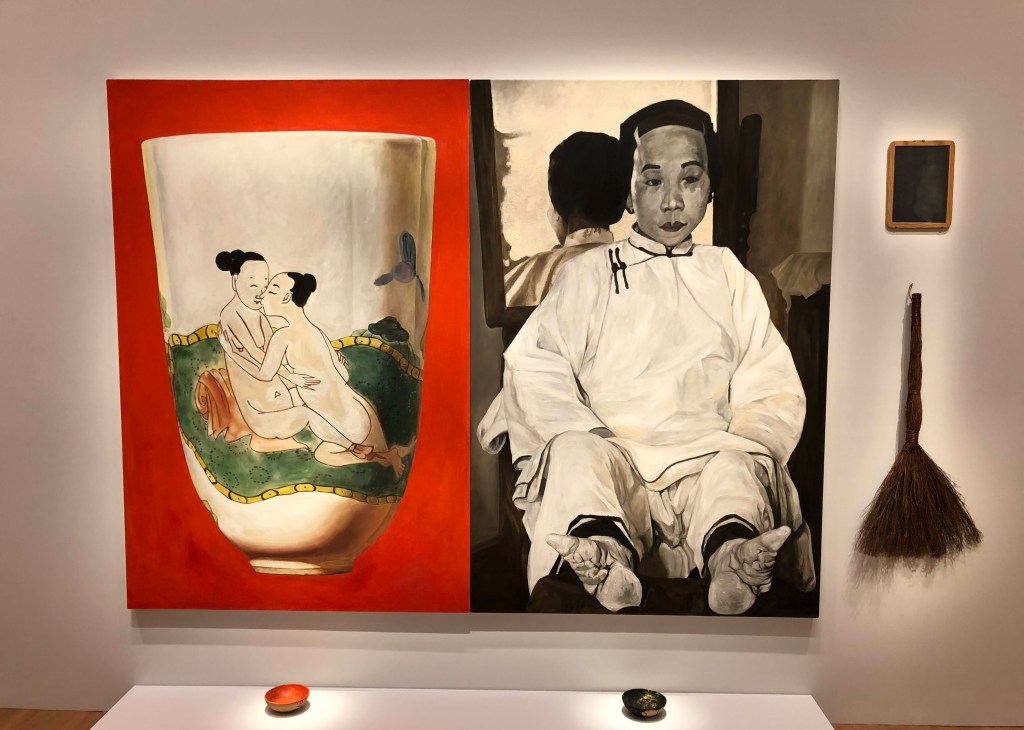
Nataraja, Shiva as the Lord of Dance, 1000s, South IndiaThirty-six Poetic Immortals, Tatebayashi Kagei, 1700s, JapanPiazza San Marco, Bernardo Bellotto, 1740, Italy
Interior of the Pantheon, Giovanni Paolo Panini, 1747, Italy
The Secret Life, Rene Magritte, 1928, BelgiumLe Dejeuner sur l’Herbre, Max Ernst, 1944, GermanyPerseus’s Last Duty, Max Beckmann, 1949, GermanyFountain of Blood, Malangahana Ngwenya, 1961, MozambiqueLot’s Wife, Anselm Kiefer, 1989, German (you can’t tell from my photo, but this is a painting the size of the entire wall)Treasure Box, Ai Weiwei, 2014, China
First of all let’s get the most obvious definition out of the way. Merriam-Webster offers the most complete, if not the most interesting: “the earth’s natural satellite that shines by the sun’s reflected light, revolves about the earth from west to east in about 29¹/₂ days with reference to the sun or about 27¹/₃ days with reference to the stars, and has a diameter of 2160 miles, a mean distance from the earth of about 238,900 miles, and a mass about one eightieth that of the earth.”
And the second most common definition, moon the verb: “expose one’s buttocks to (someone) in order to insult or amuse them.”
Leaving visions of that aside for the moment, what’s more intriguing than the mere definitions is the concept of moon as it is expressed through various moon idioms. The moon is everything and it’s infinity. It can be surprisingly attainable as well as wholly unreachable.
(Image by Stefan Keller)
If you are over the moon, you’re wildly happy. Maybe someone you love has just surprised you with a marriage proposal or you just got a dream job you never expected to get. But if you bark at the moon, bay at the moon, or cry for the moon you’re seeking something you’re not likely to get.
Shooting for the moon implies a long shot, maybe betting on the horse in the race with the longest odds. Doing so means you’re reaching for the moon. You might promise the moon, in which case you are likely offering the moon on a stick.
Many moons ago is a long time in the past and a labor of many moons is going to be a long time to come. If you are mooning away the day, you’re likely not doing much and you could be chided to keep out of the moon. Mooning over movie stars or sports heroes is likely as unproductive.
re
The moon has served as a symbol through the ages. In Greek mythology the crescent moon represents the feminine moon goddess Selene, goddess of female empowerment. Roman mythology views the crescent moon at a bow, used by Diana, goddess of the hunt. In China, the moon is the ying to the sun’s yang, the female moon and the male sun providing a balance.
In most cases, the symbolism of the moon is distinctly feminine. The University of Michigan Dictionary of Symbolism has this to say:
“The moon is a feminine symbol, universally representing the rhythm of time as it embodies the cycle. The phases of the moon symbolize immortality and eternity, enlightenment or the dark side of Nature herself. It might reflect inner knowledge, or the phases of man’s condition on earth, since it controls the tides, the rains, the waters, and the seasons. It is the middle ground between the light of the sun and the darkness of night, and thus often represents the realm between the conscious and the unconscious. In astrology, the moon is a symbol of the soul, and in the horoscope it determines the subject’s capacity for reflection and adaptation. It also provides analogy for the stages of human development: the new moon is infancy, the crescent is youth and adolescence, the full moon is maturity and pregnancy, and the waning moon represents the decline of life, sleep.”
Yayoi Kusama is a 92-year-old contemporary artist from Japan. Known mostly for sculpture and installations, her works are currently on display at the New York Botanical Garden. The NYBG exhibit, titled Cosmic Nature, is focused on the natural world. Originally trained as a painter, Kusama was a follower of 1960’s counter-culture and at one time organized “happenings” with naked participants painted with polka dots. Lots of polka-dots in the new exhibit…but no nudity.
What are these folks doing? They’re juking. Where do you go to juke? A juke joint. What makes them juke? The jukebox.
The word juke is a Gullah word. Gullah is a Creole like language with West African roots that was spoken in the low country of Georgia and South Carolina. While play for pay devices were invented in the late 19th century and began to become popular in the late 1920’s after new models allowed for a much wide selection of songs to be available, the name jukebox didn’t come into play until the 1930’s. Why the name? Likely because of their popularity in the juke joint.
The Gullah word juke translates to “bad, wicked, disorderly.” The term juke joint was applied to what we might today call a dive bar. Mostly they were in the South, in rural areas or at highway crossroads and were predominately frequented by African-Americans. Typically they served up music and dancing. Some also served as brothels.
Bubba’s Juke Joint, Natchez, La.
Today the word juke has many other meanings, but mostly they involve music and motion. Later in the 20th century the juke joint became urban. Chicago was noted for its juke joints and gave rise to a new generation of juke music.
Perhaps the second most common usage of the word juke is in the sports world, particularly in American football. A football player will use a feint or juke to deceive a defender into thinking he’s going one way when he in fact goes the other.
The top-rated definition in the Urban Dictionary offers some alternatives:
To defeat an opponent by using subtlety, cleverness, or a trickery. To force an opponent between choosing between two negative options (both of which benefit you).
To steal from someone else.
To dance while grinding one’s ass against another dancer’s pelvis. This slang is common in Chicago.
To stab another person. This slang is common in South London.
For more regional slang:
Gang slang used by the Jamaican Posse that means to rob or hold up or rip someone off.
And, oddest of all, the author claims this to be common slang in Northeastern Pennsylvania:
“a lower-class white person who has indoor furniture (typically a recliner) on their front porch that they commonly use for ~12 hours a day to oversee the neighborhood happenings. They are usually old, with poor hygiene, smoking cheap cigarettes, drinking cheap beer and/or bottom shelf liquor.”
A number of products have adopted the juke name. Nissan offers a small SUV called the juke. Juke Magazine was an Austalian music industry newsletter published in the 1970’s and 80’s. There’s also a rock band from Australia that goes by the name of Juke Kartel.