A Night at the Drive-In

The drive-in movie theater, a place where I saw so many movies (and did a few other things) while sitting in my car, has for the most part given way to townhouse developments, strip malls and industrial parks. But there are still some left and they’re not that different than they were in the 60’s. Except that you now get the sound over an FM signal on your car radio so you don’t have to hang a speaker from your window and run the risk of forgetting to detach it before you pull out.

Warwick Drive-In

Welcome to the Warwick Drive-In

These photos are from the 65-year-old Warwick (N.Y.) Drive-In. It has three screens, the largest of which is 50 feet high and 70 feet wide, and sits in an open field behind a supermarket and a car dealer. You can still pay one price and watch a double feature. And you’re welcome to bring your dog.  If you want to enjoy a nice weekend night here, come early. There will be nary a parking spot to be had by showtime.

Warwick drive-in

Waiting for showtime.

Snack bar

In the 50’s and 60’s live bands used to perform on the roof of this snack bar.

Car at drive-in.

Now this is the kind of car you’d expect to see at a drive-in.

The first drive-in was built in Camden, N.J., in 1933. There was at one time more than 4,000 of these theaters in the U.S. There are 368 left according to the United Drive-In Theater Owners Association. But that number is two more than last year, so maybe they’re on their way back.

Melissa and Aidan at the drive-in.

Sure beats sitting home and watching on movie on your iPad.

Drive-in screen

Warwick Drive-In

Posted in Uncategorized | Tagged , , , , | 4 Comments

Before There Were Amusement Parks

Amusement parks as we know them did not come into being until the latter part of the 19th century. But there were a host of predecessors, some dating back to the middle ages, ranging from beer gardens to world expositions. Each played a role in influencing what we would come to know as an amusement park.

Bartholomew Fair

Bartholomew Fair

Fairs were one of the earliest forms of public recreation and entertainment and one of the most famous was London’s Bartholomew Fair. Chartered by Henry I in 1143 it had an amazing run that lasted for more than seven centuries. Over the years there were musicians, prize fighters and wrestlers, tight-rope walkers and acrobats and of course an ample supply of beer, tobacco and food.  Roast pork was a staple.

A visitor in 1815 reported seeing a “learned pig” which, despite being blindfolded, could tell the time. And a report from the 1825 fair describes an elephant that could uncork bottles. The fair also developed an underbelly of pickpockets and prostitutes active on the Bartholomew grounds. The latter were gently named “soiled doves.” And if you couldn’t find a soiled dove to your liking in the tents on the fairgrounds, there was apparently an ample supply on the nearby and aptly named Cock St.

The Bartholomew Fair’s run ended in 1855, closed down by the city because it was perceived as encouraging debauchery.

It is also in England where another of the predecessors of the amusement park took shape. Pleasure gardens flourished there in the 17th and 18th centuries. True to their name, they were most often gardens that you could walk through and find various entertainments such as music and exhibitions and of course food.

One of the most famous of the pleasure gardens was Vauxhall Gardens. It opened in Kensington on 12 acres in 1661. By the end of the 18th century, Vauxhall Gardens began charging admission, something that would be a standard feature of the amusement parks that succeeded it.

Vauxhall Gardens

Vauxhall Gardens

One of Vauxhall Gardens’ more illustrious visitors was none other than Charles Dickens. Writing in Sketches by Boz,  here’s how Dickens described the scene:

We paid our shilling at the gate, and then we saw for the first time, that the entrance, if there had been any magic about it at all, was now decidedly disenchanted, being, in fact, nothing more nor less than a combination of very roughly-painted boards and sawdust. We bent our steps to the firework-ground; there, at least, we should not be disappointed. We reached it, and stood rooted to the spot with mortification and astonishment. That the Moorish tower—that wooden shed with a door in the centre, and daubs of crimson and yellow all round, like a gigantic watch-case! That the place where night after night we had beheld the undaunted Mr. Blackmore make his terrific ascent, surrounded by flames of fire, and peals of artillery, and where the white garments of Madame Somebody (we forget even her name now), who nobly devoted her life to the manufacture of fireworks, had so often been seen fluttering in the wind, as she called up a red, blue, or party-coloured light to illumine her temple.

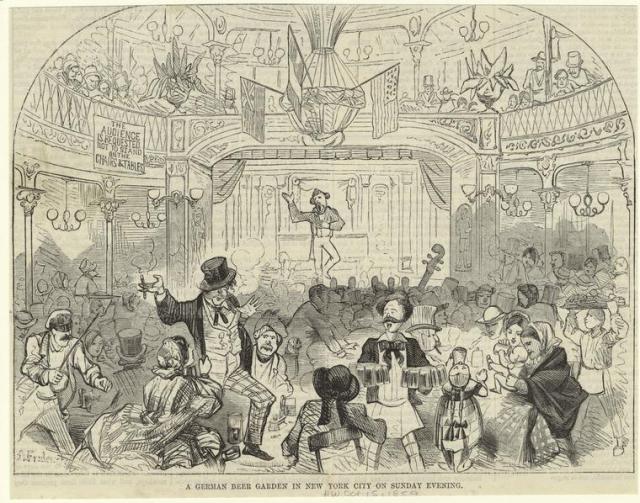
In America, the wave of German immigration in the last half of the 19th century introduced us to a Germanic variation of the pleasure garden, the beer garden. It is perhaps here that many Americans were introduced to German style lagers, and maybe some schnitzel and wurst as well. Some of these beer gardens became quite elaborate with entertainments like shooting ranges and bowling alleys and perhaps a classical music performance. Others were little more than a row of tables where you could keep your focus on the brew.

Beer garden

German beer garden in New York City

Perhaps the events that most directly shaped the earliest amusement parks were world’s fairs. The first world’s fair was held in London in 1851 with its famed Crystal Palace, a 990,000 cast iron and plate glass structure that housed more than 14,000 exhibitors. But when it comes to influencing the latter day amusement park, no event had a greater impact than the World’s Columbian Exposition in Chicago in 1893.

One of the Chicago fair’s contributions that became a standard for amusement parks to this day was the midway. The midway was conceived as a rather high minded cultural educational endeavor. It included such attractions as an African village and a “Streets of Cairo” exhibit. But it also brought some entertainments that were rather edgy back in 1893, like belly-dancers. And one suspects that there was a fine line between cultural enlightenment and voyeurism on the world’s first midway.

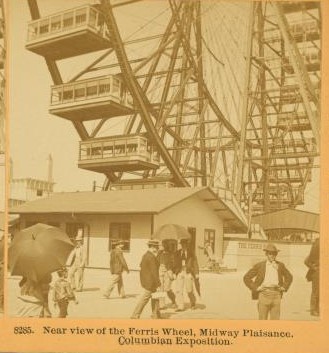
the first ferris wheel

The ferris wheel at Chicago’s Columbian Esposition

One of the grandest of attactions on Chicago’s midway was the first ferris wheel, something that no amusement park ever since could be without. George Ferris’ invention was conceived by fair organizers as Chicago’s answer to the Eiffel Tower, unveiled during the 1889 Paris world’s fair. Ferris’ wheel was 264 feet tall, its cars could hold 60 passengers and it took 20 minutes to make one complete revolution.

In next week’s post I’ll take a look at the first amusement parks and some of the oldest parks that are still in operation today.


Posted in History, History of Amusement Parks | Tagged , , , , , , , , , , , | 23 Comments

Is it the Duomo? Or is it Lego?

The Lego Duomo at Milan’s Malpensa Airport

Lego Duomo

Lego Duomo

And the real thing

Milan Duomo

Milan Duomo

Milan Duomo

Posted in Travel | Tagged , , , | 2 Comments

Firenze 2016

PIazza in Florence

vespas

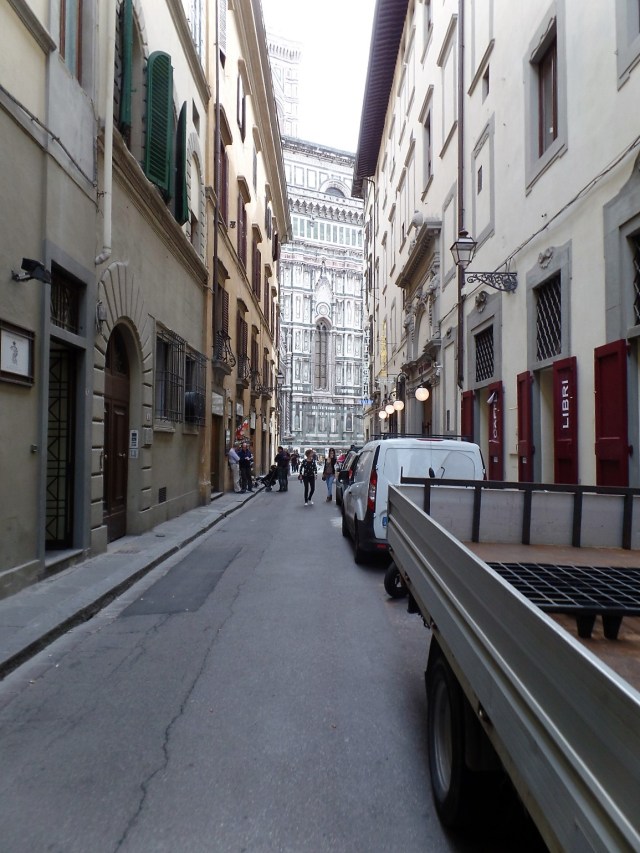
Heading to the Duomo

Duomo clock

winding street

Florence bridges

River in Florence

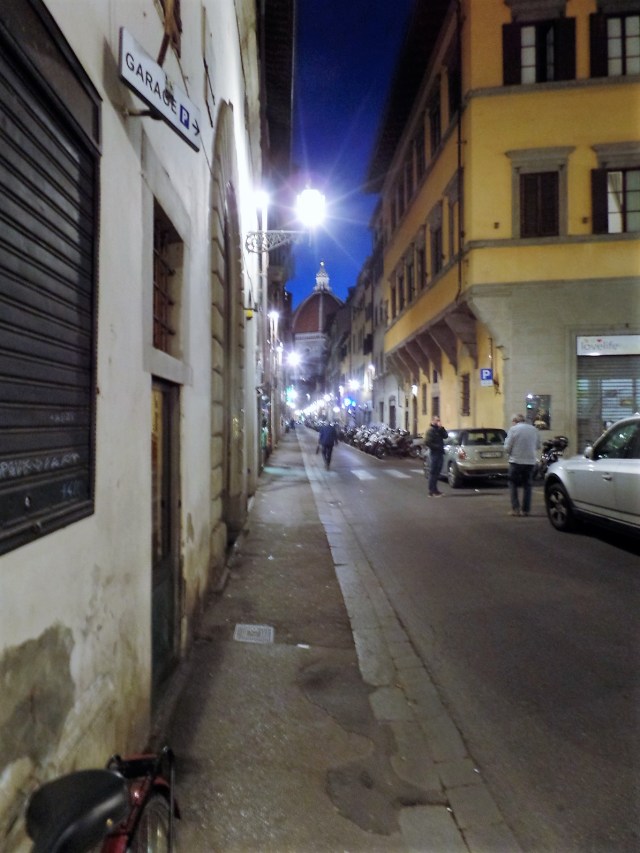
night street

Posted in Travel | Tagged , , , | 15 Comments

Art Florentine

The David

Galleria dell’Accademia

Rape of the Sabines

Rape of the Sabines, Jean de Boulonge, 1582

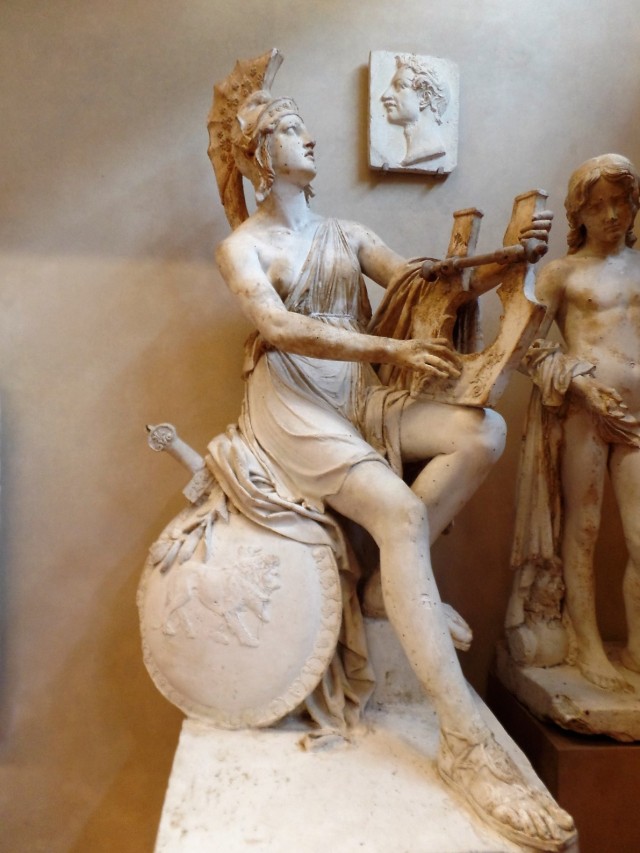
Bartolini sculpture

Monumento de Adam Albrecht Adalbert Conte di Neipperg, Lorenzo Bartolini, 1832

Galleria degli Uffrizi

Tribuna at the Uffrizi

The Tribuna. In the forground is the Sythian Slave, produced in the 2nd Century AD. Behind is the Medici Venus which dates back to 1st Century BC.

Piero Della Francesca portraits

Portraits of Duke Federico de Montefeltro and His Duchess, Piero della Francesca, 1465

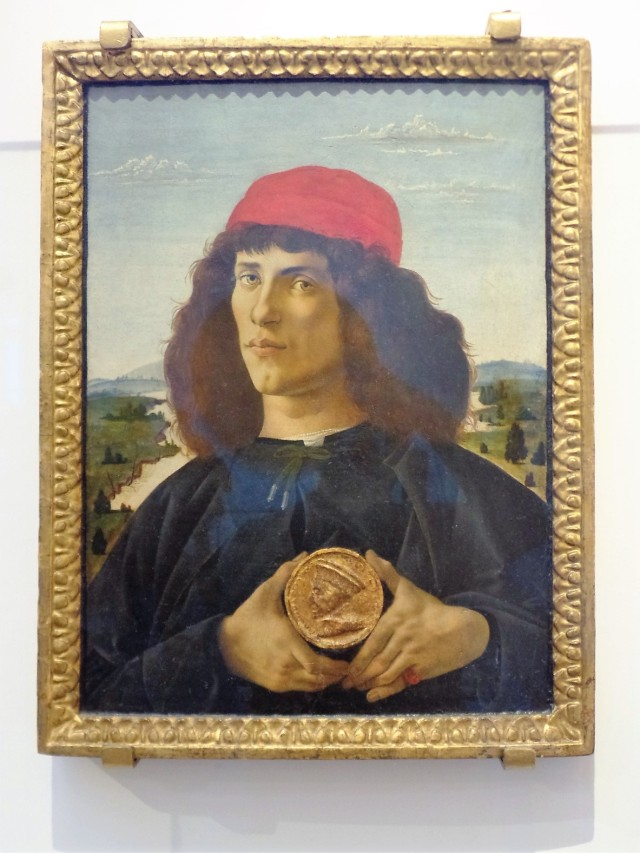
Botticelli portrait

Portrait of a Young Man with Medal, Sandro Botticelli, c. 1475

Duomo Florence

Florence Duomo

Giardino della Gherardesca

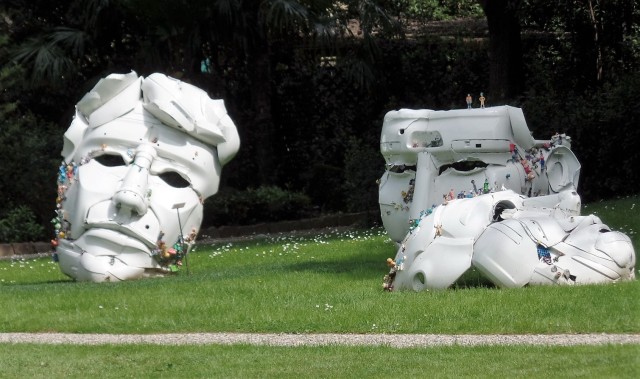
Garden sculpture

Swimming in the garden


Posted in Art, Travel | Tagged , , , , , , , | 17 Comments

Rome’s Religious Footprint


Church in Rome

The Pantheon — the current structure is believed to have been built between 118 and 125. Originally it was a temple dedicated to the gods of pagan Rome. After the 7th century it was used as a church and was known as Santa Maria Rotonda.


Rome

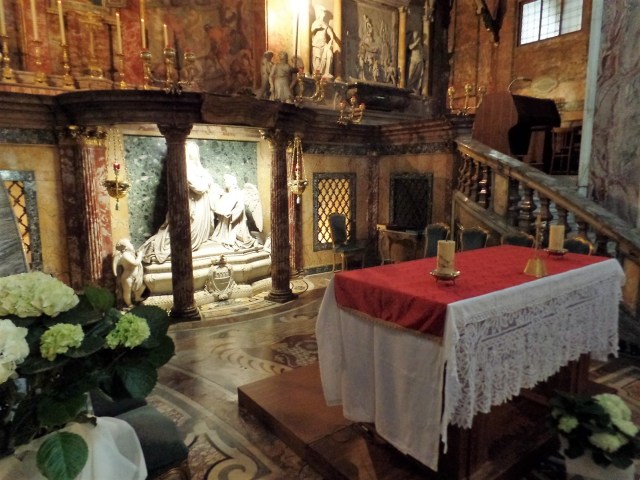
Chiesa de San Luigi dei Francesi. The Church of St. Louis of the French was completed in 1589 and dedicated to, among others, the Virgin Mary and Louis IX.

Chiesa dei San L:uigi

Santi Vicenzo e Anastasio a Trevi. Build in 1650. Overlooks the Trevi Fountain.

Sant’Agnese en Agone, built in 1652, lines one side of the Piazza Navano. In front is the Fountain of the Four Rivers.


Roman street


Posted in Travel | Tagged , , , , , , | 4 Comments

Why Are We Flying at Mid-20th Century Speeds?

In January of 1959 American Airlines flew the first commercial trans-continental flight. A 707 made its way from New York to Los Angeles in 5-1/2 hours. I just checked the United Airlines Web site to see how long it would take me today. UA flight 751 is set to leave Newark at 4:05 p.m. and arrive at LAX at 6:57 p.m. Adjusting for the three-hour time difference, that’s five hours and 52 minutes.

Concorde

Concorde (froehlich-gera)

We live in a world in which we think technology has changed everything, what we do, how we do it and how long it takes. That apparently does not apply to flying or at least not to flight speed. And this despite the fact that there was a live commercial demonstration of the availability of the technology to speed up our flights as far back as 1976 when the Concorde went into service.

Future Tense* put together an event yesterday in Washington D.C. in which scientists, aviators, government officials and entrepreneurs tried to answer the question “Why Does It Still Take 5 Hours to Fly Cross-Country?’

There are still some technical challenges, one of which is noise. Because of the noise associated with supersonic flight there are regulations in the U.S. prohibiting supersonic jets over land. So a commercially viable transcontinental flight would have to involve a low boom option.  One of the participants raised the possibility that because of this it may at some point in the future take less time to fly from LA to Japan than from LA to New York.

But perhaps a bigger obstacle is economics. Richard Aboulafia, vice president, analysis of Teal Group, noted that airlines operate on “razor-thin” margins. (This apparently despite charging us for things like checking baggage and an inch or two of extra leg room). Because of that he said that their focus has been on fuel efficiency, not faster flights.

So there is no real demand from the airlines to go faster. And it is equally questionable whether it is a priority for the traveling consumer. The availability of multiple services on the Internet that enable price comparison has turned many fliers into bargain shoppers. Issues like convenience, even such things like onboard Wifi, are more likely to be on the average consumer’s radar screen than flight time.

It is also questionable how important actual flight time is when so much of travel time ends up being about getting to the airport, waiting to check in, waiting to go through security, waiting to board, and alas, waiting for the bags that you probably paid to check to arrive. Surely on less than cross-country flights, the actual time in the air may be insignificant compared to the time eaten up by airport over-capacity and inefficiency.

The Future Tense event did surface some interesting things that might be on the horizon. Boom Technology is a Denver-based startup with plans to build 40 passenger supersonic jets. David Lackner, North American Head of Research and Technology for Airbus, talked about creating an Uber-type of service using helicopters.  Even further afield is Lightcraft Technology which envisions the possibility of using beamed energy propulsion to propel transports.

Where there is a demand for speed is in the high end of the market. There are, as there was with the Concorde, some folks who are going to be willing to pay a premium for speed. The question is whether there are enough of them to support a commercially-viable operation. It seems clear that there are going to be faster options for flying. What isn’t clear is whether they will ever scale to the point of being available to most travelers. I didn’t hear anything that made me think that was imminent.

The Future Tense event “Why Does It Still Take 5 Hours to Fly Cross-Country” can be viewed here.

*Future Tense is a partnership between New America, Arizona State University and Slate magazine to explore emerging technologies and their transformative effects on society and public policy.

Posted in Travel, Uncategorized | Tagged , , , , , , , | 19 Comments

Roma 2016

Fontana del Pantheon

Detail from Fontana del Pantheon

Borghese Gardens

Borghese Gardens

The Appian Way. The world’s oldest paved road, built in 213 BC.

Piazza Navano

Trevi Fountain

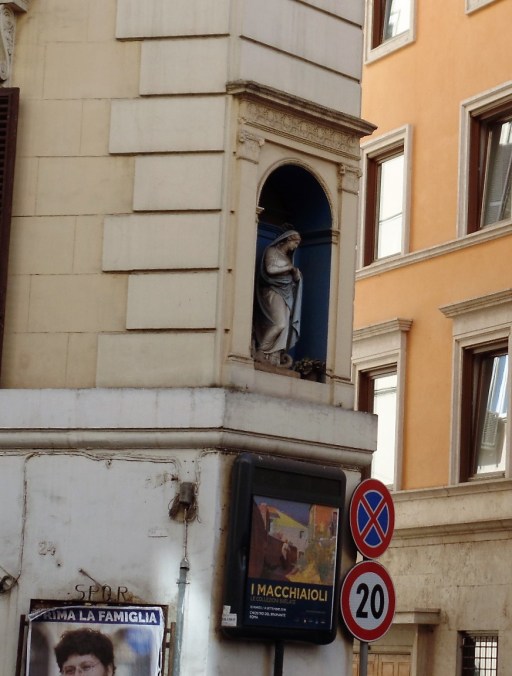
Streets of Rome

Roman garbage truck


entrance

PInocchio

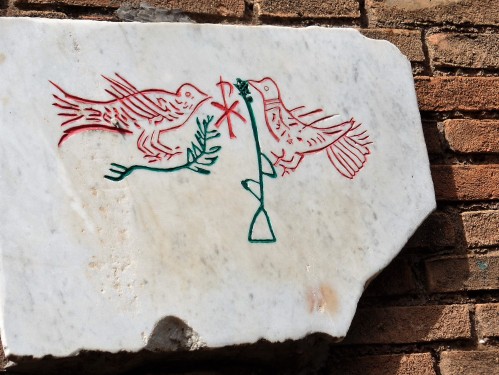
Catacombs etching


Posted in Travel, Uncategorized | Tagged , , , , , | 21 Comments

Halftime at the Montclair Film Festival

Well, almost. It’s the end of day six of the Montclair Film Festival. Here are some of the things I’ve learned so far. A violin carries the spirit of its owner even after it is passed on. Frank Zappa once turned down a request by the Pope to play at the Vatican. David Byrne is re-inventing the high school color guard.

Wellmont Theater

Wellmont Theater

Having attended since day one, I am amazed at what this festival has become. This year, the fifth, there are 150 movies over 10 days. On opening night 1,500 people turned up to watch a documentary old-school style, one big screen in one big theatre. The next morning, close to that number showed up to watch a 25 minute short followed by a 15 minute student violin performance. Where else does that happen?

I tend to gravitate toward the many documentaries. When else do you have the opportunity to see documentaries on the big screen. Opening night for this year’s festival was Life, Animated in the historic Wellmont Theater. Owen Suskind, son of noted journalist David Suskind, is stricken with autism and disconnects with the world around him at age 3. What eventually re-engages him with his environment and gives him a voice is Disney animated movies. Through scenes from Aladdin and Dumbo and the Lion King he establishes an ability to communicate and to understand his feelings.

What makes this story so compelling is how much of it is told by Owen himself. Watching it is the closest I’ve ever come to undersatanding what it is like to have autism. There are no charts or stats or diagnoses in this movie. It’s about Owen’s emotions, his hopes and his fears. The camera lens gets past the autistic layer and introduces us to a warm, thoughtful and insightful young man. A great movie. Best I’ve seen at the festival so far.

The next morning I’m back at the Wellmont for another human interest story.  Joseph Feingold is a 91-year-old Polish Holocaust survivor. At some point he wasn’t able to continue to play the violin he had bartered a carton of American cigarettes for at a street market after the war. So he makes the decision to donate it so it can be used by someone else. Joseph walks away thinking that’s that but filmaker Kahane Cooperman catches wind of the story that will become a short documentary, Joe’s Violin.

student performance

Students from the Bronx Global Learning Institute for Girls performing after Joe’s Violin

The instrument ends up in the hands of 12-year-old Brianna Perez at the Bronx Global Learning Institute for Girls. Brianna proves to be deserving of this special gift. Joe eventually makes his way up to the Bronx and meets Brianna and that’s the point where there wasn’t a dry eye in the house. After the screening both appear on stage. Joe gives us another dose of  the humility and wit that made this such a compelling story and Brianna plays a short performance with some of her classmates.

Like Joe’s Violin, Contemporary Color found its way to Montclair after a screening at last week’s Tribeca Film Festival. It is an art form that I was completely unaware of. The brainchild of David Byrne, Contemporary Color is a re-invention of the color guard. High school and community groups do routines that seem more suited for a modern dance group but with the twirling of rifles and flags nonetheless. The show at the Barclay’s Center, which the film documents, pairs these high school and community color guards with contemporary artists like Lucifer, St. Vincent and Nelly Furtado, who wrote music for this event. Hats off to the kids from Somerville High School in New Jersey who were awesome.

There was an entirely different kind of music in Eat That Question – Frank Zappa in His Own Words.  There are excerpts from numerous interviews that Zappa did. He tells us upfront what he think of interviews: “two steps removed from the Inquisition.”  So while he isn’t always an enthusiastic interviewee, he is blunt. In response to a question about whether he has ever used hard drugs, Zappa quips, “The closest I came to hard drugs is when I take penicillin on the road after getting the clap.”

In between the interview clips  was Zappa on stage. There’s a take from the Steve Allen TV show with a young Zappa playing music on two bicycles. And some footage of his later years conducting an orchestra playing music he composed. But mostly there’s the music that Zappa’s known for: odd electronic sounds, raunchy lyrics, biting social commentary and some pretty good rock and roll guitar. While 90 minutes was a bit much contemporary color for me, it wasn’t nearly enough Zappa.

Cameraperson is the cinematic scrapbook of Kirsten Johnson, who has been the cameraperson for documentary films from Bosnia, Nigeria, Afghanistan, Brooklyn and Texas. Pieces of footage from those documentaries have been pieced together to create this film. There are many beautiful and moving images. But many of these documentaries are about brutality and inhumanity. The pictures are not themselves gruesome but are of places that were the sites of mass rape in the Bosnian War and public executions by the Taliban. And we see the pick up truck used to drag a man to his death in Jaspar, Texas. It left me wondering what a career of filming the aftermath of events like these does to you. I was uncomfortable warching this one.
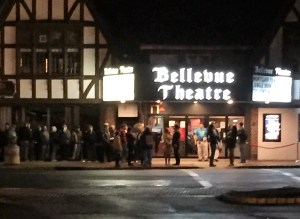
Bellevue Theater

There were also plenty  of narrative films at MFF16. Here’s what I saw in the first half of the week in order of preference.

The Montclair Film Festival doesn’t have a lot of international films, But at least once each year I’ve seen a French movie as part of the festival. This year is was La Belle Saison (oddly translated into Summertime in English). It’s a love story. It’s also a pretty good movie that some of you may want to see and if I tell you any more about the story it may ruin it so I won’t. It is set in France in the early 70’s. We see radical young women embracing feminism and carrying out some guerilla actions on the street. And we see the status of women in the French countryside where traditional values are still firmly entrenched.  The story is about the conflicts created by these different sets of values.

The 2005 movie The Girl in the Cafe was shown as part of a tribute to Richard Curtis, who wrote the screenplay. It is an odd film that combines global politics with personal awkwardness. A senior Britich bureaucrat who works for the Chancellor of the Exchequer, nabs the only open seat in a crowded café across from a girl who, we learn later, just got out of jail. After a lovely 10 minutes sipping coffee he gets up the nerve to initiate what turn out to be the awkwardest couple of dates you could imagine. Then he invites her to join him for the G8 conference in Reykjavik. Once there she outdoes his awkwardness by ignoring all decorum and speaking her mind about global poverty at various stately events where you’re supposed to shut up and listen to the speeches. In the end she gets tossed but the British delegation dig in ther feet on the issue, just like she asked them to.

Actor Martinez is about Arthur Martinez, an actor. Or at least he moonlights as an actor when he isn’t doing his day job of in-home computer repair. He has scored gigs like playing the role of a distressed person for police cadet training. Two filmmakers, who are the actual makers of this film, are doing a movie about Arthur in which he stars as himself. Is it a film within a film? Or maybe a failed attempt at a film within a film? Everyone is cast as his or her self, including the actress brought in to play Arthur’s girlfriend, which she definitely is not. But there is little script and little direction so there is really no distinction between what is acted and what is life. It’s all a bit blurry.

Montclair Film Festival

If you’re in or near New Jersey, there’s still four full days left to go. I’m taking a halftime breather and backing off of my two a day schedule but this weekend I’m looking forward to a screen adaptation of the Philip Roth novel Indignation and a documentary about Austin City Lights.

Posted in Uncategorized | Tagged , , , , , | 3 Comments

Rome: Magnificence in Ruin

SAMSUNG CAMERA PICTURES

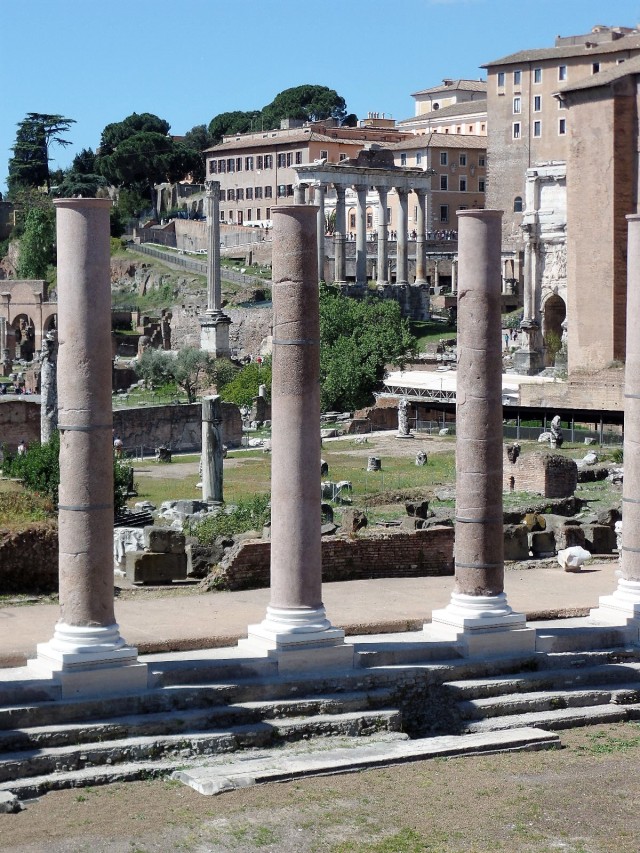
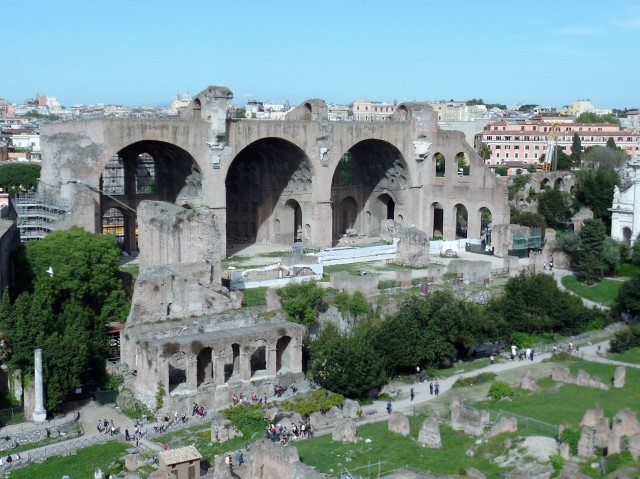
Foro Romano. The center of public life in ancient Rome.

Arco di Constantino

Arco di Constantino. Built in 315 to commemorate a military victory by Constantine I

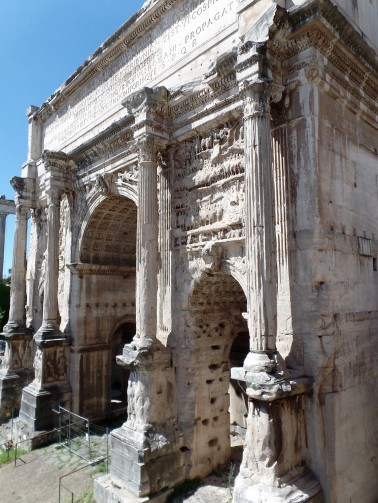
Arco di Septimius Severus

Arco di Septimius Severus. Another triumphal arch built to commemorate military victory. This one was erected in 203 honoring the exploits of Emperor Septimius Severus.

Ruin of a fountain

A fountain

Foro di Augusto

Foro di Augusto. Dedicated in 2 BC this temple was built by the Emperor Augustus to honor Mars, the Roman God of War. Generals heading off to battle would start from here.

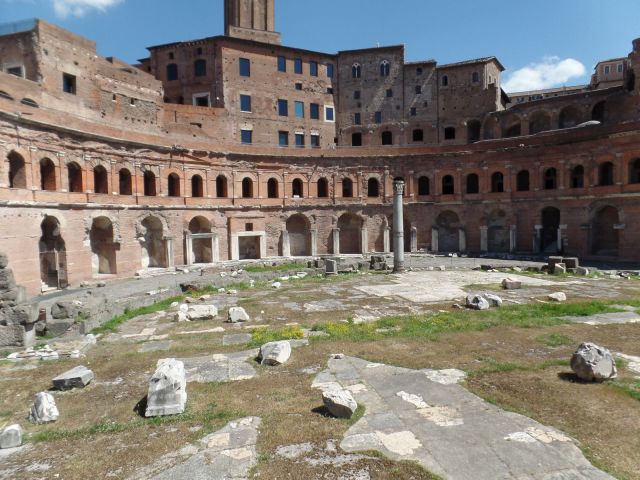
Foro di Traiano

Right next door is the Foro di Traiano built in 113 and enhanced with materials plundered after Emperor Trajan’s conquest of Dacia.

Circus Maximus

This is all that’s left of Circus Maximus the site of Ancient Rome’s chariot races. The green area on the right is where the racetrack once stood.

Temple of Antoninus and Faustina

Temple of Antoninus and Faustina. Built in 141 by the Emperor Antoninus Pius in honor of his deceased wife Faustina.

Ruins of Anciebnt Rome

Roman ruins


Posted in History, Travel | Tagged , , , , , , , | 30 Comments