Pet Rescue in Australia

A Guest Post, by Emma Lawson

Considering the fact that one of the first things that pops on anyone’s mind when thinking about Australia is its exotic wildlife and that this country has one of the biggest pet ownership rates in the world (25 million pets per 25 million inhabitants), one would think that Australians would be very interested in preservation of animal life, and that person would not be too wrong. After all, one of the most influential voices in animal rights/liberation theory, and the author of the book Animal Liberation, is Australian citizen Peter Singer. So the will was always there, the only factor making Australia’s road towards the more humane treatment of animals and popularization of pet shelters rocky was this country’s constitution.

rescue-1238145_1280
Namely, the Commonwealth of Australia is made up of six federal states, and several territories. The Constitution of Commonwealth does not specifically address animal rights, so the task of animal protection is left entirely to states and territories and their legislative bodies.

With the things as they are, taking care of stray pets is mostly in the hands of extraordinary individuals and humanitarian organizations. One of the latter ones is RSPCA (Royal Society for the Prevention of Cruelty to Animals) founded in 1981. Today, RSPCA Australia is this country’s leading authority in animal care with 40 animal shelters being just one of its numerous operations. Thanks to the generous support of its benefactors this organization continues to provide sufficient amounts of necessary supplies like quality food and Nexgard flea protection for dogs, and find its residents new homes once they are taken care of. Recently, one of the regional branches, RSPCA Victoria, mounted a major investigation of the Pyramid Hill puppy farm which led to 240 charges of animal cruelty and a $205,000 fee to its owners.

Another good example that shows that pet rescue in Australia is just starting to take a full swing is the Brightside Farm Sanctuary, and one of its most interesting inhabitants, a German Sheppard Bronson. Bronson was a guard dog trained its entire life to be intimidating and frighten people away. Rescuers described him as “the saddest and the loneliest dog they had ever seen.” Still, after he was given a second chance at the Brightside Farm Sanctuary, Bronson learned to love people again and was later adopted by a retired couple.

A similar case in which humanity brought change into the lives of animals which were, up until then, full of misery, is the story of the rabbit Olivia and her 299 friends who were recently rescued from a factory farm in Tasmania where they were kept in oppressive and crowded wire cages, became subject to illness and injuries, and designated for slaughter. After escaping this outcome, Olivia and the rest of the rabbits were moved to Big Ears Sanctuary where they enjoy greater outdoor freedom and expect rehoming.

Australians are also no strangers to wide actions that sometimes even take place far beyond Australia’s boarders. For example, after the thorough investigation conducted by Animals Australia in which activists proved that Australian bred greyhounds which were exported to South East Asia were tortured, forced to race and eventually murdered or fed to predators, Qantas and other Australian airlines refused to continue to provide racing greyhound freight services to Asia. Three trainers who participated in cruel greyhound training methods such as live baiting were sentenced to prison for animal cruelty.
These examples may not seem like huge victories but they are victories, and although Australian government still needs to be more involved in solving these issues, thanks to the people who are constantly fighting for their well-being, animals like Bronson, Olivia, and all the tortured greyhounds and mill puppies, still have something to look forward to.

-0-

Emma LawsonGuest author Emma Lawson is a teacher. Emma is constantly seeking to improve her skills both as a teacher and as a parent. She is passionate about writing and learning new things that can help to lead a quality life. You can follow her on Twitter @EmmahLawson.

Posted in Uncategorized | Tagged , , , , | 2 Comments

The Gladiators’ Stage

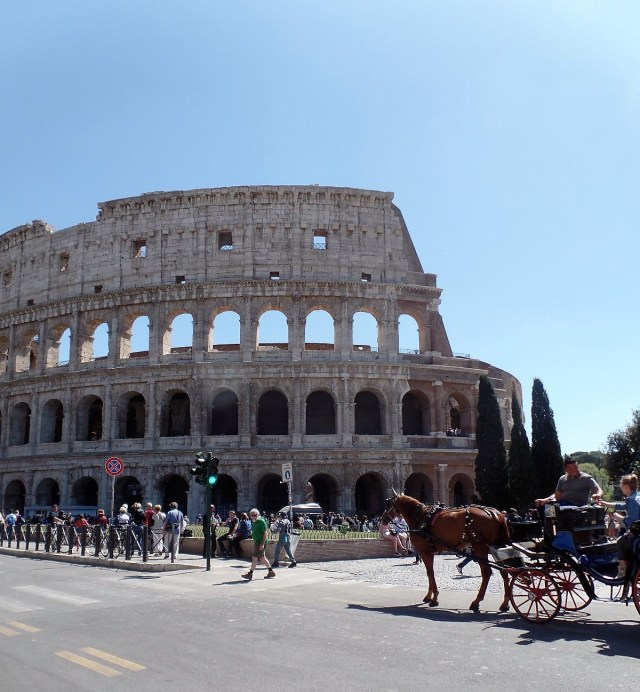
Colosseum

Rome Colosseum. A Photo Tour from Top to Bottom

Colosseum

Colosseum

Colosseum

The Senators' seats

The Senators’ seats

Colosseum

Colosseum

Colosseum

Colosseum

The animals’ quarters

Colosseum

Colosseum


Posted in History, Travel | Tagged , , , , , , , | 16 Comments

Disrupt These Industries. Please!

Disrupt is one of the buzzwords of the technology world. It’s all about finding a legacy business and using technology to render it obsolete by providing a better, cheaper or more convenient product or service. It’s what digital music files did to the CD business. It’s what Netflix did to Blockbuster. It’s what Uber is doing to the taxi industry. And it won’t stop there.

So I would like to suggest some industries that we should focus our attention on disrupting. Industries dominated by massive corporations that have been ripping us off and underserving us for years. These are industries where the few dominant players have followed the same strategy for enhancing profitability: swallow up competitors through merger or acquisition and then, once achieving a dominant market position, drop the hammer on the customers by cutting quality, reducing service and jacking up the cost.

  1. Banking

Money

(image by geralt)

Bankers are really the leaders in the rapid growth of service inequality. If you’ve got $10k in the bank, you might get some attention. If you’ve got a million you get treated like a valued customer. Many, many businesses have gone in that direction and all of us can understand the philosophy of providing the best service for your best customers. But while it is insulting that your bank relegates you to steerage, it is even worse that these money-suckers hammer the folks who can least afford it with fees at every turn. Let’s take Bank of America for example. Without a $1500 balance you will be charged a $12 a month “maintenance” fee on your checking account. That is, unless you have interest checking. That will enable you to earn pennies in interest but pay a $25 a month fee if your balance dips below $10k. It’s beyond me what “maintenance” they perform on a savings account, but that will cost you a fiver a month. So if you put a modest amount of moeny in a savings account, the intrest won’t cover the monthly fee, so you balance goes down every month until BofA as stolen the whole thing. Better shove it under the mattress. Losing an ATM card will cost you $5, unless you want it replaced right away, then it’s $15. Another $5 if you want a copy of a statement and if you have the audacity to prefer the human touch of a teller, there’s a $5-$10 fee for that.

While we’ve become accustomed to it, every time you take your own money out of your own account through an ATM and the bank steals 2 or 3 bucks as part of the transaction you should be pissed off. Are you paying for the convenience of the technology? Or are you contributing to improving the bank profitability by enabling them to save salary and real estate costs by laying off tellers and shuttering branches.

I think there is already a good focus in Silicon Valley in how to knock off this ‘screw the 99%ers’ industry. Bitcoin reduces the role of banks to pretty much nothing. A number of online lenders offer small loans without the wait time or the bank fees. There are a number of other bank alternatives, like state owned banks, local currency and employer credit unions that become more attractive as the big banks become more and more customer unfriendly. So let’s get to it techies and drive these guys out.

  1. Airlines

airplaneIn many areas of business if you give them a call and order a product, especially one that costs a significant amount of money, they thank you, handle your order enthusiastically and encourage you to call again. Not these robber barons. They charge you extra for ordering by phone!

Nowhere has service deterioration set in more dramatically that in the formerly-friendly skies. It all really started going downhill when fuel prices eroded their profitability. Not content to just pump the prices, they started to charge for baggage, for a pre-packaged box of shitty food, for a couple extra inches of legroom, for an unaccompanied child, some even charge for a blanket or pillow! So then fuel prices dropped even faster than they rose. Did prices come down? Were these nuisance fees eliminated? Nope. And it is obvious that there is collusion among the UnitedDeltaAmerican triumvirate to assure that they don’t.

I’m certain that the folks who run these massive U.S airlines that bought out the competition and divvied the country up to maintain route monopolies are committed free market capitalists. But in fact they could only exist as they do because of government regulation. Open domestic routes to Virgin, to Emirates, to Lufthansa and see what happens. Will American jobs be lost? I doubt it. These overseas airlines would hire the same people to the same U.S. airport jobs. And the greedy triumvirate has been outsourcing customer service to whatever country they could find where they can pay fruit-picker wages for years anyway.

Personally I try to fly Southwest whenever possible. They don’t charge for bags, or for changing flights and the staff doesn’t seem to have been beaten into a state of total demoralization. But maybe the techies have a better idea. Surely there can be little customer loyalty left for these airlines, except for maybe the few customers who get treated royally because they’ve racked up a gazillion miles.

  1. Cable TV

Apple TV

(image by Geralt)

When 24/7 Wall Street teamed with Zogby Analytics to survey consumers and identify the “Customer Service Hall of Shame,” who do you think they found to have the worst customer service? Comcast. Another research organization, the Temkin Group, ranked 233 organizations for the quality of their customer service. Comcast Cable was dead last at #232, tied with Comcast Internet. Time Warner Cable was #230, Charter Communications was #228 and Cablevision was #221. When Ranker.com rated the companies with the worst customer service, Time Warner and Comcast were in the top 5 (our friends from Bank of America were as well).

You get the picture. No matter how much you spend as a corporation on eliminating competition and avoiding regulation, when you treat your customers as disdainfully as this industry has, it is eventually going to catch up with you. And folks, I can see the light at the end of the tunnel. Maybe aging boomers like me are used to paying for 500 cable stations even though that includes about 450 that we will never watch in our lifetime. But younger people aren’t. And when you look at the burgeoning range of alternatives, the Netflix type services, Hulu, YouTube, the low cost devices like Apple TV and Google Chromecast, the sports leagues that are live streaming their own telecasts, it is really just a matter of time before the downward spiral of the cable TV industry picks up momentum and really starts to escalate.

  1. Event ticketing

concert ticketsThis is really about one greedy, service deficient corporation, Ticketmaster. A couple months ago I decided at the last minute to attend a college basketball game at the Prudential Center in Newark. I didn’t want to have to queue up to buy a ticket so I went online before leaving the house. I chose a $21  ticket on Ticketmaster and as I started to check out I fortunately was attentive enough to notice that TM had tacked on fees that raised the price to $34. I clicked off Ticketmaster, went to the Prudential Center and bought my ticket at the gate. Guess how much? $21

So these greedy thieves at Ticketmaster were raising the cost of tickets almost 40%. Not a penny of that goes to the performers, or in this case the colleges, or to the venue. If you paid that price, 40% of your money would go to the ticket seller. Why should the cost of attending sports events, concerts, plays or other performances be subject to a 40% Ticketmaster tax and what does this escalation in the price of tickets do to the ability of these performers to draw an audience? Ticketmaster of course is the company that at one time had the audacity to charge its customers $2.50 per to print their own tickets. So in return for eliminating the need for them to print tickets, package them and pay postage, they charged you even more. This proved to be too audacious for even Ticketmaster to maintain although I’m sure they bundled that tithe into their other fees.

I am not a start-up entrepreneurial kind of thinker but I can see how this fraud can be disrupted in a fairly straightforward manner. Build an app that makes it simple for venues and performers to sell their own tickets without needing much staff intervention, then build a consumer facing app that consolidates all the shows and events that are selling. Charge what the venue and the performers need to make money and cut out the parasites. In doing so consumers will get better value for their entertainment dollars and maybe Ticketmaster can ‘pivot’ into the bail bond or check cashing business.

Posted in Technology, Uncategorized | Tagged , , , , , , , , | 21 Comments

Dog Rescue in the USA: Facts and Stats

dog up for adoptionThere are 70-80 million dogs living in the US.

Each day 10,000 humans are born in the US and each day 70,000 puppies and kittens are born.

37-47% of all households in the US have a dog

13,600 community animal shelters in US.

35,000 workers, most of them volunteers, are involved in animal sheltering

3.9 million dogs enter shelters every year

Adopt me please25% of the dogs that are in shelters are purebreds

Of the dogs entering shelters, 35% are adopted, 31% are euthanized 26% are returned to their owners

1.2 million dogs are euthanized every year

1.4 million dogs are adopted each year.

(Update: In 2024, the World Animal Foundation reported that 2 million dogs are adopted each year in the U.S. https://worldanimalfoundation.org/advocate/pet-adoption-statistics)

While there are no definitive statistics, it is believed that the number one cause of death of dogs and cats in the United States is euthanasia in an animal shelter.

Pit Bull

Of all the dogs that enter the shelter system, pit bull types have it the worst with a euthanasia rate of 93 percent.

From 1973 to 2007, the number of cats and dogs in U.S. households more than doubled and animal shelter euthanasia rates dropped by more than 60%.

The ASPCA estimates that there could be as many as 10,000 puppy mills in the United States.

-0-

Many of these facts are from the Web sites of the Humane Society of the United States and the American Society for the Prevention of Cruelty to Animals.

petfinder12

(All photos on this post were taken from the Petfinder.com Web site. They are photos of dogs that were available for adoption at the time of writing.)

(The author, Ken Dowell, is a trustee of the Tess McIntyre Foundation . The foundation raises funds to support dog rescuers and to provide health care for dogs who need some medical attention before they can be adopted. You can follow the foundation on Twitter @TessMcIn.)

Posted in Uncategorized | Tagged , , , , , , , , , | 3 Comments

Dog Rescue in the USA: Some Rescue Stories

Madison County, Arkansas, March 2016

Arkansas is one of the top puppy mill states in the country. And, according to the the Humane Society of the United States (HSUS), Arkansas breeders are totally unregulated. The director of the Paws and Claws shelter in Huntsville, Ark., Shonna Harvey, earlier this year called in a tip to the HSUS puppy mill hotline. Acting on that tip, the HSUS along with the Madison County Sheriff’s Department raided the home of 67-year-old Joyce Johnson. They found 295 dogs and puppies living in stacked wire cages, many suffering from untreated medical conditions. They also found 5 dead dogs. Johnson, who was charged with two counts of animal cruelty, was selling puppies online through the Web site theperfectpuppyofnwa.com, as well as at a flea market in Texas. The rescued dogs were sent to several shelters in the area to get checked, receive the medical attention they need and eventually be put up for adoption. Paws and Claws took 25 of the dogs. While some rescue services were looking of specific breeds, Harvey offered to take the dogs “nobody else wants.” She received the $5,000 reward offered by HSUS for puppy mill tips and put the money back into Paws and Claws.

Raeford, North Carolina, January 2016

If you go to the Web site of The Haven, Friends for Life you’ll see that it is billed as North Carolina’s largest and most successful no-kill shelter. They claim to have saved more than 36,000 animals and describe their animals as “aged to perfection.” The site lists some relatively modest adoption fees and also asks for donations. What you won’t find on the site is anything current. That’s because the Haven was shut down in January and its owners, Stephen and Linden Spear, are facing four counts of animal cruelty. After getting numerous complaints from people who adopted animals who proved to be unhealthy, the Polk County Sheriff’s Department called in the American Society for the Prevention of Cruelty to Animals. When they raided the property they found that the haven was anything but. They found animals that were emaciated, suffering from open wounds, ringworm or respiratory problems. They were living in kennels, cages and outdoor pens often with no protection from the elements. They also found mass burial grounds with the remains of dozens of animals. The ASPCA and the sheriff’s deputies pulled out 300 dogs, 250 cats and 40 horses, pigs and birds. One dog and one cat had health problems so severe that they had to be euthanized. But the others were fed and treated and by the middle of March were put up for adoption.

Washington D.C., November 2015

When the 2016 Defense Department budget bill was signed by President Obama late last year there was a law attached that involved rescuing some dogs. Military dogs. Thousands of working dogs joined U.S forces in Afghanistan. They identified explosives, found missing personnel, and sniffed out illegal drugs. But they all didn’t make it back home, even if they escaped their tour of duty without injury. Those who were retired overseas were left overseas, unless they were adopted by military personnel who paid the freight to get them home and adopt them. The new law, however, requires the military to bring home any dog who is retired from active duty while overseas. It also gives the dog’s handler first priority on adopting the animal.  The military’s official adoption site is at the Lackland Air Force Base near San Antonio, Texas. There is no adoption fee and the demand is such that there may be a waiting list. There is also an organization called Save-a-Vet.org that rescues military dogs who are not immediately suitable for adoption due to their injuries or attack training, dogs that Save-a-Vet refers to as “America’s other forgotten soldiers.” Save-a-Vet pairs these dogs with disabled military veterans who are able to meet their special needs.

Kalamazoo, Mich., February 2016

In 2012, Kelvin Eric Thomas pleaded guilty to two counts of possessing fighting dogs and equipment. He was sentenced to 120 hours of community service. This conviction followed an action by the HSUS in which 32 dogs were seized.  When Kalamazoo County Animal Services and the Humane Society of Kalamazoo paid Thomas a visit in February they discovered that the 120 hours of community service didn’t prove to be a sufficient deterrent for this animal abuser. Seven pit bulls and three Dobermans were taken away along with some dog fighting paraphernalia. Five of the dogs were puppies and they were underweight and dehydrated. The HSUS has a dogfighting rescue coalition that evaluates the dogs and rehabilitates them for potential placement. The coalition reports that many of these dogs, despite the fact that they have been abused, have gone on to become service dogs for wounded veterans or certified therapy dogs.

(All photos on this post were taken from the petfinder.com Web site. They are photos of dogs that were available for adoption at the time of writing.)

(The author, Ken Dowell, is a trustee of the Tess McIntyre Foundation . The foundation raises funds to support dog rescuers and to provide health care for dogs who need some medical attention before they can be adopted. You can follow the foundation on Twitter @TessMcIn.)

Posted in Uncategorized | Tagged , , , , , , , , , | 16 Comments

Atop Eagle Rock

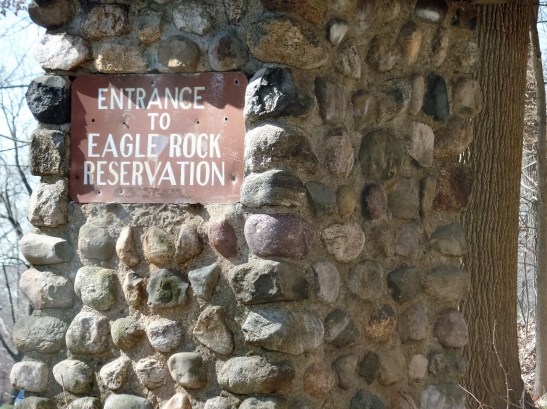
Eagle Rock entrance

Manhattan skyline

Highlawn Pavillion

Eagle Rock Reservation

Eagle Rock Reservation, West Orange, N.J.

Posted in Uncategorized | Tagged , , , , , , | 4 Comments

Dog Rescue in the USA

I have a rescued dog. He’s from Georgia. An organization called Home for Good found him in a shelter there where he likely would have been euthanized. So they packed up his 8-week old butt along with his brothers and sisters and brought him to New Jersey where he became a Christmas present for my son.

Now at age 4, he enjoys a leisurely canine lifestyle. After breakfast he goes to the park to play with his friends. Then, after a full day of sleeping on whatever couch has the most sunshine, he enjoys a dinner of dog food topped with leftovers from the fridge. Just about everybody in my neighborhood has a dog, most of them rescues and all as spoiled as mine.

Pepper and Cosmo

Two rescued Southern mutts and a stick.

Dog rescue is usually a two-part process. The first is to get abandoned or abused animals into a shelter. The second is to find a home for these dogs. That is what organizations like Home for Good does.

Animal shelters originally came on the scene as pounds and they date back to colonial times in America. The first pounds were originally focused on rounding up stray livestock that would end up being sold. Dogs weren’t seen as having any market value, so they were usually killed.

The first shelter was opened by the Women’s Society for the Prevention of Cruelty to Animals in Pennsylvania in 1869. Many others followed, including New York City based shelters run by the ASPCA. Most of the shelters that came into being, however, were municipally owned and managed and their goal was to eliminate what was considered a public nuisance. Stray dogs were often assumed to carry disease and were perceived as dangerous. So the goal was to get them off the street, not to find them a home.

It wasn’t until the last quarter of the 20th century that things started to change. Starting in the 1970’s, a time when euthanasia rates for shelter animals were at their highest, privately-owned shelters began to be created. These shelters were usually funded by donations and run by volunteers. And their focus was on animal welfare. The ASPCA estimates there are about 5,000 animal shelters in the U.S. today.

Dogs usually end up in shelters for one of two reasons. They were either abandoned or abused. One of the most common reasons dogs are abandoned is because of restrictive housing policies. Their families move into housing that doesn’t allow pets. Or they may be with families who cannot afford the cost of feeding and caring for them or the cost of medical care that they need. They might get tossed for making too much noise and chewing stuff up. And some are left homeless due to death or divorce.

Others find themselves in a shelter because they’ve been rescued from cruel or abusive treatment. Some may have found themselves in the hands of lowlifes who promoted dog fighting. Or they may have been saved from puppy mills where dogs are kept in cages and bred continuously. Some animals are rescued from situations where owners have hoarded more animals than they can care for.  All in all, close to 4 million dogs enter shelters in the U.S. each year.

Tess

Tess was adopted through the Southern California Golden Retriever Rescue

While animals entering a shelter are no longer targeted for quick euthanization, the clock still starts ticking when they enter many shelters. And if they are not adopted within a certain period of time they are put to sleep. Dog rescue organizations, which have largely come into being in the last 25 years, are focused on getting dogs out of shelters where they might be euthanized and finding homes for them. In addition to volunteers who physically rescue the animals, these organizations often provide foster homes where the dogs can stay until being adopted. A key piece of the rescue operation is the Web site petfinder.com  where upwards of 100,000 rescued dogs and cats are posted for adoption at any given time.

A releatively recent trend is the no-kill shelter. Richard Avenzino, who headed the San Francisco SPCA for 22 years, is often credited as the founder of that movement. In 1984, Avenzino convinced the city to take back the contracts that had gone out to laboratory suppliers for “animal control.” A decade later he introduced the Adoption Pact which guaranteed a good home to any healthy, recoverable dog or cat in the shelter. A year later New York City followed his lead and went “no kill.”

In its 2015 annual report, the Animal Humane Society announced that it had reached its decade-long goal of saving 90 percent of the animals who enter their shelters. They in fact hit 91.2%.

But despite the proliferation of rescue organizations and the increasing commitment of shelters to saving dogs, there are still more than a million that are euthanized every year.

Sometimes I feel a bit silly for not finishing a restaurant meal to make sure I have something to bring home to my dog. And I laugh at the friend who makes scrambled eggs for his rescued dog’s breakfast every day. And there is my neighbor who brings her dog to the park every morning with a pocket full of hot dog pieces. And not just any hot dogs, her rescued mutt apparently prefers the organic uncured variety that she buys at Whole Foods. But then I remember that these guys had a rough start or a turn of bad fortune before we found them.

(The author, Ken Dowell, is a trustee of the Tess McIntyre Foundation  The foundation raises funds to support dog rescuers and to provide health care for dogs who need some medical attention before they can be adopted. You can follow the foundation on Twitter @TessMcIn.)


Posted in Uncategorized | Tagged , , , , , , | 16 Comments

March Madness in Brooklyn

The NCAA tournament made its first stop in Brooklyn this year. The Barclay’s Center hosted four first round games and two second round games. Participating colleges included UNC-Asheville, Iowa, Villanova, Temple, West Virginia, Stephen F. Austin, Notre Dame and Michigan. From that group, Villanova and Notre Dame moved on to the regionals.

Here’s what March Madness looked like in Brooklyn:

Ready..go!

Costume party

Storytellers

Cheers!

This is so much better than having music blaring over the PA system

The peoples’ choice

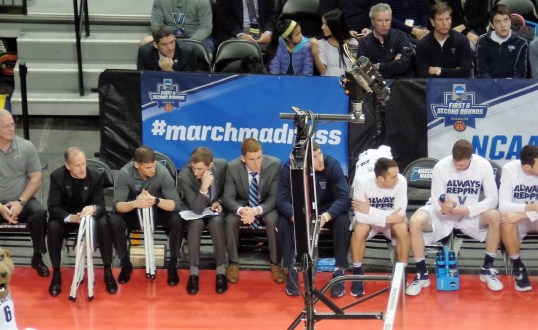
Why do they all need suits at the end of the bench?

The suits

Villanova bench

Celebrate!

Iowa celebrates

Iowa celebrates after last-second shot that beat Temple

His and hers

His and hers

Posted in Sports, Uncategorized | Tagged , , , , , , , , , , , , | 3 Comments

The Lovers: A News Story

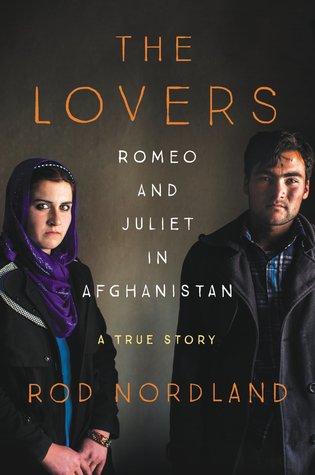
The LoversThe Lovers is a love story. Of course it is. But it’s also a news story. A news story about women’s rights. A news story about what U.S. intervention has and hasn’t done in Afghanistan. And a news story about some of the most backward social customs on earth.

The author, Rod Nordland, is a journalist who at one time was the New York Times Kabul bureau chief. He was on the hunt for a story about an honor killing. Instead he found the story of an Afghani Romeo and Juliet. Zakia and Ali are illiterate peasants from a remote region of Afghanistan where they met when their farming families worked side-by-side in the fields. They had never seen a TV or a personal computer and had never been on the Internet. Zakia is Tajik, a Sunni Muslim. Ali is Hazara, a Shia Muslim.

They are now in hiding from Zakia’s family who are out to kill them. Zakia’s crime: she fell in love with Ali, and at age 18 ran away with him and married him. That, in Afghanistan, is wrong in so many ways. First there’s the ethnic mismatch. Then there’s the fact that Afghani girls and women are generally considered the property of their men, whether it be father or husband, and thus not free to make their own decisions about who they should marry. And last, but sadly not least, ‘what will the neighbors say?’

Nordland quotes Maniztha Naderi, executive director of one of the women’s shelters that at one time protected Zakia, “…most families think this way in Afghanistan. They would rather kill their female family members if they are thought to have committed wrongdoing than lose face in the community.”

During a stop at the Montclair Public Library to promote the book, Nordland suggested that Afghanistan might be the worst place on the planet to be a woman. He compared the status of women in that country to what it was for European women in the 1600’s.

Maybe none of that comes as a surprise, but reading some of the details is nonetheless shocking:

  • “The age at which many girls are married in Afghanistan would be considered criminal sexual abuse in most countries.”
  • “Though a daughter can bring a substantial bride price to their fathers, they are disdained. Many Afghan men don’t even know how many daughters they have.”
  • “It is plausible, and even commonplace, for a father to tie a neka (formally marry) his daughter without her presence.”
  • “Under Afghan penal code even rape was not a crime.”
  • “Baad is a common practice, in which young girls are exchanged to compensate for a marital infidelity, a murder or other transgression, or just to settle a debt.”
  • Another unique Afghan crime is Zina, which is attempted adultery. In some rural areas if a woman is found out on her own she can be apprehended by police and given a virginity test, which determines whether she will be charged with adultery or attempted adultery.

Zakia is not the only Afghan woman hiding from her family. Nordland also reports on the story of Breshna, a 10-year-old girl who was brutally raped by a mullah in a mosque. Breshna was protected in a women’s shelter from a family that threatened to kill her. Ultimately the shelter turned Breshna back over to her family when they vowed not to kill her. So instead they solved their “honor” problem by forcing her to marry her rapist.

Rod Nordlund

Rod Nordland at Montclair Public Library

Where he didn’t get any help was at the American Embassy. Apparently they were concerned about intervening and offending the sensibilities of the government with which they are supposed to be allied. Norland’s comment: “Give me break. We’re not talking here about a woman who wants to put on a miniskirt and dance at the disco – she wants to marry the man she loves and live an Islamic, religious life.”

According to Nordland, the U.S. has made an investment of more than $1.2 billion to promote women’s rights. The shelters that protected Zakia, Breshna and others are largely American financed. Some of our efforts, however, border on the ludicrous. Consider this one:

There was a “$35 million ‘go fly a rule-of-law kite’ program, dreamed up and funded by a United States Agency for International Development contractor. Their idea was to stage a public event at which they would hand out kites, comic books and posters with slogans printed on them touting equal rights for women and respect for the rule of law. Hundreds of kids and some adults showed up. First, no one could read the slogans on the kites and poster, let along the text-heavy comic books. Then handing out the kites went badly awry when policemen systematically stole them from the kids who had come, in order to take them home to their own children, beating some of the kids at the event with sticks when they didn’t cooperate. Finally, gender equality was hard to come by. The few times any girls got their hands on the free kites, their fathers took them away and gave them to their sons instead.”

When you consider that this young couple, whose lives are endangered, cannot get any help from the U.S., despite the large number of private American citizens willing to help and support them, it is totally infuriating to listen to the blowhards and posers who are running for president with the promise that they will ban Muslim immigration. Personally I’d much prefer to welcome Ali and Zakia to my home than Trump or Cruz.

This is a story with no end. Zakia and Ali managed to flee Afghanistan once going to Tajikistan, largely because it was the one place they could go where they could understand the language. Tajikistan is, in Nordland’s words “a country characterized by pimping policemen and roving drug dealers.” So the couple was robbed by police of the donated money they were carrying, Zakia’s jewelry and all of their possessions. And though they were deported and driven to the border, they had a bit of trouble crossing back into Afghanistan due to the border police who were expecting a bribe.

Zakia has given birth while they were on the run. They now have a daughter who Ali maintains will be able to choose her own marital partner. This is a story with no end. As of a month ago when I heard Nordland speak, Ali and Zakia are still in Afghanistan, still in hiding, and still in danger.

Posted in Book reviews, Uncategorized | Tagged , , , , , | 19 Comments

(Nearly) Live at SXSW: Is This What the Future of Media Looks Like?

You can’t have a digital or Web or online publishing conference of one type or another without having at least one session on “the future of the media.” Often you would see execs from the Times or Post or Gannett put on panels to talk about “What now.” What now that their circulation is drying up. What now that breaking news is passing them by. What now that classified advertising has blown up and display is not far behind.

I didn’t hear from those folks at SWSX Interactive. What we used to think of as the next wave of media, digital first, mobile-friendly, visual, etc., is actually here. The sessions at SXSW were with the brands that reflect that. Frank Cooper, CMO of Buzzfeed, did a presentation on “The Future of Media Companies.” And the conversation with Jim Bankoff, CEO of Vice Media, was about “Creating the Modern Media Company.”

You can’t call either of these guys a futurist. If you ask them what the media company of the future is going to look like they will have a one-word answer. “Us.”

A defining strategy of both is publishing cross-platform. That means that you don’t confine yourself to your own properties, be they are print or digital or broadcast, but put your content on multiple platforms, whether it is Facebook or YouTube or Snapchat. That’s a pretty significant distinction from the traditional approach of older media. It wasn’t that long ago that some media organizations were trying to bring Google to court over using their content (headlines in search results) without paying for it. My guess is those same organizations are likely now scrambling to achieve the same level of search placement that Buzzfeed and Vox’s brands like SB Nation routinely get.

Just last year some of the big name traditional media properties were agonizing over what they consider a deal with the devil, allowing Facebook to render their stories rather than linking back to their own properties.

Cooper described Buzzfeed’s approach as “instead of trying to lure people to your platforms, go to where they are.” Similarly, Bankoff said “We want to be where audiences are and we want to create content that is native to the platform where it was living.”

The importance of publishing on non-owned platforms is likely to increase. Web sites have been declining in importance for a while, fueled by the growth of mobile, as apps proved to be easier to use than browsing the Web on a small screen. Bankoff now sees apps as declining the same way Web sites did because of the greater ease of using some type of aggregated platform. No wonder a news app popped up in one of the last updates of my iPhone. Apple is not alone. Google, Facebook and many start-ups have been putting out a steady stream aggregated news apps.

Cooper even suggested that the spread of content across platforms could even go back to analog. Buzzfeed’s food brand Tasty, for example, could become a TV show or even give rise to a pop-up restaurant.

Focusing on content quality is certainly nothing new, but these popular digital brands talk about quality in different terms than their more traditional predecessors. Not a word about depth of research, objectivity or investigative reporting. Instead they talked about adapting content to the platform where it is going to be published. That’s what Bankoff meant by “native.”

They encourage, rather than discourage, having a voice or an opinion. “Having a point of view is necessary in an intimate medium,” Bankoff says. Cooper expressed it like this: “Empathy and human connection are the new superpowers of building a large audience.”

Bankoff emphasized the overall quality of user experience that goes beyond just the news content you produce. He brought up as an example a really high-quality engaging video that can be ruined by a crappy intrusive pre-roll. “We want to create advertising that doesn’t suck,” he said.

While traditional media organizations bemoan the loss of readers and advertisers, these guys, like Bankoff, are wondering why ad dollars aren’t leaving newspapers and magazines faster. But I’m sure all media organizations would like to believe in Bankoff’s response to a question about whether Vox is making money by distributing content through other platforms: “You have to have faith that over time quality content has a business model.” If I published a newspaper, I might be tempted to say, “We had one until you guys came along.”

Both of these SXSW sessions are available on YouTube.

The Future of Media Companies, Frank Cooper.

Creating the Modern Media Company, Jim Bankoff.

Posted in Digital publishing, Uncategorized | Tagged , , , , , , , , | 3 Comments