What Was So Cool About the 50’s?

For a child it was an age of freedom. I’m sure there were predators and pedophiles and kidnappers then too, but we didn’t know anything about them. We felt safe and acted like we were safe. That meant that as soon as you were smart enough to not get hit by a car you could pretty much roam your neighborhood at will, checking in at home for meals, and beating your nightly curfew. I walked several blocks back and forth by myself to kindergarten, making detours as I saw fit. When my mom wanted me to come home she stuck her head out the back door and shouted my name. On a summer night you would hear women bellowing out their children’s names all over the neighborhood.

Children’s TV was something that happened for a few hours on Saturday morning and maybe an hour or two after school. Electronic games only existed in arcades in places like Coney Island or the Jersey Shore. So we spent our time outdoors. We hung out with friends. We played pick-up baseball or basketball games, rode bikes or built stuff in the woods.

Even small cities were vibrant entertainment and shopping centers. A kid could get on a bus and go to Paterson or Hackensack or Newark and hang out there. There were multiple movie theaters and most had both a morning and evening newspaper that competed. Best of all, the stores and restaurants were almost all independently owned and one of kind. The modern mall can’t compare. By contract they are characterless and redundant.

phone boothIf someone was making a phone call in public they went into a phone booth and closed the door. No one was pulling a phone out of their pocket and loudly blowharding in the middle of the sidewalk, on the bus or in a store. Granted that made it tougher to immediately identify douche bags, but I’ll take that tradeoff.

Exercise was free and outdoors (Growing Up in the 50’s: The Gym). It involved walking, running and biking and was usually done outside. The serious fitness enthusiasts might do sit-ups and jumping jacks or lift weights. What it didn’t involve was memberships, equipment or special gear.

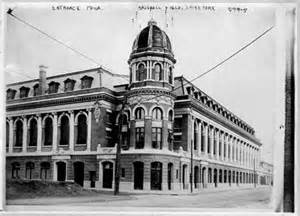
Connie Mack Stadium
Connie Mack Stadium

Sports venues had names you could remember because they meant something and lasted as long as the facility. There was the Polo Grounds, Ebbets Field and Connie Mack Stadium. Fenway Park is named after the neighborhood where it was built and has had the same name for 100+ years. The arena in Philadelphia, the Wells Fargo Center, used to the Wachovia Center and before that the First Union Center (affectionately known to Philly fans as the FU Center) and before that the CoreStates Center.


Christmas shopping was something you did the week before Christmas (Growing Up in the 50’s: Christmas Time in Paterson). Same with putting up lights or getting a tree. There was no Black Friday (not to mention Cyber Monday). You focused on Christmas at Christmas time, but that was a week or two. Marketers had yet to overwhelm our day-to-day environment.

Even though I lived in a developed, populated and industrialized part of the country you could swim and boat and fish in our rivers and lakes. They were clean, fish lived in them and you could eat the fish. They were close by, readily accessible and mostly free.

016c7bb3864a6ebf001e28c55de3cbd063d4825326

Posted in Growing Up in the 50s, History | Tagged , , , | 3 Comments

Digital Deception: Do Your Viewers Have a Heartbeat?

One of the promises of the mature Web is the ability to track, to generate data about how many views and visitors come to a site and who they are. But with the availability of that data comes a vulnerability. An opportunity to produce that data the easy way, not by building sites that attract more and more visitors but by buying and faking your way to impressive data that has nothing to do with human beings actually viewing content online.

Incapsula was quoted by the BBC in December as finding that bots account for 61% of Web traffic. The Interactive Advertising Bureau says 36% of all Web traffic is now non-human. And according to Solve Media 61% of Web traffic in the 4th quarter of 2013 was “suspicious” as well as 25% of mobile activity.

For some, generating more traffic may be an ego boost, a way to justify your job or an attempt to improve a site or a blog’s Alexa rating or page rank (although fake traffic could potentially have the opposite effect). But for others there is big money involved. Dr. Paul Barford, a computer science professor at the University of Wisconsin, estimates that $180 million is lost annually by advertisers who buy fraudulent traffic.

Who benefits from this? The publisher or Web site operator who can charge higher rates based upon what appears to be the ability to deliver more traffic. An unnamed publisher who admitted to buying traffic told Jack Marshall of Digiday  “If you’re buying visits for less than a penny, there’s no way you don’t understand what’s going on.”

The other beneficiary is the automated ad server networks. Since a large percentage of online advertising is bought in this manner, the buyer often has very little information about the exact spots where his or her ad will appear. It could show up on a completely phony site that is viewed by bots only and thus be completely worthless, albeit statistically impressive. Dylan Love of Business Insider  characterized this as “’robots are buying ads generated by other ‘robots’ visiting sites.”

One completely fraudulent approach to this is to do just that, create phony sites that have ads only. The fraudsters will then build networks of bots by essentially hijacking computers. They use malware that is delivered to computers so they can control the computer and direct it to hit these sites. Cautious advertisers will seek to counteract this by requiring more sophisticated measures of the effectiveness of their ads, such as click throughs to video. But the most sophisticated of the purveyors of fake traffic have built bots that mimic the online behavior of humans, like watching videos and adding items to shopping carts.

It isn’t hard to find someone willing to set you up with some site traffic. etraffic247.com offers rates ranging from $9.95 for 25,000 visitors to $69.95 for a million visitors.

Hitleap, based in Hong Kong, offers that “You can choose to use a custom URL as the referring Website. This way you can make it look like the traffic is coming from google.com for example.” At 1 Million Clicks  you are assured that their Web Traffic Simulator software can simulate traffic on a Web page. The traffic counters (for example Google Analytics) are tricked into believe (sic) that the visits are real since the Web page is loaded in a real browser…” A site aptly named Fake Hits promises it can send thousands of unique IP fake visitors to your web site for just $19.95. I found another site with step-by-step instructions for producing fake You Tube views. Apparently they offer this advice for free as a public service.

Not all bot traffic represents a fraud. Lots of it is generated by search engines indexing content, by measurement companies tracking performance of content or by various types of monitoring companies identifying where content is published or where a company, organization or person in mentioned.

But like their crasser counterparts, these viewers have no heartbeat. They generate numbers that are basically deceiving because that have nothing to do with human beings who might have visited your site or read your content.

Posted in Digital Deception, Digital publishing, Technology | Tagged , , , , , , , | 21 Comments

A Week at the Shore 2014

Sunset in Avalon at the north end of the Seven Mile Island

Sunset in Avalon at the north end of the Seven Mile Island


Earlier this week I posted a story about my childhood vacations at the Jersey Shore, Growing Up in the 50’s: A Week at the Shore. Fifty plus years later I still spend at least one week of the summer at the shore. Here’s how it looks in 2014.

My vote for best boardwalk pizza goes to Manco and Manco's in Ocean City

My vote for best boardwalk pizza goes to Manco and Manco’s in Ocean City

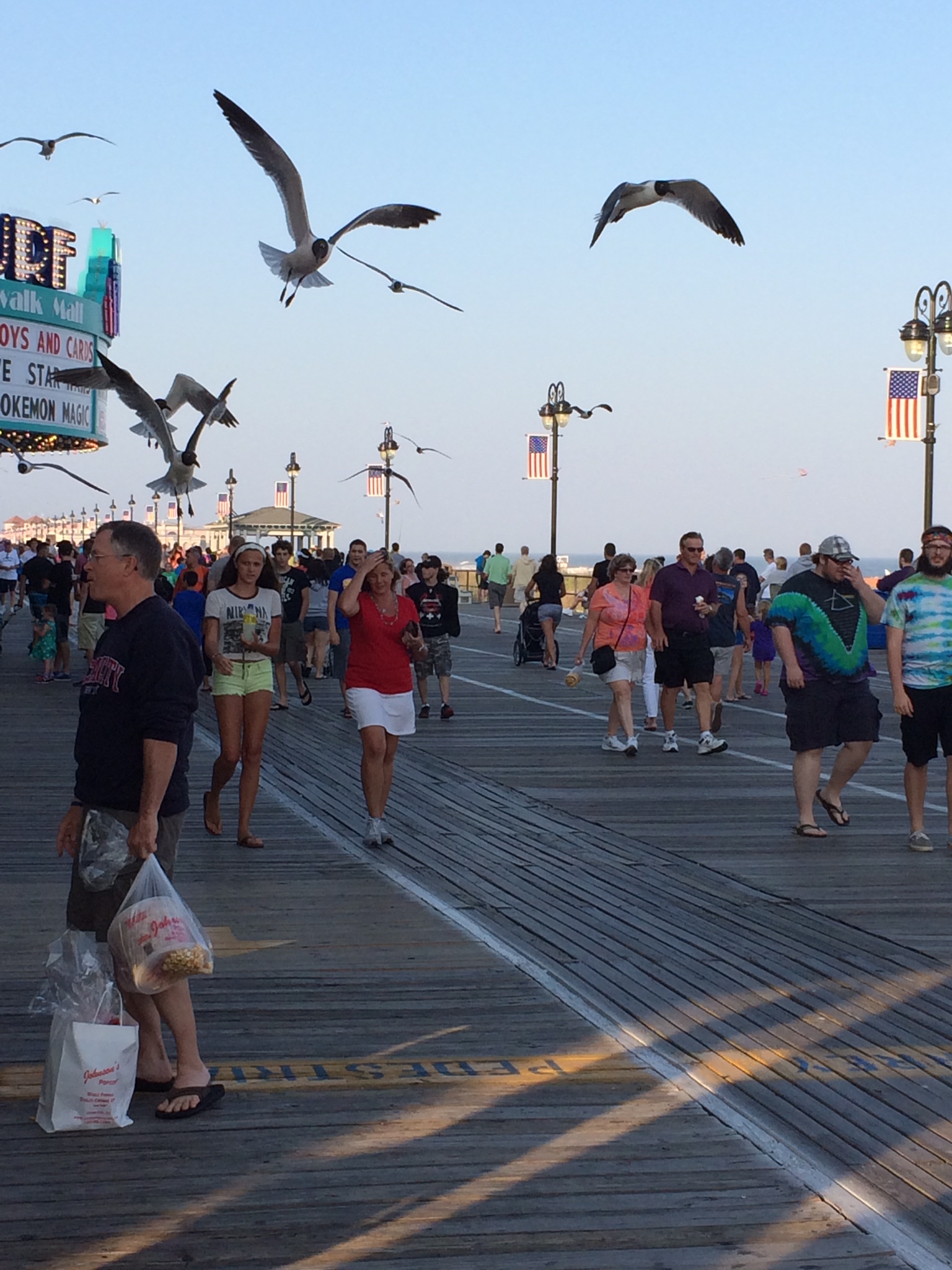
The seagulls are ready to swoop for a stray slice.

The seagulls are ready to swoop for a stray slice.

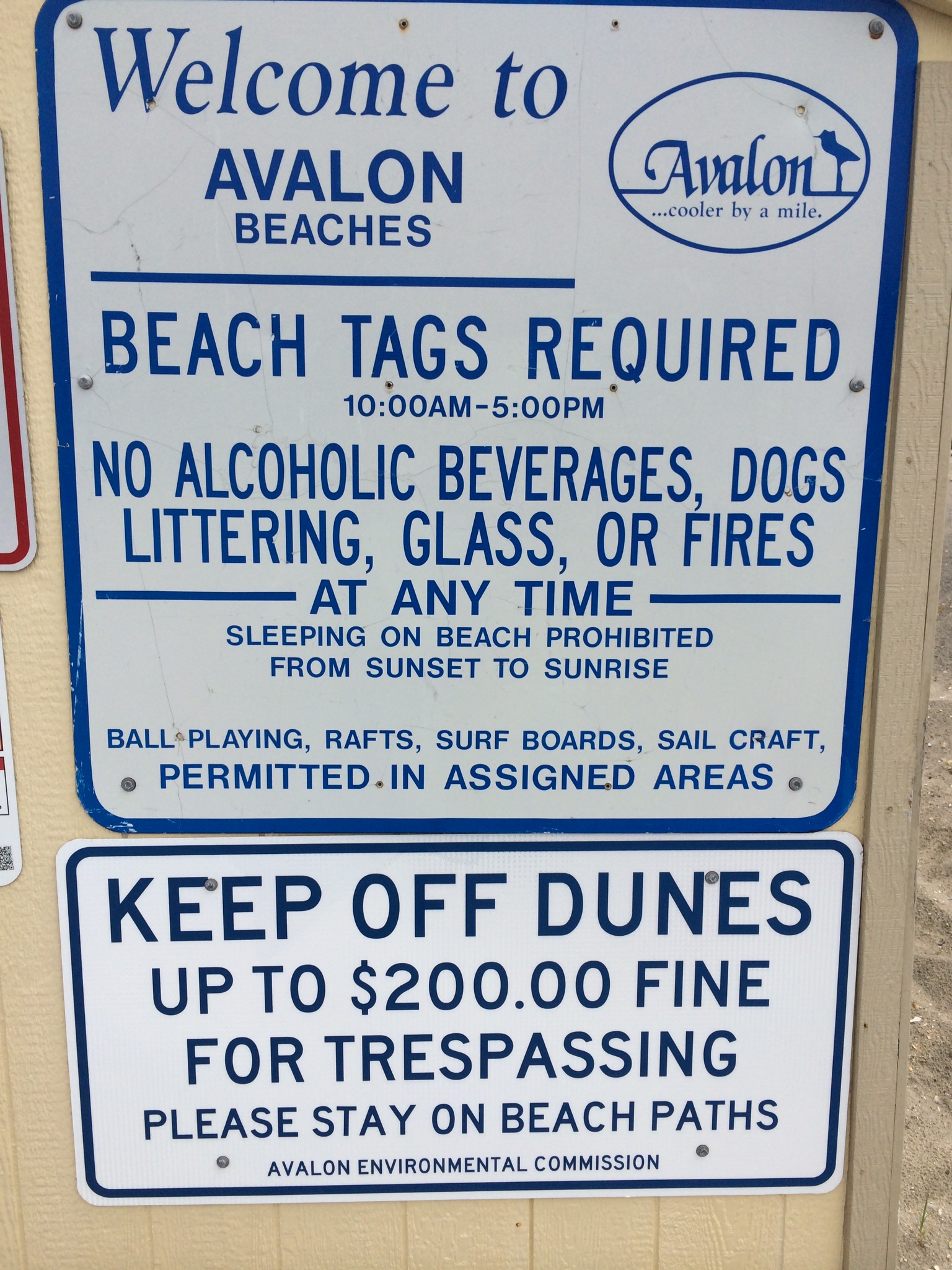
Here's a list of the things you can't do at the beach.

Here’s a list of the things you can’t do at the beach.

But at Wildwood's Poplar Ave. beach dogs are warmly welcomed.

But at Wildwood’s Poplar Ave. beach dogs are warmly welcomed.

the moon rising over Avalon's 8th Street beach.

The moon rising over Avalon’s 8th Street beach.

Disco fries from the Hot Spot in Wildwood

Disco fries from the Hot Spot in Wildwood

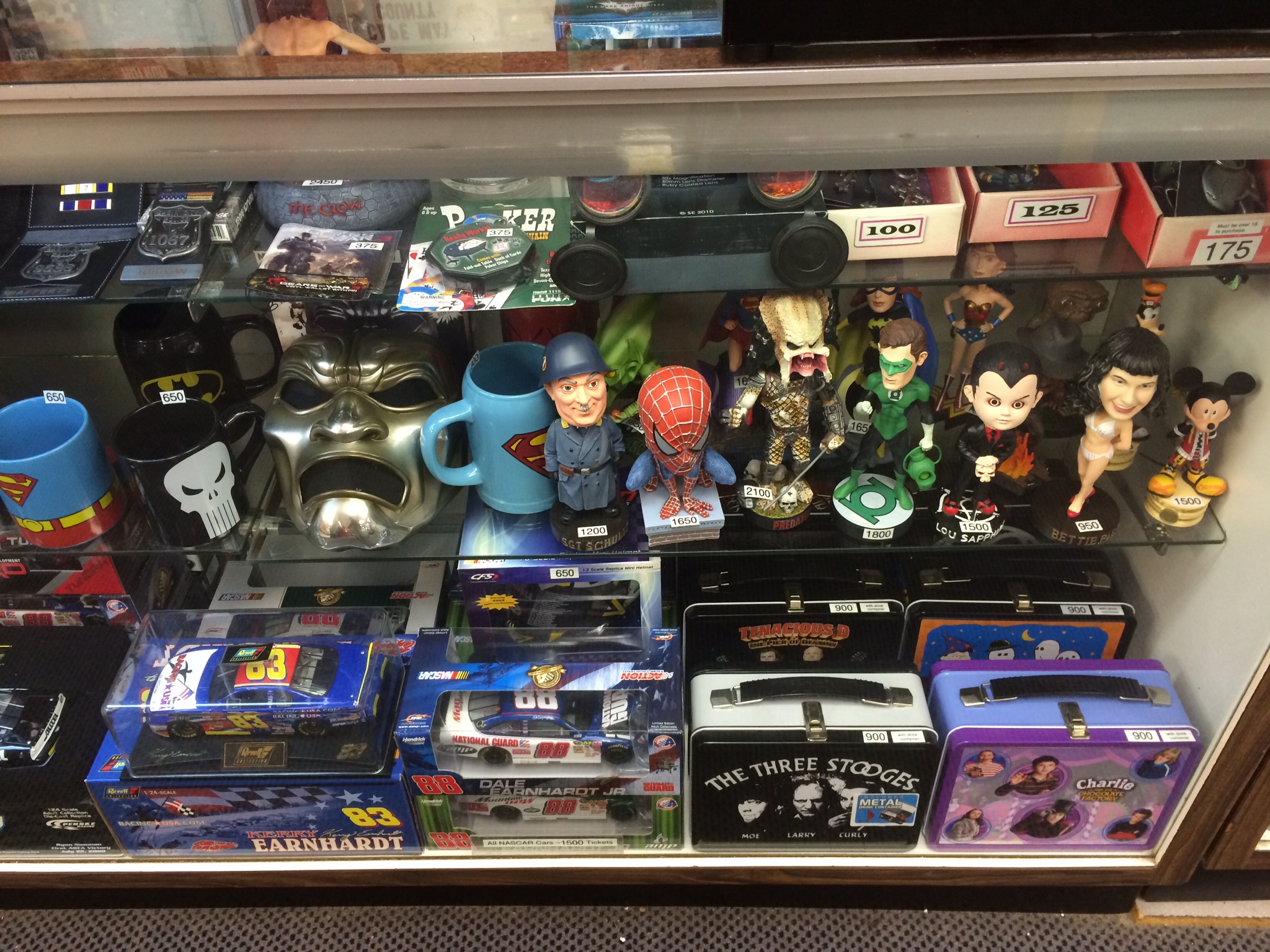
Some of the cool shit you could get if you spend your summer accumulating points in the arcade.

Some of the cool shit you could get if you spend your summer accumulating points in the arcade.

The Wetlands Institute, Stone Harbor

The Wetlands Institute, Stone Harbor

Posted in Travel | Tagged , , , , , , , | Leave a comment

Growing Up in the 50’s: A Week at the Shore

We had one week of vacation when I was growing up. It happened in July and it was at the Jersey Shore. Seven days on the beach, seven nights on the boardwalk. Then we came home and waited for next year.

I remember staying in a number of shore towns. Some were for our week vacation and some were weekend jaunts. We went to Asbury Park, Belmar, Point Pleasant, Seaside Heights and Wildwood Crest. But eventually we settled on Wildwood for our vacation.

Wildwood beach and pierThat was good with me. Wildwood had and still has the biggest boardwalk with the most amusement piers and most rides. It also has, if you can block out the tackiness that surrounds it, a stunningly beautiful beach. The Wildwood beach has very fine white sand and is the widest beach I have ever seen.

Somebody my mother knew, knew somebody who had a house on Wildwood Avenue and that was where we settled in a week at a time for several years. There was a big house on the property and a smaller unit behind which was what we rented.

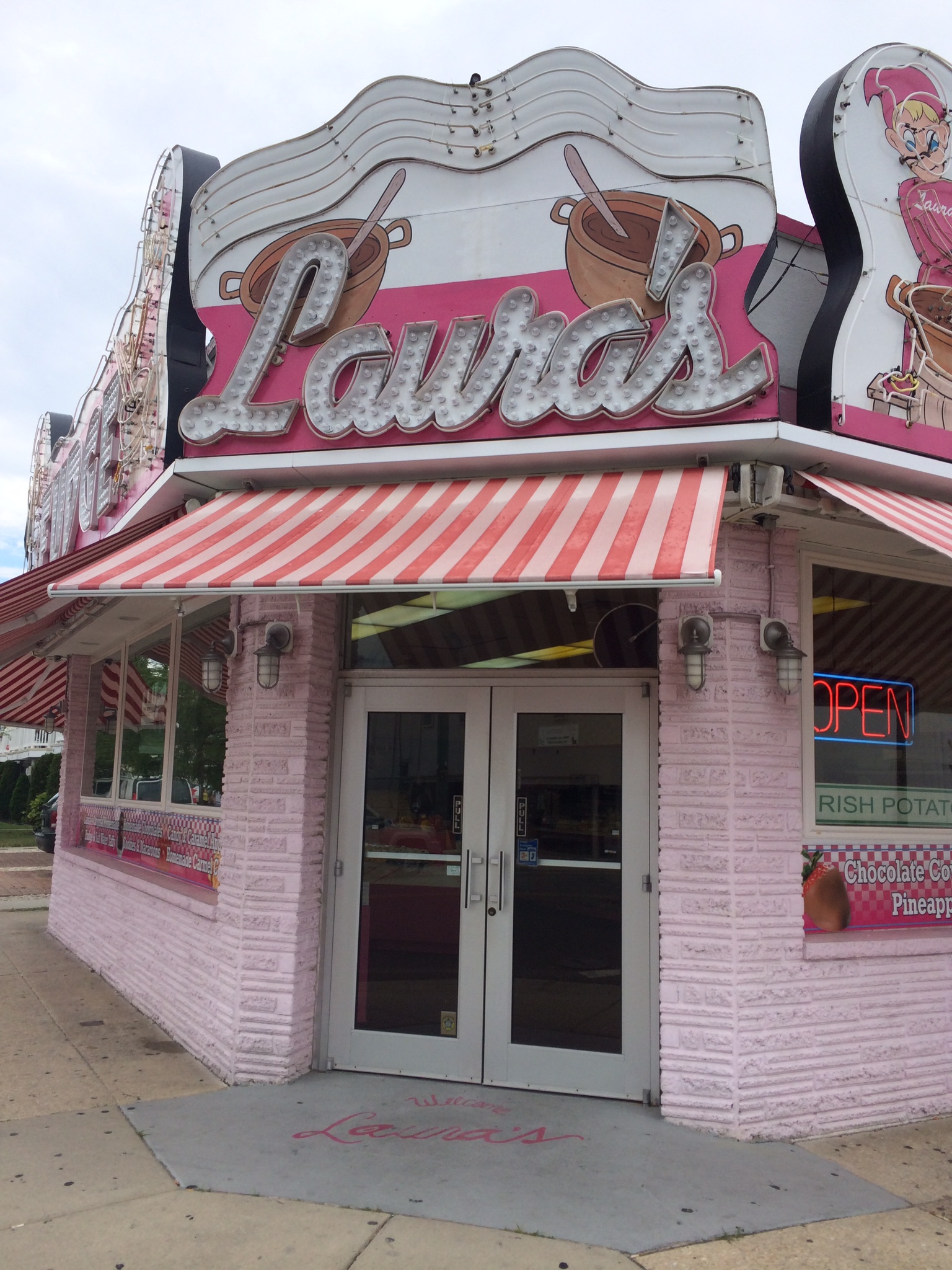
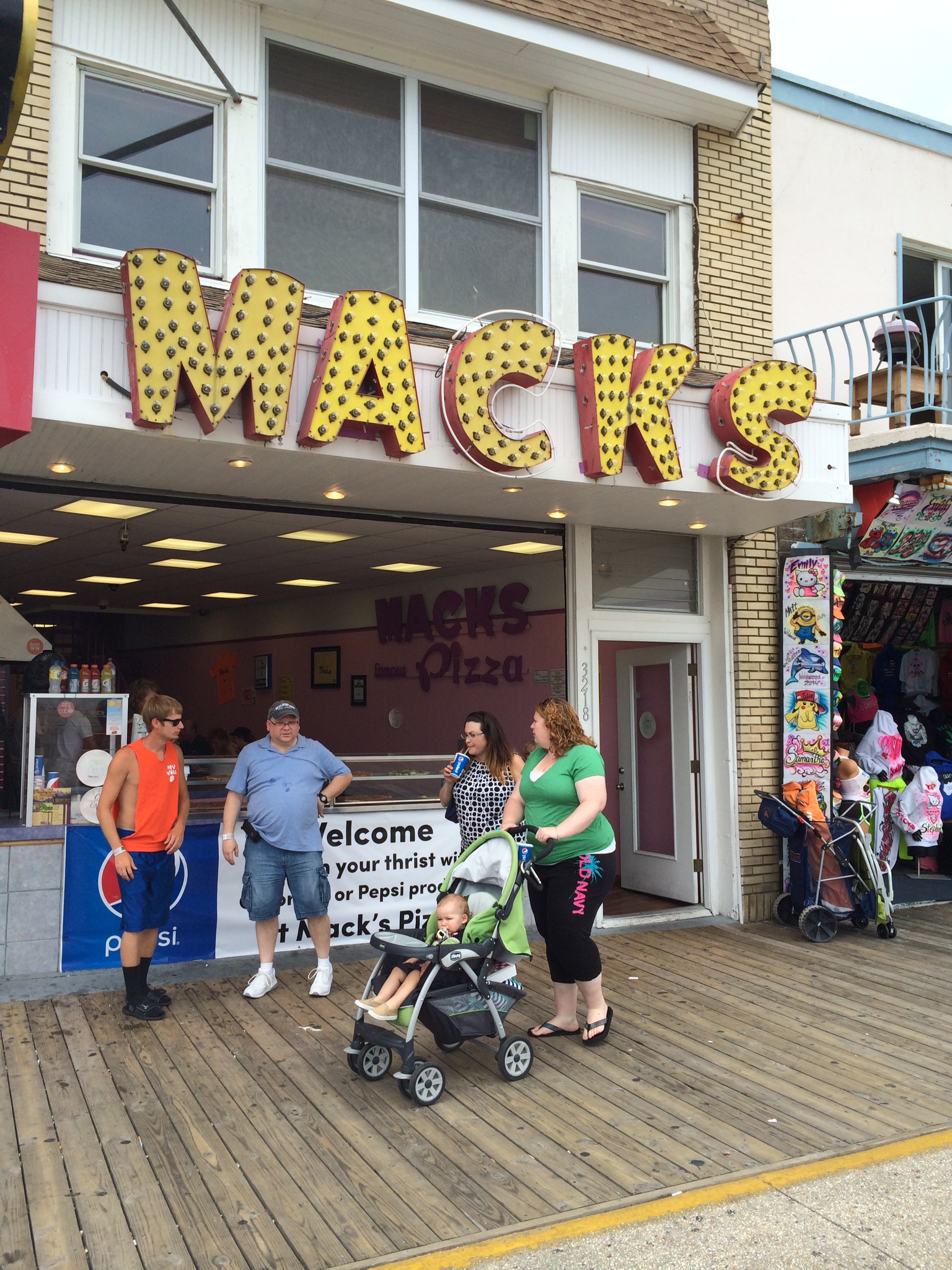
Laura's FudgeMack's PizzaI remember Wildwood Avenue because of two iconic stores. One is Laura’s Fudge where the poor guys who worked there had to constantly mix vats of fudge in the front window. Laura’s is still there. The other was the lobster restaurant, a predecessor to the Lobster Shack which on that location now. Much to my chagrin we would have dinner there once a year. I wasn’t much of a foodie when I was little and I was concerned the lobster dinner was cutting into my boardwalk time. My preferred dining location was the Mack’s Pizza a half block away on the boardwalk, where I could buy a slice or two and keep going without losing time by sitting at a table.

We were completely clueless about any dangers of sun exposure. We didn’t use sunblock, we used suntan lotion which was marketed as something that would make you tan faster and darker. Sometimes it was called “tanning butter.” Typically I would burn myself the first day out confident that the red would turn to tan. Or perhaps peel before the week was over so I could burn again before I went home and have it turn to a tan. Unfortunately my father hated the beach. He brought an umbrella which he sat under with a T-shirt on and never went in the ocean with us. I wonder if this week’s vacation was torture for him. My mom, on the other hand, was a Jersey girl.

Nightime was for the boardwalk. I would make a nightly stop at the aforementioned Mack’s Pizza and might spend a couple quarters on a game wheel, my preference being the one where you could win records. I went up and down the length of the boardwalk any number of times. But my two main boardwalk pursuits were the rides and the arcades.

Wildwood had four piers with rides, unheard of even for the Jersey shore. One of my favorites was the ride that spins in a circle both forward and backward to loud music. Sometimes this is called the Himalaya. But Wildwood used to have one that, much to the never-ending amusement of all shore-going kids, was named the Schlittenfahrt. I would also seek out the biggest, baddest roller coaster on the boardwalk and ride it once or twice a week. The biggest and baddest also meant the most expensive so I carefully managed my roller coast rides.

Skeeball - a boardwalk classic

Skeeball – a boardwalk classic

In the pre-digital boardwalk arcade, I zeroed in on skeeball and the pinball machines. I could play pinball for hours. While I potentially could see, hear and talk, I was that deaf, dumb and blind kid to the outside world. Skeeball was about winning tickets which you could redeem for a prize at the end of your stay. If you were on the boardwalk all season playing skeeball every night you might accumulate enough tickets for one of the higher end items like a framed bar mirror with the New York Giants or Philadelphia Phillies logo on it. Since I only had a week’s haul I usually came home with items like a pack of baseball cards, a balsa wood glider and a Chinese finger torture puzzle.

By the time I was eight or nine, my parents discovered that is was way easier to let me bring a friend with me to the shore rather than to hang out all night on piers or in arcades. So I’d head off with a friend, a 5-dollar bill and a curfew, and they were done for the night.

A little while later my parents bought a house in Seaside Heights, so we spent not only our week’s summer vacation but most of our summer weekends there. They had a similar setup as the house in Wildwood. They rented a two-family house on the front of our lot and we stayed in a small bungalow in the back. It was the rent from our Seaside Heights house that paid for my college education.

While I now take at least four vacations a year and travel around the country as well as to other parts of the world, I still never miss my summer week at the shore.

Posted in Growing Up in the 50s, Travel | Tagged , , , , , , | 22 Comments

The View From Garrett Mountain

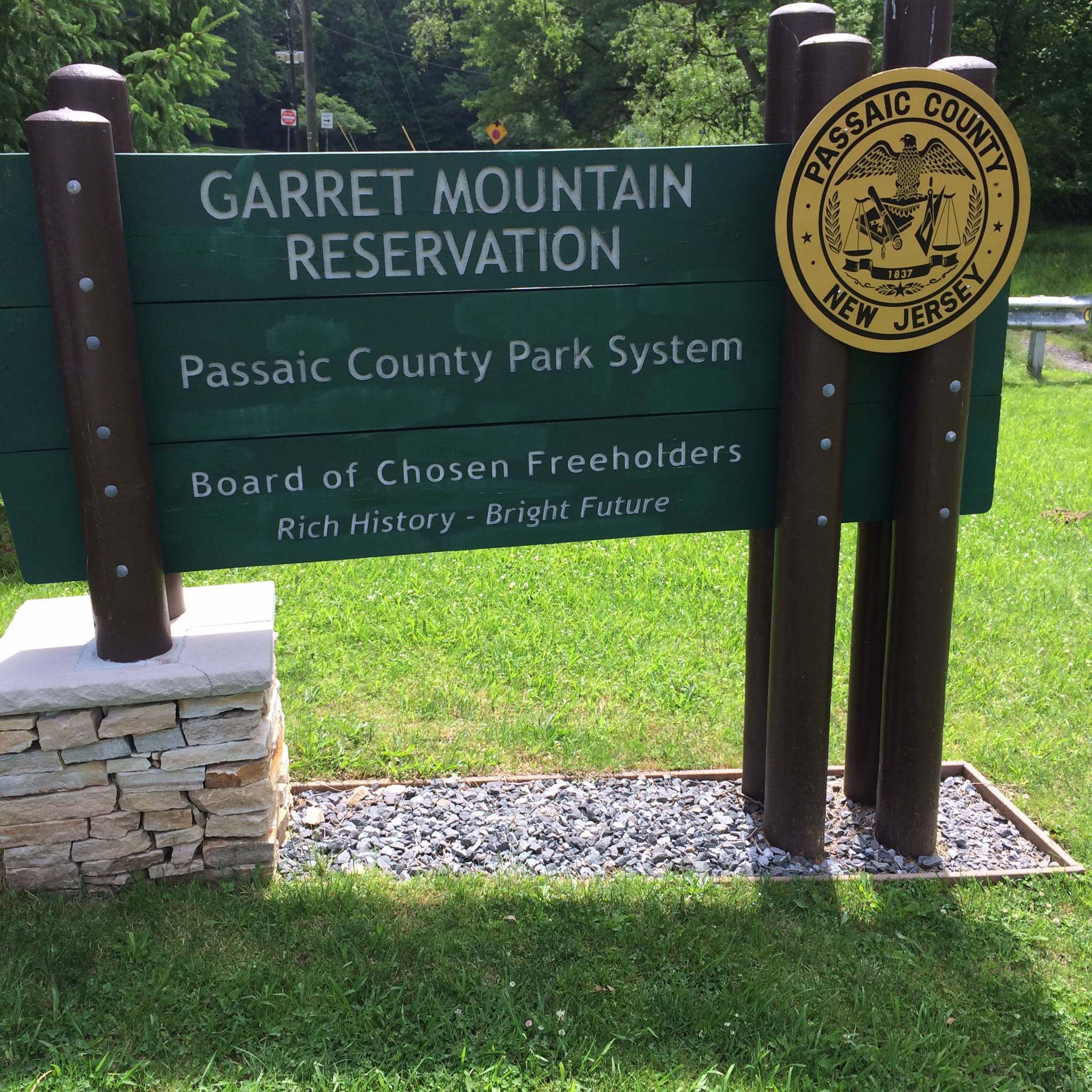
Welcome to Garrett Mountain Reservation

Welcome to Garrett Mountain Reservation

Downtown Paterson, N.J.

Downtown Paterson, N.J.

NYC skyline on the horizon.

NYC skyline on the horizon.

Lambert Tower

Lambert Tower

Garrett Mountain Reservation


Posted in Uncategorized | Tagged , , | Leave a comment

Teck’s Mural — The Finished Work

In my earlier post of photos from the Paterson Art Walk, I had a photo of this mural being spray painted by Teck. Here now is the finished work. It is in Overlook Park. If you are visiting the Great Falls National Historical Park, Overlook is next to the main parking lot. The mural is on the wall facing the falls.

Teck's Mural

Posted in Art | Tagged , , , , | 1 Comment

It’s the 4th of July

Statue of LibertyFourth of Julyfourth of JulyFourth of JulyFourth of JulyFourth of Julyfourth of JulyFourth of July

Posted in Uncategorized | Tagged , , , | Leave a comment

Digital Deception: The Illusion of Influence

Let’s take a look at some of my recent new followers on Twitter.

There’s @KieferBusby. I’d like to tell you something about Kiefer but I really can’t because his profile reads like this: “The most effective deal only for this week, buy 5k Twitter Followers only $29 || hurry on.”

Then there’s Meghan Ascensio (@meghanb90). I wonder if she’s friends with Kiefer because her profile seems to be offering the same deal: “It’s time for starting business using twitter, Buy now !! Only $29 per 5k Twitter followers.”

And then there was Chalfon Mulvenna (@kexajuwavehu).His profile says that he is an “Internet expert.” Apparently he is not enough of an Internet expert to keep his page up on Twitter so I could find his tweets about how I could buy thousands of views of YouTube.

The Internet has proven to be a vehicle for the democratization of publishing. As online supersedes print, the monopoly of newspaper, magazine and book publishers has fallen by the wayside. Control of the printed word no longer means control of communication. I can publish my blog posts on the same Internet that Walter Mossberg, Maureen Dowd or David Sedaris uses. And while their publisher’s brand and marketing presence (as well as their personal reputations) gives them a distinct advantage over me, I can in fact drive readers to my stuff using the same things they (or their agents) use, search and social.

So as the print franchise is disrupted, so to is the world of controlled, audited circulation which was supposed to tell us who gets to the most readers. In its place is the wild and unstable world of views, clicks, uniques, et al. And that in turn has given rise to a new definition of who is influential.

Marketers and PR people who not so long ago were focused on media buys and media relations respectively have now broadened their outlook to targeting “influencers.” Companies like Cision (nee Bacon’s) who used to sell these folks media databases, now offer “influencer databases.” HR staff and recruiters are also looking at “influence” as a credential for certain positions.

In order to help figure out who the real “influencers” are, a number of services have popped up that rate individuals according to their influence, the best known of which is Klout. Their influencer scores are primarily based on social media. Measuring Facebook, Google+, Twitter and others, the score is a calculation based on your activity, the size of your following, the number of shares, likes, retweets, favorites or whatever you get and also comparing how many people follow you versus how many you follow.

There are some serious issues with this as a reflection of true influence. For example, a very savvy social media user who has built up a very big following and who often tweets about how he or she has a headache, can have a higher Klout score that suggests more influence on health issues than a world class doctor who only casually uses social media.

I could come up with some exceedingly cute photos of my dog (have you looked at the Off the Leash homepage?) and get a ton of likes and shares and comments. That will give my Klout score a boost. I could go on vacation for two weeks and ignore my social media accounts. That will cause my Klout score to drop. But in fact I don’t think either of these things make me more or less influential. Klout scores are short-term, influence is not.

Which brings us to the spammy and probably completely fictional Twitter followers that I mentioned above. Some of these services use software that can create fake Twitter accounts by the thousands. When you pay them for a following, what you get is basically a fictitious following, although the numbers will be there. This tactic has been known to be used by politicians and celebrities. There is a fake follower check  that will identify these fake accounts.

A slightly less sleazy approach to buying Twitter followers is services that use software to identify thousands of accounts that have something in common with their customer and then follow all of those accounts. A certain percentage will follow back. So it will also pump up your numbers (and your influencer score) and will be based on real accounts. These services will stop following you after a few days because you don’t want to have the number of followed vs. followers show what you are really up to.

I generally will follow someone who follows me as a courtesy unless I see something in their profile that turns me away (see @KieferBusby above) or if I see that they have far more followers than people who they follow. (That’s okay if you’re Barack Obama or Cory Booker but seems fishy if I have no clue who you are.) To try to catch these phonies I use a tool called Qwitter which sends me an email each week telling me who “unfollowed” me. I reciprocate. Just Unfollow is a similar service.

While I’ve used Twitter as an example, there are similar “services” that provide the same sort of apparent social media boost for other networks. What is the promise of these services? That you too can be an influencer even though you may not know shit about anything.

Posted in Digital Deception | Tagged , , , | 16 Comments

More Random Thoughts on This World Cup and Tournaments Past

Zlatan Talking Garbage

Zlatan IbrahimovicZlatan Ibrahimovic was quoted this week as referring to the U.S.’s chances in the World Cup as a “big joke.” Now unless you follow European soccer year round you may not know who Zlatan is. He is, in fact, one of the best footballers in the world. The reason you never heard of him is he isn’t in the World Cup. He plays for Sweden and Sweden didn’t qualify, despite having Zlatan as captain and primary striker. They didn’t qualify four years ago either.

Sweden was at the World Cup in 2006 when they got out of the first round then lost to Germany in the Round of 16. Zlatan’s goal tally for those four games – zero. Same result in 2002 for both Sweden and for Zlatan. Ibrahimovic looks to me like a guy who comes up small on a big stage. So who cares what he thinks.

Breakfast of Champions

One of my favorite World Cups was the 2002 version that was hosted by Japan and Korea. Most of the games started very early in the morning, 6 or 7 am Eastern time. A friend of mine who I worked with would come over every morning, we’d get coffee and some bagels or muffins and start the day by watching a World Cup game then head off to work. Can you think of a better way to start the day?

There were a lot of memorable things about the 2002 World Cup. One was the Korean fans. When you think of who has the most passionate fans in football, your thoughts don’t immediately turn to South Korea, but the fans there were so lively, so loud and so supportive they willed their team into the semifinals. There was the U.S. run the quarterfinals and to this day I believe the U.S. should have had the tying goal against Germany had the ref called that handball.

But one of my favorite memories from the 2002 Cup was the third place game. Consolation games are slowly disappearing from sports as for the most part they are meaningless games between disappointed teams. FIFA however persists with a third place game. And in 2002 we were treated to a brilliant display by two unfancied teams that had overachieved and combined for a stylish, celebratory game of football. Turkey beat South Korea 3-2 and the players from both teams held hands and bowed to the crowd when it was over.

Why I Root for Colombia

The World Cup was played in the U.S. in 1994. Heading into that tournament, Colombia was regarded as perhaps the team that was playing the best football in the world. While not one of the sport’s traditional powers, they were everyone’s favorite surprise pick for the tournament.

Valderrama

Valderrama

The 1994 Colombian team was a sight to behold. They were led by Valderrama, a guy who could dominate a game without ever running. On the end of his defense-dissecting through passes was Faustino Asprilla, a young, lightning fast striker. There was Freddie Rincon in midfield and Alfredo Valencia, who played for Bayern Munich, joining Asprilla up front.

But it all went horribly wrong for Colombia in 1994. A disastrous first round exit culminated in the murder of defender Andres Escobar whose own goal led to the loss against the U.S. which eliminated his team.

They qualified again in 1998 and were again eliminated in the first round. After that was a 16-year drought that finally ended with this year’s team. Unfortunately they’ve lost their best scorer, Falcao, to injury, but they are off to a bright start and have a young, exciting team. On the 20th anniversary of the unfortunate 1994 group, the Colombians may this year be fulfilling that promise. I hope they can keep it going.

Tell Me That’s the Last I’ll See of Fabio Capello

England's coach Capello shouts during a 2010 World Cup second round soccer match against Germany at Free State stadium in BloemfonteinWithout a doubt the orneriest looking guy at the World Cup is Fabio Capello. Maybe he’s really a nice guy who just has a mean face, but I doubt it.

You may remember Capello from the 2010 World Cup. Then again, you may not because the England team he coached wasn’t around very long. He was the red-faced dude screaming at his players as England finished second to the U.S. in a relatively weak qualifying group. They then got unceremoniously dispatched by Germany 4-1 in the round of 16.

This year Capello resurfaced as coach of Russia. He was a little quieter this time around probably because the Russians don’t understand a word their Italian coach utters. The results were even less convincing. Russia failed to advance from another modest qualifying group while their most dangerous player, the midfielder Dzagoev, mostly sat on the bench.

Unfortunately as usually happens in world soccer this loser will resurface by the time 2018 qualifying begins, hired by some country’s federation that thinks it is getting a world class coach but is really getting a ticket to oblivion.

Posted in Sports, Uncategorized | Tagged , , , , , | 1 Comment

Digital Deception: The Online Makeover

We live in a world where facelifts and hair transplants and tummy tucks are commonplace. Most of us know someone who has had a nose job or a breast enhancement.

We endure these surgical or chemical treatments in the expectation that it will improve our romantic prospects, our professional status or business connections, or simply boost our self image. Now you can not only invest in tweaking your physical appearance but can also find outside help to upgrade your online persona.

A fairly robust consultative business has emerged in the last 10 years of online reputation management.   In the words of Tom Krazit of CNET , “If you think Google has got you all wrong, there’s a consultant who thinks he or she can set the search gods straight.” Those consultants range from fairly upstanding to slightly underhanded to downright fraudulent.

“For every person who has moved on after an honest mistake,” Krazit says, “There are others trying to cover up shady behavior or hide the truth.” So a big part of what reputation managers are addressing is negative information online. Some will try to cajole Web site operators into making the offending material disappear. Others will try some pseudo-legal bullying.

Reputation X in Sausalito, Calif.,  acknowledges that it is difficult and often unlikely that you can make the negative post or story or image disappear. What they do instead is what they call suppression. The idea behind suppression is that if you can’t make the bad stuff go away, the next best option is to bury it so it appears so far down in search results that few ever see it. While not everyone uses the terminology suppression, this tactic is the primary one used by reputation management agencies. They essentially rely on two skills, SEO and content creation, which are widely used by all types of digital publishers.

The tactics used by various agencies to manipulate an individual or organization’s search results demonstrate a wide range of ethical sensitivity.

  • Reputation X talks about PBN’s, that is positive stories that appear lower in search results than negative stories (positives below negatives). They try to promote the positive so that it surpasses the negative is search results.
  • They focus on those sites that appear to have the highest credibility with Google, such as Facebook, LinkinIn, Twitter, StumbleUpon, Technorati and Digg, and try to create happy and wholesome content about their clients on those sites.
  • Some of these agencies have created fictitious blogs using the name of their client but presenting it as a different person with the same name.
  • Others have taken advantage of content farms like Demand Media to write articles and to use their client’s name in the byline.

Reputation Management Consultants which has addresses in Irvine, Calif., and in London, calls their service an “innoculation campaign” which will include building microsites that house “high quality” content by or about their clients.

Most of these consultants try to convert their clients from the one time hit to a continuing service. The content creation piece of this of course takes some time and they bill their premium service as a way to prevent further reputational problems. Most don’t put their rates online but I saw charges ranging from $5 a month to $10,000 a year. As with plastic surgery, the more you want to tweak, the more it’s going to cost.

I couldn’t help but notice that several of these reputation management firms have not themselves been able to keep negative stories or reviews about their service off of the first page of search results. I was also curious to find one of these guys in Texas who described himself as a “thought engineer.”

If you happen to be in the market for a reputation manager one of the things you should be wary of is anyone who promises guaranteed removal of undesirable content. That is what Reputation Resolutions offers. You may be thinking about embarrassing tweets that you were mentioned in or maybe a compromising picture that a friend posted on Instagram from a night of drunken revelry.

But those are not apparently the sites that Reputation Resolutions can help you with. They do offer several levels of service for dealing with a site called Reportyourex.com.  This site describes its mission as “to give everyone the opportunity to tell the world about how their ex-boyfirend or ex-girlfirend did them wrong.” (When I went to the site there were only two posts there, one from 2011.) Reputation Resolution offers a $399 package that promises to remove the post and an enhanced $499 package that includes not only removal but also deletion from Google’s cache. Not surprisingly neither of these sites tells you who owns the site or where you can find them.

Another one of the sites listed by Reputation Resolutions is cheaterville.com which uses the tagline “fight infidelity, post a known cheater now.”

Cheaterville seems to have a more robust set of content than Reportyourex. Not to worry though because cheaterville.com offers a button to click on to remove posts. That click will take you to, you guessed it, a reputation management firm, removemyname.com.

They offer the suppression plan package for $499.

Another sleazy offshoot of reputation management is the mug shot extortionist. They will take publically available mug shots, say after someone was arrested for a DWI, and post them on a Web site. They’ll then contact the person involved and offer their reputation management service of removing the photo from the site. If you buy in, they may offer the enhanced service for an enhanced fee, which means they won’t publish the photo on another of their mugshot sites. (I’m reminded of parking my car on the street near Municipal Stadium in Cleveland and having some gentleman offer to “protect” my car for $5.)

Which all goes to show there can be a fine line between consultant and extortionist. Wonder what these guys could do for Donald Sterling?

Posted in Digital Deception, Digital publishing | Tagged , , , , | 11 Comments